fbpx

November 6, 2019

What’s Happening: Israeli FilmFest, ‘Bridging the Divide’

FRI NOV 8

Shabbat and Free Genetic Testing
Sinai Temple’s Friday Night Live for young professionals at Atid includes a potential bonus: In addition to the instrumental music, singing at Shabbat services and dinner, Atid partners with JScreen, a nonprofit screening program for Jewish genetic diseases. Free genetic screening is offered to the first 50 people who purchase dinner tickets. Organized by the Neuromuscular Disease Foundation. JScreen registration is open to people ages 21-39. 7 p.m. doors open, wine and candy. 7:30 p.m. services. 8:30 p.m. dinner. $20. Sinai Temple, 10400 Wilshire Blvd. (310) 474-1518.

Enlightened Shabbat and Potluck
Mishkon Tephilo holds the community Shabbat experience, Na’or: An Intentional Chanting Prayer Experience, led by Rabbi Aviva Funke, one of the creators of Na’or. The enlightened Shabbat includes a vegetarian potluck dinner. No RSVP needed. 6:15 p.m. BYOB drinks in the Hampton foyer. 6:35 p.m. services in the Social Hall. 8 p.m. free potluck dinner in the chapel. Mishkon Tephilo, 206 Main St., Venice. (310) 392-3029.

In Honor of Veterans
On the eve of Veterans Day, a special Shabbat service at Wilshire Boulevard Temple celebrates Jewish pride in the military and pays tribute to veterans in the community. Stick around for the formal opening of the temple’s Jewish American Medal of Honor recipients exhibit. 7 p.m. Free. Wilshire Boulevard Temple, 3663 Wilshire Blvd., Los Angeles. (213) 388-2401.

Shabbat Spark!
The busy, upbeat evening at Temple Emanuel of Beverly Hills (TEBH) begins with a congregational dinner to fuel the body before refueling the spirit. “Shabbat Spark!” is part rock, part soul, all Shabbat, featuring TEBH’s six-piece rock band, student “Soul Singers,” junior cantors and religious school students. Together, they lead the Shabbat service and also pay tribute to America’s military veterans on the eve of Veterans Day. No need to hold your books while praying; the words appear on a large screen. 6:30 p.m. Free. Temple Emanuel of Beverly Hills, Corwin Family Sanctuary, 300 N. Clark Drive, Beverly Hills. (310) 288-3737.

SAT NOV 9

Chloe Pourmorady

Chloe Pourmorady
While live music is not uncommon during Friday night services, it is on Shabbat morning. That makes the appearance of Chloe Pourmorady and her band at this morning’s Sinai Temple service noteworthy. The Feit Family Shabbat Live program also features Sinai Rabbi David Wolpe, Craig Taubman and the Sinai Temple clergy. Services are at 9:30 a.m., with Pourmorady and her band performing at 11 a.m. Free. Sinai Temple, 10400 Wilshire Blvd. (310) 474-1518.

Lunch with the IDF
Iranian-Jewish congregation Nessah Synagogue holds a Shabbat lunch with a team of Israel Defense Forces (IDF) soldiers. Come hear their harrowing stories of close calls in their daily lives on the front lines. 9 a.m.-12:30 p.m. Luncheon follows services. $260 per adult. $50 per child 13-and-under, $3,000 for a table of 10 with IDF member. Nessah Synagogue, Simcha Hall, 142 S. Rexford Drive, Beverly Hills. (310) 273-2400. To purchase tickets, contact jenna.griffin@fidf.org.

SUN NOV 10

Special Needs Basketbal Program
Beginning this morning, Special Maccabees, a program for Jewish special needs athletes, is introducing a free 12-week basketball program for Jewish boys and girls and men and women with special needs, from ages 15-60. Practices are conducted separately at the Westside Jewish Community Center (JCC). The program provides athletes with an opportunity to play basketball and interact with other special needs athletes under the guidance of committed coaches. 9:15-10:45 a.m. Free. Westside JCC, 4870 W. Olympic Blvd. For additional information, contact Jeff Liss at jliss72@verizon or (310) 985-9676.

“Ashes to Blossoms”
Marking the one-year anniversary of the Woolsey fire that destroyed the Shalom Institute and Camp JCA Shalom, camp leaders are looking to the present and the future with “Ashes to Blossoms.” This past summer, the debris was removed, but much work still needs to be done. Join Shalom Institute staff and their partner, Tree People, for a day of service, followed by a commemoration of the fire that struck on Nov. 9, 2018. All ages are welcome. 1-3 p.m. service. 3-4 p.m. ceremony. Free. Shalom Institute, 34342 Mulholland Hwy., Malibu. (818) 889-5500. Registration required at eventbrite.com.
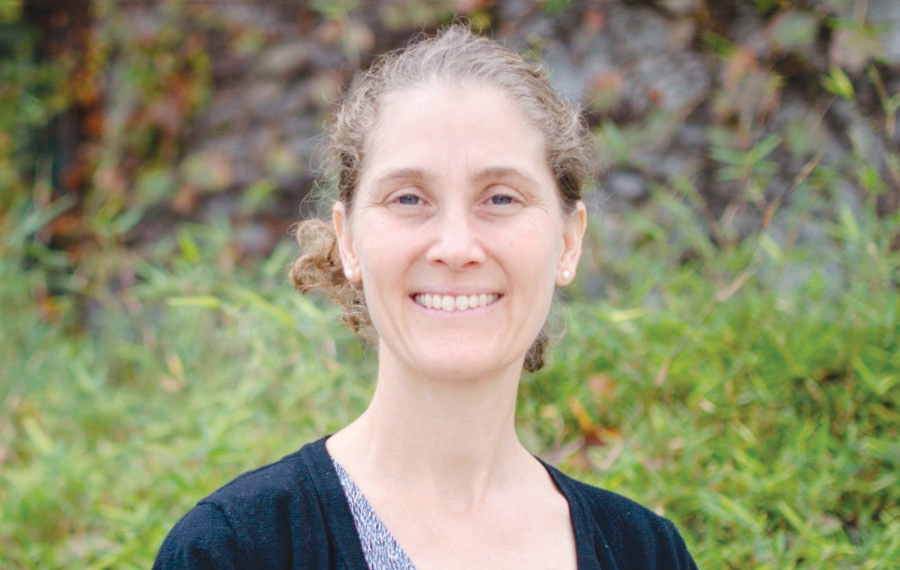
Rabbi Susan Goldberg

“The Art of Peacemaking”
Is peace among religions attainable? Two Jews, two Muslims and a Catholic priest address that question during an interfaith panel discussion. Speakers include Rabbi Susan Goldberg of Nefesh, Rabbi Mel Gottlieb of the Academy of Jewish Religion in California (AJRCA), Tasneem Noor of NewGround: A Muslim-Jewish Partnership for Change and Father Alexei Smith of the Archdiocese of Los Angeles. Co-organized by AJRCA and Claremont Lincoln University. Seating is limited. A Q-and-A and opportunity to network and take action follows the discussion. 3-4:30 p.m. Free. UCLA Hillel, Spiegel Auditorium, 574 Hilgard Ave. For more information, contact Sara Gertler at sgertler@claremontlincoln.edu or call (909) 667-4413.

“Marvelous Life” of Stan Lee
Discover how the late Marvel Comics co-creator Stan Lee became the face and voice of comics. Tonight, his colleague, Danny Fingeroth, author of “A Marvelous Life: The Amazing Story of Stan Lee,” and animation historian Jerry Beck sit down for a discussion about Lee at the Skirball Cultural Center. They examine how Lee, who worked with partners like Jack Kirby and Steve Ditko to create Spider-Man, the X-Men and the Avengers, was also haunted by controversy throughout his career. 7:30 p.m. $10 general admission, $5 members. Skirball Cultural Center, 2701 N. Sepulveda Blvd. (310) 440-4500.

MON NOV 11

“OHR”
For the first 36 years of Lara Mizel’s life, her mother’s tragic death was shrouded in mystery. The new documentary, “Ohr,” produced by Lara and Cheston Mizel, prominent leaders in the Pico-Robertson community, finally reveals what happened to Shirley Frysh. Lara Mizel grew up knowing almost nothing about her mother, but she refused to compromise her search. The Mizels appear for a special screening of “Ohr” at the Museum of Tolerance (MOT), participating in a Q-and-A with Academy Award-winning writer and director Richard Trank. Reception follows. RSVP required. 7:30 p.m. Free. Museum of Tolerance, 9786 Pico Blvd. (310) 772-2505.

TUE NOV 12

Israel Film Festival
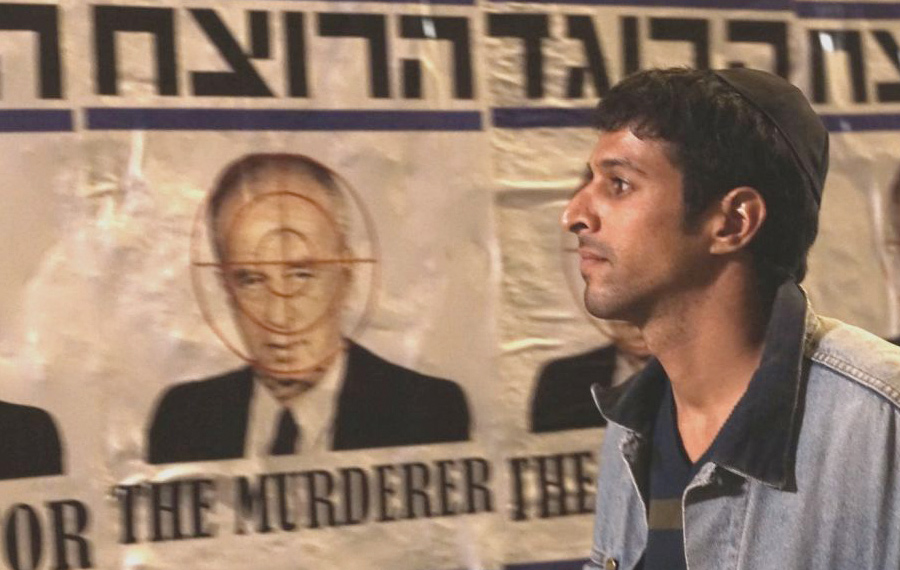
The 33rd annual Israel Film Festival (IFF), the largest showcase of Israeli films in the U.S., launches a two-week run, beginning with a gala opening ceremony for 1,000 guests at the Steve Tisch Cinema Center at the Saban Theatre. “Incitement,” the story of events leading to Prime Minister Yitzhak Rabin’s assassination 24 years ago this month, opens the festival. Also tonight, two motion picture veterans, producers Arthur Cohn and Sharon Harel-Cohen, receive the IFF Lifetime Achievement Award and the Achievement in Film Award, respectively. The festival continues through Nov. 26, with more than 40 films screened at three sites across the city. Opening night 7:30 p.m. $125 VIP, $50 general. Saban Theatre, 8440 Wilshire Blvd., Beverly Hills. Ahrya Fine Arts, 8556 Wilshire Blvd., Beverly Hills. Laemmle Town Center, 17200 Ventura Blvd., Encino. (310) 247-1800.

WED NOV 13

“Jews in Blue and Gray”

Jews in Blue and Gray”
Allegiances during the Civil War split the Jewish community as deeply as the nation. “Jews in Blue and Gray,” the first documentary film to explore the role of Jews during the Civil War, spotlights the history of the 10,000 Jews who fought on both sides in America’s deadliest war more than 150 years ago. The film highlights how some prominent Jewish voices used the Torah to justify slavery, while others led the abolitionist movement. The screening is held as part of the “DocJewmentary” film series at Congregation Kol Ami. 7:30 p.m. $5 Kol Ami members, $18 general. Congregation Kol Ami, 1200 N. La Brea Ave., West Hollywood. (323) 606-0996.

THU NOV 14

“Bridging the Divide”
The Israel-based Polyphony Quartet, which brings together Jewish and Arab musicians to play classical, Jewish and Middle Eastern music, performs “Bridging the Divide,” a concert at the Pico Union Project. Violinists Yamen Saadi and Edi Kotlyar, violist Yoav Yatzkin and cellist Mahdi Saadi perform music from Mozart, Bartok and Schubert as well as arrangements of Arab and Jewish folk tunes. Following the concert, a Q-and-A features the musicians and Nabeel Abboud-Ashkar, co-founder of the Polyphony Foundation, which aims to bring together Arab and Jewish communities in Israel and serve as a worldwide model of cultural exchange, dialogue and partnership. 7-9 p.m. Free. Pico Union Project, 1153 Valencia St., Los Angeles. (213) 915-0084.

“Jews in the South”
No strangers to prejudice and confrontation wherever they have lived, one wonders why American Jews moved into the South in the 19th and 20th centuries. Lauren Acker, a U.S. history instructor at Pasadena City College, provides a response in her lecture, “A People In-Between: Jews in the South,” exploring the complexities of navigating religion and race from the time of slavery through Jim Crow segregation. 7 p.m. Free. Temple Beth Am, 1039 S. La Cienega Blvd. (310) 652-7353. tbala.org. For information about an upcoming Beth Am bus tour to the South after Passover, visit the link above.


Have an event coming up? Send your information two weeks prior to the event to ryant@jewishjournal.com for consideration. For groups staging an event that requires an RSVP, please submit details about the event the week before the RSVP deadline.

What’s Happening: Israeli FilmFest, ‘Bridging the Divide’ Read More »

Jewish Organization Presidents ‘Deeply Troubled’ At Talk of Leveraging Israel Aid

The Conference of Presidents of Major Jewish Organizations, an umbrella group of 50 Jewish organizations, released a statement on Nov. 1 condemning the Democratic presidential candidates saying that aid to Israel should be used as leverage over the Jewish state, Jewish Telegraphic Agency reports.

Chairman Arthur Stark and Executive Vice Chairman and CEO Malcolm Hoenlein said, “We are deeply troubled by recent statements that would place conditions, limitations, or restrictions on the US security assistance provided to Israel, so vital for the defense and security of the country, the protection of essential US interests, and stability in the region. This approach would harm American objectives in the Middle East and would undermine the ability of our key ally to defend itself against the threats it faces on all its borders.”

They added that former Vice President Joe Biden was correct in saying that leverage aid to Israel “would be absolutely outrageous,” arguing that such proposals don’t target the “true sources of instability and the obstacles of meaningful negotiations,” which Stark and Hoenlein said were Hamas and the Palestinian Authority.

“Those who advance these misguided proposals make no mention of Hamas, a US-designated terrorist organization, which runs Gaza and is responsible for the launching of thousands of rockets at Israel, attempts to penetrate the border, and digging terror tunnels to carry out attacks against civilians. While it instigates this violence against Israel, Hamas subjugates the people of Gaza,” Stark and Hoenlein said. “The same is true in the West Bank, where the Palestinian Authority is responsible for denying the people a better future, while its corrupt government engages in the ‘pay-to-slay’ policy that rewards and encourages terrorist attacks against Israelis.”

They concluded that claims “that US money is funding the occupation is patently false and undermines the efforts to arrive at a peaceful outcome between Israel and the Palestinian Authority.”

Sen. Bernie Sanders (I-Vt.) said during the J Street conference on Oct. 28 that he would tell Israel that they would “have to fundamentally change your relationship to the people of Gaza. I would say that some of that $3.8 billion should go right now to humanitarian aid in Gaza.” Pete Buttigieg, mayor of South Bend, Ind., similarly said during the J Street conference that he’s not sure if the U.S. should provide aid to Israel if they annex the West Bank. Similarly, Sen. Elizabeth Warren (D-Mass.) said at an Oct. 19 campaign event that “everything’s on the table” on attempts to stop Israel from increasing settlements in the West Bank, including aid. 

The New York Jewish Week reported on Nov. 6 that the statements from Warren, Sanders and Buttigieg have pro-Israel Democrats concerned “that the front-runners are taking their cues from party upstarts in questioning an aid package that traditionally has drawn unflinching bipartisan support.” The Jewish Week cites a quote from Rep. Jerry Nadler (D-N.Y.) to Jewish Insider saying, “The Israelis need it for defense. Whether we approve or disapprove of specific policies, we shouldn’t use military aid as a pressure point on specific policies — because Israel’s security is paramount.”

Jewish Organization Presidents ‘Deeply Troubled’ At Talk of Leveraging Israel Aid Read More »

JWW Global Soul Winners, LAMOTH Honorees

Anti-genocide organization Jewish World Watch (JWW) held its annual Global Soul gala on Oct. 24 at the Ray Kurtzman Theater at Creative Artists Agency in Century City.

The event honored Vaughan and Nick Meyer with the Global Soul award for their commitment to fighting genocide and creating a more just world. According to JWW, the Meyers have been “lifelong champions of those less fortunate.” Vaughan began volunteering for JWW nine years ago and became a board member in 2012. She serves as the chair of JWW’s advocacy and development committees, has chaired JWW’s annual Walk to End Genocide and led advocacy delegations to Washington, D.C. She also traveled with JWW to the Democratic Republic of Congo, where she met survivors of mass atrocities, especially women.

Her husband, Nick, who currently serves as president of film for eOne, has produced and worked on many acclaimed films, including “Hotel Rwanda,” a project about the 1994 genocide in the African nation, which the world largely ignored as it unfolded, according to JWW.

“I am often asked how I got involved with Jewish World Watch,” Vaughan Meyer said during her acceptance speech. “When I look back, I think I was initially awakened by the movie, ‘Hotel Rwanda,’ a film Nick helped put together.”

The event drew approximately 400 people, including many from the Hollywood community. Performers included world music band Adaawe and Congolese activist and spoken-word poet Omékongo Dibinga.

Additional attendees included JWW co-founder Janice Kamenir-Reznik, JWW Executive Director Susan Freudenheim, attorney Sam Yebri, and Rabbi Yonah and Rachel Bookstein. Honorary co-chairs included Michele Breslauer of the Children’s Law Center, Jeffrey Abrams of RVW Wealth, Megan Colligan of Imax Entertainment and Jeffrey Freedman of Creative Artists Agency (CAA).

Based in Encino, JWW focuses on increasing education and advocacy and completing projects related to mass atrocities. Founded on the principle of “Never again” — the call to never allow another Holocaust — the organization works in regions including China, Myanmar, the Democratic Republic of Congo, Iraq and Sudan. 


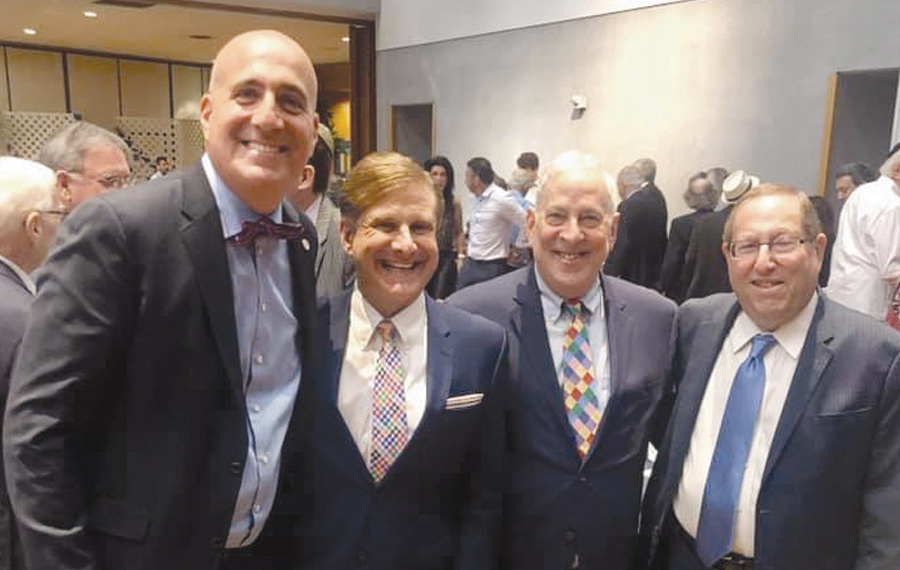
From left: University Synagogue Trustee Stephen Gingold; L.A. City Controller Ron Galperin; University Synagogue Rabbi Emeritus Morley Feinstein; and City Council Member Paul Koretz celebrate Feinstein’s retirement from University Synagogue. Photo courtesy of Rabbi Morley Feinstein

An Oct. 25-26 Shabbat service, dinner and Havdalah honoring retiring University Synagogue Rabbi Emeritus Morley Feinstein proved to be a joyous occasion.

For the weekendlong gathering dubbed “Marvelous Rabbi Feinstein,” 350 people from the community gathered at services on Friday and 250 for dinner on Saturday. University Synagogue Cantor Emeritus Jay Frailich was the emcee, and University Synagogue Associate Rabbi Joel Simonds and Cantor Kerith Spencer-Shapiro joined him in making comments.

Guest speakers included Los Angeles City Controller Ron Galperin, City Councilmember Paul Koretz and Rabbi Samuel Gordon of Congregation Sukkat Shalom in the Chicago suburb of Wilmette. L.A. Mayor Eric Garcetti delivered remarks by video. 

Feinstein’s daughter-in-law, Rachel Mylan, provided musical entertainment, and elected officials presented commendations and proclamations in honor of Feinstein, who began as the Westside-based Reform congregation’s fourth senior rabbi in 2002.

Feinstein’s family, along with a dozen of his rabbinical colleagues, also came in for the event from coast to coast.


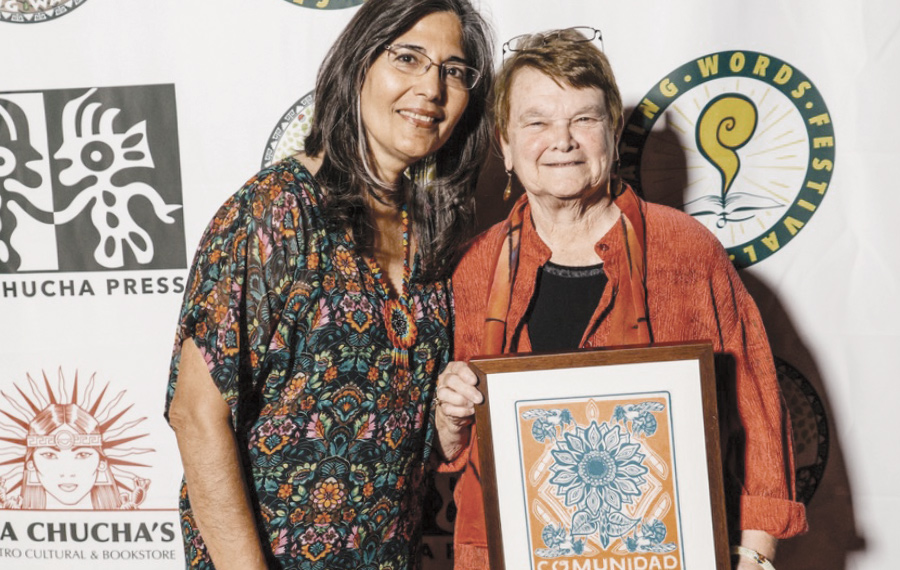
From left: Trini Rodriguez, co-founder of Tia Churcha’s Centro Cultural and Bookstore, and L.A. County Supervisor Sheila Kuehl, an honoree at Tia Churcha’s fundraising gala. Photo by Giovanni Solis

Los Angeles County Supervisor Sheila Kuehl was honored at the fourth annual fundraising gala for Tia Chucha’s Centro Cultural and Bookstore in Sylmar.

During the Oct. 26 event, “Art and Minds Gathering for Change,” Trini Rodriguez, co-founder of Tia Chucha’s Centro Cultural and Bookstore, presented Kuehl, whose mother was Jewish, with a plaque for her vision, courage and commitment in advancing the art of public service and integrity.

The event raised $40,000 for Tia Chucha’s, which provides the northeast San Fernando Valley with year-round programming dedicated to the arts, music, dance, writing and more. The organization began as a café, bookstore and cultural space owned and run by Los Angeles Poet Laureate Luis Rodriguez.  

Additional honorees at the event, which was held at La Plaza de Cultura y Artes, were writer, artist and educator Harry Gamboa Jr., artist and activist Barbara Carrasco and Louie Perez, founding member of the Grammy Award-winning rock band Los Lobos.

The event was billed as a celebration of resilience through the arts.


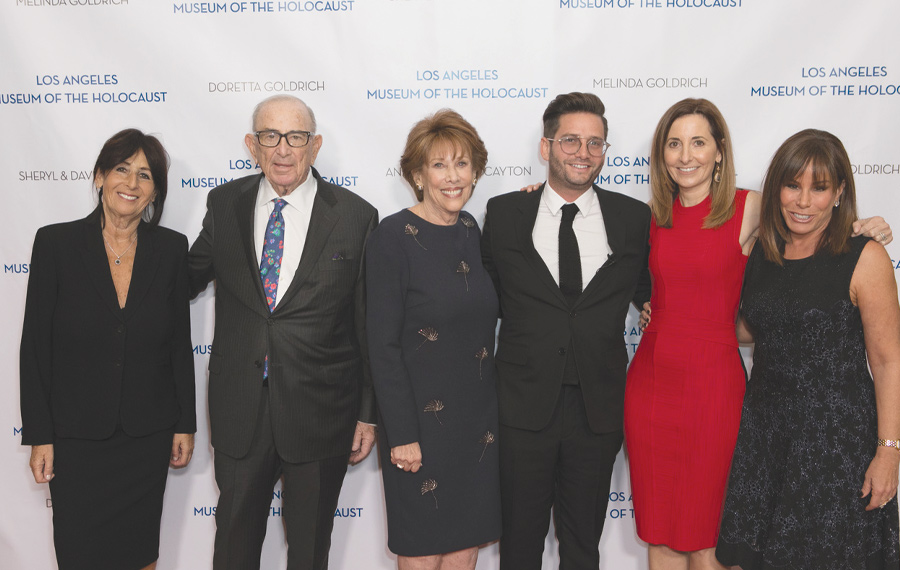
From left: Los Angeles Museum of the Holocaust (LAMOTH) Board Chair Michele Gold, LAMOTH honorees Arnold Palmer, Patsy Palmer and Josh Flagg, museum CEO Beth Kean and emcee Melissa Rivers at the museum’s 2019 annual gala.
Photo by Bryan Beasley

The Los Angeles Museum of the Holocaust (LAMOTH) honored Josh Flagg, star of the Bravo television series “Million Dollar Listing Los Angeles,” and LAMOTH board member Patsy Palmer and her husband, Arnold, at its annual gala at the Beverly Hilton on Oct. 30. Melissa Rivers emceed the event.

In addition to starring on the Bravo show, Flagg is one of America’s most successful and sought-after luxury real estate agents, having completed more than $1 billion in residential real estate sales in the past decade. He recently was named one of the Top 30 realtors in Los Angeles by The Hollywood Reporter. The grandson of Holocaust survivors and a board member at LAMOTH, Flagg lives with his husband, Bobby Boyd, in Beverly Hills.

Palmer holds a doctorate in child psychology and is a docent at the Los Angeles County Museum of Art (LACMA) and at LAMOTH.  Her husband, Arnold, was an institutional stockbroker for over 50 years and continues to work with individual clients.

Rivers, a New York Times bestselling author and award-winning producer, is an entertainment journalist and correspondent, an equestrian, an Ivy League graduate, an accomplished public speaker and philanthropist.  She co-created, executive produced and co-hosted E!’s “Fashion Police.”

Award presenters were Carrie Brillstein and Ada Horwich. State Sens. Ben Allen and Henry Stern spoke about the California Legislative Jewish Caucus’ advocacy in securing a $6 million state budget allocation for the museum’s expansion project. Speakers from the museum included CEO Beth Kean, Board Chair Michele Gold and Vice Chair Guy Lipa.

The gala, attended by more than 750 people, including 60 Holocaust survivors, featured a special preview of a “Dimensions in Testimony” interactive biography featuring Holocaust survivor Renee Firestone, who was at the event. USC Shoah Foundation Executive Director Stephen Smith presented the preview. The exhibit will debut at LAMOTH in 2020. “Dimensions in Testimony” enables people to ask questions that prompt real-time responses from pre-recorded video interviews with Holocaust survivors and other witnesses to genocide.

Funds raised at the gala will support the museum’s education programs.


Want to be in Movers & Shakers? Send us your highlights, events,
honors and simchas. Email ryant@jewishjournal.com.

JWW Global Soul Winners, LAMOTH Honorees Read More »

What’s So Jewish About Leaving Your Parents’ House? I Had to Find Out for Myself

Lech Lecha, God says. Go. Me’artzecha, from your land. Mi’moladetcha, from where you were born. U’mi beit avicha. From your father’s house.

This is how Abraham finds out he’s going to be Jewish. He is commanded by God in a voice any of us with a job is familiar with — he is volun-told to do it. Pack your stuff, this situation is not working. Get off your parents’ couch. Where you’re going, we’ll figure out later. Just go, and go now. It’s the biggest day of his life.

Many of the biggest days of my life, too, have involved decisions to go. For example, the decision to leave Los Angeles to attend college in the Midwest (although my mom may have guided me toward that decision), or the decision to quit my job in consulting and leave the Midwest to pursue journalism back in my hometown (which she certainly endorsed). If I have a flight instinct, what can I say? Blame Avraham Avinu — as many people as there are stars in the sky are dealing with the same thing. 

Sometimes, though, you can’t always leave when you want to. When I moved in with my parents after quitting that consulting job, I swore it would be but a short layover. Yet, because of the vagaries of a nascent career in freelance writing, it took a few years to be stable enough (or desperate enough) to make the leap. Maybe I was waiting for God to boom in my ear, “Go now,” but really, that wouldn’t have been necessary. All parties — not just me, but also Mom, Dad, Avraham Avinu, and of course Avinu Shebashamayim — were very much on the same page. 

Conscious of the old wives’ tale about the guy who prays every day of his life to win the lottery, eventually goes to heaven and gets scolded for never buying a ticket, I scoured Craigslist for months to find a place to live. Finally, I found one. A dream one. Close to home, but not so close that my parents would, like, visit me; rent I could stomach; a shared parking space; and — when I walked in the front door, my goodness — spacious. With wood floors and crown molding.

The roommates-to-be, both non-Jewish, were warm and worldly, with unique careers and no pretenses. I had decided beforehand that it was not essential that my roommate(s) be observant, or even Jewish. It’s kind of a long story, but the short of it is I wanted to be able to eat pork and watch TV on Shabbat. Kidding. Ideally, I could find someone from beyond the bubble who, at the same time, would be willing to leave on the bathroom light (if not ovens, too). I understood that would be a difficult needle to thread, in an affordable housing crisis, no less.

I could hear myself hesitating to self-identify as Jewish and observant. It wasn’t shame, and I didn’t think of it as a big deal when it came to shared living spaces. But I didn’t want her to think it was a big deal. Or was it a big deal? 

Evidently, I was not the only person viewing this apartment; though we seemed to be hitting it off, the tenant showing me the place was also checking the time. Meanwhile, I found myself trying to strike a balance between a winning impression and an honest one. But I was having trouble introducing kashrut and Shabbat, and the compromises I’d ask my roommates to make so I could observe them. There was a midrash in the back of my head, about a man who passes up a business opportunity to perform a mitzvah. That’s the whole story. He misses out. I did not want to miss out. 

I could hear myself hesitating to self-identify as Jewish and observant. It wasn’t shame, and I didn’t think of it as a big deal when it came to shared living spaces. But I didn’t want her to think it was a big deal. Or was it a big deal? There was only one way to find out. When she was showing me the kitchen, I interjected hopefully: “Would it be all right if I had separate pots and pans?” To my relief, she said sure — they kept their pots and pans separate already, not that they ever really cooked. Not wanting to avalanche her with halachah, I bided my time to bring up Shabbat.

Here’s one takeaway: There is no good time or way to introduce Shabbat to a prospective roommate mid-conversation. Instead, we talked about her job, her travels, my familiarity with the area because of my, cough, “old roommates” living in Pico-Robertson, writing, cleanliness, quitting my first job (not sure if I’ve mentioned this before), laundry … the well was running dry. She got a text, and it was time for me to go.

A revelation was suddenly booming in my head. When you leave your father’s house, to the apartment that I will show you, that I have promised you: This is not when you find out that you’re Jewish. It’s when you determine it for yourself.

A revelation boomed in my head. When you leave your father’s house, to the apartment that I will show you, that I have promised you: This is not when you find out that you’re Jewish. It’s when you determine it for yourself.

“Oh yeah, one more thing,” I said at last, saying those ominous words as casually as possible. “I’m Jewish, and so on Saturdays, that’s our day of rest and so I don’t, like, use electricity or watch TV or cook and stuff like that.”

She blanched, alarmed. My heart sank. She said, “Um, do we also have to do that?”

“Oh, God, no,” I said, steamrolling the third commandment as I risked it all for the fifth.

“Oh, alright,” she said. “Okay. We’ll be in touch.”


Louis Keene is a writer based in Los Angeles. He tweets at @thislouis.

What’s So Jewish About Leaving Your Parents’ House? I Had to Find Out for Myself Read More »

Autumn DIY: Fall Picture Frame Wreath

Now that November is upon us, I’ve noticed that my neighbors have been putting up fall wreaths on their front doors. Here in Southern California, where we don’t get a real sense of the seasons, these wreaths help get us in the mood for autumn, even if we’re still wearing shorts instead of sweaters.

For something super easy, I decided to repurpose an old frame and make that the foundation of the wreath. If you don’t have an extra frame lying around the house, you can purchase one at the dollar store. It doesn’t matter what condition it is in; most of it will be covered up by floral elements anyway. 

What you’ll need:
Picture frame (about 11-by-14 inches)
Eucalyptus leaves
Artificial fall leaves
Artificial flowers
Plastic pumpkin
Hot glue
Floral paddle wire

1. Attach eucalyptus leaves to the frame with floral paddle wire, which is basically wire on a spool.  Position the leaves all along the frame, but feel free to leave some empty spots to allow some of the frame to show through. Keep winding the wire around the leaves to secure them. Don’t cut off the wire when you’re through. The good thing about paddle wire is you can keep wrapping it around the floral elements to come.

2. Place some artificial fall leaves on top of the eucalyptus leaves, and attach them with the paddle wire. Rather than place these leaves all over the frame, I concentrated them in the lower left hand corner to give the wreath a focal point.

3. Next, attach a few artificial flowers with fall colors on top of the leaves with the paddle wire. As you can see, the key to making a wreath is layering. When you’ve wired all the floral elements, cut the wire and twist it around in the back of the frame to secure it.

4. The wreath needs one final decorative element to anchor it. This could be a pinecone or even a bow. I decided to use a plastic pumpkin, which I hot glued on top of the leaves.


Jonathan Fong is the author of “Flowers That Wow” and “Parties That Wow,” and host of “Style With a Smile” on YouTube. You can see more of his do-it-yourself projects here.

Autumn DIY: Fall Picture Frame Wreath Read More »

Obituaries: Nov. 8, 2019

Benjamin David Bagno died on Oct. 8 at 91. Survived by wife Harriett. Mount Sinai

Vivian Lucero Ben-Nun died Oct. 9 at 88. Survived by husband Jacques “Jack”; daughters Lisa, Karen. Mount Sinai

Lois Bloch died Oct. 7 at 79. Survived by daughters Janine (Thomas DeWit), Karen (William); 5 grandchildren; sisters Arlene Garfield, Marty (David) Uslaner, Bobbie Zwick. Mount Sinai

Clyde Blumin died Sept. 30 at 85. Survived by wife Lila; daughter Julia (Charles); sons Joel (Caroline), Jonathan; 4 grandchildren; brother Steven (Eileen). Hillside

Joseph Castiel died Oct. 3 at 69. Survived by wife Jessie; sister Mercedes; brothers David, Jacques, Elie, Simon. Hillside

Richard A. Cohn died Oct. 9 at 72. Survived by wife Hyla; daughter Lauren; son Samuel. Mount Sinai

Marco Esther died Sept. 29 at 95. Survived by daughters Wendy (Philip), Fran (Mike). Hillside

Jan Gold died on Oct. 4 at 57. Survived by sister Carol (Benjamin) Cotter.  Mount Sinai

Eunice Goodnight died Sept. 29 at 85. Survived by daughter Susan; sons Gary, Darryl (Argeila), 2 grandchildren. Mount Sinai

Sylvia Gordon died Sept. 28 at 103. Survived by cousin Jonathan. Hillside

Dede Gorelick died Oct. 4 at 96. Survived by daughter Linda (George); son Barry; 7 grandchildren; 6 great-grandchildren. Hillside

Harriet Lee Guggenheim died on Oct. 10 at 82.  Survived by daughter Lisa Fontanesi; son Ted (Brian Davis); 2 grandchildren. Mount Sinai

Sharon F. Janis died Aug. 6 at 75. Survived by husband Melvin; son Michael (Kimberly) Brooks; sister Ann Ellias; brother Terry Ellias; sister-in-law Leah Ellias. Groman Eden

Jerry Kaye died Oct. 3 at 78. Survived by wife Patricia; daughter Sara; son David (Dalia); brother Martin (Julia); mother-in-law Betty Reiser; 2 grandchildren. Chevra Kadisha

Barbara Kimel died Oct. 9 at 70. Survived by husband Ed; daughter Ashley (Barry) Dadon; son Matthew; 3 grandchildren; mother Ellen Braveman; sister Pamela (Chris) Taylor; brother  Stephen (Wanda) Braveman. Mount Sinai

Deanie Kramer died Sept 28 at 77. Survived by son, Jason (Ali); brother Harley Shapiro.

Leonard Meshover died Oct. 1 at 89. Survived by daughter Wendy; 1 grandchild; 1 great-grandchild. Mount Sinai

Bernie Patrusky died Sept. 29 at 89. Survived by wife Suzi; daughters Stefani (Bruce) Langer, Pamela (Ron) Mass; 6 grandchildren.

Anne Raiken died Sept. 29 at 93. Survived by daughters Frances Cohen, Evelyn Lewis, Nancy, Clarisse (Bob) Kryloo; son Steve (Nina); 2 grandchildren. Mount Sinai

Saul Roisentul died Oct. 3 at 82. Survived by wife Ilene; sons Jerry (Gina), Gary (Diana); 2 grandchildren. Hillside

Kenneth M. Rosenberg died Oct. 9 at 78. Survived by wife  Rochelle; daughters Carin (Erik Lawrence), Cindy (Leigh Rathner); 3 grandchildren; sister Marilyn Frandsen;brother-in-law Robert (Arlene) Sheff. Mount Sinai

Jerry Shanks died Oct. 5 at 85. Survived by wife Socorro; daughters Lisa (Bruce) Shanks Thomas, Stephanie (Santino) Akuei, Wendy Scofield; 2 grandchildren. Mount Sinai

Victoria Shaw died Oct. 5 at 102. Survived by daughter Regina “Gina” (Myron) Crespin; 2 grandchildren. Malinow and Silverman

Michael Sher died Sept. 26 at 77. Survived by wife Andrea; sons Russel (Trista), Nicholas, Jonathan (Alens); 5 grandchildren; sister Faith (Leslie) Dektor. Mount Sinai

Carol Lois Sherman died Oct. 5 at 89. Survived by daughters Robin Adams, Susan Shapiro; stepdaughter Stephanie (Larry) Schwartz; stepson Dennis (Penny); brother Erwin Sattinger. Mount Sinai

Miriam Dinin Sisk died Oct. 7 at 75. Survived by husband Jerome; daughters Shana, Rachel, Lisa (Benjamin); son Joel (Michelle); 6 grandchildren; sister Mala (Sam) Langholz; sister-in-law Glennie Dinin. Mount Sinai

Michael Stanislavsky died Oct. 6 at 89. Survived by sister Ronnie Bernstein; brother Paul (Ronnie). Mount Sinai

Lawrence Symons died Oct. 6 at 85. Survived by wife Janet; daughter Felicia (Jerome) Friedland; sons Kevin (Consuelo), Stephen; 4 grandchildren; sister Suzanne Ehrlich. Mount Sinai

Walter Uhrman died Oct. 12 at 78. Survived by wife Judy; daughters Julie, Amy (Diero) Longhi, Abigail (Israel), Betsy (Joel), Tammie (Joshua) Rapps; 12 grandchildren.  Mount Sinai

Bonnie Sondra Useem died Oct. 14 at 94. Survived by daughter Sherry (Charles) Kaufman; 3 grandchildren; 3 great-grandchildren. Mount Sinai

Harold Weiner died Oct. 3 at 95. Survived by sons Lawrence “Larry” Stephen (Laura), Russell Garrett (Jennifer Gao), Jerrold Alan (Margaret); 4 grandchildren; 1 great-grandchild. Mount Sinai

Karen Joy Wyser died Oct. 9 at 87. Survived by daughter Audrey; son David (Edith); 2 grandchildren. Mount Sinai 

Obituaries: Nov. 8, 2019 Read More »

Art Influences Life in Israel-U.S. Relationship

To understand how America perceives Israel, you need to pick up a book. But it’s the not the book you’re probably thinking of, as we discover in “Starstruck in the Promised Land: How the Arts Shaped American Passions About Israel” by Shalom Goldman (University of North Carolina Press).

“I don’t usually read novels. But I read ‘Exodus,’ ” David Ben-Gurion once remarked. “As a literary work, it isn’t much. But as a piece of propaganda, it’s the greatest thing ever written about Israel.”

Of course, America’s fascination with the Holy Land hardly began with Leon Uris’ 1958 novel or the “Exodus” motion picture, directed by Otto Preminger and starring Paul Newman, that followed in 1960. Rather, it originated in Colonial America, where biblical place-names were commonplace, and in the 19th-century United States, where Palestine captured the imagination of American writers such as Herman Melville and Mark Twain. Goldman argues that the untold story of the link is deeply rooted in American culture, both high and low, and no more so than today.

“While much has been written about the diplomatic, military, and religious aspects of the special relationship between Israel and the United States, very little has been said about the mediating role that culture has played in that relationship,” Goldman argues. “In fact, the soft power of the arts — including music, theater, dance, film, literature, and television — has helped shape one of the most significant and consequential relationships in the world.”

Goldman, professor of religion at Middlebury College, is the author of “Zeal for Zion” and “God’s Sacred Tongue,” among other books. He served as a combat medic in the Israel Defense Forces (IDF) during the so-called War of Attrition and writes frequently on U.S.-Israeli relations, but perhaps his most arresting accomplishment is the libretto for Philip Glass’ opera “Akhnaten.” As it happens, Goldman pauses to consider the 1991 opera “The Death of Klinghoffer” as an example of how the Israeli-Palestinian conflict found new expression in 2014 on the stage of the Metropolitan Opera in New York City.

“Ultimately, the United States and Israel find themselves locked in an intricate dance on the world stage, a dance made ever more fascinating and fraught by their mutual celebration of the arts.” — Shalom Goldman

As early as 1872, when “American novels, travelogues, and memoirs about voyages to Palestine abounded,” writes Goldman, a fictional travel book titled “Three Vassar Girls in the Holy Land” was a bestseller. But it was the Zionist movement, with its goal of Jewish sovereignty in Palestine, that fundamentally changed the relationship in the early 20th century, if only because, as Goldman writes, “the notion of American exceptionalism resonated with Zionist aspirations.”

Not every American thought leader, of course, was enchanted by the idea of a Jewish homeland. Joseph Kennedy, for example, was notably soft on Nazism and hard on Zionism. On a trip to Hollywood in 1938, Kennedy “harangued” Jewish studio executives on “the dangers that anti-Nazi films posed to world peace.” Goldman suggests that a report on the incident by Douglas Fairbanks Jr. to President Franklin Roosevelt was one of the reasons that FDR asked for Joe Kennedy’s resignation as U.S. ambassador to the United Kingdom.

Not that the Jewish movie moguls had much to say about the plight of their brethren during World War II, or when the full horror of the Holocaust came to light after the war, or when the State of Israel declared its independence and fought to preserve its existence. The task fell to Leonard Bernstein, who performed in Jerusalem, Tel Aviv and Haifa at a time when these cities “were not only part of the new State of Israel, but also battlefronts in the Arab-Israeli war.” Then he led 35 members of the new Israel Philharmonic Orchestra to accompany him to the Negev to entertain the troops. Time magazine reported the event under the headline “Mozart in the Desert.”

Still, it was the publication of “Exodus,” which spent more than a year on The New York Times bestseller list, and the release of the movie version that represented a sea change in the attitude toward Israel among Americans. “For Zionists seeking broad American support, ‘Exodus’ could not have appeared at a more crucial moment,” Goldman writes. He points out that the State Department had long been hostile to Zionism and Israel, but now Israel was beginning to be perceived “as a vital counterbalance to Moscow’s embrace of the Arab nations.” As Goldman points out, “the softer cultural factors” — including the book and the movie — contributed to what pollsters described as “a widespread fund of goodwill toward Israel.” Goldman himself, then a young yeshiva student, calls “Exodus” “my introduction to secular Zionism.”

Only then did it become acceptable and even fashionable to depict Israel and its struggle for survival in American motion pictures. Frank Sinatra, Kirk Douglas and John Wayne starred in “Cast a Giant Shadow,” a biopic of Col. David “Mickey” Marcus, whose grave on the grounds of West Point is still a kind of shrine for visiting Jewish families. And then, with Israel’s victory in the Six-Day War, Goldman writes, “American support for the emergent country reached new levels of enthusiasm and cultural engagement,” and the parade of luminaries who visited the Jewish homeland ranged from John Steinbeck and James Baldwin to Bob Dylan and Johnny Cash.

“Many considered Israel’s victory over the Arab states to be an event of religious or cosmic significance,” Goldman observes, “and this conclusion produced a potent mix of euphoria, self-congratulation, and ethnic pride that strengthened American Jewish identification with the Jewish state.”

Goldman does not overlook the doubts and criticisms that have, more recently, worked to change American perception of Israel. As Israel’s presence in Gaza and the West Bank persisted long after the battlefield victories, and no two-state solution was achieved, the climate began to change yet again. During that period, he points out, “the Jewish settlement effort transformed the physical, political, and ideological nature of Israel.” The 1996 election of Benjamin Netanyahu to his first term as prime minister — “a politician who was as much an American as he was an Israeli” — was the beginning of yet another profound change in American-Israeli relations, a change that reached its highest expression in the “bromance” between President Donald Trump and Netanyahu.

During the same period, however, enthusiasm for Israel diminished among some of its supporters in America. Goldman cites Stevie Wonder as an example. When the music star first visited Israel in 1995, he “seemed to relish the experience,” but he pulled out of a fundraiser in Los Angeles for the IDF in 2012 after a pro-Palestinian group gathered thousands of signatures on a petition that likened Israel’s settlement policies as comparable to apartheid in South African under white rule.

Goldman points out that cultural influence between America and Israel today is fully reciprocal, citing as examples several television shows, including “Homeland,” “In Treatment” and “The Affair,” that reached American television only after the success of their original Israeli versions. 

“Ultimately, the United States and Israel find themselves locked in an intricate dance on the world stage,” he concludes, “a dance made ever more fascinating and fraught by their mutual celebration of the arts.” Thus does Goldman provide the metaphor that best describes what he has achieved in “Starstruck in the Promised Land” — he shows every step of that dance, whether it’s a step forward or a step back.

Starstruck in the Promised Land is available on Amazon. 


Jonathan Kirsch, author and publishing attorney, is the book editor of the Jewish Journal.

Art Influences Life in Israel-U.S. Relationship Read More »

Israel Film Festival Los Angeles Highlights

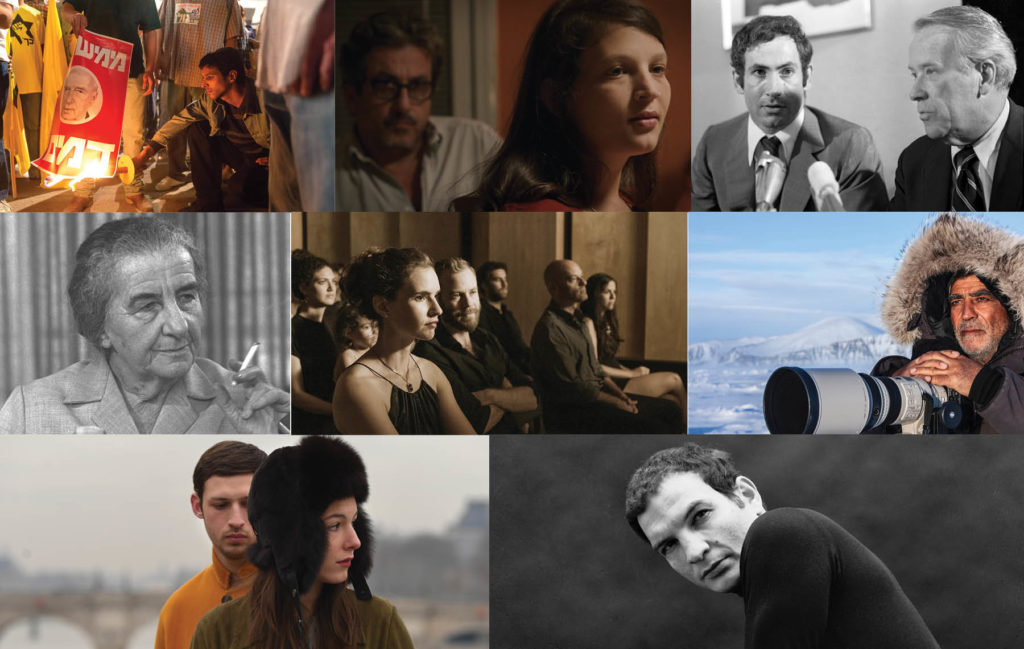
Now in its 33rd year, the Israel Film Festival (IFF) will bring a diverse mix of 30 features, documentaries, short films and TV series to Los Angeles.

The festival kicks off with an opening night gala at the Saban Theatre in Beverly Hills on Nov. 12 with the American premiere of “Incitement” and will honor producers Arthur Cohn and Sharon Harel-Cohen. Screenings will be held at the Laemmle Ahrya Fine Arts and Town Center 5 theaters over a two-week period ending Nov. 26. More than two-dozen filmmakers and stars will attend the gala and screenings of their films, and participate in Q&A sessions afterward.

IFF director Meir Fenigstein gave the Journal a preview. “The feature films are very personal stories, a very wide range of stories about babies, teachers, old people, love stories, crime, spies,” he said. “We have the most political films ever this year, about figures like Bibi Netanyahu, Golda Meir and Moshe Dayan who shaped Israel. It’s a real education in Israeli history. If people want to find out what Israel is today, the festival is the perfect place to come and see and learn.”

The documentary lineup is particularly strong this year, with “Golda,” the Netanyahu film “King Bibi,” the Holocaust story “You Only Die Twice” (sponsored by the Los Angeles Museum of the Holocaust), “Shai K,” about the late Israeli entertainer Shaike Ophir and “Picture of His Life,” about a nature photographer’s efforts to swim with a polar bear and capture it on film. “Ma’Abarot,” about immigrant transit camps in Israel, is the centerpiece selection, sponsored by the Jewish National Fund. 

On the narrative side, the selections include many film festival and Ophir award winners: “Synonyms,” about an Israeli in Paris; “Love Trilogy: Chained,” about a cop accused of a crime; and “God of the Piano,” about a musician who is devastated to discover her baby will be born deaf. There’s the father-daughter drama in “The Day After I’m Gone,” father-son conflict in “The Etruscan Smile,” and an ex-con and his family dealing with his return in “Forgiveness.”

On the comedy side, “Douze Points” is a caper set at the Eurovision Song Contest, “Mossad!” is a spy parody about a Mossad agent and a CIA agent competing to save the world from terrorists, “Love in Suspenders” follows a sweet senior citizen romance, and the award-winning “Tel Aviv on Fire” pokes fun at the Israeli-Palestinian conflict. It’s the festival’s closing night selection.

Attendees will get to sample two popular Israeli TV series: “Nehama,” a dramedy starring creator Reshef Levi, the best performance winner at Canneseries; and “The Dayan Family,” following five generations of the dynasty called “The Israeli Kennedys.”

Fenigstein promises something for everyone. “They’re good films that give a wide perspective on what Israel is all about — what’s happening now and what happened before,” he said. “Come out and support Israeli culture and enjoy the films.”

The Israel Film Festival runs Nov. 12-26. Visit the website for film schedule and other information. 

Israel Film Festival Los Angeles Highlights Read More »

Labour Party Deputy, Critic of Corbyn, Resigns in ‘Personal, Not Political’ Decision

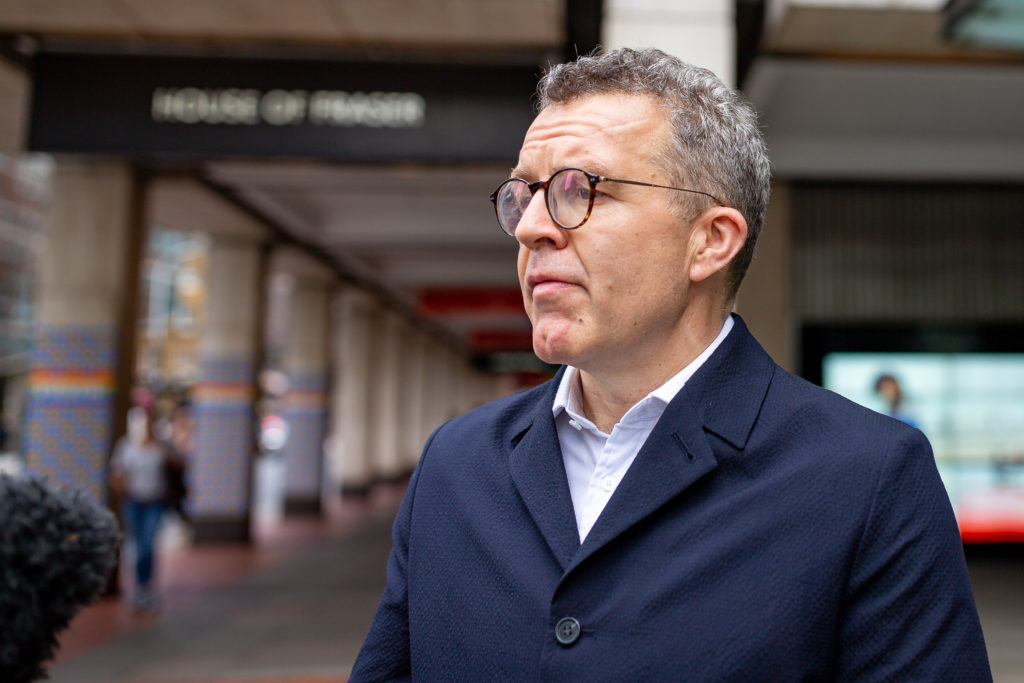
Labour Party Deputy Leader Tom Watson, who has been a frequent critic of Labour Party Leader Jeremy Corbyn’s handling of anti-Semitism in the party, announced his resignation on Nov. 6.

In a letter to Corbyn posted to Twitter, Watson said that his decision was “personal, not political” and that he’ll spend life as a private citizen writing about “the public health challenge facing our country.” Watson said that he will still be campaigning for certain Labour candidates.

The Times of Israel (TOI) notes that Watson has “been a major critic of Labour’s handling of an ongoing crisis over anti-Semitism,” which included him saying in 2018 that the party will “disappear into a vortex of eternal shame and embarrassment” if it didn’t adopt the International Holocaust Remembrance Alliance (IHRA) definition of anti-Semitism. The party adopted what critics say was a watered-down version of the IHRA definition of anti-Semitism.

In July, Watson told BBC Radio 4 Today that under Corbyn’s leadership, Labour has “failed to address adequately” the “permissive culture that people can use anti-Jewish, racist language.”

There have been at least 10 other Labour members in 2019 who have resigned from the party, most of whom citing Corbyn’s handling of anti-Semitism as their motivating factor for doing so. Watson did not cite that in his letter of resignation.

Tablet Magazine Senior Writer Yair Rosenberg tweeted, “The deputy leader of the British Labour party, one of the few vocal defenders of Jews within it against the party’s anti-Semites, is leaving after 35 years in politics and won’t run this election. Tells you all you need to know about why 94% of UK Jews say they won’t vote Labour.”

https://twitter.com/Yair_Rosenberg/status/1192176830385659904

Labour Party Deputy, Critic of Corbyn, Resigns in ‘Personal, Not Political’ Decision Read More »

Eight Decades of Family Drama Unfold in Hanukkah-Set ‘Eight Nights’

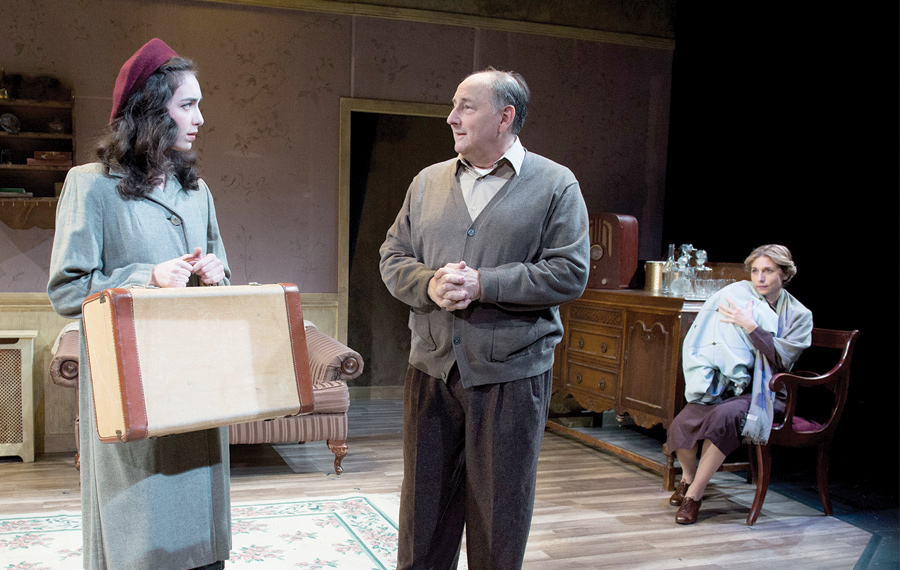
the play “Eight Nights” tells a multigenerational family story incorporating multicultural perspectives about the plight of displaced, marginalized and persecuted people, past and present. 

“It’s about a German-Jewish refugee who comes to the States after the Holocaust. It’s eight nights of her life over eight decades and it weaves in the interned Japanese, the African American experience and the Muslim refugee crisis,” playwright Jennifer Maisel told the Journal before a rehearsal in the run-up to the world premiere. She took inspiration from the story of the refugee ship MS St. Louis, which was forced to return Jews to Germany in 1939 when no country would allow it entry. “I felt that it reflected the same thing as the articles about sending Muslims back. I started writing this the day after [President Donald Trump’s] inauguration in 2016.”

Of Eastern European Jewish heritage, Maisel grew up Reform on New York’s Long Island, where she attended Hebrew school, had a bat mitzvah and loved celebrating Hanukkah and Passover “because they’re family-oriented,” she said. “I love how a family takes ritual and makes it their own.” (Her previous play is titled “The Last Seder.”) 

“Eight Nights” was developed at the Antaeus Theatre Company’s Playwrights Lab in Los Angeles, where director Emily Chase directed several early readings. “It’s the Jewish experience through time, a play about generations — a sort of double helix of mothers and daughters through time,” she said. “I love what it says about the universal human experience, and specifically, what it says about the Jewish experience. It’s also about what it’s like to have a family, to be a woman, a Jewish woman, and integrated families, and how our Jewish experience should open our hearts to the immigrant experience. We believe in teshuvah. We wouldn’t want to turn away people as we were [turned away] on the St. Louis.”

New York native Chase, who has taught and directed at USC, UCLA and Shalhevet High School, grew up knowing about the immigrant experience from her Yiddish-speaking grandparents. Her father-in-law was on the Kindertransport and she had him come in to speak to the cast. 

Top row: Emily Chase, Arye Gross, Jennifer Maisel; Bottom row: Zoe Yale, Tessa Auberjonois
Photo by Taylor Anne Cullen

“Of course, actors can play what they’re not,” Chase said. “But what we loved about landing a Jewish cast is that it is in their DNA, in their cultural identity and that’s one of the subjects of the play. We inherit trauma and resilience and to have actors with an emotional connection is like a shorthand.”

“What we loved about landing a Jewish cast is that it is in their DNA, in their cultural identity, and that’s one of the subjects of the play. We inherit trauma and resilience and to have actors with an emotional connection is like a shorthand.” 

— Emily Chase

Zoe Yale plays several versions of the character Rebecca. “I get to play my grandmother, my mother and my granddaughter,” she said. “It’s an incredible challenge getting to track that lifespan, how we deal with trauma and what we try to shield our children from,” she said. Raised Orthodox in Cincinnati, she had her bat mitzvah in Israel and discovered her love of acting in Jewish day school. Her paternal grandfather also escaped Nazi Germany on the Kindertransport. 

“Eight Nights” serves as a reminder of the lessons of the Shoah, Yale said. “The further that we move away from the Holocaust, the more you see resurgence of Holocaust deniers. We see a lot of hate and bigotry in the world, neo-Nazis popping up left and right,” she said. “Sometimes we treat history like this far-away thing but this play makes it alive, and it’s necessary that people feel that reality and see that threat. We’re only able to overcome it if we work together and take it seriously.”

Tessa Auberjonois, who plays older Rebecca, lost maternal ancestors in the Holocaust but was not raised Jewish because her parents (including actor Rene Auberjonois) were atheists. But she identifies as Jewish and has “spent time in my adult life trying to understand what Judaism is and what it means to me personally. It’s one of the reasons I wanted to do this role,” she said. “There’s something about being in a room full of Jewish people — a rigorous intellectual kind of discipline and a great sense of humor and a lot of heart at the same time,” she added. “It’s really special to be a part of.

“The thing that this play does so wonderfully is showing the effect that being a refugee or displaced or a victim has on a person and their family and the ripple effect that it has through time,” Auberjonois continued. “It’s a beautiful examination of that and how we forget.”

Arye Gross (“Castle,” “Glow”) portrays Rebecca’s father and also a Syrian refugee. An L.A. native who describes his connection to Judaism as “cultural and ancestral,” he has played numerous Jewish characters. For him, the lesson of “Eight Nights” is to follow Rebecca’s example in moving forward from her traumatic past by showing compassion to others. “The way to deal with the burden that we carry is not to ignore it but to move forward and to lessen someone else’s burden,” he said. “That’s what I hope people will get and understand. The oppressed and homeless and stateless should be treated with kindness and generosity.”

“The experience of the Jews is personal and special and gives us strength and depth and also can open our hearts to the needs and experiences of other people in the world and in our county,” Chase added. “As Jews, we have a call to repair the world.”

“Eight Nights” runs at the Kiki & David Gindler Performing Arts Center in Glendale through Dec. 16.

Eight Decades of Family Drama Unfold in Hanukkah-Set ‘Eight Nights’ Read More »