fbpx

August 22, 2019

38 Men Revive Sex Abuse Case Against Yeshiva University High School As NY Lifts Statute of Limitations

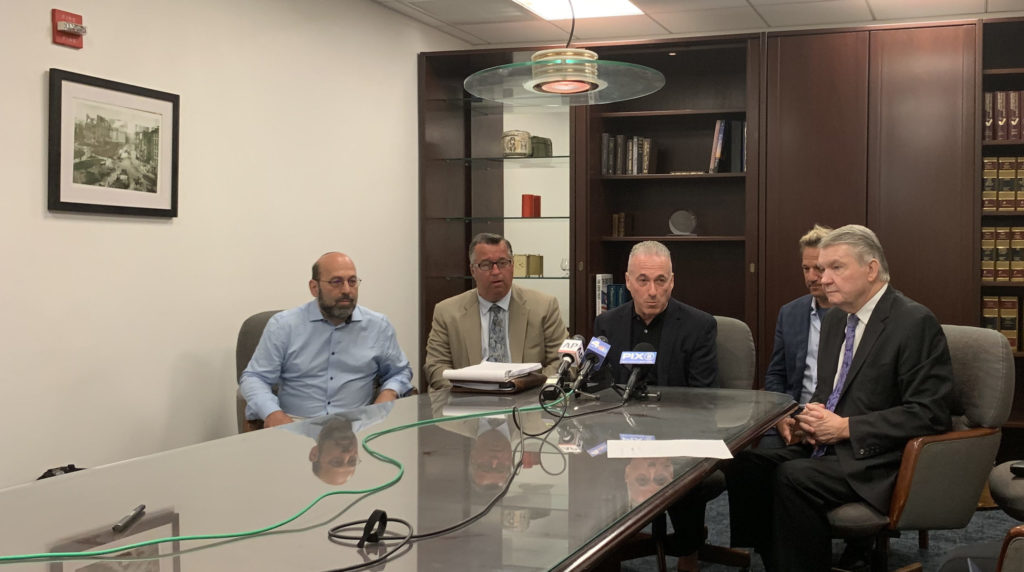
NEW YORK (JTA) — Thirty-eight men filed a lawsuit claiming they were sexually abused at Yeshiva University High School for Boys in a period from the mid-1950s through 1986.

The plaintiffs — five of whom are named — filed the civil lawsuit on Thursday against Yeshiva University, its high school, which is also known as Marsha Stern Talmudical Academy, board members of both institutions and two administrators, Rabbis Norman Lamm, the former Yeshiva University chancellor, and Robert Hirt, former vice president of its rabbinical school.

At a news conference here on Thursday, lawyers said that the New York-based Yeshiva University did not take action despite receiving multiple complaints of abuse relating to incidents spanning more than 30 years. Five staff members allegedly abused boys, though lawyers said two rabbis were responsible for the bulk of it: George Finkelstein, who served as principal, and Macy Gordon, a Jewish studies teacher.

A representative for the high school said the school was not commenting on the matter; a Yeshiva University spokesperson said it does not comment on pending litigation.

In 2014, a New York District Court judge dismissed a suit by 36 men claiming abuse at the high school, citing an expired statute of limitations.

But in February, Governor Andrew Cuomo signed into law the Child Victims Act, which allows victims in the state one year to file civil lawsuits, regardless of when the alleged abuse occurred. It went into effect last week and a flood of lawsuits are expected to be filed against educational institutions.

Kevin Mulhearn, one of the lawyers representing the men, says the team believes this is the largest suit filed to date under the Child Victim’s Act and the first one by plaintiffs who had been in a suit that was previously dismissed.

The lawsuit says Finkelstein repeatedly groped boys and that he specifically targeted the children of Holocaust survivors, telling them they would add to their parents’ suffering if they told them of the abuse. Gordon, a teacher, is being accused of sodomizing multiple young boys in a “vicious and sadistic” manner using objects, the suit says. Both men have denied the allegations. Gordon died in 2017.

Finkelstein was promoted in the late 1980s and named “Educator of the Year” in 1985 despite the school having received multiple complaints that he had abused boys, the lawsuit claims.

One of the plaintiffs, Barry Singer, told the Jewish Telegraphic Agency after the news conference Thursday that it was “empowering” to be able to participate in the suit.

“I thought that was the end,” he said of the case being dismissed in 2014 due to the statute of limitations. “So the fact that we get to turn around and come back and we suddenly seem to hold the upper hand is extraordinary and totally unexpected.”

38 Men Revive Sex Abuse Case Against Yeshiva University High School As NY Lifts Statute of Limitations Read More »

Left-Wing Anti-Semitism Has Had British Jews Debating Loyalty for Years

(JTA) — In the United States, many felt a line had been crossed when President Donald Trump asserted that it’s “disloyal” for Jews to vote for Democrats because the party has lawmakers who have used anti-Semitic and anti-Israel rhetoric.

His remarks Tuesday and Wednesday on this theme prompted an avalanche of condemnations from Jewish organizations, many of whom said Trump had invoked anti-Semitic tropes about dual loyalty. Some critics were especially incensed when the president clarified that Jews who vote for Democrats are “being disloyal to Jewish people” and “disloyal to Israel” — as if he could presume to tell them how “good” Jews vote.

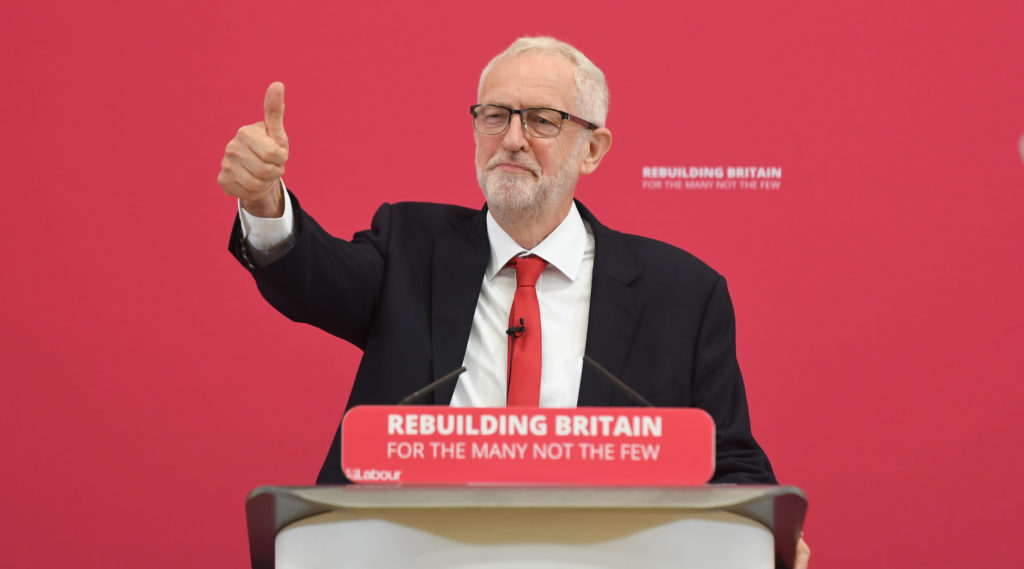
But for Jews in Britain, this discussion was nothing new. There, the growth of anti-Semitism in the left-wing Labour Party introduced years ago discussions on whether Jews who support it are betraying themselves and their coreligionists.

To be sure, it is off base to equate or compare the explosion of anti-Semitism within Labour under Jeremy Corbyn to its alleged expressions within the Democratic Party. Trump and other Republicans have focused on two freshman House Democrats, Ilhan Omar of Minnesota and Rashida  Tlaib of Michigan, who support the boycott Israel movement and have been accused of using anti-Semitic tropes. But the Democratic-led House overwhelmingly passed resolutions denouncing anti-Semitic rhetoric like Omar’s and rejecting the boycott.

By contrast, Corbyn, a far-left politician who was elected to lead Labour in 2015, is himself accused of promoting anti-Semitism, though he denies this. A British watchdog group, in a digital dossier that ran to 15,000 pages, documented hundreds of Labour members and officials promoting anti-Semitic views.

Many critics say Corbyn has instituted a laissez-faire attitude toward anti-Israel rhetoric that spills over to classic anti-Semitism. Numerous lawmakers have quit the party in disgust.

British Jewry’s leaders, including former chief rabbi Jonathan Sacks, said it would be an “existential threat” to their community were Corbyn to come to power. In a recent poll, 85 percent of British Jewish respondents said Corbyn is anti-Semitic.

By contrast, over 75 percent of American Jews voted for Democrats in the 2018 elections. Despite the emergence in its radical fringes of anti-Israel — and some say anti-Jewish — rhetoric,  the vast majority of Democratic lawmakers in the House and Senate staunchly support Israel, even if they are more likely than their Republican counterparts to disagree with its current government.

Still, British Jews understand better than most that the growth of anti-Semitism on the left is a “problem” and that American Jews “should not be complacent about it,” according to David Hirsh, a senior lecturer at Goldsmiths, University of London and an expert on left-wing anti-Semitism.

Corbyn for years had been a backbench outlier inside the Labour party, Hirsh noted. When he hosted Hamas and Hezbollah officials in parliament in 2009 and called them his friends, for example, he was dismissed as an entrenched radical with views so extreme they could never become influential within Labour, which was then still the political home for most British Jews.

When Corbyn defended an anti-Semitic London mural in 2013, British media was so indifferent to what many regarded as his contrarianism that it was barely reported. But Corbyn arguably has made this worldview party policy after becoming its leader thanks to a combination of factors, including a polarizing debate about globalization and Britain’s relationship with Europe.

“In Labour, Corbyn wasn’t in charge, and that’s the analogy,” Hirsh said, meaning the prominence of first-term lawmakers Omar and Tlaib. “The point is not that this phenomenon appeared on the fringe, but that we should not let it become mainstream.”

The mainstreaming of anti-Semitic rhetoric within Labour’s ranks ushered in a debate within the Jewish community and beyond on whether it was ethical, sensible and — yes — loyal for Jews to continue to support Labour.

The Conservative cabinet minister Sajid Javid angered some Jews when, in a Rosh Hashanah greeting last year, wrote that when British Jews are feeling under threat from Corbyn, “all decent people” must “stand together and celebrate our Jewish community.” To critics, the implication was that Jews who support Labour aren’t decent.

Others have been more explicit. Fred Dalah, a 64-year-old Jewish businessman from Edgware in northern London, wrote in 2018 in the Jewish News of London that, “Jews who vote Labour are lambs to the slaughter.”

In addition to Sacks, the president of the Board of Deputies of British Jews and three of the leading British Jewish newspapers have called Corbyn an existential threat to British Jewry. These warnings were designed to sound an alarm and prevent Corbyn from becoming prime minister. But they also emboldened British Jews and non-Jews to call out Jewish supporters of Corbyn as traitors.

At the same time, Corbyn’s supporters cite these loud warnings as a political attempt to weaponize anti-Semitism and sabotage a left-wing politician’s chances.

All this means that, in Britain, “Now you have the situation where there is good Jews, bad Jews, and good anti-Semites and bad anti-Semites,” said Dave Rich, head of policy at the Community Security Trust and author of a 2016 book, “The Left’s Jewish Problem: Jeremy Corbyn, Israel and Anti-Semitism,” during a speech in 2018. “I don’t think this is really going to work.”

Left-Wing Anti-Semitism Has Had British Jews Debating Loyalty for Years Read More »

NYT Editor Deletes, Apologizes for ‘Offensive’ Tweets, Including ‘Crappy Jew Year’

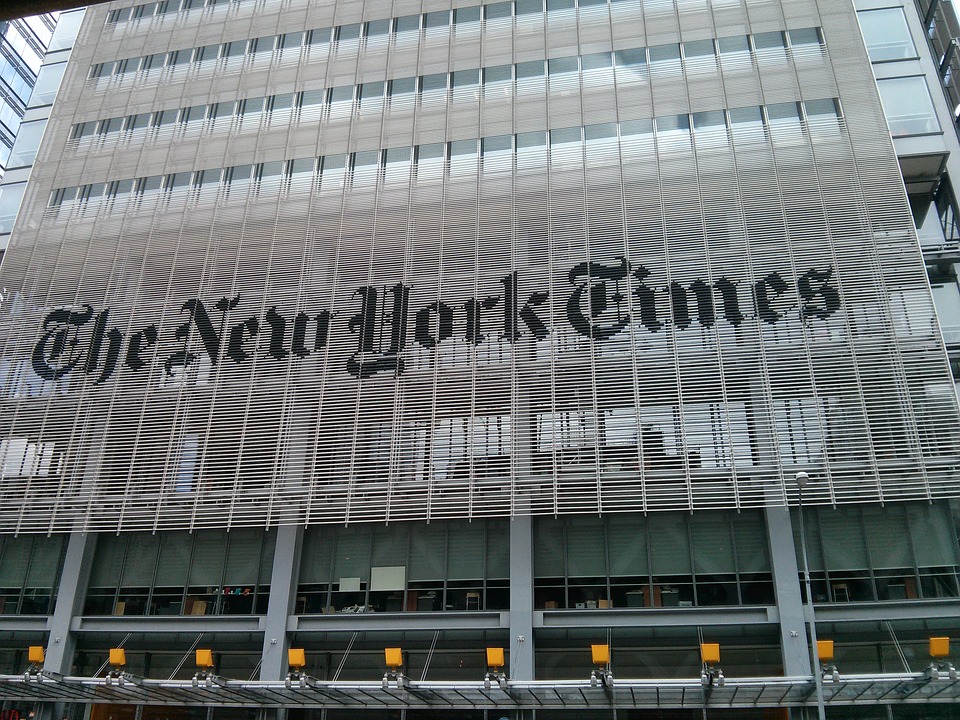
New York Times Senior Editor Tom Wright-Piersanti apologized for his “offensive” tweets from his past on Aug. 22. He deleted many of them, including tweets about Jews.

Among Wright-Piersanti’s tweets include a Jan. 2010 tweet that stated, “I was going to say ‘Crappy Jew Year,’ but one of my resolutions is to be less anti-Semitic. So… HAPPY Jew Year! You Jews.”

Wright-Piersanti also tweeted about the Holocaust that same year. In one Jan. 2010 tweet, he wrote, “Hahahahaha the Jesus Camp kids just did a special on the Pledge of Allegiance to the Bible and my dad ended it with ‘Praise Hitler.’” 

He also tweeted to Joe Jonas later in the year, “What’s your favorite Sleighbells the band lyrics? Mine is ‘Flip that Holocaust, hang it on the colored cross.’”

Additionally, in 2009, Wright-Piersanti shared a photo of a vehicle carrying a menorah and asked, “Who called the Jew police?”

“I have deleted tweets from a decade ago that are offensive,” he wrote Aug. 22. “I am deeply sorry.”

Wright-Piersanti’s Twitter account is currently protected due to his privacy settings.

Rep. Lee Zeldin (R-N.Y.), the sole Jewish Republican in the House of Representatives, called for the Times to fire Wright-Piersanti in an Aug. 22 tweet.

“.@nytimes has a political editor @tomwp who literally describes himself on Twitter as anti-Semitic & has slammed Jews, Native American Indians & others,” Zeldin wrote. “This isn’t an intern. It’s an editor. Someone should walkover to his desk, tell him to pack up & escort him out.”

Associate Dean and Director of Global Social Action Agenda at the Simon Wiesenthal Center Rabbi Abraham Cooper told the Journal in a phone interview, “What would or did The New York Times do to someone in a position of responsibility who made expressions of anti-African, anti-Latino, or anti-LGBTQ? Whatever they did in responding to them, they should be applied to him.”

He proceeded to call for the Times to undergo a “top-to-bottom review” from the outside about their “views regarding the Jewish people” and make “structural changes.” 

Cooper said that he and Simon Wiesenthal Center Founder Rabbi Marvin Hier had met with three members of the Times editorial board during the ensuing aftermath of the controversy in May regarding a cartoon showing Israeli Prime Minister Benjamin Netanyahu guiding a blind President Donald Trump. Cooper said “It’s clear that the Times has a problem and they may have a cultural problem that they’re going to have to deal with in house.” 

Earlier in the month, Times Deputy Washington Editor Jonathan Weisman, who wrote a book in March 2018 about anti-Semitism, was demoted over racial tweets the Times viewed as “serious lapses in judgment.” Weisman apologized for the tweets.

Times spokesperson Danielle Rhoads told the Washington Examiner, “We are aware of these tweets, which are a clear violation of our standards. We are reviewing next steps.”

NYT Editor Deletes, Apologizes for ‘Offensive’ Tweets, Including ‘Crappy Jew Year’ Read More »

All the Deserts We’ve Loved Before – A poem for parsha Ekev

You shall be blessed above all peoples

I don’t want to be blessed above all other people
I just want to make sure my mortgage gets paid
and everyone has enough to eat.

And when I say everyone I mean everyone.
Not just me and us who built pyramids in one desert
wandered around a second one for forty years

and are about to make a third one bloom.
I mean all the ones who we’ve been given the
strength to defeat, whose kings have been

driven into our hands, whose Gods have been
un-God-ified, whose names have been erased
into less than dust

while we’ve been eating meat that’s come out of
our noses and whatever comes forth from the
mouth of the Lord.

Because, as it turns out, it’s all one desert
and it’s getting hotter. It’s getting so
unbearably hot.


God Wrestler: a poem for every Torah Portion by Rick LupertLos Angeles poet Rick Lupert created the Poetry Super Highway (an online publication and resource for poets), and hosted the Cobalt Cafe weekly poetry reading for almost 21 years. He’s authored 23 collections of poetry, including “God Wrestler: A Poem for Every Torah Portion“, “I’m a Jew, Are You” (Jewish themed poems) and “Feeding Holy Cats” (Poetry written while a staff member on the first Birthright Israel trip), and most recently “Hunka Hunka Howdee!” (Poems written in Memphis, Nashville, and Louisville – Ain’t Got No Press, May 2019) and edited the anthologies “Ekphrastia Gone Wild”, “A Poet’s Haggadah”, and “The Night Goes on All Night.” He writes the daily web comic “Cat and Banana” with fellow Los Angeles poet Brendan Constantine. He’s widely published and reads his poetry wherever they let him.

All the Deserts We’ve Loved Before – A poem for parsha Ekev Read More »

Swedish Member of Parliament Challenges Iranian Foreign Minister on Human Rights

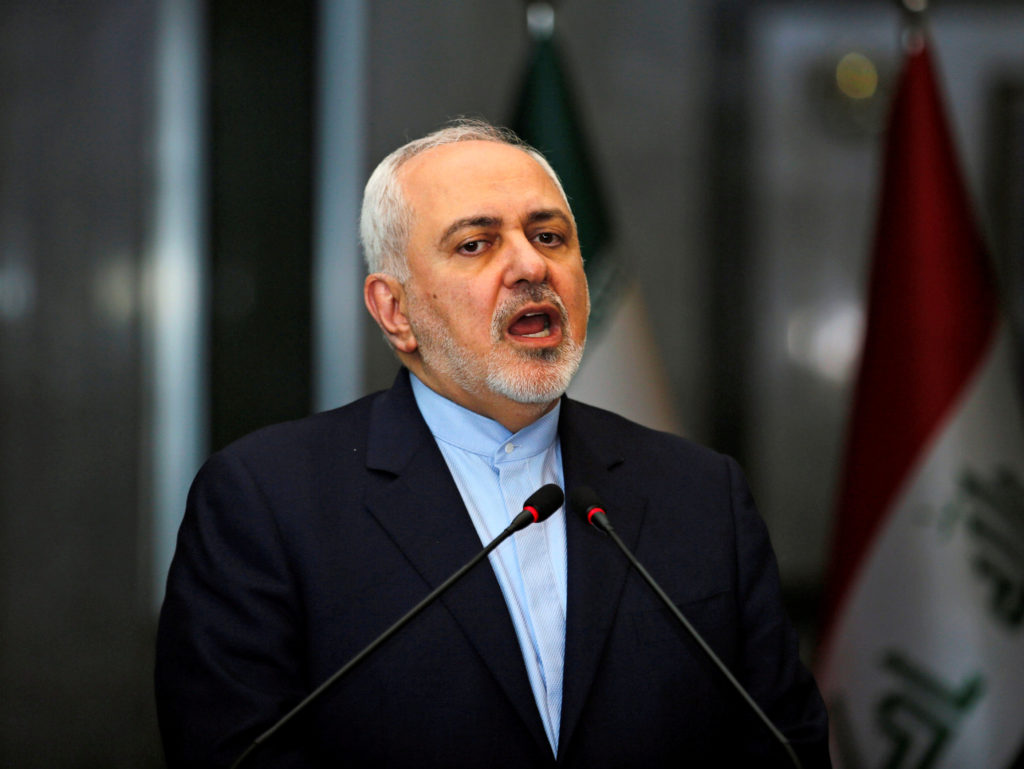
A Swedish member of parliament confronted Iranian Foreign Minister Javad Zarif during an Aug. 21 press conference about Iran’s human rights record, particularly when it comes to the regime’s treatment of members of the LGBTQ community.

The MP, who could not be clearly identified in video of the conference, told Zarif that members of the LGBTQ community are being “hanged in murder by the [Iranian] government” as are others who exercise “freedom of expression.” 

He then asked, “How can you speak of peace, security and freedom of protecting fundamental rights inside and out of Iran, when the government that you represent cannot give this to its own people?”

Zarif argued in response that the Iranian regime’s ability to hold onto power without the help of outside forces suggests that the regime isn’t a serial abuser of human rights, adding that 73 percent of Iranian can vote in elections.

“Homosexuality is illegal in Iran, just like how wine is illegal in Iran,” Zarif said, drawing the analogy that those who get drunk inside their home aren’t arrested but if they’re inebriated outside the house, they are. He then defended Iran’s codified Islamic law, saying the regime respects Jewish and Christian canon law.

“We have the largest Jewish population in the Middle East outside Israel,” Zarif said. “They apply their own canon law. They can even buy and sell between themselves, even though it’s illegal in the country.”

Journalist Annika Rothstein tweeted in response to Zarif her 2016 Mosaic Magazine piece on Jews in Iran. Rothstein explains in the piece that she visited Jewish communities in Iran, saying that many have developed “Stockholm Syndrome” with the Iranian regime after learning to live with “low-grade fear” that their rights could be taken away at any time.

What I find most disturbing are Jews’ outbursts of loyalty toward the regime, their constant assurances about their own wellbeing, and their repeated insistence on the difference between Jewishness (tolerated) and Zionism (emphatically not),” Rothstein wrote at the time. “As at my Sabbath-eve dinner, all speak highly of their special bond with Muslim neighbors. I’m quite familiar with this type of forced alienation, complete with routine denunciations of and dissociations from the state of Israel: after all, I’m a Jew from Sweden.”

She also recalled an instance during her visit to Iran when “an elderly man” in the synagogue she attended during Shabbat approached her and said, “Please pray for our safety and our lives. If they are telling you everything is ok, they are lying.”

Former Forward Editor Larry Cohler-Esses wrote in an April 2018 Jewish Telegraphic Agency piece that after the ayatollahs assumed control of Iran in 1979, the Jewish population in the country has declined from nearly 100,000 at the time to 9,000 currently.

Swedish Member of Parliament Challenges Iranian Foreign Minister on Human Rights Read More »

Sen. Booker: Trump’s Statement about Jewish Disloyalty is ‘Outrageous Stuff Offending All Americans’

Speaking to reporters on Aug. 22 during a visit to Los Angeles, 2020 presidential candidate Sen. Cory Booker (D-N.J.) denounced President Donald Trump’s Aug. 20 statement that Jews who vote Democrat lack knowledge or are disloyal.

“I’m running for president to unify this country,” he said. “We are a nation of many religions, many ethnicities, and we are a nation of one purpose, one destiny, one love, and it’s about time we get back to having leaders that show the best of who we are and unite us — not like this guy who is saying outrageous stuff that is offending all Americans.”

Booker made his remarks following a panel on gun violence with Los Angeles Mayor Eric Garcetti at at the Crenshaw-area co-working space Vector90. Garcetti also denounced Trump’s comments.

“I think all American Jews are great Americans, even the quarter that votes Republican, unlike me,” said Garcetti, who is of Mexican, Russian Jewish and Italian heritage, and also a Democrat. “I think this is a moment for us to see racism when you hear it, whether it’s starting a campaign calling my other half, Mexican Americans, ‘rapists and murderers,’ or whether it’s now saying Jews who don’t vote for this guy are somehow disloyal. It’s fundamentally wrong, it’s un-Jewish and more importantly, it’s un-American.”

Booker, who isn’t Jewish, even cited the Torah in his remarks, saying, “I have studied Judaism. Jews have a very powerful belief about tikkun olam, healing the world, not dividing it as Donald Trump does. There is a beautiful song sung during the High Holidays that has the line in it, ‘Ki beiti beit tefillah l’chol ha-‘amim,’ ‘May my house be a house of prayer for many nations.’ It’s a very Jewish idea. It’s about bringing people together …in a pluralistic way and showing that strength, justice, kindness and decency comes as a result of that.

Trump, Booker said, “is trying to divide us against ourselves. He is playing into literally what the Russians are trying to do, which is to pit Americans against Americans and have us crumble and fall from within because they know that a house divided cannot stand.”

While many Jewish organizations have denounced Trump’s ‘disloyalty’ remarks, the Republican Jewish Coalition supported the president’s comments.

However, according to the Pew Research Center, Jews have continued to remain largely supportive of Democrats during the course of the Trump presidency, with nearly 80% voting for Democrats in the 2018 mid-term elections.

Sen. Booker: Trump’s Statement about Jewish Disloyalty is ‘Outrageous Stuff Offending All Americans’ Read More »

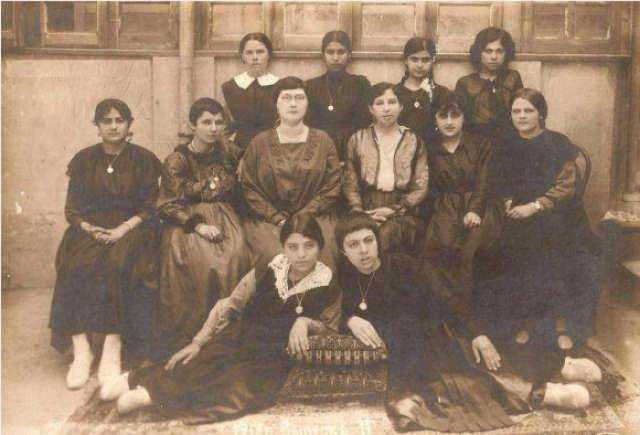
Celebrating 100 Years of Voting Rights for Women in Azerbaijan

This world has never been a simple place for women. For centuries we have been held back, across the globe, and limited in the most basic and fundamental areas of life. Yet this past century has seen a dramatic, life-altering shift for women around the globe. Despite significant challenges, many women today enjoy a relatively greater degree of liberty, much of which is protected by laws and constitutions and supported by a major shift in attitude and ideology regarding the worth and capabilities of women.


In Azerbaijan, we started a bit early on the trend of women’s liberation. In fact, just this past July 21, 2019, we celebrated 100 years of women’s equality in Azerbaijan. Our nation’s shift to full and equal rights for women began long before the advent of suffrage, but it was codified on July 21, 1919 when all Azerbaijani women, upon the age of 20, were granted the right to vote and run for election for public office.


This law was passed by the Parliament of the Azerbaijan Democratic Republic. When this Republic was proclaimed in 1918, becoming the first ever secular democracy among all Muslim nations, it announced the equality of all citizens of Azerbaijan regardless of gender, race, ethnicity or religion. But in July 1919 the law concretized the full suffrage for women, making Azerbaijan a champion of women’s rights.


Namely, Azerbaijan achieved this historic milestone many years ahead of most of the nations of the world, and even before the United States granted women the right to vote (1920). This is especially unique considering that Azerbaijan is a majority-Muslim country, and obviously acheived this far before any other Muslim nation in the world. Azerbaijan’s historic and celebrated tendency toward progress and freedom has been a critical component in enabling our early embrace of women’s rights, and we see examples of this broader quality in other unique decisions Azerbaijan has made. Most notable is Azerbaijan’s thousands of years of embracing and protecting Jewish communities, whether native to Azerbaijan or for the many that fled to our majority-Muslim nation at times of grave persecutions and dangers across Europe, the Middle East and most surrounding areas. We have always thrived on innovation, and this quality is most especially impactful and beautiful when it comes to our way of relating to other people. Jews, Christians, Baha’is and all others that peacefully live in our country, as equal citizens with all rights; foreign residents, students, those who travel for business, tourism, or visitors of any kind – all are welcome in Azerbaijan.


Visitors to our capital city of Baku often visit our famous Statue of a Liberated Woman, an enormous work of art, depicting a beautiful, proud and powerful woman looking forward, as she removes her veil. This statue epitomizes our approach to women.


Conditions for women are improving, so are the country’s international rankings. For instance, in World Economic Forum’s 2018 Global Gender Gap Index, in the category of economic participation and opportunity, Azerbaijan leaves behind not only its immediate neighbors Armenia and Georgia, but also many European Union members such as Austria, France, UK, Belgium, Netherlands, Spain, Greece, Poland and others. In the Index’s category of educational attainment for women, Azerbaijan beats the majority of developed nations, including the United States.


As a mother to a young adult, I see my daughter stepping out into a world of her own, and yet one with a shared system of values that I know will empower and protect her as she lives her life. Together, we celebrate this milestone of women’s liberty, 100 years of suffrage in Azerbaijan, and we realize the many bold and brilliant women of Azerbaijan that are leading today and also those that have come before our time, breaking down barriers. Our family celebrates the anniversary of women’s suffrage in Azerbaijan every year, and we discuss the growing list of examples where women have shaped our history, in politics, art, medicine, poetry; in every facet of life. We have amazing female leaders such as the First Vice President Mehriban Aliyeva, 21 female members of our Parliament, Supreme Court Justices, including Tatyana Goldman, who is Jewish, and others to recognize.


My prayers are that our values and blessings that have brought us to this 100 year anniversary should spread to those regions nearby and abroad, where women and others are still held back and even harmed, and it is my greatest prayer, that the much larger and unstoppable commitment to tolerance and acceptance for all people, should overtake the entire world.

Celebrating 100 Years of Voting Rights for Women in Azerbaijan Read More »