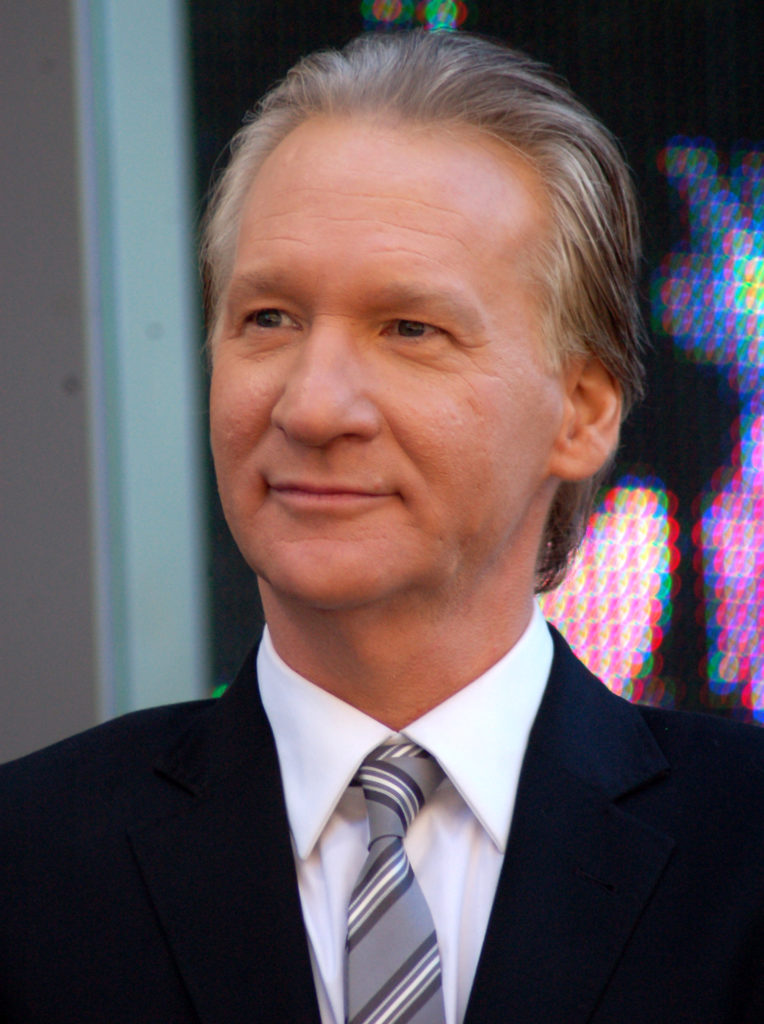
Bill Maher responded to Rep. Rashida Tlaib’s (D-Mich.) call to boycott his HBO show “Real Time with Bill Maher,” criticizing Tlaib for resorting to her only “one move.”
On Aug. 16, Maher said that the boycott, divestment and sanctions (BDS) movement is “a bulls— purity test.” Tlaib tweeted the following day, “Maybe folks should boycott his show. I am tired of folks discrediting a form of speech that is centered on equality and freedom. This is exactly how they tried to discredit & stop the boycott to stand up against the apartheid in [South] Africa. It didn’t work then and it won’t now.”
Maher responded in an Aug. 21 tweet, “Some people have one move only: boycott. Cancel. Make-go-away. But here’s the thing, the house voted 318 to 17 to condemn the #BDS movement, including 93% of Dems. Does Tlaib want to boycott 93% of her own party?”
Maher later followed up: “Hey I got my number of rep.s who voted to condemn BDS wrong – it’s actually even more, not 318, it’s 398.”
Some people have one move only: boycott. Cancel. Make-go-away. But here’s the thing, the house voted 318 to 17 to condemn the #BDS movement, including 93% of Dems. Does Tlaib want to boycott 93% of her own party? pic.twitter.com/0QrPQmwwiw
Maher also said during his Aug. 16 show that BDS supporters routinely criticize Israel but fail to acknowledge “the Intifadas and the suicide bombings and the rockets.” He also pointed out that BDS co-founder Omar Barghouti has openly stated that no “rational Palestinian” would “ever accept a Jewish state in Palestine.”
“Somehow this side never gets presented in the media,” Maher said.
The Beverly Hills City Council unanimously passed a resolution at its Aug. 20 city council meeting condemning the drafted statewide Ethnic Studies Model Curriculum (ESMC).
The resolution states that the “poorly created curriculum fails to properly respect the Jewish faith and people” and is “discriminatory” toward Jews. The resolution also stated that the ESMC portrays the boycott, divestment and sanctions (BDS) movement in a favorable light and doesn’t provide any counterarguments to the BDS narrative.
“The City of Beverly Hills hereby calls upon the State Board of Education (SBE) and Instructional Quality Commission (IQC) to immediately rescind the draft curriculum in its current form,” the resolution states.
The city council urged the board and commission “to meet with leaders of the Jewish faith to correct misinformation and present a more accurate and respectful depiction of the religion.”
Prior to the vote, Mayor John Mirisch called the ESMC anti-Jewish, arguing that “the notion of teaching BDS… is not only wrong, it’s actually sickening.” “BDS,” he said, “is BS.”
Councilmember Julian Gold said that the commission developed the ESMC “in the most divisive way. It would have been perfectly reasonable to have created a curriculum that was all-inclusive that spoke about hate and racism and responded to everybody, but in a state where 63 percent of hate crimes are reported against Jews while only 14 percent against Muslims, you would think that somehow this body – constituted by this state, with tax dollars which we pay – would at least get the facts right,” Gold said.
He added that the drafted ESMC was a warning sign as it wasn’t the first time the state academic institutions have adopted anti-Israel positions.
“You don’t have to look any further than UCLA, which allowed the largest pro-Palestinian conference not too long ago despite the protests of many, including the condemnation of the [Los Angeles] City Council,” Gold said, referencing the National Students for Justice in Palestine conference held at UCLA last Nov. 16-18.
Gold then called for a recall campaign against the 18 members of the IQC panel that drafted the curriculum, explaining that the 11-member SBE appoints them and the governor appoints the members of the SBE.
“For them to come up with this sort of divisive, racist propaganda and promote this as curriculum in the state is beyond disgusting,” Gold said. “It’s malpractice. It’s malfeasance. They deserve to go, all of them. And if the governor doesn’t do it, then he deserves to go too.”
Councilmember Lili Bosse, the daughter of Holocaust survivors, echoed Gold’s sentiments.
“I feel like we’re actually back to where we were during World War II, where hatred and racism and religion really became just the voice of a few people that grew to extinguish millions of Jews and millions of others,” Bosse said. “So it is our duty, all of us, to stop this now.”
All eight people who spoke during the public comment section praised the city council’s decision.
“As a Jewish student, I cannot imagine being forced to sit in a classroom where we are taught to be hating Israel and taught to view Israelis as murderers of innocent people,” YULA Girls High School student Yael Gluck said. “I would feel completely unsafe in that classroom and in any school that teaches such hate.”
She added the students who would be inculcated with the ESMC are “our neighbors, our future co-workers and classmates in college.”
On Aug. 12, the SBE announced that the current ESMC proposal will be replaced with an entirely new draft. The deadline for the SBC to approve the ESMC is Mar. 31, 2020.
Shabbat Under the Stars You are invited to a unique Shabbat experience with American Jewish University’s Intro to Judaism event at the school’s upper campus in the hills above Los Angeles. Children and adults watch the sun set and the Sabbath rise while enjoying “Shabbat Under the Stars” on the large lawn next to the basketball court. Join Rabbi Adam and Amy Robinson Katz in celebrating with familiar Shabbat melodies. 6:15-9 p.m. $5 adults. Free for children 12-and-younger. American Jewish University, 15600 Mulholland Drive, Bel Air. (310) 440-1273.
Shabbat at the Beach Surrounded by surf and sand, Kehillat Israel’s ninth annual Shabbat at the Beach BBQ at Will Rogers State Beach in Pacific Palisades begins early with 90 minutes of barbecuing festivities. Kosher meals ($8-10) are available by pre-ordering online. Enter the parking lot at the intersection of Temescal and Pacific Coast Highway, continuing north to Lifeguard Station No. 5. 4:45 p.m. Barbecue activities. 6:15 p.m. Shabbat services. (310) 459-2328.
SAT AUG 24
Confronting Anti-Semitism Philanthropist Adam Milstein, a real estate investor, co-founder of the Israeli-American Council and an ardent fighter for Israeli causes, speaks after Shabbat services at Nessah Synagogue. He discusses “Anti-Semitism Is Here Now: How Each One of Us Can Make an Impact and Fight Back.” An arch foe of the anti-Israel boycott, divestment and sanctions (BDS) movement, Milstein says, “We should teach [Israel’s enemies] there is a price, there is accountability for anyone who attacks us.” 9:15 a.m. service. Nessah Synagogue, 142 S. Rexford Drive, Beverly Hills. (310) 273-2400.
Trivia Night This can be the evening that retaining the random, seemingly useless facts you have been idly collecting for years pays off. Trivia Night was made for you and your like-minded friends. A professional game night emcee hosts. Prizes and refreshments are your rewards. 8-10 p.m. $10. Adat Ari El, 12020 Burbank Blvd., Valley Village. (818) 766-9426. RSVP by clicking the link above.
SUN AUG 25
“Fiddler: A Miracle of Miracles”
“Fiddler: A Miracle of Miracles” The Los Angeles Jewish Film Festival holds a special screening of “Fiddler: A Miracle of Miracles,” a 2019 documentary that visits personalities from the 1971 classic “Fiddler on the Roof.” The documentary features clips from the original film and various productions along with commentary by “Fiddler” admirers Stephen Sondheim and Lin-Manuel Miranda, among others. The audience takes part in a live Q&A session with Barbara Isenberg, author of the bestseller “Tradition!” and Stephen Sass, president of the Jewish Historical Society of Southern California. Advance ticket purchase advised. 4:40 p.m. $15. Laemmle Royal, 11523 Santa Monica Blvd., Los Angeles. (800) 838-3006.
Sephardic Family Picnic Four entertainment-filled hours await everyone who participates in the Sephardic Temple Tifereth Israel’s annual Family Picnic at Rancho Park. Ample food and drink will be available for purchase and attendees enjoy games all over the park. 11 a.m.-3 p.m. Rancho Park, 10460 W. Pico Blvd. (310) 475-7000.
Mames Babegenush
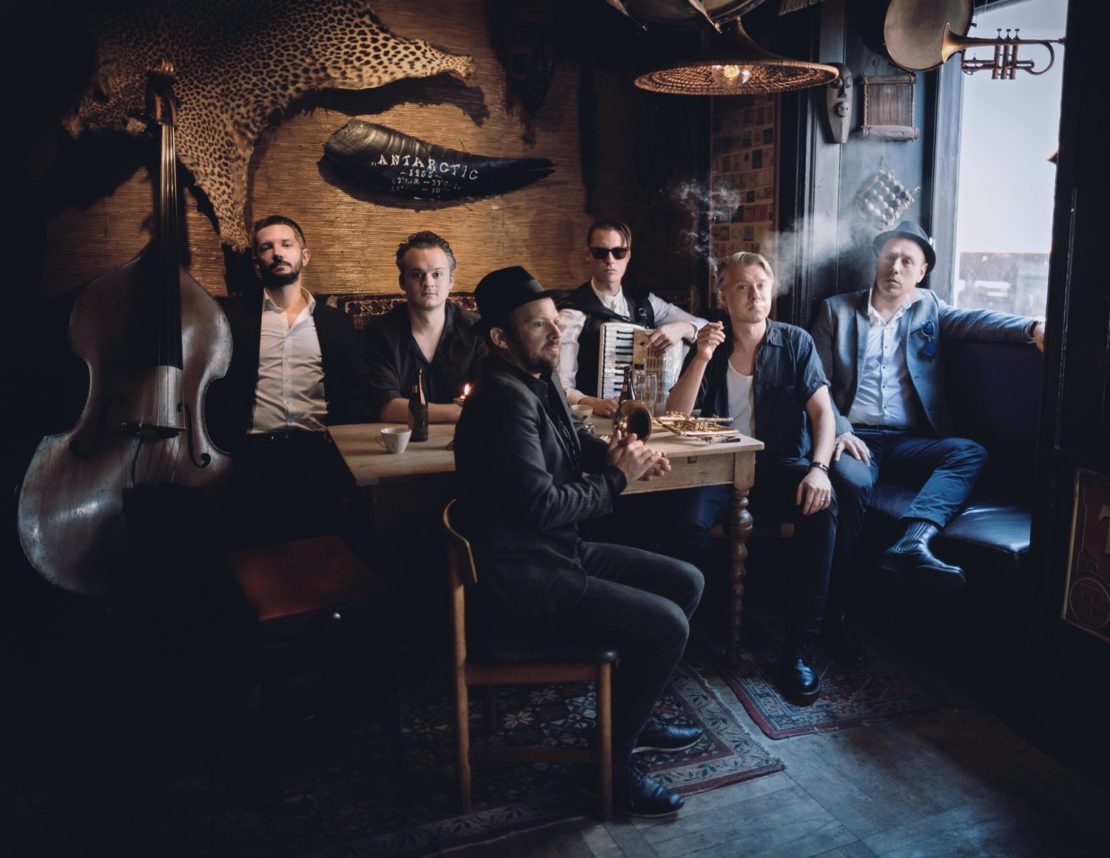
Mames Babegenush Arrives Romania and Eastern Europe meet Scandinavia when Copenhagen-based Mames Babegenush performs in concert. The six-member genre-bending ensemble blends classic Jewish melodies with sounds as diverse as Romanian gypsy, tango, rock, cumbia, electronica and Israeli folk music. 9-11:30 p.m. $30. Corazon Performing Arts, 125 S. Topanga Canyon Blvd., Topanga.(310) 795-1373.
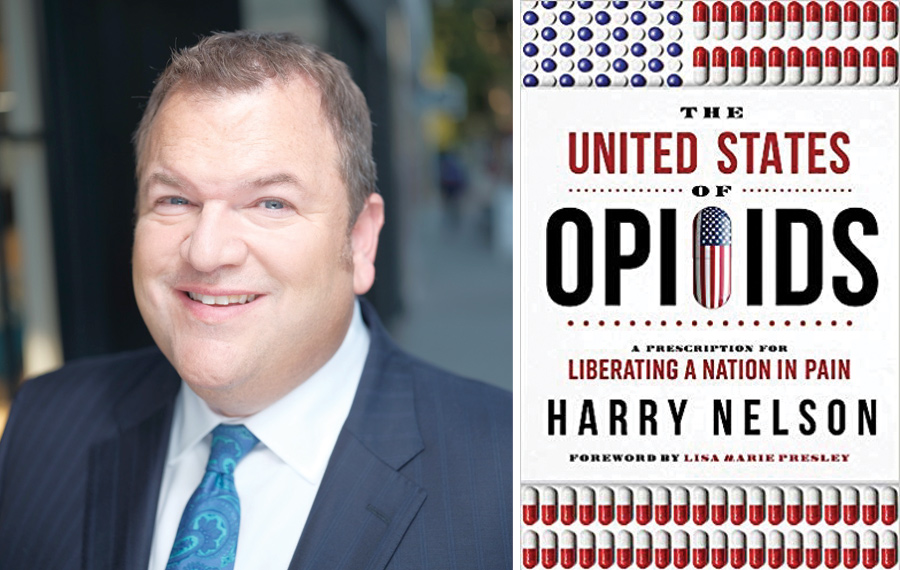
Opioids, A Jewish Problem Asserting that the opioid abuse epidemic also affects Jews, addiction treatment center Beit T’Shuvah holds a conversation with health care attorney and author Harry Nelson (“The United States of Opioids: A Prescription for Liberating a Nation in Pain”) in conversation with Harriet Rossetto. Rabbi Mark Borovitz moderates. 11 a.m.-2 p.m. $36, including Nelson’s book. Beit T’Shuvah, 8831 Venice Blvd., Los Angeles. (310) 204-5200.
BarkBody Boot Camp
Join the young leadership of Friends of Sheba Medical Center for “Sheba 2.0 x BarkBody Fit,” a dog-friendly workout session with Carissa Brones, certified personal trainer and fitness instructor. No dog? No problem. All dog lovers welcome. 11 a.m.-noon. $36, includes light refreshments. Holmby Park, 601 Club View Drive, Los Angeles. (310) 775-2576. For additional information, contact Rachel Blankstein at rachel@shebamed.org.
Genealogical Panel Curious about your family’s history or related issues? You are invited to the monthly meeting of the Jewish Genealogical Society of the Conejo Valley and Ventura County at Temple Adat Elohim. In addition to an Ask the Experts panel, highlights from last month’s International Association of Jewish Genealogical Societies conference in Cleveland are reviewed. 1:30-3:30 p.m. Free. Temple Adat Elohim, 2420 E. Hillcrest Drive, Thousand Oaks. (805) 497-7101.
Sephardic Food and Wine Pairing Attention Jewish young professionals (ages 21-39): Jimena in L.A.’s Sephardic Food and Wine Pairing event, on a Santa Monica Place rooftop, offers a chance for a memorable evening at a one-of-a-kind event. Five courses are served at the pairing featuring Yarden Wines from the Golan Heights Winery. A perspective on the history of the Jewish people and wines is provided by Bill Henry, Yarden’s regional manager. Kosher laws observed. No tickets at the door. 6-9 p.m. $80. Expert Dojo, Unit 308, 395 Santa Monica Place, Santa Monica.
Wine & Scotch Tasting
Looking for a pleasantly unusual way to spend a late Sunday afternoon? Kehillat Ma’arav synagogue hosts a premium Wine & Scotch Tasting, courtesy of Eileen and Lew Goldberg of the Divine Wine Co. 4-6 p.m. $10 per person suggested donation. Kehillat Ma’arav, 1715 21st St., Santa Monica. (310) 829-0566.
TUE AUG 27
‘Einstein!’ Returns “Einstein! Celebrating 100 Years of General Relativity,” Jack Fry’s one-man play, is back by popular demand after 11 consecutive sold-out performances at the Santa Monica Playhouse. Fry explores Einstein’s early years in war-ravaged Berlin. He also incorporates recently released findings about Einstein. 7:30 p.m. $45 general tickets, $65 VIP. Santa Monica Playhouse, 1211 4th St., Santa Monica. (310) 394-9779.
WED AUG 28
Spoonful of Chesed Here is an opportunity for the youngest to the oldest in your family to team up and make a difference in the community. If you are at least 10 years old, join with Sinai Temple’s Social Action Committee and Sisterhood in creating meals for the needy, an act of chesed (kindness). RSVP, nguzik@sinaitemple.org or (310) 481-3234. 7-9 p.m. Free. Sinai Temple, 10400 Wilshire Blvd. (310) 474-1518.
Jews of South Central Early in the 20th century, working-class Jews chose South Central Los Angeles for their homes, did business there and built at least a dozen grand synagogues. In his next lecture and visual presentation on the history of Jews in Los Angeles, Shmuel Gonzales, the Barrrio Boychik, explores why these early settlers picked South Central and why they moved west in the 1950s and ’60s, especially after the 1965 Watts riots. 7-9 p.m. Free. Boyle Heights History Tours, 2026 E. 1st St., Los Angeles. (323) 902-6953.
Have an event coming up? Send your information two weeks prior to the event to ryant@jewishjournal.com for consideration. For groups staging an event that requires an RSVP, please submit details about the event the week before the RSVP deadline.
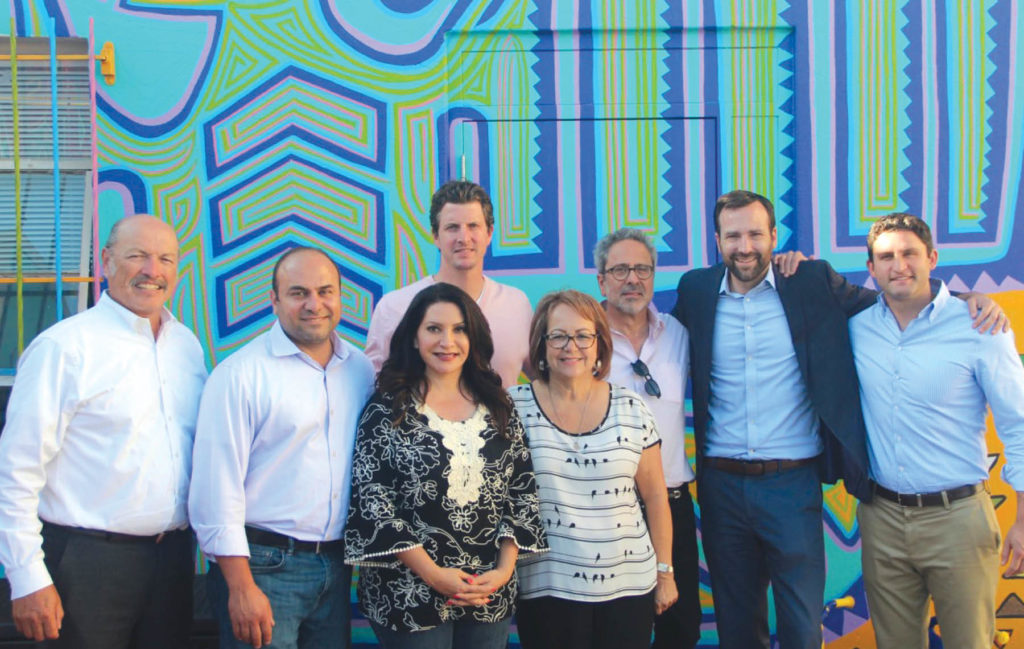
Legislators from the California Legislative Jewish Caucus and the California Latino Legislative Caucus visited the Otay Mesa Detention Center and the Jewish Family Service (JFS) Migrant Family Shelter in San Diego, on Aug. 9.
The delegation toured both facilities, conducted interviews with detainees at Otay Mesa and met with migrant families at the JFS facility.
The trip was organized by the Jewish Caucus, which has grown increasingly concerned with federal immigration policy and widespread reports of abuse and mistreatment of immigrants and asylum-seekers at the southern border.
The delegation included Jewish Caucus Chair and State Sen. Ben Allen (D-Santa Monica); Vice Chair and Assemblymember Jesse Gabriel (D-Encino); Latino Caucus Vice Chair and State Sen. Maria Elena Durazo (D-Los Angeles); State Sens. Susan Rubio (D-Baldwin Park) and Henry Stern (D-Canoga Park); Assemblymembers Rebecca Bauer-Kahan (D-Orinda), Marc Berman (D-Palo Alto), Richard Bloom (D-Santa Monica), Todd Gloria (D-San Diego) and Adrin Nazarian (D-Van Nuys) and Board of Equalization member Antonio Vazquez.
“It was at once powerful and heartbreaking to come face to face with the immigration crisis, and see the inspired work being done by JFS, ACLU [American Civil Liberties Union] and HIAS to overcome it,” Allen said in a statement. “These organizations are under-resourced, over-performing and need all of our support to help these courageous asylum seekers — many of whom are victims of war, domestic violence and persecution — find a better life.”
Gabriel said the experience of visiting the two sites was meaningful.
“As a parent, it’s painful to witness families being separated and the abuses at our southern border,” Gabriel said in a statement. “But we cannot look away. We came here today to bear witness and to educate ourselves about what we can do to end this humanitarian crisis. Our Jewish, American and California values demand that we help end the shockingly cruel and clearly unconstitutional mistreatment of refugees and asylum-seekers that is happening in our state and being done in our name.”
Max Wellman; Photo courtesy of Wolf, Rifkin, Shapiro, Schulman and Rabkin
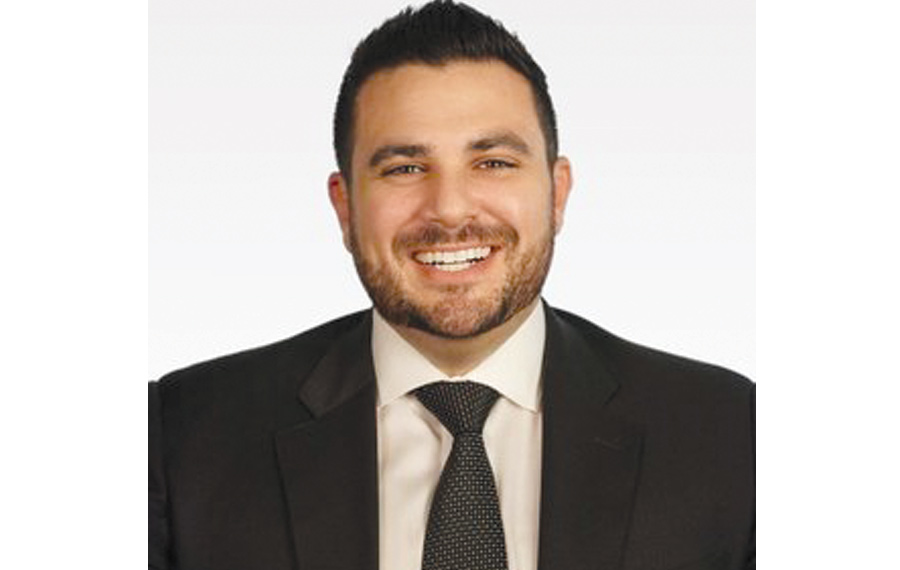
Max Wellman, an associate in the litigation and dispute resolution department of Wolf, Rifkin, Shapiro, Schulman & Rabkin, was named a Rising Star in the 2019 edition of Super Lawyers in the Southern California region.
Wellman, a former futures board member with the Jewish National Fund, was named a Rising Star for the second consecutive year. According to the website of his L.A.-based law firm, no more than 2.5 % of attorneys under the age of 40 are selected for this honor.
Wellman, who predominately handles complex business litigation matters, including partnership disputes, corporate dissolution, commercial debts and real estate disputes, is the past president of the Downtown Los Angeles Bar Association.
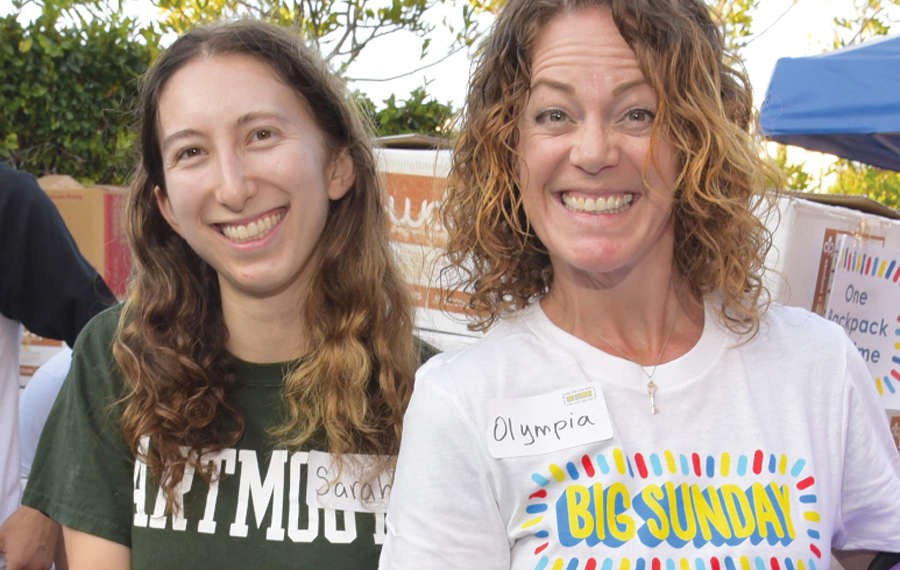
Social service organization Big Sunday’s 10th annual Back-to-School Drive and Community Dinner drew more than 250 volunteers. Photo courtesy of Big Sunday
Approximately 250 people attended volunteer organization Big Sunday’s 10th annual Back-to-School Drive and Community Dinner, held on Aug. 8 at Big Sunday’s headquarters on Melrose Avenue in Los Angeles.
As part of the effort, Big Sunday collected more than 2,000 backpacks for children at several low-income schools and organizations across the region.
According to Big Sunday—which is led by founder and executive director and Temple Israel of Hollywood congregant David Levinson—participants sorted, counted and packed a variety of requested items, including spiral notebooks, pencil pouches, pens, pencils, crayons, markers, colored pencils, glue sticks and more. Volunteers also handwrote and decorated cards that will be placed in each of the backpacks welcoming children to the new school year.
Recipient schools and organizations included Fulbright Elementary, Department of Children and Family Services, 96th Street Elementary, Lovelia Flournoy Elementary and the LAUSD Homeless Education Program.
L.A. County Supervisor Janice Hahn, the Meyer Levy Fund and the Wilshire Rotary Club of Los Angeles were among the event’s sponsors.
Representatives from every organization and school that received backpacks for students in their respective communities were in attendance, and everyone stayed for the community dinner, which consisted of fried chicken and various side dishes, a “Back-to-School” drive tradition.
Front row, from left: Scott Schmerelson, Kathryn Barger, Brad Sherman, Sandra Thomas, Luz Rivas; (middle row, from left) Bob Hertzberg, Guadalupe Montaño, Bob Blumenfield, Danni Wang; and (back row, from left) Amanda Susskind, Nancy Parris-Moskowitz and Eric Kingsley attended a 20th anniversary ceremony for the 1999 shooting at the Valley JCC. Photo by Matt Friedman
With the country still reeling from recent mass shootings in Gilroy, Calif.; El Paso, Texas; and Dayton, Ohio, a community-wide gathering marking the 20th anniversary of the Aug. 10, 1999, shooting at the North Valley JCC was held at Temple Ahavat Shalom in Northridge.
The event, which recounted how white supremacist Buford Furrow entered the JCC and sprayed the site with bullets, wounding five people in the process, also recalled Filipino-American postal worker Joseph Ileto, who subsequently was killed by Furrow.
The Anti-Defamation League (ADL) and the office of County of Los Angeles Supervisor Kathryn Barger organized the event, which drew more than 90 community members.
Attendees included Rep. Brad Sherman (D-Porter Ranch), who on Aug. 10 held a similar commemorative ceremony at the Chatsworth Post Office to mark two decades since the shooting; Los Angeles City Councilmember Bob Blumenfield;State Sen. Bob Hertzberg (D-Van Nuys); Assemblymember Luz Rivas (D-Arleta) and LAUSD Board Member Scott Schmerelson.
According to the ADL, Temple Ahavat Shalom Rabbi Arturo Kalfus welcomed the crowd and pointed out the event coincided with Tisha b’Av, one of the saddest days in the Jewish calendar. Sherman spoke of the events of that day two decades ago, Rea Nagel discussed being a teacher who gave first-aid to some of the injured victims, and Ismael Ileto,spoke about his late brother.
Additional speakers included Donna Finkelstein, the mother of Mindy, who at the time of the shooting was a 16-year-old camp counselor and was wounded that day, Loren Lieb and Alan Stepakoff, parents of then-6-year-old Joshua, who was also shot and wounded, and Nancy Parris-Moskowitz, a member of ADL’s executive committee board and the former chair of the Valley JCC.
A panel reflecting on the events and how they foreshadowed the rise of hate crimes in this country featured Amanda Susskind, regional director of the ADL, Vince Gonzalez, board member of Asian Americans Advancing Justice (AAAJ), and LAPD Deputy Chief Peter Zarcone.
The program closed with a moment of silence for victims of mass shootings.
Additional participating organizers included American Jewish Committee, AAAJ, the Jewish Federation of Greater Los Angeles; the Valley Jewish Community Center and Temple Ahavat Shalom.
Wanna be in Movers & Shakers? Send us your highlights, events, honors and simchas.
Email ryant@jewishjournal.com.
Jason Stuart isn’t a household name, but he’s been working steadily as an actor, stand-up comedian and writer for 35 years. He has more than 150 film and TV credits ranging from “Kindergarten Cop,” “Vegas Vacation” and “My Wife and Kids” to more recent work in “Love,” “Birth of a Nation” and “Tangerine.”
The 60-year-old chronicles his showbiz journey in his new memoir “Shut Up, I’m Talking: Coming Out in Hollywood and Making It to the Middle” in funny anecdotes about his experiences. But it’s also a very personal dive into coping with insecurity, identity, family dysfunction and the neuroses and emotional baggage that come with them. Stuart spoke with the Journal about why he felt compelled to bare his soul.
Jewish Journal: What motivated you to write the book?
Jason Stuart: Nobody does anything for one reason. I feel like at my age, I’ve learned so much and had this compulsion to share. I’ve been mentoring people for the last 10 years or so. I realized that I needed to say these things out loud. My co-writer Dan Duffy is not a Jew or a gay man so I got tremendous perspective from him and without his encouragement, I wouldn’t have been able to do this. I felt like I needed to say these things, but I didn’t tell everything. Some things are too private.
JJ: What’s the most important takeaway message from the book?
JS: I want people to know that if you want to be an artist, some of it is going to be emotionally devastating. But the highs are so high. Being in a film like “Birth of a Nation” and playing a straight villain was such a high, but the balloon doesn’t stay up there. And you have to be able to handle it when it comes down. You can’t take yourself too seriously. I wanted to share that with everyone.
JJ: You write about being the son of a Holocaust survivor, your parents’ bad marriage and the broken relationships with your siblings.
JS: It’s who I am and what I came from. I’m the child of a Holocaust survivor. There’s nothing more overwhelming than that. It changed the course of my life in such a big way. Just because you grow up in the same house doesn’t mean people care about you. My father’s goal in life was to give us everything so we wouldn’t have to go through what he went through. I’m an artist because of my father and mother. I get the inspiration from her and the wherewithal from him. He always told me to wear a tie and look my best when I go to an interview and I took that to mean ‘be your best self.’
JJ: You also write about the people who made a big impression on you including Dustin Hoffman, Whoopi Goldberg and Barbra Streisand, especially. Why does she mean so much to you?
JS: I don’t know her as a person, but it’s what she has done and accomplished as an artist. What she meant to me growing up was that she was unapologetic for who she was. She was funny on the outside and had pain on the inside. She made a very sad, gay little boy’s life better. I’ve met her in passing a few times. I always wanted to have her direct me in a film but I don’t know that she’ll do that anymore. Dustin Hoffman is a very big deal to me. And Whoopi Goldberg made me realize that if there’s a place for her, there’s a place for me.
JJ: Most of these are Jewish icons. How connected are you to Judaism and your Jewish identity?
JJ: I’m not connected to religion. I’m connected to the culture and the plight. I think being a cultural Jew has given me the opportunity to step up to the plate and it’s made me a better person. In my family, we were led by tradition, not religion. We gathered together for the holidays and that’s where the craziness would begin. That’s where I got all my comedy.
JJ: When did you realize you were funny?
JS: I don’t remember a time when I wasn’t! I think funny.
JJ: You’ve done a lot of comedies, but dramas, too, in recent years. Which roles stand out?
JS: Above all, “Birth of a Nation.” The shrinks I played in “My Wife and Kids” and in Judd Apatow’s show “Love.” “Tangerine,” “The Closer” — my first annoying Jew. The obnoxious office manager in “Coffee Date.”
JJ: What’s next for you?
JS: “Immortal.” It’s a great thriller about these people who die in terrible accidents. I play a very intimidating private investigator. It’s coming out in the fall. “Abducted” is my first action film. I play a straight detective. And I have a wonderful short film called “Hank,” where I play a sweet, kind, quiet, gay man. It has played at film festivals and I’ve gotten the best reviews since “Birth of a Nation.” I’ve created, written and acted in a web series about these two Jewish men called “Smothered.” It’s about two crazy people who’ve been together for 30 years and hate each other but can’t afford to get divorced. Going forward, I’d love to get a call from David O. Russell or Martin Scorsese or Patty Jenkins. I’m looking for that next role that’ll move me to the next place.
JJ: Any upcoming standup gigs?
JS: Always, and I’m doing lectures and talking about the book at appearances and signings, some coming up in L.A. and Palm Springs. They’re on my website.
JJ: What else is on your to-do list?
JS: A husband. I’ve been a complete failure in every relationship so there’s nowhere to go but up!
“Shut Up, I’m Talking” is available on his website and on Amazon.
Of all the creative paint techniques for making abstract art, blowing paint and soap bubbles has to be one of my favorites. You start by mixing paint, dish soap and water, and then blow bubbles. When the bubbles make contact with paper, you achieve a gorgeous marbled effect. You can display the finished art as is or cut it into smaller pieces to make cards. This is a fun activity for all ages. I find it so relaxing, I can make bubble art for hours.
What you’ll need: Tempera paint
Dish soap
Water
Paper or plastic bowls
Spoons
Straws or hollow coffee stirrers
Paper or cardstock
1. For each color, mix about two teaspoons of paint with two teaspoons of dish soap in a paper or plastic bowl. The amounts do not have to be exact — just estimate. Add four tablespoons of water and mix the solution with a spoon.
2. Insert a straw or hollow coffee stirrer into the solution and blow. Keep blowing until the bubbles go higher than the rim of the bowl.
3. Place your paper on top of the bubbles, and as they pop they will create a design. I find I get the best results by holding the paper directly over the bowl while I’m blowing, and then moving the paper around to spread the color.
4. Add different colors to your artwork for greater visual depth and interest. Three or four colors total are ideal. Any more, and it’s ungapatchka.
Jonathan Fong is the author of “Flowers That Wow” and “Parties That Wow,” and host of “Style With a Smile” on YouTube. You can see more of his do-it-yourself projects online.
Les Berman died July 12 at 72. Survived by daughter Amanda (Peter) Hill; son Daniel; brothers Joel (Sandy Postal), Barry. Mount Sinai
Bernard Case died July 11 at 95. Survived by wife Estelle; daughter Lori; son Randy. Mount Sinai
Frances Cohen died July 21 at 92. Survived by daughters Paula, Linda; 1 grandchild; 1 great-grandchild. Hillside
Kenneth Dosie died July 17 at 90. Survived by wife Myrna; daughter Bonnie (David); son Ross (Aurea); 3 grandchildren and 1 great-grandchild. Hillside
Joseph Falcon died July 18 at 96. Survived by son Sanders (Ruth); 1 grandchild. Hillside
Joseph Feldman died July 19 at 89. Survived by wife Ellen; 2 grandchildren. Hillside
Beulah “Scotty” Friedlander died July 19 at 94. Survived by husband Sid; sister Frida (Bob) Root; brother Oswald (Dorothy) Scott; sister-in-law Dorothy Scott. Mount Sinai
Janet Gardner died July 17 at 64. Survived by brother Anthony (Margarita); stepbrother Joshua. Hillside
Lester Ivan Garner died July 18 at 79. Survived by wife Sylvia; daughter Mitzi (William) Fierro; son Gary (Lauren); 4 grandchildren; 2 great-grandchildren. Mount Sinai
Marshall Giller died July 20 at 92. Survived by wife Ruth Edna; daughter Sara; son Pinchas; 2 grandchildren; sister Carol. Mount Sinai
Ervin Goldstein died July 18 at 92. Survived by daughter Carrie (Mark) Levinson; sons Bradley (Vivienne), Clifford (Marcie); 7 grandchildren. Mount Sinai
Bernard “Bernie” Kattler died July 16 at 87. Survived by wife Nancy; daughters Deborah (David Kupetz) Kattler Kupetz, Elizabeth, Jennifer (Lawrence Trilling) Kattler Trilling; 7 grandchildren; sister Mitzi Goodis; brother-in-law Marty Bischoff. Mount Sinai
Gilbert Tobias Katz died July 17 at 100. Survived by sons John (Cynthia McDermott) Curtis, Robert Curtis; 4 grandchildren; 1 great-grandchild; sister Dyane Adler. Mount Sinai
Joel W.H. Kleinberg died July 14 at 76. Survived by wife Laurie; daughter Leslie (Beatrice Mallen); son Seth; brother David. Mount Sinai
Lawrence F. Leventhal died July 15 at 66. Survived by brother Stephen. Mount Sinai
Allan Lourie died July 14 at 80. Survived by wife Robin; daughters Jennifer, Heather (Gary); sister Mildred; 3 grandchildren. Hillside
Lawrence Maisner died July 18 at 88. Survived by wife Valerie; daughters Vivienne, Robin; son Steven (Michelle); 2 grandchildren. Mount Sinai
Arthur Richard Michelson died July 21 at 89. Survived by wife Georgie; son Derrek (Tami); daughter Karlyn (David); 3 grandchildren; brother Gerald (Dianna). Mount Sinai
Barry R. Miller died July 21 at 75. Survived by wife Andrea; daughter Julie (David) Swift; 2 grandchildren. Mount Sinai
Myra Lorene Nammack died July 15 at 75. Survived by husband Jeremy; daughter Rachel Anne (Rick) Almaguer; sister Eileen (Jerry) Markzon. Mount Sinai
Miriam Norman died July 16 at 95. Survived by sons Allen, Glen; 3 grandchildren; 2 great-grandchildren. Hillside
Martin Rudolph died July 11 at 87. Survived by wife Beverly; daughter Sherill (Shalom) Hogeg; sons Mike (Stephanie), Craig (Carol); stepson Lenny (Karen) Berg; 8 grandchildren; 8 great-grandchildren; brother Charles (Valjean). Mount Sinai
Eyal Shai died July 18 at 43. Survived by mother Rachel; father Shimon; sister Lee Siwek (Danny). Malinow and Silverman
Irene Shapiro died July 15 at 86. Survived by son Bruce (Merril); 1 grandchild; brother David (Anne) Katz. Mount Sinai
Andrea Sherman died July 20 at 59. Survived by sister Laurie; brothers Jeffrey, Robert. Hillside
Sylvia Weiner died July 17 at 94. Survived by daughters Judy (David Scott), Ivyetta (Burt) Liebross, Marsha (Mark) Edelheit; son David; 6 grandchildren; 8 great-grandchildren; sister Ester Lisner. Mount Sinai
Lillian White died July 15 at 95. Survived by daughters Linda Silvas, Lorraine Bame; 4 grandchildren; 8 great-grandchildren; 1 great-great-grandchild. Mount Sinai
Stanley Winstein died July 19 at 64. Survived by sister Nancy (Lee). Hillside
Holly York died July 13 at 64. Survived by husband Steve; daughters Alicia, Jennifer (Brian) Cole; 1 grandchild; sisters Cheryl Bezher, Amy Masters. Mount Sinai
Edward Richard Zemechman died July 13 at 73. Survived by daughter Staci (Jonathan) Labovitz; son Michael (Robin); 2 grandchildren. Mount Sinai
Alan Dershowitz is a familiar name in media coverage and public conversation on an astounding variety of topics, but the subtitle of his latest book, “Defending Israel: The Story of My Relationship With My Most Challenging Client” (All Points Books), reveals what matters most to him.
Although the book was written before the president of the United States urged the prime minister of Israel to exclude two congresswomen from a congressional delegation to Israel, Dershowitz acknowledges that support for Israel — once a rare point of consensus in American politics — can no longer be taken for granted. Indeed, the whole point of his book is to make the case for Israel, which is exactly why Dershowitz refers to the Jewish state as his “client.”
While Dershowitz is careful to acknowledge that he has “no actual lawyer/client relationship with Israel,” he also embraces the moniker that has been bestowed on him by the pundits: “I have been called ‘Israel’s single most visible defender’ and ‘the Jewish state’s lead attorney in the court of public opinion.’ ” He insists that “I am free to criticize its policies when I disagree with them.” But he accepts the mantle of Israel’s public defender, and his new book can be seen as a kind of trial brief.
“If the drift away from bipartisan support for Israel is not reversed, it will pose real dangers to Israel’s security,” Dershowitz warns. “It is a goal of this book to try to influence, in a positive direction, this discernable drift away from bipartisan support for the Middle East’s only democracy and America’s most reliable ally. It is a daunting task, but a crucial one to help secure Israel’s future.”
“If the drift away from bipartisan support for Israel is not reversed, it will pose real dangers to Israel’s security. It is a goal of this book to try to influence, in a positive direction, this discernable drift away from bipartisan support for the Middle East’s only democracy and America’s most reliable ally.” — Alan Dershowitz
At the same time, “Defending Israel” is a memoir, both sentimental and poignant. Dershowitz was raised in a Jewish family in Brooklyn that “saw no conflict between their religious orthodoxy and their political liberalism, or between their Zionism and their progressive values.” At the age of 10, he challenged some of the rabbis in his Orthodox elementary school who believed that Jewish sovereignty must await the coming of the Messiah. Later, he attended a summer camp where his counselors included a 20-year-old Noam Chomsky, who “supported, in theory, a binational secular state” but “was not opposed in practice to the state declared by [David] Ben-Gurion.” (A couple of decades later, Dershowitz would publicly debate his former camp counselor over the Israeli-Palestinian conflict.)
Dershowitz is quick to point out the ironies that suffuse the current debate over Israel. The two-state solution, he reminds us, was explicit in the United Nations resolution that partitioned the British mandate over a territory called Palestine into “independent Arab and Jewish states.” The word “Palestine” itself was actually coined by the Roman conquerors of ancient Judea and referred to place, not a people. When Frank Sinatra sang at a fundraising concert in support of Jewish statehood at the Hollywood Bowl, the event was dubbed the “Action for Palestine” rally. “Had the new nation-state of the Jewish people called itself ‘Jewish Palestine,’ instead of Israel, the optics would be quite different,” Dershowitz quips.
Another irony is that Israel was far more popular in the early years of statehood, when it was seen as “weak, both militarily and economically, and it posed no danger to anyone.” Only after the Six-Day War in 1967 — and, a decade later, the electoral success of Menachem Begin and the Likud party — did the ground shift under Israel’s feet in world public opinion. “The election of Begin created some cognitive dissonance for many American Jews like myself and many of my friends and colleagues, who are both liberals and Zionists,” he writes. “We have had to confront this conflict over many years, and it may well continue into the foreseeable future.”
Significantly, Dershowitz was among the Jewish voices who spoke out in 1979 against the building of settlements on the West Bank. “We honestly believed, and I still believe, that building civilian settlements on the West Bank and in the Gaza Strip was harmful to Israel’s moral standing and did not contribute to its security,” he declares. Later, he joined in supporting “the Israeli equivalent of the ACLU” in challenging Israeli policies on civil liberties. And, only last year, he published the book “The Case Against BDS: Why Singling Out Israel for Boycott Is Anti-Semitic and Anti-Peace.”
“My position on Israel guaranteed me enemies on both the right and the left,” he explains. “The center, where I had located myself (center left in my case) was shrinking, and that movement toward extremes made reasoned, nuance discourse more difficult.”
Throughout his new book, Dershowitz enlivens his account with lively anecdotes that also remind us of the author’s friends in high places. When he told Arthur Goldberg that he was traveling to Israel to interview Prime Minster Golda Meir for a PBS broadcast in 1970, the former Supreme Court justice asked Dershowitz to do him a favor: “You have to bring Goldie a carton of Lucky Strikes unfiltered cigarettes as a gift from me and Dorothy,” Goldberg told Dershowitz. “She loves them, but her security people won’t let her have them.” When he sat down for a talk with Ariel Sharon, he was frustrated that Sharon spoke “as if reading from a scripted briefing.”
“ ‘Can we get down to tachlis?’ I asked, using a Yiddish term that roughly suggests, ‘Cut the B.S. and let’s get to the point,’ ” Dershowitz recalls. “He laughed and replied, ‘Good, I like tachlis.’ ”
Dershowitz has written more than 40 books and we can be sure he will continue to participate in what he calls “the communications war.” But there is a certain solemnity and gravity to his latest book, which serves as a charge to his fellow Americans and his fellow Jews. “We must determine our destiny, write our future history, and assure the survival of the Jewish people and their nation-state forever,” he concludes.
By “Defending Israel: The Story of my Relationship With My Most Challenging Client” on Amazon here.
Jonathan Kirsch, author and publishing attorney, is the book editor of the Jewish Journal.
When you think about a string quartet, you don’t necessarily imagine wanting to get up and dance. But San Francisco-based Kronos Quartet has been pushing the boundaries of classical music for more than 45 years, including performing music with a driving, danceable beat. Kronos has premiered more than 1,000 compositions, including dozens by Jewish composers such as Philip Glass and Steve Reich. Reich won a Grammy for Kronos’ 1989 recording of his composition “Different Trains.”
Founded by violinist David Harrington in 1973, and including violinist John Sherba, violist Hank Dutt and cellist Sunny Yang, Kronos is known for incorporating new sounds and novel playing techniques, such as using a dumbek drum, as Dutt did at a concert at Marina del Rey’s Burton Chace Park on Aug. 8. The evening opened with a piece called “Zaghlala,” written by Egyptian keyboardist Islam Chipsy. It sounded like music you might hear in a Cairo dance club, with that driving viola providing a steady beat.
I first heard Kronos Quartet when I went to interview Harrington in Houston in 1989. The group swept into town on a windy day, bringing with it a new world of sounds and ideas. Afterward, as we were walking among the glass towers of downtown Houston, a huge gust arose. Annoyed by the dust, I covered my face. Harrington swung open his arms, embracing the wind — an attitude that characterizes his approach to music.
At the time, Harrington was carrying around a book of diary entries and letters called “An Interrupted Life” by Etty Hillesum, a young Dutch scholar who wrote about her efforts to maintain her values of study, caring for others and personal growth, until her death in Auschwitz in 1943. Thirty years later, Harrington is still inspired by her writings.
Kronos has commissioned 50 new pieces by musicians from around the world — including one by Philip Glass — and publishes the scores, parts and recordings online, for free.
“It’s just an incredibly personal view into what someone can accomplish as their physical world of possibilities gets more and more circumscribed,” he said after the Marina del Rey concert. “She kept growing. For me, that is an inspiration, no matter where you are or what you’re doing: allowing the sun to keep letting you grow.”
At the Aug. 8 concert,Kronos Quartet still felt like an ambassador of expansiveness. After the Egyptian piece, the group played a work by Mexican composer Severiano Briseño, upbeat and rollicking, a fiesta song. The Egyptian piece is part of Kronos’s latest barrier-breaking project, “50 for the Future,” in which Kronos has commissioned 50 new pieces by musicians from around the world — including one by Glass — and publishes the scores, parts and recordings online, for free.
“We’re trying to make the music that is part of our world available to everyone,” Harrington said. “We realized that none of our music was available in any public library. It’s either not published or too expensive or too hard to find. With ‘50 for the Future,’ any quartet in the world can play this Egyptian electro-dance music, and all these other pieces.”
Kronos has long played works of composers from around the world, and recently commissioned four cantorial-based pieces from four countries. But Harrington said that since the 2016 election, it’s become increasingly difficult for musicians from Africa and the Middle East to visit the U.S. Some have been unable to attend U.S. premieres of their own music. For Harrington, this has made playing works from these parts of the world increasingly important. “It’s impoverishing American audiences and groups, and keeping the music from blossoming,” he said. “We are trying to create a counterbalance to hatred, small-mindedness and to limited views of what is possible.”
The Marina concert was like taking a musical journey to different cultures, hearing widely disparate musical traditions tweaked and caffeinated for contemporary listeners. Fans sprawled on the hillside, tapping their feet to the beat and bursting into applause after each piece. I sat on a Mexican blanket with my 11-year-old son. I wanted to introduce him to this group, and to the feeling of openness that it had conveyed to me long ago.
Kronos also reintroduced songs audience members already knew and loved, allowing them to hear them anew, including Gershwin’s “Summertime.” I whispered to my son, “That’s one of the records we bought. Gershwin. Can you tell?”
Another piece had a scratchy section that sounded exactly like what you’re not supposed to do with a violin — which made it classic Kronos. For another, Harrington and Yang whipped plastic, corrugated, noise-making tubes through the air. Both pieces had a counter-institutional attitude that made my son sit up and smile.
So much has changed in 30 years, yet the power of this quartet to introduce new sounds, and to inspire a sense of the possible remains.
This article has been corrected to note that Kronos was founded in 1973, that during Zaghala, the instrument played is a dumbek, not a viola, and that the Briseno piece is not part of Kronos’ ’50 for the future”
Wendy Paris is a writer living in Los Angeles. She is the author of “Splitopia: Dispatches From Today’s Good Divorce and How to Part Well.”
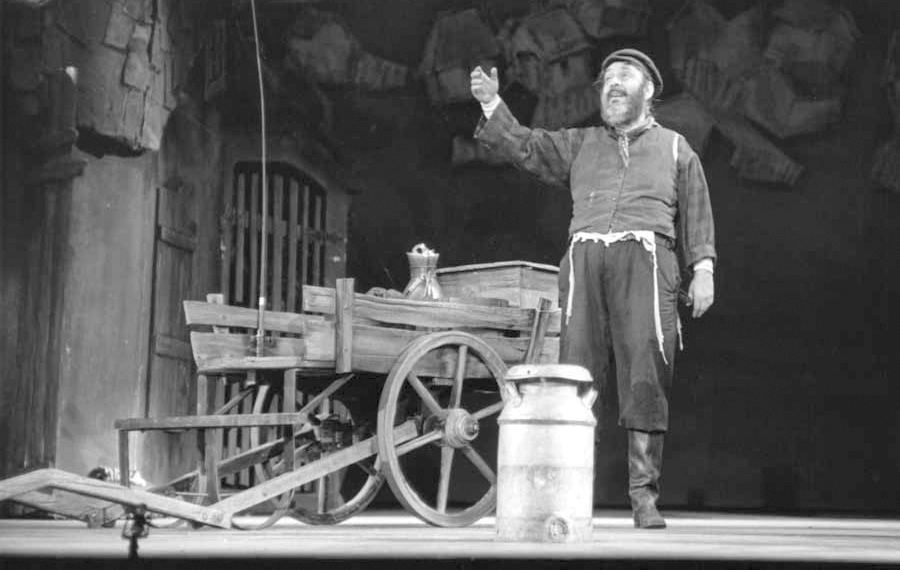
Whether you first saw the 1971 movie version of “Fiddler on the Roof” or one of the thousands of productions that have been staged all over the world since its 1964 debut on Broadway, chances are you fell in love with it. No other musical speaks to Jewish history, culture and experience more than the Diaspora story of Tevye the Dairyman and his family. Setting Sholem Aleichem’s tales of early 20th-century czarist Russia to music, “Fiddler” is so specific in its Jewishness yet so universal in its appeal.
Through footage from myriad productions and new and archival interviews with cast members, creators and other notables, the documentary “Fiddler: A Miracle of Miracles” tells the show’s origin story. It also highlights the sociopolitical and cultural context of the 1960s and speaks to themes of women’s empowerment, gender roles, immigration and anti-Semitism that are just as relevant today.
“ ‘Fiddler’ connects to anyone who has a family, who has children, who fights to survive in a world that fights against their survival,” director/co-producer Max Lewkowicz told the Journal. “The daughters’ story is women’s rights at a time when women couldn’t vote. It’s so prescient and so rich.”
Lewkowicz first saw the movie “Fiddler” and the show years later on Broadway. The father of four said he was deeply affected by Tevye and his daughter Hodel’s farewell scene and the ultimate expulsion of the Jews from Anatevka. “My mother was from Krakow,” he said. “She was one of Schindler’s Jews. She survived Plaszow and Auschwitz.”
Lewkowicz and his co-writer/co-producer Valerie Thomas came up with the idea for the documentary when they heard lyricist Sheldon Harnick speak about “Fiddler’s” creation at New York’s Holocaust Museum three years ago. The only surviving member of the creative team, Harnick is interviewed in “Miracles” as are producer Hal Prince and choreographer Jerome Robbins, via archival footage.
Tevye portrayer Harvey Fierstein, Yiddish “Fiddler” director Joel Grey, and Austin Pendleton — who originated the role of Motel the tailor — share their “Fiddler” experiences.
“ ‘Fiddler’ connects to anyone who has a family, who has children, who fights to survive in a world that fights against their survival.” — Max Lewkowicz
With the help of Alisa Solomon’s book “Wonder of Wonders: The Cultural History of Fiddler on the Roof” as a resource, the filmmakers uncovered a 1966 video of actors Chaim Topol and Danny Kaye singing “To Life” in Hebrew. They also discovered a production number of the same song from Lin-Manuel Miranda’s wedding, and a clip of the Temptations performing “If I Were a Rich Man” in 1969.
Lewkowicz said acquiring licensing rights and approvals from various sources was the biggest hurdle. “We had 10 different productions in the film, from Thailand to Rotterdam to Broadway to Canada, and I had to negotiate each one. We had to pay MGM a huge fee for the rights to the [1971] film.” When the rights to the current off-Broadway Yiddish production of “Fiddler” proved to be too expensive, they brought in its Tevye, Steven Skybell, to sing in the studio.
“Miracles” also showcases the Marc Chagall-inspired set designs of Boris Aronson, who was hired after Chagall turned down the job. “He told Jerome Robbins he was too busy,” Lewkowicz said. Chagall-like animations by artist Tess Martin accompany some of the music in the documentary.
The son of Polish Holocaust survivors who met after the war, Lewkowicz was born in Israel, not Poland as he’d believed and his passport indicated. “My mother faked my birth certificate. She had lost her husband and baby [in the Holocaust] and was worried I would go into the Israeli army and be killed,” he said. But when he was 3, the family relocated to Montreal to be closer to New York and his mother’s sister, her only surviving relative.
Although his mother’s devastating loss had turned her away from Judaism, “She always made sure I understood that I was a Jew, and [instilled] the basic elements of being Jewish: education, family and love. I had a bar mitzvah, went to Hebrew school, celebrated the holidays, and learned to speak Yiddish,” along with German, French and Polish, Lewkowicz said. “I don’t speak Hebrew but have been to Israel 20 times.”
Lewkowicz, who holds degrees from McGill and New York universities, won a New York Emmy for his documentary “Morgenthau” in 2015. He has made scores of Holocaust survivor documentaries for Jewish museums/Holocaust centers in New York, South Africa and Canada, and for the Normandy American Cemetery Visitor Center, honoring military personnel killed in World War II. His future slate includes more of the above, and a series called “Following Orders,” about the ethical issues that those in the military face.
While “Fiddler: A Miracle of Miracles” has delighted crowds at Jewish film festivals, “I want all people to see this film, not just Jews,” Lewkowicz said. “I see it as a universal story that we all can be proud of, and we all can relate to.”
With anti-Semitism, xenophobia and hate on the rise, the themes of “Fiddler” are more relevant than ever, he noted. “We as Jews have a responsibility to heal the world. Tikkun olam. We have to be more understanding and have more compassion.”
“Fiddler: A Miracle of Miracles” opens in theaters on Aug. 23. A special screening, sponsored by the Los Angeles Jewish Film Festival and the Jewish Journal, will take place at 4:40 p.m. Aug. 25 at the Laemmle Royal in West L.A. There will be a Q&A after the screening with Barbara Isenberg, author of “Tradition!: The Highly Improbable, Ultimately Triumphant Broadway-to-Hollywood Story of ‘Fiddler on the Roof,’ the World’s Most Beloved Musical,” and Stephen Sass, president of the Jewish Historical Society of Southern California. Tickets and info can be found here.