fbpx

July 3, 2019

London Man Arrested for Threatening to Behead Jewish Man

An unidentified 34-year-old man was arrested for allegedly threatening to behead an Orthodox Jewish man in his 40s in east London.

According to the Evening Standard, the Jewish man, who has not been identified, was on his way to work on July 1 when the perpetrator allegedly called him a “f***ing Jew.” The perpetrator then allegedly pulled out a knife and chased after the Jewish man while shouting, “I’m going to kill you! I’m going to chop your head off!”

Local police issued a statement later in the day saying that the perpetrator was arrested and is currently in custody.

A February survey from the nonprofit Community Security Trust, which focuses on promoting safety for Jews, found that there were a record-high 1,652 anti-Semitic instances in Britain in 2018. Around 1,300 of such instances involved some type of abuse, although there was a decline in anti-Semitic violence and property damage.

Additionally, 80 percent of British Jews said in a December poll that anti-Semitism as a significant issue in Britain and nearly a third are considering leaving Britain over it.

London Man Arrested for Threatening to Behead Jewish Man Read More »

Jews Bar Jews From Their Own Synagogue in Poland

Last week I was in Poland for five days to participate in events marking the rebirth of Jewish life — not death — in Krakow. My brief stay began with the Ride of the Living, the annual 60-mile bike ride from the gates of Birkenau to the doors of the Jewish Community Center in Krakow. Two hundred and fifty riders from around the world participated in the annual ride, including 90-year-old Krakow native and Auschwitz survivor, Bernard Offen.

The ride is a Jewish Community Center signature event, coinciding with the Jewish Cultural Festival, a weeklong celebration of Jewish art, music, literature, film, philosophy, theater, comedy and klezmer. People performing and lecturing: Israelis, Americans, Poles, Europeans — all giving voice to the magnificent dynamism of 21st century Jewish creativity. 

The streets of Krakow were filled with people. Kazimierz, the traditional home of the Jewish community, was vibrant, vital and crowded — teeming with life. Every Jewish space was filled to capacity. I felt proud, moved, inspired, even hopeful.

Shabbat evening was celebrated with a kosher Shabbat dinner for 750 Jews from around the world — one of the most marvelous nights to be Jewish in Krakow. Attendance grows every year, so this was once again the largest Jewish dinner since before the Holocaust. 

On Shabbat morning it was standing room only at Krakow Izaak Synagogue. Shabbat afternoon was filled with lectures and art exhibitions. Most notable was Chuck Fishman’s 1975 photographic essay on Krakow about the long years of Communist rule after the anti-Semitic purges of 1957and 1968 when it appeared to all that Jewish life was at its end. 

The pictures are haunting; the Jews are old, dispirited and tired. They were the walking wounded. The buildings were empty, shabby, seemingly on their last legs. I imagined that there once was a city of Krakow, where Jews were one-third of the population. But the Jews are no longer. The city is haunted by the presence of their absence and the absence of their presence.

On Saturday night, June 29, there was a concert that lasted into the wee hours of the morning, filled with Jewish music from around the world. Twenty thousand people filled the Sceroka Street Square, enjoying Jewish life at its most vital. It was perhaps more fun for Poles to be with Jews that evening than at any time in the 800 years prior when Jews lived in Poland. 

I walked home from the concert exhausted but exhilarated; feeling that Jewish life was not at its end, but instead transforming before my eyes. To quote Emory University Scholar Deborah Lipstadt — who was in town to speak about her new book on anti-Semitism —the oy had been overwhelmed by joy — at least for that evening.

Masked armed guards stood behind the locked gates of the Izaak Synagogue, barring Jews from morning services.

On Sunday, June 30, I gave a lecture at Jagiellonian University to non-Jewish Polish teachers and students spending a week at Poland’s most distinguished University studying the Holocaust. We have all heard of Polish anti-Semitism, but here were students interested in knowing their own history — a history that includes the Jews and the Shoah. In 1939, 1 in 10 Poles (10% of the population) were Jewish, and many of Poland’s urban population were Jews. Some towns and villages had majority Jewish populations. The cities, towns, villages and hamlets are still there; they still have the same names but the Jews are no longer there and these Poles want to know who they were, what they were, and why they are no longer there. They want to know their history — the truth of their history even as some in their government and institutions want to rewrite that history.
I attended the opening of a powerful new exhibition just outside the gates of Auschwitz. The subject was deeply significant: The spiritual struggle of Jews, Roman Catholics and Roma to maintain their faith event in the depths of hell that was Auschwitz. The art was majestic; the research by Henri Lustiger-Thaler was sensitive, economical yet insightful. Then there was the beautiful photography by Caryl Englander, and the exhibition’s design by a Jewish son of Poland whose extended family was murdered at Auschwitz, Daniel Libeskind. 

The exhibition, created at the initiative of the Amud Aish Museum in Brooklyn, (a Charedi institution), and the Auschwitz State Museum, depicts in poetic words and moving portraits the spiritual journey of survivors to live with God and integrity at the epicenter of evil. I came away from the opening with deep respect for the resiliency of these survivors and the power of their faith.

And then: Masked armed guards stood behind the locked gates of the Izaak synagogue, barring Jews from morning services.

Masked armed guards? It must have been anti-Semitism. How low could the Poles go, especially in this week of cultural celebration?

But it was not anti-Semitism. It was the ugly, vicious, anti-Jewish act of the organized the Jewish community against the rebirth of Jewish life in Krakow.

Dov Landau, a 90-something Holocaust survivor and Bobover Chasid was in tears. He had seen this before, but back then, it was the deeds of enemies, not his fellow Jews. Astounding. Incomprehensible. Could Jews do this to Jews?
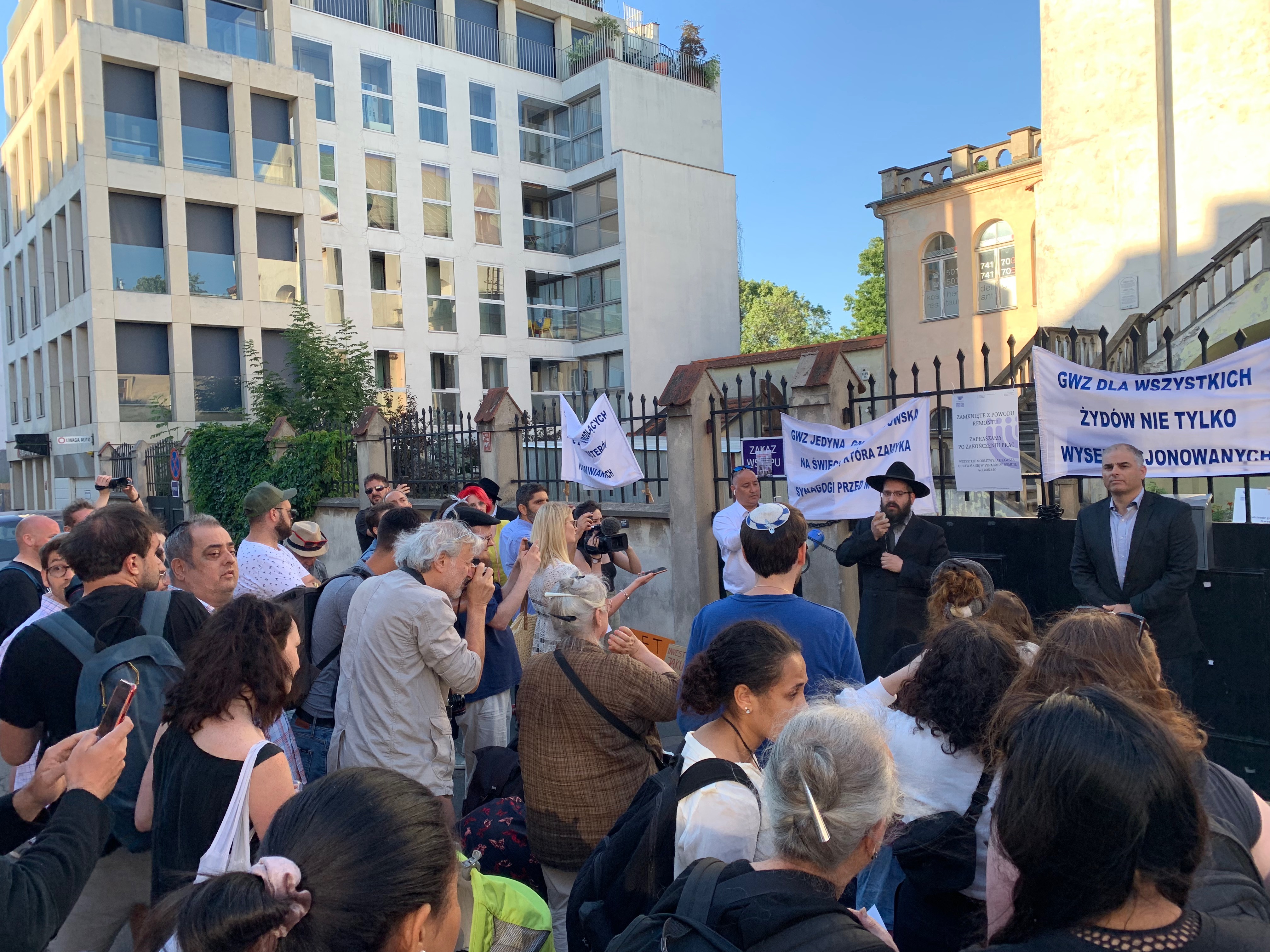
Rabbi Avi Baumol was worried. A daily attendee at the minyan, his tefillin were inside. Luckily, he had a spare pair in his adjacent apartment. Dovid Singer, another Bobov Chasid — a Brooklynite who visits Poland three or four times a year — was frantic. It was Monday, July 1. The Torah had to be read. Where could he get a Torah and a minyan? Jonathan Ornstein stood by his window overlooking the synagogue, not quite believing what he was seeing. His vantage point enabled him to photograph moment after moment, face after face. 

A word of background: The Gmina, the formal Jewish community, is the heir to Jewish institutional property. Private Jewish property has not been restored in Poland but institutional property has been returned to the Jewish community. In Krakow, the holdings of the Jewish community are significant and yet these vital resources have been treated as if the community were a private business, intent on maximizing profit with no responsibility to the continuation and the enhancement of Jewish life.

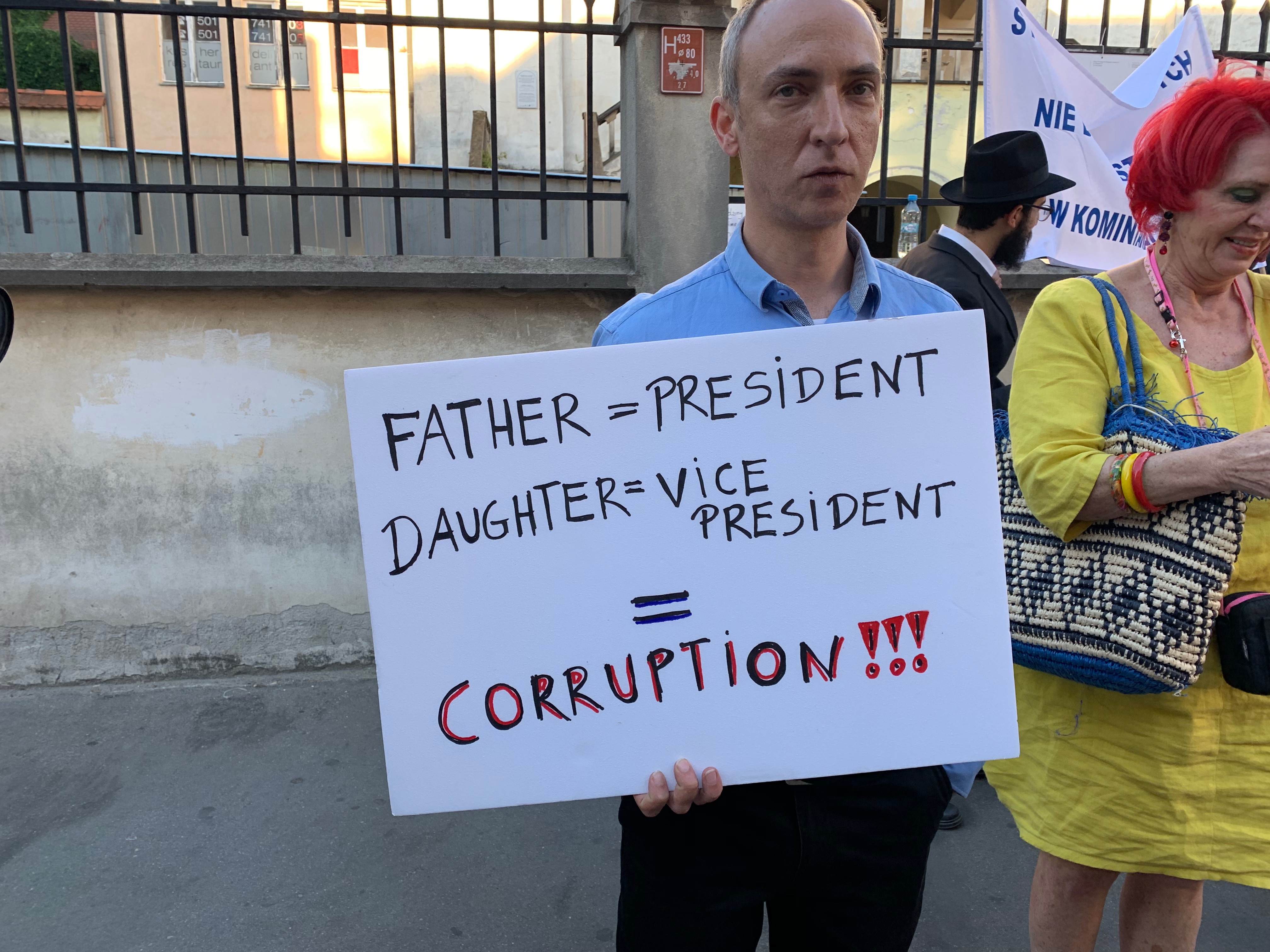
One family has ruled for the past 70 years. The current patriarch, Tadeusz Jakubowicz, is president; his daughter Helena, vice president; his son-in-law, a powerful force behind the scenes. They have ruled through communism and through nascent democracy and even now, during the right-wing authoritarian epoch of contemporary Polish history. And they have ruled not as if they were custodians of Jewish communal resources but as if this were a family enterprise.

They ordered the armed guards. The Gmina is a closed community. It does not welcome new members, even if they are observant, distinguished Jews. Professor Jonathan Webber, a religious Jew and a leading authority on the Jews of Galicia, had to sue in a European Union court to join. Jonathan Ornstein, the dynamic and charismatic leader of the Jewish Community Center (JCC) was expelled, seemingly $8 behind in his dues. His application for reinstatement was rejected; guards barred his entry into a community meeting to plead his case. Both are halachic Jews. The Gmina has some 125 members; the JCC has more than 700, most of them halachic Jews, thereby eligible for membership, but were restricted from participating in the Gmina.

The Gmina had the Izaak Synagogue returned to its possession when Jewish property was returned. It was restored not by the Gmina but by donations from Jews around the world. As landlords, the Gmina wanted to get rid of its current tenant. But it had a lease with the synagogue so it decided to force them out by raising the rent 1,000%. It didn’t matter that the Izaak was a functioning synagogue with services morning and evening, a kosher restaurant next door that takes advance reservations to serve observant Jews who visit Krakow and Auschwitz every week.

Had the Poles done this to the Jews, the entire Jewish world would have protested. When Jews do this to fellow Jews, our protests cannot be any less intense.

In the weeks before the gates were locked, the Gmina shut off the electricity. When the synagogue bought a generator, they turned off the water on the eve of the Jewish Cultural Festival, when thousands of Jews planned to visit Krakow, including youth groups and organized adult tours. Many, if not most of them, would have visited the synagogue. Their behavior was a hillul HaShem, a desecration of God’s holy name.

I have been visiting Krakow regularly since the 1970s. I was there when the synagogues were closed because there were no Jews to attend. I was at the magnificent temple for what seemed to be its last service. The Izaak, before its restoration, was a crumbling building. Built more than a quarter of a millennia ago, it seemed as if would not survive into the 21st century. But then the restoration began, bringing with it the possibility of rebirth.

I have heard rumors of corruption. I have no evidence. I have examined no books but I have been in the presence of Jewish leaders of international renown, of distinguished rabbis, of people “in the know” who spoke knowingly of such corruption; who winked and made snide remarks but who were unwilling to take action.

The purpose of a Jewish community is to serve the needs of the Jewish people; to protect, enhance and deepen Jewish life; to provide education for the young and the old; to take care of the needy and the infirm. The religious purpose of a Jewish community is to provide places of prayer and Torah study. This Gmina has failed.

It is an obstacle to the rebirth of Jewish life. I say this because I have seen it. I stake my reputation on this charge.

Barring the gates makes manifest to what depths the Gmina will sink. Had the Poles done this to the Jews, the entire Jewish world would have protested. When Jews do this to fellow Jews, our protests cannot be any less intense. World Jewry must step in. It provides significant support for the Jews of Poland. It has important resources and influence. Jewish leaders must stop making snide comments in private and then turn a blind eye to such behavior. They must speak out and they must act.

Krakow Jewish life is at once vital and vibrant, a promising success story of Jewish rebirth, yet at the same time, its official representatives are engaged in vile behavior. They will cripple the rebirth. World Jewry has empowered the rebirth. It has tolerated the vile. It can no longer do both. This is a moment of decision.


Michael Berenbaum is director of the Sigi Ziering Institute and a professor of Jewish Studies at American Jewish University.


Jews Bar Jews From Their Own Synagogue in Poland Read More »

Report: CA Anti-Semitic Hate Crimes Increased By 21%

The California Department of Justice (DOJ) released a report on July 2 revealing that anti-Semitic hate crimes increased by 21 percent in 2018 from the year prior.

The report documented 126 instances of anti-Semitic hate crimes in 2018, an increase from 104 in 2017. However, it was a decline from the 160 instances of anti-Semitic hate crimes in 2009.

Jews were the most frequent target of anti-religious hate crimes in California in 2018, followed by the “anti-other religion” category at 30 instances, 28 instances of anti-Muslim hate crimes and 10 instances of anti-Catholic hate crimes.

Despite the increase in anti-Semitic hate crimes, hate crimes overall in California dropped by 2.5 percent from 2017 to 2018, according to the report.

Anti-Defamation League (ADL) Los Angeles tweeted that they were “troubled by a 21 percent increase in reported hate crimes against the Jewish community in California in 2018. The Jewish community remains the largest target of religion-motivated hate crime. Our leadership must speak out against anti-Semitism and hate whenever it occurs.”

ADL San Francisco similarly tweeted:

The ADL’s 2018 Audit of Anti-Semitic Incidents found that 2018 was the third-highest year of anti-Semitic incidents nationwide since 1979, although anti-Semitic incidents had declined by five percent from 2017.

Center for the Study of Hate and Extremism Executive Director Brian Levin told The Los Angeles Times, “Jews are consistently held responsible for corrupting national institutions, but also helping other groups flood in. With the rise of neo-Nazism, white nationalism, Internet hate and a growing distrust of communal institutions, Jews are seen as manipulating everything from government to immigration patterns.”

Report: CA Anti-Semitic Hate Crimes Increased By 21% Read More »

Letters: Congressional Inaction, The Term ‘Concentration Camp’

Congressional Inaction
Jon Stewart’s impassioned plea to Congress to provide funds to help 9/11 first responders critically in need of medical services fell on deaf ears: Sen. Mitch McConnell’s. The Kentucky Republican said the Senate would get to it in due time. What, eight years late?

The problem is that too many Congress members are attorneys — 38% in the House, 51% in the Senate — and lawyers, by disposition and training, don’t work to get things done but to protect and defend.

I was at Capitol Records during the Beatles’ heyday. We had a battery of attorneys that required we submit them our promotional ideas for approval. In short order, those of us in marketing learned which of them could be objective and progressive, and which were the opposite. Those who realized we were in business and not a courtroom, that the bottom line was sales and profitability, became our favorites. And helped us grow.

Congress would get things done if more members were business oriented, with maybe a touch of creativity and moxy. No one’s impressed by their taxpayer-paid-for custom-made suits.
Hal Rothberg, via email

The Term ‘Concentration Camp’
I remember about 20 years ago attending an exhibit at L.A.’s Japanese American National Museum, where I saw they referred to the camps — like Manzanar, where Japanese Americans were interned during World War II — as concentration camps. I was upset about that misappropriation and comparison until I realized our terminology was imprecise and diluted. The Nazis operated death camps, not merely concentration camps. Let’s not quibble with using an apt description of American concentration camps, both now and under Korematsu v. United States. Instead, let’s call a death camp a death camp and address the abhorrent human travesty at our border.
Bernie Resser, via email

As the child of Holocaust survivors, it saddens me to see the debate about the proper/improper use of the term “concentration camps.”  My mother was in Auschwitz and I’m sure that the detention camps on our southern border are not as horrific.  I’m also sure that they are terrible and that their conditions are inhumane.

I might not have chosen to characterize them as concentration camps. I might have preferred that “Never Again” be remembered for its specific meaning for the Jewish people.  On the other hand, I am heartened that our history as Jews serves as a reference point for calling out injustice.  

We are reminded by today’s events of how much evil a human being and a government are capable of perpetrating.  We don’t need to compete about who suffered or is suffering more. We should not be debating terminology. We need to speak out and act.  That is the lesson my parents taught me.
Jonathan Jacoby, via email

Torah Portion Commentaries
There is an important contrast worth reflecting on between Rabbi Chaim Meyer Tureff and Rabbi Aaron Lerner’s Torah portion commentaries (“Table for Five,” June 21).

Tureff emphasizes the importance of recognizing a “higher power and allow God into our lives” in order to move from “darkness, confusion and hopelessness” to “context, relevance  and meaning” in one’s life. He especially references the principles of a 12-step program as it applies to helping recovering addicts. The inescapable parallel is that of a child needing continued support of a good parent in order to survive and potentially thrive, always acknowledging the ongoing role that “parent” (God) plays in making a good life possible.

In contrast, Lerner focuses on the history of early Judaism perhaps reflected a child’s need for “parental” guidance and direction, hence God’s interventions. However, he comments on the Rambam’s belief that the goal of God’s guidance, like a good parent, is to make it possible for the now grown adult to function in the world without acting as if it were possible only if a “higher power” is  in charge. 

One acknowledges one’s own strengths and abilities, able to struggle with, and come to solutions for, the many problems faced. A good life is possible through one’s capabilities and resources.  A relationship with the parent is still possible, if desired, but without requiring regression.

The rabbis’ commentaries draw crucial differences between a philosophy that embodies perpetual dependence versus one that emphasizes autonomy. These differences have profound implications.
Sheldon H. Kardener, via email

Conservative Judaism
Conservative Judaism shot itself in both feet 35-plus years ago by not understanding what the baby boomers wanted (“Can Conservative Judaism Redefine Itself?” June 28). Older congregants used their power to prevent any progressive ideas from gaining traction.

Today, we are seeing the results of their children not identifying with a Conservative movement. Jessica Emami wrote, “the resolution [of declining membership] will require the wisdom of Solomon.”

Unfortunately, as long as the Reform movement is making it easier for the ideas of the 30-and-older crowd to identify as Jews, whether intermarried or not, the Conservative movement will surely decline. My hope is it will not become an irrelevant identity in the Jewish community.
Warren J. Potash, Moorpark

Growing Anti-Semitism
The Greenberg cartoon depicting how men wearing kippahs in public are disrespected (June 21) and the story about how two Jews wearing kippahs in Germany were targets of ethnic slurs and derogatory comments (“Two Men Wearing Kippahs Targeted in Germany,” June 21) are clear indications of growing anti-Semitism worldwide.  Regrettably, some of us choose to allay our fears by choosing to think such events occur only in other countries and rarely in our own communities.

I recently visited a friend in his office. As an observant Jew, my friend always wears a kippah. To my surprise he wasn’t wearing it. When I inquired where his kippah was, he pulled it from his pocket and said he doesn’t wear it anymore. When pressed further, he explained that morning he was walking near his office in Beverly Hills and someone yelled anti-Semitic slurs, berating him for wearing a kippah.

Notwithstanding that I was raised differently from my friend and taught to immediately and directly confront even the slightest act or evidence of anti-Semitism, I do understand and respect that other Jews may have been taught differently.

Perhaps it’s time to establish workshops that include immediate and appropriate nonviolent actions in the event people are the victims of, or witness to, anti-Semitic remarks, threats, acts, jokes, advertisements or media displays. These workshops should include how and when to contact local authorities, elected officials and the media.

The time has come for all Jews to unite in responding to this hateful aggression and inform everyone that we will not tolerate it.
Stu Bernstein, Santa Monica

CORRECTION
In a story about the ROI’s 13th global summit, Heather Wilk’s age was incorrect. She is 33.


Now it’s your turn to send a letter to the editor. Letters should be no more than
200 words and must include a valid name and city. The Journal reserves the right to edit all letters. letters@jewishjournal.com.

Letters: Congressional Inaction, The Term ‘Concentration Camp’ Read More »

What’s Happening: Dodger Community Day, ADL Comedy Show, ‘Jaws’

FRI JULY 5

TIOH Kabbalat Shabbat
Temple Israel of Hollywood (TIOH) interim Senior Rabbi Peter Knobel leads Shabbat services at TIOH for the first time since succeeding retired Senior Rabbi John Rosove. Knobel is the rabbi emeritus of Beth Emet: The Free Synagogue in Evanston, Ill. He serves at TIOH until next June 30. 6:30-7:30 p.m. services. Free. Temple Israel of Hollywood, 7300 Hollywood Blvd., Hollywood. (323) 876-8330.

Courtyard Shabbat
Take advantage of the warm summer weather and spend Kabbalat Shabbat with Temple Emanuel of Beverly Hills. Services are held in the Reform congregation’s courtyard. 6:15-7:30 p.m. Free. Temple Emanuel of Beverly Hills, 8844 Burton Way, Beverly Hills. (310) 288-3737.

Shabbat at Nashuva
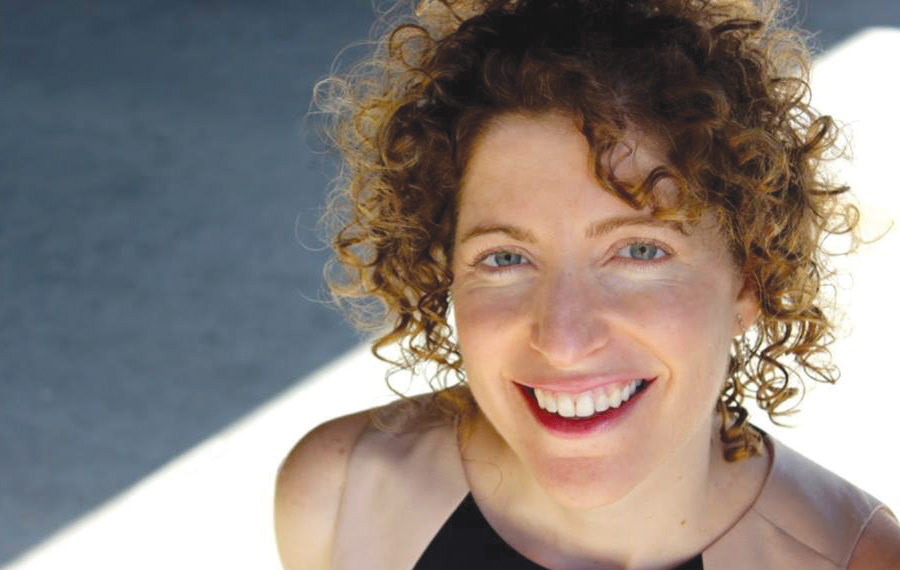
Enjoy Nashuva’s monthly first Friday Shabbat services with Rabbi Naomi Levy. She provides relief from weekly stresses and nourishes souls. Everyone welcome. An Oneg Shabbat follows services. For restless youngsters, the Zimmer Children’s Museum staffs an on-site program. If you can’t attend, all services are live-streamed at nashuva.com. 6:45-8 p.m. Free. For information on the location of the service, click on the link above.

“Red, White & Jew Shabbat”
University Synagogue celebrates Independence Day with a “Red, White & Jew Shabbat” under the stars. Rabbi Morley Feinstein encourages all guests to bring their own picnics for the celebratory evening. 5:30 p.m. picnic. 6:30 p.m. family Shabbat. University Synagogue, 11960 Sunset Blvd., Los Angeles. (310) 472-1255.

Tiny Tot Shabbat
Because it’s never too early to start celebrating Shabbat with your little one, Temple Akiba holds an all-day Tiny Tot Shabbat. Young families enjoy PJ Library story time, music, singing and fun with Rabbi Zach Shapiro and Cantor Lonee Frailich. Open to the community. 9 a.m.-5 p.m. Free. Temple Akiba, 5249 S. Sepulveda Blvd., Culver City. (310) 398-5783.  

SUN JULY 7

Dodgers’ Jewish Community Day
The L.A. Dodgers play the San Diego Padres during the annual Jewish Community Day at Dodger Stadium. Congregations, families and friends can enjoy kosher dogs, fellowship and more. A Jewish Community Day kippah is included in the package when tickets are purchased through the official MLB website. 1:10 p.m. $34-$145. Dodger Stadium, 1000 Vin Scully Ave., Los Angeles. For group sales, call (866) DODGERS, ext. 5.

Rabbi Alyson Solomon

NEXTGEN Game Day
Members and friends of Beth Chayim Chadashim’s (BCC) NextGen Havurah in their 20s and 30s enjoy a board game day. Attendees have the opportunity to meet Rabbi Alyson Solomon, the new interim rabbi at BCC following the retirement last month of Rabbi Lisa Edwards. Guests are encouraged to bring their own favorite games. Even if you are not participating, you are invited to stop by from 1-3 p.m. to meet Solomon. Pizza and snacks provided. Noon-6 p.m. Free. Beth Chayim Chadashim, 6090 W. Pico Blvd., Los Angeles. (323) 931-7023, ext. 205.

Makiko Hirata

“Jewish Musicians in WWII Japan”
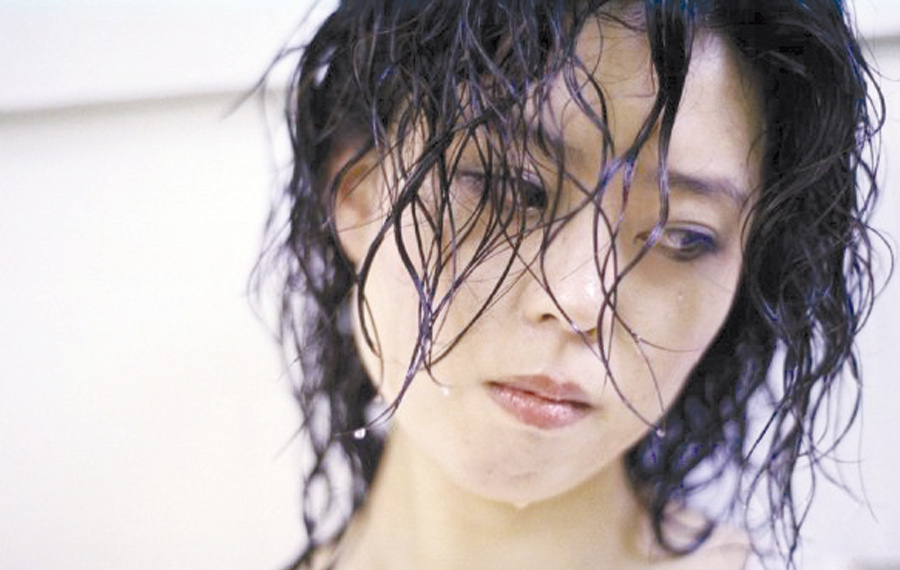
Pianist Makiko Hirata, known internationally as “Doctor Pianist” for her work promoting music as a healing agent, tells a little-known story of how Japan accepted Jewish immigrants throughout World War II despite its alliance with Nazi Germany. Many emigres were well-established musicians and left legacies among the first post-WWII Japanese musicians. Hirata lectures about this and performs related pieces. 2 p.m. Free. West Los Angeles Regional Library, 11360 Santa Monica Blvd., Los Angeles. (310) 575-8323.

Danny Lobell

Danny Lobell
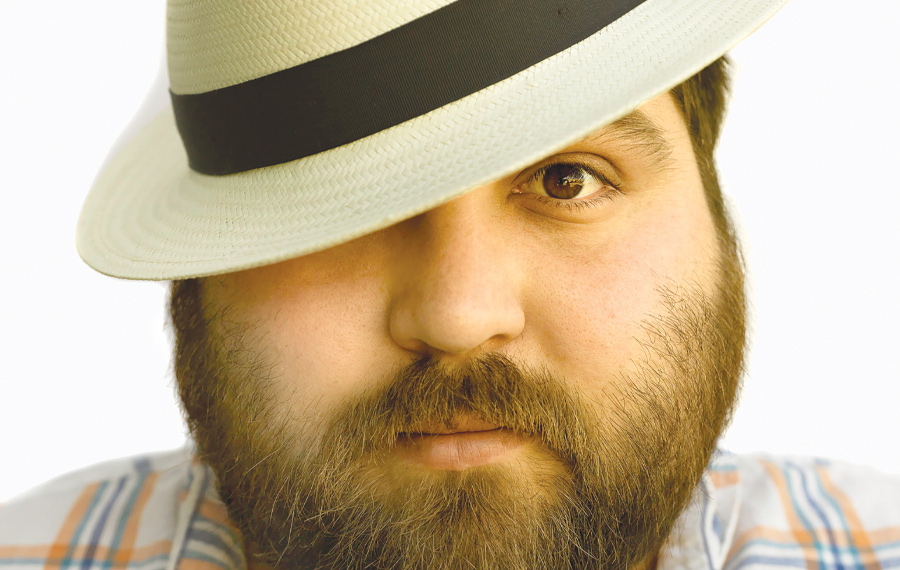
Having struggled with weight issues all his life, stand-up comedian Danny Lobell vows that he will become healthy by defeating his addiction to food in his new one-man show, “Tipping the Scales.” Even as a 9-year-old in his native Long Island, N.Y., Lobell wrestled with obesity. Lobell, an observant Jew, recalls descending into basements with old ladies for Weight Watchers’ meetings, working at a fat camp kitchen with Mexican workers and eating as many burgers as he wanted. He tries to break his food addiction and fix the obesity epidemic in the process. 8 p.m. July 7 and July 14. $10. Thymele Arts, second floor, 5481 Santa Monica Blvd., Santa Monica. Tickets available at eventbrite.com.

“Anne, A New Play”
In the U.S. premiere of “Anne, A New Play,” the latest adaptation about Holocaust victim Anne Frank’s life, Anne imagines and reflects. She meets a publisher in a postwar world and relates her story of hiding with her family from the Nazis for two years in Amsterdam. 3 p.m. and 7 p.m. Sundays; 8 p.m. Mondays through July 22. $40 adults, $25 seniors 62-and-older, $20 ages 8-20, Museum of Tolerance, 9786 W. Pico Blvd., Los Angeles. (310) 772-2505.

WED JULY 10

Mahjong Madness
A mahjong tournament highlights a Sisterhood event at Shomrei Torah Synagogue. Refreshments served. Prizes awarded. 7-9 p.m. Free for members. $5 for general. RSVP requested. Shomrei Torah Synagogue, 7353 Valley Circle Blvd., West Hills. (818) 854-7650.

THU JULY 11

“93Queen”
The 2018 documentary “93Queen” follows a tenacious group of Chasidic women in Brooklyn who take on their community’s patriarchy by creating the first all-female ambulance corps in New York, providing Chasidic women with more dignified emergency medical care. Today’s film screening at American Jewish University is your chance to share your thoughts about the film and enjoy some popcorn. AJU Sperber Community Library Director Lisa Silverman leads a post-screening discussion. 1 p.m. $10. American Jewish University, 15600 Mulholland Drive, Los Angeles. (310) 440-1572.

Sarah Silverman

“Stand-Up Against Hate”
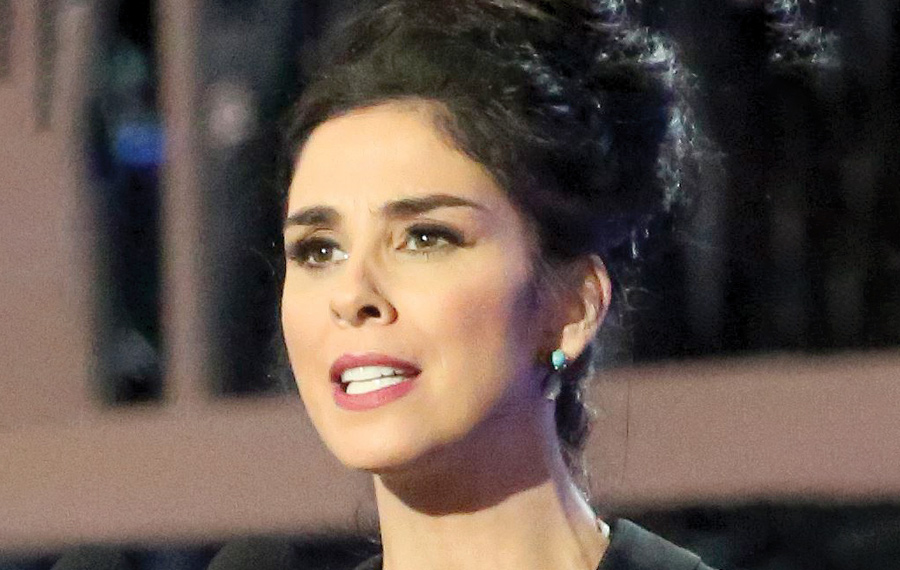
Emmy-winning stand-up comedian Sarah Silverman headlines the third annual Anti-Defamation League (ADL) NextGen “Stand-Up Against Hate!” comedy show. Comedian Bruce Fine hosts the evening for young professionals, supporting ADL’s mission of combating hate and bigotry. Additional performers include Justin Martindale (“Worst Thing I Ever …”); Lebanese-Palestinian-Syrian-Italian-American comic Sammy Obeid; Michael Yo (“Kevin Can Wait”) and Jimmy O. Yang (“Silicon Valley”). 21-and-older only. 7 p.m. doors. 8 p.m. performance. $50 advance, $75 door. Not including two-drink minimum. The Comedy Store, 8433 Sunset Blvd., Los Angeles. (310) 446-4260.

“Harry Potter” at Shul
Spending the evening at Adat Ari El enjoying a showing of “Harry Potter and the Sorcerer’s Stone.” In the popular film that launched a movie franchise, a boy discovers on his 11th birthday that he is the orphaned son of two influential wizards. Dress up in a Potter-style costumes and bring your own picnic, or purchase tacos at the event from Andres Kosher Catering. 7:30-9:30 p.m. Free. Adat Ari El, 12020 Burbank Blvd., Valley Village. (818) 766-9426.

“Jaws”
Nearly 45 years since its 1975 release, filmmaker Steven Spielberg’s suspenseful blockbuster “Jaws” returns to the screen on Laemmle Theatres’ “Throwback Thursday.” The seventh-highest grossing movie of all time opens with a young woman being killed by a shark near a New England resort town. The police chief and mayor argue over whether the tourist beach should be shut down. 7:30 p.m. $12 general admission. $9 seniors, children. Laemmle’s NoHo7, 5240 Lankershim Blvd., North Hollywood. (310) 478-3836.


Have an event coming up? Send your information two weeks prior to the event to ryant@jewishjournal.com for consideration. For groups staging an event that requires an RSVP, please submit details about the event the week before the RSVP deadline.

What’s Happening: Dodger Community Day, ADL Comedy Show, ‘Jaws’ Read More »

Second Mass Grave of Jewish Holocaust Victims Discovered in Romania

(JTA) — A second mass grave of Jews killed by Romanian troops during World War II was discovered in northeast Romania.

The human remains were found near the village of Popricani, the site of a massacre of Jews carried out by Romanian troops allied with the Nazis.

In 2010, a mass grave containing 16 bodies was found in a forest near Popricani. More than 100 Jewish adults and children are believed to have been buried at the site, the Elie Wiesel National Institute for Studying the Holocaust in Romania announced at the time based on eyewitnesses to the 1941 shooting.

A team of archaeologists now has unearthed the second site, according to the institute, and discovered the remains of at least 40 people, including 12 children – one as young as 2 years old, the French news agency AFP reported.

An investigation by military prosecutors found in 2014 that the Popricani massacre was carried out by Romanian troops, despite Romania’s denial that it participated in Holocaust atrocities.

Some 15,000 Romanian Jews were killed during WWII in mass shootings and in labor camps, or on trains heading to death camps.

Second Mass Grave of Jewish Holocaust Victims Discovered in Romania Read More »

‘Divas of Sheba’, PUP Gala, Chai Lifeline Soiree

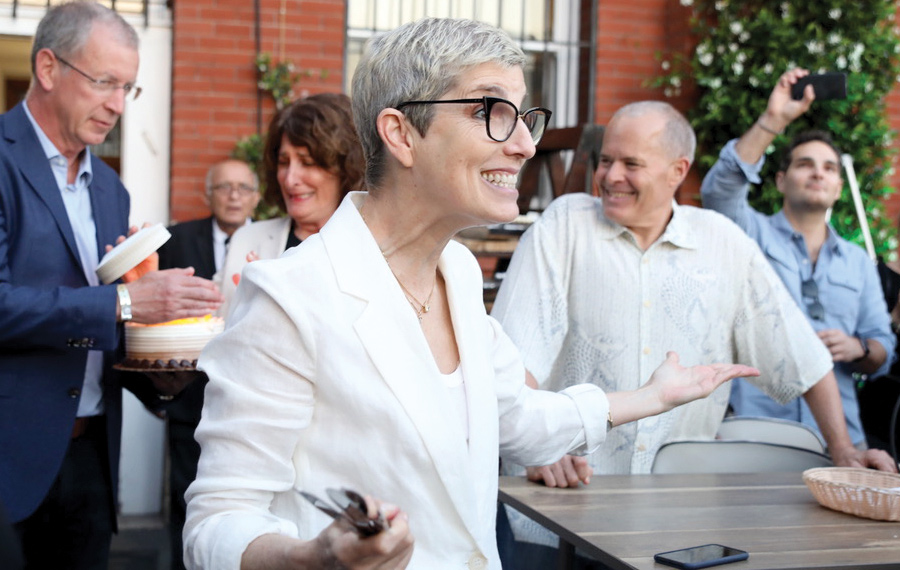
Multicultural and interfaith center Pico Union Project (PUP) held its June 22 gala, “Spirit: An Evening of Song, Story and Spirit,” at its home in the Pico-Union neighborhood.

“Last Saturday night, our friends and neighbors helped us raise over $100,000 to ensure the vital community services the Pico Union Project performs will continue for the foreseeable future,” a statement from the organization said.

The celebratory event featured performances by PUP friends and supporters including the klezmer band Mostly Kosher, author Barney Salzberg, dancer Adrian Hoffman, musician Sara Hershkowitz, actor and composer Stuart Robinson, writer Rick Lupert and Valley Beth Shalom Senior Rabbi Ed Feinstein.

PUP founder Craig Taubman also was in attendance along with his wife, Louise.

The gathering featured live music and spoken-word performances while drawing “spiritual and community leaders that are so fundamental to the PUP,” according to a statement on the PUP website.

Offering a diverse array of arts, religious and community-oriented programming, PUP operates out of a former Welsh church. Taubman, a songleader and musician, founded PUP in 2013.


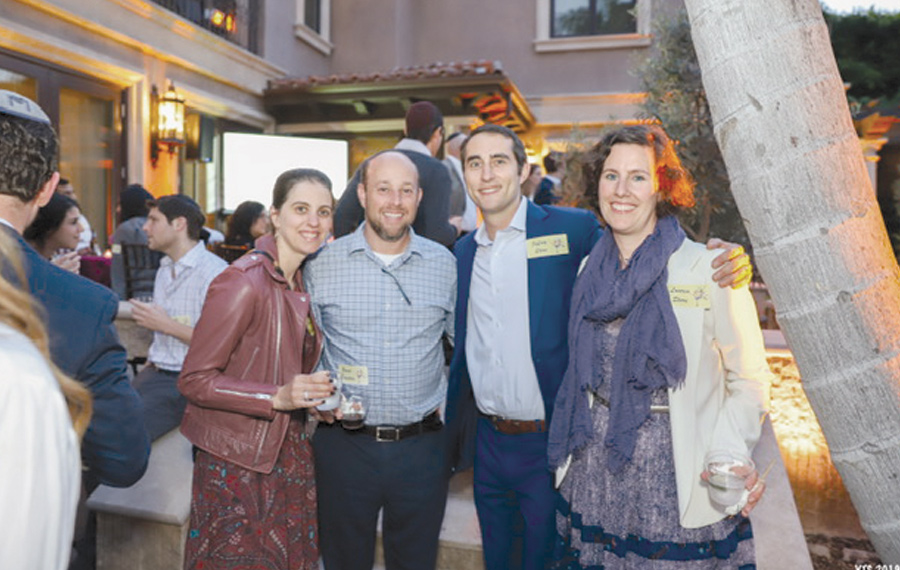
Chai Lifeline West Coast’s Young Leaders came together at Chai Lifeline West Coast’s 5th Annual Summer Soiree. Courtesy of Chai Lifeline

More than 100 members of Chai Lifeline West Coast’s Young Leaders Initiative gathered at the home of Marilyn and Jaime Sohacheski on June 17 for an evening of fun and inspiration at Chai Lifeline West Coast’s fifth annual summer soiree. 

The evening of appreciation recognized the commitment and support of Chai Lifeline’s young leaders, including couples and individuals in their 20s, 30s and early 40s who champion the organization’s mission of enhancing the lives of children and families living with serious illness or loss.

The evening featured cocktails and a dinner buffet under the starlit sky in the Sohacheski’s garden and two speakers who shared their personal experiences with Chai Lifeline. Nadia Heckman, whose 3-year-old son, Lazar, is battling a brain tumor, spoke about the constant support she has received from Chai Lifeline. 

“I came here tonight to say thank you to all of you, Chai Lifeline Young Leaders, for supporting this organization and allowing them to help kids like Lazar and families like mine,” Heckman said. “I don’t know how we would manage without them.”

Bina, 16, who was diagnosed with a chronic illness five years ago, shared memories from the magical summers she enjoyed at Camp Simcha, Chai Lifeline’s flagship program for seriously ill children and teens. 

“Because of my illness, I would never be able to have the same carefree experience as other kids,” Bina said. “Chai Lifeline and my amazing summers at Camp Simcha changed all of this for me. Camp Simcha gave me hope that I’m not alone in this fight and gave me the childhood I would otherwise not have had.”

Natalie Williams, associate principal of Yeshiva University Los Angeles (YULA) Girls School and a Chai Lifeline young leader, spoke about her family’s involvement in Chai Lifeline. Her son, Adriel, participated in Chai Lifeline’s newly launched Simcha Junior Volunteers, a program for middle school students. 

“Adriel is very proud to be a Chai Lifeline volunteer. He enjoyed going through the training and learned so much about chesed, empathy and the importance of giving back to others,” Williams said. 

She also spoke about the important role Chai Lifeline serves in helping schools and communities through crises.  

“Chai Lifeline has been here for YULA to guide and assist us during difficult times,” Williams said. “We know we can call them and they will be here to help us through the crisis.”

Moshe Buchman, who served as master of ceremonies, discussed the growth of the initiative since its inception five years ago. He also talked about the many opportunities for young leaders and their children to participate in Chai Lifeline programs and events, including the Buchman Birthday Initiative, where sponsors create birthday parties for sick kids in honor of their own birthdays.

The evening was capped off with a competitive trivia game, followed by a dessert bar.


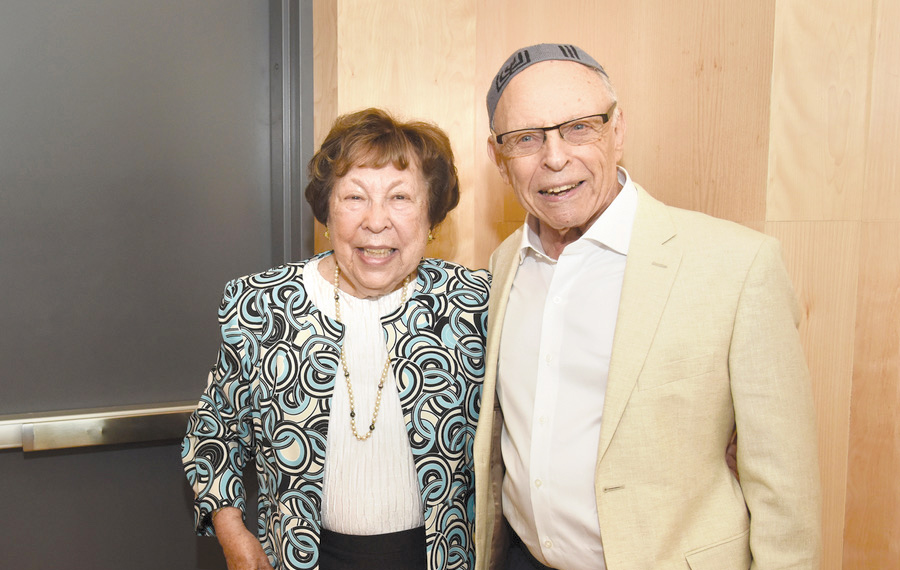
Howard and Irene Levine attend a dedication for the new Howard and Irene Levine Community Center at Valley Beth Shalom; Photo courtesy of Valley Beth Shalom

Valley Beth Shalom (VBS) held the grand opening of its VBS Howard and Irene Levine Community Center on June 9.

“It’s the first brand-new facility at VBS in over 25 years and represents our growing Jewish community and commitment to the VBS future,” Elana Vorspan, director of marketing and communications at VBS, said in an email.

The grand opening of the 18,000-square-foot center — housing a gym, performance and prayer space and more — coincided with Shavuot and featured a children’s concert, Shavuot services and Torah dedication ceremony, followed by dairy lunch, a staff and sixth grade basketball game and many activities.


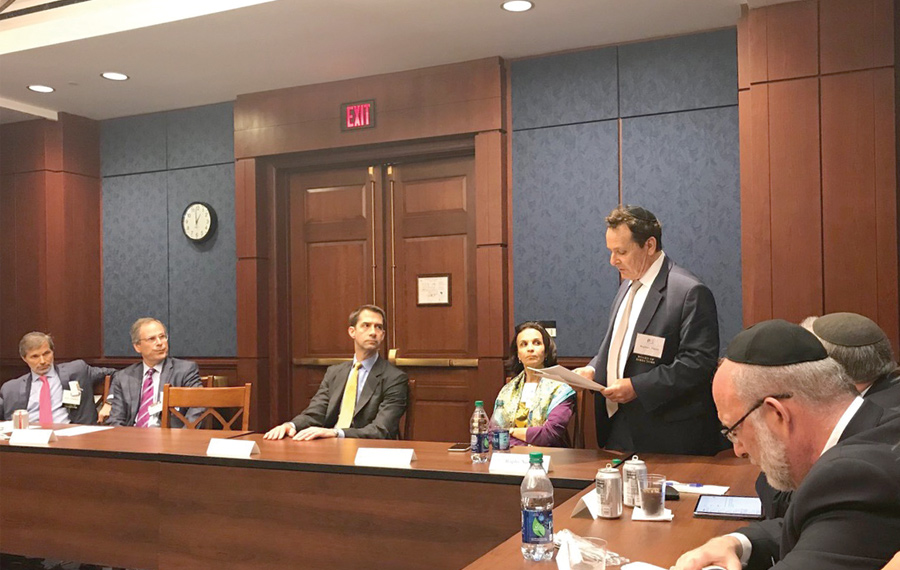
OU Board Member Raphael Nissel introduced U.S. Senator Tom Cotton (R-Ark.) at a meeting with leaders of the Orthodox Union on Capitol Hill. Photo courtesy of the OU Advocacy Center

Orthodox Union (OU) board member Raphael Nissel introduced Sen. Tom Cotton (R-Ark.) at a meeting with leaders of the OU on Capitol Hill on June 26. OU representatives were in Washington to discuss the organization’s federal advocacy priorities, including funding for Department of Homeland Security grants to protect synagogues, day schools and other nonprofits.

Founded in 1898, the OU supports the Orthodox Jewish community around the world. Its programs include the OU Advocacy Center, the organization’s “non-partisan public policy arm,” according to the OU website.


Sheba Medical Center’s inaugural “Divas of Sheba” Women’s Mission to Israel took place May 30-June 5. Sheba Medical Center’s inaugural “Divas of Sheba” Women’s Mission to Israel took place May 30-June 5. Photo courtesy of Friends of Sheba Medical Center

During the inaugural “Divas of Sheba” women’s mission to Israel, which took place May 30-June 5, 21 participants were granted access to some of Sheba Medical Center, Tel HaShomer’s top physicians and researchers.

Sheba doctors shared the latest advances in cardiology, cancer treatments, fertility, mental health, gastroenterology, neonatology, neuroscience, gynecology, oncology, nutrition, endocrinology, oncology immunology therapy, urology, hydrotherapy and more.

Off Sheba’s campus, the participants socialized with the female physicians who traveled with the group through the grottos of Rosh HaNikra, the alleyways of Neve Tzedek, a Druze village, kibbutz tours and the Carmel market. 

Together with more than 1,100 Sheba supporters, the mission participants celebrated Sheba at a garden gala.  At the conclusion of the trip, the women returned home as ambassadors of Sheba’s achievements and plans for the future.

This article was edited on July 5 to reflect that Valley Beth Shalom’s grand opening of the Howard and Irene Levine Community Center did not feature a ribbon-cutting ceremony with clergy and local interfaith leaders, a barbecue lunch, family activities and self-guided tours of the new facility. 


Want to be in Movers & Shakers? Send us your highlights, events, honors and simchas.
Email ryant@jewishjournal.com.

‘Divas of Sheba’, PUP Gala, Chai Lifeline Soiree Read More »

Jay Ruderman: Advocating for Disability Rights in the Jewish Community

In the early 2000s, businessman Mort Ruderman decided to work with other Boston-area families to give a $45 million gift to his local Jewish day school system. With that gift, he created the Ruderman Family Foundation. Established in 2002, it has become one of the leading voices advocating for disability rights in the Jewish community and beyond. Since Mort’s death in 2011, his oldest son, attorney Jay Ruderman, has run the foundation, helping it branch into a new realm: activism. 

A former district attorney in Salem, Mass., and deputy director of the American Israel Public Affairs Committee (AIPAC) in New England, Jay has continued his father’s mission to bring the issue of disability rights into the forefront of people’s consciousness. 

Ruderman spoke with the Journal about the foundation’s work to bring inclusion to synagogues, how Hollywood is a part of the problem and why he’s working to get more Israeli political leaders to meet more American Jews. 

Jewish Journal: Your foundation advocates for students with disabilities in the Jewish day school system. How did that focus come about? 

Jay Ruderman: The first major grant we gave was part of a multifamily, $45 million gift to improve Jewish education in Boston. But we didn’t really know what we wanted to focus on. Some of the discussions at the time with the local Jewish Federation led us to understand that children with disabilities were essentially excluded from the Jewish day school process. That resonated with us as an issue of fairness, which was an overriding issue for my dad during his life. He was a big proponent of the idea that everyone in life deserves a fair shot. 

JJ: Do you have a personal connection to this issue? 

JR: My nephew was born with autism. I have a child with a learning disability. This all had much more meaning after it touched us. Not every child learns the same. Not every person acts or looks the same. In the Jewish community, we take people who are different and push them into the public system. The community can’t accept you and we have to segregate you. That perpetuates seeing people as the other and being seen as the other has deep psychological and economic impacts for the rest of people’s lives. My prior career was as a prosecutor. I was very involved in politics. When I took over the foundation, I was initially hesitant. I saw philanthropy as passive, as giving an opportunity for others to create change. But I feel I’ve helped make it much more of an activist foundation with this focus on disability rights. 

“There’s some form of disability in many of us. Inclusion has made our Jewish community a better community. It just makes sense to accept everyone. That’s been the heart of our initiative.” 

JJ: How does Hollywood and representation come into all of this? Why is that such a big rallying cry for the foundation? 

JR: I think it really started to happen when we met Danny Woodburn, an actor and little person best known for being a character on Seinfeld. He wrote an op-ed five or six years ago about how people with disabilities are left out of the Hollywood diversity conversation. Now, we’re not from here. We’re Boston-based, New York-based and Israel-based. But I have a deep appreciation for how popular entertainment shapes attitudes and deals with stigmas. When we dug deeper into it, and we did white papers and worked with people ingrained in the industry, we began to understand how deep the issue is. What’s the implication? People with disabilities are the largest and poorest minority in the world. Seventy percent of people with disabilities aren’t working. If you really stigmatize them and segregate them, then opportunities are really hard to come by and they’re prevented from advancing. I do think that entertainment can change how people feel and behave. Something like “Will & Grace” became so influential in normalizing attitudes toward homosexuals. It’s headed in the right direction with disabilities but we’re not there yet. 

JJ: You’re very involved with trying to spread the message of inclusion to synagogues. What does that mission involve? 

JR: I’m sure we’ve touched Los Angeles through these issues. It has spread throughout the country. In Boston, we started the Ruderman Synagogue Inclusion Initiative. Now we have 52 synagogues across denominations involved and we’ve helped make inclusion part of the synagogue experience. 

JJ: Why is this form of inclusion essential for synagogues? 

JR: Everyone has someone in their family or closely connected to them that has some disability. Sometimes it’s a physical accommodation or sensory accommodation that’s needed. A lot of times it’s an attitude about what’s accepted and who’s accepted in synagogue. There are so many stories about people turned away from synagogues. You hear, “Oh, we can’t accommodate you here because your son or daughter is too isruptive.” That’s just unacceptable. Humanity is very diverse. There’s some form of disability in many of us. Inclusion has made our Jewish community a better community. It just makes sense to accept everyone. That’s been the heart of our initiative. 

JJ: Do you see your organization as filling a void in the Jewish philanthropic space?  

JR: Part of my philosophy in philanthropy is always looking for a void. Instead of going where everyone else has gone, I try to go where no one is going to start something. Now, there are people in different communities doing this work. Michelle Wolf (founder and director of Jewish LA Special Needs Trust and Services) has been active for a long time on this issue. Nationally, I didn’t see anything happening in the Jewish community, certainly not in Boston. We were able, through funding and advocacy, to help elevate it. That has been satisfying, feeling like you’re making a difference.  

JJ: What else is the foundation working on? 

JR: We’ve drafted white papers on other diverse issues surrounding disability. A few years ago, our research allowed us to reach a conclusion through our data that police and firefighters in the United States are more likely to die by suicide than in the line of duty. It’s shocking. In this country, we have tremendous issues in mental health and stigma, particularly in macho professions where they don’t want to show weakness. Our white paper has caused police and fire department to start addressing mental health. We’re hopeful it’ll save many lives.

Jay Ruderman: Advocating for Disability Rights in the Jewish Community Read More »

Swedish Neo-Nazis Disrupt Exhibition of Holocaust Survivors’ Portraits

(JTA) — Neo-Nazis in Sweden blocked the entrance to an exhibition of portraits of Holocaust survivors and intimidated visitors already viewing the display.

In the incident Tuesday in the southern city of Visby, several men from the Nordic Resistance Movement gathered outside the venue displaying the exhibition “Fading Stories – pass them on” by the Raoul Wallenberg Academy and photographer Sanna Sjosward.

Last year, intimidation by the Nordic Resistance Movement led a Jewish community in northern Sweden to dissolve itself, citing security concerns.

In this week’s incident, the men tried to block the entrance but one woman pushed passed them, leading them to follow her inside.

“Three Nazis followed and also went into the room,” she told Expressen. “Inside they yelled “F***ing myths.”

Police arrived at the scene but did not arrest the neo-Nazis, who left the premises.

“It was unpleasant. It was very clear that they were here intimidate,” another witness told Expressen.

In 2015 and 2017, skinheads twice disrupted lectures in Swedish schools by Holocaust survivors.

Swedish Neo-Nazis Disrupt Exhibition of Holocaust Survivors’ Portraits Read More »

Painted Rock Cactus Gardens

People find it hard to believe that I’m horrible with plants. Truly. Don’t have me take care of your plants, or they will meet their maker. The only vegetation I can keep alive is a cactus — but even that’s a challenge. If, like me, your thumb is black instead of green, you might prefer these rocks painted to look like cactuses. They are adorbs, require no maintenance and won’t prick you with a spine. So for those who are about to paint rocks, we salute you.

What you’ll need:
Smooth river rocks
Acrylic paint
Paintbrushes
Pots


1. Select flat rocks in a variety of shapes. Wash them with soap and water, and allow them to dry.


2. Paint the rocks on one side with various shades of green. You may need to paint a few layers. When the paint is dry, flip the rocks and paint the other side.


3. Using white, yellow or black paint, paint accents on the rocks like lines, dots and crisscrosses to mimic the features of a cactus. 


4. Display the painted rock cactuses in pots, allowing small filler rocks to nestle them in place.


Jonathan Fong is the author of “Flowers That Wow” and “Parties That Wow,” and host of “Style With a Smile” on YouTube. You can see more of his do-it-yourself projects at jonathanfongstyle.com.

Painted Rock Cactus Gardens Read More »