Iyad Afalqa, the chairman of the Arab American Caucus of the California Democratic Party, accused Senate Minority Leader Charles Schumer (D-N.Y.) of having allegiance to the “fascist Israel lobby.”
On March 27, Afalqa posted a link on his Facebook page to an article titled “Senate Democratic Leader Schumer Compares Ilhan Omar to Trump in AIPAC Speech.” Schumer said during his March 26 speech, “When someone says that being Jewish and supporting Israel means you’re not loyal to America, we must call it out. When someone looks at a neo-Nazi rally and sees some ‘very fine people’ among its company, we must call it out.”
Afalqa wrote in his post, “Shmuck Schumer the traitor whose allegiance is for Fascist Israel lobby who called himself the Guardian of Israel in Congress is attacking Rep Omar who hinted at the big elephant in the room: treason of the Fascist Israel lobby that Schumer belongs to.”
Afalqa went onto state that the “highest amount” of money from the “pro-Israel lobby” in the 2015-16 election cycle went to Schumer.
The Progressive Zionists of the California Democratic Party (PZCDP) said in a statement sent to the Journal via email, “Progressive Zionists of the California Democratic Party is concerned about the most recent statements made by Iyad Afalqa on his personal Facebook page and in the CADEMs unofficial delegate group. This is unfortunately not the first time he has used such inflammatory rhetoric, and is especially disappointing considering he co-sponsored a resolution condemning anti-Semitism.”
“Utilizing the tropes of dual loyalties, Jewish conspiracy, and power to criticize AIPAC is disturbing in a moment where highly charged rhetoric like this increasingly endangers the Southern California Jewish community — which has experienced many recent anti-Semitic incidents, with perpetrators espousing frighteningly similar rhetoric to Alfalqa’s,” the PZDCP said.
In February, Afalqa shared a link to an Al Jazeera op-ed stating that “Zionism has always been a white supremacist, settler colonialist, anti-democratic, right-wing ideology, which has demanded a loyalty based on nationalist racism” that has “collaborated with anti-Semitic forces towards a mutual goal of global apartheid.”
The PZDCP responded to Afalqa’s sharing of the aforementioned op-ed by writing in a Facebook post at the time, “This is clear and unbridled anti-Semitism found in the Protocols of the Elders of Zion, a famously false and hateful pamphlet alleging international conspiracy by racist, global Zionists. By itself, this trope has been responsible for the deaths of literally millions of Jews. This is the language we see being normalized in the article you shared.”
Additionally, in October 2017, Afalqa asked in Facebook when the Democratic National Committee (DNC) would be moving its headquarters “to Tel Aviv”:
Afalqa and the California Democratic Party did not respond to the Journal’s requests for comment.
Rabbi Shmulik Moscowitz of the Chabad of Flagstaff in Arizona told the Journal in a March 29 phone interview that the anti-Semitic vandalism that occurred at their construction site is a “setback” for their planned building.
On March 25, swastikas were found painted on the windows of the construction site and carved onto the walls.
“They just broke a bunch of different things, smashed a bunch of tools, and put mortar and threw it all over the place and smeared equipment in the kitchen with the mortar, just made a really big mess and caused a lot of damage,” Moscowitz said.
Moscowitz added that the cost of the damages was going to be “a lot more than” the initial $1,000 estimates the police had listed.
“It’s a real setback because we’ve been in construction for 16 months,” Moscowitz said.
The Chabad has been building its Molly Blank Center, a Jewish community center that is going to be 12,500 square feet and feature a shul, library, social hall, arts and crafts center, a sukkah plaza and a playground area.
“It’s a big project, it’s something that the community is very, very proud of,” Moscowitz said.
The center was on schedule to be completed by April 26; after the vandalism occurred, Moscowitz said they’re hoping to have a grand opening happen sometime in the summer.
Moscowitz said that the Flagstaff community has been supportive of the Chabad; Jake Bacon, the chief photographer of the Arizona Daily Sun, started a campaign members of the community to create hearts made out of cardboard and put silver foil over them with messages “of love and support.” Moscowitz said the Chabad has received “hundreds” of these.
“It’s an amazing thing to see a community come together and be so positive and so supporting when something like this happens, and in general, the whole thing really reinforces us to just keep doing what we’re doing and reach out to everyone in community in love and acceptance for who they are,” Moscowitz said. “And it just makes us want to open our doors even sooner.”
(JTA) — A Muslim community leader in New Zealand dismissed claims by the head of the country’s biggest mosque that Israel’s Mossad intelligence agency was behind the killing of 50 Muslims at two Christchurch mosques.
Mustafa Farouk, president of the Federation of Islamic Associations of New Zealand, referred in his statement Thursday to remarks made on March 23 by Ahmed Bhamji, chairman of the Mt Roskill Masjid E Umar mosque.
“Recent comments by an individual do not represent the views of the Muslims of New Zealand,” Farouk said.
The killings on March 15 were perpetrated by a 28-year-old gunman from Australia described in media reports as a white supremacist.
On March 23, Bhamji said during a sermon: “I stand here and I say I have a very very strong suspicion that there’s some group behind him and I am not afraid to say I feel Mossad is behind this.”
Bhamji continued: “And not only them. There are some business houses, also, who are around … you know, Zionist business houses that are behind him.”
A letter by Albert Einstein, citing Jewish solidarity as the only weapon of self-defense by a persecuted people, has been auctioned off for a top price of $134,344.
The letter was written on June 10,1939, as Jews were fleeing Nazi Germany and as Hitler was preparing to launch World War II.
Einstein addressed the letter, posted from his Princeton office, to Dr. Maurice Lenz of New York and praised his efforts to enable the refugees to enter the United States.
“The power of resistance which has enabled the Jewish people to survive for thousands of years has been based to a large extent on traditions of mutual helpfulness,” Einstein wrote.
“In these years of affliction our readiness to help one another is being put to an especially severe test. May we stand this test as well as did our fathers before us.
“We have no other means of self-defense than our solidarity and our knowledge that the cause for which we are suffering is a momentous and sacred cause.”
Auction of the letter was conducted by Nate D. Auctions of Los Angeles and the ultimate high among 23 bidders far exceeded the previous top of $53,504 among 20 Einstein letters offered by Sanders since 2017, spokesman Samuel Heller noted on Friday March 29.
In the previous top, Einstein explained the science underlying his groundbreaking work on Electrostatic Theory and Special Relativity.
Even the original photo of Einstein sticking out his tongue at pursuing photographers came in second at $125,000.
In line with company policy, Sanders did not reveal the names of the seller and buyer of the letter.
Einstein concluded his letter to Lenz by writing “It must be a source of deep satisfaction to you to be making so important a contribution toward rescuing our persecuted fellow-Jews from their calamitous peril and leading them toward a better future.”
A number of swastikas were found inside a residence hall at the North Carolina School of Science and Mathematics (NCCSM) on March 27.
A March 28 email from NCCSM Chancellor Todd Roberts told members of the community that the “swastikas were found drawn on one of our residence hall floors.” The name of the residence hall is not mentioned.
“The swastika symbol has historically been and continues to be used as a symbol of hate, intimidation, intolerance, and this type of behavior has no place in our community on campus and will not be tolerated,” Roberts wrote. “I am deeply disappointed in the actions of the individual or individuals who felt it was okay to draw swastikas in one of our residence halls.”
Roberts concluded the email by stating that the school is investigating to see who the perpetrator or perpetrators of the swastikas were.
Bryan Gilmer, NCCSM’s director of communications, told the Journal in an email that the school is not making any photographs of the swastikas publicly available because they “don’t want to propagate such offensive images.”
“The investigation is continuing, but there is no update to provide so far since the chancellor’s email,” Gilmer wrote.
NCCSM describes itself as “the nation’s first public, residential STEM (science, technology, engineering and mathematics) high school, challenging and inspiring N.C. students through residential, online, and summer options.”
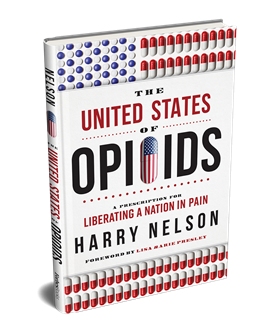
The opioid crisis is serious. 130 people die in the US every day. The estimated cost to the U.S. economy for opioid misuse is $78.5 billion a year, through healthcare, lost jobs, addiction treatment and more. L.A. lawyer Harry Nelson, an active member of the Pico-Robertson Jewish community, is one of the most visible lawyers in the country working with the addiction treatment industry, and his new book “The United States of Opioids” – Liberating a Nation in Pain provides analysis, comment and possible solutions for slowing and reversing this deep source of pain faced by so many US residents.
Fentanyl, a synthetic opioid, is one of the most addictive drugs known to mankind. Part of the problem is that fentanyl fantastic when injected, as I experienced a couple of years ago when being treated in ICU following a major surgery. The thing is that the drug is intended for medical use and disbursement, but when it is illegally created and sold on the streets, the trouble begins.
I was personally averse to prescription opioids once home from hospital, and as soon as I experienced some negative side-effects I promptly flushed my remaining pills down the toilet. Unfortunately many people are not so lucky, and quickly get addicted to prescription opioids which can lead to lifelong problems.
In a recent conversation with Harry Nelson, he told me how his book “The United States of Opioids” is specifically designed to bring healing to a nation in pain.
MJF: What initially got you interested in the opioid crisis?
HN: I came out to California in 2001. I had been working for seven years doing legal work for the healthcare system. Back then it was the early days of the opioid crisis. I was dealing with doctors who were in trouble. They were self-prescribing opioids and became addicted because they were in proximity to the drugs in the hospital, so could easily get hold of the drugs.
MJF: What happened to those doctors?
HN: Many of them lost their licenses, and many of them who retrained came to the awareness that they couldn’t be in a hospital where they were exposed – it was like being a kid in a candy store. A couple of them had a storng sense of mission that they wanted to treat addiciton and address the emotional pain that people got addicted self-medicated for anxiety and depression.
MJF: What are the main reasons that people are currently turning to self-medication?
HN:We are being deluged in this media age. It is causing a amount of stress that our systems aren’t built to take. Every time your phone rings or something pings, you are being forced back into a moment of being focused, rather than allowing your system to calm down. There is a whole school of thought as to why we might be seeing a new biological response to modern technology, where people get isolated and face more personal problems.
MJF: What coping mechanisms do you see people using to successfully balance out this stress?
HN: Sitting with friends and reconnecting on shabbat table is a form of healing, as is exercising, meditation and yoga.
MJF: How can we remedy the opioid crisis?
HN: Ultimately, healthcare isn’t going to fix this problem and the government isn’t going to fix this problem because certain pieces are unpopular messages that government won’t deliver. We need other settings to take on this crisis. We need a call to action where we empower people to do something, to empower them in their own lives to deal with their own pain, to change the culture in the workplace, and within religious communities. We can understand that people are in pain and need, and we can help with their suffering through other means.
There is also a problem with shame. A lot of people are walking around shaming people – this can lead to self-medication – but if we can eradicate the shame, express ourselves without judgement, we can help people without their having to resort to opioids.
MJF: This sounds different to the usual “war on drugs”
HN: Exactly. There is a very efficient market between people who want drugs and people who suppy drugs. If you push down on one drug then another pops up. If you eradicate crack and people move to meth. If you eradicate meth, people move to heroin and so forth. Instead we can ask why is there so much anxiety amongst young people? Why is suicidality off the charts? What is the technology age doing to our biological systems? What about the increase in isolation?
Opioids have created the easiest way to kill yourself. Literally, you take some pills, go somewhere quiet where nobody can disturb you, go to sleep and you won’t wake up.
MJF: What can we do?
HN: There a lot of people who want to help but don’t know how. We can start speaking in the Jewish community since this is an issue that hits people straight between the eyes. A campaign of public awareness around liberating peoples’ pain, and increasing their mind-body communication. We can deliver the message that our health system is reactive and we have to address multiple levels of health system failure by supporting people, offering ways to help them heal and alleviate their pain, before they resort to self-medication and the patterns that created the current opioid crisis.
Harry Nelson’s book “The United States of Opioids” is available on Amazon.
The Israel Defense Forces (IDF) released a #StopHamas video as the terror group prepares for the one-year anniversary of its weekly riots at the border of the Gaza Strip and Israel.
The video begins by pointing out that Hamas started the riots at the border on March 30, 2018, where they “consistently used the Palestinian civilians as cover against IDF troops and violently breach the border.”
“Obscured by smokescreens, they used knives, Molotov cocktails, and launched explosive devices over the fence in order to harm and kill Israelis,” the video states. “These riots have continued every single week since March 2018.”
There have typically been around “tens of thousands” people participating during these riots, with the peak being 45,000 on May 14, around the time when the United States embassy in Jerusalem opened.
“The aim of Hamas is clear: to facilitate mass infiltrations of violent mobs from Gaza into Israeli communities and to carry out terror attacks deep into Israeli territory,” the video states, adding that a Hamas map could be seen on social media detailing how to attack these communities.
The Israeli communities that Hamas is targeting consist of 70,000 Israeli civilians that can hear and feel the riots when they occur.
“These riots, they hurt Israelis, Palestinians, and anyone else hoping for a better future,” the video states.
Israeli writer and activist Shoshana Keats Jaskoll released a video on Twitter detailing how generations of Israelis have been raised with stress as a result of being constantly threatened by rockets from the Gaza Strip.
Jaskoll began the video by saying that there are people who “minimize” the effect of the rockets being shot into Israel since the Iron Dome has been effective in protecting Israelis from the rockets. However, Jaskoll pointed out that there is “an entire generation of Israelis who know life in 15, 30, 45 second increments because that’s how long they have to get to a bomb shelter because someone’s shooting rockets at them, trying to kill them.”
She added that there are Israeli children who go to school having to engage in drills to protect themselves from rockets and others who are constantly on the lookout for the nearest bomb shelter.
“That’s what terror does: terror brings it inside of you, so that even if there’s no rocket at that moment, or there hasn’t been in a week or even a month, it’s with you everywhere you go,” Jaskoll said. “Every decision you make, every step you take, you need to know: where is there a bomb shelter? How do I get my children safe? Can I go here today? Can I drive to this place? Is there a bomb shelter? What’s the amount of time I have from hearing that siren that brings anxiety to getting my children safe? This is how Israelis grow up.”
Jaskoll added that “it’s lacking in humanity and compassion” to minimize the effects the rockets have on Israelis and that it’s at least worth understanding the mindset of Israelis who have to deal with the looming threat of rockets.
“Why is ‘left’ a curse word in Israel, almost?” Jaskoll said. “Because they feel that whoever is in the government, if they’re left-wing, they’re just going to give more territory away, and there’ll be more cities under fire, more children growing up this way, more parents having to look for bomb shelters everywhere they go. That’s what you need to understand about the way Israelis are feeling, even if you don’t care.”
People minimize the effects of rockets shot into Israeli towns. Because most are shot down, ppl think they do no harm. But that's just not true. An entire generation of Israelis has lived life only knowing 15, 30, or 45 seconds to a bomb shelter. The stress takes a massive toll. pic.twitter.com/FxfjiKNElV
Mothers in Israel were just jolted awake from the sound of air-raid sirens. This is a glimpse into their reality under Hamas rocket fire: pic.twitter.com/xBrHBELmwT
There has been a barrage of rockets from the Gaza Strip toward Israel since March 25, prompting retaliatory strikes from Israel against Hamas targets in Gaza.
Adam Duritz is arguably best known as the frontman of the band Counting Crows, which has sold more than 20 million albums worldwide. Yet not everyone realizes the impact that Duritz has made on other artists for 20-something years. Beyond introducing a new generation to the genius of Alex Chilton and Big Star, Duritz has run record labels and curated music festivals.
Underwater Sunshine— also the name of Counting Crows’ 2012 album, which debuted at no. 3 on the Billboard Top Rock chart — is name of the music festival run by him and co-founder Barbara Rappaport. The Underwater Sunshine Festival launched last October with a two-day event, and will be returning to New York City’s Bowery Electric for two more days of programming on April 5th and 6th. Among the participating artists for the April 2019 edition are Jordan Klassen, Eric Hutchinson, Red Wanting Blue, Amy Vachal, Maria Taylor and Roan Yellowthorn.
I had the pleasure of speaking with Adam Duritz by phone about Underwater Sunshine Fest – which also the name of his podcast with author and music journalist James Campion – his preference of New York over California, his bar mitzvah, and more. Highlights from the chat are below, while the full interview will be part of an upcoming episode of the “Paltrocast With Darren Paltrowitz” podcast.
Jewish Journal: Underwater Sunshine is both the name of your podcast and the upcoming festival and both of those promote new music you like. So would you look at that as your new outlet in lieu of having a record label? Adam Duritz: Yeah, it’s the same kind of stuff in a lot of ways…
JJ: So what is it that draws you to the Bowery Electric?
AD: The people running it. Diane [Gentile] and Jesse Malin… I love the place, I love the people working there… It’s a small venue. The sound is fantastic but it’s small. I would like to eventually move out of there to someplace bigger. But they’ve been so good to us for so long… They love music and they run a really cool great club and have multiple rooms, more than one stage…
This has been running pretty efficient. We are pretty happy with it… What’s nice about the clubs here…New York has a lot of clubs that sound great… They’ve done the work, they’ve figured out how to make that room sound good and they bring bands on and off stage with like 15-minute changeovers, which is incredible to me. And that was never the way when I was coming up…
JJ: Are you a full-time New Yorker these days?
AD: Oh yes, for 15, 16, 17 years. I moved here in 2003, I’ve been in New York for a long time.
JJ: What is it that makes you loyal to New York rather than Los Angeles? Because I know that you did write some of your greatest work in Los Angeles.
AD: You know, L.A. was great… I grew up in a really cool struggling artist community in the Bay Area with Berkeley and Oakland and San Francisco.But it was really hard when I was a working artist. I felt like there was a lot of resentment towards that, whereas when I came to L.A. and it’s not that way for me at home back in the Bay Area, but it was at first… L.A. was really welcoming and started being a real person artist town and whatnot especially…Everybody was there to work…
But I think New York is a great city to be a grownup. Anything you might be interested in, anything in the world, whether that’s the ballet or the opera or a bookstore. Whatever it is they have it here and they have some of the best in the world here. You can really, as an adult, you can find anything you want and there’s a world-class version of it here. And I find that fascinating… There’s 50,000 art galleries and 10 of the best museums in the world… They’ve got the best [ballet and opera] companies in the world here… There’s big and small venues… Everybody in the world comes to play here. Same thing with food.It’s just, everything you might be interested in is here and I’ve really found that to be an amazing, generous thing to live around.
Also I really love the [New York City] subway. The idea that someone built a train like 100 years ago, underground. It will take me anywhere I want to go 24 hours a day for a couple of bucks. I don’t even know how to express that. Of all the things in New York that’s maybe the best. I mean, it’s an incredible traffic-free thing that carries us all everywhere… I’m in love with the subway…
JJ: Here’s a question out of nowhere because part of this interview is going up on the Jewish Journal website. Can you tell me something about your bar mitzvah?Any memories about it? AD: I’m trying to think… I remember after the party I went upstairs to change and my mother told me get the f**k back into my suit. (laughs) I don’t remember it very well. I remember I wrote a speech, which means the rabbi wrote a speech. I could always sing pretty well… I remember other people’s bar mitzvahs and bat mitzvahs more than my own because I had a band that played a lot of friends’ bar mitzvahs, so I have a lot of memories of that.
I don’t really remember my own very well, though. It was such a long time ago. I remember studying in Jerusalem a bit a few years later when I was 17, 18, I was over there. I got really interested in that for a little while. But my bar mitzvah, I don’t really remember a whole lot about it. It was pretty easy… (pauses) My girlfriend is reminding me that I performed my bar mitzvah speech a couple of months ago, but it wasn’t my bar mitzvah speech, it was my confirmation speech. They refuse to understand that Jews can get confirmed but it’s not the same as Christian confirmation. But yeah, we did it in the Bay Area. (laughs)
JJ: In closing, any last words for the kids?
AD: Listen to music and go see it. There’s more good music now than there ever was before. It’s just a matter of finding it, there’s more of it out there than there ever was. Music is in better shape that way than it ever was before but it does need support from people. It’s easy to be lazy about it because we’ve got everything delivered to our doorstep… But bands need real people to come see them in real places… It’s important.
More on Adam Duritz and the Underwater Sunshine Fest can be found online.