How Did Judaism Get Its Name?
How Did Judaism Get Its Name?
How Did Judaism Get Its Name? Read More »
How Did Judaism Get Its Name?
How Did Judaism Get Its Name? Read More »

A 20th-century morality play never felt more relevant as the UK’s National Theatre production of “An Inspector Calls” landed at the Wallis Annenberg Center for Performing Arts in Beverly Hills. Set in 1912, it tells the story of the fictional upper-class Birling family in middle England who are all intricately and unwittingly connected with the suicide of a local girl. J.B. Priestly’s classic thriller takes place in three acts over one evening and leaves the audience with more questions than answers.
The touring production was directed by BAFTA- and Oscar-winner Stephen Daldry (“Billy Elliot,” “The Hours,” “The Crown”) and opens with an opulent Victorian house set in a sparse wasteland, watched by local urchins. There is an “Alice-in-Wonderland” feeling as the Birling family hunch to step out through the undersized door, and we soon discover that their value system is out of sync with the mores of society.
One by one, every member of the Birling family discovers how their lack of humanity contributed to the girl’s death, and most of them are able to recognize and begin to repent for what they have done.
Although the dramatist did not likely intend it as he wrote the play in 1945, there are strong Jewish themes at the heart of “An Inspector Calls”. There is a slight Talmudic misquote from the Talmud Sanhedrin 4:5 but it illustrates the point: “Whoever destroys a life is considered by Scripture to have destroyed an entire world, and anyone who saves a life is as if he saved an entire world.” They all see how they missed opportunities to save a life, and the twist is that we then see their family life is fall apart.
The grey skies in the background of the set give a sense of foreboding, both of the family’s moral collapse and the First World War, which is about to occur, tearing apart the essence of British society and stability.
As the world crumbles, the Birling children epitomize Maimonides’ approach to teshuva (repentance or return), taking responsibility for their actions, recognizing what they have done and immediately implementing a change of behavior, while their parents immediately choose denial and avoid responsibility as soon as they get the opportunity.
The play was originally produced in 1945 with performances in Moscow and Leningrad since a venue was not available in London. The first UK performance took place the following year with the as-yet unknighted Sir Ralph Richardson as Inspector Goole and Sir Alec Guinness as Eric Birling, many years before they became theatrical knights of the realm and Guinness was immortalized as Obi-Wan Kenobi. Questions about moral responsibility must have been pertinent in the mid-’40s context of World War II, which had left Europe in a state of destruction, even though the Holocaust was virtually unknown at the time. Today the play’s questions can lead us to thoughts about social responsibility, whether it comes to the environment, societal imbalance or our global community.
“We aren’t the same people who sat down for the dinner at the start of the evening” says Sheila Birling, played by the exquisite Lianne Harvey, and she could be speaking directly to us, who are not the same audience who sat down for the play at the start of the evening.
Liam Brennan gives a powerful performance as Inspector Goole, and Daldry’s direction presented the play in a memorable light since Goole often looks straight at the audience while the people he interrogates are speaking behind him. This theatrical convention emphasizes the contemporary aspect of the play, as if Goole we talking to us, the onlookers, urging us to look deep within ourselves– as if our actions are reflected in the world of the play.
At one point, Inspector Goole breaks the fourth wall and begins preaching to the audience, as if it was a synagogue or church and we are the congregation. “There are millions of Eva Smiths,” he says, referring to the dead girl “You turned her away when she needs help”. Sure, this convention is heavy-handed, lacks any sense of subtlety and whacksus on the head with a clear message, but why not? I loved it.
Theatre is not meant just to amuse, entertain and distract us. As Aristotle taught, it is “the imitation of an action” that can show us tragedy on stage rather than tragedy in real life, so that we can change how we behave and enhance society.
Priestly ends the story with two plot twists that continue to surprise and delight me, even though my first exposure to “An Inspector Calls” was at age 15 when it was a required study as part of the secondary school syllabus in England. Daldry’s production presents it in a brand new light, and even though the play is nearly 65 years old, it feels like it was written yesterday.
A 20th-Century ‘Inspector’ That Fits in 2019 Read More »

“The Band’s Visit” the 10-time Tony Award-winning musical that takes place in Israel took home the Grammy for best musical theater album.
“Seriously, though. This is incredible,” Etai Benson, who plays Papi in the show, wrote on Twitter following his win. “Thank you @RecordingAcad and huge congratulations to the entire team at @TheBandsVisit (especially our world-class musicians)! #Grammys”
Holy moly – @TheBandsVisit won a #Grammy for Best Musical Theatre Album!!! Special congrats to Ettya Benson, who joins Adele Dazeem among winners in this category. 🏆🎊🎶 pic.twitter.com/WDI8z7BKq1
— Etai Benson (@etaibenson) February 11, 2019
The show is leaving Broadway in April, but will go on national tour and can add this Grammy Award to their many accolades.
Drake took home the Grammy for best rap song for “God’s Plan.” This was the Canadian rapper’s only win of the night out of seven nominations.
During his speech, he criticized the award show for making it about the win and not the journey.
“We play in an opinion-based sport, not a factual-based sport,” he said. “You’ve already won if you have people who are singing your songs word for word, if you’re a hero in your hometown,” he said before getting cut off.
“A Star is Born” took home two wins at the Grammys for the song, “Shallow.” It won for best song written for visual media beating out “All the Stars” (“Black Panther”), “Mystery of Love” (“Call Me By Your Name”), “Remember Me” (“Coco”), and “This is Me” (“The Greatest Showman”). Gaga shared the honor with Mark Ronson, Andrew Wyatt and Anthony Rossomando who co-wrote the song.
St. Vincent won for best rock song for “Masseduction” which was co-written by Jack Antonoff who has previously co-written music for Sara Bareilles, Fun and Taylor Swift.
Before the live broadcast started, the award for best classical compendium went to the recording “Spiritualist,” featuring compositions by Kenneth Fuchs and vocals by Aryeh Nussbaum Cohen. Conductor JoAnn Falletta thanked Nussbaum Cohen who grew up singing in the International Jewish High School Choir, HaZamir.
Actress and writer Rashida Jones, daughter of music legend Quincy Jones and Jewish actress Peggy Lipton, took home a Grammy for best music film for her Netflix documentary “Quincy” based on her father’s legacy. The win marks the 85-year-old legend’s 28th Grammy win, making him the “living artist with the most trophies in Grammy history,” according to Billboard.
Backstage Rashida told the room of journalists how surprised she was to win and how excited she was to share the award with her dad. “It’s so nice I get to share this with my dad,” she said. “This is his 28th Grammy. To have my first be his 28th, I will take it! I’ll take it!”
‘The Band’s Visit,’ Drake, Rashida Jones Take Home Grammys Read More »
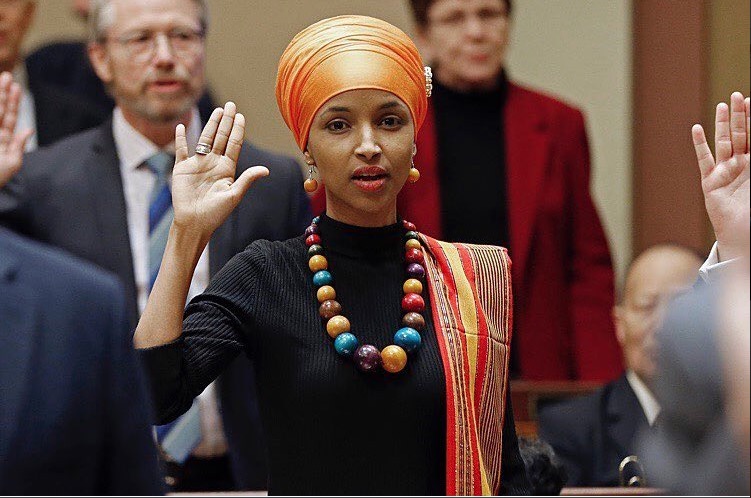
On Feb. 10, freshman Rep. Ilhan Omar (D-Minn.), responded to a post by House Minority Leader Rep. Kevin McCarthy, (R-Calif.), where he said Democrats should act on Omar’s anti-Israel statements.
“We took action on our own side. I think when they stay silent, they are just as guilty,” McCarthy said Friday, according to The Washington Post. “I think this will not be the end of this.”
Omar responded: “It’s all about the Benjamins baby,” a slang term for money.
Batya Ungar-Sargon, an editor at The Forward followed up that tweet with a question: “Would love to know who @IlhanMN thinks is paying American politicians to be pro-Israel, though I think I can guess.”
Would love to know who @IlhanMN thinks is paying American politicians to be pro-Israel, though I think I can guess. Bad form, Congresswoman. That's the second anti-Semitic trope you've tweeted. https://t.co/FTCaCe7WyG
— Batya Ungar-Sargon (@bungarsargon) February 11, 2019
“AIPAC!” Omar tweeted back (but has since removed it).
The American Israel Public Affair Committee (AIPAC), as its own website states, does not contribute to politicians.
The tweet did not go unnoticed by members of Omar’s own party – who took to Twitter to blast her response.
Rep. Eliot Engel (D-N.Y). chair of the House Foreign Relations Committee, of which Omar is a member wrote:
My statement on Rep. Omar's comments pic.twitter.com/TiVshAT81r
— Eliot Engel (@RepEliotEngel) February 11, 2019
Rep. Jerry Nadler (D-N.Y.), chair of the House Judiciary Committee, who is Jewish, said
"In this fragile moment in our nation’s history, we must all redouble our efforts to engage in policy debates in ways that respect the dignity and humanity of all people." — Read my statement on the comments made by Rep. Ilhan Omar. pic.twitter.com/srHL49WUBN
— Rep. Nadler (@RepJerryNadler) February 11, 2019
Rep. Rep. Ted Deutch (D-Fla), chairman of the Ethics Committee responded:
I condemn the use of anti-Semitic tropes by Rep. Omar. Anti-Semitism invoked by any Member of Congress is absolutely unacceptable.
Read my statement: pic.twitter.com/qR2SOARPGh
— Ted Deutch (@RepTedDeutch) February 11, 2019
Rep. Nita Lowey (D-N.Y.), chair of the House Appropriations committee wrote:
My statement on Congresswoman Ilhan Omar's comments: pic.twitter.com/MtWo72LsMZ
— Archive: Nita Lowey (@NitaLowey) February 11, 2019
Rep. Haley Stevens (D-Mich.), another member of the “freshman class” posted:
I’m eager to reaffirm my support for Israel, condemn anti-semitism in all its forms, and make clear that my beliefs on Israel and any other policy topic for that matter will never be bought and paid for.
— Rep. Haley Stevens (@RepHaleyStevens) February 11, 2019
Democratic leadership posted a letter on behalf of Speaker of the House Rep. Nancy Pelosi (D-Calif.), Majority Leader Steny Hoyer (D-Md.), Majority Whip James E. Clyburn (D-S.C.), Assistant Speaker Ben Ray Luján (D-N.M.), Caucus Chairman Hakeem Jeffries (D-N.Y.) and Caucus Vice Chair Katherine Clark (D-Mass.)
In our conversation today, Congresswoman Omar and I agreed that we must use this moment to move forward as we reject anti-Semitism in all forms. https://t.co/UpZA3DNgQs pic.twitter.com/1Z6rH65e3M
— Nancy Pelosi (@SpeakerPelosi) February 11, 2019
The ADL also released a statement in response:
As the people’s House, the House of Representatives must not tolerate any bigotry against any community in our nation. Our statement on Rep. @IlhanMN anti-Semitic tweets:https://t.co/mrXpqS8VWq
— ADL (@ADL) February 11, 2019
Voices on the other side of the aisle, including Rep. Steve Scalise (R-La.), have called for Omar to be removed from her committee role:
Good that some Dems have condemned the disgraceful anti-Semitic remarks of Rep. Omar—but their words are empty unless Dem leaders remove her from the Foreign Affairs Committee. No one with her anti-Semitic views should be allowed to represent US foreign policy on that committee.
— Steve Scalise (@SteveScalise) February 11, 2019
Omar recently apologized for a 2012 tweet in which where she accused Israel of “hypnotizing” the world, acknowledging that she had unwittingly echoed anti-Semitic themes.
Democrats Respond to Rep. Omar Tweet About AIPAC, ‘Benjamins’ Read More »
Several weeks ago an American Jewish friend of mine who is not Iranian really surprised me when he questioned why I continue to speak out and write against the current radical Islamic regime in Iran. He questioned why I continue to publicly discuss the horrors Iranian Jews have been facing at the hands of this brutal regime for the last 40 years. “I’m tired of hearing about their hostage stories and what happened to them back then… can’t we just move on?” he asked me. My answer was a simple “no.” The nightmarish hell unleashed upon Iran’s Jews at the hands of the current ayatollahs regime in Iran is something I, as an Iranian Jew, can never forget and will never stop speaking out against for as long as this brutal regime remains in power. This is a pain that many in my Iranian Jewish community in America still carry because we had loved ones executed, we were imprisoned, we were tortured, we had our livelihoods and properties randomly confiscated by this regime in Iran all because of the “crime” of being born Jews in that country. With this same Iranian regime actively pursuing the goal of another Jewish genocide through nuclear weapons attacks on Israel, I cannot remain silent. With this regime in Iran continuously denying the Holocaust and actively supporting Holocaust deniers, I cannot remain silent. Other Jews may never fully understand the depth of our painful experiences since February of 1979, but as the first victims of this evil Iranian regime, we Iranian American Jews have a duty to educate the world about the very real dangers of this regime and stop this regime’s quest for another Jewish genocide.
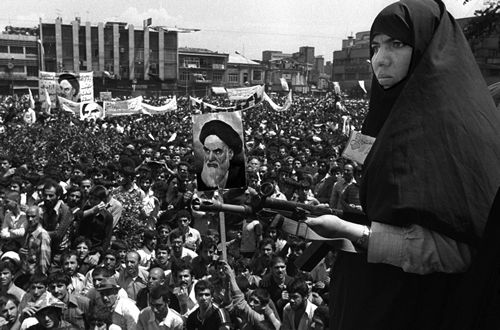
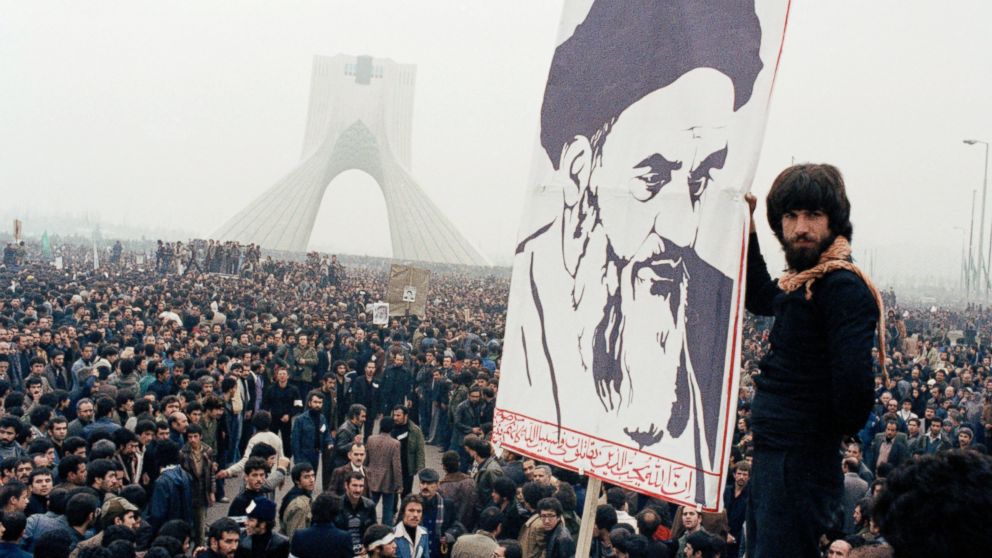
This month marks the 40th anniversary of the Ayatollah Khomeini landing in Iran after years of exile and establishing a radical Islamic regime in the country. His new regime lead to a very violent revolution that has not only destroyed the lives of millions of innocent Iranians but after 40 years has plunged much of the Middle East into unnecessary bloodshed. My community of Jews that has been living in Iran for 2,700 years and in 1979 was 80,000 strong, had their lives totally turned upside down when the Khomeini regime came to power in Iran. The new Islamic Sharia laws of Iran established in 1979 basically treated Jews and other religious minorities as third class citizens and with this inferior status, the regime’s leaders and thugs were permitted randomly to take lives, torture and imprison Jews, confiscate Jewish properties or businesses and to create sheer chaos for Iran’s Jews and all other non-Muslims in Iran.
My community’s real nightmare unfolded in May 1979, when Habib Elghanian, the leader of the Jewish community in Iran was tried in a 20-minute sham trial and then promptly executed by the Iranian regime for being a supposed “American and Zionist spy”. Elghanian’s random killing sparked a mass exodus of Jews from Iran who realized their situation was unsafe in a country where their community leader was randomly executed on false charges. And Elghanian’s execution was not the last. The Khomeini regime continued the random arrests, tortures and executions of Jews through the years. Frank Nikbakht, an Iranian Jewish activist and head of the Los Angeles-based “Committee for Minority Rights in Iran,” prepared a report in recent years revealing that since 1979, at least 14 Jews were murdered or assassinated by the regime’s agents. Likewise, 11 Jews have disappeared after being arrested, at least two Jews died while in custody and another 11 Jews have been officially executed by the regime. In 1999, Feizollah Mekhoubad, a 78-year-old cantor of the popular Youssef Abad synagogue in Tehran was the last Jew to have his eyes gouged out and to be officially executed by the regime. With each Jew the Iranian regime killed, thousands fled the country and still continue to flee the country. Recently in November 2012, Toobah Nehdaran, an impoverished, 57-year-old married Jewish woman was strangled, then repeatedly stabbed to death and had her body mutilated in a ritual manner by Muslim thugs who had broken into her home located in the Iranian city of Isfahan. And even as recent as December 2017, two synagogues in the southwestern Iranian city of Shiraz were vandalized by unknown assailants and a total of five Torah scrolls and numerous prayer books were damaged or totally destroyed. No investigations or arrests were ever made by the Iranian regime of Nehdaran’s brutal murder or of the attacks on the Shiraz synagogues. Sadly, for these reasons and other events through the last 40 years, my Jewish community has been uprooted or forced to leave Iran after our presence in that land for centuries.
The ancient Jewish community of Iran as of today is estimated to be between 5,000 and 8,000 people with the vast majority of Jews fleeing Iran over the decades because of the regime’s threat to their lives, the regime’s anti-Semitic laws and the lack of economic opportunities for Jews who must endure humiliation under Iran’s radical Shiite Sharia laws. Iran’s Jews, my community have mostly resettled in New York, Los Angeles and Israel. A minority have made new homes in Europe, Canada and elsewhere in the world. My community of Iran’s Jews had to re-start new lives and start new businesses in these countries, of times with very little to no money. Fortunately, after 40 years of living in exile from Iran, we Iranian Jews have by in large done well for ourselves as far as business, academia, the arts, music, philanthropy, political involvement and yes—even in Israel advocacy.
Yet after 40 years my Iranian Jewish community is still witnessing the Iranian regime’s unrelenting war against world Jewry. The Iranian regime today not only calls for the annihilation of the only Jewish state in the world on a daily basis but is also actively pursuing nuclear weapons to achieve that goal. The Iranian regime also funds Hamas, Hezbollah and other radical Islamic terror groups to attack Israeli civilians and cause as much death and destruction as possible on them. As if the Iranian regime’s support for terrorism against Israel and Jews were not bad enough, the regime’s leaders have openly denied the Holocaust, welcomed Holocaust deniers and neo-Nazis to Iran. The Iranian regime’s evil leadership has hosted countless Holocaust denial conferences and even sponsored a few Holocaust denial cartoon competitions! For example, the Iranian regime proudly announced many years ago that it paid for the legal defense in France of the late French Holocaust denier Roger Garaudy, who was convicted and fined $80,000 in 1998 in France for denying the Holocaust. Garaudy was subsequently welcomed in Tehran as a hero, where he met with the Iranian Supreme leader Ali Khamenei. In 2012, Khamenei publicly grieved the death of Garaudy in a personal Twitter message. Additionally, Iranian state-run media outlets have also frequently cited the writings of the neo-Nazi American leader William Pierce and welcomed the anti-Semitic commentary of former KKK leader, David Duke. In October 2014, the Anti-Defamation League reported that the regime’s annual Holocaust denial conference in Tehran hosted Maria Poumier, a French denier; Claudio Moffa, an Italian denier; and Kevin Barrett, an anti-Semitic conspiracy theorist and frequent contributor to Iran’s English-language, state-run news network, Press TV.
With the past crimes and injustices this Iranian regime has committed against my Iranian Jewish community during the last 40 years, I cannot remain silent. With this Iranian regime wanting a second Holocaust of my people in Israel, I cannot and will not remain silent. With this Iranian regime denying the Holocaust repeatedly and giving a public platform for vehement anti-Semites, I cannot and will not remain silent. To my friends in the Ashkenazi communities of America, Canada and Europe, DO NOT sit idle while this evil totalitarian regime wishes to annihilate all Jews from the face of the earth. Do not fool yourselves about this regime in Iran and discount its truly demonic intentions about the Jews. Heed the warning of us Iranian Jews who were the first to suffer at the hands of Iran’s ayatollahs for the last 40 years! We already suffered an unimaginable hell and loss at the hands of Iran’s ayatollahs. As a people we have experienced a horrific loss of 6 million innocent lives from the Nazi genocide in the 20th century. Today in the 21st century we say NO MORE! We cannot as a people afford another genocidal calamity! No regime, in Iran or elsewhere has any right to seek the destruction of the Jewish people. Forty years of this radical Islamic regime in Iran is enough for world Jewry, for the Middle East and for the world! Regime change in Iran is the only hope to stop this cancer of the Ayatollah Khomeini from seeking another genocide of world Jewry. And so I will continue to speak out publicly, expose the anti-Semitism and hate of this Iranian regime in my writings and I will not cease in reminding anyone and everyone about the true evil nature of this regime in Iran today.
40 Years After…Why I Still Speak Out Against the Iranian Regime Read More »