fbpx

January 31, 2019

Letters: Reaction to Women’s March L.A., Getting Older, Getting Better

Reaction to Women’s March L.A.
An open letter to Rabbi Nicole Guzik:

Dear Rabbi Guzik,

I’ve known you since you were a rabbinic intern in our congregation, Sinai Temple, and have admired your personal and professional career development as a highly regarded rabbi, a mother and a role model for women. When I read your column in the Jan. 18 edition of the Jewish Journal (“Marching as a Woman, as a Jew, as a Rabbi”), I was skeptical. I expressed my skepticism to at least one member of our congregation. You stated that you would be attending the Women’s March Los Angeles on Jan. 19 because if Jewish women chose to excuse themselves from the conversation, you would not be sure the nation would ever notice the absence of Jewish voices.

In your column in the Jan. 25 edition of the Jewish Journal (“Why I Left the Women’s March L.A.”) you explained quite poignantly why you left the march. You had been assured by the leaders, who included Hispanic and other minority women, that in Los Angeles (unlike the national march), Israel would not be attacked. In the very first hour of the Women’s March L.A. program at Pershing Square, all of these promises were broken. I could have told you before you attended that believing the organizers that Israel would not be attacked is naïve. I commend you for giving them the benefit of the doubt. You pray that next year teshuvah — great repentance —will be taken. I am skeptical that the organizers will change.
Marshall Lerner, Beverly Hills

As much as I would like to see every woman participate in the Women’s March, I feel Rabbi Guzik made the right and only response to hatred that has no place in any movement.

The anti-Israel element of the Women’s March certainly betrayed their mission, especially when the rabbi was told beforehand that hatred wouldn’t be tolerated.

All of us must look straight at all forms of hatred and speak out at every opportunity. Thanks to Rabbi Guzik for stepping up for the Jewish community.
Warren J. Potash, Moorpark

It seems counterintuitive to even consider the question of when and how it is permissible to collaborate with anti-Semites and their apologists (“I Want the Women’s March to Succeed,” Dan Schnur, Jan. 25). An immediate “Never and in no way” is not a rushed answer, it is the only possible answer.

It is certainly possible — and morally imperative — to support women’s rights and a tolerant, diverse society without subordinating Jewish identity to a supposedly “progressive” agenda with anti-Semitism at its core.
Julia Lutch, Davis, Calif.


Getting Older, Getting Better
As a professor who studies successful aging, I enjoyed reading the inspirational story about Mavis Lindgren, a world-record marathon runner at age 90 (“Bodies Can Improve Until Our Mid-80s,” Jan. 25), and how happiness can blossom after age 50 (“Studies Show Life After 50 Is the Sunny Side,” Jan. 25). These are fantastic illustrations of what people can do, and look forward to, in older age. However, I think it is important to know that marathon running and constant happiness are not the norm or the goal, but there are simple things we can do to be active and happy.

Successful aging can take many forms. While marathons are impressive, any form of movement is the best (free) medicine. Running is tough on joints, but studies have shown that walking improves memory. Having good balance may be more important than extreme exercise. Balance training can prevent falls, which happen to one in three Americans after age 60. Walking, balance training and being socially active are some of the keys to successful aging, and people can greatly benefit by making a few changes in their lives. The ABC’s of successful aging are to maintain: Activity, Balance, and Connection with people you love.
Alan D. Castel, Los Angeles
Castel is the author of “Better with Age: The Psychology of Successful Aging”


Throwing the Book at President Carter
It’s been almost 40 years since President Jimmy Carter’s term, and author Stuart E. Eizenstat apparently believes that the generation of American citizens who experienced the four years of the Carter presidency either have died or are senile (“Capturing the Mind and Heart of Jimmy Carter,” Michael Berenbaum, Jan. 16). I lived through those years and have the following observations.

History will record Carter’s achievements as domestic and foreign.

On the domestic stage, Carter presided over unprecedented inflation and high unemployment. The economists were stumped on how he did it. He summoned economic and political leaders to Camp David to advise him. He came down from the mountain bewildered. He leveled with the American people that we were no longer a world power and would act accordingly.

On the foreign stage, Carter was bewildered when the Soviets took him at his word that we were no longer a force on the world stage and invaded Afghanistan. Carter struck back at the Soviets by keeping American athletes away from the 1980 Summer Olympics in Moscow, punishing our athletes. When the Shah of Iran needed our help, the shah was told that none was forthcoming and that he should pack up. Iran turned from being our ally and linchpin of our Middle East policy to the chief world sponsor of Islamic terrorism. There is no end in sight to the continuing damage initiated by Jimmy Carter to our national security and the shear brutality and killing of innocents unleashed by the failure of the Carter administration.

After Israel concluded a treaty with Egypt, in which Israel gave back all captured Egyptian land, Carter has conducted an unrelenting four-decade campaign of anti-Israel propaganda calling Israel an apartheid state.

Carter has the distinction of writing a book as an ex-president accusing a sitting president of being immoral, an act of consummate hypocrisy.

Perhaps when I and other members of the generation who experienced Carter’s presidency have died, there will be space to speak more kindly of Carter.
Isaac Gorbaty, Via email

Michael Berenbaum responds:

The letter reveals the stereotypical depiction of Jimmy Carter. One must be grateful to Stuart Eizenstat, who does not deny this all-too-simple description of President Carter but suggests that such a facile understanding of his presidency, flaws and all, misrepresents the historical reality. One wonders, after having pored through the 900-page opus, whether the writer could still maintain the same views. I could not.


Correction

In the Journal’s Jan. 25 edition, Judy Bin-Nun’s name was misspelled in a photo caption about Hebrew High School’s 70th anniversary.


Your turn. Send your letters to letters@jewishjournal.com. Letters should be no more than 200 words and must include a valid name and city. The Journal reserves the right to edit all letters.

Letters: Reaction to Women’s March L.A., Getting Older, Getting Better Read More »

Masa Innovation Forum Highlights Israel as Hub for ‘Jobs of the Future’

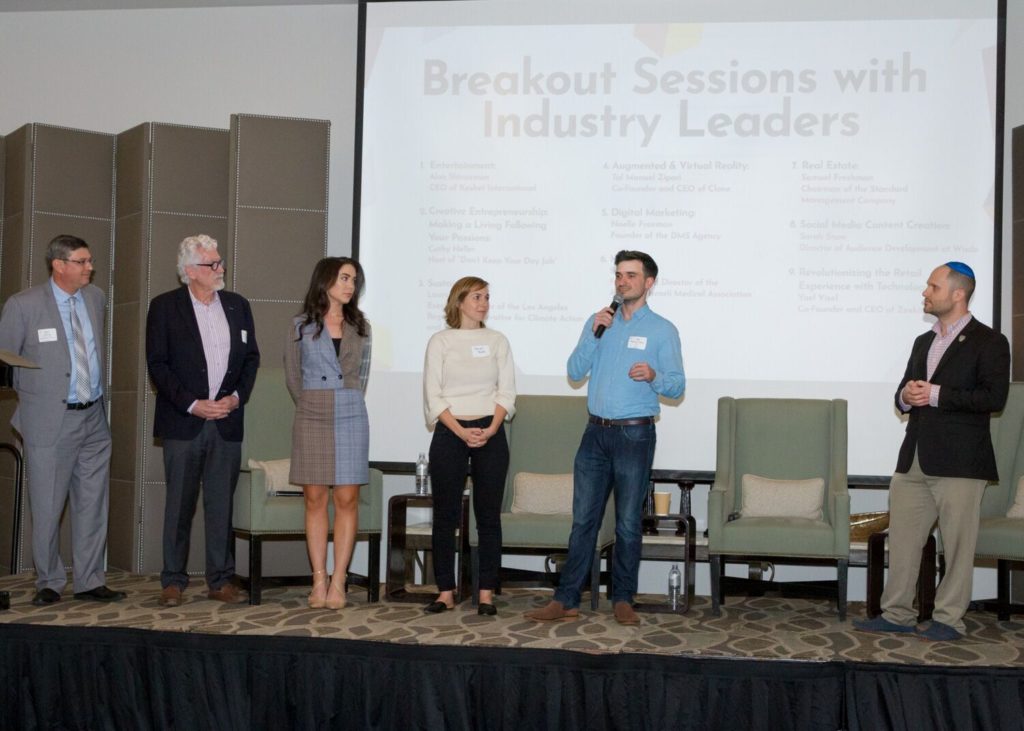
More than 150 high-profile entrepreneurs, civic and faith leaders, philanthropists and young professionals gathered in Los Angeles Jan. 30 for the first-ever Masa Innovation Forum.

Hosted by Masa Israel Journey, the event, allowed participants to explore innovations and development from a range of industries, including entertainment, technology and health care. The goal is to merge Israeli innovation with American potential.  

“Israel is the quintessential twenty-first-century economy, powered by innovation and an extraordinary wealth of human capital,” Masa Israel North America CEO Shalom Elcott said.  The Masa Innovation Forum is providing young professionals across the U.S. with exclusive networking opportunities with top business leaders from America and Israel.”

Many CEOs and experts of their field were in attendance including co-founder and CEO of online fashion site Zeekit, Yael Vizel. Vizel spoke about what Israel and American can learn from another through working together.

“The Israeli perspective towards business is to focus on the challenge, and the American perspective focuses on the opportunity,” Vizel said. “We teach each other different behaviors that make us both better.”

During the event, Masa also announced the genesis of a new entity called the Masa Innovation Fund, which will provide venture capital to support startups founded by Masa participants and alumnus.

One of the Masa Israel alumni at the event was Arya Marvazy, who is currently the managing director of JQ International. At one of the panels, he told the audience his perspective of being an Iranian-American Jew and having Masa Israel as a resource.

“I thought I would have no life as an openly gay man in my community. In Israel I got to live this life, and over the course of three and a half years, I began to come out,” Marvazy said. “The Masa experience made it possible.”

Shalom Elcott, said in a statement that young people’s innovations and developments need to be fueled for the sake of Israel and America’s economic future.

“By engaging partners in philanthropy, business, and the social sector, The Masa Innovation Fund seeks to make a transformative impact for young adults, Israel, and the Jewish People,” Elcott said.

Elcott will serve as the President of the Masa Innovation Fund in addition to serving as Masa Israel’s North American CEO.

Masa Innovation Forum Highlights Israel as Hub for ‘Jobs of the Future’ Read More »

I’m Not Making Unsupported Claims; You Are!

In the Letters to the Editor section of the Jan. 31 Jewish Journal issue is a letter titled, “Don’t Print Speculation.” The letter’s author complains about a column by Dan Schnur which, he says, contains an “unfounded supposition” about Donald Trump. He then goes on to broadly accuse “Never Trumpers,” saying, “Without any facts to support their position, they rely on conjecture, speculation and innuendo.”

I completely agree that unfounded accusations about people are far too common, especially in social media, so I wanted to see for myself what this letter was referring to. Assuming this author is writing about Schnur’s Jan. 16 column, the letter writer seems to have missed the second paragraph, in which Schnur lays out a series of facts as evidence in regard to Trump’s connections with Russia.

One may or may not agree on what to make of those facts, but at least they are there. On top of that, I read the message of the column as warning us against jumping to conclusions and urging us to wait until Special Counsel Robert Mueller publishes his findings of Trump and Russia.

So, right off the bat, this appears to be a case of the letter writer falsely accusing Dan Schnur of coming to an “unfounded supposition.” It gets worse from there.

He accuses BuzzFeed of publishing an “unverified dossier” even though BuzzFeed at the time provided appropriate context for it, and much of the dossier has since been verified. He also takes BuzzFeed to task for the story in which it claimed Michael Cohen was instructed by Donald Trump to lie to Congress.

In other words, the letter writer does exactly what he accuses “Never Trumpers” of doing. He accuses them of relying on “conjecture, speculation and innuendo” without any facts, and then as an example, he uses two examples from a single media outlet, with the first example being that apparently he just didn’t like the facts the outlet published (the existence of the dossier is a fact and what it contains is a fact, whether or not all of those contents have yet been verified), and the second example being a case in which facts as BuzzFeed understood them were supplied, although the accuracy of some of those facts are currently in dispute. It’s true that some may believe the letter writer’s complaints may reflect poorly on BuzzFeed, but they are not examples of speculation without facts, and they hardly support his broad claim about “Never Trumpers.”

I do not place the whole blame for this on the letter writer. Although we can’t control what is being said on social media, responsible media outlets like the Jewish Journal can, and I believe should, refrain from contributing to the degradation of intelligent public discourse by printing columns, blogs, letters to the editor, or anything else which contain patently false or obviously misleading information, nor should it print ad hominem attacks or broad claims that are unsupported by facts. The Jewish Journal cannot solve the problem, but it can refrain from contributing to it.

I’m Not Making Unsupported Claims; You Are! Read More »

Tarzana Synagogue Vandalized With Anti-Semitic Graffiti

A synagogue in Tarzana was vandalized on Jan. 29 with anti-Semitic graffiti.

The graffiti on Mishkan Torah Valley Community Kollel was initially found at around 9:55 a.m. that morning; it has since been painted over. A photo of the graffiti can be seen below:

Screenshot from YouTube.

“It’s really hurtful,” Miskhan executive director Rabbi Shomo Haghighi told CBS Los Angeles. “I mean to all the members here, they’re being hurt with such a thing that somebody passed by a synagogue and wrote such a thing on the wall. It’s hurtful.”

Los Angeles City Councilman Bob Blumenfield, who represents the San Fernando Valley, tweeted that he is “ready to assist if there is anything we can do to help.”

Anti-Defamation League CEO Jonathan Greenblatt tweeted that the vandalism “hits close to home” for him since he used to live in Los Angeles.

“In what is such a vibrant & strong Jewish community, it’s sad to see #antiSemites spray paint houses of worship,” Greenblatt wrote.

Tarzana Synagogue Vandalized With Anti-Semitic Graffiti Read More »

Jewish Agency Partners With PR4PR in Puerto Rico For At-Risk Kids

Last July, the Journal headed to Puerto Rico to take a look at how Jewish organizations were helping residents on the island in the aftermath of Hurricane Maria.

I spent time traveling the island with the nonprofit called PR4PR, which does extraordinary work with at-risk children in the area. The organization provides thousands of children a place to go after school and during the summer. Doing so gets them off the streets and away from crime. To date, more than 40,000 Puerto Rican citizens have benefitted from its programs and services.

Founded in 2004 by New York-based businessman Henry Orlinsky, the organization had bigger dreams than its budget and manpower could handle. Now, however, PR4PR can expand its offerings, thanks to a just-announced partnership with the Jewish Agency for Israel.

The Agency and PR4PR are planning to build a Project TEN Center in San Juan. (Project TEN is an international development program that operates volunteer centers in developing areas throughout the world). The partnership will focus on identifying young volunteers from all sectors of Israeli society and global Jewry who will spend three months at a time in Puerto Rico, working with at-risk children. The center is expected to be open within two months.

According to a release announcing the partnership, PR4PR “will provide the local expertise in terms of identifying where Jewish Agency resources will be deployed on the island focusing on informal education and empowerment, public health and agriculture.”

Orlinsky said in the statement, “We’re thrilled to partner with The Jewish Agency’s Project TEN. Their stellar reputation for collaborating with local organizations – similar to ours – in order to address the local community’s issues is something truly needed in Puerto Rico.”

The Jewish Agency for Israel’s Chairman Isaac Herzog said, “PR4PR has done a tremendous job working with Puerto Rico’s youth to keep them off the streets and providing positive programming to help provide them with the skill sets to become contributing members of society.”


Jewish Agency Partners With PR4PR in Puerto Rico For At-Risk Kids Read More »

Special D’var Torah: Mishpatim

If only the whole Jewish world knew, and lived by, this one comment of Rashi.  If only that…then the Jewish people would be kinder, more ethical and more dignified.

Let me rev this up by saying that one of my recent and current pet peeves (which is saying it lightly. What I am about to describe is a source of tremendous pain and anguish for me about Jewish living) is the discourteousness (again, to say it lightly) exhibited by some who are punctilious about ritual Jewish observance.  In my mind, I have thought of this as “ugly Judaism.”  A Judaism which valorizes, and pays attention to, halakhic/legal/ritual detail, while eschewing (sometimes simultaneously) basic politeness and rudimentary ethical comportment.  Myriad examples jump to mind.  Jews who are so careful about not touching a person of the opposite gender such that it impacts where they sit on an airplane, but seem to jettison all expressions of patient, flexible kindness when trying to meet those needs.  Jews who are careful and ubiquitous when it comes to regular, obligatory prayer, and who can recite the prayers fluently and fluidly…but then resort to lashon hara (gossip, damaging speech) as soon as there is a gap in the service.  Jews who are so set on venerating the Torah that they literally knock people over (and thus knock over the values of that very Torah) on the way to giving the Torah a kiss.  Some might call that last example as veneration-turned-idolatry, with frenzy having replaced honor.

(I am neither a perfect Jew nor a perfect human.  I try to name and efface as many of the flaws that I recognize within myself as possible. So I will accept “guilty as charged” for any of the ways in which I fall prey to the very phenomena discussed above.)

I muse about how we got to this place in Jewish sociology wherein the class of phenomena I named is so prevalent. Perhaps it should not be such a surprise. Human beings are complex and riddled with internal inconsistencies.  We undermine, and betray, our own values and principles all the time—sometimes unaware and unconscious, and sometimes quite aware, but as a result of some negotiation, or rationalization, with self.  But even if this is true, ought we not try to aspire to something better, something higher?

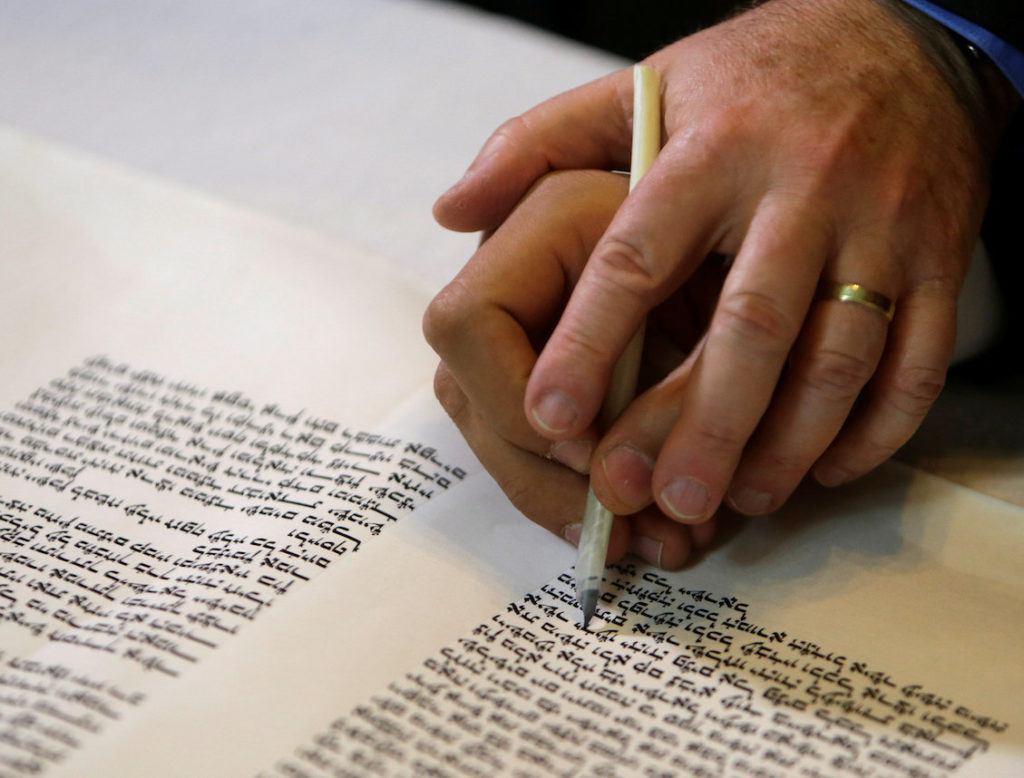
The commentary of Rashi I referenced above is his first on Parshat Mishpatim, and emerges from a pretty wonky and zoomed-in read of the text.  The parsha begins with the words ואלה משפטים / V’eleh hamishpatim / “And these are the laws/statues…”.  The parsha then continues with a litany of laws (making Mishpatim the parsha with the second-most number of mitzvot among all the 54 parashot, with only Ki Tetze having more). Most of those laws are related to civic life, business practices and ethical living, with rather few of them existing purely in the ritual realm. Rashi notes that all sorts of sentences in the Torah begin with the introduction of “אלה / Eleh / These…” And he notes, or suggests, a pattern: When the opening word is just Eleh, the word is meant to separate what is to come from what came before.  It would be read something like “Now that we have finished that topic, these are some other things, in another category.” But when the opening word is “V’eleh” (as it is in our verse), the opposite is true: The word connects the upcoming verse(s) and concept(s) with the antecedent, as if we should read it something like “And these things, as well!”

Rashi is highlighting the import of the slim, humble, almost indiscernible vov-letter that begins the word and the parsha.  Within that tiny letter is the following exhortation: lest you delude yourself into thinking that the laws about to be commanded are somehow other, or lesser, or disconnected from the “true revelation” we just had in Parshat Yitro…lest you erroneously think that all (any!) of the commandments after the initial 10 are secondary, the vov of “V’eleh” sets you straight.  You thought that the Sinai moment ended last week? Hardly.  It continues into Mishpatim, with no conceptual or hierarchical separation. So as you remember Shabbat and render it holy, and as you commit to monotheism and to not taking that one God’s name in vain, so too do you promise to act towards your servants with decency, and pay the damages of one you have injured, and guard your animals lest they create havoc, and ensure that your open pits do not pose a danger to unsuspecting wayfarers, and treat the stranger with empathy, and support the widow and orphan, and ease the burden of an overladen animal, and on and on and on.  They, too, are part of God’s revelation to us, and expectations of us.  While the latter category without the former category might be ethical humanism, I would say again that the former category without the latter is ugly Judaism.

Remember that vov, and act on it.  Connect your conception of Sinai to how you hold yourself, especially while you find yourself in the midst of a ritual act.  Make God’s name truly holy by having your very being be a conveyor of holiness, from the ritual to the civil, and back.

Shabbat Shalom


Rabbi Adam Kligfeld is the Senior Rabbi of Temple Beth Am in Los Angeles. 


Special D’var Torah: Mishpatim Read More »

Los Angeles Jewish Boy in Super Bowl Commercial

February is Disability Month, and Microsoft is highlighting kids with disabilities using its adaptive controller to play video games in its upcoming Super Bowl commercial that will air in the fourth quarter of the game this weekend.

The company just released its extended version of the commercial.

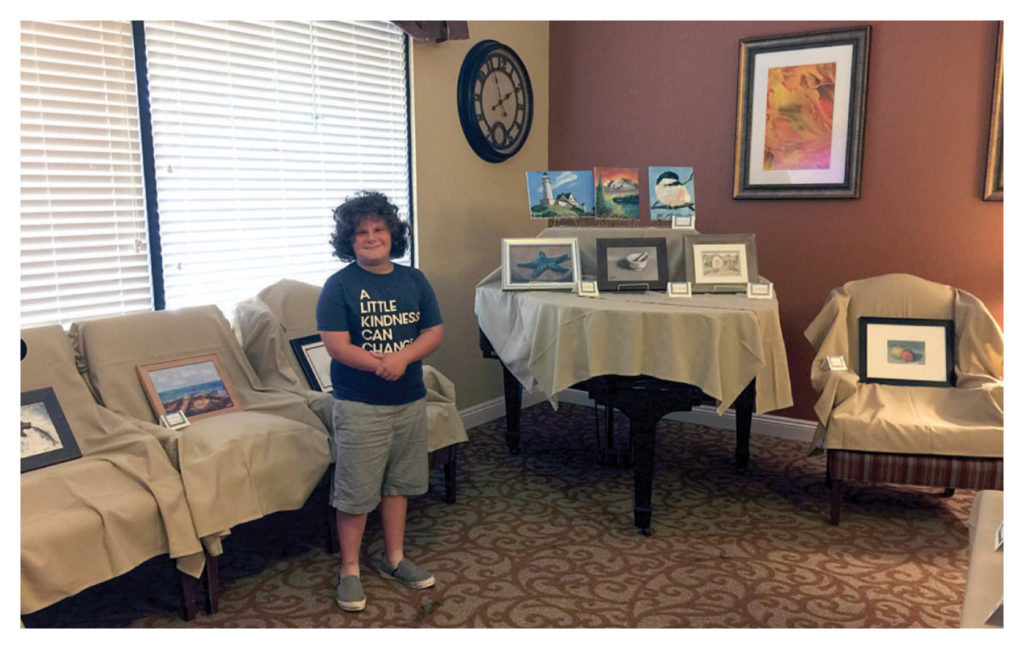
Included in the video is Studio City sixth grader, Grover Siegel, who was featured in the Journal last summer in the story “Portrait of the Young Man as an Artist,” about his extraordinary artistic talent and his first painting exhibition.

Grover was born without a fully-formed right hand, and in the Super Bowl commercial he can be seen, along with other children playing video games with Microsoft’s adaptive controller. With a huge smile on his face, he says in the video, thanks to the adaptive controller, “I think I can crush my friends [when gaming].”

Grover’s mother, Jennifer Manley, says in the video, “You never want your kid to feel like an outsider or an ‘other.'”

https://www.facebook.com/Microsoft/videos/381267185971745/UzpfSTEzNzY3NTI3Mzg6MTAyMTg4NjI3ODI5MDU0MDE/

Los Angeles Jewish Boy in Super Bowl Commercial Read More »