In his regular column in the Detroit Free Press, the eminent author Mitch Albom wrote that his New Year’s resolution this year is to “stay away from angry politics.”
However, after hearing the newly minted Rep. Rashida Tlaib (D-MI) announce, referring to President Donald Trump, that “We’re going to impeach the mother***er,” Albom quickly gave up on his resolution. “So long, New Year’s,” he wrote.
Albom called Tlaib’s vulgarity “a new low in a cesspool of human relations we call politics,” adding that “to not acknowledge that is to indirectly condone it, especially since Tlaib is from our backyard, Detroit.”
Albom was certainly right to castigate Tlaib for using a word considered “one of the worst profanities in our language,” and for doubling down on her action instead of apologizing.
But is Albom correct that the profanity was rooted in anger? That is the conventional wisdom: We’ve become so angry at our dysfunctional politics that we violate basic rules of civility. Anger is blinding, as they say.
I’d like to suggest another emotion that also is blinding: Euphoria.
It wasn’t anger, but euphoria that dominated the mood at the public event at which Tlaib let loose with her vulgarity. The crowd was ecstatic that their party would now control the House of Representatives and that Tlaib would represent them. Tlaib and her fans were partying and celebrating. They were yelling in joy, not anger.
Ever since advertising began its domination of American culture, euphoria has become a hugely popular and lucrative emotion. Euphoria is how advertisers seduce us with their over-promises. In sports, the celebration of a great play or victory is the “money shot.” On television, the tears of joy that follow a winning performance on “Dancing with the Stars” is the exclamation point viewers crave. Countless Hollywood movies end with some kind of euphoric resolution.
Euphoria is the ultimate emotion behind the ultimate American value: Winning. As long as winning stays popular, so will euphoria.
The problem, of course, is that it’s hard to think straight when we’re in a state of ecstasy, just as it’s hard to think straight when we’re in a state of rage. Intense emotions, whether positive or negative, blind us to serene values like civility. That is what happened with Rashida Tlaib: She was so euphoric after her victory that she used a profanity that came back to haunt her, putting the focus on her vulgarity rather than on her target.
Maybe Larry David was onto something when he told us to “curb” our enthusiasm. We can all relate to that. Our best decisions come when we think with a calm, measured mind. Our worst decisions, verbal or otherwise, come when our passions dominate our minds. Euphoric Democrats who are itching to stick it to their political rivals would be wise to remember that.
For now, Mitch Albom’s resolution is still holding, by a thread.
Actress Roseanne Barr told the Jerusalem Post on Thursday that she thinks that anti-Semitism played a key role in her firing from ABC.
In May, Barr was fired from the second season of the reboot of her show, “Roseanne” after she tweeted that former Obama administration advisor Valerie Jarrett is the offspring of the “Muslim Brotherhood and Planet of the Apes.” Barr told the Post that ABC “mischaracterized” her tweet.
“What I meant was a commentary on Iran, so they [ABC] purposely mischaracterized what I said and wouldn’t let me explain,” Barr said, “and in haste they did something unprecedented that they’ve never done to any other artist. And at the base of that I think it’s because I am the most vocal person about Israel and BDS [Boycott, Divestment and Sanctions movement].”
Barr added that “I have never in my life done anything racist, and I think my career proves that.”
In September, Barr told a Beverly Hills audience, “I apologized for the hurt it caused people, but also I tried to clarify it and this has been quite a battle in which the right to clarify what I meant has been denied to me.”
Barr will be speaking before the Israeli Knesset on Jan. 31.
When asked for comment, Richard Hormann, ABC Entertainment’s vice president of communications, referred the Journal to ABC Entertainment President Channing Dungey’s May statement that read, “Roseanne’s Twitter statement is abhorrent, repugnant and inconsistent with our values, and we have decided to cancel her show.”
A high-ranking Iranian general said in a Dec. 28 interview that “Israel must be destroyed and wiped out.”
The Times of Israel reports that Brig. Gen. Mohammad Reza Naqdi made the aforementioned comments Al Nubja, an Iraqi television station.
“Israel must be destroyed and wiped out,” Naqdi said. “There is no doubt that the Zionists must be annihilated and destroyed. This will definitely happen.”
Naqdi repeatedly stated that this continues to be Iran’s chief goal, and that the regime in Tehran has no fear of being attacked by the United States or Saudi Arabia.
“America will not launch a war against Iran,” Naqdi said. “If it does — a possibility that I rule out — we will destroy all its military bases in the region.”
Naqdi’s comments, which were translated on Wednesday Middle East Media Research Institute (MEMRI), come as Secretary of State Mike Pompeo announced on Friday that the United States will be hosting a conference with foreign ministers in Warsaw from Feb. 13-14 to discuss the issue of Iran.
“We’ll bring together dozens of countries from all around the world,” Pompeo told Fox News. “Countries will all come together to focus on Middle East stability and peace and freedom and security here in this region, and that includes an important element of making sure that Iran is not a destabilizing influence.”
Among the attendees of the forum will be foreign ministers from Bahrain, Egypt, Jordan, Morocco, Saudi Arabia and United Arab Emirates. Israeli Prime Minister Benjamin Netanyahu, who is currently serving as Israel’s defense minister, has been invited to the conference but has not said if he is attending or not.
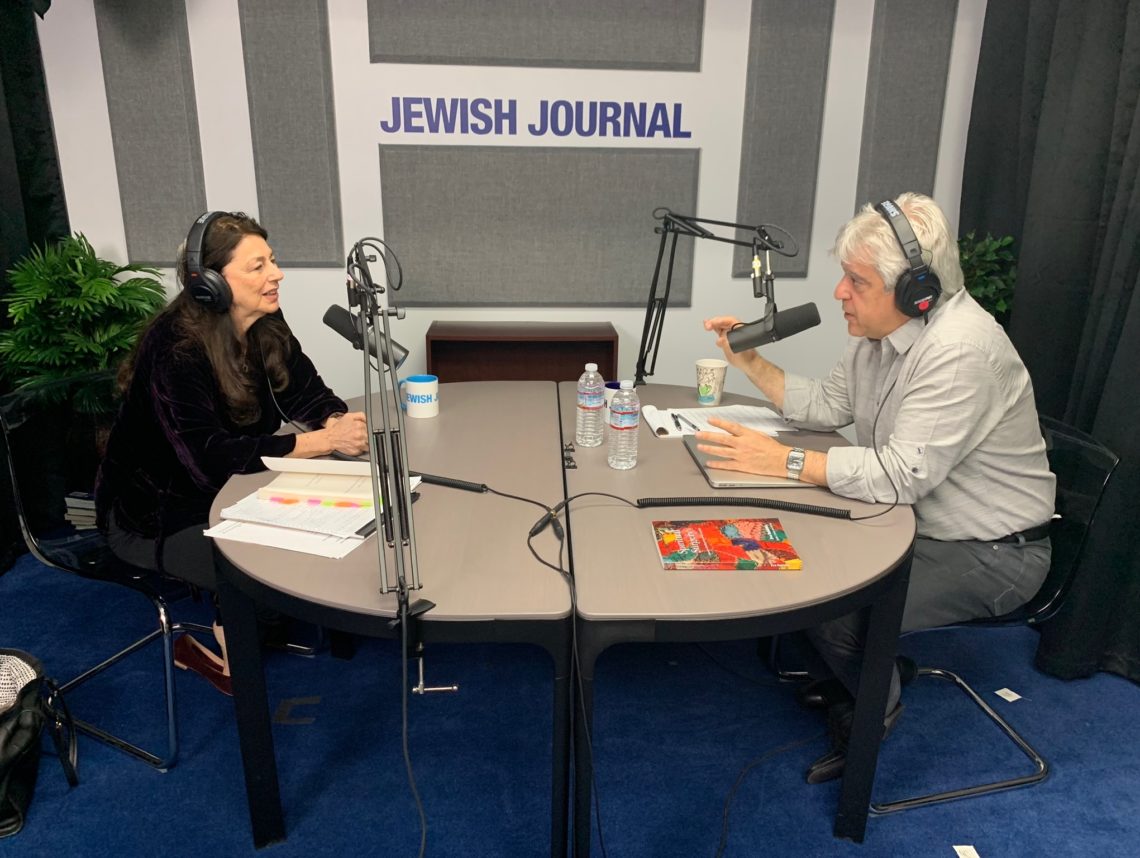
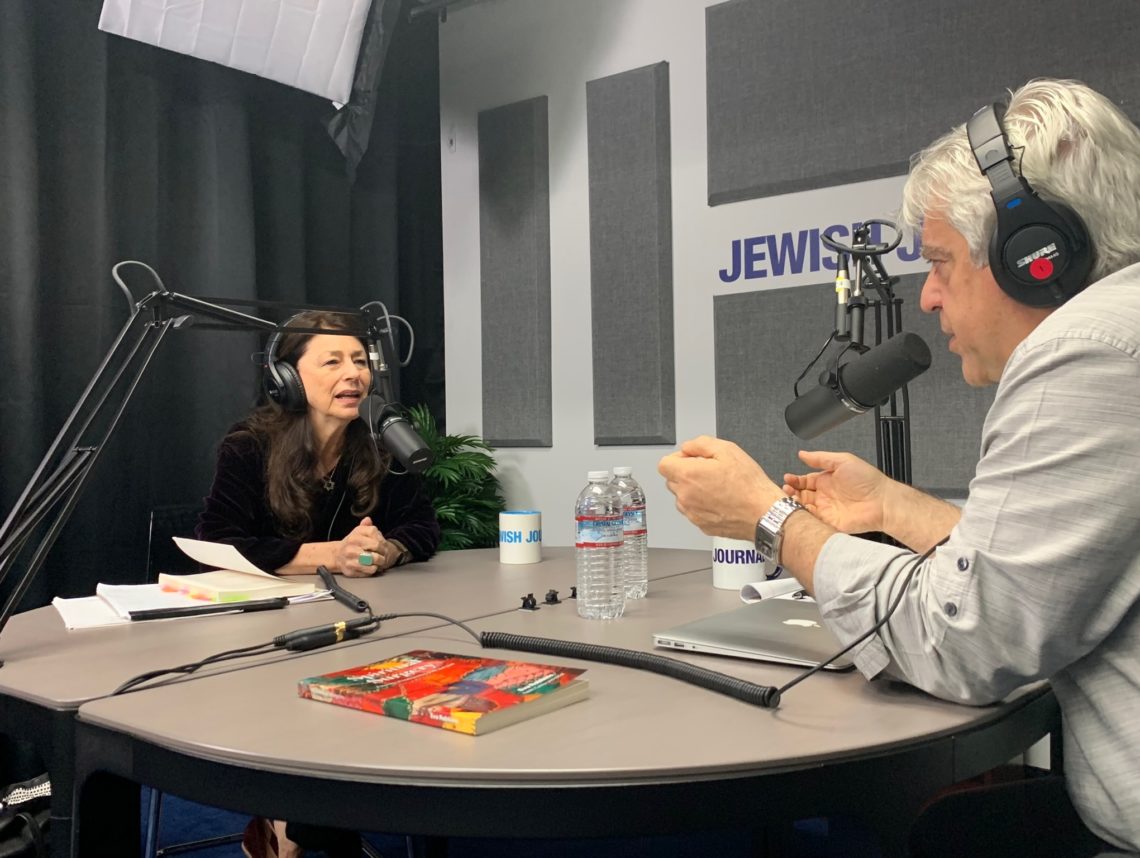
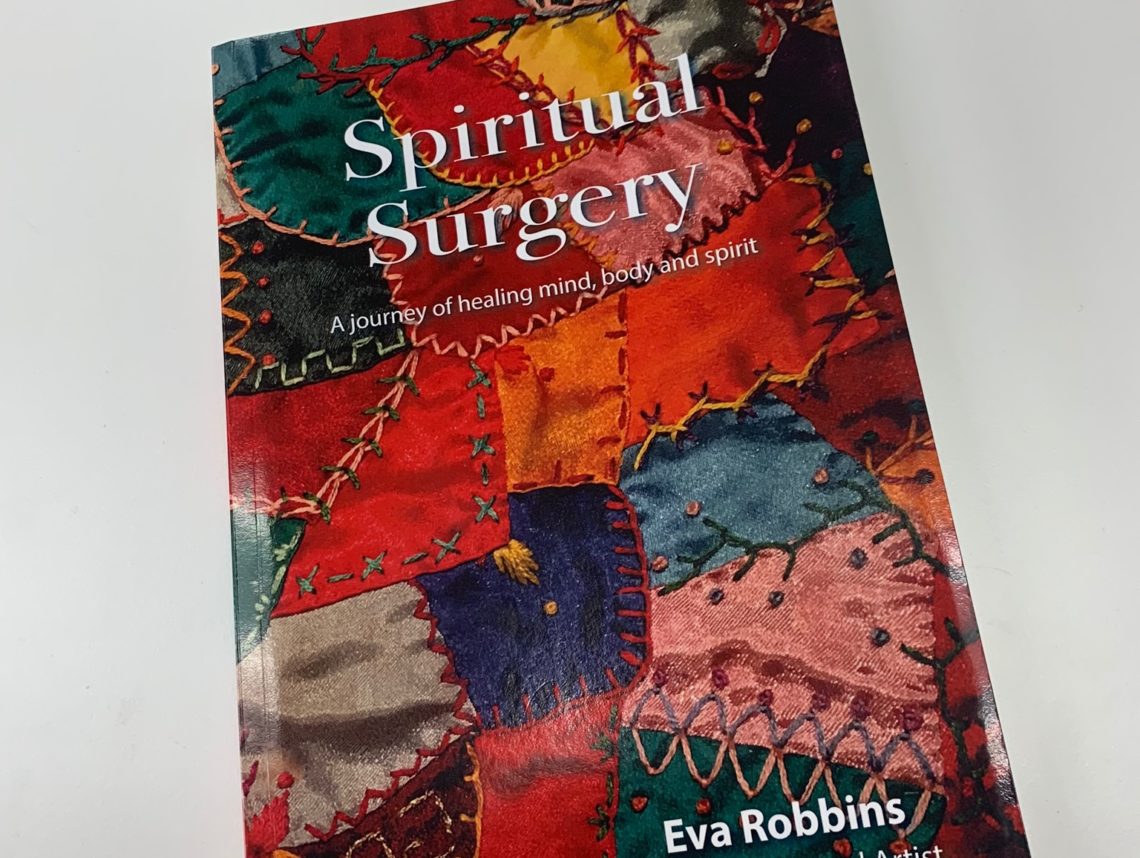
Rabbi Cantor Eva Robbins discusses her new book, “Spiritual Surgery: A Journey of Healing Mind, Body and Spirit,” which revolves around the healing power of the biblical Mishkan, the portable sanctuary the Jews built in the desert.
This episode is sponsored by Yeshiva University’s Wurzweiler School of Social Work. Please visit them here.
Sen. Tim Scott (R-S.C.) wrote an op-ed in The Washington Post on Friday calling on his Republican colleagues to condemn Rep. Steve King (R-Iowa) for asking how the term “white supremacist” became offensive.
On Thursday, The New York Times published an article that quoted King as saying, “White nationalist, white supremacist, Western civilization — how did that language become offensive? Why did I sit in classes teaching me about the merits of our history and our civilization?”
Scott wrote that “anyone who needs ‘white nationalist’ or ‘white supremacist’ defined, described and defended does lack some pretty common knowledge,” pointing to the 2017 Charlottesville riots as among the examples of the violence of white supremacists.
“Some in our party wonder why Republicans are constantly accused of racism — it is because of our silence when things like this are said,” Scott wrote. “Immigration is the perfect example, in which somehow our affection for the rule of law has become conflated with a perceived racism against brown and black people.”
Scott added that King’s remarks are not compatible with conservatism, which he says stresses “equal opportunity” for everyone.
“That is why silence is no longer acceptable,” Scott wrote. “It is tempting to write King — or other extremists on race issues, such as black-nationalist Louis Farrakhan — as lonely voices in the wilderness, but they are far more dangerous than that. They continue to rip at the fabric of our nation, a country built on hope, strength and diversity. It is the opposite of civility and fairness and will lead only to more pain and suffering.”
The Anti-Defamation League praised Scott’s op-ed:
We agree, @SenatorTimScott, silence is unacceptable. It's not about left and right, it's about right and wrong. We all must stand up against hate and bigotry. Thank you for standing up and calling on your colleagues to do the same. https://t.co/l7htfGgR8z
House Minority Leader Kevin McCarthy (R-Calif.) and former Florida Gov. Jeb Bush are among the Republicans who have denounced King’s comments:
.@GOPLeader McCarthy on Rep. Steve King (full statement below): "Steve’s language is reckless, wrong, and has no place in our society" pic.twitter.com/R2DEkD2qks
It’s not enough to condemn @SteveKingIA's unconscionable, racist remarks. Republican leaders must actively support a worthy primary opponent to defeat King, because he won't have the decency to resign. https://t.co/MRAMnuJaym
On the floor of the House of Representatives on Friday, King said that what he was trying to say was how words like “white supremacist” and “white nationalist” become a part of the political lexicon:
Rep. Steve King: "I regret the heartburn that has poured forth upon this Congress and this country and especially in my state and in my congressional district." pic.twitter.com/vkFgVYD9Z4
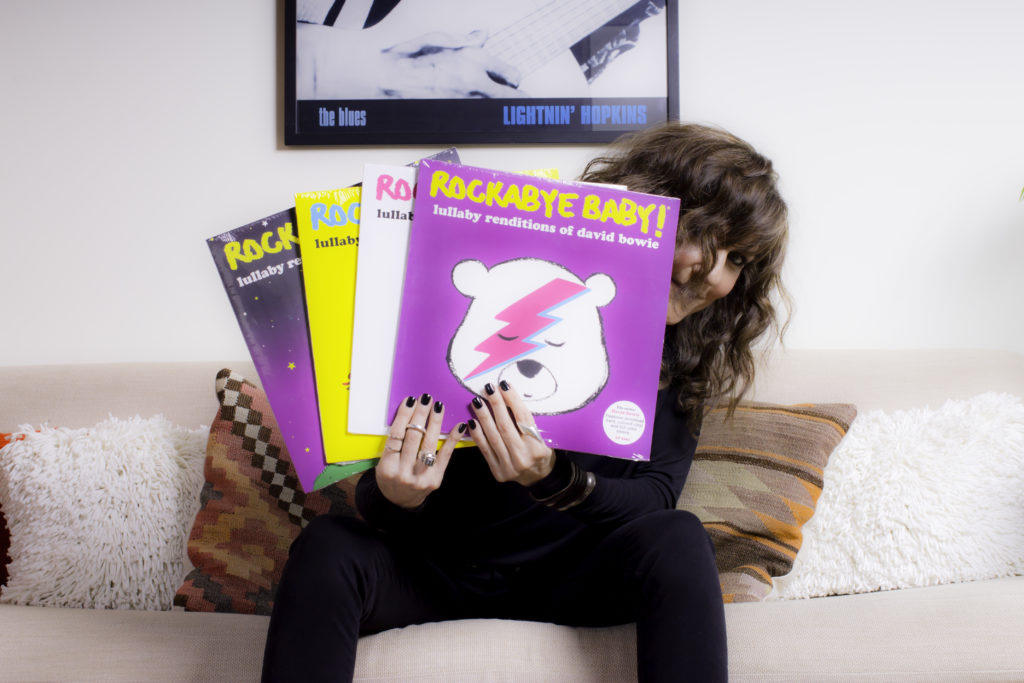
If you are a rock fan with a young child, you owe a lot to Lisa Roth. Her “Rockabye Baby!” series – which has produced lullaby-style interpretations of songs by Metallica, The Beastie Boys, Beyoncé, Adele and The Beatles, to name a few key artists – has produced more than 80 albums, with more than 1.8 million CDs sold and more than 500 million tracks streamed to date. In other words, Roth has helped make children’s music as palatable as possible for listeners of all ages.
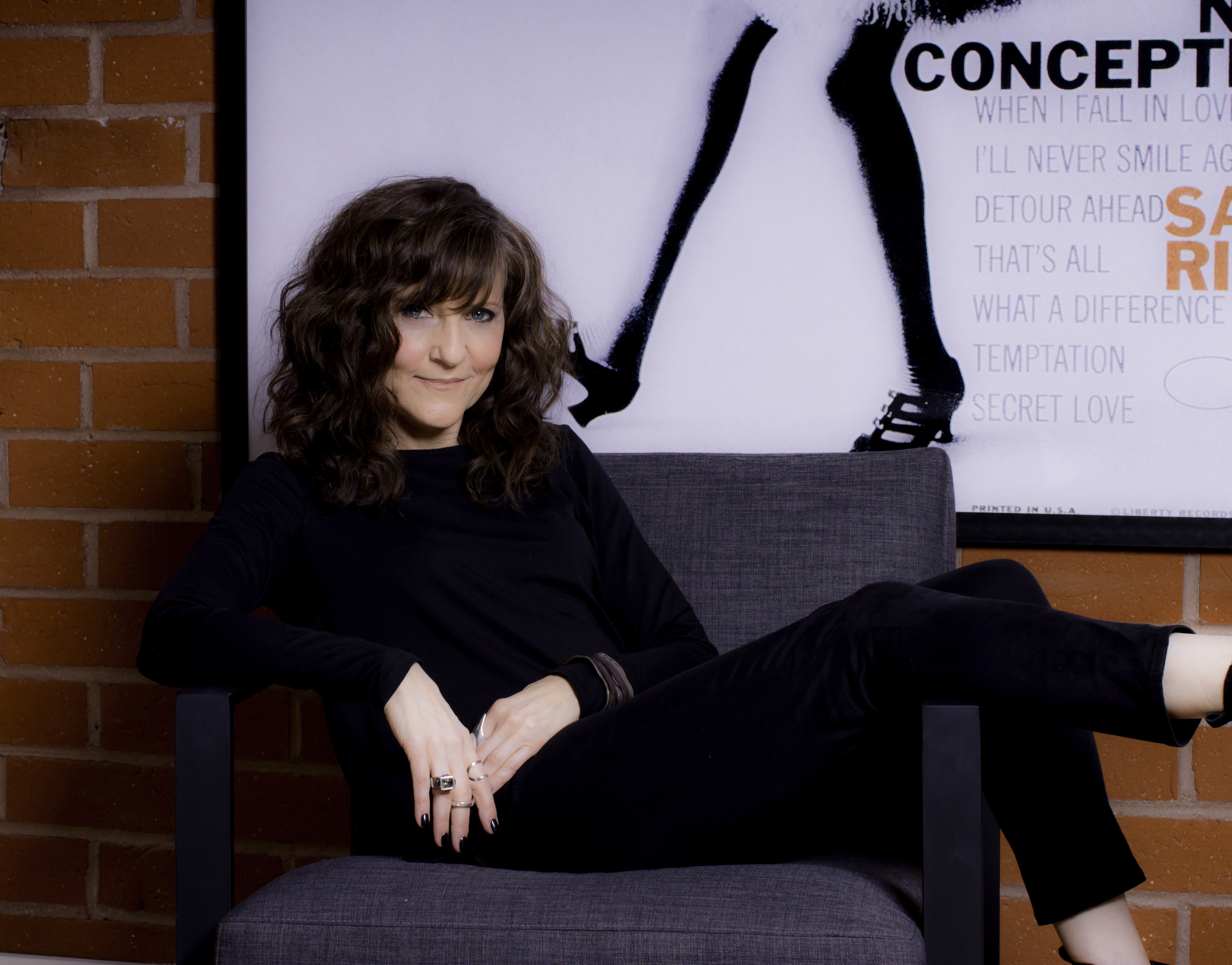
Lisa Roth is not only the executive producer of the “Rockabye Baby!” series, but also the vice president and creative director of the CMH Label Group. This has also entailed work with the Vitamin String Quartet, which has produced more than 100 albums of string renditions of pop and rock hits. Interestingly, Roth came into the CMH Label Group after 20 years as a nutritionist, which is in addition to her production work for the Discovery Channel and National Geographic.
I had the pleasure of speaking to her by phone about “Rockabye Baby!” and plenty more. A transcription of the first eight minutes or so of our chat are below, while the rest of our conversation will be airing as part of a future edition of the Paltrocast With Darren Paltrowitz podcast via PureGrainAudio.com. To say the least, she was simultaneously funny, insightful, pleasant and relaxed.
Making Roth’s story even more interesting, the “older brother” referenced in the question about kosher food is none other than “Diamond Dave” himself, David Lee Roth. Her uncle Manny Roth — who I unfortunately did not have the chance to ask about — was notably the owner of New York hotspot Café Wha?, which was instrumental in the careers of Bob Dylan, Jimi Hendrix and Richard Pryor. An impressive bunch, those Roths…
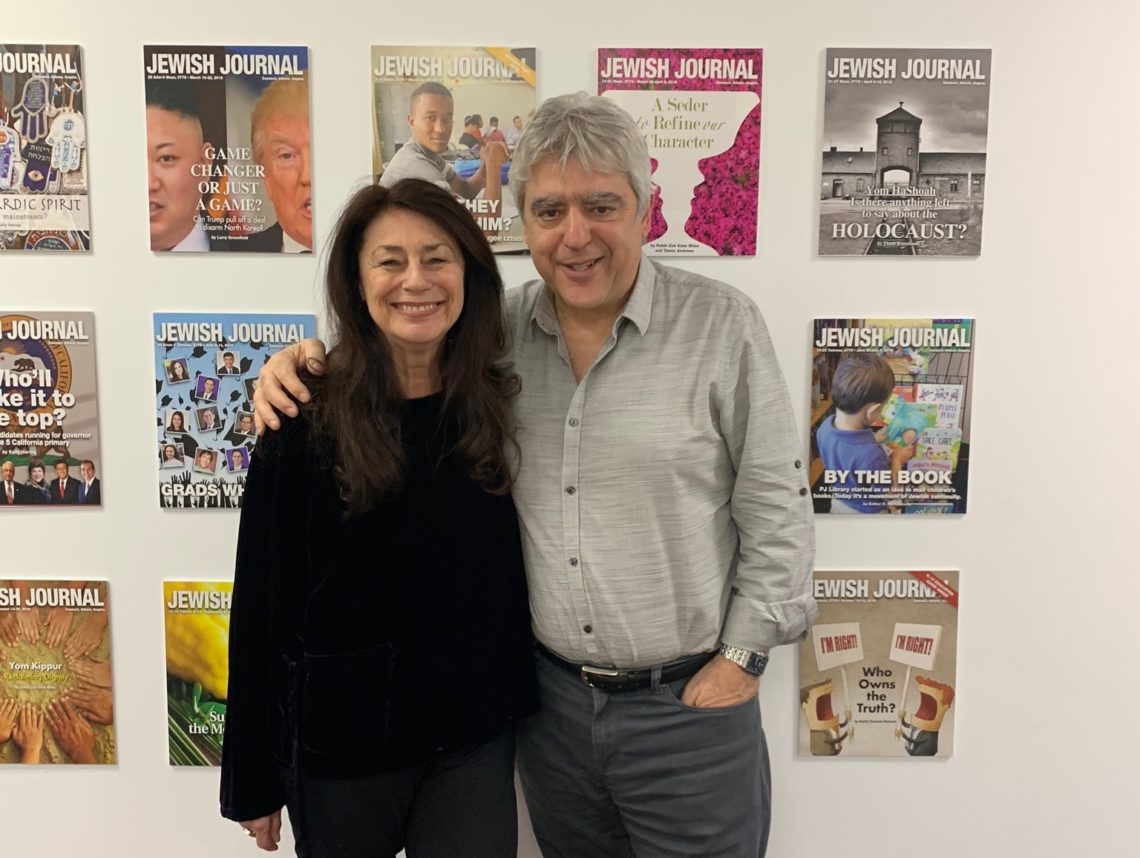
Jewish Journal: With regards to the success of the Rockabye Baby! series, were you yourself ever a musician?
Lisa Roth: I played in the marching band in high school. I wanted to stand next to the drummers, who were very hot, so that was the extent of my musicianship. I was a ballet dancer so I had music in me, but I can’t sing to save my life. I can’t carry a tune. I don’t consider myself terribly musical.
However when I first started working at this label, I went shopping for a baby shower gift for a friend of mine who loves music… I didn’t see anything out there I would be excited to give as a gift. I had just started working at the label and I went to the boss and I said, “We should get into the baby business and create a product that’s for the parents as well. Maybe something like ‘Baby’s First Sex Pistols’ or something ironic and a little humorous.”
We started having meetings and our art director at the time, Valerie Aiello, offered up the concept “Lullaby Renditions of Metallica.” The project was greenlighted. She became the primary artistic director for the first year and a half, and a little over a year later I took over. With our creative team we’ve continued to refine the look and sound and have developed it into an international brand.
JJ: What was the first title you came out with? Was it actually The Sex Pistols? LR: We released three — Metallica, Radiohead and Coldplay — and we thought if we released three at once, we established it immediately as a series. We covered various genres of rock and the series was initially a rock series… Black Sabbath is a little funnier than “Lullaby Renditions of James Taylor”…
This has been going for 13 years now. Over the years we’ve opened it up to other genres, because they always say every genre has its rock star, but that’s a little bit of the history. JJ: I remember reading in your interview with Billboard that you were hoping to one day work with the Jimi Hendrix camp on a title.
LR: You know, that is so funny. I was just talking about that 20 minutes ago, maybe it’s an omen. His estate is notorious for not wanting to do these kind of things. I was just thinking today, it’s been about 10 years since I approached them. Maybe it’s time to do it again because I am a huge fan of Jimi Hendrix, his music, his aesthetic… The guy was the O.G. of rock and I would love to make it happen and you never know.
JJ: So at this given moment how many titles or ideas do you have in the works? LR: Well we have released over 80 [titles] and we continue to release annually four to six albums… It’s a wonderful brand because you never run out of subject matter. JJ: Going back to that earlier part of the story, was there anyone who told you this idea can be done? That you’d never be successful? LR: No actually, no, not at all. And you know, I’ve never been asked that. It never occurred to me that it wouldn’t be doable…
JJ: I asked that sort of thing because it seems like most music-related ideas that have ever been successful, there was someone who had initially said, “No, that can’t happen.” LR: I’m trying to think how we knew… It was either right before or right after we released those first three CDs that the New York Times’ arts section did a big article on us, because at the time there was nothing like it and the response broke our website. And I, at that very moment… I thought, “A lot of people like this as much as I do.” There just never was a moment where I didn’t think it could be done or that other people wouldn’t appreciate it. JJ: Before you started working at a label, is it true you were a nutritionist? LR: Yeah I’ve had several careers. I was a nutritionist for 20 years in Los Angeles and part-time in New York. And after that I worked in documentary-style television. I was a segment producer for Discovery and National Geographic programming and then I bumped into this position. I never aspired to be in the music industry. Like I said, I can’t carry a tune to save my life, but here I am 13 years later and all is good. JJ: In terms of the nutrition work, did that lead you to the music business? Or what exactly was the entry into working in music? LR: As a nutritionist I worked with a lot of musicians and record labels and even toured on the road with artists. But you know, at that time, again I had no aspiration to be in the music industry in any other capacity. I was hired by the owner of this company to give some nutrition lectures to his employees and I thought, “That is really cool that the owner of a company would offer that little perk.” I started with the owner’s partner at the time and he offered me a position here.
He offered me a position with no title, no description. He said he just knew that if he did, good things would come from it. I think I have a history of convincing people I’m very capable when in fact I’m not qualified at all.But that’s my life story. It’s kind of how I fell into every career I’ve had and have somehow made it work.
Photos by Allison Roth (www.allisonrothcreative.com)
JJ: An interesting thing to me about all of your projects is that they all have a positivity and wellness scene to them. Is something that you did consciously? LR: You know, I LOVE— you can put that in capital letters — that insight. That is completely and utterly what I value, and that you actually put the dots together and came up with that is amazing. We all have a desire to live a fulfilled life and have some impact, and and I’m no different. I just had a huge desire to leave a legacy of goodness, whether it’s helping people with their health and well-being, making them laugh and smile, or segment-producing informational documentary-style television. I’m just trying, like everyone else, to make a difference. On the Jewish Journal end, did kosher food in any way fall into your nutritional path? LR: Not mine. I was raised in a household where no pork was allowed, although I had an older brother that on the weekends walked up to the corner market and would buy bacon and come home and make it in our kitchen. My father would get furious and it was an ongoing struggle between the two of them. But I was raised to not eat pork.
Beyond that, not kosher. I had grandparents on my dad’s side, my father was raised kosher but he didn’t follow it himself as an adult… But the laws of eating kosher have some real science behind them, which I always found kind of interesting . JJ: Beyond the nutritional aspect, has exercise focus played a big part in what you do? Or is it just mostly the nutritional backbone of it all? LR: I was never the nutritionist that you would come to so you would lose five pounds for your high school reunion… For me it was always the big picture, the whole package, physical mental and emotional…
I personally am a very active person. I was a ballet dancer for many years. Our bodies are built to move. We have hinges and joints and I’m a very active person. Personally I know the importance of movement and a sense of well-being, so I absolutely taught that. And even more important to me than teaching people about the physiology of what happens to your body when you eat certain food groups and the importance of the food groups and all that, I was more interested in teaching people the importance of awareness and being present and aware of your habits and your choices, and sitting still quite enough to figure out why you are making those choices
I was more interested in teaching people the importance of awareness and being present and seeing your habits and your choices, and sitting still quite enough to figure out why you are making those choices… That is sort of the foundation of everything we do, being present and aware, and being able to sit still and quiet enough in the midst of discomfort or a difficult time.
Sheba Medical Center’s recently established Accelerate Redesign Collaborate (ARC) Innovation Center is focused on developing new innovations to help the medical world in its shift toward digital health care, Sheba Chief Medical and Innovation Officer Dr. Eyal Zimlichman told the Journal in an interview.
ARC is built on four main components: digital health, open innovation, collaborations and building a home for innovation.
On digital health, “the technology is there,” according to Zimlichman.
“We don’t need to invent any new technology. I’m talking about wearables, I’m talking about censors, I’m talking about Internet of things, I’m talking about data, I’m talking about electronic medical records,” Zimlichman said, “and then on top of that you build applications – like for example artificial intelligence (AI) or telemedicine programs – that can do stuff that you cannot do today.”
One of the challenges that the medical world is facing in the transition to digital health includes the role doctors will have as AI becomes more prominent in the medical field. Zimlichman thinks that AI will eventually become the best method to diagnose and recommend treatment to patients, but it will be the doctors and patients that will have the final say.
“We think the doctors of the future would need to have better interpersonal skills, would need to have better communication skills, so that they can translate to the patients something that the patient can understand, so that they could make an informed decision together with the patient,” Zimlichman said. “These are things we don’t see the AI doing in the foreseeable future.”
An example of this is a type of wearable tracker that is being developed from one of ARC’s grant-funded projects that can predict when a patient suffering from Post-Traumatic Stress Disorder will have their next anxiety attack.
“It’s simpler now to work with our psychiatrists how we can prevent it,” Zimlichman said.
ARC’s open innovation means that Sheba is open to myriad ideas from startups on how to improve health care.
“We’ve opened our gates and we let the startup companies come in and we are working with them as part of our family,” Zimlichman said.
Zimlichman added that they don’t think that any one institution alone can transform health care, which is why Sheba has signed collaboration contracts with 13 medical institutions in North America “to develop new innovations.”
ARC also provides $50,000 grants to 30 medical projects each year, and those projects are developed in 10-month cycles.
The ARC Innovation Center aims to be the hub for digital innovation, and Zimlichman said that there is global interest for other ARCs to be established in their countries.
“We see ARC being now a franchise that is being copied in other locations in the world,” Zimlichman said, adding that while they’re mostly in North America, they’re starting to expand into Germany and Japan.
The National Right to Work Legal Defense Foundation issued a special legal notice Friday informing all Los Angeles teachers of their rights regarding Monday’s LAUSD. strike.
The non-profit supplies employees with free legal services whose human or civil rights have been violated. They posted the notice which can be found on the website, which provides important legal information for any teacher who wishes to continue to work during the strike.
The notice also tells teachers unwilling to abandon their students how to protect themselves against union retaliation by resigning their formal union membership prior to working while union officials are demanding they cease educating students.
Class will still be in session in many schools around the second biggest school district in the country. LAUSD told CNN that, “despite the expected absences of 32,000 teachers and staff members, classes will continue at all schools. About 600,000 students could be taught by more than 2,000 reassigned administrators and about 400 substitute teachers.”
“Teachers shouldn’t be kept in the dark any longer about their legal protections in the event of a strike,” president of the National Right to Work Foundation Mark Mix, said in a statement. “Despite union boss pressure, Los Angeles educators should know that they do not have to abandon their classrooms simply because union officials make demands. The Foundation will provide free legal aid for any teacher or other worker who seeks to exercise his or her rights, or is subjected to threats for doing so.”
The teachers union also told CNN “while every family will make their own decision on whether to send their child to school in the event of a strike, having many parents and allies on picket lines will be powerful and transformative.”
Workers can request free legal aid at www.nrtw.org/free-legal-aid or by calling the Foundation toll-free at 1-800-336-3600
Henry Winkler has joined the all-star cast of writer-director Wes Anderson’s “The French Dispatch,” a movie set in post-World War II Paris at a bureau of an American newspaper. The plot follows three storylines.
The cast also includes Frances McDormand, Benicio del Toro, Saoirse Ronan, Willem Dafoe, Jeffrey Wright, Timothée Chalamet, Adrien Brody, Tilda Swinton, Bill Murray, Owen Wilson and Bob Balaban.
Winkler, 73, has been in renewed demand since his acting coach role in HBO’s “Barry” opposite Bill Hader earned him an Emmy Award and SAG and Golden Globe nominations. He has wrapped shooting season two of “Barry,” which will premiere later this year.