The miracle of Hanukkah is one of the most well-known in Judaism. This year, why not celebrate the miracle with a little bit of magic at the Happiest Place on Earth?
The Disneyland Resort’s Festival of Holidays has been a seasonal favorite since 2016. This year’s celebration — which in addition to Hanukkah, has festive food, drink, music, merchandise and crafts for Christmas, Navidad, Diwali, Kwanzaa and Three Kings Day — takes place at Disney California Adventure Park.
Both parks get a dusting of winter magic and evening snowfall and are very festive and, of course, you can’t miss the explosion of Christmas decor around the park. However, Disney added handfuls of Jewish and Hanukkah elements to make members of the tribe feel at home during the holidays.
The Jewish Journal team explored the park to see if the Festival of Holidays is worthy of an extra helping of latkes. This is what we found.
Sights to See Disney is known for their amazing window displays, and you can expect nothing less during the holiday season. If you head to Buena Vista Street, you can find the Hanukkah-themed window outside Julius Katz’ store. Even though Julius Katz is not a real person, he is based on Julius the Cat from the early Alice Comedies that Walt Disney created prior to Mickey Mouse.
The storefront is loaded with latkes, sufganiyot and Hanukkah merchandise you can purchase in the park. Each year Disney releases a limited edition Hanukkah pin that you can also purchase at both parks, as well as at Downtown Disney. The themed Festival of Holidays merchandise also proudly rocks a lot of dreidels and menorahs.
Dr. Benjamin Silverstein, yet another fictional Jewish persona, has a “storefront” on Main Street USA where you can find a mezuzah on the doorpost, as well as a giant menorah in the window above that is lit all eight nights of Hanukkah — to best see that, just cross the street and look up. (There are several real Jewish Disney animators and creators who could have been showcased, but it is nice to see the representation at both parks. Look around Main Street and you will find the door of the Sherman Brothers — the music makers behind “Mary Poppins” and “it’s a small world,” as well).
Games to Play Inside the Festival of Holidays, you’ll find an array of activities. One arts and crafts station includes D.I.Y. dreidels and hanukkah cards. This craft is fun for all ages and surprisingly harder than it looks. If made correctly, the blue and white paper dreidels — which are correctly labeled in Hebrew– spin. Pair it with a nice Hanukkah card it makes a cute takeaway for kids and an easy gift for Bubbe, Zayde, Ema or Aba.
Let’s Nosh Already “What better way is there to celebrate different cultures and holiday traditions than with a unique blending of great food?” Disneyland Resort Chef Jimmy Weita asks. “Many of our items are classic holiday tastes, with a distinctive Disney twist.”
He’s not wrong. Food is a great way to learn and understand a culture and it’s impossible to miss the seemingly limitless food options at Festival of Holidays since they border the park as you stroll along.
If your kids are picky eaters or have an allergy, Disney is already one step ahead in this department offering kid-friendly, vegan, vegetarian and allergy-friendly options so that no matter what a family eats, there’s something everyone can nosh on.
The only caveat? The food, including the Hanukkah-themed options, are not kosher. However, kosher meals are available for purchase at the sit-down restaurants in the park, just call ahead to reserve.
Jalapeño latkes with chipotle crema.
Here are the following Jewish-themed bites you can try and where to find them:
Favorite Things—Reuben potato tots with Russian dressing and rye toast
The Reuben tots and lox and everything nachos were real winners and though maybe not the healthiest options, the shareables were well worth the $6. Plus each recipe is easy to recreate at home, so the fun can continue after leaving Disneyland. We even snagged the recipe for the Reuben potato tots that you can view here. If spice isn’t your style, we suggest you steer clear of the jalapeno latkes but for $6, the portion size is filling and topped with a dried apple to remind you of the sweet applesauce your burning mouth desperately wished it had. For a full listing of the Festive Food Marketplace click here.
It’s Time to Horah
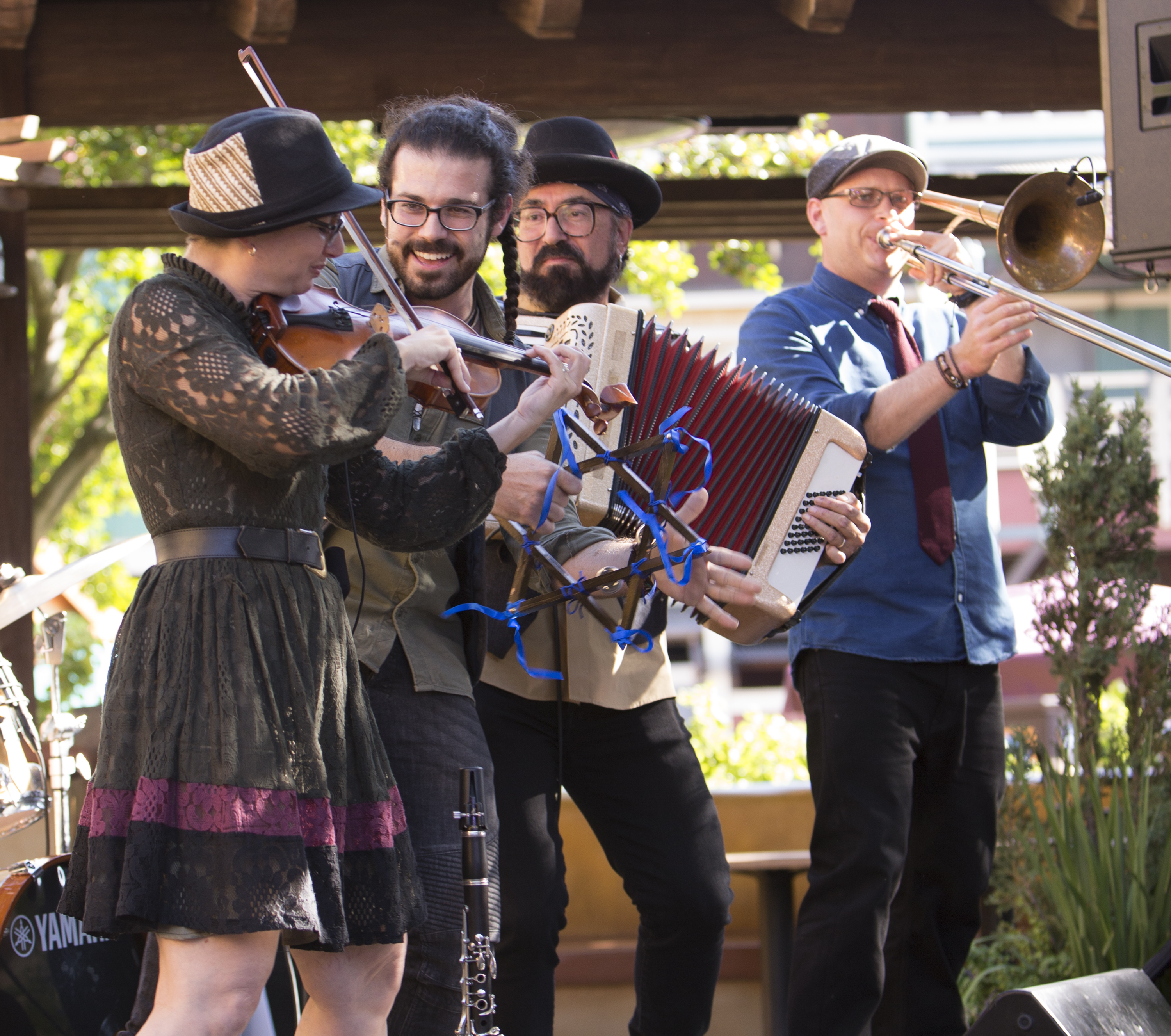
Members of Mostly Kosher performing at the Festival of Holidays. (Scott Brinegar/Disneyland Resort)
Easily the most enjoyable moment of Disney’s Hanukkah festivities is the performance by Gypsy-rock Klezmer group Mostly Kosher. The multiperson band literally dances their way onto the stage and has been performing at Festival of Holidays for three years in a row. Their production and popularity have continued to grow each year.
Multiple 30-minute shows filled with a variety of Jewish influenced music shake up the park daily at the Sonoma Terrace, erasing the stereotypical idea of what Jewish music is.
Band leader Leeav Sofer told the Journal that they are using the numerous performance slots as a way to grow the band. Because of this, every performance is different and still maintains the rich sound and vibrant personality of Mostly Kosher.
There is something special and even emotional about hearing “Ma’oz Tsur/Rock of Ages” and “Al Hanisim” at a park that is usually Christmas dominated. It’ll make any Jewish person feel right at home and maybe even a little ferklempt.
“Singing and music is the greatest equalizer and cultural music, at the end of the day, is just a platform to connect cultures and people together,” Sofer said.
By the end of each performance, the large crowd of Jewish and non-Jewish participants are “ay-dy-dying” and dancing the horah around the stage. It’s a beautiful moment of unity brought together through Jewish music.
“You take this music that is not very common to everyone that not many people know and put it in front of them,” Sofer said. “We are laying down the bridge to invite everybody in and give them a little gift-wrapped goodie bag to take home with them so they can have ownership of this music.”
The Festival of Holidays runs through January 8 at Disney California Adventure Park. For ticket information please click here.
Shoshana Lewin is the Digital Director at the Journal and Erin Ben-Moche is the Digital Content Manager at the Journal.
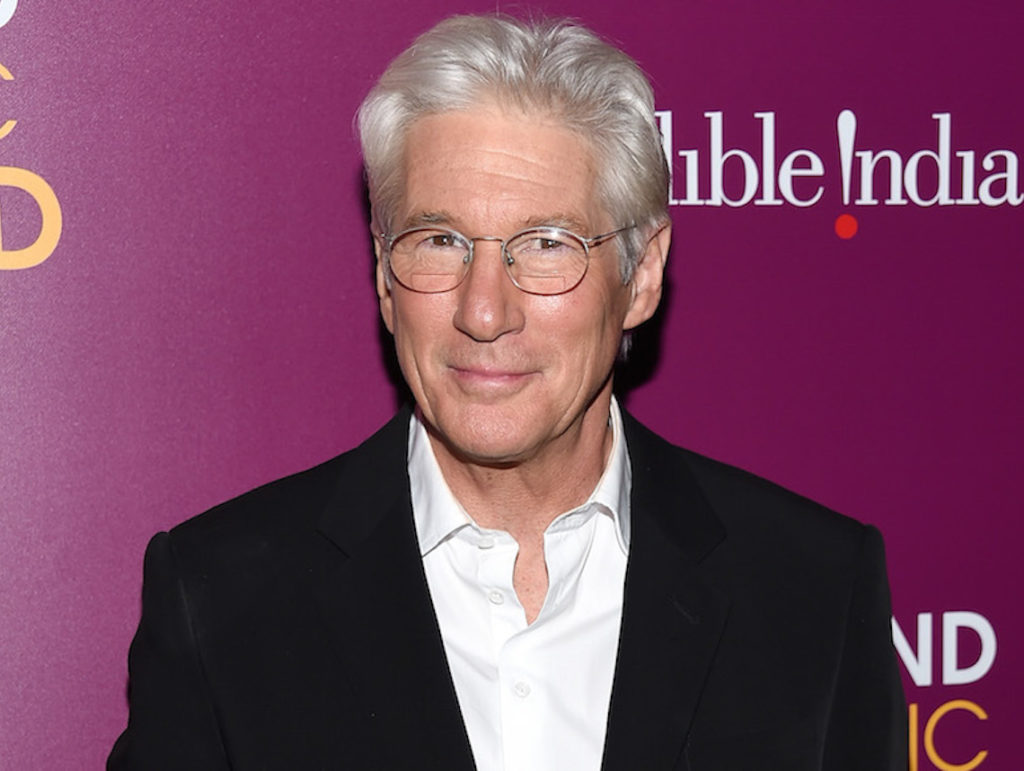
The Israeli miniseries “Nevelot” is being adapted for Apple TV, with Richard Gere set to star. The drama, which aired on Israel’s HOT network in 2010, was about two Palmach (Haganah Special Forces) veterans and best friends. The remake will be set in Miami and the protagonists are Vietnam vets who seek revenge when a woman they loved is killed in car accident.
Howard Gordon (“24”) and Warren Leight (“Law & Order: SVU”) are producing the eight-episode drama with Gere, Dror Sabo, Lee Yardeni, Avi Nir, Alon Shtruzman, Rachel Kaplan, Peter Traugott, Yoram Mokady and Mirit Toovi. Gordon created “Homeland,” based on the Israeli series “Hatufim” and Leight produced “In Treatment,” based on the Israeli series “BeTipul.”
HBO had announced plans to adapt “Nevelot” in 2015 with different producers, but it never materialized.
Gere is also set to star in the BBC drama “MotherFatherSon,” playing a media mogul dealing with a family crisis.
Holidays, Holy Days, and Festivals are remarkable times. But they can also be sad and lonely times. We think of family members who are far away. We remember loved ones who have died. We wonder if we can still create holy space when there is no one around to join us.
Is it still worth it to bring out the candles and light them? I’ll be honest…. I didn’t feel like it Wednesday night.
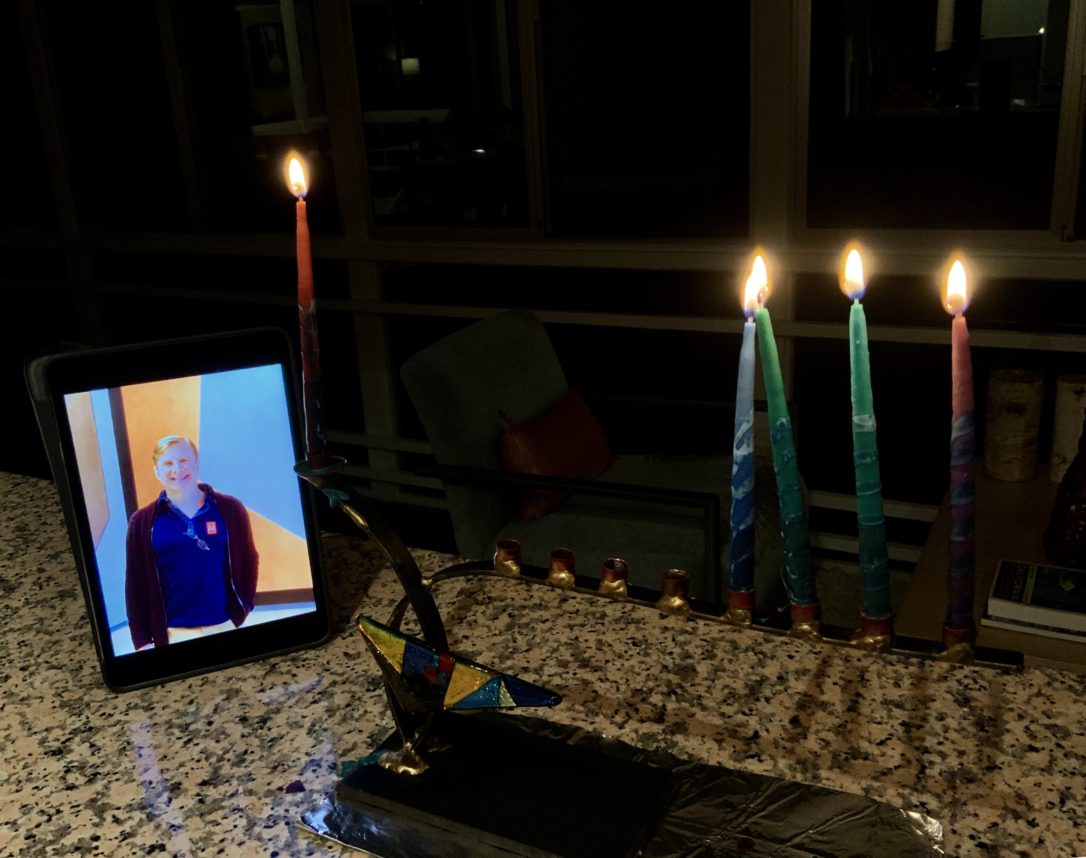
Ron had to travel during Hanukkah. We wanted to light candles together by video, but the timing didn’t work. So I took out his photo, as well as the photo (not pictured) of our dog, Daisy, who died two years ago. And even though I was alone, I was joined by incredible souls as I lit my candles.
My mood shifted.
And my heart lifted.
I know… It’s not the same for those who don’t have a Ron that will come home soon, and I don’t want to create a spiritual equivalency.
And yet, it’s still powerful to surround ourselves with those whose goodness produces hope, and whose light pierces darkness – even for just a moment in time.
With love and shalom,
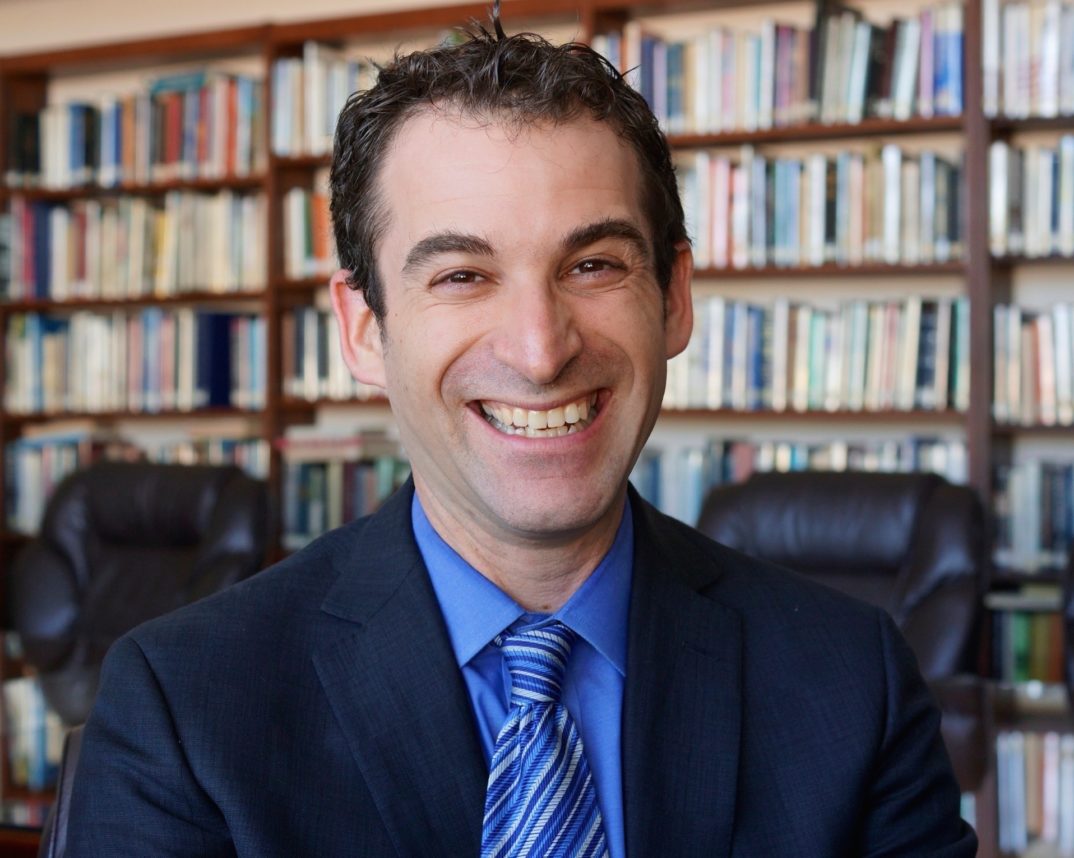
Rabbi Zach Shapiro
Rabbi Zach Shapiro
A change in perspective can shift the focus of our day – and even our lives. We have an opportunity to harness “a moment in time,” allowing our souls to be both grounded and lifted. This blog shows how the simplest of daily experiences can become the most meaningful of life’s blessings. All it takes is a moment in time.
Rabbi Zach Shapiro is the Spiritual Leader of Temple Akiba of Culver City, a Reform Jewish Congregation in California. He earned his B.A. in Spanish from Colby College in 1992, and his M.A.H.L. from HUC-JIR in 1996. He was ordained from HUC-JIR – Cincinnati, in 1997. He was appointed to the HUC-JIR Board of Governors in 2018.
As featured at Festival of the Holidays at Disney California Adventure Park By Pam Brandon
Russian Dressing ½ cup mayonnaise 1 ½ tablespoons ketchup ⅛ teaspoon Worcestershire ½ teaspoon prepared horseradish 1 ½ teaspoon dill pickle relish 1 ½ teaspoon chopped parsley 1 ½ teaspoon chopped onion ¼ teaspoon ground chipotle pepper ½ teaspoon coarse salt ¼ teaspoon freshly ground black pepper
Blend all ingredients in a blender. Refrigerate until ready to serve.
Rye Crumble 2 tablespoons unsalted butter, melted 2 cloves garlic, chopped ½ teaspoon salt 2 slices rye bread, cut into ½-inch cubes
Preheat oven to 300 F. Melt butter and garlic in small saucepan over low heat. Add salt. Toss rye cubes in butter and place on baking sheet. Bake for eight minutes, stir bread crumbs and bake additional five to eight minutes, until toasted. Cool for 20 minutes. Pulse in food processor to make coarse crumble.
Reuben Tots 1 pound tater tots, cooked according to package directions ¼ pound corned beef, diced ½ cup sauerkraut 1 bunch chives, chopped
Divide tater tots evenly among four dishes. Top with corned beef and sauerkraut. Drizzle Russian dressing on top. Sprinkle rye crumbles and chives on top of dressing.
This week Joseph finds himself imprisoned on the false charge of trying to seduce Potifar’s wife. Already known as a dream interpreter, Joseph is called from the dungeons to interpret Pharaoh’s inscrutable dreams and convinces Pharaoh that God has blessed him with far-sighted wisdom and success. Pharaoh elevates Joseph as the kingdom’s chief overseer, second in power only to Pharaoh.
In his position Joseph deftly manages the realm and when the years of famine arrive as predicted word spreads that Egypt has stockpiled an overabundance of grain and that surrounding peoples can seek sustenance from the throne.
Suffering the effects of the famine along with everyone else, Jacob instructs his sons to procure food for the family, lest they all die, and they appear before Joseph.
In the dramatic conclusion in next week’s parashah Joseph will reveal his identity to his brothers and explain that their sale of him served his life’s purpose, that God had sent him ahead into Egypt as a slave to save his family.
Joseph is a transitional figure between the patriarchal era in Genesis and the birth of the spiritual nation of Israel in Exodus. As such, he was the first court Jew in history. He understood Egyptian culture and society. He spoke the language, dressed as a native, took an Egyptian name, married an Egyptian woman, and sired children, the first Hebrew children to be born in the Diaspora.
Despite his acculturation, Joseph did not become an Egyptian nor did he forsake his ancestral faith. He is the prototype of a politically powerful leader who assures Jewish survival.
Fast forward to the second century B.C.E. For 200 years Greek culture had spread throughout the lands of the Mediterranean. Jews were attracted to Greek population centers, the abstract sciences, humanism, philosophy, and commerce.
By the time of the Maccabees (165 BCE), Jews living in the land of Israel had divided into three groups; traditionalists living in villages who followed the priests and observed Jewish law; radical Hellenists living in the cities who saw no advantage in remaining Jewish, who named their children using Greek names, spoke Greek, stopped circumcising their sons, ceased celebrating the Hagim and Shabbat, and rejected kashrut; and the moderately Hellenized Jews who lived as Greeks but maintained their Jewish cultural identity.
When finally the radical Hellenizers conspired with the Greek King Antiochus IV to introduce a pantheon of gods into the Jerusalem Temple, including the detested pig, moderately Hellenized Jews were shocked and rose up to fight alongside the traditionalists and save Judaism and the Jewish people from destruction.
For Joseph, Jewish survival meant remembering who he was as an Israelite in exile. For the Maccabees and their moderate Jewish allies, it meant war in the ancestral homeland.
In these opening decades of the 21st century, we liberal American Jews are confronted with a serious challenge. Of the 5.5 million American Jews, 2 million identify with the liberal non-orthodox religious streams, 800,000 with the orthodox and the rest as “just Jewish,” marginal at best.
The 2013 Pew Study of the American Jewish community makes it clear that if current trends continue in 30 years liberal Jews will diminish by 30% to 1.4 million total, assuming that our current 1.7 children per family birthrate continues and we don’t reverse the loss of 75% of the children born to intermarriages who do not identify as Jews. The current intermarriage rate is 70% in non-Orthodox communities. The orthodox birthrate is less than 5 children per family, meaning that in 30 years orthodox Jews will double their numbers.
The declining birthrate in the liberal American Jewish community is a threat to our survival. We’ll need to increase our birthrate, create a more compelling liberal faith that attracts converts, intermarried families, LGBTQ Jews, and retains all who struggle with faith and claim to be atheists but feel culturally, ethically and ancestrally Jewish. We will have to educate everyone better than we do in Jewish history, literature, tradition, hebrew, and thought.
Hanukah and Miketz remind us that Jewish survival isn’t a given, that the State of Israel and American liberal Jewry need each other to thrive and depend upon each other to survive.
A Boycott, Divestment and Sanctions (BDS) resolution was overwhelmingly rejected by the Ohio State University (OSU) Undergraduate Student Government on Wednesday night, by a margin of 30 votes against, 7 in favor and 3 abstentions.
The resolution called for the university to divest from Caterpillar, G4S, Hewlett-Packard and Sabra Dipping Company because they conduct business with Israel.
“We cannot allow our institution to fund human rights abuses –– abuses that continue with the aid of our taxpayer money, the economic participation of companies whose products we consume, and the support of the investing power of our university,” the resolution stated.
The resolution also called on OSU to engage in an academic boycott of Israeli universities because they “develop weapon systems, military doctrines, and make justifications for colonization and ethnic cleansing of indigenous Palestinians.”
An off-campus group that was “heavily involved” in advocating for the resolution’s passage was International Socialist Organization (ISO), according to Ron Krudo, executive director for campus affairs at StandWithUs. He called their involvement “disturbing.”
“The ISO has promoted ‘unconditional support’ for Hamas and denied that anti-Semitism is a problem in the British Labour Party,” Krudo said in a statement. “It’s encouraging that the student government rejected their hateful agenda.”
The student government president and vice-president issued a statement opposing the resolution prior to the vote:
“We are proud of students who stood up to this campaign of hate and defeated a bigoted resolution full of misleading claims,” StandWithUs CEO Roz Rothstein said in a statement. “BDS only serves to fuel the Israeli-Palestinian conflict and deepen divisions between students on campus.”
The anti-BDS group Protect OSU said in a statement on Facebook, “Time and time again, we have seen how the hateful BDS movement has divided our campus and obstructed dialogue and cooperation.”
“BDS has now been defeated 5 times at OSU,” the statement continued. “It is clear that OSU’s student body is categorically opposed to BDS, and the movement has no place on our campus.”
ISO did not respond to the Journal’s request for comment as of publication time.
Ron Robin, the president of the University of Haifa, told the Journal in a phone interview that the university was likely targeted by the Pitzer College faculty because the school “contradicts the BDS [Boycott, Divestment and Sanctions] narrative.”
On Nov. 26, Pitzer faculty voted on a motion to suspend the college’s study abroad program with the University of Haifa, stating that the program should be suspended until Israel rescinds its policy of barring BDS supporters into the country.
Robin told the Journal that the vote “took us totally by surprise” since the University of Haifa provides study abroad programs to universities around the world and this was the first time to his knowledge that they were singled out by a college.
He pointed out that “Jews and Arabs co-exist as students and faculty members” at the university, as they’re bound by “their love of knowledge and mutual respect for each other.”
“This contradicts the BDS narrative, and they’re uncomfortable with it,” Robin said. “So rather than confront us, come to terms with it, they just banish us and send us to some distant academic Siberia by just cutting off student ties with us.”
Robin told the Journal that he engaged with the faculty member who led the effort to get the motion passed; he said the faculty member told him that Israeli is “a particularly nefarious state.” Robin then asked why him he was being so “selective” with his targeting of Israel and going after other countries in the same manner.
“He had no answer for that,” Robin said.
Robin praised Pitzer College President Melvin Oliver’s statement denouncing the motion as “heroic” and got the impression that most students on campus are against the motion.
Students who participate in the University of Haifa’s study abroad program will get “a sense of the complexity of the Israeli society,” Robin said. He added that the university is “broadening the middle class, broadening access to the startup nation” with a diverse community.
“We are producing a society that has all the merits that one would expect to find in a Western democracy, and I feel that is something that BDS just cannot stomach,” Robin said.
Gloria Katz, Oscar-Nominated Screenwriter, 76 Gloria Katz, who partnered with husband Willard Huyck and director George Lucas to write “American Graffiti,” died Nov. 25 — her 49th wedding anniversary — at Cedars-Sinai Medical Center, according to The Hollywood Reporter. She was 76. The newspaper said she had ovarian cancer.
Katz made rewrites for the character of Princess Leia for Lucas’ follow-up to “Graffiti,” “Star Wars.” In a 2017 interview with The Hollywood Reporter, she said Lucas had “a lot of reservations” about his “Star Wars” (1977) script as filming was about to begin. “He said, ‘Polish it — write anything you want and then I’ll go over it and see what I need,’ ” Katz said. “George didn’t want anyone to know we worked on the script, so we were in a cone of silence.”
Katz envisioned Princess Leia to be a woman who “can take command; she doesn’t take any s— … instead of just [being] a beautiful woman that shlepped along to be saved,” Katz said.
Katz and Huyck also co-wrote “Indiana Jones and the Temple of Doom” (1984), produced by Lucas from his story.
The couple shared, with Lucas, an Oscar nomination in 1974 for their “American Graffiti” script.
The couple also co-wrote the screenplays for “Lucky Lady” (1975), directed by Stanley Donen, plus “Messiah of Evil” (1973), “French Postcards” (1979), “Best Defense” (1984), “Howard the Duck” (1986) — all directed by Huyck — and “Radioland Murders” (1994).
Katz was born in Los Angeles on Oct. 25, 1942, and majored in English at UC Berkeley. She earned a master’s degree in film from UCLA, according to The Hollywood Reporter.
Katz served on the board of the Writers Guild of America and was an adviser to the Academy Museum of Motion Pictures, slated to open in 2019.
She is survived by husband William and daughter Rebecca.
Eva Chorub, Holocaust Survivor, 92 Eva Chorub, a Holocaust survivor and co-founder of the Lodzer Organization, died Nov. 10 at her home in Beverly Hills. She was 92.
She was born in Ozorkow, Poland, on Aug. 12, 1926, one of four children. During World War II, her family was forced from its home and into the Ozorkow and Lodz ghettoes, her son, Jacob Cherub, said in a eulogy. She later was transported to Auschwitz.
After the war, Chorub returned alone to her hometown and learned that the rest of her family had been murdered by the death squads, Cherub wrote.
During her homecoming, Eva met Isaac Chorub, who also had survived the Nazi concentration camps. They wed and had son Jacob while living in a displaced persons camp in Germany.
The family immigrated to the United States in 1949. The couple’s second child, Judith, was born in the U.S.
The couple lived in Boyle Heights, where she worked as a dry cleaner, wrote Cherub (who modified of his last name). After the family moved to the Fairfax area in 1956. In the early 1960s, they opened a wholesale clothing store in downtown Los Angeles.
With other Holocaust survivors in Los Angeles, Eva and Isaac were among the founders of the Lodzer Organization in 1975.Their mission was to support Jewish organizations around the world, educating future generations.
The couple were married for 72 years.
She is survived by husband Isaac, son Jacob, daughter Judith and granddaughter Sarah Gurian.


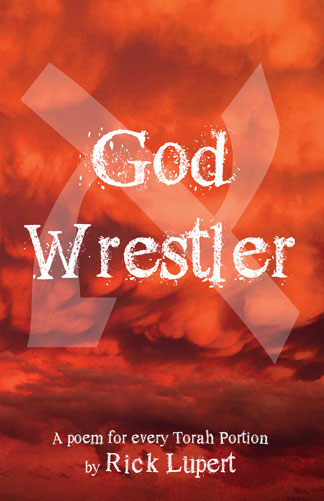 Los Angeles poet Rick Lupert created the Poetry Super Highway (an online publication and resource for poets), and hosted the Cobalt Cafe weekly poetry reading for almost 21 years. He’s authored 21 collections of poetry, including “God Wrestler: A Poem for Every Torah Portion“, “I’m a Jew, Are You” (Jewish themed poems) and “Feeding Holy Cats” (Poetry written while a staff member on the first Birthright Israel trip), and most recently “Donut Famine” (Rothco Press, December 2016) and edited the anthologies “Ekphrastia Gone Wild”, “A Poet’s Haggadah”, and “The Night Goes on All Night.” He writes the daily web comic “Cat and Banana” with fellow Los Angeles poet Brendan Constantine. He’s widely published and reads his poetry wherever they let him.