fbpx

October 28, 2018

Israeli Organizations Step Up to Help Pittsburgh Community Recover From Shooting
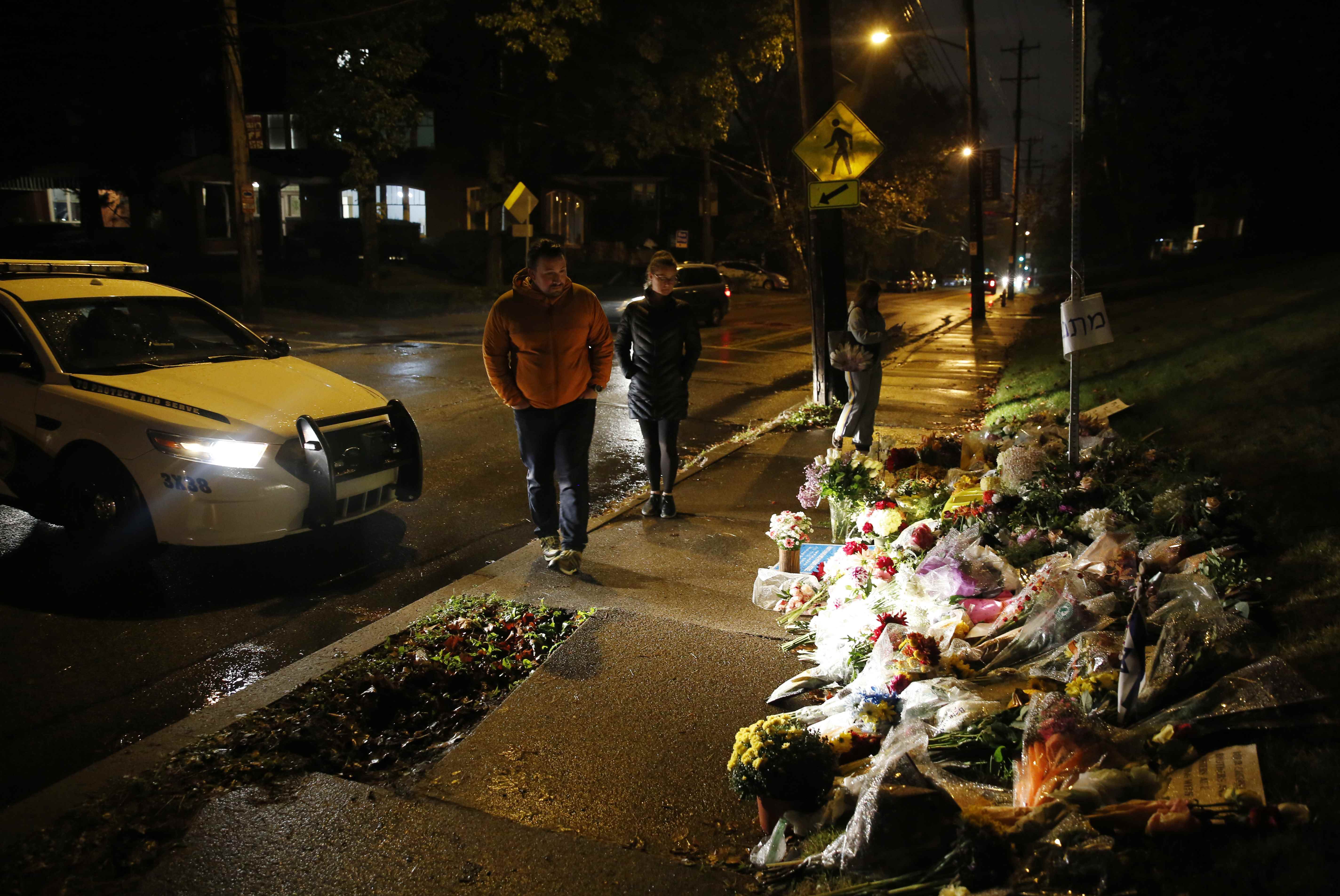
Mourners visit a makeshift memorial outside the Tree of Life synagogue, a day after 11 Jewish worshippers were shot dead in Pittsburgh, Pennsylvania, U.S., October 28, 2018. REUTERS/Cathal McNaughton

Israeli organizations are stepping up to provide aid to the Squirrel Hill community of Pittsburgh in the aftermath of Saturday’s shooting at the Tree of Life synagogue that killed 11 people.

Israel’s United Hatzalah’s Psychotrauma and Crisis Response Unit is already on its way to Pittsburgh to provide emotional support to community members and family members who lost loved ones in the shooting.

“We will be utilizing techniques and tools that we have developed here in Israel and have proven to be highly successful in assisting those who have suffered from similar incidents here,” Miriam Ballin, director of United Hatzalah’s Psychotrauma and Crisis Response Unit, told the Jerusalem Post.

Additionally, the Israeli ZAKA International Unit is helping procure human remains from the scene of the shooting in order to provide them with a proper burial.

“We grieve together with the Jewish community of Pittsburgh and pray for the full and speedy recovery of the wounded,” ZAKA Chairman Yehuda Meshi-Zahav told Israel 21C. “Our volunteers will also work with the community to offer assistance in all matters related to this tragic and horrific attack.”

Israeli Education Minister Naftali Bennett had told his ministry to provide to the Squirrel Hill community in any way possible and is flying to the community itself, according to the Post.

“We stand together with the Jewish community of Pittsburgh, we stand together with the American people in the face of this horrendous anti-Semitic brutality and we all pray for the speedy recovery of the wounded,” Israeli Prime Minister Benjamin Netanyahu said in a video message.

Israeli Organizations Step Up to Help Pittsburgh Community Recover From Shooting Read More »
These Two Pittsburgh Victims Were Brothers

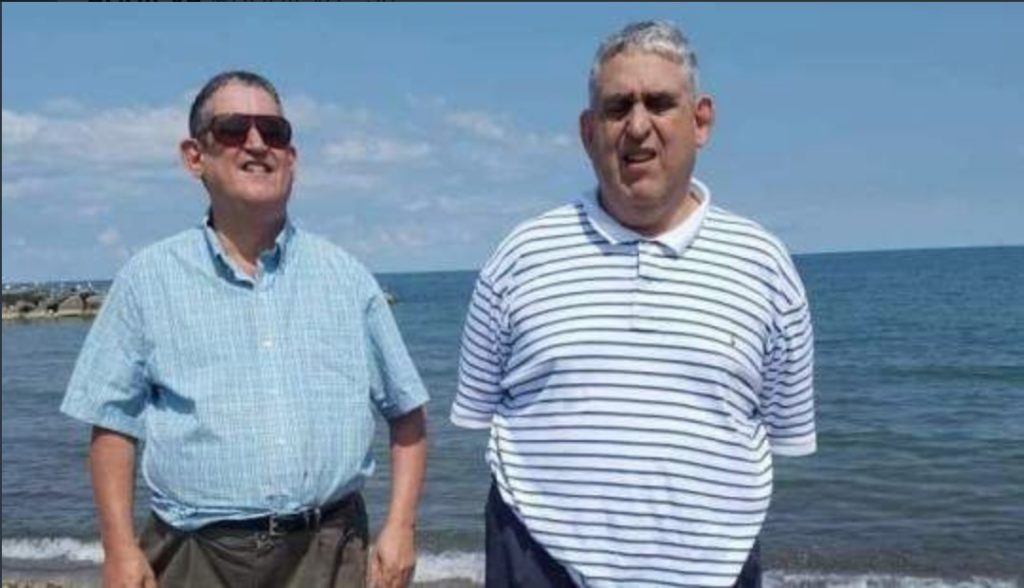
Among the 11 people who perished in Saturday’s shooting at the Tree of Life synagogue in Pittsburgh were Cecil and David Rosenthal, both of whom regulars at the synagogue.

Cecil, 59, and David, 54, regularly attended services on Saturday mornings; the two of them were always there to carry the Torah.

“When it came time to take the Torahs out, Cecil always stepped forward to carry it, and David was right behind him,” Barton Schachter, former president of Tree of Life, told the Pittsburgh Post-Gazette. “The rabbis knew: You’ve got to give them a Torah to carry.”

Both Rosenthal brothers received support from ACHIEVA, an organization that provides services for people with disabilities, allowing the brothers to live somewhat independently. Cecil in particular was active in going to social events and trying new foods, as well as going to concerts.

Cecil was particularly involved in the Best Buddies program, where adults with disabilities are partnered with students. Cecil had been partnered with his buddy, Duquesne University senior David DeFelice, for two years. DeFelice and Cecil frequently ate together and attended services at Tree of Life.

“He was a very gregarious person — loved being social, loved people,” DeFelice told The Morning Call. “You could put him any situation, and he’d make it work.”

The Coffeys, former neighbors of the Rosenthals, told the Tribune-Review that the Rosenthal brothers were “constantly” at their house, where Cecil would act as a “big brother” to their three children.

“Whenever he would see us, he would always say, ‘Hi, Coffeys!’” Raye Coffey, the mother of the Coffee children, said. “David was quieter … to die like this is horrendous.”

The two brothers had been living together in an apartment in Squirrel Hill. Chris Schopf, vice president of residential supports at ACHIEVA, told the Tribune-Review that the brothers “were inseparable.”

“Most of all, they were kind, good people with a strong faith and respect for everyone around,” Schopf said.

The funeral for the Rosenthal brothers will take place on Tuesday at noon at Temple Rodef Shalom in Squirrel Hill.

These Two Pittsburgh Victims Were Brothers Read More »

My Name Is Jew, and I Want My Name Back

My name is “Jew.” My name is smoothed by centuries of storms, polished by the rolling river of time. My name is a diamond, born of friction and pressure, thrust to the surface by fiery lava, precious, multi-faceted. My name is “Jew” and my name is the philosopher’s stone, turning base metals into gold, turning all that is mundane in this world and infusing it with meaning, turning it into the shining substance of the sacred.

My name is “Jew” and my name turns the animal of man, his brutality, his beastliness, into beauty and righteousness, elevating him above his dust and his dross.

“Jew” is the stamp on the greatest love-letter ever written, from Creator to created, the love-letter in which we are given the Ten Commandments, the ethical guideposts of civilizations, the love-letter that proclaimed that every person is made in the Image of God, b’Tzelem Elohim, that every living vessel, whether broken or whole, is infused worthiness, casting down cast systems, a love-letter that told the story of all humanity descending from one couple, that we are one family, no one superior to another, a love-letter that illustrated the redemption of a slave people into a nation of priests, a people whose babies had been drowned in the river, a people beaten and in rags, restored to dignity, a thread of royal blue tied to the corner of their garments, a reminder of each individual’s inherent nobility.

Dear humankind, Here is Shabbat, the world’s greatest religious gift, a day upon which the flower and the gardener stand as equals to one another, day of peace, of rest, of family, of vision of a future world. Enjoy. Sincerely, Jews.

Dear humankind, I have put My rainbow in the clouds, and it will be the sign of the covenant between [God] and the world. Sincerely, Jews.

Dear humankind, Love your neighbor as yourself. Sincerely, Jews.

Dear humankind, Welcome the stranger in your midst. Sincerely, Jews.

Dear humankind, Let my people go. Sincerely, Jews.

Dear humankind, Give me your tired, your poor, your huddled masses yearning to breathe free, the wretched refuse of your teeming shore. Send these, the homeless, tempest-tost to me. Sincerely, Jews.

Dear humankind, Proclaim liberty throughout all the land and unto all the inhabitants thereof. Love, Jews.

I want my name back.

Jew means “championing what is arguably the single most revolutionary concept in human civilization, monotheism.” One God. A universal moral code of conduct.

Jew means having partnership with the Divine for the repair of our broken world. Tikkun Olam.

Jew means helping the other is my responsibility during my lifetime. Jew means confessing my shortcomings and striving to better myself.

I want my name back. My name is “Jew.”


Rabbi Zoë Klein Miles is the senior rabbi at Temple Isaiah in Los Angeles.

My Name Is Jew, and I Want My Name Back Read More »

Words That Kill: The Genocidal Nature of Anti-Semitism

“Screenshot from Twitter.

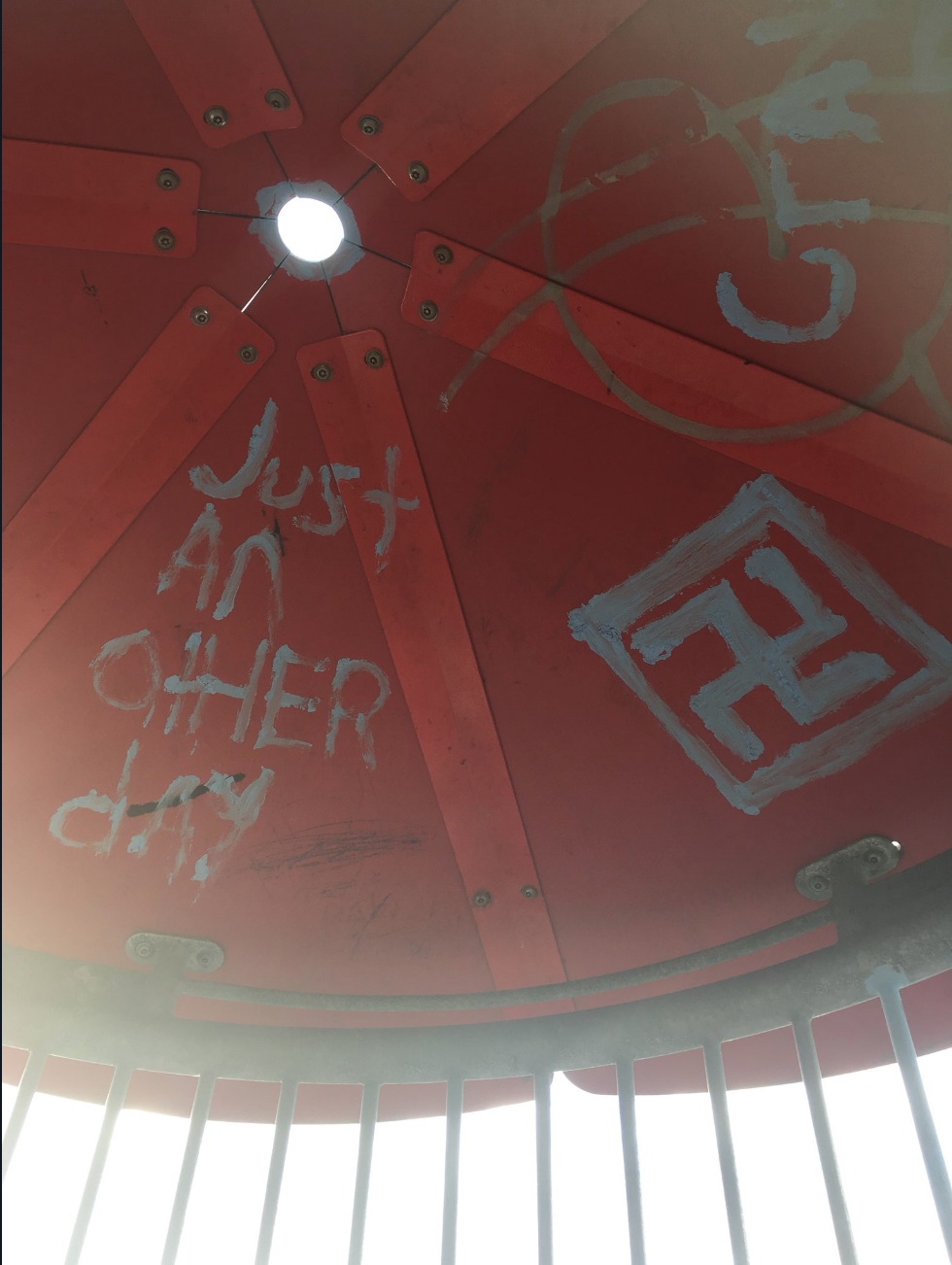
Let’s say a young man sprays “John loves Sally” onto a wall to celebrate his new love.  It may be a misdemeanor because it damages property, but otherwise it’s harmless graffiti. So too when John then sprays the symbol of his favorite white supremacist band. But when he scrawls a swastika and “Death to the Jews” on the Jewish cemetery wall, it is a genocidal threat.

The slaying of innocent Jewish lives in Pittsburgh by accused gunman Robert Bowers, who turned his rhetoric about killing Jews into the actual killing of Jewish people, is the latest example of many centuries that evidence such behavior. The history of anti-Semitism is strewn with the corpses of Jews who could not get out of the way when words turned to violence. This is not a matter for the Jews alone; rather, the problem belongs to our entire society in not recognizing the lethal potency of anti-Semitism.

Let us be clear: This is not just hate speech, this is an explicit threat. We need laws to allow intervention much earlier, or this will not be the last time we see Jewish people die in America because they are Jews.

We need no reminder that the Nazis were the masters of rhetoric. No one should have been surprised when Hitler murdered the Jews, because the logical ramification of everything he wrote and said was the extermination of the Jews. The book, “The Yellow Spot: The Extermination of Europe’s Jews” was published in 1936. It was clear to the authors four years before the Final Solution began that some kind of final solution was inevitable, based on what was being said.

“There is a difference between speech that is hurtful but not harmful, and speech that is demonstrably harmful in its own right.”

There is legal precedent following the Rwandan genocide, as determined by the International Criminal Tribunal for Rwanda established by the United Nations Security Council. Ferdinand Nahimana is serving time for running a radio station that incited hatred; Simon Bikindi is serving time for writing songs of hatred. Yes, a musician was given a life sentence by an international tribunal for song writing. The only conclusion: words can and did kill.

Several European countries outlaw Holocaust denial. These preventions of speech have nothing to do with fact-checking history in the courts; that would rail against everything that free speech laws are made to protect. But because there is a fundamental recognition that speech denyjng the Holocaust carries with it the inherent threat of the original crime itself.

As a newly minted U.S. citizen about to vote for the first time, I took an oath, learned the Constitution’s amendments and am proud to uphold them as a dutiful American. The First Amendment in particular gives us all great and wonderful freedoms. There is a difference between speech that is hurtful but not harmful, and speech that is demonstrably harmful in its own right. Our narrow reading of harm requires a physical act to take place to determine whether the speech can be retroactively linked to the motive or intent of the violent party. The connection of the speech to harm only occurs after the harm.

It is time to re-examine death threats to Jewish people in the light of history. Phrases such as “All the Jews must die” allegedly called out before the killing at the Tree of Life Synagogue in Pittsburgh is now demonstrably harmful. We know very well that anyone who says “Death to the Jews” is uttering an existential threat to actual Jewish lives based on a substantial body of evidence.

It is time our lawmakers wrestle with and confront the reality that anti-Semitism attacks our society and has proven itself to be a killer of Jewish people and others. Other hatreds have similar legacies that must also be reconsidered. Racism, homophobia and xenophobia are all proven killers. It is the role of the law to do everything in its power to prevent such loss.


Stephen Smith is the Andrew J. and Erna Finci Viterbi executive director of the USC Shoah Foundation.

Words That Kill: The Genocidal Nature of Anti-Semitism Read More »

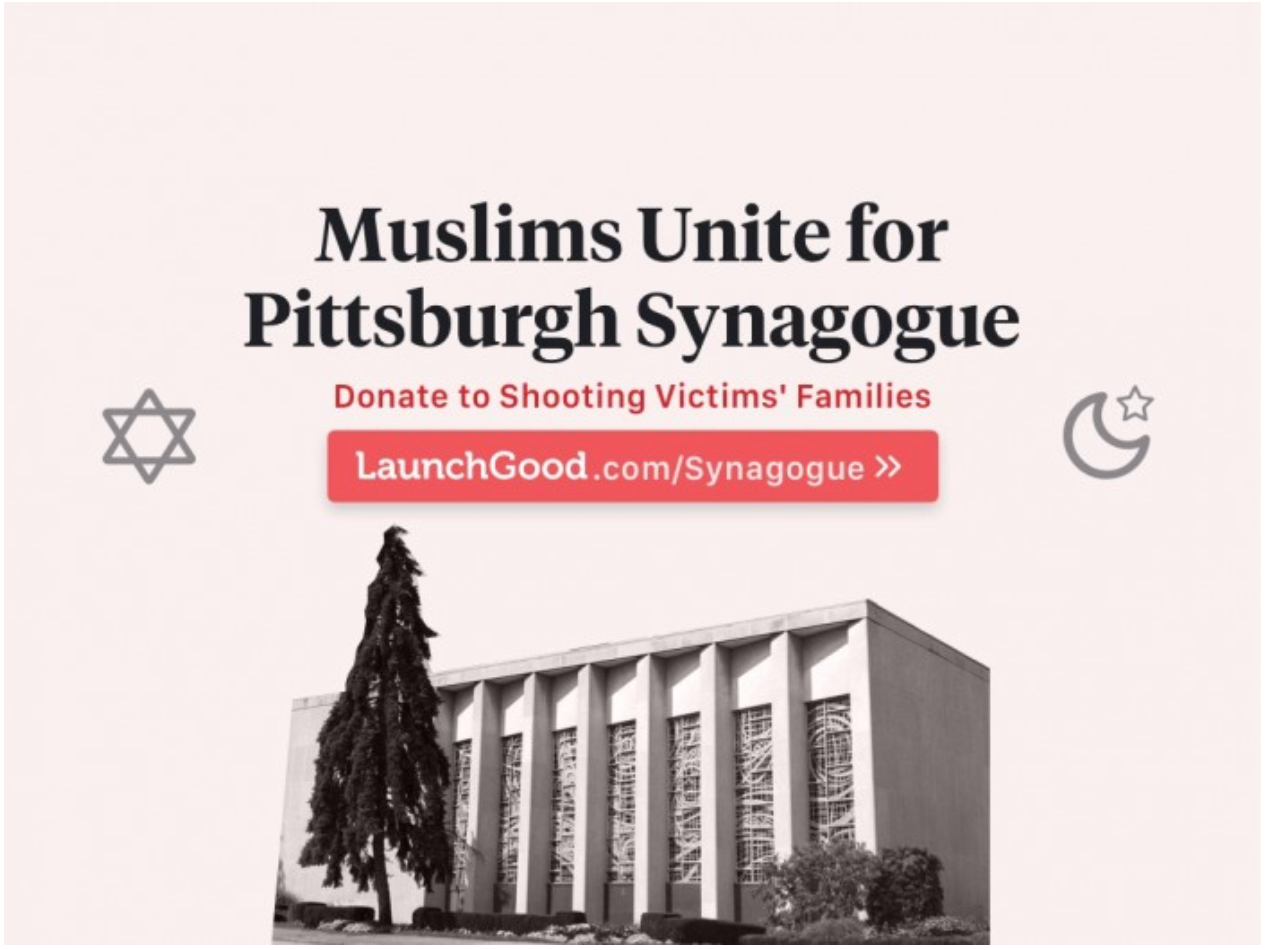
Muslim Groups Raise $60K For Pittsburgh Synagogue

Photo from LaunchGood

In the wake of the shooting Saturday, that took the lives of 11 people at the Tree of Life Synagogue in Pittsburgh, two Muslim groups in the community started a crowdfunding campaign.

According to the Hill, the group’s goal was to raise $25,000. Now, more than $60,000 has been raised for the victims.

According to Forward, Muslim-American non-profits Celebrate Mercy and MPower Change were behind the campaign, “Muslims Unite For Pittsburgh Synagogue.” It is also in partnership with the Islamic Center of Pittsburgh.

The proceeds will help with funeral expenses and medical bills.

“The Muslim-American community extends its hands to help the shooting victims, whether it is the injured victims or the Jewish families who have lost loved ones,” the fundraising page reads. “We wish to respond to evil with good, as our faith instructs us, and send a powerful message of compassion through action.”

Sunday morning, the group updated their post saying, “The campaign has gone viral as it begins receiving international media attention. We have now hit our 2nd goal of $50,000, before the 24-hour mark! The goal is now $75,000.”

The groups also wrote on the fundraising page, that they, “hope to send a united message from the Jewish and Muslim communities that there is no place for this type of hate and violence in America.”

“We pray that this restores a sense of security and peace to the Jewish-American community who has undoubtedly been shaken by this event,” the page concluded.

To donate, click here.

More to come.

UPDATE: As of Monday morning, the fundraiser has raised more than $132,000. Their new goal is $150,000.

“This morning, we transferred the first installment of funds ($25K) to the Islamic Center of Pittsburgh to immediately begin disbursing help to the families,” the organization wrote Monday. “We have just increased the goal to $150K and will not increase it again until we assess – with our partners on the ground – if the families’ short-term expenses will exceed that amount. We are overwhelmed with how viral the campaign has gone so far. Many of the donors, at least 25%, are not even Muslim; they are Jewish and friends of other faiths.”

Muslim Groups Raise $60K For Pittsburgh Synagogue Read More »

Pittsburgh Massacre an Attack on Humanity

Words fail in the aftermath of the horrifying tragedy in Pittsburgh.

Eleven synagogue worshipers were brutally murdered while in the midst of their prayers. Six others, including police officers, were wounded. The FBI special agent in charge of the Pittsburgh office, Bob Jones, said that it was the most “horrific crime scene” he’s witnessed in his 22 year career with the Bureau.

The shooter, Robert Bowers, shouted “all Jews must die” while he carried out his massacre. Commentators are already calling this the deadliest attack on Jews in American history.

The name of the congregation in which the attack took place is “The Tree of Life”. But on this day it became identified with death.

What makes this all the more tragic is the event which was taking place at the time. The synagogue was in the midst of rejoicing with a family celebrating a brit milah and baby naming, affirming a child’s identification with the Jewish people.

A celebration of life turned into a bloodbath. And we can only ask, will it never end?

We mourn with broken hearts. But it would be a mistake if we merely perceived this as an attack on Jews, as but another in the lengthy list of anti-Semitic atrocities of history.

When Jews are murdered in a house of God it is an affront to every person who believes that all of humankind was created “in the image of God.” It represents the ultimate rejection of civilized society.

Sadly, what happened in Pittsburgh is not an isolated incident. It is an echo of a kind of evil which we have come to witness in recent times. And it is an evil which, either on a conscious or subconscious level, has a powerful motivation.

Terrorist attacks are heinous crimes no matter where they occur. Carried out in places of worship, their malevolence is not only magnified multiple times but their rationale also takes on a different meaning. That is unfortunately what we have seen with ever greater frequency.

In July 2008, Jim David Adkisson began his shooting spree at the Tennessee Valley Universalist church in Knoxville Tennessee. He killed two people and wounded seven others. He justified his actions by citing the historically progressive policies of the Unitarian church. Four years later a white supremacist, Wade Michael Page, attacked a Sikh temple, or gurdwaras, in Oak Creek, Wisconsin, killing six people and wounding four more before committing suicide. In June 2015, Dylann Roof, a white supremacist who frequently posted publicly about his desire to kill nonwhites, murdered nine members of the Emanuel African Methodist Episcopal church in Charleston South Carolina. And just last year 26 people were killed in the deadliest church shooting in American history at the First Baptist Church in Sutherlands Springs, Texas.

What explains this striking parallelism? Why have churches and synagogues and houses of worship become appealing targets of hatred?

It is almost certain that the perpetrators of these crimes know that they can commit the maximum emotional devastation when they strike at the very heart of the spiritual fabric of the community. Houses of God are sources of inspiration for good. They are the foundations of civility, of respect, of the dissemination of values which make possible human survival.

And that is what makes them such appealing places upon which to express their prejudices, their bigotry and – in the most profound psychological truth – their inner self-hatred.

Simon Wiesenthal warned us years ago that “the combination of hatred and technology is the greatest danger threatening mankind.” We have long been concentrating on the dangers of technology and its awful potential for human destruction. We need to put equal effort into combating the hatred which knows no limits and finds its most satisfying outlet against those very places which bring the world the beauty of God and of love.


This story was originally posted on aish.com

Pittsburgh Massacre an Attack on Humanity Read More »

Cry, Don’t Politicize. 9 Comments on the Pittsburgh Massacre

I have nine comments on the massacre at the Tree of Life synagogue in Pittsburgh on Oct. 27:

1.
It is heartbreaking. Full stop. Have a moment of silence, light a candle, remember that when Jews are killed for being Jews you bleed, all Jews bleed. Thus, treat this butchery of hate not as an opportunity to advance a political agenda. Make it personal. Make it about love. Mourn it.

2.

Yes, it is the worst ever massacre of Jews in America. Don’t over interpret this fact – as it is mostly a coincidence. Some killers are less successful, some more. No one goes on a murderous rampage thinking oh, I will just kill three or five Jews. A butcher on a rampage kills as many Jews as possible. In this case, it was more than all previous such cases.

3.

America did not change yesterday, not for Jews, nor for other Americans. In America mass killings of this type are a horrific recurrence. It can be a school or university, a gay club or a rock concert, it can be a synagogue. America is armed to its teeth, and has its fair share of radicals, lunatics and delusional haters. This is a deadly combination. From time to time, Jews will be the victims.

“Making Jews feel even more exposed, even more a target of hate, could be the result of wrong, politically driven policies.”

4.

The question of security, of guards, of locked gates, is not very interesting. It is a technical question, one of risk assessment, of cost-benefit assessment. The leaders of institutions must consult with professionals and decide how best to secure the gathering places of Jews. President Trump, speaking yesterday about the attack, made a comment about the need for guards that some observers were quick to interpret as a “blame-the-victim” tactic. It was not. It was just Trump being Trump, and making a statement that was not well crafted. As for security: he may have a point. Or not. Let professionals decide.

5.

Trump was also the target of many other observations following the massacre. Some went as far as blaming him for it. This is both unfair and foolish. Mass killings occurred before Trump. Hatred of Jews did not start at his watch. True – the US is tenser, more violent, more on edge in the Trump era. Is he the cause of it, or just the result? Probably both. And yet, there is no doubt that the President is not a Jew hater, does not encourage or condone hate of Jews, does not aim to hurt Jews.

6.

Yes, and blaming him is a fool’s errand. Trump has many followers. Most of them bear no ill will against Jews. Yet if the Jews make the president their prime target of criticism – if they portray him and his supporters as anti-Semitic haters – alienation will follow, and anger.

7.

The counter argument has power. The Jews are not tourists in America, they are not guests. If they see a wolf, they must cry. If they see injustice, they must wage a battle. Under such circumstances, restraint is the remedy. Wage a battle – wisely. Wage a battle – cautiously. Wage a battle – to win. Waging it to lose could be admirable, and very dangerous.

8.

A few Israeli spectators also politicized the murder. On Israeli Radio a senior commentator made it about Conservative Judaism – the Pittsburgh synagogue is Conservative – not being recognized by the state. Again – unfair and unwise. And for similar reasons. No Jew wants other Jews to get killed – because of disagreements over theology. No Jew should be made to feel guilty about the murder, just because he or she do not agree with Conservative Judaism.

9.

Jews tend to respond to such instances of violence in two ways: Those of them who feel a part of the community raise their level of involvement and awareness – those of them who have doubts lower their level of communal participation, to stay safe.

This is not an easy test for the Jewish community. And its implications are not immediately known. Making Jews feel safe as they identify Jewishly and engage Jewishly ought to be the main task ahead. Making Jews feel even more exposed, making Jews even more a target of hate, could be the result of wrong, politically driven, policies.

Cry, Don’t Politicize. 9 Comments on the Pittsburgh Massacre Read More »