fbpx

October 25, 2018

Rosner’s Torah Talk: Parshat Vayera with Rabbi Adam Roffman

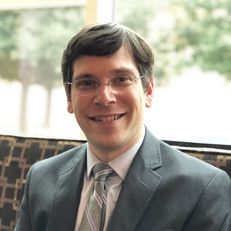
Rabbi Adam Roffman serves Congregation Shearith Israel in Dallas Texas. He is a graduate of Amherst College with a degree in Political Science, and Circle in the Square Theatre School with a certificate in Musical Theatre Performance. He began his rabbinic education at the Conservative Yeshiva in Jerusalem. Rabbi Roffman graduated with a Masters in Talmud from the Jewish Theological Seminary where he was awarded the The Rabbi Max Gelb Memorial Prize in Talmud and the Israel H. Levinthal Prize in Homiletics.

This week’s Torah portion —Parashat Vayera (Genesis 18:1-22:24) — features several of the most well-known stories in the Bible, including the destruction of Sodom and Gomorrah, the birth of Isaac, the banishment of Hagar and Ishmael, and the binding of Issac. Our discussion focuses on angels and their role in the world.


https://www.youtube.com/watch?v=VlteMmXN2Bo&feature=youtu.be


Previous Torah Talks on Vayera

Rabbi Dahlia Bernstein

Rabbi Leah Cohen

Rabbi Eitan Mintz

Rabbi Talia Avnon-Benvenisti

Rabbi Amy Levin


Rosner’s Torah Talk: Parshat Vayera with Rabbi Adam Roffman Read More »

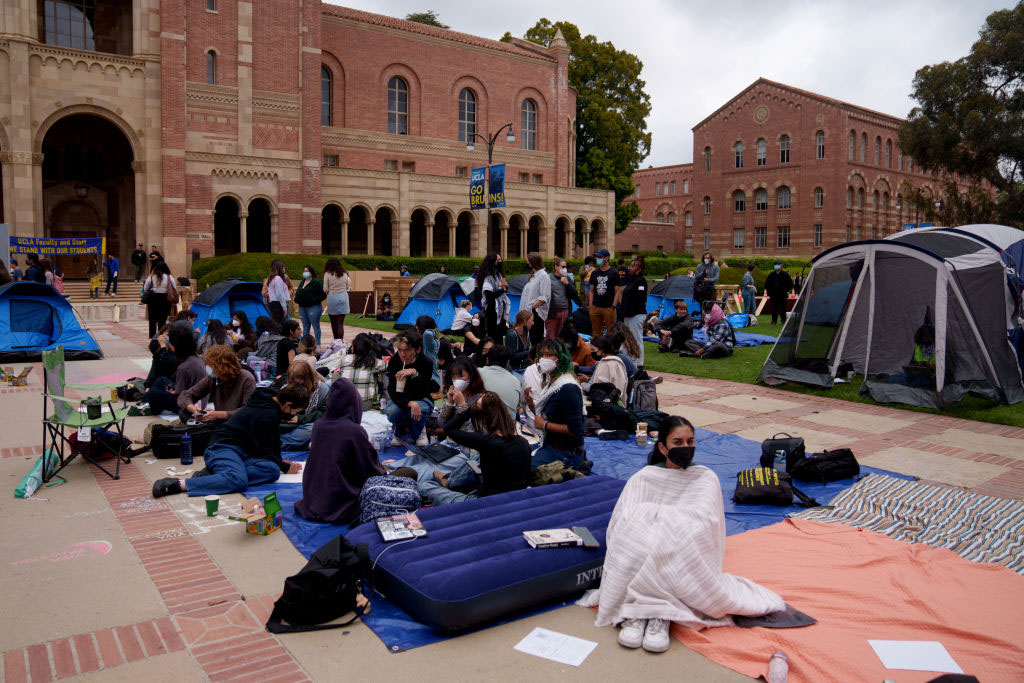
University of Winnipeg Apologizes for Anti-Semitic Event

Photo from Wikimedia Commons.

The University of Winnipeg admitted that an event held earlier in the year on campus was anti-Semitic and has apologized for it.

The event, “My Jerusalem: Responding to the U.S. Embassy Announcement,” took place on Feb. 28 during Purim. B’nai Brith Canada said at the time that the event featured two Palestinian speakers – Fadi Ennab and Idris Elbakri – accusing Israel of “genocide” of being the equivalent of “European settlers.

B’nai Brith also accused the panel of being “one-sided” and not providing the pro-Israel perspective.

“The University of Winnipeg should not be spending public money on absurd anti-Israel propaganda,” B’nai Brith Canada CEO Michael Mostyn, said in a statement at the time. “It is absolutely shameful to host an event concerning Judaism’s holiest city on a Jewish holiday, while refusing to include any mainstream Jewish voices.”

“The University administration owes Winnipeg Jews an apology.”

The university established a committee to investigate the matter; the committee concluded that the event met the International Holocaust Remembrance Alliance’s (IHRA) definition of anti-Semitism. The committee recommended that the university publicly acknowledge the anti-Semitism that took place and take steps to ensure that it never happens again, such as putting on events that educates students on the Holocaust and anti-Semitic stereotypes.

“The University regrets the anti-Semitic statements made at the My Jerusalem event,” the university said in an Oct. 18 statement.

The statement added that while the university did not organize the event, the Respectful Workplace and Learning Environment (RWLE) standards were still applicable to an on-campus event, and such anti-Semitic statements violate the RWLE standards.

“Whether providing space, hosting or organizing events or discussions, the University strives to ensure a respectful environment,” the statement read “In response to the recommendations contained within the report, the University will work with members of the Jewish community and other racialized groups to enhance our campus environment and promote safety and inclusivity.”

Ran Ukashi, national director of B’nai Brith’s League for Human Rights told Arutz Sheva he was “pleased” with the university’s statement.

“This incident also highlights the importance of universities using the IHRA (International Holocaust Remembrance Alliance) definition of antisemitism, as it clearly identifies what constitutes anti-Semitism, which includes the promotion of anti-Jewish hatred under the guise of anti-Zionism,” Ukashi said.

University of Winnipeg Apologizes for Anti-Semitic Event Read More »

Human Rights Watch Report Details PA’s ‘Arrest and Torture’ of Dissenters

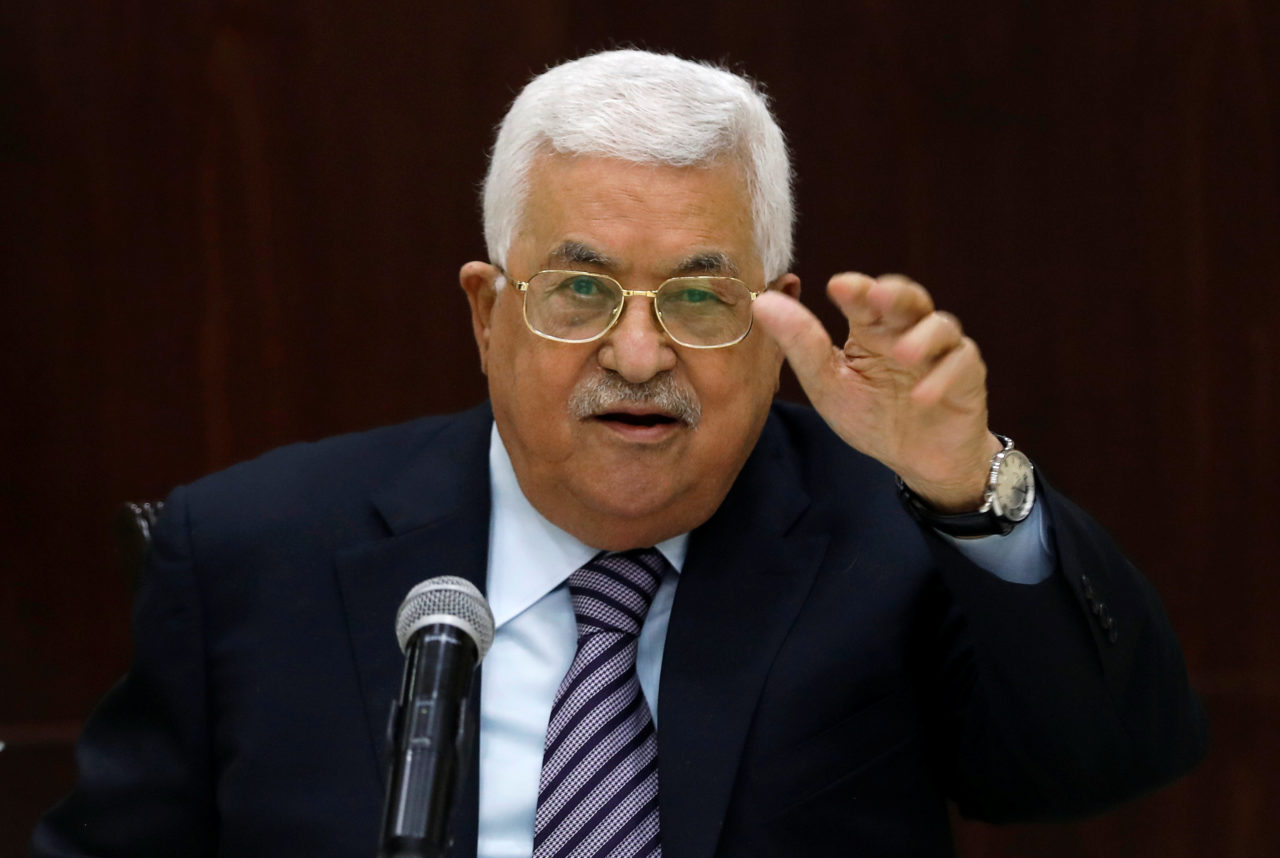
A new report from Human Rights Watch (HRW) details how the Palestinian Authority (PA) is conducting political “arrests and torture” of civilians who criticized the PA.

The report states that HRW interviewed 147 people, which included former PA prisoners, family members, lawyers and NGOs, leading HRW to conclude that the PA might have committed “a crime against humanity” through what appears to be arbitrary arrest and torture of civilians.

In one case, a Palestinian identified as “Zaid,” was detained by the PA while residing in the Balata Refugee camp, an area that engages in “resistance” activity against PA President Mahmoud Abbas. Zaid said PA officials accused him of murder, and when he said he was not involved, PA officers tortured him:

Officers then handcuffed his hands behind his back, covered his face, and put him in “the Closet,” a room he described as roughly 60 centimeters by 60 centimeters in size where he said he had difficulty breathing. He said they kept him there for 22 hours a day for 22 consecutive days. Later, they had him stand on a wooden box and tied his handcuffed hands to a rope, which they gradually raised to stretch his arms. He said they kept him like this for 20 hours, before letting him sleep. They then returned him to shabeh [positional torture]. In subsequent interrogations, officers threatened to return him to shabeh if he did not speak.

At one point during his first three days of detention, Zaid said officers in the corridor put wires on the back of his shoulders and twice shocked him for about 25 to 30 seconds, and once tied a cord around his penis for eight or nine hours, causing his penis to swell and turn blue. On his third day, while handcuffed and blindfolded, he said a guard pushed him to the ground and, for 10 minutes, repeatedly hit and kicked him, fracturing his knee and causing him to lose consciousness. He woke 20 minutes later to find himself with a doctor.

Zaid was eventually acquitted and released.

Social media posts critical of the PA can be enough for them to detain a Palestinian, as Hamza Zbeidat discovered when he was detained and PA officials blatantly told him it was a “political arrest”:

He said the security officers then called him a liar, asking, “What did the PA ever do to you? You do not pay electricity?” Zbeidat denied that he was a liar and an officer slapped him, knocking off his glasses. Another officer then read one of Zbeidat’s Facebook posts from two months earlier in which he had written, “We will struggle against the PA like we struggle against the occupation.” They asked him, “Why are you attacking [the PA] and swearing at the president?” Zbeidat defended his right to speak and to criticize authorities, which prompted the officer to threaten to imprison him. Officers also asked him about his political affiliation, what he shares on Facebook, and why he criticizes the PA and not Hamas.

The PA was also found to have targeted journalists. Muhammed al-Haj, an independent photojournalist, told HRW that he resides in Jordan because he is “constantly harassed” by the PA after he published a government memo detailing security cooperation with the Israelis, a document that contradicted public statements issued by Abbas.

“The PA exists to look after me, not to intimidate me,” al-Haj said.

One student, Alaa Zaqeq, was detained and beaten by PA officers for his alleged involvement a Hamas campus affiliate. He was subjected to one interrogator known as “the Juicer”:

The Juicer pulled him up by his shirt and punched him in the face, knocking him to the ground. He then began asking Zaqeq about his activities with the Islamic Bloc, the student group affiliated with Hamas, at the university. When he failed to answer satisfactorily, the Juicer subjected him to shabeh [positional torture]. The Juicer told him he would “leave this place on a wheelchair” and “wearing a skirt and a headscarf.”

This pattern of interrogations and abuse continued over the course of 24 days in Jericho. Zaqeq said the shabeh he experienced included forcing him to stand with his legs spread out and hands up or in a half squat, all of which left his body trembling.53 To elicit a confession, officers in one instance told him that a member of his family had fallen ill; in another, they threatened to arrest his mother, sister, and wife. These threats led Zaqeq to confess to financing the Islamic Bloc at the university, even though he told Human Rights Watch that this was untrue.

Zaqeq said he told officials that he had asthma, a muscle rupture in his chest, and nerveinflammation. According to Zaqeq, they replied, “We do not care” and “Even if you die, no one will care.” He saw a doctor at one point when he could not move his thumb and legs and felt pain in his shoulders. The doctor gave him painkillers, telling him he could not take him to the hospital. Sleeping for two weeks without a mattress in the cell exacerbated Zaqeq’s pain.

Zaqeq has since been detained multiple times by the Israelis; the report did not state why.

HRW wrote a letter to the PA criticizing their actions, stating that PA “security forces routinely mistreat and torture those in its custody, taunting, beating, whipping, and forcing detainees into painful stress positions for hours at a time,” and that those detainees were only arrested for “peaceful” criticism of the PA and were not subjected to due process.

“The pattern of arbitrary arrests and torture that we have been documenting appears to be systematic and to have been in place for many years,” HRW Middle East and Africa Executive Director Sarah Leah Whitson wrote to the PA. “Moreover, Palestinian authorities have largely failed to hold security forces accountable for these abuses.”

The PA denied any wrongdoing in their response to HRW.

Read the full report here.

Human Rights Watch Report Details PA’s ‘Arrest and Torture’ of Dissenters Read More »

Let’s Welcome the Stranger and Have Children - A poem for Parsha Vayeira (Aliyah 1) by Rick Lupert

Let’s Welcome the Stranger and Have Children – A Poem for Parsha Vayeira (Aliyah 1)


Please let a little water be taken, and bathe your feet,
and recline under the tree.

This is how everyone should greet the stranger –
With offers of water and comfort.

With fingers pointing to a place to rest.
Not with suspicion or deceit.

Not with a fear of the other.
Take my hand, whoever you are.

What can I fill you up with?
My pillows are your pillows.

This tent yours to come and go
as you please.

And Abraham said [to Sarah] “Hasten three seah of meal
[and] fine flour; knead and make cakes.”

In these days where the idea of patriarchy
stings like an ancient wasp

I can’t imagine telling my wife to
get to the baking after strangers

showed up at the door. Strangers
who I begged to come in

Strangers who I knew needed
fresh cake.

I like the old ways, the weight of tradition
is like a magnet to the past.

But I’ll make my own cake…as soon as I
figure out what a seah is.

And to the cattle did Abraham run, and he took a calf,
tender and good, and he gave it to the youth,

Finally! The youth are getting
the cattle they deserve!

And it happened so quick, I mean
Abraham ran to the cattle
like it was Pamplona and he

wanted to get them going.
Cows…running to the youth

hoping to get milked, hoping
they can stop all this running.

I will surely return to you at this time next year, and behold,
your wife Sarah will have a son…And Sarah laughed

That wasn’t the reaction I had when
Addie told me she was pregnant.

(That’s not an announcement,
I’m referring to ten years ago.)

I stared at the note. The only
thing that was in the empty box –

I had taken off the bow.
I’d removed the tissue paper.

It was confusingly not gift season.
You’ll get your present in nine months

it said. I didn’t laugh. I was speechless
for nine months. Eventually,

I built a crib, I sold off the futon,
I cancelled the trip to Japan.

I didn’t laugh or say anything.
No reaction, or any of my

famous words, could have changed
this eventuality.


God Wrestler: a poem for every Torah Portion by Rick LupertLos Angeles poet Rick Lupert created the Poetry Super Highway (an online publication and resource for poets), and hosted the Cobalt Cafe weekly poetry reading for almost 21 years. He’s authored 21 collections of poetry, including “God Wrestler: A Poem for Every Torah Portion“, “I’m a Jew, Are You” (Jewish themed poems) and “Feeding Holy Cats” (Poetry written while a staff member on the first Birthright Israel trip), and most recently “Donut Famine” (Rothco Press, December 2016) and edited the anthologies “Ekphrastia Gone Wild”, “A Poet’s Haggadah”, and “The Night Goes on All Night.” He writes the daily web comic “Cat and Banana” with fellow Los Angeles poet Brendan Constantine. He’s widely published and reads his poetry wherever they let him.

Let’s Welcome the Stranger and Have Children – A Poem for Parsha Vayeira (Aliyah 1) Read More »

Letters to the Editor: Trump and Israel: Who to Believe, Volunteer Opportunities for Youth

Trump and Israel: Who to Believe
The dual articles on “Why Trump Is Bad/Good for Israel” by David Lehrer and Janice Kamenir-Reznik, and David Hazony, respectively (Oct. 19), shed clear light on the difference of opinions. On the one hand, you have the view of Dennis Ross, endorsed by Lehrer and Kamenir-Reznik, that President Donald Trump is bad for Israel; and on the other hand, Hazony, an Israeli, defends Trump as being good for Israel.

In decrying Trump’s very successful policy regarding Israel’s security and our support with specious rationalizations, they do Israel a great disservice. Just ask Prime Minister Benjamin Netanyahu or any Israeli what they think. You will get overwhelming approval of Trump.

Who do you want to believe, the Israelis or the leftists? Where was the rage on the left when former President Barack Obama interfered in the Israeli election; his gross disrespect of Netanyahu when he visited the U.S.; the abominable deal with Iran, which puts Israel in grave danger; the dumping of cash from U.S. planes at an Iranian airport, etc. Not a sound from them. What chutzpah!

I commend the Journal for publishing this article, which unmistakably demonstrates the difference between the left and the right with respect to Israel.
C.P. Lefkowitz, Rancho Palos Verdes

Volunteer Opportunities for Youth
Thank you for the rich articles in the Oct. 12 issue relating to Jewish education (education supplement). In connection with volunteer opportunities for students, readers might be interested in accessing BJEImpact.org, which lists scores of such opportunities. Parents seeking educational opportunities meeting their children’s needs or creative ways of spending Shabbat as a family can find helpful guidance at JkidLA.com.

Thanks for identifying these topics as worthy of exploration. BJE is pleased to serve as a resource for those seeking further information.
Gil Graff, Executive Director, BJE: Builders of Jewish Education

A Human Side of God
It was fascinating to read the contortions needed to make sense of the weekly parsha that each of the participants engaged in, which avoids implicating the Lord in the outcome (“Table for Five,” Bereshit, Oct. 5). After all, there are three characters in this story: the Lord, Cain and Abel. Perhaps Tova Hartman comes closest when she closes her comments with “I cannot fathom why the God of Genesis patterns this tragic world of relationships, where being loved means someone else is rejected.”

Consider the (uncomfortable for some) answer that God is made in the image of humans! Hence, like all human beings, is imperfect and does make mistakes and must learn from the experience. We can see this in the evolution of the concept of God throughout the Torah. A vindictive, wrathful, vengeful, fearsome God gives way, over time, to a softer, more mellow fellow. God goofed in the treatment of Cain. Not unlike parents who try to be even-handed in dealing with their children, there are times when overt favoritism is detrimentally shown. How very human!

Woody Allen said it well: “If there is a God, it’s a cinch he’s an underachiever.” Why else would a vital concept of Tikkun Olam be needed?
Sheldon H. Kardener, Santa Monica  

Israeli-Palestinian Conflict
Yossi Klein Halevi is right: “Staying in the West Bank is an existential threat to Israel; leaving the West Bank is an existential threat to Israel.” But that’s because a sovereign Israel’s presence in the Middle East is seen as an abomination by her “Palestinian” neighbors (“New-State or Pre-State Solution?” Oct. 19).
There’s also the fundamentally Jew-hating world (the disgraceful United Nations being a prime example), which supports anything that endangers the Jewish state.
Israelis must secure their nation through carefully calibrated actions.
The world sees Israel’s attempt to single-handedly take responsibility for finding a “solution” as weakness or even worse, an admission of some unforgivable “original sin.”
The time for talk may exist in the distant future. But generations will pass before the poisonous, genocidal hate that surrounds Israel might possibly abate.
Julia Lutch, Davis, Calif.

Battle of the Bulge
Thank you, Mark Schiff, for being so honest about your struggle with keeping off the weight (“My Downfall Is Bread,” Oct. 19).

After trying Weight Watchers, Overeaters Anonymous, TOPS (Take Off Pounds Sensibly) and toughing it out with Type 2 diabetes, I found my own peace. When a new doctor said, “You fell off the wagon,” it turned around my thinking and it’s been much easier since.

I live down the street from a Baskin-Robbins, and when the staff started greeting me by my first name and what flavor I liked, I knew it was time to get serious.

Walking to classes from the Orange Line three times a week at Pierce College helps with the needed exercise.
Jacqueline Callan, via email

The Party of ‘I’ vs. the Party of ‘We’
Sometime after the last election, the Journal published a letter from a reader claiming that since the “Republicans are the party of the I, and Democrats are the part of the We,” it therefore follows that the Torah wants us to vote Democratic.
While this writer raises a fascinating point, what I find most interesting is that even if the writer were 100 percent correct, he/she would still be wrong.
Even assuming the validity of these questionable assumptions, and ignoring the recent hostility of the Democratic Party toward Israel, and also ignoring the recent adoption by the Democratic platform of positions that the Torah explicitly rejects, the Torah does not want us to view ourselves as “We.” Indeed, as the Talmud points out (Baba Metzia 114a), the Torah wants us to view the world as if it is dependent only on “Me” and not to be dependent on the “We.”
Perhaps this can explain a strange fact. As pointed out in the book “Who Really Cares” by Arthur C. Brooks (2007), studies show the political right gives far more to charity than does the political left. (And Brooks goes to great pains to show this has nothing to do with income levels, etc.)

Now, why should this be so — especially since Democrats portray themselves as the “ones who really care”?
If I accept the letter writer’s thesis — that Democrats are the party of “We” —  perhaps we can explain this enigma. It is not that the average Democrat really cares less, but that they believe in the “Party of the We” — i.e., fellow Democrats or perhaps the government gives more to the needy, and therefore he himself doesn’t feel the same obligation to give. Whereas the typical Republican believes in the “Party of the I” — and since it is dependent only on the “I” — and if I don’t give, I can’t assume anyone else will either, then I must give.
However, I leave this up to a wiser person than me to decide if this explains everything. As Brooks points out, the political right also gives far more in non-monetary contributions as well — e.g., donating blood or time. I am not convinced that the same logic will explain this fact.
Hayim Hendeles, Los Angeles

CORRECTION
A Q-and-A with Halie Soifer (“Halie Soifer: Getting Out the Young, Jewish Vote for Democrats,” Oct. 19) mistakenly reported that a volunteer program canvassed for Peter Roskam. It did not.


Don’t be shy. Send your letters to letters@jewishjournal.com

Letters to the Editor: Trump and Israel: Who to Believe, Volunteer Opportunities for Youth Read More »

Why We’re So Spooked by the Bomb Threats

It’s not as if our country isn’t used to violence. We lose thousands every year to gun shootings alone. In an open society, some people will, all too often, resort to violence to settle their differences. That’s a given.

So why are we so spooked by the threat of violence against politicians and media outlets which has been all over the news this week? So far, thankfully no one has been hurt by the pipe bombs which were discovered in mail directed against President and Mrs. Obama, President and Secretary Clinton, CNN and others.

And yet, it feels like a disaster, because it crosses a sacred line. It harkens back to those rare and dark times in our history when violence has poisoned politics; when even presidents like Abraham Lincoln and John Kennedy were not immune.

Our republic lives or dies on our ability to resolve our political differences without resorting to violence. Without that, we might as well close shop.

Everything about the American political tradition — our Constitution, our system of laws, our rules of Congressional decorum, our tradition of checks and balances, our elections, etc.– revolves around managing power and politics peacefully, without physical violence.

How we react when the threat of political violence rears its ugly head — as it did this week — is crucial. We fail royally when we blame one side more than the other. All that does is reinforce the extreme partisanship that got us in this mess in the first place.

There’s plenty of blame to go around. Both sides have used language that can lead to violence. Both sides have violated basic rules of political discourse. Both sides are guilty.

Even if you’re certain that “the other side” is more to blame, this is not the time. When it comes to keeping violence out of politics, we must all be fanatically bipartisan.

“While we have yet to learn all the facts behind the attempted mail-bombings reported Wednesday, I fear the disturbing frequency of politically motivated threats and violence is a sign that too many Americans are becoming isolated and obsessed by what divides us, putting political disagreements front and center in how we relate to one another,” writes Republican Steve Scalise, who survived a politically motivated assassination attempt while practicing for the Congressional Baseball Game last year.

We should heed Scalise’s words. We should not allow politics to rule our lives. We should condemn violence equally regardless of where it originates. And the media must do its part, even if alarmism and partisanship are good for business. What is at stake is more than the future of a political party or a media company—but the future of our republic.

As Scalise writes, “America is better than these acts of threats, intimidation and violence against people based on their political beliefs. We are better than this, and we will move beyond this.”

Let’s make sure he’s right.

Why We’re So Spooked by the Bomb Threats Read More »

Israeli Drama ‘District Y’ Headed for U.S. TV

CBS Studios International is partnering with “Fauda” and “False Flag” creator/writer Leora Kamenetzky, L. Benasuly Productions (“Homeland” inspiration “Hatufim”), Paper Plane Productions and Israeli broadcaster Kan to produce the Israel-set crime drama “District Y.”

The 10-part series will focus on a police unit in Jaffa, where Jews and Arabs live together. An Arab-Jewish and a Christian Israeli-Russian cop head the task force, which is investigating the murder of a 17-year-old Jewish girl and the Arab crime family behind a street war in the city.

Tensions escalate, and the police, the crime families and the Arab and Jewish residents of Jaffa have to reconsider their allegiances when the Israeli-Palestinian conflict obstructs the authorities from enforcing the law, with deadly consequences.

“We have been searching for a provocative, character-driven drama that evolves the international returnable series,” said Meghan Lyvers, SVP of co-productions and development for CBS Studios International. “Leora Kamenetzky has created a genuinely distinct and culturally unique story in ‘District Y.’”

It is not known yet if the series will air on the network or will be streaming.

Israeli Drama ‘District Y’ Headed for U.S. TV Read More »

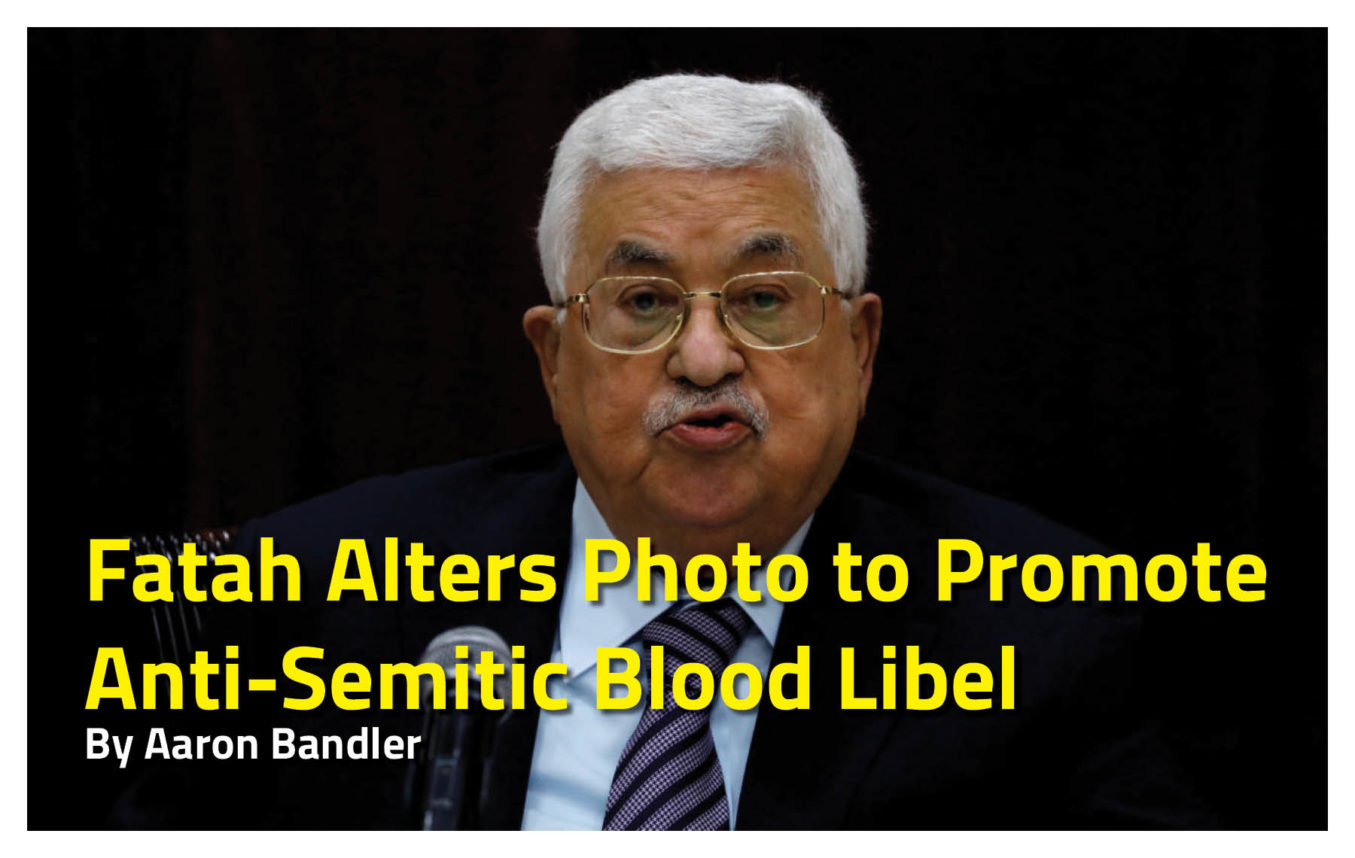
Fatah Alters Photo to Promote Anti-Semitic Blood Libel

Fatah, the party led by Palestinian Authority President Mahmoud Abbas, posted a doctored photo on their Facebook page to promote an anti-Semitic libel.

Here is the photo, posted on Oct. 5:


According to Palestinian Media Watch (PMW), the photo was originally a 2009 photo of a man running a surveillance system at France’s Casino Theatre Barriere de Toulouse.

The photo posted on Fatah’s Facebook page featured the man wearing a kippah, an Israeli flag in the left-hand corner of the image, and the words “Death to the Goyim” on top of images of Palestinian Ahed Tamimi.

The Arabic text that’s highlighted red reads, according to PMW, “The smear campaign against Ahed Tamimi is being waged by the occupation through its tools, and who is benefiting from this?”

Tamimi has become a cause celebre among pro-Palestinians after being imprisoned for eight months after slapping an Israeli soldier. Hezbollah leader Hassan Nasrallah praised Tamimi as “brave and courageous” in August.

Such anti-Semitic blood libels are common among Abbas’ Fatah party, as documented by PMW here. Abbas also has his share anti-Semitic blood libels, as compiled by the Journal here.

Fatah Alters Photo to Promote Anti-Semitic Blood Libel Read More »

Lisa Niver writes for Ms. Magazine

Happy Birthday to Me: Oct News 2018

Oct News 2018 with We Said Go Travel:

Thank you to everyone for the birthday wishes! I am so proud of all I have accomplished this year. Thank you for watching my videos, reading my stories, following along on social media and asking me about booking your travels! I was LIVE on the 1pm KTLA NEWS!

Did you see me? Click here to see it AGAIN! 

Happy Birthday Lisa Niver 2018
Lisa Niver on an Arctic Safari with Churchill Wild finding polar bears!

Thank you to Ms. Magazine for publishing my story: “Reverse Mentoring with GenMaverick: The Five Best Lessons I Learned From Teen Feminists.” I was honored to be asked to be a mentor/catalyst for Maverick. This story is from the Maverick Live Summit in April 2018.

“At the inaugural Maverick Live Summit in Los Angeles, teens took the stage to celebrate the new app’s intent to empower young girls to use their voices—and shared honest stories about their paths to incredible accomplishments. From being on “Grown-ish” to being the first African-American woman ever to qualify for a U.S. Olympic speed skating team, the passionate young women who gathered in Los Angeles for the summit showed the crowd of teens that anything is possible and encouraged them to be creative and empowered.

Collectively and individually they told each other and the crowd: “Take risks! Dream big. Let your voice be heard!”

READ THE ENTIRE ARTICLE ON MS. MAGAZINE

Lisa Niver's article for Ms. Magazine

My Travel Photo Award is open until November 1, 2018. Thank you to everyone who participated in all of my writing competitions and the first photo award. Submit your photo for our current Photo Award THIS MONTH!

We Said Go Travel Photo Award 2018

Did you see all of my Africa stories and videos from my trip to Tanzania and Kenya with Abercrombie and Kent?

Part 1: Where Did I Travel on My First African Safari?

Part 2: Are You Ready? Today We Are Going to the Serengeti!

Part 3: What is the Best Way to Travel from Tanzania to Kenya?

Part 4: How can you see Black Rhino, Maasai Warriors and Hula Hoops?

Part 5: Do You Love The Animals of Africa?

Thank you to Abercrombie and Kent for sharing so many of my photos from our East African safari on their Facebook page:

https://www.facebook.com/media/set/?set=a.10156746675805365&type=1&l=c29a62d711


WHERE CAN YOU FIND MY TRAVEL VIDEOS?

Here is the link to my video channel on YouTube where I have over 826,000 views on YouTube! Thank you for your support! Are you a subscriber? I hope you will join me and subscribe!

Recent videos from walking with Polar Bears in Canada with Churchill Wild:

I am now planning and booking travel! Where do you want to wander? Find more information about me and my luxury travel advising as an independent affiliate of CRUISE and RESORT, Inc with Virtuoso Luxury Travel Network on my new microsite!

My fortune cookies said:  “Don’t be discouraged because every wrong attempt discarded is another step forward,” and “Courtesy costs nothing.”

I hope your birthday and entire year will be filled with celebrations!
Thank you for your all of your support. Lisa

Discover more on my social media accounts:  InstagramFacebookTwitterPinterestYouTube, and at LisaNiver.com. My social media following is now over 135,000 and I am verified on both Twitter and Facebook.

Lisa Niver is BRAVE
Lisa Niver at the opening summit for Maverick Live, April 2018

Happy Birthday to Me: Oct News 2018 Read More »

“As ever Watson – You see but you do not observe!”

 This week’s Torah portion Vayera reminds me of Sherlock Holmes’ famous line: “As ever Watson – you see but you do not observe!”

 Most of us are like Watson. At first sight, we see the surface of things, a person or object’s size, shape, color, line, texture, and form.

Jewish mysticism teaches, however, that nothing is as it appears – every physical thing is a reflection of something deeper, more complex, wondrous, and enriched than we imagine.

Jacob Neusner, the scholar of early rabbinic Judaism, understood this when he described the Mishnah, the 2nd century strictly rational and ordered law code, as an ideal spiritual architecture underpinning the physical world. Every letter, word, phrase, and law, he said, is a reflection of the seen and the unseen, the explicit and implicit.

This week’s Torah portion, Vayera, is about that kind of seeing. It embraces especially what God sees and what God wants us to see and then emulate; the physical and metaphysical, the material and intuitive, the moral and ethical underpinnings in the world.

The three-letter Hebrew root of the parashah’s title Vayera (“And God appeared…”) is resh-aleph-heh. This Hebrew root appears eleven times in a variety of forms (Genesis 18:1-22:24). In nine of the eleven, the root is used in connection with God and angels.

Abraham greets three God-like humans who ‘appear’ near his tent.

God goes to Sodom and ‘sees’ whether the people have turned from their evil.

Lot ‘saw’ two of God’s messengers.

Sarah ‘saw’ Hagar’s son Ishmael and feared he would receive the inheritance in place of her son Isaac.

Hagar ‘saw’ a well of water that would save her son Ishmael from dehydration and death.

Abraham and Isaac ‘saw’ the cloud hovering over a mountain called Moriah, the place where there would be both divine and human ‘vision.’

In nine of the eleven occurrences, there’s divine revelation. These chapters in Genesis point to our patriarch Abraham as the grand ‘seer’ of his generation.

In every one of these spiritual encounters, we sense a spiritual awakening. When the heart opens in this way and the soul ‘sees,’ we’re drawn more deeply into what being human means and what God requires of us, “To do justly, to love mercy, and to walk humbly with Your God.” (Micah 6:8)

What does Abraham see and do? The answer is the central moral message in this Torah portion and sets the stage for Jewish moral activism from that point forward.

Abraham circumcised himself and while recovering in pain he saw the three strangers approach. He got up and ran to welcome them despite his personal discomfort in an act of selfless hospitality.

Tradition understands these three men as angels sent for a three specific purposes. The first was to comfort Abraham as he recovered from circumcision. The second was to tell Abraham that God was about to destroy the cities of Sodom and Gomorrah. And the third informed Abraham that in her old age his wife Sarah would give birth to a child that would carry forward the family line.

Abraham is regarded as the first Jew not only because he sensed God’s unity and responded to God’s call, but because he personified the morality of the three angels’ mission.

He welcomed strangers into his tent with chesed (loving-kindness).

Upon learning that the two cities of Sodom and Gomorrah would be destroyed, he challenged God to behave according to God’s own divine standards of justice and save the innocent.

The story enumerates values that run through Jewish tradition; to welcome strangers, to care for the sick, to raise up the next generation, and to fight for justice.

Though Vayera is particular to Jews, its message is universal.

Shabbat Shalom.


“As ever Watson – You see but you do not observe!” Read More »