fbpx

September 6, 2018

A Moment in Time: Are We Listening?
Dear all,
Have you ever had a full on conversation – then realized that you weren’t really paying attention?  Your mind was on something else?  It’s not that you didn’t care – it’s just that there were competing influences.
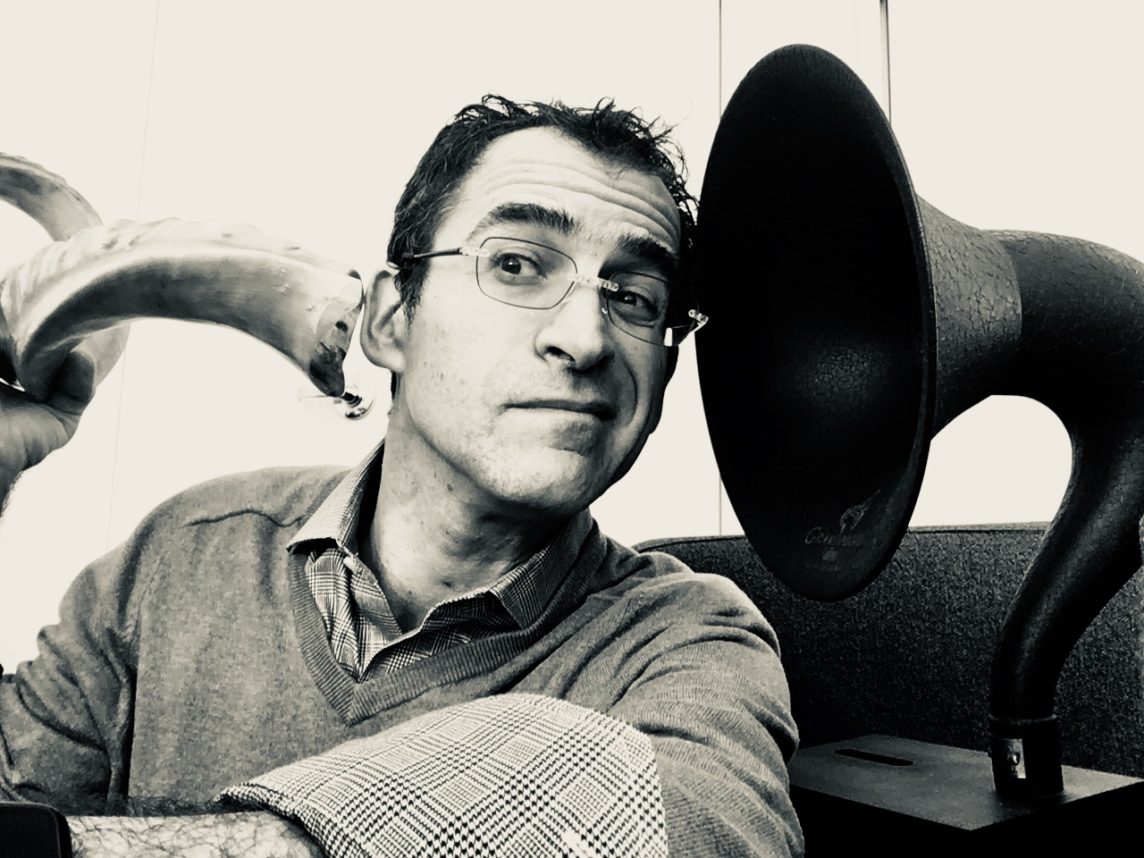
It’s one of the brilliant things about the four Shofar blasts:
Tekiah – one simple blast
Shevarim – three broken blasts
Teruah – nine staccato blasts
Tekiah g’dolah – one long blast
It’s kind of like having multiple alarms in the morning.  If one doesn’t stir us, another will.  Just as the Prophet, Isaiah, reminds us, “Awake! Awake!, the Holy Days shake us from our routine and open the door toward harnessing life.
May this season call us to attention.  May we focus on goodness.  May we be mindful of our words.  And may we embrace this
moment in time to listen, really listen, to those who need us.
Ron joins me in wishing you and all you love a year of peace.
With love and shalom!
Rabbi Zach Shapiro
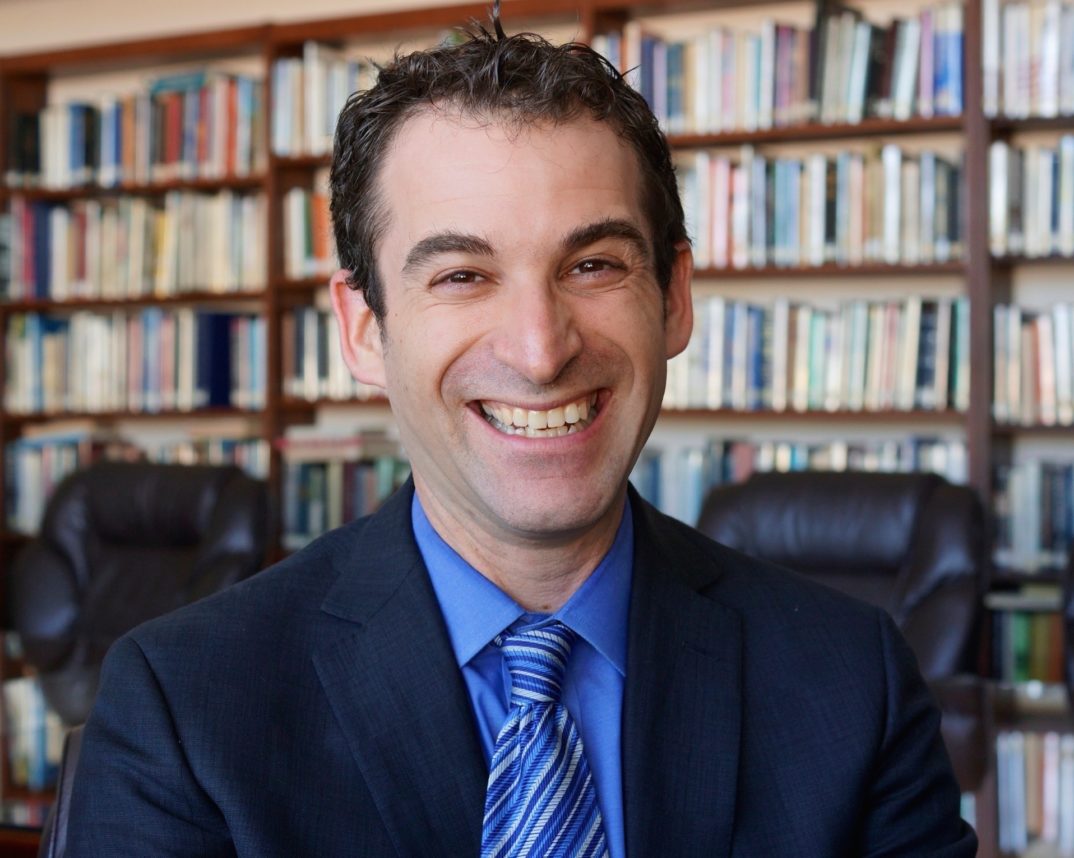
Rabbi Zach Shapiro
A change in perspective can shift the focus of our day – and even our lives.  We have an opportunity to harness “a moment in time,” allowing our souls to be both grounded and lifted.  This blog shows how the simplest of daily experiences can become the most meaningful of life’s blessings.  All it takes is a moment in time.
 
Rabbi Zach Shapiro is the Spiritual Leader of Temple Akiba of Culver City, a Reform Jewish Congregation in California.  He earned his B.A. in Spanish from Colby College in 1992, and his M.A.H.L. from HUC-JIR in 1996.  He was ordained from HUC-JIR – Cincinnati, in 1997.  He was appointed to the HUC-JIR Board of Governors in 2018.

A Moment in Time: Are We Listening? Read More »
A Prayer for the New Year – 5779

May we hold lovingly in our thoughts / those who suffer from tyranny, subjection, cruelty, and injustice / and work every day towards the alleviation of their suffering.

May we recognize our solidarity / with the stranger, outcast, downtrodden, abused, and deprived / that no human being be treated as “other” / that our common humanity weaves us together / in one fabric of mutuality / one garment of destiny.

May we pursue the Biblical prophet’s vision of peace / that we might live harmoniously with each other / and side by side / respecting differences / cherishing diversity / with no one exploiting the weak / each living without fear of the other / each revering Divinity in every human soul.

May we struggle against institutional injustice and governmental corruption / free those from oppression and contempt / act with purity of heart and mind / despising none / defrauding none / hating none / cherishing all / honoring every child of God and every creature of the earth.

May the Jewish people, the State of Israel, and all peoples / know peace in this New Year / and may we nurture kindness and love everywhere.

L’shanah tovah tikateivu

Rabbi John L. Rosove – Temple Israel of Hollywood, Los Angeles

A Prayer for the New Year – 5779 Read More »

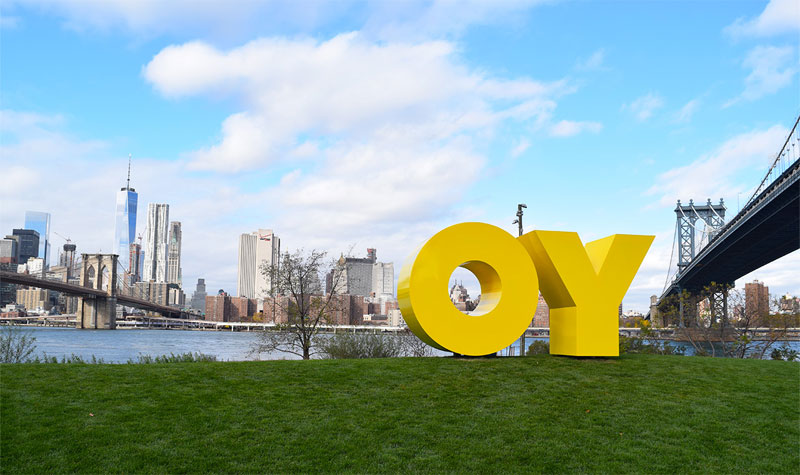
Turn my Oy to Joy - A Poem for Haftarah Nitzavim by Rick Lupert

Turn my Oy to Joy – A Poem for Haftarah Nitzavim by Rick Lupert

Oh, consolation
I’ve got seven weeks of you.
Oh, holy hug

Oh speak up those
watching over me
Oh Right Hand

You so strong
You smite the enemy
You clear the stones

You un-desolate
the Holy home
Oh, Jerusalem

We’re coming for you
Oh, Jerusalem
I can hear your watchmen

Look how our enemies hunger
Look how our red clothes turn white
Look how our children’s children

til the soil, bloom the desert
sing when they land
kiss the ground.

Oh, consolation, Oh, holy hug
You turn our oy to joy
You make me want

to read this text again.
I am standing.
I am ready.


God Wrestler: a poem for every Torah Portion by Rick LupertLos Angeles poet Rick Lupert created the Poetry Super Highway (an online publication and resource for poets), and hosted the Cobalt Cafe weekly poetry reading for almost 21 years. He’s authored 22 collections of poetry, including “God Wrestler: A Poem for Every Torah Portion“, “I’m a Jew, Are You” (Jewish themed poems) and “Feeding Holy Cats” (Poetry written while a staff member on the first Birthright Israel trip), and most recently “Beautiful Mistakes” (Rothco Press, May 2018) and edited the anthologies “A Poet’s Siddur: Shabbat Evening“,  “Ekphrastia Gone Wild”, “A Poet’s Haggadah”, and “The Night Goes on All Night.” He writes the daily web comic “Cat and Banana” with fellow Los Angeles poet Brendan Constantine. He’s widely published and reads his poetry wherever they let him.

Turn my Oy to Joy – A Poem for Haftarah Nitzavim by Rick Lupert Read More »

Hamas Terrorist Accidentally Blows Himself Up

A Hamas terrorist accidentally blew himself up on Wednesday in an attempt to “neutralize an Israeli munition,” the Times of Israel reported.

The terrorist, Abdel Rahim Abbas, was a commander in the Qassam Brigades, the military wing of Hamas. The explosion occurred during an inspection of Hamas’ bomb disposal unit’s headquarters, when Abbas accidentally caused the munition to catch fire and explode.

The ensuing fire was contained and extinguished, but Abbas died from the explosion.

U.N. Watch’s Hillel Neuer tweeted sardonically, “Another Gaza human rights activist accidentally blows himself up.”

Terrorists seem to have a knack for accidentally killing themselves. In February, one of Hamas’ founders Imad al-Alami, died from accidentally shooting himself in the head while he was cleaning his gun.

There have also been instances of terrorists accidentally lighting themselves on fire:

Hamas Terrorist Accidentally Blows Himself Up Read More »

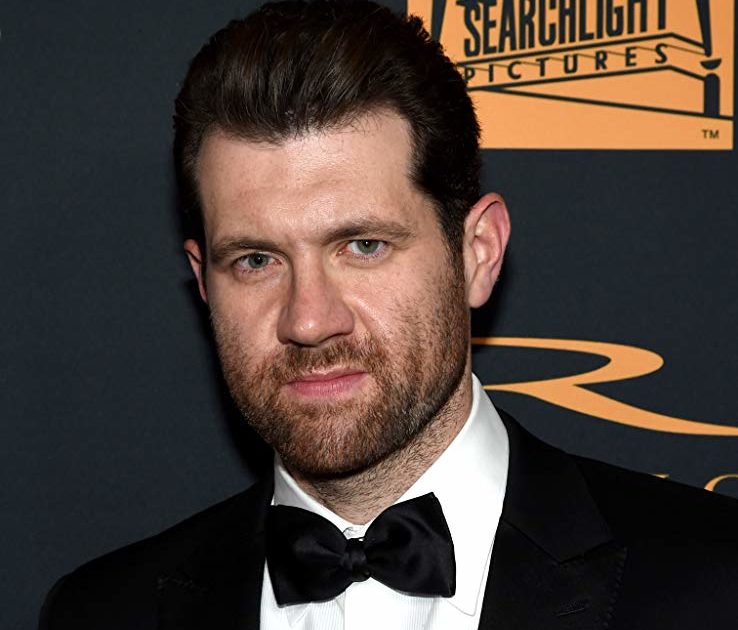
Billy Eichner to Return to the ‘Street’

“Billy on the Street” star Billy Eichner stopped making the man-on-the-street series last year to pursue other projects, but there’s more sidewalk fun and games to come. Eichner will relaunch the show in a web-only version that will be available on his social media platforms, his Youtube channel, and FunnyOrDie.com.

“After five seasons of the TV series, I knew I wanted to set the show aside in order to create some time in my schedule to pursue other projects,” Eichner said. “Now that those are taking shape, I’m truly thrilled we’ve found a way to bring ‘Billy on the Street’ back that makes so much sense for this particular show.”

“As we all know, this is a very divisive, anxiety-ridden time and I hope these new segments – featuring the most stunning roster of guests we’ve ever had – give people a small burst of joy in their timelines while allowing me to comment on culture and the world at large in the unique way this show allows me to,” he added.

The eight episodes boast a guest list that includes Emma Stone, Tiffany Haddish, Kate McKinnon and Lin-Manuel Miranda.

Eichner, also known for Hulu’s “Difficult People” and “American Horror Story: Cult,” co-stars in “American Horror Story: Apocalypse,” which premieres on FX Sept.12. He’ll be heard as the voice of Timon in the new version of “The Lion King” next July, and will appear in the fantasy “Noelle” opposite Anna Kendrick, Bill Hader and Shirley MacLaine. He’s involved with the Funny or Die campaign Glam Up the Midterms, designed to encourage young people to vote in the November elections. He also inked a deal with Netflix for his first comedy special.

Billy Eichner to Return to the ‘Street’ Read More »

Have Metal Detector, Will Travel

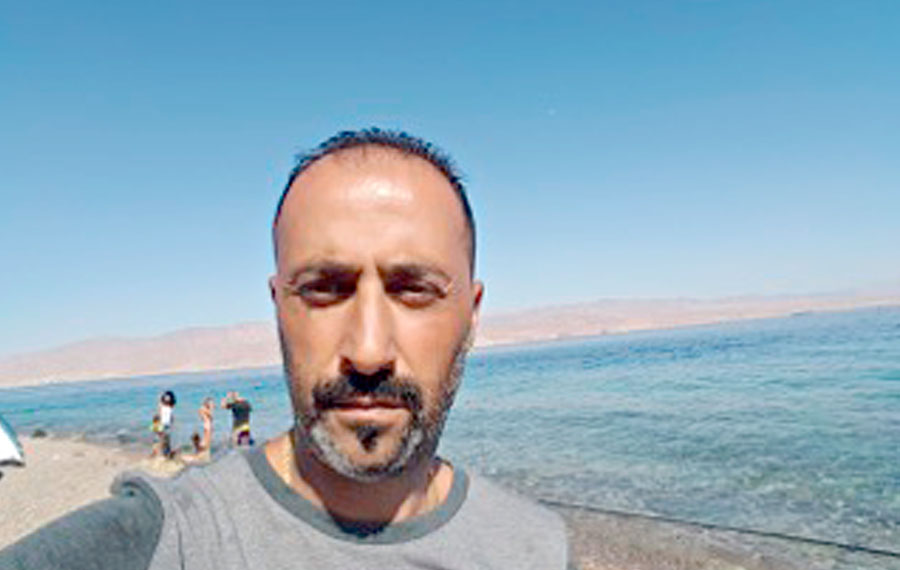
Lior Tanami decided to become a metal detectorist —  yes, that’s a real term — 12 years ago while vacationing in Miami. He was with a group of friends on the beach when a woman lost a diamond ring worth tens of thousands of dollars. The frantic woman’s husband offered a large reward for its safe return, so Tanami and his friends began combing the sand until one of them found it.

Tanami spent several more months traveling, but as soon as he returned to Israel he purchased a metal detector. The first night he used it, he found a silver ring on the beach. The most valuable treasure he ever found was a 2.5-karat diamond ring. “It for sure belonged to a Russian,” he said, laughing. “Who else would wear that to the beach?”

On another occasion, Tanami was with a fellow detectorist at a beach on the Jaffa-Tel Aviv border and had not even had time to turn on his flashlight before his friend found an 8-gram gold ring. But that night would prove more lucrative for Tanami as he later unearthed a $14,000 Cartier watch.

The watch is the only find he has ever given away. Tanami makes a point of not gifting, selling or pawning any of the treasures he finds. Instead, he puts them all in a safe to bequeath to his two sons, Aviv, who is 4 and on the autism spectrum, and Itai, 9.

“I’m not always going to be here and I want to make sure they’re taken care of,” Tanami said. But that doesn’t prevent him from play-acting joke proposals to his wife with rings he finds in the sand.

His wife, San, a Nepalese woman, thought his metal detecting obsession was weird at first. “But then she came around, understanding that this is my passion,” he said.

“The feeling of discovering something buried is indescribable. It’s like a small child in the toy shop. It’s the same feeling.” — Lior Tanami

Tanami said the feeling of discovering something buried is “indescribable. It’s like a small child in the toy shop. It’s the same feeling.”

Tanami waxes poetic about the ocean’s role in treasure hunting. “The sea takes everything away and spits it all back out again,” he said. In the winter, he added, 80 percent of the time the Mediterranean is as still as a swimming pool. But for the other 20 percent, the tempestuous weather means enormous walls of waves simply slice away a thick layer of sand, revealing long-lost valuables. The sea sweeps them away and deposits them on other shores.

The strangest such deposit he encountered was a live grenade with the pin still in place. Tanami proudly displayed a photo of the weapon and said it likely came from a navy vessel offshore.

These days, Tanami metal detects twice weekly for at least five hours at a time or until he’s so dizzy from looking at the sand and bending over that he can’t see straight. When he first started, he would sometimes make the Israeli equivalent of $200 in one evening from monetary finds alone. But that’s no longer the case because, sadly for Tanami, the metal detection community has mushroomed.

“That’s the problem with Israel. There are too many Jewish heads. As soon as anyone gets wind of a good thing, everyone’s doing it,” he said.

Still, Tanami said he doesn’t do it for the money. He has a day job involving foreign workers.

“I do it because it’s fun,” he said. “And I love it.”

Have Metal Detector, Will Travel Read More »

Sarsour: American Muslims Shouldn’t ‘Humanize’ Israelis

Women’s March leader Linda Sarsour said over the weekend that Muslims shouldn’t be humanizing Israelis, referring to Israel as the “oppressor.”

As reported by The Investigative Project for Terrorism and the Algemeiner, during the Islamic Society of North America (ISNA)’s conference, Sarsour declared that American Muslims “are complicit in the occupation of Palestinians, in the murder of Palestinian protesters” if they’re not actively promoting the Palestinian cause.

“If you’re on the side of the oppressor, or you’re defending the oppressor, or you’re actually trying to humanize the oppressor, then that’s a problem,” Sarsour said.

Sarsour added that Muslims who didn’t speak out were not patriotic:

“When I stand up here and I’m fighting for your rights and the rights of all people in these United States of America, I am a true patriot. And those of you who have fear in your hearts and don’t have the courage to stand up for your deen (religion), for your communities, for your religious institutions, for your children, that is not just a question of your patriotism. It is a question of your iman (faith).”

Simon Wiesenthal Center Associate Dean Rabbi Abraham Cooper told the Journal in a phone interview that Sarsour’s comments about humanizing the oppressor are what “you would associate… with Hamas.”

“You wouldn’t automatically associate such language on the part of someone who is touted as an elite spokesperson for women’s rights, equal rights in the United States,” Cooper said.

Cooper added that Sarsour’s comments likely stem from “desperation” due to recent global developments of Gulf Arabs having “unprecedented normal contact” with Israelis.

“This has nothing to do with making America a more inclusive and welcoming society,” Cooper said. “This is about recasting the values of our nation to fit her mindset and we can only hope that there will be more and more voices within the progressive leadership that denounce her.”

Sarsour has previously called Zionism “creepy” and that someone cannot be both a Zionist and a feminist, telling The Nation, “You either stand up for the rights of all women, including Palestinians, or none.” She also doesn’t believe in a two-state solution, as Sarsour is an advocate for a single Palestinian state.

Sarsour also made headlines recently for being arrested for disrupting Supreme Court nominee’s Brett Kavanaugh’s Senate confirmation hearing on Tuesday.

Sarsour: American Muslims Shouldn’t ‘Humanize’ Israelis Read More »

Rabbis Share Sneak Previews of Holy Days Messages

Ahead of the High Holy Days, the Journal reached out to local area rabbis to ask them what themes they would be embracing in their Rosh Hashanah sermons for 5779 and what they’d like their communities to focus on in the coming year.

Click on the names to read their excerpts.

Rabbi Stan Levy and Rabbi Laura Owens
B’nai Horin

Rabbi Denise Eger
Congregation Kol Ami

Rabbi Mordecai Finley
Ohr HaTorah

Rabbi Moshe D. Bryski
Chabad of the Conejo

Rabbi Lori Shapiro
The Open Temple

Rabbi Adam Kligfeld
Temple Beth Am

Rabbi Gabriel Botnick
Mishkon Tephilo

Rabbi Jason Weiner
Cedars-Sinai Medical Center

Rabbi Stewart L. Vogel
Temple Aliyah, Woodland Hills

Rabbi Nicole Guzik
Sinai Temple

Rabbi Mark Borovitz
Beit T’Shuvah

Rabbi Richard Camras
Shomrei Torah, West Hills

Rabbi David Woznica
Rabbi Isaiah Zeldin Rabbinic Chair
Stephen Wise Temple

Rabbi Dennis Linson
Temple Judea of Laguna Hills

The Rabbis of Adat Ari El

Rabbi Michelle Missaghieh
Temple Israel of Hollywood

Rabbi Zach Shapiro
Temple Akiba of Culver City

Rabbis Share Sneak Previews of Holy Days Messages Read More »

Sermon Sneak Peek: Rabbi Stewart L. Vogel 

ED: The following is a excerpt from the story, “Rabbis Share Sneak Previews of Holy Days Messages” which ran in our Rosh Hashanah Sept. 7 issue. 


Rabbi Stewart L. Vogel
Temple Aliyah, Woodland Hills

We live in an era in which people are being accused of crimes, indiscretions, harassment and even inappropriate social media posts that actually occurred years ago. The #MeToo movement is a reminder that there is no statute of limitations on accountability. But in the social angst of accountability that we are now feeling, the question of forgiveness has also been raised. Namely, what does it take for someone to be forgiven? With the convergence of social movements in which we are holding individuals accountable and a divisiveness in which political sides hold people guilty just by association, is there room for forgiveness? We live in a world that seems bent on justice, but what about mercy? According to a midrash, God created the world with the attributes of justice and mercy, judgment and forgiveness.The entire essence of these High Holy Days is predicated on the opportunity for people to seek forgiveness through a process of repentance. What does that penitential process look like that leads to forgiveness? Without the opportunity for forgiveness, there is no reason for us to reflect and change during these High Holy Days.

Back to Sermons 

Sermon Sneak Peek: Rabbi Stewart L. Vogel  Read More »

Sermon Sneak Peek: Rabbi Zach Shapiro

ED: The following is a excerpt from the story, “Rabbis Share Sneak Previews of Holy Days Messages” which ran in our Rosh Hashanah Sept. 7 issue. 


Rabbi Zach Shapiro
Temple Akiba of Culver City

Our Talmud shares a famous midrash (Shabbat 31a) about an individual who wants to convert to Judaism so long as he can learn the entire Torah while standing on one foot. After consulting Rabbi Shamai, who impatiently showed him the door, he went to Rabbi Hillel, who met the challenge and taught, “What is hateful to you, do not do to your neighbor. That is the entire Torah. All the rest is commentary.  Now go and learn.”

I am using this midrash as a springboard for our High Holy Days this season to explore two main themes. First, what are the life lessons we gain when we are broken (on one foot?). What guidance does Torah offer to those with spiritual, emotional or physical injuries? What revelations about ourselves unfold when we are forced to experience the world from a wheelchair, or with medications, or alone for the first time? Second, we will explore what it means to be a neighbor, be it with the neighbor on our street, or something on a grander scale (Democrat-Republican, Israeli-Palestinian, U.S.-Mexico). In the process, we will explore that the word “Ivri/Hebrew” means “one who crosses that boundary.”

Back to Sermons

Sermon Sneak Peek: Rabbi Zach Shapiro Read More »