fbpx

August 21, 2018

Faith Leaders Meet to Talk About Race
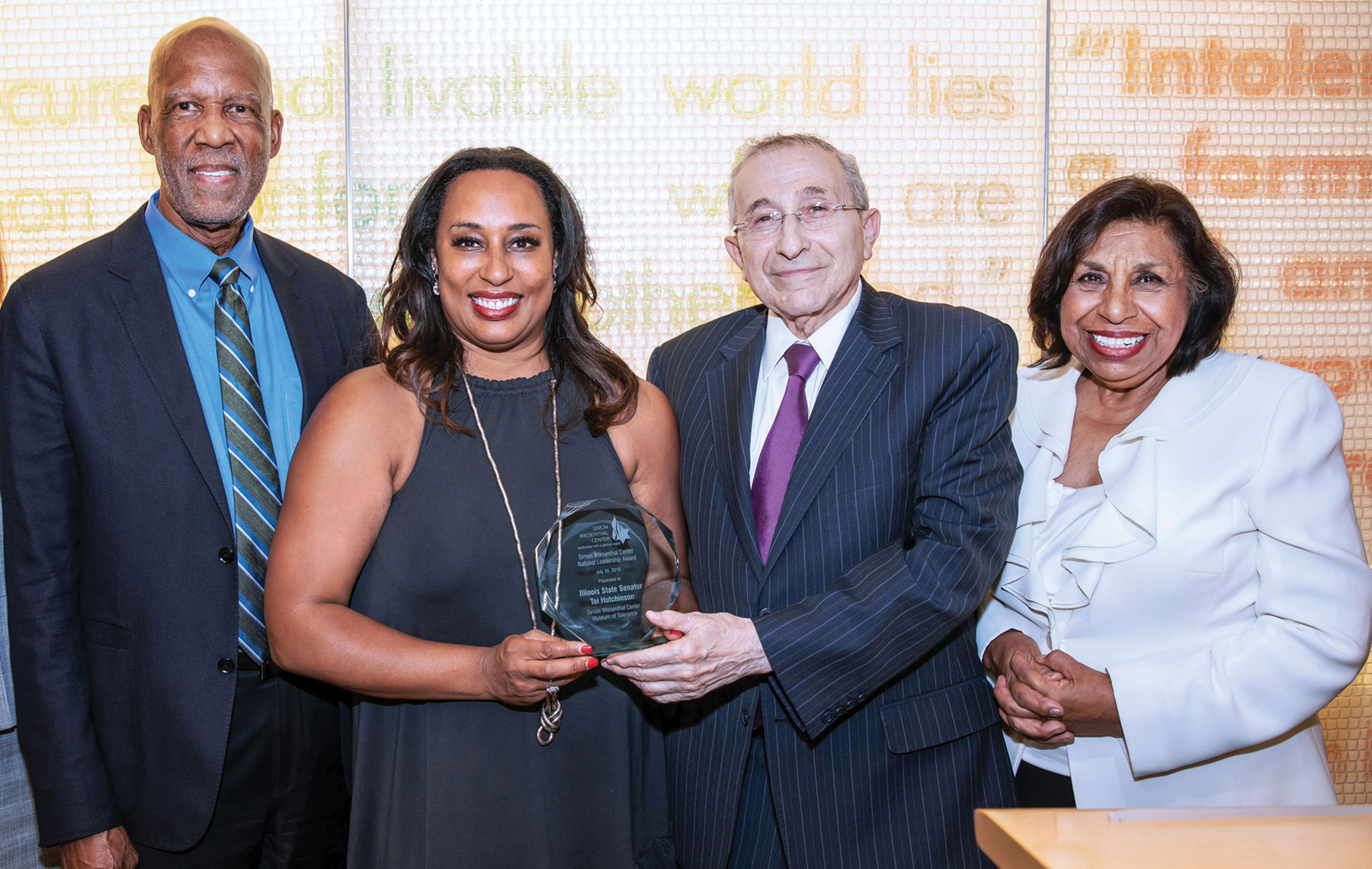
(L-R): Dr. Roberts, Toi Hutchinson, Rabbi Hier, and Sylvia Mendez |
Photo courtesy of Museum of Tolerance

“It’s safe to say that when you get 10 clergymen in a room, Jewish or Christian, you get 15 ideas for 20 coalitions. And that’s not necessarily a bad thing,” Rabbi Abraham Cooper, associate dean of the Simon Wiesenthal Center, told the Journal following a recent faith leaders’ event at the Center’s Museum of Tolerance (MOT) in West Los Angeles.

Held as part of the National Conference of Black Legislators, dozens of faith leaders, together with more than 75 elected officials, took part in the July 30 program hosted by state Sen. Holly Mitchell (D-Los Angeles) and Assemblyman Richard Bloom (D-Santa Monica).

The event also honored Illinois Democratic state Sen. Toi Hutchinson, who received the Simon Wiesenthal Center’s National Leadership Award. Civil rights icons Terrence Roberts and Sylvia Mendez presented the award. Roberts was one of the Little Rock Nine, a group of black students who enrolled at the formerly all-white Central High School in Little Rock, Ark., in September 1957. Mendez helped end “separate but equal” segregation in California schools in 1954.

Following the presentation, attendees convened in working groups to hash out ideas for cross-community partnerships. 

“Anytime you have a gathering of African-Americans, Jews and Latinos with a common history of standing together, shoulder to shoulder, to confront the new challenges of the world we live in today, it reminds us how critical it is to continue working together,” said Rabbi Marvin Hier, founder and dean of the Wiesenthal Center and the MOT. 

Rev. Mitchell Johnson of Chicago, Rev. Shane Harris of San Diego and Rabbi Cooper have been spearheading ongoing talks to do just that. Each mentioned a sense of history at the root of his desire to bridge gaps where longstanding ties have existed between Jews and Christian African-Americans. 

Johnson added, “Every picture of a successful civil rights effort included different faith leaders — rabbis and preachers — linking arm-in-arm. That’s how the pendulum of justice swings forward.”

“Martin Luther King Jr. was speaking about Soviet Jewry before Jewish Federations were,” Cooper said. “And remember, Rabbi [Abraham Joshua] Heschel and countless others were directly involved in [the 1965 voting rights march in] Selma, Alabama. Sometimes it feels like those deep ties have been forgotten by both communities.”

The first concrete plan to emerge from their talks is a nonpartisan, multifaith press conference set for October in Chicago to condemn the Republican Party for allowing avowed-Nazi and Holocaust denier Arthur Jones to run for election to represent a Chicago-area congressional district. Jones will appear on the November ballot.

“Every picture of a successful civil rights effort included different faith leaders — rabbis and preachers — linking arm-in-arm. That’s how the pendulum of justice swings forward.” — Rev. Mitchell Johnson 

“It’s outrageous that the Republican Party, in the land of Lincoln, the party that authored the Emancipation Proclamation, would be the party of an avowed racist running for Congress,” Johnson said. “It can’t be tolerated.”

The trio also said they hope to further coalitions between their communities through broad, open forums on race and religion. The list of topics they hope to broach includes how to respond to hate speech, economic disparities between the communities and how they shape perceptions of both, mass incarceration, partisanship and police brutality. 

“Our rabbis, our reverends and our preachers haven’t had the best communication,” Harris said. “I think that, today, our religious centers are some of the most influential places in the nation, whether it’s a church, a mosque or a synagogue. One of the best ways to unify people is to bring religious leadership together. We all have way more in common than we realize.” 

Rather than create a new framework, they plan to work closely with Simon Wiesenthal Centers across the country, including the MOT, to bolster its existing “Space to Talk About Race” program.

Started in the aftermath of the unrest in Ferguson, Mo., in 2014, the MOT, with the help of a grant, launched the program to encourage discussion across racial and political lines. 

“The initiative is a dialogue-based, solutions-oriented program to bring people together in modeling the importance of true dialogue in a country that’s strained and short on spaces for that,” MOT Director Liebe Geft said. 

The MOT has been hosting “Space to Talk about Race” events in Southern California and in the Midwest for several years. The wide-ranging discussions vary in length from a few hours to daylong programs and often include arts activities, particularly for teen groups. Pre-arranged programs held at the museum include tours, while some public events are held offsite. 

A key part of the program is the training of faith leaders to facilitate dialogue at “Space to Talk About Race” events. 

Cooper thinks faith leaders are primed to set the tone in their communities by taking on this type of responsibility. 

“As clergy, I think we have a great responsibility to try to overcome ideological and theological differences that exist in our communities,” he said. “In order to be an example for others, religion should be a source of blessing. It should not be a curse, a source of division, the way it’s used in so many parts of the world today.”

Johnson said he plans to work with Harris, Cooper, Hier, other prominent rabbis and Wiesenthal Centers across Midwestern and Southern states to “cast a wider net” in hopes of enticing more Jews and Southern Baptist communities with African-American and Hispanic members to participate in such programming. 

“If we do, conversations will end up being real and raw,” Cooper said. “As a result of those real conversations, I believe some absolutely measurable good fruit will come out of it.”

Cooper said he hopes these types of talks take place with liberals and conservatives under one roof for “good cross-communication.” 

“The Museum of Tolerance stands ready to provide services at all times,” Geft said. “This is a very important program to us, particularly at such a pressing time.” 

“We shouldn’t have to wait until crisis strikes to form these relationships,” Cooper said. “Besides, we all know we’re in crisis mode right now.”

Faith Leaders Meet to Talk About Race Read More »

Poll: Plurality of Americans View Netanyahu Favorably

A new Gallup poll shows that a plurality of Americans view Israeli Prime Minister Benjamin Netanyahu favorably, although there is a stark partisan divide between Democrats and Republicans.

The Aug. 21 poll found that 37 percent of Americans view Netanyahu favorably, while 29 percent did not; 13 percent said they had no opinion of him and an additional 22 percent said they had never heard of Netanyahu. The 37 percent figure puts Netanyahu behind German Chancellor Angela Merkel (39 percent), British Prime Minister Theresa May (46 percent) and Canadian Prime Minister Justin Trudeau (48 percent) in terms of popularity among Americans. Behind Netanyahu in the survey are Russian President Vladimir Putin (13 percent) and North Korean leader Kim Jong Un (six percent).

Gallup’s partisan breakdown revealed that Netanyahu is popular among Republicans, as 64 percent of them view the Israeli prime minister favorably, while only 17 percent of Democrats view Netanyahu favorably. Thirty percent of Independents view Netanyahu favorably.

The numbers on Netanyahu remain approximately the same from a 2015 Gallup poll stating that 38 percent of Americans view Netanyahu favorably while 29 percent did not.

“With limited trends with which to compare the current ratings, it’s not clear whether today’s party differences in leaders’ ratings are normal or the result of Trump’s unusually blunt public statements about many leaders provoking partisan reactions,” Gallup wrote in its analysis of the poll.

Read the full results of the poll here.

Poll: Plurality of Americans View Netanyahu Favorably Read More »

95-Year-Old Nazi Collaborator Deported to Germany

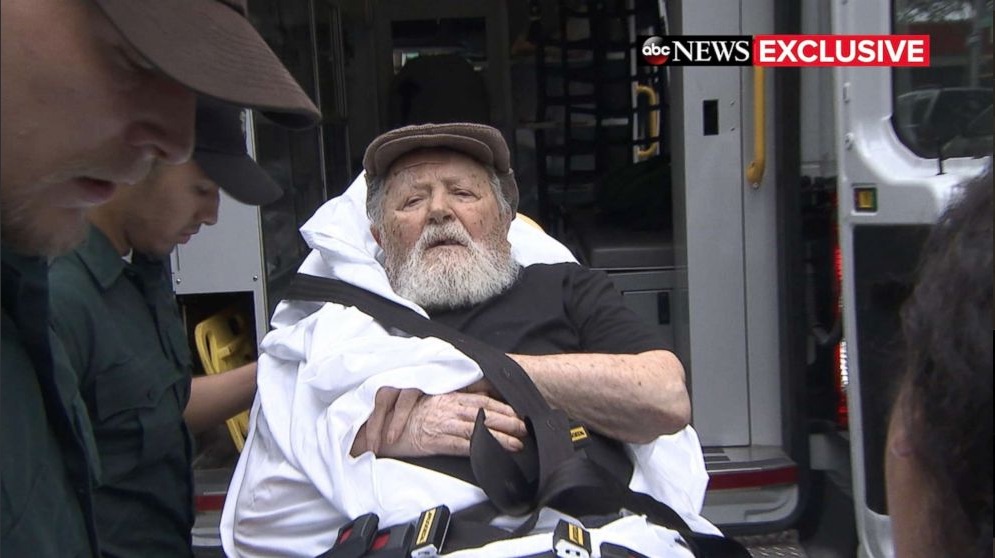
The last known living Nazi collaborator in the United States was deported on August 21 to Germany.

According to ABC News, Jakiw Palij, 95, was an armed guard at the Trawniki death camp in Poland, where he ensured that none of the 6,000 Jews that were murdered in a camp-wide slaughter in November 1943 were able to escape.

Palij gained entry into the United States in 1949 by lying to immigration officials that he didn’t collaborate at all with the Nazis and was instead working in his hometown in Germany. He became a citizen in 1957.

However, in 2004, a federal judge ordered Palij to be deported after federal investigators unearthed Palij’s Nazi background. There has been bipartisan support for years for Palij’s deportation, but the fact that he hasn’t been a German citizen since immigrating to the United States caused the deportation to be stalled until now.

ABC is reporting that President Trump made Palij’s deportation a top priority for German Ambassador Richard Grenell.

“It’s really a credit to President Trump, who was very clear about this case, made clear he wanted this individual out of the United States,” Grenell told Fox and Friends.

Grenell also praised the recently installed German leaders for their desire to get Palij back. It is not yet known what Germany will do with him.

95-Year-Old Nazi Collaborator Deported to Germany Read More »

The Standards of Faith: Community Leaders Weigh in On Making Los Angeles Fire Safe- An Interview with Rabbi Jonathan Klein

A view of the Da Vinci Fire in Los Angeles. Photo courtesy of L.A. Weekly.

As leaders in our community, we are regularly confronted with critical issues, some that impact the entire world, and others that are right next door, such as the crisis of homelessness, abuse, poverty, and unfortunately, so much more. We look at what we can stand for, what we can actually engage with to make a difference, and even those issues that are simply and overwhelmingly out of our control. As faith leaders, our continues effort requires the gift of faith- nothing else would suffice against the magnitude of suffering.

With those issues that we can tackle and make a difference on- some are more illustrious than others, and some are as simple as the sticks and stones that we build our world with. Recently, Los Angeles City Council has been examining a push to change the standards of building and safety for new multi-story developments; places that mostly lower income residents will call home. I have been working to push the city in the right direction, alongside a diverse coalition of community leaders across Los Angeles, under the banner of the Build With Strength campaign. I recently testified before City Council, in cooperation with many other faith, community and labor leaders, urging our Councilmembers to move forward. One of the key leaders in this matter is Rabbi Jonathan Klein, the Executive Director of Clergy and Laity United for a Just Economy. I asked Rabbi Klein some key questions about his involvement, and how he relates to the issue as a Rabbi and as a man of faith.  

Rabbi Klein emphasized that “Jewish law makes it clear that we must take safety and protection of life seriously. One must put a parapet around a roof, to prevent accidental deaths by someone falling off. One must teach their child how to swim, to prevent accidental drownings.  One is obligated to redeem captives, who otherwise might be killed by their captors. And famously when there is enough water to save a life rather than let two die out of some sense of equity, Rabbi Akiba teaches that one is obligated to save the life. One must live and encourage the sanctity of life.

Thus, as Jews we must do what we can to protect life. There is no doubt that this extends to the environments in which we place ourselves. We must do what we can to protect ourselves from dangers, and utilization of combustible materials in construction is too dangerous to ignore when there are alternative materials.

Personally, my dog would likely be alive if my parents’ home wasn’t so combustible. I am just fortunate that my parents, who were asleep when the fire broke out, did not die as a result.”

Considering a recent study conducted by Urvashi Kaul, Consultant and Adjunct Assistant Professor at Columbia University, the facts are on our side. The study asserts that residential structures built with combustible materials pose economic and safety threats to local communities and predicts that for Los Angeles alone, an estimated $22.6 billion could be lost over the next 15 years due to such fires. That figures includes property damage and use of city resources, which has in the past included shutting down major freeways, engaging hundreds of fire fighters and first responders for a single fire, and relocating hundreds of residents with nowhere else to go.

But having the facts on our side is rarely enough, and clearly not enough in this critical, life or death matter. Making sure our leaders take the charge and move forward aggressively with these necessary changes is critical. Considering the recent and devestating crisis of fires in California, there is no time to hesitate, and everyone is at risk, especially the most vulnerable in our society. So far in Los Angeles, Councilmember Bob Blumenfield has taken the sole lead in moving stricter standards for building development forward, and we should look to other Councilmembers to join him in this undeniably necessary campaign.

Rabbi Klein’s very personal experience with a home fire is one example of an unfortunate many, and as he asserts, this issue goes beyond the personal and touches at the absolute core of our needs as residents in a city that we expect to offer us basic protections. According to Rabbi Klein, “Our culture says “Caveat Emptor,” let the buyer beware, but the reality is that low income families, especially in this housing crisis, are simply unable to choose homes based upon anything other than price, so safety considerations end up being deprioritized. As a society obligated to keep its residents safe, this extends to low-income housing.  We need to ensure that future construction of housing units be modernized to take safety and health concerns seriously, as low and no income people do not get to choose.

What can do? We can address the safety concerns by passing ordinances that guarantee higher standards in construction. Just as the state passed the Field Act to protect children in schools, the city can and should pass an ordinance guaranteeing nonflammable, noncombustible materials used in construction, as a matter of Pikuach Nefesh, saving lives as the number one obligation of government to its constituents.”

The Standards of Faith: Community Leaders Weigh in On Making Los Angeles Fire Safe- An Interview with Rabbi Jonathan Klein Read More »

Cohen Pleads Guilty to Campaign Finance Violations, Manafort Convicted of Fraud

Two former acolytes of President Trump will likely be serving time in prison, as Michael Cohen, Trump’s personal attorney, plead guilty to violating campaign finance laws, and Paul Manafort, Trump’s former campaign manager, was convicted of tax fraud.

Cohen reached a plea deal with prosecutors on August 21 in which he plead guilty to the campaign finance violations as well as tax and bank fraud. Cohen admitted in his plea agreement that he arranged two unlawful payments of hush money to two women on behalf of a presidential candidate.

While the two women and the candidate are not specified in the plea deal, it is widely believed that the candidate is Trump and the two women are porn star Stormy Daniels and former Playboy model Karen McDougal. Both Daniels and McDougal have alleged that Trump engaged in affairs with them, which Trump has denied.

Also on August 21, Manafort was convicted for multiple counts of tax evasion, bank fraud and concealing foreign accounts in relation to his political consulting work for the Kremlin-backed Ukraine Party of Regions. There were an additional 10 counts that the jury couldn’t reach on verdict on.

Manafort could face up to 80 years in prison – and he’s still undergoing a trial in Washington, D.C. over charges of failing to register as a foreign agent and money laundering.

Following the convictions, Trump told reporters about Manafort, “It’s a very sad thing that happened. This has nothing to do with Russian collusion. This is a witch hunt and a disgrace.” He has yet to comment on Cohen’s guilty plea.

Cohen Pleads Guilty to Campaign Finance Violations, Manafort Convicted of Fraud Read More »

Illegal Immigrant Charged with Murdering Mollie Tibbetts

Mollie Tibbetts, the 20-year-old Iowa student who has been missing for a month, was found dead on August 21. Twenty-four-year-old Cristhian Bahena-Rivera, who has been residing in the United States illegally, has been charged of murdering her.

CNN reports that authorities were able to track down Bahena-Rivera thanks to security camera footage that showed a vehicle belonging to him alongside Tibbetts as she was jogging on July 18, the last night she was seen alive. Bahena-Rivera told authorities that he was following Tibbetts and she felt threatened by him to the point where she warned that she would call the police if she didn’t leave her alone. Bahena-Rivera then claims he became angry and “blacked out”; when he woke up he found her body in his car, prompting Bahena-Rivera to dispose the body in a cornfield.

Rick Rahn, the special agent leading the investigation into Tibbetts’ disappearance at the Iowa Division of Criminal Investigation, said that Bahena-Rivera “followed her and seemed to be drawn to her on that particular day and for whatever reason he chose to abduct her.”

Bahena-Rivera is currently being held at a local jail and faces an immigration detainer from Immigration and Customs Enforcement (ICE); he is originally from Mexico and has resided in the U.S. for at least four years.

Tibbetts, originally from San Francisco, was studying psychology at the University of Iowa. She was dog-sitting at her boyfriend’s home in Brooklyn, Iowa.

Illegal Immigrant Charged with Murdering Mollie Tibbetts Read More »

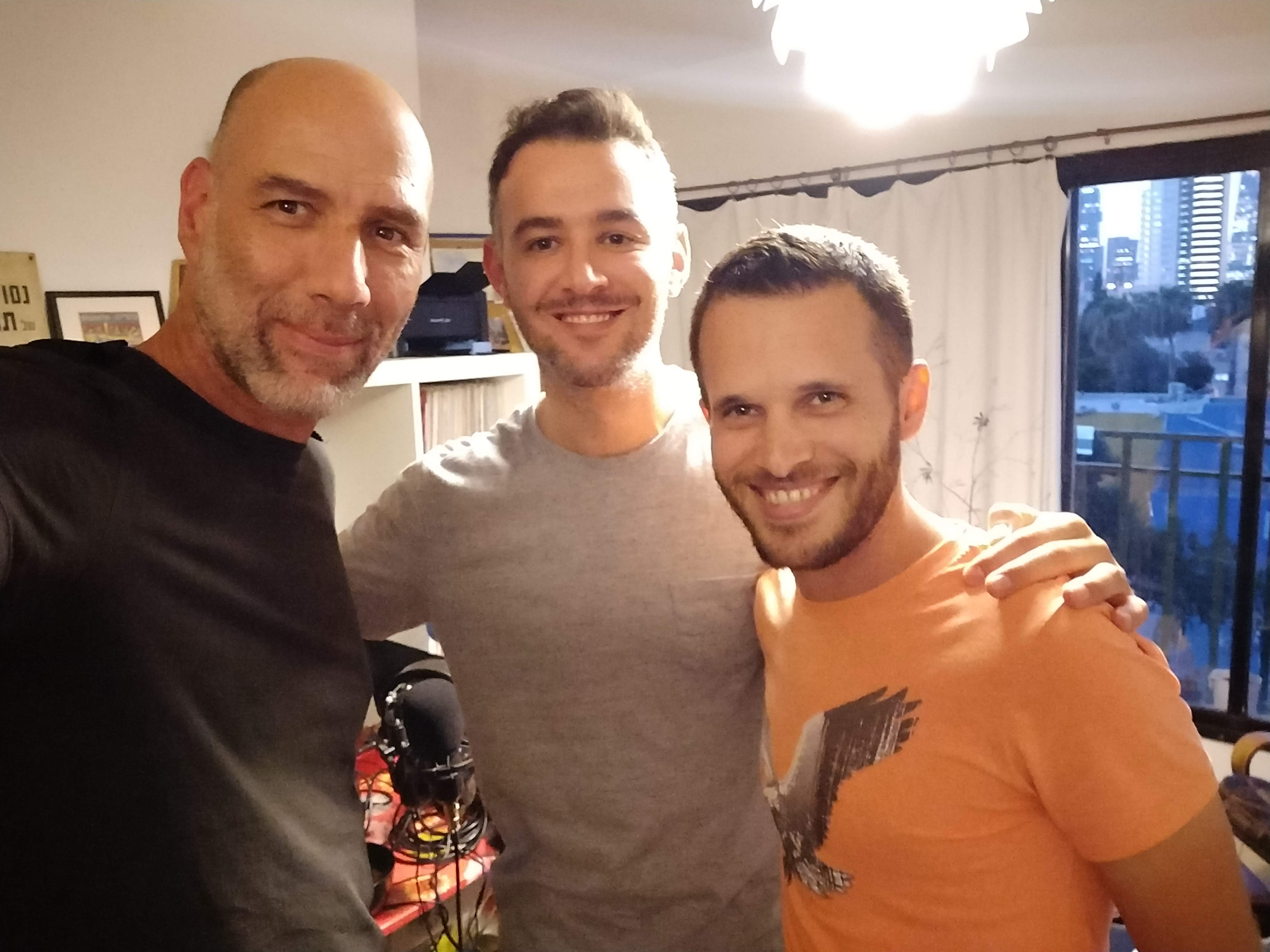
Two Nice Jewish Boys Episode 103 – A Thousand Words in Focus

In today’s world every one of us is a pseudo-photographer. The ubiquity of advanced photography devices has turned us into compulsive picture snappers.

But despite this inflation of the photographed image, in fact, perhaps now more so than ever, it remains true that there is much more than just pressing a button in the capturing of a moment.

Ziv Koren, one of Israel’s most prominent and world-renowned photographers, has been in the business for almost 30 years. Throughout his life, Koren has documented countless historical events around the globe, from HIV epidemic outbreaks and the Tsunami disaster in southeast asia, to the Earthquake in Haiti and many more. His photos won numerous awards and were exhibited in luxurious museums such as the Mett in Tokyo, the Art Museum in Houston and the MAXXI in Rome. Koren has published 15 books of his work including Writing with Light, Milestones, Shalom Inshalla and more.

We’re super excited to have Ziv Koren on the show to take an audio-snapshot of his incredible career and talk about what it means to be a photographer.

Ziv’s website, his books on Amazon and his Instagram

RSS Subscribe

Direct Download

Two Nice Jewish Boys Episode 103 – A Thousand Words in Focus Read More »

Israel Defense Minister Calls on Gazans to Overthrow Hamas

Israeli Defense Minister Avigdor Lieberman is using the recent calm between Israel and Hamas to urge Gazans to overthrow the terror group, arguing that the “peace and quiet” is preferable to Hamas’ constant state of warfare.

According to the Jerusalem Post, Lieberman announced that the Kerem Shalom crossing and a fishing area near the Gaza coast were going to be re-opened, saying that it shows Gazans that “peace and quiet are worth it.”

“The residents of Gaza have much to gain when the citizens of Israel enjoy peace and security, and much to lose when quiet is disturbed,” Lieberman wrote.

Lieberman added that he hopes Gazans realize “that Israel is not the problem, but rather the solution.”

“The problem is the Hamas leadership, which uses civilians as live ammunition and as human shields,” Lieberman wrote.  “We hope for you, the residents of Gaza, that all of the budgets of Hamas and the international community will be channeled towards your welfare and to the development of the Gaza Strip, instead of to terrorism.”

After a recent escalation between Israel and Hamas, there has been relative calm on the border of Israel and Gaza Strip, although a long-term ceasefire agreement has yet to be reached.

The Times of Israel reports that the re-opening of the Kerem Shalom crossing and the fishing was part of a temporary ceasefire between Israel and Hamas negotiated by Egypt and the United Nations.

However, Israel maintains that no long-term ceasefire agreement can be reached until Hamas agrees to releasing the four Israeli soldiers they have held captive since 2014, two of whom are dead.

Israel Defense Minister Calls on Gazans to Overthrow Hamas Read More »

“The Eternal Dissident” – A must-read collection of sermons and writings

I first met Rabbi Leonard I. Beerman when I was eleven years old when my mother, brother and I joined Leo Baeck Temple in Los Angeles in 1961. My father had died two years earlier and we needed a synagogue and a rabbi.

Meeting Leonard had an impact on me that I could not have anticipated. As a young boy I looked at him from afar with a sense of awe. His resonant voice and gentle manner comforted me, and his message stirred and lifted me to think about life and the world in a way that no one else did or has since.

There was no Rabbi on the American scene like him. No one had as much moral courage and insight. No one was as principled. The only other Rabbi who compared to Leonard as a moral leader was Rabbi Abraham Joshua Heschel.

Leonard Beerman became a father-figure for me but I didn’t realize it until I spoke with my wife after I had finished reading this volume “The Eternal Dissident – Rabbi Leonard I. Beerman and the Radical Imperative to Think and Act” edited by Professor David N. Myers, Professor of Jewish History at UCLA (2018). The book includes forty sermons and essays accompanied by commentaries by forty of Leonard’s friends, colleagues, congregants, and students from across the religious and political spectrum – I am one of them.

Barbara said: “You know, John, Leonard was a father figure to you! You’ve always spoken of him that way since I’ve known you.”

She was, of course, right. I suspect I’m not alone.

In the last three years of Leonard’s life (he died in 2014), he and I had become close. We regularly met for lunch at his favorite Beverly Hills Tennis Club where he played tennis into his 90s. He had been reading my blog and liked the way I thought and wrote, so one day he wrote to me and I jumped at the chance to connect with him. Our friendship began and grew. He always said as we parted, “John – I’m an old man but you make me feel young again!”

Leonard was like that. People felt seen by him, and they loved and revered him as a great moral rabbinic leader. He was as eloquent a writer and speaker as there was in the American rabbinate. Strangely, Leonard didn’t think he was a very good writer. He was so wrong. He was among the most thoughtful and moving writers and thinkers that there was on the American Jewish scene.

Leonard drew liberally from the visions of the Biblical prophets and classic Jewish text while weaving poetry and other literary sources together as he reflected about what it means to be human, moral and accountable. He was tortured by the suffering of the innocent. He loved Israel but didn’t spared his moral critique of Israeli oppression of the Palestinians under occupation.

Leonard served as a US Marine during World War II and he fought while studying at the Hebrew University in Jerusalem before and during Israel’s Independence War.

I asked him about the impact of his military service in those two wars. He explained that he served twice to test himself, and he came away a confirmed pacifist.

Reading “The Eternal Dissident,” especially at this time of year in the Hebrew month of Elul before the High Holidays, prepared me spiritually and morally to lead my congregation for the last time before I retire next year. Leonard’s soft yet powerful and resonant moral voice rings in my ears. Even in his death he has given me a precious gift.

The last time we shared lunch together was only a month after the end of the fighting in the 2014 Israeli-Hamas War in Gaza. He and I both were preparing to speak about the war (we did so very differently). His sermon was highly critical of Israel even as he acknowledged the brutality of Hamas. For me, his pacifism was a conundrum of conflict. But he did not budge from his moral convictions.

I wrote to David Myers (the editor of the volume and Leonard’s dear friend) and Leonard’s widow, Joan, when I finished reading the book this week to thank them for producing this extraordinary volume.

A better model of a man, a more courageous religious leader, and a kinder, more sensitive and provocative rabbi there has not been in the American rabbinate in my memory.

This book ought to be read by every religious leader in every faith tradition, and by atheists and skeptics too. Few works are as important as this one, and I recommend it without hesitation. You can find it on beermanfoundation.org.

I mourn still the loss of Rabbi Leonard Beerman. His life, however, is impressed on my heart and in my mind and soul and always will be. In this I know I am not alone.


“The Eternal Dissident” – A must-read collection of sermons and writings Read More »