fbpx

June 27, 2018

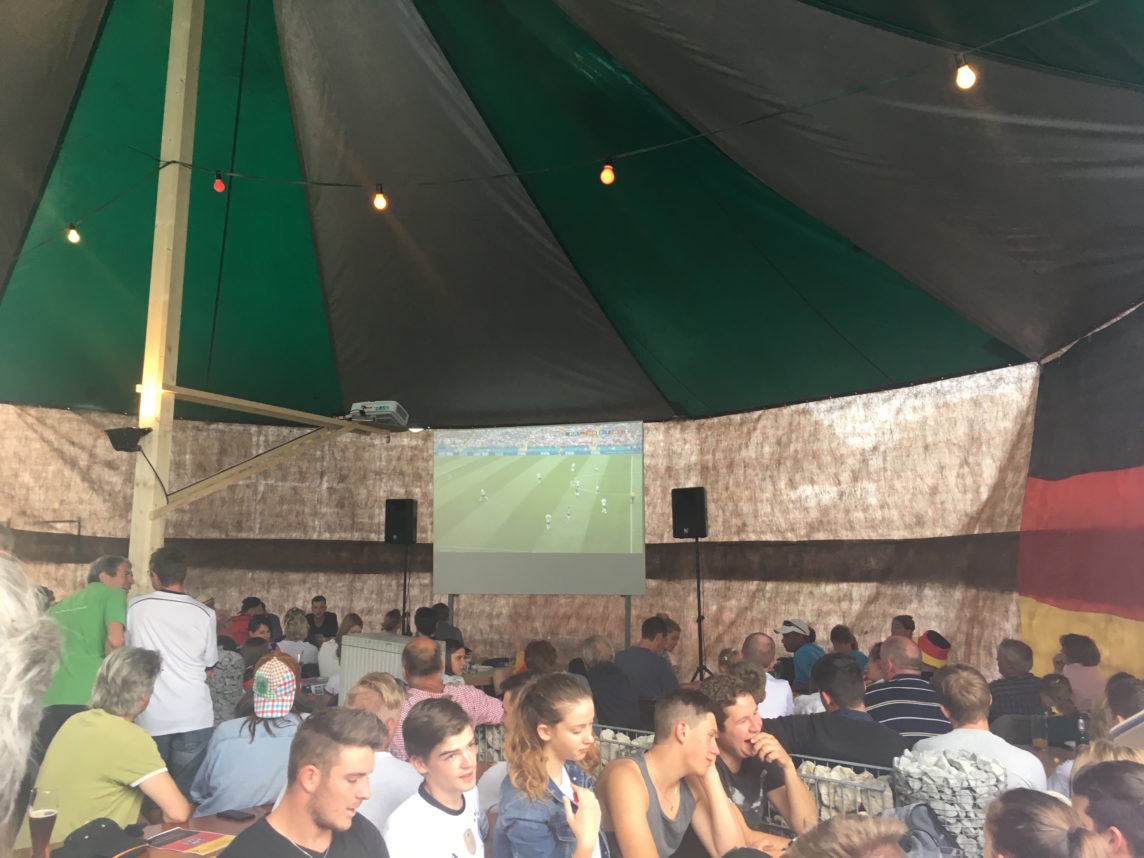
Did Germany lose its balls because of a few turkeys?

It was a humiliating defeat. The defending World Cup champs struggled throughout all of its mere three preliminary games, starting with its loss against Mexico, 1:0. They played erratically, haphazardly trying their luck on goals, which happened to pay off in the game against Sweden, at the last minute–a moment of hope which quickly ended in an upset by South Korea.

Not only do German soccer (fußball) games provide Germans with community (giving them a chance to drink, socialize, and experience real emotions together), they offer Germany a rare opportunity for collective pride. The World Cup is the only time an ordinary German can raise a German flag from his or her balcony and not risk being called a “Nazi.”

Many fans proud of the modern German flag argued that the team went into the World Cup with bad energy due to actions of players of Turkish descent. Players Özil and Gündogan met Turkish President Erdogan and signed his jerseys: “To my President, respectfully.” World Cup players must be team nationals, but these two seemed to have displayed allegiance to another nation, one being ruled by a dictator, no less.

Some fans called on Joachim Löw, the longtime coach, to boot them from the team.

Germany’s embarrassing performance and “Erdogate” reflect the split in Germany regarding how the government handles citizens of Turkish descent and a new Muslim population who may not be loyal to modern Germany’s values of democracy and individual rights. Many fans couldn’t wholeheartedly root for the team if the coach didn’t have the “balls” to take a stand for the country on the field by getting rid of the “turkeys.”

The World Cup is like a modern, pacifistic form of warfare—it allows countries to flex their muscle, fight, and win. “Soldiers” must show camaraderie and loyalty to their team and their flag, otherwise, lack of full trust might play out into mistakes, which is exactly what happened for Germany. There was a lack of cohesion among the players. Rumor has it there was locker room tension, too.

But Germany is mishandling its balls on more than just the soccer field. In life, they are often afraid of displaying any form of healthy nationalism, including cracking down on non-natives who behave badly. This also includes fiercely protecting its women and Jews from Islam-motivated attacks.

That’s why I’m here, as a Jew, to give Germans their balls back. Take a look at the third webisode of “Germany on the Couch with Dr. Orit” to find out how Germany could get its balls back so that it could stand up for the best of what she can be.

Did Germany lose its balls because of a few turkeys? Read More »

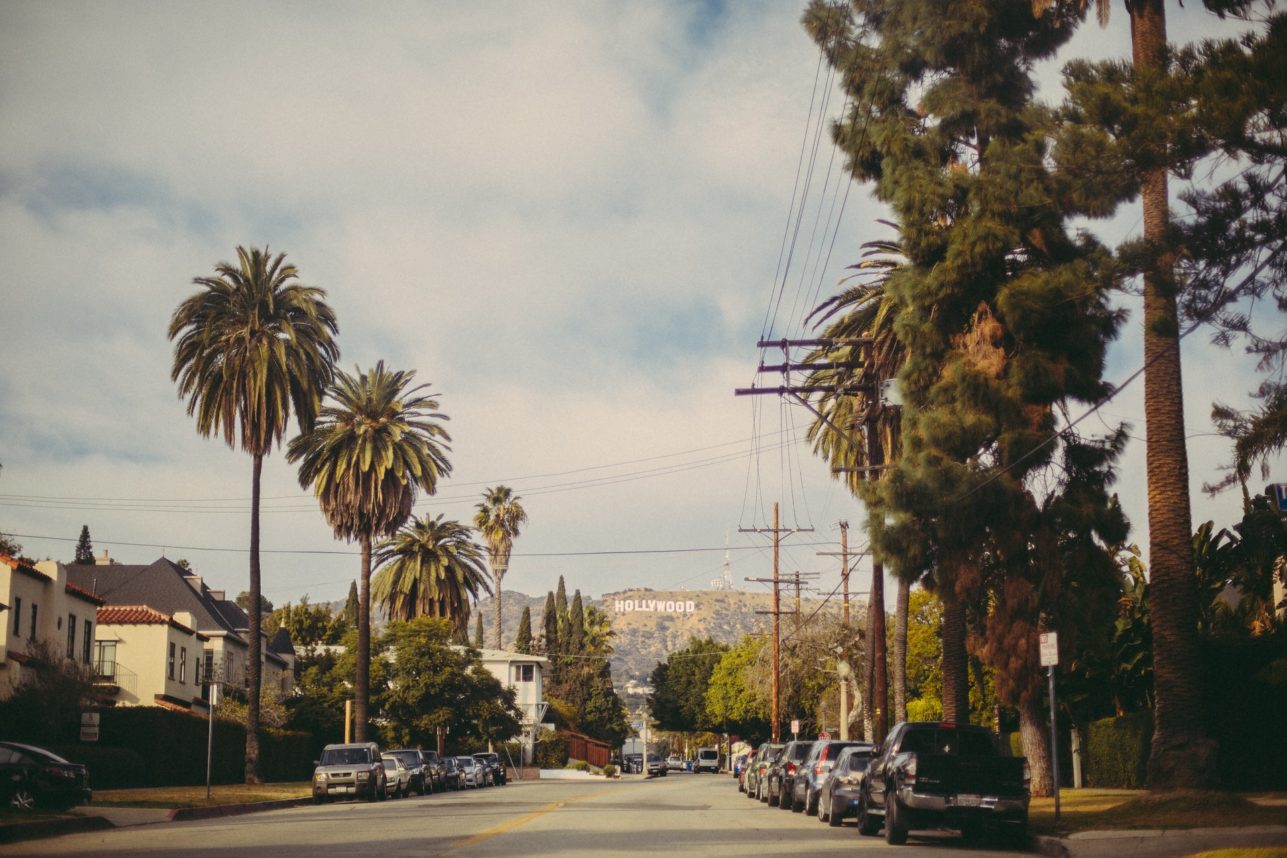
A Deep Dive into Jewish L.A.

Los Angeles’ Jewish community comprises a landscape of choices and creative experiences. How did this unique Jewish story evolve and what might this mean for L.A. Jewry in the 21st century?

Beginning with the arrival of the first Jews in Los Angeles in the 1840s and the formation of their first institutions a decade later, including the Hebrew Benevolent Society (now Jewish Family Services), Jews would play prominent roles in the civic, economic and cultural life of the city. By the post-World War II era in the 1940s, Los Angeles’ Jewish population had evolved from a marginal community to a center of Jewish influence and growth. By 1948, with an estimated average of 2,000 Jews arriving each month, the Jewish population grew to about 250,000, marking one of the great migrations in Jewish history. The Jewish population in 1965 reached 500,000, making Los Angeles one of the world’s largest Jewish population centers.

Jews from all parts of the world continued to arrive during the second half of the 20th century, particularly from the former Soviet Union, Iran, Israel, South Africa and the Mediterranean region. Each of these ethnic Jewish constituencies would create their own institutional structures and construct distinctive social and political identities. As a result, Los Angeles today is a center of Jewish life for thousands of Jews representing many different nationalities and cultures.

Political Activism and Religious Engagement
Over the decades, L.A.’s political culture would profoundly influence the religious and cultural orientation of its Jewish residents. Inspired by the social justice themes conveyed by many of its rabbinical leaders, the Jewish community would also be influenced by the progressive values of Hollywood. Only at the outset of the movie industry’s emergence in the 1920s and ’30s did one find some common threads uniting these two constituencies. More generally, political activism in Los Angeles has been bifurcated, creating a distinctive barrier between the communal enterprise and the entertainment sector. 

During the early decades of the 20th century, Jews were generally excluded from the circles of power and influence in Los Angeles. Beginning in the 1950s, prominent individuals, joined by key Jewish organizations, would play important roles in the battle for civil rights, supporting African-Americans and Latinos, as well as advancing gay rights and women’s issues. In the past half-century, Jews assumed high-profile public roles within government, the media and business. One can identify a significant number of elected and appointed Jewish officials, beginning with Rosalind Wyman, who in 1953 became the first Jew and the first woman elected to the L.A. City Council. 

Over time, the liberal impulse of this community would foster an array of Jewish-sponsored and -supported institutions. These formal organizing efforts would be supplemented by synagogues’ social action initiatives and rabbis’ proactive roles. This can be further demonstrated by the involvement of key congregational figures during the civil rights era, and in more recent times by a new generation of rabbis who would carry forward a progressive agenda addressing issues of sexual equality, hunger, worker rights, criminal justice reform, immigration and other domestic social concerns.

Beyond the world of the synagogue, Jewish social service agencies would also reflect this specific social-action focus in caring for those in need. Beyond supporting a wide array of Jewish communal health and human service institutions, this community would be unique in establishing two groundbreaking institutions, Bet Tzedek and Beit T’Shuvah. Founded in 1974, Bet Tzedek would employ the Jewish legal injunction, Tzedek, tzedek, tirdof, “Justice, justice, shall you pursue” to serve as its framework for offering a broad set of legal services to people across Southern California. Beit T’Shuvah, established in 1987, would become the first Jewish residential treatment center for alcoholism and drug addiction.

Power and credibility for Jews today is as much about economic access and prowess both inside and outside the halls of government as it is about electing one’s own political elites.

Politics and L.A. Jewry
Where Jews once operated as “petitioners” seeking legal and social standing as full citizens, today other ethnic communities see Jews as the essential “power-brokers” of Los Angeles. As early as the mid-19th century, Jews developed connections with Latino leaders. During the post-World War II period, Jews were instrumental in assisting Latinos in securing political rights and access. Similar political and social ties were established with Chinese and Japanese immigrants at the turn of the 20th century that would contribute to the expansion of these relationships during and after World War II. During the civil rights era, Jewish organizations along with area rabbis worked with African American clergy and community leaders to advance the cause of equal rights.

Today, as Latinos assert their political clout in this city, Asian Americans are emerging as the new petitioners for access and influence, while African-Americans are seeking to reclaim their earlier political presence. In turn, the Jewish political equation appears to be in transition. These new and changing political roles are being constructed at the very time when some prominent Jewish elected officials have left the public square and where others, including Mayor Eric Garcetti, City Attorney Mike Feuer and City Controller Ron Galperin, are taking up the banner of governmental leadership. However, power and credibility for Jews today is as much about economic access and prowess both inside and outside the halls of government as it is about electing one’s own political elites. 

L.A.’s Distinctive Features
Geography: Location represents an important marker in shaping the character and development of Los Angeles and its Jewish community. Beyond the fact that L.A. emerged as a major Jewish center, considerably later than Eastern and Midwestern Jewish communities, the historic imprint of Western “independence” and distinctive lifestyle features comes into play when assessing how the Jews of this city define themselves in comparison with their co-religionists elsewhere. 

The divide between East and West continues to be a defining factor in Los Angeles’ general relationship to the nation and more directly in the tensions that play into the Jewish communal wars. Along with other key social indicators, the factor of “distance” and the power of regional “culture” have influenced the patterns of communal affiliation and religious participation.

Being far from the “capital” of American Jewry, New York, has had a profound psychological and functional impact on Los Angeles. It would appear that the greater the distance from the center of Jewish power, the greater the institutional tensions. Western regional structures encompassing synagogue movements, membership institutions and policy groups have struggled at times with their New York-based organizations over questions of autonomy, proportional representation and competition for political and financial influence. In more recent times, a number of national entities have made Los Angeles their home or were formed here in the West. The Simon Wiesenthal Center, Stand With Us, Mazon, Israel American Council and Jewish World Watch are but a few of the L.A.-based institutions that have sought to define themselves as “other than New York.” 

Financial Clout: Western Jews in general and Los Angeles Jewry in particular are among this nation’s wealthiest Jews. Indeed, a number of these financial elites have embraced their synagogues and Jewish communal networks to foster a broad spectrum of investing in the community’s future. Jewish donors’ significant support of universities, medical centers and hospitals, symphonies, theater and the cultural arts reflects their broader commitment to growing and sustaining the public welfare. 

Camping as Informal Education: Also contributing to the distinctiveness of Western Jewish life would be the elements of climate and lifestyle. The uniqueness of Southern California may best be expressed through the presence of various forms of Jewish informal and recreational programming. The Jewish camping movement, while significant for decades around the country, has had no greater impact than on the West Coast, and more directly in the greater L.A. area.

Measuring Distinctive Features
Various community population studies conducted in key Western Jewish communities point to a set of defining social characteristics. Jews of the West exhibit lower levels of religiosity. By all standards of affiliation and participation, Jews living in the Western United States rank lowest. They are also least likely to contribute to Federation campaigns or other Jewish causes. Only 22 percent donate to Federation campaigns and only 39 percent to any Jewish cause.

Identification and involvement with Israel provides another measure of Jewish engagement. One can define “emotional attachment” as significant engagement with Israeli peoplehood and its political situation, economic support and travel to Israel. Based on 2001 data, only 29 percent of Western Jews have traveled to Israel, compared with 35 percent of American Jews generally and 49 percent of those in the Northeastern United States. 

Leadership Interlocutors: Great Jewish communities are comprised of premier leaders who have developed significant economic and institutional relationships through their business/professional relationships, social networks and religious affiliations. While the community did not develop and sustain a base of legacy families, L.A.’s communal “shakers and doers” have been critical for their financial input, political savvy, and social connections. These Los Angeles “connectors” have been a key bridge between the public square and the Jewish communal system. Their social access and economic clout have opened the doors for expanding the circle of Jewish influence and helping institutions to garner a heightened level of attention within the general society. 

Jews and Their Neighborhoods: Possibly, unlike other urban centers in the East or Midwest, where Jews have abandoned historical neighborhoods, the Los Angeles Jewish community can be seen as contributing to both the maintenance and repopulation of various parts of this city. Jews represent an important demographic sector in revitalizing neighborhoods including the Mid-Wilshire, Hancock Park, Silver Lake and Echo Park districts, not to mention Pico-Robertson and the Miracle Mile, along with significant portions of the central San Fernando Valley and beyond. This type of demographic stability has also been essential in maintaining Jewish religious and cultural institutions across the greater Los Angeles area.

Exploring Unique Religious and Cultural Characteristics
Emulating the religious innovation operating among other Southern California faith communities, L.A.’s Jewish religious culture can be seen as testing traditional religious norms and boundaries that define mainstream American Judaism. With more than 100 synagogues and alternative forms of religious connection, Los Angeles has become a major center for countercultural Judaism, introducing diverse and creative forms of spirituality and worship. 

From mainstream congregations representing the core Jewish denominational movements to “emergent” religious expression and activism, Southern California has become a laboratory of experimentation involving alternative forms of worship and study and the creative use of the arts, theater and music. Drawing upon L.A.’s distinctive features, these communities of faith seek to embrace the influences of the entertainment culture, Southern California weather and the region’s laid-back lifestyle in blending religious practice with the existing social environment.

The idea of “mega-synagogues” may have no better setting than Los Angeles with its impressive set of large-membership congregations. Wilshire Boulevard Temple (the community’s oldest congregation), Stephen Wise Temple, Sinai Temple and Valley Beth Shalom, among others, represent this particular model of participation. These institutions are noted for their innovative and extensive range of services and programs, their large physical plants, and the high-profile status of their rabbis.

L.A. represents a dynamic cultural scene where Jews and their institutions are contributing not only to a unique Jewish vibrancy but also to the broader civic environment.

Independent Expressions: The city has seen the flourishing of a variety of alternative religious and cultural expressions, including Eastside Jews, the Pico Union Project and the Shtibl Minyan. 

Possibly the most significant emergent model of Jewish engagement is represented by IKAR. Founded in 2004, this emergent religious community represents an effort “to reclaim the vitality and relevance of Jewish religious practice” combined with “a deep commitment to social justice.”

Orthodox Engagement: L.A. is witnessing the emergence of the second largest Orthodox community in North America, reflecting the expanding role this sector of religious life will play in shaping the Jewish future. Its resource infrastructure — including synagogues, schools, camps and social services — has expanded into the city’s cultural and culinary arenas with its community’s kosher markets and restaurants. 

Gay and Lesbian Connections: Los Angeles would become the home to the first gay and lesbian congregation, again reflecting the community’s pioneering image. Founded in 1972, Congregation Beth Chayim Chadashim would open the way for other religious and cultural expressions that would serve the LGBTQ communities.

The Emergence of New Ethnic Communities: Numerous social, political and religious organizations representing the Israeli, Persian and Russian constituencies have been formed over the past 25 years. 

A Distinctive Rabbinic Voice: Rabbis in Los Angeles have emerged as central community actors, serving as the architects of new models of Jewish institutional and communal expression. They have also been among the leaders of creative Jewish religious and cultural expression that is transforming American Judaism. In part, this phenomenon can be interpreted this way: In the absence of an indigenous base of “great families” who would early on define, fund and lead L.A. Jewish society, the rabbinic sector has emerged to provide the visionary elements necessary to help build and lead this enterprise.

The dominance of its rabbis as the central creators of institutions and the definers of Jewish thought and ideas is a distinguishing feature of the Los Angeles Jewish community. Marvin Hier and Abraham Cooper (Simon Wiesenthal Center), Elazar Muskin (Young Israel of Century City), David Wolpe (Sinai Temple), Sharon Brous (IKAR), Harvey Fields (z”l) and Steve Leder (Wilshire Boulevard Temple), Uri Herscher (Skirball Cultural Center), Isaiah Zeldin (z”l) (Stephen Wise Temple), Denise Eger (Kol Ami), and Harold Schulweis (z”l) and Ed Feinstein (Valley Beth Shalom) represent a few of these extraordinary rabbinic activists. As The Daily Beast would suggest in its list of the nation’s most influential rabbis, “like American Jews themselves, the rabbis on this list are clustered on the coasts — particularly in New York and Los Angeles.”

Moving Beyond
Los Angeles Jewry has played an important role in the life and culture of this city. Adding to this dynamic quality of Jewish life have been the continuous waves of Jewish émigré populations, providing a distinctive cultural flavor to the existing internal mix of languages, traditions and ritual and ethnic practices. Outside of New York, no other American Jewish community has the depth of such diverse, ethnic engagement with new forms of Jewish cultural expression. Absent a population study since 1997, it remains somewhat problematic to fully assess the size and impact of this megacommunal model with its estimated 600,000 Jews. The demographics speak to the vitality and robust character of this region, driven in part by the entrepreneurial spirit and the quality of independence that defines the American West. 

Five characteristics reflect the distinctive features of L.A. Jewry:

  •  The pioneering, independent spirit of the West has influenced religious and communal life, impacting its relationships with the East Coast’s “Jewish establishment.”
  • Just as Jews play significant roles in New York being this country’s financial center and Washington being its political axis, Jews have been responsible for the birth and evolution of “Hollywood” and Los Angeles being its entertainment capital. The region’s focus on music, theater and media — reflected in the culture of its synagogues and emergent religious institutions — has made it a center for creative, experimental Jewish religious expression.
  • The religious culture of the community has been shaped by the Southern California climate, as borne out by the architectural design of synagogues, the meshing of outdoor lifestyles with religious symbolism, and the generating of a particular emphasis on informal Jewish learning and alternative forms of religious practice.
  • The historic and distinctive community-building role of L.A.’s rabbinic leadership in the creation of key religious, cultural and political institutions.
  • The infusion of Jews from around the world who have added to its mix of cultural, political and religious expression.
  • L.A. represents a dynamic cultural scene where Jews and their institutions are contributing not only to a unique Jewish vibrancy but also to the broader civic environment. Emulating the activist impulses of the entertainment/media enterprise, this community has begun to exercise its cultural, religious and political impact on American Jewry as a whole.

No doubt, the creative quality of L.A. Jewry is tied to its demographic composition, diversity and size; the multiple levels of the community’s financial, political and cultural connections; the quality and depth of its lay and rabbinic leadership; and the impact of the creative Hollywood thread on the Jewish enterprise.

California is different. And L.A. is an even more intense expression of this difference.

A version of this article originally appeared on eJewishphilanthropy.com.


Steven Windmueller is the Rabbi Alfred Gottschalk Emeritus Professor of Jewish Communal Service at the Jack H. Skirball Campus of the Hebrew Union College-Jewish Institute of Religion, Los Angeles. Windmueller’s writings can be found on thewindreport.com.


A Deep Dive into Jewish L.A. Read More »

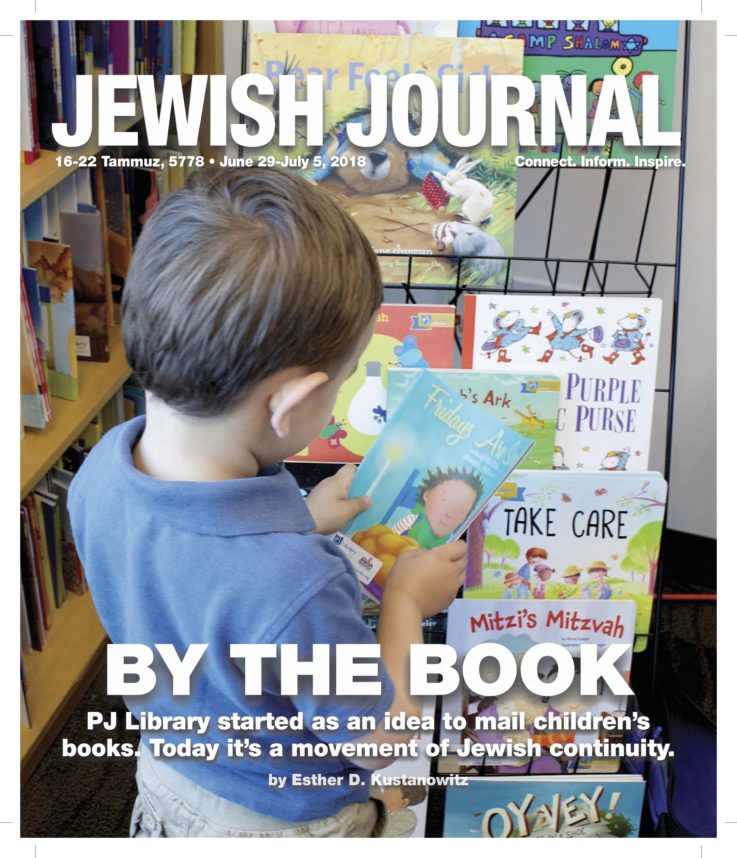
PJ Library’s Bookshelf: A Quick Peek

For PJ Library, it’s not enough to send 200,000 books to Jewish children every month in the United States and Canada. Equal care must be paid to identifying the books to send, and making sure the quality and content reflect the program’s goals and values. 

The book selection process is intense as the committee considers its choices, conscious that today’s Jewish families aren’t homogeneous. Some have little or no formal Jewish learning, some attend a synagogue and celebrate Jewish holidays, and others may be unfamiliar with Jewish practice altogether. In some families, there may be one or two Jewish parents, who may or may not have the reference points or emotional touchstones that many assume to be universal to the Jewish experience.

According to Meredith Lewis, director of content and engagement at PJ Library, 40 percent of PJ Library’s family households have at least one family member who didn’t grow up Jewish. “For them, the nostalgia for chicken soup or the Lower East Side doesn’t resonate,” she said. So PJ Library takes great pains to publish and distribute books that, among other things, are multilingual and cover the issue of disability, “to make sure it’s all accessible,” she said. 

The committee works with authors, agents, publishers and editors, using many titles that are already in circulation, but also occasionally working with agents and authors to develop PJ Library-imprinted books. 

“We do accept manuscripts, sometimes from publishers and sometimes directly from authors earlier in their careers,” Lewis said, noting that PJ Library will work with these authors whether or not they have an agent through their PJ Publishing imprint that’s mostly for specialty and board books.

Titles are considered based on age appropriateness, including how engaging the message, text and illustrations are for a particular age group and their parents. Texts also must stand up to multiple readings and contain a strong message of Jewish values. Books may reflect historical Jewish life, contemporary Jewish life or some valuable aspect of the Jewish experience. Because PJ Library’s audience is young children, it doesn’t distribute reference books, books that deal with the Holocaust or books that deal with the death or end of life of a loved one. 

Some of the diverse titles PJ Library offers include “10 Things I Can Do to Help My World.” The content focuses on environmental actions from energy conservation (turning off lights when they’re not being used) and using both sides of a piece of paper, to helping encourage children to do their part in saving the planet. 

In “All Kinds of Strong,” Sadie Rose, a little girl who can’t run fast or lift heavy things, realizes that there are many kinds of strength, and she discovers her own. 

“Across the Alley” features two kids who are neighbors and whose family members expect certain things of them, even though they want to do other things.

Some books in the PJ Library lineup have won prestigious children’s book awards, while  others are classics that will be familiar to older readers, like Sydney Taylor’s “All-of-a-Kind Family” series and Barbara Cohen’s “The Carp in the Bathtub.” While there are many (many) Hanukkah books, there are also more unusual titles, like Debbie Levy’s “I Dissent: Ruth Bader Ginsburg Makes Her Mark.”

Whatever the topic, the hope is that a PJ Library book will animate family conversations around Jewish topics and encourage them to consider making Jewish choices.

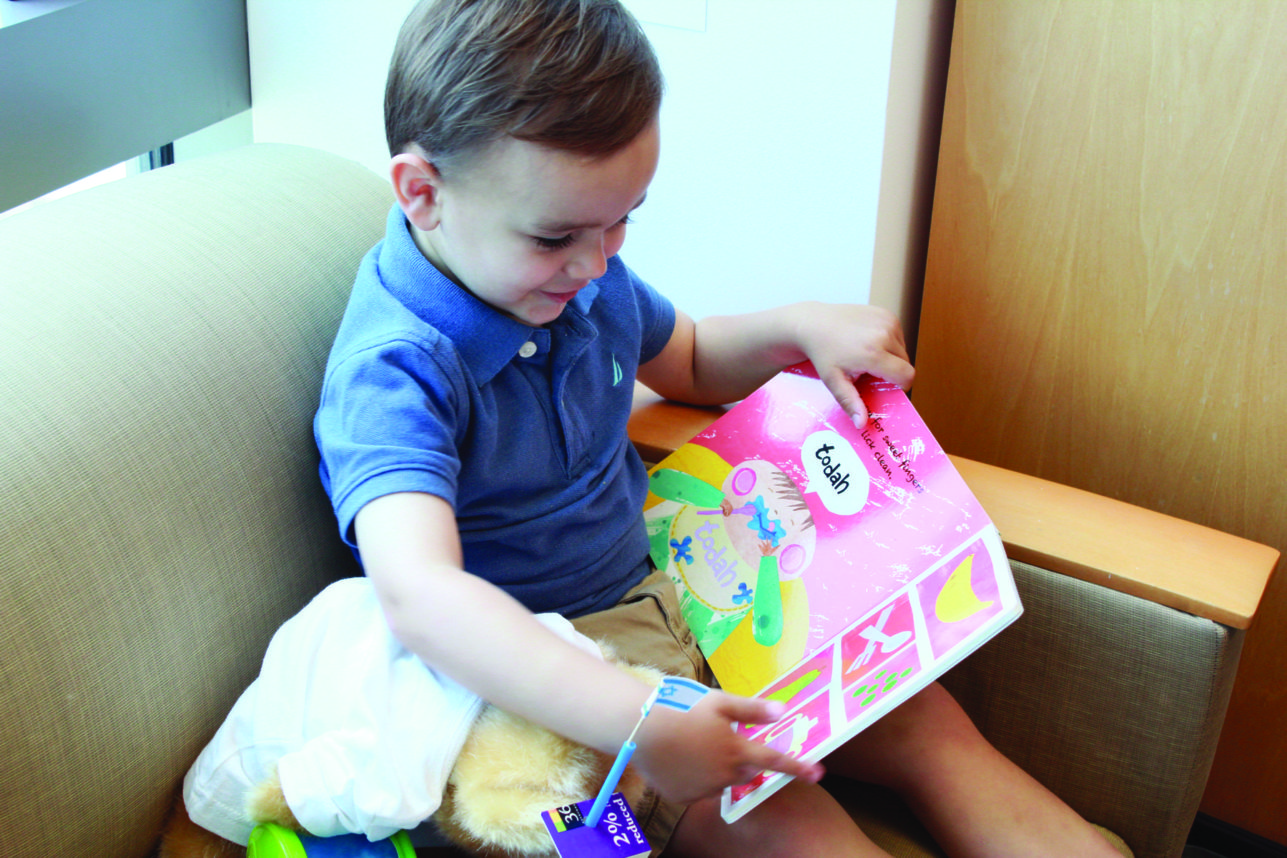
PJ Library in Los Angeles Community Connector Jennifer Stempel said that one of her son’s favorite PJ Library titles is called “Todah.”

“Last fall, one of our community events was giving thanks to the local fire department. We got to have a tour of the fire station. The firemen read the book to the kids as a call-and-response: ‘I’m thankful for this, todah,’ they’d say, and the crowd replied, ‘Todah.’ Now when I read it, he says ‘Mommy, todah.’ And ‘todah’ is the firefighters’ new favorite word.”

PJ Library’s Bookshelf: A Quick Peek Read More »

COVER STORY: Inside the Library

How PJ Library is Building Community and Strengthening Jewish Homes

Ten years ago, philanthropist Harold Grinspoon had a modest idea: Because a Jewish child’s faith training begins in the home, every Jewish home with a Jewish child should have Jewish books. 

Grinspoon started where he lived, sending Jewish-themed books to 200 children in western Massachusetts. The project, known as PJ Library and run by the Harold Grinspoon Foundation, now sends children’s books to 180,000 subscribers — children ages 6 months to 8 years — to every ZIP and postal code in the United States and Canada, totaling about 12,306,738 books over the course of the program’s life so far.

PJ Library Director of Content and Engagement Meredith Lewis said the ideation of PJ Library came about through a series of connecting incidents. Grinspoon had heard about singer Dolly Parton’s Imagination Library, a program that mailed books to preschool-age children. He had also recently picked up a few Jewish-themed children’s books at his daughter-in-law’s house and was intrigued because he hadn’t seen many Jewish children’s books before. And in an airport, Grinspoon also witnessed a father console his child by reading him a book. 

“It took him by surprise,” Lewis said. “He realized, ‘We should do what Dolly Parton does, but with Jewish children’s books.’ He had thought there’d be 200 families, but there was more than twice that many in western Massachusetts.”

“Fourteen-month-old Izzy started to get mail, which is the cutest thing ever. They were the coolest books, which weren’t always overtly Jewish but have beautiful Jewish themes.” — Rena Strober

The program’s success is due, in part, to how easy it is to participate. People don’t have to be affiliated with any particular synagogue or community or organization. They don’t have to be engaged with or connected to Jewish life in any way. Children of different ages can be signed up to receive age-appropriate books. And it’s all free.

Actress and mom Rena Strober, who lives in Atwater Village, had heard about PJ Library from her brother. As soon as her daughter Izzy was born, she “had to sign up,” she told the Journal. Izzy, who is now 14 months old, “started to get mail, which is the cutest thing ever,” Strober said, noting that the packages had “the coolest books,” which weren’t always “overtly Jewish but have beautiful Jewish themes and little bits of Judaism.” 

Izzy’s current favorite book is titled “Take Care” by Madelyn Rosenberg, which shares some ideas about how children can help the world, her mother said. “Every morning, it’s the first one she grabs, also before going to bed. She’s learning so much and I just love it.”

PJ in L.A.: Community Connectors
Another reason for PJ Library’s success is that it doesn’t rely on one funder. As the program expanded, the Grinspoon Foundation identified local partners who agreed to be responsible for marketing, planning and fundraising for local program participants. These partners are usually local communal organizations, because “they tend to hold the community together and could bring many people to the table,” Lewis said. “But generally speaking, it’s a partnership.” In Los Angeles, that partner is The Jewish Federation of Greater Los Angeles.

“Our partnership with PJ Library is very serious,” said Federation President and CEO Jay Sanderson. “We are living in a world where intermarriage is closing in on 70 percent and the vast majority don’t raise their kids Jewish. PJ Library makes Jewish conversation happen in the house. This is enormously important. We want to meet people where they are. If our job is to make sure there’s a Jewish community for the future, then getting 13,000 homes with at least one Jew to read a Jewish book with their child… there’s no better way to begin the first step of engaging in Jewish conversation.”

“We are living in a world where intermarriage is closing in on 70 percent and the vast majority don’t raise their kids Jewish. PJ Library makes Jewish conversation happen in the house.” — Jay Sanderson 

According to PJ Library’s National Triennial Survey, 97 percent of Los Angeles intermarried families reported PJ Library has increased their confidence to engage with their children regarding Jewish traditions, values and customs. And 94 percent reported that PJ Library has supported them in building upon or adding a Jewish tradition to their home life.

“We’re providing our families with young children a foundation of Jewish experiences, which is at the heart of our Federation’s mission,” said Risa Goldstein, who, as director of PJ Library and PJ Our Way (a program for ages 9-11), has witnessed its exponential growth. She told the Journal that more than 751,000 books have found their way into the hands of almost 21,000 participants in 14,000 local families, making Los Angeles the biggest PJ Library program in the country. 

PJ Library of Los Angeles is “at the center” of Federation’s Early Childhood Family Engagement Strategy, which includes PJ Library, the Family Camp Project, the First 36 Project and Parent & Me vouchers, Goldstein said.

In 2015, Federation added PJ Community Connectors, young parents who do local outreach and programming. Sanderson called it “part of the ecosystem. There’s a whole strategy besides getting a book out to a family every month.” 

Goldstein explained that “Jewish early childhood programs can and should be the gateway that excites and welcomes families to the Jewish community,” because it’s “the natural point when families are asking the question of how they’ll build rituals, what community will they join and if and how Jewish community might play a role in their families’ journeys.” 

The Community Connectors give PJ Library participants the opportunity to connect with other families with young children through neighborhood-specific events that build social connections over time. 

“Los Angeles is a big place,” Goldstein said. “We wanted to make L.A. feel like a tight and close community, connecting new Jewish moms and dads with other new Jewish moms and dads to serve as support for one another and to create community. We wanted to make L.A. feel like a small town as much as it possibly could.”


The popularity of Community Connectors, which is being embraced by an increasing number of communities, “underscores the importance of social connections for young families and supports growing Jewish engagement,” Lewis said.

In 2014, when Jenny Stempel was pregnant, a friend told her that after her son was born, she should sign up for PJ Library, calling it “this amazing program where you get free books that are really good,” Stempel told the Journal. “It sounded like she drank the Kool-Aid. I put a note in my calendar for the week after my due date. He came three weeks early. I signed him up. Then I drank the Kool-Aid.”

Stempel had been working as a TV development executive and was looking for a job where she could spend more time with her son and do meaningful work. A friend, who knew about Stempel’s work founding Temple Emanuel of Beverly Hills’ YoPro (young professionals) group, recommended she apply for the new Community Connector position. 

“She knew I had the skills to connect people with each other and create programming that engaged people,” Stempel said. “So instead of working with young, mostly single professionals, now I’m working with young families.” 

Two other connectors have since joined the team. Stempel works specifically in the Culver City area with families with children younger than 3; another Connector manages families with children younger than 3 in Westwood and the surrounding area; and the third works with children ages 3-5 throughout greater Los Angeles. For the most part, events are one-on-one meetups or playdates in the local community, like at coffee shops or farmers markets. Goldstein said the connectors are hired specifically because they live in the target neighborhood and have a child in the age range they’re looking to create programming for. 

Stempel said that some larger events also provide opportunities “to get to know the parents and find out what they’re looking for programmatically.” For example, for some families going to religious institutions is a barrier they’re not willing to cross. “We keep the barrier to a minimum, if at all possible,” she said, citing Shabbat in the park with guest musicians and drum circles as accessible points to Jewish life. There are also Parents’ Night Out activities. This past week, at Painting with PJ: Moms’ Night Out, moms designed and painted their own challah covers while thinking about what a Shabbat dinner at their house might look like. Stempel said she hopes it “challenged them to have a Shabbat dinner and maybe even invite a friend.” 

PJ Library and its sister programs reach half a million people in four languages (English, Hebrew, Russian and Spanish) and in 17 countries.

Stempel said there are stories of PJ Library’s impact almost every week. 

“The ways in which we’re impacting our community really blow my mind,” she said. For many of the families that attend her programs, “this is the most Jewish thing that they do. So when they meet other families at my events, they’re more likely to make Jewish choices out on their own.” 

In one instance, Stempel invited one of the participating families to her house for Shabbat dinner. “They came over, saw us lighting candles, eating challah and drinking wine, then I got an invite to their house for Shabbat, which is a big deal.” 

Community Connectors also serve as concierges of sorts, providing access to other community organizations, opportunities and programs of a Jewish nature. 

“They come to me as a resource, ask me questions about which synagogues might work best for them,” Stempel said. “I’m very conscious about representing that there are lots of different options. What works for one family may not work for another. They should test some out to see what works for them.” 

Goldstein said that one of the Community Connectors is herself a PJ Library success story. Stempel had reached out to Jennifer Ziegelman to invite her to local events. Ziegelman kept saying no. When she finally said yes and attended a PJ Library in Los Angeles Community Connector event, “she immediately related to Jennifer Stempel and the other moms in her neighborhood with children under 3,” Goldstein wrote in an email. “Fast forward two years — all her friends are Jewish families that she met through the PJ Library Community Connector program. Her son is signed up to attend preschool at Temple Akiba and she is best friends with Jennifer Stempel. As soon as a position opened to be a PJ Connector, she said to me, ‘I need to pay it forward. I need to do for other families what you and the Federation did for me.’ ”

PJ Library Goes Global
PJ Library is not just a domestic — or even monolingual — program. Globally, PJ Library and its sister programs reach half a million people in four languages (English, Hebrew, Russian and Spanish) and in 17 countries. The state of New South Wales in Australia, which joined in 2011 and was the first of PJ Library’s international programs, receives the North American library of titles, as does a community in Singapore. Since 2015, the U.K. program has offered selections from the North American PJ Library lineup of titles that are most relevant to British families. 

In 2015, PJ Library in Russian began in Moscow, featuring Russian translations of PJ Library books in addition to native Russian titles. And PJ Library in Spanish launched in Latin America in 2013. By 2016, it had expanded to Costa Rica, El Salvador, Guatemala, Panama and Uruguay in collaboration with 10 local organizations. Universidad Hebraica in Mexico City is the implementing partner for all Latin American programs, which feature Spanish translations of PJ Library titles. 

In Israel, there’s Sifriyat Pijama, PJ Library’s sister program, which distributes books in Hebrew throughout preschools and daycare centers to more than 340,000 children. And in 2014, PJ Library launched a project for Israeli Arabs called Maktabat al-Fanoos (“Lantern Library” in Arabic), which distributes Arabic children’s books to 45,000 preschoolers living in Israeli-Arab communities. 

What’s next?
After 10 years, PJ Library shows no signs of slowing down. “If anything, we’ll probably bring more partners into the shared mission of our work,” Lewis said. 

PJ Library recently rolled out PJ Library Radio, an acknowledgment that music also can serve as a connection to Jewish culture. “Music has always been part of PJ Library,” Lewis said. “Our original slogan was ‘Jewish bedtime stories and music,’” because they are part of “the cultural and media channels that we use to transmit Jewish values.” Music is available at pjlibraryradio.com, and is curated by the staff. While any musician can submit their work for consideration for future PJ Library Radio airplay, there’s a selection committee to make sure it’s family-friendly.

Aware that the success of the program relies on local partners and the staffers who make things happen, PJ Library supports local coordinators in what Lewis calls a “very large community of practice and network,” with virtual learnings, an online portal and an in-person gathering for support and idea-sharing at its May conference.

Looking forward, PJ Library is continuing to expand PJ Our Way (PJOurWay.org), a middle-grades tween program that Lewis said already is experiencing rapid growth. She noted that the program is Children’s Online Privacy Protection Act (COPPA) compliant, meaning it regulates the information that’s collected from minors and requires guardian enrollment. PJ Our Way lets the readers choose from four books and then post text or video reviews for their peers to peruse as they’re making their book selections. 

“The beauty of PJ Our Way is that it’s run differently,” Goldstein said. “With PJ Library, you don’t have to do anything for those books to come to you. PJ Our Way is very interactive, empowering kids, giving them the choice between a graphic novel or a book about Einstein or the Holocaust. PJ Our Way is all about choice.”

Hoping to bring community offline into in-person encounters, PJ Our Way also has “design teams,” 10 to 15 tweens who help produce activities for their peer cohort. Sometimes this means Skyping with authors or creating holiday event times to get together. Lewis said this fills a hole in the Jewish market for tweens, providing an extracurricular way “to connect on their own terms.” (She added that PJ Library has “no plan to go into the young adult/teen market. There are other great organizations doing that work.”)

PJ Library regularly surveys its participants, and Federation will conduct another survey this summer “to assess impact on families and to quantify how we are changing lives and making a difference,” Goldstein said. And while program participants may feel strengthened in terms of their ties to the community, even those who work with the organization are feeling the impact.

“One of the biggest impacts is actually on me,” Stempel said. “I didn’t grow up in a super-observant family but because we’re trying to model Jewish values and traditions for our community, we’re making more Jewish choices than we were before.”  


Sign up for PJ Library here: https://pjlibrary.org/communities/los-angeles/31598

COVER STORY: Inside the Library Read More »

Documentary Reveals Secret of Jewish Triplets Separated at Birth

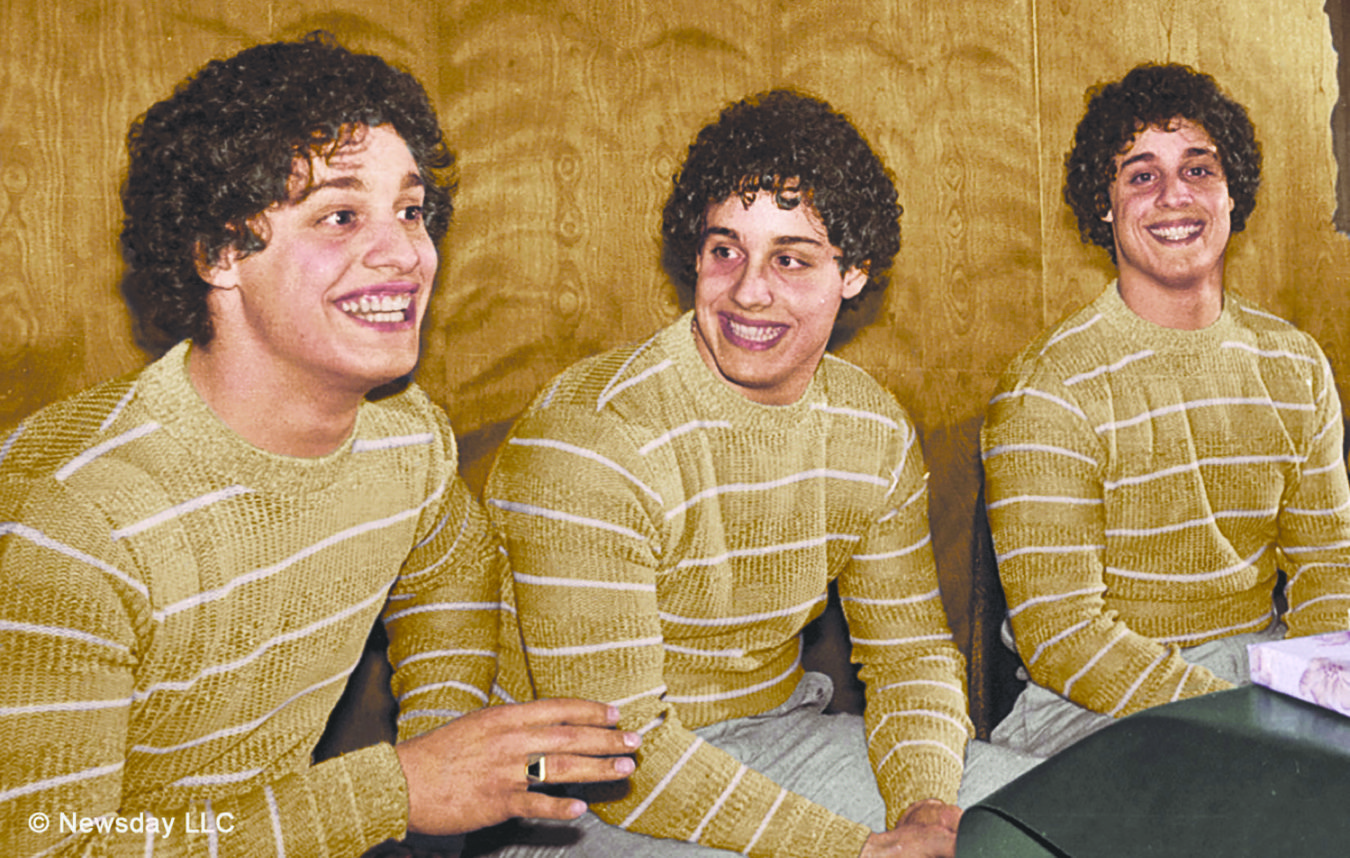
In July 1961, identical Jewish triplets were separated shortly after they were born and adopted by different families. None of the three boys or their adoptive families knew of the others’ existence. Then, 19 years later, Robert Shafran arrived at the same upstate New York community college that Eddy Galland had attended the year before. It didn’t take long for friends to connect the dots, and media around the world reported on the teenagers’ joyful reunion. The frenzy escalated when David Kellman realized he was the third triplet, and the trio became celebrities as their story spread. 

But as the documentary “Three Identical Strangers” discloses, what began as a feel-good celebration soon turned sinister amid revelations that the triplets were part of a secret experiment that Louise Wise Services, a Jewish adoption agency, had covered up.

“There were people involved in splitting them up. We set out to explore how that happened and why,” first-time filmmaker Tim Wardle told the Journal.

When Wardle heard the story five years ago, he was drawn to “the compelling human story at the heart,” and the themes of free will versus destiny, nature versus nurture and medical ethics. 

The real story is a tragedy.

Eddy Galland, who was manic depressive, committed suicide in 1995. It was the same year the triplets — who for years had been subjected to so-called routine adoptee testing — discovered they had been intentionally separated and placed in families of different socio-economic classes. Their adoptive parents were not told that the boys were part of a research study.

“We were a science experiment,” Kellman says in the film.

It took Wardle time to earn the surviving brothers’ trust and secure their cooperation for the film. “Even then I worried that they wouldn’t show up for interviews or [would] pull out,” Wardle said. 

Finding people who were willing to speak on the record about the study was another hurdle. Most of the people associated with the study or Louise Wise Services, which closed in 2003, refused to talk. Although, Wardle managed to interview two psychologists who were peripherally involved.

“When we brought the brothers together for the interview they were wearing the same shoes and they weren’t even talking at the time. There are definitely things that can’t be explained.” — Tim Wardle

“The whole thing is wrapped up in so much secrecy. My producer spent a lot of time going to Jewish archives in New York, sifting through information,” the British director said.

Wardle also discovered that U.S. television networks had made at least three previous attempts to tell the story. Under pressure from Louise Wise Services and Dr. Peter Neubauer, the director of the study, “It was shut down every time,” Wardle said. “It did make us quite paranoid that we might get shut down too.” 

Wardle, 39, is not Jewish but he is married to a Jewish woman. He said Jewish audiences have found the documentary very hard to watch. “I’ve had people at screenings who were crying with rage, they were so angry,” he said. 

The study was never completed or published, and all records have been
sealed until 2065. However, Kellman and Shafran have obtained heavily redacted photocopies of the portions pertaining to them. “It’s a lot of dense scientific data that was never written up. There’s no conclusion interpreting what it could mean,” Wardle said. “The brothers are looking into legal options.”

Shafran, a lawyer, and Kellman, an insurance salesman, “were not in a good place at all” during filming,” Wardle said. “They weren’t really speaking to each other. The tension you see is very real. I think Eddy dying shattered them, but the film has brought them together.”

Wardle hopes that the film’s release in theaters and its planned broadcast on CNN in January will lead to full transparency around the study.

“I hope it raises questions about medical ethics and things that are done in the name of science and experimentation,” he said. And, he hopes the film gets people “thinking about the nature-versus-nurture question. What makes us who we are? Is it genetics or is it our
family? When we brought the brothers together for the interview, they were both wearing the same shoes and they weren’t even talking at the time. There are definitely things that can’t be explained.”

Wardle expects audiences will “feel a range of emotions: happy at the start of it, sad at the tragic moments and angry at the end. I hope it makes them think about what family is,” he said.

“Is family what you make it or is biology more important? I think it’s the former, and love can overcome anything.”


“Three Identical Strangers” opens in theaters on June 29.

Documentary Reveals Secret of Jewish Triplets Separated at Birth Read More »

How Trump Haters End Up Helping Trump

“Trump is a Nazi.”
“Trump is ruining America.”
“Trump supporters are Nazis who are ruining America.”

It’s difficult to live in Los Angeles without hearing at least one of these sentences on a near-daily basis. The Democratic hegemony of this city means that folks are pretty comfortable dropping this sort of charged language, knowing that no Trump supporter is likely within earshot. But this message has spread beyond the cozy confines of Hollywood. Now it’s part of the general tenor of political debate springing from mainstream Democrats.

The latest example comes in the context of President Donald Trump’s immigration policy. Trump has implemented a new “zero tolerance” policy in which illegal immigrants caught crossing the border at non-points of entry are immediately arrested. Those who come along with children are separated from their children. They are separated by force of law, as dictated by the far-left Ninth Circuit Court of Appeals. In fact, in 2014, the Barack Obama administration kept children together with their parents in detention — and the administration was then sued for supposed brutality, forcing the separation of families, since children could not be kept in custody with parents longer than 20 days.

Now, nobody wants children separated from their parents (or if they do, they’re wrong). The law should be changed by Congress to allow family detention and deportation for illegal immigrants. But we must be clear about one thing: Trump didn’t simply decide to separate children from parents, nor was he the first president to institute such a policy.

Nonetheless, the wails of lamentation from the left have been voluminous and blaring. We haven’t heard a rational discussion about the upsides and downsides of family detention versus separation; instead, we’ve heard that Trump is a Nazi, that he’s ruining America, and that Trump supporters are Nazis who are ruining America.

Trump hatred has led to unhinged responses that have pushed people into his corner.

Furthermore, we’ve heard that since Trump and his minions are Nazis, it’s perfectly appropriate to destroy their lives. Thus, in the past week we’ve seen Trump Homeland Security Secretary Kirstjen Nielsen — who is implementing a policy identical to that of Obama Homeland Security Secretary Jeh Johnson, as Johnson himself has admitted — subjected to rowdies shouting her out of a restaurant. We’ve seen White House press secretary Sarah Huckabee Sanders tossed from a Red Hen in Lexington, Va. We’ve seen Rep. Maxine Waters (D-Ca.) — dubbed “Auntie Maxine” by her Democratic admirers, in spite of her support for the horrific Los Angeles riots — call on crowds to harass members of the Trump Cabinet, stating, “If you see anybody from that Cabinet in a restaurant, in a department store, at a gasoline station, you get out and you create a crowd and you push back on them, and you tell them they’re not welcome anymore, anywhere.”

Perhaps those cheering such extreme rhetoric think they’re doing a world of good. In truth, their hatred for Trump, extended to his supporters, is actually emboldening Trump and strengthening his base of support. Even those of us uncomfortable with Trump’s character aren’t likely to side with Waters or crowds shouting down Cabinet secretaries eating dinner. Nor are we likely to go along with labeling Trumpian immigration policy Nazi-like — particularly without any serious historical references, and combined with on-the-ground activism that sometimes looks like a fair bit like brownshirt thuggery. Last week, George Will called on Republicans to vote for Democrats in order to check Trump — but no self-respecting Republican is going to vote for the people who call them Nazis and who avoid making serious arguments in favor of shouting about Orange Hitler.

The great irony is that Trump is an unpopular president by any objective measure — he’s spent his entire presidency hovering around 40 percent, despite a booming economy and a dearth of foreign crises. All the left would have to do to win over independents and disenchanted Republicans is provide some semblance of stability and decency. Instead, hatred for Trump has driven the left to polarization — and that polarization is forcing the same binary choice that led to Trump’s presidency in the first place. Trump hatred has led to disproportionate, irrational responses that have pushed people into his corner. These unhinged attacks against Trump don’t defeat Trump. They strengthen him.


Ben Shapiro is a best-selling author, editor-in-chief at The Daily Wire and host of the conservative podcast “The Ben Shapiro Show.”

How Trump Haters End Up Helping Trump Read More »

Rebels of Reason

When I tell college students today that I don’t remember ever knowing the political leanings of any of my professors, they look at me as though I must have gone to school before the Civil War. So far down the rabbit hole has academia gone that not only do students know their professors’ political opinions from Day One, but entire courses are built on those opinions. And if a student wants to pass the class, he or she must regurgitate those opinions, even if those opinions are based on lies.

Moreover, professors’ opinions are restricted to a certain leftist Orthodoxy. Indeed, such a censorious environment has descended upon academia that students and professors fear being labeled “racist” or “fascist” just for asking a question that falls out of the Orthodoxy of Approved Thought.

To essentially save the academy from itself, Jonathan Haidt, a professor of social psychology at New York University, co-founded Heterodox Academy, a nonpartisan nonprofit committed to nurturing viewpoint diversity on college campuses. The members, now more than 2,000 professors and graduate students, are politically diverse with one common belief: The purpose of a university is to teach students how to think, not what to think.

“A small range of socio-political views are communally endorsed as reasonable or valid,” writes co-founder Debra Mashek in a Heterodox mission statement. “Rather than doing the challenging work of thinking through how a novel position might contain a piece of the truth, difference is coded as offense. … Even trace amounts of ideological difference in a classroom can exceed somebody’s threat threshold and get labeled as bigoted or fascist.” 

 A couple of weeks ago, Heterodox held its first Open Mind Conference in New York City. You can see it online. What’s clear is that the situation is worse than we thought. In the first panel, professor Richard Shweder discussed the insanely politicized attempt to get the American Anthropological Association to boycott Israeli academic institutions: “It felt like a disturbing political rally rather than an intellectual event.” He was “startled by the number of senior distinguished tenured faculty” who told him that they were very much opposed to a boycott, but to please not quote them publicly. 

These are tenured professors. What were they afraid of? They were afraid of students with baseball bats outside of their offices and classrooms, death threats to their families and vicious social media campaigns. In other words, leftist tantrums.

No, this isn’t social justice at all, but authoritarian adherence to the Orthodoxy — what one panelist called “the new religion.” The university as political pawn; the students as stormtroopers.

Indeed, the atmosphere at many colleges can only be described as mob rule: Students continually disrupt classes, shouting down anyone who doesn’t adhere to the orthodoxy; “non-approved” speakers are completely shut down, often accompanied by rioting; cowardly administrators tell police to “stand down,” leaving speakers, professors and students to fend for themselves. 

The purpose of a university is to teach students how to think, not what to think.

Although many panelists labeled what’s going on a “crisis,” the tone of the conference was optimistic — We can fix this. Why? Because they believe that the majority of professors are not Marxist fanatics who approve of any of this. Rather, the silent majority is waiting for the tide to turn. 

Heterodox’s goal is to increasingly embolden professors and force administrators to put clear guidelines in place about civil discourse: You cannot shut down or shout down anyone else. If you continue to engage in this call-out culture, there will be serious consequences. 

This all sounds great in slowly changing the climate: “Where humility and curiosity replace righteousness and indignation,” as Mashek put it.

But a match needs to be lit on our side: Holding professors and administrators to higher standards. How? Pull your kid from any university that allows any of this. I transferred twice —  it’s much easier than you might think. But don’t just transfer, publicize loudly and clearly why you are transferring. Dwindling endowments and bad PR talk. 

Meanwhile, don’t discourage your kids from being rebels. Rebels have changed the world, time and again. Rebels question orthodoxies. They “follow truth wherever it may lead,” as Thomas Jefferson put it upon founding the University of Virginia. In today’s culture of continual outrage, encourage your kids to be rebels of reason.


Karen Lehrman Bloch is an author and cultural critic.

Rebels of Reason Read More »

Charles Krauthammer and July 4th

Here in America, we have a habit of turning national holidays into barbecues. Whether it’s Memorial Day or Labor Day or July Fourth, a day off means, above all, a time to chill out and party. This party reflex used to bother me: Shouldn’t we be a little more serious about commemorating important moments of our national story? Shouldn’t we incorporate some formal rituals besides fireworks and beer kegs? Maybe because Judaism takes its own holidays so seriously, I figured America should do the same.

This year, though, I’ve changed my mind. Right now, more than anything, America needs a time out from the serious. When I see what the serious world of politics has done to our national conversation, I’m all for a renewal of our pursuit of happiness. Put another kosher hot dog on the grill and let’s talk about the Lakers. Anything but politics.

This won’t be easy, of course, because the serious has a way of obliterating the light-hearted. The serious, in fact, can obliterate everything, even basic civility. Look at how Rep. Maxine Waters took her serious hatred for Donald Trump to call on her supporters to publicly confront and harass members of his administration.

“Let’s make sure we show up wherever we have to show up,” she exhorted her supporters. “And if you see anybody from that Cabinet in a restaurant, in a department store, at a gasoline station, you get out and you create a crowd. And you push back on them. And you tell them they’re not welcome anymore, anywhere.” 

When I see what the serious world of politics has done to our national conversation, I’m all for a renewal of our pursuit of happiness. 

That’s serious stuff. And it works both ways. Both sides of the aisle have taken the ugly side of politics so far that it has left a bad taste in all our mouths. When it comes to political discourse, we are in a national race to the bottom.  

One of our greatest political commentators, Charles Krauthammer, who passed away last week, knew how to put politics in its place.

“What matters?” he asks at the beginning of his book “Things That Matter: Three Decades of Passions, Pastimes and Politics.” His answer: “Lives of the good and the great, the innocence of dogs, the cunning of cats, the elegance of nature, the wonders of space, the perfectly thrown outfield assist, the difference between historical guilt and historical responsibility, homage and sacrilege in monumental architecture, fashions and follies and the finer uses of the F-word.

“What matters? Manners and habits, curiosities and conundrums social and ethical: Is a doctor ever permitted to kill a patient wishing to die? Why in the age of feminism do we still use the phrase ‘women and children’? How many lies is one allowed to tell to advance stem cell research?

“What matters? Occam’s razor, Fermat’s last theorem, the Fermi paradox in which the great man asks: With so many habitable planets out there, why in God’s name have we never heard a word from a single one of them?”

Krauthammer, a man who built his reputation through political commentary, was telling us that his life went way beyond the seriousness of politics. It went into ideas, philosophy, beauty, mystery. 

Krauthammer’s genius, and his legacy, was that he could take politics seriously without ever losing his dignity or his lust for life.

“These are the things that most engage me,” he wrote. “They fill my days, some trouble my nights. They give me pause, pleasure, wonder. They make me grateful for the gift of consciousness.”

And yet, Krauthammer was also deeply aware of the fundamental importance of politics.

“Politics, the crooked timber of our communal lives, dominates everything because, in the end, everything — high and low and, most especially, high — lives or dies by politics. You can have the most advanced and efflorescent of cultures. Get your politics wrong, however, and everything stands to be swept away. This is not ancient history. This is Germany 1933.”

We must pay attention to politics, he wrote, “because of its capacity, when benign, to allow all around it to flourish, and its capacity, when malign, to make all around it wither.”

But when political discourse is so malignant, politics can’t make anything flourish. At this moment, tribalism and emotionalism are mixing with social media to create a lethal brew. Our feckless politicians, instead of modeling civil discourse, are leading this race to the gutter. And here’s the worst part: All of the unhinged discourse is, ultimately, useless, corrosive venting. Not only does it not seek solutions, it may not even help these politicians come election time. 

Krauthammer’s genius, and his legacy, was that he could take politics seriously without ever losing his dignity or his lust for life. He knew that “manners and habits, curiosities and conundrums” were the stuff of a winning life.

That’s worth pondering this year as we watch the fireworks and get sloshed on margaritas.

Charles Krauthammer and July 4th Read More »

Week of June 29, 2018

Week of June 29, 2018 Read More »

Loss is in the details.

Loss Is In The Details by Rabbi Karen B. Kaplan

I would never have noticed except that Pam pointed it out to me as I looked at her mother Nora sleeping in the hospital bed:  She did not have any eyebrows.  There were two crescent depressions in their place. “That’s because when Mom was eighteen years old she thought she would be smart and shave off her eyebrows and put makeup there to look like she had them. But they never grew back.  So I would always see her, flipping out her little mirror, and making her quick little movements with her cosmetic pencil to make them keep looking like they were there. So it’s weird looking at her face and not seeing anything there where the eyebrows should be.  So I miss seeing them there and now that she is too weak to use her liner I miss seeing her fill in those two bare recessed spots on her face.”   Thus her mother had surrendered even her stand-in eyebrows for good.

Nora’s granddaughter Merced was there as well, reminiscing about this micro story of the eyebrows as well. Meanwhile I could not help but notice that Pam’s and Merced’s eyebrows were only minimally present on their faces, like the sketchiest of crescents.  After everyone ran out of things to say about eyebrows, the talk tilted away from intimacy and more towards small talk, as if they were afraid anything more than a normal pause would hint they had enough of seeing a hospice chaplain and that I should go. Merced announced she was a real estate agent. I said, “I bet you encounter plenty of emotional drama with people buying and selling such an important thing like a home.”  “Oh yes,” she agreed. “Each home has its own story.”

I thought about Merced’s remark, and all that it implied. So much emotion and personal history is invested in the places we dwell in, and so much loss and confusion faced when we sell them. Then there is so much disorientation upon occupying another. If one little thing out of place like eyebrows gone missing can throw us off it is no wonder what a confounding experience it is to move into a new place.

Nora of course, who had transferred to a hospice residence, was in alien surroundings.  But almost constant sleep guarded her from registering all the other things she had given up besides the mock eyebrows. She still had one more “home” left to move to, and the story about that place is perhaps the one most often told albeit with so little to go on besides the hypotheses of one’s religion.

Rabbi and board certified Chaplain Karen B. Kaplan is author of Encountering the Edge: What People Told Me Before They Died, (Pen-L Publishing, 2014) a series of true anecdotes capped with the deeper reasons she chose her vocation. She has also recently published a collection of science fiction stories, Curiosity Seekers (Createspace Independent Publishing, 2017). She has submitted multiple entries published in Expired And Inspired.

Rabbi Karen B. Kaplan photo
Rabbi Karen B. Kaplan

___________

Gamliel Café

Gamliel Students are invited to a free informal online session, held monthly. On the third (3rd) THURSDAY of each month, different person(s) will offer a short teaching or share some thoughts on a topic of interest to them, and those who are online will have a chance to respond, share their own stories and information, and build our Gamliel Institute community connections. This initiative is being headed up by Rena Boroditsky and Rick Light. You should receive email reminders monthly. The next scheduled session of the Gamliel Café is July 19th, featuring Edna Stewart.

If you are interested in teaching a session, you can contact us at rboroditsky@jewisgh-funerals.org, rlight@jewish-funerals.org, or info@jewish-funerals.org.

____________________

Taste of Gamliel Series

The 2018 Taste of Gamliel series has concluded, but it is not too late if you want to access the recordings. You can Register for the 2018 series, Your’re Gonna Miss Me When I’m Gone: Jewish Practices of Remembrance, or any of the series from prior years. There are usually five sessions in a series, and each session is approximately 90 minutes.

Registration for Taste of Gamliel is mandatory to access the sessions. Registration is free, but there is a suggested minimum donation of $36 for each series to help us defray the out of pocket costs.
Those registered will be sent the information on how to connect to the sessions. To register, click here: register.

_______________

Gamliel Continuing Education Courses

Gamliel students should be on the lookout for information on a series of Gamliel Continuing Education  Courses, advanced sessions focusing in on different topics. These will be in groups of three ninety minute sessions (three consecutive Wednesdays) offered twice yearly, with different topics addressed in each series. The goal is to look at these topics in more depth than possible during the core courses. The first course took place in Fall 2017, focusing on Psalms, and the second was on The World to Come and the Zohar.

The next course will be November 28th, December 5th, and December 12th. We will continue to look at death as seen in the Zohar, taught by Beth Huppin.

Registration is required, and there will be a tuition charge of $72 for each three session series. Contact us for information, by email info@jewish-funerals.org, or call 410-733-3700, or simply register online at www.jewish-funerals.org/gamreg/.

_____________________

Gamliel Course

The next course in the cycle of core courses offered by the Gamliel Institute will be Course 4 – Nechama/Comfort. It will be offered online during the Fall from October 9th to December 25th on Tuesday evenings, for 90 minutes each week for 12 weeks. The classes will begin at 5 pm PST/8 pm EST. Primary instructors will be Dan Fendel, Edna Stewart, and Janet Madden, with other guest instructors.

Registration is open – click here.

The course planned for Winter 2019 is Course 2 – Chevrah Kadisha: Taharah & Shmirah.

_____________________

DONATIONS

Donations are always needed and most welcome to support the work of Kavod v’Nichum and the Gamliel Institute, helping us to bring you the annual conference, offer community trainings, provide scholarships to students, refurbish and update course materials, expand our teaching, support programs such as Taste of Gamliel, the Gamliel Café, and the Gamliel Continuing Education courses, provide and add to online resources, encourage and support communities in establishing, training, and improving their Chevrah Kadisha, and assist with many other programs and activities. There is a matching donation program in progress so your dollars go further. See the website for details.

You can donate online at http://jewish-funerals.org/gamliel-institute-financial-support or by snail mail to either:

Kavod v’Nichum, or to The Gamliel Institute,

c/o David Zinner, Executive Director, Kavod v’Nichum,

8112 Sea Water Path,

Columbia, MD  21045.

Kavod v’Nichum and the Gamliel Institute] are recognized and registered 501(c)(3) organization, and donations may be tax-deductible to the full extent provided by law. Call 410-733-3700 if you have any questions or want to know more about supporting Kavod v’Nichum or the Gamliel Institute.

You can also become a member (Individual or Group) of Kavod v’Nichum to help support our work. Click here (http://www.jewish-funerals.org/money/).

___________

SUBMISSIONS WELCOME

Please note: this blog depens on you for content. Without you it cannot publish new material. If you have an idea for an entry you would like to submit to this blog, please be in touch. Email J.blair@jewish-funerals.org. We are always interested in original unpublished materials that would be of interest to our readers, relating to the broad topics surrounding the continuum of Jewish preparation, planning, rituals, rites, customs, practices, activities, and celebrations approaching the end of life, at the time of death, during the funeral, in the grief and mourning process, and in comforting those dying and those mourning, as well as the actions and work of those who address those needs, including those serving in Bikkur Cholim, Caring Committees, the Chevrah Kadisha, as Shomrim, funeral providers, in funeral homes and mortuaries, and operators and maintainers of cemeteries.

_____________________

Loss Is In The Details by Rabbi Karen B. Kaplan Read More »