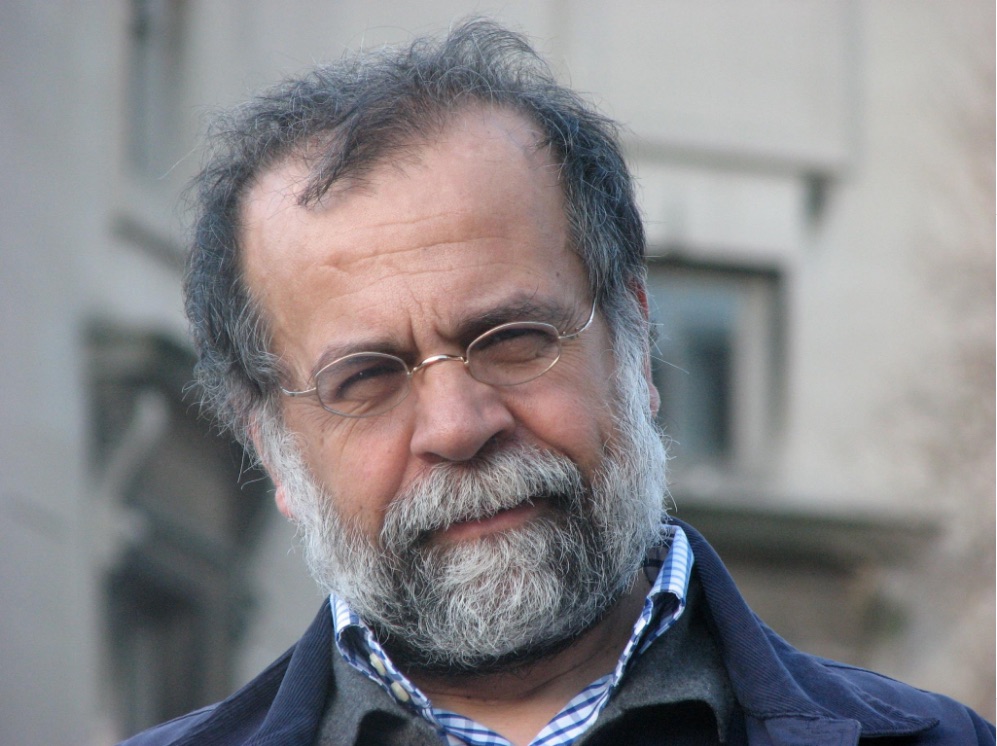
A petition is being circulated that is calling for the removal of Columbia Professor Hamid Dabashi, who has come under fire for referring to Zionists as “hyenas,” among other things.
The petition, put forward by the Stop Anti-Semitism website, calls Dabashi “a well-known anti-Semite” due to his “history of demonizing Israel and Jews on social media.” The petition proceeds to list some of Dabashi’s comments, which includes him glorifying Hamas and calling Zionists “hyenas.”
Additionally, when Dabashi ran Columbia’s Middle Eastern, South Asian, and African Studies Department in 2004, he wrote the following about Jews:
“Half a century of systematic maiming and murdering of another people has left its deep marks on the faces of these people. The way they talk, the way they walk, the way they handle objects, the way they greet each other, the way they look at the world. There is an endemic prevarication to this machinery, a vulgarity of character that is bone-deep and structural to the skeletal vertebrae of its culture.”
The petition noted that while Dabashi has a right to freedom of speech, his comments have helped “create a hostile environment on campus for Jewish, Israeli, and pro-Israel students.”
“Students Supporting Israel (SSI) has filed a complaint with Columbia’s student governing board and university administration detailing that anti-Israel groups ‘have monopolized the conversation on campus relating to the Israeli-Arab conflict and have systematically maligned, harassed and silenced’ pro-Israel voices,” the petition states. “During the past year, such incidents have included repeated vandalization and removal of SSI flyers, the disruption of a speech on campus by Israeli Ambassador to the U.N. Danny Danon, anti-Semitic chants, and the organization of a ‘Gaza solidarity rally’ adjacent to a Holocaust Remembrance Day vigil.”
The petition concludes with a call to boycott Columbia until Dabashi is fired. It has over 4,100 signatures so far.
The petition comes on the heels of Columbia alumni authoring a letter calling for Dabashi to be suspended as well as the Anti-Defamation League (ADL) calling Dabashi’s comments “clearly anti-Semitic and deeply problematic.”
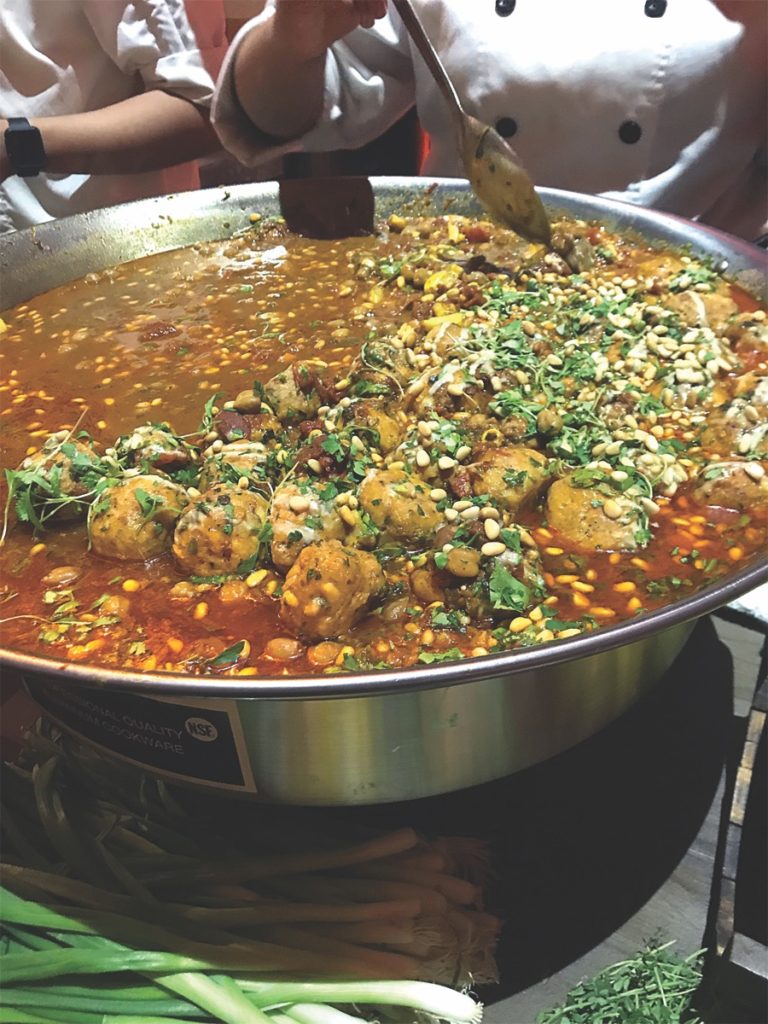
The secret to Israeli Chef Zammy Shraiber’s kreplach is that it’s “a 70-year-old recipe and it’s filled with meat and oxtail sauce.”
Shraiber, who owns the Tel Aviv kosher restaurant Sender, shared this tidbit with the Journal on the night of June 7 at the Taste of Israel Los Angeles event, held at the Skirball Cultural Center.
The kosher festival drew hundreds of foodies who paid a minimum of $195 each to sample their fill of a variety of exotic Israeli foods and wines. Proceeds from the event went to the Larger Than Life Foundation, a nonprofit that helps seriously ill Israeli children who have cancer, and their families.
Guests were greeted with 50 varieties of Herzog wine to choose from, including cabernet, Fusion merlot, Shor and Moscato. Participating wineries included Barkan, Tabor, Covenant and Shiloh.
“Everyone’s super into the wine — they’re having a great time,” Taylor Von Elling, one of the vendors, told the Journal.
After sampling the wines, guests could go upstairs to partake of the gourmet food from some of Israel’s top chefs, including Shraiber, Meir Adoni, Aviv Moshe and Golan Gurfinkel.
Asher Shalom said he wished that Los Angeles had more of the food that was served at Taste of Israel.
Other food available for sampling included sea bass with garbanzo beans, tomatoes and onions, and Israeli salad with hummus and kabob.
“It’s been absolutely amazing and you can definitely tell that it’s not from anywhere nearby, that all these flavors and the combinations came from Israel, such a lush area with so many creative cuisine types,” attendee Brandon Feder said.
“We don’t have enough lamb here,” he added, “so all these variations of different kinds of lamb dishes was out of this world.”
Sgula Dershowitz was busy munching on Shraiber’s chopped liver. “[It’s] really, really yummy,” she said. Shraiber said the secret to his chopped liver is that “it’s really chopped, not [made] with a food processor.”
Asher Shalom said he wished that Los Angeles had more of the food that was served at Taste of Israel. “It’s not a hamburger or something like [that]; each one is something unique made with a lot of art,” Shalom said, in particular noting the uniqueness of the boutique fruit.
Later in the evening, guests were escorted to the main courtyard to enjoy live music performed by Moments, a band consisting of 25 musicians, singers and dancers. During the performance, Taste of Israel organizer Orly Tal came onstage to thank everyone involved with putting together the event.
“Next year, we are going to do it bigger, larger!” Tal proclaimed.
Chef Gurfinkel, who runs the popular Dallal restaurant in Tel Aviv, paid homage to his 15-year-old daughter, May, who died from cancer just under a year ago. He also praised Larger Than Life.
“It’s not only mingling, it’s not only food. This is not the main event,” Gurfinkel said. “The main event is the children sitting in the hospital [who] can’t play with all the [other] children; all [their] friends going out and going to the beach.”
Gurfinkel told attendees that by coming to the event they were helping buy medicine for these children and their families who can’t do it alone. “You,” he said, “are larger than life.”
Few figures in Israeli politics, or in global politics for that matter, arouse such extreme levels of both antagonism and diehard support as the man the world has come to know as Bibi. Benjamin Netanyahu was the inheritor of a long dormant dynasty known as the Revisionist movement which eventually developed into the Likud, Israel’s current ruling political party.
Every human who rises to such levels of fame and infamy, becomes to a certain degree, mythological. But not too many people know the story of the man behind the myth. Today, by many, Bibi is seen as the inexorable protector of Zion, the ultimate diplomat, the only man fit to lead the Jewish people. By many others, he’s forgone all ethical and moral boundaries and is destined to doom our nation. But before Benjamin Netanyahu was all these things, before he was Prime Minister of Israel, he was a kid, enchanted by his older brother Yoni, he was a furniture salesman, a two time divorcee, he was Ben Nitay studying architecture at MIT.
Today, embroiled in corruption allegations and staving off a world of condemnations, it’s hard to see Bibi as much else than transcendent good or evil. But that won’t stop us from trying.
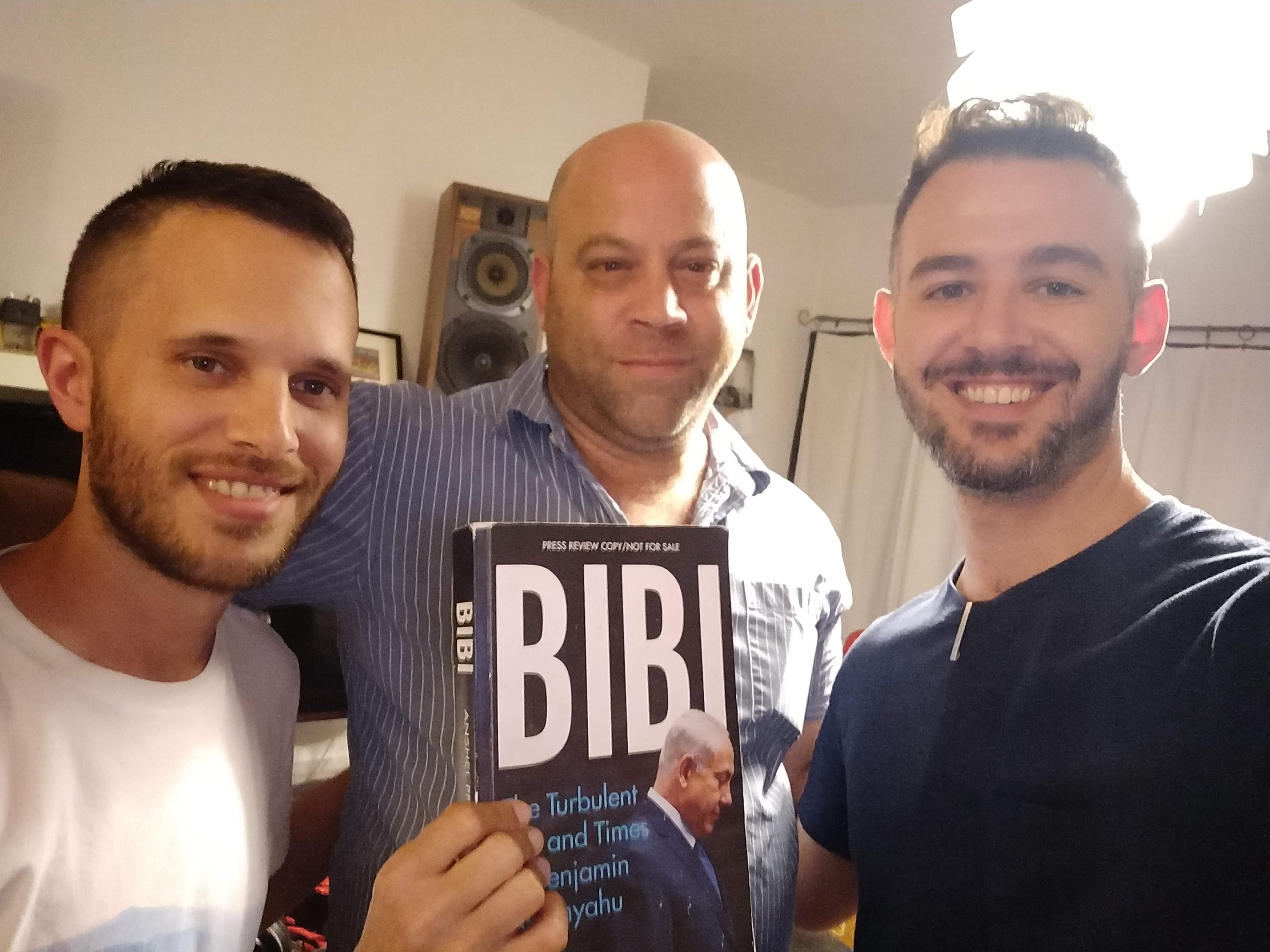
Anshel Pfeffer has been a journalist for the Israeli Daily, Haaretz, since 2014 and has recently published his biography titled “Bibi: the turbulent life and times of Benjamin Netanyahu”
A bipartisan piece of Congressional legislation that lays out a clear definition of anti-Semitism as it relates to anti-Israel activity on college campuses was introduced on May 23.
The bill, sponsored by Reps. Peter Roskam (R-Ill.), Ted Deutch (D-Fla.), Doug Collins (R-Ga.) and Jerrold Nadler (D-N.Y.), officially adopts the State Department’s definition of anti-Semitism and allows the Department of Education to enforce that definition on college campuses under Title VI of the Civil Rights Act, which “prohibits discrimination on the basis of race, color, or national origin,” per the text of the bill.
The State Department’s website defines anti-Semitism as “a certain perception of Jews, which may be expressed as hatred toward Jews. Rhetorical and physical manifestations of anti-Semitism are directed toward Jewish or non-Jewish individuals and/or their property, toward Jewish community institutions and religious facilities.”
The website also includes examples of anti-Semitism couched as anti-Zionism, including comparing Israel to the Nazis, subjecting Israel or Israelis to classic anti-Semitic blood libels, applying double standards to Israel and denying Israel’s right to exist.
According to The Jewish Week, Congress’ adoption of this definition “would make it easier for the Department of Education to identify cases of anti-Semitic activity and for the Department of Justice to take legal action against the accused perpetrators.”
“The evidence is clear,” Deutch told The Jewish Week, “that the Department of Education does not recognize the existence of anti-Semitism on campus, even when it’s obvious.”
Supporters of the bill lauded it as an important step toward combating anti-Semitic harassment of Jewish students on college campuses.
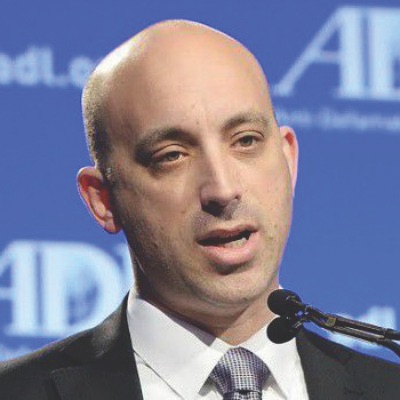
“While most incidents of anti-Semitism on campus are unrelated to anti-Israel activity, the Departments of Education and Justice should have the authority to investigate instances in which anti-Israel activity crosses the line to targeted, unlawful, discriminatory intimidation and harassment of Jewish students,” Anti-Defamation League (ADL) CEO Jonathan Greenblatt said in a statement.
“The Departments of Education and Justice should have the authority to investigate instances in which anti-Israel activity crosses the line.” — ADL CEO Jonathan Greenblatt
In a separate May 23 post on its website, the ADL cited an 89 percent increase in anti-Semitic incidents on college campuses from 2016 to 2017, and that 54 percent of religiously motivated hate crimes in the U.S. were perpetrated against Jews in 2016. As such, the ADL argued, the Anti-Semitism Awareness Act is necessary.
“Enactment of the legislation will help ensure that OCR [Office for Civil Rights] investigations of future complaints — as well as training and technical assistance for OCR Regional Office professionals — will be informed by a definition of anti-Semitism that includes all current manifestations.”
Rabbi Abraham Cooper, associate dean and director of Global Social Action Agenda for the Simon Wiesenthal Center (SWC) also issued a statement that read, in part, “The prevalence of anti-Semitism in the United States, particularly within academic institutions, has risen at an alarming rate. The successful passage of the Anti-Semitism Awareness Act will give the Department of Education important clarity and guidance to redress anti-Semitic attacks on campus and send a clear message to perpetrators that they will be held accountable for their hate. With this clear definition available to authorities, an unequivocal message will be delivered that anti-Semitic incidents will not be tolerated.”
Opponents of the bill, including the American Civil Liberties Union (ACLU), argue that it infringes upon freedom of speech.
“The overbroad definition of anti-Semitism in this bill risks incorrectly equating constitutionally protected criticism of Israel with anti-Semitism, making it likely that free speech will be chilled on campuses,” the ACLU wrote in a letter to Congress.
A bill similar to the current Anti-Semitism Awareness Act was passed by the Senate in 2016 but not by the House.
Having worked for years on a cruise ship, when I started to think about my first Canadian Rockies train journey, I realized I had many “dumb” questions. I thought you might appreciate the answers:
No! You do not sleep on the Rocky Mountaineer train. You will enjoy breakfast, lunch and snacks on the train but you will sleep in hotels.
2. How do I find the train and get to the station?
You will meet the train representatives in the lobby of your hotel and be transferred to the train station by motor coach. You will receive information and timing the night before your train journey begins.
In your packet of information, you will have a boarding pass for the train with your seat number as well as luggage tags and square boarding card. It will tell you what time to be in the lobby and when your luggage will get picked up from your room. You do not need to bring your luggage to the lobby, however, you do need to bring whatever you need during the day. If you need medications, bring them with you. I recommend you bring a portable charger for your phone or camera so you can keep taking photos all day long!
When you arrive at your hotel in Kamloops, your luggage will already be in your room. You also will already be checked in. The train hosts will give you your keys and you can go directly to your room, no waiting in line!
4. Do I eat breakfast in the hotel?
Absolutely not! Do not eat at the hotel! You will have a lovely made-to-order breakfast on the train. There will be coffee in your hotel lobby if you need that for your short route on the motorcoach. There will also be coffee in the train station. If your route begins in Vancouver, notice that tall windows at the station which used to be the locomotive garage.
5. Where do I eat? What will I eat?
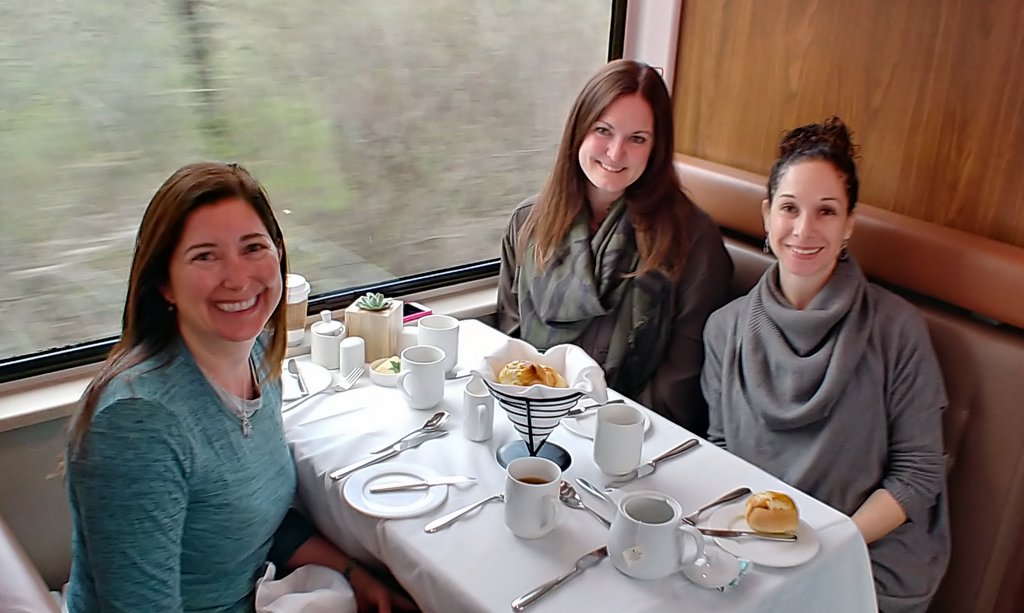
If you are traveling in Goldleaf, you will sit upstairs and watch the beautiful scenery and then go downstairs for your carefully prepared meals. There are two seatings for meals in Goldleaf and if you are second seating for breakfast, you will have freshly baked scones and coffee until your turn for breakfast. The following day you will be first seating. If you have second seating lunch, you will have wine and cheese before you go down to eat.
If you are traveling in SilverLeaf, your food will be brought you in your seat. The menu onboard changes each day and is full of local and regional specialities like salmon and Alberta short ribs beef. The fruit and vegetables are locally sourced.
85% of the food you will eat is cooked on the train. If you need a special menu like halal, kosher or gluten free, please let the Rocky Mountaineer team know in advance. They can also do kid’s menu, ketogenic and all of the sauces onboard are gluten-free. Make sure to look for the recipe book, it even has the cinnamon scone recipe!
Please wear flat shoes for the train. You only need casual comfortable clothes for your bucket list journey. There are stairs in Goldleaf and they do have a wheelchair lift. When moving around the train especially on the stairs, please hold the handrails.
7. Should I come early to Vancouver? What should I do?
YES! Wherever your journey begins or ends, I recommend you spend extra days and enjoy Canada. In Vancouver, I recommend Grouse Mountain, Capillano suspension bridge, Granville Island and so much more. My train journey was from Vancouver to Banff. During my days in Banff, I went skiing for my first time in Canada at Lake Louise Resort and Gondola and at Banff Sunshine Village. I also stayed at both the Fairmont Banff Springs and the Fairmont Chateau Lake Louise.
This is a great question! Feel free to call the team at Rocky Mountaineer to discuss the 65 different options and packages you can choose. I cannot wait to travel again and visit Jasper and see the icefields. I loved my journey aboard Rocky Mountaineer. The host team on board helped us to see osprey nests, eagles, big horn sheep and five bears were sighted. I learned about the history and the environment around us. I loved going through the spiral tunnels and seeing Hells Gate.
9. Where do you take photos?
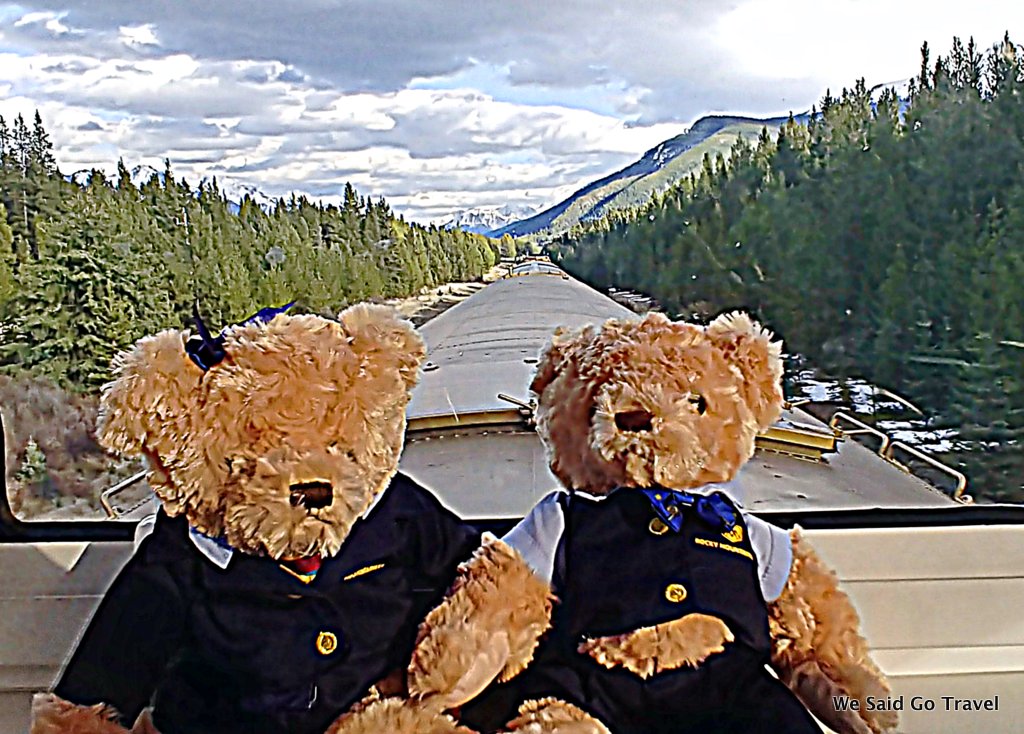
I took photos from every window upstairs in Goldleaf, during meals through the window and outside on the vestibule. Please enjoy my videos taken from my journey, Classics West. Remember to keep your eyes peeled and listen to the team on board, during my journey there were five bear sightings from our train.
10. Are the seats comfortable?
I loved my chair on the train. Not only is there a table where you can have your wine and cheese, but also there are many ways to move your chair and raise the footrest. The seats are also heated so you can enjoy a “spa” for your lower back while you have your hot towel to cleanse your hands before your meal.
Yes! Every journey on the Rocky Mountaineer might feel like a party with the wine, cheese and new friends you make! However, you can book the lounge car and have a wedding reception or company meeting. You can also go on a cruise and then take the train before or after your sailing.
12. Is there shopping on board?
Yes! There is a souvenir catalog of Rocky Mountaineer products. You order on Day 1 and it will appear on your seat when you arrive on Day 2.
13. What is a good meet? Learn to talk like a train engineer
A good meet is when a train goes by in the opposite direction and you do not have to stop. Often when a freight train is passing a passenger train, the smaller train (passenger train) pulls to a side rail to allow the larger train to pass.
Our Train manager Wendy McMichael told us that our train was 17 pieces of equipment with 50 crew members and 273 guests onboard on Day 1. From Kamloops, our train split and we went to Banff with 11 pieces of equipment and 156 guests. The other guests went to Jasper.
Freight trains are generally 50 to 300 pieces of equipment and Rocky Mountaineer is typically 11 to 25.
14. What is unique about this trip to only Rocky Mountaineer?
Traveling on the historic Canadian rail line you can see where the final spike was placed on Nov 7, 1885 at Craigellichie. Rocky Mountaineer is the only passenger train that runs between Kamloops and Banff. If you want to see the engineer marvel of the Spiral tunnels, as well as the historic location of the final spike you will need to travel on the Rocky Mountaineer. This is also the section of the track were you are more likely to see bears.
Rocky Mountaineer began in 1990 and has traveled 8 million kilometers or 150 times around the globe. They have received 67 Awards, planted 8436 trees planted for Employees’ anniversaries and carried over two million guests through seven awe-inspiring mountain ranges. The top 5 wildlife sightings from the train are bear, elk, big horn sheep, bald eagle and osprey.
Are you ready to book your first Rocky Mountaineer Journey?
The following message comes from “Bend the Arc” a Jewish justice organization. I have signed this letter expressing my moral outrage that children are being torn away from their parents at the border. I ask you to do the same by signing the letter through the following link:
https://www.bendthearc.us/moral_emergency
“To this country, in whose promise we still believe, to the millions of people who are outraged and horrified, and especially to the thousands of children who have been separated from their families, we declare our nation to be in a state of moral emergency.
This Administration has established border policies unprecedented in their scope and cruelty, that are inflicting physical, mental, and emotional harm on immigrants and punishing those seeking refuge at our borders.
We are anguished by the stories and images of desperate parents torn from their babies and detention facilities packed with children. We shudder with the knowledge that these inhumane policies are committed in our name, and we lift our voices in protest.
The Jewish community, like many others, knows all too well what it looks like for a government to criminalize the most vulnerable, to lie and obfuscate to justify grossly immoral practices under the banner of “the law,” to interpret holy scripture as a cover for human cruelty, to normalize what can never be made normal. We have seen this before.
When crying children are taken from their parents’ arms, the American Jewish community must not remain silent.
To those who are targeted by these cruel policies, know that the Jewish community hears your cries. We will take risks to support you, and we will demand that our nation’s leaders take action. We will not abide the claim that people didn’t know or understand the extent of your suffering; we will not allow your torment to be in vain.
Our government can persist in this inhumane behavior only if good people remain silent.
And so we declare a state of moral emergency, and we rise to meet this moment. Even as our democratic institutions are under duress, we raise our voices and take decisive action. United by the wisdom of our tradition, we stand with immigrants, refugees and asylum-seekers, with the children, and with their parents. We declare: Not here. Not now. Not in our name.”






 The following message comes from “Bend the Arc” a Jewish justice organization. I have signed this letter expressing my moral outrage that children are being torn away from their parents at the border. I ask you to do the same by signing the letter through the following link: