A Moment in Time: Measuring our Lives by Opportunities


A Moment in Time: Measuring our Lives by Opportunities Read More »


A Moment in Time: Measuring our Lives by Opportunities Read More »
Six intense seasons of the Russian spy drama “The Americans” on FX culminated in a brilliant payoff. The series finale provided the audience with a perfect ending — and a deep Torah secret about relationships.
Elizabeth and Philip Jennings, KGB spies living as Americans, are confronted in a parking garage by Stan Beeman, their counterintelligence FBI agent friend and neighbor of almost a decade.
Philip Jennings and Beeman are best friends. Beeman has been honest about his job but has kept the details of his investigation into KGB operations from Philip. Both have been wearing masks to hide their secrets.
Audiences, however, have been seeing beneath the masks for years and have been waiting for this moment. When the masks finally come off, Beeman is stunned and Philip is crushed by the weight of his secret falling on Beeman. In the space where their friendship once drew them together, a gaping chasm and the barrel of Beeman’s drawn gun pulls them apart.
The scene in the parking garage lingers for an agonizing 12 minutes — an eternity on television. Yet watching the rhythms of the friendship unfold was somehow completely relatable. That’s because “The Americans” is really a show about friendship, marriage and family.
The Torah of “The Americans” is that hiddenness is a necessary ingredient even in the most profound of all relationships: our relationship with God.
We all wear masks. We all keep secrets from friends and family. It’s not possible to completely expose our inner selves. As such, our darkest secrets may even be hidden from us. Yet, even when justified, our relationships hang by a thread woven by our masks. If we are caught in our lie and we are unmasked, the betrayal becomes a vast darkness.
The Torah of “The Americans” is that hiddenness is a necessary ingredient even in the most profound of all relationships: our relationship with God. To whatever extent possible, the God of the Torah hides miracles, or at the very least obscures them. On the eve of God’s signature miracle, the splitting of the sea, a strong and strange wind kicked up a storm.
A miracle without some natural explanation overexposes God, so God hides behind the mask of nature. Similarly, God promises that throughout our long Diaspora, God’s face will be hidden. Masks are part of all meaningful relationships.
But there can be a cost.
The final scene of “The Americans” doesn’t take place in America. The Jenningses must return to the Soviet Union, but Beeman, and the Jennings’ two children remain a world away in America.
“The Americans” is about the way lies and masks can corrupt our relationships. We all have our share of both. The show reminds us that it’s a topsy-turvy world out there. If we fail to work through our deceptions, the darkness will consume us. But if we can confront our masks together, there is a chance we will survive.
Do not fear the mask. Fear denial of the mask. If you catch a glimpse of what lies beneath the mask, use it to find yourself, your loved ones and God.
Eli Fink is a rabbi, writer and managing supervisor at the Jewish Journal.
Finding God in ‘The Americans’ Read More »
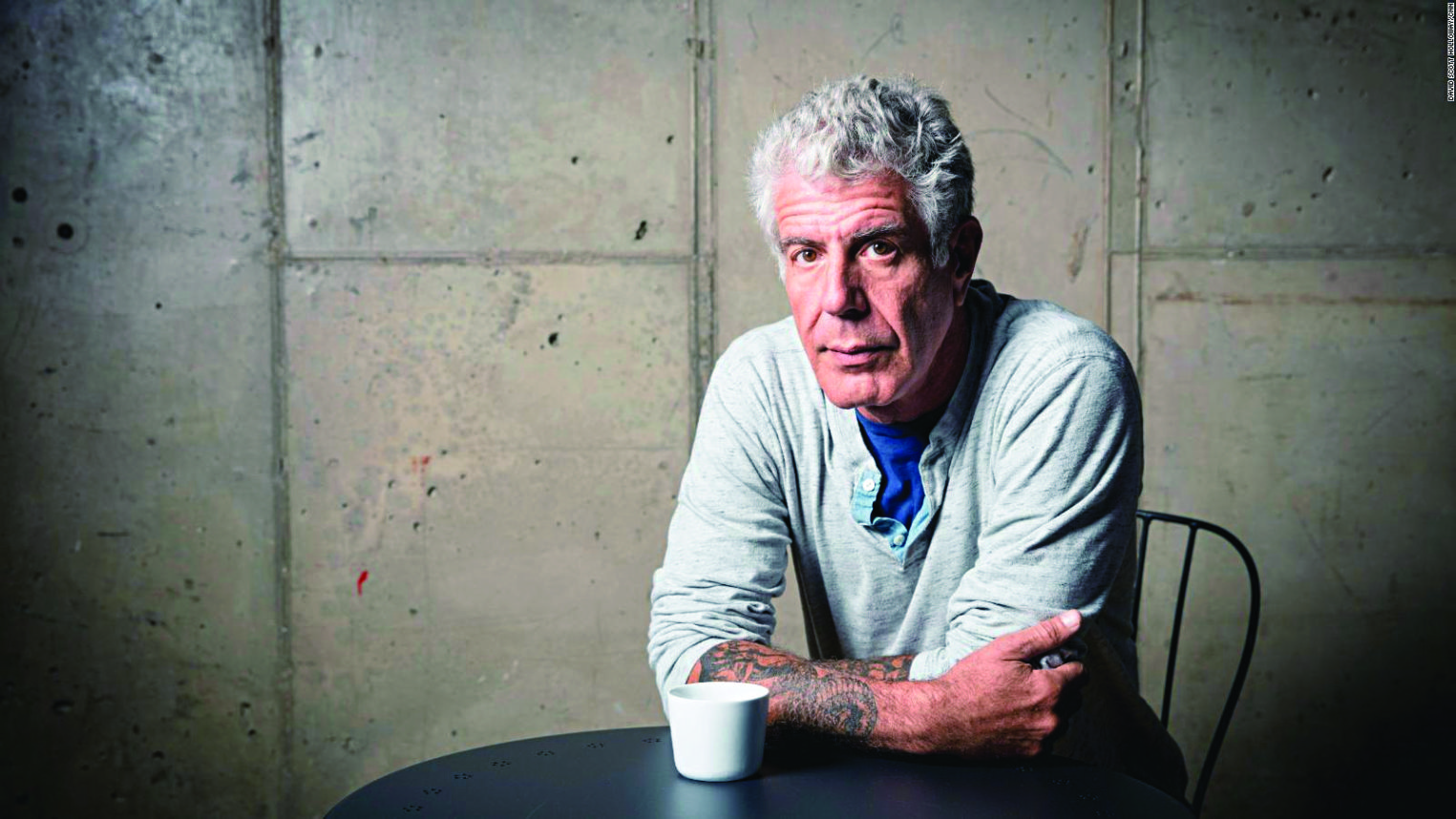
I knew something major had happened when I felt my phone start vibrating incessantly in the pocket of my apron last week. When I finally read the messages that Anthony Bourdain was dead, I was not surprised. Saddened yes, but shocked? Not in the least.
It’s so tempting to be angry at Bourdain now, particularly for those of us who make our living by cooking. Following him on his delicious journeys, watching him being whisked to the world’s best restaurants by the greatest talents in our business was a breathtaking sight to behold. And even more exciting to us, watching him uncover the secret passages through which we could find the freshest sushi or noodles or banh mi was blissful envy. To those of us who live for food experiences, Bourdain’s final act feels like a slap in the face, or that recurring nightmare where we inadvertently give our customers food poisoning.
How dare you be so brilliant, so talented, so admittedly grateful for your good fortune, and still have had the temerity to end it all? And in France, of all places. Why wasn’t the thought of a warm croissant from the corner patisserie, made with butter that may as well been cultured in the hands of the Gods, good enough to give you pause? Why didn’t you just ask your best friend, the gastronome extraordinaire Eric Ripert, to fry you up a duck egg omelet with shaved truffles? We know you knew it was a late truffle season in Vaucluse. That alone is surely worth living for?
You won the lottery just by the fact that you were able to eat like an animal and stay thin, but then add to that your natural charm, your full head of gray hair that only made you impossibly cooler, your razor-sharp wit despite years of body and mind abuse, and your enchanting sense of good humor in all situations. If you couldn’t find a reason between the sake infused Tokyo ramen bar nights, the hours spent cracking crabs in Astoria, N.Y., with David Chang and the sexy romance you’ve been having with your Italian bombshell, then what chance do the rest of us have?
The photos of you downing a cold beer from the bottle with then-President Barack Obama in Vietnam, a tiny table heaving under the weight of the delicacies before you. What part of that experience and the conversation that must have gone with it didn’t fill your heart with lust for life? On top of that, we are positive that the former leader of the free world counted that meal as one of his top 10 good times — ever.
To people outside our industry, it may seem impossible that this incredible life just wasn’t enough to keep Bourdain out of danger. It looked as if he had everything he ever could have wanted and then some. But I have a feeling he was missing something crucial to his survival.
Bourdain once wrote, “There’s us — the kitchen crew — and then there’s everybody else: the patrons, management, owners, waiters. Everybody should be so lucky as to be us. We’re the best.”
Those of us attracted to the interesting things that happen when the sun goes down understand. The wanderers, jokesters, action junkies and troublemakers. The roller coaster riders and insatiable ones who live on immediate gratification. The ones who couldn’t cope with the fluorescent brightness of the 9-to-5 for long no matter how hard we tried but get our kicks from being immersed in a complicated tagine that requires 20 steps and as many hours.
Those of us attracted to the interesting things that happen when the sun goes down understand. The wanderers, jokesters, action junkies and troublemakers.
We’re the ones hiding in the kitchen who often feel alone, even in the middle of an adoring crowd. We’re keen observers but sometimes feel as if we’re watching a different species from ourselves. They look like us, we think. Why can’t we understand what they are saying? We are the ones who are told we have arrived while we’re thinking about leaving. Comfortable makes us nervous. Don’t bother telling us how great we are. We won’t believe you anyway.
Chefs, writers, actors, musicians, artists and other hedonists tend to live our lives with headphones on and the volume turned to full blast, all the while waiting for the next sound mix, flavor or experience to transport us out of a chilling sense of impending failure. It’s not that we’re paranoid, it’s just that we know that the saying “If it seems too good to be true, it probably is” was written specifically for us.
Cook or not, a fan of his sometimes seemingly arrogant, bad-boy bravado or not, I think most people who watched Bourdain lovingly praise a grandmother’s stew in Tehran, or greedily slurped up his words, were captivated by him. Bourdain’s story has a universal message of ultimate highs and devastating lows, of failure, angst, disappointment, serendipity and redemption.
In 1999, at the age of 44, the bored, inebriated and sleep-deprived executive chef of the New York power lunch spot Brasserie Les Halles noticed a box that housed the free paper called the New York Press on the corner outside his midtown workplace. On a lark, he went home and wrote a scathing expose of New York’s fine dining scene. He sent it into the paper, and it caught the attention of the then-Food Editor Sam Sifton.
Although Sifton told him he loved the piece and assured him it would go to print, week after week Bourdain excitedly ran to the box, opened the paper and saw that even his attempt to make a quick $100 and give his line cooks a giggle had come to nothing. Disappointed and frustrated, he called his mother for comfort. Her solution, one that should go down in the annals of history under the heading “Stereotypical Jewish Mother Advice”: “Just send it into The New Yorker. I know somebody there will read it.”
But sometimes, as the lucky few of us know, the unbearable level of caring in a mother’s words uttered at the right time, however off the charts absurd they may seem to pessimistic and fragile ears, are just hubris-inducing enough to cause a tectonic shift in all reason and logic.
And so, Bourdain, figuring it was the last he would ever hear of his lame attempt at being a hero to his fry cooks, printed out his article and stuffed it into an envelope with The New Yorker’s address on it and mailed it, never expecting it to come to anything.
A month and a half later, his kitchen phone rang. It was David Remnick, publisher of The New Yorker, who said, “We’d like to run this piece.”
“Don’t Eat Before Reading This” went to print in The New Yorker’s April 1999 issue. The article that made half the food world stand up and take notice of Bourdain’s genius storytelling abilities made the other half rebel against his ego-shriveling admissions.
But what he brought out, the thing that his intended audience of cooks could relate to the most, was the camaraderie he’d found in the army of military combatants in what he called “the culinary underbelly.” It turns out, he told us, that many of the folks behind the world’s most expensive and storied restaurants, were graduates not of the Culinary Institute of America, but of our nation’s prison system.
A book deal for what was to become “Kitchen Confidential” landed in his lap just two days later, and along with it an almost 20-year run as the man widely recognized as having the most enviable job on the planet.
But perhaps he paid a price for that most enviable, globe-trotting job.
Maybe, just maybe, it is the ridiculously repetitive, sometimes perverse in its sheer physicality, often glorious, intense little subculture of a kitchen that tethers us firmly to reality. In the kitchen, there is a focus and a discipline required to do the mental gymnastics necessary to succeed in prioritizing what’s most important. On many levels, to cooks, the kitchen is home, and we need to spend a lot of time there to stay grounded. In stepping so far away from it for so long and globetrotting in the limitlessness of the outside world, maybe Anthony Bourdain forgot he was one of us.
Yamit Behar Wood, an Israeli-American food and travel writer, is the executive chef at the U.S. Embassy in Kampala, Uganda, and founder of the New York Kitchen Catering Co.
Anthony Bourdain: The Chef Who Lost His Home Read More »
If you are reading this newspaper on June 15, it is the same day Egypt is playing Uruguay in the World Cup. And true: Israel did not qualify, nor did the United States, so you might think I don’t have a dog in this fight. Yet I do: I hope Egypt wins this match. I hope Egypt wins a lot of matches. Its rivals in the group stage, other than Uruguay, will be host Russia and Saudi Arabia, who are not soccer powers. So Egypt stands a chance of advancing to the Round of 16 and beyond.
Why Egypt? Because it is a neighbor. And because it is an underdog. And because this will be its first World Cup since 1990. And because Egyptians deserve to have some joy. And because of Mo Salah. Mostly because of Mo Salah.
Mohamed Salah is Egypt’s star player and one of the world’s most exciting footballers. He scored the goal that made Egypt gasp — a 94th-minute penalty kick that sealed Egypt’s qualification to the tournament in the most dramatic fashion. Then he made Egypt gasp again — when he was injured and forced to leave the field in tears during the first half of last month’s UEFA Champions League final.
His team, Liverpool, had advanced to the championship match thanks in large part to his great talent and goal-scoring prowess, so it didn’t stand much of a chance against Real Madrid without him. When he was injured, Egyptians gasped, not just because they realized that Liverpool was doomed. They gasped because they knew that Egypt would be doomed in the World Cup without him.
But Salah is going to play in Russia. He told Egyptian President Abdel-Fattah el-Sissi that he is well on the road to recovery. So I can get ready to be dazzled by him. And I do so even though Salah would not be easily dazzled by me.
He dislikes Israel. Or maybe it’s just pressure by fellow Egyptians to pretend to dislike Israel. We’ve known this since 2013, when he made a special effort to avoid shaking hands with players of an Israeli team. It was a big deal at the time, and was again a topic of discussion when Salah moved to play for the London club Chelsea, whose Russian owner, Roman Abramovich, is now an Israeli citizen.
And then it came up again, just a few weeks ago, when the player inspired Liverpool to an exciting 5-2 victory over Roma in the first leg of their Champions League semifinal, in which Salah scored two goals and assisted on two others. This was a memorable game, watched by millions, one of which was Israel’s Defense Minister, Avigdor Lieberman. “I will be calling the chief of staff immediately to tell him to hire Mohamed Salah to the Israeli army,” Lieberman joked on Twitter. His joke ignited some furor. Arab-Israeli member of the Knesset Ahmad Tibi tweeted back sarcastically: “I’m sure he’d love to meet you, Mr. Lieberman. He will be happy to hear about … your plans for the Aswan Dam.” In 2001, Lieberman suggested, in his usually blunt manner, that Israel bomb Egypt’s Aswan Dam in response to Egypt’s increased military presence in the Sinai Peninsula.
There you have it. The cliché: No mixing of politics and sports. And the reality: No mixing — unless you do mix them. Salah avoiding a handshake is politics. Lieberman drafting him is politics. Booing him is politics. Cheering him is politics. In fact, the Salah situation forces the Israeli World Cup enthusiast to mix sports with politics. Salah is too much of a star to be ignored. So one has to take a stand, for or against. One has to decide: Do you cheer the great footballer, or boo the not-so-great handshake avoider?
Sports does not always trump politics. The United States’ decision to boycott the 1980 Summer Olympics can be defended as principled and worthy. A decision by several European countries not to send officials to the World Cup in Russia in solidarity with Great Britain is also understandable. Many people would never cheer a racist athlete, or a team whose fans behave in an ugly manner.
And yet, I will cheer Salah and Egypt, because of all of the above — and with a grain of political defiance. If some Egyptian fans do not want the support of Israeli fans, tough luck. They will get it, anyway. If Salah does not want the praise of Israeli enthusiasts, tough luck. He will get it in abundance.
That is, of course, on the condition that he plays like a true superstar.
Shmuel Rosner is senior political editor. For more analysis of Israeli and international politics, visit Rosner’s Domain at jewishjournal.com/rosnersdomain.
Political Football Read More »
Incoming American Jewish University President Jeffrey Herbst is standing in front of the academic institution’s titular sign on Mulholland Drive as photos are snapped of him for the Jewish Journal’s cover.
Trying to fit Herbst’s 6-foot-3, lean vertical frame into the shot with the equally long, lean, yet horizontal piece of granite that welcomes visitors to the campus is no easy task. Nonetheless, Herbst is relaxed and continues to smile, moving back and forth as directed as the camera clicks away.
It’s that preternatural ease with which he stands there, dressed in a suit but with an open-necked checkered shirt and polka dot socks, that makes Herbst, 57, a study in contradictions. On paper, he has a long, impressive resume that proves his academic chops, and the gravitas to lead this venerable institution. And yet, he is laid-back, welcoming, ready to make jokes about the weather and traffic as he and his wife, Sharon Polansky, move from the East Coast (most recently Washington, D.C.) to the West Coast.
Yet given that he doesn’t officially start his position until July 1, and that he’s headed back to Washington to finish packing up his life before returning here on June 30, Herbst said he’s still figuring out things. “I’m still not sure about the dress code,” he muses. “I wore a tie yesterday.”
Herbst’s willingness to roll with the punches is bound to stand him in good stead as he takes the reins from Robert Wexler, who has helmed American Jewish University (AJU) for the past 25 years. He’ll be taking over a venerable institution that comprises two campuses — on Mulholland Drive and in Simi Valley — and a slew of programs and organizations within the College of Arts and Sciences, the Ziegler School of Rabbinic Studies, the Whizin Center for Continuing Education, the Miller Introduction to Judaism program, Camp Alonim and the Ziering Brandeis Collegiate Institute.
Despite the university’s depth of programming, in its undergraduate program alone, there were only 80 students enrolled in 2017-18; 77 in 2016-17; and 81 in 2015-16.
Herbst is the university’s fourth president since its founding in 1947, and the first who is not a rabbi. He may be the university’s first kippah-less president but he’s got Judaism in his kishkas. He was raised in a Conservative home in New York, sent his two sons and daughter to Solomon Schechter Day School in Bergen County, N.J., and is a member of Adas Israel in Washington.
After a six-month search for its new president, AJU’s Board of Trustees Chair Virginia Maas told the Journal in a telephone interview “there was no conversation among the search committee or the board in any way about [the new president] needing to be a rabbi. We were open to all kinds of possibilities, thinking out of the box on [candidates’] skill sets.”
Mostly, Maas said, “we were looking for a visionary, a person to take a new look at the university and look at [AJU’s] various components, because we’re always trying to continue to grow ourselves.” 
The board found that person in Herbst. Maas said while there were many factors that went into the board’s decision, “the best way to sum [Herbst] up is to say that he ‘got’ us. He understood AJU and its place in the L.A. community. He really impressed us with his background, his intelligence and demeanor.”
That background included his position as senior fellow at the Brenthurst Foundation in 2017, president and CEO of the Newseum and the Newseum Institute in Washington, D.C., from 2015-17, and president of Colgate University from 2010-15.
Previously, he served as provost and executive vice president for academic affairs and professor of political science at Miami University in Ohio, and for 18 years he taught at Princeton University, where he also earned his bachelor’s degree summa cum laude in 1983. He received his master’s degree from Yale University in 1985 and a doctorate in 1987, also from Yale.
In addition, he’s the author of the award-winning “States and Power in Africa” and, with several co-authors, the recently published “Making Africa Work.” In addition to many books and articles, he has been published in Foreign Affairs, Foreign Policy, The New York Times, The Wall Street Journal and many other papers around the world.
Despite being steeped in the world of academia and nonprofits, Maas said she and the board also were struck by Herbst’s “welcoming personality and the confidence that emanates from him.”
Indeed, Herbst doesn’t seem fazed even though he’s still getting the lay of La La Land. He said he is excited to learn about the different parts of the city, and has made the wise decision to begin his tenure by living in transitional housing until he and his wife decide where in this vast, sprawling metropolis they want to put down roots. In doing so, he’s already managed to avoid one unique, local custom: His temporary digs won’t require him to navigate the joys of the 405 Freeway.
Herbst was happy to sit down with the Journal, with the only proviso being that until he officially takes up his position on July 1, he was willing to discuss his general vision for AJU but would not comment on specifics.
Jewish Journal: What drew you to apply for a position at a Jewish institution?
Jeffrey Herbst: The appeal of AJU was of an institution that really educated across the entire life cycle, from children and camp to undergraduates, to advanced graduate training, including the training of rabbis. As an educator, the fact that the institution was devoted to all age groups and continuing education also was a tremendous attraction.
[AJU’s] bedrock principles and ethics based on Jewish tradition and teaching was also important to me personally, and I think that AJU can and will be a resource nationally, because I think our society’s asking a lot of questions about how we deal with hatred, how we deal with bigotry, how we relate to each other better. I think [AJU] has insight on that.
“The education [at AJU] has its foundations in a particular tradition, but I don’t think it stops people addressing universalistic questions. In fact, I think it gives them an advantage.”
JJ: The double-edged sword of a Jewish academic institution is that it does operate in a Jewish “bubble.” How do you plan to balance the rich, Jewish education the university offers, with ensuring attendees apply their learning to the outside world?
JH: I think the principles and ethics of the bedrock of the institution came about through millennia of dealing with challenges much like we’re seeing now: How do we relate to each other; how do we teach each other in a civil manner; how do we promote a society for the common good? So the education here has its foundations in a particular tradition, but I don’t think it stops people from addressing universalistic questions. In fact, I think it gives them an advantage. Just like I would say about people who graduated from Georgetown, we see that education — which is certainly based on particular tradition — but have also made wonderful contributions to our society.
JJ: What is your own Jewish background?
JH: I was raised in a Jewish, Conservative tradition. My parents attended synagogue in Peekskill, N.Y., where we grew up. My wife also was raised in the Conservative tradition, and we’ve attended synagogues and raised our children in that tradition. So we’re very comfortable in the Conservative tradition but have been, of course, exposed to wider Jewish practices. Our daughter, Alana, made aliyah in 2016 and serves in the IDF (Israel Defense Forces). That has also led us back to our Jewish roots and made us recommit ourselves, I think, to trying to serve our faith and principles in a constructive manner.
JJ: What do you mean by “led you back”?
JH: Well, we didn’t go astray (laughs). It’s just a moving experience to see your child make aliyah, and by necessity, it made us say, “What more can we do?” It’s been an important experience for our entire family.
JJ: Have you visited Israel often?
JH: Many times. The first time I went was in 1987, on my way back from doing fieldwork in Africa. My wife has some first cousins who made aliyah and we went back to see Alana when she was studying in Israel and during one of her induction [into the army] ceremonies.
I’ve studied organizations in one form or another my entire life — whether they be African governments, militaries that operate economic organizations, or universities, which I’ve studied, participated [in] and led.
JJ: What do you recall about that first visit to Israel?
JH: It was on a long trip. I was doing fieldwork in Zimbabwe and had changed planes in Nairobi to fly on to Tel Aviv. It was a series of long flights overnight. It was really challenging. I got through the airport and was sitting, just drinking a cup of coffee and a bus pulled up. The destination was written on top in Hebrew and it said, “Yerushalayim.” It struck me, for the first time ever, I was reading the Hebrew not from a prayer book and it was a real, living place, and a dream realized. Even though it was just a bus sign, it was a very profound and moving experience.
JJ: Of the university’s four presidents, you are the first one who’s not a rabbi. Does that concern you?
JH: I have been a leader of a variety of academic institutions and I bring a wide variety of experiences in public and private institutions as well as nonprofit management and an important cultural institution in Washington, D.C. I do not have rabbinical training, but I feel that my principles and beliefs are very much aligned with AJU’s mission.
I think [that mission] is rooted in the Jewish tradition and the tradition of learning. I don’t think they can be separated because for millennia, learning and teaching has been so central to the mission of a people who did not have a land, who only by teaching and learning across the generations could perpetuate their traditions and their faith. So I think learning and teaching has been at the core of Judaism and the survival of Judaism for centuries, and it’s also been at the very core of my being because I’ve been a student and an educator, really, my entire life.
JJ: This is your first position on the West Coast. Are your expectations different?
JH: We’ve lived in New Jersey and Ohio and upstate New York and Washington, D.C. We’re one country, but we found you’re really enriched by variations in culture and local practices in the places we’ve been, and we’re looking to appreciate the opportunities of Los Angeles and California. I very much hope that AJU will take even greater advantage of Los Angeles as one of the world’s capitals of media, of storytelling, of technology — all things that are critical to the institution’s future.
JJ: In what way?
JH: We want [AJU] to be involved as this city works through what it means to communicate, to express oneself. Amid all this technological change, those are great issues for a university, which is involved in educating people of all ages and is really central to what our mission will be. I view us being situated in Los Angeles as a tremendous advantage. It’s also the case, of course, just due to history, that a great deal of Jewish institutions in the United States are based on the East Coast and I think that AJU has a particularly important role as a West Coast space and institution.
JJ: Can you expand on what you believe AJU’s central mission will be?
JH: The board’s vision, as detailed in the position description, is what really attracted me: that AJU would become a national resource for Jewish teaching and learning. I find that a very powerful vision in this day and age, and it’s one which will guide my actions. I have much to learn — on campus and engaging in the greater AJU community, engaging in the greater Los Angeles community, and I look forward to discussing how that vision can be made particularly attractive and relevant.
I consider all profound educational programs [at AJU], and again, the fact that the institution educates through the life cycle, I think is powerful. People are living longer and they’re searching, passionately, for ways to enrich their lives, and I think AJU has much to offer.
JJ: Is there anything unique or specific from your other positions that you feel you can bring to your role as president of AJU?
JH: I’ve studied organizations in one form or another my entire life — whether they be African governments, militaries that operate economic organizations, or universities, which I’ve studied, participated [in] and led. So I think I bring wide experience with studying and helping operate a wide variety of different institutions. And I think AJU, like all educational institutions, is going to have to continue to evolve over time, just given how communications and technology are changing. I’ve studied and thought about how organizations evolve for a long period of time and I’m hopeful that will be an advantage.
JJ: Issues of anti-Semitism and anti-Israel sentiment as well as divisiveness over Israeli policies are something AJU has to deal with on a regular basis. Most recently, several AJU faculty members signed their name to a petition decrying the State of Israel’s refusal to recognize the Abayudaya tribe in Uganda as Jews. How willing are you to take a political stance as both an individual and as the university’s representative?
JH: Of course, having just led the Newseum in Washington, which is dedicated to the First Amendment, I believe that we all have strong First Amendment rights in terms of free speech and expression. However, I think you have to realize as the leader of an institution, which does have people of diverse viewpoints, you have to be very careful to separate your personal opinion from what will inevitably be read as an institutional statement if you were to make it. In the proviso at the end of an article that reads, “This does not represent the institution’s position,” is oftentimes not believed or not paid attention to.
I will begin some significant conversations with the board about my public presence and I want to be very careful that I don’t forestall debate on campus about the very important issues you raise by making statements from the president’s office. So I believe in free speech, but I also think the president has a unique responsibility to make sure that a lively, intellectual and academic debate continues on campus.
JJ: You’re going to be surrounded by a plethora of Jewish learning. Do you now have a hankering to take a Talmud or Torah class? Will you?
JH: I have always had a hankering to take more classes and it’s really a wonderful opportunity. I’ve been here too short a time to understand how my office responsibilities will limit my ability to take classes, but beyond formal classes, I want to be deeply involved in the intellectual life on campus, whether that’s discussions with faculty or discussions with students.
In addition to formal classes, there are all kinds of conversations — some structured, some spontaneous — that are occurring every day. Frankly, it’s one of the great privileges of being on a university campus, that you can drop in on those discussions.
JJ: This is your first introduction to many people in the Los Angeles Jewish community. Is there anything in particular you’d like them to know?
JH: I want them to know that AJU can be a critical resource not only for Jews, but for our city, for our region and our society, because it has a window on very difficult questions based on our foundation of ethics and principles. I want them to know that AJU can be a resource for a tremendous number of people who may come here for events or classes, and who will participate in these discussions with us. And I want them to know that I look forward to meeting them.
COVER STORY: The Changing of the AJU Guard Read More »
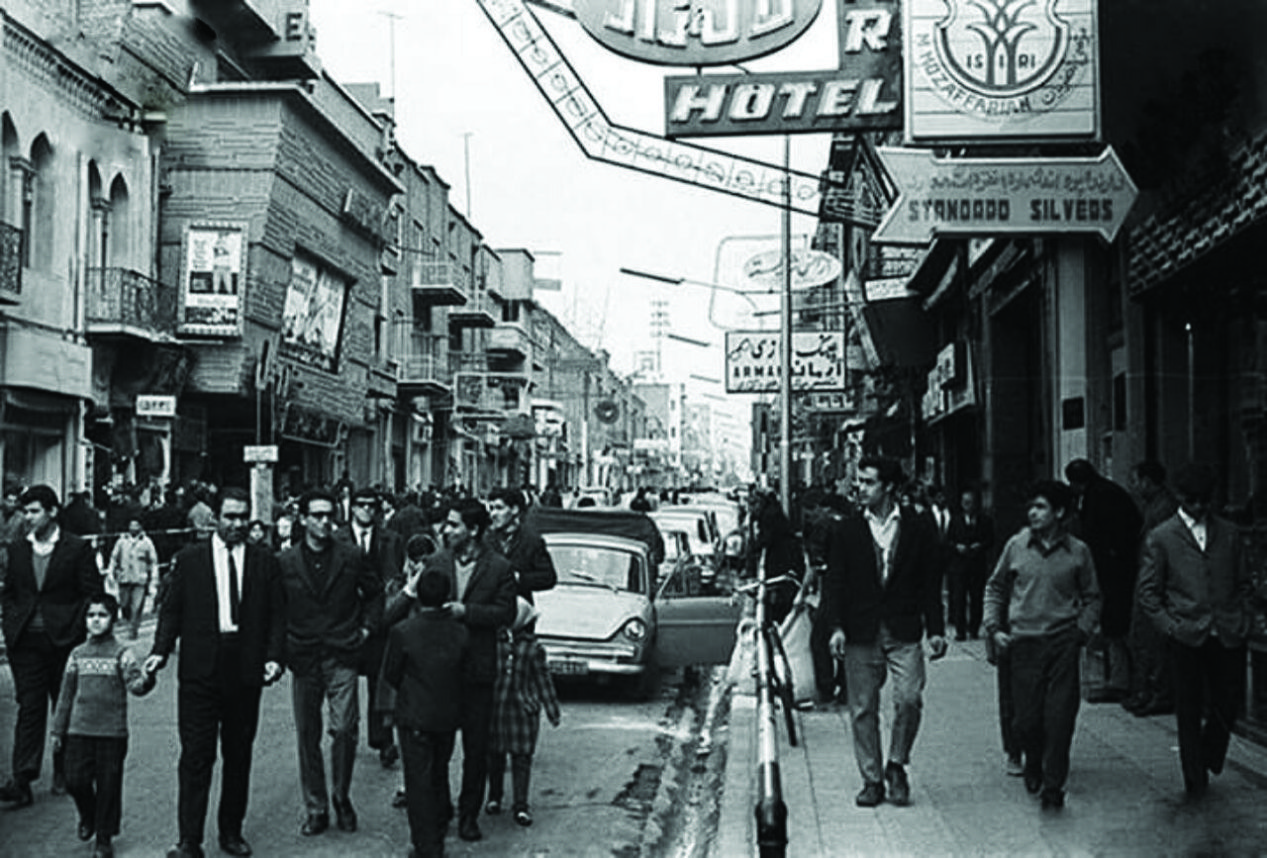
In our house on Shah Reza Street, the rooms were full of echoes. The hallways were long and dim and haunted by shadows. The garden — so vast I never thought I could find the edges alone — hid the ghosts of strangers who came alive in the moonlight and spoke to me till dawn.
In our house on Shah Reza Street in Iran, my grandfather Khanbaba Barkhordar, known to everyone as Aaghaa — Sir — walked around with his cane, always dressed in a suit, and commanded the servants as if to demand their soul. He was a tall man with great authority and boundless ambition. Among the first generation of Jews liberated from the ghetto, he had prospered under Reza Shah and spoke his name with the reverence due a god.
Aaghaa’s first wife, a Jewish girl from Kashan, had proven infertile, so he secured her permission to marry again. It wasn’t so much children he wanted but an heir — a boy who would carry his name and ensure that his legacy lived on. With his second wife, he had a son who died shortly after birth, two daughters and, finally, another son — my father — whom Aaghaa cherished most in the world and who was expected to produce (Aaghaa was adamant) many heirs of his own.
My father was 17 years old when he walked with Aaghaa through the doors of my mother’s home on Simorgh Street. He was a gorgeous boy, blond and dashing and dressed in a European suit with his hair greased back in the style of the time. “But she’s only 14,” my mother’s parents protested to Aaghaa when he asked for her hand in marriage. Peeking through the living room curtains, I am told, my mother saw her suitor and declared that it would be him or no one.
There was a fairy-tale wedding in the officers club in Tehran. Aaghaa invited a thousand guests, showered the bride with jewels, brought the newlyweds to live with him and his two wives in the house on Shah Reza Street. My parents had three girls. Aaghaa would have no heirs.
They were remarkable men, Aaghaa and other fathers of his generation. Born in Qajar-era, Iran, they had inherited 700 years’ worth of helplessness and impotence. They grew up as second-class citizens, considered ritually impure and forever under threat of extinction by hostile mobs loyal to one Shiite mullah or another. Most were poor; many forever hungry. All were forbidden by law to touch a Muslim or anything she wore or might eat, to go out on rainy days for fear that the rain might wash their impurity into the town’s water supply, to testify in their own defense in court, and to learn to read and write the language of the country. They were routinely beaten by Muslims in public places, verbally assaulted, belittled and denounced. They could be murdered by anyone for any reason; if punished at all, the killer would only pay a fine equal to the market price of a cow.
He couldn’t understand why his very large and varied collection of sons and daughters couldn’t merely do as told and be happy about it.
But the same society that was hell-bent on stripping these men of every shred of confidence or ability also imposed on them the obligation to be father not only to their own children, but to their siblings and in-laws and extended families as well. A man was nothing if he couldn’t protect and provide, lead and direct his own clan.
The second-born of five boys and a girl, Aaghaa was designated patriarch while still in his teens. Thanks to the Alliance Israelite organization, which had established schools in Jewish ghettoes, and to Reza Shah, who protected Jews and other minorities from the worst of the mullahs’ malevolence, Aaghaa became literate in French and Farsi. Newly married after World War I, he took his wife to Europe in search of business opportunities not only for himself but for his four brothers as well. Back in Iran a few years later, he tried to ensure that his two sisters married decent men who would take care of them properly; that his brothers received an education and made a living; that everyone’s children stayed on the straight and narrow so that the family name — the all-important, live-or-die-by family name — remain unblemished.
He tried, too, to withstand, with wisdom and honor, the savage onslaught of history: two foreign occupations that left the country’s economy in ruins; a famine that killed half the population and drove some to cannibalism; cholera and typhus epidemics that decimated families. He tried to gracefully accept and adapt to the tsunami of new ideas and modern practices — women’s rights, secular schools, children who thought they knew better than their parents. He succeeded more than he failed. That’s a testament to his strength and resilience and to that of all the men of his generation, who walked out of the ghettoes bearing the yokes of oppression and nevertheless managed to rise and prosper, learn and adjust, forgive and trust.
They succeeded more than they failed, but because each was father not only to his children but also to his wife and siblings, to their spouses and children, to servants who were lifelong employees and employees who depended on him for their families’ survival, the cost of failure for each was great and lasting, the weight of it ruinous to anyone with a conscience and a sense of duty.
In our house on Shah Reza Street, Aaghaa became old and ill and embittered by life’s disloyalty. His two wives had not proven to be as good at cohabiting and co-parenting as he had envisioned. Two of his brothers, whose education he thought he had financed by his own hard work and financial sacrifice, had used the money for a years-long junket in France; they returned to Iran unskilled and impecunious, bad boys who dressed well but couldn’t hold down a job. One of his sisters married a psychiatrist who turned out to have a few mental illnesses of his own. A granddaughter eloped with her Muslim math tutor.
Even in old age, Aaghaa was wealthy, elegant, ambitious and generous. He believed deeply in the value of education for girls as well as boys. He believed in treating the underdog with kindness, in lifting up the helpless. But he couldn’t understand why his very large and varied collection of sons and daughters couldn’t merely do as told and be happy about it. He didn’t see why women, once educated, should believe they knew better than a man; why God, having given him a son, was hell-bent on burying Aaghaa’s name. So he lit one unfiltered cigarette with the butt of another, stopped going out, and instead received all his callers at home.
I remember sitting next to him in the first-floor salon with the stone floor and the large French doors that opened onto the rose garden, watching everyone and listening to their tales. There was a dark-skinned, gaunt and shivery young man with a battered briefcase who came every few months to collect taxes; he left instead with a payoff and a promise that there would be more next time. There was a retired chauffeur, an emaciated, old opium addict who had lost his ability to work and came once a week only to collect his pension. There was a woman — “The Lady of Light,” Aaghaa called her ironically — who had married three times and buried each husband after each “accidentally” drank a glass of poisoned tea. Aaghaa was disdainful of the tax man. He tolerated the chauffeur. But it was the black widow whom he respected and reckoned with, although she was nothing like his idea of an “appropriate” woman, nothing like he would have wished for or tolerated in his family. She was, I believe, just another embodiment of the inherent contradictions and opposing forces that defined his time.
In our house on Shah Reza Street, Aaghaa gave his life, rather prematurely, to the cigarettes he was so fond of smoking. The world he left — 1960s Iran — little resembled the one he was born into. Like the single thread of spun silk that, when pulled, will set loose a constellation of knots, his death disbanded the Barkhordar tribe and gave each nuclear family at once the freedom and the burden to fend for itself.
Still in his late 20s, my father had been raised to obey and emulate the patriarch unreservedly. He was young enough to see the flaws and shortcomings in the traditional way of thinking, too old to entirely shake the old king’s shadow. He never once questioned or tried to shrug off his eternal duty to safeguard the well-being of every person in the family, but in the new, improved Iran, he didn’t have anything close to the absolute authority Aaghaa or other men of his generation had been able to wield.
It was a schizophrenic variety of fatherhood that my father and many men in modern Iran were expected to practice. They had all the responsibility but not as much sovereignty. They had to put up with parenting advice from pediatricians, psychologists, the government, schools and women’s magazines. They gave it all for their children to become more educated, worldly and aware than they had ever been. It was at once a source of great pride and exquisite tension.
In our house, my father was outnumbered six to one by women (not counting the old butler, the gardener and the opium-addicted chauffeur). There was Aaghaa’s first and second wives, both of whom would outlive him by a good four decades. Their relationship could have been the blueprint for the kind of “peaceful coexistence” practiced today by North and South Korea. Either one of them could have led an army through battle and lived to tell about it. There was my mother, headstrong, independent and unwilling to settle into the role of pretty wallflower. To this day, she believes and acts as if obstacles are made to be overcome; that the world is too slanted in men’s favor; that women, usually, know best. And there were my sisters and me, expressly raised by our parents to be bold and self-reliant.
My father never seemed to regret not having a son, never saw his daughters as anything less than men. Up until our 20s, he did expect us to obey him as fully as he had been expected to obey Aaghaa. His decisions for us were more right than wrong. When they were wrong, the cost was great and lasting. He had to live with this.
Even in Iran’s heyday, in the mid-1970s, my parents wanted their daughters to have greater professional and personal freedom than a traditional culture could afford. They moved to the United States when very few Iranians wouldn’t so much as consider leaving. They left their home, their established business, the reputation and social standing that was so essential to every family and individual’s sense of self. They left for a place where they knew laws and norms did not favor males nearly as much, where youth was valued above experience, children knew everything the minute they left the womb, and good parenting meant standing back and letting one’s offspring “make their own mistakes.”
For my father, from a selfish point of view, this was an illogical move. So was the decision of the tens of thousands of other fathers to leave Iran when the revolution gave them back all the rights and dominion that the shah and Westernization had taken away. For a great many of them, it meant settling into a life of irrelevance outside the home and a sense of ineffectiveness inside it. It meant giving their children leave to dispute and reject some of the most fundamental truths the fathers had known and counted on. Sometimes, it meant learning to accept the unacceptable — divorce, homosexuality, tattoos, nursing homes, religious orthodoxy and intermarriage.
It was an act of courage and self-sacrifice that, to this day, has not been sufficiently recognized.
So this year, on Father’s Day, to my father and his, and to all the other fathers of Jewish-Iranian men and women who have, for a lifetime, shouldered the task of looking after us no matter how old we are and how often we have disappointed them; who gave up or saw eroded their own godlike positions in the family but never abdicated their role as mentor, provider, rock and guardian-in-chief; who by leaving Iran, chose our future over their own; let me say, thank you.
To Fathers Who Put Family First Read More »
Last Shabbat, I went for a walk with my wife and son in the area around La Cienega Park. As we were strolling, I spotted a Little League game about to begin on one of the smaller fields. The stands were filled with excited parents; the kids in the dugouts were chanting and crowing in anticipation. Then the kids lined up on the third base and first base lines, and repeated this mantra: “I trust in God. I love my country and will respect its laws. I will play fair and strive to win. But win or lose, I will always do my best.”
The Little League ethos is an American ethos. And it has an impact. This week, a beautiful viral video went around of a high school baseball playoff game. The pitcher faced down the batter with a trip to the state championship on the line. The pitcher struck him out — but as his teammates rushed the mound to celebrate, the pitcher approached the batter and hugged him. The two were childhood friends, and the pitcher wanted to comfort his friend before celebrating with his teammates.
These are small moments of light in a time of division.
America needs communal spaces. We need places to come together and remember what unifies us. And these things do unify us: trust in God, love for country and the Constitution, playing fair, and effort.
And yet it seems that too many of these elements are undermined day after day for partisan purposes.
Trust in God doesn’t mean compulsory religion; it means that as a country, we have to trust in a God who values us as made in His image. The Ten Commandments lie at the root of our civilization. That doesn’t mean everyone in the United States has to believe in the Judeo-Christian God. It does mean that our foundations mean something, and that attempts to encroach on the religious freedoms of others undermine those foundations.
Love for country, too, has been undermined. On the right, some people boil down love of country to signaling about the flag. Common symbols are important. But love of country is obviously about much more than that: It’s about love of what makes America unique, our principles of God-given freedoms and limited government and communally cultivated virtue. And on the left, patriotism has been demeaned as jingoism. Those who treasure the flag have been mocked as narrow-minded anti-globalists. That’s wrong, and it’s nasty, to boot.
How about playing fair and making an effort? We’ve been told by politicians on both sides of the aisle that our own failures can be blamed on the society around us. For many on the right, lack of competitiveness isn’t due to personal failures, but to foreign countries and immigrants; for many on the left, personal failures are due to societal racism and bigotry. We live in the freest country in the history of the world — abiding by the rules doesn’t mean equality of outcome; it means that if we try our hardest, we deserve the results we receive. One of those Little League teams lost. But that doesn’t mean the game isn’t worth playing or that somebody cheated.
Little League reminds us of the most important thing in life: the values we wish to teach our children. We can teach our children that they should trust in God, love their country, play fair and try hard — or we can teach them the opposite. We can teach our children that they share the playing field with opponents, but that at the end of the game, we’re all on the same team — or we can teach them to spike their opponents and spit in their eyes. That’s our choice.
I know which one I want to teach my kids. n
Ben Shapiro is a best-selling author, editor-in-chief at The Daily Wire and host of the conservative podcast “The Ben Shapiro Show.”
On the Same Team in the Game of Life Read More »
For almost three decades, U.S. administrations have tiptoed around the egregious human rights violations perpetrated by the Kim regimes in North Korea. But U.S. Secretary of State Michael Pompeo already has changed the equation, by securing the release of three American detainees — a reminder that the United States still has the clout to move the needle on human rights.
Now the world has witnessed the historic summit on denuclearization, between President Donald Trump and Kim Jong Un in Singapore. Clearly, human rights did not take center stage. As the president returns home, we urge him to put the release of Japanese, other foreign and South Korean abductees, the reunion of separated Korean families, and the complete, verifiable and irreversible dismantlement of the North Korean political prison camps, as part of the bill the Democratic People’s Republic of Korea must pay to become a normal and responsible member of the international community.
Three generations of the Kim family regime have continued to develop nuclear weapons and ballistic missiles at the expense of the human security of North Koreans, and to egregiously violate the human rights of its citizens. To tackle North Korean threats, the Trump administration has creatively applied fundamental elements of national power — including military (deploying assets off the Korean peninsula) and economic power (international sanctions).
Human rights cannot be treated as a sidebar issue.
Kim Jong Un insists on security guarantees, but history teaches that liberal democracies shouldn’t try to guarantee the survival of a regime that runs political prison camps and commits crimes against humanity. South Korean President Moon Jae-in and his advisers represent a generation of progressive intellectuals who helped democratize their nation. Their lasting legacy ultimately will be defined by their stance on North Korean human rights. Will they appease tyranny and lead South Korea down the path of catastrophic compromise? Or will they become heroes who brought freedom and human rights to both Koreas?
Time will tell. But early signs from Seoul are not encouraging. The recent ban on leaflet balloon launches and loudspeaker broadcasting into North Korea is one reason for concern. North Korean escapees in South Korea give voice to silenced millions. At this critical crossroad, the South Korean administration must protect these heroes and ensure their voices are heard, not muzzled. Now, in the aura of the summit, the spotlight shifts to U.S. summit diplomacy. Will it become a historic achievement for Trump or just a déjà vu North Korean scam?
To achieve real peace and stability on the Korean Peninsula and in Northeast Asia — a fundamental U.S. security interest — the nature of the Kim regime and its horrific human rights abuses must remain in focus.
Human rights cannot be treated as a sidebar issue, possibly sacrificed for a wink and a nod and a photo-op. Human rights cannot be postponed until an ever-elusive future scenario in which the Kim regime miraculously agrees to protect the rights of its citizens. Despots do not give away human rights out of the goodness of their hearts. Human rights always are achieved and protected through struggle. Can the U.S. remove the nuclear threat and guarantee human rights simultaneously?
President Trump, please take note: America already did it and with a much more dangerous foe. During the Cold War, President Ronald Reagan and then-Secretary of State George Shultz used the issue of freedom for Soviet Jewry as the litmus test for Soviet intentions on nuclear disarmament. Eventually, human rights prevailed and the communist system dissolved without a shot being fired.
The U.S. should counter Kim’s cycle of “charm offensives” not through appeasement but through verifiable changes. It is important to witness the blowing up of one nuclear test site. Of equal importance will be the dismantling of Kim’s gulag. When that occurs — and only then — can the world be assured that the two estranged Koreas are on the path to a peaceful reunification and a hopeful future for all.
Rabbi Abraham Cooper is associate dean and director of the Global Social Action Agenda of the Simon Wiesenthal Center. Greg Scarlatoiu is executive director of the Committee for Human Rights in North Korea (HRNK), on whose board Cooper serves.
North Koreans Also Have Human Rights Read More »
I learned three important lessons from my father, Roger Selya.
He is a geographer who retired after 37 years of teaching at the University of Cincinnati. He is a master at giving directions by foot and by car, and so the first lesson I learned early on was that all directions should start with, “Let me draw you a map,” complete with hand-drawn landmarks and arrows indicating which way to turn. On those maps, north is not necessarily at the top, because, as he would constantly remind us, north is not up.
The second lesson is to share the work. My grandfather Saul Selya swore that no daughter-in-law would complain about his son’s ability to do housework, and so he taught my father to cook, clean and do laundry. After 48 years of marriage, my mother, Barbara, is grateful that the rule in our house is “whoever cooks doesn’t have to clean up.” Some of our best heart-to-heart conversations have been while we do the dishes after the seder, and the next generation of Selya daughters-in-law appreciates the strength of my grandfather’s commitment to equality back in the 1950s.
The third and most profound lesson I have learned from my father is the value of a personal letter, written on paper and mailed in an envelope. There was no Jewish high school in Cincinnati when I was growing up, so my parents made a huge sacrifice on behalf of my Jewish education and sent me to the Frisch School, in Paramus, N.J. Long-distance phone calls were still expensive in the 1980s, so we didn’t talk very often. Instead, he would write me a letter every Thursday. And 30-plus years later, he still writes me a weekly letter, even though we now speak on the phone multiple times a week. He has terrible handwriting, so he types it on the computer and signs it “Love, Ab.” He writes to my brothers, too, using the same template but personalizing the letters to include our entire families, including pets.
During the week, he saves cartoons and coupons from the newspaper, and book reviews that I might have missed, and he puts it all in the mail with a note. He used to update me on his students and his research, and the latest debates on campus. Now that he is retired, he tells me about his volunteer work at the blood bank, the music he is practicing on the piano and cello, the books he is reading, what he is planting in the garden, my brothers, community news and the weather.
30-plus years later, he still writes me a weekly letter, even though we now speak on the phone multiple times a week.
I have most of these letters, and now we have a chronicle of the Selya family over the past 30 years. Scattered among the regular weather reports and shul updates are the treasures: the excitement about our graduations, engagements, weddings, pregnancies, births; sorrow about the deaths of friends and family; conversations about health; plans for the future and stories about the past. I am grateful that my daughters will be able to reread the letters he wrote after he met them for the first time or after he celebrated their bat mitzvahs and graduations. I will admit that I do most of my communication via email, but when it really matters, when a friend has a baby or loses a parent, I get out the stationary and write a letter by hand.
The only time my father misses a letter is if we are together, and then he will apologetically say, “No letter this week.” Even if we saw each other only the week before, he will still write, just to say how big the kids are getting and how quiet the house is now that we have gone.
No matter how long or short the letter is, what he is really saying is, “I’m thinking about you” and “I miss you.” When we open his letter every week, my daughters take the time to read it, to laugh at the corny cartoons and connect with their saba. In this age of instant, ephemeral digital communication, his letters are a tangible expression of love across the miles. Abba, I got the message.
Rena Selya Cohen has taught the history of science at UCLA and Santa Monica College. She is on the board of B’nai David-Judea.
Three Lessons From My Father Read More »
“Tabby, being here with you reminds me of how your mom and I used to take you and your sister to Farah Park [in Tehran] when you were little. I would sit you both in the grass and wonder what awaited you in Iran, and whether you would know missiles or miracles.”
These were my father’s words during Israel’s 70th Independence Day celebration at a soundstage at Universal Studios on June 10, hosted by the Consulate General of Israel in Los Angeles. My father has been my date to this annual event, wherever it’s been held, for over a decade.
Year after year, there we are — former protected Jewish refugees from Iran; civilian survivors of the hideous Iran-Iraq War; first-hand witnesses of the brutality of unchallenged theocracy; eternally indebted Americans with expired Iranian passports — at a VIP function officially hosted by Israel.
Year after year, as we mingle with fabulous bigwigs, the same thought crosses my mind: I wish these people knew our story.
This year, as we waited among attendees aiming to snag a bite of dessert, my father and I had the same thought: Remember when we had to wait in the ration lines at 5 a.m. during the war just to have some milk and eggs?
I served as director of academic affairs for the consulate from 2005-08. Officially serving for Israel remains the greatest accomplishment I have ever known. Nothing will ever compare with that exquisite experience, in all its charming, chain-smoking Israeli glory.
“Look what you’ve accomplished,” my father said at the event as his eyes scanned the huge venue, reflecting back his own lack of knowledge about most of the names and faces of glamorous guests.
“Baba,” I said in Persian, “Everything I am, everything I’ve done, and everything I’ll do … is because of you.” Since I’ve almost never seen the man cry, I repeat these words to him often in the hope of breaking his tough exterior.
My father escaped Iran with two little girls and a wife in tow, while I have found a way to drive from Westwood to the Miracle Mile using only side streets.
I am a Zionist because of my father, who tried to run away from home to enlist in the Israel Defense Forces during the 1967 war, only to be stopped at the Tehran airport by his frantic mother and father.
One traumatic evening in the late 1980s, at the height of the Iran-Iraq War, my father desperately scooped up my sister and me — one of us under each arm — during a devastating Iraqi aerial bombardment, while my hysterical mother held tightly to his pajamas and we all escaped our home lest it would crumble on us. My father managed to pick me up seconds before a 6-foot-tall window shattered over where I was sitting cross-legged in our hallway, sobbing in the dark and calling out for my parents in my high-pitched 6-year-old voice.
The truth is that I haven’t done a damn thing compared to my father. He managed to escape Iran with two little girls and a wife in tow almost 10 years after the revolution, while I have found a way to drive from Westwood to the Miracle Mile using only side streets.
During the High Holy Days, we often refer to God as “our Father.” The Shemoneh Esrei prayer (also known as the Amidah), the heart of our liturgy, refers to God as “our Rock and our Redeemer.” I realized long ago, somewhere amid the hell and burning sky of that one particular night back in Tehran, that I had a rock above me in the form of a loving God, and a rock physically holding me in the form of my father. And when we finally arrived in America, I understood that my redeemer above had sent me a redeemer on Earth, and he was holding my hand when we landed in Los Angeles in 1989, where we inhaled that first, glorious air of freedom and nachos.
During the June 10 event, sometime between standing together to sing “Hatikvah” and listening to celebrity speaker Mayim Bialik tout Israel’s wonderful water achievements, I turned to my father, and his eyes were welled with tears. Water had broken my rock.
I love you, Baba. Thank you for saving us. Happy Father’s Day.
Tabby Refael is a Los Angeles-based writer.
My Rock and Redeemer Read More »