fbpx

May 10, 2018

Iranian President Claims He Doesn’t Want ‘New Tensions’ After Getting Decimated by Israel

Iranian President Hassan Rouhani reportedly doesn’t want “new tensions” after his country’s military bases were decimated by Israel on the evening of May 9.

According to Agence France-Presse (AFP), Rouhani made that statement to German Chancellor Angela Merkel in a phone call. However, the AFP report also notes that Allaeddine Boroujerdi, chairman of Iran’s parliamentary committee on foreign affairs issued a veiled threat toward Israel for “playing a dangerous game.”

Israel fired missiles into Syria after Iran’s Quds Force launched 20 missiles toward Israel, four of which were intercepted by the Iron Dome. No Israeli casualties occurred from Iran’s missiles, but Israel want to send a message that such strikes would not be tolerated.

According to Israeli Defense Minister Avigdor Lieberman, most of Iran’s military sites were destroyed by Israeli’s retaliatory strikes.

“If we get rain, you will get a flood,” Lieberman declared. “We will not let Iran use Syria as a base to attack us from.”

There were reportedly 23 fighters killed in Israel’s strikes against Iran in Syria

The United States, Britain and Germany all condemned Iran for their missile strikes against Israel. The United Nations has called for calm, but has not directly condemned Iran for their missile strikes.

“The international community must not stand idly by while a tyrannical regime attacks a sovereign nation and continues to threaten the very existence of a member-state of the United Nations,” Israeli Ambassador to the U.N. Danny Danon wrote in a letter to U.N. Chief Antonio Guterres.

Regardless of if the international community stands with Israel or not, Rouhani’s words suggest that Iran now understands that it will face the full fire and fury of Israel if they dare attack the Jewish state again.

Iranian President Claims He Doesn’t Want ‘New Tensions’ After Getting Decimated by Israel Read More »

U.S. Slaps Iran’s Quds Force With New Sanctions

Coming on the heels of its exit from the Iran nuclear deal, the United States has slapped Iran’s Quds Forces with a new batch of sanctions on May 10.

The sanctions are aimed at six individuals and three companies connected to Iran’s Islamic Revolutionary Guard Corps (IRGC) that were pouring millions of dollars into the Quds Forces, the part of the IRGC that funds and trains Iranian terror proxies like Hezbollah.

“The Iranian regime and its Central Bank have abused access to entities in the UAE [United Arab Emirates] to acquire US dollars to fund the IRGC-QF’s malign activities, including to fund and arm its regional proxy groups, by concealing the purpose for which the US dollars were acquired,” Treasury Secretary Steven T. Mnuchin said in a statement. “We are intent on cutting off IRGC revenue streams wherever their source and whatever their destination.”

As Mnuchin’s statement suggested, the U.S. in working in conjunction with the UAE to implement the sanctions.

When President Trump announced the U.S.’s exit from the Iran deal on May 8, he stated that his administration would be re-imposing sanctions on the regime in Tehran in a 90-day timeframe. This new round of sanctions suggest that Trump is following through on that statement.

U.S. Slaps Iran’s Quds Force With New Sanctions Read More »

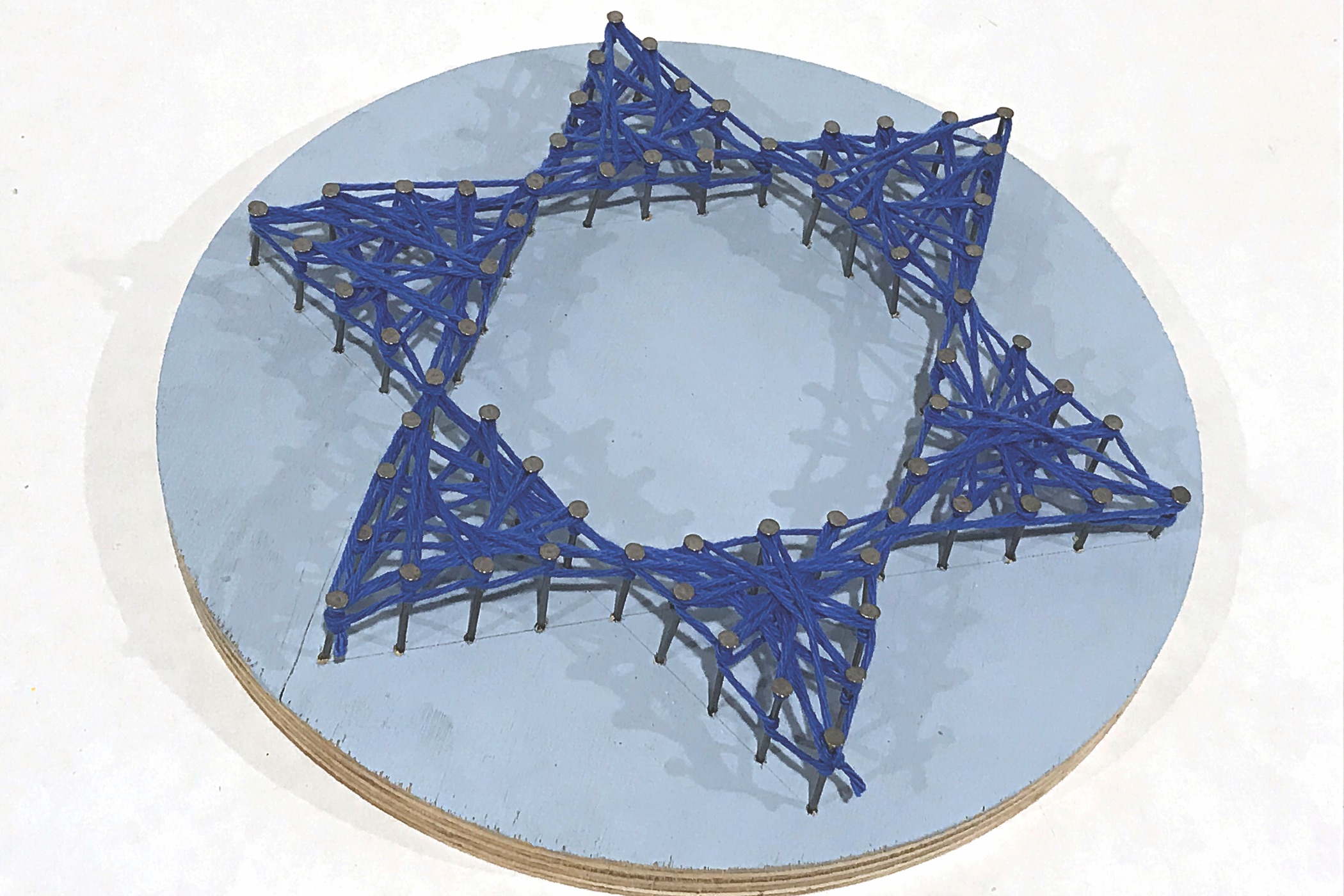
Star of David String Art

One of my favorite crafts when I was a little kid was string art. I remember my fourth-grade teacher helping me pound nails into a piece of wood in a circular pattern, and then I would go from nail to nail with a length of yarn, zigzagging to my heart’s content until I got a pattern that was like a three-dimensional version of my Spirograph.

Now that I’ve grown up (well, physically anyway — maybe not mentally), I’ve continued to do string art, sometimes in wall-size installations. I’ve discovered you can also make string art in the shape of practically anything, such as states, your initials, or as in this example, the Star of David.

What you’ll need:
Wood board
Acrylic paint
Paintbrush
Pencil
Ruler
Drill
Nails
Hammer
Yarn in two colors

1.

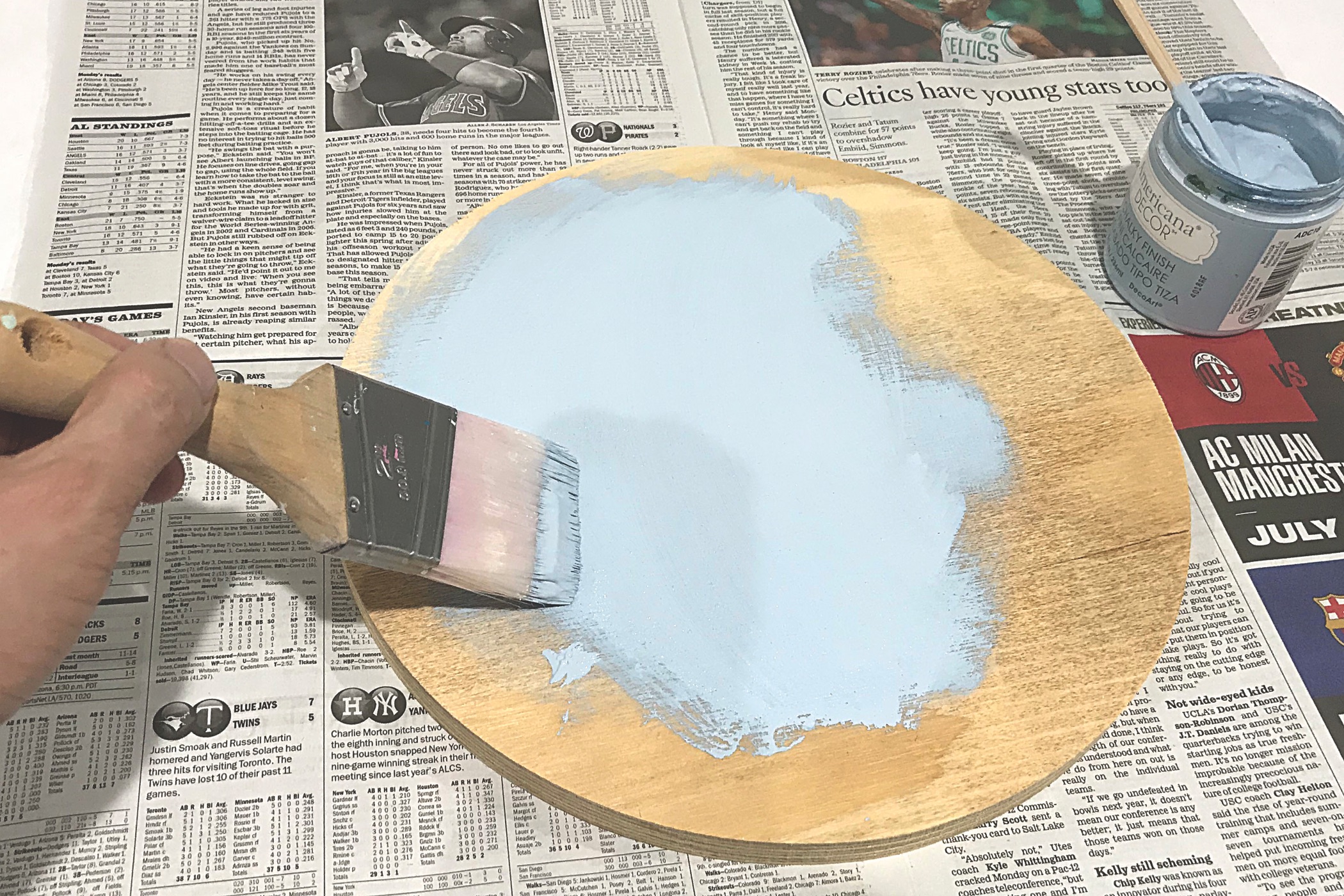
1. Start with a wood board. Circular saws and I are not good friends, so I bought this pre-cut 12-inch diameter board at Orchard Supply Hardware for about $5. You can leave it unfinished, or paint it like I did with acrylic paint.

2.

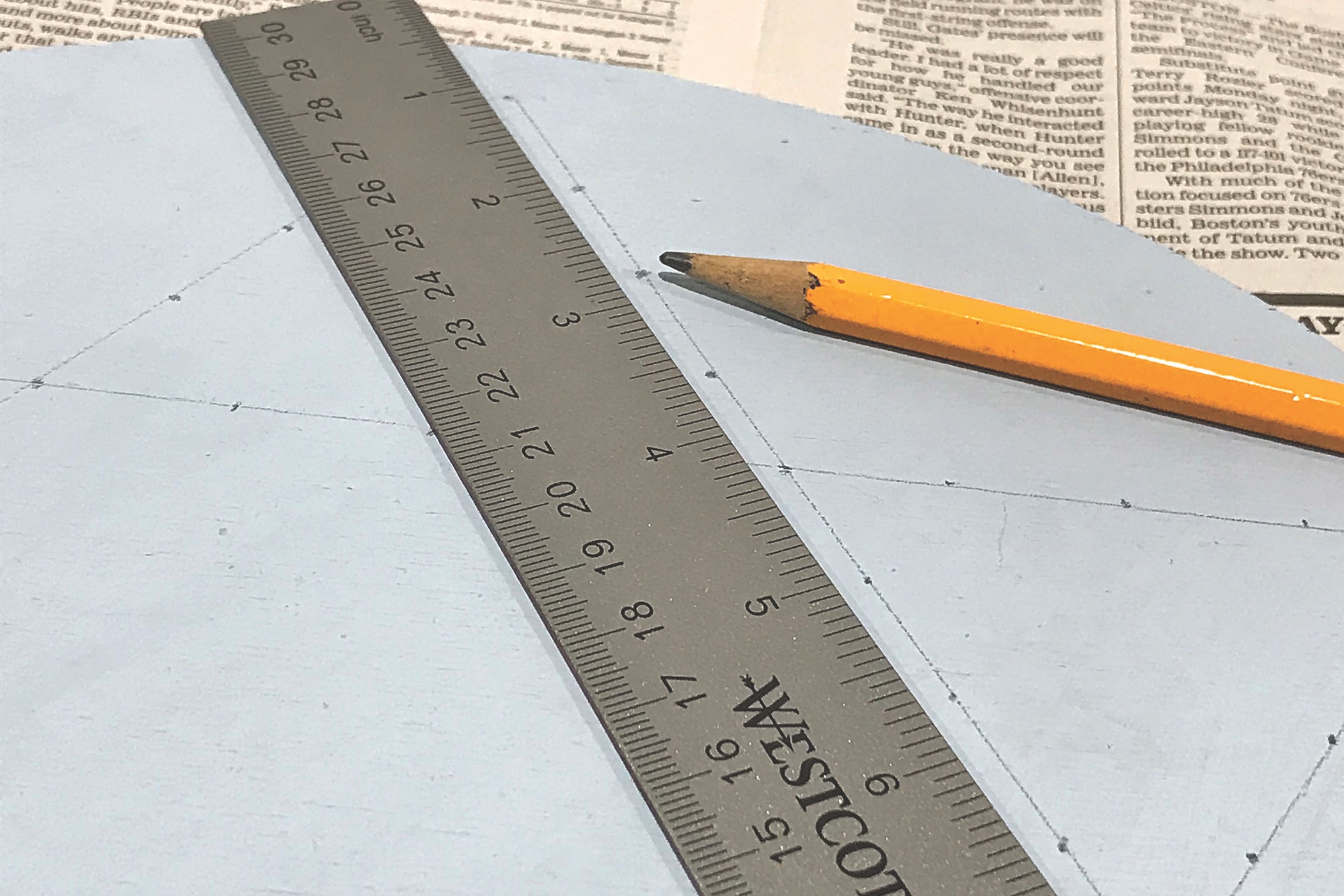
2. Draw a Star of David on the board. To do this, I cut out a triangle from a piece of paper and traced it on the board with a pencil. Then I rotated the triangle 180 degrees and traced it again to form the star.

3.

3. Using a ruler to help you measure, place a mark about every 3/4ths of an inch along the Star of David. These marks indicate where the nails will go.

4.

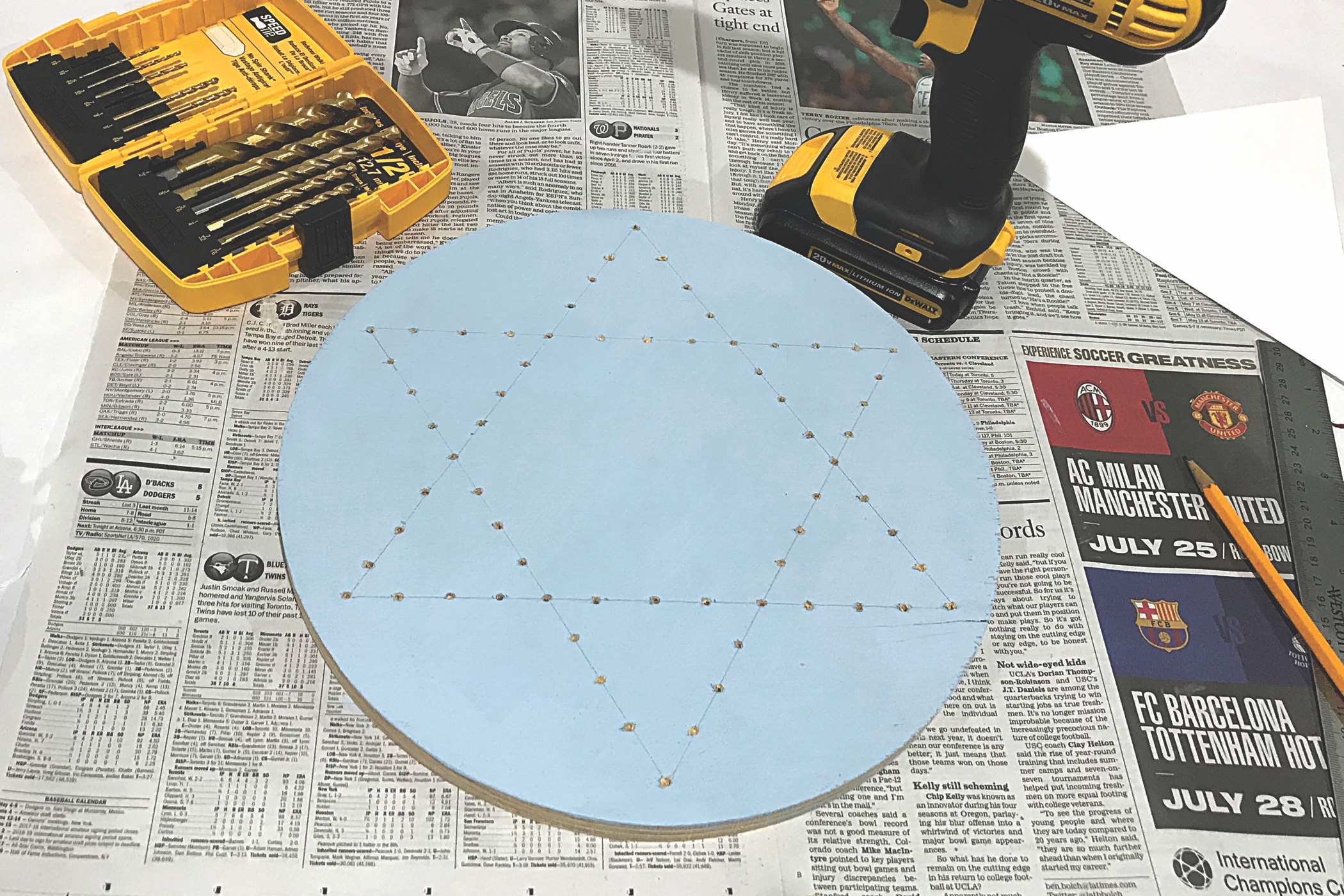
4. Drill a small hole at each mark. This step is optional — it just helps you to insert the nails later.

5.

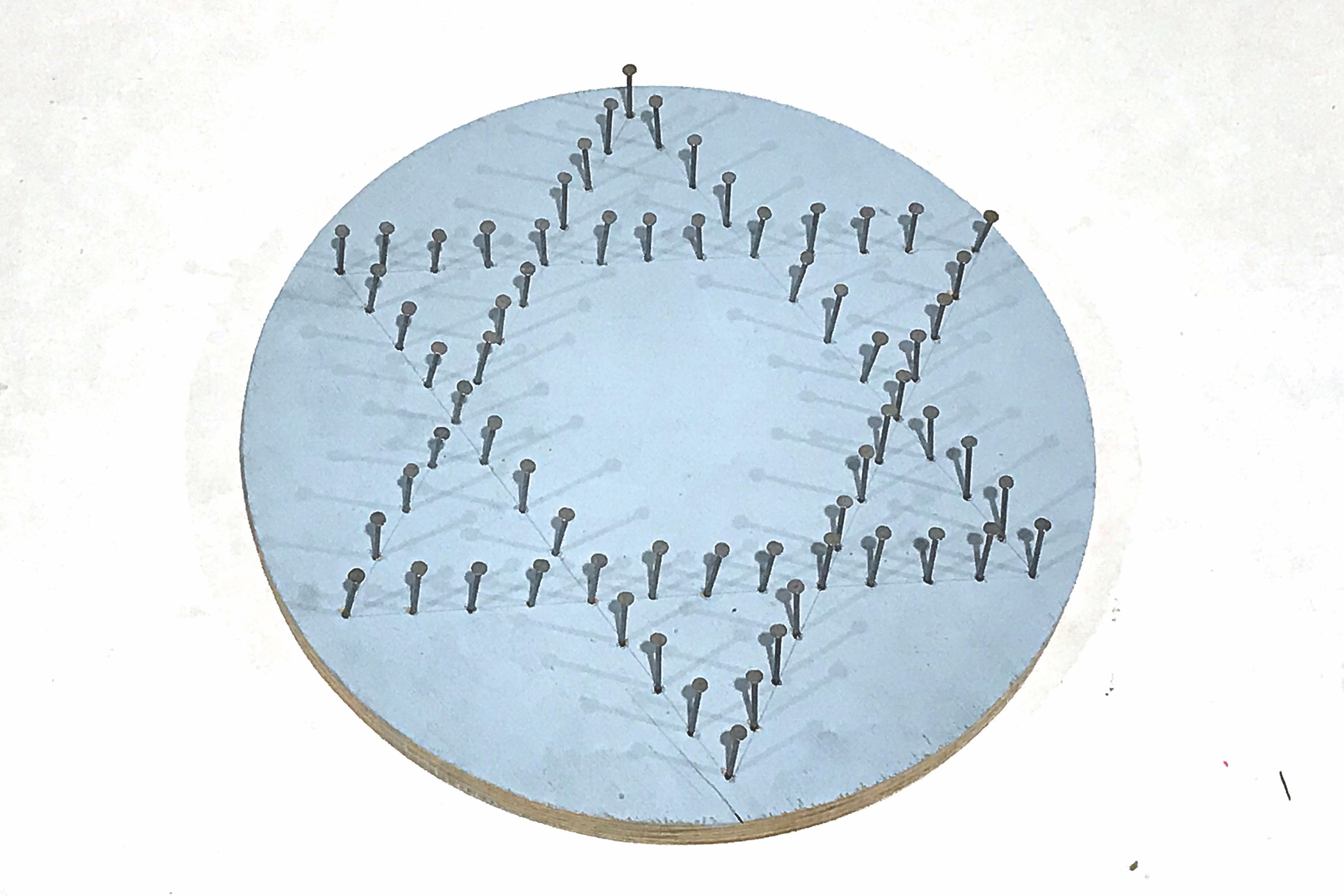
5. Drive a nail into each hole on the board. Try to hammer the nails straight up and down, and to the same depth. As you’ll see, the nail heads provide a nice design element to the finished art.

6.

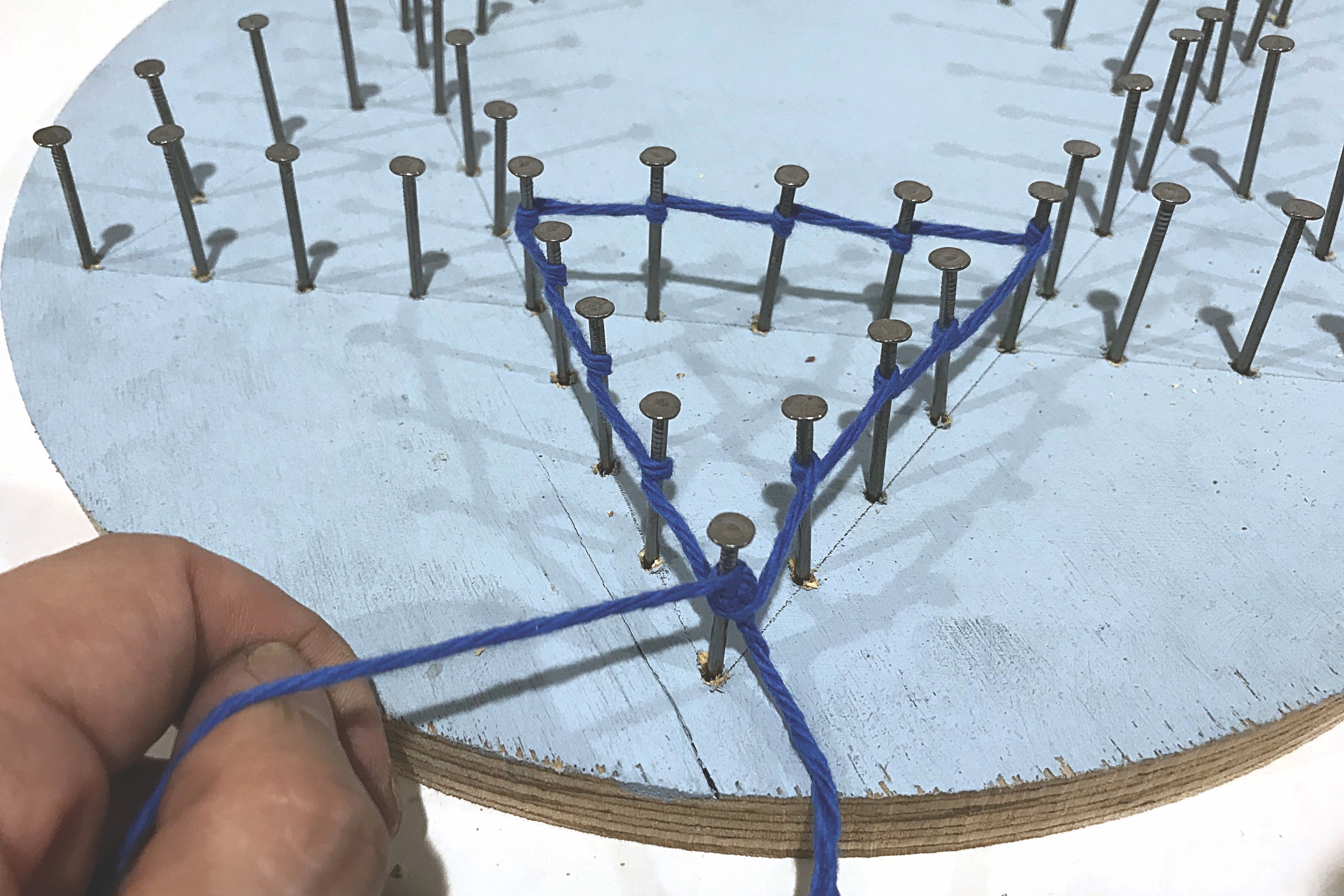
6. Now it’s time to string. Working one triangle of the star at a time, tie one end of the yarn to a nail. Then form a triangle with the yarn, looping the yarn around each nail.

7.

7. After the outer triangle is formed, fill in the middle by zigzagging the yarn back and forth between nails that are opposite each other. When one triangle is finished, move on to the adjacent one until all six triangles are done. Tie a double knot at the end to secure the yarn to the final nail.

8.

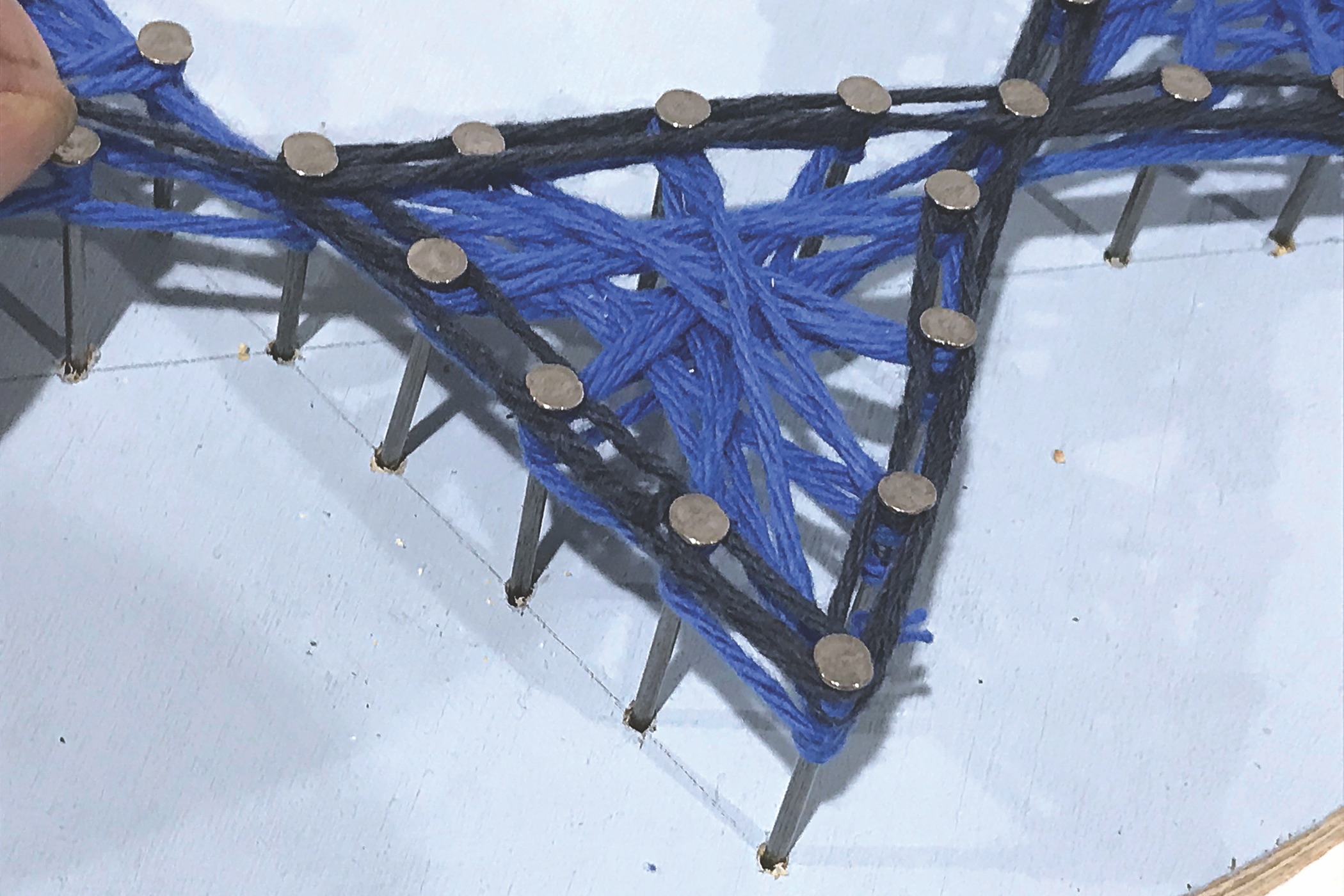
8. With a second color of yarn that is darker than the first, outline the Star of David by wrapping the yarn around the nails delineating the actual shape, overlapping the lighter-color yarn that is already there.


Jonathan Fong is the author of “Flowers That Wow” and “Parties That Wow,” and host of “Style With a Smile” on YouTube. You can see more of his do-it-yourself projects at jonathanfongstyle.com.

Star of David String Art Read More »

Obituaries: Week of May 11, 2018

Abraham Elmaleh Almog died March 26 at 89. Survived by daughter Nedmi; sons Oded, Boaz; 18 grandchildren; 2 great-grandchildren; sisters Messody, Rica. Chevra Kadisha

Reba Block died April 5 at 95. Survived by daughters Lisa (Jeffrey) Cohen, Liz Sampson; 2 grandchildren. Hillside

Manya Breuer died March 27 at 95. Survived by daughters Diane (Luigi Manna), Marsha; son Greg (Elizabeth); 3 grandchildren. Mount Sinai

Sanford “Sandy” E. Ettinger died April 3 at 90. Survived by daughter Susan; son Robert (Jane Zimmerman); 2 grandchildren. Groman Eden Mortuary

Naomi Goldurs died April 4 at 101. Survived by son Stuart; sister-in-law Ruth Karp. Hillside

Morton K. Greenspoon died April 2 at 89. Survived by wife Sandra; daughters Andrea Medina, Claudia Linn Mosher, Ronda Diane Carnegie; 6 grandchildren; 2 great-grandchildren. Mount Sinai 

Alice Fleece Handelman died April 1 at 69. Survived by husband Ira; daughter Ariel; son Sam; brother Jon (Janet) Bernstein. Mount Sinai

Touran Hekmat died March 30 at 95. Survived by daughter Kian; sons Kambiz, Kamran, Soheil; grandchildren; great-grandchildren. Mount Sinai

Anne Hillman died March 29 at 105. Survived by daughter Lenore (Joe) Debuono; 3 grandchildren; 2 great-grandchildren. Mount Sinai

Sally Holtz died March 27 at 86. Survived by daughter Cynthia (Paul Nishman); sons Sheldon (Anne-Michelle), Craig (Marcia); 7 grandchildren; 2 great-grandchildren; sister Toby Wank. Hillside

Ethel Jaffe died April 1 at 98. Survived by 3 grandchildren. Mount Sinai

Irving Kahn died March 28 at 96. Survived by daughters Laurie (Lyn) Konheim, Joan (Bob) Cohen, Bonnie (Bruce) Martin, 3 grandchildren; 5 great-grandchildren. Hillside

Harold William Klein died March 31 at 86. Survived by daughter Marci Fine; sons Andrew (Stacey), Larry (Diane); 6 grandchildren; brothers Jack (Joan), Robert. Mount Sinai

Daniel Leonard Landau died March 29 at 79. Survived by wife Tatiana; sons Yair (Susan Purcelli), Steve (Beth Lieberman); 4 grandchildren; brother Nathan (Carol Dorf); sisters-in-law, Renai Harari, Tamara Strubul. Mount Sinai

Johanna Kasin Lemlech died March 23 at 87. Survived by husband Bernard; daughters Donna (Michael) Steiger, Margery (Simon) Walshaw; 5 grandchildren. Mount Sinai

Aaron Low died March 31 at 88. Survived by wife Eleanor; daughter Andrea; son Steven. Hillside

Rita Rosenfeld died March 27 at 88. Survived by son Malcolm; daughter Lynn Hoffman-Rosenfeld; 2 grandchildren. Mount Sinai

Jay Rothstein died April 1 at 93. Survived by his daughter Sheryl; son  Gary (Betty); 3 grandchildren; sister Phyllis Ingraham. Mount Sinai

Evelyn Russell died March 25 at 87. Survived by stepdaughters Mary (Mike Picard), Lois (Donald) Asay, Donna (Dave) Boyle, Alice; 8 grandchildren; 5 great-grandchildren. Hillside

David Sacherman died March 31 at 96. Survived by wife Eileen; son David (Connie); stepdaughter Andrea Henkart; stepson Mark (Myrna) Franks; 3 grandchildren. Hillside

Rosalind Ryza died March 27 at 89. Survived by daughter Florence; son Stephen Louis; 3 grandchildren. Mount Sinai

Lillian Schindler died March 28 at 107. Survived by daughter Sondra Sacks; 3 grandchildren; 3 great-grandchildren. Mount Sinai

Gilbert Smith died March 24 at 86. Survived by daughters Allison (Oscar Rudnick), Deborah (Darryl) Klein; 3 grandchildren. Hillside

Janice F. Smith died March 20 at 93. Survived by niece Diane (Philip) Goldenring; nephew Peter (Robin). Mount Sinai

Paul Lewis Solotkin died March 30 at 70. Survived by wife Darlene; daughters Jennifer (Matthew) Moore, Stephanie (Josh) Davis; 3 grandchildren. Mount Sinai

Darrell Spector died March 28 at 66. Survived by wife Bridgitte; brother Neill.

Jaimie Stephenson died April 3 at 69. Survived by daughter Erica; son Brandon (Shaula); 1 grandchild; brothers Richard (Leslie), Keith Kanner. Hillside

Elliot Stern died March 27 at 63. Survived by wife Mary Anne; brother Steve; mother-in-law Mary Cartaino. Hillside

Shirley Sutter died March 30 at 90. Survived by daughters Valerie (Rick), Sandra (Mark) Abbruzzese; sons Michael; 7 grandchildren; brothers Jack Azoff, William Azoff. Mount Sinai

David Timsit died April 1 at 74. Survived by wife Diana; sons Oliver, Justin, Cliff, Didier (Elise); 5 grandchildren; sister Claudine. Mount Sinai 

Obituaries: Week of May 11, 2018 Read More »

What’s Happening in Jewish L.A. May 11-17: Comedy Festival, Former Israeli Prime Minister

FRI MAY 11
EGGEMON COMEDY FESTIVAL

More than 30 comedians ranging from Los Angeles’ most promising up-and-comers to international headliners and celebrities converge for the three-day Eggemon Comedy Festival, to be held at a private, outdoor space in the heart of Mid-City. Featuring Danny Lobell, Erica Rhodes and headlined by Todd Glass, the festival features comedians sharing their best stories around the Shabbat table; a comedy music variety show; an industry panel; a Mother’s Day show; food vendors from some of L.A.’s top restaurants; complimentary drinks, lounge area, photo ops and even free-range, live chickens roaming the area. Friday 7 p.m. Saturday 8:30 p.m. Sunday 2 p.m. $32 Friday, $22 Saturday and Sunday, $63 festival pass. Address to be provided upon ticket purchase. eggemon.com.

SAT MAY 12
“ALEICHEM SHOLOM!: THE WIT AND WISDOM OF SHOLOM ALEICHEM”

This new musical explores the life of the beloved Yiddish storyteller and his mishpachah, featuring stories about his loves and losses, fame and failures, travels and travails. Based on Aleichem’s letters and stories and the controversy surrounding some of his writings (the musical “Fiddler on the Roof” is based on his stories about Tevye the dairyman), the production is written by and stars Chris DeCarlo and Evelyn Rudie and features music by Ben Weisman. 7:30 p.m. Saturdays, 3:30 p.m. Sundays. Through June 24. $35. Santa Monica Playhouse, 1211 Fourth St. Santa Monica. (310) 394-9779, ext. 1. santamonicaplayhouse.com.

“COMEDY SPORTS”

Ezra Weisz.

The Art of the Teen and Maccabi Clash present a night of improv comedy sports, with guest artist Ezra Weisz, an acting and improvisation instructor. The Art of the Teen offers monthly performance-based gatherings for teens throughout L.A. 7:30-9:30 p.m. Free with own transportation, $10 for the bus from the San Fernando Valley. Westside Jewish Community Center, 5870 W. Olympic Blvd., Los Angeles. (424) 298-0894. theatredybbuk.org.

SUN MAY 13
YOM YERUSHALAYIM DAY

A community-wide celebration of Yom Yerushalayim Day, organized by the Religious Zionists of Los Angeles, starts with morning davening, followed by breakfast and a screening of the documentary “Roadmap Jerusalem,” recognizing Jerusalem as the eternal capital of the Jewish people. The newest holiday on the Jewish calendar — saluting a reunified Jerusalem six weeks after the Passover seder and one week before Shavuot — was created after the Six-Day War in 1967. 8-10 a.m. Free. Young Israel of Century City, 9317 W. Pico Blvd., Los Angeles. (310) 273-6954. For more details, email office@rzla.org.

MOTHER’S DAY REMEMBRANCE SERVICE

Rabbi Cantor Didi Thomas of Temple Emet leads a service that reflects on mothers and how they shape their children’s lives. Featuring pianist Leslie Sharp, violinist Rebecca Lynn, harpist Jill Risigary-Gai and storyteller Michael Katz. Refreshments served. Please contribute canned or dry goods, eyeglasses or hearing aids for the Hillside Chesed Project. 10 a.m. Free. Hillside Memorial Park and Mortuary, 6001 W. Centinela Ave., Los Angeles. (310) 641-0707. hillsidememorial.org/events.

TWO-FOR-ONE CONCERT

Juval Porat (top) and Rebekah Mirsky (bottom).

Billing their latest recordings as “2 New Albums, 1 Concert,” Rebekah Mirsky and Juval Porat introduce “The In-between” and “Theology.” For those who cannot attend, the concert will be live-streamed on Harmony in Unison’s Facebook page. A live band accompanies Porat and Mirsky. 3 p.m. Free, donations welcome. Beth Chayim Chadashim, 6090 W. Pico Blvd., Los Angeles. (323) 931-7023. bcc-la.org.

HONOR OUR MOTHERS AND THE MOTHERLAND

DioNick.

Enjoy an evening of dining, live music and dancing, featuring a kosher dinner by Navaz Catering (appetizer, dinner, dessert) and the DioNick Band. All family members welcome. Open bar. 5 p.m.-midnight. $55 in advance, $70 at the door (children require full ticket price.) Simcha Hall, Nessah Synagogue, 142 S. Rexford Drive, Beverly Hills. (310) 273-2400. nessah.org.

MON MAY 14
MULTIFAITH HARMONY

Leaders from the Muslim, Jewish and Christian communities in Azerbaijan, a former Soviet republic in the Caucasus, sit down together for a program titled “Multifaith Harmony Without Conflict.” The leaders reflect on what religious pluralism and tolerance feel like in a majority-Muslim country. 7:30-9 p.m. Free. Sinai Temple, 10400 Wilshire Blvd., Los Angeles. (310) 474-1518. sinaitemple.org.

TUE MAY 15
WOMEN’S HEALTH LUNCHEON

Charite Ricker, a genetic counselor with the USC Norris Comprehensive Cancer Center, and Joi Morris, a lawyer and patient advocate, discuss “Jewish Inherited Cancers: Diagnosis, Treatment and Prevention” during the Kehillat Israel Society of Sisters Women’s Health Luncheon. Suitable for every generation. Catered by Our Kosher Table. 11 a.m. $18. Kehillat Israel, 16019 W. Sunset Blvd., Pacific Palisades. (310) 459-2328. ourki.org.

JEWISH MEDITATION

Alison Laichter, founder of the Jewish Meditation Center in New York City, infuses meditation techniques with Jewish language, intentions, texts and understanding for an inclusive and illuminating class. Find your center and quiet your mind. 2 p.m. Free. Reservations recommended. Skirball Cultural Center, 2701 N. Sepulveda Blvd., Los Angeles. (310) 440-4500. skirball.org.

“YOU ARE WHAT YOU EAT”

Nicole Guzik.

Kashrut expert David Kraemer and Sinai Temple Rabbi Nicole Guzik closely inspect a favorite pastime of most Jews, “Jewish Eating and Identity Through the Ages.” That happens also to be the title of one of the seven books by Kraemer, a professor of Talmud at the Jewish Theological Seminary. 7:30-9 p.m. Free for members, $25 for general public. Sinai Temple, 10400 Wilshire Blvd., Los Angeles. (310) 474-1518. sinaitemple.org.

DAYS OF REMEMBRANCE

A community commemoration of the Holocaust and the 75th anniversary of the Warsaw Ghetto Uprising features speakers Dorothy Greenstein and Sidonia Lax, survivors of the Warsaw Ghetto. A proclamation and memorial candlelighting ceremony open the Burbank City Council meeting at 6 p.m. Ceremony at 7:15 p.m. Free. St. Francis Xavier Catholic Church, 3801 Scott Road, Burbank. (818) 860-2472. Email thebhrc@gmail.com for more information.

WED MAY 16
ARTISTIC SPECTRUM OF JEWISH LEARNING

Original artwork created by community members with special needs is on display during the OurSpace and the Artistic Spectrum of Jewish Learning 9th Annual Art Gallery. The theme of the show is “How Awesome Is This Place?” The artists will be on hand to explain their pieces. Includes a dessert reception. 7-9 p.m. Free. Valley Beth Shalom, 15739 Ventura Blvd., Encino. (818) 530-4094. vbs.org.

THU MAY 17
MY COUNTRY, MY LIFE

Ehud Barak.

Former Israeli Prime Minister Ehud Barak, the most decorated soldier in Israel’s history, discusses his 2018 memoir, “My Country, My Life: Fighting for Israel, Searching for Peace.” The kibbutz-born Barak, whose story parallels Israel’s 70 years, critiques American and Israeli politicians, paying special attention to the two-state peace process he sought to achieve. 8 p.m. $20-$45. Wilshire Boulevard Temple, 3663 Wilshire Blvd., Los Angeles. (213) 388-2401. livetalksla.org.

GERMAN-JEWISH REFUGEES

Atina Grossman.

Atina Grossman, who teaches modern European and German history and women’s and gender studies at Cooper Union in New York, lectures on “Trauma, Privilege and Adventure in Transit: German Jewish Refugees in Iran and India.” Her discussion examines the ambivalent and paradoxical experiences of Jews who found refuge in the “Orient” of India and Iran after 1933 and the destruction of European Jewry. She draws on a collection of family correspondence and memorabilia from Iran and India, as well as other sources. 4-6 p.m. Free. UCLA Faculty Center, Los Angeles. (310) 267-5327. cjs.ucla.edu.

What’s Happening in Jewish L.A. May 11-17: Comedy Festival, Former Israeli Prime Minister Read More »

Shalom Grill Burglarized

Shalom Grill, a popular kosher restaurant in the Pico-Robertson area, was burglarized before 2 a.m. on May 8.

Footage from security cameras in Shalom Grill shows two people donned in hoodies and masks breaking through the glass at the entrance of the restaurant. They can be seen taking a cash box that had $500 in it.

The burglars also searched through some unknown items in the kitchen area before they escape out the front. They then moved onto the neighboring Japanese restaurant, Sushiko, which they also broke into but set off an alarm.

“They seemed professional,” Shalom Grill co-owner Edwin Nikravesh told NBC Los Angeles. He also pointed out to KTLA that the burglars were able to smash “the window in seconds.”

Nikravesh added that he might use “thicker glass” or “barbed wires” to avoid future burglaries.

The burglars may not have taken much from either restaurant but both restaurants had to be shut down temporarily in order to have the mess created by the burglars cleaned up. Both restaurants are currently open.

Shalom Grill currently has a four-star rating on Yelp!, with the vast majority of reviews heaping praise on the quality of the restaurant’s food, prices and service.

“This is a diamond of a low key spot,” Cristobal R. wrote on April 18. “Friendly service meets excellent quality. Try out the chicken breast kabobs, they are tender, seasoned and cooked to perfection. Don’t pass on the fries with the spicy ketchup either. You can make sure that y’all will become a regular with one try on this spot. Don’t miss it. Treat yourself. I have been and have done so for quite a while now.”

Shalom Grill Burglarized Read More »

Dangerous Signs

Leaders in the American-Jewish community recently have warned against four dangerous developments in Israel: The drift toward one binational state; the hegemony, or rather the dictatorship, of Orthodoxy in Israel, which marginalizes non-Orthodox communities; the treatment of the asylum seekers; and the constant attacks on the Israeli Supreme Court.

Ronald Lauder, president of the World Jewish Congress, wrote an op-ed in the March 18  New York Times, in which he addressed the first two issues, which he called “Israel’s Self-Inflicted Wounds.” Identifying himself as a Republican and a longtime Likud Party supporter, Lauder warned that If current trends continue, Israel will face a stark choice: Grant Palestinians full rights and cease being a Jewish state or rescind their rights and cease being a democracy. “To avoid these unacceptable outcomes,” Lauder concluded, “the only path forward is the two-state solution.”

Then Lauder lamented “Israel’s capitulation to religious extremists and the growing disaffection of the Jewish diaspora.” He warned that many diaspora Jews “have come to feel, particularly over the last few years, that the nation that they have supported politically, financially and spiritually is turning its back on them.” This crisis is even more serious among Jewish millennials, Lauder added, and they are “distancing themselves from Israel because its policies contradict their values.”

The third issue is Israel’s treatment of its African asylum seekers. American Jews rejoiced when Israeli Prime Minister Benjamin Netanyahu announced that Israel had reached an agreement with the United Nations on how to solve the problem. However, it took Netanyahu only six hours to cave in to pressure from his far-right base, and to kill the deal. Leaders of the Anti-Defamation League, the American Jewish Committee, the Union for Reform Judaism and even the board of The Jewish Agency, expressed their bitter disappointment. “People care about this issue,” prominent Reform Rabbi Rick Jacobs told Amir Tibon of Haaretz (April 3). “It goes to the heart of our shared values as Jews.”

As one Jewish leader told Haaretz, “The [Israeli] government is making it harder for us to defend Israel.”

Finally, there is the ongoing attempt to weaken the Israeli Supreme Court, with the latest move being the decision of the Israeli government to propose a bill that will restrict the power of the court to cancel laws that it finds to be unconstitutional. It took none other than a staunch supporter of Israel, law professor Alan Dershowitz, to warn against such a move.

In an interview with Israel’s Channel 1 (May 6), Dershowitz said: “The Israeli judiciary is the jewel of Israeli democracy. When I make the case for Israel around the world, I always focus on the strength of the judiciary. It would be a terrible tragedy if its independence would be in any way diminished by the actions of the Knesset. I hope the prime minister will not allow politics to harm the rule of law.”

That these four issues should have troubled every Israeli, even without the warnings of American Jews, goes without saying. However, these warnings represent a fifth problem for Israelis, which might be as serious as the rest: The danger of losing our best friends and allies, American Jews. As one Jewish leader told Amir Tibon of Haaretz, “The [Israeli] government is making it harder for us to defend Israel.”

The problem is that most Israelis are either not aware of the feelings of their American-Jewish friends, or, worse, they just don’t care. This unfortunate situation, however, is not irreversible. I know from personal experience that things can be different.

More than 30 years ago, I was a member of the Israeli Forum, an organization of young Israelis and American Jews, who forged direct, personal relations and worked together on projects that strengthened the bonds between the two communities. We bypassed the Israeli government and just did the jobs ourselves. Many of us, Israelis, made lifelong  American-Jewish friends.

My advice to the leaders of the American-Jewish community: During your next trip to Israel, don’t waste time on meeting with government ministers and officials. Instead of listening to their hollow speeches about “Jewish unity,” go meet regular Israelis, students, civic society activists and such. Share with them your anxieties and hopes, and trust me, you’ll find them willing to listen.


Uri Dromi is the director general of the Jerusalem Press Club. From 1992-96, he was a spokesman for the Israeli government.

Dangerous Signs Read More »

Shmuel Rosner: In the Mideast, a dangerous summer ahead

[iframe style=”border:none” src=”//html5-player.libsyn.com/embed/episode/id/6579869/height/100/width/480/thumbnail/yes/render-playlist/no/theme/custom/tdest_id/689387/custom-color/dfdfdf” height=”100″ width=”480″ scrolling=”no” allowfullscreen webkitallowfullscreen mozallowfullscreen oallowfullscreen msallowfullscreen]

Jewish Journal Political Editor and New York Times contributor Shmuel Rosner helps us make sense of a Middle East that is getting more dangerous and complicated by the day.

Check out this episode!

Shmuel Rosner: In the Mideast, a dangerous summer ahead Read More »

Could The Iran Deal And BDS Hamper Israel’s Chances At Eurovision Competition?

Each year, hundreds of millions of people tune in to one of television’s most-watched non-sporting events: the Eurovision Song Contest.

Dozens of countries participating in the event submit an original song that is then performed on live television, with an expert jury and viewers voting for their favorite artist.

Though less well-known in the United States, the competition has come to represent European unity (or division, depending on who you ask) and also a symbol of the LGBT movement.

“Eurovision is one of the most popular television shows in Europe,” said Dr. Dean Vuletic, who first saw the song contest while he was studying at the Hebrew University of Jerusalem in 1999.

Dr. Vuletic is the author of “Postwar Europe and the Eurovision Song Contest” (London: Bloomsbury, 2018) and a professor of history at the University of Vienna, Austria. The book, which was published earlier this year, provides an extensive look at the origins of Eurovision and how it evolved in parallel to developments in international relations.

“[Eurovision] has been very popular since its inception in 1956, and since then it has been held every year without fail,” he explained to The Media Line. “It has also reflected social and political changes in Europe.”

This year, the massively popular music contest being held in Lisbon Portugal, is taking place during a political climate marked by heightened tensions in the Middle East following U.S. President Donald Trump’s decision to withdraw Washington from the Iran nuclear deal. When President Trump announced the move, he specifically cited Israeli Prime Minister Benjamin Netanyahu’s presentation last week which proved that Tehran had not come clean about its atomic activities.

Concurrently, the Boycott, Divestment and Sanctions (BDS) Movement was ramping up efforts to influence Europeans to vote against Israel’s entry, Netta Barzilai. With her highly creative song “Toy” already a hit across Europe, the Israeli pop star has risen to the top of the contest rankings (in third place as of this writing).

However, many are concerned the tense political climate following the U.S.’ pull-out from the Iran deal, coupled with a growing push by BDS proponents, could hamper her chances at winning.

“Many people watching are not interested in the music,” said Moshe Morad, an ethnomusicologist and the director of Israel’s public service music radio station 88FM. Morad previously served as the head of the Israeli delegation to the Eurovision.

“Last year I went as a guest of the Israeli delegation to Kiev,” he recalled to The Media Line. Just after [then-Israeli contender Imri Ziv] made it through to the semi-finals, many people in Europe were bombarded by messages from the BDS…and it’s happening again this year as well.”

Whereas some fear that BDS campaigners will influence voting, others are downplaying the role of politics in what many consider to be the highlight of the European cultural calendar.

“The BDS was here, is here and it will always be here,” said Amnon Szpektor, the Head of Press for the Israeli delegation at this year’s Eurovision. “If it were not Netta, [they would be going after] someone else,” he contended to The Media Line. “Netta Barzilai has a chance to win, we’re still in second or third place in the rankings.”

When asked whether he believed politics could influence the final outcome, Szpektor was adamant it would not. “Positive politics are involved [in the Eurovision]. People do vote for the countries they feel closest to, culturally speaking. It’s not surprising that countries with a similar language, and who have existed side by side for hundreds of years, would vote for each other.

“But there is no hate,” he concluded, noting that those in Israel convinced that people would vote against the Jewish State for political reasons were “mistaken.”

“People really like her message and her song.”

Dr. Vuletic agrees, telling The Media Line that while “nationalism is still essential to the contest,” the political aspects have been exaggerated and the impact of the voting blocs “has been minimized since 2009 with the reforms and the introduction of an expert jury.

“The situation [with the Iran deal and Israel] is still not severe enough for it to have an impact,” he added, going so far to suggest that “if Israel were to be attacked, that could [even] influence a sympathy vote for Israel.”

Historically, Dr. Vuletic conveyed, Israeli entries have won “in a climate of peace,” pointing to past winners Dana International and Izhar Cohen, both of whom won the contest in times of relative quiet.

Still, in recent days Barzilai has been surpassed by a new fan favorite: namely, Cyprus’ Eleni Foureira, who stole the show during the first round of semi-finals Tuesday night.

Szpektor seemed unsurprised that the representative from Cyprus had surpassed Barzilai in the rankings, as her appearance and performance were more in line with conventional standards of beauty.

“Netta doesn’t sound like anybody else and loves herself,” the public relations manager affirmed.

“It’s 2018, we deserve someone like her.”

The finals of the Eurovision Song Contest, which will crown the competition’s winner, will take place Saturday night.

This article originally appeared on The Media Line.

Could The Iran Deal And BDS Hamper Israel’s Chances At Eurovision Competition? Read More »

TABLE FOR FIVE: Five Takes on the Weekly Parsha, Behar-Bechukotai

PARSHA: BEHAR-BECHUKOTAI, LEVITICUS 25:10

“You shall hallow the fiftieth year. You shall proclaim release throughout the land for all its inhabitants. It shall be a jubilee for you: each of you shall return to his holding and each of you shall return to his family.”

Rabbi Lee Moore
Director of Jewish and Organizational Learning, Lippman Kanfer Foundation for Living Torah

When we think about “freedom,” the release of slaves is logical, albeit a radical idea. But land reform — in what way is land reform an act enabling “freedom for all”?

For the ancient Israelites, agriculture was the primary means for self-sustenance and economic opportunity. Returning land in Yovel (“The Jubilee”) would cause a massive overhaul of the economic system, one that enables those who may have lost their land, lost their home, in the previous 50 years a “fresh start” at making a living and having a basic modicum of security.

In this way, Yovel is a systematic renewal for the relationship between humans (adam) and the land (adamah) — in other words, the economy. Accumulation of land/resources by some can persist for a period of time, but not indefinitely. Yovel checks it with a break. By regulating the allocation of wealth once in each generation, Yovel ensures that gross imbalances of resource distribution do not undercut the fabric of society or the health of the natural environment.

As Danny Hillis, inventor of a clock that chimes once every 10,000 years, says, “There are problems that are impossible if you think about them in two-year terms — which everyone does — but they’re easy if you think in 50-year terms.” Occurring at the long rhythm of one year in 50, Yovel invites us to think generationally. A typical human lifetime includes just one Yovel, which teaches that some rhythms may be long from the human perspective but are still important to observe.

A version of this essay first appeared on lkflt.wordpress.com.

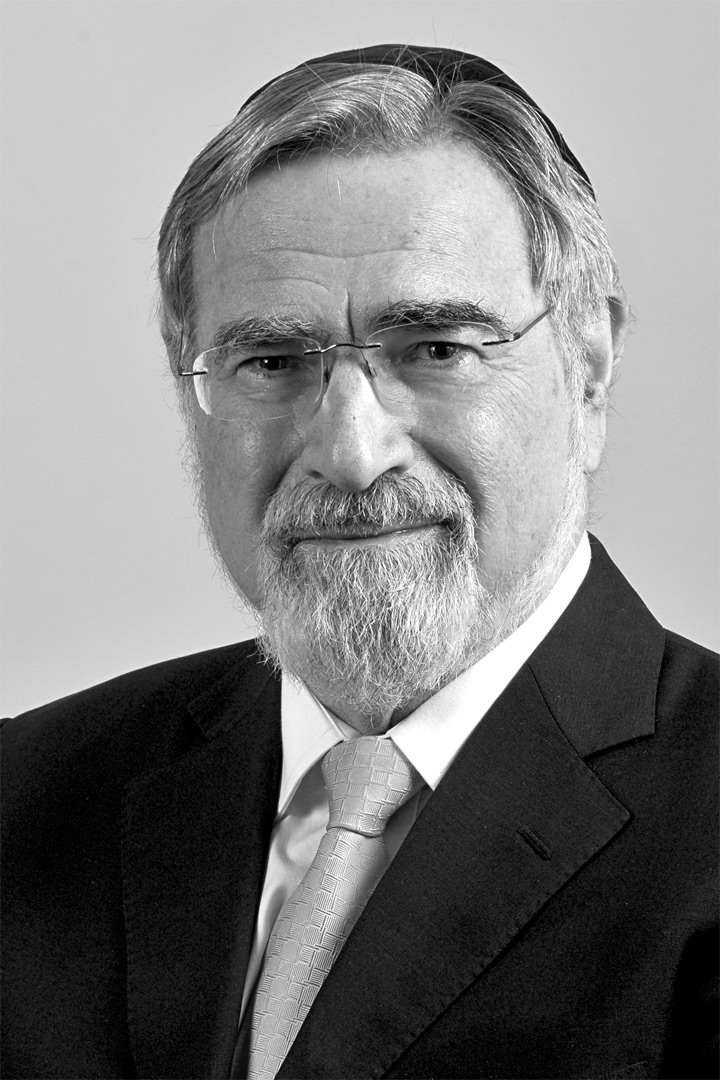
Rabbi Lord Jonathan Sacks
Former Chief Rabbi of the U.K.
The Torah is making a radical point. There is no such thing as absolute ownership. There is to be no freehold in the land of Israel because the land belongs ultimately to God. Nor may an Israelite own another Israelite because we all belong to God.

It is this principle that alone makes sense of the Torah’s narrative of the creation of the universe. The Torah is not a book of science. It is a book of law. That is what the word “Torah” means. It follows that the opening chapter of the Torah is not a scientific account but a legal one. It is not an answer to the question, “How was the universe born?” It is an answer to a different question entirely: “By what right does God command human beings?” The answer is: Because He created the universe. Therefore, He owns the universe. Therefore, He is entitled to lay down the conditions for inhabiting the universe. This is the basis of all biblical law. God rules not by might but by right — the right of a creator vis-à-vis his creation.

In Judaism, what we possess is not ours. It belongs to God. He has merely placed it in our safekeeping. We are looking after it on behalf of God. One of the conditions of that trust is that if we have more than we need, we should share it with those who have less than they need.

A version of this essay first appeared on rabbisacks.org.

Maharat Rori Picker Neiss
Executive director of the Jewish Community Relations Council of St. Louis

If the laws of the Jubilee year refer to the emancipation of only Hebrew servants, why does the passage proclaim liberty throughout all the land unto all the inhabitants thereof? Is not this liberty, in fact, referring to only a small percentage of the population?

Rabbi Mordechai Kamenetsky points out that though a servant is indentured to his/her employer, the employer is also indebted to his/her servant. An employer bears the responsibility of not only paying an employee’s paycheck, but also of ensuring that the employee is cared for and is afforded a safe working environment, suitable provisions, and, above all else, respect and dignity. So in the Jubilee year, when all individuals are freed from their servitude, their masters are also freed from the burdens that accompany the responsibility of a servant.

When the American founding fathers convened in Philadelphia in 1775 to draft the Declaration of Independence, they proclaimed that all men were endowed with inalienable rights, among them the rights to life, liberty, and the pursuit of happiness. They did not include the right to property.

The laws of the Jubilee year, as well as the laws of the Sabbatical year, teach us that property and employment are not rights, but responsibilities. As the Torah teaches us, “For the land is [God’s]; you are but strangers resident with [God]” (Leviticus 25:23). As residents of the land, we have an obligation to care for the land. And as human beings, we have a responsibility to care for our fellow brothers and sisters. And lest we forget and presume for ourselves that we have control, power, or even ownership over a piece of land or a fellow human, in the Jubilee year we are commanded to stop, to let the land lie fallow, to return all land that we had acquired, and to let all people go free – ourselves included.

A version of this essay first appeared on limmud.org.

Rabbi Chaim Singer-Frankes
Chaplain at Companion & Grateful Hospices
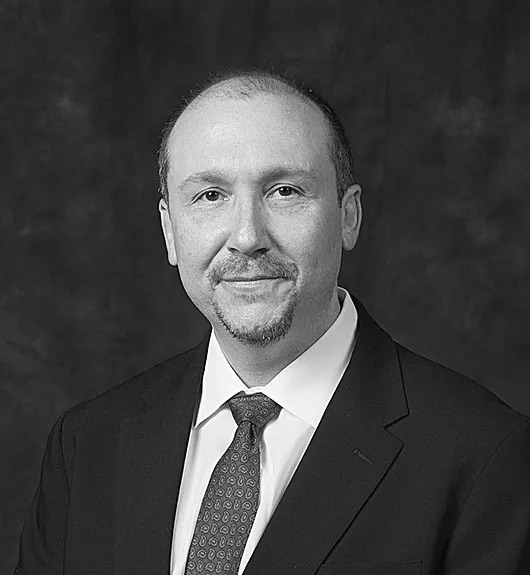
The Jubilee year is an expression of holy achievements. Like a vintage wine — we are now a nation matured — which God can merrily imbibe. In that sanctified culmination, after scores of Shabbatot, we don’t sow fields, we liberate servants, and we forgive outstanding debts. But consider the Torah’s definition of holy.

Two weeks ago, in parashat Kedoshim, God instructs that the people of Israel are to be holy, for God is holy. There, we achieve God’s ideal of sanctity through trademarks of Jewish living: Shabbat, honoring parents, timely sacrifices, eschewing idol worship and avoiding the intermingling of species.

Kedoshim’s eminent mitzvoth also require us to treasure human dignity: We pay workers expediently, we don’t place obstacles before the blind and we foster an unbiased justice system. We leave the corners of our fields and don’t stand idle at the blood of our neighbor. It is no leap to say that God’s holiness is manifest in the establishment of a civil society. And like a fine wine, a holy society is built neither in one day nor only a week. We must attend to our commitments, both toward God and one another, from one Shabbat to the next.

At the call of the shofar, we recommit to embracing principled human interactions and recognize a promise of godliness in the veritable pastures of life. Planting, reaping (and, of course, on Shabbat and festivals) like a proud vintner raising her work to a sacred art, so too does God fine-tune human potential. In a pause of jubilee, a climax of Shabbatot, we leave things back in God’s hands in a grand gesture; that we are kindred with both the hired hands and the fruits, swaying partners in a Divine field of loving wisdom.

Zach Calig
Television writer, Beit Teshuva resident sponsor
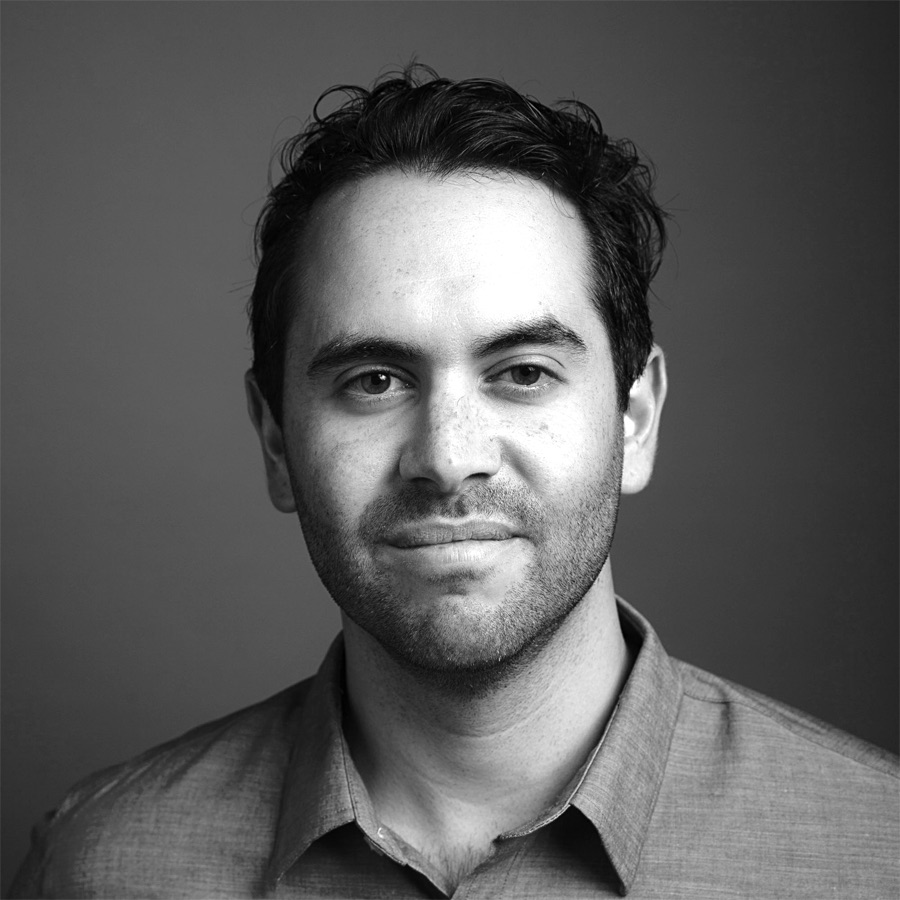
The “freedom” the Jubilee year brings, according to Rashi, was explicitly for Hebrew slaves. That same freedom was also offered every seven years (the sabbatical year), but a slave could actually opt out of freedom and remain in a benevolent master’s house with all the creature comforts they grew accustomed to.

It seems crazy to think that anyone would choose slavery, but that choice is a recurring phenomenon in the Torah. The Israelites were longing for Egypt throughout the entire Exodus narrative. Five minutes of freedom and the grass is already greener on the other side.

Rashi tells us that in the Jubilee year, freedom was mandated for the Hebrew slaves who decided to stay with their masters. I find it remarkable that the Torah is telling us that we are actually not “free” to remain enslaved, that freedom is a requirement, not an option.

If you think people won’t choose slavery today, visit Beit T’Shuvah, the Midnight Mission or Homeboy Industries, where residents are slaves to several types of addictions. People become addicted to a behavior because it’s a solution to a problem. An addiction does not have to be a life sentence. But it is in our nature to choose comfort, like the slave who wants to stay with his master.

This parsha reminds me not to stay too comfortable, even when my needs are met. We’re meant to grow, and always to continue our pursuit of success and happiness. Even when we’re settled, the journey must continue.

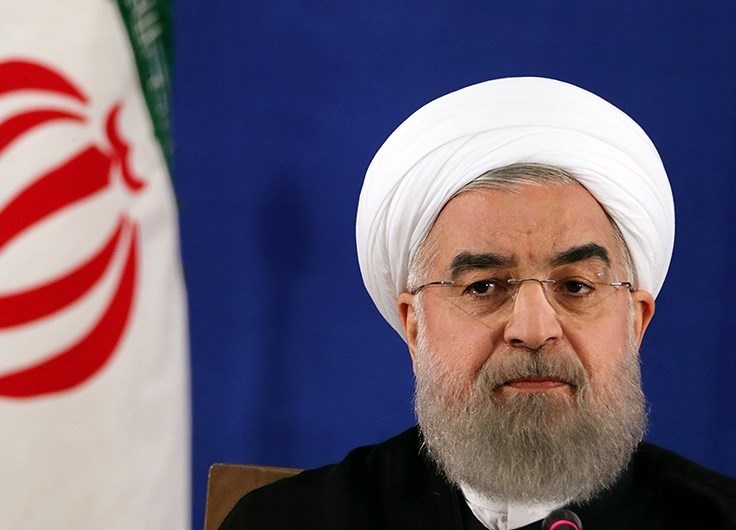
TABLE FOR FIVE: Five Takes on the Weekly Parsha, Behar-Bechukotai Read More »