fbpx

May 3, 2018

NYT Calls On Abbas to Resign

The New York Times called on Palestinian Authority President Mahmoud Abbas to step down from his position in a May 2 editorial in light of his recent Holocaust comments.

The remarks in question came on Monday, when Abbas blamed the Jews for the Holocaust.

“The Jewish question that was widespread throughout Europe was not against their religion, but against their social function, which relates to usury (unscrupulous money lending) and banking and such,” Abbas blustered.

The Times editorial board excoriated Abbas for “feeding reprehensible anti-Semitic myths and conspiracy theories” and losing “all credibility as a trustworthy partner.” They also criticized Abbas record, from his Holocaust denial dissertation and his failure at governance.

“Mr. Abbas, who oversees a governing system plagued by corruption and dysfunction, has lost support among the Palestinian people,” the Times editors wrote. “He has weakened government institutions that are essential for a future state and refused to call new elections, thus overstaying his term by many years and preventing younger leaders from emerging. He has also failed to unify the Palestinians in the West Bank, where his Fatah faction dominates, with those in the even more desperate circumstances of the Gaza Strip, where Hamas holds sway.”

Even with this abysmal record, the Times called Abbas’ Holocaust remarks “a new low.”

“By succumbing to such dark, corrosive instincts he showed that it is time for him to leave office,” the Times editors stated.

The editorial concluded, “Palestinians need a leader with energy, integrity and vision, one who might have a better chance of achieving Palestinian independence and enabling both peoples to live in peace.”

Interestingly, the Times published an op-ed by Abbas in 2011 titled “The Long Overdue Palestinian State,” suggesting that these recent remarks could be a turning point against Abbas in the international court of opinion if even The New York Times is souring on Abbas. The Palestinians have certainly lost confidence in Abbas as well, as a December poll found that 70% of Palestinians think that Abbas should step down.

And yet, Abbas is reportedly going to double on “even harsher” and “more extreme” rhetoric.

NYT Calls On Abbas to Resign Read More »

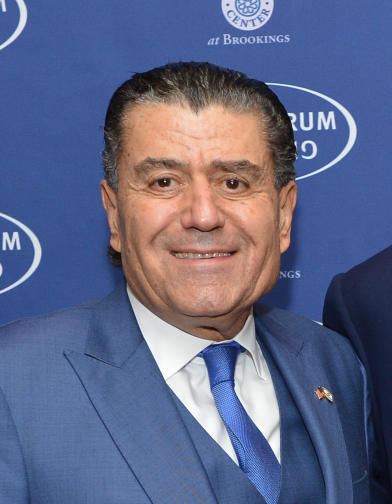
Haim Saban Sells Power Rangers for Over $500 Million

Israeli-American Hollywood billionaire Haim Saban has sold the Power Rangers brand to Hasbro for over $500 million.

The deal is structured for Saban to receive $229.75 million in hard cash and an additional $270 million in Hasbro stock as part of the $522 million deal. Saban will also be a consultant for Hasbro under the deal.

“Twenty-five years after launching Power Rangers, I believe the future for this brand has never been greater,” Saban said in a press release. “Hasbro’s leadership in innovation, storytelling and brand stewardship make it the perfect company to further develop the global reach and appeal of the Power Rangers property. I look forward to working with Brian and the team in the years to come.”

Hasbro CEO Brian Goldner said in a statement, “Power Rangers is an iconic brand built on a heritage of great storytelling and merchandising with tremendous upside potential when fully executed across Hasbro’s Brand Blueprint. Shortly after entering into our licensing arrangement, it became clear that now was the time to begin investing in unlocking Power Rangers’ full potential. We see significant opportunity for Power Rangers across our entire Brand Blueprint, including toys and games, consumer products, digital gaming and entertainment, as well as geographically throughout our global retail footprint.”

The recent deal comes on the heel of a February deal in which Hasbro purchased a master toy license from Saban Brands for $22.25 million.

Power Rangers, the live action superhero television series, is what propelled Saban into his status as a Hollywood mogul. He had previously sold the franchise to Disney in 2001, but it was eventually sold back to him in 2010 since Disney didn’t think the franchise was a good fit for them.

Saban has been an active donor to Jewish and Israeli causes, including a recent $1 million pledge to the Israeli-American Council (IAC) after withdrawing from the organization in 2015.

Haim Saban Sells Power Rangers for Over $500 Million Read More »

‘Midrashic Impulse’ Meets the Holocaust

Theodor Adorno famously insisted that “to write a poem after Auschwitz is barbaric,” and Primo Levi introduced his readers to a fellow inmate at Auschwitz who had scratched a similar warning into his tin plate: “Do not seek to understand.” Both of these phrases serve as a stern caution to anyone who writes about the Holocaust.

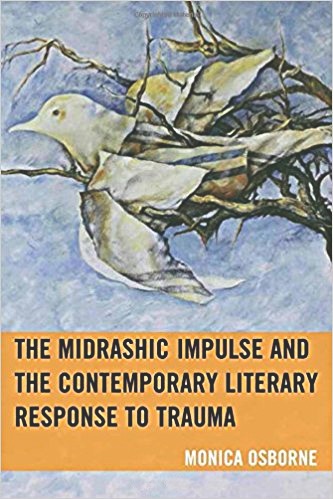
Both Adorno and Levi are invoked in the pages of “The Midrashic Impulse and the Contemporary Literary Response to Trauma” by Monica Osborne (Lexington Books/Rowman & Littlefield). Osborne’s brilliant and important book may carry a sober and scholarly title, but it is both lively and daring. She is willing to enter into an argument with Adorno and Levi, and she suggests that it is possible to understand the inner meanings of the Holocaust, not through history but through art and literature. Remarkably, the key to her argument is the ancient rabbinical technique of biblical exegesis known as midrash.

“[W]e are caught in the twilight between Adorno’s decree and the moral imperative of memory,” Osborne writes. Midrash, as she explains, is “an esthetic loophole that allows artists to avoid running afoul of Adorno’s representational proscription” while, at the same time, serving as “a witness to the trauma of the Holocaust.”

Osborne, a scholar of Jewish studies at Pepperdine University and a contributor to the Jewish Journal, sets out to answer a challenging and daunting proposition: “In an era in which no collective tragedy has been treated as often and as thoroughly as the Holocaust, we continue to generate art and scholarship that explores the darkness of these years,” she writes. “We simply cannot seem to get enough of the Holocaust, and despite the knowledge that there is no answer to the resounding question of ‘why?’ we persist in pursuing one through endless artistic and intellectual explorations.”

The method that she uses to penetrate these mysteries of history is the tool of interpretation known as midrash, the same approach that the ancient rabbis and sages used “to respond to the gaps, ambiguities, inconsistencies, and even what we might call wounds in the biblical text.” Osborne points out that the original practitioners of midrash sought to “deepen” and “fill out” the biblical narrative, and she characterizes the work of contemporary authors — Cynthia Ozick (“Heir to a Glimmering World”), E.L. Doctorow (“City of God”), Ann Michaels (“Fugitive Pieces”) and Dara Horn (“In the Image”), among many others, both Jewish and non-Jewish — as exemplars of novelists and short story writers who have applied the same midrashic techniques to the Holocaust.

Monica Osborne makes a careful distinction between representational and nonrepresentational approaches to writing about the Holocaust.

Osborne makes a careful distinction between representational and nonrepresentational approaches to writing about the Holocaust or, for that matter, any other “collective trauma.” She points out that Ozick’s “Heir to a Glimmering World” embraces “tentativeness and caution” when describing the life of a Holocaust survivor, as an example, because it’s an approach that Osborne calls a “paradoxical impulse both to write about the Holocaust and not to write about the Holocaust.”

Adorno’s caution hangs like a threatening storm cloud over Osborne’s book. One way to understand Adorno’s decree is that one should write about the Holocaust only as history and not as poetry, thus heeding Simon Dubnow’s equally famous call to his fellow victims of Nazi mass murder to “write and record.” Osborne herself acknowledges that “a mythologization of history is dangerous,” and especially when it comes to “collective tragedies and atrocities.” She values hard facts, and she warns against “the dangers of representation” by insisting that any author’s aspiration to write “a complete and authentic story of the Holocaust” is “an illusion.”

To her credit, Osborne notes that the Holocaust is hardly only the catastrophe that defies description or understanding. She invokes the bombing of Hiroshima and Nagasaki and the events of 9/11, and she wonders out loud about what is happening in Syria today. “Will the numerous gruesome images of destroyed Syrian towns and mutilated children’s bodies give us the false assumption that we understand the depth of brutality and loss endured by people about whom we know very little?” she wonders.

Similarly, Osborne points out that “the midrashic impulse” is not confined to Jewish texts or Jewish authors. “I prefer to think of midrash as the most organic way of thinking and of storytelling, and as a mode of thinking that, though not concretely identified anywhere other than in the Jewish tradition, emerges, if subtly and in a manner that is more mystical than philosophical, within cultures and communities that maintain no apparent link to the world of Judaism.”

By way of example, she points out how midrashic thinking “shows up in American Indian culture,” a fact that she does not find surprising. “Notably, the written and oral work of both cultures often grows out of a traumatic past, which always leaves in its wake wounds and silences that must be encountered and read,” she explains. “Indeed we must learn how to bear witness to the trappings of the said in order to bear witness to the transcendence of the saying.”

Osborne is fully aware of her own audacity. “Midrash and contemporary American literature — it seems the unlikeliest of pairs,” she concedes in passing. And yet she makes a convincing case that we can only begin to glimpse the moral enormity of the Holocaust if we look at it obliquely. That is the real power and utility of midrash — “a way of reading, understanding, and responding to the world and its darknesses,” as she puts it.

Indeed, “The Midrashic Impulse” will send the reader back to the original texts just as the earliest efforts at midrash send us back to the Bible. Thanks to Osborne, our second reading will be illuminated by her powerful and radiant insight.

Jonathan Kirsch, author and publishing attorney, is the book editor of the Jewish Journal.

‘Midrashic Impulse’ Meets the Holocaust Read More »

Make a Floral Crown for Celebrate Israel Festival

One of the most coveted fashion accessories worn at outdoor festivals is the floral crown. But it’s not just for the likes of Coachella anymore. Why not make your own floral crown for the Celebrate Israel Festival? All it takes is a trip to the crafts store, and you’ll be rocking the boho chic look. Let the selfies begin.

What you’ll need:
Aluminum wire, 12-gauge
Floral tape
Artificial blue and white flowers
Wire cutters

1.

1. 12-gauge aluminum wire is relatively thick, but still very easy to bend and shape. It comes in five-yard rolls at the crafts store for less than five dollars. Cut a piece of wire that is long enough to wrap around your head, and add about three inches on both ends to allow you to adjust the circumference, if needed. Form a loop, hooking the ends together.

2.

2. Wrap the wire loop with floral tape. Floral tape is a unique type of tape that is not sticky until you stretch it. As the tape is stretched around the wire, the adhesive material is activated, and the tape sticks to itself. Sometimes the tape breaks as you stretch it, which is perfectly fine because you would just continue taping where you left off.

3.

3. You will save money if you purchase flowers in bunches rather than individual floral stems. At Michaels crafts store last week, I even found small ready-made bouquets of matching blue and white flowers at half price. Cut the stems of the artificial flowers so they are about 1 to 2 inches long. You might need wire cutters to cut the stems.

4.

4. Attach the stem of the flowers to the wire loop by wrapping floral tape around them. Remember that you have to stretch the tape to make it sticky. Go around the stem several times with the tape to secure it tightly. Alternate blue and white flowers as you go. You can place flowers on only the front part of the crown, or all the way around. Either way, you’ll celebrate Israel in style.

Jonathan Fong is the author of “Flowers That Wow” and “Parties That Wow,” and host of “Style With a Smile” on YouTube. You can see more of his do-it-yourself projects at jonathanfongstyle.com.

Make a Floral Crown for Celebrate Israel Festival Read More »

Obituaries: Week of May 4, 2018

Larry Alperin died Feb. 7 at 87. Survived by wife Nina; daughter Mary (John) Clarich; son Marc (Emily Weinstein); 6 grandchildren. Mount Sinai

Erlinda Ver Becker died March 14 at 85. Survived by daughter Anna; son Joseph (Anathea); 2 grandchildren; sister Dolores (Francisco) Marquez. Groman Eden

Joyce Berger died March 2 at 79. Survived by daughter Margie; son Bob (Scott). Mount Sinai

Seymour Bernard Bloom died March 19 at 88. Survived by wife Maurice; daughters Wendy (Jack) Collings, Deanne (Paul) Cohen, Susan (Hersch) Hendrickson; sons Marc, Marc (Cynthia) Adelman; 8 grandchildren; 4 great-grandchildren. Mount Sinai

Estelle Bogad died March 11 at 95. Survived by sons Arthur (Christine), Michael (Michelle), Steven (Sheryl); 8 grandchildren; 5 great-grandchildren. Mount Sinai

James (Yosef) Broadhurst died March 21 at 88. Survived by wife Lida (Leah); sons Eric (Abraham), Tobin (Tuvya); 3 grandchildren. Home of Eternity

Tara Eisner died March 20 at 77. Survived by wife Tobi Rosen; son Marc (Jennifer); stepchildren Craig (Rocco), Brad (Shelly), Andrew (Tracy); 9 grandchildren. Mount Sinai

Betty Feld died March 19 at 89. Survived by daughter Sherri (Craig) Kornblau; son Jason; 2 grandchildren. Mount Sinai

Gertrude Feldman died March 10 at 91. Survived by daughter Suzanne (Brian) Greenberg; sons Jonathan (Jaci), Daniel (Shan), Joseph (Jennifer); 7 grandchildren. Mount Sinai
Michael Finer died March 9 at 80. Survived by wife Janis; daughters Elisa (Edward) Murayama, Jennifer; son Adam (Dana); 1 grandchild. Mount Sinai

Pearl Leah Fishman died March 9 at 98. Survived by sons Martin (Cheryl), Allen (Dale); 11 grandchildren; 13 great-grandchildren. Mount Sinai

Simcha Freedman died March 19 at 80. Survived by wife Anna; sons Sam, Ben; 8 grandchildren.

Albert Friedman died Feb. 26 at 82. Survived by daughter Kari (Joshua Parker); 1 grandchild. Mount Sinai

Sanford Friedman died March 16 at 89. Survived by sons Mark (Debbie), Harry (Kathleen), Don; 6 grandchildren; brothers Eddie, Richard. Mount Sinai

Brian D. Garfield died March 6 at 63. Survived by brother Gary. Mount Sinai

Judy Goldenberg died March 19 at 91. Survived by daughters Lisa (Howard) Fleiner, Karen (Elliot) Stein; 4 grandchildren; 6 great-grandchildren. Mount Sinai

Leslie L. Gonda died March 16 at 98. Survived by daughters Lucy, Lorena Kiralla; son Louis L. (Kelly); 7 grandchildren; 5 great-grandchildren. Mount Sinai

Elaine Carol Gottesman died March 24 at 82. Survived by daughters Nancy, Karen; son Rick (Eve); 5 grandchildren. Mount Sinai

Helen Green died March 10 at 97. Survived by daughter Sharon; 3 grandchildren; 3 great-grandchildren. Hillside

Sidney Greenbaum died March 14 at 93. Survived by wife Ruth; daughter Jill; son Brad (Deborah); 2 grandchildren; brother Norman (Sandy). Mount Sinai

Julie Hilden died March 17 at 49. Survived by husband Stephen Glass; father Mike (Laure); mother-in-law Michelle (Jeffrey) Glass; sister Zoe; brother-in-law Michael Glass, sister-in-law Hillary Glass. Hillside

Sandra Inbody-Brick died March 20 at 80. Survived by husband Craig A. Brick; son Stuart Inbody; daughter Cheryl (Tracy) Inbody-Brandenburger; 2 grandchildren. Mount Sinai
Raymon Kaplan died March 22 at 82. Survived by wife Eunice; daughter Deborah; son Steven Jeffrey; 4 grandchildren. Mount Sinai
Arnold Klein died March 27 at 98. Survived by stepson Marc (Ellen) Simons; brother Larry (Joan). Hillside

Emily Bella Kwalwaser died March 18 at 97. Survived by daughters Ilene (Gary) Robbins, Lorraine (Arden) Finkelstein; 5 grandchildren; sister Lillian Krupin. Groman Eden

Beulah “Boots” Jacobson died March 13 at 96. Survived by daughters Maxine (Fred) Aronowitz, Ellen (David) Dickinson, Sheila (Kenneth) Charles; 8 grandchildren; 8 great-grandchildren. Mount Sinai

Harold Johnson died March 11 at 91. Survived by daughter Barbara E. Johnson Brown; sons David (Hong), Michael (Barbara); 8 grandchildren; 2 great-grandchildren. Mount Sinai

Charlotte Kerber died March 2 at 96. Survived by daughters Diana Hedson, Stephanie (Piero) Casavecchia; sons Misha Seymour, Randy (Ann); 7 grandchildren; 2 great-grandchildren. Mount Sinai

Gertrude Gladys La Pittus died March 21 at 104. Survived by sons Jerome (Nilse) La Pittus-Quercia, Morton (Susan); 9 grandchildren; 4 great-grandchildren. Mount Sinai

David Leibman died March 11 at 80. Survived by wife Phyllis; daughters Jody (David) Green, Sara (Chris) Ahl; 4 grandchildren; sister Myrna Tyson. Hillside

Marat Len died March 17 at 70. Survived by wife Valeriya; daughter Yuliya (Andrew); son Vladislav (Aksana); 3 grandchildren; brother Yefim (Nelly). Mount Sinai

Peri Levin died March 24 at 76. Survived by niece Marcy Patterson; nephews Mark (Laurel) Fisher, Bruce (Jana) Fisher, Steven Fisher. Hillside

Janice Lubbin died March 17 at 97. Survived by daughter Nancy Conrad; son Thomas (Amy) Fortner; 3 grandchildren; 4 great-grandchildren; brother Hal Trifon. Hillside

Bertram Kermit Massing died March 6 at 84. Survived by wife Phyllis; daughter Lisa Aronson; sons Greg, Robert; 3 grandchildren.

Sharon Mellinger died March 21 at 67. Survived by husband David; daughter Ariel (Julia); brother Jerrold Singer. Hillside

Muriel L. Metz died March 15 at 93. Survived by husband Irving; daughter Judy (Richard) Kaplan; son Richard (Jane); 4 grandchildren. Mount Sinai

Winifred Miller died March 21 at 106. Survived by daughter Patricia (Hans Stahlschmidt) Hart; sons Kenneth (Janice), Thomas; 7 grandchildren; 5 great-grandchildren. Hillside

Molly Mistofsky died March 12 at 93. Survived by daughter Janet Waari; sons Robert (Jeannette), Lester (Theresa); 4 grandchildren; 2 great-grandchildren. Hillside

Sylvia Motty died March 16 at 94. Survived by daughter Teri Curtis; 4 grandchildren. Mount Sinai

Maurice J. Newman died March 6 at 90. Survived by nephew Robert Moss. Mount Sinai
Cecile Oudiz died March 23 at 92. Survived by daughter Maryse (Daniel) Fujimori; son Ron (Carolyn); 4 grandchildren; brother Etienne Setton. Mount Sinai

Jack Pearlman died March 24 at 96. Survived by daughter Nancy (Alan Corlin) Eckhous; sons M. Hal (Susan), Ralph (Karen); sister Patty Heyman. Hillside

Roger Henry Pollack died March 5 at 70. Survived by wife Ellen; daughter Kate (Ken) Gross; sons Randell (Danin), Richard; 4 grandchildren; brothers Ralph (Natalia), Ronald (Natalia), Robert (Oxsana). Mount Sinai

Helen Rabin died March 17 at 97. Survived by daughters Sherry Shultz, Pamela (George) Rotramel, Bonnie Scharf; 6 grandchildren; 2 great-grandchildren. Mount Sinai

Esther Rogal died March 11 at 92. Survived by daughter Rhonda Theodoulou; son David; 2 grandchildren. Mount Sinai

Helen Rosin died March 13 at 101. Survived by daughter Carol (Jerry) Muchin; son Charles (Karen); son-in-law Richard Hornichter; 9 grandchildren; 13 great-grandchildren. Mount Sinai
Greta Rosenblum died March 10 at 94. Mount Sinai

Susan Rosenfield died March 23 at 81. Survived by husband Robert; daughters Sheryl (Chris) Hansen, Lisa Fredlender; sons Tom (Ruth), John (Anne), James (Heather); 11 grandchildren; 2 great-grandchildren. Hillside

Karen Jill Saywitz died March 17 at 61. Survived by husband Richard Romanoff; daughters Sarah Romanoff, Anna Romanoff; sisters Ann (Ken) Coffey, Janet Simons; brothers Mitchell (Anne), Allan. Mount Sinai

Ruth Schneider died March 6 at 92. Survived by daughter Lori (David) Parris; sons Gary (Sharon), Mark (Linda); 6 grandchildren; brother Arthur Greenfield. Mount Sinai

Louis R. Schiff died March 4 at 70. Survived by brother David Schiff. Mount Sinai

Carrie Scott died March 14 at 60. Survived by husband Michael; daughters Rachel Elana, Shoshanna Michelle; son Zachary Samuel; mother Evelyn Lutin; father Martin Lutin; sister Robin Lutz. Mount Sinai

Albert Simon died March 18 at 93. Survived by sons Milton (Esther), Bruce (Jackie), Frank (Mara); 11 grandchildren; 17 great-grandchildren. Mount Sinai

Alfred Simon died March 20 at 95. Survived by wife Laura; daughters Debbie, Karen Rabitz; 2 grandchildren. Mount Sinai

Lawrence Thomas Solomon died March 16 at 89. Survived by wife Joyce; sister Shirley Miller. Mount Sinai

Robert Solomon died March 16 at 86. Survived by wife Sally; daughter Susan (Richard) Wolff; son Richard (Faye); 6 grandchildren.

Doris Stegall died March 12 at 80. Survived by husband Benjamin; daughters Sheri (John Godfrey), Wendy (John) Chon; 2 grandchildren. Hillside

Edith Stern died March 23 at 92. Survived by daughter Jacqueline Bellowe Stern; sons Claude, Daniel. Mount Sinai

Norman Stern died March 12 at 96. Survived by daughter Greer (Benjamin) Noble; son Bruce; 1 grandchild. Hillside

Rhea Walco died March 9 at 89. Survived by daughters Lisa, Dianne (Rennie Gabriel) Merryl; son Gary; 5 grandchildren; 1 great-grandchild. Mount Sinai

Marilyn Ward died March 11 at 78. Survived by daughters Susan (Art) Raitano, Wendy; sons Jeff, Douglas; sister Carol (Mal) Cooper; brother Bernie Lotterman. Hillside 

Obituaries: Week of May 4, 2018 Read More »

Age 70 Is No Time to Slow Down

In “As You Like It,” Shakespeare has Jaques recite a famous monologue on the ages of man: a mewling, puking infant, whining schoolboy, amorous lover, devoted soldier, wise judge, second childhood, and then death.

How very different from our own tradition’s listing of the ages of man and the stages of life in the fifth chapter of Pirkei Avot, (Ethics of the Fathers):

“At 5, the study of Torah.
At 10, the study of Mishnah.
At 13, subject to the commandments.
At 15, the study of the Talmud.
At 18, marriage.
At 20, pursuit of a career.
At 30, peak of achievement.
At 40, wisdom.
At 50, able to give counsel.
At 60, becoming an elder.
At 70, the fullness of years.
At 80, special strength.
At 90, a bent back.
At 100, gone from the affairs of this world.”

Our sages saw life as revolving around study, spiritual awareness and meaningfulness. Not for us is the quip of an anonymous wit who described life as spills, drills, thrills, pills, ills and wills.

Today, I turn 70. It’s a great blessing to reach 70.

One can look back on a long span of life’s joy and achievements. Still, it’s hard for me to believe.

I don’t feel old.

I am grateful to be healthy, to have energy and passion for both my family and my work.

The Talmud relates that during the period following the destruction of the Second Temple in Jerusalem, the sages of Yavneh wished to appoint Rabbi Elazar ben Azariah as head of their academy. A brilliant scholar, respected and beloved by his colleagues, he had one shortcoming: He was too young. Perhaps he was thought not to have enough experience of the world. Perhaps it was considered inappropriate for a mere youth of 17 to sit as head of the venerable rabbinic sages of Yavneh.

So the Talmud relates that a miracle happened. One morning, the rabbi awoke to find that his hair and his beard had turned a snowy white. He now looked like an elder. When his colleagues saw him with his hoary head, they felt comfortable asking him to become the head of the academy.

Not for us is the quip of an anonymous wit who described life as spills, drills, thrills, pills, ills and wills.

What a great combination — to be both young and old at the same time.

The secret of being young and old simultaneously is maintaining hope, looking ahead, openness to new ideas, and overcoming gloom and failure by focusing on the brightness on the horizon.

Someone once told me that you don’t stop laughing when you get old. You get old when you stop laughing.

I do not have words sufficient to express my joy and pride in my six children and their spouses. They have made my life so worthwhile and satisfying. Parenting them is the best thing I have done in my life. Their children are the lights of my life. As savta to 18 wonderful grandchildren, each so different and so precious, I know why we have the proverb that says “grandchildren are the crown to the aged.”

I would like to be the opposite of Rabbi Elazar ben Azariah. I am a woman of 70 (without gray hair or a beard) and yet, with the help of the Almighty as I enter this new stage of life, the time of fullness of years, I hope to retain my sense of curiosity, enthusiasm, optimism and spirit.

I don’t wish my life and the things I value to contract, but rather to take on new dimensions all the rest of my days.

Sydney Alderman Perry, now 72, retired in June 2016 as executive director of the Jewish Federation and Jewish Community Center of Greater New Haven, Conn. In February, she was named interim executive director of the Jewish Federation of Western Massachusetts.

A version of this story appeared on the Jewish Federation of Greater New York’s website in 2015.

Age 70 Is No Time to Slow Down Read More »

What Retirement Meant in Ancient Times

Sooner or later in life, nearly everyone needs to stop working for a salary. Yet retirement is a trauma for many.

There is still much debate about whether mandatory retirement is good — for institutions or for people.

As people live longer, with many remaining healthy and active into their 70s and beyond, the issue will stay with us. Interestingly, it arises in the Torah and was discussed by the rabbis in the Talmud, and has been ever since.

The Torah defines the age span during which Levites are to perform their tasks in worship and in transporting the Tabernacle in the Sinai Desert, from age 25 until 50. After that, they may no longer perform the official functions but they may “assist their brethren,” meaning, effectively, they were kept on in a “consultant” capacity.

The rabbis were troubled by this. They said the mandatory retirement age for Levites applied only in the desert, where heavy physical labor was involved. In the Temple in Jerusalem, where the Levites’ main jobs were to sing in the choir and guard the gates, they could continue to serve until they “lost their voices.”

Maimonides was more concerned about forced retirement. He ruled that even after a Levite can no longer sing, he may still guard the Temple gates.

How one spends one’s free time, during working life and in retirement, reveals a lot about a person.

Regarding the priests, the Torah makes no mention of age. It speaks only of physical blemishes as disqualifying factors. The rabbis interpreted this to mean that the period of service ran from puberty until old age. In defining old age for this purpose, the rabbis chose a subjective standard rather than an arbitrary age limit — until he trembles.

The question arose again in regard to judges, who, in many jurisdictions, are appointed for life. The Talmud says that “an old man may not serve on courts hearing capital offenses.” It does not define what old means. Maimonides, again concerned about forced retirement, adds one key word in his codification of this law — a very old man, which delays retirement.

The standard explanation given for disqualifying the very old from cases involving the death penalty is that they are not considered sympathetic to young people.

Over the generations, Jewish authorities generally followed the more flexible approach. Jewish professionals — rabbis, cantors, ritual slaughterers — were to be employed until no longer competent.

In the State of Israel, too, such age limits are common.

Retirement itself can be a challenge, as was pointed out two centuries ago by the English writer Charles Lamb following 36 years as a clerk at the East India Company: “I am no longer clerk to the Firm. I am Retired Leisure. I am to be met with in trim gardens. I am already come to be known by my vacant face and careless gesture, perambulating at no fixed pace, nor with any settled purpose.”

“Perambulating with no settled purpose” is the fear of many a person whose spouse or parent is about to retire.

The modern Orthodox rabbi and thinker Nathan Lopes Cardozo warns against “taking it easy and falling into the pit of idleness.”

Retirement, he points out, offers many opportunities for spiritual growth, but many challenges, as well. He recalls the talmudic insight that three measures of a person’s character are b’kiso, “his pocket” (wallet), how he uses his money; b’koso “his glass,” how he handles drink; and b’ka’aso, “his temper,” does he control it, or it him?

The source includes a fourth test offered by one of the sages, b’sachako, most often translated as “his laughter,” but interpreted by Cardozo as “his play,” — his leisure time. How one spends one’s free time, during working life and in retirement, reveals a lot about a person.

The recent growth of stimulating activities and programs for retired people is an appropriate response to a growing retired population.

This essay was edited by Rabbi Bradley Shavit Artson and Deborah Silver at American Jewish University for aju.org.

What Retirement Meant in Ancient Times Read More »

Living Life Fully — Even If You Don’t Make It to 120

The world is getting older — not just the cosmos, but the people in it.

In the West, at least, younger people are reproducing less and older people are living longer.

In North America, Europe and Israel, the percentage of people over 65 is expected to rise markedly in the coming decades. It was projected recently that in Europe by 2025, there will be as many people over 65 as there will be in the workforce.

Jews, as usual, are part of these trends. The senior segment in Jewish communities (the United States, Israel and Europe) is 20 percent, slightly higher than the general populations, and growing rapidly.

Medical advances help life expectancies to rise, and with people settling all over the globe, leaving parents alone in their hometowns or in retirement areas or facilities, the care of the elderly has become both a big business and a big headache, for families, community organizations and governments.

The Bible presents pictures of old age both idyllic and starkly realistic. Leaving aside mythical characters like Methuselah, who lived 969 years, we are told that Abraham lived till the ripe old age of 175, marrying another woman and having six more children after Sarah died.

The zkenim (elders) were an important group for the social/political hierarchy and a source of guidance for the individual. Yet the infirmities of age also were well known. The psalmist’s painful plea, “Cast me not off in the time of old age; when my strength fails, forsake me not,” is included five times in the Yom Kippur liturgy. As appealing as it sounds, we Jews do not pray, like Bob Dylan: May your hands always be busy,/ May your feet always be swift. May your song always be sung, / And may you stay forever young.

The human body does not work that way. Seeking to stop the natural processes would constitute a tefillat shav, a “useless prayer,” what psychologists might call denial.

Of course, such is not the approach of modern society. There are people and industries, from branches of the medical profession to major pharmaceutical companies, which thrive on the desires of people to disguise gray hair, to remove wrinkles, and to keep bodily appearance and functions youthful.

Interestingly, the Torah offers three prescriptions for long life — honoring one’s parents, not taking a bird’s eggs in the mother’s presence, and the use of honest weights and measures.
The Torah is concerned more about how we behave toward others than how we look to them.

If we take the Talmud literally, we have only our own forefathers Abraham and Jacob to blame. “Before Abraham there was no old age, and before Jacob there was no illness.” Until Abraham, people simply lived their lives, features constant, until their time came. “People who saw Abraham thought he was Isaac,” the Talmud continues. “People who saw Isaac thought he was Abraham, so Abraham prayed for old age, as it says, ‘and Abraham was old, advanced in years.’ ”

Abraham was doing just the opposite of trying to stay young. Looking old invited respect; age was a sign of wisdom. Jacob prayed for illness, the Talmud explains, because he wanted a period of notice before death to call his sons in and bless them. Little could Jacob have imagined that the few days that he requested could, by our time, extend to many years, despite physical and mental deterioration.

Abraham did the opposite of trying to stay young. Looking old invited respect; age was a sign of wisdom.

Modern medicine can take credit for many miracles. But for the incapacitated, these advances have extended old age, not life.

In Greek mythology, the Sphinx sat outside of Thebes and asked passersby: “What goes on four legs in the morning, on two legs at noon, and on three legs in the evening?”

Many unfortunates died for not solving the riddle, until Oedipus gave the answer: “Man, who crawls on all fours as an infant, walks on two legs as an adult and with a cane in old age.” Life neatly divided, like Gaul, into three parts.

“All the world’s a stage,” Jaques says in Shakespeare’s “As You Like It.” “And one man in his time plays many parts. His acts being seven ages.” Man becomes elderly in the sixth, where he begins to lose his charm, both physical and mental, and shrinks in size and stature.

The rabbis predated Shakespeare by over a millennium. In Pirkei Avot, they delineate 14 stages, the last five devoted to the “Third Age” and reaching the finish line: “At 50 [one can give] counsel; at 60, [one is] elderly; at 70, [one reaches] old age; at 80, [one has] renewed vitality; at 90, [one has] a bent body; at 100, [one is] as good as dead, having passed and ceased from the world.”

The numbers here are a literary device; the physical and mental states alluded to can happen at any age. In our world, insurance companies and social welfare agencies have “ADL (Activities of Daily Living) tests” to determine disability or who “needs assistance,” the ability to dress oneself, feed oneself, use the toilet. The Talmud did, too. One is considered “young and healthy,” as opposed to “old and sick” if he can “stand on one foot and put on and take off his shoes.”

Aging, on the one hand, presents opportunities. “Grow old along with me! / The best is yet to be, / The last of life, for which the first was made,” Robert Browning, wrote in the poem “Rabbi Ben Ezra,” in about 1862. Many are able to finally pursue hobbies and learn new disciplines.
On the other hand, old age presents challenges. Matthew Arnold responded to Browning with a far more melancholy view of age: “Ah, ’tis not what in youth we dreamed ’twould be,” (“Growing Old”).

Those who wish their friends live “to 120,” as Jews commonly do, might consider whether they really want this fate for those dear to them.

This essay was edited by Rabbi Bradley Shavit Artson and Deborah Silver at American Jewish University for aju.org.

Living Life Fully — Even If You Don’t Make It to 120 Read More »

Changing Countries and Careers After 50

When Paul Serkin, now 59, made aliyah from Brooklyn in 2009, he hoped to continue his career as an IT health care expert.

Serkin, who once ran the computer systems at New York’s Montefiore and Bellevue hospitals and served as a consultant to other medical centers, searched for jobs in Jerusalem but couldn’t find anything in his field.

Too young to retire, Serkin decided to start a new career in Israel as an independent computer consultant.

“When I couldn’t find a job, I decided to go out on my own and reinvent myself,” Serkin said. “And it’s worked out really well.”

He started the company PC Guy, which diagnoses, repairs and sells computer systems and peripherals, like printers and networking equipment.

In the United States, “I worked with major hospitals, organizations and integrated their computer systems. I would write the contract and send consultants to the hospitals. I wasn’t the hands-on technical guy.”

In Jerusalem, Serkin makes house calls to his clients’ homes and offices. “I install or fix their computers, get rid of their computer viruses. Baruch HaShem (thank God), the business has taken off.”

Serkin is one of the many middle-aged Israeli immigrants who have launched new careers after making aliyah in their 50s, 60s and older.

Josie Arbel, director of immigrant absorption services at the Association of Americans and Canadians in Israel, acknowledges the difficulty in finding work in a new country.

“It’s hard when you’re 30 and it’s even harder when you’re 50,” she said. “That’s why it’s important to arrive with a plan, to research and to network. Know what you’re striving for and then be flexible and open to curves and surprises.”

Arbel said immigrants, regardless of their age, should consider which of their skills might be transferable to Israel, and to balance idealism with realism.

Paul Serkin is one the many middle-aged Israeli immigrants who have launched new careers after making aliyah in their 50s, 60s and older.   

Freelancers, immigrants who can continue working for the company or institution they worked for in their home countries and those with unique skills have the best shot at making a good living in Israel. Top-tier academics, scientists and medical researchers, for example, can often find their niche in Israel thanks to their longstanding professional networks.

But even the most qualified immigrants need to be aware that they may encounter ageism, Arbel said. “So the more networking they can do, the better.”

Taking the time to learn Hebrew also is important, she said, recognizing that some olim (new immigrants) may not be able to do so.

“If people can come and manage with enough savings to get them through the first six months to a year and in the meantime learn Hebrew, network and go on job interviews, it will be an easier absorption than for those who need to start work three weeks after arriving to pay the rent,” Arbel said.

Rivka Lambert Adler, who made aliyah in 2010 at the age of 51, believes middle age was the right time for her and her husband to immigrate to Israel.

“We had more financial resources and fewer expenses than younger families, so we didn’t need to earn what we earned in the States. Our health care costs, tuition and mortgage expenses went way down. This financial flexibility makes it possible for us to survive here, working in a creative career path rather than an ordinary full-time job.”

Adler, who worked as a university administrator while living in Baltimore, became a writer, book reviewer and adult educator specializing in Jewish content when she moved to Israel.

“I knew that to be a university administrator here I would need fluent Hebrew, something I didn’t have. So in our first couple of months here I applied for jobs working with overseas students,” she said. “I was told I was overqualified.”

Other jobs failed to pan out.

Adler, now 58, joined the workforce after a friend offered her a job coordinating the training of technical writers and stayed there almost two years. Since then, she has been a freelancer working on social media projects, a contributor to The Jerusalem Post and is writing a book.

Her advice to middle-aged immigrants is to be flexible.

“I haven’t met a lot of olim who have found a regular job in Israel at my age. Unless you have specific high-tech skills, you need to be creative,” Adler said. “I’ve always written but never thought of myself as someone who would write for a living. But now I do.”

Barak Moore, who made aliyah in 2012 at the age of 45, could have remained in his longtime profession, high-tech management. Instead, he chose to become a full-time tutor who prepares students of all ages for the SATs and other make-or-break exams, and makes a good living in the process.

“I completely changed my career soon after making aliyah, and I did it while raising eight kids, most of them teenagers,” Moore said.

His first job in Israel was at a software company, and although the salary was very good, he felt drawn to teaching.

“As with my other jobs, I’d teach employees how to run a great department. I was also tutoring part time,” he said. “Finally, after so many people told me I should be a full-time teacher, I took this crazy plunge.”

Moore admits that his wife initially freaked out.

“She said, ‘Why are you throwing away this great career to go into something with no security?’ But I just couldn’t hide who I was anymore. Being a teacher is who I really am.”

Had he stayed in the U.S., Moore said, he would have stayed in high tech “because we would have needed more money” to pay for things like day school tuition and health care deductibles.

Both cost far less in Israel.

Serkin, whose company, PC Guy, is now a well-known brand in Jerusalem, advises prospective immigrants to come with a positive attitude.

“Try to learn Hebrew. Get busy. If you sit in your house all day, you’ll be bored. Go on trips. Make friends. Make Israel your home.”

Michele Chabin is an award-winning journalist who reports from Jerusalem.

Changing Countries and Careers After 50 Read More »

What’s Happening in Jewish L.A. May 4-10: Celebrate Israel Festival, Hoops 4 Hope

FRI MAY 4
KLAL: CELEBRATION OF JEWISH ANGELENO CULTURE AND CIVIC ENGAGEMENT

Join Los Angeles City Councilmembers David Ryu (Fourth District), Bob Blumenfield (Third District), Mitchell Englander (12th District), Paul Koretz (Fifth District) and Paul Krekorian (Second District) for a presentation and tours honoring Jewish civic engagement in Los Angeles’ rich history. KlezMexKo, a Jewish klezmer, Latin and Korean band, will perform. Sponsored by The Jewish Federation of Greater Los Angeles, the Jewish Historical Society of Southern California and the UCLA Alan D. Leve Center for Jewish Studies. Arrive by 9:30 a.m. to allow parking on Los Angeles Street. Presentation, 10 a.m.; reception and docent-led tours, 11:30 a.m.-1 p.m. Free. RSVP required through davidryu.lacity.org. Print out flyer at davidryu.lacity.org for free parking pass for under City Hall East. City Hall Chambers, third floor, 200 N. Spring St., Los Angeles.

SAT MAY 5
RABBI LAWRENCE KELEMEN

Rabbi Lawrence Kelemen.

Anshe Emes Scholar-in-Residence Rabbi Lawrence Kelemen will speak. He is an author and founder and current Rosh Kollel of the Center for Kehilla Development, a leadership development project devoted to the growth and well-being of Jewish communities around the world. After Shachris Kiddush, 11:15 a.m.; during Shalosh Suedos, 7:20 p.m. Free, limited seating. Anshe Emes Synagogue, 1490 S. Robertson Blvd., Los Angeles. (310) 275-5640. anshe.org.

SUN MAY 6
CELEBRATE ISRAEL FESTIVAL

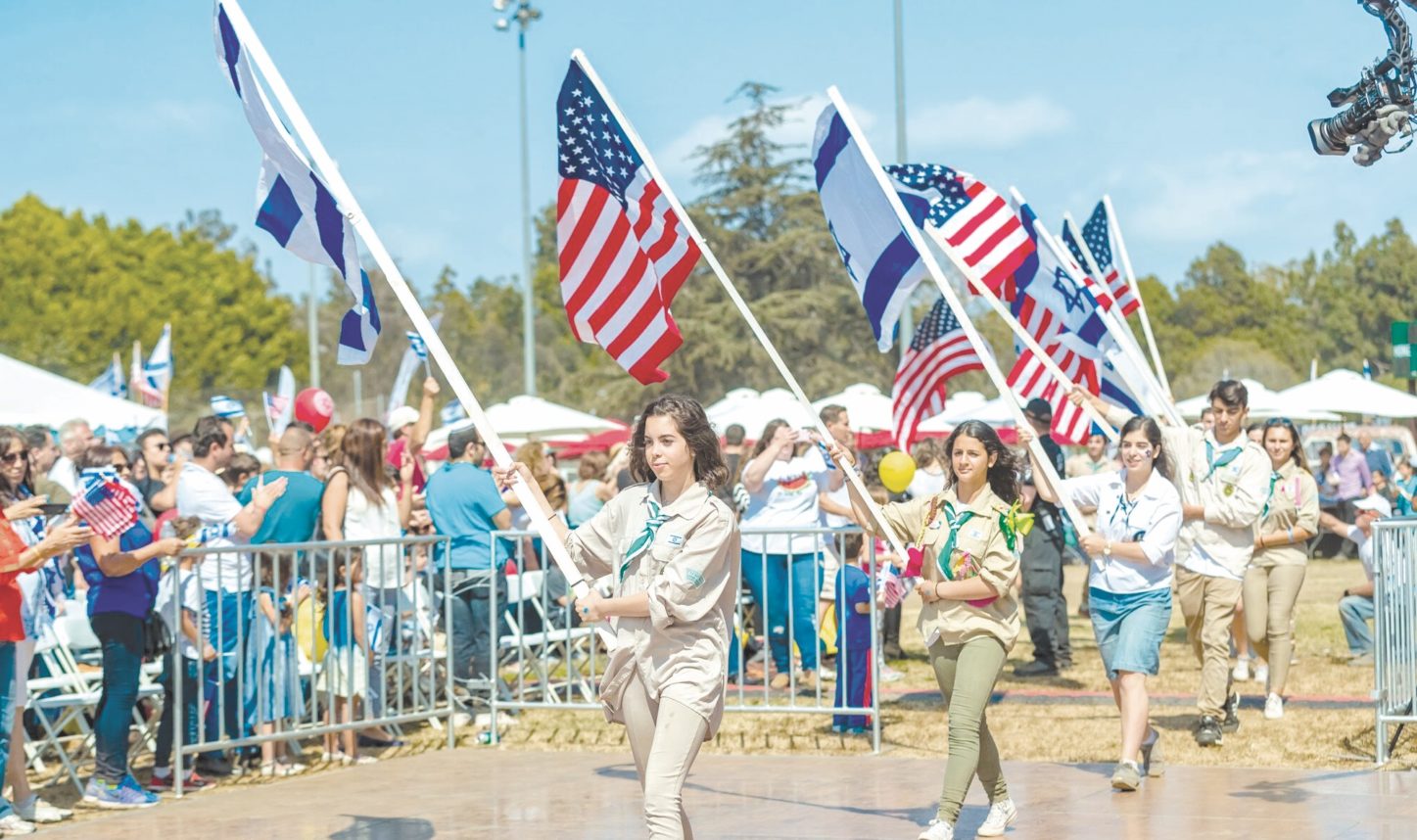
The Celebrate Israel Festival — the self-described largest Jewish happening in Los Angeles — marks “70 Years of Zionism, Innovation and Entrepreneurship” since Israel’s establishment in 1948. More than 15,000 members of the pro-Israel community are expected to turn out for a daylong gathering of live entertainment, interactive activities, culture, food and art. The event kicks off with an Israel solidarity walk; participants will have the opportunity to show their love for Israel as they walk for one mile on Pico Boulevard. Later in the day, Israeli pop duo Static and Ben El headlines the main stage. Additional highlights include a performance by the Machol Lohet Dance Ensemble from Israel; an exhibition on Israeli startups created by Taglit-Birthright Israel; the IAC Lead Bar for young professionals; Safari Ramat Gan, featuring camel rides, pony rides and a massive petting zoo for all ages; and kosher food. Noon-7 p.m. $30 door; $20 advance. Rancho Park, Cheviot Hills Recreation Center, 2551 Motor Ave., Los Angeles. People assemble for Israel solidarity walk at 10:30 a.m. at 2551 Motor Ave. (818) 451-1201. celebrateisraelfestival.org/la

HOOPS 4 HOPE

From left: Julius Randle, Kyle Kuzma and Lonzo Ball.

For the first time, Hoops 4 Hope, a 3-on-3 men’s basketball tournament benefiting Ateres Avigail: Jewish Healthcare Support Association of Los Angeles, features a junior tournament for 10- to 14-year-olds. The grand prize for each of the three winning junior teams will be to play against the Los Angeles Lakers’ Lonzo Ball, Julius Randle and Kyle Kuzma in 3-on-3 matchups. Former Laker Metta World Peace will coach winning teams. The event supports Jews in the Los Angeles area facing medical crises. 2:30 p.m. Free. Pan Pacific Recreation Center. 7600 Beverly Blvd., Los Angeles. (323) 937-8300. ateresavigail.org/marathon.

“PRIMO LEVY: FOR THE PUBLIC”

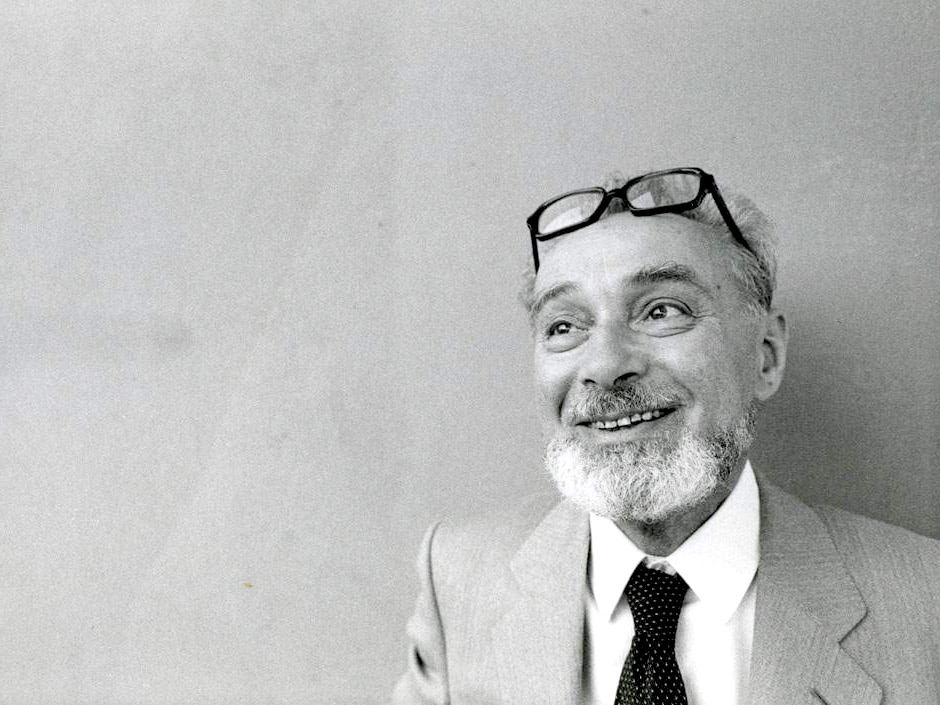
Primo Levy.

International scholars and writers engaged with the history, literature and impact of chemist, writer and Holocaust survivor Primo Levi will gather for a half-day symposium. Participants will celebrate the publication (in 2015) of Levi’s complete works in English, translated by Ann Goldstein, and probe Levi’s literary, philosophical and historical legacy. Featuring UCLA’s Todd Samuel Presner, Michael Rothberg, Sarah Abrevaya Stein. Sponsored by the UCLA Alan D. Leve Center for Jewish Studies. 11 a.m.-3 p.m. Free, but registration required. UCLA Faculty Center, 480 Charles E. Young Drive East, Los Angeles. (310) 267-5327. cjs.ucla.edu.

WALK TO END GENOCIDE
Seeking to bring wider attention to ongoing atrocities in countries including Sudan, Syria, Myanmar and the Democratic Republic of the Congo, Jewish World Watch holds its sixth annual Walk to End Genocide in the Conejo Valley. The walk not only is intended to educate surrounding communities but to motivate them to act and to participate in activism. 11 a.m.-2 p.m. $18-$36. Free for children 4 and younger. Thousand Oaks Civic Arts Plaza. 2100 Thousand Oaks Blvd., Thousand Oaks. (818) 501-1836. jww.org.

LOST CEMETERIES OF LOS ANGELES
Traveling upward from the Los Angeles Plaza to the Cemetery Ravine near Dodger Stadium and back down to level ground, a walking tour of four of the lost cemeteries of Los Angeles stops at what is known as the Old Jewish Cemetery, adjacent to the ballpark. Blogger Shmuel Gonzalez, a.k.a. Boychik Barrio, leads the three-mile round trip that highlights sites and stories of the often-untold multicultural history of early Los Angeles. Noon-2:30 p.m. $20. Meet at the LA Plaza de Cultura y Artes bookshop, La Tienda, 501 N. Main St., Los Angeles. eventbrite.com.

SUNDAYS WITH CAMP ALONIM
The vast and deeply green 2,700 acres of the historic Brandeis-Bardin campus of American Jewish University in the Simi Valley forms the backdrop for Sundays in the Park with Camp Alonim. Parents and others considering attending summer camp there are invited to tour the grounds, visit with camp directors and experience Alonim’s crafts, swimming, music, horseback riding and ropes activities. Kosher food will be available. Noon-4 p.m. Free. Reservations recommended but walk-ins welcome. Brandeis-Bardin Campus of American Jewish University, 1101 Peppertree Lane, Simi Valley. (805) 915-0736. alonim.com.

MUSLIM-JEWISH ART-MAKING SALON
Get creative in a multi-faith, collaborative environment as Muslim and Jewish participants come together to have fun and get to know one another through the process of making art. No expectations and no artistic talent required. Presented by NewGround: A Muslim-Jewish Partnership for Change. 1:30-3:30 p.m. Free. South Main Street at West Sixth Street, Los Angeles (exact address given upon RSVP). mjartmakingsalon.wordpress.com.

“MONSIEUR IBRAHIM AND THE FLOWERS OF THE KORAN”
The play “Monsieur Ibrahim and the Flowers of the Koran” has been produced in 13 countries all over the world, been published in 12 languages and is studied in schools. The play, set in 1960s Paris, is about the story of a young Jewish boy, Moses, who is caught stealing from a wise, old shopkeeper, Monsieur Ibrahim. Together, they embark on a life-altering journey. Starring the playwright, Éric-Emmanuel Schmitt. In French with English subtitles. Made possible with the support of the Alliance Française of Los Angeles, the Belgium Consulate in Los Angeles and Le Lycée Français de Los Angeles. 7:30 p.m. $20 students, $35 adults. Theatre Raymond Kabbaz, 10361 W. Pico Blvd., Los Angeles. (310) 286-0553. theatreraymondkabbaz.com.

CATHOLIC-JEWISH WOMEN’S DIALOGUE
Rabbi Leah Lewis of Temple Menorah in Long Beach and Religious Sister of Charity Sister Edith Prendergast discuss “Living Your Faith in a Secular World: Challenges and Rewards.” The aim of the event is to promote friendships, develop understanding and foster mutual respect. Congregation Ner Tamid of South Bay and Temple Beth El in San Pedro participate. 9 a.m.-1 p.m. $30. Continental breakfast from 8-9:30 a.m. Box lunch and beverages included in the cost. Temple Beth El, 1435 W. Seventh St., San Pedro. (310) 213-5819. cjwdsb.com.

WED MAY 9
SEN. JOSEPH LIEBERMAN

Senator Joe Lieberman.

Former Sen. Joseph Lieberman, the Democratic nominee for vice president of the United States in the 2000 election, discusses Israel, the Middle East and domestic Jewish identity, including the challenges and opportunities facing the Jewish-American community. A panel discussion follows with Sephardic Temple Senior Rabbi Tal Sessler and Jewish Journal Editor-in-Chief David Suissa. 6:30 p.m. $12 Sephardic Temple members; $18 general. Sephardic Temple, 10500 Wilshire Blvd., Los Angeles. (310) 475-7000. sephardictemple.org.

THU MAY 10
“WANDERING JEW”
Hebrew University of Jerusalem Professor Galit Hasan-Rokem explores “Is the Wandering Jew in Contemporary Israeli Literature a Paradox?” She addresses the disputed question of whether the Wandering Jew of literary lore still exists and discusses how even more surprising than the presence of the Wandering Jew in contemporary literature is his prominence in Israeli novels 70 years after the birth of Israel. 4-6 p.m. Free. Alan D. Leve Center for Jewish Studies, UCLA Faculty Center, 480 Charles E. Young Drive East, Los Angeles. (310) 267-5327. cjs.ucla.edu/rsvp-to-event.

REFORM JUDAISM PANEL
Rabbi Aaron Panken, president of Hebrew Union College-Jewish Institute of Religion (HUC-JIR); Josh Holo, dean of the Los Angeles campus of HUC-JIR; Rabbi Dvora Weisberg, professor of rabbinics and director of the school of rabbinic studies at HUC-JIR in Los Angeles; and Stephen Wise Temple Senior Rabbi Yoshi Zweiback discuss “Reform Judaism: An Exploration of Our Role and our Future.” The panel assesses the Reform movement and its role in shaping the future. Stephen Wise Temple Senior Rabbi David Woznica moderates. 7:30 p.m. $15. Stephen Wise Temple, 15500 Stephen S. Wise Drive, Los Angeles. (310) 476-8561. wisela.org/cjl.

“JEWS OF CUBA”

Rabbi Amy Bernstein.

An evening exploring Jews of Cuba features special guest speakers, a “Taste of Cuba” reception and a Q-and-A. Speakers are Sylvia Purchuk, who will present the story of her parents’ experiences in Cuba; Stacie Klein, who will discuss the role of the American Jewish Joint Distribution Committee in Cuba; and Kehillat Israel Rabbi Amy Bernstein, who will talk about her trip to Cuba, including her experiences meeting Cuban Jewish leaders. 7 p.m. $10. Kehillat Israel, 16019 W. Sunset Blvd., Pacific Palisades. (310) 459-2328. ourki.org/event/jews-of-cuba.

What’s Happening in Jewish L.A. May 4-10: Celebrate Israel Festival, Hoops 4 Hope Read More »