As Jews and non-Jews alike commemorate the horrors of the Holocaust on Yom Hashoah, it’s worth noting that there are Holocaust survivors out there who are in dire need of help, and there are plenty of ways that you can help them.
Masha Pearl, executive director of The Blue Card, told the Journal in a phone interview that Holocaust survivors face “greater issues than the general elderly population because they are still suffering the effects of their wartime experience.”
“They’re still suffering from emotional post-traumatic stress disorder and there are many triggers, such as visiting the doctor, that just bring them back to that time,” Pearl said.
Pearl added that depression, malnutrition, higher cancer rates, and serious dental problems are among some of the other problems that Holocaust survivors face. The aforementioned issues are also among the various financial burdens that Holocaust survivors struggle with.
“The additional financial strain of the co-pays, the transportation to and from appointments and special diets are weighing heavily on them,” Pearl said. “Additionally, losing the family networks, or losing a spouse, having to pay off a funeral, and at the same time continue to remain safely at the home is a big priority for that. So all the costs that come along with remaining independent – such as homecare, housing, utilities, having a telephone emergency response system at the home to keep them safe – these really add up quickly.”
Pearl added that Holocaust survivors are afraid “of being institutionalized and being in a nursing home.”
“They prefer to remain safely in each of their home[s] as long as possible,” Pearl said.
According to a press release from The Blue Card, most Holocaust survivors in the United States live below the poverty line, meaning they have to live on less than $23,000 a year.
The Blue Card lists four ways in their press release how people can help Holocaust survivors. For financial aid to Holocaust survivors, people can donate to various organizations like The Blue Card and Jewish Family Service of Los Angeles as well as fundraise for Holocaust survivors through activities like marathons or programs like Amazon Smile.
The Blue Card and local Jewish Community Centers (JCC) are among the organizations that give people the opportunity to spend time with Holocaust survivors and provide them emotional support and help for them to complete their daily tasks. Volunteers can also do activities with Holocaust survivors.
“Companionship and friendship is extremely important to Holocaust survivors and it produces emotional health benefits,” Pearl said, as around three-quarters of Holocaust survivors live alone.
The Blue Card also recommends going to various events that feature Holocaust survivors speaking to ensure that their stories continue to be told even after they’re gone.
“There are so many ways to connect and give back to Holocaust survivors,” Pearl said in the press release. “Whether it’s making a donation, spreading awareness about those in need or listening to someone tell their story – even the smallest gesture can have a big impact on improving lives.”
A new report from an Israeli news outlets states that the Israel Defense Force (IDF) is deeply concerned that Hamas is training its members to kidnap IDF soldiers during the border riots.
The Israeli news outlet, Walla, is reporting that the IDF has feared ever since the riots started that the protesters would be used as human shields by Hamas to breach the Israel-Gaza border fence and launch terror attacks against Israel. They are concerned that Hamas will use Molotov cocktails to cause fires on the Israeli border, which would presumably help lead them toward their goal of penetrating the fence and then start kidnapping IDF soldiers.
The IDF is preparing to keep the April 13 rioters as far away from the border fence to ensure that the Israeli border isn’t struck by Molotov cocktails.
Hamas certainly has a track record of kidnapping IDF soldiers, most notably the kidnapping of three IDF soldiers in the summer of 2014 that ignited an armed conflict between Hamas and Israel. There has been at least one Hamas plan to kidnap an IDF soldier foiled by Israel.
The Hamas-led Gaza riots started on March 30 to protest the displaced Arabs from the 1948 War for Independence and are expected to continue and escalate until May 15, the day after Israel celebrates its independence. Multiple people have died in violent clashes in these riots, most of which have been confirmed to be terrorists.
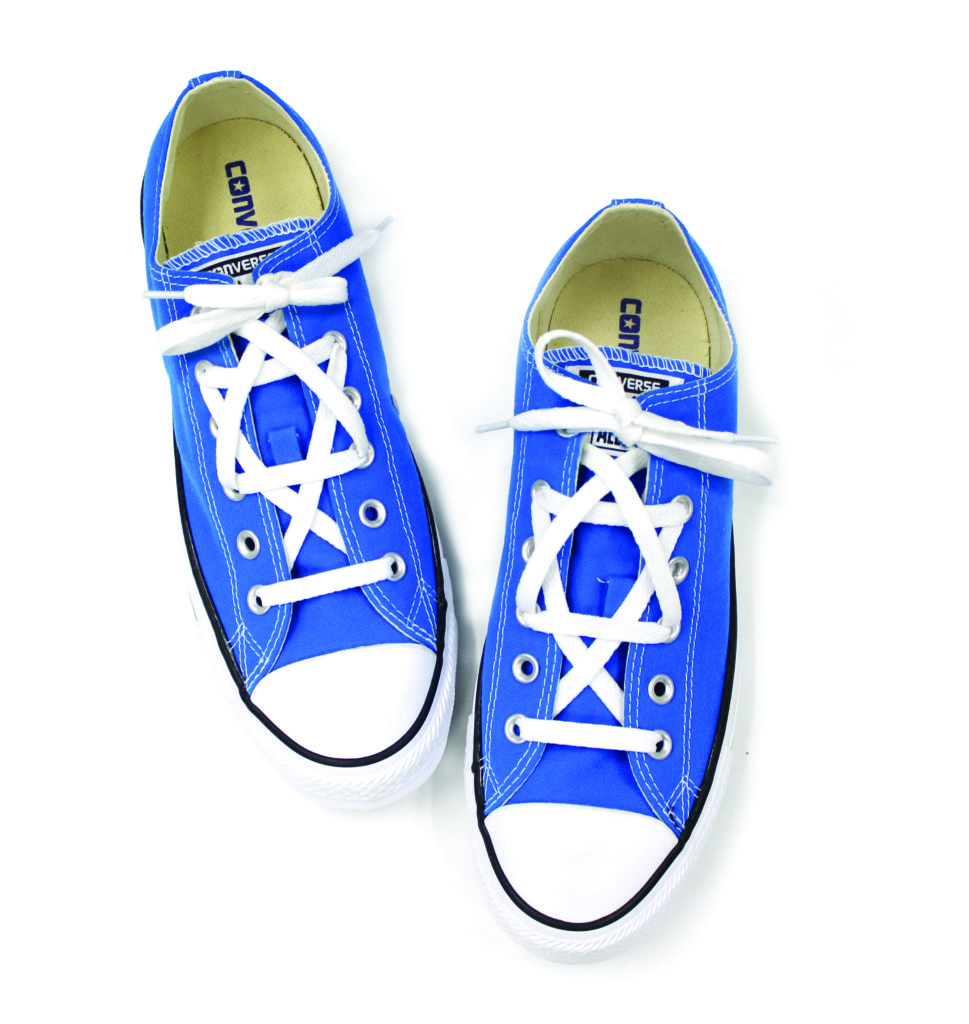
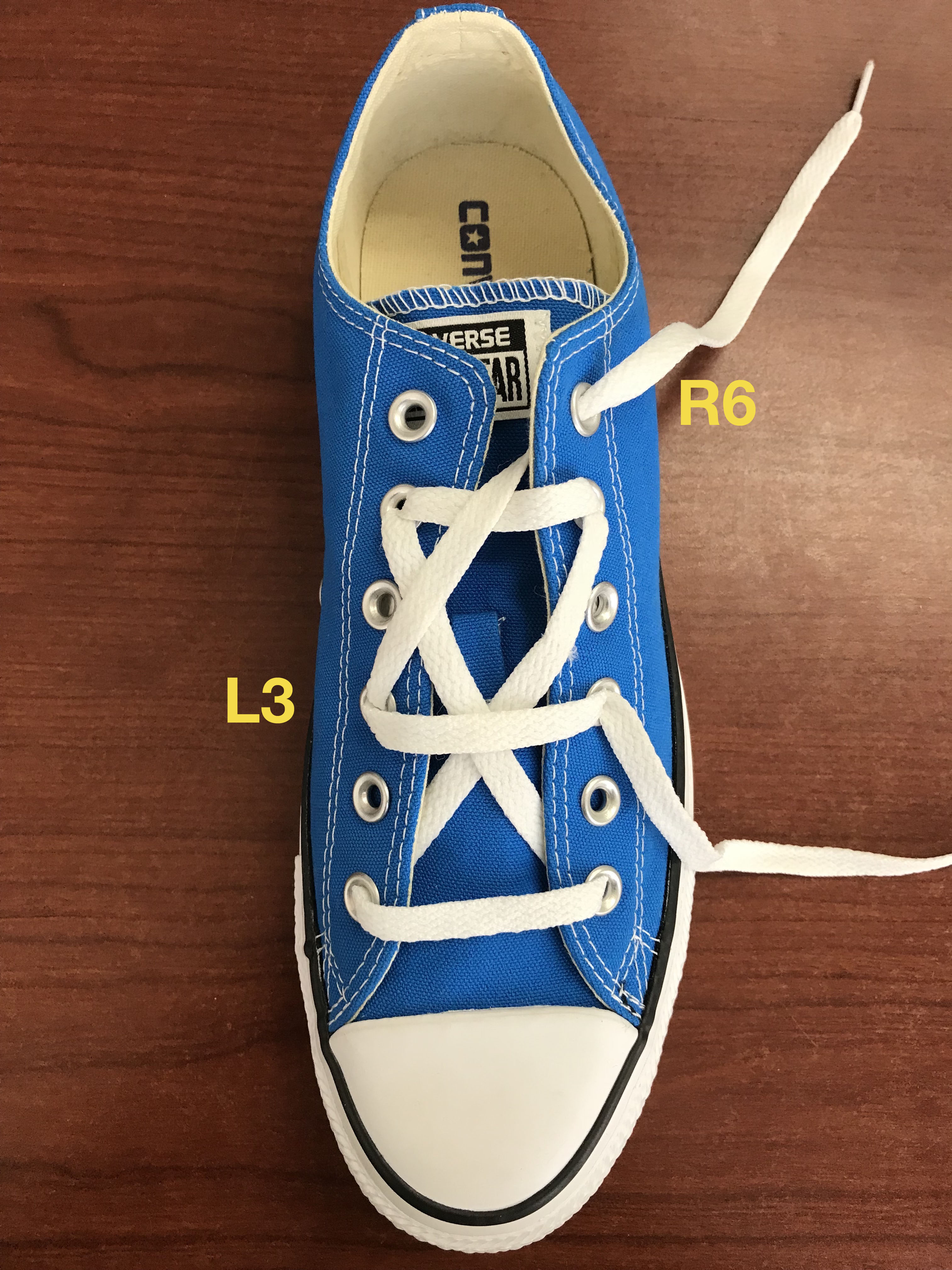
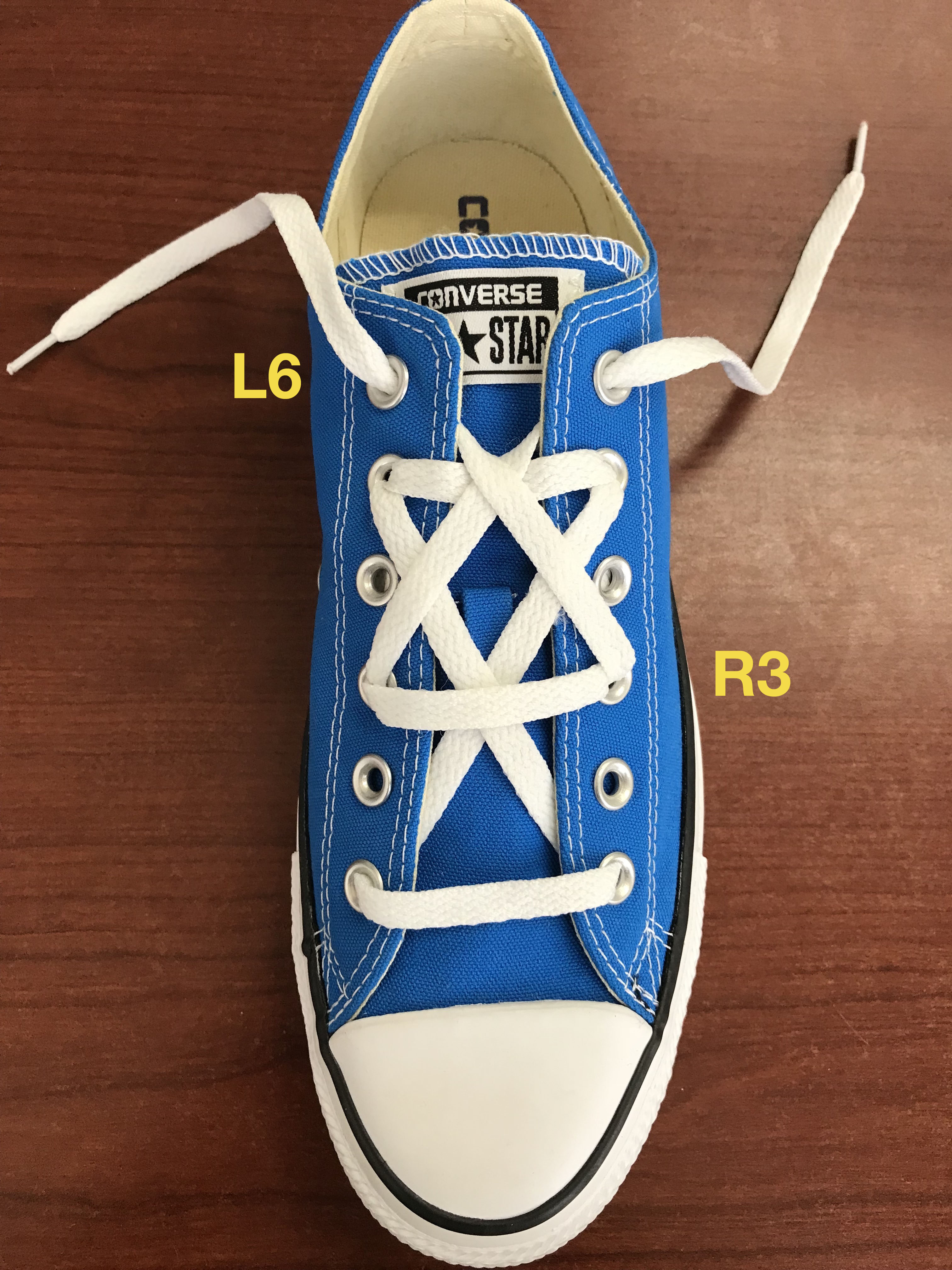
If you’ve seen the recent advertisements for the upcoming Los Angeles Jewish Film Festival, you might have noticed this year’s logo graphic, which is a pair of Converse Chuck Taylors with the shoelaces tied in the configuration of a Star of David. This graphic was created by yours truly to commemorate the film festival’s bar mitzvah year.
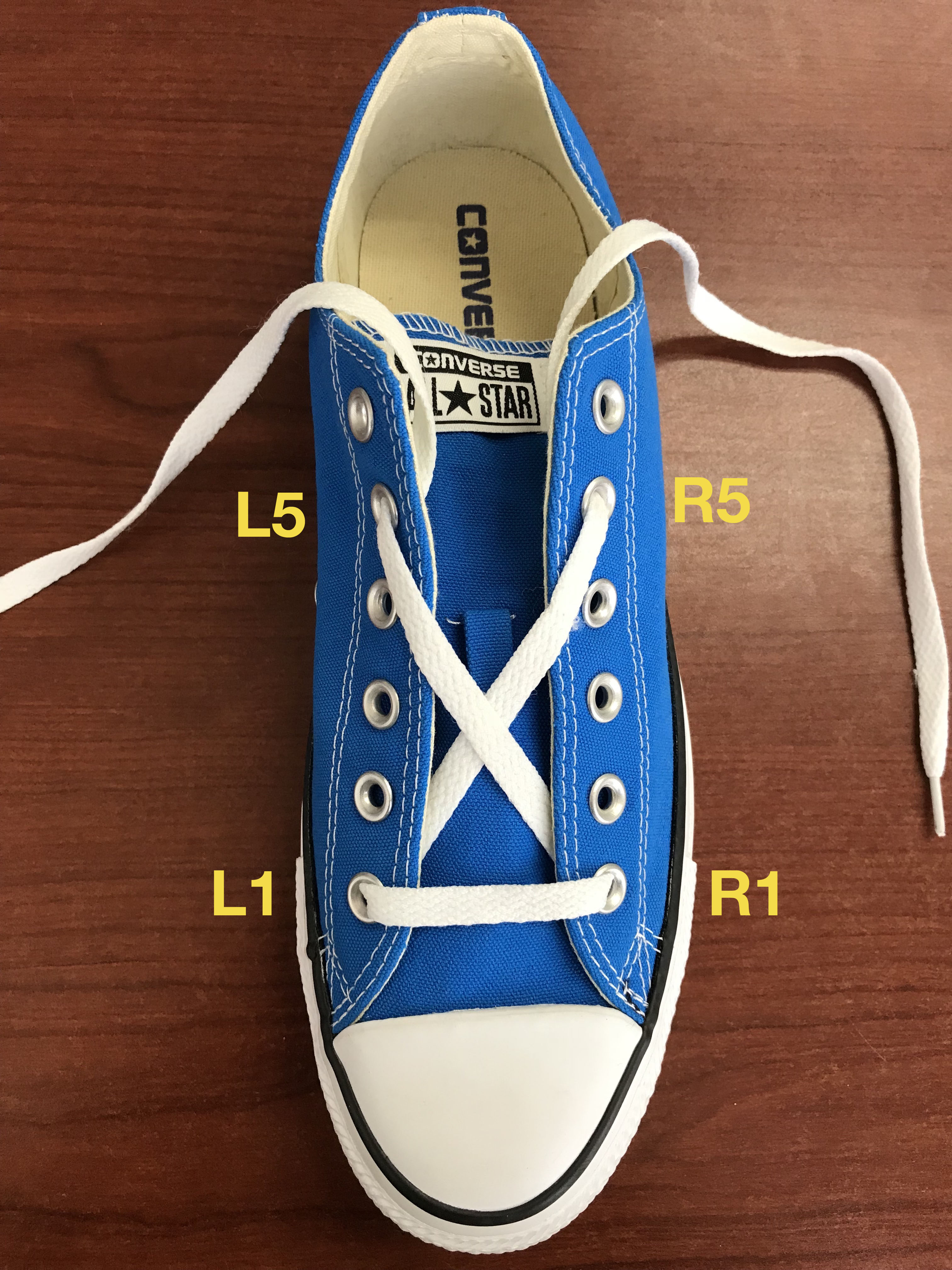
Since the ads started running, we’ve gotten numerous inquiries about how to tie the shoelaces into this formation. Therefore, I’ve put together this tutorial for all you who want to sport this hot fashion look. The instructions are tailored for a shoe with six or more eyelets on either side, which is the case for most athletic footwear.
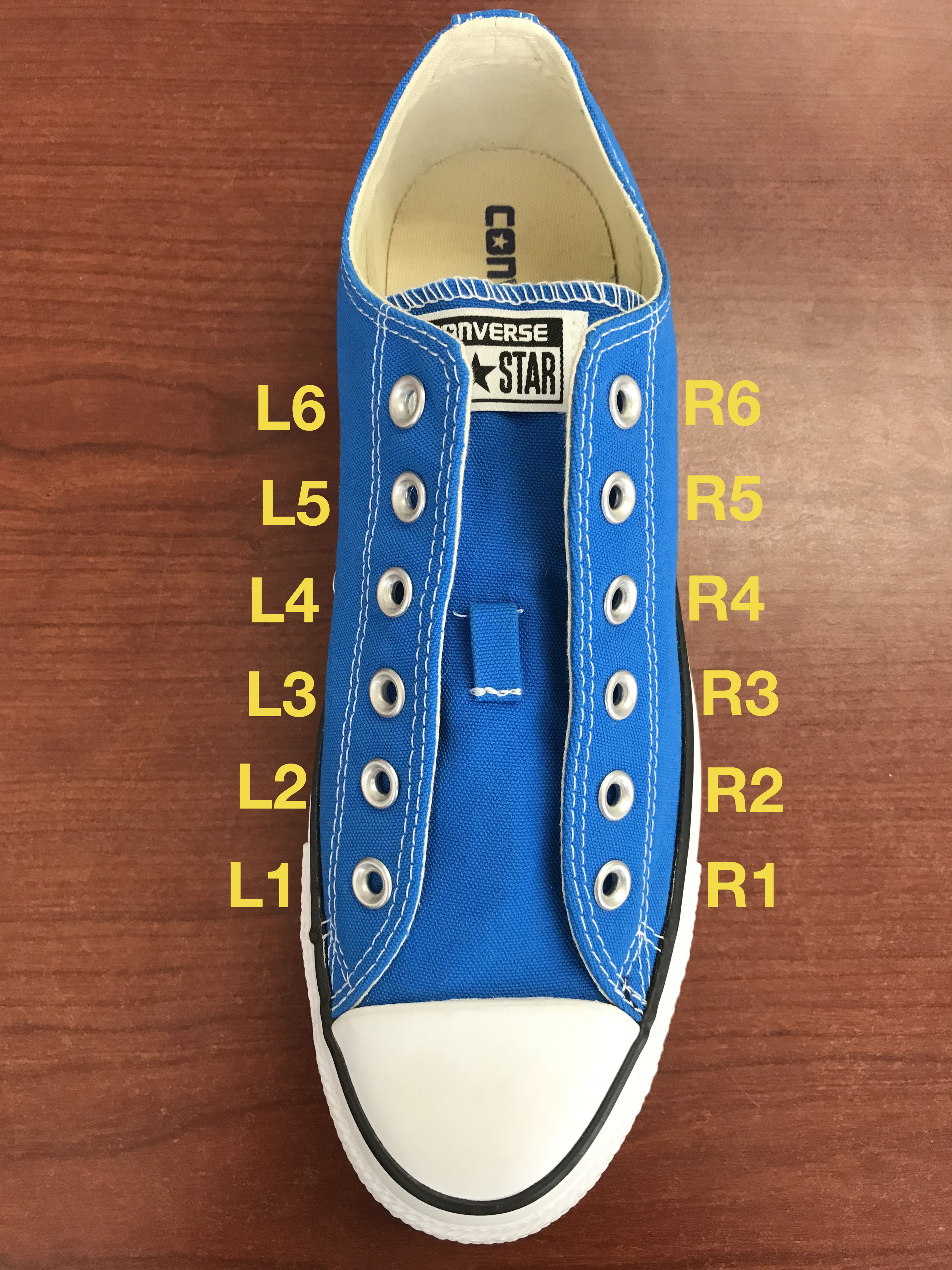
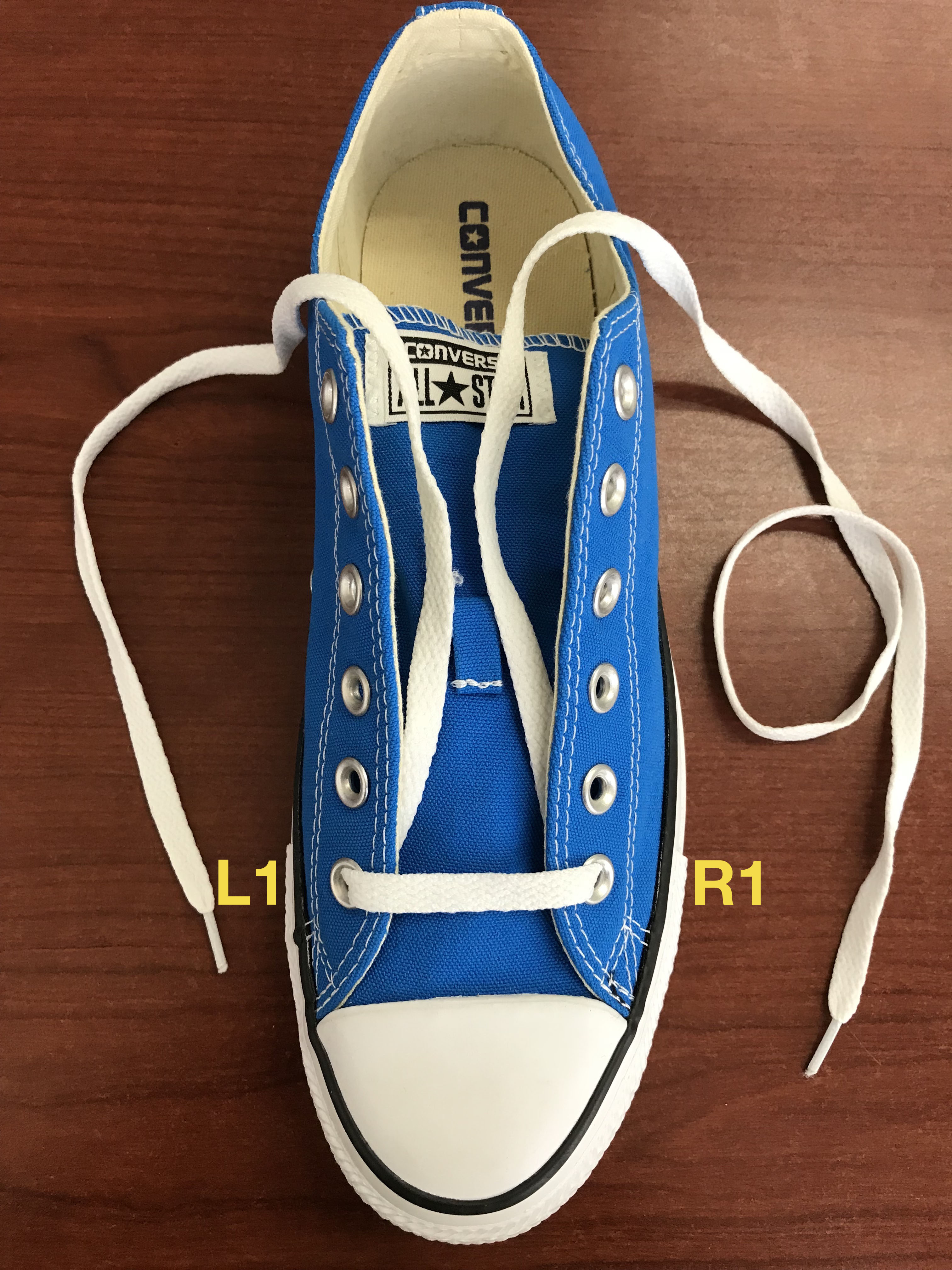
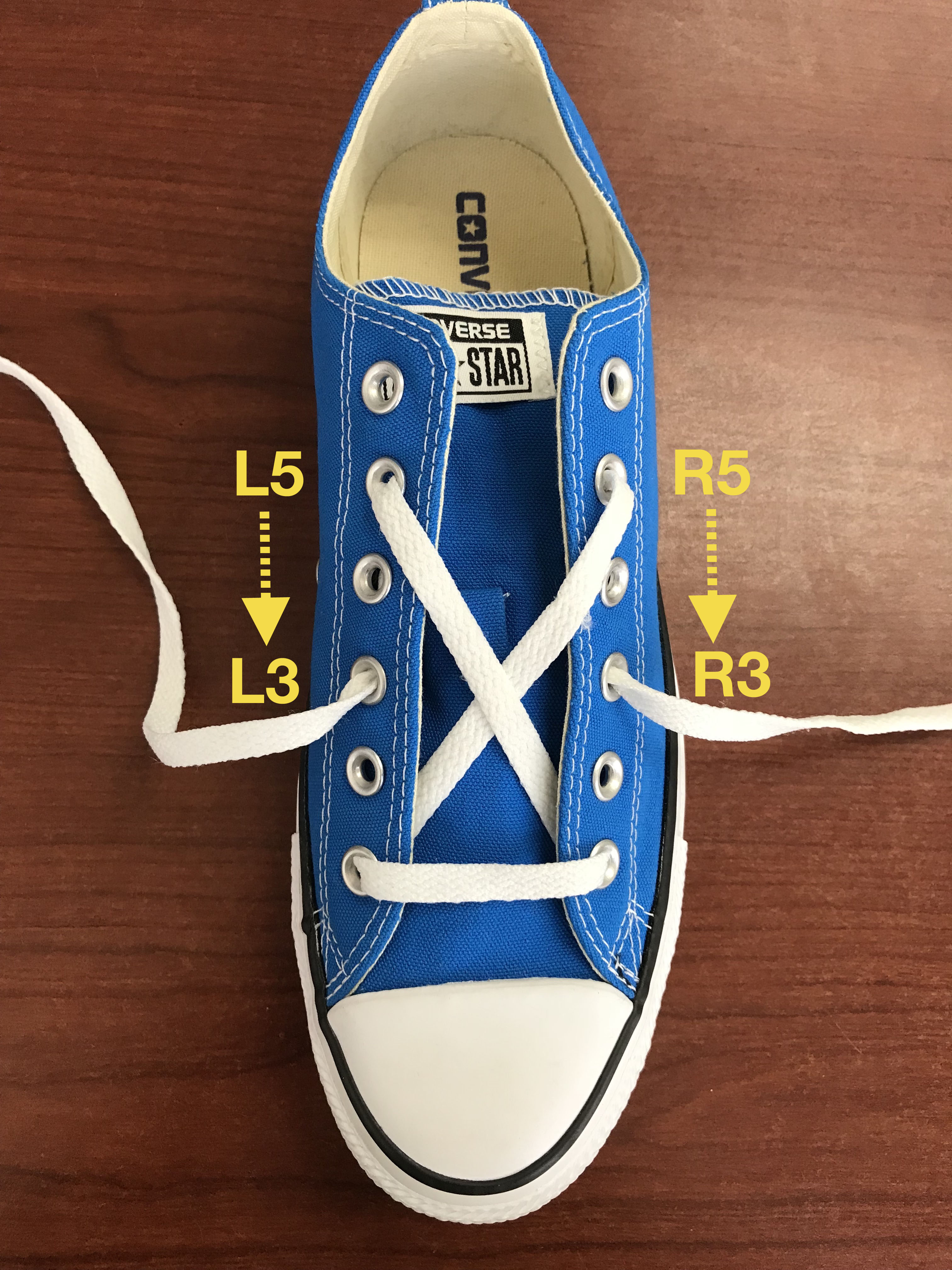
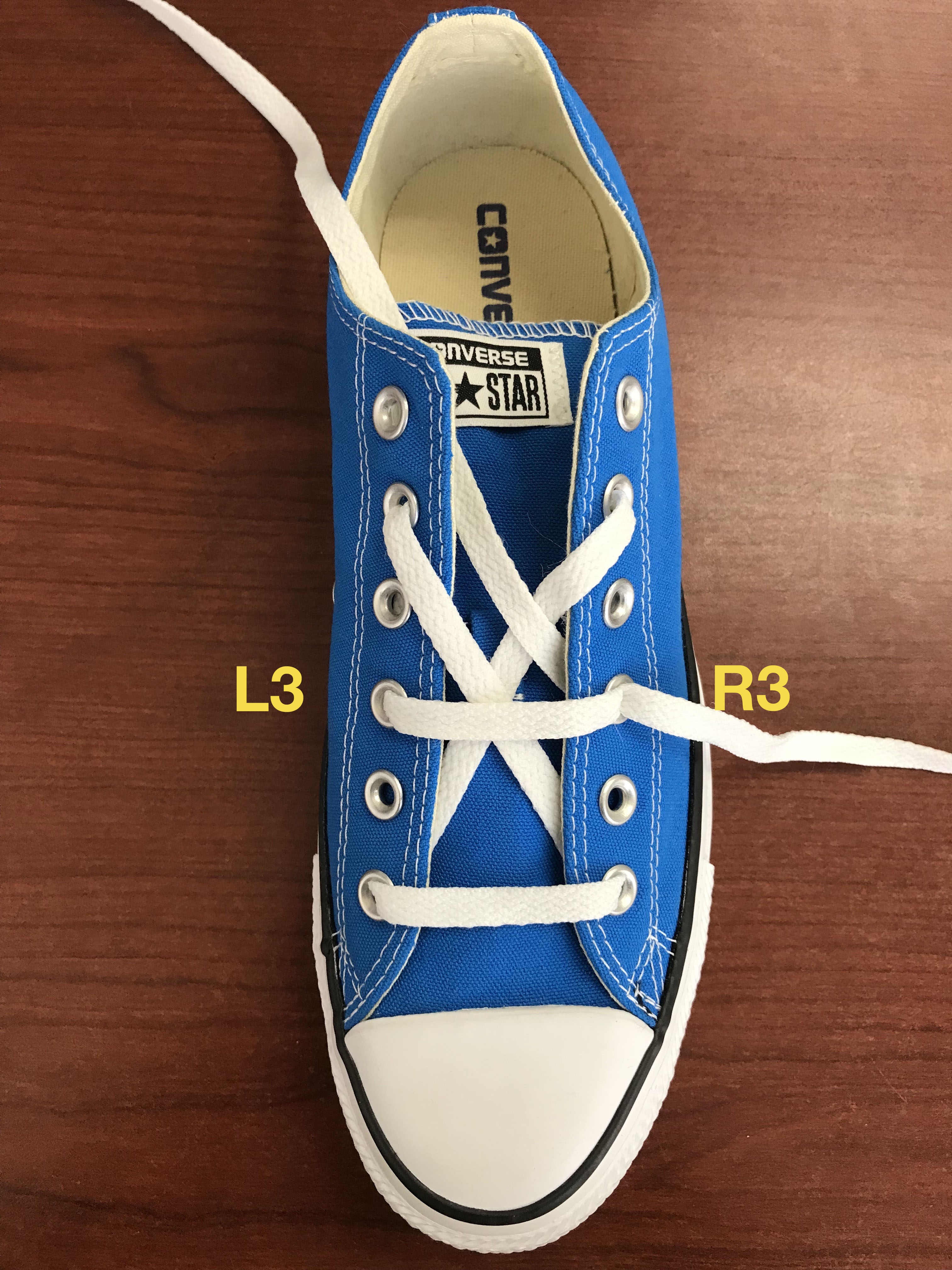
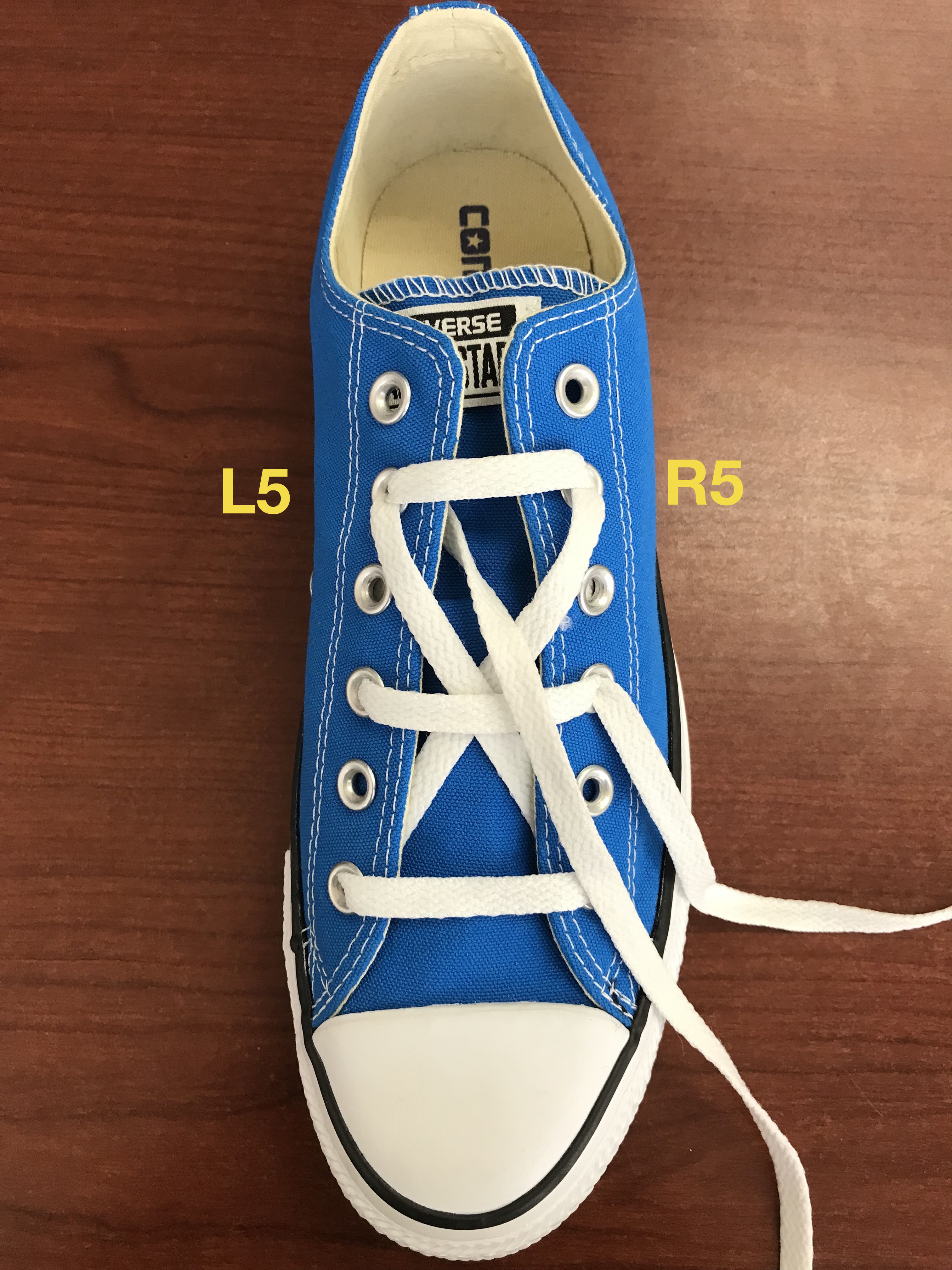
To help you navigate your way through the tutorial, I’ve numbered each eyelet from one to six, indicating whether it’s the left (L) or right side (R), with the codes L1, R1, L2, R2, etc. Pay attention to the photographs and instructions to see when the shoelace is on the top of the eyelet and when it is on the bottom. Dotted arrows in the photos indicate where the shoelace is threaded underneath.
After you tie your shoelaces into Stars of David, you’ll want to hit the town in your new kicks. And what a fashionable way to celebrate Israel’s 70th.
1.
1. Face the shoe toward you.
2.
2. Start with lace going into top of L1 and R1. Make the right end of the laces about eight inches longer.
3.
3. Bottom of R1 to top of L5. Bottom of L1 to top of R5.
4.
4. Bottom of L5 to bottom of L3. Bottom of R5 to bottom of R3.
5.
5. Top of L3 to top of R3.
6.
6. Bottom of R3 to bottom of R5.
7.
7. Top of R5 to top of L5.
8.
8. Bottom of L5 to bottom of L3.
9.
9. Top of L3 to bottom of R6.
10.
10. Top of R3 to bottom of L6.
Jonathan Fong is the author of “Flowers That Wow” and “Parties That Wow,” and host of “Style With a Smile” on YouTube. You can see more of his do-it-yourself projects at jonathanfongstyle.com.
Howard Adelstein died Feb. 28 at 84. Survived by wife Adriene; daughter Alyse; son Kenneth. Hillside
Louis Bell died Feb. 23 at 88. Survived by wife Sondra; daughters Lisa (Tom) Bell Willard, Susan (Scott) Bell Warner, Jula (Adam) Bell Liebei; 5 grandchildren. Mount Sinai
Lillian Bloch died March 8 at 95. Survived by daughters Rhonda (Doug) Kinn, Laura (Richard) Rappaport, Judith. Hillside
Loretta Dix Blumin died March 2 at 81. Survived by husband Moe; daughter Debbie (Gene) Bennett; son Lloyd (Mary) Dix; 4 grandchildren. Mount Sinai
Diane Ruth Meyerowitz Buner died March 1 at 68. Survived by husband Barry; son Matthew (Emily Buner-Fox); daughter Elizabeth; sister Fran Layton; brothers Allan, Brad (Sandy). Mount Sinai
Aviad Cohen died Oct. 17 at 42. Survived by mother Sarah; father Shlomo; brother Eitan. Mount Sinai
Gabriel “Gabe” Fine died March 5 at 85; survived by wife Shirley; daughter Stephanie; sons David (Allison), Stephan (Alicia), 5 grandchildren. Groman Eden
Blanche Fischler died March 3 at 94. Survived daughters Michelle (Brian) Tabachnick, Rosalind Fischler; 2 grandchildren; stepbrother Isadore Rosen. Mount Sinai
Murray Gechtman died Feb. 28 at 88. Survived by wife Lucille; daughter Risa Okin; sons Joe, Dan (Jodi); 5 grandchildren. Hillside
Leo Geffner died Feb. 28 at 89. Survived by daughter Meryl (Mark Perry); sons David (Devon), Michael (Lily); 7 grandchildren; 7 great-grandchildren. Mount Sinai
Milton Gruber died March 9 at 90. Survived by wife Carolyn “Gini”; sons Jon (Holly), Dan (Karen), Victor, Michael; 8 grandchildren. Hillside
Harriet W. Gusman died Feb. 28 at 83. Survived by husband Robert; daughters Jennifer (Steve) Norin, Julie; son-in-law Rich Miller; 5 grandchildren; sister Phylis (Joel) Rudich. Mount Sinai
Bernard Koire died March 3 at 89. Survived by daughters Alison (Richard) Brustein, Hillary (Robert “Cameron”) Lester; 4 grandchildren; brother Michael (Sylvia). Mount Sinai
Shirley Kory died Feb. 27 at 93. Survived by daughter Karen (Robert Curet); son Michael; 3 grandchildren. Hillside
Mary Leventhal died March 6 at 62. Survived by brother Michael (Sharon). Hillside
Elinor Livingston died March 2 at 86. Survived by husband Martin; daughter Joy (Sandra Adams); son Ralph (Sherry). Mount Sinai
Lenore P. Machanic died March 2 at 95. Survived by daughters Jeri Lynn, Deborah (Pascal) Machanic-Nelson; son Mark (Lynda); 4 step-grandchildren; 6 great-step-grandchildren. Mount Sinai
Bertram Massing died March 6 at 84. Survived by wife Phyllis; daughter Lisa (Brian) Massing-Aronson; sons Gregory, Robert; 2 grandchildren; brother-in-law Wayne (Holly) Liebman; sister-in-law Lois. Hillside
Martin Mayerfeld died Jan. 30 at 84. Survived by wife Elayne; daughter Shani (Israel) Hartman; son Yair (Adeena); 6 grandchildren; 1 great-grandchild; brother Henry (Bobbee) Mayerfeld; sister Nechama (Joseph) Katz. Chevra Kadisha
Barbara J. Mermelstein died Jan. 3 at 85. Survived by husband Ignac; sons David, Evan (Michal); 9 grandchildren. Chevra Kadisha
Ruth Meyrowitz died March 4 at 100. Survived by daughter Linda (Martin) Blank; 2 grandchildren; 4 great-grandchildren. Mount Sinai
Irving S. Morris died Feb. 27 at age 99. Survived by daughters Barbara Gunther, Susan (Barnett) Parks; 4 grandchildren; 3 great-grandchildren. Chevra Kadisha
Carol Owens died March 6 at 75. Survived by husband Michael; sons Craig (Aracely), Keith (Djamilla); 4 grand-children. Hillside
Lita Reid died March 4 at 87. Survived by daughters Deborah (Terry) Adair, Maralou (Patrick) Higgins; sons Charles (Darleen), Richard; 11 grandchildren; 7 great-grandchildren; brother Chuck Chatlynne. Hillside
Bruce Ritter died March 4 at 66. Survived by brother Bill (Kathleen Friery). Hillside
Carolyn Jean Roman died March 2 at 84. Survived by sons Paul Klein, Daniel (Maayan) Klein; 2 grandchildren; sister Shirley Potter. Mount Sinai
Steven Rose died March 5 at 71. Survived by stepson Josh (Crystal) Biller. Hillside
Thelma Rosenblum died March 7 at 100. Survived by daughters Margie (Joyce), Susie (Yacov) Sherman; 8 grandchildren; 6 great-grandchildren. Hillside
Jeannette Seligman died March 3 at 91. Survived by sons Robert (Kathy), Nat (Cher); 1 grandchild. Hillside
Maurice Stein died Feb. 28 at 83. Survived by wife Barbara; daughter Debra Mirabella; sons Michael (Sharon), Danny; 10 grandchildren; sister Barbara Westmoreland. Mount Sinai
Gloria “Bunny” Wallach died March 1 at 91. Survived by daughter Beth Marlis; sons Rand (Jane) Marlis, Steve; stepdaughter Joan (Harold) Tyndall; stepsons John (Amanda), Rich (Karree); 6 grandchildren; 2 great-grandchildren. Hillside
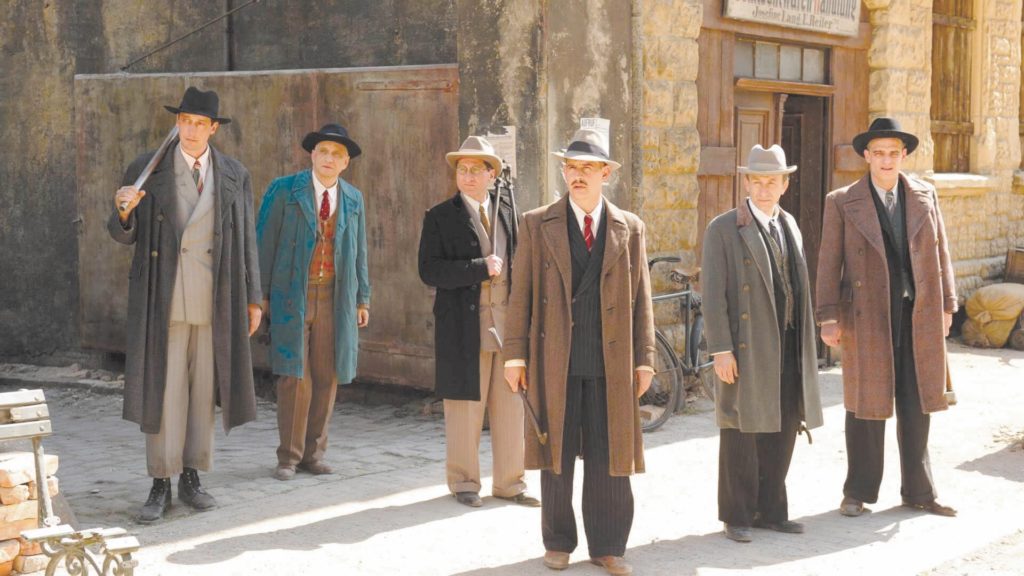
Set in Frankfurt in 1946, this comedy-drama follows a Jewish man who recruits friends from a displaced person’s camp to sell linens at inflated prices to unsuspecting Germans, so they can raise enough money to leave Germany for the United States. Peppered with Yiddish flavor and wit, the film tells the story of the Jewish men and woman whose grit enables them to succeed against all odds in post-World War II Germany. Various times. $12 general, Monday-Thursday; $13 general, Friday-Sunday. Laemmle Royal, 11523 Santa Monica Blvd., Los Angeles. Laemmle Town Center 5, 17200 Ventura Blvd., Encino. (310) 478-3836. laemmle.com.
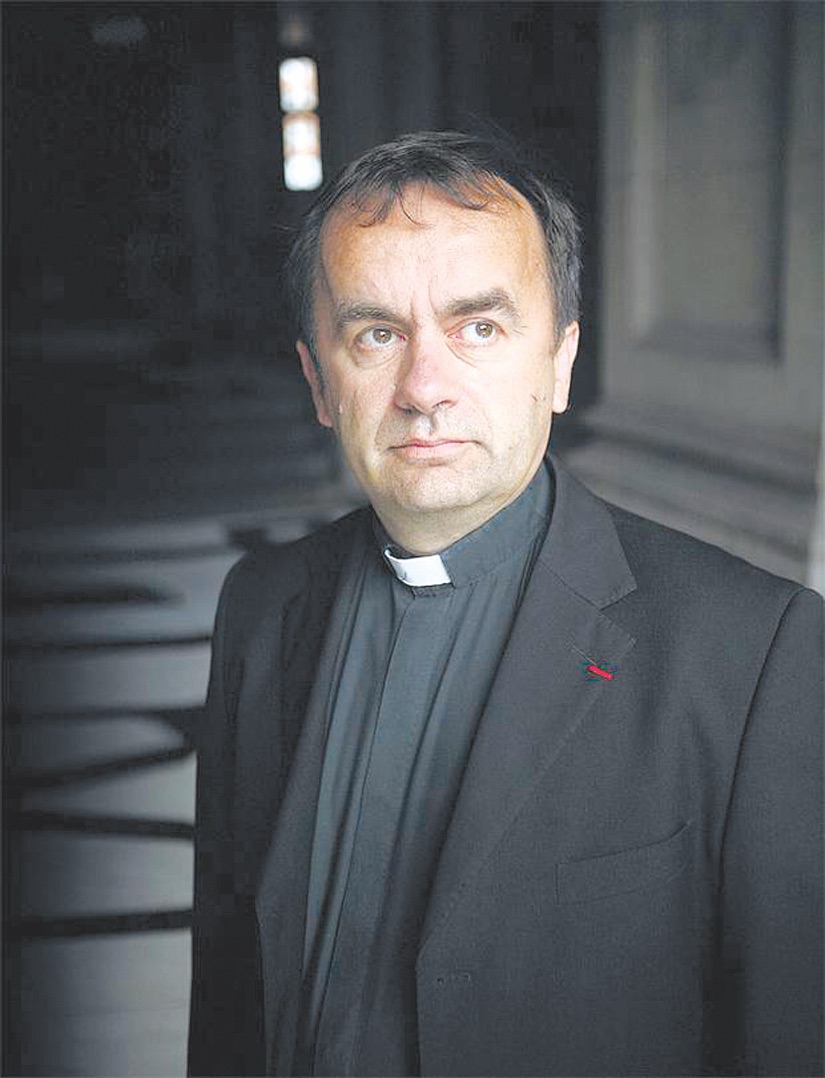
FATHER PATRICK DESBOIS
Father Patrick DeBois.
Father Patrick Desbois, president and founder of Yahad-In Unum, an organization that has identified mass graves of Jews killed by Nazi mobile killing units, is the special guest at the Beverly Hills Synagogue Yom HaShoah dinner. His appearance follows the January publication of his new book, “In Broad Daylight: The Secret Procedures Behind the Holocaust by Bullets,” a follow-up to his acclaimed “The Holocaust by Bullets: A Priest’s Journey to Uncover the Truth Behind the Murder of 1.5 Million Jews.” 7:30-9 p.m. $50 young professionals, $75 Beverly Hills Synagogue members, $85 general. Beverly Hills Synagogue, 9261 Alden Drive, Beverly Hills. (310) 278-7650. beverlyhillssynagogue.org.
SUN APRIL 15
AMOTH YOM HASHOAH COMMEMORATION
The Los Angeles Museum of the Holocaust (LAMOTH) holds its annual communitywide Yom HaShoah commemoration in Pan Pacific Park, focusing on Jewish resistance during the Holocaust and marking the 75th anniversary of the Warsaw Ghetto Uprising. Survivors, their children and grandchildren, as well as community members of all backgrounds, come together for a day of remembrance. The program begins with “A Tale of Two Families,” a conversation between reunited Holocaust survivors Alice Gerstel Weit and Simon Gronowski. Nancy Rubin, former U.S. ambassador to the United Nations Commission on Human Rights, delivers the keynote speech. From 10 a.m.-5 p.m., docents lead hourly tours of the museum, including a new exhibit focused on the uprisings in camps and ghettos during the Holocaust. Noon, “A Tale of Two Families”; 2 p.m., commemoration ceremony. Free. Pan Pacific Park, 7600 Beverly Blvd., Los Angeles. (323) 651-3704. lamoth.org.
“JEWISH WISDOM AND WELLNESS”
More than 80 events, lectures and workshops highlight this festival of learning on Jewish wisdom and its impact on well-being. On Sunday, Madeleine Brand of KCRW-FM’s “Press Play,” moderates “Hear Her, Heal Her: A Jewish Conversation about Women’s Health,” featuring Dr. Beth Karlan of Cedars-Sinai Medical Center and Rabbis Jaclyn Cohen, Dara Frimmer and Susan Goldberg. Then, over the course of two weeks, additional gatherings include: “Zumba for the Jewish Soul; “We Love Each Other — And It Still Takes Work: Healthy Communication in Interfaith and Intercultural Jewish Families”; Mental Health Shabbat; “Women’s Mitzvot With Rabbanit Alissa, Rabba Ramie and Ms. Atara Segal”; “The Letters of Your Name: A Journey to Your Soul”; “T’Shuvah: A Jewish Response to the Opioid Epidemic”; “The Complex Inner World of Jewish Teens in a #MeToo World”; “Gratitude: The Healing Power of Giving Thanks”; and “Songs and Yoga Poses of Peace.” On April 29, the closing concert, “Shir Joy: A Taste of L.A. Jewish Music,” honors the memory of songwriter Debbie Friedman and features performers Julie Silver, the Nefesh Band, Hillel Tigay and Friends, and others. Organized by the Kalsman Institute, Hebrew Union College-Jewish Institute of Religion and Cedars-Sinai Medical Center. Through April 29. Various times. Free. Various locations. For additional information, visit jewishwisdomandwellness.org.
GLOBAL GOOD DEEDS DAY
Get your hands dirty at the Shemesh Organic Farm, located on the Camp JCA Shalom campus in Malibu. Spend time with residents of the Los Angeles Jewish Home’s Eisenberg Village, embellishing and filling flowerpots to spruce up their home for spring. The Jewish Federation of Greater Los Angeles coordinates a day of giving back at six of its local social service partners: Baby2Baby, ETTA, L.A. Family Housing, Los Angeles Jewish Home, Rosie’s Foundation and Shemesh Organic Farm. Volunteers of all ages are welcome at the organic farm, while the other projects have minimum age requirements. Baby2Baby: 10 a.m.-noon; ETTA: 1-3 p.m.; L.A. Family Housing: 10 a.m.-1 p.m.; Los Angeles Jewish Home: 9:30-11:30 a.m.; Rosie’s Foundation: 11 a.m.-2 p.m.; Shemesh Organic Farm: 10 a.m.-noon. Free. Advance registration required. Various locations. For more information, visit jewishla.org.
BRUNCH WITH HOLOCAUST SURVIVORS
In observance of Yom HaShoah, the Persian-Jewish congregation Nessah honors the survivors of the Shoah. Attendees at this brunch meet, greet and serve the survivors from their communities. In partnership with the iCare Foundation, which teaches youth to care through action. All ages welcome. 11 a.m.-2 p.m. $10 donation per person. Nessah Congregation, 142 S. Rexford Drive, Beverly Hills. (310) 273-2400. nessah.org.
TEMPLE INSTALLATION
Last summer, Temple B’nai Hayim and Congregation Beth Meir, two Conservative synagogues in the San Fernando Valley, entered a formal agreement to become a single congregation. On Sunday, the congregations celebrate the formal installation of Rabbi Richard A. Flom and Rabbi/Chazzan Jason van Leeuwen. Come take part as the joined communities celebrate with music, a lunch buffet, desserts, beverages and a silent auction. 2-5 p.m. $54. Temple B’nai Hayim, 4302 Van Nuys Blvd., Sherman Oaks. (818) 788-4664. bnaihayim.com.
“WOMEN FOR WOMEN”
Sharsheret, a nonprofit organization supporting young Jewish women facing breast cancer, holds “Women for Women: Breast Cancer Support and Prevention for Every Age,” an informative and empowering evening where sisters, daughters, mothers and friends learn how to revamp their diet and boost their immune system, how to understand the signs and symptoms of breast cancer, and how to support family and friends. Speakers are Beller Nutritional Institute CEO Rachel Beller, Sharsheret Support Program Consultant Shera Dubitsky and Dr. Taaly Silberstein, an OBGYN at Providence Tarzana Medical Center. Part of the “Jewish Wisdom and Wellness: A Festival of Learning” series. 7:30-9 p.m. Free. Bais Yaakov, 7353 Beverly Blvd., Los Angeles. (310) 409-2300. sharsheret.org/womenforwomen.
MON APRIL 16 “RABIN: IN HIS OWN WORDS”
“Rabin: In His Words”
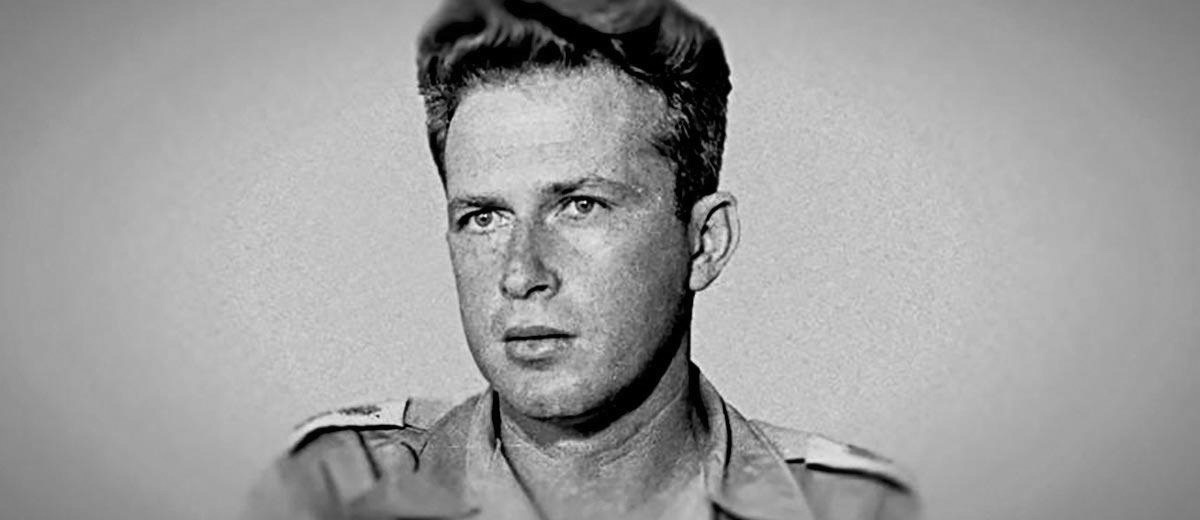
In this 2016 documentary, Erez Laufer, a veteran film editor in the United States and his native Israel (“The War Room,” “My Country, My Country”), shows the private and political sides of the late Prime Minister Yitzhak Rabin, the kibbutznik who evolved from commander of Israel’s armed forces during the Six-Day War into a leading advocate of peace with his country’s enemies. The film relies only on Rabin’s own voice and writings, without interviewing any of his former friends or foes. 6:30 p.m. Free. UCLA, Haines Hall, Room 220. (310) 825-9646. international.ucla.edu/israel/home.
TUE APRIL 17
YOM HAZIKARON NIGHT OF REMEMBRANCE
Friends of the Israel Defense Forces, Temple of the Arts and the Consulate General of Israel in Los Angeles hold their fourth annual Yom HaZikaron Community-Wide Night of Remembrance in honor of the memory of Israel’s fallen soldiers. Consul General of Israel in Los Angeles Sam Grundwerg delivers remarks. 6:45-8:45 p.m. Free. Saban Theatre, 8440 Wilshire Blvd., Beverly Hills. (323) 658-9100. bhtota.org.
“STRIVE CLASS: THE UNIVERSAL VS. THE TRIBAL”
It’s human nature to look inward to affirm our dignity and right to security. But sometimes humans are compelled to enact a vision for society defined by justice and equity for all. How do we balance our tribal needs with our universal values? Join a Strive Class with Rabbi Sarah Bassin of Temple Emanuel of Beverly Hills, who discusses the tension built into human existence: when to focus on ourselves and when to care for others. Also April 24 and May 1. 7 p.m. Free; reservations required. Space limited. Private residence; address given upon reservation. (310) 288-3737. tebh.org/striveclass.
WED APRIL 18
“OCCUPATION? WHAT OCCUPATION? ISRAEL AN OCCUPYING FORCE?”
Mordechai Kedar, who has forged a reputation for defending Israel in interviews with Al Jazeera, the BBC, France 24, U.S.-based Arab-language TV channel Alhurra and others, talks about Israel’s presence in Judea and Samaria, the Gaza Strip and the Golan Heights. $5. 7 p.m. JEM Community Center, 9930 Santa Monica Blvd., Beverly Hills. (213) 254-3162 or (310) 275-2877. rebekahs@standwithus.com.
DEBATING “THE FRAGILE DIALOGUE”
Congregation Kol Ami hosts a panel discussion on “The Fragile Dialogue: New Voices in Liberal Zionism,” a new collection of essays that explores the diverse perspectives of the progressive Jewish community on Israel and Zionism. Kol Ami’s founding rabbi, Rabbi Denise L. Eger, moderates the panel. Participants include the book’s co-editor, Rabbi Stanley M. Davids, and three of the book’s contributors, Joshua David Holo, dean of Hebrew Union College-Jewish Institute of Religion, and rabbinical students Max Chaiken and Eric Rosenstein. A book-signing follows the panel, with copies of “The Fragile Dialogue” available for purchase. 7 p.m. Free. RSVP at reception@kol-ami.org. Congregation Kol Ami, 1200 N. La Brea Ave., West Hollywood. (323) 606-0996. kol-ami.org.
THU APRIL 19
“BATTLE OF THE WARSAW GHETTO”
“The Battle of the Warsaw Ghetto,” a radio play that first aired on NBC in December 1943, marks the 75th anniversary of the Warsaw Ghetto Uprising, when residents of the Jewish ghetto in Nazi-occupied Warsaw staged an armed revolt against Nazi deportations to extermination camps, the most significant act of Jewish resistance during the Holocaust. Directed by Temple Beth Emet of Burbank Rabbi Mark Sobel. 7 p.m. Free. City of Burbank Community Services Building, Room No. 104, 150 N. Third St., Burbank. (818) 860-2472. templebethemet.com.
“MY SON THE WAITER”
Brad Zimmerman.
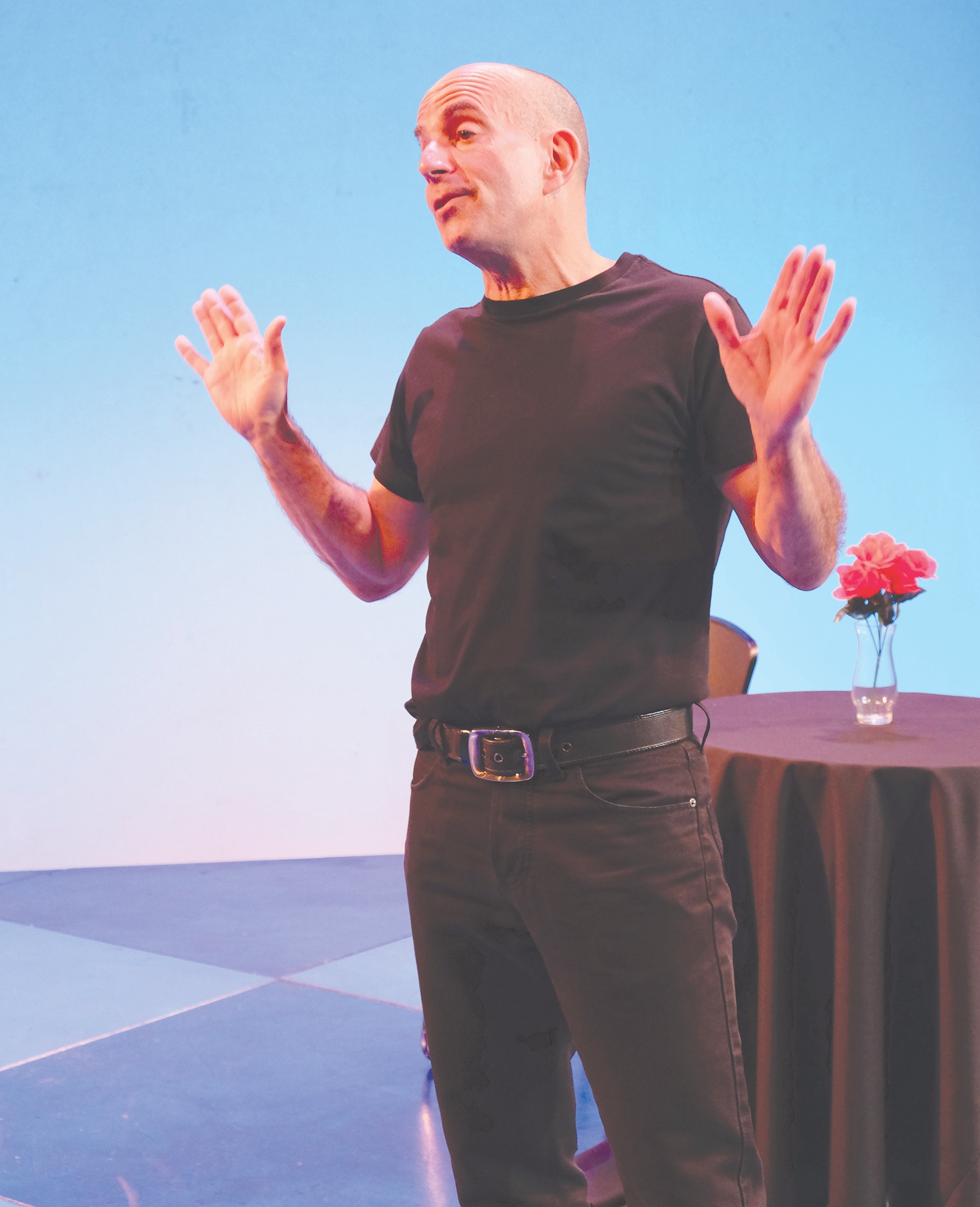
“Did you know in Jewish tradition, a fetus is not considered viable till after it graduates from medical school?” Playwright Brad Zimmerman stars in his comedy about the grit and passion it takes to succeed as an artist. The New York Times wrote, “Delicious! Distinctly original and powerfully poignant. … Great comedy!” 3 and 8 p.m. Thursdays and Saturdays; 8 p.m. Fridays; 3 p.m. Sundays. Through June 10. Tickets start at $45. The Colony Theatre, 555 N. Third St., Burbank. mysonthewaiter.com.
L.A. COUNTY SHERIFF CANDIDATES FORUM
Meet the candidates for the chief law enforcement officer for Los Angeles County and learn about the duties of the position. Candidates include retired sheriff’s Lt. Alex Villanueva; retired sheriff’s Cmdr. Robert (Bob) Lindsey; and incumbent Sheriff Jim McDonnell. Free. 7:30-10:30 p.m. Hollywood Temple Beth El, 1317 N. Crescent Heights Blvd., West Hollywood. (323) 656-3150. eventbrite.com.
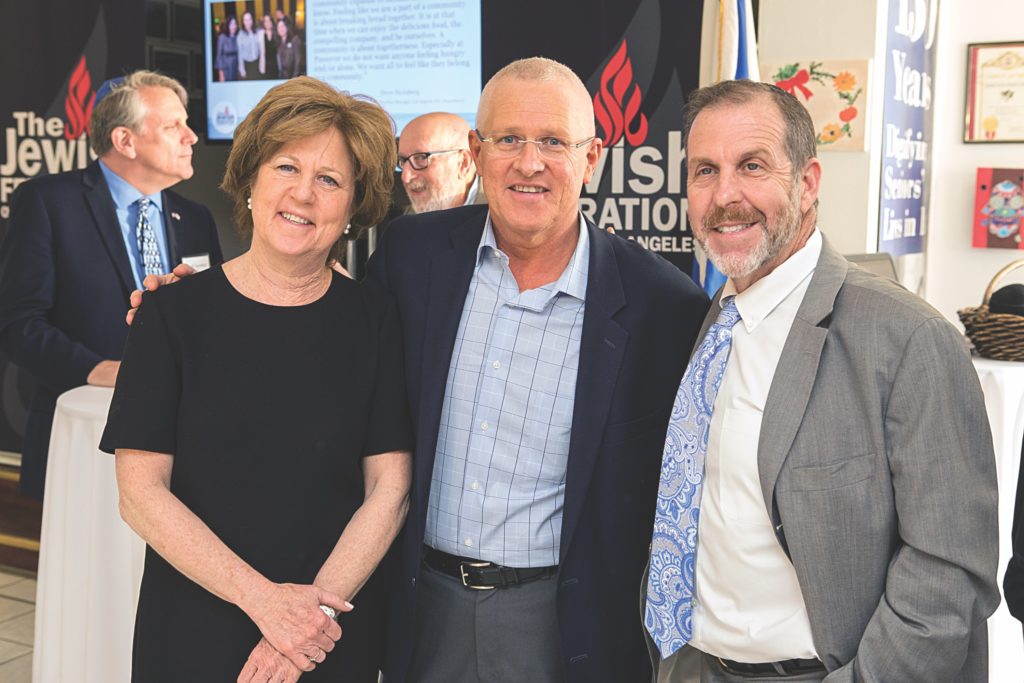
The Jewish Federation of Greater Los Angeles held its annual community leaders’ Passover seder on March 28 at the Israel Levin Center in Venice, bringing together elected and civic representatives from multiple faiths and backgrounds to celebrate the holiday.
Elected officials in attendance included Los Angeles City Council members Mike Bonin,Paul Koretz and David Ryu;L.A. City Controller Ron Galperin; state Treasurer John Chiang; state Sen. Ben Allen; and Consul General of Israel in Los Angeles Sam Grundwerg.
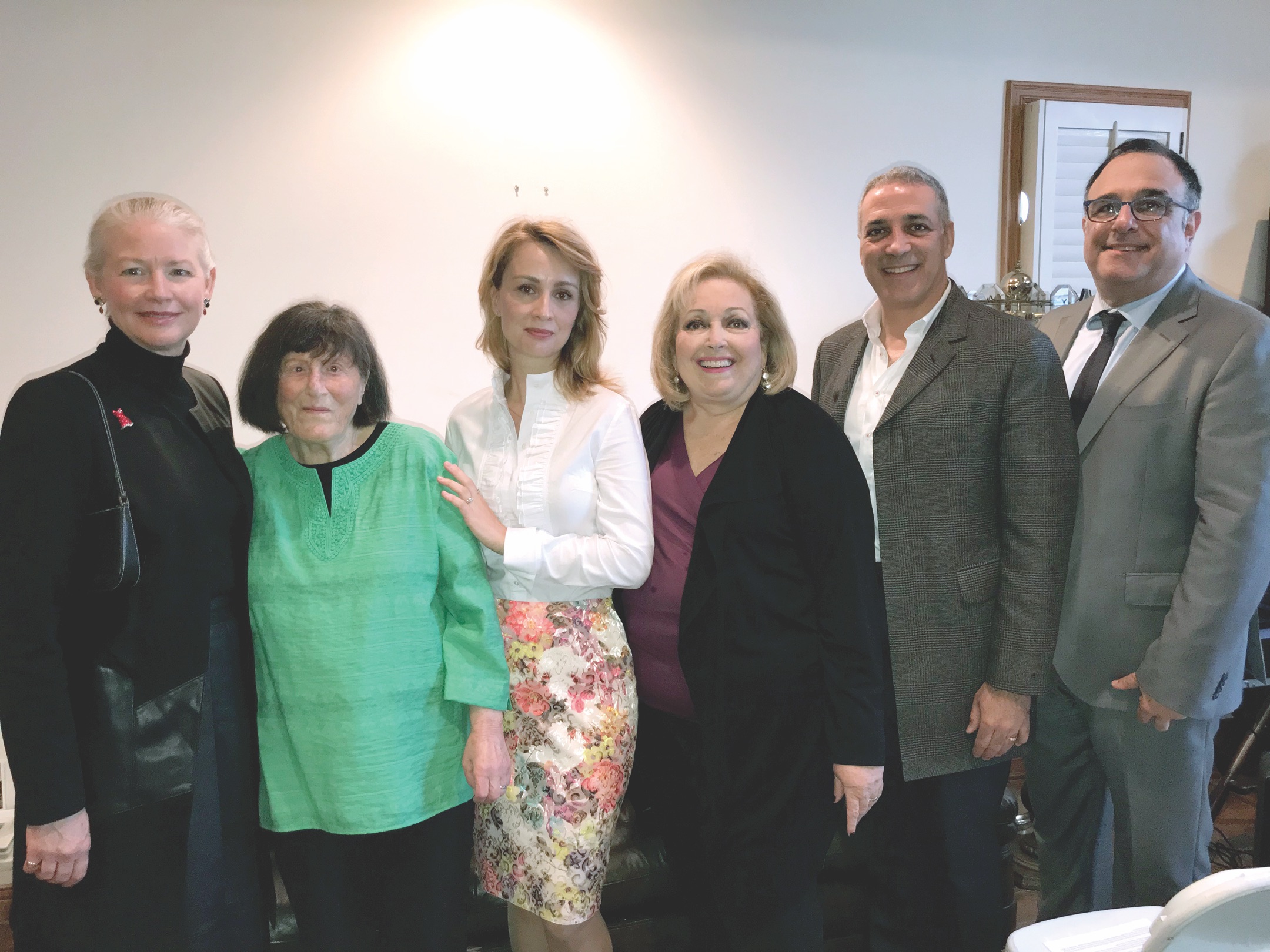
From left: Cedars-Sinai Medical Center Dr. C. Noel Bairey Merz; Friends of Sheba Medical Center (FSMC) supporter Myrtle Sitowitz; Sheba Medical Center Dr. Romana Herscovici; FSMC Senior Vice President Ruth Steinberger; FSMC President Parham Zar; and FSMC Executive Director David Levy attend “Women’s Heart Health,” a salon-style discussion in Beverly Hills. Photo courtesy of Friends of Sheba Medical Center.
Friends of Sheba Medical Center (FSMC) held its “Women’s Heart Health” salon on March 21 to discuss preventive measures against women’s cardiovascular disease, the world’s leading cause of death in women.
Nearly 100 people attended the sold-out gathering that featured Sheba Medical Center’s Dr. Romana Herscovici and Cedars-Sinai Medical Center’s Dr. C. Noel Bairey Merz speaking about heart health for women. The event was held at the Beverly Hills home of longtime FSMC supporter Myrtle Sitowitz.
Herscovici is spending two years as a research fellow at the Cedars-Sinai Heart Institute, working under Bairey Merz’s mentorship in the Cardiac Intensive Care Unit and the Barbra Streisand Women’s Heart Center. Upon her return to Israel later this year, Herscovici will continue her work focusing on women’s heart health at Sheba Medical Center, which is the largest, most comprehensive medical center in Israel and the Middle East. Herscovici’s fellowship at Cedars-Sinai is an example of one of Sheba’s many global partnerships working to advance medicine worldwide.
“It was exciting to participate in such an important and informative conversation that affects all women and our families,” said Barbara Lazaroff, vice president of the FSMC board. “I am very proud of the partnership between Sheba Medical Center and Cedars-Sinai, knowing it will make a significant difference in women’s heart health across the globe.”
— Esther D. Kustanowitz, Contributing Writer
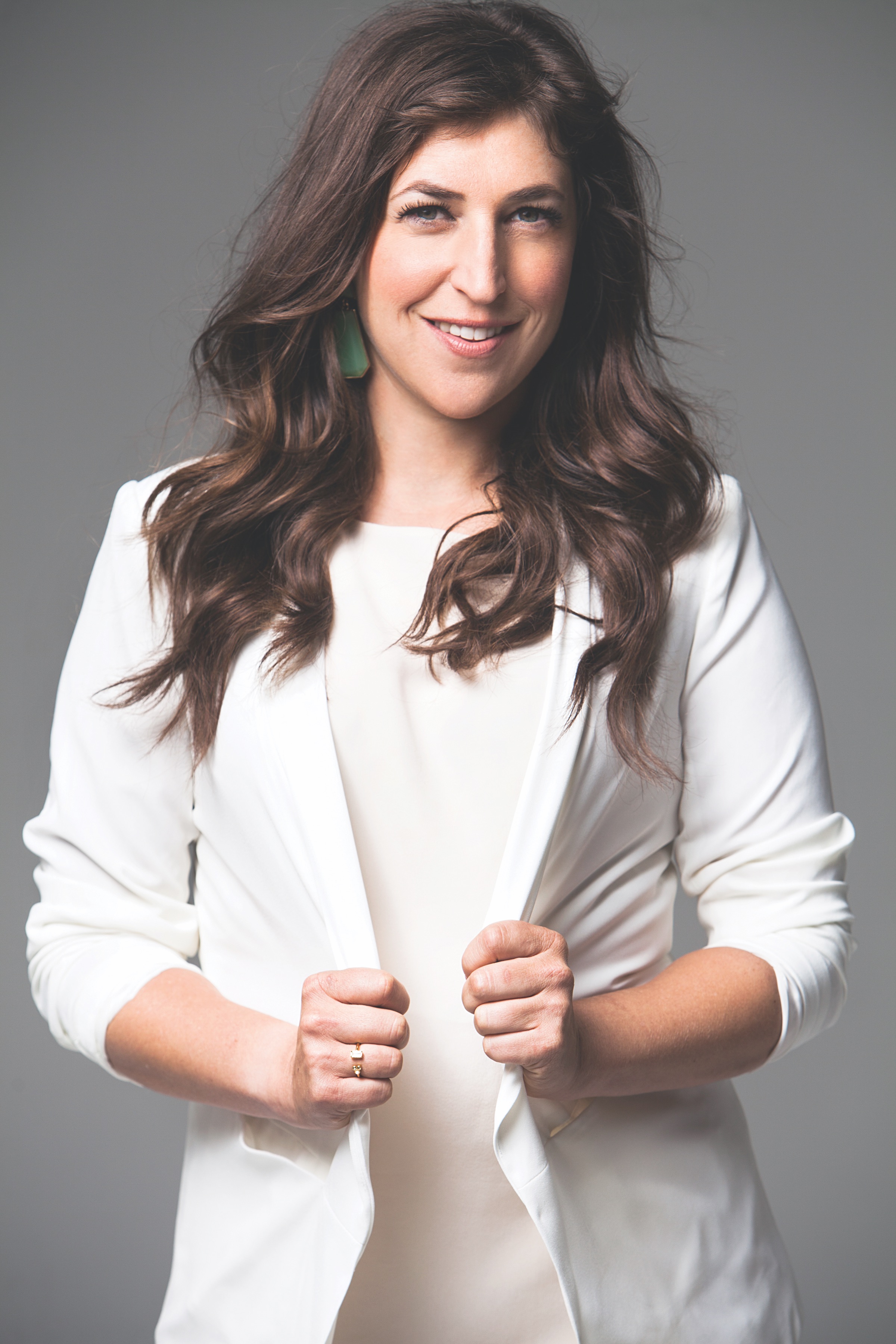
Mayim Bialik, who has been selected to deliver the commencement address at UCLA in June. Photo courtesy of UCLA.
UCLA has selected actress Mayim Bialik of “The Big Bang Theory” as its distinguished alumna speaker for the UCLA College commencement on June 15. Bialik holds a bachelor’s degree and a doctorate in neuroscience from UCLA.
“Dr. Bialik embodies the values of a Bruin,” UCLA College Senior Dean Patricia Turner said in a statement. “Throughout her career, she has shown how hard work, determination and civic duty can lead to success. I know that our graduates will be inspired by her story as they set out to make their own mark in the world.”
Bialik will address both commencement ceremonies, scheduled for 2 p.m. and 7 p.m., in Pauley Pavilion.
Since 2010, she has appeared on the popular CBS sitcom “The Big Bang Theory,” playing Amy Farrah Fowler, a neurobiologist who is the fiancée of Sheldon Cooper, played by Jim Parsons.
Among her several acting roles as a youth, Bialik portrayed the title character in the 1990s sitcom “Blossom.” After that show ended its run, Bialik left acting and earned her bachelor’s degree in neuroscience from UCLA in 2000, with a minor in Hebrew and Jewish studies. She earned her doctorate in neuroscience in 2007. Her thesis examined the role of the hormones oxytocin and vasopressin in obsessive-compulsive disorder in adolescents with Prader-Willi syndrome.
While at UCLA, Bialik was a student leader in UCLA Hillel, founding a women’s Rosh Chodesh group, chanting and blowing shofar for High Holy Days services, and conducting and writing music for UCLA’s Jewish a capella group.
Consul General of Israel in Los Angeles Sam Grundwerg and actress Mayim Bialik attend the Sixth Global Forum for Combating Anti-Semitism. Photo courtesy of the Consulate General of Israel in Los Angeles.
The Israeli Ministry of Foreign Affairs’ Sixth Global Forum for Combating Anti-Semitism, held at the International Convention Center in Jerusalem from March 19–21, drew foreign ministers, politicians and community leaders from around the world.
Actress Mayim Bialik, Consul General of Israel in Los Angeles Sam Grundwerg and Sharon Nazarian, senior vice president of international affairs at the Anti-Defamation League, were among the attendees from Los Angeles.
Bialik delivered the keynote address, about her personal experiences dealing with anti-Semitism and her love for the State of Israel and its people.
“It was a privilege to take part in the Sixth Global Forum with leaders from around the world,” Grundwerg said. “It is critical to focus on the importance of fostering tolerance and the need to continue to fight anti-Semitism on every front. Having the opportunity to bring Mayim Bialik, a leading and courageous voice of moral clarity in the community, is one of the true highlights of my posting. Her passion, love of the Jewish people and strong message of support for Israel resonated deeply with all who were present, including myself.”
Panels at the event addressed, among other topics, anti-Semitism in European far-right movements, anti-Semitism in the intersectionality of the far-left, and cyberhate.
Former U.S. President George W. Bush and Jewish Federation of North Americas Board Chair Richard Sandler appeared in conversation before major Federation donors. Photo courtesy of the Jewish Federation of Greater Los Angeles.
Former President George W. Bush and Jewish Federations of North America (JFNA) Board of Trustees Chair Richard V. Sandler appeared in conversation on March 21 at the Conrad Hotel in Fort Lauderdale, Fla., before 150 members of the JFNA Prime Minister’s Council.
Sandler, of Santa Monica, is the former board chair of The Jewish Federation of Greater Los Angeles.
In the conversation, Bush discussed the challenges of presidential decision-making, fatherhood, the 9/11 attacks, the need to help free people from tyranny and his decision to pursue painting after leaving the White House.
The JFNA Prime Minister’s Council is a group of families that have contributed more than $100,000 each to their local Federation annually or have made an endowment commitment to their Federation of $2 million.
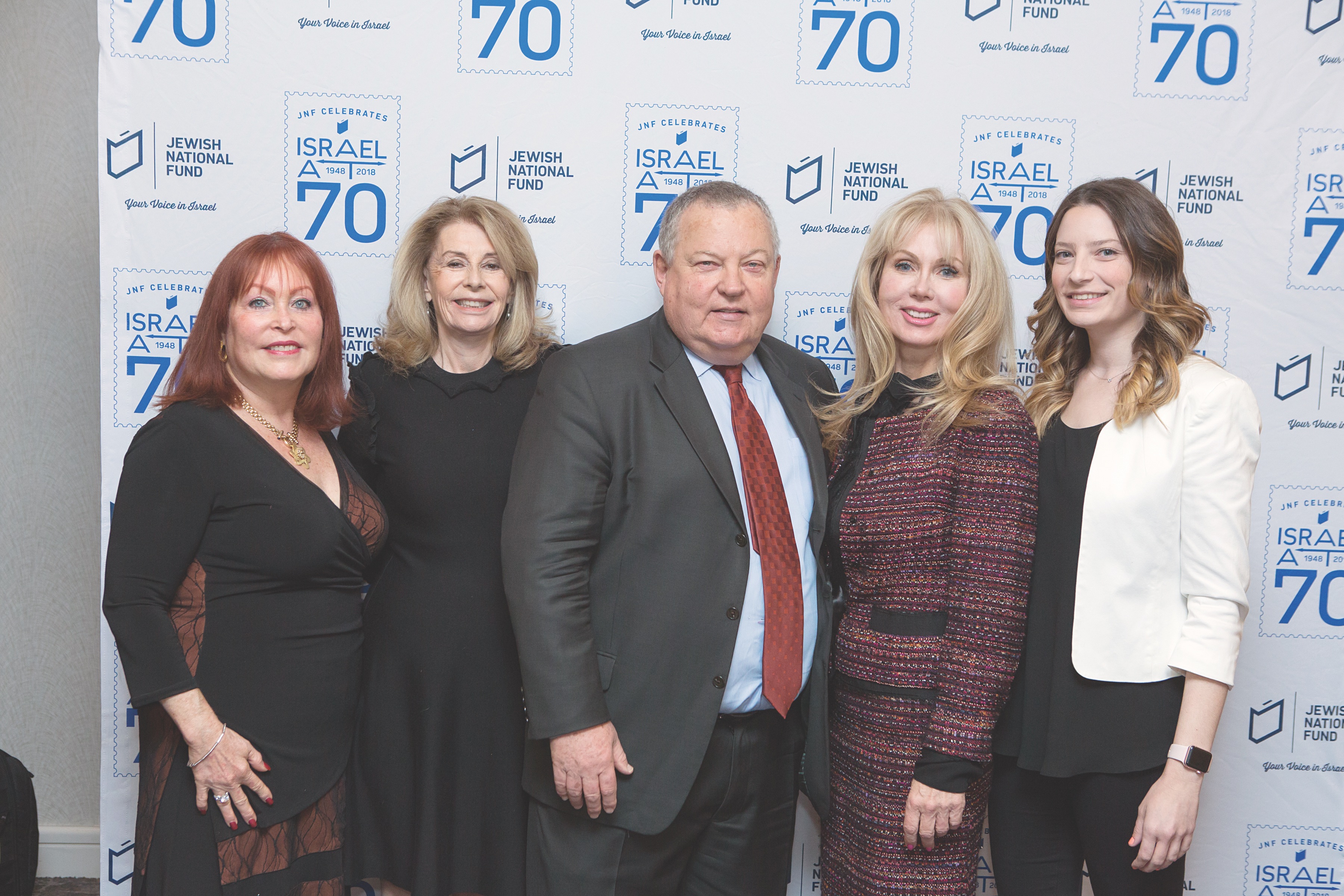
From left: JNF Los Angeles Board President Alyse Golden Berkley, Judy Levin, Alon Ben-Gurion, Victoria Davis and JNFuture Chair Jordan Freedman attend a JNF breakfast in the San Fernando Valley. Photo courtesy of Jewish National Fund.
More than 400 people who attended the Jewish National Fund (JNF) Breakfast for Israel at the Woodland Hills Marriott on March 28 heard Alon Ben-Gurion recount stories about his grandfather — Israel’s first prime minister, David Ben-Gurion.
“The historical, touching and humorous anecdotes were a wonderful way to celebrate Israel’s 70th anniversary,” said JNF spokeswoman Marina Brodetsky.
Alon Ben-Gurion, who served as a paratrooper during the Yom Kippur War, is a hospitality consultant who previously was a general manager for the Hilton hotel chain, including at the Waldorf Astoria hotel in New York from 1997-2004. In recent years, he has been focused on development issues in the Negev desert in Israel.
Attendees at the breakfast included JNF Los Angeles Board President Alyse Golden Berkley, JNF CEO Russell Robinson, breakfast co-chairs Judy Levin and Victoria Davis, JNFuture Chair Jordan Freedman, JNF supporters Marilyn and Allen Golden, and children from the MATI Israeli Community Center in Tarzana.
The nonprofit JNF, according to its website, is committed to ensuring a “strong, secure and prosperous Israel for the Jewish people everywhere.” Its programs include agricultural research farms in the Galilee, developing housing projects for young families in the Negev, and making Israel more inclusive for people with disabilities and special needs.
And the Lord spoke to Aaron, saying: Drink no wine or other intoxicant, you or your sons, when you enter the Tent of Meeting, that you may not die. This is a law for all time throughout the ages, for you must distinguish between the sacred and the profane, and between the unclean and the clean; and you must teach the Israelites all the laws which the Lord has imparted to them through Moses.
Rabbi Dvora Weisberg Hebrew Union College-Jewish Institute of Religion
Because this instruction follows directly after the death of Nadav and Avihu, whose offering of “strange fire” led to their death, some commentators read it as an indication that the two were intoxicated when they brought the inappropriate offering. But I wonder if the prohibition against drinking on the job might instead reflect a realization of the stress experienced by the priest in his leadership role, and the temptation he might feel to self-medicate.
Consider the role assigned to the priest in Leviticus. He must distinguish between “sacred and profane, unclean and clean.” His work involves endless judgments about the status of objects, animals and fellow human beings. He must declare people ritually impure, sometimes banishing them from the community for a period of time. The priest’s work brings him face-to-face with death and suffering, with failure and disease, each of which he must name and proscribe. Such work is draining and emotionally challenging. Would it be surprising if a priest sought to forget what he saw at work, or steeled himself against the pain by arriving at the sanctuary slightly buzzed?
The Torah does not require that the priest abstain completely from alcohol. It does insist that he be fully present when he enters the Tent of Meeting. When we encounter the Divine Presence, we must be fully present. Extending that idea, we should strive to encounter human beings, reflections of the Divine, in a state of awareness and attentiveness. Only then can we recognize what is sacred.
Rabbi Michael Barclay Temple Ner Simcha
Whereas many traditions emphasize faith, Judaism focuses on behavior, on actions that lead to understanding. Not just words. Here, drinking is forbidden in the Tent in order to distinguish between sacred and profane, clean and unclean.
Boundaries. Distinctions. For Jews, not for others. What is unclean for us may be fine for others, but we must act within Torah guidelines to understand deeper the differences between what is for Jews, and what is not.
Everything is holy, but not everything is Jewish. There may be holiness in the Catholic rituals of Communion, in the ecstatic practices of the Ayahuascero with his tribe, or in the physical sacrifice of the Lakota Sundance ceremony; but these are not our way. Our pathway is specific, our boundaries clear. This text teaches us to stay true to our instructed practices. And if we are clear in our “Jewish path,” then maybe we can truly appreciate the beauty of others.
Think of it this way: Every spiritual path is like a different color. Judaism is blue, Catholicism is purple, Islam is red, Shamanism is green, and so on. All are sacred, but if we just casually mix them all together, we get a murky, ugly brownish gray. But when we are true to our paths and respect others, we create a rainbow filled with the colors of God.
Let’s be true to living Jewishly through the Torah’s instructions, and in so doing be part of creating a rainbow in God’s exquisite painting of life.
Rabbi Cheryl Peretz Ziegler School of Rabbinic Studies
We Jews regularly sanctify Shabbat and holidays with wine. Thus, commentators are quick to point out that this passage is not meant as an absolute wine prohibition, but as a warning against drinking such that it perverts one’s ability to make the distinctions to achieve holiness.
We tend to think of the differences between sacred and profane, (ritual) purity and (ritual) impurity (better translations of ‘clean’ and ‘unclean’) as dichotomous realms, raising the goal to rid ourselves of the everyday as the anti-sacred. In reality, however, they are not polar opposites, nor are they of different substance. There is no magic that makes something of and for God.
In Hebrew, the word for between is bein, from the same Hebrew root which forms the forms the word binah, the wisdom of discernment. Human development depends on making Havdalah, a separation, using clear awareness and distinction to recognize that which is sacred and that which is not.
So, we look at two similar things and acknowledge that, despite their similarity, they are intended to be differentiated and held apart. As was taught by our rabbis, “If there is no daat (discriminating intelligence), how can there be Havdalah?” (Talmud Yerushalmi)
That which is holy, set apart for God, is distinguished in mind, word and deed. So, too, is it intrinsically bound in the ordinary, the everyday. It is we who transform the everyday into the service of God through words, through deeds/ritual, and through intentional setting aside and separating.
Rabbi Aryeh Markman Aish LA
To live in reality, without illusions — is it something we want or do we avoid it? The next leaders after Moses and his brother, Aaron, were to be two sons of Aaron, Nadav and Avihu. They achieved spiritual greatness on a level we can’t imagine. Yet they blinked at the moment of truth like an astronaut on a spacewalk fatally miscalculating his oxygen reserves.
Nine Torah portions earlier, Nadav and Avihu incurred the death penalty when at the height of a high-stakes experience, an unadulterated vision of God, they did not treat it with the proper reverence. Six months later, our portion, that death sentence was carried out when they drank wine and subsequently performed a self-inspired service in the Tent of Meeting/Tabernacle at a pivotal public ceremony.
The Torah restores their breaches by commanding Aaron’s remaining sons to avoid wine, or risk their lives, while working in the Tabernacle. Additionally, no person shall deduce Jewish law for public use while even slightly inebriated. We are taught two areas where we need to be in absolute reality: our work and making life decisions for others.
The Talmud delineates three characteristics that define a person: how they handle their drink, money and anger. Drinking is a measure of one’s self-discipline. The Torah is signaling to us that mindset matters. There are many people who are always “on” with total focus and others whose lives are nonstop frivolity. We must find a balance. The choice is ours, as are the consequences.
Rabbi Noam Raucher Pasadena Jewish Temple and Center
In a few chapters this verse can be re-read to foreshadow the death of Aaron’s two sons, Nadav and Avihu. Considered punishment for doing exactly as God forbids: wanton recklessness with sacred responsibilities. I’m not suggesting that the punishment fits the crime. But the Torah is clear that powerful people should be careful and guard themselves against intoxicants. The anxiety behind the command is tangible: Will these leaders hold the same high regard that others have for them and/or their office? How can we trust these leaders to take our requests seriously when they can’t even do that with their own responsibilities? How are these authorities supposed to distinguish between the sacred and profane when they don’t even know the difference within themselves?
While the Torah explicitly forbids a liquid drug in this act, it’s worthwhile to consider what other things might intoxicate those of great power. Perhaps it’s domination, wealth or fame. Maybe it’s just the pursuit of more power. We would do well to hold our leaders to a higher standard of behavior. A standard that guards against intoxicating the very office they hold during the pursuit of something other than the greater good. It should be clear that the only buzz coming from their offices should be about the hard work our leaders do to make the world a better place.
I would try to briefly reflect on Thane Rosenbaum’s question: “Is there anything left to say about the Holocaust?” (“What’s Left to Say?” April 6). David Irving and his ilk would show up with technical drawings of concentration camps to argue that the crematoriums were not really used for what all the survivors say they were used for. Or, one of the effects of the fading memories and political manipulations is the emerging concept that the Holocaust was a terrible thing, but it was not just about Jews; these revisionist “historians” would say that gypsies, homosexuals and communists also were unfortunate victims, and numerous soldiers and civilians died as a result of the war. At least Hungary, which certainly has its share of revisionists, is not confused about the word. The equivalent, Hungarian word for “Holocaust” is “vészkorszak” (the age of danger,) and it is used only in the Jewish persecution’s context and does not cover any other death, including the fallen soldiers of the Hungarian 2nd Army or other, non-Jewish civilians.
What we must repeat is that not long ago, 6 million people’s genocide took place on racial/religious grounds. It could happen again if we are not on guard.
Peter Hantos, Los Angeles
It is with concern that I read your article on the Holocaust. More and more young people regard the Holocaust as distant as Hannibal and the Alps. There’s plenty left to say, i.e., Auschwitz II (Birkenau) was so large that it required traffic lights! The camps were nearly as numerous as post offices. Camp personnel, including guards and administration, were kept drugged on crystal meth. Back then it was known as Pervitin. This was done so they could perform their tasks without giving it thought and in dealing with the large numbers of inmates.
Daniel Kirwan via email
Poland’s Holocaust Law
Regarding your article “The Polish Jewish Story” (March 23), may I bring up a couple of rarely mentioned facts: During their occupation of Europe, only in Poland did the Germans punish those who helped Jews by death, and the punishment included the helper’s closest family (in other countries the penalties varied from dismissal from work to jail time).
On the other hand, the Polish underground, the largest anti-Nazi underground army in Europe, punished by death those Poles who snitched on their Jewish neighbors.
Also, with all due respect to the author of the article, the new Polish law, although imperfect and perhaps in need of correction, does not criminalize “any mention of Poles” being complicit in the Nazi crimes. Rather, it prohibits accusing “the Polish nation or the Polish state” as a whole, of being complicit in the Nazi German crimes.
Jozef Malocha, Chrzanow, Poland
Media Bias Against Israel
“(((Semitism)))” author Jonathan Weisman commendably assails surging right-wing anti-Semitism, including social-media trolls and Nazis marching through Charlottesville, Va. (“A Call to Action in the Age of Trump,” March 16). However, anti-Semitism takes many forms, including media bias against Israel, which Weisman seems to ignore. His own newspaper, The New York Times, is a leading offender.
Consider the 1948 Arab-Israeli War. On May 14, 1948, Israel legally declared its independence, consistent with U.N. General Assembly Resolution 181. The next day, five Arab armies invaded the Jewish state, determined to annihilate it.
The New York Times never reports these facts. Instead, it describes the conflict as “the 1948 war surrounding Israel’s creation” (March 8) or “the 1948 war that broke out over Israel’s creation” (March 31). The Times’ Orwellian descriptions whitewash the Arab states’ genocidal intent continues to this day, obscuring the fact that Israel was attacked and implicitly blame Israel.
Rewriting history to vilify Israel is also anti-Semitism.
Stephen A. Silver, San Francisco
Hold on: Progressives Are Good Parents, Too
Here you go again, Karen Lehrman Bloch. In your constant search for negative comments about anything that contradicts conservative dogma, you find the other side guilty of supporting terrorism and raising kids who are insensitive bullies (“Progressive Bullies,” April 6).
As a lifelong progressive, I abhor terrorists and so do all of my progressive friends. I don’t propose that we or Israel give terrorists a pass because they had a rough childhood. Despite blame and fault, Israel is in the dominant position and must treat the general Palestinian population with as much dignity and respect that security allows, and punish terrorists as they deserve.
Regarding child rearing, our two daughters were raised in a progressive home and have become progressive adults who care about their fellow human beings in both their personal and professional lives. They are also raising children to follow our humanistic ideals.
If the proof is in the pudding, we don’t need to look further then at our conservative administration. Bullying, dishonesty, lying and lack of concern are its hallmarks.
Michael Telerant, Los Angeles
Response to Letter Writers
In his April 6 letter, Martin J. Weisman blames President Donald Trump for the rise in global anti-Semitism (“Trump and Anti-Semitism,” April 6). Respectfully, far-right Trump support explains the emergence of “old-school” American Jew-hatred, but the explosion of Israel-bashing and anti-Semitism in the Democratic Party and on American campuses is the fault of former President Barack Obama, with his anti-Israel bias and promotion of Muslim groups in government and academia.
Moreover, Trump has nothing to do with the rebirth of European anti-Semitism, which is mainly caused by the immigration of millions of Muslims, and the rise of right-wing parties protesting them. In fact, some of those parties, like France’s National Front and the Dutch Freedom Party, are wooing Jewish support to fight Muslim misogyny, homophobia, anti-Semitism and even Christian-bashing.
Irrational Trump-hatred closes the minds of otherwise intelligent, inquisitive folks. Jewish Democrats who refuse to face this provide cover for the anti-Semites, Louis Farrakhan supporters and Israel-bashers in their party.
Rueben Gordon via email
Marc Yablonka besmirches the name of David Harris in his letter to the editor (“He Doesn’t Miss the ’60s,” April 6) when he falsely calls him a “draft evader … who persuaded others to go to federal prisons for five years for burning their draft cards,” and wrongly claims Harris “chewed up and spit out those of us who were naive enough to ride along so [he] could further [his] own egotistical adventures. … [He] didn’t give a hoot about the rest of us.”
Factually wrong on every count. Harris was the very model of patriotic objection to a governmental policy.
First, he advised his draft board in writing that he would not cooperate with any of its requirements. Second, he publicized his non-cooperation in his advocacy against the war, ensuring that he would become the focus of federal enforcement. Only then did he publicly and repeatedly urge other young men to do the same.
I should know. Harris — a former Stanford student body president — was in prison when I arrived there to begin my freshman year in September 1969.
I turned 18 that November. Federal law required I register with my draft board. I went to Palo Alto Resistance headquarters, which Harris helped establish, for counseling. The draft counselor’s kindness and respect for my struggles and questions as to what to do, even though he was to begin his own prison term for resistance the very next day, moved me to my core. It still does.
These brave men and the equally brave women who supported them will soon get their due when the documentary “Boys Who Said No!: Draft Resistance and the Vietnam War” is released.
David I. Schulman, Los Angeles
and FROM FACEBOOK:
“Why Is This Sport Different?” April 6:
I love it. Baseball is timeless. There is no clock to run out. What a great metaphor for redemption.
Cyndi Buckey
“Between the Shoah and Mimouna,” April 6:
The beauty and light and optimism of Mimouna is tempered, as a sword blade is tempered in the blacksmiths forge and under his hammer, by the awful evil that was the Shoah. It is built into the very fabric of our divinely created world that the forces of destruction and savagery will never have a final conquest. … Not as long as the Chosen People can find the will to resist.
Ernest Sewell
Thank you for writing of the concerns I share about current events.
Inside the subtle mind of Rabbi Dr. Ari Berman, new President of Yeshiva University, who shares his insights on the pressing issues of modern-day Judaism.