fbpx

April 6, 2018

Report: Nuclear Deal Allowed Iran to Advance Its Nuclear Weapons Program

A recent report from the Foundation for the Defense of Democracies exposes the aspects of the Iran nuclear deal that have enabled Tehran into advancing their nuclear weapons program.

Jacob Nagel, who is a professor at the Israel Institute of Technology and served in various Israeli defense positions, argues that the key flaws in the Iran deal stem from Annex I, Section T of the Joint Comprehensive Plan of Action (JCPOA), which is vaguely worded and doesn’t come close to addressing the issues with Iran’s nuclear program highlighted by International Atomic Energy Agency (IAEA)’s 2011 report on the matter.

“While preventing Iran from engaging in the activities enumerated in Section T could prevent Iran from closing some of the technological gaps remaining for the completion of its weaponization aspirations, the lack of detail in this section undermines the ability of the IAEA to effectively monitor the terms,” Nagel writes. “For example, does the use of high explosive lenses instead of multipoint explosive detonation systems violate the limitations?”

Consequently, under the deal Iran can begin looking into developing centrifuges that can “enrich uranium 15-20 times faster than” their current centrifuges; Iran can then build those more advanced centrifuges “in less than a decade.” The deal also gives Iran the opportunity to build more heavy water reactors after 15 years and to continue their current use of the Arak heavy water reactor. The deal does compel Iran to modify the reactor so they can’t establish plutonium weaponry, however the Arak reactor “may allow Iranian scientists to get their hands on technology relevant to developing a plutonium-based nuclear bomb” due to a prior agreement between the Iranians and the Chinese.

Additionally, Nagel argues that the nuclear deal completely ignored Iran’s arsenal of ballistic missiles, enabling Iran into launching 23 missile tests from July 2015-January 2018. The deal also allows Iran to test explosives that don’t fall under the deal’s purview of a bomb, thus providing Iran with a loophole to test weaponry.

To solve these issues with the deal, Nagel suggests implementing “anytime, anywhere” IAEA inspections on Iranian civilian and military sites where weaponization activities have taken place and better restrictions on Iran’s nuclear program.

“The termination of restrictions on Iranian nuclear activity is fast approaching,” Nagel writes. “Washington and its allies must fix the fatal flaws of the nuclear deal and prevent Iran from becoming a threshold nuclear state.”

The changes that Nagel recommends are similar to the fixes that President Trump wants in the deal; if those changes aren’t implemented then Trump has signaled that he will cause the United States to exit from the deal altogether.

Read the full report here.

H/T: Washington Free Beacon

Report: Nuclear Deal Allowed Iran to Advance Its Nuclear Weapons Program Read More »
At Least Seven Dead As Hamas-Led Protesters Create Smoke Over Gaza Border

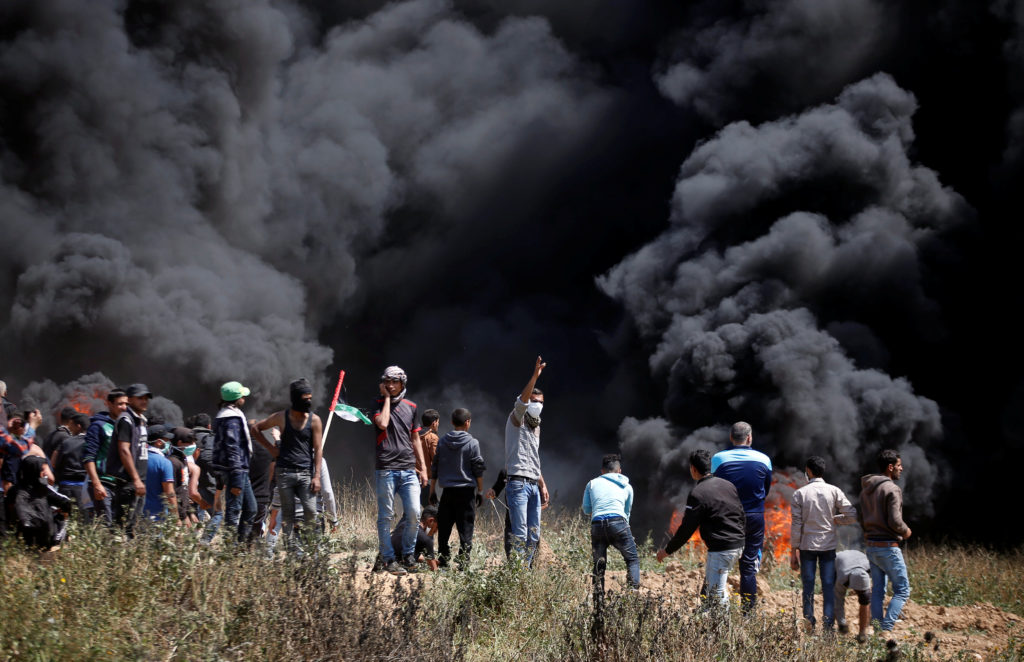
The Hamas-led riots at the Israel-Gaza border intensified on April 6, as at least seven protesters have died while protesters conjure smoke over the border.

Haaretz reports that, according to Hamas’ Gaza Health Ministry, the seven dead Palestinians were killed by the Israel Defense Force (IDF). An additional 1,070 were injured, but it appears that most of the injuries were due to smoke inhalation. The Gaza Health Ministry is claiming that 293 were wounded from the IDF.

The Times of Israel is reporting that the IDF is claiming that the protesters who were killed or hurt by the IDF were all members of Hamas and committing acts of violence.

“There were attempts to carry out acts of terrorism … using the smoke for cover,” IDF spokesman Rob Manelis said.

The IDF detailed Hamas’ use of smoke on Twitter:

The IDF then tweeted out a graphic highlighting how quickly Hamas terrorists could reach Israelis from the border:

The Palestinians are claiming that the smoke is due to Israel using some sort of nerve gas, despite the evidence to the contrary:

Here are some more scenes from the April 6 riots:

Around 20,000 protesters attended the April 6 riots, a decline from the estimated 30,000 a week earlier.

The riots at the border are all part of Hamas’ six week “March of Return” protests against the displacement of Arabs in the aftermath of Israel’s War of Independence. The riots are expected to escalate to May 15, the day after Israel celebrates the 70th anniversary of being officially established as an independent Jewish nation. Hamas’ plan involves using civilians as human shields in order to penetrate the border and launch terror attacks against Israelis.

At Least Seven Dead As Hamas-Led Protesters Create Smoke Over Gaza Border Read More »

Ex-Leader of Qatar Recognizes Israel’s Right to Exist

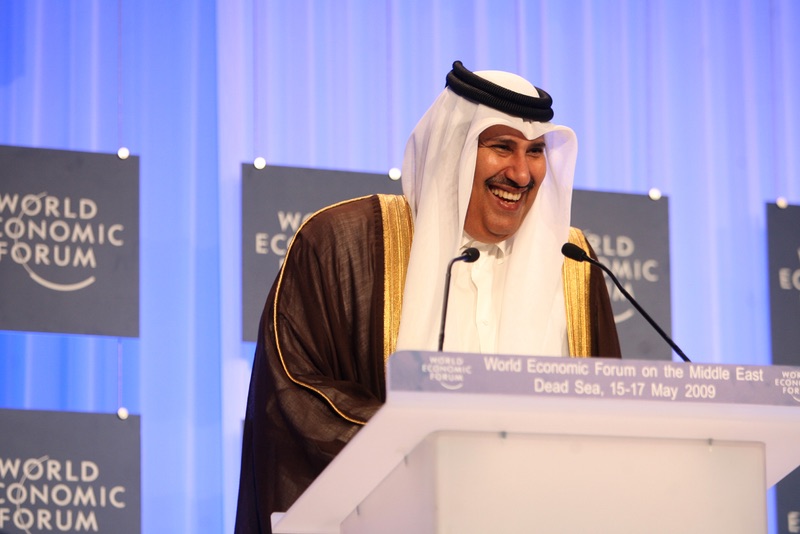
Saudi Crown Prince Mohammed bin Salman made history on April 2 by recognizing Israel’s right to exist in an interview with The Atlantic’s Jeffrey Goldberg. Now, a former Arab leader is following suit in this recognition of Israel.

Hamad bin Jassim bin Jaber Al Thani, the former prime minister of Qatar, tweeted on April 4, “Israelis have a right to live in their land in peace and safety, this is my conviction. I’ve had this conviction for many long years, and I still do.”

Despite this statement, Al Thani added that Qatar needs to do a better of job advocating of the rights of Palestinians and that the country needs to improve its diplomatic relations in the region.

“We need one who will rise among us from the defeat and shame that our nation is experiencing,” Al Thani said. “We are not interested in saying things just to impress others.”

Like Saudi Arabia, Qatar has been a funder of Islamic terror groups – specifically Hamas, in the case of Qatar – which is what makes these latest statements from Salman and Al Thani so noteworthy.

Qatar has been attempting to make inroads with the pro-Israel community over the past couple of months, hosting notable figures such as Alan Dershowitz and Zionist Organization of America (ZOA) President Mort Klein.

As a February Jerusalem Post article explains, Qatar’s sudden warmth toward the pro-Israel crowd is likely due to the fact that the Gulf Arab nation is feeling diplomatically isolated after Saudi Arabia and the United Arab Emirates (UAE) cut ties with Qatar over their funding of terrorism and growing ties with Iran. Consequently, Qatar has reached a point of desperation to where it needs to earn credibility with the United States and Israel.

The Post article goes into detail how Qatar’s shift has caused a rift in the pro-Israel community.

“On one side are those who argue that Qatar is attempting to use Jews, particularly pro-Israel Jewish leaders, to whitewash its image,” the Post’s Seth Frantzman reported. “It isn’t changing and Hamas is still hosted in Qatar, as well as other extremists and anti-Israel voices, such as former Israeli member of Knesset Azmi Bishara and Islamic theologian Yusuf al-Qaradawi. They point to recent and previous statements by the Israeli Embassy in Washington to Haaretz and Forbes opposing the trips.”

Frantzman continued, “Those who support the Qatari initiative say that there is an opportunity here, now that Doha is isolated, to get them to change. They argue Qatar has little leverage over Hamas and if Doha was able to get Hamas to release Israelis held in Gaza, it would merely prove Qatar’s influence. Therefore Doha’s inability to move on some key pro-Israel concerns is evidence that it isn’t close to Hamas.”

Al Thani’s recent tweets seem to be reflective of these developments between Qatar and the pro-Israel community.

Regardless, the timing of Salman’s statement to Goldberg and Al Thani’s tweets cannot be ignored; Salman’s recognition of Israel could be seen down the road as a watershed moment for Arab leaders recognizing the Jewish state’s right to exist.

Ex-Leader of Qatar Recognizes Israel’s Right to Exist Read More »