fbpx

March 28, 2018

A Prayer for the March

We will march
For our children’s sake
We will march
Because standing still is not an option
We will march
Because a new day is coming
We will march
Young and old, hand in hand
We will march
Like the Children of Israel at the foot of
the sea
We will march
Until the raging waters part before us
We will march
Until our leaders act
We will march
In honor of the innocent souls we have lost
We will march
Turning the prayers of our hearts
into action
We will march
“Praying with our feet”
We will march
To the beat of a mournful lament
We will march
With our heads held high
We will march
To finally end the madness
We will march
And we will win, by God,
We will win.

Amen.


Rabbi Naomi Levy is the founder and spiritual leader of Nashuva, a Los Angeles-based Jewish community.

A Prayer for the March Read More »

Yesh Tikva Is Raising Infertility Awareness

For people who struggle with infertility, questions such as “when are you starting a family?” aren’t just irritating, they’re painful.

“The Jewish community today is family oriented,” said Amy Idit Solomon, founder and CEO of the Jewish infertility support organization Hasidah. “Every Jewish demographic study focuses on youth, marriage and raising the kids. Having the kids gets overlooked.”

“One in eight people — regardless of religion, socioeconomic level or geography — are dealing with infertility. That’s one in eight synagogue seats.”” said Gila Block Muskin, co-founder of Yesh Tikva, a Jewish fertility community whose name translates as “there is hope.”

Muskin experienced infertility firsthand. Three years into her personal journey with fertility issues, she realized she had nowhere to turn for emotional support. Well-meaning people, unaware of her struggle, would ask how many children she had. Others would tell her about friends who had conquered infertility, saying “don’t worry, you will too.”

“Only God knows and none of us are God, so none of us can say that to someone,” Muskin said.

She co-founded Yesh Tikva in 2015, starting with a Los Angeles support group. At the “Yesh Tikva Infertility Awareness Shabbat” on March 17, 185 synagogues participated across the U.S., Canada, Israel and Australia, using Yesh Tikva’s resources and printed materials, reaching an estimated 50,000 people, Muskin said. She hopes to expand the program and partnerships “so it’s something that every synagogue joins together to create.”

“[This] struggle bumps up against the communal experiences we all share — those around the Jewish home and family — which makes it particularly isolating,” said Rabbanit Alissa Thomas Newborn of B’nai David-Judea, who facilitates Yesh Tikva’s infertility support group. Although it’s not the community’s intention, she added, “the ways we come together can nevertheless be isolating for a couple struggling with infertility.”

For example, at Temple Beth Am, Rabbi Hillary Chorny’s sermon included the image of strollers in synagogues as “unshakeable reminders of unfulfilled dreams.”

It’s not just women who need fertility support.

“It is a women’s issue, a men’s issue, a single person’s issue, an LGBTQ issue, a couples’ issue and a communal issue.”  — Amy Idit Solomon

“It is a women’s issue, a men’s issue, a single person’s issue, an LGBTQ issue, a couples’ issue and a communal issue,” Solomon said.

Yesh Tikva has also convened a panel for young women on taking control of their own infertility.

At Kahal Joseph Congregation in Westwood, Rabbi Raif Melhado drew from Yesh Tikva materials and “our own experience with infertility” in creating his sermon, said Jessica C. Melhado, his wife and the synagogue’s program director.

“Talking about it, helping people understand the issues better, all of that can ease it, as can the sense of not being alone,” Melhado said.

Muskin said sensitivity is about “thinking before you speak and just listening without trying to fix other people’s problems.” She said it also helps to admit you don’t know what to say, or to say ‘I want to support you. Please let me know what that looks like.’

“The obligation for sensitivity rests on each individual,” said Rabbi Yonah Bookstein of Pico Shul, who has worked with many couples struggling with infertility. “If we are aware and conscientious, we can avoid hurting others.”

“Nobody ever conceived a child because they were asked, ‘Nu, when are you having a baby?’ ” Solomon said. “Stop asking.”

Yesh Tikva Is Raising Infertility Awareness Read More »

Parkland Students Share Their Stories

When an armed gunman came onto her campus last month and began shooting, Marjory Stoneman Douglas High School junior Hayley Licata didn’t know what to do.

Speaking in front of students on March 23 at Shalhevet High School, the 16-year-old said, “I was in disbelief and my body just froze.”

Eventually, Licata ran home, but she couldn’t eat or sleep that night. Social media kept reminding her of the tragedy, so she put away her phone. But a text came through telling her that her friend Nicholas Dworet had died.

“I felt guilty for walking out of that school in one piece,” Licata said. It was a story she would repeat later that day at similar assemblies at de Toledo High School and Milken Community Schools.

Licata’s visit and appearance, together with her classmate Mia Freeman, 17, were arranged by Stephen Wise Temple Senior Rabbi Yoshi Zweiback and Rabbi Melissa Zalkin Stollman, director of lifelong learning at Congregation Kol Tikvah, the largest Reform congregation in Parkland, Fla., where Marjory Stoneman Douglas High is located. They also flew out Licata’s mother, Caren.

Licata and Freeman also took part in the downtown Los Angeles March for Our Lives rally the following day, one of 800 such demonstrations that took place across the country and around the world.

The Feb. 14 shooting claimed the lives of 17 people while sparking a nationwide movement for reforming gun laws, led by student activists.

In the days following the attack, Licata said she went to as many funerals of the shooting victims as she could. She found comfort playing Uno with friends and in petting comfort dogs brought to the school.

Wearing a sweatshirt that read “Douglas Strong,” Licata told Shalhevet students, “This may not be normal, but it’s our normal.”

For Licata’s mother, Caren, that “normal” is something she wishes her child didn’t have to adapt to. She fears her daughter will forever be identified with the school massacre.

“I don’t want that for my child,” Caren said, tears welling in her eyes. “I want her to go to school and be one of the many, not, ‘Oh, you’re from Parkland.’ ”

L.A. Mayor Eric Garcetti, Parkland students Hayley Licata and Mia Freeman and Caren Licata.

Nonetheless, Licata and Freeman spoke openly about their experiences and took questions from students regarding how they felt about arming teachers and how they have handled being the center of media attention in the wake of the shooting.

“As horrible and unspeakable and tragic as the shooting was, it has freed a movement.” — Hayley Licata

“I don’t agree with arming teachers,” Freeman said. “I don’t think the teachers should have to worry about being armed.”

Licata said the media attention has not been easy. “I would turn away every camera that came into my face.”

However, she acknowledged how the aftermath of the shooting and the intense media scrutiny have created something powerful. Connecting the nationwide response to the tragedy to the Passover story, Licata said, “Passover represents when God freed the Jews from slavery in Egypt. As horrible and unspeakable and tragic as the shooting was, it has freed a movement.”

Hayley Licata (second from left), Amy Schumer (center) and Mia Freeman (fourth from left).

Following the assembly, Shalhevet senior Maia Zelkha told the Journal, “I think they’re really brave and have a lot of courage for sharing what they went through. To go up there and speak about it and relive it is traumatic in its own way.”

Licata and Freeman then visited de Toledo and Milken before rushing to CNN’s Los Angeles studio on Sunset Boulevard for an interview. Afterward, they came into the green room and had a few minutes to eat In-N-Out burgers before doing radio interviews over the telephone.

They had their largest audience at the March for Our Lives rally in downtown L.A. Mayor Eric Garcetti joined the girls onstage as they delivered abridged versions of the remarks they had given at the schools.

Zweiback praised Licata and Freeman, saying they were engaging in a Jewish act of remembrance by sharing their stories.

“That feels very Jewish to me,” he said. “Bearing witness and remembering is core to how we make sense of what happens to us in this world.”

Parkland Students Share Their Stories Read More »

Mexodous: Only in Hollywood

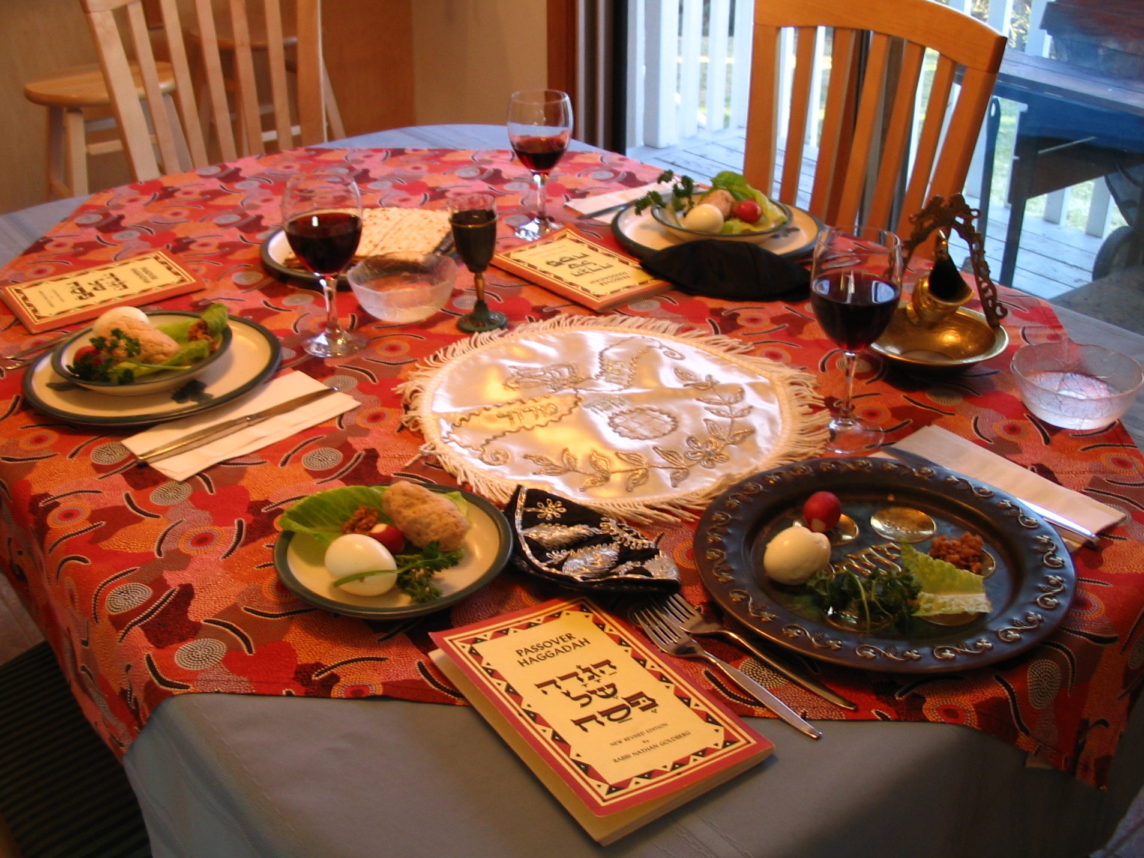
A group of anywhere from 10 to 30 people, many of whom have known one another for 20 years, will come together this Passover for their 20th annual seder. Readings will take place from a haggadah written specially for the occasion that will include things like: “This is the bread of affliction. Sometimes it looks like a cracker, but tonight it looks like a pile of tortillas.”

That’s because this seder will take place at El Coyote Mexican restaurant in Hollywood, in what has become an annual tradition known as Mexodous.

Rose Auerbach, a content manager for an entertainment website, has been a regular Mexodous attendee for over a decade and is credited with writing the 15-minute Mexodous haggadah. “That’s Mexodous with a ‘u’ she said, “because tradition!”

Mexodous was born back in 1998, when Eric Halasz and a few friends who knew one another from acting class and didn’t have family in town decided to have their own seder. “But,” Auerbach said, “not a whole seder, because we’ve got stuff to do.”

Hence, the 15-minute haggadah, which Auerbach confessed is shamelessly copied from other sources, “but they’re all credited.” The brevity of the haggadah is one of Mexodous’ defining features. “We wanted to do the whole seder but we just didn’t want to wait three hours to eat,” Auerbach explained.

In its first year, Mexodous was just a handful of friends, all of whom were Jewish, but each year, as the tradition grew, other friends from the acting community joined in, many of whom aren’t Jewish.

“That’s part of what Passover is all about,” Auerbach said. “Getting together celebrating your community.”

“This is the bread of affliction. Sometimes it looks like a cracker, but tonight it looks like a pile of tortillas.” — From the Mexodous haggadah

Why a Mexican restaurant?

“It seemed like a good place to do it,” Auerbach said, “plus the pun [on Exodus] was already there.”

Twenty years in, El Coyote is used to the Mexodous crowd, and the waiters don’t even blink when they see pitchers of water poured into bowls and then salt poured into them.

The “matzot” are indeed tortillas. “It may not be certified kosher, but it’s definitely unleavened bread,” Auerbach said. And if you eat kitniyot (legumes), then you can order the corn tortillas, she added. The herbs are cilantro or jalapeños, the four cups of wine are Sangria. “Although now that Patrón [tequila] has been declared kosher for Passover, we may have to order the fancy margaritas,” Auerbach said. And the charoset is guacamole “because it’s delicious and you can almost build a pyramid out of it.”

Instead of hard-boiled eggs, there are huevos rancheros. “There’s nothing that says the eggs can’t be ranchero,” Auerbach said. Some years, someone brings a lamb shank for the seder plate, but if not, they use beef flautas.

And things “get a little crazy when you make the Hillel sandwich and try to wrap the jalapeño and the guacamole in a tortilla, but that’s part of the fun,” she added.

Also part of the fun are the groan-out-loud industry jokes like, “Moses led his people out of bondage through the Red Sea, just like in the Universal Studios tour.”

Other halachic gems include how Miriam was Moses’ agent, first assistant director and in charge of craft services during the Exodus.

Despite the puns, the short-form haggadah is surprisingly traditional and explains the Passover story in succinct detail. For Auerbach, who grew up secular but whose family always celebrated the Jewish holidays, Mexodous is an opportunity to connect with both her traditions and her friends, especially since her own family moved away from California several years ago. “This really is my family Passover,” she said. “Coming together every year for [Mexodous], we celebrate, we eat … and we pay.”

Indeed, there’s a friendly reminder at the conclusion of Auerbach’s carefully curated haggadah that states: Next year, in Jerusalem, and may all humanity soon be free. Gut yontiff, chag sameach, and don’t forget to tip your waiter.

Mexodous: Only in Hollywood Read More »

Love at First Seder

The attraction was instant and made me very, very anxious.

Her father’s courtship of me was a month in progress when he invited me to a seder that she — his daughter — and other relatives would attend.

It felt too soon. In meeting a man’s family in the first trimester of a relationship, an attachment could form with folks I might not see again. Unmarried all my life, I’d had many starter relationships. Children I’d known for a few holidays left my sad lap as I disconnected from the guy who had put them in it. But my fun new friend and I already felt familial. I took the risk.

As we entered his favorite Aunt Sandy’s home, there she was: Ariana — sweet-faced like her father, wise for her years. She hugged me firmly, fully to her heart. I was instantly smitten. She introduced me to her fiance, Marc. My promising Passover escort left us and engaged with his cousins.

Marc was Ariana’s first love. He’d recently asked her father for her hand in marriage, then put a big diamond on it. I’d never had one and, awed at the many facets of her and hers, wondered what it was like to be betrothed and so secure at 23.

“What could I offer her beyond old show tunes?” was one of the Four Questions I asked myself that night.

These two had their heads firmly on their shoulders, unlike other young heads that tended to roll right off. She was getting her master’s in social work, he in engineering. They were smart, acculturated and, like me, musical theater lovers. She could sing in sweet soprano every lyric to every score of every contemporary musical. I sang back lyrics of musicals I’d learned at her age. Marc hummed along on them all. We three had so much to harmonize about that her father receded in my attentions … a little.

The rest of my date’s family was more reserved. Apparently, I was not the first nice Jewish “date” her father had brought to Passover for observation. They seated me across from Ariana, next to her dad. As we noshed on parsley, his uncle politely gave me a small portion of the haggadah to read, which I reworded to include the female perspective. Ariana liked that, and I liked that she liked it. Well-versed in gender politics, as we sipped kosher wine, she whispered of her wish to work with cisgender and transgender clients alike. Her knowledge of all the pronouns and proclivities amazed me. My focus on the bitter herbs faded as I took stock.

“Why is this seder different from all other seders?” I thought as I masticated the matzo. Because I now had a big maternal crush on my date’s daughter. My enchantment with her was now neck-and-neck with my held-in-check enchantment with her dad. I began thinking too far ahead. She certainly didn’t need my mothering. Her parents had done a fine job on all the heavy lifting. Ariana was loving, smart and as tall as I was; pulling her into my lap would be unwieldy. She wouldn’t need my relationship counseling, my long dating life littered with frogs and other plagues. “What could I offer her beyond old show tunes?” was one of the Four Questions I asked myself that night.

We harmonized a hearty “Go Down Moses,” and as we parted I felt a pang. I hoped to see her again but would have to hold myself back and hope her dad and I grew closer over time.

We did, and I soon also fell for his younger son, Sam, a manly 19. I got enthusiastically included in all the next big moments in Ariana’s life — her graduation, her receiving of awards, her next Passover, at which everyone now knew my name and gave me more haggadah to read and portions to eat.

It would have been enough, I thought, to meet this wonderful man, but I got to sing at Ariana’s wedding to Marc a year later. Dayenu.

When her father proposed to me the following Thanksgiving, I asked if his daughter would feel OK about it. “Are you kidding?” he said. “After the first Passover, she asked, ‘Please, Daddy? Can we keep this one?’ and I said ‘Yes!’ ”

So, I said “Yes” too. And as a seasoned bride, Ariana helped me plan for — and harmonized with me to show tunes at — my wedding to her dad two years later.


Melanie Chartoff has acted on Broadway and on TV series, and is the author of ‘Chicken Soup for the Soul: My Crazy Family.”

Love at First Seder Read More »

The People vs. Aaron

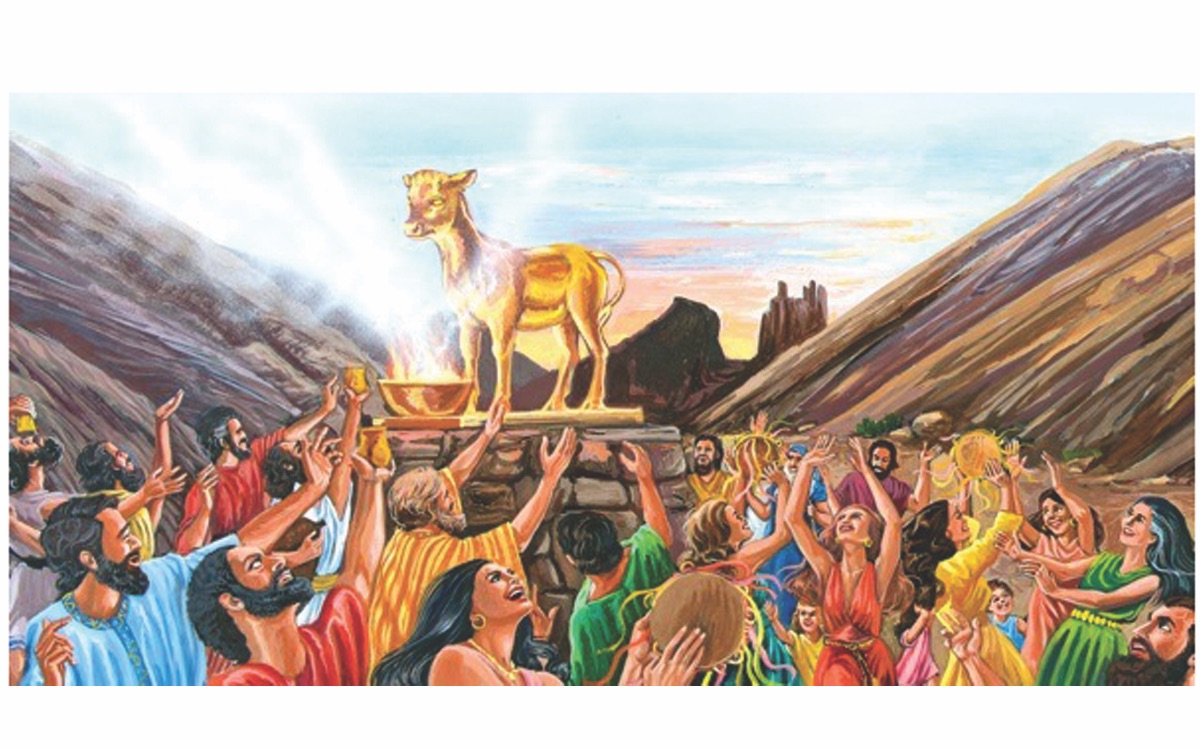
You know the old story about parents leaving the house and then their kids going crazy by throwing wild parties and misbehaving? It also happened in biblical times, when Moses left for his 40-day trip to Mount Sinai to receive the Ten Commandments. Shortly thereafter, the Israelites went a little crazy. Turns out, patience was not one of their greatest virtues. They insisted that Moses’ brother and high priest Aaron make them a god to worship. Aaron built a golden calf that became their new god. When Moses returned to find them worshiping the calf, he got angry. And God was none too pleased, either.

But who do we blame here? The Israelites or Aaron? Was Aaron such an inept leader that he became a puppet of the people, which led to this religious insurrection? Or was he so skilled at the art of persuasion that he convinced the Israelites to indulge in the sin of idol worship? Or should no one be blamed because at the time, they had no idea what God’s commandments would be because they hadn’t yet received them?

These were the issues addressed at the American Jewish University’s Whizin Center on March 11 during its 15th Annual Biblical Trial: The People v. Aaron for Inciting Rebellion, presented by Hillside Memorial Park and Mortuary.

Defending Aaron was Dean of UC Berkeley Law School Erwin Chemerinsky. Representing the people was Laurie Levenson, professor of law and David W. Burcham Chair in Ethical Advocacy at Loyola University Law School. Rabbi Gary Ezra Oren, vice president of the American Jewish University (AJU) and dean of the Whizin Center, kicked off things by engaging the “jury” (the audience in attendance) in an exploration of the biblical text. Judge Burt Pines read the jury instructions: “We don’t worry about the statute of limitations; all the witnesses are dead.”

Levenson made her case for prosecuting Aaron by alleging he was guilty of insurrection — “rising up against authority or government” —  and of conspiracy, corruption and collusion, as the leader of the rebellion. She even called a calf to the witness stand (a woman in a calf costume) who pronounced Aaron guilty. Levenson also quoted Exodus 32:25: “Moses saw that the people were out of control since Aaron had let them get out of control.”

“We don’t worry about the statute of limitations; all the witnesses are dead.” — Judge Burt Pines

Aaron had just one job, Levenson argued, to keep things in place until Moses got back, and he didn’t do it. He was a smooth talker. He betrayed Moses and God, and consequently 3,000 Israelites were put to death. This, she said, also almost cost the Jewish people’s relationship with God. Levenson ended by saying, “The choice is simple: If you believe in Aaron, the defendant is not guilty. But if you believe in God, [he is] guilty.”

In defending Aaron, Chemerinsky said, “Levenson is giving you fake news. The calf ‘witness’ was not actually present during the event. You have to separate the calf stuff from the bull. She’s giving you a bum steer!”

Chemerinsky then got serious, offering three reasons why Aaron should be found not guilty:

1. There was no crime against the government because there’s no proof that Moses was the government. In fact, Moses started as a basket case, and was the first person to use the Tablet to communicate with the Cloud. Plus, he was a lawbreaker; he broke all the commandments at once.

2. Aaron was not leading a rebellion; he was, according to Rashi, simply stalling for time until Moses returned. Plus, the golden calf was a pedestal to the Lord, not to a different god. Moses was to blame for killing the 3,000 Israelites. He should have used his words. You can try Aaron for theft of the jewelry, but not rebellion.

3. Aaron’s actions are protected by the First Amendment of the Constitution and freedom of religion. Finally, Aaron couldn’t be inciting illegal activity because Moses hadn’t yet returned with the Ten Commandments. In Levenson’s rebuttal, she put forth that Aaron had a moral and legal duty not to help the people build that calf. She addressed three bubbameisters (old wives’ tales):

1. She countered the defense’s argument that there was no government before the golden calf incident with the Exodus 19:8: “All that the Lord has spoken, we will do.”

2. She countered the defense’s “Aaron was just trying to calm the people down” with God’s “You shall have no other gods before me,” which was said 40 days before the building of the golden calf.

3. She countered the defense’s “This would violate Aaron’s First Amendment rights” with the fact that there was no First Amendment during Aaron’s times.

Rebutting Levenson, Chemerinsky argued, “There is no government in the record and no rebellion against God.” He said that although Moses may have been the governing authority, that didn’t make him the government. Finally, he said, the First Amendment specifies separation of church and state and the premise of the trial was to bring charges against Aaron according the current laws of the United States. “If you buy nothing else I’ve said,” Chemerinsky declared, “at the most, what Aaron was doing was creating an idol.”

Levenson and Chemerinsky were well prepared and argued their cases thoroughly, passionately and humorously. In the end, the voting audience found Aaron not guilty.


Mark Miller is a humorist, journalist and author of the humor essay collection “500 Dates: Dispatches From the Front Lines of the Online Dating Wars.”

The People vs. Aaron Read More »

‘Second Seder Plate’ Puts Focus on Refugee Crisis

As Jews sit down to Passover seders to retell the story of when our ancestors were slaves and refugees, Jewish World Watch (JWW), a nonprofit that works to end genocide and mass atrocities, would like us to help raise awareness of the needs of millions of refugees in the world today.

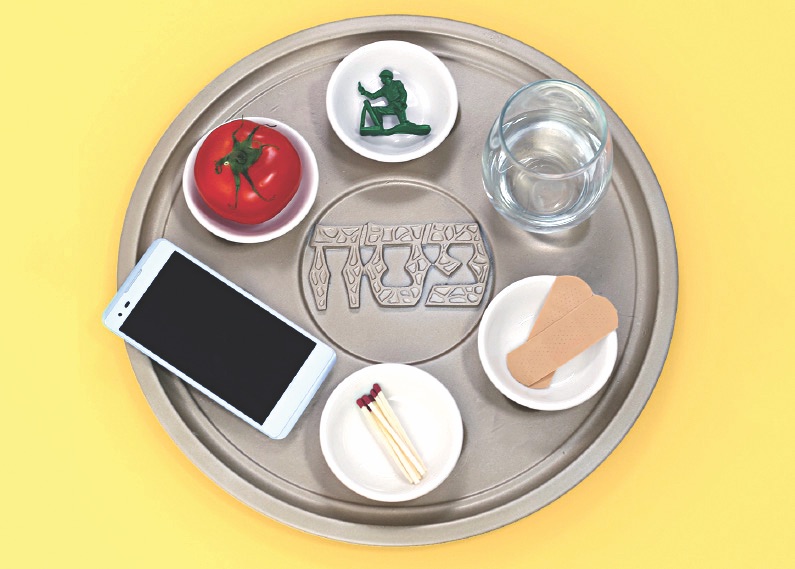
JWW’s “Second Seder Plate” campaign asks people to place an additional platter  on the table, alongside the traditional one, that contains these six symbolic items:

• Kitchen matches: Representing the flames that have destroyed entire Rohingya Muslim villages in acts of ethnic cleansing in Myanmar.

• Band-Aids: Indicating the medical supplies needed by innocent civilians wounded in the war in Syria.

• Tomato: Symbolizing the ultra-efficient farming techniques that can help supplement insufficient food rations in Darfuri refugee camps.

• Cellphone: Calling to mind the “conflict minerals” used in electronic devices that are mined in the Democratic Republic of the Congo by children, to the benefit of corrupt officials and profiteers.

• Toy: Symbolizing the lost childhood of many young refugees.

• Glass of water: Representing the dearth of clean water for the stateless.

For people who want to introduce the second seder plate to their table but don’t have the suggested items on hand, JWW offers a card with a picture of the seder plate that can be set on the table as a stand-in. Other cards — which can be downloaded and printed from the organization’s website at jww.org — contain information and discussion points about today’s global refugee crisis, along with tips on how to take action, whether by writing a letter to a Congressional representative,  providing financial support for JWW’s humanitarian aid efforts, or by other means.

“Passover is a time to recall the biblical Exodus, a story that, sadly, resonates with the tragic displacement going on today.” — Susan Freudenheim

“Passover is a time to recall the biblical Exodus, a story that sadly resonates with the tragic displacement going on today,” JWW’s Executive Director Susan Freudenheim told the Journal. “The Jewish story of fleeing from dishonest leaders and enslavement is too often being repeated for new populations around the world.”

JWW had considered suggesting that people add new symbols to their traditional seder plate, but “We decided the plate risks getting pretty crowded,” Freudenheim said.

“So, why not make a whole new set of contemporary symbols, linked to contemporary Exoduses, to tell the story of the plight of today’s 65 million displaced people who have been persecuted like the Israelites?”

Each of the second seder plate items and its accompanying text provide insights into how JWW works with people touched by genocides or mass atrocities.

“Jewish World Watch was founded to fight genocide, and one major aspect of our work is to help survivors,” Freudenheim said. “We have also traveled to meet with some of them: the Darfuris and the Congolese, in particular, and shared Jewish stories, not only of the Exodus, but also of the Holocaust. Many of the people JWW met in Africa had never met Jews before, and their first experience is of friendship and generosity.”

JWW is encouraging us to post pictures of  our second plates on social media using the hashtag #SecondSederPlate.

Beyond stimulating discussion around the plight of refugees, Freudenheim said, “our second seder plate reminds everyone to become involved. To be on the right side of history.”


Mark Miller is a writer who has performed stand-up comedy and written for various sitcoms. His first book, a collection of humorous essays, is “500 Dates: Dispatches From the Front Lines of the Online Dating Wars.”

‘Second Seder Plate’ Puts Focus on Refugee Crisis Read More »

My Shabbat March

Shabbat ha-Gadol means the Great Shabbat, and for me, this past Shabbat was truly great.

Many shomer Shabbat teens wanted to take part in the Washington, D.C., March for Our Lives. So they organized a full program and arranged for home hospitality for the many guests.

Last Friday night, I joined the teens for Shabbat dinner. The following morning, they led a special youth service. I was called to the Torah and honored with the reading of the haftarah. I was deeply moved when I came to the final verse: “Ve-heishiv Lev Avot al Banim: The hearts of the parents will turn toward their children (Malachi 3:24).

After services, we began our 7-mile trek to the march. Although large parts of Washington are covered by an eruv, there is a gap of around 10 blocks that is not covered. The teens suggested we connect with a church that might be able to help us and allow us to store our food. Rev. Thomas Bowen of Mayor Muriel Bowser’s office connected us with Rev. Darryl Roberts of the 19th Street Baptist Church.

When we arrived at the church, many of its members came out to greet us.  Rev. Roberts and I embraced and we discovered that we live four houses apart. I know that we will develop a close friendship moving forward.

I felt that every step we took was a mitzvah and a sanctification.

Our synagogue community gathered on the steps of the church with other local churches and we shared powerful words of reflection, prayer and song, led by the children of our respective communities. One of our members told Rev. Roberts that the church was formerly a synagogue and his grandfather had been the rabbi. The church has retained the Stars of David throughout the building as a way of demonstrating respect for the builders of the community. I felt the spirituality of yet another connection with this very special community.

Rev. Roberts and I walked together for the next 3 miles toward the march and bonded over a shared passion to serve as religious leaders. There is so much darkness that has come to the world as a result of gun violence, but if two communities and a rabbi and a pastor can come together, it represents a brighter path for the future.

I don’t remember exactly which speaker made me cry at the rally, but tears ran down my face multiple times. The most moving moment was watching Samantha Fuentes, one of the Parkland shooting survivors, excuse herself to throw up onstage.   But as the crowd cheered her on, she immediately bounced back and continued her speech. I felt inspired by her dedication and commitment to never give up.

Following the march, we gathered at a local building for snacks. J. David Cox, the president of the American Federation of Government Employees, arranged for us to have a room to hold afternoon prayers and Torah study, and he took part in our study session. The topic was “Pesach and Civil Disobedience.” The teens spoke passionately about the need to raise a voice when there is an unjust law. I felt inspired to be in the presence of such an amazing group of teens. I know now, more than ever, that our future is bright.

The Shabbat ha-Gadol Torah portion speaks of how Moshe had to place the blood of an offering on the toe of his brother, Aaron, the Kohen Hagadol (High Priest). One of the teens, Coby Melkin, said this was to show that true service of God sometimes requires walking to do a mitzvah. I felt that every step we took was a mitzvah and a sanctification of the far too many souls who have been brutally murdered as a result of gun violence.

The grim statistics about gun violence are scary and depressing. But I left this Shabbat ha-Gadol excited and inspired. We have a new day in D.C. The parents are turning toward the children. The future is bright.


Rabbi Shmuel Herzfeld is the rabbi of Ohev Sholom — The National Synagogue in Washington, D.C.

My Shabbat March Read More »

Atheist Meets Pesach

The only time in my family history when both sets of grandparents gathered together for Pesach seder, it was a disaster.

Aside from having children married to each other, the Rosenfelds and the Cohens had nothing in common. My paternal grandfather, Herbert Rosenfeld, was a proud atheist. He smoked cigars, deployed practical jokes (even on veritable strangers), sizzled bacon for his breakfast and became a public spokesman for the American Humanist Association, railing against nuclear weapons and organized religion.

My maternal grandfather, Rabbi Bernard Cohen, invested his life in the United States building Jewish educational institutions, my grandmother Ethel at his side. Papa Cohen was a founding director of the Bureau of Jewish Education in Los Angeles and innovated bat mitzvahs for girls in Conservative Jewish circles. My Aunt Eleanor was the first, in 1945.

This did not make the Cohens progressive enough for the Rosenfelds, who accepted the Cohens’ seder invitation for the sake of the children. It was a trial for Papa Rosenfeld to abide talk of the God he left behind, starting from the karpas and on through the afikomen. He held it together until the infamous chicken soup and chopped liver incident.

You see, my older sister, Sharon, never liked soup. But she loved chopped liver. Nana Cohen, a balabusta with Old Country recipes and emotions, was inordinately proud of her chicken soup and chopped liver. When my sister refused the ladle of soup cruising toward her bowl, Nana exclaimed, “But it’s delicious! I made the matzo balls! Look at all the bowls I used!”

There are just some things you do not say at a traditional rabbi’s seder table, and Papa Rosenfeld had just said one of them.

My mother implored, “Mama, please let Sharon have her chopped liver. Leave her alone.” But when Nana Cohen held her ground, Papa Rosenfeld could take no more, blaspheming, “Jesus Christ!”

Papa Cohen stared at Papa Rosenfeld. There are just some things you do not say at a traditional rabbi’s seder table, and Papa Rosenfeld had just said one of them. The in-laws became the outlaws.

Was Papa Rosenfeld playing the role of the wicked son, the rasha, at the seder? Or was he, as I concluded years later, really the child who does not know how to ask, the lo yodea lishol? When he was just 6, his father died, and a rabbi told Papa that his father’s death had been God’s will. This was inadvertently cruel and led to my grandfather’s lifelong atheism. But Papa and his siblings had no formal Jewish education. Papa’s only understanding of God was that of the Grim Reaper.

In my life, I have noticed that many atheists, lacking a healthy concept of God, develop a cynical streak. I always adored Papa, but he startled me with his fatalistic views. One day during lunch, Papa predicted that a nuclear bomb would one day kill us all. I was 8 years old and swallowed hard.

Papa Rosenfeld covered his bleak view of life with practical jokes and irreverence. Ironically, I realized it was Papa Cohen, despite his sterner outer demeanor, who was the more upbeat of the two. It was Papa Cohen, not Papa Rosenfeld, who had faith in the future and felt meaning in the now.

While growing up, I was a little obsessed by my two sets of beloved grandparents and their opposite worldviews and lifestyles. I honored my Cohen grandparents’ commitment to faith, their understanding of the importance of boundaries and traditions. But I was dazzled by my Rosenfeld grandparents’ worldliness, their artistic and bohemian friends, my grandmother’s cache as a female homeopathic physician in the 1960s.

When I was first exposed to ba’al teshuvah-style Torah teaching, I retired my obsession. I saw that I didn’t have to choose between a life of Jewish faith and tradition versus a life of intellectual sophistication, or even bohemian friends. The ba’al teshuvah phenomenon brought into the Torah-observant community thousands of Jews with advanced secular education, an appreciation for the arts and culture, and a thirst for knowledge that has enriched and diversified Orthodox Jewish life.

Each year at the seder, I celebrate being part of our remarkable covenantal, eternal tribe.


Judy Gruen is the author of “The Skeptic and the Rabbi: Falling in Love With Faith” (She Writes Press, 2017).

Atheist Meets Pesach Read More »

Movies that Stirred My Passovers

The best Bible stories are religious epics. The best Hollywood filmmakers are some of the greatest storytellers in the world, and I have been spiritually moved and inspired by Hollywood retellings of our ancient religious stories.

With Passover upon us, I’m reminded of three specific movies that opened my eyes anew to the story of the Exodus.

“The Prince of Egypt”

This 1998 kid-friendly animated version of the Passover story from Dreamworks focuses on two brothers — Moses and Rameses, the eventual Pharaoh of the Passover story. I never even thought of this sibling dynamic until I saw this movie. It is the simplest insight but profoundly transformative.

Moses knows Rameses and the royal family better than he knows his brother, Aaron, and sister, Miriam. Imagine Moses’ inner conflict. He is being pulled in opposite directions as his Jewish and Egyptian identities wrestle for control of his destiny. That inner struggle sounds like every inner monologue of every Jewish American I know. Moses becomes more relatable through “The Prince of Egypt.”

“Exodus: Gods and Kings”

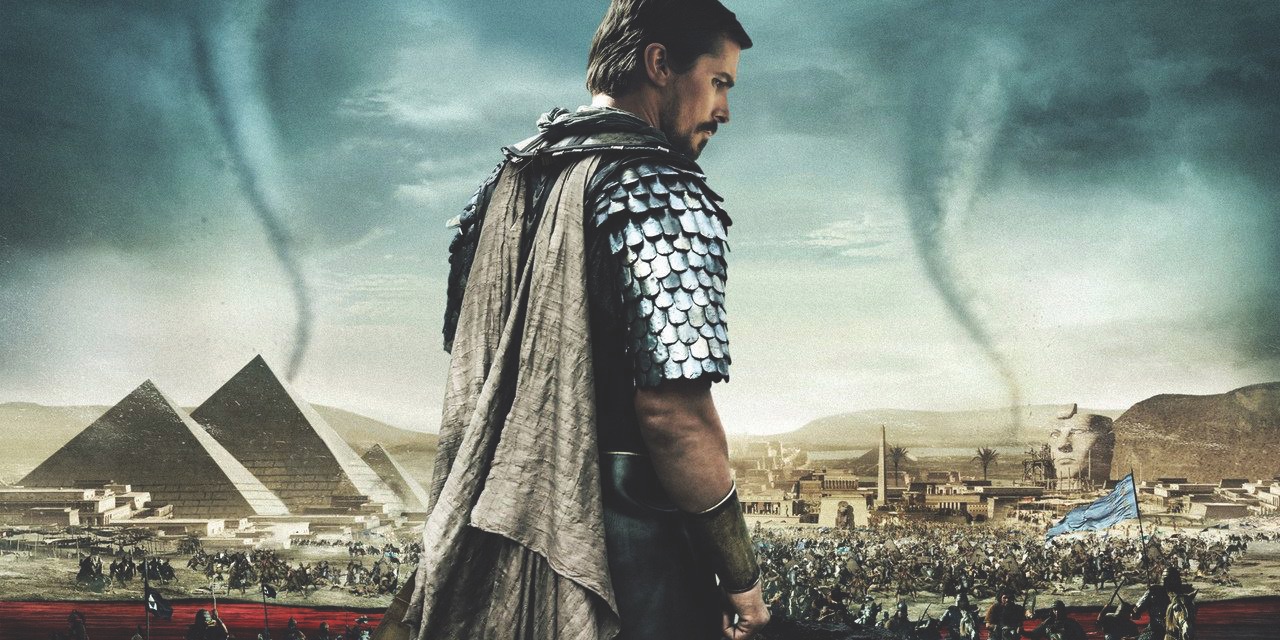
This 2014 movie starring Christian Bale as Moses was awful, but it still transformed the Exodus story for me.

One of the film’s biggest flaws is how we are made to empathize more with Rameses than with Moses. Like “The Prince of Egypt,” the two brothers are set on a collision course for control of the dynasty. Moses does not want the position, but he is superior to Rameses in every way. Rameses is fueled by jealousy, which turns to rage.

My then 4-year-old said, “How could a movie about this story not be amazing? It’s the greatest story of all time!”

The most emotional part of the story is Rameses losing his son to the plague of the first born. It’s a jarring feeling but it awakened a part of the story in me that is usually too easy to ignore. Pharaoh and the Egyptians had families and lives. Even if many of them deserved to be punished, their suffering should tug at our heartstrings.

“The Lion King”

This 1994 animated film is about a prince who is exiled because he is afraid of being prosecuted for murder. He has a supernatural vision that convinces him to return to his birthplace and rescue his tribe. It sounds just like the story of Moses to me.

The twist is that Simba is convinced to return to Pride Rock only when Nala mentions his family back home is hoping for his return. God does the same for Moses when he tells him that his brother, Aaron, is waiting for him back home. I find this especially meaningful because Passover has become the holiday of family.

Hollywood showed me the depth of the Exodus story as a story, and now I relate to it as a child hearing the story for the first time. I’ll never forget my then 4-year-old son’s shock when I told him “Exodus: Gods and Kings” was a flop. He said, “How could a movie about this story not be amazing? It’s the greatest story of all time!”


Eli Fink is a rabbi, writer and managing supervisor at the Jewish Journal.

Movies that Stirred My Passovers Read More »