One of the reasons I love Passover so much (aside from the toffee chocolate Matzah – that I’m sure Moses ate as the Children of Israel crossed the desert) is that the seder demands questions.
While there are the traditional Four Questions from the Haggadah, I want to pose an additional four. If you could ask one question of each of the following, what would the question be?
I. What is one question you would ask an elected leader?
II. What is one question you would ask of a deceased friend?
III. What is one question you would ask of God?
IV. What is one question you would ask of yourself?
And a fifth question:
Which, of these, is the most difficult?
Passover is about facing the challenges. It’s about confronting that which holds us back. And it’s about capturing this moment in time with meaning and with depth.
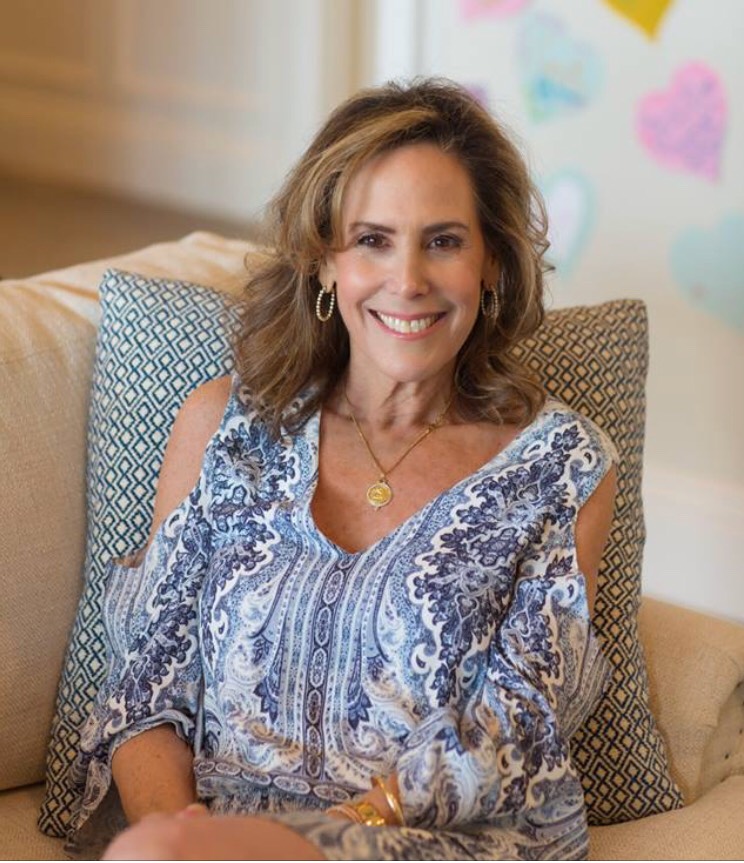
Ron joins me in wishing you and all you love a Passover filled with joy!
With love and shalom,
A change in perspective can shift the focus of our day – and even our lives. We have an opportunity to harness “a moment in time,” allowing our souls to be both grounded and lifted. This blog shows how the simplest of daily experiences can become the most meaningful of life’s blessings. All it takes is a moment in time.
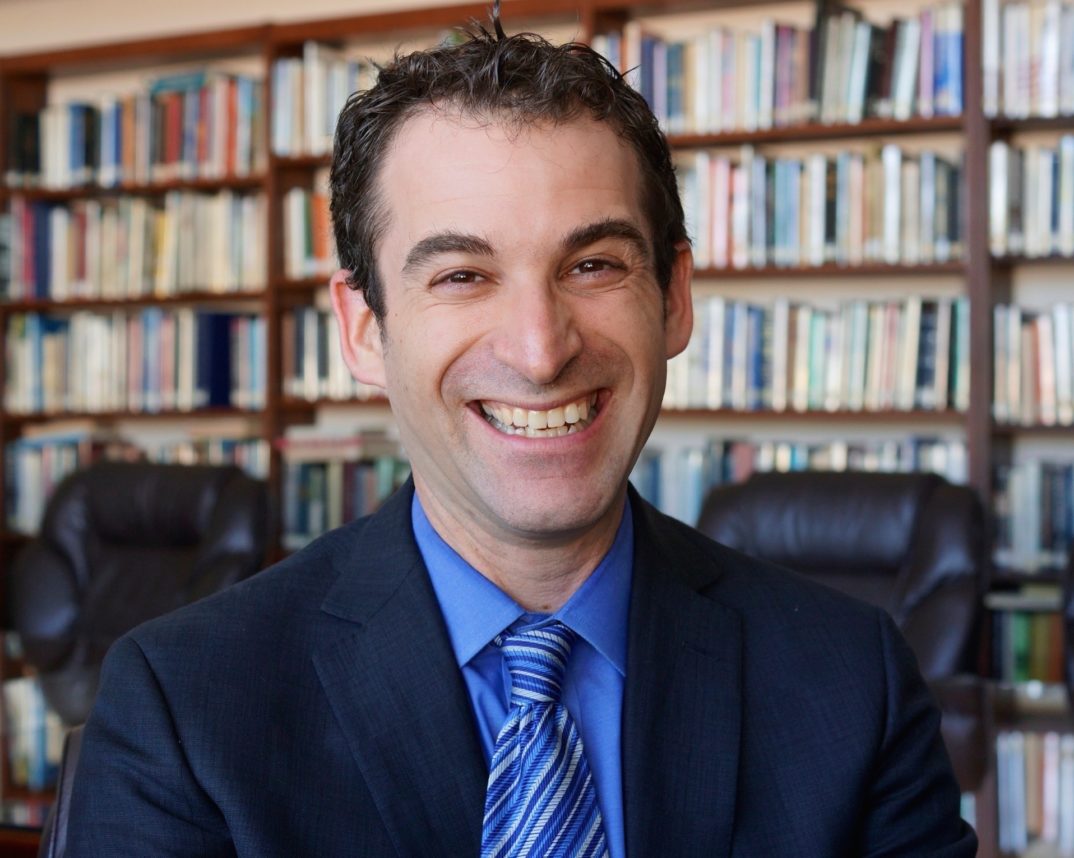
Rabbi Zach Shapiro is the Spiritual Leader of Temple Akiba, a Reform Jewish Congregation in Culver City, CA. He earned his B.A. in Spanish from Colby College in 1992, and his M.A.H.L. from HUC-JIR in 1996. He was ordained from HUC-JIR – Cincinnati, in 1997.
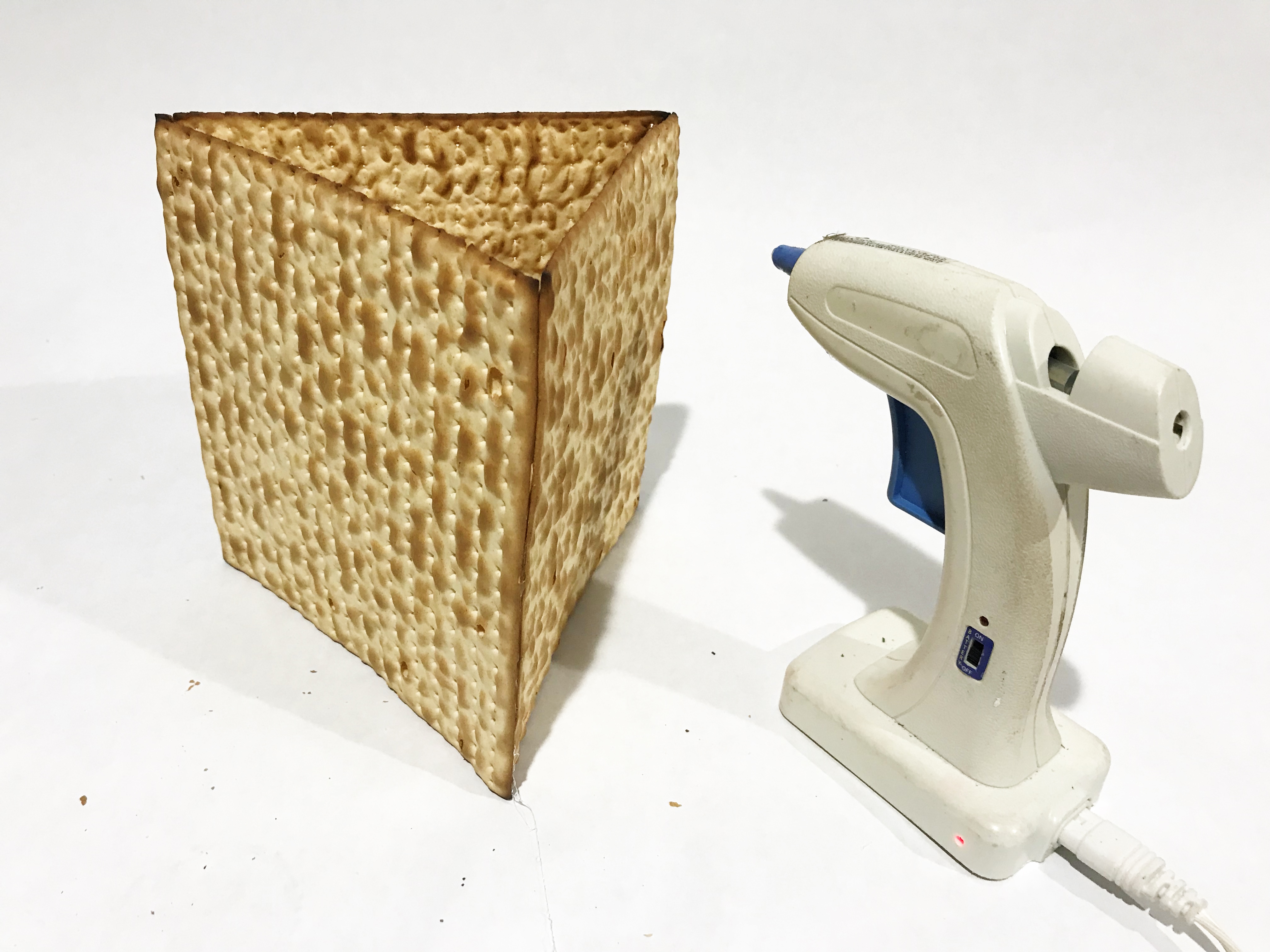
Why is this vase different from all other vases? No other vase is as perfect for your seder table as this one, which is not only made from matzo, it’s shaped like a Star of David. Your friends and family are sure to ooh and ahh, and that’s even before they taste your famous brisket.
The texture of the baked matzo works so well here because it actually makes the vase look like a woven basket. And don’t worry, the matzo doesn’t get wet. The flowers sit inside a hidden glass so water doesn’t touch the flatbread.
Instead of flowers, you can also place a battery-operated LED pillar candle in the center for a beautiful — and unique — touch of lighting. However you fill it, this vase will be the star of your seder decorations.
What you’ll need:
Matzo
Hot glue gun
Glass tumbler
1.
1. You will need six square pieces of matzo for this project, but have a few extra on hand to account for breakage. Form a triangle with three upright pieces of matzo and hot glue the ends together to form the inner triangle.
2.
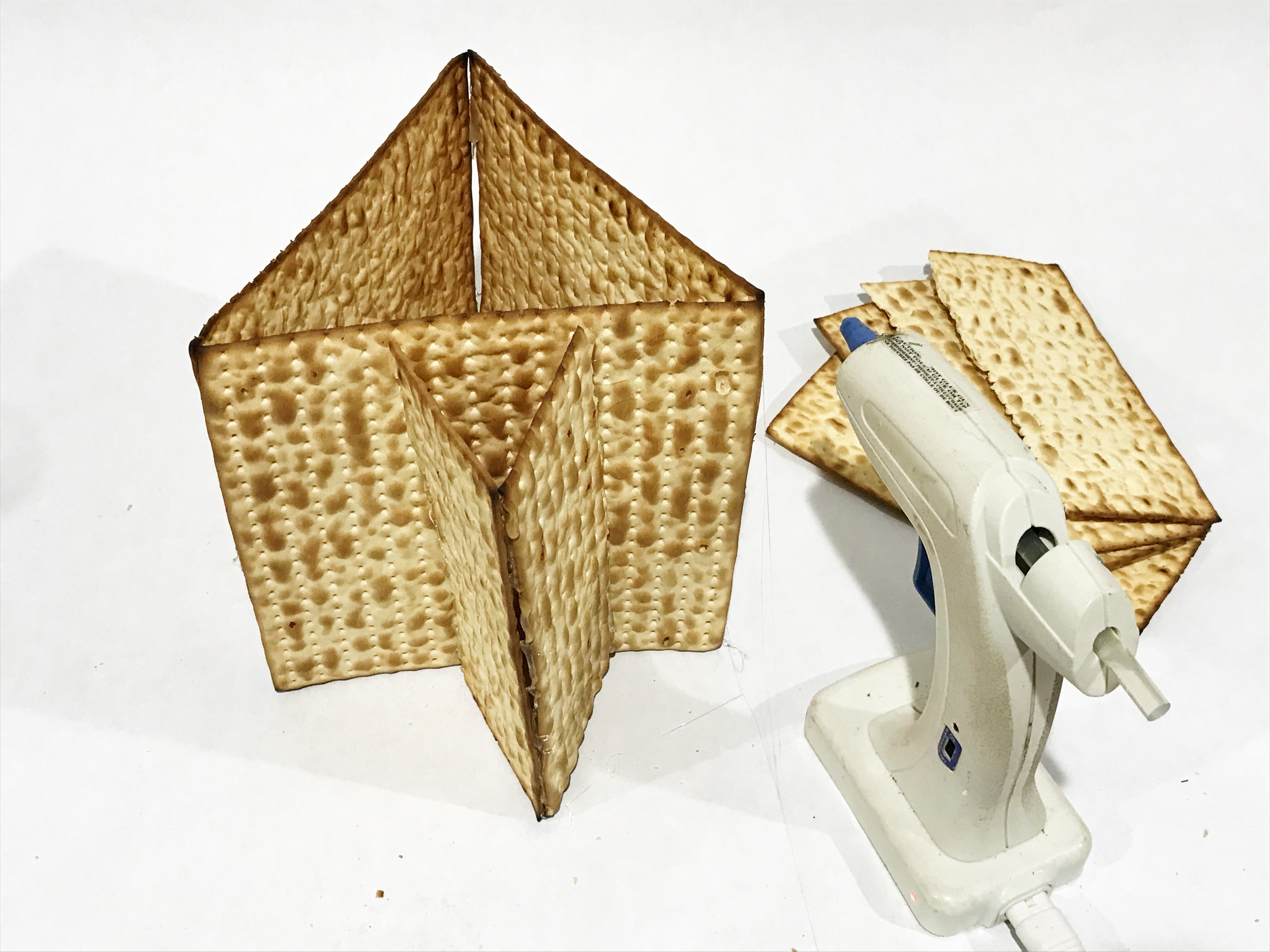
2. Break a square of matzo in half. It will never break evenly, but that’s OK. Use your fingers to pinch off little pieces from both halves until they are the same size — about 2 1/2 inches wide.
3.
3. Hot glue these two halves to one of the standing sides of the triangle to form a smaller triangle coming out of it. Repeat, forming smaller triangles on the remaining two sides of the inner triangle to create the Star of David shape.
4.
4. Place a glass tumbler in the middle of the inner triangle. It should be shorter than the height of the matzo. Fill the glass about halfway with water and add any flowers you desire.
If you make this project, we’d love to see it! Post it on social media with #JJcrafts.
Jonathan Fong is the author of “Walls That Wow,” “Flowers That Wow” and “Parties That Wow,” and host of “Style With a Smile” on YouTube. You can see more of his do-it-yourself projects at jonathanfongstyle.com.
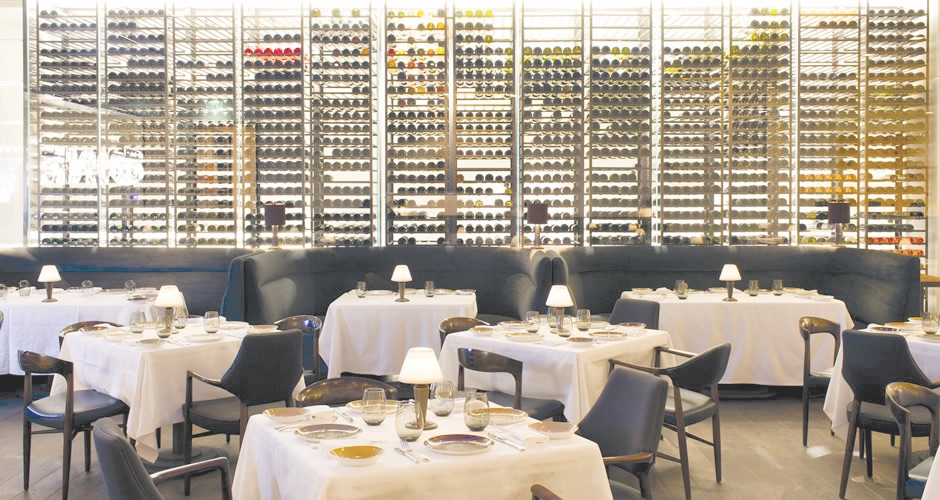
Spago Beverly Hills’ 34th annual seder serves up unleavened flatbread seasoned with shallot and thyme; homemade gefilte fish of whitefish, carp and pike; Judy Gethers’ matzo balls; and other items prepared by chef de cuisine Tetsu Yahagi. Meanwhile, executive pastry chef Della Gossert offers a menagerie of macaroons and macarons, fromage blanc cheesecake and more. Husband and wife Rabbi Arnold Rachlis and Cantor Ruti Braier of University Synagogue of Irvine lead services. The evening raises funds for Mazon: The Jewish Response to Hunger. 5:30 p.m. $195 per adult, $80 per child under 12. Spago, Beverly Hills. 176 N. Canon Drive, Beverly Hills. (310) 385-0880. exploretock.com/spagobeverlyhills.
“EXODUS SEDER CRAWL”
You’ve heard of a pub crawl? Venice spiritual community Open Temple holds “Exodus Seder Crawl: A Freedom Seder Experience Through Venice.” Instead of sitting at one table for the entire evening, attendees move from one table to the next on a quest driven by the Four Questions. Wear comfortable shoes and be prepared for surprises. 4-7 p.m. $36. The Open Temple, 1422 Electric Ave., Venice. (310) 821-1414. opentemple.org.
MALIBU SEDER
Join Malibu Jewish Center and Synagogue for an inspirational, communitywide seder, led by Rabbi Michael Schwartz and Cantor Marcelo Gindlin. The family-friendly evening features a fully catered, four-course meal; an English-Hebrew hagaddah; and traditional songs, stories and spiritual insights. 5-9 p.m. $60, adults; $20, children younger than 13. Malibu Jewish Center and Synagogue, 24855 Pacific Coast Highway, Malibu. (310) 456-2178. mjcs.org.
SILVERLAKE SEDER
The seder experience held at the Silverlake Independent Jewish Community Center revisits elements from its past seders, including a cocktail hour, with child care; a Beyond Bubbie’s Build-Your-Own-Charoset Bar; and a human tableau to tell the Passover story. In addition, an interactive art installation, Ruckus Roots’ “Freedom of Speech Wall,” provides a giant magnetic poetry wall on which participants can arrange words to express their thoughts or collaborate by building on an existing poem. The band Mostly Kosher performs live, and caterer Par Terre provides vegan, vegetarian and meat options. 5 p.m., cocktails; 6 p.m., seder; 7 p.m., dinner. $40, adults; $12, kids; free for children younger than 3. The Courtyard at Silverlake Independent Jewish Community Center, 1110 Bates Ave., Los Angeles. (323) 663-2255. sijcc.net.
SINAI TEMPLE SEDERS
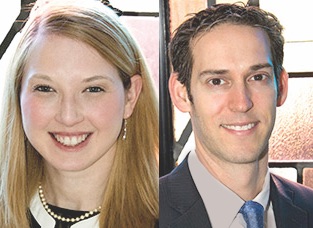
Nicole Guzik (left) and Erez Sherman (right).
Sinai Temple husband-and-wife Rabbis Nicole Guzik and Erez Sherman and Cantor Lisa Peicott lead a community seder ideal for families and children. The kosher menu includes chicken marsala, grilled shiitake mushrooms and flowerless chocolate cake. A traditional seder plate and wine will be placed at each table. Simultaneously, 20- and 30-somethings come together for a traditional seder led by Sinai Temple Rabbi Jason Fruithandler. Organized by ATID, Sinai’s young professionals group, the evening is open to ages 21-39 only. Family seder, 6:30 p.m. $72, Sinai Temple members; $78, general admission; $45, children 12 and younger. Sinai Temple, Gold Hall, 10400 Wilshire Blvd., Los Angeles. (310) 474-1518. sinaitemple.org. ATID seder, 6:30-9:30 p.m. $25–$45. Sinai Temple, 10400 Wilshire Blvd., Los Angeles. (310) 474-1518. atidla.com.
SOME ENCHANTED PESACH SEDER
Historic congregation Hollywood Temple Beth El tells the Exodus story in song. Attendees sing along to parodies of songs from Stephen Sondheim, the Beatles, Disney, Adele and more. Enjoy a fabulous meal with friends at one of the oldest synagogues in Los Angeles. 7-11 p.m. $20-$80. Hollywood Temple Beth El, 1317 N. Crescent Heights Blvd., West Hollywood. (323) 656-3150. eventbrite.com
SECOND SEDER AT MISHKON
A catered kosher-for-Passover meal, plenty of wine, singing and even some games highlight the seder dinner at Santa Monica congregation Mishkon Tephilo, one of the oldest continuously operating synagogues on the Westside. 7:30 p.m. $30-$70. Mishkon Tephilo, 206 Main St., Venice. (310) 392-3029. mishkon.org.
TRIBE PESACH SEDER
Join IKAR young professionals group TRIBE for its third annual Passover seder. The kosher meal features options for those who eat kitniyot — legumes, grains and seeds — and those who do not. Dairy-free and gluten-free options are available. 8-10:30 p.m. $30. Habonim Dror, 8339 W. Third St., Los Angeles. (323) 634-1870. ikar-la.org.
TUE APRIL 3
ANNUAL WOMEN’S PASSOVER SEDER
Experience the seder through the eyes of women. The National Council of Jewish Women/Los Angeles (NCJW/LA) holds a kosher-for-Passover dinner celebrating prophetess Miriam, the sister of Moses and Aaron, and other women who are “passed over” in traditional Jewish conversations. 6-9 p.m. $45, NCJW/LA member; $55, general. NCJW/LA Council House, 343 N. Fairfax Ave., Los Angeles. (323) 651-2930. ncjwla.org.
THU APRIL 5
THE FORAGED SEDER
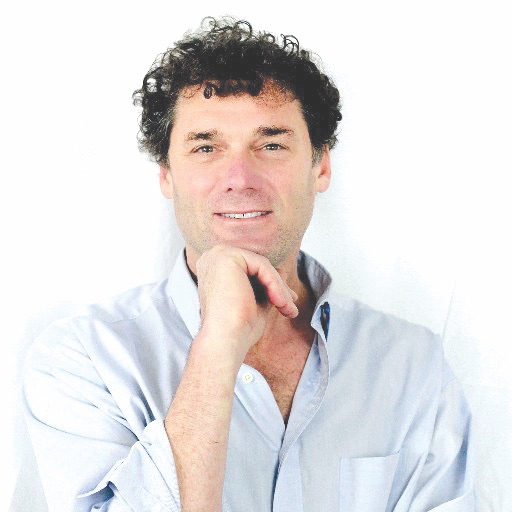
Rob Eshman.
Los Angeles forager, naturalist and self-styled “culinary alchemist” Pascal Baudar and “Foodaism” blogger and former Jewish Journal Editor-in-Chief Rob Eshman take a fresh look at Passover. With the flavors and themes of the holiday in mind, they discuss the array of plants that grow wild on hillsides, some having “migrated” from other countries and others native to California. Baudar will share samples of foraged greens to try, and Eshman will note which greens are relevant to Passover dishes. A light tasting of treats conceived by Baudar, Eshman and Skirball Chef Sean Sheridan follows. 8 p.m. $25, general; $15, Skirball members. Skirball Cultural Center, 2701 N. Sepulveda Blvd., Los Angeles. (310) 440-4500. skirball.org.
SUN APRIL 1
JOKES FOR JEWS
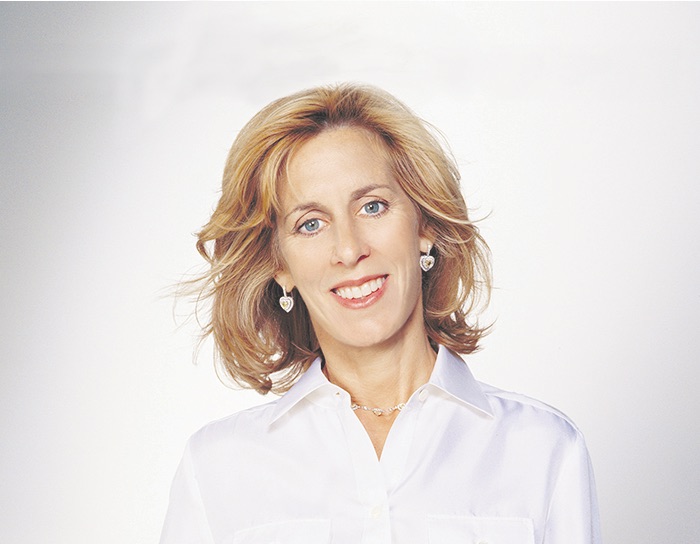
Rachel Wolfson.
Stand-up comedy showcase “Jokes for Jews: April Shmuel’s Day” takes place on April Fools’ Day, which also happens to be Easter this year. Performers include Or Mash, Matt Kirshen, Jason Visenberg, Joshua Snyder and Rachel Wolfson. Texas comedian and Flappers regular Adam Feuerberg emcees. Interested in an interfaith comedic experience? The event immediately follows “Jokes for Muslims,” an evening of humor and hummus, beginning at 5 p.m. Jokes for Jews, 7 p.m. $20. Flappers Comedy Club, 102 E. Magnolia Blvd., Burbank. (818) 845-9721. flapperscomedy.com.
TUE APRIL 3
NANCY SPIELBERG
Writer-producer Nancy Spielberg joins Camp Ramah in Ojai for a kosher-for-Passover dinner, Q-and-A, movie screening and dessert reception. The Conservative Jewish summer camp will screen Spielberg’s 2015 film, “Above and Beyond,” about a group of Jewish-American pilots who flew for Israel in the country’s War of Independence. 5:30 p.m. $150. Zimmer Retreat and Conference Center at Camp Ramah, 385 Fairview Road, Ojai. RSVP required at teri@ramah.org. ramah.org/passover.
“REACHING ACROSS THE DIVIDE”
Spend an evening with the Sinai Temple’s Men’s Club as the organization screens a prerecorded debate from August 2017 featuring Sinai Temple Max Webb Senior Rabbi David Wolpe and conservative commentator Dennis Prager weighing in on the great issues of the day. Men and women welcome. 6:30-9 p.m. $10, general; Free, Sinai Temple members. Sinai Temple, 10400 Wilshire Blvd., Los Angeles. (310) 474-1518. sinaitemple.org.
THU APRIL 5
COMMUNITY SEDER
The ChaiVillageLA community seder is a lively communal experience featuring a specially written hagaddah and Cantors Lizzie Weiss and Tifani Coyot. Members of ChaiVillageLA — a multigenerational, multisynagogue community that enables congregants to age in place as they grow old — as well as adult members of Temple Emanuel of Beverly Hills and Temple Isaiah are welcome. The theme of the evening is “Sharing Our Journey.” In the spirit of the Passover holiday, the organizers are collecting new clothing to donate to Syrian children in need. 6 p.m. $36. Temple Isaiah, Social Hall, 10345 W. Pico Blvd., Los Angeles. (310) 277-2772. chaivillagela.org.
“500 YEARS”
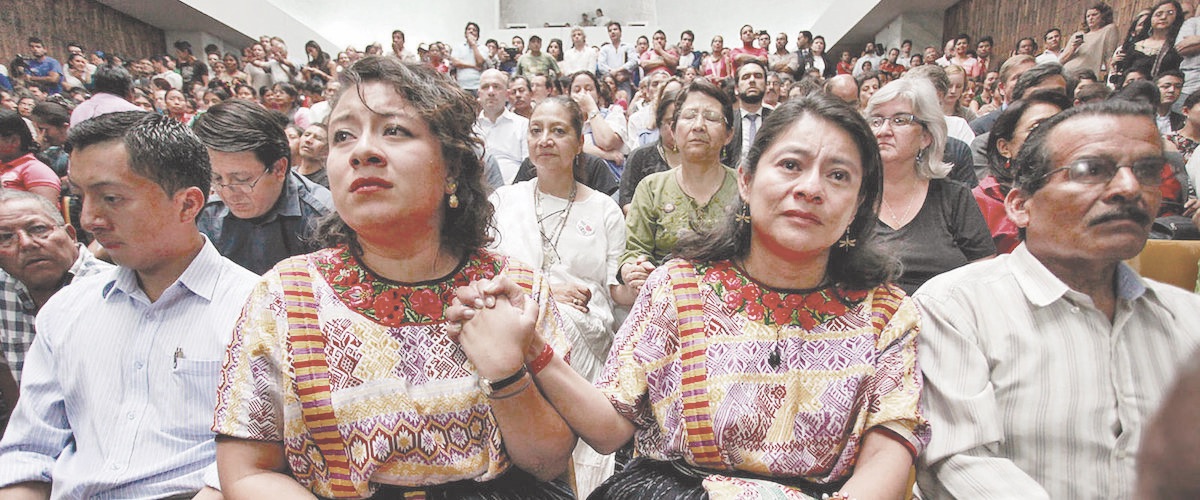
Filmmaker Pamela Yates’ documentary “500 Years” follows the indigenous resistance movement in Guatemala and how a group of people committed to social justice stood up to power, racism and corruption to transform their country. The 2017 film, screening at the Los Angeles Museum of the Holocaust, documents events that led Guatemala to a tipping point in its history, from a historic genocide trial to the overthrow of a president. A Q-and-A with members of the cast and crew follows the screening. 7 p.m. Free, RSVP required. Los Angeles Museum of the Holocaust, 100 The Grove Drive, Los Angeles. (323) 651-3704. lamoth.org.
Carrie Beth Lutin-Scott died early on March 14 as the sun was rising over the canyon outside her Pacific Palisades home, where she was surrounded by her family, after a battle with cancer. She was 60.
She is survived by her husband of almost 32 years, Michael B. Scott, and children Rachel, Zachary and Shoshanna, as well as parents Evy and Martin Lutin, and her sister Robin Lutin.
Carrie was born Jan. 15, 1958, and raised in Encino. She often related the stories of how pop singing legend Michael Jackson and his family lived around the corner, and how she met Ringo Starr at a neighborhood party. Lutin-Scott attended Birmingham High School, graduating a semester early in 1976 and matriculating to UC Santa Barbara.
Lutin-Scott transferred to the University of Colorado in Boulder, where she graduated in 1980 with a bachelor’s degree in communications.
Although she loved her college experience, during her junior year, she decided to travel the world on a program called Semester at Sea.
Lutin-Scott told friends and family that when she approached her father to tell him that she wanted to travel the world, he replied, “How much would that cost?” She said, “Oh, I think around $9,000.” Her father paused and told her, “Well, Carrie, if you really want to go, you will have to pay for it yourself.”
So Lutin-Scott went on the game show “The Hollywood Squares” and won not only $15,000 but also a car and trailer. She again approached her father and said, “Dad, as you know, I now have enough money for Semester at Sea. Since you are saving money by not paying for my college tuition this semester, what do you think about giving me some extra money for the trips I want to take along the way?” Her father agreed with the idea and gave her the money.
Lutin-Scott’s negotiating skills served her well during 20 years of selling advertising space in the automotive industry, where after her first year she was the top salesperson on a nationwide sales team of 120.
Lutin-Scott’s husband, Michael, describes their relationship as a “great love affair.” While both were in their late 20s and living in Southern California, fate placed them on the same bus in Washington, D.C., in the spring of 1985. Lutin-Scott and her mother were in the city to lobby for a Jewish mission, and Michael had traveled there to attend a wedding.
During the bus ride, Lutin-Scott turned around in her seat and spotted an attractive young man seated in the back. She got up and walked down the aisle. Michael later described how he looked up from his newspaper to see this woman in a bright blue dress heading his way and thought, “Oh, boy, here comes trouble!” They became engaged three months later and married on June 21, 1986.
They honeymooned in Papua New Guinea and, in 1991, moved to a house in Pacific Palisades, which was soon filled with three children. The couple hosted pool parties, cookouts, birthday parties, prom parties, Boy Scouts and Girl Scouts fundraisers, Friday night Shabbat and Sunday night neighborhood dinners.
Lutin-Scott was involved in Kehillat Israel’s early childhood development program, served on the Southern California board of Birthright Israel Foundation, the board of the University of Colorado Parent Fund and chaired the United Jewish Fund Automotive Division.
She volunteered at her children’s schools and drove students on field trips in her GMC Denali, the “big blue bus.” As their children progressed through school, Lutin-Scott supported their sports teams, musical productions and arts programs.
As their children became young adults, she and Michael moved a few blocks away into a home they had built. In the past few years, she played paddle tennis and mahjong. Lutin-Scott was an avid skier, scuba diver, tennis and paddle tennis player, hiker, photographer and traveler.
Donations can be made in Lutin-Scott’s memory to the Team Carrie — Carrie Strong Foundation by visiting givebox.com/1154.
For further information, email Michael B. Scott at mscott@narvidscott.com.
I applaud Jonathan Zasloff for his clever arguments in favor of expanding the Israeli population by offering Jewish conversion to refugees and others seeking to immigrate to Israel (“Israel Should Open Judaism to Refugees,” March 23). I often wonder why we seem to be the only religion that makes conversion so difficult and unwelcoming. Why are we afraid of having more Jews in the world? We say we are proud of our religion and heritage. Then why don’t we try harder to share it with others? It makes no sense to me.
Zasloff’s persuasive reasoning does indeed make a lot of sense — both practically by increasing our numbers, and spiritually by spreading the word and meaning of Torah and our rabbinic sages throughout the world.
John F. Beckmann, Sherman Oaks
Author Seems Naïve About Anti-Semitism
I do not know what rock “(((Semitism)))” author Jonathan Weisman lives under, but anti-Semitism is alive and doing well in the United States (“A Call to Action in Age of Trump,” March 16).
There is nothing “new about the prominence of an anti-Semitic subculture in America.” Thanks to the 45th president, it has shown its ugly face even to most naïve Jews.
As for the signs pointing to it, Weisman has not even scratched the surface. He needs to look at the Sanders/Clinton/ Obama shenanigans to understand the reasons for the rise of Trumpism, as he coined it.
Rebecca Gottesfeld via email
Book critic Jonathan Kirsch makes no secret of sharing the views expressed by Jonathan Weisman in his book “(((Semitism)))” regarding the alleged increase of anti-Semitism during Donald Trump’s presidency. Unfortunately, Kirsch neglected to address glaring omissions in Weisman’s theory.
Although anti-Semitism is alive and well among the far right, in his modern-day “J’accuse” book, Weisman fails to acknowledge the entrenched anti-Semitism exhibited by the powerful left in the United States and Europe today. Unlike the fringe alt-right, the progressive left enjoys political power as well as a chokehold on our universities, from Jewish self-loather extraordinaire George Soros and his well-funded Boycott, Divestment and Sanctions movement, to college campus leftist extremist anti-Israel professors brainwashing college students at almost every university across the country.
Richard Friedman, Culver City
The Importance of Studying Jewish History
I thoroughly read Mark Miller’s story about Jewish history (“Why Study Our History?” March 2) and I immediately wondered, “Why have I not thought about this?” I agree that one usually will not have motive to indulge in the studies of our humble beginnings. This topic really has a special place in my heart because I enjoy vacationing in Israel; seeing non-Jewish tourists there shows me the interest others have in our past. This makes me feel accepted by others. I really hope others get this great chance.
Jonathan Hazani via email
Jordan’s King Would Do Well to Follow Father
I agree with Dima Abumaria’s story “Jordan’s King Torn Between His Government, His People and Israel,” March 16. Abdullah has a problem (reacting to the killing of accused Palestinian knife-wielder Mohammed Al-Jawawdeh).
What was not made clear in the story is that appeasement of an angry populace has never proved the best course of action.
Reversal of the security measures on the Temple Mount bought nothing.
Getting out of Gaza bought nothing (other than relieving pressure on Israel from getting out of the West Bank).
Jordan’s king is turning back the clock on the wise courses his father and grandfather took when dealing with Palestinian assassins. He is sure to regret it. It doesn’t take a genius to foresee the problem ahead. Israel can survive it. I doubt that King Abdullah can.
Steve Klein via email
The Dark Side of ‘7 Days in Entebbe’
Eli Fink implied that Zionist and anti-Zionist views of the film “7 Days in Entebbe” are equally valid, by presenting both uncritically (“The Emotional Mission of ‘7 Days in Entebbe,’ ” March 23).
The truth is that the film is anti-Israeli propaganda:
The filmmakers portrayed one of the hijackers as conflicted about the action, honorable and merciful. Where did they get that?
They injected apology for the terrorism, as in service of a good cause. It was actually in service of a campaign of genocide against Jews.
Louis Richter, Reseda
Unity Behind Taylor Force
Over the past few weeks, the Journal published several stories and columns describing the political polarization of Americans, and in particular, the polarization among Jews regarding issues pertaining to Israel. One might think that the Taylor Force Act might be one that would receive bipartisan support.
The Taylor Force Act had strong bipartisan support, prompting Senate leadership a few weeks ago to hotline the bill, which would set it up to pass by unanimous consent, a parliamentary procedure that expedites passage of noncontroversial legislation. If no senator objects to the move, the measure is passed without the need for a floor vote. But the Taylor Force Act was blocked after Democratic senators Patrick Leahy of Vermont and Dianne Feinstein of California rejected the hotline, killing the unanimous consent process and forcing the bill to undergo the Senate’s lengthy cloture process.
On March 23, the Taylor F`orce Act passed as part of the omnibus spending bill. The spending bill has something in it that just about everyone wants and something in it that just about everyone opposes. Perhaps one of the few things that has brought Americans and American Jews together is support for the Taylor Force Act. There is a great need to stop funding Palestinian terrorism using U.S. taxpayer dollars. It’s unfortunate that the act would probably have never been passed except for the death of a great American, Taylor Force, who was killed at the age of 28 by Palestinian terrorists.
Marshall Lerner, Beverly Hills
New-Look Journal
I want to congratulate you on a great redesign and introduction to a much more diverse paper that has views from all facets of the community.
The cover story on the possible meeting between North Korean leader Kim Jong Un and Donald Trump by Larry Greenfield (“What Will It Take?” March 16) is excellent, well laid out and makes it easy to understand the current situation.
Kalman Aron died Feb. 24 at 93. Survived by wife Miriam Sandoval Aron, son David.
Harris Ault died Feb. 15 at 89. Survived by son Jordan Cohn. Mount Sinai
Rolaine Leah Bash died Feb. 19 at 86. Survived by daughters Lillian (David) Bash Jewell, Leslie (Philip) Bash Reed, Krissy; sons Richard (Vicki), Todd; 6 grandchildren. Mount Sinai
Donald Buschhoff died Feb. 23 at 87. Survived by wife Rita; daughters Janice (Robert) Lieberman, Mona Dowdle; son Mark. Hillside
Marcia Cohen died Feb. 26 at 86. Survived by daughter Sharryn; son William. Hillside
Rita Reina Colen died Feb. 21 at 98. Survived by sons Bernard (Paula), Arend (Barbara); 2 grandchildren. Mount Sinai
Edward Diamond died Feb. 22 at 72. Survived by wife Roberta; daughter Erin Lesley; son Matthew Robert (Sharon); 2 grandchildren; sister Lynne Glasman. Mount Sinai
Beatriz Epstein died Feb. 28 at 55. Survived by husband Mark; daughter Lauren; sister Silvia (Carl Shaff) Cohen; brother Daniel (Natalie) Selzer. Groman Eden
Karen Farber died Feb. 10 at 75. Survived by daughter Felice (Jason) James. Mount Sinai
Jerome Field died Feb. 26 at 95. Survived by wife Rosalee; daughter Gina Edwards; 3 grandchildren; sister Shirley Gillman. Hillside
Gordon Liepa Freeman died Feb. 25 at 90. Survived by daughter Cheryl Ann (Headva); sons Mitchell, Gary (Yitzhak); 7 grandchildren; 5 great-grandchildren. Mount Sinai
Marsha Furie died Feb. 18 at 73. Survived by daughters Debra, Traci Bugg; sons Brett, Russell, Gregory, Bradley; 6 grandchildren; sister Joyce Ruskin. Mount Sinai
Annabel Harriet Goldstein died Feb. 18 at 85. Survived by daughters Susan (Andy Kivel), Ellen (Jack Holleman); 1 grandchild; sister Irene Kabrin. Hillside
Sandra Gould died Feb. 22 at 83. Survived by husband Ira; daughters Suzanne (Charles) Shapiro, Lisa (Eric) Zeimer; sons Michael (Meagan), Evan (Myla); 8 grandchildren. Mount Sinai
Jean Greenstein died Feb. 24 at 93. Survived by wife Ruth Blumer Greenstein; daughter Sharon Rudnick; sons Paul (Dydia DeLyser), Larry; 2 grandchildren; 2 great-grandchildren; sister Sidi Grünstein Glick. Mount Sinai
Aaron Herman died Feb. 5 at 94. Survived by daughter Marla; son Robert (Marjorie); 3 grandchildren; 2 great-grandchildren. Mount Sinai
Yale Herr died Feb. 21 at 83. Survived by daughters Allison (August) Thompson, Linda (Michael) Goldblatt; 5 grandchildren; sister Helen Wolfe. Hillside
Barnett Lewis died Feb. 23 at 71. Survived by brothers Robert Slutske, Dale. Groman Eden
Henry Lukas died Feb. 19 at 92. Survived by daughter Maria (Barry) Colman; sons Brian (Wendy), Herbert (Sherie); 7 grandchildren; 1 great-grandchild. Hillside
Laurence Pett died Feb. 24 at 88. Survived by wife Carol; daughters Andrea (Paul) Joseph, Cynthia; 3 grandchildren; sister Jean Chanti; sister-in-law Thelma Goldstein. Mount Sinai
Marilyn Pink died Feb. 21 at 90. Survived by husband Sidney; daughter Roberta (Howard) Lipshutz; sons Leon (Kathleen Rottner-Pink), Jonathan (Andrea Sloan Pink); 9 grandchildren; 5 great-grandchildren; brother Neil Oberman. Mount Sinai
Sidney Pink died Feb. 23 at 91. He is survived by daughter Roberta (Howard) Lipshutz; sons Leon (Kathleen Rottner-Pink), Jonathan (Andrea Sloan Pink); 9 grandchildren; 5 great-grandchildren; brother-in-law Neil Oberman. Mount Sinai
Gilbert Robbins died Feb. 22 at 89. Survived by wife Rachel; daughters Leslie (Eric) Rubenfeld, Enid; son Howard (Sari); 3 grandchildren; 3 great-grandchildren. Mount Sinai
Allen Rosenstein died Feb. 23 at 97. Survived by wife Betty; daughter Lisa (Tom) Miller; sons Adam (Candyce Kornblum), Jerry (Arlene); 7 grandchildren; 11 great-grandchildren. Hillside
Sarah Savadjian died Feb. 27 at 38. Survived by husband Vicken; daughter Sevana; sons Nathan, Matthew; father Gary (Cullie) Rubin; stepmother Sandra Casillas; brother Daniel Rubin. Hillside
Mary Selzer died Jan. 29 at 93. Survived by daughter Silvia (Carl Shaff) Cohen; son Daniel (Natalie); Beatriz (Mark) Epstein; sisters Juana Wasser, Lina Blank; 6 grandchildren; 3 great-grandchildren. Groman Eden
Roger Sohn died Feb. 23 at 66. Survived by wife Francine; sons Matt (Camille), Jonathan (Tara), Joshua (Amy); brother Stephen (Eileen); 1 grandchild. Hillside
Sidney Sonenblum died Feb. 27 at 93. Survived by stepsons Michael Biggs, Yonasan (Lay) Biggs; 5 grandchildren; 4 great-grandchildren. Mount Sinai
Lawrence Varon died Feb. 18 at 72. Survived by wife Marcy; brother Ruben (Harriet) Varon; sister-in-law Marilyn Fox. Mount Sinai
Portraying spies, thugs and other shady characters has its consequences. Just ask Mark Ivanir, whose character, Russian intelligence agent Ivan Krupin, made his final exit from “Homeland” this month.
“I’ve died dozens of times,” Ivanir told the Journal. “This was the first time I died in a body bag thrown into a river.”
He has the face for playing tough guys, he said, as his new role as a sadistic Chechen enforcer in the HBO dark comedy series “Barry” confirms.
The 49-year-old versatile Russian-Israeli actor also can be seen as Israeli Lt. Gen. Mordechai “Motta” Gur in the film “7 Days in Entebbe,” about the raid to rescue hostages from Uganda in 1976. And he has shown his comedic side as an Israeli security guard in the fourth season of “Transparent” and a talent agent in the Israeli sitcom “Beauty and the Baker,” now streaming on Amazon Prime.
That series made Ivanir famous in Israel, where he’s regularly hugged and stopped for selfies. In Asia, he’s recognized for the hit martial arts films “Undisputed 2” and “Undisputed 3.” He has played numerous Jewish characters, including a Holocaust survivor in “Bye Bye Germany” and Marcel Goldberg in “Schindler’s List.” The latter role helped him get his work visa and an American agent. “Had I not done it,” Ivanir said, “I wouldn’t have stayed in L.A.”
The son of language teacher parents, Ivanir was born in Chernivtsi, in what is now Ukraine and raised with no connection to Judaism. That changed when his family moved to Israel in 1972 and he was exposed to Jewish studies. “I loved reading the Bible,” he recalled.
Today, he’s “culturally” Jewish. He’s hosting a seder for Israeli and non-Israeli friends this year with Maya, his wife of nearly 25 years, and daughters Daniella, 16, and Sasha, 13.
“I’ve died dozens of times. This was the first time I died in a body bag thrown into a river.” — Mark Ivanir
Ivanir met Maya, an interior designer, when she came to see her friend’s husband play Guildenstern in “Rosencrantz and Guildenstern Are Dead” at Tel Aviv’s Gesher Theater. Ivanir, a founding member of the theater, played Rosencrantz.
“I knew that I was going to become an actor since I was 5. I think it’s somewhat genetic,” Ivanir said. His maternal grandfather was a writer and actor in Yiddish theater, and his father acted a bit, as well.
Trained in clowning at a circus school, Ivanir worked in a French circus before returning to Israel to study at the Nissan Nativ Acting Studio. He speaks fluent French and German in addition to Hebrew, Russian and English — a big advantage in landing roles internationally, he said.
He has a top-secret project he’ll begin shooting in May, and has completed work on “The Red Sea Diving Resort,” from writer-director Gideon Raff, the creator of the Israeli series on which “Homeland” is based. Named for the Mossad’s (Israel’s intelligence agency) secret base of operations, the film is about the covert mission to airlift Ethiopian Jews to Israel in May 1991.
For Ivanir, who served as an intelligence operative in the Israel Defense Forces, playing Mossad chief Barack Isaacs was all too real. “I was on a few of these flights,” he said. “I had shivers shooting the scenes because it was so close to how it was.”
In the future, Ivanir would love to work with Steven Spielberg and Robert De Niro again, and Martin Scorsese, “all the legends.” He looks for well-written parts, a fresh take on a story, the opportunity to change his looks for a character, and the opportunity to move between comedy and drama in something he hasn’t done before.
“I don’t like to repeat myself,” he said. “When you work for a long time, you look for things that excite you. I’m excited about the project that hasn’t happened yet.”
When you think about those quintessentially Jewish professions, you probably go right to doctor, lawyer or — because we’re here in Los Angeles — Jews in entertainment. But you probably don’t think “pirate.” In Arnon Z. Shorr’s short film “The Pirate Captain Toledano,” currently screening at various film festivals, a Jewish story finds its home on the high seas.
“The pirate genre is almost as old as film itself, but the historically grounded Jewish angle is entirely new, and to many audiences, surprising,” Shorr told the Journal after just having returned from the Idyllwild International Festival of Cinema.
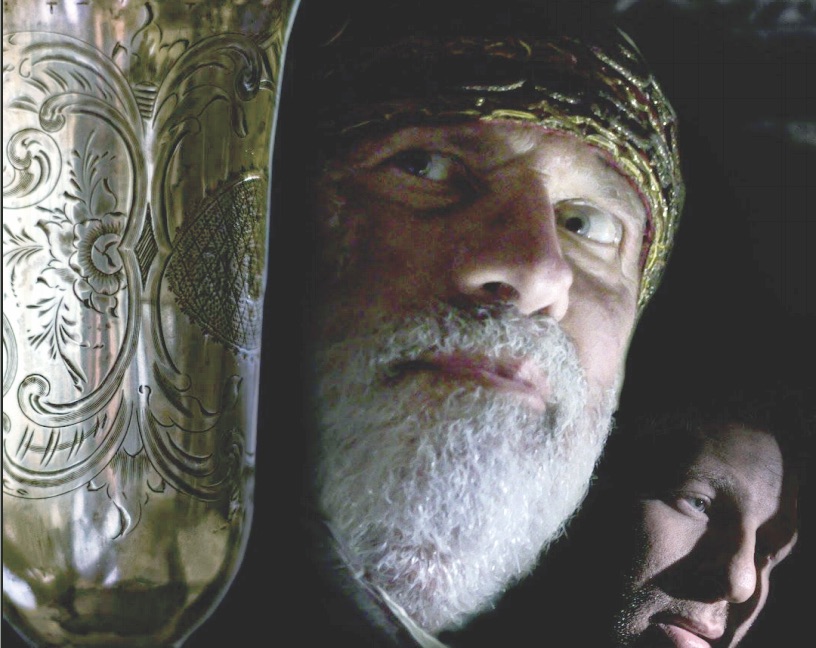
In the film, pirates find a stowaway on their ship and their captain discovers a curious connection to the prisoner, involving a Kiddush cup. The story is fictional, but elements of the eponymous pirate captain were inspired by Samuel Pallache, a Moroccan Jew referred to as the “Pirate Rabbi” in Edward Kritzler’s book “Jewish Pirates of the Caribbean,” perhaps the only book devoted to Jewish pirates. There were some known pirates of Sephardic (Spanish and Portuguese) Jewish origin who took to the seas after the Spanish Inquisition, Shorr said.
Because his previous Google searches for “Jewish pirates” yielded mostly anti-Semitic sources, Shorr said that “telling a story about Jewish pirates was my way of reclaiming the narrative from people who’ve been trying to use it against us.”
The Kiddush cup, the filmmaker said, is an authentic piece of antique Caribbean Judaica that belongs to lead actor Stephen DeCordova, who plays the pirate captain. The cup belonged to DeCordova’s maternal grandfather in Kingston, Jamaica. When DeCordova recites the Kiddush in the film, holding his grandfather’s cup, it was the first time he’d done so since his bar mitzvah, decades ago.
“Most people on the planet have never met a Jew, let alone a traditionally observant one.” — Arnon Z. Shorr
Shorr, who identifies as an Israeli-American, Modern Orthodox Jew and whose mother’s family came from Libya, said it was important to depict Inquisition-era Sephardic observance “as genuinely as I could.” For instance, the Kiddush melody used in the film was “certainly old enough that its origins are lost, and comes from a community whose ancestors shared their origin with Jewish pirates and merchants in the Caribbean, but is it as old as the Inquisition? Was it chanted by Jewish pirates on the high seas? There’s no way to know for sure.”
Realizing a period film shot on tall ships would be expensive, Shorr ran a campaign on the Jewish crowdfunding platform Jewcer and raised more than $18,000 to fund the film. The short was locally produced and shot on a replica ship owned by and located at the Ocean Institute in Dana Point.
Since its premiere at the Los Angeles Jewish Film Festival in May 2017, the film has been selected for or honored at almost 40 film festivals and competitions worldwide, the vast majority in cities with little or no significant Jewish population. In April, it will be at Jaipur Film World (Rajasthan State, India) and in Tangier, Morocco (Cap Spartel Film Festival) — the first screening in Africa and in a Muslim country.
“Most people on the planet have never met a Jew, let alone a traditionally observant one,” Shorr said. “If we are to counter their prejudices by sharing our stories and characters with them, we need our depictions to be genuine, accurate and true.”
Shorr, who grew up in an Ashkenazi world with Sephardic heritage, knows well that there are many kinds of Jewish stories.
“I was fortunate to experience a diversity of Judaism that many of my friends couldn’t fathom. While we concern ourselves with how we are seen by the world, I think it’s equally important for us to spend some time rediscovering each other. There is so much richness in the diversity of Judaism, but most of us don’t get a chance to experience it.”
For information about upcoming screenings, festivals and to purchase the DVD, visit facebook.com/jewishpirates.
I sit through most seders in a state of internal conflict, pinned between my desire to engage in a lengthy, substantive discussion and my simultaneous longing to eat. The longer the conversation, the more minutes pass before the brisket is served. The Jewish Women’s Theatre (JWT) serves up a solution — a Passover-themed art exhibition and theater piece stimulating enough to let you rush through the shallowest seder and still feel intellectually sated overall.
The performance, called “Crossing Our Red Sea,” and accompanying art show opened March 10 at The Braid in Santa Monica. The pairing kicked off with nine visual artists sitting on folding chairs onstage, talking about their work. Many had been inspired by a day of Passover study with Rabbi Ed Feinstein of Valley Beth Shalom synagogue.
Viewed in context of one another, the visual artworks present a nuanced meditation on liberation. Susan Landesmann’s “The Path” is an inkjet map of the Middle East covered with encaustic paint in green, blue, gold and red. Next to it hangs a large photograph by Nancy Kaye of a little blond girl in a red velvet dress, skirt lifted to reveal pink tennis shoes, as she prepares to leap over a sidewalk gap. The piece, called “Leap,” offers another take on the meaning of “path” and the leaps of faith we take to reach our destination.
To the left hangs a black-and-white photograph from the 1960s of artist Jan Berlfein Burns’ father exiting an elevator on a bicycle, dressed in a business suit and glasses. Called, “Why is our father different than all other fathers?” it reads as another version of freedom. Just as a little girl can leap with carefree spontaneity over a crack in the sidewalk, so can a grown man surpass societal mores, cycling to work at a time when bicycles were largely considered child’s play.
The visual artworks present a nuanced meditation on liberation.
Other artists in the exhibition include Eve Brandstein, Laurie Gross, Ellen Kimmel, Sonia Levitin, Peachy Levy, Laraine Mestman, Sandy Savett and Sara True.
For the theater piece, four actors perform works written by 13 authors. JWT artistic director Ronda Spinak adapted the works and JWT director Eve Brandstein directed. The four actors, dressed in black, sit on black stools before a beige wall for the staged reading, which hovers between the privacy of a book and the energy of live theater.
Some of the readings are funny, such as “A Blight to Remember.” Written by Shelly Goldstein and performed by Kate Zentall, it includes examples of the author’s family tradition of inventing contemporary plagues for Passover. Renee Moilanen’s “The Third Plague,” performed by Tiffany Maulem, is a humorous look at the hysteria accompanying that ancient and all-too-contemporary plague, head lice.
Actor Melanie Chartoff performs, among other pieces, her own story, “Indecent Sexposure,” about being caught on camera shopping at the Hustler store on Sunset Boulevard — a shopping excursion prescribed by her doctor. This experience freed her to worry less about what others think, and the telling included the stellar observation, “I’m in the adolescence of
old age.”
Other pieces were as serious as the plagues, like Esther Amini’s “Am-ree-kah,” an excerpt from a memoir-in-progress. Her parents, having fled religious persecution in Persia, find themselves turned away from a Manhattan synagogue as “not Jewish” because they don’t speak Yiddish. Determined to make it in America, they head uptown to another synagogue, where they are welcomed. The piece is a moving reminder of how many people don’t live with the freedom we take for granted.
The evening ends with the uplifting, soulful “Dayenu Remix,” written by Shawn Goodman and performed by Maulem and the ensemble (including AJ Meijer, a new JWT company member). Dayenu, the name of a thousand-year-old Passover song, means “It Would Have Been Enough.” Part of the “Remix” goes:
“If I could stay in bed wrapped in the morning’s sweet dream before jolting awake to check my nerve-wracking email, that would be enough.
“Dayenu!
“If I could get to the sink without taking inventory of my wrinkles in the magnifying mirror, that would be enough.
“Dayenu!
“If I could spend the best part of the day on meaningful goals and not mindless minutia, rather than the other way around, that would be enough.
“Dayenu!”
If you can get to “Crossing Our Red Sea” this year, that might be enough.
“Crossing Our Red Sea” runs through April 7 at The Braid in Santa Monica. The gallery show runs through April 30. For more information, visit jewishwomenstheatre.org.
Wendy Paris is a writer living in Los Angeles. She is the author of “Splitopia: Dispatches From Today’s Good Divorce and How to Part Well.”
Lior Ashkenazi, a three-time winner of an Ophir Award from the Israeli Academy of Film and Television, is a big star in Israel with films such as “Footnote,” “Walk on Water” and “Late Marriage” to his credit. Now, with three new films in or soon coming to theaters, the 48-year-old actor is receiving international acclaim as well.
His latest Ophir was for his performance in “Foxtrot,” as a father who receives the devastating news that his soldier son has been killed in action. Ashkenazi called the role “The most difficult thing I have ever done in my career.”
“Everybody in Israel knows someone who lost a member of his family, in a war or terror attacks. The grief, unfortunately, is surrounding us,” Ashkenazi said in an interview via Skype. “The most difficult thing for me [in the “Foxtrot” role] was trying to deliver the sorrow. I thought that maybe I could try do it physically. So, I didn’t sleep for two days before the first shooting day. And it worked. It was like vertigo. There was no time and space. Everything was almost in slow motion.”
He kept up the sleep deprivation on shooting days — sleeping only on weekends — and wore no makeup on set. “What you see in the first act of the movie is for real. Maybe I went too far,” he said.
Ashkenazi can also be seen portraying former Israeli Prime Minister Yitzhak Rabin in “7 Days in Entebbe,” a film about Israel’s mission to rescue hijacked plane hostages from a Ugandan airfield in 1976.
“I didn’t sleep for two days before the first shooting day. And it worked. It was like vertigo. There was no time and space. Everything was almost in slow motion.” — Lior Ashkenazi
For Ashkenazi, who played a fictional Israeli prime minister in “Norman” (2016) opposite Richard Gere, playing a national icon like Rabin was daunting.
“I couldn’t ignore the burden on my shoulders,” he said. “And I didn’t want to imitate him, as in a sketch. So, I tried to find nuances, like his smoking. He smoked three packs per day. And I talked to his staff and watched a lot of footage, including home videos. The [Rabin] family helped a lot.”
Ashkenazi’s newest release, “Shelter,” is an espionage thriller in which he plays an Israeli intelligence agent. The film’s director, Eran Riklis, gave him his first TV role more than 20 years ago. “He’s brilliant and made a wonderful adaptation of the story,” the actor said. “I couldn’t resist.”
Ashkenazi was born in Ramat Gan to parents who came from Istanbul, Turkey, in 1964 “and brought with them all the Sephardic traditions. My mother tongue is Ladino. I see myself first as an Israeli,” said the married father of two daughters. “I’m Jewish mainly when I’m abroad. We do celebrate the holidays — Rosh Hashanah, Yom Kippur, Passover — but not in a religious way, more like as a tradition of our people.”
Until a few years ago, Ashkenazi was primarily a stage actor, but he’s now concentrating on movies, and writing and directing for the theater, with the occasional TV project. He’s currently shooting the music drama series “The Conductor,” playing the title role. He’s next set to shoot “Esau,” based on the Meir Shalev novel, with Harvey Keitel; and “My Zoe,” written, directed and starring Julie Delpy, in the fall. And he has plans to direct a new play at Habima, the national theater of Israel.
For Ashkenazi, an increasing involvement in international projects “is more challenging for me, dealing with a foreign language and breaking my usual routine,” he said. But he’s ready for whatever the future has in store for him. “I’m always looking forward.”
“Foxtrot” and “7 Days in Entebbe” are in theaters now. “Shelter” opens April 6 at the Laemmle Town Center 5, Monica and Ahrya Fine Arts theaters; and April 7 at the Laemmle Playhouse 7.