For my daughter’s Bat Mitzvah, she needed to find a quote she liked. She didn’t hesitate and answered, “Something about kindness. How you can always be kind to people.”
I’ve been thinking a lot about kindness the last few days. I, of course, love that my child’s gravitation is toward living kindness as a way of life. But I have been wondering, is kindness more subjective than we realize? There are certain actions that are empirically unkind, yes. Acts of physical violence, harmful words, theft of property or theft of individual freedom. The notion of random acts of kindness too, these seem clear: putting money in a stranger’s parking meter, smiling more, opening a door for someone. What of the people in our intimate worlds, however. How do we practice kindness with those who we know well, does that change the qulity, and quantity, or our kindness? And what of the kind acts toward the imperfect beings that we call our Selves?
Furhtermore, is the flip side of kindness evil? Or is there something more subtle, more insiduous sometimes. Is it also something subjective and malleable? And the impetus to be kind, is it to make others feel good, or is it most often to avoid our own feelings of feeling pain? I want to explore these thoughts with you on our,
(drumroll please….)
UPCOMING RETREAT!
We have been trying to find a date for a good year now, and finally decided to stay in town and just do a simple day retreat in the sanctuary of our temple space. We will practice yoga, both Ashtanga and restorative, we will breathe a bit together, meditate together, maybe have some Indian inspired lunch, and a guest speaker. And throughout the day, we will ponder this theme of kindness.
I hope you will join me.
Our proposed date is SUNDAY MARCH 24, from 10 am-6 pm. Other details to follow, but do let me get a preliminary head count if you will be able and interested to join.
In the mean time, our practices this week continue: 2/7 9:15 am; 2/9 8:15 am
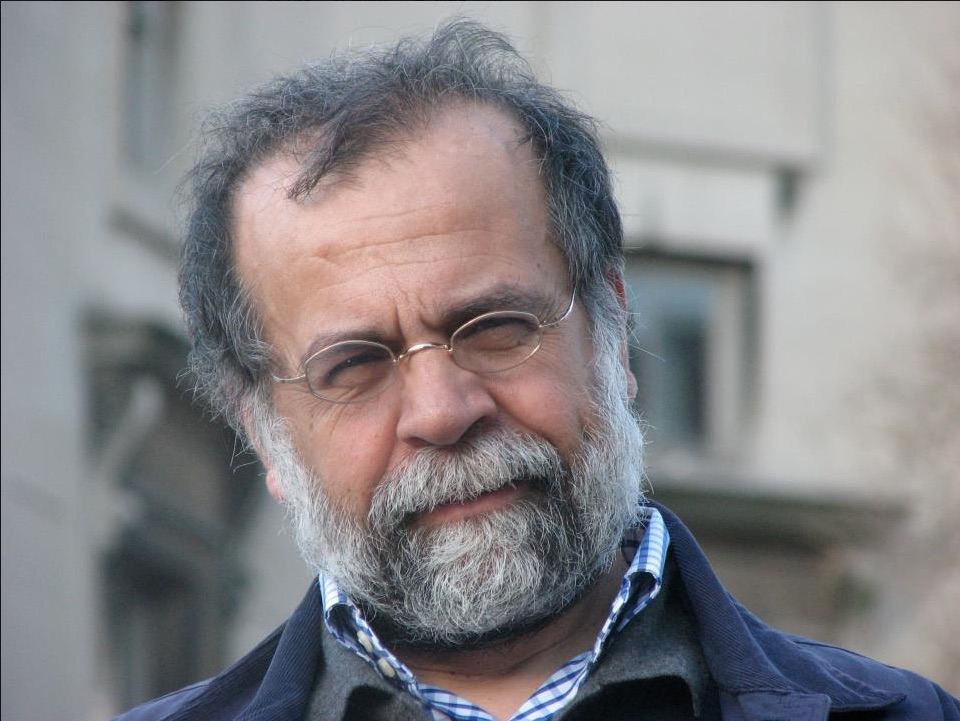
A professor at Columbia University railed against Zionists “infiltrating” the Women’s March on Facebook, going as far as referring to Zionists as “master thieves.”
Hamid Dabashi, who teaches Iranian Studies and Comparative Literature, was irked that actress Scarlett Johansson was a featured speaker at the Women’s March since she was once the spokeswoman for SodaStream, which was based in Israel.
“Scarlet Johansson is a violent Zionist deeply committed to the systemic theft of Palestine and the ethnic cleansing of Palestinians from their homeland— she appears on commercials selling Israeli products made on the stolen and occupied Palestinians lands — her appearance on Women’s March rallies deeply compromises the moral authority of the movement,” Dabashi wrote.
Dabashi called for members of the Women’s March to “denounce this pernicious infiltration and appropriation of the movement.”
“Zionists are master thieves— they steal Palestinian land and culture, they steal Jewish history and heritage, and they steal every progressive movement to twist it to their advantage— beware!” Dabashi concluded the post.
Dabashi continued his tirade against Johansson in the comments section, where he attacked her for being a “careerist Zionist” and promoting “a product made on stolen Palestinian land and with abused Palestinians labor.”
The Columbia professor has a history of vitriolic anti-Israel statements, including calling Israel supporters “Gestapo appratchniks” and that Israelis have “a vulgarity of character,” per Discover the Networks. Dabashi is also a Hamas apologist, having once referred to the terror organization as “the poor and impoverished representative of a poor and impoverished people” and disparaged those who criticized Hamas.
“The obscenity of first demonizing Hamas and then blaming it for the vicious war crimes that Israel is perpetrating against Palestinians has now passed any measure of common decency,” Dabashi said. “Hamas is the legitimate and democratically elected representative of Palestinian people – a grassroots organization deeply embedded in and integral to the Palestinian national liberation movement.”
Hamas had a major electoral victory in the 2006 Gaza elections; the following year they cemented an iron grip on the region after a violent conflict with Fatah. Elections haven’t been held in Gaza ever since.
“I learned very little in the course and he contradicted himself a lot, as if he were thinking out loud,” one former student wrote on the site. “People became more reluctant to ask questions because he always shut them down and tried to embarrass anyone asking something he did not like.”
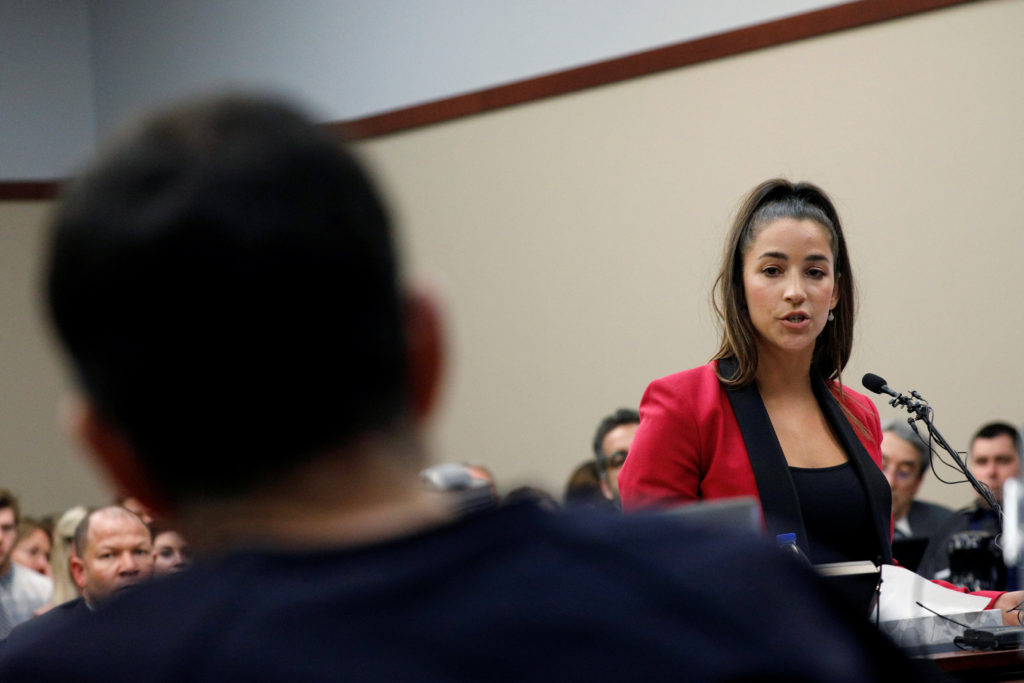
Jewish Olympic gold medalist Aly Raisman is claiming that John Geddert, who coached the Olympic team she was on, knew about team doctor Larry Nassar sexually abusing girls on the team in 2011.
Raisman told CNN’s Jake Tapper that one of her teammates explicitly explained how Nassar had abused her while they were in the car with Geddert, but Geddert was silent about it.
“I don’t know what he did or didn’t do from there,” Raisman said. “I know he didn’t ask us any questions, but that is just why we need the full, independent investigation to get to the bottom of who knew about this.”
Geddert has previously issued a statement denying that he knew about Nassar’s actions; he was suspended by USA Gymnastics as part of the fallout from the Nassar case. Geddert is also under investigation, but the details of the investigation are still unknown to the public.
“Mr. Geddert only wishes to convey his heart-felt sympathy to all victims of Larry Nassar’s abuse,” Geddert’s attorney Chris Bergstrom, said in a statement. “Any further comments will distract from the victims’ statements at Nassar’s sentencing.”
Nassar was recently sentenced to 40 to 175 years in prison after pleading guilty to sexual assault. Over 150 girls, including Raisman, have alleged that Nassar abused them by using his fingers to penetrate them in their genitalia and anus and also touched their breasts. The victims also claim that Nassar was “visibly sexually aroused” during such treatments.
Until he plead guilty, Nassar’s defense was that his actions were part of necessary medical treatment.
Nassar is already serving a 60 year prison sentence after pleading guilty to child pornography.
Nassar’s former employers – the USA Olympic Committee, USA Gymnastics and Michigan State University –have been accused of ignoring Nassar’s abuse and even pressured Nassar’s victims from speaking out.
“You shall not wrong a stranger or oppress him, for you were strangers in the land of Egypt. You shall not ill-treat any widow or orphan. If you do mistreat them, I will heed their outcry as soon as they cry out to Me, and My anger shall blaze forth and I will put you to the sword, and your own wives shall become widows and your children orphans.”
Rabbi Shmuly Yanklowitz Uri L’Tzedek: Orthodox Social Justice
There is perhaps no teaching more essential to Judaism than the ethical imperative to protect the rights and secure the needs of the stranger, the widow and the orphan. Throughout history, societies that called themselves civilized would marginalize these people, often ensuring a systemic lack of access to legal, financial and social protections. The vitality and everlasting relevance of the Jewish moral paradigm is that we refuse to overlook these individuals. Rather, we embrace them, seek them out and hold them close.
God instructs us that to be religious people, we must make the marginalized — rather than the elite — our priority. To be faithful is to orient our lives around the needs of the most vulnerable. While the stranger, widow and orphan are specified throughout Jewish holy texts, we can understand them conceptually as well as literally: these mitzvot apply to all who are marginalized, alienated, oppressed and suffering.
We often think of “observant Jews” as those who adhere to the most rituals. We ought to stop assessing observance with such stringency. Instead, we should think of those who are kind, morally reflective and working to alleviate the plight of others as “observant Jews,” for they uphold and preserve the most crucial axioms of Torah. When we talk about the abused, the poor and the sick, these populations aren’t often part of the broader community conversation. This has to change.
Rabbi Daniel Bouskila Sephardic Educational Center
Rabbi Jonathan Sacks teaches: “The great crimes of humanity have been committed against the stranger, the outsider, the one-not-like-us.”
As a Sephardic Jew who grew up in Ashkenazi day schools, I know what it’s like to be “the one-not-like-us.” My pronunciation of Hebrew was mocked, my parents’ customs were called “exotic” and I was continuously called a “Black Jew.” To this day, so-called “fellow Jews” comment on my “dark Sephardic look,” my “Arab” style of prayer, and my “colorful” customs. In certain segments of the Jewish community, I am often made to feel like “the Sephardic stranger,” that “different Jew.”
Wherever there is injustice or prejudice, Jews always take to the streets in protest. Whether it’s fair wages for employees, civil rights for minorities, immigration rights for newcomers or human rights for those seeking political asylum, Jews are always at the forefront of the struggle. I only wish we could apply that same passion for social justice, equality and inclusion toward those within our Jewish community who — because of ethnic background, skin color or sexual orientation — are often excluded and treated as “strangers and outsiders.” Justice, after all, begins at home.
In the words of Rabbi Sacks, “The best way of curing hostility to strangers is to remember that we, too — from someone else’s perspective — are strangers.” We’ve done a great job curing this hostility on a global level. It’s time we do so at home, in our own communities.
Rabbi Erez Sherman Sinai Temple
As a recently bereaved brother, I learned quickly that even a rabbi needs a rabbi in times of need. Over the past four months of reciting the Kaddish daily, I discovered that my rabbis are my congregants in the daily minyan. People who sit shivah, are in shloshim, are in a year of mourning, or observing a yahrzeit. We each recite the same words but we each have different stories to tell.
While Torah explicitly prohibits causing distress to an orphan and widow, Rashi includes in this prohibition all downtrodden individuals. Sefer Hachinuch teaches that the widow and orphan are championed because they have no one else to cry out to but God. Yet, those who are not suffering put their trust in other human beings, often removing the Divine presence in their lives.
The prophet Zechariah calls the Jews assirei tikvah, prisoners of hope. The Torah understands that at our most vulnerable we must be coddled, embraced and loved. For it is then that we may live out the prophetic vision. I am witness to this act of kindness each day. While no human being is exempt from one day walking through the valley of the shadow, we thankfully are also witness to the light of our tradition, commanding us to pave a path of comfort actively for those in need.
Rabbi Lisa Edwards Beth Chayim Chadashim
Among the most valuable lessons my beloved third-grade teacher taught me was not in the lesson plans. Whenever she saw any of her students tease or bully another, her nostrils would flare, and she would shout, “Stop and think! How would you feel?” She’d trained us well — the room would fall silent, the (mis)behavior would stop, we all thought about and felt what had happened, the “oppressor” would apologize to the “oppressed,” and we went back to work (or recess).
Despite Judaism’s insistence that we not anthropomorphize God, this passage from Exodus gives God a mouth, ears, a nose and the righteous indignation of my third-grade teacher.
The “I” in this passage is God; God is speaking and God hears: “I will heed their outcry as soon as they cry out to Me.” The nose of God is less apparent, but “My anger shall blaze forth” includes the Hebrew word api (aleph-pei-yod), which can also mean “my nostril” — God’s nostrils will flare in anger. Picture a fire-breathing dragon defending its treasure … or my third-grade teacher protecting her young charges.
God’s teaching starts tenderly, asking us to feel what another might feel, and thereby improve our behavior: “you were strangers/sojourners” (23:9 adds, “you know the soul of the sojourner …”). Yet within moments, even without witnessing an actual act of oppression, God’s fury is kindled, simply imagining what some men of privilege might be inclined to do to the vulnerable.
“Stop and think! How would you feel?”
Rabbi Sarah Barukh Cedars-Sinai Medical Center
These verses offer a straightforward theology in which God heeds the cry of the suffering and punishes those who cause pain.
In my work as a hospital chaplain, I encounter people who use this theology as a resource to make sense of their own suffering. They experience comfort in understanding God as an active player who responds to human actions and needs. The majority of my visits, however, are with patients or families who struggle with this idea, their faith fraying as they try to understand. Where is the God who hears the cry of the oppressed? Why do bad things happen to good people?
Our tradition has many answers to these eternal questions and Parashat Mishpatim presents one potential response. All wrestle with one of life’s most challenging spiritual tasks: the quest to find meaning in the shared human experience of pain and suffering.
I have found that jumping to provide a single answer to such big questions is rarely comforting — for me or others. In this case, the tradition certainly provides a variety of thoughts, but more importantly, it models a method of engagement. The multitude of voices highlights a willingness to explore, try on or even refute different responses to suffering and gives us room to do the same. Sharing in this process with someone can be healing in and of itself. For the one seeking to understand, it can offer opportunities for deeper understanding, spiritual growth and healing.
Join The Miracle Project and Nashuva for a special Shabbat service in honor of Jewish Disability Awareness and Inclusion Month. Individuals from The Miracle Project, a theater and expressive arts program for individuals with autism and developmental disabilities, will help co-lead Shabbat services at Nashuva, a spiritual community in Los Angeles. 6:30–9 p.m. Free. Brentwood Presbyterian Church, 12000 San Vicente Blvd., Los Angeles. nashuva.com.
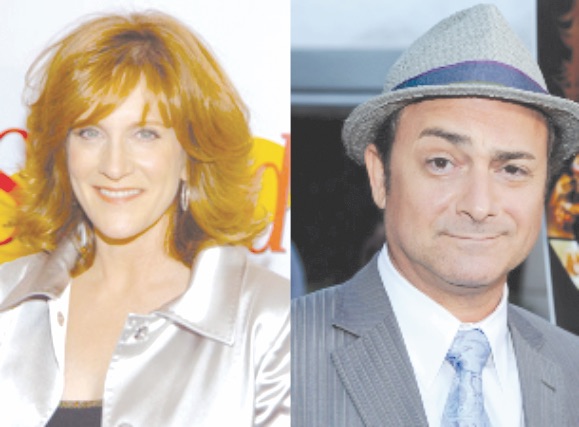
CAROL LEIFER AND KEVIN POLLAK
Carol Leifer (left) and Kevin Pollak (right).
Comedians Carol Leifer and Kevin Pollak will unsheathe their rapierlike wits at the Hollywood Improv for what promises to be an evening of irreverent laughs. Leifer is a four-time Emmy nominee for her writing on “Seinfeld,” “The Larry Sanders Show” and the Academy Awards. Pollak began doing stand-up in San Francisco at age 20 and eventually became a regular on “The Tonight Show With Johnny Carson.” Pollak has some serious acting chops, too, with dozens of films to his name, including “A Few Good Men,” The Usual Suspects” and “Casino.” Music provided by writer, actor and multi-instrumentalist Wayne Federman. 18 and older. 7:30 p.m. doors open; 8 p.m. show. $15. Hollywood Improv, 8162 Melrose Ave., Los Angeles. (323) 651-2583. hollywood.improv.com.
BOOK OF J
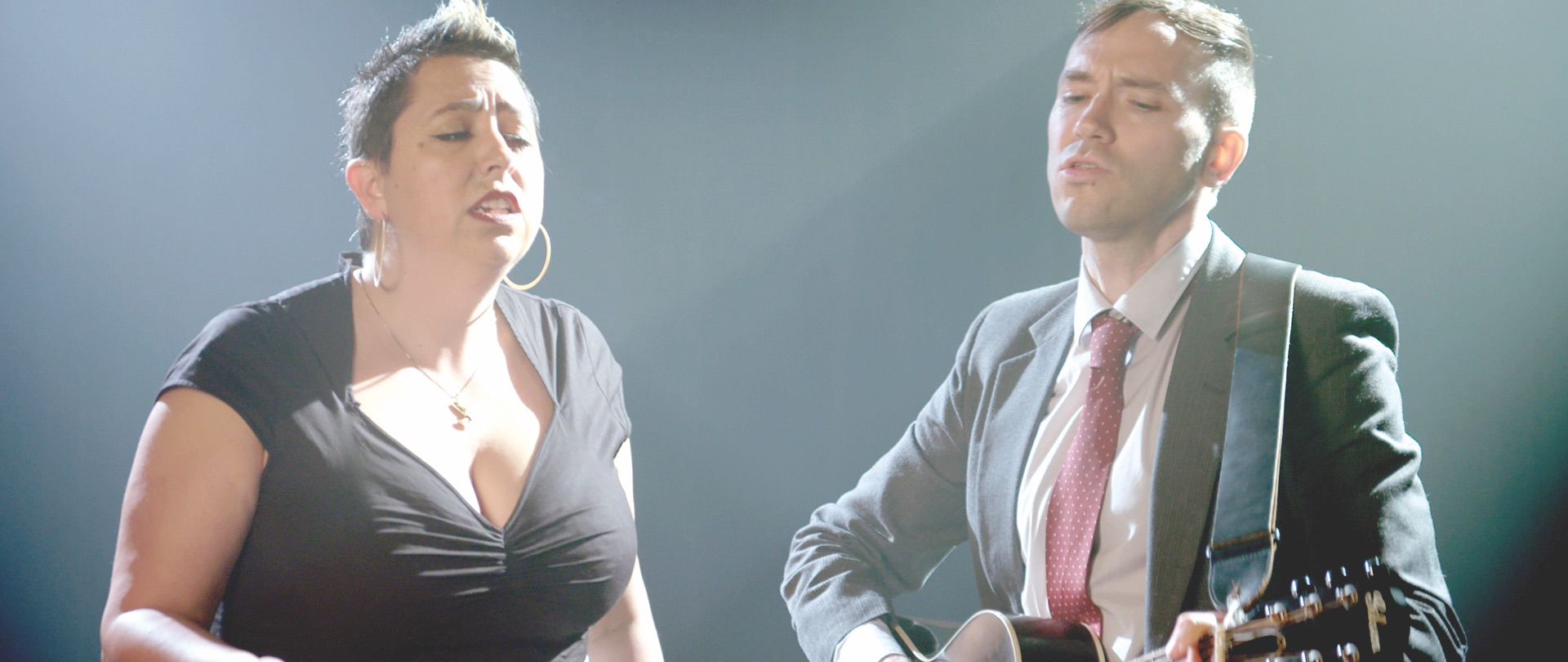
Jewlia Eisenberg and Jeremiah Lockwood
Book of J — acoustic guitarist-singer Jeremiah Lockwood of the Sway Machinery and vocalist Jewlia Eisenberg of Charming Hostess — perform the duo’s self-titled debut album. Their folk-revival vibe draws on Yiddish songs of ghosts and police violence, American spirituals and piyyutim (paraliturgical songs) with a queer bent. Expect old-time religion, radical politics, diasporic languages, hard times resolved and destiny fulfilled — plus guests singing along. The “affecting West Coast duo … covers an expansive musical landscape,” The New Yorker wrote of the pair. 9 p.m. $8 full-time students, $10 members, $15 general admission. Skirball Cultural Center, 2701 N. Sepulveda Blvd., Los Angeles. (310) 440-4500. skirball.org.
SAT FEB 10
KLEZMER AND BEYOND
Polish cantorial soloists Menachem Mirski and Avigail Geniusz perform klezmer and Yiddish music. On Saturday night, they appear at Beth Shir Shalom in Santa Monica. On Sunday night (Feb. 11), they perform at Congregation Beth Ohr in Studio City. Accompanying musicians include Yiddish folk singer and cantorial soloist Cindy Paley, clarinetist and accordionist Isaac Sadigursky, and clarinetist Zinovy Goro. Organized by Friends of Jewish Renewal in Poland. Proceeds benefit Progressive Jewish Life in Poland: Beit Polska. Saturday, 7:30 p.m. $18. Beth Shir Shalom, 1827 California Ave., Santa Monica. Sunday, 4 p.m. $18. Congregation Beth Ohr, 12355 Moorpark St., Studio City. (310) 286-9991. jewishrenewalinpoland.org.
’90s BAR MITZVAH DANCE PARTY — PART DEUX
East Side Jews, which calls itself “an irreverent, upstart nondenominational collective of Jews,” invites guests to enjoy all the magic of a 1990s-era bar mitzvah — without the adolescent awkwardness. What’s not to like? 8 p.m. $25. 21 and older. The Box in Silverlake, 1110 Bates Ave., Los Angeles. (323) 663-2255. sijcc.net/east-side-jews.
JEWISH SINGLES PARTY
Just in time for Valentine’s Day, a singles mixer organized by Persian-Jewish congregation Nessah features DJ Shaad E Shaad. Persian-style bread, cheese and wine served. Ages 35-55 welcome. ID required. 8:30 p.m. $20 presale, $30 door. Nessah Educational and Cultural Center, 142 S. Rexford Drive, Beverly Hills. (310) 273-2400. nessah.org.
SUN FEB 11
JEWISH WOMEN IN HOLLYWOOD: GAMECHANGERS
Celebrating women in Hollywood from Bette Midler to Gal Gadot, a Jewish Women’s Theatre performance and panel examine the evolving role of smart, talented, aggressive and influential women in Hollywood. The morning performance features actress Rena Strober depicting Hedy Lamarr, an Austrian-born actress whom Louis B. Mayer called the “the world’s most beautiful woman,” and who invented a radio guidance system for Allied torpedoes. The panel features four women working in Hollywood who discuss those who have broken the industry’s glass ceiling. 10 a.m.–noon. $20. The Braid, 2912 Colorado Ave., Suite 102, Santa Monica. (310) 315-1400. jewishwomenstheatre.org.
“COMING TO AMERICA”
Provoking tears and laughs, local writer and performer Stephanie Satie brings her topical one-woman show to Beth Chayim Chadashim (BCC). The show is about 10 women from different parts of the world whose lives have been transformed by their immigration to the United States. Satie shows how embracing life in America can be both liberating and daunting. A short Q-and-A follows. Beverages and Middle Eastern appetizers served. 2:30 p.m. doors, 3 p.m. show. $36 BCC members, $40 general, $50 VIP seating. Beth Chayim Chadashim, 6090 W. Pico Blvd., Los Angeles. (323) 931-7023. bcc-la.org.
THE JEWISH ARMY TO FIGHT HITLER
Author Rick Richman discusses his new book, “Racing Against History: The 1940 Campaign for a Jewish Army to Fight Hitler,” which presents the previously unknown story of how David Ben-Gurion, Zev Jabotinsky and Chaim Weizmann separately sought American support for a Jewish fight against Hitler. 4 p.m. $5. American Jewish University, 15600 Mulholland Drive, Los Angeles. (310) 440-1264. wcce.aju.edu.
“CASABLANCA” SCREENING AND DISCUSSION
Celebrated film historian Noah Isenberg discusses backstory secrets about one of the most beloved films of all time, “Casablanca,” including the central role that Jewish refugees from Hitler’s Europe played in its creation. He draws on extensive interviews with filmmakers, film critics and family members of the cast and crew. 4 p.m. Free. Wilshire Boulevard Temple, Irmas Campus, 11661 W. Olympic Blvd., Los Angeles. (213) 388-2401. wbtla.org.
“DRUNK IN LOVE”
The third annual “Drunk in Love” Valentine’s Day Jewish mixer and Midnight Mission fundraiser is an opportunity to meet a Valentine or a new friend, help the homeless and introduce yourself to professional matchmakers Jenny Apple Jacobs of Jenny Apple Matchmaking and Jessica Fass of Fass Pass to Love. Mingling, drinks and panoramic views from the 17th floor of the Angeleno Hotel highlight the evening. Bring items needed for donation to the Midnight Mission, including socks and hygiene products. A portion of the proceeds benefit Midnight Mission. All ages welcome. 6 p.m. $18. West Restaurant and Lounge, inside the Angeleno Hotel, 170 N. Church Lane, Los Angeles. eventbrite.com.
TUE FEB 13
“WHY STUDY JEWISH HISTORY?”
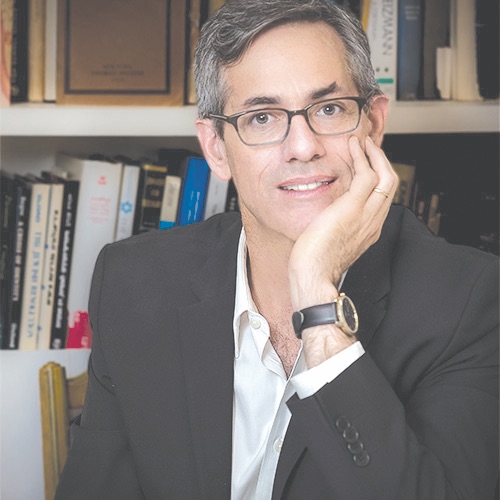
David N. Myers
David N. Myers discusses two of his recently published books. The first, “Jewish History: A Very Short Introduction” (Oxford University Press, 2017), offers a concise account of the entire course of Jewish history in 100 pages. The second, “The Stakes of History: On the Use and Abuse of Jewish History for Life” (Yale University Press, 2018), is an argument for the study of history, and especially Jewish history, as an anchor of memory and an indispensable ingredient for informed civic engagement. Myers is the incoming president and CEO of the Center for Jewish History in New York and is the Sady and Ludwig Kahn Professor of Jewish History at UCLA. Moderated by Todd Presner. Noon–1:30 p.m. UCLA Royce Hall, 10745 Dickson Court, Los Angeles. (310) 267-5327. cjs.ucla.edu.
“THE JEWISH COMMUNITY IN 2050”
Hebrew Union College–Jewish Institute of Religion professor Steven Windmueller explores the key factors that will shape American Jewish life for decades to come. 6:30 p.m. Free. Temple Beth Am, 1039 S. La Cienega Blvd., Los Angeles. (310) 652-2384. tbala.org.
“JUDAISM AND THE SELF”
A three-part lecture series examines the relationship between internal Jewish life and external ritual performance, how a religious system relates to the embodied nature of the human condition and how the American-Jewish experience has given rise to new possibilities for individual spirituality. The series kicks off with Shalom Hartman Institute of North America faculty member Steve Greenberg. It continues April 10 with Shaul Magid, a research fellow at the Shalom Hartman Institute. It concludes May 8 with Elana Stein Hain, director of leadership education at Hartman. Participants will learn in small groups and pairs. Includes wine and cheese receptions. 7:30–9:30 p.m. $15 per session. American Jewish University, Familian Campus, 15600 Mulholland Drive, Bel Air. (212) 268-0300. hartman.org.il.
THU FEB 15
“LAND OF MILK AND FUNNY”
Avi Liberman
Don’t miss the Los Angeles premiere of local funnyman Avi Liberman’s documentary about America’s stand-up comedians discovering Israel. For years, Liberman has been bringing comedians to Israel on comedy tours to support families who lost loved ones to terrorism. The new film focuses on one of those tours. Featured comics include Wayne Federman, Ralph Farris, Brian Regan and Craig Robinson. 6 p.m. VIP dinner and meet-and-greet with comedians, 7 p.m. film. $25 general, $100 VIP dinner reception and meet-and-greet with comedians. The Writers Guild Theatre, 135 S. Doheny Drive, Beverly Hills. (213) 254-3162; standwithus.com/milkandfunny.
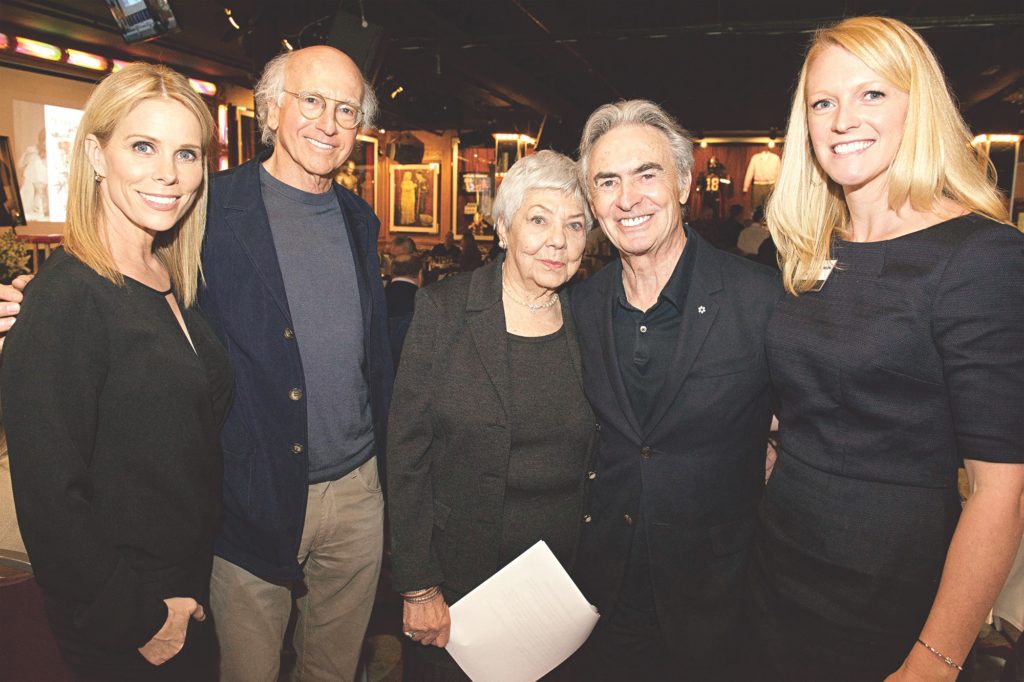
Comedy stars Larry David, Cheryl Hines, David Steinberg, Lewis Black and Fred Willard gathered on Jan. 30 at the Comedy & Magic Club in Hermosa Beach to celebrate the National Comedy Center’s acquisition of the archive of late comedian Shelley Berman.
Additional attendees included radio broadcaster Dr. Demento (Barret Eugene “Barry” Hansen), comedian Laraine Newman, producer Alan Zweibel and National Comedy Center Executive Director Journey Gunderson.
Sarah Berman, Shelley’s wife of more than 70 years, also attended. She expressed appreciation to the National Comedy Center for preserving her late husband’s legacy.
“No longer the stepchild to the arts, comedy and those who make us laugh are about to have their own place in the world,” Sarah Berman said. “When I found myself surrounded by all of Shelley’s writings, I wondered what to do with all of it. Do I give it to some museum where they let it gather dust before they throw it away? Along came the National Comedy Center, driven by people who have the vision to know that this material and the material of other comedians has a value.”
Shelley Berman died in 2017 at the age of 92. His archive, which spans from the 1940s to the 2010s, includes photographs, contracts, scripts and rare footage chronicling his career in stand-up comedy, improv, television, comedy writing, film and theater.
The National Comedy Center is a nonprofit cultural institution and visitor experience dedicated to the art of comedy. A ribbon-cutting for the center, which is located in Lucille Ball’s hometown of Jamestown, N.Y., is scheduled for Aug. 1-4.
From left: Angel and Susan, two Iranian-Jewish participants of the 30 Years After Legacy Project, attend the launch event for the initiative. 30 Years After requested their last names be omitted for their safety. Photo courtesy of 30 Years After
About 300 people gathered at the Fine Arts Theater in Beverly Hills on Jan. 30 to celebrate the launch of 30 Years After’s new initiative, the Legacy Project, an archive of video testimonies of Persian Jews who fled Iran after the Iranian Revolution.
The Legacy Project aims to professionally record and collect testimonies as a way to link the second, third and future generations of Iranian-American Jews to their history.
During the event, Legacy Project Chair Megan Nemandoust, Iranian American Jewish Federation President Susan Azizzadeh, American Jewish Committee Assistant Director of Interreligious and Intercommunity Affairs Saba Soomekh, 30 Years After President Sam Yebri and 30 Years After community member Liora Simozar shared their reasons for supporting the project.
“With an eye to the future, it is imperative that an easily accessible, professional digital archive exists, capturing the stories and experiences of my family, your family and countless others,” Nemandoust said in her speech at the event. “We are the heirs to Iranian-Jewish history, and through the Legacy Project we’re committed to preserving it for generations to come.”
The Legacy Project is supported by individual donors and families, and 30 Years After is seeking sustained funding from, and partnerships with, institutions and foundations as well as broader community support.
The project also is seeking additional testimonies.
“This project not only preserves these powerful stories and memories for posterity and academia but uses them to connect new generations of Jews of Iranian descent to their rich heritage, traditions and values,” Yebri said. “As we learn from Pirkei Avot (“Ethics of the Fathers”), no hurricane can uproot a tree with more roots than branches. It is imperative that our entire community join us in nurturing our roots in order for our community’s branches to flourish.”
The event began with a reception featuring nontraditional Iranian food, dessert and tea. The screening of the recently recorded interviews followed.
Since 30 Years After was founded in 2007, it has served to promote and engage Iranian-American Jews in American political, civic and Jewish life, as well as connect local community organizations with the large Los Angeles community of Persian Jews.
— Esther D. Kustanowitz, Contributing Writer
Cantor Jack Mendelson (far right) is joined by Temple Judea Rabbi Cantor Alison Wissot and Cantor Yonah Kliger in “The Cantors Couch,” Mendelson’s one-man show at Temple Judea in Tarzana. Photo courtesy of Temple Judea
Temple Judea in Tarzana held a journey through Cantor Jack Mendelson’s real-life stories based on growing up in 1950s Brooklyn in “The Cantor’s Couch,” which was staged at the synagogue on Jan. 21.
More than 400 people attended to listen to Mendelson paint a picture of a bygone day in Jewish America when Jews would flock to hear cantors at synagogues as if they were performing in a concert hall.
The one-man show wed a relatable story of childhood with joyous memories of music and celebration. Mendelson’s collaborator and accompanist, Cantor Jonathan Comisar, wrote original music for the production. Additional participants included Temple Judea Rabbi Cantor Alison Wissot and Cantor Yonah Kliger.
Proceeds benefited the music program at Temple Judea.
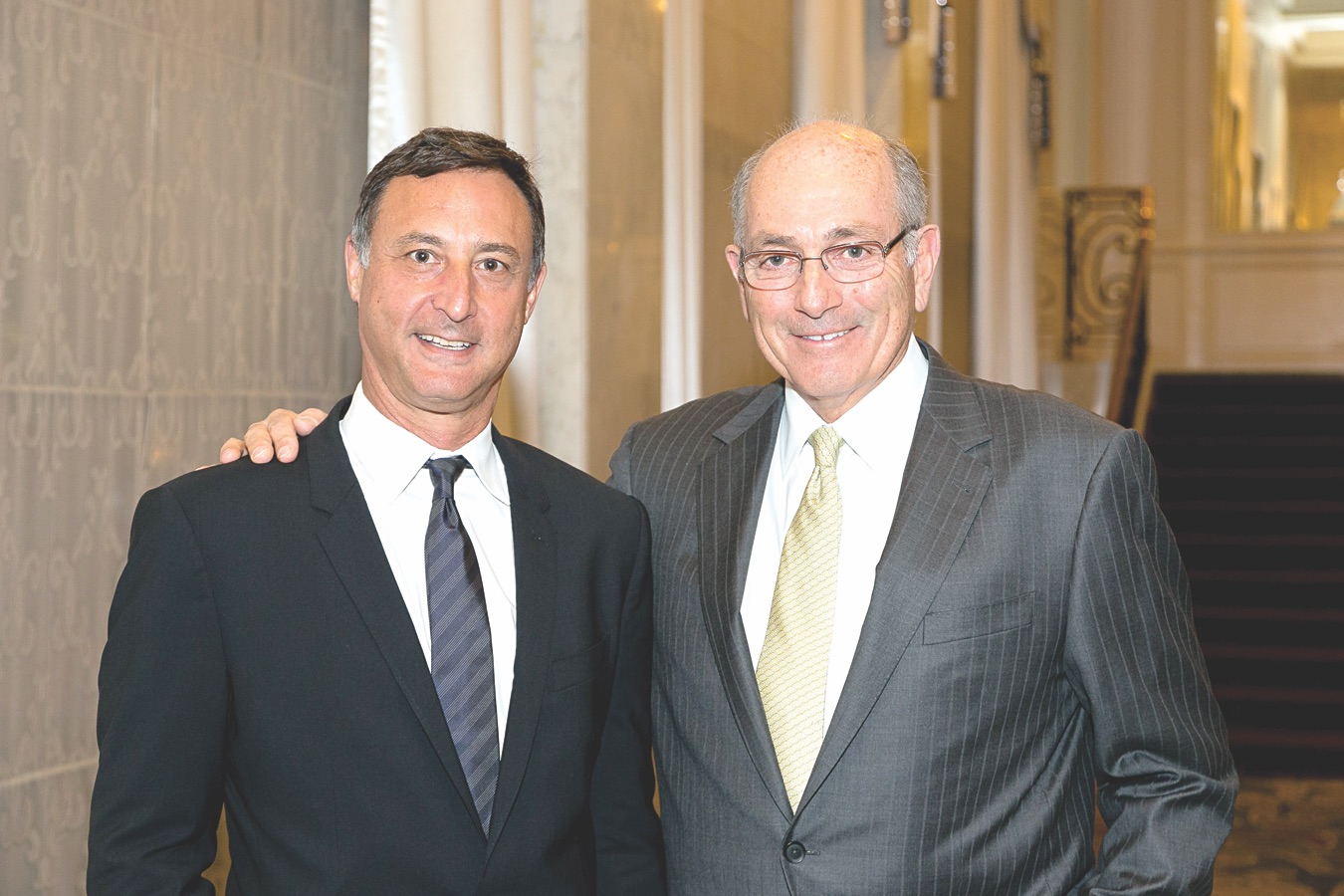
Los Angeles Jewish Home honorees Michael Heslov (left) and Dana Roberts. Photo courtesy of L.A. Jewish Home
The Los Angeles Jewish Home’s annual gala on Jan. 23, “Celebration of Life: Reflections 2018,” honored Michael Heslov, a member of the Jewish Home’s board of directors and co-partner at Soboroff Partners, and Dana Roberts, chief executive officer at C.W. Driver, a contracting company that has worked with the L.A. Jewish Home.
The event at The Beverly Wilshire Hotel kicked off with cocktails, followed by dinner and the awards program. Actor and director Mike Burstyn emceed. The Skye Michaels Orchestra performed.
Co-chairs were Lenore and Fred Kayne, Karl Kreutziger, Pam and Mark Rubin, and Steve Soboroff.
“This was a great opportunity for people from the Home and the community to come together and celebrate philanthropy and what they’ve accomplished,” said Kathy Gutstein, senior marketing associate for the L.A. Jewish Home. “We’re always looking toward the future.”
The L.A. Jewish Home is one of the leading senior health care systems in the U.S., serving 6,000 seniors a year.
Rabbi Naomi Levy presents her husband, former Jewish Journal Editor-in-Chief Rob Eshman, with the Americans for Peace Now (APN) Press for Peace award at the APN gala. Photo courtesy of Americans for Peace Now
Americans for Peace Now (APN) honored former Jewish Journal Editor-in-Chief Rob Eshman and Israeli music icon and peace activist David Broza during its Jan. 29 Vision of Peace Celebration at Paper or Plastik Café/Mimoda Studio.
On behalf of the organization, event co-chair Rabbi Naomi Levy presented Eshman, her husband, with the APN Press for Peace Award. Also presenting Eshman with the award was APN founder Mark Rosenblum, who hired and worked with Eshman at APN, Eshman’s first job in the Jewish world.
In his acceptance remarks, Eshman said he was “very honored to receive this award from the organization where I started my journey in the community, and I still believe what I learned three decades ago: Sometimes dissent is more important than unity, and we must never, ever, ever lose hope.”
APN President and CEO Debra DeLee presented Broza with the Cine-Peace Award.
Following the awards program, Broza treated the audience — veteran and newer supporters of APN, members of the board of directors, executive staff and friends, and family and fans of the honorees — to a short musical performance, closing with “Yihiye Tov” (Things Will Get
Better), a song written in 1977 that became the anthem for the Israeli
peace movement.
APN, the sister organization of Shalom Achshav, was established in 1981 to mobilize support for the Israeli peace movement. It has since advocated for positions that include the evacuation of Israeli settlements and the creation of a Palestinian state.
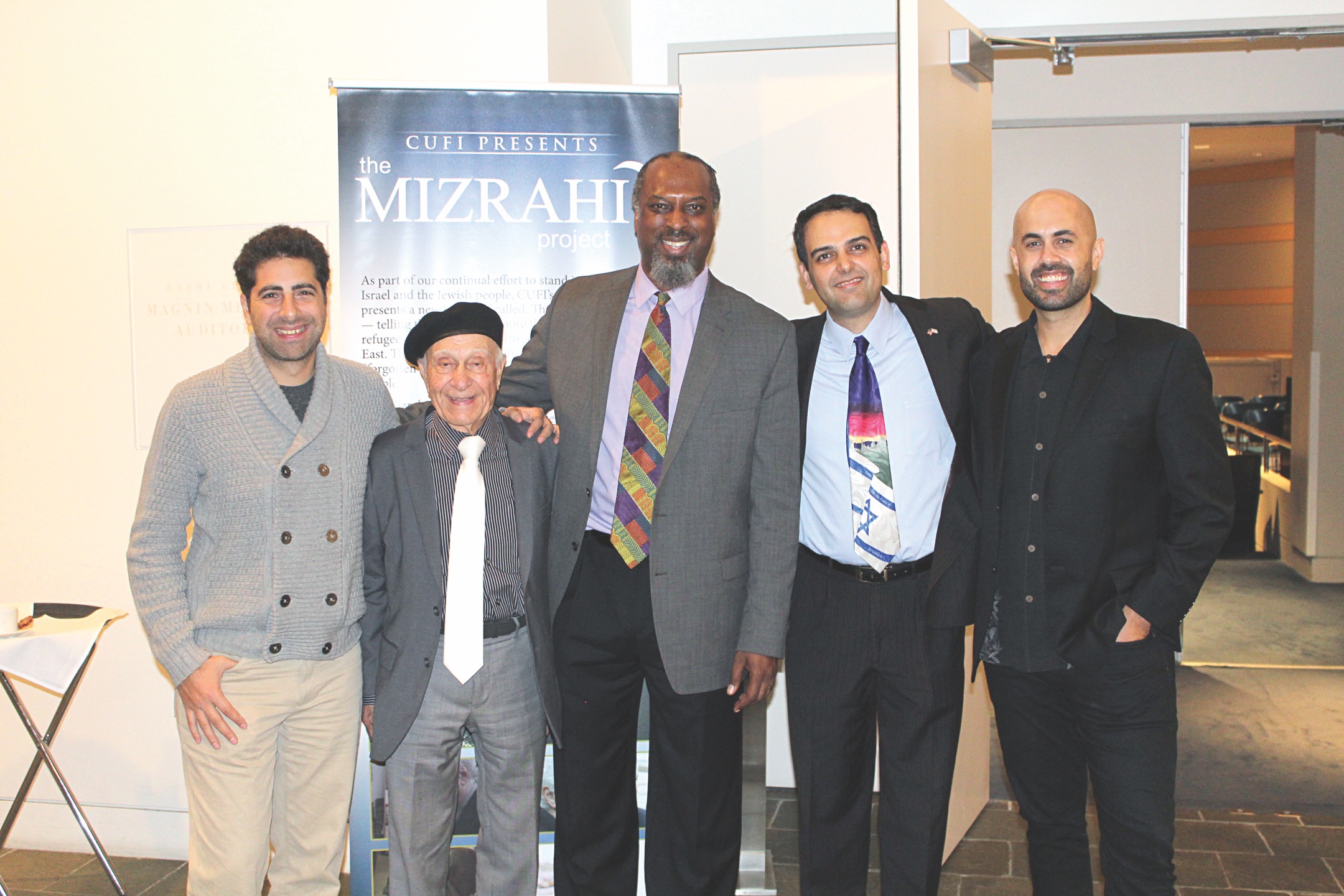
From left: Odin Ozdil, Los Angeles program coordinator at JIMENA; Iraqi-Jewish activist Joe Samuels; CUFI National Outreach Coordinator Dumisani Washington; Journal contributing writer Karmel Melamed; and Mizrahi Project filmmaker Raj Nair. Photo courtesy of Karmel Melamed
More than 50 local Jewish and Christian pro-Israel activists gathered at the Skirball Cultural Center in West Los Angeles on Dec. 3 for a viewing of the “Mizrahi Project,” a film hosted by the San Antonio-based Christians United For Israel (CUFI), a nonprofit pro-Israel organization, and the nonprofit Jews Indigenous to the Middle East and North Africa (JIMENA).
The documentary is a collection of short, personal accounts from nearly a dozen Jews from Arab countries and Iran explaining the persecutions they faced in their home countries and their miraculous stories of escape.
“For almost 70 years, the stories of the nearly 850,000 Jewish refugees who fled or were forced out of the homes in the Middle East and North Africa after 1948 have been forgotten,” said Dumisani Washington, national outreach coordinator for CUFI. “With this film, we are hoping to educate pro-Israel Christian activists and others about these refugees who went on to become nearly 50 percent of Israel’s population and helped grow Israel into the thriving country it has become today.”
CUFI launched the “Mizrahi Project” in July 2016, recording video interviews of Jews living in the United States and Israel who left Egypt, Iraq, Syria, Iran, Lebanon, Yemen, Tunisia, Algeria, Libya, Turkey and Morocco.
Washington said CUFI has shown the film to large groups in St. Louis, Chicago and San Francisco, and will continue to have screenings across the country. Likewise, CUFI staff members involved with the project said they will continue to record more interviews with Mizrahi Jews in the coming year to aid the project’s growth and to help their organization’s Israel advocacy efforts. Individual interviews from the film are available on YouTube and have garnered thousands of views to date.
After the film’s screening, a panel of Mizrahi refugees featured in the film spoke to attendees. The panelists included Joe Samuels, a local Iraqi Jewish activist, and Karmel Melamed, a Jewish Journal contributing writer and local Iranian-Jewish activist.
“We do not see ourselves as refugees or a victim because remaining a victim is a miserable way to live life,” Samuels said. “We picked ourselves up after fleeing the Arab lands and rebuilt our new lives in Israel and America — and, thank God, we’re very successful.”
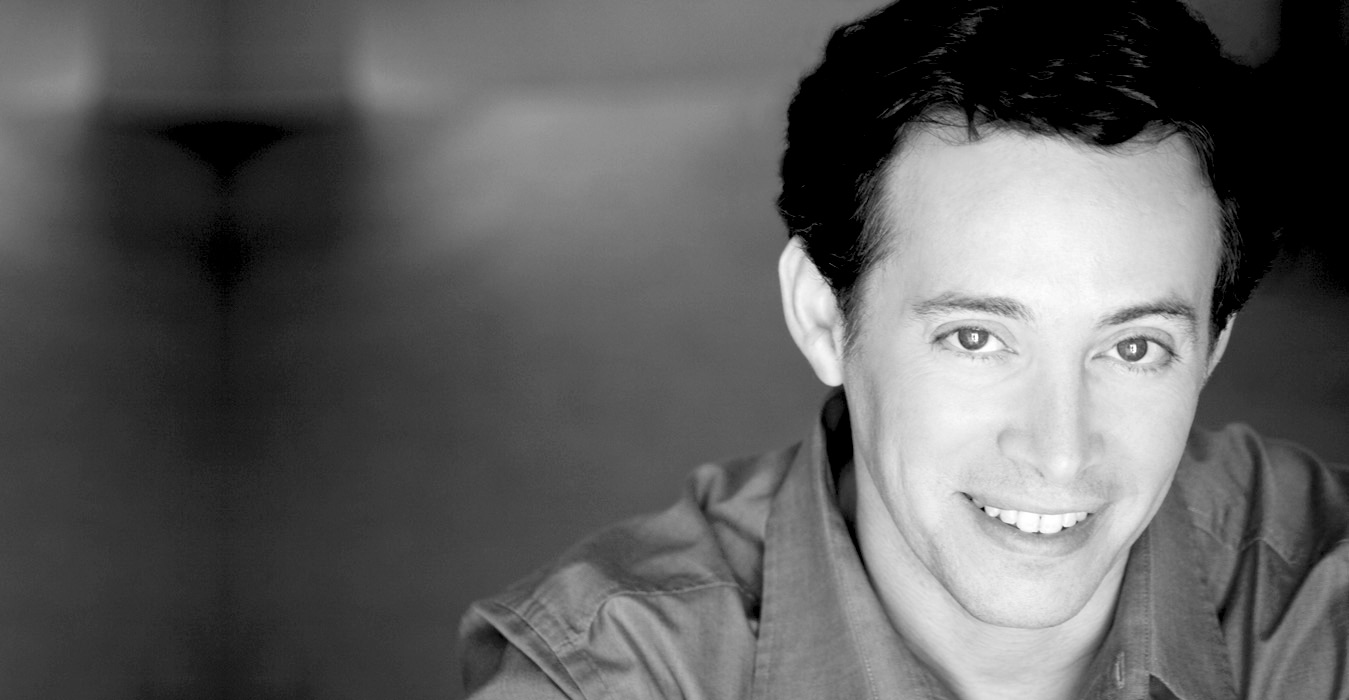
A new duo, Book of J, brings together gospel and bluegrass, klezmer and cantorial music for a unique twist on contemporary Jewish music. Guitarist and singer Jeremiah Lockwood and vocalist Jewlia Eisenberg combine their shared passion for Yiddish songs of love and protest, devotional piyyutim and traditional American folk music into an album that resonates emotionally and spiritually. They will bring the blues-inflected and history-inspired songs from their stunning self-titled debut album to the Skirball Cultural Center in Los Angeles on Feb. 9.
Lockwood is the frontman of the Sway Machinery, a horn-driven quintet that combines rhythmic Afrobeat music with cantoral chanting. Eisenberg leads the folk rock troupe Charming Hostess, an Oakland-based group that records conceptual albums that draw on revolutionary Jewish history and culture, as well as African-American gospel and protest music.
A good indication of Book of J’s political leanings is the stirring “Khavele,” a standout track on its self-titled debut album, released on Feb. 2 via 3rd Generation Recordings. It’s an adaptation of a radical Yiddish worker’s song about a Jewish woman who is killed by police violence during a strike. It ends with the lines, “Lovers, we have sworn a pact for life and death. We stand and cry as comrades, the red flags in hand.”
The band’s very Jewish name derives from Harold Bloom’s landmark 1990 book, “Book of J,” which argues that the biblical books of Genesis, Exodus and Numbers were written by a woman living in the court of King Solomon about 3,000 years ago.
Lockwood’s vocal styling is a direct influence of his father, composer Larry Lockwood, and his grandfather, prominent 20th-century Cantor Jacob Konigsberg.
“I sang in my grandfather’s choir. I grew up taking voice lessons with him,”Lockwood said. “I think in my family he was quite idolized. He was definitely a major inspiration for becoming a musician.”
He developed his distinctive fingerpicking style by studying under his friend and mentor, the late Carolina Slim. The Piedmont blues musician met Lockwood in the mid-1990s, and they performed in the New York subway for a dozen years.
Eisenberg shares Lockwood’s passion for Jewish liturgical traditions as well as old gospel songs. She was raised in an activist family, and her music career started at UC Berkeley’s Barrington Hall, a student housing co-op steeped in radical politics and protests. She founded Charming Hostess in order to explore her musical and literary interests, which range from Italian Jewish anti-fascist songs to Bosnian resistance poetry. “It’s ambitious but it’s not super abrasive,” Eisenberg said. “It’s something that people can listen to, but it can also be provocative and thoughtful.”
The two musicians share a passion for Jewish liturgical traditions as well as old gospel songs.
The two met when Eisenberg was working at a Jewish music pop-up shop in New York and Lockwood came in to perform.
“We realized we knew a lot of songs together. It was a canon of songs that I had grown up singing the social justice iteration, and he knew the religious iteration,” Eisenberg said.
They began to play songs together after Lockwood relocated from New York to Palo Alto, Calif., a few years ago. He is writing a doctoral dissertation at Stanford University on cantorial music in the Chasidic community.
Lockwood draws inspiration from some of these Chasidic musicians, such as Yaacov “Yanky” Lemmer, a world-renowned cantor and the chazzan at Lincoln Square Synagogue in New York.
“He’s a very soulful guy and brilliant performer. His voice is like a time machine. He’s a revivalist. He listens to old records from the ’20s and ’30s and re-creates the sound of them,” Lockwood said of Lemmer. “Stepping into the past allows him to inhabit the present moment as an artist.”
The same could be said of Book of J, with the duo’s fascination with long-lost Jewish liturgical and gospel tunes.
The most recognizable song from Book of J’s album is “The Partisan,” a ballad that Leonard Cohen popularized about the French Resistance in World War II. It became an anthem for the duo during the tumultuous 2016 presidential campaign.
For now, Book of J plans to remain a duo, as they continue to mine the rich musical heritage of their country and their religion.
Book of J performs at the Skirball Cultural Center on Feb. 9. For tickets, visit skirball.org.
This article published by the Forward breaks my heart. Why should Alyssa have to suffer the indignities of being excluded from Jewish life when she herself has a Jewish parent and identifies as a Jew?
The story of the Reform movement’s acceptance of patrilineal descent as a determiner of Jewish status that accompanies a public commitment to living a Jewish life is already 35 years old. We Reform Rabbis at our 1983 CCAR Conference in Los Angeles voted in a large majority to accept as Jewish any individual born of a Jewish parent (father or mother) as long as he/she identified with the experience of the Jewish people and led a Jewish life.
This wise and far-reaching decision has impacted a generation of children of families in which the Jewish parent is the father. The Forward article explains quickly the historical reasons for matrilineal descent as recorded in the Mishna, namely that a Jew is born of a Jewish mother and it is irrelevant what the religious identity is of the father. This is not a biblical law. Rather, it is rabbinic passed during Roman times when intermarriage or rape cause a pregnancy. Out of concern for the dignity of both the mother and the child in those years, the rabbis determined that the Jewish status of the child was according to the Jewish status of the mother. In the Hebrew Bible, the priesthood follows the father’s line and not the mother’s. So much the more so should Jewish status follow the line of either parent as long as the child is raised as a Jew and identifies publicly as a Jew.
The Patrilineal Descent resolution passed by the CCAR is operative for Jews living only in the United States. Those living in Israel, Canada, and elsewhere have not yet arrived at this logical and compassionate evolution of the tradition – I’m still waiting. In the meantime, they would need to go through a conversion to be fully accepted in those other countries as Jewish.
Though Alyssa decided that at some point she is going to convert for the sake of her future children not having to suffer the indignities that she has suffered, my heart breaks for her and anyone in her situation.
They should all know that the American Reform movement accepts them as Jewish right now, fully and completely. They are not “half-Jewish.” They are simply “Jewish.”
See – https://forward.com/life/faith/393654/theres-no-such-thing-as-half-jewish-its-simply-jewish/?utm_content=daily_Newsletter_MainList_Title_Position-1&utm_source=Sailthru&utm_medium=email&utm_campaign=Daily%20-%20M-Th%202018-02-08&utm_term=The%20Forward%20Today%20Monday-Friday
Being good stewards of the land and offering good will towards man represents genuine Jewish values. Perhaps this is one reason Israel recycles more than other countries around the world, including the United States. Now, there are a number of ways members of the Jewish community give back, and the following are some worth pointing out.
Give to the Poor
Members of the Jewish community, specifically practicing Jewish people, seem to be more generous than those who do not practice the religion. The obvious way these people donate is through their religious organizations, but that has changed in today’s modern age. People also donate to their favorite charities online and some use apps to do this. This is probably happening more because most people, not only members of Jewish communities, hold their revenue digitally rather than in cash.
The group that donations seem to be directed at the most is poor. This should show Americans that there are a lot of values worth adopting that are safely tucked within Jewish communities. It is hard to see the good in other communities, especially during today’s racially toxic environment, but this should show just how much beauty is left to be shared across cultures or religions.
Recycling is Holy Duty
Active Jews or family members raised by individuals who believe the commandments set by holy texts know that it is their duty to protect the earth. This could be one reason many Jewish people consider themselves environmentalists. Some of these individuals would probably point to Tikkum Olam to prove that protecting the earth is their duty. Tikkum Olam says it is the duty of humanity to fix the world.
It should be noted that the Bal Tash’chit commandment also exists and tells individuals that the willful destruction of the world is not allowed. This is one reason why many members of the Jewish community are doing their best to help people recycle. Some have taken up the idea of composting at home while others go online to sell laptop so that gadgets continue to be reused in a productive way. Others are getting rid of their old cars by either donating the vehicle or by simply calling a junkyard to ensure it is taken care of properly.
Community Growth
There does not seem to be a shortage of goodwill towards humanity and towards each other within Jewish communities around the country. There is one trend that is definitely worth pointing out, and it is the efforts some Jewish neighborhoods are taking to jumpstart community gardens. These have proven successful in several communities, and the trend is set to continue growing.
A positive thing about these community gardens is that most of the food grown is organic. The organic trend is pretty big, not just within the Jewish community but within American culture, so this move should not surprise many. It is probably not surprising that some of these communities have decided to donate some of their surplus food to the poor, which makes sense. No one is saying this particular move is going to save people from starvation, but it is nice to see that some communities are doing the right thing.
These are just some ways Jewish communities across the country are shining brighter than ever. This type of shine is sorely needed, and hopefully, it is bright enough to attract people who do not know how to embrace their humanity by giving forward. There are probably a number of other ways to help humanity just waiting to be discovered by individuals.