fbpx

October 1, 2017

Alan Dershowitz says UC Berkley talk back on after law school invite

Harvard Law School professor Alan Dershowitz said he will speak at the University of California, Berkeley in two weeks thanks to invitation from the university’s law school that allows him to bypass a campus rule requiring eight weeks notice for such a speech.

Dershowitz said in a phone interview Friday that he will speak at the law school on Oct. 10 following an invitation from Berkeley Law Dean Erwin Chemerinsky, and that he is still seeking a department to host him so he can also give a speech elsewhere on campus.

The Harvard professor had said  Thursday that he was being blocked from speaking about Israel at UC Berkeley because organizers of his visit did not give campus police the required eight-week notice for the event — a requirement that only applies to non-departmental applicants.

“I will definitely be at Berkeley. I will speak at the law school,” he said. “I want to make sure I will speak as well” to a larger university audience.

Dershowitz said the sponsors of his visit, the Chabad Jewish Student Center and the pro-Israel student club Tikvah, had been turned down by several departments as a sponsor of his talk, and that he was trying to find out if any of those departments had sponsored “anti-Israel speakers” in the past.

“If they have, that presents a serious constitutional question for Berkeley,” Dershowitz said. “If a department has a policy of never sponsoring a speaker, that would be one thing. But if there’s content discrimination, that would be illegal under the First Amendment.”

Dershowitz’s lecture is tentatively titled “The Liberal Case for Israel.”

Rabbi Gil Yosef Leeds, the Chabad director, said Thursday that an initially approved 500-seat classroom was pulled because of the advance notice requirement.

The school’s “Major Events Hosted by Non-Departmental Users” interim policy statement announced on Aug. 14 states that a request form must be submitted to campus police “at least eight weeks prior to the event” for audiences of more than 200 people.

UC Berkeley spokesman Dan Mogulof said the policy applies only to non-departmental applicants, adding that Chabad and Tikvah can still hold an event with Dershowitz on Oct. 10 if they limit their audience.

“If they wish to host Mr. Dershowitz … we have offered the students a number of venues that can accommodate an audience of 199 people,” Mogulof said yesterday in an email. “If, however, having a larger audience is more important to the hosting student organization than holding the event on the date they initially proposed, we would be happy to work with them to reschedule the event for a day at least eight weeks from now so that we can maintain compliance with policy.”

Dershowitz, an emeritus professor of law at Harvard, wrote “The Case for Israel” in 2003 and often addresses the issue on college campuses, including an event earlier this week at Columbia University in New York.

UC Berkeley recently has been a battleground over free speech rights. Several right-wing speakers, including former Breitbart News editor-at-large Ben Shapiro, have visited amid accusations that the campus was shutting out right-leaning speakers.

Conservative provocateur Milo Yiannopoulos made a 15-minute appearance on the steps of UC Berkeley’s Sproul Hall on September 24, costing the university an estimated $800,000 to provide security. He came after student organizers canceled a “Free Speech Week” that was to include Steve Bannon, President Trump’s former adviser and conservative author Ann Coulter.

“I’m not looking to have a debate about free speech at Berkeley. I want to have a serious discussion about Israel,” Dershowitz said. “I hope they can do it at considerably less cost than the provocative speakers.

“I’m not in the category of Yiannopoulos or Ann Coulter. I’m there as a professor of 50 years to give a serious talk.”

Alan Dershowitz says UC Berkley talk back on after law school invite Read More »

Now is the time to rebuild people to people relations between Iran and Israel

Last month Israeli Prime Minister Benjamin Netanyahu went before the United Nations General Assembly and addressed the people in Iran directly saying in Farsi language “we are your friends”. This direct statement to the Iranian people along with a video message earlier this year to the people of Iran by Netanyahu in my opinion have been long overdue by Israeli officials! For the last 38 years the Iranian regime and its propaganda machine have sadly and successfully brainwashed the Iranian population on a daily basis into to believing Israel and America are their greatest enemies. While many of us in the free world know that this claim is pure nonsense, the wide majority of Iranians in Iran who are under the age of 35 do not know the extent of the great progress and friendship Iran shared with Israel from the late 1950s until 1979. With the Iranian regime today on a ridiculous war path with Israel, the time to promote people to people ties between Israelis and Iranians in long overdue.

Most average people in Iran today and even Iranians living in the West have little to no knowledge of the great economic, medical, infrastructure, educational, agricultural, academic and even military ties Iran and Israel shared from the late 1950s until 1979. The radical Shiite Islamic regime of Iran has tried to sweep under the rug the tremendously positive relationship Israel shared with Iran, which in my personal opinion was incredibly beneficial to both countries. Instead the ayatollahs running Iran with an iron fist for nearly 40 years have portrayed Israel and Israelis as a “boogie-man” or scapegoat for all of their internal problems. “Death to Israel” and “Death to America” are the chants they teach children and adults alike in Iran, but many of these same folks have no clue of the significant assistance Israel provided Iran in so many sectors during the mid-20th century.

While the collaboration and close cooperation between Israelis and Iranians are well chronicled in countless history books, yet perhaps the best source of this information is the memoirs of Meir Ezri, the first unofficial Israeli ambassador to Iran. Prior to his 2015 death, Ezri, an Iranian-Israeli, published his memoirs entitled “The Legacy of Cyrus: My Iranian Mission” in both Hebrew and Farsi languages. The book has subsequently been translated to English for scholars and I had the good fortune of obtaining a copy a few years ago. Ezri was an Iranian born Jew who immigrated to Israel during the early 1950s and was later tapped by then Israeli Prime Minister David Ben Gurion to travel to Iran in an effort to foster positive relations between the two nations.
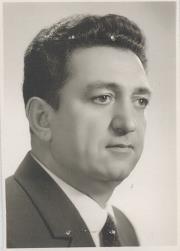
(Israel’s first unofficial ambassador to Iran, the late Meir Ezri)

Ezri’s book in my humble opinion is quite frankly a treasure-trove of details outlining the various areas of close cooperation between the two countries even though they only had de-facto relations. The following are just some of the sectors of which Ezri outlines close Israeli-Iranian ties:

Strong Economic Trade

Israel being an emerging hi-tech hub in the 1960s and 1970s, had multi-million dollars’ worth of economic trade with Iran when purchasing machinery, electrical and electronic goods, textiles, agricultural equipment, chemicals and construction equipment. Iran under the late-Shah was undergoing an internal infrastructure boom that was seeking to modernize the oil-rich country into a modern first-world country. Therefore, the Iranian government under the Shah turned to Israel, a local non-Arab and advanced western-style country to supply them with many of their goods needed to re-build and develop their nation. Likewise, Israel sold the Iranian government under the Shah weapons and defense systems because Iran, like Israel had a mutual enemy– the Arab countries of the Middle East. Of course the economic trade between Israel and Iran was not one-sided, the Iranian government of the Shah sold Israel millions of barrels of crude oil during a time when the Arab states refused to sell oil to Israel. Of course Iran’s Jews at that time who were business-savvy merchants were also at the forefront and key bridges to the growing economic trade between Israel and Iran.

Academic Ties

In his memoirs Ezri outlines the array of academic ties between Israeli and Iranian universities in the fields of literature, history, geology, medicine, water irrigation and engineering. And yes you even had Israeli scholars like the late professor Amnon Netzer travel extensively throughout parts of Iran to study the roots of the ancient Judeo-Persian language and the ancient Persian languages prior to the Arab/Islamic invasions of Iran.

Agricultural Cooperation

Israel from its inception due to necessity has been at the forefront of agricultural advancements and as a result offered its expertise to countless Iranian state-owned and private-owned farms. Ezri in his book lists the various agricultural classes Israel provided Iranian farmers and trainees in Israel for six week time periods. Israeli agri-experts provided courses to Iranians on irrigation, agri-management, cultivation of cotton, rearing of poultry, management of dairy farms and the use of chemical fertilizers for improvement of crop yields. The popular Israeli Mashav program sent countless Israeli experts to provide Israel’s famous drip-irrigation technology to farms across Iran and to recommended Iranian farmers grow cotton and sugar-beets in certain Iranian provinces to increase their crop yield. The Israeli agricultural programs and technologies were so successful, the Iranian farms were able to grow enough crop for sale in Iran and even enough for sale to other countries in the region!

Water & Sewage Systems

According to Ezri’s book, many of the water and sewer systems in such major Iranian cities as Isfahan and Bandar Abbas were created and installed by Israeli private-owned companies and government-owned companies such as “TAHAL”.  When entire regions of Iran like Hamadan and Kermanshah needed household and irrigation water systems it was Israeli companies who won the contracts for installation of such systems. Believe it or not these systems are still functioning today in Iran. Interestingly enough, the Iranian regime today with its severed ties with Israel, does manage to buy parts to maintain many of these systems through European companies that purchase them from Israel. Likewise “Mekorot”, the Israeli national water utility, was asked to drill for fresh water throughout Iran and to run a large project on the Iranian part of the Caspian Sea. Additionally during the 1970s the Israeli company “IDE” installed 36 small desalination units on Iranian Air Force facilities and 19 others throughout Iran.

Medical Care

Israel from day one and until today has been a leading nation in medical treatments and technologies. During the 1960s and 1970s thousands of Iranians of various faiths traveled to Israel for medical care when doctors in Iran were unable to help them. In his book Ezri outlines eye illnesses and gynecological infertility as the two primary areas which motivated thousands of average Iranians to visit Israel for treatment. Israel had not only successfully treated thousands of Iranians with these medical problems and other ailments, but travel and treatment to Israel from Iran was substantially less costly for Iranians. Countless, Israeli doctors and researchers frequently visited Iran as well to teach their new techniques and medical treatments to Iranian physicians because often times Israeli hospitals could not accommodate the huge influx of Iranians seeking medical treatment in Israel during that time. Interestingly, in his book Ezri even highlights one instance in which Iran’s chief rabbi Yedidiah Shofet came to him and asked for Israel ‘s  help in treating the all-important Ayatollah Malek Al-Motekalemin. With approval of Israeli officials, the ayatollah at that time was permitted to travel to Hadassah Hospital in Israel and successfully received treatment for his serious illness!

Emergency Israeli Aid for Iran in Times of Crisis

In April 1960, the Iranian city of Lar was struck with a horrific 6.1 earthquake killing nearly 500 Iranians. In May 1962 northern part of the city of Tehran encountered severe flooding. And in September 1962 the Iranian province of Qazvin was devastated by a 7.1 earthquake that killed more than 12,000 Iranians. In all three of these instances, Israel sent immediate emergency aid and assistance to help search for survivors and treat those injured. In all three instances, Israel never sought publicity nor any funds for offering to help the needy and devastated Iranians. Israelis and Israel’s government during these instances believed in the Jewish tradition of “Tikkun Olam” or trying to health the world.  Today we never hear about this important support Israel provided Iran during these times of natural disasters but the history books cannot ignore them.

One must not also forget the close ties Israel and the Shah’s government shared with regards to military, security and intelligence cooperation for more than 20 years. One may or may not believe that the military cooperation between the two nations was the most “ethical” or “morally correct” during that time. However, I will not engage in this argument right now because I’d prefer to look at the big picture as far as how both the nations of Iran and Israel benefited from their various ties from 1958 to 1979. The Jewish respect and affinity for the ancient Persian king “Cyrus the Great” has never been forgotten. His act of freeing the Jews from Babylonian captivity and permitting them to rebuild their holy temple in Jerusalem is something that has been transcribed for all time in the bible. This respect for Cyrus has endured even till today. In the end, the great results of the close Iranian-Israeli relations prior to the 1979 Islamic revolution in Iran are perhaps the best examples of what can come about in a future where Iran is no longer ruled by radical Islamic thugs hell-bent on Israel’s destruction, but rather by a democratically elected government seeking the best for the people of Iran in the future.

Ultimately the biggest losers in the severing of ties between Iran and Israel in my opinion were the people of Iran. Today with Israel’s cutting edge technology, medicine and advancements in so many different fields, the people of Iran should have enjoyed the great things Israel could offer their society. Instead the Iranian regime has poured billions of petro-dollars into terrorist groups seeking Israel’s destruction and maintained an insane nonsensical campaign of hatred and genocide against Israel for no reason but their radical Islamic ideology.

In 2012 Israeli peace activists took to social media sites like Facebook to post positive messages of peace to the people of Iran. A few years ago, the popular Israeli-Iranian singer “Rita” also outreached to Iranians in Iran with a message of love by releasing an all Farsi language record that has spread through out Iran in boot-leg C.D.s. These are incredibly positive first steps. However in my opinion, until there is regime change in Iran, more Israelis and Israeli officials should do more to foster warm ties with the average people of Iran and perhaps reminding them of past years of friendship may be a good start.


Now is the time to rebuild people to people relations between Iran and Israel Read More »

Sunday Reads: The effects of the Kurdish referendum, The Jew who saved Monticello, Is Hamas tired of governing?

US

John Kerry tries to explain how the Iran deal is working:

Some ask why our agreement didn’t stop Iran’s destabilizing behavior, including its support of Hezbollah and the brutal Assad regime in Syria. It’s a good question with good answers: We were not going to bargain away certainty on the nuclear issue for anything else; as France said, there would be no “quid pro quo.” … The world was united on one issue alone — Iran’s nuclear capability. We could not have achieved unity or held the sanctions regime together if we added other issues. But we believed it would be easier to deal with other differences with Tehran if we weren’t simultaneously confronting a nuclear regime.

Ken Burns and Lynn Novick discuss how the American presidency has never fully recovered from Vietnam:

On april 30, 1975, when the last helicopter lifted off the roof of the U.S. Embassy in Saigon, the Vietnam War, the most consequential event in American history since World War II, ended in failure. More than 58,000 Americans and as many as 3 million Vietnamese had died in the conflict. America’s illusions of invincibility had been shattered, its moral confidence shaken. The war undermined the country’s faith in its most respected institutions, particularly the military and the presidency. The military eventually recovered. The presidency never has.

Israel

Ben Dror Yemini thinks that increased separation between Israel and the Palestinians (with Israeli control over the West Bank) is currently the only way to go:

But one thing is clear: The more we mix hostile populations, like outpost residents and Hamas supporters, the higher the level of violence is going to be. Whoever wants more terrorism should approve more outposts next to more and more villages. Separation doesn’t eliminate terrorism, it only reduces its level. But there is no partner today for separating through an agreement. And even if Prime Minister Benjamin Netanyahu offers the Clinton Parameters to Palestinian President Mahmoud Abbas tomorrow morning—and it’s a shame he isn’t doing so—we already know Abbas will say no.

Mazal Mualem explains why the IDF chief commuted the Hebron shooter’s sentence:

In an era in which politicians on the right have abandoned all restraints when reacting to important legal institutions such as the Supreme Court, the Azaria affair afforded the chief of staff, the army and its judges with an opportunity to show the moral superiority of the system. They walked away from the military, public and political uproar with their heads held high. The military advocate general proved that the army is stronger than that and that it has a spine.

Middle East

Avi Issacharoff reports on how Hamas seems to be sick of running Gaza:

The willingness to dismantle the management committee unconditionally, and to hand over the keys to Hamdallah’s government where civilian matters are concerned, is tantamount to an open public admission of failure.

Hamas tried in every way possible for a decade to hold on to its control of Gaza, but now is showing clear signs of willingness to step aside, at least in the civic sphere.

Michael Knights explains what the Kurdish referendum results mean for US interests in the Middle East:

If the KRG [Kurdistan Regional Government] is subjected to a de facto economic blockade, the negative impact on U.S. interests could be severe. The campaign against IS would suffer, including the ongoing Hawija operation, which aims to reduce the group’s largest and most dangerous pocket in northern Iraq. Coalition artillery, intelligence, and logistical efforts based in the KRG could be halted if the Kurds react badly to the blockade. Unless the potential losses in oil and customs revenue were rapidly replaced by Baghdad, they would bankrupt the KRG within weeks or months, resulting in instability, protests, and factional fighting. The Peshmerga units that hold long stretches of frontline against IS would immediately lose their pay, and many would be compelled to leave in order to support their families.

Jewish World

Gil Troy tells the story of how America’s first Jewish commodore saved Monticello:

It’s fashionable today to reduce Monticello to a white monument celebrating white hypocrisy, a place haunted by slaves, and now by the humiliated Jew Uriah P. Levy. But that’s not how Levy saw himself. He defied anti-Semitism but wouldn’t be defined by it. He would insist that we acknowledge the horrors, stand up for justice, not whitewash the past—but also acknowledge his hero Thomas Jefferson’s legacy in helping America flourish democratically. Finger-pointing history, and either-or partisanship are too easy. In our flawed but ever-improving democracy, we should remember the bad, acknowledge the good and demand the best in the future. 

Devorah Baum believes that everyone in America is somewhat Jewish these days:

While modernity promised Jews and other minorities that they could move from the margins to the center, it’s the reverse that may have actually occurred. In the era of radical globalization and the internet, it doesn’t matter who you are — even if you’re male, white, straight, middle-class — you’re probably feeling that your group or identity has been, if not existentially threatened, then at the very least marginalized. These days we’re all mobile and unsettled, even if we stay put. We’re all hyper-connected but insecure. So you’re liable now to be somewhat Jewish even if you do live in Butte, Mont.


Sunday Reads: The effects of the Kurdish referendum, The Jew who saved Monticello, Is Hamas tired of governing? Read More »

Sleep Hacks: How to Sleep Better Every Night

No doubt about it, sleep is extremely important for mental and physical health. It helps the human body recover, ensures the healthy functioning of the brain, reduces the risks of heart disease, obesity, and high blood pressure while protecting the overall emotional well-being. By being well rested, you are capable of handling everyday tasks, your cognitive performance is optimal, and your hormones stay in balance.

Being sleep deprived can be extremely damaging to your health, no matter if it’s due to the bad quality of sleep or the complete lack of it. While curing insomnia may require expert’s opinion, there are simple hacks that can help you sleep better every night.

Establish a Sleeping Routine


According to the Journal of Clinical Sleep Medicine, adults should sleep a minimum of 7 hours for healthy functioning. But more often than not, sleeping this much seems like mission impossible. One of the most effective techniques for better sleep at night is syncing with your body’s natural sleep-wake cycle, i.e. its circadian rhythm. If you’ve gotten used to staying up late and you’re still forcing your body to get up early so you can get to work – no wonder you constantly feel tired. You need to “reprogram” your body and establish a healthy sleeping routine.

Commit to going to bed at the same time every night to build an internal clock for your body. You should wake up naturally, without an alarm clock, but be patient as forming this habit can take some time. In addition, try to avoid sleeping in on weekends. It might feel great to sleep longer, but you’re actually not doing yourself a favor. Big differences in the amounts of sleep you get on working days and on weekends can only disrupt your routine.

Mind Your Sleeping Position


If you can’t seem to get enough shut-eye, your sleeping position might be the one to blame. Even if you feel comfortable, the position of your body might be causing you health problems – from innocent ones such as temporary back sores to more serious conditions like insomnia or even sleep apnea. For example, lying on your stomach might feel comfy, but it can leave you with lower back and neck pain. If you sleep in the “soldier position”, i.e. flat on your back with your arms on the side – you might begin to snore or experience issues with the carotid artery.

Fetal and log positions are advisable. They both imply lying on the side, with spine resting in its natural alignment. Want an effective recipe for good night’s sleep? Choose the best mattress for side sleepers: according to a study conducted by the Duke University and the Research Triangle International from 2011, the choice of your mattress can have a huge impact on the quality of sleep.

Treat Your Body Right


Be mindful about the amount of caffeine you consume. This also includes limiting the cups of green tea you take, as this beverage contains L-theanine with similar weakening effects on the body. Smoking is another stimulant you should avoid before going to bed, as well as alcohol and heavy metals, specifically spicy or acidic types of food, refined carbs, and sugars.

An exercising regime can help you get great shut-eye, studies have shown. It is a great stress reliever, it tires you out, and puts your mind and body in balance, giving you a feeling of inner peace. With a busy schedule typical for the fast-paced 21st century, a daily minimum of 20 minutes of physical activity is mandatory for your well-being. Other popular methods of destressing include meditation and breathing exercises, as well as disconnecting for a while and finding time to be alone. We are all used to endlessly scrolling through our phones before sleep, but scientists of the Harvard Medical School warn that screen light suppresses the hormone called melatonin, which is responsible for inducing sleep.

Not all of these tips will work for the first time. But be consistent and learn to prioritize sleep: everything else depends on it.


Sleep Hacks: How to Sleep Better Every Night Read More »