fbpx

September 12, 2017

20 Orthodox Rabbis Call on the Orthodox Community to Prioritize DACA these 6 months!

President Donald Trump decided to end the Deferred Action to Childhood Arrivals program, and to ask Congress to legislatively address the status of DACA recipients. There are 800,000 young people — children and teens who had arrived in the U.S. ten or more years ago at age of 16 or younger — to whom DACA had granted the chance to legally study or work here. If Congress fails to restore the terms of DACA, it is also possible—even likely—that no action will be taken on this matter. As a result, a vast number of young people may face deportation, even though they have lived most of their lives in the United States. They are students, workers, dreamers who have hoped for better lives as constructive members of American society. Every society must have rule of law, and the US must have – and enforce – its immigration laws. At the same time, every good society practices compassion, which is what prevents the enforcement of the law from becoming an exercise in cruelty.

The ending of DACA has been strongly criticized by many groups and individuals, representing a broad spectrum of American society. Jewish groups have been quite vocal in advocating on behalf of the young immigrants. Concern for these vulnerable individuals is a moral imperative.

The Torah can help us gain clarity on our moral responsibility here.

“Do not afflict or oppress the stranger, for you were strangers in the land of Egypt.” (Exodus 22:20)

“Do not oppress the stranger, for you know the soul of the stranger, for you were strangers in the land of Egypt.” (Exodus 23:9)

“When a stranger lives with you in your land, do not afflict him. As one of your citizens, the stranger who lives with you shall be to you, and you shall love him as yourself, for you were strangers in the land of Egypt, I am the Lord your God.”  ( Lev. 19:33-34)

These and other verses in the Torah underscore our responsibility to not only be sympathetic to, but to identify with, those who are “strangers.” The Talmud (Bava Metsia 59b) posits that oppressing a stranger violates 36—and some say 46—Torah prohibitions.

The Torah obviously is teaching us to be compassionate and charitable. But in delineating the obligation to care for the stranger, it uses surprising language. The Torah could have said: have mercy on the oppressed, because you were oppressed in Egypt; or have compassion on slaves because you were slaves in Egypt.  But it does not say these things. Rather, it invokes our experience in Egypt as an impetus for us to identify with and help the stranger.

Who is a stranger? In the biblical times, this was a non-Israelite who lived among Israelites. (In later rabbinic thought, the stranger was identified as a proselyte.) In our days, it applies to a person of different nationality—an immigrant.

What is the nature of being a stranger?  The stranger is an “outsider,” someone not of our kin or clan, someone from another culture or religion, someone who is not “one of us.” We might naturally feel responsibility for our own group: but why should we be concerned with strangers?

The Torah—remarkably—commands us to love the stranger as ourselves.  The Torah justifies this commandment: “for you know the soul of the stranger.”  Because of our early experience as strangers in Egypt, we know first-hand what it means to be considered an alien. We not only suffered physical abuse as slaves in Egypt; we suffered psychological abuse. We were considered as lesser human beings; we were thought to be unworthy of basic human rights. We know deep in our own soul what it’s like to be a stranger; we are uniquely qualified to understand “the soul of the stranger.”

This lesson from antiquity has had ongoing meaning for Jews throughout our history. During the modern era, there have been dramatic demographic changes in the world. Most of the Jews today are living in countries different from those in which our ancestors of 150 years ago were living. Indeed, a huge percentage of Jews are themselves immigrants, children or grandchildren of immigrants.  We know the “soul of the stranger” because our families have been strangers. They have migrated to new lands to escape persecution or to find a better life for themselves and their children. They have made aliyah to Israel in fulfillment of Zionist dreams. They have had to learn new languages, adapt to new cultures. Our immigrant forebears often came to new lands with little money…but with great hope. They had to face physical hardships; and they had to cope with psychological sufferings.

Because we have been immigrants, we “know the soul” of immigrants. We have an inherent understanding of the challenges they face. We recognize the importance of helping them adapt to their new lands and to enable them to overcome the psychological stigma of being outsiders.

If the Torah needed to issue 36 commandments about caring for strangers, it means that we have a strong tendency not to be concerned for them. Indeed, there are many voices in contemporary society that take a dim view toward receiving immigrants. After all, these “outsiders” may be criminals or terrorists. They will cost us a lot of money in order to provide them social, educational and health services. They may take away jobs from native-born citizens. They can change the nature of our society if they come in excessively large numbers.

The Talmud (Sanhedrin 109a) suggests that the wicked city of Sodom was characterized by a policy that excluded immigrants. The Sodomites reasoned: why should we share our blessings with outsiders? Why should we make sacrifices for foreigners? It was this attitude that resulted in God’s punishment of Sodom for its iniquity.

As a rule, people do not become immigrants unless there are compelling reasons for them to leave their own lands. They are fleeing wars, violence, or terrorism. They are fleeing from oppressive governments. They are escaping desperate poverty. They seek a better life for themselves and their families.  Our instinctive response must be to lend a helping hand. We “know the soul of strangers” because we and our forebears were strangers.
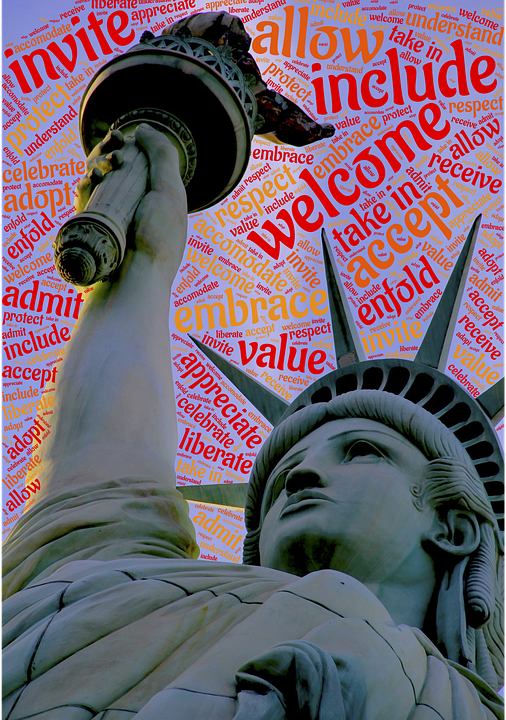
Rabbi Yitzhak Shemuel Reggio, a 19th century Italian Torah commentator, commented on the verse in Leviticus (19:18) commanding us to love our neighbor as ourselves. He pointed out that the verse should be understood to be saying: love your neighbor, because your neighbor is like yourself. Your neighbor is also created in the image of God.

The same comment applies to the commandment to love the stranger as ourselves. All human beings have a unique kinship. Instead of seeing others as “outsiders,” we need to see them as sharing a universal humanity based on all of us having been created by the Almighty.

The Torah knows that it is difficult to achieve this high level of understanding. That’s why it has underscored the obligation to care for the stranger 36 times. But it also knows that we are capable of achieving this level of understanding. And when we do, we not only fulfill God’s commandments; we fulfill our own humanity.

Each of us should be vocal about the rights of immigrants and advocate for the Dreamers. These upcoming 6 months bring a unique Jewish imperative to actualize a particular mandate. These actions will help define who we are as Jews today.

Rabbi Dr. Marc Angel

Rabbi Daniel Bouskila

Rabbi Dr. Nathan Lopes Cardozo

Rabbi Menashe East

Rabbi Yehoshua Engelman

Rabbi Dr. Mel Gottlieb

Rabbi Steve Greenberg

Rabbi Dr. Yitz Greenberg

Rabbi Tyson Herberger

Rabbi Brad Hirschfield

Rabbi David Kalb

Rabbi Yosef Kanefsky

Rabbi Fred Klein

Rabbi Dr. Eugene Korn

Rabbi Gabriel N. Kretzmer Seed

Rabbi Daniel Landes

Rabbi Asher Lopatin

Rosh Keilah Dina Najman

Rabbi Devin Villarreal

Rabbi Dr. Shmuly Yanklowitz

20 Orthodox Rabbis Call on the Orthodox Community to Prioritize DACA these 6 months! Read More »

Is Eric Trump’s wife Lara Jewish?

Is Lara Trump, the pregnant wife of Eric Trump, Jewish?

The answer, it turns out, is no.

Though media outlets (including JTA) widely reported that she is Jewish, she is in fact not a Jew, a White House Press Office representative confirmed to JTA on Tuesday. The representative declined to give her name.

Following a Monday announcement by the couple that they were expecting a baby boy, it seems Jewish media outlets went into a bit of a baby frenzy.

The false impression that Lara Trump (nee Yunaska), a former personal trainer and producer for CBS’s “Inside Edition,” is Jewish seems to trace back to a 2014 Page Six article in the New York Post that said the couple wed under “a crystal-embellished chuppa” (with Jewish brother-in-law Jared Kushner officiating). It’s not clear whether the canopy was, in fact, inspired by Jewish custom, but following the publication of that article, Jewish media outlets (along with some anti-Semitic ones) referred to her as Jewish.

Ethnicelebs.com, a website that traces the ancestry of celebrities, debunked the claim in July — reporting Lara instead to be of Slovak, English, German, remote Swiss-German and Dutch heritage — but that didn’t put the rumor to rest.

At JTA, we should have checked before running with the unsubstantiated information.

Lara and Eric’s baby will still be surrounded by plenty of Jewish influences. He will have three Jewish cousins: the children of Trump’s daughter Ivanka, a convert to Orthodox Judaism, and her husband, Jared. Plus, another Trump daughter, Tiffany, is dating Ross Mechanic, who is Jewish.

Is Eric Trump’s wife Lara Jewish? Read More »

Love story meets thriller over Englander’s ‘Dinner’

Nathan Englander — who was raised and educated in an Orthodox community on Long Island, spent five years in Israel and now lives in Brooklyn — is one of America’s leading Jewish writers. His remarkable collection of short stories, “What We Talk About When We Talk About Anne Frank,” was nominated for the Pulitzer Prize, and both of his other previous books (“The Ministry of Special Cases,” a novel, and “For the Relief of Unbearable Urges,” a short story collection) also were deeply informed by Englander’s yiddisher kop — his Jewish head.

With his latest novel, “Dinner at the Center of the Earth” (Knopf), Englander is still contemplating a Jewish cast of characters on a Jewish landscape. But the new book is an espionage thriller, which means that we must now compare Englander to Graham Greene as well as Philip Roth. And he comes off well in the comparison. His new book is a page-turner with all of the moral insight and depth of emotion that characterizes what Englander has called his “thinky” books.

[Nathan Englander Q&A: A novel’s view of Israel-Palestine conflict]

The mystery focuses on a man who is known as Prisoner Z, an American Jew who is being held in solitary confinement by Israeli authorities at a “black site” in the Negev. (The character’s name and circumstances allude to the real-life case of a Mossad agent in Israeli confinement who was called Prisoner X.) As Englander invites us ever deeper into the mystery, we learn that Prisoner Z was serving as an Israeli intelligence agent in Paris when he came under suspicion of treason by his own comrades-in-arms after a delicate mission goes horribly wrong and he tries to fix it.

Prisoner Z is no James Bond. Rather, he is anxious and fretful, tortured with regret and self-doubt, and especially now that he has been “viciously awoken to the consequences of what he’d done, for Israel, for Palestine, and, most urgently, for himself.”  He is afraid to touch a newspaper left behind on a café table for fear that it has been swabbed with a deadly poison by his comrades in the Mossad. “[H]e knew how his pursuers worked because he worked for them,” Englander explains. “It was chaos theory and game theory and psy-ops and all the best intelligence and counterintelligence whisked up together.”

“Dinner at the Center of the Earth” consists of two parallel narratives in counterpoint to each other. One is the backstory of Prisoner Z, who starts out as a spy and ends up as a prisoner because, as he tells the Italian waitress who becomes his lover, “I got myself into a bind trying to fix the world.” His scruples do not impress her: “This is why I never dated Jewish men,” she complains. “You all seem very cute for a day or two, and then end up being crazy.” When he extracts a passport and “three fat stacks of bills” from a hiding place in his apartment, the waitress is impressed: “Now you seem less crazy,” she says, “and more like a dangerous spy.” In the finest tradition of the spy novel, nothing turns out to be quite what it seems.

The other story takes place in the hospital room where “the General” — who is plainly Ariel Sharon — lingers on life support. “[T]he great general lies there on his bed, waxed and rouged like a Red Delicious, looking like a fat Lenin on display,” Englander writes. “Their dear departed murderous leader, whose family will not let him die.” While the comatose patient dreams of the victories and defeats, the joys and heartbreaks of his storied life, the conversations between the young man who guards Prisoner Z and his mother, who nurses the General, are the occasion for a running debate about whether the General had been good or bad for the Jews.

“He was going to make peace,” says the nurse, whose name is Ruthi. “Peace was the bomb the General was going to drop.”

“You really believe that?” asks her son.

“If he ever finds his way back, he’ll end up looking more lefty than you,” Ruthi says.

The two stories are delicately and ironically interwoven. “Over the years, on the nights he cannot sleep, which are legion, Prisoner Z has not only greatly improved his penmanship in both Hebrew and English, but has become adept at composing without any light,” Englander writes. “He is busy writing a letter to the General, his pen pal. In the morning he will give it to the guard, to give to his mother, to give to the General, who never writes back.” As the reader will discover, the fate of these two characters is linked in even more dire and fateful ways.

Since Englander set out to write a thriller, he delivers all of the twists and turns, the shocks and surprises, that we are entitled to expect in that genre. But he does not disappoint the readers of his earlier work who know him for his exquisite sensibilities and the sheer power of his literary prose. For that reason, “Dinner at the Center of the Earth” will only expand his reach and enrich his already considerable reputation.

Other New Books

Here are some authors with new books who will be visiting Los Angeles this season:

• Stephen Greenblatt is a Pulitzer Prize-winning Harvard scholar whose work has famously focused on Shakespeare (“Will in the World”). In his latest book, “The Rise and Fall of Adam and Eve” (Norton), Greenblatt assumes that the first two human beings whom we meet in the Bible are fictional characters, like Romeo and Juliet, although he readily concedes that the mythic figures we find in the Bible have shaped not only the culture and politics but also the history and destiny of our world.

As part of the ALOUD program of the Library Foundation of Los Angeles, Greenblatt will discuss his new book with his fellow scholar and Pulitzer recipient Jack Miles (“God: A Biography”), an encounter that promises to be a theological battle of titans. The event takes place at 7:30 p.m. Oct. 5 at the Los Angeles Central Library, 630 W. Fifth St. lfla.org.

• If you think back to Lou Grant, the memorable character that Ed Asner played on “The Mary Tyler Moore Show,” the irascible news director with a heart of gold is entirely consistent with Asner’s public persona as a self-proclaimed “Dauntless Democrat” and a progressive goad. 

The point is made in “The Grouchy Historian: An Old-Time Lefty Defends Our Constitution Against Right-Wing Hypocrites and Nut Jobs” (Simon & Schuster), which is co-written by writer and producer Ed. Weinberger. As the title announces, the book is not a Hollywood memoir; rather, it is a spirited argument that the Constitution is the repository of liberal values and the birthright of American progressives. 

Not unlike Bernie Sanders, Asner brims with energy and vision that reaches across several generations. Asner and Weinberger will engage in a public conversation about their book under the auspices of LiveTalkLA at 8 p.m. Oct. 17 at All Saints Church, 132 N. Euclid Ave., Pasadena. eventbrite.com.

• People who attend services at the spiritual community called Nashuva already know that its founder, Rabbi Naomi Levy, is a gifted counselor, teacher and storyteller. So do the readers of her previous books, including “Hope Will Find You,” “Talking to God” and “To Begin Again.” 

The same wisdom, vision and charisma are on display in her latest book, “Einstein and the Rabbi: Searching for the Soul” (Flatiron Books), a courageous account of the power that prayer and meditation have when facing even the most heartbreaking challenges of life. 

As the title suggests, Levy argues that science and faith not only coexist but explain and support each other. “When we feel alone, we are wrong,” Levy writes. “Einstein’s words reaffirmed everything I had come to see in my own experience. Einstein was saying that we are all part of a greater whole.”

The most touching example is a dire medical ordeal that Levy endured, and I promise that the happy ending will bring tears to your eyes. Levy will present her book at several venues in Southern California, including on Nov. 7 at Stephen Wise Temple, 15500 Stephen S. Wise Drive, Los Angeles; and Nov. 15 at Temple Isaiah, 10345 W. Pico Blvd., Los Angeles. us.macmillan.com/author/naomilevy/.


Jonathan Kirsch, author and publishing attorney, is the book editor of the Jewish Journal.

Love story meets thriller over Englander’s ‘Dinner’ Read More »

Director Marina Willer focuses on father’s perilous past in ‘Red Trees’

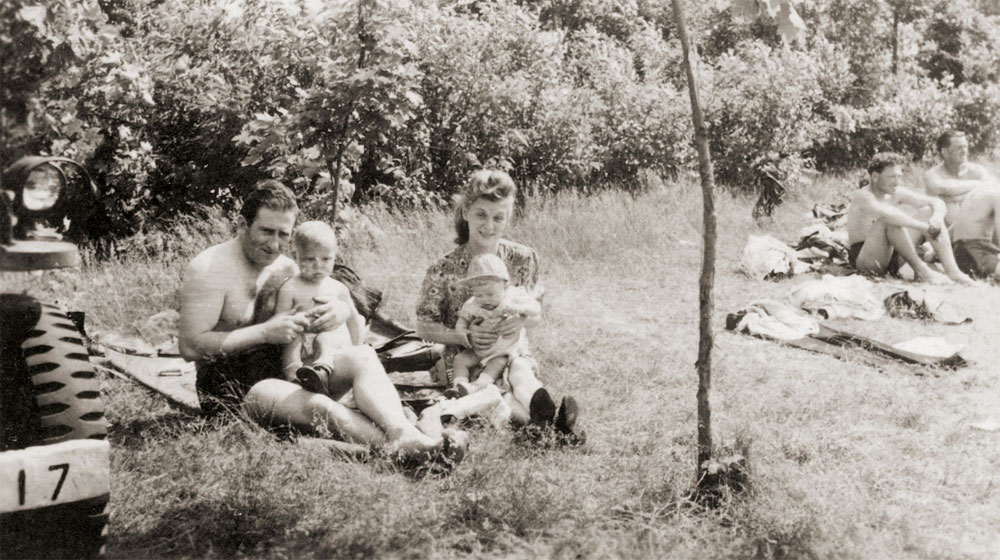
Architect Alfred Willer, who was a member of one of only 12 families with Jewish roots that survived the Nazi occupation of Czechoslovakia, is the subject of a biographical documentary crafted by his daughter, Marina Willer. The film’s title, “Red Trees,” is inspired by the fact that, at age 10, Alfred Willer was drawing trees and made the leaves red, leading him to discover that he was colorblind.

In her movie, Willer says that making the film has brought her closer to her father and helped her understand that she hadn’t fully known him. During a recent interview, she said that he never talked about the horrors he witnessed under the Nazi occupation.

“Most survivors of the Holocaust block any memories and never want to talk about it. The film made us talk about things, travel to places together as a family and made me study the subject a lot,” she said.

Willer makes her directorial debut with this movie. Born in Brazil, where her father’s family relocated after the war, and now living in London, she chose the late English actor Tim Piggot-Smith as narrator and also includes interviews with her father. Alfred Willer was born in Kasnejov, Czechoslovakia, in 1930. His father, Vilem, whose father was Jewish, was a scientist and worked in a chemical factory.

The Nazis invaded the country in 1939, and a couple of years later, Vilem lost his job due to restrictions on Jews. The family was evicted from the company apartment and moved to Prague, where Vilem managed to find work as a technical consultant to two chemical factories. Although he lived under numerous anti-Jewish measures, the family survived.

Willer said that her father was able to survive because of his marriage to a German gentile woman, and his unique scientific skills. He was one of the inventors of the formula for citric acid, which is used to simulate the taste of lemon and as a preservative. He kept hiding the formula, she said, so he remained useful.

“It is luck, too,” Willer added. “I remember my grandfather always used to say, ‘If the war lasted another two weeks, we’d have been next.’ ”

In her documentary, Willer and her brother take their father back to Czechoslovakia and revisit locations from his past. Among these is the site of what was called the Lidice Massacre, during which 1,300 residents of the village, some six miles from Alfred’s home, were rounded up by the Nazis in 1942. All the men were killed, and the women and children were sent to concentration camps. The massacre was conducted as revenge for the murder by the Czech resistance of Gestapo officer Reinhard Heydrich, known as the “Butcher of Prague.”

As they travel, they pass places connected to people and events that Alfred remembers. He says, “This person was murdered,” or “This person was taken to a concentration camp” or “This person committed suicide.”

In 1945, after the Nazis were defeated, crowds began to gather in the streets, he remembers. “I see people murdered in the street — on both sides,” he says. “You learn not to look, but you never forget.”

Two years later, at the urging of Alfred’s uncle, the family immigrated to Brazil, where Alfred became an architect, and which the filmmaker describes in the documentary as a nation of color and the most racially mixed country on earth. She points out in the film that Brazil welcomed millions of war survivors — Jews, Czechs, Germans, Poles, Italians, Japanese and Hungarians — even Nazis.

During her interview, Willer stressed that she and her father are a mixture of ethnicities. Although her non-Jewish mother is of German origin, the filmmaker is aware of the Jewish influences in her life. 

“My family is a fruit salad, as my father says. The other side was Protestant. But the culture, the love and curiosity for knowledge, [the] unstoppable interest in studying and learning, is completely Jewish to me and [although] unsaid, in a way I think it would come across in the film,” she said. “It’s not the only culture that brings that with them, but my father’s upbringing was very broad, and he has inspired us and mostly my children, and I really hope to show that as a gift to us.” Opens Sept. 15.

ALSO OF INTEREST

“Bobbi Jene” — Bobbi Jene Smith, an American dancer, left Juilliard in 2006 to fulfill her dream of dancing with Israel’s Batsheva Dance Company, where she spent 10 years as one of its stars. Elvira Lind’s documentary follows her departure from Batsheva and her return to the U.S. in pursuit of a solo career as a performer and choreographer. Opens Sept. 22.

“Marshall” — Based on the early legal career of future Supreme Court Justice Thurgood Marshall, this narrative film depicts Marshall (played by Chadwick Boseman) in 1940 as he is sent by the NAACP to the conservative town of Greenwich, Conn., to defend the Black chauffeur-butler of a wealthy and prominent matron. She alleged that the chauffeur repeatedly raped and then tried to kill her. The NAACP also hires a white Jewish lawyer, Samuel Friedman (Josh Gad), to aid Marshall in the trial. Opens Oct. 13.

“Aida’s Secrets” — This documentary features two brothers, now in their 70s, who remained unknown to each other for decades. Both were born in the Bergen-Belsen displaced persons camp after World War II and sent to different destinations as toddlers. The nephews of one brother reunite the two and film their story as the long-lost siblings also reconnect with their mother, who continues to harbor secrets about their origins. Opens Oct. 27.

An archival family photo from “Aida’s Secrets,” about brothers born in the Bergen-Belsen displaced persons camp who were separated as toddlers. Photo courtesy of Music Box Films


“Holy Air” — In Shady Srour’s comedy that satirizes Israeli politics, a Christian Arab living in Nazareth is married to a modern Arab woman who runs a feminist foundation. He devises a scheme to make a killing by bottling and selling air that was supposedly breathed by the Virgin Mary during the Annunciation. But to ensure success, he must enlist the help of leaders from among the country’s Jewish politicians, the head of the Arab Mafia and officials from the Catholic Church. Opens Nov. 17.

“Darkest Hour” — On the heels of the film “Churchill,” which depicted British Prime Minister Winston Churchill near the end of World War II, this film portrays Churchill (Gary Oldman) as he takes office when England is on the brink of war. He faces a choice between negotiating a peace treaty with Nazi Germany or challenging Hitler and fighting for his nation’s freedom. Opens Nov. 22.

Director Marina Willer focuses on father’s perilous past in ‘Red Trees’ Read More »

Larry David revives ‘Curb your Enthusiasm,’ finds Confederate Jewish roots

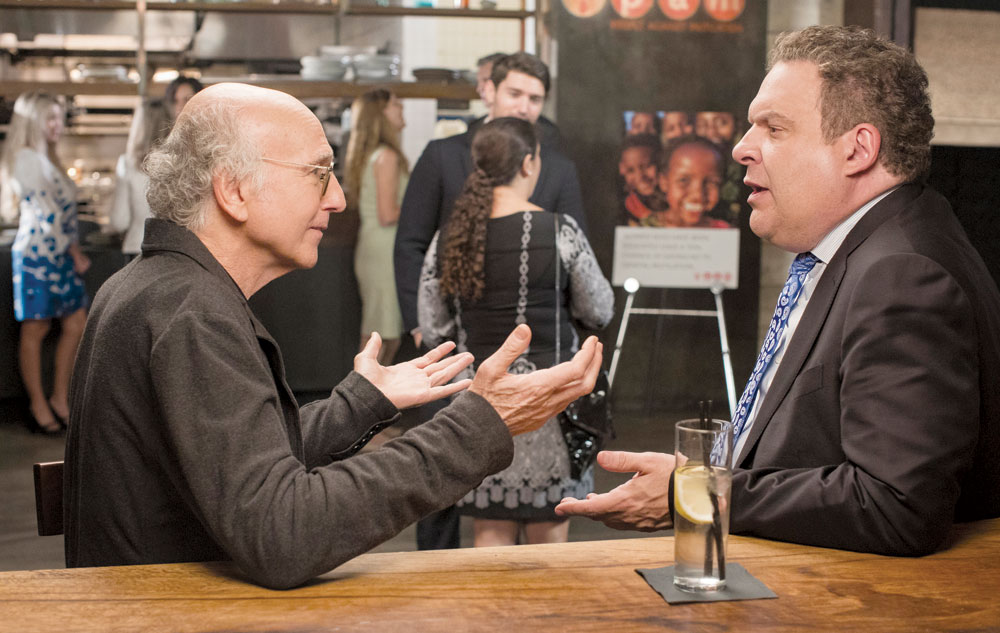
When “Curb Your Enthusiasm” ended its eighth season in 2011, viewers of the HBO comedy wondered if Larry David had lost his own enthusiasm for the show. But as its return this fall with 10 new episodes affirms, David isn’t ready to abandon the fictionalized version of himself just yet.

“I was missing it, and I was missing these idiots,” he said, referring to the show’s co-stars Jeff Garlin, Susie Essman and J.B. Smoove, as they participated with him in a recent panel discussion for the Television Critics Association. “So I thought, ‘Yeah, what the hell?’ I got tired of people asking me, ‘Is the show coming back?’ I couldn’t face that question anymore. I thought, ‘Now I won’t have to be asked that anymore.’ ”

For the past six years, David had been jotting down ideas for awkward situations he could turn into episodes, but he would not confirm that there would be a ninth season. The next season premieres Oct. 1.

“Larry insists there won’t be another season until he has enough ideas,” said executive producer Jeff Schaffer, who has worked with David since “Seinfeld,” which the latter co-created. “Only after the season is mostly written do we tell anyone that we are doing it.”

David cited the “Producers”-themed storyline in the fourth season as an example. “I wrote the shows before I even asked Mel Brooks if he would let me do it,” he said. “I guess it might have been ‘Fiddler on the Roof’ if he didn’t agree to it.”

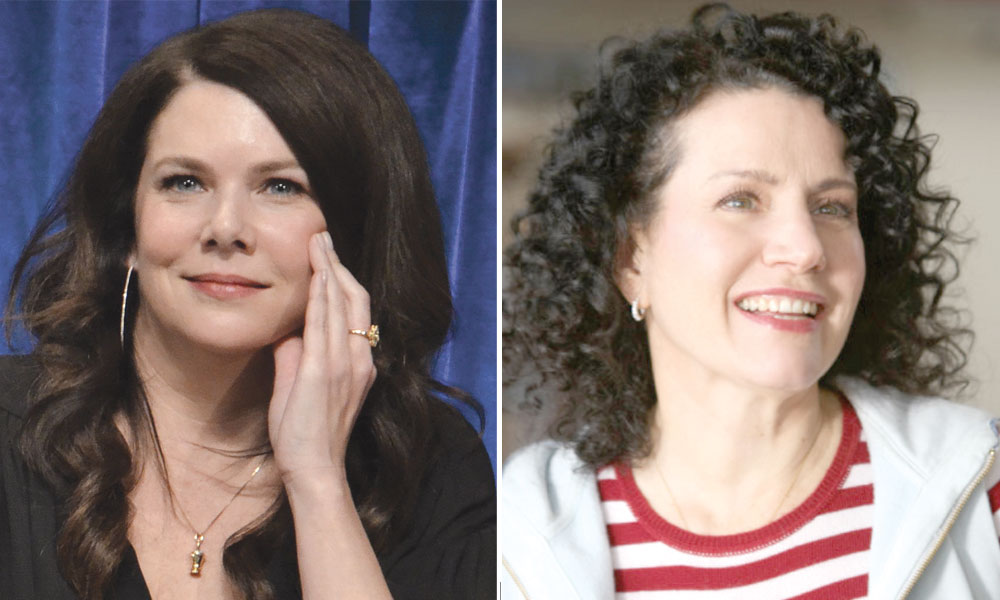
This year, guest-starring roles were written for Lauren Graham, Ed Begley Jr., Elizabeth Banks, Bryan Cranston, Jimmy Kimmel, Nick Offerman, Nasim Pedrad and Elizabeth Perkins, all of whom will appear. Richard Lewis, Bob Einstein, Ted Danson, Mary Steenburgen and Cheryl Hines (as Larry’s ex-wife) will continue to have recurring roles.

Although David wouldn’t divulge any new plots, Schaffer teased that the series “goes to this really strange, fun, crazy place. I can honestly say you will never expect where it ends,” he said.

From left: Lauren Graham (Photo from Wikipedia) and Susie Essman (Photo from IMDB)


Questions from the reporters in the audience subsequently turned to David’s spot-on impersonations of presidential hopeful Bernie Sanders on “Saturday Night Live” during the 2016 campaign. When David’s agent, Ari Emanuel, heard him imitate Sanders on the phone, he immediately phoned “SNL” producer Lorne Michaels and brokered a deal for his client.

Although David hadn’t publicly announced support for any candidate, he declared, “I love Bernie,” noting that he was delighted to learn that he and Sanders, both Ashkenazi Jews, are actually distant cousins — the topic of another show’s season premiere.

In the season-opening episode of the PBS genealogy series “Finding Your Roots” with Henry Louis Gates Jr. on Oct. 3, genetic tests show that David and Sanders share identical DNA on three chromosomes.

Larry David (let) and Jeff Garlin will reprise their roles in “Curb”
on HBO, based on a fictionalized version of David. Photo by John P. Johnson


That finding isn’t the most stunning revelation, however. It turns out David’s German paternal great-great-grandfather, Hirsch Bernstein, immigrated to Mobile, Ala., and founded a shoe company there. Bernstein fought for the Confederacy in the Civil War and owned two slaves.

“Larry had had no clue about his Confederate, slave-owning heritage,” Gates said in an interview. “Though he speculates that keeping it secret is part of why his father never told him about the family’s past.

“Nobody could make this stuff up,” Gates added. “The mysteries on your family tree … who knows what you’ll find when you go back 100, 200 years. It’s like opening a secret door.”

“Curb Your Enthusiasm” premieres at 10 p.m. Oct.1 on HBO, and “Finding Your Roots With Henry Louis Gates, Jr.” premieres at 8 p.m. Oct. 3 on PBS.

Larry David revives ‘Curb your Enthusiasm,’ finds Confederate Jewish roots Read More »

Nathan Englander interview: A novel’s view of Israel-Palestine conflict

More words may have been written about the Israel-Palestine conflict than there are grains of sand at the beach, but to Nathan Englander there is still room on bookshelves for a novel that stirs the emotions and invites the empathy so often lost in the conflict’s polemics. 

[MORE: Love story meets thriller over Englander’s ‘Dinner’]

“Dinner at the Center of the Earth,” the author’s fourth and latest book, is a political thriller that examines the conflict from the perspectives of a renegade Mossad agent, a young Palestinian activist and a multitude of characters swept up in the conflict’s moral vortex. Englander spoke with the Journal about the challenge of writing through controversy and his commitment to peace, now stronger than ever, in today’s fractured political landscape. 

Jewish Journal: The Israel-Palestine conflict is among the most fraught and nuanced subjects for a novel. What compelled you to write about it? 

Nathan Englander: I moved to Israel [from New York] in 1996 for the peace process, because I was just so excited for this brand-new day and peace in the Middle East. It sounds almost like a utopian vision now, but [peace] really was happening and really right there.

Over the years, the whole thing came apart. Peace between Israel and Palestine and the idea of a two-state solution fell apart, and now the opposite of progress continues to be made. I moved home [to the United States] sort of heartbroken about that in 2001.

For 20 years, I’ve always wanted to explore this conflict and my own internal belief in peace, because I don’t know what other position there is to hold. What I’ve watched over these last two decades is that the two sides separate more and more. Every day going by, every week, the people understand each other less. A physical wall has gone up — Gaza’s closed off, there’s a wall between the West Bank and Israel, there are roadblocks. Even though there was occupation and many of the same issues [in the past], people still mixed more. There was just so much more sharing of the daily life. To me, this book was a way to explore these notions of empathy on both sides.

JJ: What does this book add to the noise of opinions regarding the Israel-Palestine conflict? What’s the fresh angle?

NE: I don’t think it’s the writer’s job to give answers or to give opinions. In fact, when a writer has answers, I think the work ends up being corrupted. It becomes didactic. What a book does is share a consciousness and invite people to explore the questions as best as you can. This book is not my answer; it is my optimistic lament for lost peace.

Every book is vulnerable and every book is nerve-wracking, but I’ve never been both so excited and terrified to have a book coming into the world. It’s an expressly loaded subject, one on which you can’t win. Even with people on the same side — my editor was telling me about her sweet Israeli in-laws who both read the book and got into an argument over it. If all goes well, there will be arguments. 

JJ: Did you have to change your writing style at all in handling such a nuanced topic? 

NE: I was looking for a way to tell this story for a long time because I didn’t want it to be didactic or turn into a history lesson. Nobody needed a 500-page lecture from me on peace in the Middle East. Finally, when it came to me, it was such a departure from my other books in so many ways. It’s sort of like a literary thriller that’s also a metafictional historical novel that ends up being a love story that turns into an allegory. 

I think in circles and speak in circles. When I wrote my first book [“For the Relief of Unbearable Urges”], I studied how to be linear and tell a story straight. This is my fourth book, and I was like, “I finally get to keep my circles,” because the conflict is so circular. Whichever way I start a sentence is going to upset someone — if I say, “Israel attacks Palestine” or “Palestine attacks Israel,” someone will be like, “They started first” or “No, they started first.” Who cares at this point who started first? It’s this endless, heartbreaking cycle that just happens again and again as if it’s new. 

That’s why I wanted the book to swing from side to side. It’s not even two sides — I don’t think there are many sides when it comes to Nazis or neo-Nazis, where there’s only one side that’s functional — but there are two peoples here, and there are many sides among those peoples.

JJ: While you were writing, was your target audience Jews or non-Jews, or both? 

NE: When somebody asks a variation of “Who do you write for?” I always feel like the writer got trapped into putting a form on something that has no form. Certain things are amorphous.

If a story is functioning, it better be universal. I can’t control how an Israeli will feel about the book, or a Palestinian or a left-wing person or a right-wing person. But if a story is working, it should travel across time, across space, across language, across gender, across belief.

JJ: You said in a 2012 interview with the Chicago Tribune that you feel strongly that Judaism is not your subject, your characters just happen to be Jewish. Is that still your position after writing a book about Israel? 

NE: I still stand by that statement. I think it shows more about why it’s being asked than whatever my answer is. Nobody would take a John Updike book and say, “I want to give this to my Jewish friend, but can they read this?” Or they don’t say, “Oh, I love Voltaire, but my friend’s not French and he’s not dead and he’s not 300 years old, so can I give him ‘Candide’?” You just read a book. Some people tell me, “I love your book. Can I give it to my friend who’s not Jewish?” You wouldn’t ask that in the reverse.

Still, this is the book where I feel most like a Jewish writer because of what’s happening in this country right now. Now that some things [in American society] are being let out of the darkness where they belong, I claim [the Jewish label] that much more.

JJ: What is it exactly about current events that makes you embrace that niche label?

NE: A sign of democracy in danger is how our president keeps threatening journalists and tweeting disturbing photos about hurting journalists. The reason people get afraid of writing real, honest journalism and fiction, and the reason corrupted people and demagogues are afraid of journalism and fiction and poetry across the world, is because it is a subversive form.

Writing travels. You can enter into a world far different from your own and understand that there is a reality other than the one you have been spoon-fed. I grew up in a closed, religious, suburban world — I call it a terrarium or a bubble — and opening books just blew my mind open. It just opened universes to me. 

JJ: How were you able to write Palestinian characters and understand a Palestinian’s perspective?

NE: It is hugely important to me what it means to identify, what it means to enter other cultures, what it means to co-opt. I’m not writing this book and pretending to be Palestinian. I do believe writing is a moral act, both your obligation to it and where it comes from.

But all I can tell you is that I write from the heart and put my whole heart and soul into each character equally. There’s no way to work if I am so limited.

JJ: The book’s dust jacket describes a “nice American Jewish boy from Long Island.” Is that an autobiographical character? 

NE: One of the main characters is Prisoner Z, a boy from Long Island who joins the Mossad and ends up betraying it. There was a public story [in 2010] about a real Australian agent in the Mossad called Prisoner X, who was accused of being a traitor. I got to thinking what it would be like if someone like me had joined the Mossad.

I wanted to close in on what it would take for someone like me — someone who moves to a different country, who’s so ideological and so believes in what that country is about that they join its secret service — to flip on the ethical front. What could they hear or see or empathize with the other side that would cause them to turn on their own?

JJ: How have your attitudes toward the Israel-Palestine conflict changed over the course of writing this book? 

NE: Oh, God. I can’t tell you how much, over time, my views have changed. It’s been a long evolution of ideas based on experience, and this book was a way for me to re-ponder and re-explore my positions on a million fronts.

It’s impossible for [young people] to have a memory when peace was really happening and on the horizon. It was over when [their] life began. Two-state seems impossible now, and peace between Israel and Palestine seems a ridiculous notion. That’s something I refuse to let go of, and if you think that’s a romantic notion or a naive notion, I don’t know what better idea anyone has.

But I can tell you, if it keeps building toward extreme conflict, someone’s going to win. Maybe that’s the point of the book — to say, “We should really make peace, because without it, someone is gonna win.” And I don’t understand why we wouldn’t want both peoples to have bright and open and hopeful futures.

Nathan Englander interview: A novel’s view of Israel-Palestine conflict Read More »

Robert Wexler to step down as AJU president

Robert Wexler. Photo courtesy of AJU.

After 25 years as president of American Jewish University (AJU) and its predecessor, the University of Judaism, Robert Wexler will step down at the end of the academic year.

“Leading such a remarkable institution for so long has been a great honor,” Wexler wrote in a Sept. 12 email to the Journal. “I truly appreciate the dedication of the men and women on the AJU staff and faculty, all of whom mean so much to me. It is they who have made AJU a major force in American Jewish life.”

Wexler’s involvement with the university began when he was 17 and an undergraduate student at the Bel Air campus, which was known as the University of Judaism until 2007, when it merged with the Brandeis-Bardin Institute. After his ordination at the Jewish Theological Seminary in 1978, he returned as the assistant dean of students, ascending to the presidency in 1992.

Under his stewardship, the university opened the Ziegler School of Rabbinic Studies in 1996 and merged with Brandeis-Bardin. He is credited with overseeing numerous campus construction projects and growing the university’s endowment from $5 million to more than $100 million.

Announcing Wexler’s departure on Sept. 12, AJU said in a press release it would soon begin to seek his replacement.

“American Jewish University has achieved a position of significant influence in the Jewish community and beyond,” Virginia Maas, chair of the AJU’s board of directors, said in the statement. “We hope to continue this record of achievement by conducting a nationwide search to identify a successor who will build on Dr. Wexler’s legacy of expansion and institutional growth.”


Robert Wexler to step down as AJU president Read More »

Joshua Bell to perform Bernstein favorite at centennial celebration

“My violin is as Jewish as a violin can get,” Joshua Bell said, referring to his 1713 Stradivarius, once owned by legendary violinist Bronislaw Huberman, founder of what became the Israel Philharmonic Orchestra.

“I’m not a very religious person,” added Bell, whose mother is Jewish, “but I feel strongly connected to my Jewish roots.”

Bell, 49, will be among the first soloists to kick off the anniversary celebration of Leonard Bernstein’s birth in 1918 when he appears with the Los Angeles Chamber Orchestra, led by guest conductor Jaime Martin, at the Alex Theatre in Glendale on Sept. 30 and at UCLA’s Royce Hall on Oct. 1.

The concerts will feature Bell performing what essentially is a violin concerto: Bernstein’s Serenade for violin and string orchestra with percussion.

“It’s one of his best works,” Bell said, adding that Bernstein himself was quite proud of it. “It belongs up there with the great 20th-century pieces by Stravinsky, Bartok, Shostakovich. It’s got beautiful melodies, lots of humor and passion, jazziness in the last movement, and there’s also a bit of ‘West Side Story.’ Bernstein was someone who transcended genres.”

Bell, who will be performing the Serenade “a fair amount” during the Bernstein centennial, said he regrets that he never met the composer, conductor, educator and pianist, who died in 1990 at age 72.

“I thought he’d be alive until his 90s, like conductors are supposed to,” Bell said. “He was such a huge life force, I couldn’t imagine him not being around. I grew up with ‘West Side Story’ and loved it so much I helped make an arrangement of the ‘West Side Story’ suite for violin and orchestra in 2000. I feel like I’ve known that piece since I was born.”

Bell called the score “one of the greatest operas ever written,” even though it’s usually classified as a musical. “It elevates the musical genre. Like Gershwin’s ‘Porgy and Bess,’ it’s one of the iconic works of the 20th century.” 

And Bernstein was one of its iconic figures. After he died, a newspaper cartoon showed a flag planted on planet Earth that read: “Leonard Bernstein lived here.”

“As a composer, he’s one of a handful who comes along in a century who, through music, manages to remind us what we’re here for,” Bell said. “Some people are able to spin a melody like Schubert or Gershwin or Bernstein, but there aren’t many people who can do that in such a profound way.”

As the star of the New York Philharmonic’s televised “Young People’s Concerts” from 1958 to 1972, Bernstein introduced generations to classical music, enriching their understanding of other types of music along the way. Bell grew up watching videotapes of those educational concerts that were around the house, and was struck by Bernstein’s buoyantly choreographic podium manner.

“His personality was so infectious. You feel like he’s tapped into the music physically, like he’s dancing,” Bell said. “Young conductors try to copy him, but it looks contrived. When he did it, it looked honest.”

Bell said Bernstein came along at a time when the music world was largely Eurocentric. “In Vienna and Berlin, places that were traditionally snobbish about Americans, Bernstein was able to earn their respect. He broke the attitude that real music and great conductors could only come from Europe, and that made me proud as an American.”

Bernstein was just one formative influence on Bell. Josef Gingold, a Jewish Belarusian-born classical violinist and teacher at the Indiana University Jacobs School of Music, was another. Bell, who was sent to Gingold at age 12, called him “my musical parent.”

“His connection to an older style of playing, the use of rubato [expressive tempo changes] and the way one used time was quite different, and the expressive techniques with slides and glissandi [gliding between notes] were quite particular to his era,” Bell said. “It’s almost a lost art, but growing up with that in my ear, I feel some of it was internalized.”

Bell was 14 when he made his debut with the Philadelphia Orchestra. “I bought my first car when I was 16 with money earned from playing the violin, which was pretty darn cool,” he said.

The unmarried violinist, who has a 10-year-old son, Josef, named after Gingold, and twin 7-year-old boys, said his children went to a nursery school run by Orthodox Jews. “For a while, they were more Jewish than I was,” Bell said. “They were singing songs in Hebrew.”

Bell, who travels to Israel at least once a year, said he’s taking his three boys to the country for the first time next year.

“I want them to see their family there — to see where my maternal grandfather was born, and his father, who was one of the early pioneers in Palestine and Israel,” Bell said. “I do identify myself still as being Jewish, and I want my kids to have some of that feeling.”

For tickets and information on the “Bell Plays Bernstein” concerts on Sept. 30 in Glendale and Oct. 1 in Westwood, visit laco.org.

Joshua Bell to perform Bernstein favorite at centennial celebration Read More »

Edie Windsor, gay rights activist, dies at 88

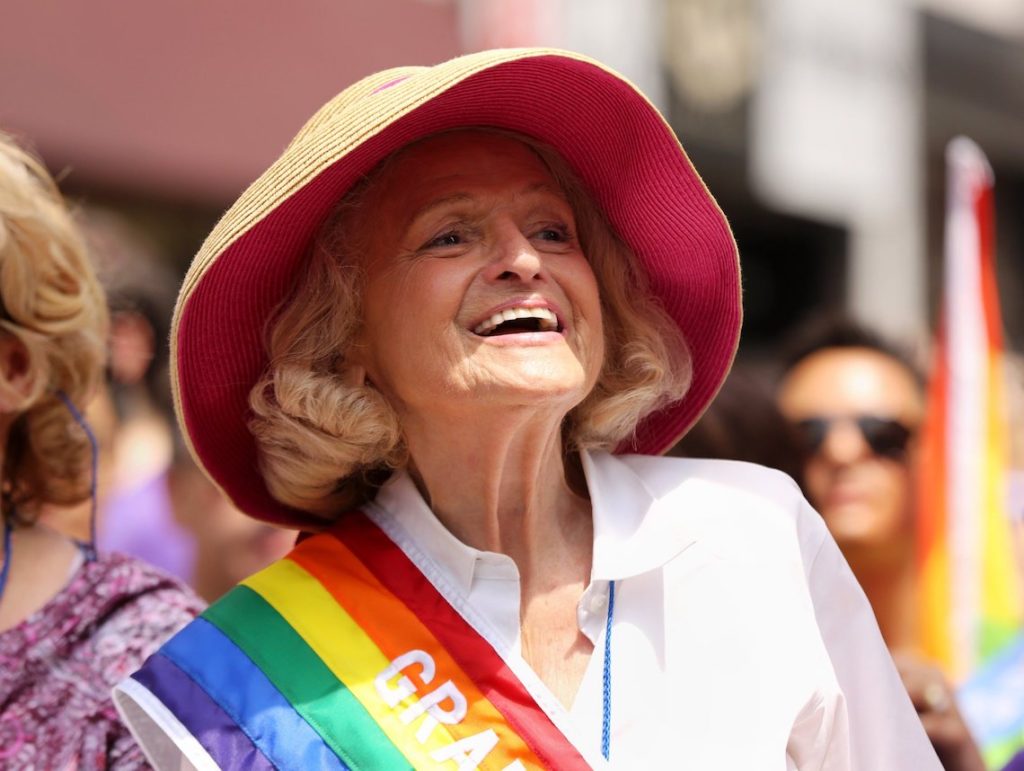
Edith Windsor, the gay rights activist at the heart of the Supreme Court’s landmark 2013 decision to nullify the Defense of Marriage Act, died Sept. 12 at a Manhattan hospital, according to The New York Times. She was 88.

Windsor was the lead plaintiff in the case that extended federal recognition and a number of government benefits to same-sex couples. Later, a 2015 Supreme Court ruling built on the so-called Windsor decision to legalize same-sex marriage nationwide.

Windsor’s case arose from a tax dispute after the death of her wife, Thea Spyer. Both women were Jewish.

Spyer died in 2009, two years after the women were married following a 40-year engagement. Windsor was denied a $363,053 estate tax refund by the Internal Revenue Service and sued, appealing up to the nation’s highest court. In a 5-4 decision, the court struck down the 1996 law — and ordered the IRS to issue Windsor the refund, with interest.

Rabbi Denise Eger of Congregation Kol Ami in West Hollywood, the first openly gay president of the Central Conference of American Rabbis, was in front of the Supreme Court on the day of the Windsor decision, the same day the court heard arguments challenging a same-sex marriage ban in California, Proposition 8.

“I remember when she emerged after the hearing with the California plaintiffs,” Eger said of Windsor in an email to the Journal. “The crowd went wild with joy upon seeing her and her attorney Roberta Kaplan. She was smart, funny, strong and loved meeting people.”

News of Windsor’s death was met with mourning by LGBT communities across the country.

“We celebrate Edie Windsor, we mourn her, we live her legacy,” Congregation Beit Simchat Torah (CBST), the LGBT synagogue in Manhattan where Windsor was a member, wrote in a post on Facebook, using the nickname favored by her friends and family.

CBST Rabbi Sharon Kleinbaum and Cantor Steve Zeidenberg planned to speak at a vigil for Windsor in New York on the evening of Sept. 12.

“Windsor helped clear many paths during the many decades of her life, all of which surely prepared her to become the revered and beloved role model that helped make love and true marriage a cause célèbre in the 21st century,” Rabbi Lisa Edwards of the Pico-Robertson LGBT synagogue Beth Chayim Chadashim wrote in an email to the Journal. “I join with many in gratitude to her for her tenacity, and blessed by her presence in the world.”

Edwards wrote that “surely it was no coincidence” that two Jewish women — Windsor and Supreme Court Justice Ruth Bader Ginsberg — played pivotal roles in legalizing same-sex marriage in the United States.

“We are all the beneficiaries of Windsor’s stalwart determination and righteous indignation at the affront of not being treated as a widow by the Federal government,” she wrote.

“We all owe her a debt of gratitude for her willingness to sacrifice quality of life for quality of action at an age when most people expect younger activists to take the demanding lead,” Kehillat Israel Senior Rabbi Amy Bernstein, one of the Los Angeles area’s leading LGBT rabbis, wrote in an email to the Journal. “She is an important teacher for all of us, but especially for women, that we are capable of having more impact than we think possible in our elder years. She will be missed and her memory will be, I have no doubt, a powerful blessing.”

Eger called Windsor “a proud Jewish woman who brought more justice into the world.”

“Her name should be remembered and taught in every school,” she wrote. “She stood up for what was right and just and her courage in doing so remains inspiring.

Windsor was the daughter of Russian Jewish immigrants James and Celia Schlain, according to The New York Times. She is survived by her wife, Judith Kasen-Windsor.

Edie Windsor, gay rights activist, dies at 88 Read More »

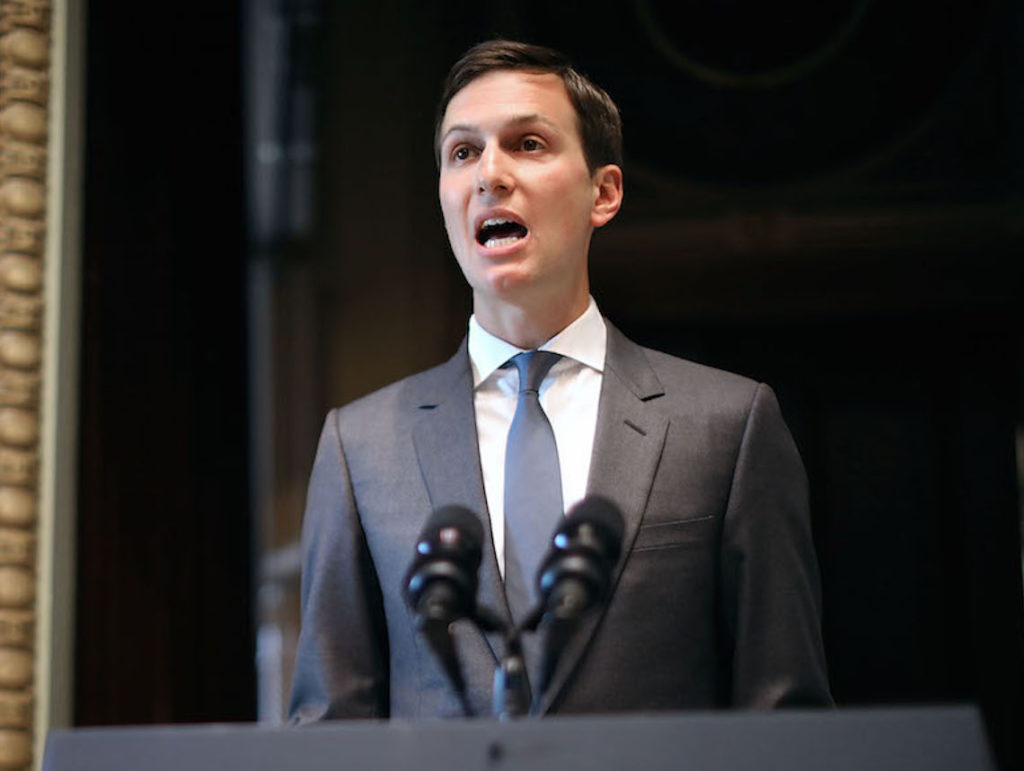
Some Trump lawyers reportedly recommended Kushner step down over Russia scandal

Some lawyers for President Donald Trump recommended that Jared Kushner step down as senior White House adviser over the Russia scandal.

The Wall Street Journal reported Monday that the president’s lawyers were not united in the opinion. The article also said that Trump believed Kushner had done nothing wrong, thus there was no reason he should quit.

Due to the concerns of some members of the president’s legal team, press aides to the team drafted a statement explaining Kushner’s departure, the newspaper reported, citing people familiar with the matter.

Kushner reportedly had several meetings with Russian officials during and after the election campaign. He also failed to disclose on his application for a security clearance a meeting he had with a Russian official, along with his brother-in-law Donald Trump Jr., to receive damaging information about Hillary Clinton, the Democratic candidate for president, during the 2016 campaign.

In July, Kushner appeared before the Senate Intelligence Committee as part of its investigation into Russian interference in the election. Afterward he released an 11-page statement denying collusion.

Some of Trump’s attorneys worried that keeping Kushner as an adviser could involve other White House officials in the Russia investigation, including his discussing the probe with the president without a lawyer present.

Some Trump lawyers reportedly recommended Kushner step down over Russia scandal Read More »