fbpx

September 6, 2017

Garcetti denounces Trump plan to end DACA at AJC event

Inside Wilshire Boulevard Temple on Sept. 5, Los Angeles Mayor Eric Garcetti denounced President Donald Trump’s decision announced earlier that day to rescind protections for children brought into the U.S. illegally, saying, “This is a day — a dark day — for this nation and for the city.”

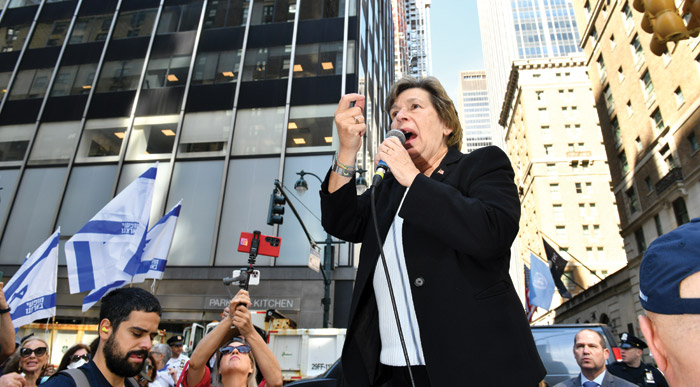
Outside, left-leaning groups accused the mayor of not doing enough to protect those children.

“What do we want? Sanctuary! When do we want it? Now!” came the chants from a coalition that included Jewish Voice for Peace, Black Lives Matter, Ground Game L.A. and Democratic Socialists of America.

The event inside the synagogue, sponsored by the American Jewish Committee (AJC), had been scheduled before the announcement of Trump’s decision on Deferred Action for Childhood Arrivals, or DACA, an Obama administration initiative.

Addressing an audience of about 100, including some who turned their backs to  him, Garcetti said he was disappointed in the Trump decision, calling it “un-American.”

But the mayor’s remarks were insufficient for the protesters outside.

“We are here because Mayor Garcetti, Police Chief (Charlie) Beck and Sheriff (Jim) McDonnell have had a history of talking big about how they are protecting immigrants without having the policy to back up some of their stances,” said Meghan Choi, a lead organizer with Ground Game L.A., a grass-roots civic engagement organization.

Actions like the protest outside the synagogue are becoming more common across the country, Steven Windmueller, a professor at Hebrew Union College-Jewish Institute of Religion, whose expertise includes American- Jewish political behavior, told the Journal.

“I am detecting over the past eight months, a ‘radicalization’ of the left in opposition to the current administration, contributing to the further rise of socialists, anarchists and others, who I would describe as ‘rejectionists’ opposed to the President and his policies, but also unhappy with the Democratic Party,” Windmueller wrote in an email.

Trump’s decision, announced hours before the AJC event, gave Congress six months to develop a permanent solution for the 800,000 young adults, sometimes referred to as Dreamers, who currently qualify for protection under DACA.

Garcetti, who is of Latino-Jewish ancestry, said the decision to phase out DACA was personal, given his family’s history of coming to the United States illegally.

“We didn’t have the term back then, but my grandfather, Salvador, was a Dreamer, carried over the border by my bisabuela, great-grandmother,” he said.

At times raising his voice, Garcetti called on Congress to pass legislation that would codify DACA protections. He specifically mentioned Sen. Orrin Hatch (R-Utah) and House Speaker Paul Ryan (R-Wis.), who have expressed support for Dreamers but have not pushed for legislation to permanently legalize their status.

“Thanks for the words,” Garcetti said, “but it is time for Congress to act.

“Let us explode the myth of those who want to divide us and want us to divide each other,” he said. “We can’t afford that. We can’t afford to yell at one another, and we can’t afford to buy into the myths.”

Hours before the synagogue event, the AJC released a statement condemning the president’s action against DACA.

“Dismantling DACA is a devastating blow to hundreds of thousands of young people who have benefited from the program — and who have in turn contributed to communities across the country in which they live,” Richard Fotlin, the AJC’s director of national and legislative affairs, said in the statement.

In addition to Garcetti, the AJC event featured a panel that included Sheriff McDonnell; Thomas Saenz, president and general counsel of the Mexican American Legal Defense and Educational Fund; Los Angeles Police Department Deputy Chief Horace Frank; and Los Angeles Times Staff Writer Cindy Chang. Dan Schnur, director of the AJC’s Los Angeles region, moderated.

The panel also discussed how law enforcement and immigrant communities can maintain trust with one another. That issue is at the core of a state Senate bill that would prohibit law enforcement agencies from sharing data for immigration enforcement purposes.

Garcetti denounces Trump plan to end DACA at AJC event Read More »

The man in the low castle

Jonathan Zasloff

At three sites, the Kohanim stood guard in the Temple… [two] were balconies, and the youngsters would stand guard there. [The third] was a dome, and it was a large building, surrounded by stone slabs, and the elders would sleep there, holding the keys of the courtyard in their hands. The young Kohanim would sleep in their clothes on the ground. They did not sleep in their holy clothes but would take them off, fold them, put them under their heads and sleep wearing their own clothing.

Mishnah Tamid 1:1

Tractate Tamid, the oldest in the Mishnah, bears peculiar relevance for our times. That is precisely because it is so very strange.

The first passage is typical, concerning almost laughably trivial details about the Temple’s work. Throughout the tractate, we find lovingly detailed descriptions of the shape that the sacrificial ashes formed, the types of wood used to stoke the fire, and the contour of the staircases. Tamid’s subject matter is seemingly so trite that other rabbis respond incredulously when I say I am studying it.

But I find Tamid inspirational, particularly in this era of political crisis. The rabbis lived through a crisis, too — one significantly greater than our current threat to American democracy. They experienced a comprehensive defeat, a destruction of the divine house, God’s abandonment of Israel and the exile of Jews. The rabbis did not do everything well, but they did react to despair and catastrophe well.

How did they respond?

They remembered. They learned. They created. And they did each for its own sake, without illusions about remaking the world.

Rabbi Yehudah Ha-Nasi redacted the Mishnah around 200 C.E., long after the Second Temple’s destruction and long after it became obvious that it would not rise again barring divine intervention. So why bother recording all these minuscule details? Because the act of remembrance — creating a culture of memory — is holy, in that it gives our lives transcendent meaning. The great funeral prayer Ha-Tziduk Ha-Din references the “rope of life”: memory and its culture.

As I study Tamid, I find myself comparing it to another book: Philip K. Dick’s award-winning dystopic novel “The Man in the High Castle,” now famously adapted into a series by Amazon Prime.

“High Castle” imagines another disaster: Nazi Germany and Imperial Japan triumph in World War II, with Germany conquering the Eastern United States and Japan gaining control of the Pacific coast states. This scenario evokes the rabbis’ experience: the liquidation of their institutions and the destruction of their most basic assumptions about the world.

The show’s version focuses on the nascent resistance to Axis domination, which makes for good television, but actually perverts the entire point of the novel. Nothing gets resolved in “High Castle” — the Japanese and the Germans remain firmly in control. Indeed, there really is no resistance to speak of.

The book’s power, instead, rests in how its characters gain meaning through their individual deeds of creativity and remembrance. Frank Frink, the book’s sole Jewish character, is saved from the Nazis but returns to his studio, carefully crafting abstract jewelry that he puts his soul into. Bigoted art dealer Robert Childan, eager to suck up to the occupiers, achieves a new personal dignity by refusing to cooperate with Japanese counterfeiting efforts and defending the integrity of his wares. Frink’s ex-wife, Juliana, acts against the Nazis, but ends the book literally unsure of her next step. A Japanese trade official, Nobusuke Tagomi, risks his life protecting his charges from the SS although he knows it will have no long-term effect. We eventually learn that “The Man in the High Castle” himself, Hawthorne Abendsen, who wrote an “alternative history” in which the Allies won the war, no longer lives in the high castle. He is back in town, no longer afraid of assassination because he has produced a life-defining work of literature.

Tractate Tamid reminds me of “The Man in the High Castle” because both point to the same lesson about creating meaning in dark times. There is no triumph here, no lasting redemption. People take actions, however, that give themselves great meaning, mostly by creating and preserving civilization, whether it be junior priests taking care to scoop out the sacrificial ashes in just the right way, or the post-destruction writers ensuring that we know precisely how they did it. The priests are quite literally the “men in the low castle” (after all, the Temple Mount is not that elevated physically), and their physical position reflects their spiritual one: taking small steps, carving out a zone of meaning when all seems pointless.

Frank Frink knows little of Judaism, and Nobusuke Tagomi even less, but I think that, had they met Yehudah Ha-Nasi, they would recognize a kindred spirit.

Perhaps this is why the rabbis declared that a person encountering personal disaster should study Torah (Berakhot 5a). On the surface, this seeks God’s favor, but more subtly, it reaffirms our connection with our tradition and civilization.

Feel frustrated about the latest outrage from Washington, D.C., or from anywhere in an increasingly insane world? Resist of course, but also create civilization on your own. Paint. Write. Read, to yourself or a child. Perform a random act of kindness. And then record what you do — for the future. Establish by your most minor action that, no matter what happens in a world you cannot control, you will uphold civilization wherever you can. Be the man or woman in the low castle, arranging the ashes in the holiest way.


Jonathan Zasloff is professor of law at UCLA, where he teaches, among other things, property, international law and Pirkei Avot. He is also a rabbinical ordination candidate at the Alliance for Jewish Renewal.


The man in the low castle Read More »

Just for kids: New books for a new year

“Big Sam: A Rosh Hashanah Tall Tale”

couple of books with holiday themes grace our fall list of recommended children’s books, along with others that explore perseverance, a child’s perspective of the Six-Day War,  and the importance of inclusiveness and acceptance of unfamiliar cultures.

“Big Sam: A Rosh Hashanah Tall Tale” by Eric A. Kimmel. Illustrated by Jim Starr. (Apples & Honey Press, 2017)

The engaging cover illustration depicts a Paul Bunyanesque character grasping a giant shovel and standing guard over outsized containers of apples and honey  in the Pacific Northwest.

The character’s name is Samson the Giant -— “Big Sam to his friends.” He’s preparing for the High Holy Days, but on a very large scale. When he makes challah: “He dug a big hole in the ground to make a mixing bowl. It’s still there today. We call it the Grand Canyon.” He whittles a giant mixing spoon from a fallen redwood tree, lets the bread dough rise in the heat of a Yellowstone geyser and bakes it in the Mount St. Helens volcano. The narrative takes a turn when displaced animals complain to Sam that his holiday preparations have damaged some natural habitats. Realizing that Rosh Hashanah is about “mending the world,” Big Sam works to make things right by planting trees and flowers and clearing away boulders that had blocked the river. The illustrations of covered wagons, old-time trains and expansive Wild West landscapes complement the engaging tale and ensure it will become a family favorite.

“The Little Esrog”

“The Little Esrog” by Rochelle Kochin. Illustrated by Janice Hechter. (Merkos L’Inyonei Chinuch, 2016)

Only 10 Jewish families live in the small village of Sislotch, so every year on Sukkot they request a box of etrogs from the nearby city. The large etrogim in the box brag about their beauty and size and bully the smallest one, who wishes only to be useful for the sake of the holiday mitzvah.

The well-meaning wagon driver, tasked with transporting the precious cargo, unwittingly removes all the pitomim (tips) from the big etrogs to preserve them, but overlooks the little etrog, which remains intact.

The townsfolk are inconsolable until young Rivka finds the little etrog, now the sole kosher fruit that can be used for the blessing, and the village rejoices. Those big, beautiful (and mean) etrogim get what they deserve as they are made into “big, beautiful jam.” This book is targeted at an observant audience, but the message of inclusiveness and kindness will appeal to all.

“Drop by Drop”

“Drop by Drop: A Story of Rabbi Akiva” by Jacqueline Jules. Illustrated by Yevgenia Nayberg. (Kar-Ben, 2017)

Jewish heroes and sages often serve as inspiration for a variety of children’s stories, but first-century sage Rabbi Akiva is long overdue for a picture book relating his very engaging life story.

This well-written and beautifully illustrated book serves as a sort of biography of one of Judaism’s most venerable sages who did not learn how to read until age 40 and became a scholar only because of the persistent encouragement of his loving wife, Rachel.

The story begins with Akiva, a poor shepherd, noticing a stone in a brook that has been worn away by water. He realizes his “mind is not harder than a rock,” and if he can just learn a little bit each day, he can change his life. When he is laughed at by the children in his first-grade class, Rachel comforts him and says, “Pay no attention to those who laugh. Work hard and you will succeed.” Worthy advice in any generation.

“Yaffa and Fatina”

“Yaffa and Fatima: Shalom, Salaam” adapted by Fawzia Gilani-Williams. Illustrated by Chiara Fedele. (Kar-Ben, 2017)

The prolific British-born author of children’s books on Islamic holidays and folklore turns her attention to the well-known midrashic tale of two brothers whose love for each other sanctifies the holy ground that eventually becomes the city of Jerusalem.

By adapting the story to feature two loving neighbors — one Jewish, one Muslim — living long ago in the “Land of Milk and Honey,” she creates a satisfying account of what could be when neighbors truly are friends.

While “Yaffa prayed in a synagogue” and “Fatima prayed in a mosque,” they each own date groves and sell the fruit at a market. When times get tough, they help each other out, as friends should. Children will enjoy the simple text and large, well-researched illustrations that depict the respective cultures and religious practices. An important and inspiring book that encourages acceptance and sharing of different cultures.

“The Six-Day Hero”

The Six-Day Hero” by Tammar Stein. (Kar-Ben, 2017)

In this compelling novel suitable for readers in fourth to seventh grades, we meet young Motti, an Israeli boy living in Jerusalem in 1967. His brave older brother, Gideon, is in the army, and Motti looks up to him as a role model.

Family life is generally uneventful, with soccer games and schoolwork, but tensions rise as war with the neighboring Arab states looms. Motti’s best friend flees the country and Gideon faces danger. The author does an excellent job at capturing the voice of a smart 12-year-old boy living through a harrowing experience, mirroring a historical moment of a young country fighting to survive.

This work of gripping historical fiction is especially meaningful in this year of the 50th anniversary of the unification of Jerusalem. Its subject matter and suspenseful plot will surely grab and keep the interest of preteens who know little or nothing about this important time in Israel’s history.

Just for kids: New books for a new year Read More »

In L.A., Reb Mimi found herself, her soul family and a way home

In July of 2001, Reb Mimi Feigelson boarded a plane at Ben Gurion Airport bound for Los Angeles, where a full-time job at a university awaited her.

Rather than bless her good fortune — after all, she had no doctorate and hadn’t been searching for an academic position when the Ziegler School of Rabbinic Studies at what is now known as the American Jewish University (AJU) offered her a job — she cried out to God, wondering why God had chosen to banish her from Israel, which she called home since moving there with her family when she was 8 years old.

When we sat down to talk in August, days before she would move back home, she wondered no more.

“Sixteen years ago there was no possibility that was clear to the eye that I could live my life in Yerushslayim as an Orthodox rav,” she said. “I found that the Divine Mother picked me up out of Yerushalayim and transferred me to Los Angeles. L.A. was an incubator that gave me the ability to grow into the rabbi that I am today. The students that chose to walk with me, to challenge me, to trust me, to pray and cry and laugh and learn with me, they are those who helped me grow into being who I am, and prepared me for going home. Being in Los Angeles has given me the strength to live as who I am without apology.”

Reb Mimi (as she is universally known) was ordained by the Chasidic Reb Shlomo Carlebach in the early 1990s, a fact she kept hidden for many years because the Orthodox world was not ready to consider a woman rabbi, let alone a deeply spiritual Chasidic rebbe. She was “outed” as a rabbi in 2001, and found that Jerusalem’s rigid religious and social structure had no place for her.

So Reb Mimi signed a two-year contract to become the mashpiah ruchanit, the spiritual guide, at the Conservative movement’s Ziegler School of Rabbinic Studies, which ordained its first class of rabbis just a few years before she got there.

But she always knew her stay in Los Angeles was temporary — she kept her watch on Israel time for 16 years — and in July she signed a contract with the Schechter Rabbinical Seminary in Jerusalem, which educates Israeli Masorti (Conservative) rabbis. She is now the mashpiah ruchanit at Schechter, the same position she held at Ziegler.

At Schecther, she has everything she needs: A beit midrash (study hall) to call home, a steady flow of students, inspiring colleagues and a Jerusalem address. Still, leaving Los Angeles was harder than she imagined it would be when she arrived.

During her sojourn in Los Angeles, Reb Mimi ushered more than 150 souls into the rabbinate, and inspired hundreds of other students and friends (myself included) whom she met at AJU, the Happy Minyan, B’nai David-Judea Congregation, on the streets and in the shops of Pico-Robertson, and in her many stints teaching around the city and throughout the country.

In addition to her classes and formal and informal counseling for Ziegler students and alumni, Reb Mimi held study sessions in her beit midrash in her Beverly Hills apartment, where tchotchkes and books and her joyous collection of jewelry and scarves exploded from every surface. Her Shabbat tisches filled Friday nights or the waning hours of Shabbat with nigunim (melodies), Chasidic tales and novel interpretations of Torah.

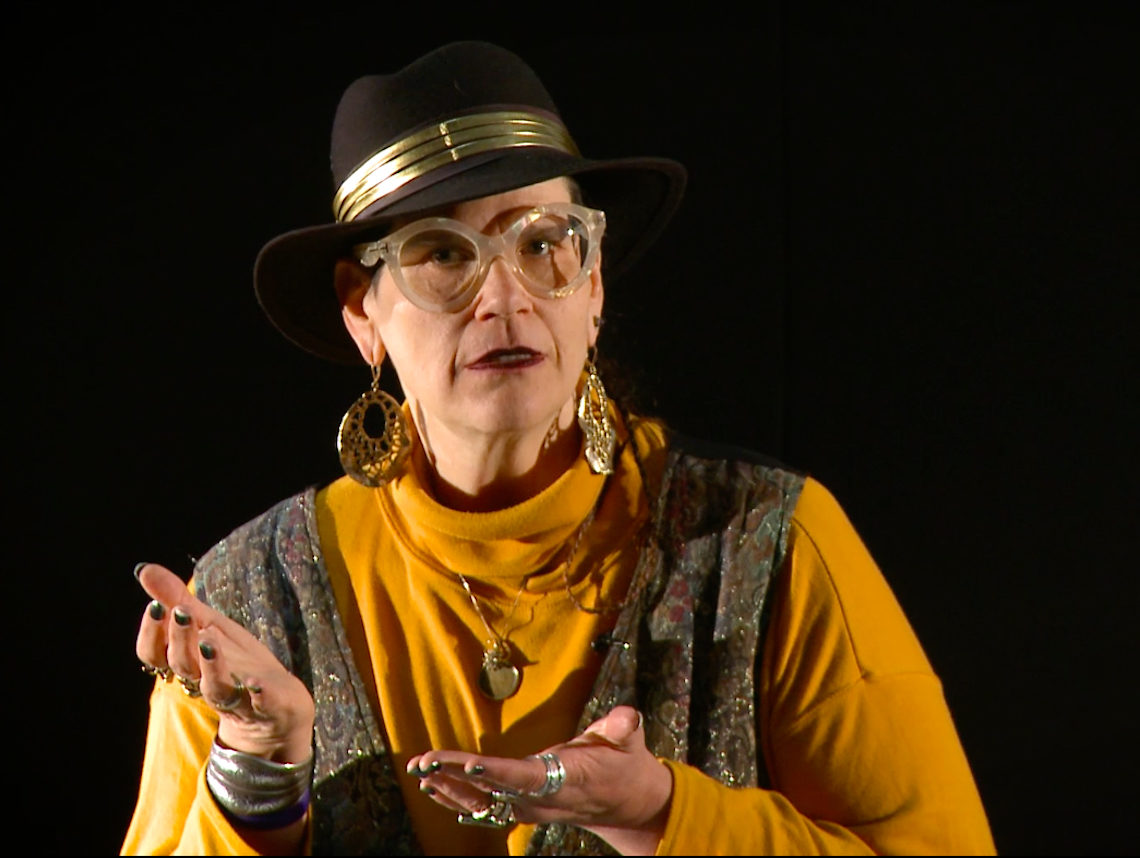
Reb Mimi brought something that Los Angeles didn’t even know it craved: Spirituality that is as substantial as it is ethereal, as academically and intellectually sound as it is soul-touching, embodied by a woman who defied every definition and convention we had all thought we needed — about what words we use to refer to God, about the logic of denominational divides, about what constitutes a family, about how many rings can fit on one person’s hands. (Each ring is connected to a person or event in her life, so why should she leave any off?)

Intellectuals, even skeptics, were drawn to Reb Mimi’s uncompromising intellect and her insightful interpretations of the texts, and found themselves drawn into the aura of meta-meaning she created; those who already had a soulful bent grew to understand that spirituality not based on wisdom and understanding can be vacuous.

With her kaleidoscopic couture and her ability to instantly cut beneath the surface, Reb Mimi drew people in and created deep connections. She now considers Los Angeles a true home, and she has people here she considers family in as literal a sense as possible.

A small cadre of Reb Mimi’s students became her soul children: They use her name as part of their own when called to the Torah; she has been present at the birth of their children; and the Shabbat blessings she offers them each Friday — in person or via Skype — is the most sacred moment of her week. Inspired by a Chasidic tale, she even started a savings account for her soul children, so tangible and real is the connection.

She has a soul brother she buried here, and she sat shivah for him, and now she is eternally connected to the land of Southern California.

Reb Mimi is grateful that God opened up a way for her to influence such a large segment of world Jewry. The fact that it is in North America and not Israel, and that it came through the Conservative movement and not her birth denomination of Orthodoxy, is both painful and irrelevant.

“It is painful that my denomination of origin cannot embrace the Torah I have to offer,” she said. “And at the same time, I answer to God. And I live well with myself answering to God. God’s world is so much greater than these denominations.”

Being in America, she said, challenged her and changed her.

She cried out to God, wondering why God had chosen to banish her from Israel, which she called home since moving there with her family when she was 8 years old.

“It has changed my Torah and my personal life. It has challenged my world of axioms, sometimes demanded of me to question my beliefs,” she said.

In many ways, she became a different person while she was here.

She shed 130 pounds, had long-needed double knee replacement surgery, and went from having long hair to a buzz cut (with one long, thin braid she never cuts).

She spent six years on a doctoral dissertation at Hebrew Union College-Jewish Institute of Religion that explores Jewish funeral rituals and how people can reclaim their own funerals as the last chapter in a life, and not the first chapter of death.

In her formal bio, she now goes by Rabbi Dr. Reb Mimi Feigelson — able to proudly embrace and advertise all the disparate parts of herself.

“I have learned to honor the gifts that God has given me and honor that path I have been asked to take. And that means I am learning in my life to create harmony of all my pieces,” she said.

Being in Los Angeles gave her a chance to re-examine the model of her brokenness: She shifted from thinking that the scattered shards of her soul needed to be collected, and instead realized they needed to be planted, like seeds.

And she can do that because, in Los Angeles, she found partners for her journey.

“Being here gave me a sense of being less alone. I used to say that I knew God loved me by virtue of the teachers I have. My life changed when I said I knew God loved me by virtue of the students I have. And that happened here, in Los Angeles,” she said.

The Orthodox world, and Jerusalem, have changed along with her. In the past decade, Orthodox women trained to answer halachic questions have gained acceptance, and women ordained as clergy are just getting a foothold in the Orthodox world.

Still, Reb Mimi remains a breed of her own: Her interest is in nourishing souls and saving lives, within a framework of traditional texts and halachic observance, but she is not one to offer verdicts on legal minutiae. So she knows her path will still be her own, and she is OK with that.
She is, finally, done apologizing for who she is.

“Jerusalem is still a hard city,” she said. “There is a way in which Jerusalem is still a city without compassion. But my dream to come home as I am is actually going to be fulfilled.”


Julie Gruenbaum Fax is a Los Angeles-based journalist who ghostwrites memoirs and autobiographies.

In L.A., Reb Mimi found herself, her soul family and a way home Read More »

Rabbi Naomi Levy’s ‘Einstein’ charts a path to the soul

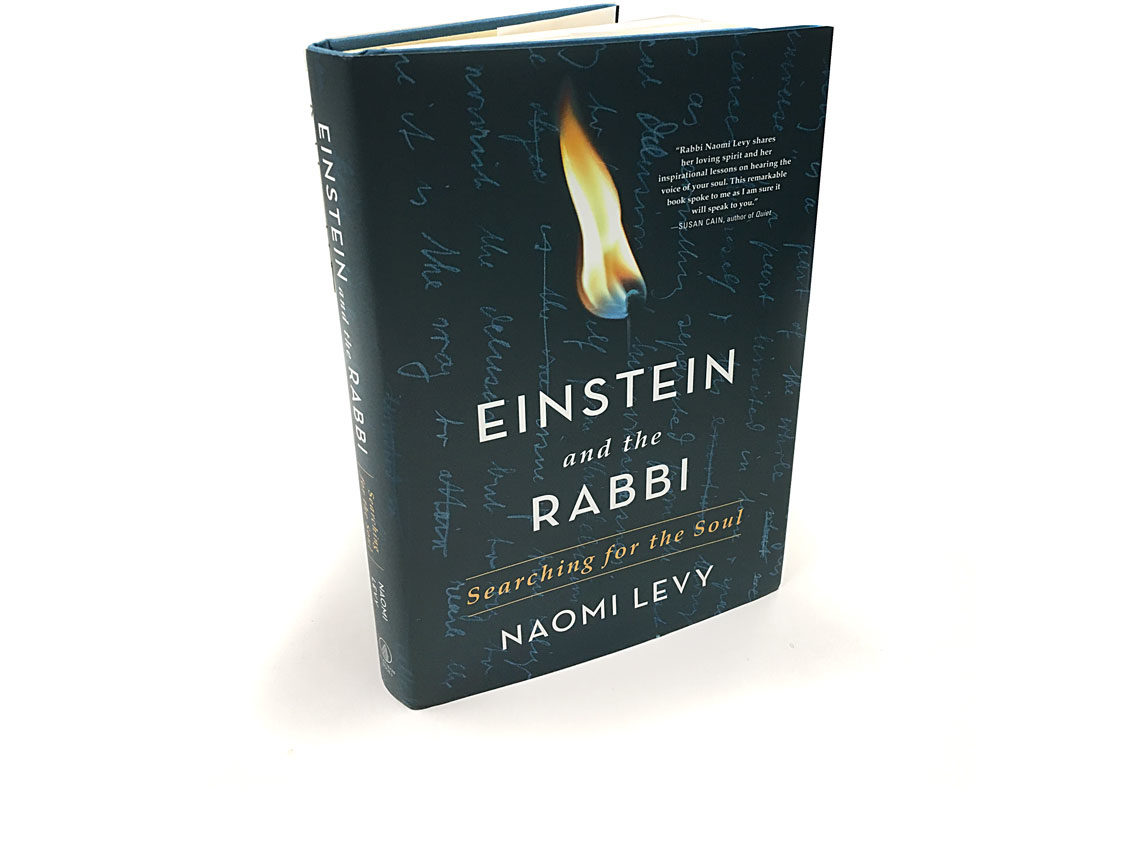
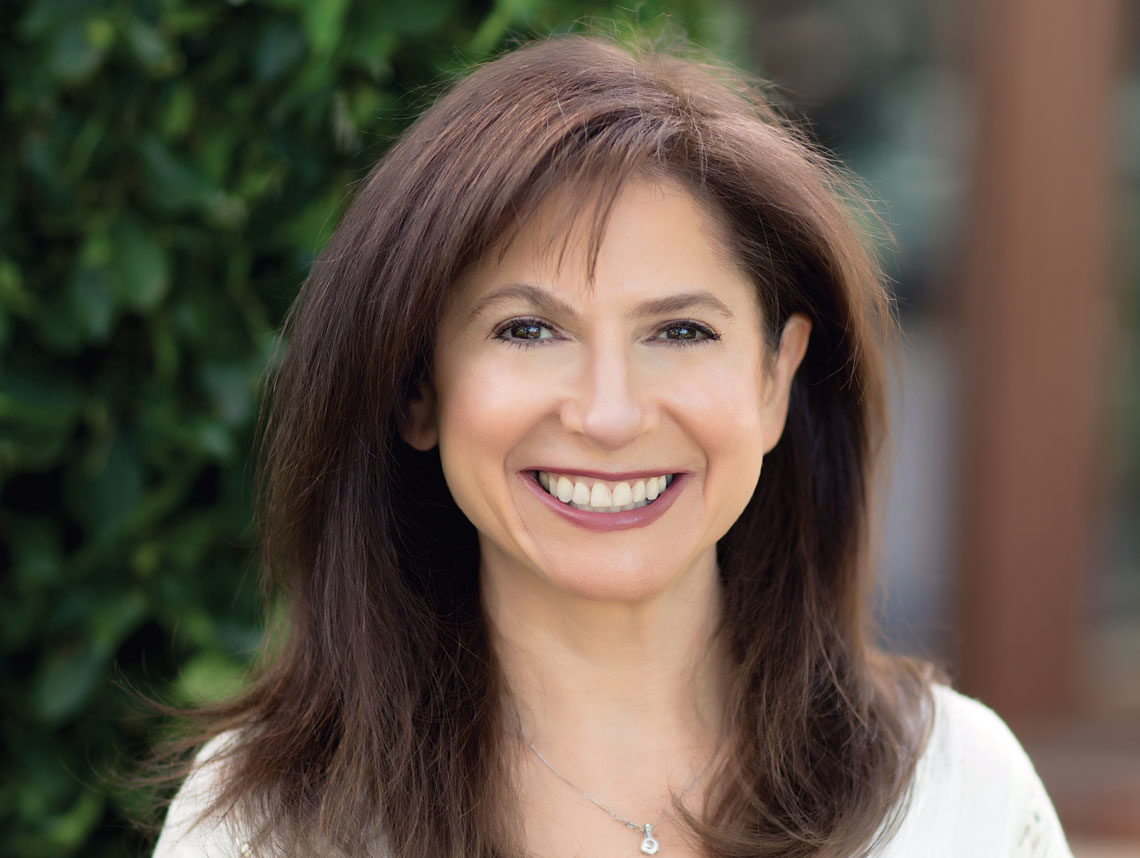
A pulpit rabbi is called upon to be all things to all people — spiritual leader, teacher, counselor, comforter, administrator and much else besides. Naomi Levy, as the founder and rabbi of the Los Angeles-based Jewish spiritual community called Nashuva, is all that and more. What we discover in her latest book, “Einstein and the Rabbi: Searching for the Soul” (Flatiron Books), is that she also is (perhaps above all) a gifted storyteller — courageous, daring, witty and wise.

“The Hebrew word Nashuva means We Will Return,” she explains in the book. “We all have a need to return — to passion, to our dreams, to love, to our own souls, to God.”

Among the many examples of loss and redemption to be found in “Einstein and the Rabbi” is the heartbreaking loss she suffered at the age of 15 when her father was gunned down in a robbery. She had dared to dream of becoming a rabbi — something unheard of in the Conservative movement at the time — but the loss erased her dreams: “I was numb,” she writes. “Prayer died too. All those powerful discussions my dad and I had about God and faith and prayer seemed hollow now. What good was God? I stopped longing to be a rabbi.”

By her senior year of college, however, a door opened — literally. The Jewish Theological Seminary voted to accept women into its rabbinical program, and Levy was a member of the first entering class to include women. She reconnected with both her childhood dream and her father, too. “When I heard the news, I was laughing and crying at the same time,” she recalls. “I knew my father was laughing, too, laughing from pure joy.”

The title of the book refers to a kind of mystery story that runs throughout the work. Levy found her way to an obscure letter whose author turned out to be Albert Einstein: “A human being … experiences himself … as something separate from the rest,” the great scientist wrote. “The striving to free oneself from this delusion is the one issue of true religion.”

The letter inspired her to play the role of a detective: “Little did I know that this powerful teaching by Einstein about the universe would lead me to the soul of a stranger, and that I would feel compelled to follow the sacred thread of his story.”

I won’t give away the ending — or the fascinating and sometimes sorrowful twists and turns — of the story that she tells about Einstein’s letter except to say that it carries a profound irony. For Levy, the words of a famous man of science reveal a path to something every bit as elusive as the theory of relativity — the human soul.

“What you see with your eyes is only a piece of the truth,” she explains. “But the soul wants to offer us its expansive vision, a consciousness of the whole we have trouble seeing. Soon we may begin to see a bigger picture, how random threads are all actually woven together in a single majestic tapestry.”

Rabbi Naomi Levy

For Levy, the words of a famous man of science reveal a path to something every bit as elusive as the theory of relativity — the human soul.

The crown jewel of “Einstein and the Rabbi,” however, is Levy’s account of a dire medical ordeal she was forced to endure. Again, I do not want to take the edge off her remarkable and ultimately triumphant story except to say that it begins with a triviality and quickly escalates into something truly nightmarish. And yet, as Levy tells it, the final moments before a crucial surgery presented her with an experience of the divine.

“And all of a sudden I crossed a river,” she explains. “From drowning in waves that were engulfing me to the purest stillest water I have ever seen. It wasn’t something I did, it just happened. Grace.

“Whoa!” said a nurse who happened to enter the pre-op room at that moment. “ ‘Something really powerful is happening here,’ and she backed away and closed the door.”

My ethical obligation as a book reviewer requires me to disclose that Levy is married to Rob Eshman, the publisher and editor-in-chief of the Journal, but that’s not the only reason to mention him here. Eshman figures importantly in the book and often is in its most poignant and endearing passages, as when Levy describes how he “wooed me with food.”

“Our kids grew up knowing that both their parents would be sitting with them every night eating amazing food together,” she writes. “Love, sensuality, soul, friendship, community, family, food. Eden. Thank You, God. I am full.”

“Einstein and the Rabbi” is Levy’s fourth book, and the readers of her previous work (“Hope Will Find You,” “Talking to God” and “To Begin Again”) already will know that she brings not only eloquence and wisdom but also a wry sense of humor and the deepest compassion to her writing. Yet her new book achieves something even more exalted, an intimate revelation that rings with courage and authenticity. The reader surely will come away from Levy’s latest book with that sense of spiritual fullness she seeks to impart in everything she does, whether from the pulpit or on the printed page.


Jonathan Kirsch, author and publishing attorney, is the book editor of the Jewish Journal.

Rabbi Naomi Levy’s ‘Einstein’ charts a path to the soul Read More »

Interview with Rabbi Naomi Levy: On hope and holy moments

Rabbi Naomi Levy spoke with Jonathan Kirsch, the book editor of the Journal, about her book “Einstein and the Rabbi.”

Jewish Journal: The title of your book reminds us that Albert Einstein — perhaps the most famous Jewish figure in the modern era — was a scientist who also had a lot to say about God. You share with your readers a letter in which Einstein says that achieving a sense of oneness with the universe is “the one issue of true religion.” What do you understand Einstein to mean by “true religion”?

Naomi Levy: My take — or my midrash, if you will — is that I am reading his words as a reference to a spirituality that encompass all faiths, and all traditions, and all people. “Religion” is our sense of common purpose and common humanity, our ability to rise above all of the differences that we see, a recognition that, really, oneness is all there is. My prayer is that it would be a universal faith that we can all sign on to while keeping our individual traditions and faiths. And I would love to be a rabbi in that faith.

JJ: You write about what you describe as your “homemade” bat mitzvah, which was also your first encounter with the limited role that traditional Judaism affords to women, young and old. You’ve come a long way since then, and yet the Jewish world — and especially the rabbinate in Israel —  can still be an unwelcoming place for a woman rabbi. Do you sometimes feel that Judaism itself is moving in the wrong direction?

NL: Obviously, since my bat mitzvah, many aspects of Judaism are moving in very hopeful directions. In extreme Orthodoxy, they are not. I find it very saddening that American Jewry has more freedom of expression and more freedom to experience different voices of Jewish insight than Jews in Israel do.

JJ: One of the most heartbreaking and yet formative experiences that you describe in your book is the murder of your father by an armed robber when you were a teenager. It seems like America is descending ever deeper into gun violence. Yet you also write: “Yes, I do believe great things are coming, sweet blessings.” What brings you to that belief?

I realized that there may be a lot going wrong in our nation and our world, but there are wonderful people everywhere with good hearts and open arms.

NL: On the day of the solar eclipse, I hopped on my bicycle and rode to the beach. We’d gone to a store to get the special glasses you need, but we didn’t find them, and I thought I wouldn’t see the eclipse after all. But I came upon this lovely group of people who could not have been more welcoming or more loving. We shared stories and emails and cellphones. When I walked away from that experience, I realized that there may be a lot going wrong in our nation and our world, but there are wonderful people everywhere with good hearts and open arms. I really do believe in humanity, I do. We can’t afford to give into despair. We have to be warriors for love, and warriors for hope, and warriors for peace.

JJ: You write with both wit and courage about a dire health crisis of your own and a moment of exaltation that came in answer to prayer. That scene in the hospital is so remarkable that you hasten to explain to your readers: “I am not psychotic … at least I don’t think I am.” Do you find it ironic that we live at a time when a rabbi who personally experiences divine intervention needs to assure her readers that she is not crazy?

NL: You know what? I think if I were Christian, I wouldn’t have to explain it as much, but Jews are more skeptical of things like a calling. Even though the whole concept of a calling is a Jewish concept, and our Christian brothers and sisters got it from us, when would you hear a rabbi saying, “I got the call”? But I did.

JJ: You write, “It’s not uncommon for me to spend the morning offering a blessing at the bedside of someone who is dying, and to then rejoice at a wedding or a baby naming that same afternoon.” But I wonder if it takes a toll on you, physically and spiritually, to be the one we go to at moments of the greatest joy as well as the greatest pain and sorrow.

NL: The toll would be so much greater if I didn’t have love at home. I feel very blessed and loved.  And there is a way in which making the shift from death to life or from life to death gives me a perspective that I wouldn’t have it any other way. Are there times when I feel like I just can’t do this? Yes, there are. Then I rise to the occasion and do it, and those are some of the most precious, powerful and holy moments in my whole life.

Interview with Rabbi Naomi Levy: On hope and holy moments Read More »

Beholding threads of connection: An excerpt from ‘Einstein and the Rabbi’

It was three years ago that I stumbled accidentally on a quote by Albert Einstein that stopped me in my tracks because it so captured everything I believe and everything I know to be true about the way we are all intimately connected to one another.

And then Rabbi Robert Marcus, who had helped so many children but was unable to save the life of his own eleven-year-old son Jay, became part of my journey. In his heartbreak, he’d reached out and written to Einstein seeking words of comfort, words to help him make sense of his own tragic loss. In return, he received Einstein’s powerful description of a world that is all one.

Over the past three years, I’ve been searching the world for Buchenwald boys who could offer me any piece of information about Rabbi Marcus, who died in 1951.

But the one Buchenwald boy I most wanted to speak to, the one who I believed could really put Rabbi Marcus’s story into context for me, was Elie Wiesel.

I so longed to interview Elie. I’d write, I’d call, I’d e-mail. His assistant always told me that his calendar was completely booked.

One friend of mine who knew Elie told me he was in poor health and that his mind might not be as clear as it once was. Perhaps Elie didn’t remember Rabbi Marcus. Perhaps that was why I couldn’t reach him.

Still, every few weeks I’d e-mail again requesting an interview.

I waited and reached out for three years and then, one day, I got a response! Elie wanted to speak with me. On the afternoon of our interview I was so excited my heart was pounding in my chest.

I still worried that Elie might not have much to tell me about Rabbi Marcus, but I was so grateful and honored to be able to speak with him. Then I asked my first question: “Do you remember Rabbi Robert Marcus?”

Elie said, “Do I remember?”

He said, “I saw a soldier appear with a Star of David sewn onto his military uniform.”

Elie explained, “This meant a lot. Up to that moment, for us, a Star of David was a mark of death. And here suddenly it was a mark of freedom!”

That’s not something you forget.

Then Elie told me about the power of that moment when Rabbi Marcus led the very first prayer service in the Buchenwald concentration camp. “We prayed all the time in Buchenwald,” Elie said, “but this was different. It was a great happiness, surprising. It meant a great deal that we could pray with him.”

Elie told me that he was in awe of Rabbi Marcus. He said, “Naomi, the distance from us boys to Rabbi Marcus was like the distance from the earth to the sun.” Seventy years had passed, but his memories of that time had not faded.

And then I spoke with Elie about Judith, the young woman who took charge of his  orphanage after liberation.

I asked Elie, “What stood out for you about Judith?”

He said, “Her smile.”
I asked him, “Could you feel her confidence?”

“Oh yes,” he said, “absolutely, we all felt it. She came from a place of security and happiness. She created a safe place for us. Judith knew what we needed.”

With kindness, Elie allowed me to probe into those days with Judith. I asked him, “Did you know when you first arrived at Ecouis that you and all the boys had been diagnosed as damaged beyond repair?”

Elie replied in a voice filled with pain and understanding, “Yes, I was aware of that.”

Elie told me about the day when Judith reorganized rooms by village. “It was a powerful moment,” he said.

I asked Elie if he remembered Niny. It turned out that Elie, too, had a mad crush on the beautiful Niny.

Then I spoke with Elie about the day the boys argued over whether they should say the mourner’s Kaddish for their families. Elie was one of the boys who stayed to recite the prayer for the departed. He told me that even from a distance of seventy years, it was too difficult for him to speak about that day.

I said to Elie, “Judith told me she saw hope return to the boys. Did Judith give you hope?”

Elie said, “It’s a very strong word, ‘hope,’ I’m not sure I’d use that word.”

“What word would you use?”
“Hopefully, I’ll find it. One day I’ll find it.”

Toward the end of our conversation I asked Elie the question I’d been longing to ask him: if he knew about a letter Rabbi Marcus had written to Einstein after the death of his son Jay. Elie told me he did not. I read Elie Einstein’s letter to Rabbi Marcus and then I asked him, “What was the most important thing that got you through your worst times?”

Without missing a beat Elie replied, “Friendship … without a doubt, friendship.”

Yes, friendship, of course! As Elie spoke I was beginning to see threads of connection. The way you can even be a friend to a total stranger. How Rabbi Marcus was there for Elie Wiesel and how Einstein was there for Rabbi Marcus. Strangers who reached beyond themselves to lift up and save another — people who rose above that “optical delusion of separateness.”

We are all part of a whole.

You never know how a stranger is going to enter your life and save you and lift you and liberate you from the delusion that you are alone.

At that moment, I was about to say thank you and hang up, but then I realized that I owed Elie Wiesel my gratitude, not for agreeing to do this interview, but for an act of kindness he bestowed upon me many years ago without even knowing it. I needed to thank him, and I might never have another chance.

So before I hung up with Elie I hesitated, but then I gathered up my courage because I just knew I had to tell him how he had saved my life. I told Elie, “I need to tell you something. I assume you must hear this from so many people, how you’ve helped them, but I need to tell you what you did for me in my life.”

“You cannot imagine how moved I am right now,” Elie said. “Tell me what happened.”

We are all part of a whole. You never know how a stranger is going to enter your life and save you and lift you and liberate you from the delusion that you are alone.

And so I began: “I grew up in Brooklyn. My father taught me, from the time I was a small child, he began teaching me Torah and commentaries and how to pray, too. He’d take me with him to synagogue every Sabbath and I would sit beside him and play with the strands of his prayer shawl.”

I told Elie about my father’s murder when I was fifteen years old and that I was an angry kid, so angry and lost and sad. I said I didn’t have a plan for ending my life, but I didn’t have any plan for living either.

I was only fifteen years old and I felt like I had come to the end of things. My father was gone. My mother wasn’t the same woman anymore. The Sabbath wasn’t the same. I wasn’t the same. Prayer? How could prayer be the same? And what good was God anyway?

I said, “At that lowest point of my life, my mother saw that you were giving a lecture and she asked me to go with her. I didn’t want to go, but she encouraged me and I went. It was a freezing-cold December night and we took the subway from Boro Park all the way up to the 92nd Street Y.” I said, “I walked into this massive auditorium full of old people and I so didn’t want to be there. We were sitting in the second-to-last row and I so regretted that I’d agreed to come to this thing. But then all of a sudden, the lights went down and you walked onstage and sat down at a desk with just a spotlight on you, and began speaking. At first, I was daydreaming as you spoke, but then your words began to seep into my well-defended heart. Yes, your words were sinking in, the kindness of your voice. And your hands were performing some sort of ballet in the dark. It was as if your hands were doing a performance to the words you spoke all on their own. I remember being transfixed by your hands, and realizing it was the first time I experienced beauty since the day my father died. I was mesmerized. Watching and listening to you, a man who had been to hell and back, and seeing you offer beauty to the world gave me some sort of spark of hope. And somehow, that night, you opened a door for me to step through. That night was the beginning, a first step in many steps that would lead me back, bit by bit, out of the depths that had threatened to overtake me. Many years have passed and I have had many causes for joy. And I want to thank you for teaching me that there was hope in my future and that I would have cause to celebrate and to give thanks.”

I said to Elie, “A man stands in front of an auditorium of two thousand people and he has no idea that he’s opened a new door for some lost fifteen-year-old kid who is listening and taking it all in.”

Elie said to me, “You cannot imagine how touched I am.”

Sadly, Elie Wiesel died not long after our intimate conversation. I will treasure the precious wisdom he shared with me always and the final words we spoke to each other:

He said, “Naomi, you found your way.”

“You are a blessing,” I replied.

“So are you,” he said. “Don’t forget that. Believe in that. More and more blessings.”


From: “Einstein and the Rabbi: Searching for the Soul” by Naomi Levy (Macmillan, 2017). Reprinted with permission.

Beholding threads of connection: An excerpt from ‘Einstein and the Rabbi’ Read More »

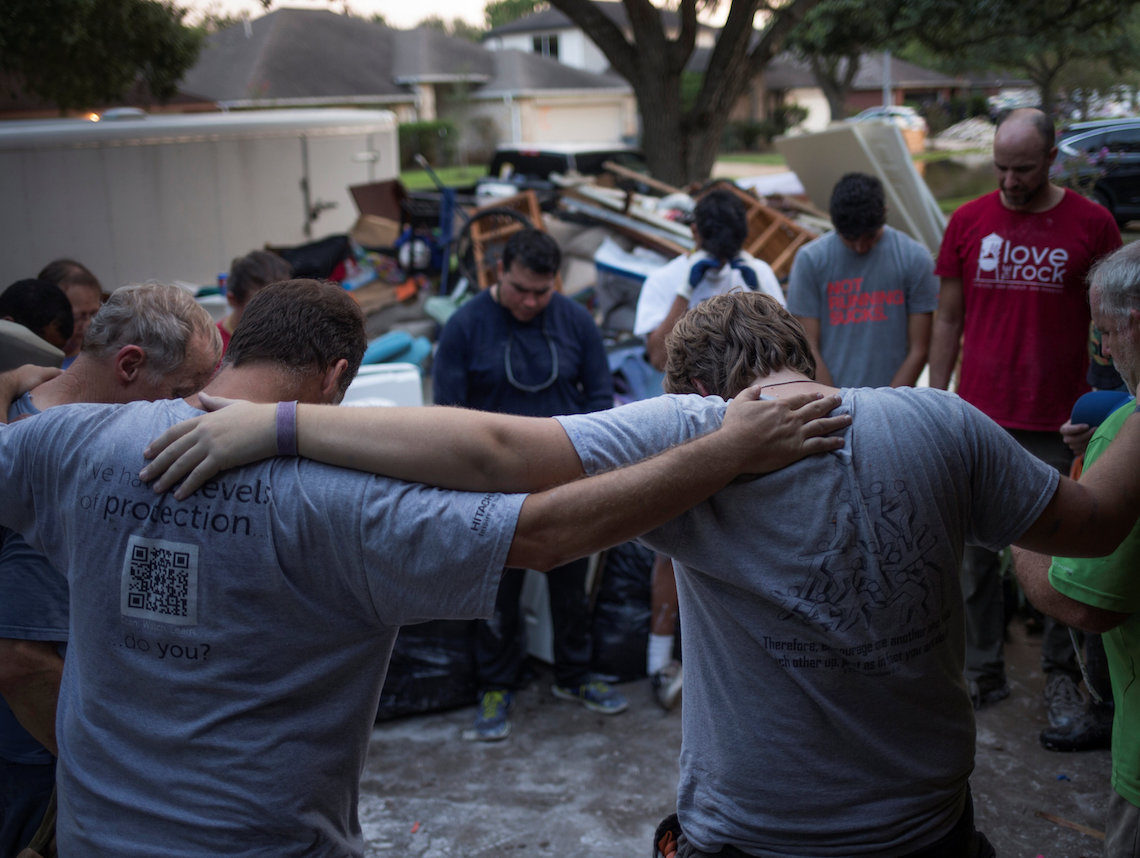
May Harvey inspire our better angels

Whenever there’s a tragedy, people unify.

That’s true of every group. It’s true of Americans during Hurricane Harvey. It’s true of Jews during every crisis in Jewish history. It’s only pressure from the outside that demonstrates cohesion within.

But what happens when the tragedy ends? What happens when the crisis abates?

If we’re not careful, we fragment again.

Take the Jewish community as an example. During the Gaza War, Jews around the world united in support of Israel; the deadly rocket assaults and brutal tunnel kidnappings from Hamas terrorists forced Jews to come to the realization that no matter their internal divisions, their mortal enemies wanted them collectively destroyed. Then the Gaza War ended, and Jews got back to the business of savaging themselves: leftists suggested that Prime Minister Benjamin Netanyahu’s administration was too resistant to negotiations with the Palestinians, right-wingers suggested that the left was too conciliatory.

The same will be true in Houston. As the rains fall, driving thousands from their homes and destroying the savings of thousands more; as Texans band together to weather the elements and venture out on missions to save their fellow citizens; as Americans around the country watch, heartbroken, and reach for their checkbooks to try to help in any way they can, we feel united. That’s not new. We felt united after Sept. 11. We felt united during Hurricane Katrina. But that unity will inevitably break down: There will be complaints about government malfeasance, about partisan politics. In fact, it’s already begun: We’ve seen diatribes about first lady Melania Trump’s high heels, President Donald Trump’s crowd-size remarks, and supposed hypocrisy regarding federal disaster funding.

This is the point: Crises are sporadic. But we must take to heart the clarifying truths we see during crises: that we are united, that we are family.

In the Jewish community, this means recognizing that once a crisis ends, our enemies do not disappear. Hamas is intractable, as its members prove each and every day: Last week, they moved to restore ties to Iran and Syria. The Palestinian Authority, meanwhile, named a youth camp in Jericho after Dalal Mughrabi, a female terrorist responsible for hijacking an Israeli bus and killing 38 civilians, including 13 children. Hard-leftists continue to call for divestment from Israel; alt-righters continue to target Jews as a cancer eating away at Western civilization. Jews must understand that the values we hold dear — individual rights and personal accountability, cherishing life above death, the perpetuation of Judaism and its adherents — will not endure further crises if we do not retain our unity.

Crises are sporadic. But we must take to heart the clarifying truths we see during crises: that we are united, that we are family.

In the broader American community, the same holds true. Houston showed us that artificial barriers of race don’t matter in the slightest — Blacks helped whites, whites helped Blacks. Color didn’t matter as first responders raced to save drowning people flooded from their homes. Neither did concerns about tax rates or Medicare funding. In the end, Americans were united because we saw that we held values of family and community in common, that we cared enough about each other and trusted each other enough to know that even in our darkest hour, we would reach out. We didn’t need a heavy hand forcing us to do so; all we required was the motivation of our own hearts.

None of this means there isn’t room for disagreements, hearty and loud. None of this means that we can’t engage in brutal politicking — the issues about which we disagree do matter. But if we see one another as enemies rather than brothers, then the true crisis will come: the crisis of division. Even as Americans braved storms to help one another in Houston, Americans beat the living hell out of other Americans in Berkeley — members of antifa attacked a crowd of peaceful demonstrators, declaring themselves anti-Nazi in the process. Antifa sees its opponents as enemies, not brothers. Some antifa fellow travelers — Mark Bray of Dartmouth comes to mind — feel the same way. That belief, in turn, will lead too many right-wing fellow travelers to make room for violent groups on their own side.

But Houston is America; Berkeley is what America looks like when external crisis becomes internal crisis. Abraham Lincoln wasn’t merely speaking to 1861 Americans when he pleaded with them to remember their “bonds of affection,” praying that “The mystic chords of memory, stretching from every battlefield and patriot grave to every living heart and hearthstone all over this broad land, will yet swell the chorus of the Union, when again touched, as surely they will be, by the better angels of our nature.”

We see the better angels of our nature in Houston. May they inspire us to remember those bonds of affection, before everything falls apart.


BEN SHAPIRO is editor-in-chief at The Daily Wire, host of the most listened-to conservative podcast in the nation, “The Ben Shapiro Show,” and author of The New York Times best-seller “Bullies: How the Left’s Culture of Fear Silences Americans.”

May Harvey inspire our better angels Read More »

Meet Mike Tolkin, the Jewish millennial running for NYC mayor

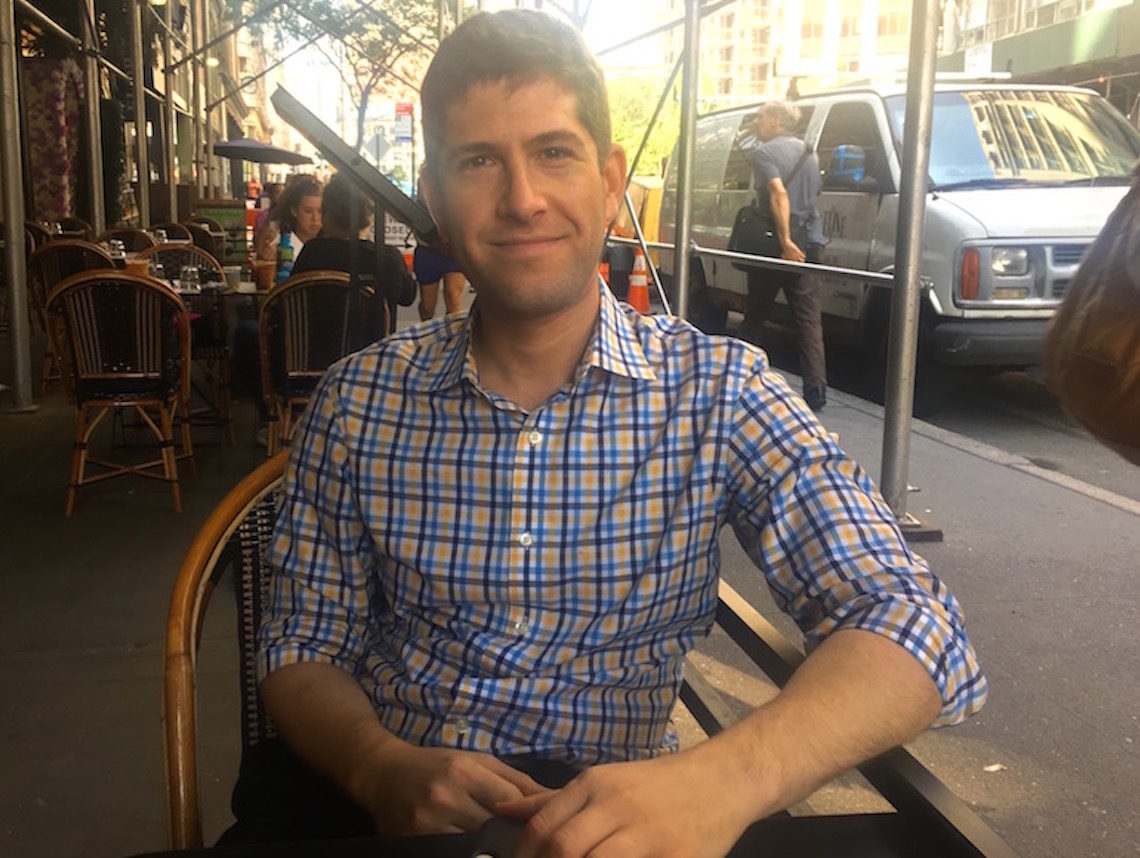
Mike Tolkin apologizes for checking his phone as he sits down at a café in this city’s Flatiron district.

The 32-year-old Democratic New York mayoral hopeful was waiting to hear Tuesday whether he would be allowed to participate in the final primary debate the following day, which would boost his exposure amid an otherwise quiet campaign.

Tolkin, a technology entrepreneur and the youngest candidate on the party’s ballot to challenge incumbent Bill de Blasio, had not met the threshold necessary to qualify for matching funds from the city’s Campaign Finance Board, a requirement to participate in the debate. But he pointed out that other candidates in the past, such as former Mayor Michael Bloomberg, had been allowed to circumvent those rules.

Later that day Tolkin found out that he would not be included — a decision he called “deeply undemocratic and grossly unfair.”

Though polling on the race has been sparse, de Blasio is expected to win the primary and general elections handily.

Still Tolkin, who has founded a handful of startups, remains undeterred.

“It’s been a little bit difficult for us to break through, but I’m a big believer that if you put forth really great, big ideas, you can inspire people, and that’s the best way to mobilize our city,” Tolkin told JTA a week before the Sept. 12 primary.

The candidate, who is Jewish and grew up attending a Conservative synagogue on Long Island, is running on a wide-ranging platform that centers on economic improvement. But it also includes proposals to create a human rights center, legalize marijuana and provide free mental health care.

“The biggest issue, as an overarching theme, is the economy,” said Tolkin, who lives in Brooklyn’s Carroll Gardens neighborhood. “We have to fix the economy, we have to make it work for everyone and we have to grow our economy.”

There are four parts to his economic agenda: restructuring government to make it more efficient and transparent; investing in infrastructure, such as street cleaning services and public transportation; grow and diversify the economy by investing in new industries, such as artificial intelligence, biotech and robotics; and improve income distribution.

Tolkin believes his business acumen makes him the ideal choice for running the nation’s largest city. He founded his first startup while studying at the University of Pennsylvania’s prominent Wharton School, where in 2007 he led a team that created a make-your-own chocolate bar company that won an award for the best undergraduate business plan.

A few years after graduation, in 2011, he founded Merchant Exchange, an incentive-based marketing platform for millennials, and in 2013 he founded two IMAX initiatives, including IMAXShift, a high-tech indoor cycling studio in which scenes are projected onto an extra-large screen. In 2015, he founded his latest venture, Rooms.com, a home design website that offers virtual tours of designer rooms.

Tolkin, however, was compelled to do something different earlier this year.

“What can I do as an individual to be more civically engaged, to take action in light of the fact that there are so many massive challenges?” he wondered. “I can’t sit on the sidelines anymore.”

He launched his mayoral campaign in January, meeting with New Yorkers from all parts of the city. He left the startup world a few months later to pursue the political effort full-time.

Tolkin said his Jewish background inspires him to give back to the community.

“It provided a really strong moral foundation for me,” he said. “The notion of charity, tzedakah and giving back is something that’s important to me.”

He has been involved with the ROI community, an international network of Jewish leaders, and Eighteen:22, an organization for LGBTQ Jews.

Growing up, Tolkin had encountered homophobia.

“I’ve had my struggles,” he said. “I grew up as a gay boy in a world that didn’t really accept gay people.

“But I’ve been really fortunate, I’ve been really blessed. I haven’t had the same struggles as a lot of other people, so being able to take my good fortune and put myself in the shoes of who is on the other end of the spectrum is something that I don’t necessarily think is uniquely Jewish, but it’s tied to Jewish values of helping the other.”

Tolkin literally put himself in someone else’s shoes during the campaign when he slept on the streets for two nights this spring in order to understand the plight of homeless New Yorkers.

“It was awful and eye opening,” he said.

As part of his platform, Tolkin wants to create a human rights council based in New York, which he calls the League of Love. The council, which he imagines to be “sort of like the U.N.,” would unite diverse human rights groups, such as those dedicated to the rights of women, immigrants, LGBTQ people and minorities.

He also hopes to create business partnerships between the private and public sectors, such as by creating an Uber-style car ordering service owned by the city.

Tolkin has largely self-funded his campaign, contributing nearly $500,000, including $315,000 in loans, $175,000 of which he has “forgiven.” He valued an in-kind donation at $5 million for earnings from trademarked logos he created to sell on T-shirts and mugs, as well as strategy services he is providing to his own campaign. (That earned him some media coverage.)

Though his bid looks like a long shot, Tolkin remains optimistic about the campaign.

“We have a week left from today,” he said, “and I think you’re going to be pleasantly surprised by the traction we’re able to get in the final week.”

Meet Mike Tolkin, the Jewish millennial running for NYC mayor Read More »

Some leaders wrestle with news media better than other leaders

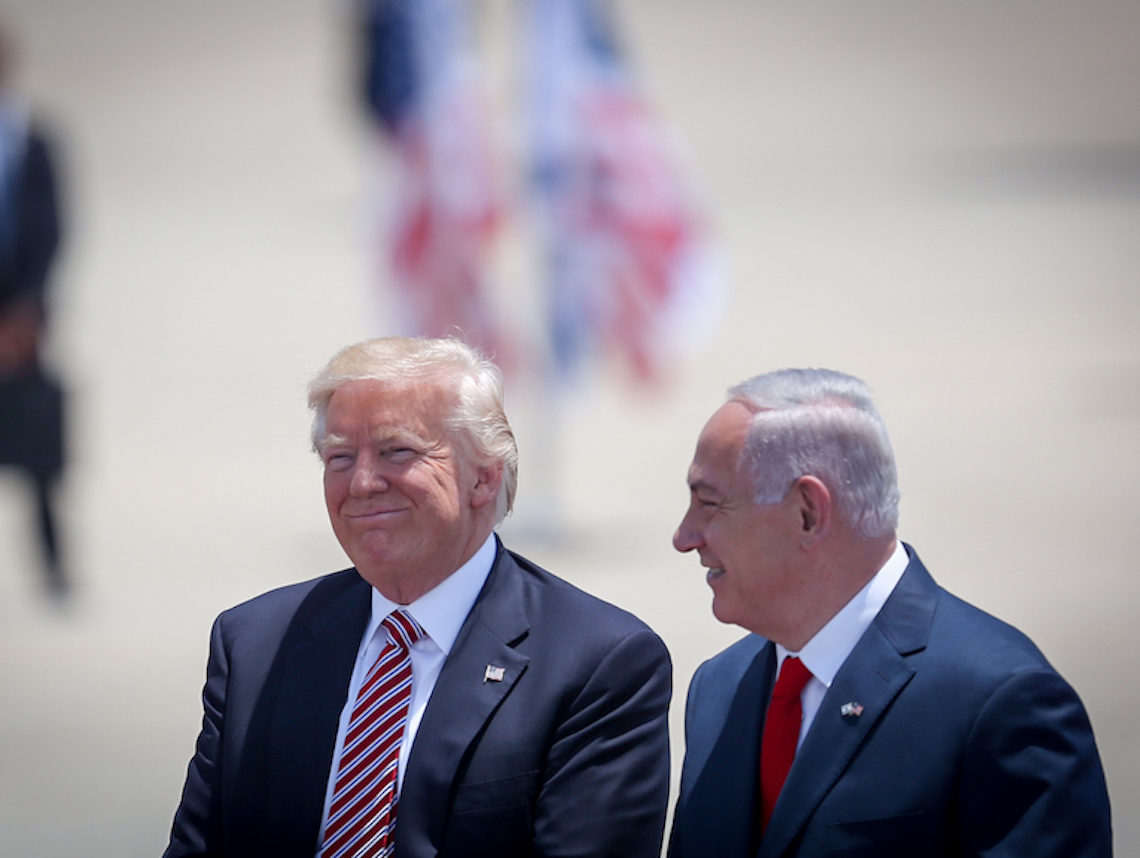
When President Donald Trump landed at Ben Gurion International Airport in May, a sensitive microphone on the tarmac picked up the conversation between Sarah Netanyahu, the Israeli prime minister’s wife, and American first lady Melania Trump. “You know, in Israel, all the people like us,” the prime minister’s wife told the first lady. “The media hate us but the people love us. Like you.” To which the first lady responded, “We have a lot in common.”

There was no need for a sensitive microphone to record the thoughts of their respective husbands on the media, because Donald Trump and Benjamin Netanyahu say it loud and clear in public rallies. On Aug. 22, President Trump incited a crowd in Phoenix against those “dishonest people,” as he pointed to the news media representatives  covering the event. And on Aug. 30, Netanyahu used a Likud gathering for Rosh Hashanah to vilify the “dishonesty” of the “arrogant” media, which he claimed saw all of its efforts as kosher in scheming to topple him from power, disregarding the will of the people.

Such acrimonious relationships between people in power and the press are not new. A very famous — or notorious — case was that of Vice President Spiro Agnew, with his immortal address to the California Republican state convention on Sept. 11, 1970: “In the United States today, we have more than our share of the nattering nabobs of negativism.” Agnew wasn’t known for his high language. His usual talk was more like, “Some newspapers are fit only to line the bottom of bird cages.” So, I wondered where he got this kind of lofty phrase, only to discover, much to my dismay, that it was written for him by White House speechwriter William Safire, who later became a New York Times columnist and the author of “On Language.” Oy vey, “those who laid you waste depart from you.”

At the time, Agnew’s ranting against the media could have been dismissed. Indeed, in 1972, when Gallup started polling Americans’ trust and confidence in the mass media “to report the news fully, accurately and fairly,” trust in the media was at its highest point ever — 72 percent. Today, only 32 percent say they have “a great deal” or “a fair amount” of trust (September 2016). In Israel, according to the 2016 Democracy index of the Israel Democracy Institute, Israelis’ trust in the media dropped to 26 percent today from 48 percent in 2004.

While that decline can be explained by the divisiveness of politics, Gallup doesn’t exonerate the media: “With the explosion of the mass media in recent years, especially the prevalence of blogs, vlogs and social media, perhaps Americans decry lower standards for journalism. When opinion-driven writing becomes something like the norm, Americans may be wary of placing trust on the work of media institutions that have less rigorous reporting criteria than in the past.”

Although the media indeed have to check themselves, attacks from the leaders only keep deepening the mistrust of citizens in both countries regarding one of the main pillars of democracy. Thomas Jefferson is often quoted as saying that “were it left to me to decide whether we should have a government without newspapers, or newspapers without a government, I should not hesitate a moment to prefer the latter.” Although, as president, he became embittered of the press, “Jefferson also knew that our democracy could only flourish with a free press that would keep an eye on people in power and help protect our freedoms,” Ken Paulson, president of the Newseum Institute’s First Amendment Center, told The Washington Post (Feb. 18). Compare that to President Trump tweeting about his wrestling “CNN” to the ground.

As for Netanyahu, he could have borrowed a page from Ze’ev Jabotinsky, the founding father of Beitar, forerunner of Likud. Jabotinsky was a talented journalist, who in 1932 wrote: “What a great thing is the newspaper; no profession is more sublime than that of a journalist.” Netanyahu surely knows that: His father was the personal secretary of Jabotinsky. Instead, he chooses to viciously attack the media, thus undermining democracy.

I served under a totally different leader, Yitzhak Rabin. When he saw in the morning a damning story or commentary, he would just shrug and say: “They have their job to do, and I have mine.” During his first term as prime minister, in 1977, Dan Margalit, the correspondent for Haaretz in the United States, exposed that Rabin’s wife, Leah, had kept a U.S. dollar bank account in Washington, D.C., which was then illegal. Yitzhak Rabin took responsibility and resigned.

Much later, in 1994, when Rabin again was prime minister, we flew to Aqaba, Jordan, for a joint press conference with King Hussein. Now guess who the moderator was: None other than Dan Margalit, who later joined us during the helicopter ride back home. I’ll never forget the picture of Rabin chatting casually with the journalist who had once brought him down. Gone are the days.


Uri Dromi, former spokesperson of the Yitzhak Rabin and Shimon Peres governments, is the director general of the Jerusalem Press Club.

Some leaders wrestle with news media better than other leaders Read More »