fbpx

August 29, 2017

Houston Jewish community ravaged by Harvey’s torrential rains

Most Houston-area Jewish institutions have been flooded due to Tropical Storm Harvey and a large portion of the city’s Jewish population is living in areas that have experienced flooding, the Jewish Federation of Greater Houston said.

“While we do not yet know the full extent of the damage, we know that most of our Jewish institutions have flooded,” the federation said Monday evening in a Facebook post. “We know that 71 percent of our Jewish population lives in areas that have seen massive flooding and Jews have been displaced from their homes with flooding ranging from six inches to ten feet. We know that close to 12,000 elderly members in our community live in areas impacted by flooding.”

[Hurricane Harvey: How you can help]

As some two inches of rain fell per hour in the Houston area on Tuesday morning, according to reports, Jewish institutions were pitching in to provide shelter and relief for those affected by the storm.

Several displaced families were taking shelter at the Robert M. Beren Academy Orthodox Jewish day school, the Texas Jewish Herald Voice reported.

The Union for Reform Judaism’s Green Family Camp in Bruceville, Texas, announced Monday in a Facebook post that it would be opening up to accept former campers, congregants and friends affected by the storm. The post said the camp could provide housing, food, air conditioning, internet and electricity “for a limited time.”

Meanwhile, Chabad-Lubavitch of Texas is coordinating truckloads of kosher food to be sent to the area and will set up a kosher food pantry available to the Jewish community as supplies reach the area. Chabad emissaries in Houston have been preparing and delivering kosher meals to people evacuated to emergency shelters or who took shelter in hotels, according  to Chabad.org.

[PHOTOS: Heroes in Houston]

IsraAID, an Israeli-based humanitarian aid agency that responds to emergency crises and engages in international development around the world, said in a tweet Monday that it was coordinating with governmental and nongovernmental first responders and that  its emergency teams continue to prepare for deployment. It sent seven members to Houston on Tuesday, who were set to join three others who already were in the United States when the hurricane hit.

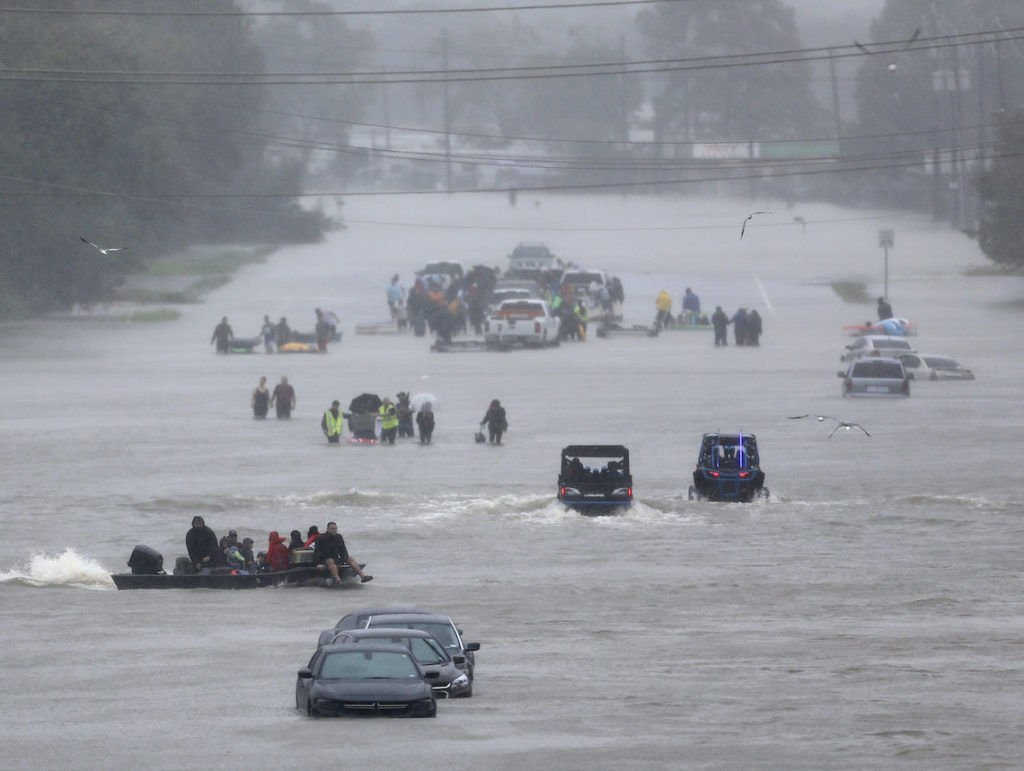
Homes have been without power for two days, and floodwaters have reached the roofs of some single-family homes, according to reports. At least three deaths have been confirmed, and the Houston television station KHOU reported Monday that six family members were said to have drowned when their van was swept away by floodwaters, though no bodies have been recovered.

The National Hurricane Center Public Advisory for Harvey in an advisory Tuesday morning said that “catastrophic and life-threatening flooding continues in southeastern Texas and portions of southwestern Louisiana.”

“The level of rain that we’re seeing here is biblical,” David Krohn, a cantor at Houston’s Congregation Brith Shalom, told Haaretz. “It’s diluvian rain all day and all night, rain that keeps accumulating.”

https://www.facebook.com/urjgfc/posts/10155768522946522

Houston Jewish community ravaged by Harvey’s torrential rains Read More »
Houston Jewish Relief Info

Don’t just sit there – your prayers and donations are needed!

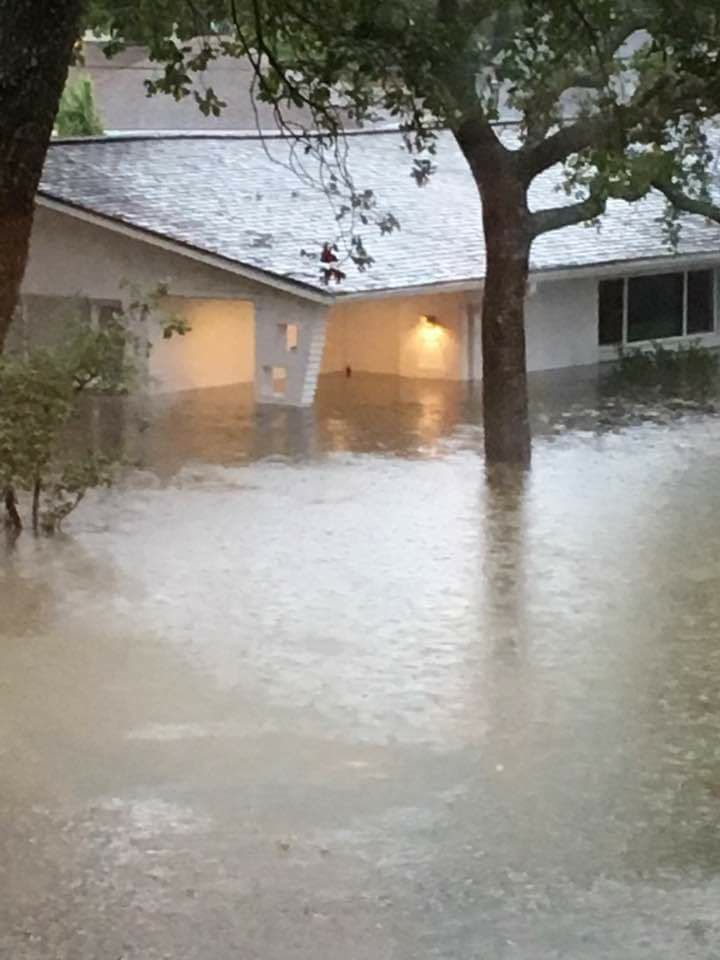
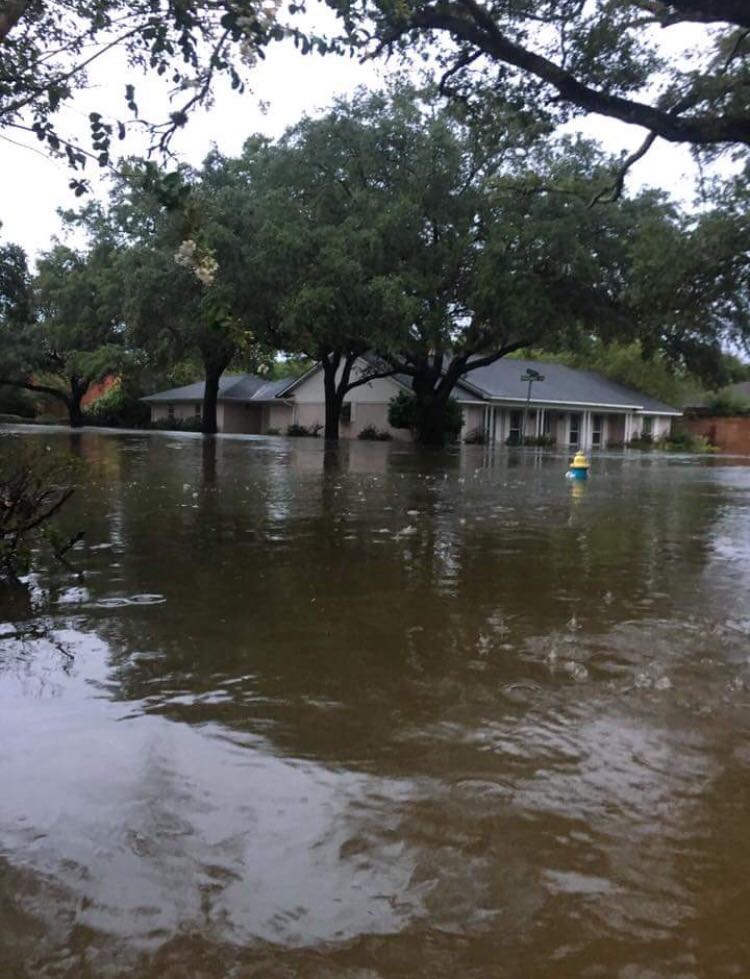
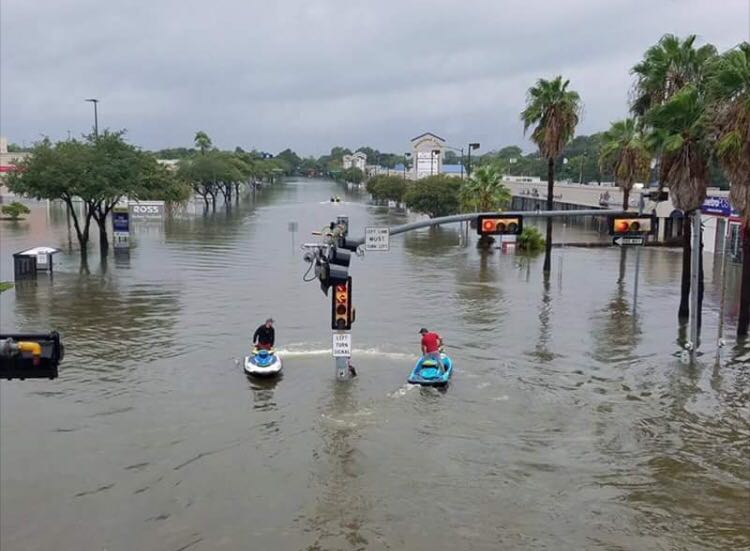
Please help our brothers and sisters in Houston hit hard by this storm. Many of us here in Los Angeles have friends or family that are stranded in and around Houston. And the storm is still raging. (Below are pictures from their family’s streets.)

Jewish families that are in public shelters don’t have easy access to Kosher food, and other Jewish services.

Many might be stranded, homeless for months.

Hundreds of volunteers are needed to help in the aftermath of the storms.

From a distance it is a challenge to know how to help – but as Jews we believe that Kol Yisrael Areivim Zeh l Zeh – all of us are responsible for the safety and well being of everyone else.

Please increase your prayers and please donate locally in Houston to help!

Click here for a list of contact numbers and places to donate.

You can send us updates if you have them to: relief@picoshul.org

This Jewish neighborhood in Houston is several feet under water – and its not getting better. August 27, 2017.
View from the the front lawn of a Jewish family’s home in Houston, August 27, 2017.


Houston Jewish Relief Info Read More »

Rex Tillerson, heeding objections, says anti-Semitism envoy post to be filled

The State Department will fill the post of special envoy for the Office to Monitor and Combat Anti-Semitism following the urging of lawmakers and Jewish groups, but will do away with or combine dozens of other diplomatic positions.

Secretary of State Rex Tillerson made the announcement in a letter sent Monday to Sen. Bob Corker, chairman of the Senate Foreign Relations Committee.

The special envoy post, which was mandated in the Global Anti-Semitism Review Act of 2004, has remained unfilled since Trump’s inauguration in late January, as have many other such posts. The envoy monitors acts of anti-Semitism abroad, documents the cases in State Department reports, and consults with domestic and international nongovernmental organizations.

The Office to Monitor and Combat Anti-Semitism has been unstaffed since July 1.

Congress members, Jewish groups and Jewish leaders have been urging Tillerson to keep the office open and name an envoy.

According to the Tillerson letter, the office will be returned to the State Department’s Bureau of Democracy, Human Rights and Labor, with two positions and $130,000 in funding.

“I believe that the Department will be able to better execute its mission by integrating certain envoys and special representative offices within the regional and functional bureaus, and eliminating those that have accomplished or outlived their original purpose,” he wrote. “In some cases, the State Department would leave in place several positions and offices, while in other cases, positions and offices would be either consolidated or integrated with the most appropriate bureau. If an issue no longer requires a special envoy or representative, then an appropriate bureau will manage any legacy responsibilities.”

Other envoys that will be retained include the special envoy for Israeli-Palestinian negotiations; Israel and the Palestinian Authority, U.S. security coordinator; special presidential envoy for the global coalition to defeat ISIS; the ambassador-at-large for international religious freedom; and the special envoy for Holocaust issues.

Of 66 current special envoys or representatives, 30 will remain. Nine positions will be eliminated, 21 will be integrated into other offices, five merged with other positions, and one transferred to the U.S. Agency for International Development.

The Anti-Defamation League, which ran a campaign to urge Tillerson to retain the position, including sending the secretary of state a petition signed by thousands of Americans,  praised the decision.

“We commend Secretary Tillerson for listening to the voices calling for the appointment of the special envoy to counter anti-Semitism,” National Director Jonathan Greenblatt said in a statement. “This position has been an essential diplomatic and political tool in fighting anti-Semitism around the globe.

“We urge the State Department to refrain from eliminating other special envoy roles which are vital to promoting American values of democracy, tolerance and religious freedom across the globe.”

Rex Tillerson, heeding objections, says anti-Semitism envoy post to be filled Read More »

Deporting illegal immigrants: Israel’s unresolved challenge

The challenge of having to deal with illegal immigration is an international challenge. It is also an Israeli challenge that Israel’s Supreme Court addressed yesterday in a ruling that was as misunderstood by the angry Israelis responding to it, as it was controversial. Generally speaking, Israel under Prime Minister Netanyahu did a superb job in stopping the main route of illegal infiltration from Africa via Egypt. A fence was erected, tougher means were adopted, and the fence essentially halted all illegal entrance through the Sinai Peninsula.

But one challenge lingers: dealing with those who already entered the country. A large community of illegal immigrants resides in southern Tel Aviv, and this community turned several neighborhoods into slums. The government attempts to erode their numbers by various means, but there are hurdles making this goal more difficult than expected.

One problem is that many of these immigrants come from countries to which they cannot return (Eritrea, Sudan), countries that are likely to persecute them. To overcome this challenge the Israel government signed an agreement with other countries (Rwanda, Uganda) that are willing to take in the immigrants, but there is a caveat: these countries will only take them in if they come out of their own free will. The government needs to convince the infiltrators to leave and cannot force them out.

A remedy for this problem was found using a variety of means: financial compensation for those willing to leave was one of them; arrest of those unwilling to leave was another one. The court, in its controversial ruling, limited the second tool to an extent that makes it completely inefficient. The country, the court ruled, can only detain these stubborn residents for two months. After two months, they must to be released.

The government responded to the ruling with expected, and somewhat justified, fury. Telling the immigrants that after two months they will be released takes the bite out of this means of persuasion. It is like telling the government that it has the right to limit the speed of cars but is forbidden from fining the drivers who exceed that limit.

Naturally, the court sees things differently. If the terms signed with other countries are that the immigrants will be leaving willingly, arrest violates these terms. In other words, arresting a person until he is willing to leave violates the meaning of free will. The court did not tell the state that it cannot deport illegal immigrants forcibly. It can. But to do this it will have to find a country willing to take in these deportees.

So, there are two institutions tricking one another here: The government is gaming the condition of free will by putting pressure on the immigrants to leave willingly. The court is gaming the policy of the government by limiting it in a way that makes it null.

What can the government do when the court ties its hands? The immediate response was to argue for new legislation.

Justice Minister Ayelet Shaked, Interior Minister Aryeh Deri and PM Netanyahu all said on Aug. 28 new legislation is the option they will pursue. Israel has a three-pronged approach to halting the flow of infiltrators, Netanyahu said. They include the fence at the border, the deportation agreements and implementation of the policy of deportation.

“In light of today’s developments, we will have to legislate new laws so we can enforce our policy of removing these illegal infiltrators from our country’s borders,” the PM said. Whether the court accepts such a move or declares it unconstitutional is another matter. Whether the countries’ willing to accept deported infiltrators accept this move or accept the court’s interpretation is also another matter.

The larger issue is the delicate balance that needs to be maintained between the interest of the country –- not to have illegal immigrants stay -– and the rights of the infiltrators –- not to suffer from inhuman treatment even though their act of entering the country was illegal.

It is natural that the government is more interested in the policies and less in the rights of illegal immigrants. It is the role of the court to moderate this tendency. Thus, the controversy and frustration of Israelis following the court’s ruling is a sign of a functioning system.

Deporting illegal immigrants: Israel’s unresolved challenge Read More »