fbpx

August 15, 2017

Sheldon Adelson disavows campaign tarring H.R. McMaster as anti-Israel

Sheldon Adelson disavowed a campaign by a right-wing Jewish group he funds alleging that National Security Adviser H.R. McMaster is anti-Israel.

Adelson, a billionaire pro-Israel philanthropist, had no role in the Zionist Organization of America’s campaign and no qualms with McMaster, his representative told the Axios news website Monday.

“Sheldon Adelson has nothing to do with the ZOA campaign against McMaster. Had no knowledge of it. And has provided zero support, and is perfectly comfortable with the role that McMaster is playing,” Andy Abboud said.

The Zionist Organization of America, one of the few Jewish organizations to consistently defend President Donald Trump, issued a report last Thursday criticizing McMaster and calling for him to be removed from his position. The ZOA said McMaster is undermining Trump’s Middle East agenda and the U.S.-Israel relationship by firing officials supportive of the Jewish state and critical of the Iran nuclear deal, like Ezra Cohen-Watnick, the hawkish former senior director for intelligence on the National Security Council.

The ZOA report came amid a barrage of criticism of McMaster from Trump’s far-right supporters. Many of the attacks were published on the far-right Breitbart News website, which was formerly run by White House chief strategist Stephen Bannon. One recent headline said McMaster was “deeply hostile to Israel and to Trump.”

Also Monday, ZOA President Morton Klein, who is close with Bannon, issued a news release saying that U.S. Ambassador to Israel David Friedman has called and written him in an attempt to change his mind about McMaster — as well as Secretary of State Rex Tillerson, whose resignation Klein has also called for. According to Klein, Friedman said ZOA “was mistaken in its recent call for the resignation or reassignment of two people with whom I work closely, Secretary Tillerson and General McMaster.”

Axios reported that Abboud called back after making the first comment to clarify that it was not intended to suggest Adelson, a major giver to Republican candidates, including Trump, supports McMaster. The report paraphrased his message as “Adelson doesn’t know McMaster and hasn’t developed an opinion about him. Adelson doesn’t want his intervention to be interpreted as a political endorsement but rather that he has had nothing to do with, and doesn’t support, the campaign against McMaster.”

Sheldon Adelson disavows campaign tarring H.R. McMaster as anti-Israel Read More »

Hate in Charlottesville: The day the Nazi called me Shlomo

The white supremacists, for all their vaunted purpose, appeared to be disoriented.

Some 500 had gathered at a park here Saturday to protest this southern Virginia city’s plans to remove a statue of Confederate Gen. Robert E. Lee from the park. Pressured by the American Civil Liberties Union, Charlottesville had allowed the march at Emancipation Park — or Lee Park, the protesters’ preferred name.

That worked for an hour or so, and then the protesters and counterprotesters started to pelt one another with plastic bottles — it was unclear who started it. Gas bombs — mildly irritating — seemed to come more from the white supremacists. Finally the sides rushed each other headlong and there were scuffles.

So Virginia Gov. Terry McAuliffe declared a state of emergency and, heeding the police, the white supremacists filed out of the park and started walking, north, but to where no one seemed sure. There was talk of meeting at a parking lot, but which parking lot, no one was sure. As they approached the Dogwood Vietnam Memorial, a bucolic hill overlooking an overpass, they sputtered to a stop for consultations and did what marchers on a seasonably warm day do: They sat on the grass, sought shade and chatted.

I had been following at a distance with a handful of journalists and folks who were there not so much to counterprotest but to deliver an alternative message. Zelic Jones from Richmond bore a poster with a saying by Martin Luther King Jr., “We must accept finite disappointment, but never lose infinite hope.”

I climbed the hillock to see if anyone would be willing to talk. On the way, the marchers had studiously ignored reporters, but I thought, at rest, they might be more amenable. It was not to be. One man, wearing black slacks, a white shirt, sunglasses and black baseball cap, shadowed me. He moved to stand between me and anyone I had hoped to interview.

I looked him directly in the eye.

“How’s it going, Shlomo?” he asked.

“My name is Ron,” I said. I hadn’t identified myself as Jewish.

“You look like a Shlomo.”

“You want to talk?” I offered.

“I don’t talk to the press,” he said. “They just lie.” He scampered away.

The exchange was jarring in how personal it was. I’ve been hated directly for many things (try being a journalist, anywhere), but it had been a while — I’d have to cast back to early childhood — since I’d faced visceral hatred just for, well, looking Jewish.

A year ago I had attended at a hotel in Washington, D.C., the unveiling of the “alt-right,” convened by one of its lead theorists, Richard Spencer, who also was in attendance in Charlottesville. That news conference — an expression of white supremacy argued in plummy tones that disguised its hateful content — was at a remove from the hatred stalking the streets of Charlottesville on Saturday. Spencer was polite and helpful after the fact. His ideas are toxic, but in the airless corridors of a Washington hotel, they seemed denuded of malice; they seem to be the imaginings of an intemperate toddler.

Here in Charlottesville, the hatred was present and real and would before the day ended apparently kill someone, when a car driven by a 20-year-old Ohio man plowed through counterprotesters.

Among the 500 white supremacists were men and women bearing signs like “Goyim know!” (Know what?) and “Jews are satans children.” There were Nazi flags. There were men all in black, T-shirts and slacks and army boots and helmets, jogging along with plastic shields. There were the men who sang of “blood and soil” as they marched to the Emancipation Park event. And when the white supremacists got their act together and gathered in McIntire Park, they shouted “Jew” every time the name of Charlotteville’s Jewish mayor, Michael Signer, was mentioned.

Of course, the hostility was not confined to Jews: As targets, Jews were not even preeminent; blacks were. There were the “White lives matter” T-shirts. Marching along McIntire Road, the white supremacists shouted the N-word at drivers passing by. More prominent than the Nazi flags were the Confederate flags and their variants.

The focus on Jews was anomalous: This was supposed to be about the Confederacy and Southern heritage, and defenders of the Southern cause are not always identified with hostility toward Jews. About an hour’s drive away, Richmond’s Hollywood Cemetery, a Confederate monument, has a carefully tended Jewish section.

And yet here it was, the chants of “Jews will not replace us” (as?). I had two more personal encounters. At the Dogwood Vietnam Memorial, a man wearing a floppy beige sunhat started following me and explaining the lie of the Holocaust, the evil of the Jews, the value of DNA in determining purity. I retreated as he ran after me, screaming, “My mother says I’m a Jew! My MOTHER! Does that mean I’m entitled to something?” (I resisted replying, “Your mother’s love.”)

And earlier, filing out of Emancipation Park, a group of youths surrounded and shouted at me, “Take that wall in Israel down! An open border for everyone!” — a reference to a popular theory on the far right that Jews are engineering open borders to bring the United States to ruination while keeping Israel pure. They moved on.

Anomalies like these tend to bemuse, at least me. What the racists believe to be hurtful jibes come across more as non sequiturs, as mouthings of the deluded or the possessed. Why Shlomo of all names? What was that about DNA? A wall in Israel?

And then the car rammed the crowd, and there was a fatality, and some 35 injured, including five critically, and it was harder to pick out the absurd and use that as a way of keeping an emotional distance from the hate speech. I counted the wounded, rushed by stretchers into the back of ambulances, the less seriously injured patched up with torn cloths, leaning on friends’ shoulders and wincing.

I retreated to a cafe that was open only to clergy and the media dispensing free water and beer. I filed a story, and on the large wall TV, CNN said President Donald Trump was ready to speak.

The cafe fell silent. There was, it seems, even among this crowd of liberal clergy, a thirst for a message of unity from a president who has pledged, and more often than not failed, to lead us all.

Trump engaged in some throat clearing about the Veterans Administration, and then began, “We condemn in the strongest possible terms this egregious display of hatred bigotry and violence, on many sides.” At “on many sides” the room erupted into shouts of anger. On cue, Trump repeated, “On many sides.”

There was only one side visibly and overwhelmingly gripped by hate on Saturday in Charlottesville.

As the day wore on, the White House refused to retreat from Trump’s many sides comment, and the president’s tweets didn’t add clarity.

“Condolences to the family of the young woman killed today, and best regards to all of those injured, in Charlottesville, Virginia. So sad!” was his last tweet of the day.

Hate in Charlottesville: The day the Nazi called me Shlomo Read More »

Arnold Schwarzenegger donates $100,000 to Simon Wiesenthal Center

Arnold Schwarzenegger has donated $100,000 to the Simon Wiesenthal Center, which combats anti-Semitism and bigotry, in the wake of the far-right rally in Charlottesville, Virginia.

The actor and former California governor announced the donation Sunday on Facebook, where he wrote that he was “horrified” by the previous day’s rally bringing together neo-Nazis, white supremacists and other far-right activists. The rally featured racist and anti-Semitic slogans, and a car-ramming attack by a participant killed a counterprotester and injured at least 19 people. Two police officers monitoring the rally also died when their helicopter crashed.

“I have been horrified by the images of Nazis and white supremacists marching in Charlottesville and I was heartbroken that a domestic terrorist took an innocent life,” Schwarzenegger wrote. “My message to them is simple: you will not win. Our voices are louder and stronger. There is no white America — there is only the United States of America.”

Schwarzenegger, also a former bodybuilder, said he has worked with the Los Angeles-based Wiesenthal Center for decades, and admires “the Center’s mission of expanding tolerance through education and fighting hate all over America — in the streets and online.”

Arnold Schwarzenegger donates $100,000 to Simon Wiesenthal Center Read More »

Mayim Bialik calls out March for Racial Justice over Yom Kippur date

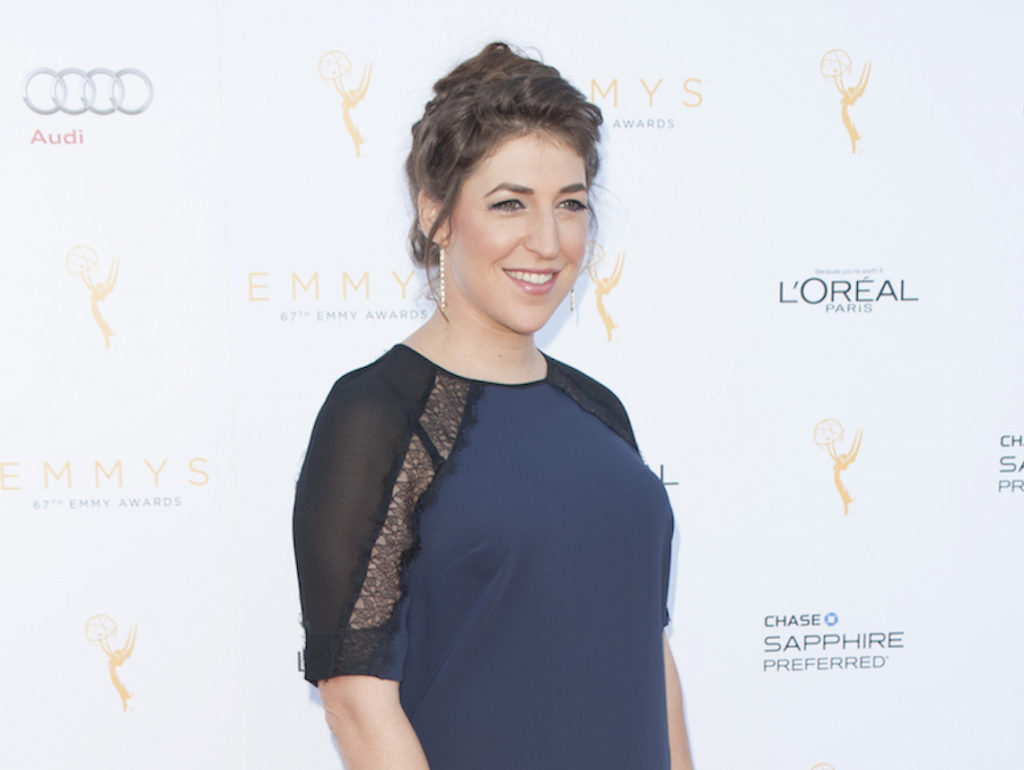
Jewish actress Mayim Bialik called out the March for Racial Justice for taking place on Yom Kippur.

In a Facebook post Sunday, Bialik complained that the timing of the march against white supremacy, scheduled for Sept. 30 in Washington, D.C., excludes Jews, who traditionally spend Yom Kippur, the Day of Atonement, fasting and praying.

“anyone else think that’s absurd?,” she wrote in a mostly lowercase text. “i mean, it automatically excludes a distinct portion of people who historically have stood up for racial equality in enormous ways.”

Bialik, a star of “The Big Bang Theory” TV sitcom who publicly embraces her Jewish identity and practice, doubted that the scheduling was an oversight, saying “And trust me: it’s on every calendar they checked before setting the date.”

Earlier Sunday, March for Racial Justice organizers posted their own statement on Facebook in which they apologized for the “scheduling conflict” and voiced appreciation for the Jews’ history of progressive activism. They repeatedly singled out Rabbi Abraham Joshua Heschel, who famously marched alongside the Rev. Martin Luther King Jr. in the 1965 civil rights march from Selma to Montgomery, Alabama.

“The core leadership of the March for Racial Justice regrets the scheduling conflict of the September 30 date for the March for Racial Justice and the Yom Kippur holiday, the Day of Atonement,” the statement said. “The core leadership of the March for Racial Justice recognizes and celebrates the historical unity between African Americans and Americans of the Jewish faith. These two communities are natural partners, as each have a history of persecution and discrimination.”

The March for Racial Justice describes itself as “a multi-community movement led by a coalition united in our demands for racial equity and justice.”

However, the organizers made clear there were no plans to reschedule the march. They explained that the date had been chosen to honor the 1919 Elaine race riot, in which white mobs attacked and killed dozens of African-Americans in Arkansas.

The  statement cites Rabbi Hannah Spiro, a Reconstructionist rabbi who leads Hill Havurah in Washington, who according to the organizers said that the march “might be a powerful opportunity for Jews to pray with their feet in between services on Yom Kippur afternoon,” referencing Heschel’s famous quote about the significance of his marching.

The organizers added that Spiro warned that “the fast may not allow for many to come out — but that some Jews may find it powerful to know that this march is happening in parallel with their fast.”

In a subsequent Facebook post, Spiro wrote that it was “sadly disappointing that the march is happening on the one day of the year on which Jews are least likely to be able to attend.” Spiro said she was not recommending that Jews attend, but only explaining to organizers why some would.

“I will not be attending and I will not be urging my community members to attend,” Spiro wrote.

Earlier this month, organizers of the North Carolina Pride parade changed the schedule of their annual event, which was to fall on Yom Kippur this year, to accommodate the Jewish community.

While Bialik did not directly reference the March for Racial Justice’s statement in her Facebook post, she pointed out that she named her second son after Heschel and concluded, “argh, super mad right now.”

Mayim Bialik calls out March for Racial Justice over Yom Kippur date Read More »

Boston Holocaust memorial vandalized for second time this summer

A pane of glass was shattered Monday evening at the New England Holocaust Memorial, the second time in less than two months the Boston memorial was vandalized.

A 17-year-old male suspected of the vandalism is in custody, a spokesman for the Boston Police Department told JTA. Two passers-by tackled the  suspect and held him until police arrived, according to the Boston Globe, which reported that the police are investigating whether it was a hate crime.

A visitor to the memorial, which is located along Boston’s historic Freedom Trail, told the Globe he heard the sound of glass shattering as he was reading panels at the memorial and later saw police make an arrest.

“It’s a reminder that we as a community need to be united, both in our opposition to all forms of hate, but also in the important role that memorials play in our community,” Robert Trestan, the region’s director of the Anti-Defamation League, told the Globe.

Trestan said it was a second blow to the community.

“It comes at a time when most of Boston is standing in solidarity [against] the hatred that we saw in Charlottesville over the weekend,” he said.

The Jewish Community Relations Council of Greater Boston published a joint statement with Combined Jewish Philanthropies linking the vandalism to the deadly violence at the white supremacist rally in Charlottesville, Virginia, over the weekend.

“We are appalled and saddened that the New England Holocaust Memorial was vandalized Monday night for the second time in just 6 weeks,” the statement said. “The images of Nazis marching in the streets of America over the weekend in Charlottesville and now shattered glass once again at this sacred space in Boston are an affront to our Jewish community and to all those who stand up against bigotry, hatred and anti-Semitism.

“We thank the Boston Police and the Public Works Department for their rapid response and for their continuing support during this difficult time. We will remain resilient and will have a timeline for rebuilding the memorial once we have assessed the damage.”

In a post on Twitter, Boston Mayor Marty Walsh said the city stands against hate.

“I’m saddened to see such a despicable action in this great city,” he said.

The 22-year-old memorial was recently repaired and rededicated following the earlier vandalism in which one pane of glass was shattered, the first time it was struck by vandalism, allegedly by a 21-year-old man with a history of mental illness.  The six-towered memorial, designed by architect Stanley Saitowitz, features 132 panels of glass etched with seven-digit numbers symbolizing the numbers tattooed on the arms of Jews during the Holocaust.

Speaking at the July 11 rededication, Israel Arbeiter, a prominent 92-year-old Boston-area Holocaust survivor, said the public ceremony brought a sense of renewal.

“The horrible suffering that we, the survivors, endured in concentration camps cannot be forgotten. When we repeatedly say ‘remember,’ we turn first of all to the world around us,” Arbeiter said at the ceremony, which was attended by Walsh and Massachusetts Gov. Charlie Baker, as well as leaders of the Jewish community and other faith and civic groups.

Boston Holocaust memorial vandalized for second time this summer Read More »

Examine yourself: Are you uncomfortable with Ambassador Friedman’s daughter’s Aliyah to Israel?

The U.S.’s highest ranking representative in Israel is Ambassador David Friedman. Friedman has five children, and one of them, his daughter Talia, made Aliyah yesterday. She now becomes an Israeli citizen and will be living here. She is not the first child of a senior American diplomat to choose life in Israel over life in America, but her case is somewhat different from others.

While others can claim to have made a personal choice that has nothing to do with their fathers’ positions, Talia’s immigration was a public act. Her father came to the airport to greet her, and even made a statement: “As a father, I celebrate my daughter Talia’s realization of a life-long dream to become part of the State of Israel.”

Talia Friedman is a private citizen. She used to be a private American citizen. Now she is a private Israeli citizen. She is entitled to be left alone and attend to her private life. Still, the determined public act of her moving to Israel is a cause for a pause, as it raises unavoidable questions about the strange connection of Jews who live elsewhere to the State of Israel – questions that many people feel awkward as they ponder them.

Imagine an Israeli learning that the ambassador’s daughter made Aliyah – what does it make him feel toward the ambassador, the U.S., the Trump administration?

Imagine a Palestinian learning that that the Ambassador’s daughter made Aliyah – how does it make him feel about the ability of the Trump administration to be an honest broker for peace?

Imagine an American learning that that the Ambassador’s daughter made Aliyah – does it make him in any way suspicious of the Jewish Ambassador’s ability to represent the U.S.?

Imagine an American Jew learning that that the Ambassador’s daughter made Aliyah – does it make him cringe, knowing that some of his non-Jewish neighbors might interpret this piece of news the wrong way?

Talia Friedman’s is a personal choice, and a choice that Israelis will accept with glee. Here is proof that even for a well-to-do, well-connected, highly-skilled, Jewish American, Israel can still be attractive. Here is proof that Israel has something to offer to Jews that no other place in the world can.

Talia Friedman’s is a public act, and an act that Palestinians will view with great suspicion. In fact, they will give the we-knew-it-all-along type of treatment. They will refer to it as a we-told-you-so moment. And they will make use of it. Friedman’s Aliyah will become a propaganda tool in moments of crisis. If and when the Americans put on the table a plan that the Palestinians do not want to accept, this public act of familial reunification in Israel will serve them as an excuse for rejecting the American offer.

But most interesting, and most complicated, is the response of Americans to this news, both non-Jewish and Jewish. If you are a non-Jewish American and Friedman’s Aliyah makes you suspicious, it probably means that deep down you harbor some remnants of prejudice that need to be rooted out. If you are a Jewish American and Friedman’s Aliyah makes you uncomfortable, it probably means that deep down you harbor some remnants of apprehension that need to be rooted out.

Talia Friedman’s Aliyah is an event that calls for straightforwardness. She made a personal choice to live in Israel – because Israel is great and because she feels (so I assume) that being Jewish, she’d like to try living in the Jewish State.

Her father’s greeting her is also an event that calls for straightforwardness. He is a father, both proud of his daughter and sympathetic to her personal choice – because he also knows that Israel is great and that choosing to live here is a sensible Jewish choice.

So, you might ask, why make it a public event? There is a good answer for that. Today, when nothing is private, it is better not to try and keep such things under the radar. Keeping it under the radar would suggest that there is something wrong with Talia Friedman’s choice. But there is nothing wrong with it. She will become a great Israeli citizen. Her father will be a great representative of the U.S. in Israel. It is a somewhat awkward situation, and thus being open about it, being proud of it, being straightforward about it, is the right way to deal with it.


Examine yourself: Are you uncomfortable with Ambassador Friedman’s daughter’s Aliyah to Israel? Read More »

Jonathan Ball Operation Jericho

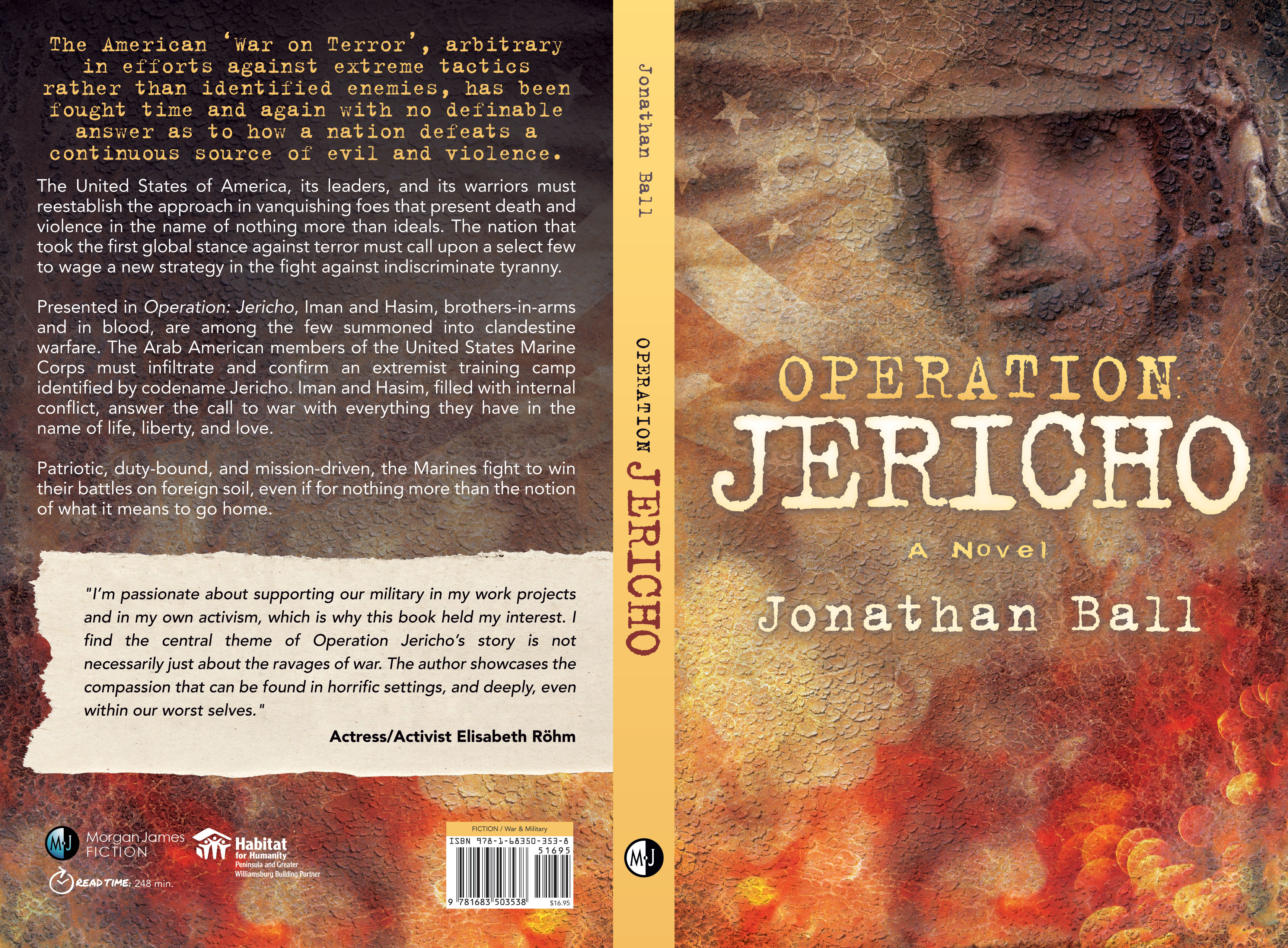
What would you do? Operation Jericho

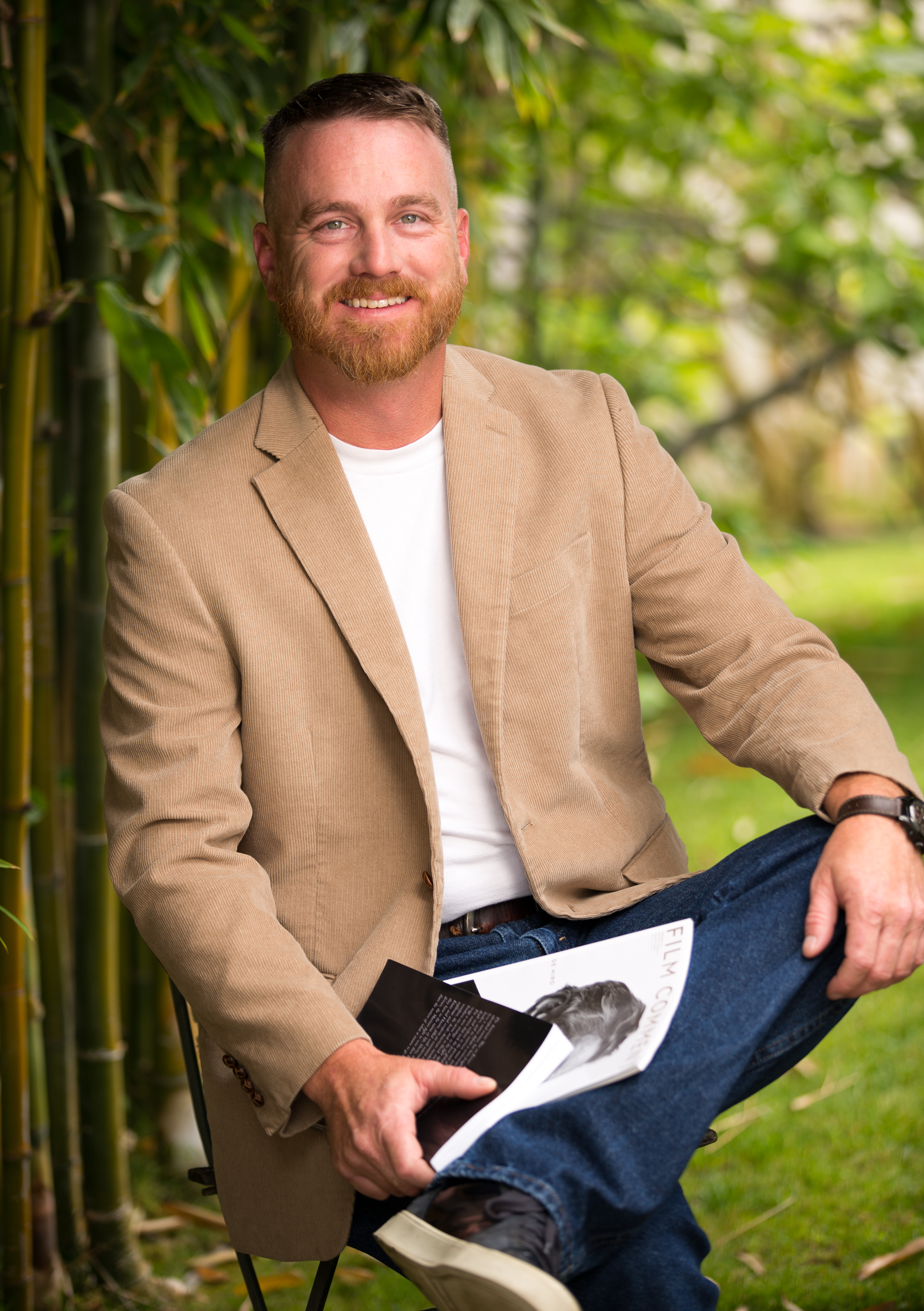
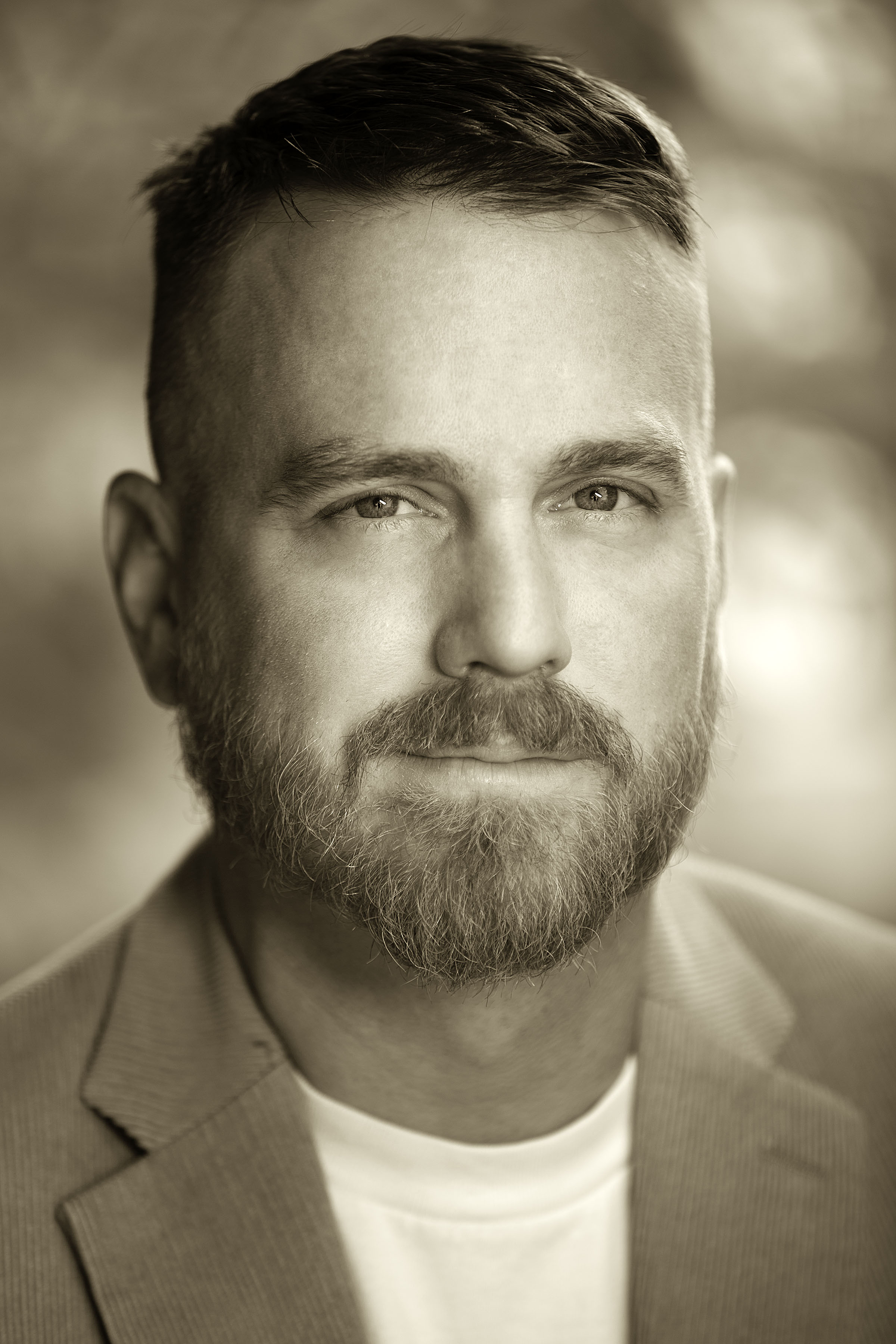
Jonathan Ball Operation JerichoWho is Jonathan Ball?

“He skipped the senior prom for boot camp and took his first plane ride to report in San Diego. The environment was challenging and purposely disorienting, but he loved it. He volunteered for all tasks and immersed himself in the training to gain experience and expertise over eight years of service, four on active duty (non combat) and four in the inactive reserve. At an early age as well as throughout his life, he watched as friends and family succumbed to death, and in training, he learned further how to desensitize. Yet Ball feels blessed he never had to carry the burden of killing someone in the line of duty.”

Read Operation Jericho

VIDEOOn the KTLA 5 News at 3, Marine veteran Jonathan Ball discusses his new novel, Operation Jericho, soon to be made into a film.

Who is a hero?

“Heroes, as seen through the innocent and admiring eyes of a child:
If you boil everything away, all the nonsense, the bureaucracy, the politics, then you are left with the total purpose of Operation: Jericho. Americans, no matter their color or creed, are still Americans. Iman and Hasim, as Arab-Americans, are out of place in and out of uniform. Imagine life as an outsider, always on the edge of trust but never gaining it completely. Imagine living on the cusp of society, in a world of anger and hate and death. Imagine the self-doubt in purpose for any mission and what the ultimate outcome could mean for you on any given day.
I think of that, and the excerpt that stands out for me the most right now (the one where I am the little boy, looking upon the faces of heroes and only seeing them as such- no color, no race, no religion- just American bad a**es going to do American bad a** things.” — Jonathan Ball

An excerpt from Chapter Two:

Exhausted from travel and shrouded in uncomfortable uniforms,
the men ached to get to their destination. Their trek
through terminals and corridors was unabated by the light foot
traffic inside the airport. However, the ends of their toes and the
bottoms of their feet burned at the confines of patent leather footwear.
Hasim was still a little groggy from his nap aboard the plane.
He rubbed at his eyes until he caught sight of a small boy.
The boy was visibly tired and less than thrilled to be in an
airport during hours that would otherwise be deep into his
bedtime. His small left hand clutched tightly to the comforts of his
mother’s right. Hasim smiled at the mother and child as their paths
crossed. The little boy, suddenly excited and apparently raised as a
patriot, rendered a salute to the Marines. Each of the men smiled
back and broke uniform protocol. They returned a playful salute
to the boy, and the child lit up. He was elated to have received the
military courtesy as he yelled, “Mommy, Mommy! Did you see?”
Iman and Hasim forgot about the pains in their feet. They dismissed
the itch of form-fitting collars and heavy ties. They discontinued
their silent complaints against the heavy wool of their uniforms.
Rather, they smiled with the slight bump of charging energy
that the child passed to them. Hasim said, “There’s a future Jarhead
right there.” Each laughed lightly as they arrived at baggage claim.
About Jonathan Michael Ball:
He was born in Dallas, Texas and spent his youth in the balance between a country boy loving the wide open space of a cattle ranch and a city kid finding his way through the roller coaster of fast living.At 17 years old, he joined the United States Marine Corps where he served as an Intelligence Analyst in the 1st Marine Division. He deployed with the 2nd Battalion, 1st Marine Regiment; and his experiences abroad inspire his wide-reaching takes into character development and the realities faced outside of any bubble of comfort.Beyond experiences in the Marine Corps, Jonathan Michael Ball has climbed mountains, scaled cliffs, ascended frozen waterfalls, and explored various wild areas around the world. He is an accomplished professional, a devoted family man, and an observer of the human experience. He sets out in the great exploration of life’s adventures with the earnest effort of learning and driving forward in the knowledge that experience creates a great writer.

What would you do? Operation Jericho Read More »

Have Smartphones Destroyed a Generation?

This is a must-read article for anyone who cares about our kids and the impact that Smart Phones are having on those born after 2000.

Jean M. Twenge writes this important piece in the September 2017 edition of The Atlantic. She is a professor of psychology at San Diego State University and the author of Generation Me and iGen.

“Psychologically, however, they are more vulnerable than Millennials were: Rates of teen depression and suicide have skyrocketed since 2011. It’s not an exaggeration to describe iGen as being on the brink of the worst mental-health crisis in decades. Much of this deterioration can be traced to their phones.

…the twin rise of the smartphone and social media has caused an earthquake of a magnitude we’ve not seen in a very long time, if ever. There is compelling evidence that the devices we’ve placed in young people’s hands are having profound effects on their lives—and making them seriously unhappy.”

https://www.theatlantic.com/magazine/archive/2017/09/has-the-smartphone-destroyed-a-generation/534198/


Have Smartphones Destroyed a Generation? Read More »