fbpx

August 9, 2017

When Raqqa falls: the Syrian war after the Islamic State

As U.S.-backed forces make advances against I.S., concern mounts over the possibility of another humanitarian catastrophe in Syria

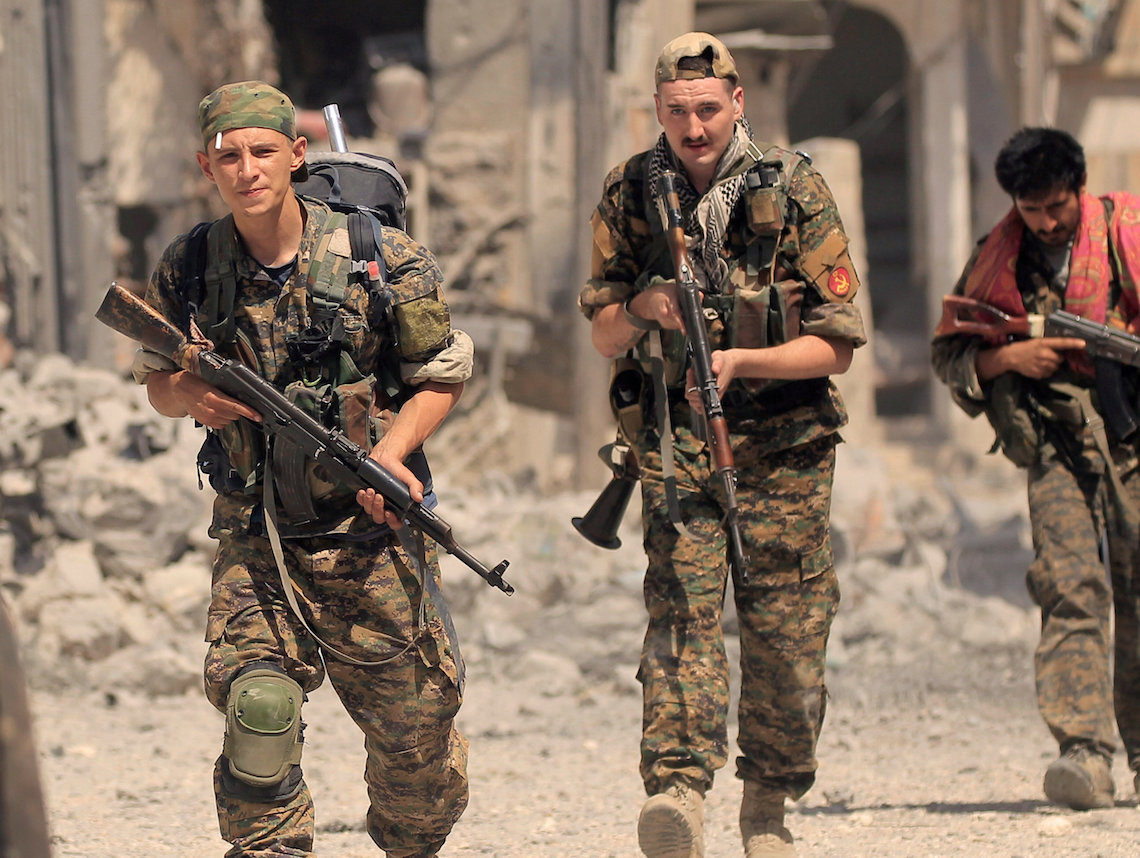
A military offensive targeting the capital of the Islamic State’s self-declared “caliphate” is paying dividends, with Brett McGurk—U.S. special envoy for the coalition against I.S.—revealing that about 45% of Raqqa has been recaptured. “Today, [the Islamic State] is fighting for every last block…and fighting for its own survival,” he affirmed. “They most likely will die there.”

The U.S.-backed Syrian Democratic Forces—mainly compromised of Kurdish militias known as YPG—launched an operation on June 6 to liberate Raqqa, which was seized by I.S. in 2014. The loss of its “headquarters” would be a second consecutive major setback for the jihadist group, which was driven from its Iraqi bastion of Mosul last month.

In total, McGurk stated that the I.S. has lost 78% of the territory it previously held in Iraq and 58% in Syria. The envoy attributed “dramatically accelerated” progress in the campaign to positive changes implemented by U.S. President Donald Trump. The key factors cited were the White House’s willingness to delegate decision-making to battlefield commanders; the application of a so-called “annihilation” tactic, in which coalition ground forces surround I.S. strongholds so that enemy fighters cannot escape; and a push to increase the burden-sharing among the 73 members of the anti-I.S. coalition.

Speaking to The Media Line, Dr. Ely Karmon, a Senior Research Scholar at Israel’s International Institute for Counter-Terrorism, predicted that Raqqa will inevitably fall; after which, there will be an effort by I.S. to relocate and reorganize. “Afghanistan will be a very important place for I.S., which has upped its activities there already, including the [May 31] bombing in Kabul that killed [over 150 people and wounded over 400 others]. They are also already in Libya, where leaders have been dispatched. There is Yemen, where so far I.S. has not been as successful because al Qaeda controls territory.” Moreover, Dr. Karmon noted Iraqi intelligence reports suggesting I.S. is already trying to regroup in the country after its defeat in Mosul—by organizing underground, clandestine operations to attract the support of local Sunni fighters who remain engaged in conflict with Shia militias.

While Dr. Karmon acknowledges that the Islamic State “will be more scattered” once Raqqa falls, he nevertheless contended that “the terror group was always largely decentralized, as most of its associates and factions were quite independent.” Accordingly, “there is no doubt that I.S. will try to encourage [so-called ‘lone wolf’] attacks on the U.S. and EU, as this is one of their best weapons.”

Nature abhors a vacuum and what comes after the I.S. in Raqqa may yet spell trouble, with analysts predicting that competing entities will wage subsequent battles to fill the void. The likely scenario will pit American-backed Kurdish and Arab rebels against those supported by Turkey, which is committed to preventing the Kurds from carving out an autonomous enclave along the shared Turkish-Syrian border. There is also the Assad regime’s army, which coupled with Iranian-backed militias will likewise press to secure their own interests.

Fears over the prospect of another humanitarian disaster are thus rising. The immediate focus is the battle for Raqqa City itself, where the United Nations estimates that between 20,000 and 50,000 civilians remain. Speaking to The Media Line, David Swanson, an Information Officer at the UN’s Regional Office for the Syria Crisis, confirmed that “as military operations continue, our concern is further civilian casualties; all the more so as ISIL [another acronym for the Islamic State] has allegedly used civilians as human shields.”

With respect to the “day-after-liberation” plan U.S. envoy McGurk recently alluded to, Swanson revealed that “in the period after ISIL is pushed out [of Raqqa City], and as soon as conditions permit access, UN activities are foreseen to focus on urgent life-saving assistance for 90 days.… It is expected that the majority of civilian infrastructure, such as health facilities and schools, will be found looted, damaged and/or destroyed. [Improvised Explosive Device] contamination is also expected to be high, making the early response particularly challenging.”

As per the larger numbers of people already displaced throughout the province, Swanson continued, “humanitarian partners have developed and are regularly updating a plan for Ar-Raqqa Governorate which outlines preparedness and response to meet the needs of an estimated 440,000 people who may be affected by the offensive.” These and many more may indeed find themselves in the cross hairs of the current battle, or ensuing ones.

The Syria conflict, now in its seventh year, is one of the most complicated crises—both geopolitically and in terms of human suffering—since World War II. On one side of the equation, the primary players are U.S.-backed Sunni Gulf Arab states, led by Saudi Arabia, as well as Turkey; on the other is the Syria-Iran-Hezbollah Shiite axis, supported by Russia. On the ground are dozens of fighting groups, fluid in nature, with ever-changing loyalties, and some more extreme than others. The obvious complexities that have evolved have created a veritable Gordian Knot, a quagmire with no apparent “out-of-the-box” solution, even when taking into consideration the prospective victory over I.S.

More than 400,000 civilians have lost their lives in this maze of human misery, with another 11 million displaced and nearly 15 million in urgent need of life-saving assistance. For many observers, the unending carnage is a blight on humanity itself—a tragedy which, in this so-called modern day and age, could never have happened until it did.

When Raqqa falls: the Syrian war after the Islamic State Read More »

Parashat Eikev: God as the loving parent

“Oh, Lord, won’t you buy me a Mercedes-Benz?”

— Janis Joplin

Why don’t we always get what we want from God, and why does God even allow people to be in pain? Last week, we observed Tisha b’Av, a holiday reminding us of our suffering and losses, specifically the destruction of the First and Second Temples. While the Talmud teaches us that the cause of the destruction was sinat chinam, gratuitous and baseless hatred, that simple answer doesn’t satisfy many people who yearn for a “loving” God, a God who would give them everything they want and would never allow pain and suffering to even exist. But the some of the answers to this question of how to integrate God’s love with life’s pains are found in this week’s portion of Eikev.

Eikev is a detailed explanation of what will happen if we listen to God’s commandments, and what will happen if we don’t. It is the ultimate example of “What goes around  comes around.” The text clearly promises us that if we observe the Law, we will have all sorts of blessings; and conversely, if we do not, then we will have a plethora of challenges and lives filled with pain. Verses from the portion often are used by agnostics and atheists to demonstrate that the God of the Bible is vindictive, angry and should be rejected. But this simply isn’t true, and a careful reading of the text clearly shows how much God truly loves each of us.

You should know in your heart that just as a father will chastise his son, so HaShem, your God, chastises you” (Deuteronomy 8:5). God is compared to the ultimately loving parent.  While there are a lot of parenting techniques, there is a consistency among parents that good behavior is rewarded and inappropriate behavior is chastised so that the child can grow to be a better, ethical, aware and responsible individual who knows right from wrong.

This is a key insight in this portion:  God never “punishes” us for what we’ve done as an act of vindictiveness. Instead, God always tries to help us grow through a combination of rewards and chastisements. When viewed this way, these chastisements can be understood as an expression of great love.

A friend once told me that he had heard from a rabbinical school professor that “Judaism is not about feeling good; it is about becoming better.” It gives us guidelines so that we can excel spiritually and in all aspects of life. I have always made the comparison that an athlete is pushed and put in pain by his coach to become stronger and compete better. If his pushing were not for this higher goal, one might think of the coach as a cruel sadist. But when you realize that the intensity of the workout is with the ultimate goal of the athlete becoming better, then the coach who inflicts pain is considered a loving ally. The understanding of the coach is relative to a greater understanding of the circumstances and situation.

In the same way, a parent teaches a child to eat their dinner before dessert so that they get the nutrients they need before filling up on sugar. From the perspective of the child, this can seem cruel; but when the circumstances are understood more fully, we all realize that it is more loving for the parent to have prohibitions and boundaries so that the child will grow up healthy.

The 21st century seems to be filled with a lot of people believing in “entitlement,” and that often carries into their relationship with God. They want what they want, and they want it now. If God doesn’t give it to them, or causes challenges to happen in their lives, they reject God entirely. According to some studies, more than 85 percent of American Jews are uninvolved in synagogue life and distanced from their faith.  Perhaps one large reason is that they are not seeing the bigger picture, trusting that like any loving parent, God “knows better.” Rather than seeing their chastisement as a teaching for them to live better and more full lives, they choose to walk away from Judaism entirely.

In two weeks, we begin the month of Elul, the month of preparation for Rosh Hashanah and Yom Kippur. This is a month of love, and the name of the month is an acronym for “Ani L’Dodi V’Dodi Li,” (I am my Beloved’s and my Beloved is mine — Song of Songs 6:3). Rather than walking away from Judaism and God, this month is a time to walk forward and embrace the Divine parent who loves us so fully and completely. Return to the relationship, choosing to have the faith that even the pain that God sends us is given in love.

What does God ask of us. “Only to be in awe of God, to go in all His ways, and to love Him, and to serve God with all your heart and with all your soul” (Deuteronomy 10:12).

May we all return to loving God fully, to returning to Jewish ways and practices, and to receiving God’s gifts and blessings in joy and gratitude.

Rabbi Michael Barclay is the spiritual leader of Temple Ner Simcha in Westlake Village and the author of “Sacred Relationships: Biblical Wisdom for Deepening Our Lives Together” (Liturgical Press). He can be contacted at RabbiBarclay@aol.com.

Parashat Eikev: God as the loving parent Read More »

Obituaries, 8/11 issue

Wilbert Louis Berg died July 14 at 87. Survived by son Neal (Rosalind); daughter Marci (Ken) Chmielewski; 2 grandchildren. Mount Sinai 

Sharon Berrick died July 10 at 72. Survived by husband Arthur; daughters Dawn Cohen, Ava Klein; 1 grandchild; brother-in-law Bob. Mount Sinai

Sheldon Cohen died July 12 at 91. Survived by wife Marion; daughters Andrea (Nathan Walpow), Diane (Francis) Nataf; 4 grandchildren; 1 great-grandchild. Mount Sinai

Sylvia Faversham died July 15 at 88. Survived by husband Harry; daughter Lisa; son Jerome; 2 grandchildren. Mount Sinai

Vivian Felsot died May 26 at 96. Survived by daughters Debra (Andy) Krasnoff, Nancy (Gerald) Love-Weeks; son Ron (Bobbi); 5 grandchildren; 2 great-grandchildren. Groman Eden

Freda Goodman died July 6 at 96. Survived by daughter Lauri; son Pat O’Doul; 1 grandchild; 1 great-grandchild. Hillside

Judith Gross died July 6 at 84. Survived by daughter Melanie (Peter) Rhalter; son Hank; 2 grandchildren; 2 great-grandchildren. Hillside

Benzion Gutman died July 6 at 95. Survived by son Henry; 2 grandchildren. Hillside

Stuart Jaffe died July 16 at 79. Survived by wife Shirley Stamen; daughters Kari, Justine (John) Stamen Arrillaga; son Mark; 7 grandchildren. Hillside

Norman Kahn died July 12 at 97. Survived by brother Irving. Hillside

Esther Keller died July 10 at 85. Survived by son David (Doris); 1 grandchild. Mount Sinai

Deborah Kujavski died July 16 at 59. Survived by brother Lawrence. Hillside

Hugo Landau died July 7 at 94. Survived by wife Ada; daughter Lori (Carol Hinchey); son Fred; 4 grandchildren; 2 great-grandchildren. Mount Sinai

Barbara Luftman died July 8 at 81. Survived by daughter Debra (Harlan Gibbs); son Steven; 2 grandchildren. Mount Sinai

Harold Margolis died July 8 at 91. Survived by wife Beatrice; daughters Elise (Richard) Aries, Lori (Scott) Forman; stepdaughters Karen (Dan) Grandon, Linda (Louis) Wolff; stepson Harold Maltz; 14 grandchildren. Hillside

Joseph A. Platow died July 9 at 87. Survived by wife Clara; daughter Karen (Dave Juergens) Platow-Juergens; son Michael (Diana Grace); 1 grandchild. Mount Sinai

Roslyn Platt died July 8 at 94. Survived by daughters Karen (Steve Lee) Platt-Lee, Evlyn (Robert) Carlin; 4 grandchildren; 3 great-grandchildren. Mount Sinai  

Gene Rodgers died July 11 at 85. Survived by son David (Julie); daughters Robyn (Brian) Sitner Rodgers, Leonore (Chuck) Ricker; 4 grandchildren. Mount Sinai

Mark Adam Ross died July 12 at 64. Survived by cousins Richard (Barbara) Bergman, Daniel Bergman. Mount Sinai                                 

Milton Russikoff died July 12 at 89. Survived by wife Suzanne; daughter Gail (David) Friedman; sons Joe (Don Silverstein), Todd (Rochelle); 6 grandchildren; 4 great-grandchildren; sisters Sheila Gimbel, Bernice (James) Nicholson. Mount Sinai                                 

Larry Schwartz died July 9 at 81. Survived by wife Sandra; daughters Wendy Simon, Francine (Eran) Naor; sons Bryan (Elizabeth), William; 7 grandchildren. Mount Sinai                                

Marilyn Sobel died July 19 at 93. Survived by daughter Stacey; 2 grandchildren. Hillside

Edward Sorochinsky died July 9 at 81. Survived by wife Marie; son Morris; daughter Alla; 2 grandchildren. Mount Sinai

James Spitz died July 10 at 76. Survived by daughter Susan (Steven) Cotliar; sons Jason (Cindy), David (Kari); 8 grandchildren; brother Stewart. Mount Sinai

Nana Tavdi died July 5 at 75. Survived by son Nathan Kizhner; sister Ruth Kotik; brother Lev (Margaret) Gilboa. Chevra Kadisha

Jerry J. Trager died July 10 at the age of 90. Survived by son Craig; daughter Jody (Bruce) Trager Botansky; 2 grandchildren; sister Evelyn Ross. Mount Sinai

Lori Tritel died July 8 at 61. Survived by son Lukas O’Connor; mother Irene; sister Parise DeJean; brother Michael. Hillside

Antonin Vesely died July 13 at 97. Survived by wife Jeanette; sons Daniel, Michael; 4 grandchildren. Mount Sinai

Ruben Watnik died July 5 at 66. Survived by daughter Amber (William) Poirier; son Lucas; brother Harry (Susan). Hillside

David Wilstein died July 9 at 89. Survived by wife Susan; daughter Denise (Steven) Margolin. Hillside

Betty Wuliger died July 20 at 95. Survived by daughter Betsy; son Frank (Cynthia). Hillside

William Zeise Jr. died July 9 at 68. Survived by daughter Severa (Jeremy) Oberstein; son Adam (Angela); 3 grandchildren; siblings Patrica, Jacky, Rob. Mount Sinai

Irving Zwicker died July 8 at 91. Survived by wife Selma; daughter Marian Rubinstein; son Joe (Terri); 7 grandchildren; sister-in-law Anne Griffin. Mount Sinai  

Obituaries, 8/11 issue Read More »

Netanyahu slams ‘fake news,’ calls investigations a ‘witch hunt’

Embattled Prime Minister Benjamin Netanyahu, currently the subject of multiple corruption investigations, lashed out at the “fake news” media at a rally attended by thousands of Likud Party supporters.

Held Wednesday at the Tel Aviv Fairgrounds, the rally was organized by coalition chairman and Likud lawmaker David Bitan, who told Israeli media he organized the rally because Netanyahu is being “persecuted” by the media and the opposition. Supporters were bussed in from around the country for the rally.

In his speech, Netanyahu slammed the “fake news” media, echoing a sign at the rally that said “Fake news is f***ing news.” Some journalists said they were verbally abused by rally participants.

Netanyahu called the corruption investigations “an obsessive witch-hunt against me and my family.”

“They don’t want to just take me down, they want to take us all down. They know that they can’t beat us at the ballots, so they are trying to circumvent democracy and topple us in other ways,” Netanyahu said.

“We know that the left and the media — and we know that it’s the same thing — is on an unprecedented hunt against me and my family to bring down the government. They are putting unrelenting pressure on the legal system in order for them to present an indictment without any proof,” he said.

Netanyahu is currently the subject of two corruption investigations. In the first, called Case 1000, Netanyahu is accused of receiving expensive gifts from billionaires and then taking action on their behalf. In the second, called Case 2000, he is accused of striking a deal with a newspaper publisher in order to receive favorable coverage at the expense of a competitor, Israel Hayom, owned by the casino magnate Sheldon Adelson.

Two other corruption scandals target close associates of Netanyahu and both his wife and older son also are targets of investigations.

Netanyahu slams ‘fake news,’ calls investigations a ‘witch hunt’ Read More »

Nic Adler weds music festivals with delicious food

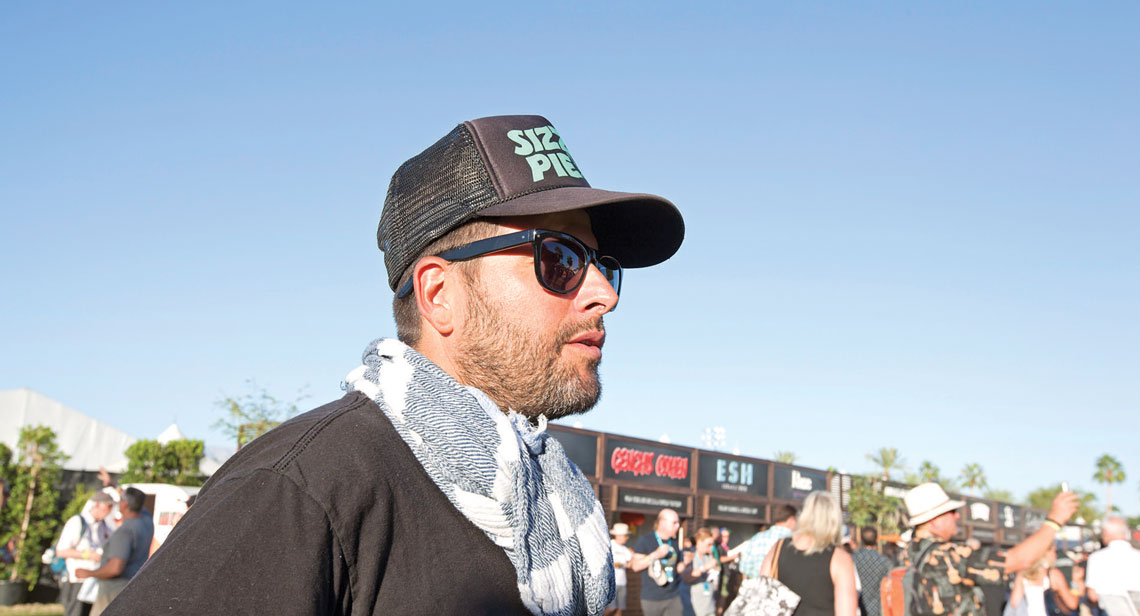
On Day One of Arroyo Seco Weekend, a massive music festival held recently on the grounds outside of the Rose Bowl in Pasadena, culinary stars were competing with such stage performers as Jeff Goldblum, Alabama Shakes and Tom Petty & the Heartbreakers.

“Oh yeah, there’s music here, too,” my friend said as we ate vegan ramen from chef Ilan Hall’s Ramen Hood, soft serve ice cream from the NoMad Truck, lobster rolls from Slapfish and other stellar eats made by some of Los Angeles’ best restaurants and food makers.

The person behind this SoCal music/food festival phenomenon is Nic Adler, whose upbringing has all the hallmarks of a classic Hollywood tale. He was raised by famous parents — music producer Lou Adler and actress Britt Ekland — in an environment soaked in the sex, drugs and rock ’n’ roll scenes of Los Angeles in the 1970s and ’80s. Needless to say, it wasn’t a typical childhood. Now 44, Adler is calm and deliberate, the father of an infant and a 4-year-old, and a Westside resident who jokes about living in a boring neighborhood.

His primary role now is Culinary Curator of Goldenvoice, a concert promotion company that grew out of the L.A. punk scene decades ago and mounts large events such as the Coachella Valley Music and Arts Festival every spring in Indio and the recent Arroyo Seco Weekend.

“Whenever I tell a story about somewhere I’ve been or something in my life, I instantly pair it with food,” he said.

It all started with the after-school-to-evening hours he spent at The Roxy Theatre and the Rainbow Bar & Grill, his father’s venues on the Sunset Strip, where the music and food connection became “ingrained in me.” “I’d get hungry, grab some food, get bored, go see the band, then go back and hang out in the kitchen,” he recalled.

Adler came back to the Roxy as an adult, spending 15 years running it and getting involved with other entertainment ventures.

About four years ago, a conversation with Goldenvoice President and CEO Paul Tollett at the Rose Bowl proved to be life-altering. Adler’s cumulative experiences as a music and food festival producer and attendee, and as a vegan with limited food choices, gave him a distinct perspective. Tollett was receptive to hearing about how and why the food options at Goldenvoice’s major events, specifically Coachella, could benefit from a major upgrade. The annual Outside Lands festival in San Francisco’s Golden Gate Park already was making food and drink an integral part of its programming, too, so Adler suggested it was time for SoCal events to step up.

“We had both grown up around the Roxy in the ’90s music scene. There was this kind of community with all the bands,” Adler said. “I saw something similar happening with all the breweries, and it was happening in the food world.”

Adler started producing food festivals while he still was immersed in the club and live music business but still saw the two as somewhat separate realms.

His work with Goldenvoice to make Coachella’s food and drink scene as much of a draw as its music and art was a game-changer. In that environment, “there are hundreds of thousands of people, and there’s a discovery mode,” Adler said.

He noticed another parallel, in part a result of heavily food-populated social media feeds. Much as “bands were moving away from albums and singles, I saw that a little bit in the food world,” he said.

Adler invited chefs, restaurants and smaller-scale purveyors to serve versions of their greatest hits on-site at Coachella. Also part of the festival roster is Outstanding in the Field, a sit-down restaurant venue serving four-course (and pricey) meals from different chefs.

The offerings have changed the image of typical crowd-pleasing food. There are still pizza, hot dogs and burgers. But new choices include Micah Wexler’s pastrami, wines from Jill Bernheimer’s Domaine LA shop and Broken Spanish’s ceviche. Adler focuses on added value, too, such as small environmental and design details, and special collaborations among chefs and food producers.

“I’m trying to create a storyline at these festivals that food and beverage are part of your experiences,” he said. “The more I can pack into that, the more of that kind of texture that I can put around the conversation around food, the better it tastes.”

The Vegan Beer & Food Festival, now called Eat Drink Vegan, is  another Adler project also held at the Rose Bowl. Recently, one of his six younger brothers from his father’s subsequent relationships, Cisco, opened the Malibu Burger Co. restaurant in their native neighborhood, and Nic curated the beer list.

Meanwhile, Adler’s father — who has attended the last five Coachella festivals — remains a constant inspiration and resource, spurring his son to think about crowd control and management and which food vendors will be a hit. “My dad would always look for places where there were a lot of trucks. He knew [truck drivers] traveled all across the country and they weren’t going to waste a good meal.”

Adler said his father also insisted that his kids spend time with their grandmother, Josie, whom Adler acknowledged was a stabilizing force during his unconventional childhood.

“ ‘Call your grandmother; Go see your grandmother; Go get her some matzo ball soup; Bring her some flowers.’ My dad was always pushing me to spend time with her,” Adler said. “We had a very special relationship.”

The wider Adler family worldview, he said, includes understanding how “things can be around forever and be respected and culturally relevant.

“What’s still more relevant than ‘Up in Smoke’ and ‘Rocky Horror’ and Monterey Pop and Carole King?” he said. “Those things are as important right now as they were when they came out.”

So, thanks to Nic Adler, the best live music you ever heard and some of the tastiest food you ever ate might become simultaneous experiences.

Nic Adler weds music festivals with delicious food Read More »

Panther Post: All the news that’s fit to print at YULA

For Abegail Javidzad and Eytan Merkin, the first issue of The Panther Post, which debuted earlier this year, was especially sweet. They served as co-editors-in-chief of the school newspaper, a joint effort by YULA Girls High School and YULA Boys High School.

“Just seeing all the hard work we put into it — everyone was so responsive,” said Javidzad, 16, who like Merkin, 17, is a senior.

While the girls school had a newspaper in recent years — it was called The Pink Panther — and the boys school had produced various publications over the years, although not consistently, The Panther Post represents a more ambitious effort as a collaboration between the two schools, which are on separate campuses, about a mile and a half apart, just south of Beverly Hills. Newspaper staff meet at the boys campus once a week.

“What we realized as we started up The Panther Post, which is really student driven … is that we needed to have someone who was a journalist, who was a professional, in order to maximize our student experience and school paper,” said Rabbi Arye Sufrin, YULA Boys High School principal.

The school hired Jared Sichel, 27, as faculty adviser. Sichel, who lives in the Pico-Robertson neighborhood, is communications director for political commentator Dennis Prager’s PragerU and a former senior writer at the Journal.

“It was a new experience for me,” Sichel said. “At the Journal, I figured out how to get the writing part done. Here, this was from a managerial perspective. You are working with student writers and photographers. The most important thing was working with editors to develop a system so they could really run the paper.”

While high school newspapers are common throughout the United States, they are the exception at Orthodox schools such as YULA, said Joelle Keene, founding executive director of the 4-year-old, L.A.-based Jewish Scholastic Press Association, which hosts an annual conference and contest.

“With a dual curriculum, there’s simply not as much time,” Keene said. “They may have four or five Judaic studies courses a day; put that together with the high-level academics, and there isn’t room for many electives.”

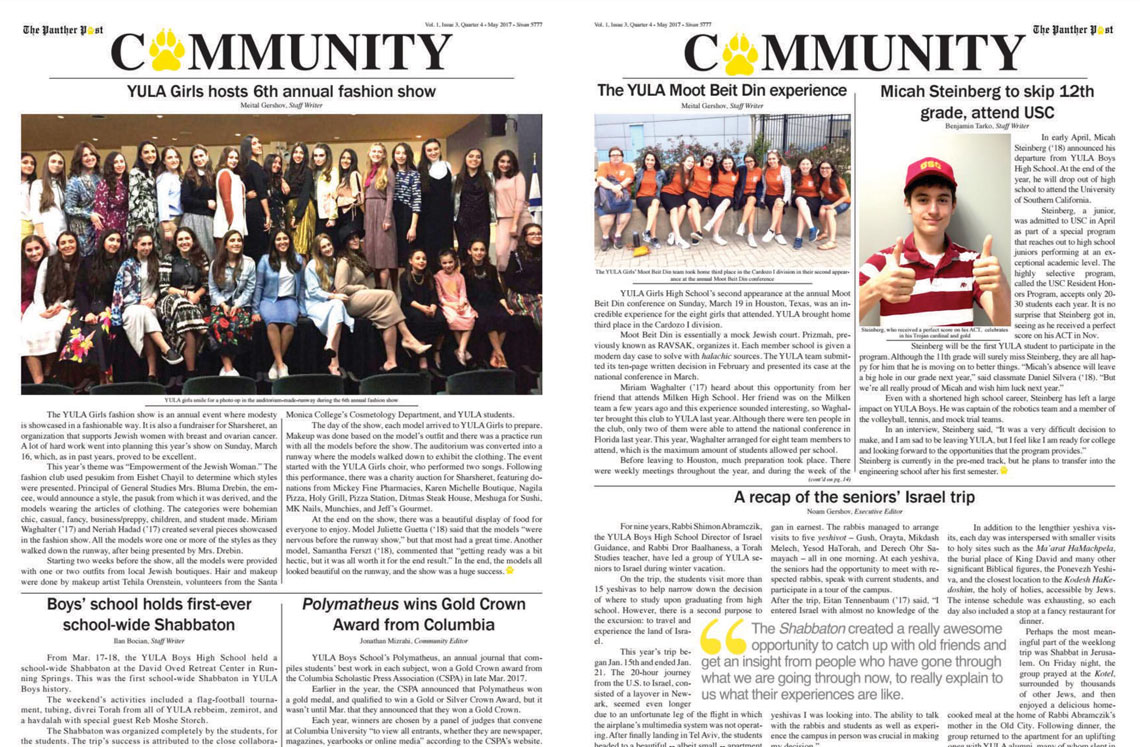
This past school year, three issues of The Panther Post were published. Each featured a community section with stories about new staff members and the school’s Model UN team’s second-place finish among 50 competing Jewish schools. The newspaper also has sections for sports,  features and Torah.

While The Panther Post, as Sichel wrote in his introductory note, intends to “live by traditional journalistic standards” and “equally live by Torah values,” the paper does not shy away from controversial subject matter. An editorial in the most recent issue, published in May, titled, “Can schools control our social life?” — inspired by a joint message from the boys and girls schools, as well as two other local Jewish high schools — focused on an off-campus party.

“It remains questionable whether or not the school should have a say in its students’ whereabouts and activities outside of school hours,” the editorial reads.

Controversies aside, “We’re not The Boston Globe Spotlight team,” Sichel said. “The goal of the paper is to teach students the basics of journalism, to show them what it takes to see an article through from beginning to end, and to see a paper through from beginning to end. We’re really trying to teach the students to be journalists and give readers of the paper an insight into what is happening at YULA.”

Sichel plans to return for the coming school year, as will Editors-in-Chief Javidzad and Merkin. One of Merkin’s goals is to publish more frequently. “Also, if possible, I want to see if we can get a website up and running,” he said, something echoed by Javidzad and Sufrin. A website, Merkin said, will enable the students to post articles and other content between print editions. Currently, The Panther Post is distributed at local synagogues as well as the two YULA campuses.

So, are Javidzad or Merkin considering a career in journalism? “I don’t think so,” Javidzad said. “Writing is not my biggest passion. I have more passion in the sciences.”

“I’ve definitely enjoyed doing [the work on the newspaper],” Merkin said. “But I’ve sort of always been more interested in science and math. For my career, I think I want to do something in science.”

That’s OK with Sichel. “For whichever students want to pursue [professional journalism], if they can take something from their time at The Panther Post, I’d be very happy to be any part of that that I can,” he said. “But my job is not to prod them in that direction.”

Panther Post: All the news that’s fit to print at YULA Read More »

Millennials discovering Jewish identity through social justice work

As a college student, Jake Max assumed he would work in banking or consulting after graduation. That was the path favored by many of his classmates.

But after experiencing the 2016 presidential campaign during his senior year at Emory University in Atlanta, Max was spurred to action and decided to apply for a yearlong social justice fellowship.

“I just saw how stratified the country was and how divisive the issues were, and I did not think we were headed in a good direction,” the 23-year-old said.

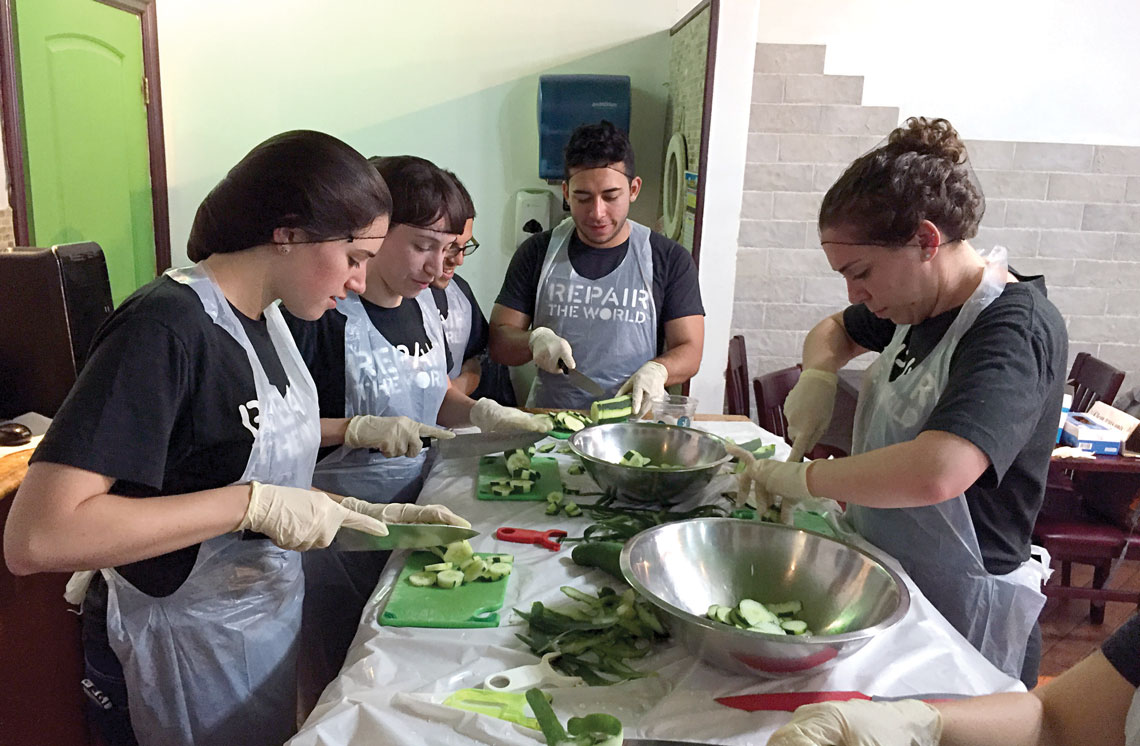
Max spent the next 12 months volunteering at food pantries and soup kitchens across Brooklyn, N.Y., working as a soccer coach for disadvantaged kids and attending events by various nonprofit organizations.

He says doing a fellowship with the Jewish social justice group Repair the World has helped him gain a new perspective — he no longer can imagine taking a job that would be about “making rich people richer.” But the Baltimore native also found a connection to something else: Judaism, from whose religious practices he had been alienated for almost a decade.

“I’d become almost anti-religious because I hadn’t found a place like Repair the World,” said Max, who attended a Conservative day school through eighth grade.

“Repair the World is the perfect space for how I view religion. Going and doing Shacharit every morning, that just had no meaning to me,” he said, referring to the daily morning prayer. “Keeping kosher had no meaning to me. But this social justice community, bringing people together, that means something to me. That’s something that I’m passionate about.”

Max is one of Repair the World NYC’s nine full-time fellows in New York City, who volunteer and live together above the group’s headquarters, referred to as “the workshop,” in the Crown Heights neighborhood of Brooklyn. Fellows focus their volunteer work either on hunger relief or education, and organize events for the larger public, including Shabbat dinners with a social justice theme and happy hours, as well as volunteering opportunities.

Max isn’t alone in how he connects good works with his Jewish identity. The idea of giving back and improving society is an important part of Jewish-American identity, said Aaron Hahn Tapper, the founding director of the Swig Program in Jewish Studies and Social Justice at the University of San Francisco.

Though different terms — such as service learning, social justice and tikkun olam — have gained favor at different times to describe work done by groups such as Repair the World, “these ideas have been pretty central to Jewish-American identities for some time, for decades,” Tapper said.

What’s different are the expanding opportunities for doing this within a Jewish framework, said Rabbi Sid Schwarz, the author of the book “Judaism and Justice: The Jewish Passion to Repair the World.”

“For a lot of people in previous generations, their involvement —  whether it was the labor movement or the civil rights movement or the women’s movement or the environmental movement — they were acting on values they might have learned as Jews, but they didn’t identify in any way as Jews,” Schwarz said. “What’s new is that now you have all these organizations that didn’t exist 30 or 40 years ago where young Jews can do this work and get reaffirmed in their Jewish identity.”

Repair the World’s social justice focus attracts many millennial Jews who don’t necessarily feel drawn to the ritual practices of Judaism, said Cindy Greenberg, executive director of Repair the World NYC, which launched in the fall of 2015.

“For some young people, they’re not interested in being in a Jewish community that’s grounded in religious practice,” she said.

“For many young people, what makes Judaism so exciting is that it helps them address the big questions in life of ‘Who am I?’ and ‘What is my responsibility to my neighbor and my responsibility for the world?’ So we empower the fellows to create a Jewish community that’s grounded in service and in values of justice and in real action in their community,” Greenberg said.

She added that others are looking to complement their current religious practice.

To be sure, Repair the World events contain plenty of connections to Jewish tradition. All volunteer events feature a “Jewish lens” component in which participants learn how Jewish traditions relate to the issue at hand, such as food insecurity, affordable housing and racial justice.

Despite the Jewish focus, Repair the World attracts a diverse group of participants: About 40 percent of those attending events in New York are not Jewish, Greenberg said.

For some Jewish participants, the group serves a need that historically has been filled by more traditional institutions.

Andrew Fretwell, a 32-year-old client executive at IBM, attends Repair the World events about once a month and serves on the group’s advisory board. The New Jersey native, who lives in Brooklyn with his wife, has not yet “found the right synagogue,” but says his involvement with the social justice group gives him some of the same benefits he would get from being a shul member.

“The closest I have to that is Repair the World — a regular point of contact with a community of other Jewish millennials and their friends who are like-minded, and we have a shared set of experiences that we continue to build on together,” he said.

In some ways, Fretwell finds the approach used by Repair the World preferable to ones used in traditional Jewish settings.

“Jewish millennials, the message that we’ve been getting through so many different programs and avenues is asking us to receive something, to receive our identity. They want us to be recipients of loving Israel or of understanding Jewish tradition,” he said.

Such an approach “lacks the boldness to actually ask of these same Jews, ‘What are you doing for the world?’ That’s exactly what Repair the World does,” Fretwell said.

Repair the World decided to make Brooklyn its New York base after conducting research that showed it was the fastest-growing Jewish community in the city but that millennial non-Orthodox Jews there remained underserved by Jewish groups, Greenberg said. Engagement has nearly doubled since the New York launch about two years ago, from 5,500 participants attending events in its first 12 months of operation to 9,100 this academic year.

“It’s beyond what we could have imagined. We’re meeting a real need in the community,” Greenberg said. “I think that a Jewish community that’s hyper-inclusive and that’s grounded in service is a very compelling community for young Jews.”

Repair the World NYC receives most of its funding from grants made to the national group by Jewish foundations such as the Charles and Lynn Schusterman Family Foundation, the Jim Joseph Foundation and the William Davidson Foundation, Greenberg said. It also recently received a grant from the local Brooklyn Community Foundation.

“It’s not a Jewish foundation. It’s a foundation that’s really about supporting those in need in Crown Heights, so for me it was a real affirmation of the community valuing the work that we’re doing here,” Greenberg said of the recent grant.

Jhena Vigrass, 23, applied to the Repair the World fellowship because she wanted to do social justice work, specifically with a focus on the environment. As a food justice fellow, she volunteers at urban farms in Brooklyn, helping with the farming work as well as recruiting volunteers.

Though Vigrass grew up attending Hebrew school through the end of high school, she was not involved in Jewish life during her studies at the University of Michigan. Becoming a Repair the World fellow changed that.

“I didn’t really have a connection with other Jews. I wasn’t used to having Jewish friends or going to Friday night services and knowing people in that room and feeling comfortable in that space,” she said.

Vigrass now attends Shabbat services once or twice a month at different synagogues or minyans in Brooklyn. “I feel much more connected to [the Jewish community] than I did before starting the program,” she said.

For Max, Repair the World serves as an alternative to religious Judaism — and the answer to the question of how to reach unengaged young Jews.

“It’s just way more progressive; it’s a more modern approach,” he said. “I think the way I was raised has become archaic.

“All of these Jewish organizations — synagogues, nonprofits — they keep talking about how it’s so difficult to reach our generation, and I think the real answer is you have to reach them where they are and they gotta change the tune of the song they’re singing if they really want to hit people.”

Millennials discovering Jewish identity through social justice work Read More »

Through Meor, young, secular Jews find connection through drinks, socializing and Torah

The scene inside the brick-walled locale minutes from New York’s Union Square has the typical trappings of a Manhattan hangout. On a recent Wednesday, 20-somethings in jeans and button-downs crowd around tables, raising their voices to be heard over the loud pop music. The bar is stocked with bottles of Heineken and Blue Moon, wine, and liquor and mixers for cocktails.

It’s what’s happening downstairs that sets the place apart: A group gathers in a book-filled room to hear rabbis lecture about topics such as the weekly Torah portion, the Jewish calendar, the Jewish perspective on human nature and anti-Semitism.

Some 120 young Jewish professionals — largely not religious — come every week to the signature event by the Manhattan chapter of Meor, an Orthodox Jewish outreach and education group. The gathering is significant at a time when reaching millennials remains a significant challenge for many Jewish organizations.

Young American Jews, like their non-Jewish counterparts, are not seeking religious engagement in the numbers they once did, said Steven M. Cohen, a research professor of Jewish social policy at Hebrew Union College-Jewish Institute of Religion.

“We’re starting off with a low demand constituency who’s not looking for Jewish engagement, as opposed to their predecessors,” Cohen said, adding that the hardest age group to engage is the post-college set.

“They’re not already accessible and organized and socially networked. There’s a high rate of geographic and occupational mobility,” Cohen said. “People move around a lot, they’re hard to find, they’re looking for friends, romantic relationships, building their careers, so they have lots of other pressures — needs that Jewish involvement doesn’t quite address.”

Meor Manhattan caters to a demographic that has already expressed interest in exploring its Judaism: alumni of campus programming by Meor or its partner organization and funder, Olami, a network of Orthodox groups seeking to counter assimilation by reaching out to unaffiliated students. About 60 percent of the participants in the weekly Wednesday event are alumni of Meor or Olami campus programming, with the remaining 40 percent mostly friends of alumni, said Meor Manhattan’s executive director, Rabbi Shmuel Lynn.

“We’re not chasing anybody; it’s people who want to come,” Lynn said. “But again, if the crowd is not pitched the right way, they’re not going to want to come. If it’s a meat market, if it’s a singles’ scene, if it’s a place that can be exploited, people are not going to come from work or leave work if they don’t feel comfortable. That’s why the basis of our program is the [Meor Olami] alumni connection.”

Meor, which launched in 2005, is active at 21 colleges and universities across the country, offering paid classes on Judaism, trips to Israel and other programming.

“It’s intelligent, it’s sophisticated,” Lynn said. “We’re not advertising to every Cohen and Goldberg on Facebook in New York. It’s a lot of word of mouth.”

Dave Glicklich learned about Meor as a student at American University in Washington, D.C., where Meor paid him to attend a weekly seminar at nearby George Washington University — a common practice among outreach groups. Participants who complete an eight-week Meor program can earn a $300 stipend or a heavily subsidized trip to Israel.

“[I]t got me hooked” said Glicklich, a 23-year-old development associate at the World Union for Progressive Judaism.

Glicklich said Meor gave him his first real experience with studying Jewish texts, opening the possibility of adding more spirituality to his life.

“It was riveting, fascinating,” he said. “I realized that I was living my life in a way that had maybe less meaning than I wanted to. I felt like it gave more purpose.”

Glicklich now attends events about once or twice a week at Meor’s Manhattan location, which launched in 2015 and is the only one offering programming targeted to college graduates. In addition to the Wednesday event, it also offers smaller classes about Jewish texts and Hebrew, subsidized trips and Shabbat programming.

Meor employs only Orthodox instructors, and it counts Olami among its funders, but Lynn said the community is welcoming of those who relate to Judaism in different ways.

“What we’re creating here is a community of Jews that, if someone wants to be more religious — cool. If someone’s Judaism is Israel — cool. If someone’s Judaism is ‘I’m just a Jew and trying to figure that out and I like Jews and I like coming here’ — cool,” Lynn said.

That atmosphere appeals to Skylar Green, a 24-year-old financial services professional who attends Meor Manhattan events twice a week.

“It’s so inclusive, nobody is going to say anything to you,” Green said. “They’d rather have you there than not be anywhere. I really like that about the mentality of the organization.”

Green said attending classes at Meor has made her want to live a more observant lifestyle.

“I think definitely long term [I see myself becoming more observant] — not this week but maybe next week,” she said with a laugh.

Green grew up in a small Jewish community in Huntsville, Ala., and had little knowledge of Judaism before taking a class with the Meor group at Emory University in Atlanta. At Emory she learned “what Shabbat really entailed, and knowing that kosher was a lot more than not eating pork.”

Glicklich, too, expressed a desire to become more observant, although he was not sure when that would happen.

“I need to know why I am doing something,” he said, “and that’s an important part of Meor for me.”

“It’s easy to live your life in a secular way — all my friends are, my family is — and that’s how I live now,” Glicklich added. “It’s about finding balance with what’s meaningful for me and what’s realistic, but there’s always a connection that’s there. I feel very strongly about defining as such and raising a family in a Jewish way and continuing that.”

Rivka Grossman has already made the change. Growing up in San Diego, Grossman was deeply involved in her family’s Reform synagogue. But after a trip to Israel her junior year of college, where she came in contact with observant Jews, she wanted to learn about Judaism from a traditional perspective. Upon returning to campus at George Washington University, Grossman started attending classes with Meor.

“At that time, I didn’t know that I was going to be religious but I wanted to know” more about traditional Judaism, said Grossman, a 23-year-old credit representative at B&H Photo.

Through the classes as well as a Meor summer program in Israel, she learned about Orthodox Judaism and launched a yearlong process of becoming observant, including keeping Shabbat and kosher, and wearing skirts that extend past her knees and shirts that cover her elbows. In 2016, she married a man who also became religious through Meor.

Grossman said she may have ended up at the same level of observance without Meor but the group “helped facilitate the process.”

“It probably would have taken a lot more time, and it would have taken a lot more effort on my part to search out that information,” she said.

Since moving to New York last summer, she has attended only a couple of events at Meor Manhattan.

“I think it’s a really fantastic forum for people who are trying to learn more and trying to grow more and trying to understand their own identity, and I think Meor Manhattan does wonderful work,” she said. It’s just not the right place for me [anymore].”

Instead, Grossman prefers attending classes at her Orthodox synagogue in Washington Heights.

“I don’t think their audience is already religious people,” she said of Meor. “I think their audience is specifically those people who are looking and trying to understand more and are trying to grapple with their Jewish identity.”

Lynn said Meor educators provide attendees with information so they can make their own decisions about how to identify with and practice Judaism.

“It’s our job to provide them with very legitimate, sourced, trustworthy information and experiences to help them find the answers to the questions that they have, and sometimes help them even formulate the questions in life and help them pursue the conversations that are going to help them grow,” he said.

Although the Meor educators come from a variety of backgrounds — some are from Israel, while others are from the United States and Australia, and some identify as Zionists while others don’t — they all are Orthodox.

“Yes, the staff members we have are people who believe in the Torah, who live very connected, integrated Jewish lives,” Lynn said. “They are keeping Shabbat — not [just keeping] Shabbat one week and not Shabbat another week. They’re role models. People are going to take from them what they want, and they’re going to be inspired to do whatever they are inspired, but these are educators who live what they’re talking about in a very clear way.”

Being exposed to people living an observant lifestyle has had a major impact on Green.

“I’m starting to think maybe it’s the right thing,” she said.

Although Green used to think that living without TV or attending ball games on Saturdays would be next to impossible, the path seems easier now, she said.

“I always [used to] think, ‘Oh that’s so hard,’ ” she said. “And then I really think it through and actually it’s really easy, and it’s probably fairly easy to give up for something better.”

Through Meor, young, secular Jews find connection through drinks, socializing and Torah Read More »

Moving and Shaking: Geller-Gallagher Leadership Institute event, Lainie Kazan and “My Favorite Year”

Jewish communal professionals, lay leaders and graduate students from Hebrew Union College-Jewish Institute of Relgion’s Zelikow School of Jewish Nonprofit Management gathered on Aug. 3 at SmogShoppe in Mid-City for the second annual Geller-Gallagher Leadership Institute event.

The evening began with hors d’oeuvres and networking for the more than 160 attendees, followed by a conversation on strategic philanthropy moderated by Zelikow Director Erik Ludwig and featuring Chip Edelsberg, executive director emeritus of the Jim Joseph Foundation, and Rachel Levin, president of the philanthropic consulting firm Fundamental and executive director of the Righteous Persons Foundation.

The Geller-Gallagher Institute aims to “promote new thinking on topics that support the growth of professionals and lay leadership,” Ludwig said. Attorney Jay Geller, who with his husband donated $1 million last year to establish the institute, noted in his opening remarks that over the years in his role as a lay leader, he has had some relationships with professionals that have “been great and some have not worked out so well.”

On the topic of strategic philanthropy, Levin told the crowd of mostly Jewish communal professionals, “It’s easy to give away money; it’s not always easy to give it away well. … Strategic philanthropy is about the well piece, especially [when] the world is on fire in so many ways and you really need to care about how those resources are being put forth.”

Edelsberg and Levin, whose respective organizations are considered leading funders in the Jewish communal landscape, discussed how funders often are the ones setting communal priorities. Levin said some of the most well-known programs in the Jewish community — such as Birthright, PJ Library and the Foundation for Jewish Camp — while important, “were determined by funders sitting in a room together determining what they wanted to do.” Ideally, Levin later noted, “the role of philanthropy is R&D” for creative, new ideas.

Julia Moss, Contributing Writer


The Anti-Defamation League’s (ADL) Summer Comedy Soiree at the Comedy Store on July 27 featured stand-up comedy from Jeff Garlin (“Curb Your Enthusiasm”), Wendy Liebman and others.

Garlin, who also stars on “The Goldbergs,” took questions from the audience. Of course, attendees wanted to know about “Curb,” according to Bettina Ho, assistant director of development for the ADL’s Pacific Southwest Region, who spoke with the Journal afterward.

Ho was among more than 150 attendees at the event, which raised $12,000 for the ADL.

Comedian Jeff Garlin, among others, performed at the Anti-Defamation League Summer Comedy Soiree at the Comedy Store on July 27. Photo courtesy of Anti-Defamation League

Additional performers included Ian Bagg, a finalist on “Last Comic Standing”; Jewish comedian Bruce Fine, the master of ceremonies, who discussed ADL efforts to combat anti-Semitism and bigotry; comedian Chris Spencer (“Real Husbands of Hollywood”); and musician Kosha Dillz.

Dillz rapped in Hebrew, Spanish and English, energizing guests in the crowd, “who waved their hands in their air and sang along,” Ho said. “He was able to weave our mission of fighting anti-Semitism and hate in his freestyle rap.”

The ADL NextGen program, which engages young adults in the mission of the ADL, organized the event, with the help of ADL NextGen planning committee co-chairs Sharyn Nichols and Rebecca Ruben.

“We wanted to put something on that would resonate with our young leaders and would be entertaining,” Ho said. “And comedy is a great way to get to a younger audience. … With the political climate, it’s a nice reason to laugh and kind of get out of such seriousness, but also raise money for a good cause.”


From left: Michael Gruskoff, Lainie Kazan and Richard Benjamin took the stage July 27 at the Laemmle Royal in West L.A. following a 35th anniversary screening of “My Favorite Year.”  Photo by Rob Eshman

Hollywood director Richard Benjamin, actors Lainie Kazan and Joseph Bologna, and producer Michael Gruskoff took the stage July 27 at the Laemmle Royal in West Los Angeles for a discussion after the 35th anniversary screening of “My Favorite Year.”

The story of a hapless young Jewish comedy writer who must chaperone a wild, drunken film star, played by Peter O’Toole, before that star’s appearance on a live TV program in the 1950s, still had the audience howling.

During the discussion, Gruskoff told how Mel Brooks had Norman Steinberg write the script based on Brooks’ experience on “Your Show of Shows.” Bologna said working on the movie was one of the great joys of his career.

Jewish Journal Staff


Violin virtuoso Gil Shaham Photo courtesy of Gil Shaham

Born in Illinois, raised in Israel, violin virtuoso Gil Shaham debuted with the Jerusalem Symphony Orchestra in 1981 at age 10. On July 25, Shaham took the stage at the Hollywood Bowl with the Los Angeles Philharmonic and conductor Stéphane Denève to perform Violin Concerto by John Williams. The composer of iconic movie scores, including “Schindler’s List” and “Star Wars,” wrote the moving, powerful concerto in the mid-1970s as a memorial to his first wife, Barbara.

At the piece’s conclusion, the audience leapt to an extended standing ovation, which grew louder when Williams appeared on stage to take a bow with Denève and a visibly touched Shaham.

Jewish Journal Staff


Haifa Mayor Yona Yahav and Rabbi Michelle Missaghieh come together at Temple Israel of Hollywood. Photo courtesy of Rabbi Michelle Missaghieh

A July 28 discussion titled “Arab-Jewish Coexistence in Haifa: Israel’s 3rd Largest City,” held at the conclusion of Friday night services at Temple Israel of Hollywood, featured Yona Yahav, the mayor of Haifa, Israel.

About 100 people attended, including Temple Israel Rabbi Michelle Missaghieh; Ahuvi Goldin, director of the West Coast office of the American Associates of the Haifa Foundation; and Jewish Journal columnist Marty Kaplan. Yahav discussed the history of pluralism in Haifa, which has been home to Jews, Arabs, Christians, Bahá’ís, Ethiopians, Russians and others. Yahav told the audience he works to make everyone in Haifa feel as though they have a stake in the future of the Israeli port city, Missaghieh later told the Journal.

Yahav also spoke about how Haifa is often ignored by tourists who visit Israel because most opt to visit Jerusalem and Tel Aviv. If they do make it to Haifa, they do not spend much time there, he said after asking the attendees to raise their hands if they had been to Haifa and, if so, whether for more than a day.

His stop at Temple Israel was part of a tour of the West Coast that also included a visit to San Francisco, the sister city of Haifa.

“Everyone said they learned something new,” Missaghieh said.


Love seekers turned out for JQ International’s JQupid! A Jewish Queer Speed Dating Mixer, held at JQ International in West Hollywood, on Aug. 3. Photo courtesy of JQ International

About 30 Jewish and non-Jewish LGBT daters enjoyed a night of wine, music and nervous laughter as they walked back and forth between candlelit tables at JQ International’s JQupid! A Jewish Queer Speed Dating Mixer, held at JQ International’s West Hollywood office on Aug. 3.

JQ International Assistant Director Arya Marvazy said the mixer increased the chance for LGBT Jews to meet and make personal connections with other Jews in the community.

“But as much as cultivating Jewish relationships and life where an LGBTQ person can feel safe and accepted is important, we do not fear interfaith marriage as if it would in some way diminish one’s sense of Jewishness,” Marvazy said.

The mixer kicked off Love Angeles, a four-day citywide festival organized by The Jewish Federation of Greater Los Angeles’ NuRoots initiative and coinciding with Tu b’Av, the ancient Jewish festival of love.

NuRoots Community Engagement Fellowship Director Zack Lodmer said Love Angeles takes the premise of Tu b’Av and updates it for the contemporary Los Angeles Jewish community.

“We like to remix and reimagine Jewish customs and life,” he said. “We compete with so many things, so the challenge is how do we integrate the Jewish experience and meet them where they’re at in their journey.”

Nicholas Cheng, Contributing Writer

Moving & Shaking highlights events, honors and simchas.
Got a tip? Email ryant@jewishjournal.com.

Moving and Shaking: Geller-Gallagher Leadership Institute event, Lainie Kazan and “My Favorite Year” Read More »

VBS learning center aims to get kids excited about Hebrew school

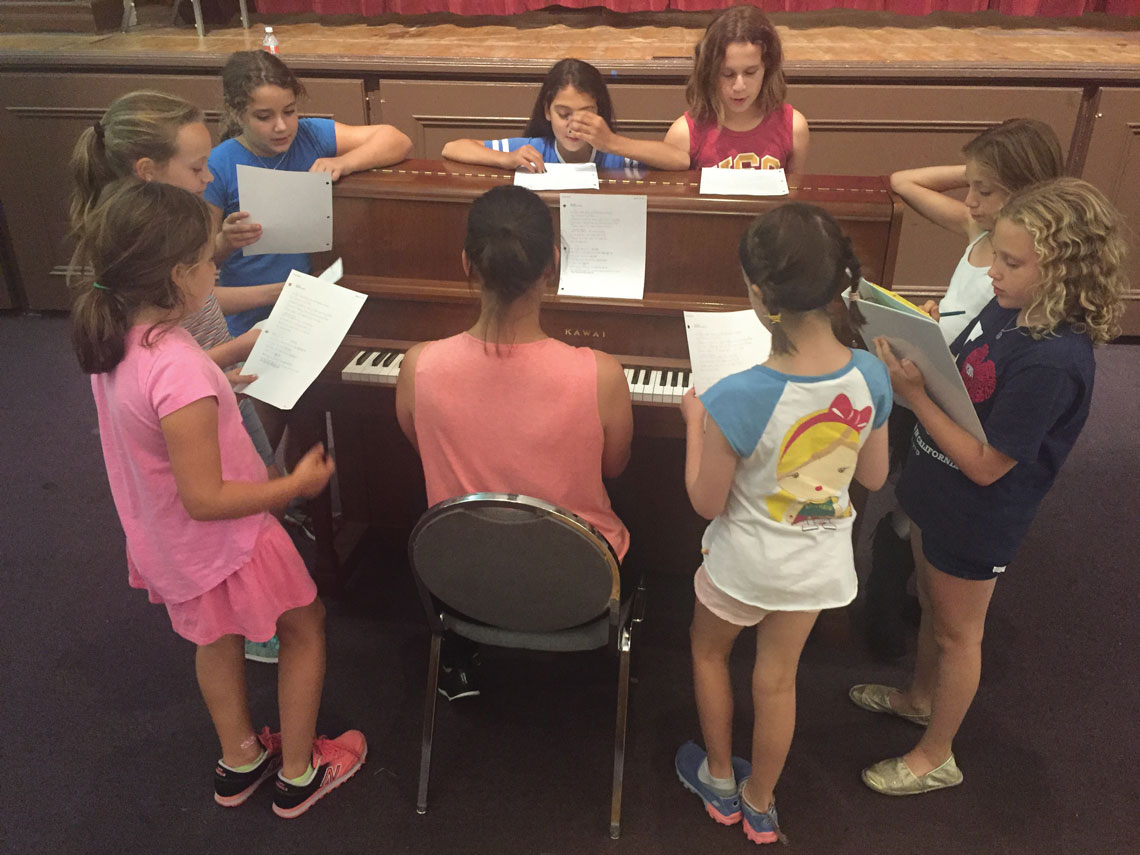
In Valley Beth Shalom’s (VBS) auditorium, a group of elementary school students is drafting a script for “Her-Story,” a play about strong women throughout Jewish history. Downstairs, in the Innovation Lab, another group is modeling mezuzahs with a 3-D printer. In the art studio across campus, yet another group is splattering colored wax on challah covers in the style of Indonesian batik.

The students are enrolled in VBS’s Etz Chaim Learning Center (ECLC), a religious school program that offers performing arts, technology and fine arts tracks as alternatives to their traditional Hebrew school curriculum. The academies, as ECLC calls them, are the product of collaboration between VBS teachers, parents and clergy aiming to breathe new life into Jewish education.

“My own kids called Hebrew school the most boring part of their day,” said Sabrina Weisz, a teacher in the Performing Arts Academy. “How can we get them to care? That was our goal. Let’s get kids excited about going to Hebrew school.”

ECLC Director Keri Loventhal said she got the idea for the Performing Arts Academy, now in its fifth year, after witnessing the success of a VBS summer drama camp. Rather than competing with extracurricular activities for children’s limited time, Loventhal realized that Hebrew school could incorporate the activities to broaden students’ connection to Judaism.

“Our students develop life-learning skills that they can use outside of the school and see how Judaism fits together with their daily lives,” she said.

The Performing Arts Academy enrolls fourth- and fifth-graders and allows students to write, choreograph and perform their own plays based on Torah and Talmud stories. “Her-Story,” for example, performed in May, was inspired by the all-girls makeup of that particular class.

The Technology Academy followed two years later, inspired by the fast pace of technological innovation and the volume of media that children are exposed to, Loventhal said. She worked with technology experts to develop a curriculum that incorporates phones and iPads, instead of asking students to put away their devices before class begins.

The fifth- and sixth-graders in the Technology Academy work on projects such as coding video games about Jewish holidays, designing baskets for baby Moses that can survive an egg drop and creating electronic maps of Israel. Loventhal said she hopes to partner the Technology Academy with a school in Israel to create a technological exchange.

Laura Berger, whose son, Avi, is a student in the Technology Academy, said he is more motivated to attend Hebrew school because the curriculum caters to his interest in video games.

“Avi is on his iPad at home, and then he goes and does the same thing at Hebrew school,” she said. “It made it more natural.”

In the Fine Arts Academy, the newest track, fourth- to sixth-graders learn about Jewish figures in art history and use different mediums, including sculpting and photography, to create Jewish ritual objects.

Loventhal said ECLC is still expanding its alternative academies, and she and her team of parents and clergy have discussed the possibility of a Music Academy. They have also considered a Mishnah Academy for parents who want a more rigorous religious school education than ECLC’s traditional track currently provides.

Weisz, who helped Loventhal develop the original Performing Arts Academy curriculum, said ECLC’s biggest challenge has been selling the alternative programs to parents. Some parents, she said, worry that the programs are too activity-based and will not sufficiently prepare their children for their b’nai mitzvah.

Loventhal said she assures parents that the first 45 minutes of every class are spent learning Hebrew and prayers, just as they are in the traditional track. She added that by the time students finish third grade, they already have learned the foundations of Torah and Jewish knowledge.

“By fourth grade, kids start saying, ‘I’ve learned this already,’ ” Loventhal said. “It’s the same [Torah] stories every year, the same outcome.”

Weisz said attendance and retention rates are much higher in the academies because students are enjoying themselves and creating tangible products they can show off to others. She said parents have told her stories of their children not wanting to take a family vacation because they would miss Hebrew school.

“The kids take ownership of their study,” Weisz said. “It strengthens their Jewish identity because they’re proud of what they’ve accomplished in a way that’s not possible when they’re sitting at a desk.”

Weisz said she has also seen great results for students with learning challenges, such as attention-deficit disorder, who benefit from the academies’ hands-on model.

Loventhal said she is unaware of any other Jewish religious schools with a similar activity-based program, and she envisions VBS becoming the leader in helping other schools launch similar curricula. On June 11, she presented VBS’ model at Builders of Jewish Education’s “Ascending the Mountain of Innovation: North American Conference on Reinventing Religious Schools.”

David Lewis, Builders’ Los Angeles director of Jewish teen education services, said VBS is one of 25 schools in Los Angeles participating in a Jewish Federation grant program for religious school innovation. Among those schools, he said, the VBS program is a shining example.

“VBS takes a lot of guts to go out and reinvent itself,” Lewis said. “Not many congregations are willing to jump hip-deep in the water as they have.”

Lewis said VBS particularly excels in designing family-driven programs based on the needs and interests of students, rather than articulating a set of religious educational goals and shaming those who choose not to partake for being “bad Jews.”

Lewis said there has been a recent uptick in Jewish religious school enrollment across the country, a rise he attributes to innovative programs like VBS’ that draw in families by offering supposedly secular activities.

“Our program teaches kids that Judaism is throughout everything they do,” Loventhal said. “It’s not just going to synagogue for High Holidays or going to someone’s bat mitzvah or Shabbat services. You can find Judaism in anything.”

VBS learning center aims to get kids excited about Hebrew school Read More »