fbpx

August 8, 2017

Trump (and America) as victims – the implications

For decades civil rights organizations in the United States have toted up hate crimes, tracked and reported on the growth (and decline) of extremist organizations, and filed lawsuits against bigots who engage in tortious or illegal behavior. Their efforts have chronicled an America that is far more tolerant and accepting of differences than it was thirty, forty or fifty years ago.

Those measures of bigotry were taken as accurate well back into the 20th century as America was led by elected officials who either were unambiguous advocates of civil rights and acceptance (Obama, Clinton, Bushes 1 & 2, Carter, Ford, Johnson) or who were less eager, but not openly hostile, advocates of tolerance (Reagan, Nixon, Eisenhower).

The advocates of inter-group progress knew that political leaders (Southern leaders excepted for decades) were supportive of the general thrust for inclusion and diversity and the reduction in inter-group hostility. It’s hard to recall a politician with much traction over recent decades, other than George Wallace, who flaunted open hostility to ethnic, racial or religious minorities.

The metrics that were relied on are questionable in their applicability to the political situation we have today—-a president who flaunts the usual norms of civil behavior, who invokes unfounded conspiracy theories, who demonizes minority groups (Latinos and Muslims), who habitually lies, who traffics in conspiracy theories, who ignores conventional notions of truth and untruth, who evidences no humility or remorse in the face of error and who constantly claims to be a victim of others’ acts.

Having been a civil rights activist for over forty years and having been involved in combatting, exposing and monitoring hate groups during that time, I speak with some perspective on these issues; we are in uncharted territory. When the president of the United States engages in conduct that many of us have spent decades teaching young people and our peers to avoid, it’s not clear what the measurements we have long relied on for decades mean.

Trump’s conduct has the potential to undo years of work. Young people can easily believe that it’s acceptable to make fun of the disabled, to caricature minorities as “criminals and rapists,” to demean whole communities as being so forlorn that they “have nothing to lose,” to treat women as objects and to assume that criminal suspects are to be roughed up (the Bill of Rights be damned).

But the most insidious aspect of Trump and Trumpism is his pervasive attitude of being a victim; someone else is ALWAYS to blame for what goes wrong.

Prior to November 8th, the system was “rigged” against him, the media was biased and in the tank for Hillary, illegal voters would skew the results, foreign governments were taking advantage of us, trade deals were harming inept and gullible Americans, etc. If he had lost the election, there would be someone or many someones to blame.

Since January 20th the media remain a foil, illegal immigrants and inner city dwellers are still to blame–as are the Democrats– but now, so are the Republicans (post Trumpcare’s defeat). America’s intelligence agencies, recently the Secretary of State was added to the list of victimizers—Tillerson (he “flinched” on Iran), “leakers” in his White House and assorted others are all responsible for the administration’s missteps and America’s ills.

This blame shifting, paired with the complete absence of introspection or willingness to entertain the notion that HE has contributed to his failures, all take place while we have an economy that is in decent shape and a world that is not in the grip of an acute crisis.

How will the excuses and the blaming of others work when a crisis or crises arise? That may be the measure of where we have come and how much damage Trump and Trumpism is doing to tolerance and civility in society.

In a memorable essay a couple of years ago, the former Chief Rabbi of the British Commonwealth, Jonathan Sacks, warned of leaders and nations that seek to blame others for the problems they face—when their view of themselves no longer comports with the reality of their position in the world. He noted that many nations face adversity and profound challenge, even humiliation—but the adaptive ones ask themselves “what did we do wrong?” They don’t look for someone or some group to blame.

The societies that view themselves as victims and ask “Who did this to us?” invariably lead to division, disharmony, and even worse.

For Jews, societies that acted this way inevitably led to tragedy—-from the Crusades to the pogroms of the Middle Ages to the Holocaust; societies that were unable to resolve the disconnect between past glory and perceived present ignominy looked for “causes” outside their own actions, and it proved lethal.

The diverse face of America has numerous “others” to blame and Trump has shown no hesitation to blame and target and cravenly exploit differences to absolve himself of any responsibility for what he says is “wrong.”

As Rabbi Sacks observed:

By turning the question “What did we do wrong?” into “Who did this to us?” it restores some measure of self-respect and provides a course of action. In psychiatry, the clinical terms for this process are splitting and projection; it allows people to define themselves as victims. [Emphasis added]

Leaders in Congress, leaders of both parties, religious leaders and opinion molders across the country must be vocal and uncompromising in rejecting the insidious victim role that Trump purveys and which he seeks to impose on the country—to force us all to “split” and “project”; it is a dangerous game to play. It may offer short term political payoff for him, but the long term harm—for him and for us— is inevitable and incalculable.

As Rabbi Sacks warned, “Hate harms the hated, but it destroys the hater.”

Trump (and America) as victims – the implications Read More »
Can one rabbi disrupt the bar and bat mitzvah industry?

A Los Angeles rabbi’s innovative program makes a meaningful bar and bat mitzvah affordable to all families

With reports of multimillion-dollar bar and bat mitzvah parties featuring Drake or Lady Gaga, and private tutoring and membership a prerequisite at some synagogues and temples, one might think it takes a fortune to have a bar or bat mitzvah.

However the facts on the ground are quite different.

While there’s nothing new about the communal realities — most Jews don’t belong to a synagogue or temple, or provide their children ongoing Jewish education in private schools or after-school programs — a recent Op-Ed in the LA times will hopefully spark a broader conversation about the many options, costs and benefits of Jewish lifecycle events.

Those who live in the Torah observant Jewish world might have thought that Leslee Komaiko’s Op-Ed, It’s Too Expensive To be Jewish, would bemoan the price of day school tuition, passover food, and high rents in Jewish neighborhoods of Los Angeles.

However, Komaiko’s Op-Ed took issue with the cost of her synagogue membership, Sunday School Jewish education, High Holiday tickets and … the cost of training her twelve year-old boy for a bar mitzvah.

But it doesn’t have to cost a fortune to have a bar mitzvah.

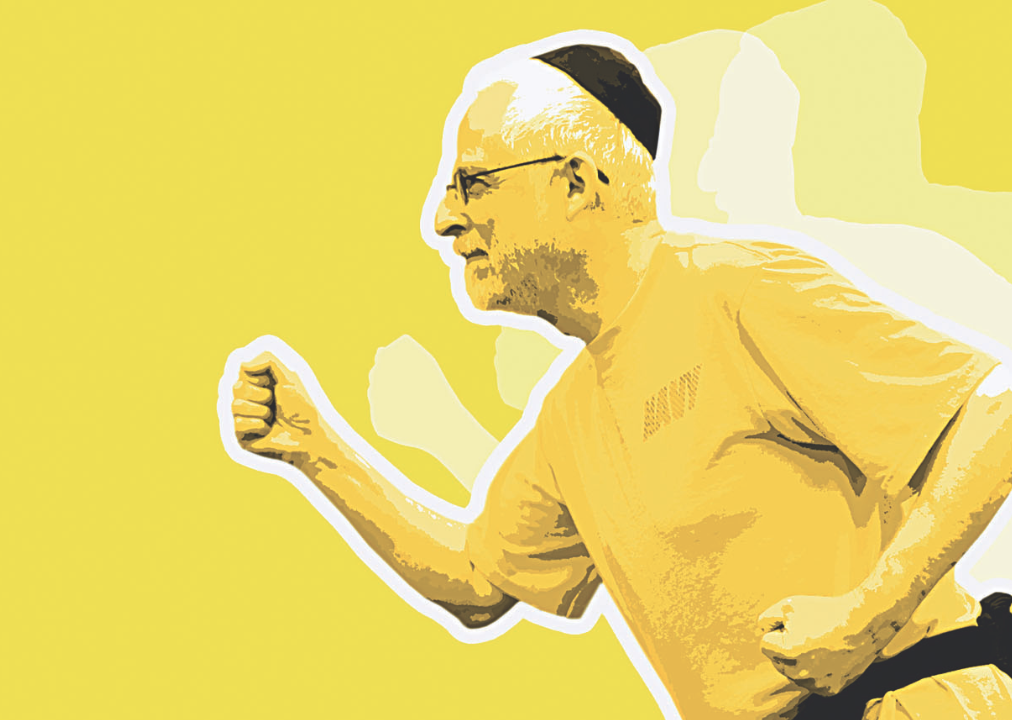
Rabbi Moshe Cohen, of LA’s Community Shul, started a program recently called the Bar/Bat Mitzvah Experience. “We have long recognized,” said Rabbi Cohen, “the need to service families who were otherwise unaffiliated with a synagogue or temple and nonetheless wish to provide their children with an authentic bar and bat mitzvah experience.”

After initially raising funds by running the LA Marathon, Rabbi Cohen launched the program this summer with the help of his community and some Hollywood veterans —this is Los Angeles, after all. The project consists of six one-hour Sunday sessions. “Through our program,” observed Rabbi Cohen, “a teenager comes away with a clear understanding of what it means to be a Jew, what is a mitzvah, what is the Torah, and what is the land of Israel.”

The Community Shul has also partnered with the LA Museum of the Holocaust in order to expose and explain to these young men and women the difficult subject of the Holocaust. The costs of the program are kept to an absolute minimum and the family can hold the ceremony in their synagogue without having to take out a costly membership.

“We are planting a seed that will germinate and sprout saplings and trees down the line,” Rabbi Cohen explained. A bar and bat mitzvah, rather than being an end to a journey, actually is designed to become the start of a Jewish journey. In his letter to the LA Times Op-Ed, Rabbi Cohen wrote, “Our Shul embraces those who want to celebrate a major Jewish life stage in a way that is meaningful and relevant for their entire family.”

The Bar is Being Lowered – and Not Just for Bar Mitzvahs

Rob Eshman, publisher and editor-in-chief of the Jewish Journal, also offered his response to the subject in, “It’s a Bargain to be Jewish.” Eshman points out that, “Jewish institutions…have found ways to make it easier for Jews to afford practicing Judaism.” Additionally, thanks to the ingenuity and entrepreneurship of some to Jewish groups and individuals, there are “more accessible avenues into Jewish life” than before.

One has to agree with Eshman when he writes that, “At some point, Jewish involvement does require a choice — you’ll need to pay something, which means foregoing something else.” Even Komaiko admits that “baseball and sleep-away camp and a million other not-so-good excuses have prevented me from setting up his first tutoring session.”

It Wasn’t Always Like This

I remember hearing that my grandfather’s bar mitzvah in Zyardow, Poland was likely celebrated with being called to the Torah for an aliyah at an early morning minyan, and celebrated afterwards with herring and a l’chaim. While such a minimalist approach is insufficient today, where bar and bat mitzvah ceremonies have taken on much more importance in Jewish life as day-to-day Jewish observance has waned, the Jewish community has taken incredible steps in making Jewish life affordable and inclusive.

By offering free High Holiday services, some congregations positively disrupted synagogue and temple budget models that raised much of their annual budget through High Holiday tickets and annual membership requirements. Across denominations, that model is being replaced with newer approaches to make participation more desirable and affordable.

I see that Rabbi Cohen’s Bar and Bat Mitzvah Project is also a positive disruption in Jewish life by providing more Jews the chance for meaningful and affordable bar and bat mitzvah.

_________________________________

Yonah Bookstein is co-founder and Deanna and Allen Alevy Senior Rabbi at LA’s Pico Shul, and codirector of Camp Neshama, both projects aimed at creating spiritual community for Jews in their 20s and 30s.

Can one rabbi disrupt the bar and bat mitzvah industry? Read More »

Can we change the Swastika to mean something different?

Recently, I came across a commercial charging humanity to change the Nazi symbol into a symbol of peace by a T-shirt company called Teespring and KA Designs. They suggested this symbol we have come to know as a symbol which reflects hate, devastation, tragedy, and murder can be redesigned by repurposing it for a symbol of tranquility and love just by coloring it a multitude of pastel pink, green and blue colors and willing it so.

My first reaction to this suggestion was visceral. It was filled with pain and disgust. It felt like I was being manipulated versus inspired. I have learned that when I get that feeling that lives deep inside my gut, that feeling which tells me something is wrong or untrue, I should listen to it.

I spent a great deal of time reflecting on my negative reaction to this suggestion. After all am I not a self evolved person who has the ability to transform hatred into kindness if I wish it so? Am I not evolved enough to see this suggestion as a transformation versus a disfiguration? Is it really so bad that a group of folks want to redirect our thinking when seeing the Swastika to reflect peace versus hatred and murder? After all, the Nazis took an innocent Eastern symbol which originally meant “Good Fortune” in Hinduism and Buddhism, when turned clockwise, and twisted it to mean hatred and anti semitism.  Why can’t we turn this back around to a new meaning of peace and love? Isn’t it just a symbol, aren’t symbols what we choose to make them, and how we choose to give them meaning? Is it so radical to think we cannot rededicate the most radically perverted symbol in the world to mean something different- to mean love?

The way we communicate with one another is complex and nuanced. We use words, eye contact, gestures, body language and symbols to create tone and to tell our stories. Yes, a symbol is the meaning we dictate it. A symbol carries with it stories, lives, human narrative and communicates our deepest selves. A symbol showcases history and human connection. The suggestion that a symbol which stood for lives being broken, ended, gassed, burnt, wiped out and destroyed can suddenly be erased to mean something different is erasing the very stories affected by that symbol as well. We don’t transform ourselves because we change what that symbol means, we merely lose ourselves. Transformation is the ability to take something and change it, shift it, redesign it, not delete, obliterate or ERASE it.

The suggestion that the Swastika could represent love when it was designed to represent hatred is preposterous and not because of what it is asking from us, but because of what it is taking from  us. While I applaud those who want to switch the meaning, you cannot switch a meaning without erasing the first one. You are not asking us to transform, you are actually asking us to regress. By asking us to erase it’s original meaning, you are asking us to erase the stories that assembled because of and in spite of that symbol.

Essentially, you are asking us to forget. And that’s why my gut turned. Because you are asking too much. I imagine the Eastern originators of the Swastika symbol felt the same way- like their stories had been hijacked by a black cause that created suffering versus the enlightened meaning it was meant to inhabit. When the Nazis stole their symbol, they stole and erased their stories as well – just as you are asking to steal and erase ours.

You are insulting us by assuming evil could be erased. You are not asking us to redesign our thinking,  you are asking us to stop thinking, to stop communicating our stories and who we are because of- rather- in spite of that symbol. Because that symbol carries with it the stories of those times, and by erasing those stories, you erase those people, my people. You are asking us to forget them. You are asking us to discredit them.

A symbol carries the weight we associate to it. And in this case, it carries the stains that bleeds on it as well. If you want to change thinking, create a different symbol that carries with it a new weight and reflection of that communication of peace, don’t insult us to believe our stories associated with that horrid symbol can merely become erased just because we will it so.

The Nazis chose to steal this symbol. It was hijacked. It cannot be reinvented without hijacking the stories behind the symbol as well. You are asking us to have our truths stolen away, to have our history expunged, to have our records erased into oblivion. You are asking us to change the symbol’s meaning, which essentially pirates our stories just as the Nazi’s stole the originator’s stories.  The end doesn’t always justify the means. Changing the swastika meaning doesn’t change the result that occurs because the action is well intentioned. In this case, the result is  the feeling of having our narratives deleted, our truths and lives inconsequential all over again.

When healing from pain, we can’t negate it’s existence to become enlightened, we must acknowledge the pain first, then reposition ourselves around it, and redesign something COMPLETELY DIFFERENT to reflect the lessons learned and the knowledge acquired out of the ashes. We don’t pretend the pain never existed by coloring it a pretty pink and willing it so.

Can we change the Swastika to mean something different? Read More »

Was country legend Glen Campbell Jewish?

Country music legend Glen Campbell, famous for his 1975 hit “Rhinestone Cowboy,” died Tuesday, August 8, after a long battle with Alzheimer’s. Campbell hailed from humble beginnings, growing up Baptist in rural Arkansas. According to a 2008 article published in Reuters, Campbell and his wife Kim were practicing Messianic Jews. Although not considered part of the Jewish religion, Messianic Judaism incorporates Jewish elements into an overall evangelical Christian theology.

Messianic Judaism, Rabbi Eric Yoffie, president emeritus of the Union of Reform Judaism, told the Journal in 2012,  is “built on a lie. They are lying about us and lying about themselves; they distort both.”

Campbell and his wife celebrated Jewish holidays such as Passover, Rosh Hashanah and Hanukkah, but they also celebrated non-Jewish holidays such as Christmas. His wife, apparently, cooked a mean brisket (although, the article mentions her matzo balls needed some work). Inside his Malibu home, he kept a menorah on his mantle and a Hebrew book on his coffee table.

The country artist was featured in the documentary, “Hava Nagila, What Is It?” where he and his wife perform their own rendition of the Israeli folk song [Watch below].

If a traditional service is observed, the Mourner’s Kaddish will be recited at Campbell’s funeral.

Was country legend Glen Campbell Jewish? Read More »

Israeli-American teen who threatened JCCs sold his bomb threat services, FBI alleges

The Israeli-American teenager accused of making hundreds of threats against Jewish community centers in the United States sold his bomb threat services.

Michael Kadar, 19, from Ashkelon in southern Israel, also offered to frame others for the threats for a higher fee, the FBI reportedly alleges in newly unsealed court documents reported Tuesday by The Atlantic and The Daily Beast.

The teen sold his services on AlphaBay, a “dark web” marketplace website selling illegal goods and services that was closed by U.S. authorities in July.

He reportedly sold his services from $30 for a single threat to $90 for “emailed bomb threat to a school districts\multiple schools + framing someone for it.”

Kadar also wrote in his online advertisement under the screen name Darknet Legend: “there is a no guarantee that the police will question or arrest the framed person. I just add the persons name to the email. In addition in my experience of doing bomb threats putting someones name in the emailed threat will reduce the chance of the threat being successful. But it’s up to you if you would like me to frame someone.”

The messages were found on a flash drive confiscated by the Israel Police during a raid on the teen’s bedroom earlier this year. Police reportedly identified an individual in California who is believed to have ordered and paid for Kadar’s threats.

He was charged in district court in Israel in April with thousands of counts on offenses that also include publishing false information, causing panic, computer hacking and money laundering. He was arrested in Israel in March in a joint operation with the FBI.

According to the indictment Kadar, who has dual U.S. and Israeli citizenship, made threats to 2,000 institutions around the world, including the Israeli Embassy in Washington, D.C., and other Israeli diplomatic missions, schools, malls, police stations, hospitals and airlines.

Threats to three airlines, including Israel’s national carrier El Al, led to planes making emergency landings, dumping fuel and requiring military escorts, according to the indictment.

The teen’s parents and attorney have said Kadar has a benign brain tumor that affects his behavior, as well as a very low IQ.

Israeli-American teen who threatened JCCs sold his bomb threat services, FBI alleges Read More »

North Carolina Pride organizers alter event schedule to avoid Yom Kippur conflict

Organizers of North Carolina’s gay pride parade and festival have altered the event’s schedule in order to accommodate the Jewish community.

The N.C. Pride parade had been scheduled for Sept. 30, which this year is Yom Kippur.

Following the announcement of the date last month, organizers apologized for scheduling the parade for Yom Kippur and said they could not change the date. They said the parade has been held on the last Saturday of September for the past 17 years.

N.C. Pride organizers announced Friday that it had rebranded the event as N.C. Pride @ Night, a street fair that would start in downtown Durham and in downtown Raleigh at 4 p.m. on Sept. 30 and run until 4 a.m. on Oct. 1. The Pride Parade was cancelled for this year but is scheduled to return for 2018.

Several Jewish groups have marched in the parade in recent years.

Jewish Federation of Durham-Chapel Hill CEO Jill Madsen said that her agency is still planning to hold an alternative event planned for the Jewish community to celebrate LGBTQ pride set for Oct, 7, which falls during the Jewish holiday of Sukkot, but is more manageable for the Jewish community.  Madsen told local media that she was “grateful” for the compromise from N.C. Pride.

“We appreciate them considering other options,” she told the Herald Sun.

The event will start with Havdallah to end the Jewish Sabbath, Madsen told the news paper. “It falls during the holiday of Sukkot, which is our fall harvest holiday, and one of the practices of Sukkot is inviting someone into your home for a meal. So we thought, what a wonderful opportunity to open up our building and show our support,” Madsen said.

North Carolina Pride organizers alter event schedule to avoid Yom Kippur conflict Read More »

Minnesota Jewish community affirms solidarity with firebombed mosque

The Jewish Community Relations Council of Minnesota affirmed its solidarity with the Muslim community in the wake of an attack on a local mosque.

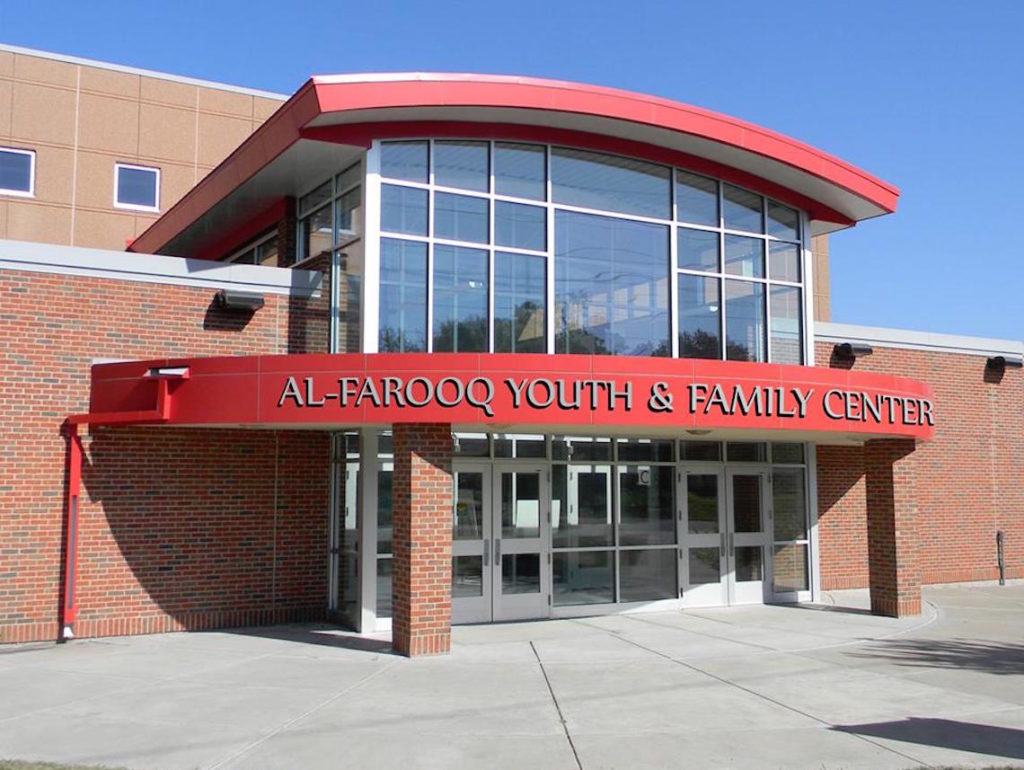
The blast at the Dar Al Farooq Islamic Center in Minneapolis occurred early Saturday while worshippers were gathered for early morning prayers. No one was injured in the attack, but the imam’s office, where someone threw a firebomb, was damaged, according to police.

“Earlier this year, the Muslim community placed an ad in the Star Tribune affirming solidarity with the Jewish community after the JCC bomb threats. Today, the Jewish community affirms its solidarity with the school, mosque, and local Muslim community,” Steve Hunegs, executive director of the JCRC of Minnesota and the Dakotas, said in a statement.

The attack caused an estimated $95,000 worth of damage.

A GoFundMe page set up to help the mosque has raised nearly $69,000 and a LaunchGood campaign has raised nearly $17,000. Donations ranged from $5 to hundreds of dollars.

“We are falling short of words to express our gratitude for all your love and support. May Allah bless you all!” the mosque said in an update on the GoFundMe page.

One message left by a donor couple on the page read: “We are American Jews who share your outrage and sorrow over the recent attack on your mosque. We are relieved that no one was injured, grateful to the first responders, and hopeful that the perpetrator(s) will soon be identified and brought to justice.”

The Department of Homeland Security said in a statement that it was in contact with local, state and federal authorities as the investigation into the attack moves forward.

Minnesota Jewish community affirms solidarity with firebombed mosque Read More »

Vandalized St. Louis Jewish cemetery rededicated with help from Muslim donors

A St. Louis-area Jewish cemetery was rededicated nearly six months after more than 150 headstones were toppled and damaged by vandals.

Dozens of members of the St. Louis Jewish community and its supporters gathered Sunday at the Chesed Shel Emeth Cemetery in University City, Missouri, to acknowledge the community support while honoring those who are buried there, the local media reported.

“While God could not guard this sacred place from harm, God did send so many to repair, reclaim and rededicate,” Rabbi Roxane Shapiro of the St. Louis Rabbinical Association said at the ceremony. “Our help had no barriers and no hate, simply care, compassion and hope.”

Among those in attendance at the rededication was Tarek El-Messidi, founder of the Muslim organization Celebrate Mercy. The group, with the support of other Muslim leaders, including pro-Palestinian activist Linda Sarsour, set up a crowdfunding campaign that raised $162,000 from nearly 5,000 donors, exceeding its $20,000 goal in the first few hours.

In the wake of the attack, hundreds of community volunteers came to the cemetery to help with the cleanup and repairs, including Vice President Mike Pence and Missouri Gov. Eric Greitens, who is Jewish and had invited Pence.

No suspects have been identified in the vandalism. The Anti-Defamation has offered a $10,000 reward for tips that lead to an arrest.

Vandalized St. Louis Jewish cemetery rededicated with help from Muslim donors Read More »

Ramah camp in the Rockies evacuated due to early morning fire

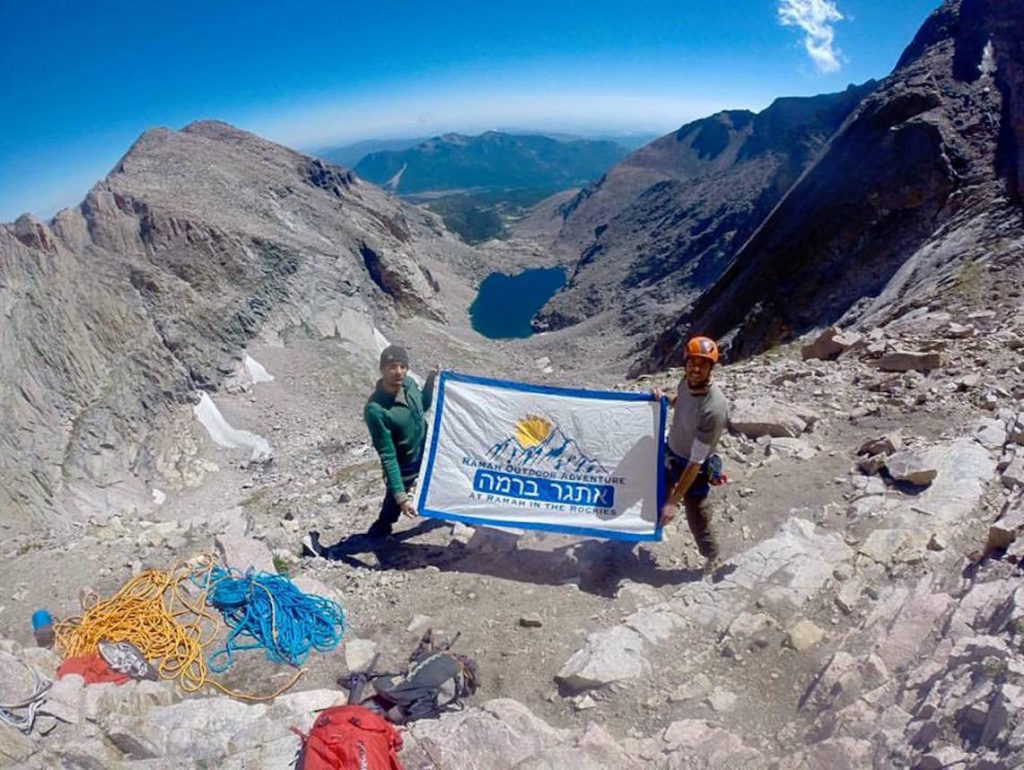
Camp Ramah in the Rockies was evacuated after a fire destroyed the building housing the camp kitchen, dining hall and administrative offices.

No one was hurt in the blaze at the Colorado Jewish camp, which started at 2 a.m. Monday and spread to some nearby trees. The camp’s executive director, Rabbi Eliav Bock, noted the damages in a message posted on Facebook.

Local firefighters quickly brought the fire under control, according to the newspaper. The cause has yet to be determined.

The campers and staff were relocated to a field far from the fire, where they played games and sang while under close supervision, according to the post. After sunrise, they boarded buses and drove under police escort from the camp near Bailey, Colorado to a synagogue in Denver, about 90 minutes away. Volunteers there provided them with food.

There were about 130 campers in the area when the fire broke out, the Denver Post reported.

“The immediate implementation of emergency protocols resulted in a calm and quick camp evacuation,” the statement said. “Camp leaders also retrieved Torah scrolls and other important items, and all animals were released to safe areas away from the fire.”

The JCC Ranch Camp in Elbert, Colorado, whose summer season ended this week, offered Ramah the use of their site for the remainder of the summer session, according to Ramah’s Facebook page. “We plan to relocate our entire camp community there by tomorrow evening,” the update said Monday evening. “We will be bringing our own kitchen staff, hospitality staff, and most importantly our own incredible program team and counselors, who are already busy coordinating with JCC Ranch Camp to plan activities such as archery, mountain biking, hiking, and sports.”
Money and passports belonging to campers and staff were stored in fireproof safes on the second floor of the building that burned down, but cell phones and other electronics were kept in a locked closet in the same building and were lost in the fire, the camp said.

Ramah camp in the Rockies evacuated due to early morning fire Read More »

David Satterfield, veteran U.S. diplomat with Mideast experience, named assistant secretary of state

David Satterfield, a veteran U.S. diplomat with experience in the Middle East, will become acting assistant secretary of state for Near East affairs.

Satterfield will take the position on Sept. 5, replacing Stu Jones, who will retire on Aug. 11, a State Department official told JTA. His appointment was first reported by The Associated Press.

Satterfield has served in diplomatic positions in several Arab countries, including Saudi Arabia, Lebanon, Syria and Tunisia. He also served as senior adviser to former Secretary of State Condoleezza Rice during the George W. Bush administration and served as the State Department’s coordinator for Iraq.

For about five years, starting in 2009, he was director general of the multinational force in the Sinai, which helps maintain the Israeli-Egyptian peace agreement. He returned to the State Department in 2014 to be a special adviser on Libya.

Satterfield in his new post is expected to focus on Iraq.

It is not known if President Donald Trump will appoint Satterfield to the position permanently.

Former U.S. Ambassador to Israel Dan Shapiro in a tweet called the naming of Satterfield “Good news. David Satterfield is a pro’s pro. He brings knowledge, judgment, and creativity to the post, pending a confirmed nominee. “

Robert Satloff, executive director of The Washington Institute, a D.C. think tank, said the temporary appointment was a “wise choice.” He added that the U.S. government “has few more experienced, savvy officials, w/broad background across #Mideast, than David Satterfield.”

David Satterfield, veteran U.S. diplomat with Mideast experience, named assistant secretary of state Read More »