fbpx

July 28, 2017

Rep. Faso skeptical about Palestinian commitment to peace

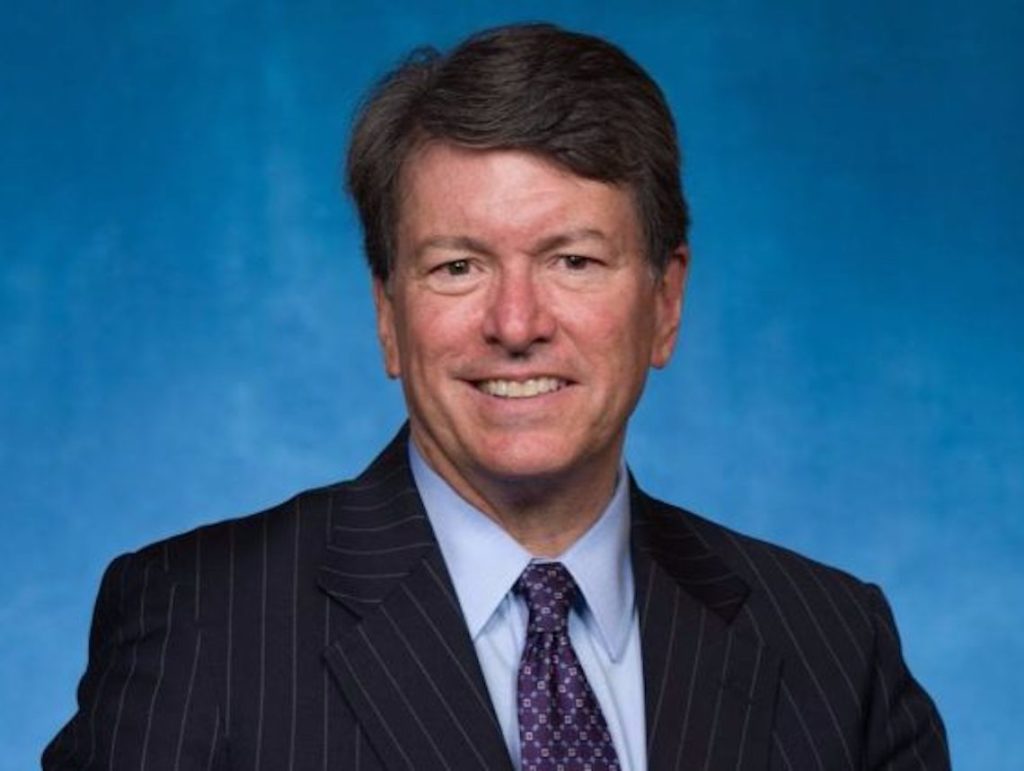
Representative John Faso (R-NY) is no stranger to the public spotlight despite recently beginning his first term in Congress earlier this year. The New York lawmaker served for 15 years in the state assembly and rose the ranks to the Ranking Member of Ways and Means Committee. He then proceeded to unsuccessfully run for both Governor and separately in a 2009 special election for House of Representatives.

[This article originally appeared on jewishinsider.com]

Growing up in an Irish-Italian Catholic family in Long Island, Faso’s first political experience was attending a train rally for then candidate John F. Kennedy. When asked what prompted him to switch to the Republican party, Faso replied“Common sense.”

When asked about the Middle East, Faso told Jewish Insider he is skeptical about the feasibility of a two state solution given the current realities. “In theory, it sounds good. But, in order for there to be a two state solution, there needs to be a state on the other side of Israel that is capable of actually functioning and negotiating.  It was Abba Eban who famously said: ‘The Arabs never miss an opportunity to miss an opportunity.’ The Palestinians have had multiple opportunities for peace and stability and they have failed to ever take up the cause seriously.

Faso will be visiting Israel for the first time in August on a trip for freshman members sponsored by the American Israel Education Foundation, a charitable organization affiliated with AIPAC. Given the increasing momentum in Congress for the Taylor Force Act, legislation that would sever US economic aid to the Palestinian Authority if they continue payments to families of terrorists, Faso signaled his support for the effort. “The PA by subsidizing the people who commit horrific crimes and subsidize the families of deceased terrorists it sends a terrible signal. I do think that we need to take action subsidies to the PA that are directly contrast to interests of peace and certainly those subsidies meet that criteria.”

While generally backing President Donald Trump’s policies, Faso expressed concern regarding trade policies calling the GOP leader’s rhetoric “distinctly unhelpful.” The Georgetown University-trained lawyer added, “I represent a district where we have 680,000 that are dependent on U.S. trade to Canada. That is much more significant to local economic employment than U.S.-Mexico trade. Yet, a lot of the rhetoric around NAFTA has been almost uniformly been targeted at Mexico and ignoring the need for us to maintain the very productive relationship with the Canadians.” Faso also noted his strong support for a recent House bill that toughened U.S. sanctions against Russia, Iran, and North Korea.

Jewish Insider: Why did you decide to run for Congress?

Rep. Faso (R-NY): “I thought it was a great opportunity to contribute my country and to work on issues that I feel deeply about. National Security is one of those. I also ran because our nation is suffering under stagnating economic growth. We are growing way too slow in order to meet the needs that our country has for jobs and opportunities.”

JI: What are your thoughts about the two state solution?

Faso: “I think in theory it sounds good. But, in order for there to be a two state solution, there needs to be a state on the other side of Israel that is capable of actually functioning and negotiating. Right now, the Palestinian Authority for the last number of years I have become increasingly dubious that they have the capacity to seriously negotiate on behalf of Palestinians and to be able to enforce any kind of agreement. It was Abba Eban who said famously: “The Arabs never miss an opportunity to miss an opportunity.” The Palestinians have had multiple opportunities for peace and stability and they have failed to ever take up the cause seriously. So, the two state solution sounds plausible if you have another state that is a legitimate serious entity that is capable of negotiating and living up to an agreement.”

JI: If the two state solution can’t be implemented, what are your other suggestions for how to resolve the conflict?

Faso: “The main solution for Israel is to continue to be a beacon of democracy and economic opportunity in that part of the world. I think the status quo is what we are going to have to deal with until such time that the status quo changes. Because of the malign Iranian influence in that part of the world is actually drawing some of the Arab countries and Gulf States closer to Israel. Nations have interests. The national interests of the Saudis and Egyptians right now given their contest with Iran means that they will be drawn closer to Israel. There are some hopeful signs that potential for increased cooperation between Israel and some Arab states.”

JI: What is your position on the Taylor Force Act?

Faso: “The Palestinian Authority by subsidizing the people who commit horrific crimes and subsidize the families of deceased terrorists it sends a terrible signal. I do think that we need to take action subsidies to the PA that are directly contrast to interests of peace and certainly those subsidies meet that criteria.”

JI: Are there any areas where you disagree with President Trump?

Faso: “A lot of his rhetoric on trade has been distinctly unhelpful. In New York, I represent a district where we have 680,000 that are dependent on US trade to Canada. That is much more significant to local economic employment than US-Mexico trade. Yet, a lot of the rhetoric around NAFTA has been almost uniformly been targeted at Mexico and ignoring the need for us to have maintained the very productive relationship with the Canadians. I strongly supported the sanctions bill that came forth and I understand the administration wasn’t so happy about some of the snapback restrictions placed on the President.”

JI: Putting aside your political career, are there any personal sides to your life that may surprise your constituents?

Faso: “I have held office for a long time. I started in 1986 so I have kind of been out there a lot. The thing that perhaps people don’t know about is my enjoyment of cooking and one of the best times for my wife and me is when we have friends over for dinner and we are sitting on our patio at night having a nice dinner outside that we’ve made. I generally do the grilling and my wife always does the baking. She makes some extraordinary pies.”

JI: Can you please discuss your childhood?

Faso: “I grew up on Long Island. I was from an Irish-Italian-Catholic-Democratic family. My family moved out of New York City and moved to Long Island. I grew up as a Democrat. My first political experience was when I was eight years old going to a John F Kennedy whistle stop train rally on the Long Island railroad. I still have the button: Kennedy for President-1960. It was my mother who gave me the lifelong interest in politics and government.”

JI: Why did you switch to the Republican party?

Faso: “Common sense.”

Rep. Faso skeptical about Palestinian commitment to peace Read More »

Famous Einstein photo sells at auction for $125,000

A famous photograph of Albert Einstein, sticking out his tongue at a photographer and signed by the renowned scientist, has been sold for $125,000, the Nate D. Sanders auction house in Los Angeles announced the evening of July 27.

As per company policy, the Sanders auction house did not reveal the buyer’s identity.

United Press International (UPI) photographer Arthur Sasse took the picture on March 14, 1951, while covering a birthday party for Einstein, given by his colleagues at the Institute for Advanced Study at Princeton University.

Einstein had gotten tired of smiling for photographers at the party and when Sasse renewed the request, the scientist stuck out his tongue instead.

Initially, UPI editors hesitated to publish the irreverent photo, but when they did, Einstein was so amused that he ordered nine prints to give to close friends.

The $125,000 selling price, which equaled the minimum bid level set by the auction house, reflected the photo’s enhanced value through Einstein’s own signature on the margin. While the photo is generally shown cropped with only Einstein in the picture, the auctioned version represents the original, with Einstein seated between his hosts, Frank Aydelotte, head of the Princeton Institute, and his wife.

The 7-by-10 photo was previously on the market in 2009, when it was sold at auction for $74,324. The Hebrew University stands to benefit from the current $125,000 sale, since Einstein bequeathed his estate, including the use of his image, to the Jerusalem institution. Einstein, who died in 1955, assisted numerous Jewish institutions and organizations during his lifetime.

Einstein’s March 14 birthday continues to be celebrated in Princeton at “Pi Day” because the 3/14 date corresponds to 3.14, the first three digits of the mathematical constant pi.

His name has retained its universal recognition as a synonym for supreme intelligence. The National Geographic television channel has just concluded a series titled “Genius,” with Geoffrey Rush and Johnny Flynn as the older and younger Einstein, respectively.

Famous Einstein photo sells at auction for $125,000 Read More »

The week Israel won Jerusalem

It’s easy to see the latest brouhaha over the Temple Mount in Jerusalem as a defeat for Israel. After all, Israel caved to Arab and Muslim pressure and took down the metal detectors it installed after Arab terrorists smuggled weapons into the compound and killed two Israeli security guards.

Israel takes action. Arabs protest. Israel caves. Arabs win — right? Wrong.

The Middle East is a complex jungle where what counts, above all, is power. Israel’s enemies know this. They know that yelling and getting angry doesn’t confer real power. It’s like the power of a kid throwing a hissy fit. The real power belongs to the party that has ultimate control — that has, in other words, the power to install and take down metal detectors.

This view was why Palestinian leaders continued maligning Israel and calling for protests even after Israel took down the detectors. They were angry that Israel flexed its power so blatantly at a holy place that they considered theirs and theirs alone. They were humiliated by a “status quo” that had Jews guarding their mosque. So they continued to lash out because, well, that’s all they could do.

But protests or no protests, the world saw clearly last week who was in charge of guarding the holy sites of Jerusalem, and it was Israel.

Why does Israel have such power? Because it knows how to get power and maintain it.

It was the strength and savvy of the Israeli army that enabled Israel to take full control of Jerusalem after Arab armies tried to destroy Israel in 1967. Forget the fancy arguments about who has rights to what in Jerusalem. Forget the pipe dream of dividing the city under a peace process that doesn’t exist. For now and the foreseeable future, Israel controls all of Jerusalem.

That hard fact must drive Palestinian leaders nuts, because they know the value of raw power. They practice it all the time. If they could, they would do to Israel what Israel did to Jordan in 1967 and take complete control of Jerusalem. But they can’t. They’re too weak.

So, devoid of real power, they’re forced to fall back on the pathetic power of the blustering bully — lies, incitement and rage.

This lashing out has an effect. Among other things, it demonizes Israel and exacerbates the mutual animosity between the two sides. The Palestinians are great at playing the victim and winning public relations battles, but their leaders know that PR victories can’t compete with real power on the ground. They know that after the screaming stops, Israel is still on top.

Israel takes action. Arabs protest. Israel caves. Arabs win — right? Wrong.

It is Israel that has the most powerful army, the most successful economy, the most advanced technology and the most democratic and vibrant civil society in the Middle East. And it is Israel that controls all of Jerusalem.

The “days of rage” against the Zionist enemy will surely continue, but Israel has proven its resilience, even in the face of terror. If anything, the evil of terror only strengthens Israeli resolve never to relinquish power to those who seek to destroy their country.

After seeing the vile hatred directed at Israel over something as innocuous and reasonable as metal detectors designed to protect all visitors — including Muslims! — why would Israelis risk giving up even one inch of Jerusalem to its enemies?

What’s extraordinary about this situation is that Israel has used its power in Jerusalem for good. Instead of oppressing other religions, as is common in the region, it has done the opposite. Israel has turned Jerusalem into an open international city where tourism is thriving and all religions are honored and protected.

This also must drive Israel’s enemies nuts — they are victims who can’t even claim the moral high ground. They know very well that when an Arab country (Jordan) controlled the Old City of Jerusalem, it didn’t protect Jewish synagogues and holy sites — it destroyed them.

So, I’m not buying the conventional narrative that Israel lost last week. It didn’t. It tried to protect a holy site with a security measure that is ubiquitous around the world, and Arab Muslims went into a frenzy. Their rage was not directed at the use of metal detectors but at the Jews who had the power to put them there.

Arabs know real power when they see it. The more anger and frustration they direct toward the Israeli security forces guarding the Temple Mount, the more they remind us that Israel is in control of the world’s holiest city. For anyone who values freedom of religion, that control is a very good thing.


David Suissa is president of TRIBE Media Corp./Jewish Journal and can be reached at davids@jewishjournal.com.

The week Israel won Jerusalem Read More »

America’s only nuclear-qualified, Navy veteran, transgender rabbi is not happy with the president’s tweets

On Wednesday, in our offices near this city’s Dupont Circle, the staff at Jewish War Veterans of the U.S.A. were opening the mail when a request came in from a veteran asking that we change her first name on our records from Jaron to Rona.

“I just immediately did it without a second thought,” said Lauren Hellendall, a membership team member, said Thursday. “Then I thought about the significance of it because of the president’s announcement yesterday. I found out after doing some research that Rona Matlow was a Life Member of Jewish War Veterans of the U.S.A., and I thought it would be invaluable to share her story as a dedicated Jewish veteran.”

On Wednesday morning, President Donald Trump tweeted that transgender individuals would no longer be allowed to enlist or serve in the military, surprising both service members and Pentagon leaders.

“I went upstairs to our public relations department, and they just took it from there,” Hellendall said.

Rona served 22 years in the Navy as both enlisted and as an officer in its nuclear power program — in submarines, nuclear cruisers, frigates and a destroyer. She retired with the rank of lieutenant commander when she decided that the Navy had taken too much of a toll on her.

After leaving the Navy, Rona was ordained as a rabbi by the Academy for Jewish Religion and started volunteering as a chaplain for the veteran community. In 2015, she started to address her gender dysphoria and begin her transition.

I asked Rona, who lives in the Greater Seattle area, how she felt about the president’s announcement.

“I was absolutely devastated and furious,” she answered. “Immediately I was very worried about the 15,000 active duty trans personnel that are currently serving in the military. I have talked to service members with 19-plus years of service who would be kicked out of the military without a pension.”

Rona also told me that since the announcement, she has been reaching out to people in the Jewish and transgender community – making sure that their needs are met. She says she is available to anyone in the transgender community who needs support right now.

“It costs well over a million dollars to train a pilot. Kicking these people out is incredibly more costly than keeping them in,” she said. “Even if [the military] paid $30,000 for the surgery, they would have to pay a million dollars training a new pilot. That’s absurd.”

“I was also happy to see that Dunford and Mattis are supporting our service members,” said Rona, referencing the chairman of the Joint Chiefs of Staff, Marine Gen. Joe Dunford, and Secretary of Defense James Mattis.

Immediately after the president tweeted about the ban, Dunford said there has been no change in policy “until the President’s direction has been received by the Secretary of Defense and the Secretary has issued implementation guidance. In the meantime, we will continue to treat all of our personnel with respect.”

Mattis, who was on vacation and caught off guard by the president’s tweets, reportedly was “appalled” by Trump’s call for a ban.

“These tweets are ill-informed, ill-advised, and they were made without the backing or consultation of the Chiefs of Staff or Congress – such a policy has to be made with both of them,” said Rona.

Rona is right. Tweets are not the way to make policy. We urge the president to sit down with his Joint Chiefs of Staff and defense secretary to develop a policy with the backing of research as well as regard and respect for the individuals who have served our nation with honor.

Until then, Rona will proudly tell anyone that she is “the only nuclear-qualified, transgender rabbi,” and we’re proud to have her.


Anna Selman is the programs and public relations coordinator for Jewish War Veterans of the U.S.A. and an Army veteran.

America’s only nuclear-qualified, Navy veteran, transgender rabbi is not happy with the president’s tweets Read More »

Change your mood with color

When I start a decorating job for a client, one of the first questions I’m always asked is, “What color should I paint these walls?” That’s a tricky question, as it’s not just a matter of going through a stack of paint chips and declaring, “This one!”

To determine the perfect hue for a particular room, we need to start with how we want to feel in it. Do we want to be energized? Calm? Hopeful? Colors can affect our emotions, so it’s important to understand the psychology of color in the context of home decorating. Let’s look at some colors and how they can make you feel.

Red

The color of passion, red is stimulating and energetic. It’s good for kitchens and dining rooms because it also stimulates the appetite. However, because it can raise blood pressure and heart rate, try not to use red in bedrooms, where you need your beauty sleep.

Orange

If you like red but are afraid it could be too intense, orange is a good alternative. Orange conveys enthusiasm and creativity, and also is ideal for kitchens and dining rooms. Orange is a friendly color, so you will find that many businesses use it in their corporate communications and interiors to suggest a more customer-oriented image.

Yellow

The color of sunshine, yellow is joyful and optimistic. Its welcoming vibe is perfect for entryways and living rooms, but a little goes a long way. Too much yellow, especially when it’s a brighter shade, can feel oppressive. It does work well as an accent color, offering a happy contrast to cooler colors such as gray.

Blue

A popular choice for bedrooms, blue creates a feeling of serenity and peace. Light blues are particularly calming, but they run the risk of making you sad, or “blue,” if the room receives little natural sunlight. If that’s the case, try a deeper blue or balance it with some warmer shades.

Green

The most prevalent color in nature, green is another calming color and is very restful for the eyes. It also helps you concentrate and stay focused, so it is perfect for home offices. Because it blends the serenity of blue with the cheerfulness of yellow, green works in almost any room.

Brown

Another color dominant in nature, brown offers comfort and security. Both the lighter shades such as beige and the deeper chocolate shades create warmth in any room. And even if you choose not to apply brown paint to the walls, you can get a similar effect with wood finishes on furniture and floors.

Purple

It’s no wonder purple is considered the color of royalty. Especially in its deeper shades, purple evokes luxury and sophistication. It adds drama to living rooms, even in small doses as an accent color. And in lighter shades such as lavender, purple creates a calming environment for bedrooms, but with more grandeur than blue or green.

Pink

Traditionally stereotyped as feminine, pink has very calming effects. In fact, researchers have shown that prison cells painted pink resulted in less anger and hostility among inmates. The University of Iowa even painted its visiting football team’s locker room pink to make the players less aggressive. Imagine the wonders it can do for your teenager.


Jonathan Fong is the author of “Walls That Wow,” “Flowers That Wow” and “Parties That Wow,” and host of “Style With a Smile” on YouTube. You can see more of his do-it-yourself projects at jonathanfongstyle.com.

Change your mood with color Read More »

Disney lieutenant and chief ‘Imagineer,’ Marty Sklar, dies at 83

Marty Sklar, who served 54 years as an “Imagineer” for the Walt Disney Co. and led the creative team behind the company’s theme parks, attractions and resorts, has died at age 83.

The company announced his death in Los Angeles Thursday night.

[From our archives: Disney legend, mensch]

Sklar served as principal creative executive of Walt Disney Imagineering, turning the company founder’s ideas into reality.

“Everything about Marty was legendary — his achievements, his spirit, his career,” Disney Chief Executive Robert Iger said in a statement. “He embodied the very best of Disney, from his bold originality to his joyful optimism and relentless drive for excellence. He was also a powerful connection to Walt himself. No one was more passionate about Disney than Marty and we’ll miss his enthusiasm, his grace, and his indomitable spirit.”

Sklar was born in New Brunswick, N.J., and attended UCLA. He was editor of its Daily Bruin newspaper when he was recruited to edit a tabloid to be sold at Disneyland’s Main Street. Walt Disney liked his work on the tabloid, and he eventually becoming Disney’s lieutenant.

In 2001, Sklar was recognized as a “Disney Legend” — the company’s version of the Hall of Fame — and in 2009  was honored with a window on Disneyland’s Main Street.

Sklar was the author of the 2013 memoir “Dream It! Do It! My Half-Century Creating Disney’s Magic Kingdom,” in which he debunked a common rumor that Disney was anti-Semitic.

“I never saw a shred of anti-Semitism in him,” Sklar told the Jewish Journal of Greater Los Angeles in an interview when the book was published. “Walt was from the Midwest, he wasn’t used to being around Jews. And then he came out here, [where] most of the people in the entertainment business were Jews, so he was the guy out in the cornfield; he was different, and I think that’s where it came from. It never came from anything he said. Not ever.”

In his final years at Disney, Sklar served as a company “ambassador,” teaching a list of Disney principles, called “Mickey’s Commandments,” that he had distilled from his time with the company founder. The list included “Know your audience ” and ““Take time to teach — mentors are mensches.”

“That was what I learned: It’s the details that make the Disney parks work, that attention to detail,” Sklar told the Jewish Journal. “And you have to make it a complete story, which means striving to be accurate about whatever story you’re telling, down to the smallest details.”

Sklar is survived by his wife of 60 years, Leah; son Howard and his wife, Katriina Koski-Sklar; grandchildren Gabriel and Hannah; daughter Leslie; and grandchildren Rachel and Jacob.

Disney lieutenant and chief ‘Imagineer,’ Marty Sklar, dies at 83 Read More »

7 Haiku for Parsha Devarim by Rick Lupert

7 Haiku For Parsha Devarin (We men love our maps) by Rick Lupert

I
Holy Land across
the river – Thirty-seven
days left with Moses

II
Seeking smarty pants
Israelites to hire
in top positions

III
Reminded of the
extra forty years because
we were so evil

IV
I think we’re going
in circles – I think we are
going in circles

V
Fast forward thirty
eight years – All the evil ones
gone – gone means they died

VI
All these stories – the
recounting and recounting
Nothing but re-runs

VII
The Land divided
Canaanites not consulted
We men love our maps


Los Angeles poet Rick Lupert created a the Poetry Super Highway (an online publication and resource for poets), and hosted the Cobalt Cafe weekly poetry reading for almost 21 years. He’s authored 20 collections of poetry, including “I’m a Jew, Are You” (Jewish themed poems) and “Feeding Holy Cats” (Poetry written while a staff member on the first Birthright Israel trip), and most recently “Donut Famine” (Rothco Press, December 2016) and edited the anthologies “Ekphrastia Gone Wild”, “A Poet’s Haggadah”, and “The Night Goes on All Night.” He writes the daily web comic “Cat and Banana” with fellow Los Angeles poet Brendan Constantine. He’s widely published and reads his poetry wherever they let him.

7 Haiku For Parsha Devarin (We men love our maps) by Rick Lupert Read More »

Muslim rioters, Israeli police clash after government lifts security measures

Muslim rioters threw rocks at police officers near Jerusalem’s Lions’ Gate, breaking the relative calm of a day that followed 10 days of unrest over security at the Temple Mount.

Police fired stun grenades into the hostile crowds, Ynet reported Friday, as Israel deployed a huge security force to keep the peace and thousands of Muslim worshippers gathered for Friday prayers.

Israeli authorities restricted entrance to the Old City and Temple Mount to men over 50 years old and women only.

Israel this week removed various security measures — including metal detectors and surveillance cameras — that had been installed following the July 14 slaying of two police officers by three Palestinian citizens of Israel. The Palestinian Authority encouraged followers to protest the security measures.

On Thursday, a Trump administration official praised Prime Minister Benjamin Netanyahu for removing the security devices, saying he “acted with a clear sense of responsibility not just for Israel’s security, but also for regional stability,” The Jerusalem Post reported.

Meanwhile, Naftali Bennett, a Cabinet minister and member of the right-wing Jewish Home party, described the decision as a “surrender” by Israel to Palestinian rioters.

Muslim rioters, Israeli police clash after government lifts security measures Read More »

Denver: A Mile-High Marvel

Denver is a choice destination for food lovers, craft beer drinkers, sports fans and museum-goers alike, making it the perfect city for a summer weekend getaway.

First and foremost, Denver is known for its outdoor activities. There are plenty of hikes easily accessible. A $9 regional bus ticket covers a round trip to Boulder, where the Flagstaff Trail begins just a half-hour walk from the bus station. The trail is moderately challenging – especially with the altitude. But the effort pays off, with a view of Boulder from above and snow-capped mountains in the distance.

“I See What You Mean” is one of Denver’s most iconic pieces of public art.


A tour of Denver’s Capitol includes an ascent of the dome, which offers a stunning view of the city.


For an introduction to the history and layout of Denver, take a free walking tour. No advance registration is required. Tours begin each day at 10 a.m. right across the street from the Capitol. A knowledgeable guide leads a two-hour excursion through the city, passing landmarks such as “I See What You Mean.” This well-known piece of public art outside the Convention Center is better known as the Blue Bear.

Jelly Cafe includes serves delicious biscuits for meat eaters and vegetarians alike.


The Capitol Hill neighborhood has delicious options for brunch before the tour. City O’City, an all-vegetarian restaurant and bar., is especially popular Try the waffle of the week – when I visited, it was a savory waffle served with chicken-fried cauliflower, vegetables and curry sauce. Jelly Cafe, just a few blocks away, has comfort food like sliders, biscuits and mini donuts.

The tour’s final stops are Union Station and Coors Field. That neighborhood that also has plenty of dining options. Wynkoop Brewing Company, Colorado’s oldest brewpub, offers a range of snacks and main courses, some vegetarian-friendly. Beers on tap range from IPAs to stouts. Patty’s chile beer, a golden ale aged with a variety of peppers, is just one distinctive offering.

Great Divide Brewing is also located within walking distance. The taproom doesn’t serve food, but stop by for a refreshing strawberry rhubarb sour ale or a crisp Samurai rice ale. Another nearby attraction is the 16th Street Mall. This pedestrian-only thoroughfare has dozens of stores, coffee shops and restaurants. A convenient free shuttle runs along the Mall continuously throughout the day.

Beautiful City Park is home to the Museum of Nature and Science as well as the Denver Zoo.


Other outstanding museums in the area include the Museum of Nature and Science and the Denver Mint. The former is located in scenic City Park. Its exhibits on gems and minerals and on fossils feature some that were found within the state.

The Mint is one of only two sites in the U.S. where coins are made. Tickets are not sold ahead of time. Visitors line up at 7 a.m. and all tickets for the day are typically distributed within the hour. If you visit, note that no bags are allowed and there is no storage available. Phones are permitted inside but must be turned off.

Denver’s Botanic Gardens are inspired by cultures around the world.


Weather permitting, Denver’s Botanic Gardens are also a popular attraction. In addition to gardens that represent cultures around the world, there are large-scale sculptures by well-known artist Alexander Calder. Even in inclement weather, there are indoor greenhouses with collections of exotic plants.

Colorado may be a paradise for winter sports, but a summer weekend in the Mile-High City has plenty to offer for any visitor.


If you go:

Denver Free Walking Tour

1449 Lincoln St.

Daily at 10 a.m.

720-372-3849


City, O’ City

206 E. 13th Ave.

Hours: Daily 7 a.m. to 2 a.m.

303-831-6443


Jelly Cafe

600 E. 13th Ave.

Hours: Daily 7 a.m. to 3 p.m.

303-831-6301


National Ballpark Museum

1940 Blake St.

Hours: closed Sunday and Monday, noon to 5 p.m., Tuesday through Friday, 11 a.m. to 5 p.m. Saturday

303-974-5835


Great Divide Brewing

2201 Arapahoe St.

Hours: Sunday through Tuesday noon to 8 p.m., Wednesday through Saturday noon to 10 p.m.

303-296-9460


Denver Museum of Nature and Science

2001 Colorado Ave.

303-370-6000

Hours: Daily, 9 a.m. to 5 p.m.

West Colfax Avenue and Delaware Street

Tours available Monday through Thursday, five times daily

Denver: A Mile-High Marvel Read More »

Rosner’s Torah Talk: Parashat Devarim with Rabbi Aaron Starr

Our guest this week is Rabbi Aaron Starr, leader of the Shaarey Zedek community in Southfield, MI. Rabbi Starr is the author of the book Taste of Hebrew (URJ Press) and Tradition vs. Modernity: The Committee on Jewish Law and Standards (CJLS) and Conservative Halachah, published in the Journal of Conservative Judaism, as well as numerous other on-line publications. He sits on the Board of Directors for Jewish Family Service of Metropolitan Detroit, Jewish Federation of Metropolitan Detroit and the Jewish Community Relations Council. He is also a member of the Rabbinical Assembly and the Michigan Board of Rabbis, and is a past-president of the Metropolitan Detroit Board of Jewish Educators. Certified in Clinical and Pastoral Education (CPE), Rabbi Starr also has received numerous awards for youth work and for adult education.

This week’s portion – Parashat Devarim (Deuteronomy 1:1-3:22) – is the first portion from the book of Deuteronomy. In this parasha, Moses begins his review of the story of the people of Israel in the 40 years following their exodus from Egypt. In his narrative, he recalls events such as his appointment of Judges and magistrates; the wandering through the desert; the sending of the spies; the people’s spurning of the Promised Land; the wars fought against the Emorite kings; and his own words of encouragement to his successor Joshua. Our discussion focuses on the role of water and words in the parasha, on their power to build and their power to destroy.

Rosner’s Torah Talk: Parashat Devarim with Rabbi Aaron Starr Read More »