fbpx

July 10, 2017

There’s no ‘blacklist’ of rabbis

In the last 48 hours, Jewish media have breathlessly reported on an Israeli “blacklist” of Diaspora rabbis, including Orthodox ones, whose letters attesting to the Jewishness of olim (immigrants) as candidates for marriage were rejected last year. Furious denunciations of Israel’s rabbinate followed, particularly since the story came right after last week’s Kotel and conversion controversies.

One problem: it’s not true.

Israel’s rabbinate has never used the term “blacklist” or anything like it, and the chief rabbi said he had never heard of any such list. The term arose in a story published Saturday night by the Jewish Telegraphic Agency (JTA), attributing it to Rabbi Seth Farber of ITIM, an organization that regularly criticizes the rabbinate. Since then it’s been repeated ad nauseam in headlines and opinion pieces; Facebook posts and Tweets.

The term is wholly inappropriate. Blacklists are not retroactive. Even calling it a “list” implies that Israel looks up the names of rabbis submitting letters to see if they’ve been banned. We have no evidence that’s happening. All we know is that in 2016, certain letters were rejected (for whatever reason) and Rabbi Farber’s Freedom of Information request collected their names. That’s it.

If Israel had a policy to reject letters from all non-Orthodox rabbis (and some left-of-center Orthodox rabbis), that indeed would be news and worthy of debate. But more than 3,000 Americans move to Israel each year, many hundreds of whom are non-Orthodox, and hundreds of whom get married each year. If the rejections are ideological, why are letters from only 45 non-Orthodox American rabbis being rejected? And why none from women?

We don’t know why these letters were rejected, because neither the rabbinate nor Rabbi Farber are saying. But my guess is that many were for routine matters – confirming the Judaism of the mother but not the grandmother, for example. In one case I know of (in a previous year), the rabbinate rejected a proof-of-Judaism letter because it was signed by a rabbi whose name was not on the stationery. In another case, a supposedly blacklisted rabbi had one of his letters rejected but others accepted. Sure, the rabbinate may have also rejected some letters because of antagonism toward the rabbi who wrote them. But it hasn’t said so, and that as-yet-unproven possibility does not justify scandalous headlines.

I hesitate to use a 2017 cliché like “fake news,” but this is an entirely manufactured controversy, and we know who manufactured it: Rabbi Farber. In an essay published earlier today in the Jewish Journal, he used the issue of proof-of-Judaism letters to renew his longstanding antagonism toward the rabbinate, and that’s his right.

But the timing of the controversy couldn’t be worse, while Diaspora-Israel tensions are at historic highs. Looking around social media, some American Jews are starting to think, “Israel reneged on its deal accepting the way I want to pray at the Kotel, won’t accept non-Orthodox conversion, and now is keeping a blacklist of rabbis like mine? Forget it.”

It doesn’t matter that all three of those claims are unfair. The mounting “evidence” that Israel disdains the bulk of American Jewry is straining the relationship and in some places even beginning to break it.

The Jewish people should be looking to defuse those tensions right now, to find common ground between Israel and the Diaspora. But 21st century social and other media tends to reinforce people’s prejudices, and nuggets of news that do just that can zip around the net before anyone has a chance to “Snopes” them.

Well, in this case, Snopes would give “blacklist of rabbis” a big, fat FALSE. It just doesn’t exist.


David Benkof is a frequent contributor to the Jewish Journal. Follow him on Twitter (@DavidBenkof) and Muckrack.com/DavidBenkof, or E-mail him at DavidBenkof@gmail.com.

Clarification: this story has been adjusted to reflect the fact that the letters in question were used for marriage, not aliyah.

There’s no ‘blacklist’ of rabbis Read More »

Our Friends’ Homes Might Be Torn Down

So I’m tempted to feel sorry for myself because of our latest heat wave. Carrying laundry in the heat on the way from my air-conditioned apartment to the wash house is just so inconvenient. Then I remember my new friends who live in a desert and have no air conditioning and no electric washing machines, because they have no access to an electrical grid—and are now facing the imminent destruction of their homes. So much for first world problems.

One of the places we visited during our trip to Israel/Palestine to help found Sumud Freedom Camp was the Bedoin Village of Umm al-Khair. Umm al-Khair, in the south Hebron hills, lies in Area C, that part of occupied Palestine which is completely under Israeli military control. Its founders were displaced from the Negev after the establishment of the State of Israel, so they bought land in a place where their traditional ways of herding and coaxing crops to grow in arid soil work effectively.

The material simplicity of life in Umm al-Khair is not entirely voluntary. Like most Palestinian villages in Area C, they have not been granted a Master Plan and without a Master Plan, all building, all improvements, even solar panels and paved roads, are subject to summary demolition at any time. Their dirt roads and the fields in which they grow zaatar (thyme), pulling up barbed, spikey weeds by hand so as not to hurt the fragile crops, are littered with the sharp rocks found in every inch of soil in those hills. They have little protection from the punishing heat, harsh winds, and bitter desert cold. Many of their homes are built of siding, covered with more siding or with a tarp or woven cloth. The ruins of a demolished mosque remain, a testament to the price of hope. The villagers have, nevertheless, constructed a library and playground for their children.

These are not defeated or embittered people. They welcome visitors with coffee fragrant with cardamom and hot sweet tea.  During our time there, a village leader offered a teaching from Thich Nhat Hanh. These villagers wish to live in peace. They want the freedom to build decent homes, to plug into (and pay for) the water and power that illegal settler “outposts” simply grab as an entitlement. They want a real shower and flush toilets and reliable internet to connect them with the world.

Diaspora Jews might identify with the fierce commitment to education displayed by the people of Umm al-Khair. Since their own school was demolished, the children walk over a mile a day, rain or shine, on those rocky dirt roads to get to school in another village. In Umm al-Khair, I met a young woman whose favorite subjects are Arabic, English, chemistry and math (which puts her three up on me) and several engineers eagerly await the freedom to transform their village.

At Umm al-Khair, we helped with several projects, among them a new soccer pitch for the youth. I’m afraid to even write this, because I don’t want our work to be a target. But I have been assured that the Civil Administration, the military government of Area C, knows all about each village already.

Which brings me to the current immediate crisis: This week, Umm al-Khair has been threatened with the imminent demolition of people’s homes. Military police from the Civil Administration have driven through the village, taking pictures. This is almost always a prelude to demolition.

If the demolitions take place, people’s homes will certainly be destroyed. The reason given will be that the structures were completed without permits. Such excuses are entirely cynical, given that Palestinians are hardly ever given permits to build anything in Area C, even on land that, as is the case with Umm al-Khair, they own.

It baffles me frankly, when I try to understand what the Israeli government hopes to gain by keeping people who just want to live their lives in a state of permanent insecurity and political disenfranchisement. Are they trying to keep the status quo of enmity alive? Do they not understand the positive attitude of people who are not about to be broken and just want to stay in their homes? We met the people of Umm al-Khair in the context of a nonviolent movement for justice. They are not just opposing the occupation, they are fighting for something positive—for their culture and homes and families and way of life, and they are doing it without guns or bombs. They are partners for a just and viable peace, and now they could use our help.

So many American Jews have expressed anger lately about the disrespect shown to our rabbis by the Israeli rabbinate. Others have been outraged by the reversal of the Israeli government’s promises regarding egalitarian prayer at the Western Wall. There have been threats of withdrawn donations, of anger turned to disaffection.

Why has there not been a similar outcry over the ongoing impoverishment of, and outright attacks on, millions of people in the occupied territories (calling them “disputed” won’t change the way that people are forced to live)? The people of Umm al-Khair who have done so much with so little are threatened with the loss of even more. Please share. (Hashtag: WeAreSumud) Please write to your representatives. Please raise the kind of ruckus over this that has been simmering all summer over the conversion and Western Wall issues. What is being done in the name of a Jewish state is a catastrophe for the people who endure it. It is also a disgrace for us.

Our Friends’ Homes Might Be Torn Down Read More »

How a Korean-Jewish entrepreneur uses food to empower immigrants

Several times a month Jeanette Chawki welcomes a handful of strangers into her Brooklyn home. There, the visitors learn about life in her native Lebanon, talk about their own backgrounds, and eat food — lots of it. Among the dishes visitors tried on a recent Saturday include freshly baked cheese-stuffed bread, tangy labneh with zaatar, chopped fattoush salad topped with fried pita bread and smoky babaganoush.

Chawki, a mother of three who moved to the United States in 2006, is one of nine instructors employed by the League of Kitchens, a New York-based business that offers cooking workshops taught by immigrant cooks.

She hopes that people come away from her class both with the ability to cook at least one new dish — and a greater awareness about Lebanese culture.

“I want [them] to know how Lebanese people are very generous, very friendly. I want to explain how we have [such a] wonderful country, it’s very nice, very good place to visit, and I would like to explain more about our food,” Chawki said.

The League of Kitchens, whose name is a play on the League of Nations, was itself inspired by a family’s unique immigration story: Founder Lisa Gross’ father’s family is of Hungarian Jewish heritage and moved to the United States in the late 19th and early 20th centuries, while her mother emigrated from Korea in her 20s.

“The fact that I grew up moving between two cultures — moving between American Jewish culture and Korean culture — also underlies this whole project. That gave me a certain comfort and understanding how to move between cultures, and connect between cultures, and that’s really what we’re doing here, creating these opportunities for cross-cultural learning and exchange,” Gross told JTA.

Gross, who founded the business in 2014, said providing ways for people to interact with immigrants has taken on an added significance following the election of Donald Trump, who campaigned on a promise to build a wall on the border with Mexico and restrict Muslims from traveling to the U.S.

“An interesting side effect of the election has been a growth of interest in our business. I think people feel like not only is this a cool and fun experience, but it’s taken on political significance of supporting a company that is very much about recognizing and celebrating immigrants,” Gross said.

Lisa Gross hopes the League of Kitchens can challenge people’s perceptions of immigrants. Photo by League of Kitchens


Workshops are taught by instructors from countries including Nepal, Mexico and Afghanistan, cost between $110 and $175 per person and run between two and a half to five and a half hours. Instructors receive 40-50 hours of paid training prior to teaching, are paid $25 per hour for the workshops, including preparation and clean up, and are compensated for ingredients.

“I could really see and understand the immigrant experience in very personal way,” said Gross, 35, a former food writer who founded the urban agriculture project Boston Tree Party. “It’s so clear to me how much our country is built by immigrants, and the immigrants who come here bring so much expertise, energy and passion, and they contribute so much to our culture and society and to our food culture — American food is immigrant food.”

During her childhood in Washington, D.C., Gross felt like “both insider and outsider in two cultures.”

“There was a little bit of a feeling of ‘I don’t really fit totally in either one,’” she said. “Obviously within a typical Ashkenazi American Jewish community, I look a little Asian — that’s become more and more common, especially for younger kids, but for my generation [it wasn’t]. I definitely didn’t fit into the Korean/Korean American community, which in a lot of ways is very homogeneous and also they’re Christian.”

Still, that didn’t stop Gross from being involved in the Jewish community. At the urging of her mother, who converted to Judaism prior to marrying her father, Gross attended a Jewish day school through the age of 13. And the family would go to her fathers’ parents to celebrate the holidays and eat traditional Jewish food.

Gross hopes her workshops can provide a way to reverse preconceived notions both about immigrants and chefs.

“[T]he immigrant, instead of being the displaced person in the inferior position, in this situation the immigrant is the teacher, the expert, the host, and they are people with incredible knowledge and expertise, and the students are really excited to learn from them and to hear their stories,” Gross said.

And though it wasn’t intentional, all League of Kitchens instructors are women.

“In our contemporary food media landscape, so often it’s the white male celebrity chef who is recognized and celebrated, when most cooking around the world is done by women. And here are women who are immigrant women, who people might pass them and not think twice but they have something really special to share. Creating a way for them to share that is really exciting,” she said.

Chawki, who has worked for League of Kitchens since its launch, said she has had people visiting from around the United States and the world — including England, Canada, Switzerland — to attend her workshops.

“People are coming from different countries, faraway, just to eat my food, to have class with me. This really mean[s something] to me,” Chawki said.

How a Korean-Jewish entrepreneur uses food to empower immigrants Read More »

Alan Futerfas: 4 things to know about Donald Trump Jr.’s Jewish lawyer

There’s another Jewish lawyer representing the Trump family.

Donald Trump Jr. has hired New York-based attorney Alan Futerfas to represent him in investigations about Russia-related contacts and election meddling, Reuters reported on Monday. The news came a day after The New York Times reported that Trump Jr. met with a Russian lawyer who had connections to the country’s government during the 2016 campaign after being promised he would receive compromising information about his father’s Democratic opponent Hillary Clinton

Futerfas joins a team of Jewish lawyers who have worked for the Trump family, including Jason Greenblatt, who now serves as the president’s special envoy to the Middle East; David Friedman, who serves as ambassador to Israel, and Marc Kasowitz, who is defending the president in an investigation into his Russia ties.

Here’s what you need to know about Futerfas.

He has his own law firm in New York

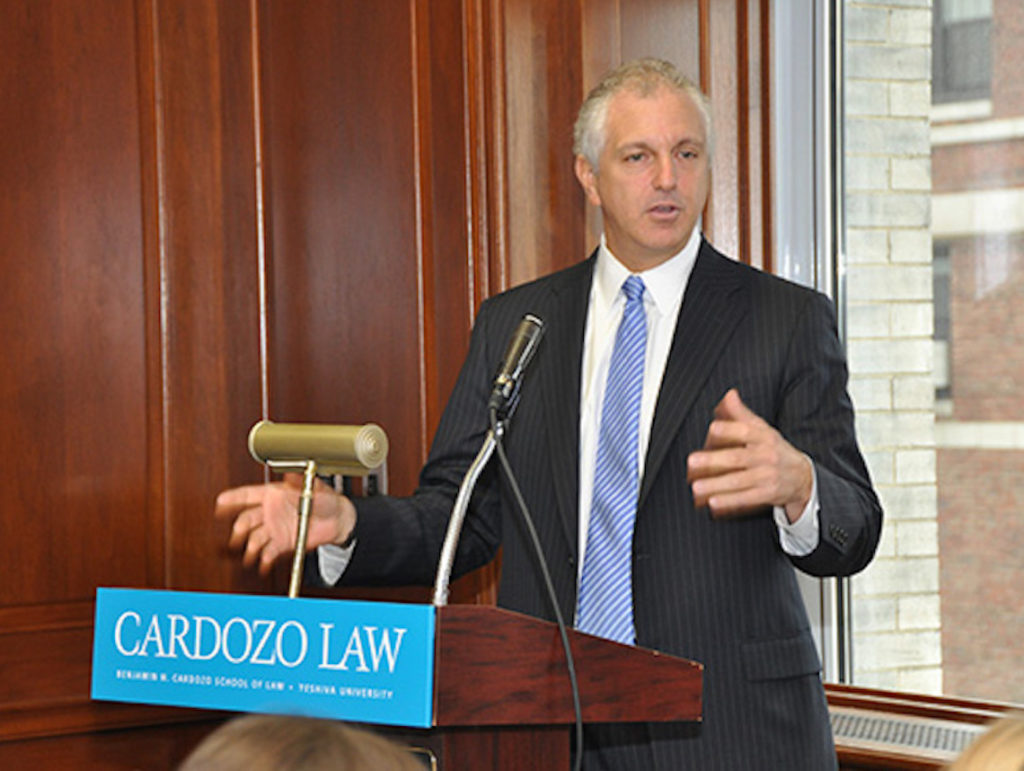
Futerfas has over 25 years of experience in traditional criminal defense, white collar cases and financial fraud including winning an appeal in front of the Supreme Court, according to his firm’s website. The New York Daily News puts it a little less delicately, writing that in addition to white collar defendants, Futerfas represents “mobsters.” Futerfas earned his law degree from Yeshiva University’s Cardozo School of Law in 1987.

He plays the bass trombone

Futerfas graduated from The Julliard School in 1984 and plays the bass trombone in the prestigious Park Avenue Chamber Symphony, an amateur orchestra whose performances have been described as being on the level of a professional ensemble. The orchestra won the American Prize in Orchestral Performance three times, 2011-2013.

He is Jewishly involved

Futerfas has been involved in B’nai Jeshurun, an influential nondenominational synagogue in New York City, which listed him as a member in 2010. It is not clear if Futerfas is still involved with B’nai Jeshurun — another Upper West Side synagogue, the modern Orthodox Jewish Center, listed him and his wife Bettina Schein as new members in 2015. Futerfas also served on the committee for a 2015 Hanukkah party organized by Chabad at Cardozo School of Law.

He represented a Russian computer malware creator

In 2016, Futerfas represented Nikita Kuzmin, a Russian man who created a computer malware that stole millions of dollars from bank accounts. Kuzmin was jailed for 37 months but Futerfas helped him avoid further imprisonment; instead he was ordered to pay close to $7 millions to the victims.

Alan Futerfas: 4 things to know about Donald Trump Jr.’s Jewish lawyer Read More »

179-year-old NYC Conservative synagogue to go condo

A historic 179-year-old Conservative synagogue in New York’s Upper West Side is moving forward with plans to house a 14-story apartment building.

The proposed project for the Shaare Zedek synagogue includes 20 condominiums, with a community center for the synagogue in the building’s first three floors, The Real Deal, a website focusing on New York real estate news, reported last week.

Some community members, concerned about issues such as increased traffic in the area, had asked the city’s Landmarks Preservation Commission to consider naming the synagogue’s building a city landmark, but the commission issued a decision in October that the building didn’t “rise to the level of an individual landmark,” The Real Deal reported.

Synagogue president Michael Firestone said in September during a community board member meeting that the congregation could not remain solvent without partnering with a developer, as several New York synagogues have done in recent years, The Real Deal reported, citing DNAinfo.

The synagogue, the third oldest in New York City, was established in 1837 by Polish immigrants, according to its website. It started on the Lower East Side and moved to Harlem before building at its current location. The current synagogue building was dedicated on April 15, 1923, and in 1944 the congregation paid off the mortgage.

179-year-old NYC Conservative synagogue to go condo Read More »

Newcomer Avi Gabbay wins election to lead Israeli Labor party

Avi Gabbay will lead Israel’s Labor party after defeating his opponent in the second round of primaries.

On Monday evening, Gabbay, who switched to the center-left Labor party several months ago from Kulanu, a smaller center-right party, won the election to head the party, garnering 52 percent of the vote. His opponent, Amir Peretz, a former Labor head and defense minister got 47 percent of the vote.

Gabbay, a former environmental protection minister who was seen as a dark horse candidate in the Labor race, and Peretz advanced to the second round of voting after beating current opposition leader Isaac Herzog in the first party primaries last week. In the first round, Peretz got 33 percent of the vote, Gabbay got 27 percent and Herzog, who has served as the party’s chief for one four-year term, got 16 percent.

Labor currently serves in the Knesset as part of the opposition bloc Zionist Union in partnership with the small Hatnua party of former Foreign Minister Tzipi Livni. Zionist Union holds 24 seats in the 120-member parliament.

Newcomer Avi Gabbay wins election to lead Israeli Labor party Read More »

A call for Jewish unity

This week began the three-week period of Jewish national mourning over the destruction of the Holy Temples in Jerusalem, the first in the year 428 BCE and the second in the year 70 CE. These three weeks are observed traditionally by abstaining from expressions of joy and celebration, and culminate with the ninth day of Av (Tish’ah beAv, which falls this year on August 1), the day on which the Temples were destroyed, which is observed by fasting, prayer, and abstaining from any physical pleasures.

The Talmud teaches (Yoma 9b) us that it was due to groundless hatred between Jewish people that the Second Temple was destroyed. It follows that through “groundless” love among Jewish people and Jewish unity that the Temple will be rebuilt.

This week, in communities throughout the world, we will read parashat Pinchas, which has a fitting and appropriate connection to these three weeks and to the theme of Jewish unity.

The people of Midian and their battle against the Jewish people, whom they senselessly attacked and sought to physically and spiritually destroy, are described in this Torah portion. The people of Midian are singled out above all other nations who attacked the Israelites due to their groundless hatred of the Jewish people. We posed no threat to them, yet they attacked us nonetheless. They therefore have become the arch-symbol of pointless hatred. G-d consequently instructed the Israelites to avenge them prior to entering the Holy Land.

The word “Midian” in Hebrew is derived from the word madon, which means “strife” or “argument.”

This evil of baseless hatred had to be eliminated before we entered the Land of Israel, since baseless hatred is obviously at odds with the harmonious functioning of society that is the prerequisite for attaining any national goals, let alone that of promulgating Divinity in the world.

The root of baseless hatred is ego. An egocentric person feels threatened by anyone who opposes his inflated sense of self. Any positive quality evinced by the other person diminishes his own importance, so the egocentric person will desperately seek to delegitimize the other person. Although he may not seek to actively harm him, he will be secretly pleased when the other person suffers, or at least not be troubled by his suffering. Furthermore, the egocentric person is blind to other people’s good qualities; since he is not sincere in his relationship with God and the world, he cannot believe that others are, either.

In contrast, someone who is not plagued with egocentricity will focus only on other people’s good qualities. Their suffering will genuinely trouble him, since he will judge them favorably and find no justification for their suffering. If he does find some fault with someone else, he will enlighten him in accordance with the Torah’s guidelines for doing so, but he will not hate him.

Similarly, rather than viewing differences of opinion as an affront to his selfhood, the selfless person will view them as opportunities to arrive at higher, more comprehensive perceptions of truth. He will be able to expose his shortcomings to others and seek their guidance, thereby allowing him to solve his problems and progress in his self-refinement.

We live in turbulent times, when the Jewish people are once again the subject of hate and antisemitism throughout the world. Yet this powerful lesson teaches us that the need for Jewish unity and the result of Jewish unity is more important now than ever, and through it shall we merit the unity and redemption of the Jewish people and the restoration of the Holy Temple in Jerusalem.

“Rabbi Shimon ben Chalafta said: The Holy One, blessed be He, found no vessel fit to hold blessing for Israel other than peace, as it is written (Psalms 29:11), ‘G-d will grant His people strength; G-d will bless His people with peace’” (Devarim Rabbah 5:14).

_______

Rabbi Chaim N. Cunin is Director and General Editor of Chabad House Publications and Associate Rabbi at the Beverly Hills Jewish Community, which meets weekly at the Beverly Hills Hotel. For more information, visit BeverlyHillsJC.org.

Adapted from the newly-released Kehot Chumash, published by Chabad House Publications and based on the teachings of the Lubavitcher Rebbe, Rabbi Menachem M. Schneerson.

A call for Jewish unity Read More »

The Chief Rabbinate’s blacklist isn’t defending Judaism. It’s undermining it.

Over the weekend, JTA and others reported on a “blacklist of rabbis” maintained by Israel’s Chief Rabbinate. The list contains the names of more than 160 rabbis whom the rabbinate does not trust to confirm the Jewish identity of immigrants to Israel.

The list, obtained by Itim from the rabbinate after a protracted legal battle, has sparked an uproar in Israel and around the Jewish world. I have been contacted by rabbis, politicians, Israeli and American consuls general and ambassadors, asking one question: Who is responsible for this mess?

If one asks Ashkenazi Chief Rabbi David Lau what happened, his argument – articulated in a letter his chief of staff sent to his CEO – is that a clerk went AWOL. According to Lau, Rabbi Itamar Tubul, the director of certifications and personal status at the rabbinate, issued a list without consulting anyone. The chief rabbi has asked the CEO to censure Tubul, thus, from his perspective, bringing an end to the travesty of the blacklist.

But Rabbi Tubul didn’t cause the blacklist to be created. In fact, he is a manifestation of a systemic failure of the rabbinate, and in fact of Israel, to address the significance of the Jewish part of the Jewish State for the Jewish world.

“The state of Israel will be open for Jewish immigration and for the Ingathering of the Exiles,” Israel’s Declaration of Independence reads. “[I]t will be based on freedom, justice and peace as envisaged by the prophets of Israel; it will ensure complete equality of social and political rights to all its inhabitants irrespective of religion, race or sex; it will guarantee freedom of religion….”

But today, rather than support its historic role as a homeland for Jews around the world, Israel’s government — through the rabbinate which it empowers — chooses to delegitimize hundreds of communities and rabbis throughout the diaspora. Rather than embracing the diversity of the Jewish world and enabling Jews not born in Israel to make their home here, Israel pushes them away – purportedly in the name of halachah, or Jewish law.

Rabbi Seth Farber. Photo by Idit Wagner

As an Orthodox rabbi I want to state categorically that rejecting people’s Jewishness is anti-halachic. The halachah is clear: Jews are to be believed if they say they are Jewish. The rabbinate is undermining the very Judaism it wishes to sustain.

But of course, the present controversy isn’t only about halachah. It’s about power and accountability. The rabbinate has been allowed for too long to operate without any oversight, without any accountability, without any sense of its responsibility. This is not Rabbi Tubul’s problem, or the chief rabbi’s problem. It is the government’s problem.

If the State of Israel is to remain a life force for the Jewish people, it must restructure the power of the rabbinate, such that Jewish communities around the world will be welcomed and validated, not dismissed and disparaged. If we are to create a new model of Jewish peoplehood, one that balanced what was once referred to as Babylon and Jerusalem, then the suspicion of the diaspora by the religious authorities in Israel must be supplanted by a spirit of tolerance and acceptance.

Ultimately, times of crisis are also times of opportunity. The fractured relationship between Israel and the Jewish world can be healed and from these dark moments, we can emerge stronger. But the government of Israel must be willing to act boldly, and rethink if its behavior today is truly serving the interests of the Zionist enterprise. I’m convinced things can be better. But, to paraphrase the motto of the special forces unit in which Prime Minister Benjamin Netanyahu served, “One wins only if one dares.”


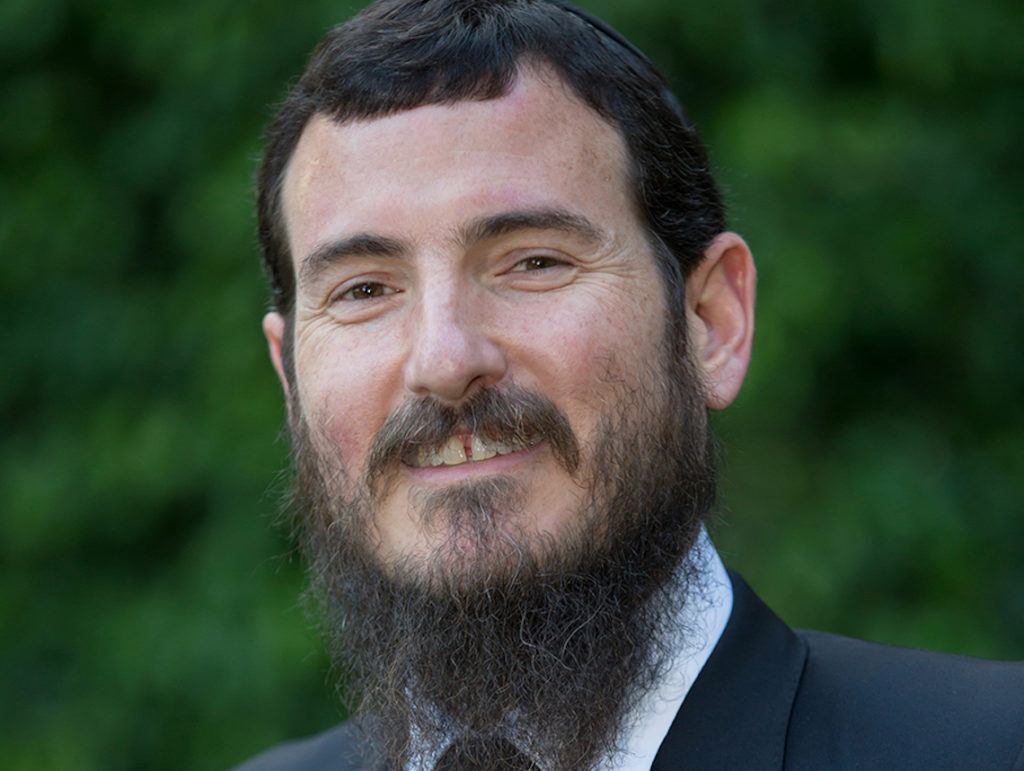
Rabbi Seth [Shaul] Farber is the director of Itim: The Jewish Advocacy Center (www.itim.org.il), an organization that helps people navigate the religious authorities’ bureaucracy in Israel.

The Chief Rabbinate’s blacklist isn’t defending Judaism. It’s undermining it. Read More »

Trump admin hits roadblocks for Israeli-Palestinian talks

It was one of the most dramatic moments of Secretary of State Rex Tillerson’s June testimony. Speaking before the Senate Foreign Relations Committee, the top U.S. diplomat claimed that the Palestinian Authority had “changed their policy” and “their intent is to cease the payments to the family members of those who have committed murder.” After months of intensive US efforts, Tillerson’s statements suggested that the Palestinians had backtracked on a longstanding policy, handing the Trump administration its first victory on the peace process front.

[This story originally appeared on jewishinsider.com]

However, only one day later, the momentum disappeared. The head of the PA prisoners affairs department asserted that Tillerson’s remarks were “not true and this statement is an aggression against the Palestinian people.” An Israeli official also confirmed  that the PA was continuing its controversial payment policy. Next week marks the six month anniversary for the current administration and the consensus is that the decades long Israeli-Palestinian conflict, which has frustrated both Democratic and Republican administrations, has not been smooth sailing for the Trump White House.

Elliott Abrams, a former senior official in the George W. Bush administration and Tillerson’s preferred choice for Deputy Secretary of State, told Jewish Insider, “There is a gap now between the optimism of the transition period and the very early days of the administration and the lack of actual progress. For example, it’s July and there has been no meeting yet between [PM Benjamin] Netanyahu and [Mahmoud] Abbas.”

In addition to Israeli ire with terror payments, the Palestinians have expressed increasing concern with the Israeli government’s settlement policy since January 20th. As top advisor Jared Kushner flew into Israel, the Israeli government broke ground on the first new Israeli settlement in 25 years. Nabil Abu Rdainah, Palestinian Authority president Mahmoud Abbas’ spokesman, called the new settlement “a grave escalation and an attempt to foil efforts by the American administration to revive negotiations.”

Natalie Strom, White House Assistant Press Secretary, referred Jewish Insider to Kushner’s spokesman Josh Raffel, who declined multiple interview requests for this article.

During the campaign, Trump repeatedly promised to secure the “ultimate deal” between Israelis and Palestinians. The former real estate mogul insisted that Kushner was the best possible Middle East envoy in January. Despite the deep differences between the two sides, Trump confidently asserted, “There is no reason there’s not peace between Israel and the Palestinians – none whatsoever.”

Given the tension before direct talks have even begun, Grant Rumley, a researcher at the Foundations for the Defense of Democracies, explained that the Trump team “seem to be getting bogged down in the negotiations about the negotiations, which is kind of a staple of the peace process these days.”

In a break from previous administration, the President has refused to declare his support for the two state solution or a Palestinian state under any borders. While Rumley praised envoy Jason Greenblatt’s efforts to reach out to the Palestinian public, including a visit to the Jalazone refugee camp, he underscored the limitations of the Trump administration’s approach. “Ultimately they (Palestinians) still want to know that this administration envisions a two state solution the way Obama, Bush and Clinton did before them,” Rumley, the co-author of a new biography on Abbas, said. “I am not sure Abbas knows how far he can go with this without these assurances. For any big push to happen, the Palestinians will want to know it ends where previous administrations stated the goal is.” Citing the George W. Bush administration’s Road Map in 2003, Rumley clarified that Palestinians were willing to accept a program with steps such as quashing the Second Intifada if there was a clearly stated endgame of Palestinian independence in viable borders.

In addition to Trump’s unwillingness to affirm a two state solution, tensions with Ramallah escalated after Trump’s meeting  with Abbas in Bethlehem. “You tricked me in DC! You talked there about your commitment to peace, but the Israelis showed me your involvement in incitement,” Trump reportedly yelled at the Palestinian leader, leaving Abbas stunned, according to Channel 2’s veteran correspondent Udi Segall.

At the same time, Hussein Ibish, senior resident scholar at the Arab Gulf Institute, credits the President for his active involvement on this issue. “The designation of Jared Kushner, the President’s trusted son-in-law, as the point person is an indication that this is (led by) the White House and not the State Department. That means the President put some amount of his personal and political prestige on the line,” he said.

However, despite the six trips by Greenblatt to the region including his meetings this week in Israel and the West Bank, Ibish is far more skeptical. “There isn’t any indication that they (Trump administration) have any new ideas. The most relevant stuff they seem to be pursuing is pretty standard,” he noted. Ibish cited the idea of working with Arab Gulf states to sweeten a deal with Israel, a proposal during the Obama administration that never succeeded and would still be extremely challenging to successfully implement. While Ibish approved of the decision not to transfer the US Embassy from Tel Aviv to Jerusalem, he cautioned about excessive praise for this decision. “Dodging a bullet is not a reason to have a party,” Ibish noted.

Some experts were more optimistic about the Trump administration’s approach. Daniel Shapiro, former US Ambassador to Israel, said, “I give them high marks for demonstrating the President’s personal interest and commitment both to Israel’s security and helping the Palestinians achieve their aspirations.” While many analysts have cited the considerable differences between the Obama and Trump policies on the issue including the 2009 call for a settlement freeze, the 2016 UN Security Council resolution (UNSC 2334) and frequent harsh criticism of Jerusalem by former Secretary of State John Kerry, Shapiro offered an alternative viewpoint.  “Some of the language is a little bit different but I think the overall policy is much more similar,” he noted. “The commitments demonstrated to Israel’s security is also quite similar and important. The desire to engage Arab states more is also similar. The insistence on a sustained Palestinian commitment is also very consistent. I actually think there is much more continuity than change.”

Yet, this relative optimism appears somewhat detached from the reality on the ground. No progress has been made on any final status issue and direct talks between Israelis and Palestinians are still non-existent with Abbas and Netanyahu regularly trading insults.  “I don’t know anybody who works on this closely and professionally who has any confidence that the administration has much of a shot of doing anything where its predecessors failed,” Ibish emphasized.

Trump admin hits roadblocks for Israeli-Palestinian talks Read More »

SPIDER-MAN: HOMECOMING *Movie Review*

Peter Parker is back.

Spider-Man: Homecoming begins shortly after last year’s Captain America: Civil War ends with Tom Holland back, this time in the title role.  He’s the youngest Spidey in a decade trying to balance high school, his Spidey skills and learning to drive.  The problem?  His age shows.

Spider-Man: Homecoming also stars Michael Keaton, Robert Downey Jr, Zendaya, Jon Favreau, Marisa Tomei and Jon Batalon.  It was directed by Jon Watts.

For more about how Spider-Man: Homecoming stacks up and what stood out the most, take a look below:

—>Keep in touch with the author on Twitter and Instagram @realZoeHewitt.  Looking for the direct link to the video?  Click here.

SPIDER-MAN: HOMECOMING *Movie Review* Read More »