fbpx

June 30, 2017

Why the aversion to conversion?

The discourse among Conservative, Reform and other progressive Jewish scholars and clergy has been dominated more than usual over the past few months by the theme of intermarriage. This recent round of debate seems to have been spurred in March by a vote of the United Synagogue of Conservative Judaism’s General Assembly to allow individual Conservative synagogues to decide whether to grant membership to non-Jews. Since then, numerous articles by rabbis, academics and other Jewish professionals have appeared on this topic. The discussion has continued to pick up steam given the Jewish People Policy Institute’s early-June release of two significant studies: “Family, Engagement, and Jewish Continuity among American Jews” and “Learning Jewishness, Jewish Education, and Jewish Identity.”

The commentators go back and forth on whether, and how, synagogues and other Jewish institutions should welcome intermarried couples, but surprisingly, there is relative silence on a related, and even more significant, topic: conversion. True, some Conservative rabbis, notably Rabbi Elliot Cosgrove, are attempting to highlight the importance of conversion and to emphasize the need for some leniency in the ceremony. In an April essay in The New York Jewish Week, Cosgrove wrote: “the Conservative movement should be the movement of conversion.” Despite his efforts to highlight a need for a new direction for his movement, much of the discussion in and about Conservative Judaism continues to grapple with how to address intermarriage rather than how to promote conversion to Judaism.

In some Reform congregations, conversion before marriage is not actively encouraged. One of my non-Jewish students is marrying a Jewish man this summer. When they spoke with the Reform rabbi who will be officiating, the rabbi actually discouraged my student from considering conversion prior to the marriage. According to my student, the rabbi said the decision to convert should be driven by her personal desire to convert, rather than by her desire to marry a Jewish man. Ironically, the Reform rabbi’s response about personal conviction comports with Orthodoxy with one significant difference: a Reform rabbi will still perform the marriage.

In recent years, sociologist Steven M. Cohen and Rabbi Kerry Olitzky have proposed a means of joining the Jewish people that would not require a formal conversion according to Jewish law, halachah, but instead would allow non-Jews to acquire a Jewish cultural identity without a Jewish religious identity. In essence, this is a “cultural” conversion. To be fair, Cohen has long been advocating increased rabbinic conversion, and he sees their concept as a “half-step” between this and nothing.

Although Cohen and Olitzky get points for creativity, this proposal seems to assume that Jewish culture and Jewish law are distinct entities. From a theoretical perspective, however, the reality is that Jewish law and Jewish culture are completely tied together. The law has influenced the culture and the culture has influenced the law. Taken together, both the law and the culture are embedded in the entire chain of Jewish tradition.

I suggest that progressive movements need to develop better marketing skills, because the Jewish religion is a wonderful product. It is a way of life that touches both the mind and the heart. We need to take more pride in our product and encourage others — particularly those who are marrying Jews — to join us as members rather than as spectators. In short, we need to actively encourage conversion.

Of course, there can and should be flexibility as to what conversion standards should look like, depending on the overall nature of a particular Jewish community. But at a minimum, non-Jews contemplating marriage to a Jew must be educated as to the beauty of Jewish tradition and why formal membership matters to the couple and to their future offspring.

In this respect, progressive synagogues can take a lesson from Catholic communities. Recently, a close Catholic friend started taking her 8-year-old daughter to Mass at a liberal Catholic church. Her daughter was upset that she could not receive communion, given that she had not been baptized into the Catholic faith. My friend was told that the situation could be remedied if her daughter converted after taking a one-year program of instruction and initiation, including receiving the sacraments of baptism and reconciliation.

So why do Jews feel that what we have to offer the world should be accessed so much more easily? More lenient conversion standards do make sense for progressive Jews, but when we ignore formal membership as a criterion we do so at our peril.

A Jewish colleague involved with a non-Jewish partner wrote to me just yesterday about all of the current intermarriage discourse in the news and on social media. He remarked that these conversations served as a reminder that his life choices can have drastic consequences, and most significantly, that he may end up “ceding something wonderful.” Progressive Jewish communities should not be able to live with this result.


Roberta Rosenthal Kwall is the Raymond P. Niro Professor at DePaul University College of Law.  She is the author of “The Myth of the Cultural Jew: Culture and Law in Jewish Tradition” (Oxford University Press, 2015) and is currently working on a book about transmitting Jewish tradition in a diverse world.

Why the aversion to conversion? Read More »

Clayhouse Santa Monica Summer Art Sale 2017

The Clayhouse Summer Sale: Art in Santa Monica

The Clayhouse Summer Sale

Featuring Pottery for the Kitchen
Friday July 14th 4pm-9pm and 
Saturday July 15th 10am-6pm
 2909 Santa Monica Blvd, Santa Monica 90404
 
Twenty-three Artists from The Clayhouse will be selling hundreds of pieces of Handmade Pottery
Come find your new favorite Platters, Mugs, Espresso Cups, Teapots, Teacups, Bowls, Baking Dishes, Egg Cups, Bread Baskets, Dishes, Berry Bowls, Butter Dishes, Sugar Bowls, Pitchers, Tumblers and more will be for sale.

SUMMER 2017 CLAYHOUSE ARTISTS

Alia Joslin, Stephanie Sea, Amy Kivnick,
Polly Osborne, Kerri Price Katsuyama, Diana Ungerleider,
Lisa Niver, Janet Grings, Erin Wildman, Dianna Linden,
Deborah Levin, John Henderson, Jamie Hansen,
Sam Dixon, Sierra Pecheur, Sara Winkle, Sonja Bolle,
Janet Domino, Nani Grennell, Kathy Mudgett,
Nadine Wells,  Anne Cooper, Karin Swildens
 
More information:
Ceramics by Janet Domino

About The Clayhouse Studio & Gallery:

The Clayhouse, established in 1971, is the oldest high fire pottery studio on the Westside. There are fewer and fewer studios of this nature due to limited space and obstacles in using gas-burning kilns. Gas kilns produce rich, beautiful glaze colors and unique visual effects with universal appeal. The unassuming storefront of The Clayhouse on Santa Monica Blvd displays some of the works of its 50 artist members. In the back of the storefront, there is a wide open studio with tables, wheels, kilns and pottery in various stages of completion. Classes are offered during week and weekend.

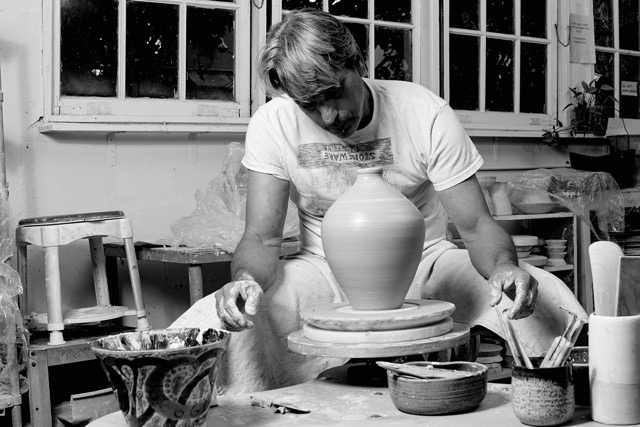
Take art class with David Stone. Photo by Mark Dektor

Take a Class:

Beginning Handbuilding class:

Six weeks: July 11 to Aug. 15, 2017
Tuesday mornings, 10:30 am – 12:30 pm.
Instructor: Kerri Price Katsuyama
Students  will learn techniques for working with clay such as coiling, extruding, and slab rolling, to make  bowls, cups, vases, planters and more. Glazing instruction is also included.

Wheel class for beginners

Six weeks: July 23 – August 27, 2017
Sunday mornings, 10 – 12 (first class will be 3 hrs.)
Instructor: David Stone
Students will learn how to use the potter’s wheel to  “throw” functional items such as mugs, bowls, vases
and more. Glaze instruction is also included.
The class fee is $280 which includes a 25-lb. bag of clay and tools, access to the studio anytime, plus the firing. An advance deposit is required to hold a space in class.
All classes last six weeks and include clay, tools 
firing, glazing and access to the studio. 
Classes are small to allow individual attention. 
Call soon to reserve a spot in a class! 
Advance deposit required.   
call 310-828-7071 for more info or to sign up
 Store hours: Tuesday – Saturday, 10 am – 3 pm
As Henry Moore said, “To be an artist is to believe in life.”
shapeimage3
clayhouse summer art sale
“Every child is an artist. The problem is how to remain an artist once we grow up.” Pablo Picasso
shapeimage2
I hope to see you at the Studio! Lisa Niver
Lisa Niver, Artist and Author Photo by Mark Dektor

The Clayhouse Summer Sale: Art in Santa Monica Read More »

7 Haiku for Torah Portion Chukat by Rick Lupert

7 haiku for Parsha Chukat (The Red Cow Cures All) by Rick Lupert

I
It just takes one dose
of perfectly red cow to
cure what ails you

II
Forty years go by –
What happened during those years
was not written down

III
You can understand
the hesitation when told
to speak to a rock

IV
Howdy neighbor – Mind
if we pass through? No problem –
We will go around

V
You have to admire
Storytellers who kill off
major characters

VI
This is where all God’s
water comes from – Spring up, oh
well – and sing to it

VII
I think we will pass
through after all – that Land is
forty years coming


Los Angeles poet Rick Lupert created a the Poetry Super Highway (an online publication and resource for poets), and hosted the Cobalt Cafe weekly poetry reading for almost 21 years. He’s authored 20 collections of poetry, including “I’m a Jew, Are You” (Jewish themed poems) and “Feeding Holy Cats” (Poetry written while a staff member on the first Birthright Israel trip), and most recently “Donut Famine” (Rothco Press, December 2016) and edited the anthologies “Ekphrastia Gone Wild”, “A Poet’s Haggadah”, and “The Night Goes on All Night.” He writes the daily web comic “Cat and Banana” with fellow Los Angeles poet Brendan Constantine. He’s widely published and reads his poetry wherever they let him.

7 haiku for Parsha Chukat (The Red Cow Cures All) by Rick Lupert Read More »

Rosner’s Torah Talk: Parashat Chukat with Rabbi Alan Green

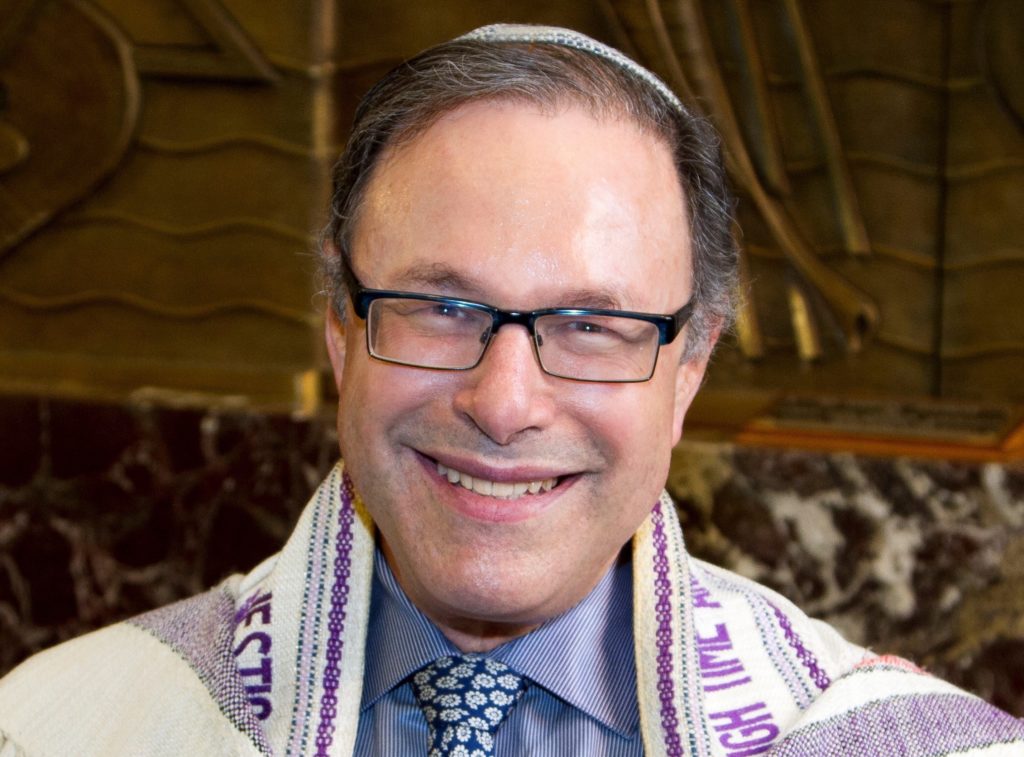
Our guest this week is Rabbi Alan Green of Congregation Shaarey Zedek in Winnipeg, Canada. Rabbi Green received his BA and MA in the History of Religions from UCLA, and studied Rabbinic Literature for three years at the University of Judaism in Los Angeles. He received rabbinic ordination from Rabbi Zalman Schachter-Shalomi, founder and Dean of the Aleph Alliance for Jewish Renewal, in 1991. Prior to Shaarey Zedek, Rabbi Green served as spiritual leader of Temple B’nai Emet in Montebello and as spiritual leader of Winnipeg’s Beth Israel Congregation. Rabbi Green has been Senior Rabbi of Shaarey Zedek since the fall of 2000.

This week’s Torah portion – Parashat Chukat (Numbers 19:1-22:1) – Features the death of Aaron and Miriam, brother and sister of Moses; the famous story of Moses striking the stone; and Israel’s battles against the Emorite kings Sichon and Og. Our talk focuses on the odd Red Cow decree and on the important role of death in the parasha.

Rosner’s Torah Talk: Parashat Chukat with Rabbi Alan Green Read More »