fbpx

June 19, 2017

Judaism, neuroscience and the free will hypothesis (Part 2)

The Jewish assumption of free will is ancient and enduring. But what does modern neuroscience have to say?

The history of neuroscientists’ efforts to explore the free will phenomenon was reviewed in 2016 by philosopher and neuroethicist Andrea Lavazza in the journal Frontiers in Human Neuroscience. The setting for our current understanding was drawn a half century ago with the discovery by Hans Kornhuber and Luder Deecke of the Readiness Potential (“RP”), a measurement of increased bio-electric activity in the brain. The RP was measured by an electroencephalogram (“EEG”), a procedure in which electrodes were placed on a subject’s scalp to allow for the recording of bio-electric activity. This activity was seen as an indication of preparation for a volitional act.

One question raised by the discovery of RP was whether an individual was conscious of an intention to act before RP appeared. In the early 1980s, Benjamin Libet, a son of Jewish immigrants from Ukraine who became a neuroscientist at the University of California-Davis, sought to answer that question. Libet and his team designed a relatively simple test. First, subjects were wired for an EEG. To record muscle contraction, electrodes were also placed on subjects’ fingers. Then the subjects were asked to do two things, spontaneously move their right finger or wrist, and, with the aid of a clock in front of them, report to researchers the time they thought they decided to do so.

What Libet found (Libet et al. 1983) was that conscious awareness of the decision to move a finger preceded the actual movement of the finger by 200 milliseconds (ms), but also that RP was evident 350 ms before such consciousness. While Libet recognized that his observations had “profound implications for the nature of free will, for individual responsibility and guilt,” his report appropriately contained several caveats. First, it noted (at 640) that the “present evidence for the unconscious initiation of a voluntary act of course applies to one very limited form of such acts.” Second (at 641), it allowed for the possibility that there could be a “conscious ‘veto’ that aborts the performance . . . (of) the self-initiated act under study here.” Finally (at 641), it acknowledged that “the possibilities for conscious initiation and control” in situations that were not spontaneous or quickly performed.

Not surprisingly, and despite the caveats, some interpreted Libet’s experimental results as proof that one’s actions are not freely made, but, rather, predetermined by unconscious neural activity. In the years following the publication of Libet’s report, other experimenters have not only replicated his work, with more sophisticated measuring devices, they have extended it.

For instance, experiments reported in 1999 by Patrick Haggard and Martin Eimer involved index fingers on both hands, and they calculated both RP and lateralized RP. Subsequently, scientists at the Max Plank Institute for Human Cognitive and Brain Sciences also utilized right and left index fingers, this time to press a button, and his subjects reported awareness of action not by observing a clock, but by identifying one of many letters streaming by. Brain activity was detected by using functional magnetic resonance imaging (“fMRI”) signals. In a 2008 publication in Nature authored by Chun Siong Soon and others, Soon et al. claimed that brain activity encoding a decision could be detected in the prefrontal and parietal cortex for up to ten seconds before the subject became aware.

Also not surprisingly, the assumptions in and the interpretations of results from these experiments drew criticism, beyond the obvious concern about mistaking correlation (of recorded brain activity) with causation (of a decision to act). And they continue to do so. After all, the average human brain contains billions and billions of nerve cells called neurons. We have recently learned the number of neurons is approximately 86 billion. Each neuron is connected to other neurons by perhaps thousands of synapses, junctions through which neuroactive molecules or electrical impulses travel. The total number of these synaptic connections exceeds 100 trillion. Moreover, while we once believed the brain to be fixed, now we know that is more plastic, and changes constantly.

Even if we were thoroughly familiar with all of these connections, and all of the electrical and chemical processes which operate (or not), and when and why they do (or do not), and also had a complete grasp of neuroplasticity, which understandings we do not currently possess, we clearly do not understand what has been called the Hard Problem, the nature of consciousness. If we do not understand that, then obviously we also do not understand the nature of sub-consciousness. So, what exactly, if anything, Libet and Soon were observing other than some sort of recordable activity is not apparent.

More narrow objections could be and were raised, as well, to the early tests. Florida State philosophy professor Alfred Mele suggested that because subjects might have different understandings of the “awareness of the intention to move” they were to report, the term was too ambiguous to measure to any degree of scientific value. Moreover, even if some readiness potential could be measured, isn’t it possible that RP itself is indicative of nothing more than the result of various stimuli, including being placed in a control room, hearing instructions, and focusing on a specific task? In this view, it would be akin to heightened anxiety that a patient might feel prior or during a conventional physical examination.

In addition, the tests performed were narrow in scope and duration. They generally involved very simple motor functions to be undertaken, or not, within seconds of some signal. But Princeton psychologist and Nobel Prize winning economist Daniel Kahneman teaches that we think fast and slow. His core observation is that humans operate with two different thought modes. In the first, known as System 1, the brain “operates automatically and quickly, with little or no effort and no sense of voluntary control.” In the other, known as System 2, the brain “allocates attention to the effortful mental activities that demand it, including complex computations.” Kahneman associates the operation of System 2 with what we feel as agency and choice.

Is it possible that a person’s brain activity, as recorded by an EEG, an fMRI or some other mode of neuroimaging, would display different results in circumstances where more complex actions are involved, especially over an extended period? Is it conceivable that brain activity would be different if the subjects were in a kitchen and asked to choose how many, if any, eggs they wanted for breakfast, and how they preferred them cooked, and with what bread, what spread and what fruit and drink? And might that kind of brain activity be different still than the kind involved in deciding over the course of a presidential campaign which candidate to support or during courtship deciding whether to select a certain someone for a life partner?

We have no EEGs or other scans that address breakfast or political or marital choices, but some recent experiments suggest that the death of free will, as announced by Jerry Coyne and Sam Harris, may have been not just premature, but unwarranted. In 2012, French neuroscientists published a report in the Proceedings of the National Academy of Sciences concerning a study about RP which included a variation on Libet’s experiments, specifically an audible cue to the participants to make a movement in response to an unpredictable noise. Rather than reflecting the final causal stages of planning and preparation for movement, Aaron Schurger et al. found that neural activity in the brain fluctuated normally and that decisions about self-initiated movement were “at least partially determined by spontaneous fluctuations” in such activity. In other words, movement might not be determined subconsciously, but may simply occur when the brain is in a sufficient state of arousal.

Similarly, a study undertaken by graduate student Prescott Alexander and his team attempted to isolate motor and non-motor contributions to RP. As reported in 2016 in Consciousness and Cognition, they found that “robust RPs occurred in the absence of movement and that motor-related processes did not significantly modulate the RP.” This suggested to Alexander et al. that the RP measured was “unlikely to reflect preconscious motor planning or preparation of an ensuing movement, and instead may reflect decision-related or anticipatory processes that are non-motoric in nature.” They concluded, in part that “RP does not primarily reflect processes unique to motor execution or preparation, and may not even be primarily generated by the neural activity involved in making a free choice.”

What does this mean? At a minimum, Schurger and Alexander, and their teams, have interrupted what seemed to be developing scientific support for hard determinism and against free will. They have provided scientific grounding for an alternative understanding of previously accumulative data. In the words of cognitive neuroscientist Anil Seth (speaking of Schuger et al.), they have opened “the door towards a richer understanding of the neural basis of the conscious experience of volition.”

Consequently, when Alfred Mele argues that science has not disproved free will, he is correct. Science has not falsified the free will hypothesis even once, let alone in the kind of replicable experiment that is the hallmark of the scientific method. At the same time, science has not confirmed the free will hypothesis either. The unsettled state of affairs is not necessarily bad, though, for at least two reasons.

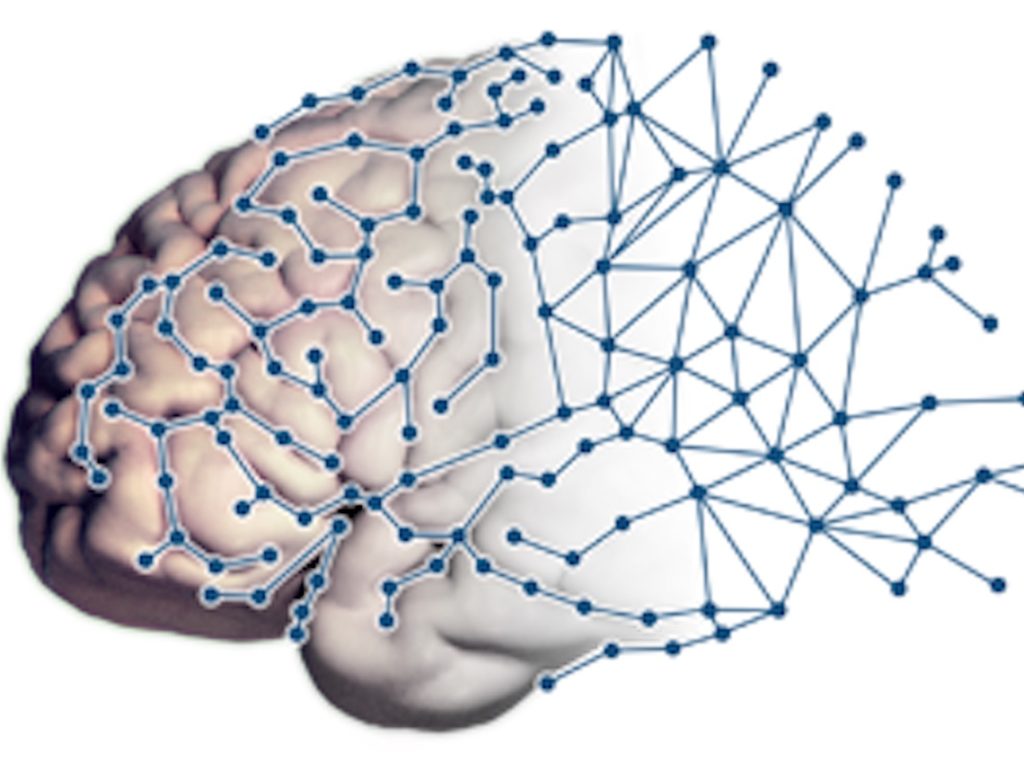
First, the reality is that we are at the early stages of our understanding of both the human brain and levels of consciousness, and we undoubtedly do not even know what we don’t know. For instance, in 2015, neuroscientists were acknowledging that no one knew how the human brain was wired and bemoaning the fact that they could not even map a mouse’s brain, let alone a human one. About a year later, scientists were able to produce a map of the brain’s cerebral cortex with a “new mapping paradigm,” but even so, a participating researcher conceded the limitations of the new map. (See map below.)

Similarly, in early March, 2017, researchers led by neurobiologist and physicist Mayank Mehta at UCLA published a report in the journal Science in which they claim that the brain is much more active than previously believed and that neurons are not purely digital devices, as scientists have held for 60 years, but also “show large analog fluctuations . . . .” If so, according to Mehta, this changes the way we understand how the brain computes information.

The idea of a more powerful, dynamic brain may trigger yet more revisionism concerning free will, as well. Indeed, it is at least conceivable that the reductionists are looking at the picture in the wrong way, zooming in to try to locate and record each signal the brain emits, rather than stepping back for a broader perspective. That is, for all its amazing discoveries and insights, perhaps neuroscience, as commonly practiced today, is too narrow a science. Perhaps there must be some consideration for the possibility that the vast number of neurons and synapses, and their intricate interconnectedness, in conjunction with neural plasticity, yields something greater than the individual cells themselves, even as water is more than its component molecules made of hydrogen and oxygen. Perhaps consciousness is an emergent phenomenon. (See Nelson, The Emergence of God (University Press 2015) at 32-35.) In this view, at a certain level of collective complexity, consciousness emerges. And with it, free will.

From the history of science and technology, we can assume that the pace of our progress will be uneven and the results surprising. Perhaps we will move faster than did our ancestors on the centuries long path from Ptolemy to Copernicus to Hubble (both the man and the telescope). But how much time we will need is not clear. Consider the journey from Wilbur Wright’s first step onto a biplane at Kitty Hawk to Neil Armstrong’s first step off the lunar module Eagle on the Moon, and whether neuroscience is arguably more complex than rocket science.

Second, another reality is that the stakes in the multi-disciplinary debate between free will advocates and determinists go far beyond the musings of philosophers and the reputations of neuroscientists seeking grants and fame. Should science somehow disprove free will, should it show that we are not just influenced by our genes and our physical and social environment, but that our response to each option available to us is truly compelled rather than chosen, it is not too hard to imagine at least two dystopian results.

In the first case, should it be generally known that humans have no free will, and that conduct is in fact predetermined, significant numbers of individuals might well feel released from whatever tenuous social bonds now attach to them and engage in disruptive behavior. We already have some experimental evidence from psychologists Kathleen Vos and Roy Baumeister that supports the idea that weakening a belief in free will leads to “cheating, stealing, aggression, and reduced helping.”

A second worrisome situation that might arise concerns potential screening of individuals for genetic or environmental or other predispositions to anti-social behavior. Might individuals found to possess an anti-social gene be incarcerated or subjected to gene therapy to alter or remove the problematic genetic material? If so, it is not too difficult a leap to rounding up groups of people who, by virtue of their color, ethnicity, geographic origin, socio-economic status or other trait likely share having the offending gene. The infamous Nazi medical experiments on Jews, Roma and others provide a chilling example of the depraved capacity of some humans to mistreat the Other, and to do so ostensibly in the “interest of science” or some asserted “greater good.” Social historian Yuval Harari has warned recently about the merger of Big Data with Big Brother. It is a warning worth heeding.

In many ways, then, the free will hypothesis is more important than the understanding laid out in Genesis with respect to creation and evolution. We have learned a great deal about how our universe came into existence and how life forms have evolved. And we have learned that we can survive quite well with such knowledge. But if the free will hypothesis is incorrect, if we are only products of our genes and our environment and of the purely mechanical interplay of chemistry and physics, if we do not have any meaningful capacity to make choices, then we could still proceed as if we were free and our decisions mattered (a path advocated by some determinists like Israeli philosopher Saul Smilansky), but there would be a cloud hanging over us, and, worse, we could not dissipate it. We could not overcome.

Yet, even in the most dire circumstances, some do overcome. Recounting the horrors of the concentration camps, psychiatrist and neurologist Viktor Frankl noted that despite the conditions, the actions of some showed that “everything can be taken away from a man but one thing: the last of the human freedoms –to choose one’s attitude in any given set of circumstances, to choose one’s own way.”

Why some react one way under pressure (or without it) and others do not remains a mystery, as even Sam Harris has acknowledged. Maybe science will solve that mystery some day, but maybe not. So, perhaps Descartes (1596-1650) was not quite right when he declaredCogito, ergo sum,” that is, “I think, therefore I am.” Perhaps thinking is a necessary but not sufficient element of being. Perhaps we need to be able to choose to be fully alive and vital. Consequently, until, if ever, the scientists prove otherwise: Eligo, ergo sum – I choose, therefore I am. Or at least I think I do. And at least once every year I am grateful to the Deuteronomist for reminding me of the extensive menu of blessings and curses that is set out before me, and for his emphatic call to choose life.

Judaism, neuroscience and the free will hypothesis (Part 2) Read More »

Daily Kickoff: Kushner returns to Middle East as he reconsiders his legal team | Meet the ‘Most Kosher Bacon’ in Congress | Sebastian Junger’s Tribe

Have our people email your people. Share this sign up link with your friends 

KUSHNER STUDYING ABROAD — “Jared Kushner to Travel to Middle East in Effort to Advance U.S. Peace Efforts” by Carol E. Lee: “Mr. Kushner plans to meet with Israeli Prime Minister Benjamin Netanyahu in Jerusalem and travel to Ramallah to meet with Palestinian leader Mahmoud Abbas to discuss “their priorities and potential next steps” in the peace process, [a] White House official said. He is scheduled to arrive in Israel on Wednesday. Jason Greenblatt, Mr. Trump’s top representative on Israeli-Palestinian negotiations, plans to arrive in the region two days earlier.”

“The White House official stressed that no major breakthroughs are expected during the trip and said there is no expectation for three-party talks at this time. “It’s important to remember that forging a historic peace agreement will take time, and to the extent that there is progress, there are likely to be many visits by both Mr. Kushner and Mr. Greenblatt, sometimes together and sometimes separately, to the region,” the official said, “and possibly many trips by Israeli and Palestinian negotiators to Washington, D.C., or other locations as they pursue substantive talks.”” [WSJ; WashPost

Jason Greenblatt tweets: “Excited to be traveling back to Israel and the Pal. territories to continue the discussion about the possibility of peace.”

Why it matters — Aaron David Miller tells us… “First, that despite reports of special counsel investigation into his business dealings, Kushner is determined to signal he’s alive well and working. Second, Trump had made it unmistakably clear that Kushner’s his guy on this issue from the get go. It’s been six months, time to make his debut. Finally, they may believe that sending Kushner will create a greater sense of seriousness and urgency. But what they’re missing is that it’s not the mediator; it’s the parties who won’t make the key decisions. It’s a good thing they’ve signaled there are no breakthroughs on this trip; because there won’t be any.”

KAFE KNESSET — What Kushner and Greenblatt may see — by Tal Shalev: Kushner and Greenblatt intend to continue to promote the administration’s peace efforts, but they might also get a taste of the brewing – even boiling – political tensions their plans are already creating. For instance, during their stay, Kushner and Greenblatt might pass by a protest tent facing the Prime Minister’s office these days. The head of the Beit El Regional Council, Shai Alon, is intensifying his campaign against Netanyahu, demanding the government live up to its 2012 commitment to build 300 new housing units in the settlement… As part of the campaign, the Beit El Regional Council released a video today, headlined “Netanyahu – the man who lies again and again,” and this afternoon residents are planning a rally, and are expected to be joined by Likud and Jewish Home ministers and MKs, who have embraced their demands. Read today’s entire Kafe Knesset here [JewishInsider]

JI INTERVIEW — Congressman Don Bacon (R-NE) discussed his decades-long military career, support for Israel and what it’s like being a backer of President Donald Trump’s agenda in Congress during an interview with JI’s Aaron Magid. “I was raised in a home where my dad was very pro-Jewish. He taught me early, ‘Those who bless Israel will be blessed,’ quoting Genesis,” Bacon noted. Adding that during his three decades of military service, while serving in Europe and NATO, he worked with Israeli defense officials on missile defense.

The GOP cornhusker enjoys using his last name for political use.During the campaign, he asserted that “a vote for Bacon will always be a vote against pork.” During the interview, the Nebraska lawmaker pointed out that at AIPAC events, he’s frequently introduced as the “most Kosher bacon anybody’s ever met.”

Bacon on Trump’s Middle East peace push: “All of our presidents come in with this vision that we can broker some major peace deal. I’m not convinced we can with the Palestinians until they recognize Israel’s right to exist as a Jewish state. As long as they are paying families to commit suicide operations, I just don’t see a reasonable chance of an agreement with them. I would have encouraged Trump not to push down that path because I don’t see a good negotiating partner. I just think until the Palestinians show more earnestness in wanting to have peace, I wouldn’t push Israel to do it.” Read the full interview here [JewishInsider]

AIEF BRINGING DC PARTISANS TOGETHER: “Israel trip calms some D.C. tensions” by Daniel Lippman: “A number of former top Trump campaign officials and prominent Democrats say that their trip last week to Israel helped them dial down the bitter partisanship of current-day Washington. Trump campaign alumni Corey Lewandowski and David Bossie, former Obama White House deputy press secretary Bill Burton, and Paul Begala were among the participants in the seven-day trip that ended Saturday… The trip was sponsored by the American Israel Education Foundation and organized by AIPAC political director Rob Bassin; other trip-goers included Juleanna Glover, Corry Bliss, Trey Nix, Brad Todd and Jeffrey Pollack…”

“The 16 American political and Washington operatives traveled the entire country from the border of Lebanon to the Gaza Strip and also spent time in Tel Aviv and Jerusalem, meeting with government officials in the Knesset, entrepreneurs and business leaders. On the trip, “You’re actually on a bus for a couple hours and you’re talking about your career, your job, the company that you work for, the things that you’ve done in your past, your kids. It really made some strong connections,” said J. Toscano. Burton noted the “stark contrast” between all the security challenges that Israel faces and “then you come home and see the abject stupidity in the debate over Shakespeare in the Park in New York City.” [Politico

Spotted hanging in the West Wing — Trump’s Israel Photos: Two pictures from President Trump’s recent visit to Israel are currently hanging in the hallways of the West Wing… One photo is the President inserting a personal note between the monumental stones during his historic visit to the Western Wall. The other photo is of Trump grasping the hand of Prime Minister Benjamin Netanyahu after a speech on Middle East peace at the Israel Museum in Jerusalem. [JewishInsider]

DRIVING THE CONVERSATION: “Kushner Is Said to Be Reconsidering His Legal Team” by Ben Protess,  Jessica Silver-Greenberg and Sharon LaFraniere: “Some of [Jared] Kushner’s allies have raised questions about the link between his current lawyer, Jamie S. Gorelick, and Robert S. Mueller III, the special counsel appointed to investigate the Trump campaign’s ties to Russia… Given the president’s sentiments, he might view any link to Mr. Mueller with suspicion, including Ms. Gorelick’s representation of Mr. Kushner, according to one person who has been contacted about the matter. An official close to the president disputed that, saying Mr. Trump is pleased with Ms. Gorelick’s representation of his son-in-law… People within Mr. Kushner’s circle recently reached out to some courtroom litigators about possibly joining his legal team. Among the lawyers contacted, one person said, was Abbe D. Lowell, a prominent trial lawyer whose previous clients include Jack Abramoff, the powerful Republican lobbyist, in a corruption scandal that shook Washington in 2005. Mr. Lowell is currently defending Senator Robert Menendez, Democrat of New Jersey, against federal corruption charges.” [NYTimes]

Blake Hounshell: “Very clear pattern with Kushner stories. See a bad one coming, plant a positive one in a different outlet.” [Twitter]

“In Hamptons House, a Link to Manafort and Jared Kushner’s Dad” by Andrew Martin: “Jared Kushner was a junior at Harvard when an enterprising political operative was drawn into his family’s orbit. His name: Paul Manafort. The Kushners and the Manaforts, it turns out, go way back — at least when it comes to two of New York’s great obsessions: money and real estate. Manafort’s wife, Kathleen, received a mortgage on a 10-bedroom home in the Hamptons on Long Island. The $150,000 loan was made by NorCrown Bank, in Livingston, New Jersey, whose chairman was Kushner’s father, Charles, the patriarch of the family real estate empire and, at the time, a Democratic powerbroker in New Jersey.” [Bloomberg]

“Meet the man managing Trump’s biggest crisis yet” by Eliana Johnson, Josh Dawsey and Josh Gerstein: “Veteran GOP operative Mark Corallo is known for accepting tough crisis-management cases, but even he wasn’t daredevil enough to accept the job an embattled President Donald Trump considered him for last month: White House communications director. Instead, Corallo chose to stay outside the building, becoming the top spokesman for Trump’s personal lawyer, Marc Kasowitz.” [Politico Trump’s tough-talking outside counsel Mark Kasowitz may do him more harm than good[NYDailyNews]

DRIVING THE DAY — Top technology industry leaders are expected to attend the first White House tech summit organized by Jared Kushner’s Office of American Innovation. President Trump will participate in the American Technology Council roundtable in the afternoon.

— “Attendees are expected to include Alphabet Chairman Eric Schmidt, Amazon’s Jeff Bezos, Microsoft’s Satya Nadella, IBM’s Ginni Rometty, Oracle’sSafra Catz, and venture capitalist John Doerr, among others.” [Axios] • For Tech CEOs, Not Attending White House Summit Is Greater Risk [WSJ

ULTIMATE DEAL: “Trade talks between Israel and Saudi Arabia mark a historic first” by Michael Binyon and Gregg Carlstrom: “Saudi Arabia and Israel are in talks to establish economic ties… Arab and American sources said that the links would start small: allowing Israeli businesses to operate in the Gulf, for example, and letting El Al, the national airline, fly over Saudi airspace. However, any such progress would bolster the alliance between Iran’s two most implacable enemies and change the dynamics of the many conflicts destabilising the Middle East.” [SundayTimes

“Palestinian pilgrims to fly from Israel to Saudi Arabia” by Itamar Eichner: “The United States, the Palestinian Authority, Saudi Arabia, Jordan and Israel have recently been conducting secret negotiations to coordinate the first flight of Palestinian pilgrims from Ben Gurion airport to Saudi Arabia, with a short layover on the way, probably in Jordan… The Americans initiated the matter as a result of President Trump’s visit to Saudi Arabia and Israel… A senior Israeli source said… the flight would be carried out through a foreign company that is neither Israeli nor Saudi. The Palestinians will be able to make pilgrimages to the holy places in Mecca and Medina. This is the closest to a direct flight that has yet to be offered.” [YNet

“Abbas eyes Merkel as Plan B if Trump fails on Mideast peace” by Uri Savir: “A senior Palestinian minister close to President Mahmoud Abbas told Al-Monitor… “We are showing great flexibility, as directed by President Abbas, on the phrasing of the condition to freeze settlement construction — restraining it to the existing built areas of settlements.” … According to Palestinian sources, a special Abbas envoy visited Riyadh last week, in the midst of the crisis with Qatar, to coordinate positions and the insertion of the 2002 Arab Peace Initiative into the negotiation process… Yet, given Trump’s domestic troubles and Netanyahu’s positions, he believes Ramallah must have a fallback position in the diplomatic realm. “Unlike many others in the international community, the Palestinian president has not given up on Donald Trump,” he said. “But should Trump disappoint, like others in the international community, we have decided to opt for German Chancellor Angela Merkel, in conjunction with French President Emmanuel Macron, to take the lead in preventing a deadlock in the peace process.”” [Al-Monitor

“Israel Gives Secret Aid to Syrian Rebels” by Rory Jones, Noam Raydan and Suha Ma’ayeh: “The Israeli army is in regular communication with rebel groups and its assistance includes undisclosed payments to commanders that help pay salaries of fighters and buy ammunition and weapons, according to interviews with about half a dozen Syrian fighters. Israel has established a military unit that oversees the support in Syria—a country that it has been in a state of war with for decades—and set aside a specific budget for the aid, said one person familiar with the Israeli operation… Israel’s aim is to keep Iran-backed fighters allied to the Syrian regime, such as the Lebanese militant group Hezbollah, away from the 45-mile stretch of border on the divided Golan Heights, the three people said.” [WSJ

2020 WATCH: “How Jason Kander Won by Losing” by Edward-Isaac Dovere: “He’s clearly a star and everybody knows it,” said Sen. Al Franken (D-Minn.), who campaigned for Kander (when he ran for Senate against Sen. Roy Blunt in 2016) and has continued checking in with him by phone… “He’s the funniest of the candidates that we’ve had since I started doing this.” … And maybe, just maybe, he’s running for president in 2020 anyway. By then, he would only be 39 — seven years younger than Obama was in 2008. When I put this to Kander during our interview, he danced: “Politicians never say never to anything.” Which is what, as I pointed out to him, people who are running for president tend to say… “I’m really focused on making sure we still hold elections right now,” Kander said. “And maybe one day I’ll be in one.”[Politico

** Good Monday Morning! Enjoying the Daily Kickoff? Please share us with your friends & tell them to sign up at [JI]. Have a tip, scoop, or op-ed? We’d love to hear from you. Anything from hard news and punditry to the lighter stuff, including event coverage, job transitions, or even special birthdays, is much appreciated. Email Editor@JewishInsider.com **

BUSINESS BRIEFS: Investors welcome tougher Israeli regulations[CNBC] • Israel to build quantum communications tech lab [ZDNet] • Billionaire John Paulson Joins Valeant’s Board of Directors [Bloomberg] • George Lindemann sells Palm Beach home 21% below asking price [TRD• Dodgers President Stan Kasten understands the task before Jeanie Buss [LATimes]

HEARD IN CANNES: “Ari Emanuel says leaving ICM was his toughest moment” by Claire Atkinson: “Ari Emanuel’s dramatic, Hollywood script-worthy exit from talent agency ICM more than 20 years ago was the mogul’s biggest professional fight, the WME/IMG co-CEO recalled on Sunday. “It was the day we walked out of ICM,” Emanuel admitted Sunday at the Cannes Lions Festival of Creativity, asked to recall his most trying times in a session called “Survival of the Fittest.” “We were sued and we had no money and no clients. It was a bad situation.” Emanuel exited ICM in 1995 to set up a rival new agency and attracted talent agents across the business to launch Endeavor.” [NYPost]

“Sebastian Junger Focuses on Syria” by Alexandra Wolfe: “Mr. Junger grew up in Belmont, Mass., the son of a mother who is a painter and a Jewish physicist father who fled to the U.S. from Europe at the beginning of World War II. He found the wealthy suburb cold and sterile. “It just felt like a bubble,” he says… In his latest book, “Tribe,” he looks at the human need for community. He came up with the idea for the book after wondering why he got depressed when he left Sarajevo for short breaks in the 1990s. He found that soldiers felt the same way when they left the battlefield, as did people who left cancer wards as survivors. They missed the community they had left. “All of a sudden, I got it,” he says. “There’s a theme here.” What people instinctively want, he says, is to belong to small groups with a clear purpose. Too many of us are missing that sense of community and purpose in our increasingly isolated modern lives, he says.” [WSJ]

“He Thought He’d Be Your Rabbi. Now, He’ll Get You a Mortgage” by Ron Lieber: “Perhaps it was preordained that David Frankel would become a mortgage banker… His path to the industry was neither straight nor narrow. In the summers, he left for Jewish sleepaway camp, an experience that helped lead him to rabbinical school in Jerusalem, Los Angeles and New York — places where his alma mater, the Hebrew Union College-Jewish Institute of Religion, had campuses. He graduated, and while the career didn’t stick, many of the texts and values did. As best as he can tell, he is the only ordained rabbi who spends his days helping people get the right home loan… So he thought he might be a camp director or a rabbi at a Hillel, a Jewish organization on college campuses. But as much as he loved text study and translation, he eventually figured out that his outspoken nature and skills were not a perfect match for the rabbinate… Today, he works for a direct lender called Guaranteed Rate.”[NYTimes

“These penthouses are bringing suburbia to the city” by Hana R. Alberts: “Victor had a bar mitzvah here and we had 50 to 60 people,” [architect Andrew] Tesoro added.” [NYPost

WEEKEND WEDDING: Ari Schaffer, a research analyst in the White House communications shop, married Marissa Schwartz, a senior analyst at The Advisory Board Company, yesterday at the Rockleigh Country Club in New Jersey. The two met at Kesher Israel Synagogue in Georgetown. [Pic] h/t Playbook

SPOTTED: Israeli Prime Minister Benjamin Netanyahu attending the wedding of David Keyes, the Prime Minister’s foreign media adviser and spokesperson. [Pic; Instagram] h/t Adam Finkel

BIRTHDAYS: Journalist, academic and political figure, active in the Democratic party, she served as US Ambassador to the Netherlands (1978-1981) in the Carter administration, Geri M. Joseph turns 94… Binnie Stein turns 78… Attorney, investment banker, film producer, deputy mayor of NYC (1982-1985), EVP of Cushman & Wakefield (2004-2010), commissioner of NY / NJ Port Authority since 2013, Kenneth Lipper turns 76… Owner of Pittsburgh-based Wenkert Healthcare Services, after a long career as a territory sales manager for GlaxoSmithKline (1992-2014), Harry E. Wenkert turns 61… President and CEO of The Jewish Federation of Greater Los Angeles, Jay Sanderson turns 60… Investment advisor and broker at the Sherman Oaks, California office of Morgan Stanley, Inna N. Zalevsky turns 60… Overland Park, KS resident Kathi Shaivitz Rosenberg turns 58… Director of communications for New York State Assembly member Steven Cymbrowitz since 2012, Adrienne M. Knoll turns 57… Moscow-born, Russian activist, member of the executive committee of the World Jewish Congress (1991-1996) and EVP of of the Federation of Jewish Communities of Russia (2001-2008), Valery Engel Ph.D. turns 56… Co-founder of Centerview Partners, a boutique investment bank based in NYC, he hosted Barack Obama (2014) and Hillary Clinton (2015) for fundraisers in his Upper East Side Manhattan home, Blair Wayne Effron turns 55… Singer-songwriter, voice actress, dancer, choreographer, actress and television personality, she was a cheerleader for the Los Angeles Lakers at the age of 18, Paula Abdul turns 55… Member of Knesset for the Zionist Union party since 2015, in the 1990s she was a legal advisor to then Prime Minister Yitzhak Rabin, Ayelet Nahmias-Verbin turns 47… Founder of JSwipe, a Jewish dating app created in 2014, David Austin Yarus turns 31… Founder and executive director of Kahal: Your Jewish Home Abroad, which helps Jewish students studying abroad, Alexander Jakubowski turns 25… Jessica Brown

Gratuity not included. We love receiving news tips but we also gladly accept tax deductible tips. 100% of your donation will go directly towards improving Jewish Insider. Thanks! [PayPal]

Daily Kickoff: Kushner returns to Middle East as he reconsiders his legal team | Meet the ‘Most Kosher Bacon’ in Congress | Sebastian Junger’s Tribe Read More »

ADL urges hate crime probe in Virginia killing of Muslim girl

The Anti-Defamation League called on authorities to probe the slaying of a Muslim girl in suburban Virginia as a hate crime.

“We urge the Fairfax County Police Department to investigate the murder as a possible bias crime,” Doron Ezickson, the ADL’s Washington, D.C., director, said in a statement Monday. “ADL has communicated that to law enforcement and we have reached out to ADAMS to offer any assistance.”

ADAMS is the acronym for the All Dulles Area Muslim Society, the mosque that Nabra Hassanen had worshipped at in Washington’s northern Virginia suburbs in the pre-dawn hours Sunday before heading to a restaurant with friends for breakfast. Muslims fast from dawn to dusk during the month of Ramadan.

A motorist confronted the friends and assaulted the victim as they were walking back to the mosque, according to reports. All but Hassanen fled to the mosque, where worshippers alerted authorities. Hassanen’s body was found later in a pond.

Police arrested Darwin Martinez Torres, 22, and he was charged with murder, but told the Washington Post they were not investigating the killing as a hate crime. They did not explain why.

ADL urges hate crime probe in Virginia killing of Muslim girl Read More »

Otto Warmbier, American student detained in North Korea, dies

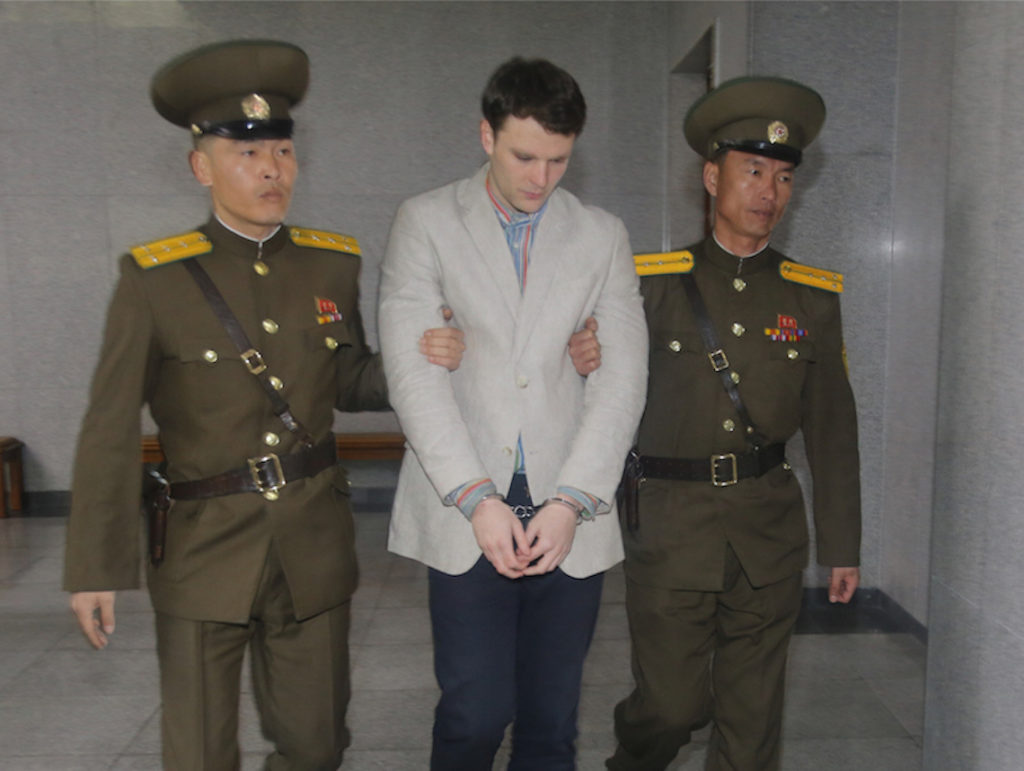
Otto Warmbier, an American student who was held in North Korea for over 17 months and returned home comatose to Ohio last week, has died. He was 22.

“It is our sad duty to report that our son, Otto Warmbier, has completed his journey home,” Warmbier’s family told ABC News on Monday. “Surrounded by his loving family, Otto died today at 2:20 p.m.”

The Cincinnati native and University of Virginia undergraduate was traveling on a student tour of North Korea last year when he was arrested and sentenced to 15 years of hard labor for taking down a propaganda poster.

When he was released last week in a coma, doctors said that all regions of Warmbier’s brain had suffered extensive damage.

“It would be easy at a moment like this to focus on all that we lost — future time that won’t be spent with a warm, engaging, brilliant young man whose curiosity and enthusiasm for life knew no bounds,” the family said in a statement. “But we choose to focus on the time we were given to be with this remarkable person.”

JTA reported last week that Warmbier was active at the University of Virginia Hillel after participating in a Birthright trip to Israel in 2014.

The university’s Hillel director, Rabbi Jake Rubin, called him “a beloved member of our Hillel community.”

Otto Warmbier, American student detained in North Korea, dies Read More »

Episode 42 – Social innovation: When values and startups meet

For most Israelis, innovation means high-tech, angel investors, an exit and boatloads of cash. Truth is, though, Innovation can come in many forms. Startups make profit out of innovation, by identifying problems and offering solutions. But what if innovation were to be used not as a means to make profit, but rather a tool to achieve social goals?

Irad Eichler chose this path exactly, by establishing a relatively large non-profit organization, Shekulu Tov, that works with the state and offers rehabilitation services to those in need in order to help them return to the work force. For his achievements, Irad was recently awarded a prize by the U.N. He joins us to talk about social innovation.

We also played a beautiful song by The Fine Marten!

RSS Subscribe

Direct Download

Episode 42 – Social innovation: When values and startups meet Read More »

Gadot-Shirt

Gal Gadot’s husband went viral on Instagram because of this t-shirt

You can’t blame Gal Gadot’s husband for feeling a little protective or anxious these days. His wife, the star of the “Wonder Woman” film, is rapidly becoming one of Hollywood’s biggest stars.

Yaron Versano, a 38-year-old Israeli real estate developer who has been with Gadot for over 10 years, posted a photo of himself in a humorous t-shirt alongside his wife last Thursday.

https://www.instagram.com/p/BVXunE_lnsX/

The image has since been liked over 109,000 times and garnered nearly 1,500 comments.

That’s likely because of the message on Versano’s shirt, which shows a generic symbol for a female above the words “Your Wife” next to a depiction of the Wonder Woman character, which is above the words “My Wife.”

Buzzfeed pointed out that the shirt is available for anyone on Amazon, although it might seem custom-made for the man who is, according to at least one commenter on his Instagram post, the “luckiest person ever.”

Gal Gadot’s husband went viral on Instagram because of this t-shirt Read More »

Jon Ossoff’s secret weapon in tight Georgia race: Jewish moms and daughters

Clad in knee-length, loose fitting shorts, wicking T-shirts, baseball caps and sensible shoes, they cluster and clutch water bottles and exchange war stories awaiting the candidate’s arrival.

Some bring their daughters — almost always their daughters. Sons exist, if a reporter probes, but it seems they are best left at home. But campaigning for the Democrat Jon Ossoff in the tight 6th District special House election is a mother-daughter thing.

“I want a better future for her,” says Calanit Amir, 43, a lawyer, nodding at her 12-year-old daughter, Talia, at a meet and greet in the suburb of Roswell. “And for my son, too. He’s at home.”

A day spent trailing Ossoff around Atlanta’s suburbs makes clear that most of his campaigners are female. These supporters have found unexpected community in a district, which also covers parts of the city, that they believed unwelcoming to liberal concerns about expanding health care coverage and campaigning for women’s rights. Donald Trump’s election has shocked them into action.

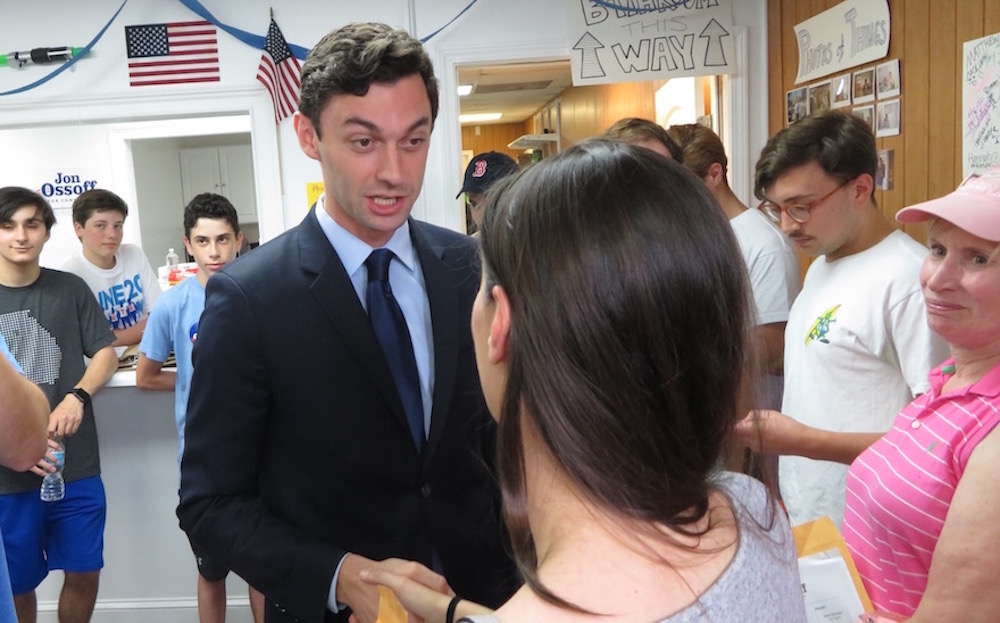
At stop after stop on Thursday, the Ossoff army hoots in delight when the candidate steps out of his black SUV — slim, cool in his wrinkle-free black suit and black tie, a sartorial middle finger thrust at the sweltering Georgia heat.

“Thank you for being sane and moderate!” Sara Lichtenberg says, gripping the Democrat’s hand at campaign headquarters in Chamblee before joining other campaigners in canvassing the suburb. “Now win! For reals!”

The special election Tuesday between Ossoff, a documentary filmmaker, and Republican Karen Handel, a former Georgia secretary of state, already is said to be the most expensive in U.S. history. An estimated $40 million has been spent on relentless ads on radio and TV, but also in get-out-the-vote efforts such as this one, where canvassers plead with voters to meet last Friday’s early voting deadline or at least make sure they get to polling stations by Tuesday.

National Democrats sense the opportunity to further bloody Trump’s troubled presidency by turning a red district blue.

Ossoff, 30, flashes a gleaming grin and sports thick, carefully tousled black hair. He has the wholesome Beatlesque vibe of a mid-1960s rock star, too skinny for his own good, but unsavaged by foreign substances.

He almost irresistibly invites parenting.

“Are you chewing gum, Jon?” Sacha Haworth, his spokeswoman, says at a media opportunity before checking herself, shooting wary glances at surprised reporters. (He was not.)

There is the occasional aside about his preternatural cuteness, but Ossoff’s mostly female backers are here because of something quite unexpected and more substantial: the prospect of change.

Ossoff campaigning in Chamblee, Ga., June 15, 2017. Photo by Ron Kampeas


Many are feminists coming out of a closet they were driven into by the deeply conservative culture once believed to be prevalent in the Atlanta suburbs that comprise Georgia’s 6th.

They speak of years of inaction and conceding the district to conservatives, and then of being galvanized to action before Ossoff announced in December — specifically on Nov. 9, the morning they woke up to a world that attached president-elect to Trump.

Jen Cox started a Facebook page the day after the election, and quickly the numbers grew. By March, there were enough followers to launch PaveItBlue, a group strictly for women (men are invited to attend events) that has as its goal “Flipping the Sixth.” Now it has 3,200 members.

Cox, 46, a realtor, describes moving to the district from Denver several years ago and learning soon enough to keep her thoughts to herself.

“I would throw out a line about Obama getting something passed or about reproductive rights and I would get the same smile and stare — into the distance,” she says at a drinks and munchies party held Thursday evening for PaveItBlue in Roswell, a suburb whose center is pocked with hip bars and eateries.

About 100 women and a few men, bearing blue-and-white Jon Ossoff gear, huddle under a tent braving gusts of warm winds and rain.

“If I was going to have friends for my kids at the pool, I had to keep quiet,” Cox says.

Andrea Capuano, awaiting Ossoff at his headquarters in this suburb with her 11-year-old daughter, Maia, had a similar trajectory.

As a liberal, as well as a Mexican and a Jew, Capuano, 49, a preschool teacher, says her reflex was to keep her head low in a district she had learned was “very red.”

After Trump’s election, she thought, “We’re done being Democrats in the closet in a conservative state.”

Trump nominated Tom Price, the longtime Republican incumbent, to be health secretary, and soon Ossoff emerged as the likeliest Democratic candidate in the special election to replace Price. He won an open primary on April 18, receiving nearly half the vote, leading to this week’s faceoff against Handel, his closest rival with about 20 percent of the vote.

Once it was clear Ossoff was the Democrat in the race, Capuano planted a yard sign on her lawn. A neighbor, Sheila Ford, texted her that she was about to put out an Ossoff sign as well — and Capuano realized she was not alone.

Soon she found a community.

“I made new friends,” she says, getting ready to spend a third day canvassing alongside Ford. “There’s a whole community behind you.”

The 6th District’s reputation as a conservative redoubt may be overstated. It’s true that Handel lawn signs are prevalent, for instance, in Tucker, a suburb lined with ranch houses, American flags and breakfast eateries.

But there has been an influx of immigrants into Chamblee in recent years, and wholly Latino or East Asian strip malls vie for space with stately manses. In this suburb, Ossoff signs edge out Handel’s. Ossoff canvasser T-shirts are often specialized: “Latinos for Ossoff” or “Asians for Ossoff” or “African Americans for Ossoff.” And millennials, who trend liberal, have been attracted in recent years to Roswell and its easygoing community.

Ossoff, who is Jewish, has cultivated Jewish voters: Leah Fuhr, the campaign’s political affairs manager, has organized a number of outings for Jews for Ossoff. On the afternoon of June 9, she says, they filled a busy intersection in the suburb of Dunwoody.

Fuhr says she is surprised at the strength of Jewish support.

“Jews here tend to lean more Republican than nationally,” she says. “But in this election, he’s getting more Jewish support.”

Polls show the contenders running neck and neck.

Still, liberal voters in the 6th had written off the likelihood of electing someone who reflected their politics.

“I wasn’t engaged in local politics before the presidential election in November,” says Rebecca Sandberg, 43, a CPA and a precinct captain for the campaign. “I didn’t think I could get my views across.”

Zoe Weissman, 20, hanging out with Sandburg outside Brilliant Story, a sleek bar in Roswell (Ossoff is inside posing for selfies), is still registered to vote in the 6th District after leaving to study at Vassar two years ago. She wanted to make a difference in a purple state but didn’t imagine it would happen in her district.

“I never thought I’d see the day I could get behind someone like Jon,” she says.

Ellen Sichel, 62, says she now feels guilty about having once believed that the district was a hopeless cause and avoiding campaigns. Her inaction, she says glancing at a newfound friend, Callie Dill, a freshman at the University of Georgia in Athens, was a betrayal of her two daughters and the next generation.

“I’m never going to sleep again,” Sichel, a stress reduction consultant, says at Ossoff headquarters in Chamblee. “If anything good has come out of the Trump presidency, it’s getting people off their asses.”

Arlene Meyer and Cathy Karell work the ranch houses and stately homes along Cameron Forest Parkway in Johns Creek. Meyer has campaigned for statewide Democrats before, but never in her district. For Karell, an independent, this is a first.

“The stakes are super high right now,” Karell says. “I do not like the tone of the country.”

Meyer chimes in, reassuringly: “Now we have thousands of volunteers coming out.

Meyer, who is not Jewish, identifies one address as “strong Ossoff” and examines the token on its doorpost, then asks a reporter, “What’s that? It begins with an ‘m.’”

“Mezuzah,” she repeats upon being told. “I see lots of those around here.”

Arlene Meyer campaigning for Ossoff in Johns Creek, Ga., on June 15. Photo by Ron Kampeas


A dedicated page on Ossoff’s campaign website addresses U.S.-Israel relations.

“Iran is a major state sponsor of terrorism and an avowed enemy of Israel that must not acquire nuclear weapons,” it says.

Handel, 55, has tried to cut at Ossoff for supporting the Iran deal and accepting the liberal Israel lobby J Street’s endorsement, but he handily deflects a question from a JTA reporter about whether he supports the 2015 agreement.

“I’m a supporter of preventing Iran from developing a nuclear weapons capability,” he says. “I don’t think that shredding the deal and putting Iran back on the path to a nuclear weapons capability is responsible policy.”

Fuhr tries to jam some Jewish meaning into why Ossoff is picking up Jewish support.

“Helping our neighbors is what being Jewish is all about,” she says.

But talk to his Jewish backers and the first issues they mention are universal: women’s rights and Trump’s pledge to roll back the health care reforms of his predecessor, Barack Obama.

“A lot of it has to do with being disenchanted with Trump,” Calanit Amir says.

Capuano says she worries for an older daughter, not present, who has had open heart surgery.

“Ten years from now, if this keeps on going, she won’t have insurance because of a preexisting condition,” Capuano says, “and then who will care for her parents?”

The fraught national rhetoric has infected this campaign: Handel calls Ossoff “dangerously liberal” on a dedicated “our opponent” page on her website and accuses him of “lying his Ossoff” about his national security credentials, which Ossoff says he accumulated as a congressional aide.

Ossoff never loses an opportunity to remind voters that Handel, who is anti-abortion, helped make the decision to split Susan G. Komen for the Cure, the the fundraiser for breast cancer research she served as an executive, from Planned Parenthood. (Komen for the Cure reversed its decision and Handel quit.)

“I think that cutting funding for lifesaving breast cancer screenings is unforgivable,” Ossoff says at a media availability.

Both campaigns have reported receiving death threats.

But Ossoff mostly speaks in soothing, general terms, using phrases like “local accountability,” “fresh leadership” and “balanced budget.”

At his pep talks for canvassers, his overarching message is one of civility.

“Rather than focusing on what drives us apart, let’s continue to make sure that respect and civility and decency are at the core of our message,” he says in Johns Creek, to cheers. “Show that kindness and compassion.”

An hour or so later, Meyer and Karell scoot away from a voter shouting “no soliciting!” through a closed door.

“What Jon said, kindness and compassion!” Meyer says.

Karell repeats, “Kindness and compassion.”

Jon Ossoff’s secret weapon in tight Georgia race: Jewish moms and daughters Read More »

Who is a Finalist for the Southern California Journalism Awards?

Lisa Niver is a finalist for the Southern California Journalism AwardsI am a finalist in two categories for the Southern California Journalism Awards! I am so honored and excited. Thank you to everyone who has supported me in my writing career.

What are the Southern California Journalism Awards?

The 59th Southern California Journalism Awards honor the best in broadcast, print and online media. There were 1200 entries for the 2017 awards.

From LA Press Club: “The Southern California Journalism Awards were born during the Cold War, when Los Angeles journalism was dominated by the city’s many newspapers. Television was in its infancy. Developments like all-news radio were still years away. Women journalists were rare in mainstream media. Minorities, even rarer.

Today we see greater diversity in the newsroom and in the ways we provide information. The Press Club has been striving to embrace Internet journalists and bloggers–clearly the wave of the future.

The Southern California Journalism Awards, now celebrating 59 years of recognizing high-caliber journalism, continues to call attention to the Los Angeles area’s fine journalists while promoting excellence in new and emerging media.”

Lisa Niver is a finalist for the Southern California Journalism AwardsWhen and Where are the Southern California Journalism Awards?

I will be going to the ceremony at the Biltmore on June 25, 2017 and sitting at The Jewish Journal table.

What articles are you nominated for? I am nominated in two categories

X13. TRAVEL REPORTING

*Brad A. Johnson, Bradajohnson.net, “Trout Fishing and the Yearning for Peace in Kashmir”

*Todd Krainin, Reason, “Gurgaon: India’s Private City”

*Lisa Niver, Mountain Travel Sobek, “Mongolia: Land of Dunes & Moonrises

*Gwynedd Stuart, L.A. Weekly, “How to Go to Disneyland as an Adult and Not Want to

Die”

*Susan Valot, KCRW, “For the Curious: A Visit to the Oldest Juniper Tree in America”

F7. COLUMN

*Patricia Bunin, Southern California News Group, “When Nothing Special Moments Are

Everything”

*Tom Hoffarth, Los Angeles Daily News, “Vin Scully’s Final Call”

*Lisa Niver, The Jewish Journal, “A Journey to Freedom Over Three Passovers

*Jon Regardie, Los Angeles Downtown News, “David Without a Slingshot (Yet)”

*Sharon Smith, Downey Patriot, The Problem With Senior Housing”

Who are the 2017 Special Honorees?

* Andrea Mitchell, NBC News — Joseph M. Quinn Award for Lifetime Achievement

* Jake Tapper, CNN — Presidents Award for Impact on Media

* Daniel Berehulak, Photojournalist — Daniel Pearl Award for Courage and Integrity in Journalism

*Jaime Jarrin, Dodgers Broadcaster — Bill Rosendahl Public Service Award for Contribution to Civic Life

Thank you for all of your support! Lisa Niver

Are you wondering how to get started as a travel writer?

The 13th We Said Go Travel Writing Competition is open! Share a story about where you find freedom and get started today. Maybe you will be sitting next to me at a future writing award ceremony. You never know what will happen next in your journey. You do get to decide if you want to participate. I hope you will join in! We are looking forward to reading about your adventures.

Video: Lisa’s interview on The Jet Set

See this article on Sheknows

Who is a Finalist for the Southern California Journalism Awards? Read More »

Hunk hawks hideous health bill

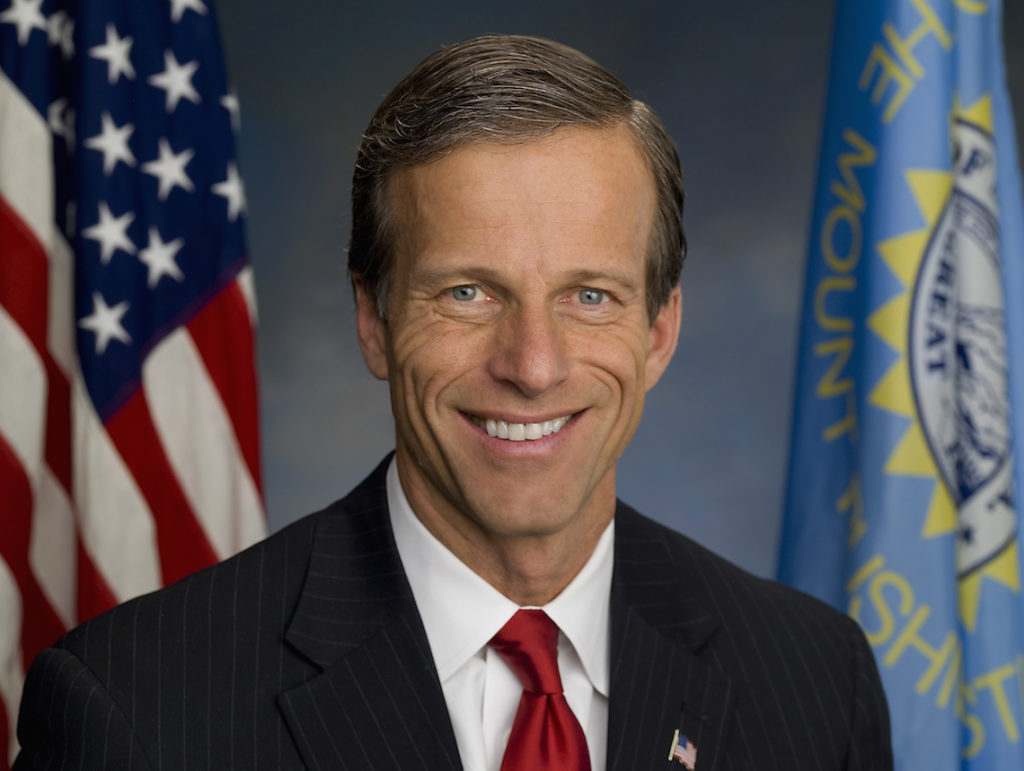
John Thune is the most handsome man in the U.S. Senate. Square jawed, gleaming smile, cowboy tan, the 6’4” South Dakota Republican’s rugged good looks are antipodal to the mien of majority leader Mitch McConnell, whom Jon Stewart has definitively established is Yertle the Turtle’s doppelgänger. If the human brain’s positive bias toward attractive people didn’t cue me to infer that Thune is a great guy, a real straight shooter, I’d be as outraged by the assault on Americans’ health that Thune and his co-conspirators are currently waging, and by the subversion of American democracy they’re using to ram it through, as I am when its public face is McConnell’s.

Thune is a member of the all-white, all-male “gang of 13” staunchly conservative Republicans whom McConnell tasked two months ago with secretly writing a new GOP health bill in the Senate.

Because a parliamentary tactic will embed this Affordable Care Act (ACA) repeal — and alleged replacement — into a budget reconciliation bill, it’s exempt from being filibustered by Democrats. That means the bill will need only 50 of the 52 Republican senators, along with Vice President Mike Pence’s tie-breaking vote, in order to pass, instead of the 60 votes it takes to shut down a filibuster, which would require at least eight Democrats to defect.

Because the House also must pass the bill with only Republican votes, it needs to be mean enough to win over the House’s far right Freedom Caucus, “mean” being President Donald Trump’s new description of the formerly “beautiful” House health bill he fêted in the Rose Garden in May. That’s why the American Health Care Act (AHCA) that McConnell and House Speaker Paul Ryan want Trump’s signature on before July 4 likely will deprive 23 million Americans of health insurance; end Obamacare’s minimum benefits, like mental health services and maternity care; deny coverage for pre-existing conditions; permit lifetime benefit caps; cut $800 billion from Medicaid and turn it into block grants to states, effectively killing the program — oh, and give the top 0.1 percent of households an average tax cut of nearly $200,000.

I say “likely,” since the actual content of the bill has been shrouded in secrecy. Because a majority of Americans oppose those changes to a law that a majority of Americans support, McConnell knows that his only chance to pass it before the public catches on and rises up is a total blackout of information as they write the bill, which is what’s happening now, and once they reveal it, a blitzkrieg without committee hearings or time for town halls, hurtling toward a final vote within a matter of hours.

This is not normal. It’s not how a bill affecting one-fifth of our economy is supposed to be considered. McConnell’s plan is to make it seem normal, which is why they’re deploying the credibility of John Thune’s chiseled cheekbones: to sell a coup d’état as if it were a “Schoolhouse Rock!” civics lesson.

The day after a gunman opened fire on a Republican congressional baseball practice, prompting calls to for a return to civil discourse in our politics, Thune was on MSNBC’s “Morning Joe” saying we all must do our part to achieve the unity that this moment requires. Speaking of unity, journalist Mike Barnicle piped up, what about the health care bill being written in secret? “Nobody knows what’s in this bill,” Barnicle said. As a starter, he asked, in the spirit of reaching across the aisle, of bipartisanship and openness, “How about … telling us what’s in this bill?”

Thune’s answer made me marvel that a man with such good hair could deceive so baldly.

There’s really no bill to share, he said. What’s going on now is just discussions, just policy options. It will be openly shared when it’s reduced to legislative language, he said, as though that’s just how the lawmaking process works.

It’s not. Drafts of bills are routinely made public long before legislative language is locked in. They’re distributed as outlines, memos, letters, emails, talking points, PowerPoints, lists, charts, conference calls, cut-and-pastes, works in progress, principles, summaries, overviews, abstracts. They’re the basis for innumerable meetings with constituents, stakeholders, interest groups, media, members of both parties, think tanks, analysts and experts. That’s American democracy in action. What’s happening now is not.

Besides, Thune added, there’s been so much discussion of health care over the past decade, “it’s like any of us are unfamiliar with what the issues are.” We’ve already discussed them.

The ACA was the subject of hundreds of committee hearings and markups, hundreds of hours of congressional debate, hundreds of town halls and public forums and two years of news coverage. But that discussion was about expanding Medicaid, not eliminating it; about increasing benefits, not cutting them; about providing health insurance to millions, not giving tax cuts to millionaires. If the media were to give the AHCA’s issues the kind of scrutiny and airtime it gave Obamacare, Republicans would now be running from it like a dumpster fire.

To be sure, John Thune would make one handsome fireman. But I doubt even he could convince his colleagues in Congress to bunk in a burning building.


MARTY KAPLAN is the Norman Lear professor at the USC Annenberg School for Communication and Journalism. Reach him at martyk@jewishjournal.com.

Hunk hawks hideous health bill Read More »