fbpx

May 16, 2017

Visiting Springfield, Illinois: The Land of Lincoln and other Americana

People have preconceived notions and prejudices that prevent them from seeing cool places and interesting things in life. I grew up in Illinois. Back in the day, at least, all the public schools brought their students around 8th grade to Springfield, Illinois – the place where Abraham Lincoln lived in the only home he ever bought, practiced law, ran for office and eventually was buried. But I went to a private school that was more concerned with us reciting La Marseilles in perfect French, than seeing a Presidential library and museum in our own state. Later, when I moved south of the Mason-Dixon Line, I saw many battlefields of the Civil War. They’re extremely popular. But for some reason, people don’t talk about visiting Springfield . . . and they’re really missing out.

Getting there: I took a very modestly priced Amtrak from Chicago’s Union Station. Chicago is a big train hub, so you’re likely to be at the beginning of a long haul trip, with classic sleeper cars, full service dining cars with freshly made food, observation decks, ladies’ lounges. Along the way, you see what others ignorantly refer to as “flyover country,” including the funny stadium for the Frontier League Joliet Slammers. Another way you can go: drive or ride. The famous Route 66 goes right through the center of town.

Where to stay: High atop “Aristocracy Hill” sits an inn — Inn at 835 — that used to serve as apartments for movers and shakers and indeed, still features long-term residences for them. After all, Springfield is Illinois’ capital; legislators from here have gone far up the political ladder. The place was conceived and designed over 100 years ago by a high-society florist. It’s still very grand! Rooms are very spacious, some with a butler’s pantry filled with books, Jacuzzi with heat lamp, four-poster bed, gorgeous antiques. Wine and cheese is left out for guests downstairs, but they bring cookies in a basket to your door at night. They provide a free shuttle from the Amtrak station until 8:30 pm.

What to do: See how Lincoln and his family actually lived at the Lincoln Home, a national historic site. He expanded the premises as his success and prosperity grew. The Abraham Lincoln Presidential Library and Museum is simply outstanding! I started out at its fantastic gift shop. The museum’s permanent exhibit takes you through life-sized recreations of his log cabin home, his law office, and political ascent. Walk through the whispering gallery of political sniping from both ends of the spectrum – just like elections today! – and nasty gossip against Mary Todd Lincoln. Feel yourself attending the play at Ford’s Theater. We all know how it ends . . . but I wasn’t prepared for the stunning majesty of the darkened recreation of the closed casket in the Representatives Hall in Springfield’s Old State Capitol. Today, we are reminded that Lincoln’s catafalque was lent by Congress for Justice Scalia’s funeral.

Of course, there’s no substitute for the real thing. President Lincoln is buried at Oak Ridge Cemetery. Also in town is his law office, which had a business-friendly location by the courthouse and right on what is now Route 66.

Edwards Place is the oldest remaining structure in Springfield. The Edwards were Illinois’ most powerful political family, with one serving as the first Governor when Illinois became a state after serving as Kentucky’s Chief Justice on the Court of Appeals. Illinois was originally settled mostly by Kentuckians and this family crossed the Ohio River with their slaves. Another Edwards was the first person born in Illinois to graduate from Yale. Their home is beautifully restored, with many interesting archeological finds.

Art and architecture enthusiasts will be fascinated with the Dana-Thomas house, an early example of Frank Lloyd Wright’s design. At the time, Wright was young and not as well known enough to totally impose his will upon homeowners, but he managed to ink some covenants. The lady of the house had enough money and social clout to include some of her Art Nouveau era preferences, so the fusion here is one-of-a-kind.

Springfield has a cute, thriving main street. There are several quality antique stores; Abe’s Old Hat has several rooms, each with its own specialty and vibe. Check out such Americana finds like feed sacks upcycled into men’s ties and cornbread scented candles.

A small town has got to consider itself sweet with two independently owned candy stores, both with Depression-era origins. Pease’s is older by a tad; their specialty is chocolates made to look like actual designer shoes! Del’s Popcorn Shop is now located next to the Lincoln-Herndon law office, with a real old-timey feel inside. They have all kinds of flavors of freshly popped corn, which feels like the perfect snack to crunch on in Illinois, plus it makes an inexpensive souvenir gift.

Where to eat: Obed & Isaac’s Microbrewery & Eatery is located in a rehabbed historic home, owned by direct descendants of neighbors of Abraham Lincoln. They brew the freshest beer in town and also have excellent locally made, fruit forward cider. Their growlers are so cute, with tributes to Lincoln and Route 66, I happily paid for plastic boxes and checked luggage to bring some cider home. They’ve got a real gastropub thing going, with highly flavorful offerings like spicy cheesy soup, an old family recipe for 15 spice chili and Scotch eggs.

D’Arcy’s Pint is an Irish pub that’s enormously popular. They serve bar food as well as the famous Springfield Horseshoe. Lots of cities have a beloved big sandwich, this is theirs. It’s generally slices of thick Texas toast, topped with meat, French fries and cheese sauce. You can get veggies or hotdogs on it . . . even Midwestern walleye!

American Harvest Eatery is a new restaurant little bit up the road from the state capital building, so it’s not quite run over by lobbyists yet. While still finding its footing when I was there, they have an admirable concept: using the foodstuffs of Illinois to re-create comfort food favorites.

I saw a Quonset in the middle of nowhere and wondered how it could be a restaurant. Well, Charlie Parker’s Diner is world-famous and has been featured on the Food Network many times! It’s a fun, 50’s party atmosphere with that kind of classic menu.

Anecdotally, I wondered in the land of farms if things like heirloom tomatoes, etc., were popular. It turns out, not so much: commercial agriculture earnings are so crucial, people aren’t playing around with specialized, small-yield crops here.

Abraham and Mary Todd Lincoln life-like figures at the Abraham Lincoln Presidential Library and Museum Photo by Tamar Alexia Fleishman, Esq.
Figures of the famous Lincoln-Douglas debate at the Abraham Lincoln Presidential Library and Museum Photo by Tamar Alexia Fleishman, Esq.
Recreation of the scene at Ford’s Theater at the Abraham Lincoln Presidential Library and Museum Photo by Tamar Alexia Fleishman, Esq.
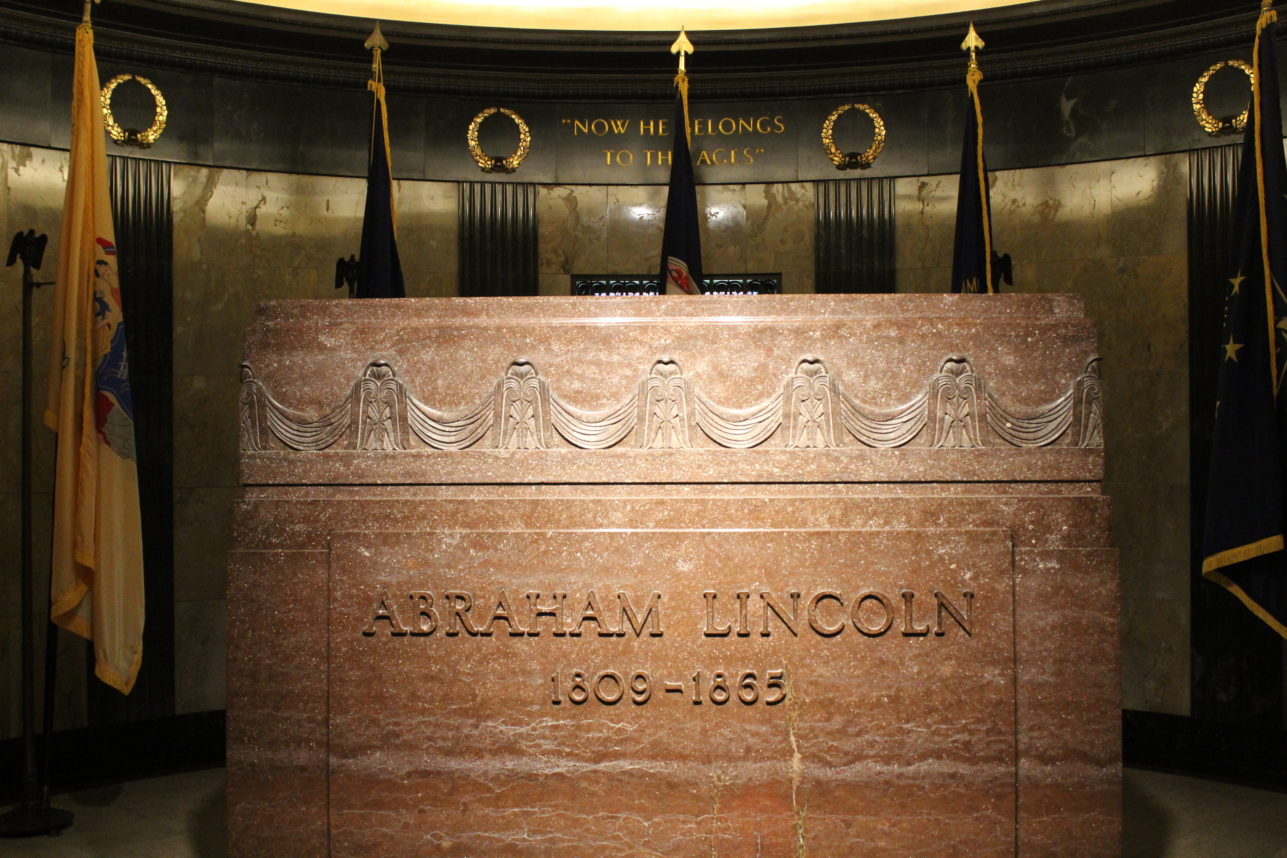
President Abraham Lincoln’s tomb Photo by Tamar Alexia Fleishman, Esq.


Visiting Springfield, Illinois: The Land of Lincoln and other Americana Read More »

The Apprentice — Part 2

“The problem with writing about Donald Trump is that the outrages come so fast and furious that it’s hard to keep up,” wrote Max Boot on May 16 in Foreign Policy.

Outrages. Fast. Furious. Hard to keep up. Sound familiar?

Yes, these are some of the emotional staples of reality television, the junk food of entertainment, where cat fighting, backstabbing and manufactured drama rule the battle for ratings.

Our president lived in that world for 14 years. As the star and executive producer of “The Apprentice,” he had to make sure the drama and the conflict never stopped in order to keep his star shining bright. Through the show, he saw that playing a tycoon can actually build his brand a lot better than being a tycoon.

In this fake-real world, the only consequence that mattered was keeping viewers hooked. Trump knew how to do that. He was unscripted. No one knew what would come out of his mouth. The greater the outrage the better.

That was the lesson Trump inhaled from reality TV: Outrage is not just the norm, it’s the key to success.

I heard once that it takes 28 consecutive days to have a chance at breaking a habit. If you’re used to having a chocolate chip cookie every night and you want to break the habit, you need to not do it for 28 nights in a row.

Donald Trump spent 14 consecutive years manufacturing television drama in order to brighten his star. Did we really think that becoming the most powerful person on earth would make him break his habits?

If anything, he has doubled down on them.

In his mind, he is still playing the same game, but instead of playing tycoon, he’s playing president. Keeping viewers hooked through drama and chaos is what he knows. It’s his definition of “winning.” This has worked wonders for him in the past.

Of course, as president, it’s a disaster. Whereas his old antics might have offended a character or two on his reality show, today, those same antics could lead to nuclear war, breaches of national security, obstruction of justice, constitutional crises and other such unpleasant things.

Hooked on faux drama, Trump never made the leap from reality TV to reality.

A mature person would have said: “Hey, I’m in a different game now. This is not a show. The stakes are real and enormous. It’s not about getting people’s attention– it’s about gaining their trust. I’m now the most watched person in the world, so I better watch every word I say.”

Trump couldnt do that, because he couldnt change his game. It’s not that he hasn’t made an effort to accomplish some real things, or that he is completely oblivious to the seriousness of his new role, or that he enjoys being reviled by so many people.

It’s more that his old habits are too locked in. He can’t help himself. Chaos is his comfort zone. It’s what made him who he is.

Let’s remember that chaos helped him get elected. In his mind, his crazy antics on the campaign trail made him a winner at politics. Maybe he figured he could take the same craziness to the White House and keep “winning”—a monumental blunder. That craziness was precisely what he needed to shed once he made it to the top.

A grown-up mind would have figured that out. But, as David Brooks wrote in the New York Times, Trump has the mind of a child. Getting our attention is his candy, and he’ll raise hell to get it. If it worked for so long, why stop?

Well, for one thing, because when your body overdoses on sugar, it’s time for some broccoli. By the time anyone could tell him that, it was too late. Trump’s sugar habit couldn’t be broken– not even for a few days in a row, let alone 28.

Our reality TV president now seems headed for a blockbuster ending where someone will yell “You’re fired!”– and it won’t be him.

The Apprentice — Part 2 Read More »

When a government won’t let you look away

No one who has lived in Israel or even visited for an extended time can forget the top-of-the-hour news broadcasts on Kol Yisrael, or Israel Radio.

Before its shutdown this week as part of a byzantine reform of public broadcasting, the government-run station preceded its brief updates with a series of short beeps and one long one marking the hour. On public buses, the driver would turn up the sound and the passengers would go quiet as a voice-of-doom announcer would intone, “Kol Yisrael m’yirusalayim, shalom … Hinei hachadashot …” — “The Voice of Israel from Jerusalem, shalom. Here’s the news …”

Even in periods of relative calm, you could sense people holding their breaths until the news turned out to be something benign or unsensational. My Hebrew was never great, but even I remember feeling relieved when the first thing the announcer said was “Rosh hamemshala,” or “prime minister.” My thinking was, nothing dire could be happening if they’re talking about the government.

The standard explanation for all this solemnity was that Israel was a country perpetually on the edge, and every newscast could bring notice of a new threat or sudden disaster. On visits to Israel over the decades, I learned to appreciate living in a country of relative stability and calm, where threats were usually distant and few issues were existential.

Whatever else you can say about the past four months, the Trump administration has robbed us of that luxury.

I am hardly the only one who powers up his phone in the morning, or clicks on the radio, and wonders, “OK, now what?” And there is almost always a what. A tweet from Trump accusing his predecessor of illegally wiretapping his phones. A military strategy session held in full view of diners at his Florida resort. A Friday afternoon immigration order that throws airports into chaos. A friendly overture to the Philippines’ autocratic president. Or Turkey’s autocratic president. Or Egypt’s autocratic president.

Blame Trump or a hysterical media, but the whole notion of stability and calm seems so … 2016. Honestly, I’ve been wracking my brains trying to remember a key moment from either of Barack Obama’s two terms. Yes, there was the overall sense of a personally popular and politically divisive president wrestling with the opposition in the House and Senate. There were popular decisions and unpopular decisions. But the alarming and, as they say in the news business, “holy s**t” moments were few and far between. His first inauguration was inspiring. The announcement of the killing of Osama bin Laden was way cool. I remember tearing up when he sang “Amazing Grace” at the funeral for a victim of the Charleston church shooting. And chuckling when he played along with Zach Galifianakis on “Between Two Ferns.”

And that’s about it for “No Drama Obama.” Trump, by contrast, provides as much drama in a week as Obama would in a year or two. Do you remember the Comey firing? How about the evolving series of explanations offered by his aides? Or Trump’s interview with Lester Holt, in which he said he had already decided to fire the FBI director before the Department of Justice could provide a, well, justification.

You’re forgiven if you thought, in the wake of Monday night’s bombshell about Trump sharing highly classified information with the Russians — the Russians! — that the Comey thing took place a few months ago rather than last Tuesday. I was about to sink into a stupor on the bus ride home Monday when my wife messaged me, “Did you see the Washington Post story?” Nap averted! That meant an evening of surfing the cable news networks and thumbing through Twitter. After a night of restless dreams — in one I was forced to spill my deepest, darkest secrets to a beast with the face of Sergey Kislyak and the body of Sergey Kislyak  — I woke up to Trump essentially confirming the account his top aides had denied the night before. Five minutes ago came word that Israel was — no surprise here — the source of the intelligence Trump disclosed to the Russians (the Russians!).

The nature of this presidency is that the unusual and unprecedented quickly supplants the abnormal and the unheard of, cycle after cycle. The left cries emergency. The right celebrates the disruption. And most of us switch on our televisions the way we do a broken barbecue grill, bracing for the explosion and singed eyebrows.

There is an upside, I suppose, to all this craziness. You can’t say people aren’t paying attention. Last year, according to Nielsen, cable news viewership almost doubled, with adults watching over 27 billion minutes per week. (That’s cumulative, by the way. I first read that as saying individual adults watched 27 billion minutes of cable news each week and figured, sounds about right.) The failing New York Times added 308,000 new digital subscriptions in the first quarter of this year. JTA posted record numbers of online readers during the election campaign and it has continued into the Trump presidency.

Friends regularly tell me they and their children are more engaged in public affairs than they were before the election campaign. More quietly, Trump foes admit that they don’t remember the news ever being this interesting, or entertaining, outside the occasional crisis — although they will quickly say it is entertainment they can do without.

Israelis like to claim that the high stakes of living in a stressed-out country actually make life seem more precious. According to the U.N.’s recent World Happiness Report, Israel is the 11th-happiest country in the world, three places ahead of the United States. When the Christian Broadcasting Network asked a young Israeli named “Sam” why that would be, he replied, “I think that the things that are really important to people here in Israel, they’re not sort of superficial things.”

But all this paying attention comes with a price. An American Psychological Association survey in February found that 57 percent of Americans say the current political climate is a “very” or “somewhat” significant source of their stress. (Unsurprisingly, Democrats were about three times as stressed as Republicans.) An APA official suggested people limit the amount of time spent consuming the news and social media.

The biggest price may come in the loss of a basic sense of freedom. If any institution is running well, its activities are mostly invisible or unremarkable to the people using them. (No one tweets, “The A Train was on time, uncrowded and delightfully clean!,” and not just because it never is.) A citizen should be able to turn off the media for a while without feeling that she will be missing something significant to her well-being or survival.

“One of the great achievements of free society in a stable democracy is that many people, for much of the time, need not think about politics at all,” Andrew Sullivan wrote recently. “The president of a free country may dominate the news cycle many days — but he is not omnipresent — and because we live under the rule of law, we can afford to turn the news off at times. A free society means being free of those who rule over you — to do the things you care about, your passions, your pastimes, your loves — to exult in that blessed space where politics doesn’t intervene.”

The ominous message of George Orwell’s “1984” is that “Big Brother is Watching You.” Maybe just as ominous is the idea that we can’t stop watching Big Brother.

When a government won’t let you look away Read More »

Dear President Macron: It’s time to reinforce France’s ties with Israel

In the French presidential campaign just concluded, discussion of foreign policy was largely forgotten. Nonetheless, Emmanuel Macron, France’s new president, faces several critical global issues, among them the Israeli-Palestinian peace process.

If France would like to play a role, she must rebuild the credibility that was diminished in January when the Paris Peace Conference concluded with declarative statements but no tangible results that might encourage the two parties to work toward peace. By internationalizing the conflict and leading the Palestinians to believe that they can avoid the negotiating table, the French initiative in effect slowed down an already lagging peace process.

France must appear as an honest broker, an impartial mediator that takes the concerns of both parties into consideration. And France must win back Israel’s trust — especially after deciding to exclude it from the January negotiations — by reaffirming the absolute necessity of ensuring Israel’s security within secure and recognized borders. Macron must approach his relationship with Israel with great care.

Earlier this month, France abstained from voting on the umpteenth UNESCO resolution aimed at denying the historical connection between the Jewish people and Jerusalem. Meanwhile, a number of other European countries (Germany, Italy, Lithuania, the United Kingdom, Greece and the Netherlands) made the decision to oppose the resolution, one that runs counter to the aim of achieving peace.

Is it not time for France to reconsider its position on this issue, to dare to oppose initiatives that strive to delegitimize Israel?

In 1967, President Charles de Gaulle officially ended the Franco-Israeli honeymoon period of the 1950s and early ’60s when he imposed an arms embargo on Israel just before the Six-Day War. He explained his decision at an infamous news conference in which he said Israelis were “an elite people, assertive and domineering.” David Ben-Gurion responded, “We do not harbor an ‘ardent ambition to conquer’ but rather a fervent faith and the vision of peace as described by our prophets.”

Fifty years later, there are vast possibilities for cooperation between France and Israel. The most obvious is the fight against terrorism. France is a target for attacks, and in that regard finds itself in a situation similar to Israel’s. It would make considerable sense to look to Israel for expertise in population preparedness and government resilience in order to combat this scourge.

In responding to Iran’s nuclear ambitions, France has adopted an uncompromising position in opposition to Tehran’s aggressive policies. Surely it would be in France’s best interests to align its strategy with that of Israel, a country similarly concerned by the Iranian threat, as well as with the new U.S. administration, which is eager to address the Iranian nuclear threat.

Moreover, Paris can help broker a rapprochement between Israel and Sunni Arab countries — powers that already engage in a discrete alliance rooted in distrust of Iran. In recent months, with the new American administration in place, there have been signs that such an implicit alliance is a real possibility. What remains unclear is whether France will rise to the occasion and play a key role in forming and bolstering this alliance against a common threat.

The election of Macron gives cause for optimism about the future of Franco-Israeli relations. His visit to Israel as minister of the economy sent the message that France is eager to renew cooperation. After all, as Macron has suggested, “French tech” and the “start-up nation” rank among the 10 most innovative economies in the world.

Furthermore, Macron proved himself a friend to Israel during the presidential campaign, opposing any boycott of the country or the recognition of a state of Palestine in the absence of any peace agreement.

As president-elect, Macron has already had discussions with Israeli Prime Minister Benjamin Netanyahu, who congratulated the new French leader on his triumph and highlighted the importance of cooperation between their two nations on counterterrorism initiatives.

Yet we cannot allow these hopeful signs to make us complacent. The history of French diplomacy over the past 50 years offers much evidence of dashed hopes.

At a time when U.S. plans for mediating between Israelis and Palestinians remain in doubt because President Donald Trump has yet to win the confidence of either party, and Germany’s relations with Israel have turned fraught, Paris has a window of opportunity to restore ties and benefit from cooperation with an Israel that can be its ally on many fronts.

Let’s hope that the new president will choose to renew a sincere, solid bond between France and Israel.


Simone Rodan-Benzaquen is director and Julie Decroix is deputy director of the American Jewish Committee’s Europe Office.

Dear President Macron: It’s time to reinforce France’s ties with Israel Read More »

Trump blew it, big-league

The New York Times has a new feature called “Say Something Nice About Trump.”

Last week, I was all set to do so. As President Donald Trump was preparing to embark on his first official trip to Israel and Saudi Arabia, I found myself thinking nice things. It occurred to me that on the Israel-Palestinian issue, Trump had come out of the gate in a far more effective way than his predecessors.

On May 8, for instance, I was on a phone call with Dennis Ross, the former United States ambassador who served four American presidents as a Middle East envoy and negotiator. And this is what Ross said: Donald Trump has a better chance than President Barack Obama did at making peace between Israelis and Palestinians.

Despite Trump’s support from the anti-two-state-solution crowd, despite the fact Trump’s own ambassador to Israel called pro-two-state groups “worse than kapos,” Ross said Trump has handled the Middle East diplomatic dance better than Obama so far. He said Trump has impressed the Palestinian leadership, gained their trust. And he had the Israelis in his pocket.

For someone who has seen Trump as dangerous to Israel’s future and ill-informed on Middle East affairs, it was surreal —but heartening.

“What is going on,” Ross said of the president, “is he continues to emphasize that this is a deal he really wants to do. Only last week, he said he couldn’t think of a single reason why he can’t reach agreement between the Israelis and Palestinians. I think what he meant by that, not that there weren’t differences, but that ultimately those differences shouldn’t prevent a deal. In any case, this is one of those challenges that is deeply rooted [for Trump]. What the president has done is make [Palestinian Authority President Mahmoud Abbas] more relevant, which is important at a time when he does not have a lot of popularity.”

Ross’ call, arranged by The Israel Project, came on the eve of Trump’s visit in Washington with Abbas. The remarkable part was that Ross outlined a clear way forward toward an Israeli-Palestinian agreement, out of the long and dangerous impasse between the sides. And the Moses who could lead them? Donald J. Trump.

Trump has leverage, Ross said. He is seen as someone who can deliver and, beyond that, someone who, unlike Obama, will exact a cost if he’s rejected. So Trump can make tough demands of Abbas, including ending payments to the families of terrorists, and — in private — can ask for difficult sacrifices from Israeli Prime Minister Benjamin Netanyahu.

I was listening, shaking my head, wondering if I had completely misjudged Trump when it comes to Middle East policy. Perhaps I had overestimated the hard-line attitude of his ambassador to Israel, David Friedman. Perhaps I hadn’t taken into account the moderating forces of Trump’s childhood friend, Ron Lauder.

But more likely, I had forgotten my cardinal rule for understanding Donald J. Trump: The man will say anything in a room to make a sale. Alec Baldwin is not Trump. Trump is Alec Baldwin — in “Glengarry Glen Ross.”

“Because only one thing counts in this life!” Baldwin’s real estate huckster character says. “Get them to sign on the line which is dotted!”

To get elected, Trump had to appeal to evangelicals and pro-Israel hard-liners like Sheldon Adelson. But to sell a bigger deal as president, he has new constituencies. The Saudi vote isn’t big in Florida or Wisconsin, but it sure matters in the Middle East.

“The more the administration, the president and his representatives are dealing with the Arab leaders, the more what they’re hearing from them is they’re prepared to work with them,” Ross said. “But on [the Palestinian-Israeli] issue, they’re asking for a two-state outcome.”

So in the spirit of saying something nice about Trump, I was all set to assert that he would continue to confound the very people who trusted him to do exactly what hard-liners in Israel, and their American armchair Golanis, want him to do.

But then, Trump happened. That is, shortly before his trip abroad, the president gave sensitive intelligence information to the Russians, intelligence that was revealed to have come via Israel.

Here’s how bad this is: Israeli intelligence had somehow penetrated ISIS command well enough to get detailed knowledge of its upcoming terror attacks. Now those methods and sources are burned, thanks to the president of the United States. The fact that Russia can now discern the methods and sources for that intelligence and pass it on to their allies the Iranians, who can funnel it to Hezbollah, is a criminal act against Israel.

This disaster will shadow Trump’s trip, shuffle the equation in ways that are now impossible to imagine — even if no other shoes drop between now and when he touches down in Israel.

The evidence was building that Trump was not going to be the hand puppet Sheldon Adelson thought he bought Bibi for Chanukah. Now, flying across the Atlantic with a self-inflicted puncture to his competence and credibility, Trump needs Bibi more than ever to keep his credibility afloat.

A week ago, Trump was positioned perfectly to land in Israel and shake things up. Now he will arrive, shaken, weakened, vulnerable, neutered.

I tried so hard to say something nice. It’s still not the time. And there’s no one to blame but Donald Trump.


ROB ESHMAN is publisher and editor-in-chief of TRIBE Media Corp./Jewish Journal. Email him at robe@jewishjournal.com. You can follow him on Instagram and Twitter @foodaism and @RobEshman.

Trump blew it, big-league Read More »

Syria’s alleged crematorium ‘invokes worst nightmares of Nazi atrocities,’ ADL chief says

The head of the Anti-Defamation League drew parallels between Syria’s alleged use of a crematorium to dispose of bodies to actions committed by the Nazis during the Holocaust.

Jonathan Greenblatt, the group’s national director, also called on the international community, including Russia, to take action to stop the violence perpetuated by the Syrian government under the leadership of President Bashar Assad.

“As Jews, we are particularly shocked by the extreme brutality of the Syrian regime, which invokes the worst nightmares of Nazi atrocities against the Jewish people,” Greenblatt said Tuesday in a statement. “The world learned from the twentieth century that it did not do enough to stop the crimes of the Nazis which led to the genocide of six million Jews.

“The nations of the world — including first and foremost Russia, which continues to aid and abet Assad’s brutality — must act to put an end to the inhumane actions of the Syrian government.”

On Monday, the United States said it believes the Syrian government built a crematorium to cover up the killing of as many as 50 detainees a day at a prison north of Damascus.

“Although the regime’s many atrocities are well-documented, we believe the building of a crematorium is an effort to cover up the extent of mass atrocities taking place in Saydnaya prison,” said Stuart Jones, acting assistant secretary for the State Department’s Bureau of Near Eastern Affairs, according to CNN.

Jones added: “We are appalled by the atrocities taking place in Syria” with the “seemingly unconditional support of Russia.”

The U.S. Holocaust Museum in a statement issued Tuesday afternoon said it welcomed the release of the previously classified imagery pointing to the alleged crematorium.

Photographs of torture and death in by Syrian security forces in secret facilities have been on display at the museum since 2015; the photos were taken by a former regime photographer code-named Caesar. “These photographs constitute the most comprehensive evidence of the regime’s widespread and systematic targeting of Syrian civilians,” the museum said in its statement.

“The State Department’s revelation that the regime is now taking extraordinary efforts to cover up its crimes, through the suspected use of crematoria, demonstrate why it is all the more important to redouble efforts to bring the conflict to an end and investigate, document, and hold accountable those who direct and carry out these widespread atrocities,” according to the statement.

Syria’s alleged crematorium ‘invokes worst nightmares of Nazi atrocities,’ ADL chief says Read More »

Israel reportedly provided intel Trump gave to Russia

Israel was the source of the highly classified intelligence President Donald Trump disclosed to Russian officials, according to a report by the New York Times.

The Washington Post reported Monday that Trump revealed the intelligence to Russian Foreign Minister Sergei Lavrov and Ambassador Sergey Kislyak in an Oval Office meeting last week. The intelligence concerns a terror plot by the Islamic State involving the use of laptops on aircraft.

The Times reports that, according to a current and a former American official, it was information that Israel relayed to the United States. The intelligence was deemed too classified to share with other United States allies, let alone a rival state like Russia, the Washington Post’s sources said. Russia is the main supporter of Syrian President Bashar Assad, and an ally of Iran, one of Israel’s principal adversaries.

The country supplying the intelligence to the United States was identified in the Post story only as “an ally that has access to the inner workings of the Islamic State.”

Israel and the United States are close allies whose leaders often refer to the countries’ “special relationship.” The United States provides Israel with some $4 billion of defense assistance annually, and the countries share intelligence and participate in joint military exercises. Trump will be visiting Israel next week on his first foreign trip as president.

White House Spokesman Sean Spicer did not comment on the New York Times report, but said he appreciated the U.S.-Israel relationship.

“We appreciate the relationship we have with Israel and appreciate the exchange of information we have with them,” Spicer said in a press briefing Tuesday.

Ron Dermer, Israel’s ambassador to the United States, also did not comment directly on the report.

“Israel has full confidence in our intelligence-sharing relationship with the United States and looks forward to deepening that relationship in the years ahead under President Trump,” Dermer said in a statement.

In January, an Israeli newspaper reported that American intelligence officials warned their Israeli counterparts not to share sensitive information with the Trump administration because of the threat that it could be leaked to Russia.

At a press briefing Tuesday, H.R. McMaster, the president’s top security adviser, discussed the meeting between Trump and the Russian diplomats, in which he took part.

“In the context of that discussion, what the president discussed with the foreign minister was wholly appropriate to that conversation and is consistent with the routine sharing of information between the president and any leaders with whom he’s engaged,” McMaster said.

Israel reportedly provided intel Trump gave to Russia Read More »

Daily Kickoff: Daylight re-emerges in US-Israel relationship | Gulf States offer Israel stronger ties | Zomlot blames WINEP | Meet Chef Joshua Massin

Have our people email your people. Share this sign up link with your friends

WSJ A1: “Gulf States Offer Better Relations If Israel Makes New Bid for Peace” by Jay Solomon, Gordon Lubold and Rory Jones: “Arab Gulf states have offered to take concrete steps to establish better relations with Israel if Prime Minister Benjamin Netanyahu will make a significant overture aimed at restarting the Middle East peace process… The potential steps include establishing direct telecommunications links with Israel, allowing overflight rights to Israeli aircraft, and lifting restrictions on some trade… The Gulf countries, in turn, would require Mr. Netanyahu to make what they would consider to be a peace overture to the Palestinians. Such steps could include stopping construction of settlements in certain areas of the West Bank and allowing freer trade into the Gaza Strip.” [WSJ]

–One pro-Israel reader emails us: “Wow! That’s a huge, huge win. Those are actually big concessions from the Arabs for relatively little. Seems like something has changed. Can you imagine the Arab states offering those concessions in exchange for mere goodwill gestures on peace in the past?”

HEARD YESTERDAY — Palestinian envoy blames Washington Institute for failed peace process — by Aaron Magid: Speaking at the National Press Club yesterday, Husam Zomlot, the PLO’s Chief Representative to the U.S., called out the Washington Institute for Near East Policy (WINEP) and blamed them for the stalled peace process. “They were a major reason why we failed. Major reason,” he said. “Because they have framed the agenda in a way that was exactly in the opposite direction of peace. An agenda that wanted to build and sustain a process that was designed to prevent the outcome.” [JewishInsider]

Rob Satloff, WINEP’s Executive Director, responds: “Given #PalestineAuthority’s record of rejecting peace deals, this critique is quite a compliment” [Twitter]

Signaling flexibility on the longstanding divide on refugees, Zomlot emphasized that “half of the issue” is Israeli “acknowledgment” of their role in the 1948 war. “The issue of refugees is made to be the mother of all issues and that it would actually be storming the state of Israel with demography. It’s not true. It’s my opinion as a refugee myself,” he explained. “Only one of these options include negotiating with Israel, which is to return to their actual homes. But, the other options do not involve Israel. Why should we wait?”

Zomlot cautioned regarding the White House’s Israeli-Palestinian diplomacy,“There is no approach: there is no mechanism. There is nothing by the way. We did not discuss or agree on exactly what would be the way forward.” Zumlot praised the American “deep state” as playing an important role in preserving core Palestinian positions in the period of initial uncertainty. [JewishInsider]

DRIVING THE CONVERSATION — Under Trump, Daylight Re-emerges in US-Israel Relationship — by Jacob Kornbluh: Just days before President Donald Trump’s first visit to Israel, the U.S.-Israel relationship is undergoing its first major crisis in the Trump era. Yesterday, in response to a Fox News report that Netanyahu told Trump not to move the embassy right away, the Prime Minister’s Office released partial transcripts of Netanyahu’s White House meeting. “The embassy – the PM supports moving it,” a summary of the Oval Office meeting read. During a working lunch at the White House, “the PM was asked about the embassy and explained [that moving it would not lead to bloodshed in the region, as some were trying to intimidate President Trump into believing.”

Visiting the Wall: According to a report by Israel’s Channel 2, the U.S. advance team rebuffed a request from Netanyahu’s team to accompany Trump while he visits the Western Wall. According to the report, the US team explained that the site is part of disputed territory in the West Bank and not under Israeli sovereignty. An official in Netanyahu’s office expressed “astonishment” over the comment. The official, speaking on condition of anonymity, said Israel has contacted the administration to discuss the matter.

A White House spokesperson told us: “The comments about the Western Wall were not authorized communication and they do not represent the position of the United States and certainly not of the President.”

“I am very disappointed he hasn’t moved the embassy,” ZOA’s Mort Klein told Jewish Insider. “It’s a mistake. This harms President Trump’s credibility and if the Arabs don’t respect his credibility, it is more likely that they would be making impossible demands. The President is getting bad advice from some of his aides.” Klein said he’s worried about Tillerson, citing the current Secretary of State’s relationship with former Secretary of State James Baker. “I am concerned that Tillerson will begin to pressure Israel to take stands that they can’t take,” he said. “I am worried.” [JewishInsider] Israel wants White House to explain U.S. official’s Western Wall comment [Reuters]

What Trump is hearing regarding the embassy — by Jeremy Diamond and Elise Labott: “Some of Trump’s top advisers are urging him to make good on his promise to recognize Jerusalem as Israel’s capital and announce plans to move the embassy there during his visit next week, and Trump has yet to reach a decision, two White House officials confirmed… Officials are also considering a lesser announcement outlining a US vision for the future of Jerusalem as Israel’s capital without taking any immediate action, designed to help Trump save face on his campaign pledge.” [CNN

Dore Gold, former MFA Director General and current President of the Jerusalem Center for Public Affairs, emails us… “The Prime Minister is right to push on Jerusalem. We are commemorating now the 50th anniversary of the reunification of Jerusalem. In the collective memory of this country, when the Arab armies invaded in 1948, they destroyed or desecrated 50 synagogues and yeshivot. The synagogue of the Ramban dated back to 1267 was obliterated The Jewish population was cleared out. In 1967 that historical injustice was corrected. Now that the administration is expressing strong determination to reach a final status deal, naturally Israelis are concerned about what happens to Jerusalem. This is a core value of national identity for Israelis which may not be fully appreciated by the outside world.”

DRIVING THE DAY: “Trump revealed highly classified information to Russian foreign minister and ambassador” by Greg Miller and Greg Jaffe: “One day after dismissing Comey, Trump welcomed Russian Foreign Minister Sergei Lavrov and Ambassador Sergey Kislyak… into the Oval Office… Trump went off script and began describing details of an Islamic State terrorist threat related to the use of laptop computers on aircraft… Trump went on to discuss aspects of the threat that the United States learned only through the espionage capabilities of a key partner… Most alarmingly, officials said, Trump revealed the city in the Islamic State’s territory where the U.S. intelligence partner detected the threat.” [WashPost; BuzzFeed]

“Trump Revealed Highly Classified Intelligence to Russia, in Break With Ally, Officials Say” by Matthew Rosenberg and Eric Schmitt: “A Middle Eastern ally that closely guards its own secrets provided the information… Mr. Trump’s disclosure does not appear to have been illegal — the president has the power to declassify almost anything. But sharing the information without the express permission of the ally who provided it was a major breach of espionage etiquette, and could jeopardize a crucial intelligence-sharing relationship.” In fact, the ally has repeatedly warned American officials that it would cut off access to such sensitive information if it were shared too widely, the former official said.”

“Jared Kushner… signaled to people outside the White House that he was not closely involved. But internally, Mr. Kushner lashed out at Mr. Spicer, who has been the target of his ire over bad publicity for the president since Mr. Trump fired the F.B.I. director, James B. Comey, last week.” [NYTimes]

HEARD LAST NIGHT — Prof. Alan Dershowitz on MSNBC’s For the Record with Greta: “Let’s take the following hypothetical: What if it was Israel who provided this intelligence because they have spies on the ground in Syria and within the terrorist organization. You have the information that gets to Russia, Russia sends it to Iran – they are allies when it comes to Syria – and Iran sends it to Hezbollah. This could be a real disaster especially on the eve of President Trump’s visit to Israel. I hope it’s not Israel and the information doesn’t get to Hezbollah.” [MSNBC]

Dershowitz on CNN’s Outfront: “This is the most serious charge ever made against a sitting president of the United States. Let’s not underestimate it… We may have to take emergency action.” [CNN]

Eliot A Cohen‏: “This is appalling. If accidental, it would be a firing offense for anyone else. If deliberate, it would be treason.” [Twitter] • Cohen in more than 140 characters: The Terrible Cost of Trump’s Disclosures [TheAtlantic]

“When the World Is Led by a Child” by David Brooks: “Mentally, Trump is still a 7-year-old boy who is bouncing around the classroom… From all we know so far, Trump didn’t do it because he is a Russian agent, or for any malevolent intent. He did it because he is sloppy, because he lacks all impulse control, and above all because he is a 7-year-old boy desperate for the approval of those he admires.” [NYTimes] • Eli Lake: Trump’s Best Defense on Russia Is Incompetence [Bloomberg]

DRIVING THE WEEK: “Trump will have to navigate diplomatic land mines abroad. Here’s how he’s preparing” by Philip Rucker and Ashley Parker: “As the White House was engulfed by a crisis of its own making — the abrupt firing of the FBI director — President Trump received an unlikely visitor: Henry Kissinger, the Republican Party’s leading elder statesman, who came to deliver a tutorial on foreign affairs last Wednesday… Kissinger was not alone. In the days leading up to Trump’s high-risk debut on the world stage… the Oval Office has morphed into a graduate seminar room, with a rotating roster of policy experts briefing the president… “He’s going to be in the spotlight, under the microscope, and for a lot of people in the world this will be a chance to see him ‘in action,’ ” said Richard N. Haass, president of the Council on Foreign Relations… The process largely is being overseen by Jared Kushner… as well as [H.R.] McMaster and deputy national security adviser Dina Powell.” [WashPost]

THE MASADA SPEECH — “Netanyahu seeking to speak at Masada alongside Trump” by Raphael Ahren and Alexander Fulbright: “Netanyahu is looking to deliver a speech at Masada together with US President Donald Trump… However, the American delegation organizing Trump’s visit has expressed reservations about the idea, according to Hebrew media reports… The prime minister is currently set give a few short remarks introducing Trump at the Judean Desert fortress, according to Walla.”  [ToI

“Why Trump won’t be able to land helicopter on Masada” by Sharon Udasin:“The Americans will land in the Bar Yehuda landing strip,” Eitan Campbell, director of Masada National Park, told The Jerusalem Post on Monday. “They will go up to the mountain by cable car.” … In 2008, when president George W. Bush visited Masada, he took the cable car up to the mountain, which he then toured with prime minister Ehud Olmert… “When Clinton visited in 1998, he came up with the old cable car and walked up 100 steps,” Campbell told the Post. “George W. Bush came by the new cable car. We were saved the 100 steps.” [JPost]

FRIEDMAN ERA: “Controversial new US ambassador arrives in Israel” by AFP’s Mike Smith and Joe Dyke: “After his arrival in Tel Aviv, Friedman visited the Western Wall in Jerusalem, praying there and kissing the sacred site… Friedman, a frequent visitor to Jerusalem, did not comment to reporters, but did speak near the wall with Steven Tyler of American rock band Aerosmith, in town for a concert.” [DailyMail]

— Friedman in a recorded statement: “We’re a bit tired, but we wanted to come straight to the holiest place in the entire Jewish world, the ‘Kotel Hama’aravi,’ the Western Wall, so we straight came here. I had the opportunity to say some prayers… I prayed for the president, and I wished him success, especially on his upcoming trip. I hope we all wish him success. We hope it’s going to be an amazing trip.” [Video]

Israeli Prime Minister Netanyahu welcomed Ambassador Friedman today in Jerusalem. “It’s a pleasure to see you and to welcome you to Jerusalem, our eternal capital. I know you went to the Kotel [Western Wall]. It’s deeply appreciated by all our people,” Netanyahu told Friedman. “There was no other place to go,” the Ambassador responded. Netanyahu added, “It was a strong gesture of solidarity. We look forward to receiving President Trump and we want to work with you and with the President these coming years to strengthen our great alliance.” [Pic]

2020 WATCH: Happening today — The Center for American Progress is hosting a daylong “Ideas Conference” at the St. Regis hotel in Washington, DC. Speakers include Los Angeles Mayor Eric Garcetti, Senators Cory Booker (D-NJ), Elizabeth Warren (D-MA), Kirsten Gillibrand (D-NY), Amy Klobuchar (D-MN), Kamala Harris (D-CA), and Chris Murphy (D-CT), Rep. Adam Schiff (D-CA),  Governors Terry MacAuliffe (D-VA) and Steve Bullock (D-MT ); and former UN Ambassador Susan Rice. About half of the speakers are considered potential 2020 presidential candidates. [WashPost]

–Democrats divided on Bernie’s 2020 plans: “Many top Democrats are furious that Bernie Sanders appears to be running for president again, or at least planning to drag out his decision long enough to freeze the race around him.” [Politico]

ELECTION DAY TODAY: “Can the anti-Trump resistance take Philadelphia’s DA office?” by Alice Speri: “[Larry] Krasner’s run has electrified Philadelphia’s progressives and brought to the city the expertise and resources of national racial justice advocates as well as Bernie Sanders alumni… A lot of people have stacked their hopes in such an insurgency at the polls. Others, like billionaire George Soros, are investing more than hope. Soros has been injecting money into DA and sheriff races across the country and gave $1.45 million to a PAC supporting Krasner’s run in Philadelphia, raising some eyebrows among the candidate’s progressive base. “We can’t play by a different set of rules than our opponents because that’s how we have allowed the system to get rigged against us,” said Becky Bond, a former advisor to the Sanders campaign whose group is now working on Krasner’s campaign.” [TheIntercept

–Background: “Krasner says he inherited idealism and sense of justice from his parents. His father, a crime-fiction author, was the son of Russian Jewish immigrants, and his mother was an evangelical Christian minister.” [PhillyJewishExponent]

TEHRAN WATCH: “Why I’m Rooting for the Hardliner in Iran’s Elections” by Elliott Abrams: “[Ibrahim] Raisi is the true face of the Islamic Republic, while Rouhani is a façade. Rouhani has shown himself powerless to effect any change in the regime’s conduct and his only role is to mislead the West into thinking “moderates” are in charge. We are far better off, as we were when Mahmoud Ahmadinejad was president, when there are no illusions about Iran’s regime and the men who lead it.” [Politico

** Good Tuesday Morning! Enjoying the Daily Kickoff? Please share us with your friends & tell them to sign up at [JI]. Have a tip, scoop, or op-ed? We’d love to hear from you. Anything from hard news and punditry to the lighter stuff, including event coverage, job transitions, or even special birthdays, is much appreciated. Email Editor@JewishInsider.com **

BUSINESS BRIEFS: Israel’s Economic Growth Slows as Business Investment Falls [Bloomberg] • Palestinian officials hope to launch e-currency in 5 years [Reuters; IBTimes] • Disney Chief Bob Iger Says Hackers Claim to Have Stolen Upcoming Movie [HollywoodReporter] • Real estate mogul Barry Sternlicht sees an ‘inverse Trump effect’ on the US economy [CNBC] • The 2017 Rich List of the World’s Top-Earning Hedge Fund Managers [IIAlpha] • Entrepreneurial Israeli couple starts two new businesses [Bizjournals] • CEO of Josh Kushner’s Oscar Health believes the U.S. has a moral obligation to provide healthcare to its citizens [TechCrunch]

LongRead: “The People’s Princess: Ivanka Trump is hard at work in Washington — but for whom?” by Caitlin Flanagan: “At her father’s side, Ivanka is a sort of human luxury brand, with her pale makeup and sleek golden hair, her expensive clothes and stiletto heels, her understated jewelry and her stilted, careful way of speaking. Her father stammers away, trying to find the right word and then giving up: “Jared is terrific, he’s … he’s … Jared is terrific!” Daughter pauses, scrolls through her private lexicon, and comes up with a slightly pumped-up version of the right word. She is never “aware” of something; she is “cognizant” of it. Nothing is “unusual”; it is always “unique.” Imagine how impressive this broad command of big-league words would seem to you if you could never manage to locate and deploy the right one yourself. To him, she is a kind of miracle.” [NYMag]

“Inside Corey Lewandowski’s Failed Romp in Trump’s Swamp” by Jason Zengerle: “His fate was apparently sealed when Lewandowski ran afoul of Jared Kushner. According to multiple sources, Lewandowski was discovered not only shopping damaging stories about Trump’s son-in-law to reporters, but also trying to keep Kushner from talking to higher-ups at the RNC. On a Sunday in mid-June—Father’s Day, in fact—Ivanka Trump reportedly insisted to her dad that he get rid of Lewandowski.” [GQ]

KAFE KNESSET — IBC opens with a scoop from Bennett — by Tal Shalev and JPost’s Lahav Harkov: The Israel Broadcasting Corporation, known as Kan, began airing TV and radio programming Monday. Kan opened with higher ratings that its predecessor, as people were eager to see if they would succeed and what things would look and sound like. On the first night of Kan’s main news broadcast, Bennett was asked if he would leave the coalition over corruption charges against Netanyahu. Bennett replied that it would depend on their severity – the first time any coalition partner said anything of that nature. The anchor of the 8 o’clock news, by the way, is Geula Even-Sa’ar, wife of former Likud minister Gideon Sa’ar, a possible successor to Netanyahu, who the prime minister is not particularly fond of. Read today’s entire Kafe Knesset here [JewishInsider]

“Fading Netanyahu Will Be Dumped by Year’s End, Rival Lapid Says” by Michael Arnold and Jonathan Ferziger: “[Yair] Lapid says he expects the current government to last only through the end of the year. “I don’t see a lot of juice in this government,” Lapid, 53, said in an interview Monday… “Our assumption is the government will hold until the end of the year, and not longer.” Lapid also said he’s encouraged by U.S. President Donald Trump’s early efforts to resurrect peace negotiations with the Palestinians… The fact that Trump “wants to be proactive, that after a long time when nothing happens somebody’s trying to push some sort of an envelope, is a good sign,” Lapid said.” [Bloomberg]

TALK OF THE TOWN: “Seth Rich, slain DNC staffer, had contact with WikiLeaks, say multiple sources” by Malia Zimmerman: “A federal investigator who reviewed an FBI forensic report detailing the contents of DNC staffer Seth Rich’s computer generated within 96 hours after his murder, said Rich made contact with Wikileaks through Gavin MacFadyen, a now-deceased American investigative reporter… The federal investigator, who requested anonymity, said 44,053 emails and 17,761 attachments between Democratic National Committee leaders, spanning from January 2015 through late May 2016, were transferred from Rich to MacFadyen before May 21.” [FoxNews]

–BuzzFeed’s Ben Smith this morning: “Rich family knocks down last night’s story and PI who, they say, doesn’t speak for them and they don’t pay” [Twitter]

TRANSITION — Betsaida Alcantara has been named Vice President of Communications and Digital at the Anti-Defamation League. Betsaida served six years in the Obama Administration as a senior executive leading the communications teams for three large government agencies and on the Clinton/Kaine campaign. Todd Gutnick will now assume his role as Senior Director of Communications and Digital.

TALK OF OUR NATION: “Wow Air to Launch $149 Flights from New York to Tel Aviv” by Ryan Craggs: “Starting September 12, WOW air will begin service to Tel Aviv, flying to Israel four times weekly on Tuesdays, Wednesdays, Fridays and Sundays on the new Airbus A321 aircraft… WOW air CEO Skuli Mogensen made the announcement while on a visit to Israel, speaking alongside the country’s Minister of Transport, Yisrael Katz. Of course, the key part of the announcement for Americans looking to get to Israel on the cheap is Mogensen’s announced price points. As Jeruselem Online reports, flights will cost just $149 one-way from New York, Boston, Chicago, Toronto and Montreal; $199 from San Francisco and Los Angeles; and $99 from Iceland. “Our mission is to enable everyone to fly by offering the cheapest prices in Tel Aviv,” Mogensen said.” [CNTraveler]

“Can A New Airline Succeed Flying From The NYC Suburbs To Paris And Tel Aviv?” by Ted Reed: “In March 2018, US Global intends to begin Paris and Tel Aviv flights from Stewart International Airport, about 60 miles north of Manhattan. It would lease Boeing 767s from longtime aviation entrepreneur Connie Kalitta. [CEO Anthony] Koulouris said he is on the path to raising $50 million. The Federal Aviation Administration must certify airlines before they start to fly, evaluating both safety and financial fitness.” [Forbes]

“Brad Grey, who led Paramount Pictures for 12 years, dies at 59” by Ryan Faughnder and Daniel Miller: “Grey was hired by Tom Freston, then the CEO of parent company Viacom, to run Paramount in 2005, replacing Sherry Lansing… Grey developed a reputation as a survivor, leveraging close and often fruitful relationships with Hollywood heavyweights including Leonardo DiCaprio and Martin Scorsese. He also tapped J.J. Abrams to reboot the valuable “Star Trek” franchise. “His genius at picking and identifying talent was unprecedented,” [Harevey] Weinstein said. Grey led Paramount’s acquisition of DreamWorks SKG, the studio created by Steven Spielberg, David Geffen and Jeffrey Katzenberg. He is also credited with securing a deal to release movies from Marvel Studios.” [LATimes]

DESSERT: “Is this man the most innovative kosher chef in the metropolitan area?” by Esther Davidowitz: “Joshua Massin, the chef and co-owner of kosher restaurant Nobo Wine and Grill in Teaneck, can vaguely remember what bacon tastes like. The once-secular, today-Orthodox Jewish cook also can recall somewhat the briny tang and slinky texture of oysters, the salty flavor and moist composition of ham and the sweet taste and creamy quality of sheep cheese — even though he hasn’t eaten those, or any other non-kosher foods, for nearly two decades, and won’t ever again. But Massin, who is 37 and lives in Teaneck, has on his menu: bacon, ham, oysters and even a ham-and-cheese dish, which he unhesitatingly and proudly offers to his overwhelmingly kosher diners…”

“To me the challenge isn’t kosher or not kosher,” he said recently, sitting in one of Nobo’s two dining rooms, wearing dark cargo pants, a black chef’s coat and a yarmulke. The room sports exposed brick walls, polished wood floors, and Chilewich-covered tables. “To me, the challenge is to run a really good non-kosher-style kosher restaurant.” In other words, Massin is determined to create dishes that would taste delicious whether the restaurant is kosher or not. “I look at kosher food as another flavor system,” he said,  “In Japanese cuisine, there’s no cream, no butter. In Caribbean cuisine you wouldn’t use blue cheese.” [NorthJersey]

BIRTHDAYS: Real estate developer and ‘mechuten’ of Donald Trump, Charles Kushner turns 63… Former CEO of Warner Music Group, Edgar Bronfman Jr. turns 62… President of Tribe Media, columnist for the Jewish Journal, David Suissa… Special Assistant to VPOTUS Walter Mondale (1977-1981), later Assistant Secretary of State for Inter-American Affairs (1989-1993), Bernard W. Aronson turns 71… Longest serving member of the New York State Assembly (46 years), his district includes portions of Midtown Manhattan and the Upper West Side, Richard N. Gottfried turns 70… Member of the House of Representatives since 2013, representing Florida’s 21st congressional district, previously Mayor of West Palm Beach (2003-2011), Lois Frankel turns 69… Harvard history professor, Emma Georgina Rothschild, a member of the Rothschild banking family of England, turns 69… Proto-punk singer, songwriter and guitarist, Jonathan Richman turns 63… Film and stage actress, noted for “An Officer and a Gentleman” (1982) and “Terms of Endearment” (1983), Debra Winger turns 62… Real estate mogul and collector of modern and contemporary art, Aby J. Rosenturns 57… Social entrepreneur, independent scholar and local civic leader, earned a Ph.D in Religious Studies from UCSB, co-founder of non-profit Jumpstart, Jonathan Shawn Landres turns 45… Actress, television personality and author, Tori Spelling turns 44… Actor and Travel Channel personality, Adam Richman turns 43… Lake Worth, Florida resident, Harriet L. Caplan… Esther Bushey

Gratuity not included. We love receiving news tips but we also gladly accept tax deductible tips. 100% of your donation will go directly towards improving Jewish Insider. Thanks! [PayPal]

Daily Kickoff: Daylight re-emerges in US-Israel relationship | Gulf States offer Israel stronger ties | Zomlot blames WINEP | Meet Chef Joshua Massin Read More »

McMaster refuses to clarify U.S. position on Kotel

U.S. National Security H.R. McMaster briefed reporters about President Donald Trump’s upcoming trip overseas at the White House on Tuesday.

[This story originally appeared on jewishinsider.com]

The President’s Israel trip schedule: “The President will continue on to Jerusalem where he will meet with President (Reuven) Rivlin and lay a wreath at Yad Vashem. The President will then deliver remarks at the Israel Museum and celebrate the unique history of Israel and the Jewish people while reaffirming America’s unshakable bond with our closest ally in the Middle East. Later that day, he will meet with Prime Minister [Benjamin] Netanyahu. That night, the President and the First Lady will join the Prime Minister and Mrs. Netanyahu for a private dinner. The following morning, the President will meet President [Mahmoud] Abbas in Bethlehem where he will convey his administration’s eagerness to facilitate an agreement that ends the conflict, and he will urge Palestinian leaders to take steps that will lead to peace. And he will visit the Church of the Holy Sepulchre and say a prayer at the Western Wall.”

The National Security Advisor was asked to respond to reports yesterday that U.S. officials told the Israelis that the Western Wall is part of disputed territory in the West Bank and not under Israeli sovereignty. A WH spokesperson said yesterday that the comments “do not represent the position of the United States and certainly not of the President.” McMaster, however, refused to clarify the Trump Administration’s position on the matter.

#1 – Reporter: Can you tell us if Prime Minister Netanyahu would join President Trump at the Western Wall? And does the President believe that the Western Wall is part of Israel?

McMaster: “No Israeli leaders will join President Trump to the Western Wall. He is going to the Western Wall mainly in connection with the theme – to connect with three of the world’s great religions and to pay homage to these religious sites that he is visiting, but also to highlight the theme that we all have to be united against what’s really the enemy of all civilized people, and that we have to be joined together with an agenda of tolerance and moderation.”

#2 – Reporter: I want to follow up on Jennifer’s question which you didn’t answer about the Western Wall being part of Israel?

McMaster: “Oh, that sounds like a policy decision, you know — and that’s the President’s intention. And I did answer the question in terms of what his intention is whether to go with Israeli officials. The President’s intention is to visit these religious sites to highlight the need for unity amongst three of the world’s great religions – unity in confronting a very grave threat to all civilization and unity in embracing an agenda of tolerance.”

McMaster refuses to clarify U.S. position on Kotel Read More »

What Trump told the Russians, and why allies like Israel are worried

As of Tuesday morning, thanks to the unfiltered confessional that is Twitter, we now know this: President Donald Trump shared information with Russia about “terrorism and flight safety,” as he put it.

Trump was responding, after about 12 hours, to a Washington Post report that he shared highly classified information with the Russian foreign minister and Russian ambassador when he met with them last week. The information, sources told the Post and confirmed to other outlets, could be used to reveal sources of an ally’s intelligence on the Islamic State terrorist group.

Which ally has not been revealed: The New York Times, in following up the Washington Post’s scoop, said it is a Middle Eastern ally known to be wary of sharing its intelligence. Israeli commentators already were speculating the impact if Israel was the country in question, although it is hardly the only ally fitting the bill.

Trump in his tweets confirmed that he shared the information but did not say whether or not it was classified. However, he specified that he had an “absolute right” to share the information, which could refer to laws that exempt the president from restrictions on revealing classified information.

“As President I wanted to share with Russia (at an openly scheduled W.H. meeting) which I have the absolute right to do, facts pertaining to terrorism and airline flight safety,” Trump said. “Humanitarian reasons, plus I want Russia to greatly step up their fight against ISIS & terrorism.” ISIS is an acronym for the Islamic State terrorist group.

A lot of questions are not yet fully answered:

What did Trump reveal?

According to the Washington Post, Trump shared information about Islamic State plans to bomb aircraft with laptops. The Trump administration has banned laptops as carry-on luggage on U.S.-bound planes originating in some Middle Eastern countries, and reportedly plans to extend the ban to Europe.

The crux is in the details of what he shared.

“He described how the Islamic State was pursuing elements of a specific plot and how much harm such an attack could cause under varying circumstances,” the Washington Post reported, and “revealed the city in the Islamic State’s territory where the U.S. intelligence partner detected the threat.” The Times said the information Trump relayed was “granular” — that is, highly specific.

Is the White House denying it?

Not quite. Officials have said the story, “as reported,” is “false” — but things get murkier on the details. H.R. McMaster, the national security adviser, and Rex Tillerson, the secretary of state, who were in the room, said Trump did not discuss “sources, methods or military operations.” But the newspapers’ accounts do not allege that sources or methods or military operations are what were revealed. Instead, the concern is that the Russians and their allies could use details in the information to track down the source.

How likely is it that the Russians could trace the information to its source?

According to reports, the White House is taking seriously the threat that the information could be sourced. Thomas Bossert, Trump’s assistant for counterterrorism, alerted the CIA and the National Security Agency, and one of his subordinates said the information should be removed from internal summaries of Trump’s meeting.

What are the stakes?

Huge. It’s been enormously difficult to infiltrate the Islamic State, which cultivates only the truest believers for its operations.

Do we know which Middle Eastern ally provided the information?

No. Any one of the United States’ Middle East allies — Israel, Jordan, Saudi Arabia, Turkey, Egypt, the Gulf states — could fit the bill of a country that would prefer that the U.S. closely hold whatever intelligence it shares.

Trump had a call scheduled with Jordan’s King Abdullah on Tuesday morning, but it may have been set up previously, ahead of Trump’s Middle East tour next week.

Israelis were wondering if it was their country that was potentially burned in the exchange. Ronen Bergman, the well-connected Yediot Acharonot reporter, reposted on Twitter a January story revealing that intelligence officials in the outgoing Obama administration warned Israeli counterparts to be careful about what kinds of intelligence they shared with the Trump administration because of alleged ties between Russia and some members of Trump’s entourage.

“The president has full authority to reveal classified information, but what will the ally think,” Keren Betzalel, an editor on Israel’s Channel 2, wrote Tuesday morning on Twitter.

Danny Yatom, a former director of Israel’s Mossad intelligence agency, told The Jerusalem Post that he did not know if Israel was the ally, but expressed concerns about Trump’s revelations.

“If the information is sensitive, it can harm the security of the intelligence source or lead to other damage,” he said.

Alan Dershowitz, the pro-Israel activist and constitutional law professor who has been counseling patience and restraint to a U.S. Jewish community rattled by Trump’s flirtations with the far right, has now had it with the president.

“This is the most serious charge ever made against a sitting president of the United States,” he told CNN. “Let’s not underestimate it.”

Dershowitz also speculated that either Israel or Jordan was the unnamed country potentially compromised as a result of the incident.

So if the ally is Israel, what’s at stake?

One of the closest U.S. intelligence relationships is with Israel. It was launched in 1956 when Israel secured Nikita Khrushchev’s “secret speech” to a Communist congress denouncing Stalin’s reign of terror, signaling an evolution in how the Soviet Union would conduct its domestic and foreign policies. Speech in hand, the first stop for Mossad director Isser Harel was the CIA.

More recent cooperative successes reportedly include Stuxnet, the computer virus that crippled Iran’s uranium enrichment program in 2009-10, helping to bring the country to the negotiating table to talk about curbing its nuclear program, and the 2008 assassination of Hezbollah’s operations chief Imad Mughniyeh, as well as the exposure and frustration of multiple planned Hezbollah strikes in Europe and elsewhere. As parlous as diplomatic relations between the Obama administration and the Netanyahu government could get, officials in both countries agreed — and often emphasized — that intelligence sharing intensified over recent years.

Why would the Russians burn Trump?

The information is about the Islamic State, purportedly an enemy shared by the United States and Russia. Despite Russia’s claimed aim of crushing the Islamic State, its focus has been fending off others seeking the removal of Russia’s longtime ally in Syria, Bashar Assad. Defeating the terrorist groups is not the priority for Russia that it is for the United States, perhaps because keeping the Islamists in place could decrease international pressure to bring down Assad.

How (ticked) off are folks?

(Ticked) off. David Cohen, until recently the deputy director of the CIA and a veteran of both Republican and Democratic administrations, published an extraordinary op-ed in The New York Times on Tuesday lambasting the Trump administration for cozying up to autocracies like Russia’s Putin regime and describing the risks it posed. Citing the revelations of Trump’s conversations with the Russians as an example, Cohen said: “No one can say how many potential spies will decide that working for America is not worth the risk. But the administration’s rejection of the American idea will surely mean that some will say no.”

Trump’s support among Republicans and conservatives who had backed him through other controversies in his young presidency also appears to be eroding.

“They’re in a downward spiral right now and they’ve got to figure out a way to come to grips with all that’s happening,” Sen. Bob Corker, R-Tenn., the chairman of the Senate Foreign Relations Committee, was quotedby Buzzfeed as saying.

Hugh Hewitt, the conservative radio host, said on Twitter: “This is very bad. Very, very bad.”

What does this mean for Trump’s Middle East tour?

Trump visits Saudi Arabia, Israel and the Palestinian areas next week. The pomp and circumstance — including stops at the Western Wall, Masada and Bethlehem — are likely to stay in place.

What we won’t know, for now, is how the conversations typical of such tours between lower-level officials — among them those who deal with intelligence — will play out. Will the Saudi, Israeli and Palestinian intelligence agencies be as ready to dish?

What Trump told the Russians, and why allies like Israel are worried Read More »