fbpx

April 10, 2017

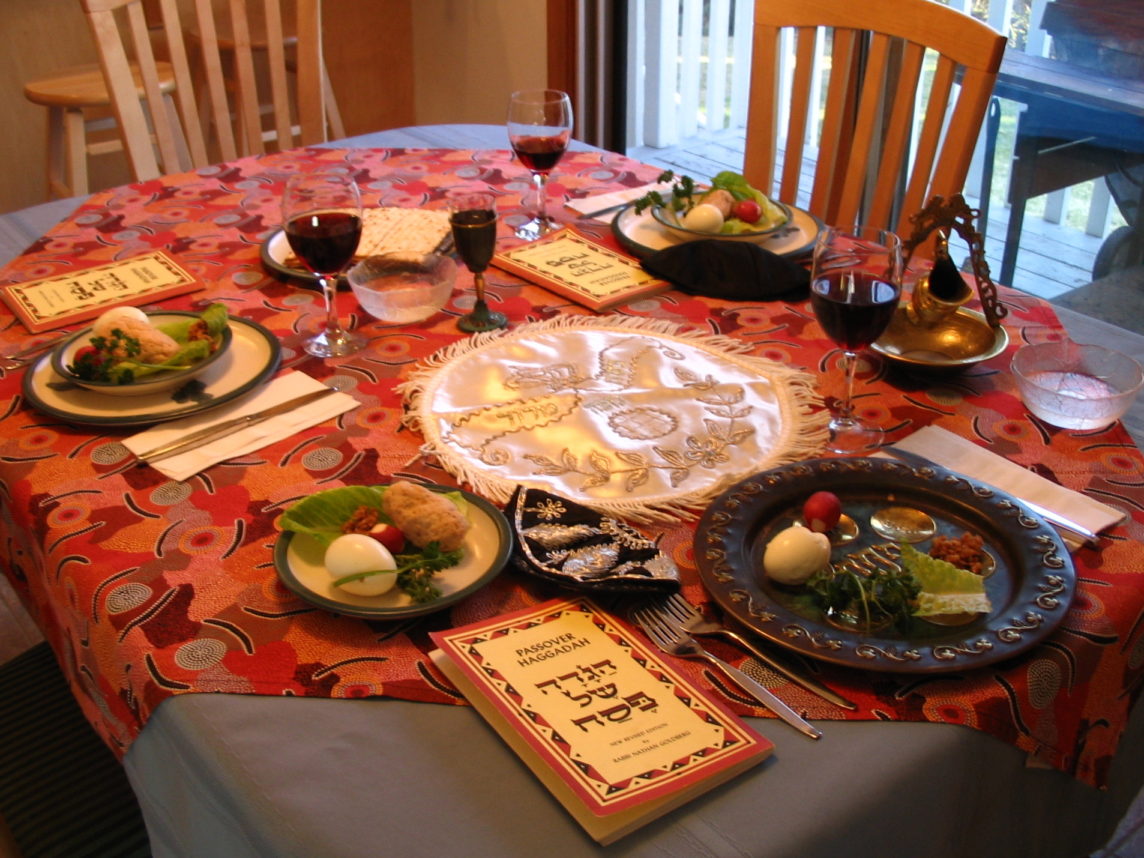
Maror-Bitterness

The Haggadah is an exilic document. For Jews, as long as the world is filled with injustice, cruelty, violence, and war, our work is not done.

Judaism teaches that the messianic era will come only when justice, compassion, and peace characterize relationships between individuals, peoples, and nations, when the hearts of parents turn to their children and the hearts of children turn to their parents (Malachi 3:23-24).

Through intention, determination, righteous deeds, and moral activism, our Jewish mission and the essential message of the Passover Seder is, through remembrance that we were once slaves, to address every injustice, every act of cruelty and every insensitivity to bring nearer the day when the prophetic admonishments will no longer be necessary.

My poem “Maror-Bitterness” that follows, is one in a series of d’rashot (commentaries) published this week in the Los Angeles Jewish Journal by a number of Los Angeles rabbis reflecting on the symbols of the Seder (“Rabbis Dish on the Seder Plate – April 7-13, 2017. Pages 36-38 – jewishjournal.com/culture/religion/passover/217641/rabbis-dish-seder-plate/). I recommend them all.

Maror-Bitterness

The Almighty called to the children of Jacob:

“I have taken notice of you / And seen your suffering / And sent to you my prophet / To relieve you of your maror-bitterness.

I carried you on eagles’ wings / And shielded you from the pursuers’ arrows / So that whenever you taste the maror / You will remember / Who I am / And who you are / And why you are free.

As I took notice of your ancestors / I call upon you today / The descendants of slaves / Who know the heart of strangers / And their fear and desperation / And do for them as I have done for you / And liberate them / The oppressed and the tempest-tossed / The poor and the discarded / The old and the lonely / The abused and the addict / The victim of violence and injustice / And everyone who tastes daily the maror-bitterness / That you know so very well.

As you sit around your Seder tables / I call upon you to act / With open, pure and loving hearts / On My behalf / And be My witnesses / And bring healing and peace into the world.”

Poem by John L. Rosove, Temple Israel of Hollywood, Los Angeles


Maror-Bitterness Read More »

Is Trump Pharaoh? Was Obama? What to talk about at the Seder

1.

My monthly New York Times article was just published, and the topic is a timely one. The headline says: Keep Your Politics out of Passover, and I urge you to read it, of course.

Here’s one paragraph:

There’s a growing tendency among Jews — whether rabbis, teachers, community leaders or lay people — to employ Jewish texts to score political points. A Passover Seder during which you spend time criticizing the Trump administration’s immigration policies or regretting the evacuation of Israeli settlements from Gaza is not a “relevant” Seder, it is a mediocre and redundant one. Passover is for celebrating the transcendent, the mysterious, the eternal, not rehashing worn-out political debates. It is a night to find new meaning in an old script, not to force the text into a preconceived political platform.

2.

If you wish to understand why this topic seemed timely when I wrote it last week, here’s some proof from the Washington Post:

This Passover, which begins Monday night, the nation’s preoccupation with politics and the flurry of activism since President Trump’s election are inspiring a new crop of amateur writers to try their hand at updating the age-old Passover story. And for some, the big question has become: Is it right to cast the president of the United States as the villainous pharaoh?

3.

Readers have already started responding to my NYT article. As you can probably imagine: Some say Yeshar Choach – so I assume they agree with me. Some say: we disagree. Tamara Cofman Wittes posted on Facebook the following thoughtful response:

Well, Shmuel, I disagree. If all we are supposed to do at Seder is follow the “script,” there’s no way the rabbis stayed up until it was time to recite the morning shma. No, we engage in disputation about our tradition, our laws, and how they apply to our lives – the modern, political, socially active, globally aware lives we actually live. We’re Jews; that’s how we roll.

She says she disagrees with me, but I’m not sure we are in serious disagreement. I can concur with her statement that “we engage in disputation about our tradition, our laws, and how they apply to our lives.” The question, of course, is what do we mean by “our lives.” I believe that the Seder is about “our lives” in a big sense. The meaning of our lives, the meaning of our being Jewish, our history, tradition, obligations. I dislike the idea of using the Seder to discuss “our lives” in a small what-was-on-the-morning-news sense. I do not think that pharaoh-izing Trump (or, a year ago, Obama, or anyone else we watch on TV on a daily basis) makes for a meaningful Seder.

4.

Ben Sales wrote an article titled: Worried about Trump talk ruining your seder? Here’s how to get through it. Here’s a paragraph:

Seders traditionally embrace disputation. The meal’s most known segment is the Four Questions, and several of the Haggadah’s anecdotes retell rabbinic debates. Haggadah commentaries likewise nudge attendees to challenge the details of the hours-long Exodus narrative. Noam Zion, co-author with his son Mishael of “A Night to Remember: The Haggadah of Contemporary Voices,” says the original seder was not meant to be a rote reading of the Haggadah but a free-willing symposium on themes of freedom and slavery.

Again – I agree. “To challenge the details of the hours-long Exodus narrative” – that’s good. Objecting to “a rote reading of the Haggadah” – that’s even better (It is possible that my NYT article was not clear on this matter because of my “followed a script” reference). The question is not should we debate at the Seder – it is what to debate at the Seder.

The meaning of the Exodus, Jewish perceptions of freedom, the history of our Seder and the meaning of its many components – sure, let’s debate these, talk about them, and enrich our Seder with knowledge and anecdotes and storytelling. But Trump? Netanyahu? Occupation? Nuances of contemporary immigration law? Why waste such a special evening on those?

5.

Let’s be somewhat blunt. For too many Jews the insertion of politics into the Seder is a way to overcome a Jewish void – having a limited Jewish vocabulary, they turn to the one topic on which everybody seems to know something and have something to say. This is becoming typical of Seders and of other Jewish occasions. And it is a cheap solution to a real problem of lack of Jewish literacy.

Here’s one suggestion: instead of talking about politics, use the Seder to deepen one’s Jewish literacy. That’s the lesson we can learn from the Haggadah: “even if we were all wise, all understanding, all experienced, all versed in the Torah, we would still be commanded to retell the story of the exodus from Egypt.”

Chag Sameach.


Is Trump Pharaoh? Was Obama? What to talk about at the Seder Read More »