fbpx

March 24, 2017

In second week of US-Israel talks, Trump ‘concerns’ on settlements remain

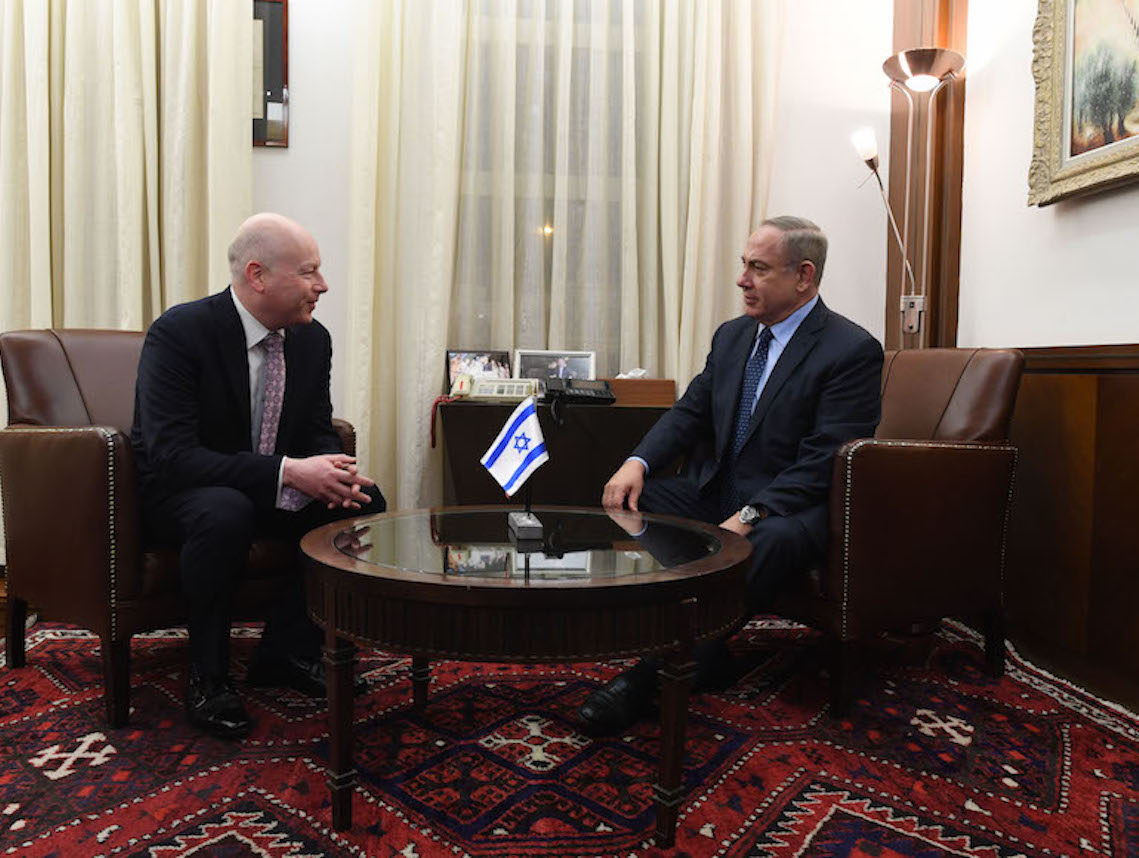
After a lengthy session of U.S.-Israel talks, Israeli negotiators said they would take into account Trump administration “concerns” about settlement building, a sign that the issue continues to dog relations between the countries.

The joint statement released Thursday night after four days of talks between top officials said the issues are “exceptionally complicated,” a signal that Israeli Prime Minister Benjamin Netanyahu’s optimism about a renewed diplomatic closeness with the United States after eight years of tension with the Obama administration may be fading.

“The United States delegation reiterated President Trump’s concerns regarding settlement activity in the context of moving towards a peace agreement,” the statement said. “The Israeli delegation made clear that Israel’s intent going forward is to adopt a policy regarding settlement activity that takes those concerns into consideration.”

While the statement mentioned progress in areas like facilitating economic growth in the West Bank and allowing humanitarian relief into the Gaza Strip, it was clear the settlements issue is far from resolved.

“The talks were serious and constructive, and they are ongoing,” the statement said.

Leading the talks were Jason Greenblatt, a longtime adviser to President Donald Trump whom he has tapped to oversee the renewal of peace talks between the Israelis and the Palestinians, and Yoav Horowitz, Netanyahu’s chief of staff, and Ron Dermer, the Israeli ambassador to the United States.

The talks come after Greenblatt’s visit to the region last week, which featured two long meetings with Netanyahu and a meeting with Palestinian leaders. Trump last month asked Netanyahu during a news conference at an otherwise friendly White House summit to stop settlement building for the time being. Netanyahu earlier Thursday denied reports that the Trump administration wanted a settlement freeze.

Reports have suggested that the Trump team is ready to be less censorious on settlements than the Obama administration, countenancing for instance building in eastern Jerusalem and in settlements that likely would be annexed to Israel in a final-status agreement.

Netanyahu, under pressure from his government’s right flank, wants room to continue building in other areas as well.

In second week of US-Israel talks, Trump ‘concerns’ on settlements remain Read More »

Twitter has most anti-Semitic content among social networks, survey finds

Twitter emerged as the social network with the most anti-Semitic content in a comprehensive analysis.

The study of the prevalence of hatred toward Jews on such platforms, commissioned by the World Jewish Congress and published this week, was conducted throughout 2016.

Nearly two-thirds of the 382,000 posts deemed anti-Semitic in the study appeared on Twitter, followed by 11 percent posted on Facebook, 6 percent on Instagram and 2 percent on YouTube. The posts were in various languages, according to the survey performed by the Israeli monitoring firm Vigo.

The study applied the International Holocaust Remembrance Alliance’s definition of anti-Semitism in determining what content to include in the report, the World Jewish Congress wrote in a statement about the report.

“We knew that anti-Semitism online was on the rise, but the numbers revealed in this report give us concrete data as to how alarming the situation really is,” said the group’s CEO, Robert Singer. “We hope this serves as a wake-up call to all internet forums to maintain moral standards, rid themselves of offensive content, and make the digital world a safer place for all.”

Facebook, Twitter, YouTube and Microsoft in June signed a code of conduct with the European Commission that requires them to delete the majority of reported illegal hate speech within 24 hours.

The signing of the accord was hailed as major progress toward reconciling U.S.-based social networks’ adherence to American legislation despite demands by European governments and judiciaries that the firms limit themselves in Europe to the stricter laws on hate speech applied in much of the continent.

Monitor groups have reported failures to comply after the document’s signing. Twitter has been particularly reluctant to comply with European legislation.

In 2013 Twitter lost a protracted legal battle in France over its initial refusal to either disclose details of users who made anti-Semitic statements online or block them for continuing to do so.

The survey’s publication coincided with reports in Poland about the desecration of a cemetery of Soviet soldiers in Warsaw by vandals who spray-painted a Star of David emblazoned with a Nazi swastika inside the burial ground. Police are investigating the incident, the news site Ruptfly reported.

Twitter has most anti-Semitic content among social networks, survey finds Read More »

Vayakhel

14 haiku for Parsha Vayakhel-Pekudei (involving a major construction project) by Rick Lupert

Vayakhel

I
An all staff meeting.
Building instructions given.
Not on Saturday.

II
This tabernacle
funded by all the people.
The first Kickstarter.

III
A miracle! This
over-funded project is
with the artists now.

IV
Here in the dream lab
curtains are connected and
loops of wool appear.

V
Planks and sockets and
cubits. This is what it takes
to build a Mishkan.

VI
The holiness is
in the details. A golden
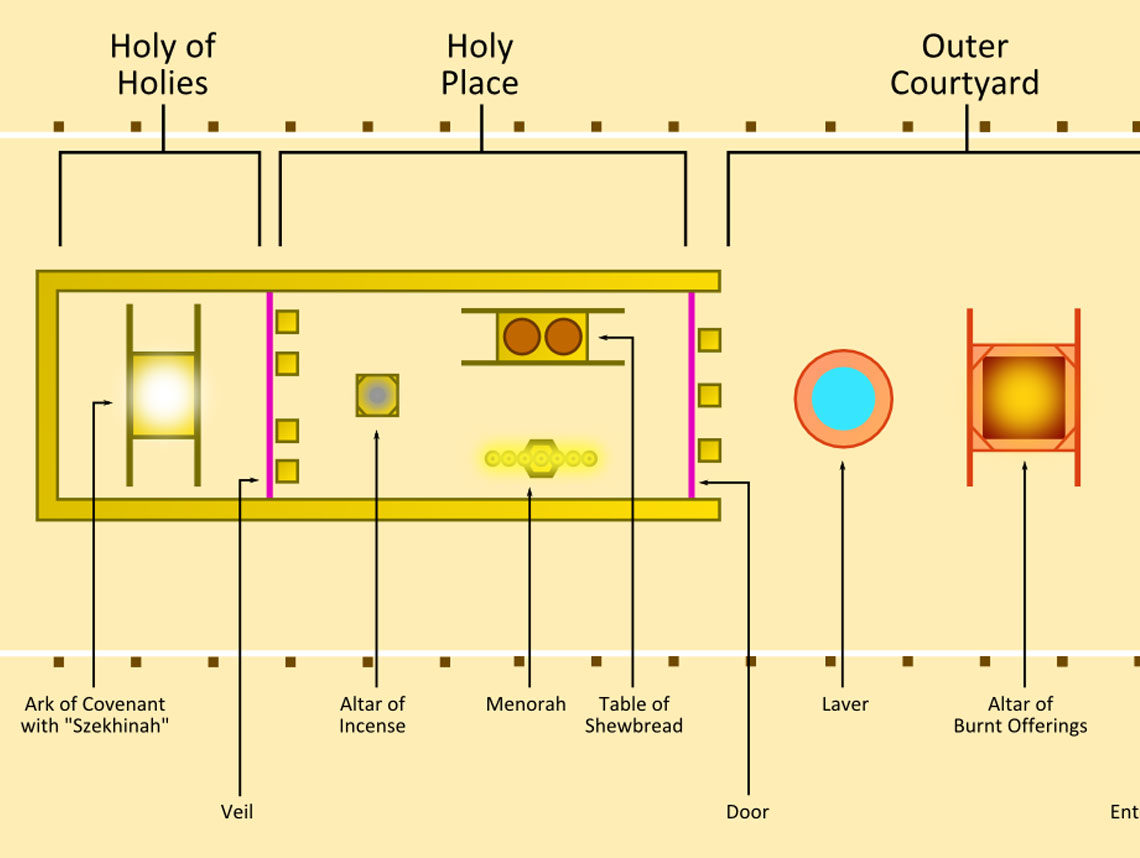
Menorah appears.

VII
Who doesn’t love to
see a project completed.
Now, the inspectors.

Pekudei

I
Let’s name all our kids
Bezalel, so that they may
become artists too.

II
Priests looking for the
latest accessories – look
no further: ephod.

III
Pomegranates and
bells. Twisted blue. This runway
will be off the hook.

IV
Laying out the wares
Moses gives them a blessing
for a job well done.

V
With all the pieces
the Mishkan is almost here.
Assembly required.

VI
Like a complex set
of Ikea instructions
Moses builds it all.

VII
A cloud comes. Not one
of gloom and rain. This is the
cloud that strengthens us.


Los Angeles poet Rick Lupert created a the Poetry Super Highway (an online publication and resource for poets), and hosted the Cobalt Cafe weekly poetry reading for almost 21 years. He’s authored 20 collections of poetry, including “I’m a Jew, Are You” (Jewish themed poems) and “Feeding Holy Cats” (Poetry written while a staff member on the first Birthright Israel trip), and most recently “Donut Famine” (Rothco Press, December 2016) and edited the anthologies “Ekphrastia Gone Wild”, “A Poet’s Haggadah”, and “The Night Goes on All Night.” He writes the daily web comic “Cat and Banana” with fellow Los Angeles poet Brendan Constantine. He’s widely published and reads his poetry wherever they let him.

14 haiku for Parsha Vayakhel-Pekudei (involving a major construction project) by Rick Lupert Read More »

An Antidote For These Disturbing Times

I offer this d’var Torah at the end of a week that for me has been exceptionally disturbing in the wake of the President’s dishonesty, self-centered heartlessness and bullying tactics along with the Republican congressional leadership’s efforts to make good on its promise to repeal the Affordable Care Act, rather than correct its problems, and thus take health insurance from twenty-four million poor and older Americans over the course of the next decade.

I have found myself these past eighteen months since the presidential campaign began and especially since 11/8 and 1/20 to be in constant need of a mental, emotional, and spiritual corrective to the corrosive spirit that has taken over so much of this country.

Learning Torah has always been for me such a corrective endeavor. And so, I offer here an edited d’var Torah that I posted originally three years ago concerning Betzalel, the master architect and builder of the Tabernacle.

God instructed Moses to choose Betzalel to design and build the Tabernacle that would carry the tablets of the law (Exodus 38:22-39:31). On the face of it, these verses describe a matter-of-fact building of a physical edifice. But this isn’t merely an architectural plan for an ancient structure. It’s a description of the highest aesthetic vision of the ancient Israelites that would impress itself upon the hearts, minds, and souls of generations of Jews to come.

Not just any craftsman could design and build this sacred structure. Only someone with extraordinary qualities of heart, mind, spirit, and skill could do the job.

We learn that Betzalel was endowed with wisdom (chochmah), insight (binah), and understanding (da-at). Rashi suggests that chochmah refers to the wisdom we learn from others; binah is the understanding we acquire from life experience; da-at is mystical intuition.

Though Betzalel was apparently the right choice, God asked Moses if he himself believed that Betzalel was suited to perform this sacred task. Moses replied: “Master of the universe! If You consider him suitable, then surely I do!” Not yet satisfied, God instructed Moses: “Go and ask Israel if they approve of my choice of Betzalel.”

Moses did so and the people replied: “If Betzalel is judged good enough by God and by you, surely he is approved by us, too.”

The rabbis emphasized that Betzalel was not only God’s and Moses’ choice but the people’s choice.

This simple story of Betzalel’s selection teaches that Judaism regards a person’s devotion to God, Torah, and the people of Israel to be the key virtues of a Jewish artist.

Mark Chagall went further when he wrote: “The artist must penetrate into the world, feel the fate of human beings, of peoples, with real love. There is no art for art’s sake. One must be interested in the entire realm of life.”

The story of Betzalel and the commentary that was written over time are reminders that each one of us, the artist and non-artist, ought to train ourselves to continuously direct one of our eyes heavenward and direct the other eye upon human affairs thereby drawing us nearer to one another in love and support and to the cosmic core of the universe.

This is an orientation that can serve each of us well and, I suggest, can help direct the leadership of our country to fulfill the higher purposes towards which American democracy has sought to fulfill.

Shabbat shalom.

An Antidote For These Disturbing Times Read More »

Isn’t it depressing? by Rena Boroditsky

Expired And Inspired

[Ed. Note: Republished from an earlier time. — JB]

Isn’t it Depressing?

People say to me, “I don’t understand how you do your job,” or,”What’s it like to be surrounded by death all the time?  Isn’t it depressing?”

It’s not depressing, but it can be sad. Those of us behind the scenes, the Shomrim who sit vigil with our loved ones, the members of the Chevrah Kadisha who reverently wash, purify and dress our loved ones..we feel the sadness.

We notice when families have one loss after another. We see the connections and overlap between families, and we see the ripple effect of death in the community. We often have personal connections to and memories of the deceased. It is a privilege for us to be able to serve in time of need. Death is very intimate. We see a slice of a family’s life at a very private and painful time.

And we feel immense sadness as we care for those who have no family and few friends. It is truly humbling and heartbreaking to attend a funeral where no one actually knows the deceased. Many of our staff also volunteer as pallbearers and minyanaires, to make sure that every individual is buried with respect and compassion, far above and beyond the call of duty.

On Rosh Hashana, or cleaning my house for Pesach, or lighting the Chanukah candles with my family, I remember the women I have cared for. My heart feels the heaviness of families facing their first Yom tov (holiday) without their mother, Baba, bubbe, auntie, sister.

When I light my Shabbat candles, my thoughts always include an acknowledgment of women no longer “benching licht“, their physical light in this realm literally extinguished. I like to believe that their “soul lights” continue to illuminate and guide their families … not far away … just beyond the veil of our understanding.

Rena Boroditsky is the Executive Director of the Chesed Shel Emes, the non-profit Jewish funeral chapel and Chevrah Kadisha in Winnipeg, Canada. For fifteen years, she has been a student and teacher of end-of-life Jewish rituals. Rena has been recognized in her community for her service. Rena has led sessions at Kavod v’Nichum conferences and at Limmud events in the US & Canada. She launched Death Cafe Winnipeg. She has served in past and presently as a board member of Kavod v’Nichum. She has been a lecturer and student in the Gamliel Institute. She is engaged in developing additional courses for advanced Gamliel Insitute students. Rena is a member of the first graduating class of the Gamliel Institute, having completed the required studies and projects, and she participated in the inaugural Israel Study Mission, the heart of the sixth course in the Gamliel Institute curriculum, International Perspectives.

Rena Boroditsky
Rena Boroditsky

______________

TASTE OF GAMLIEL

In 2017, Kavod v’Nichum and the Gamliel Institute are again sponsoring a six part “Taste of Gamliel” webinar. This year’s topic is From Here to Eternity: Jewish Views on Sickness and Dying.

Each 90 minute session is presented by a different scholar.

Taste of Gamliel Webinars for this year are scheduled on January 22, February 19, March 19, April 23, May 21, and June 25. The instructors this year are: Dr. Dan Fendel, Rabbi Dayle Friedman, Rabbi Sara Paasche-Orlow, Rabbi Richard Address, Rabbi Elliot Dorff, and Dr. Laurie Zoloth.

This series of Webinar sessions is free, with a suggested minimum donation of $36 for all six sessions. These online sessions begin at 5 PM PST; 8 PM EST.

Those registered will be sent the information on how to connect to the sessions, and will also receive information on how to access the recordings of all six sessions.

The link to register is: http://jewish-funerals.givezooks.com/events/taste-of-gamliel-2017.

More info – Call us at 410-733-3700   

Click the link to register and for more information. We’ll send you the directions to join the webinar no less than 12 hours before the session.

________________________

KAVOD v’NICHUM CONFERENCE

Plan to join us June 18-20, 2017 for the 15th annual Kavod v’Nchum Chevrah Kadisha and Jewish Cemetery Conference. Register, and make your hotel reservations and travel plans now!

15th Annual North American Chevrah Kadisha and Jewish Cemetery Conference At Congregation Rodef Sholom in San Rafael, California June 18-20, 2017

Registration is now open. Group discounts are available.
The conference program will include plenaries and workshops focused on Taharah, Shmirah, Chevrah Kadisha organizing, community education, gender issues, cemeteries, text study and more.

The conference is on Sunday from noon until 10pm, on Monday from 7am to 10pm, and on Tuesday from 7am to 1pm. In addition to Sunday brunch, we provide six Kosher meals. There are many direct flights to San Francisco and Oakland, with numerous options for ground transportation to the conference site.

We have negotiated a great hotel rate with Embassy Suites by Hilton. Please don’t wait to make your reservations. We also have home hospitality options. Contact us for information or to request home hospitality. 410-733-3700, info@jewish-funerals.org

____________

GAMLIEL INSTITUTE COURSES

UPCOMING COURSE

Gamliel Institute will be offering course 2, Chevrah Kadisha: Taharah & Shmirah, online, evenings, in the Fall semester starting September 5th, 2017.

CLASSES

The course will meet on twelve Tuesdays (Thursdays in those weeks with Jewish holidays during this course). There will be an orientation session on Monday, September 4th, 2017.  Register or contact us for more information.

REGISTRATION

You can register for any Gamliel Institute courses online at jewish-funerals.org/gamreg. A full description of all of the courses is found there.

For more information, visit the Gamliel Institute website, or look at information on the Gamliel Institute at the Kavod v’Nichum website or on the Gamliel.Institute website. Please contact us for information or assistance. info@jewish-funerals.org or j.blair@jewish-funerals.org, or call 410-733-3700, or 925-272-8563.

 ____________________

DONATIONS

Donations are always needed and most welcome. Donations support the work of Kavod v’Nichum and the Gamliel Institute, helping us to bring you the conference, offer community trainings, provide scholarships to students, refurbish and update course materials, expand our teaching, support programs such as Taste of Gamliel, provide and add to online resources, encourage and support communities in establishing, training, and improving their Chevrah Kadisha, and assist with many other programs and activities.

You can donate online at http://jewish-funerals.org/gamliel-institute-financial-support or by snail mail to: either Kavod v’Nichum, or to The Gamliel Institute, c/o David Zinner, Executive Director, Kavod v’Nichum, 8112 Sea Water Path, Columbia, MD  21045. Kavod v’Nichum [and the Gamliel Institute] is a recognized and registered 501(c)(3) organizations, and donations may be tax-deductible to the full extent provided by law. Call 410-733-3700 if you have any questions or want to know more about supporting Kavod v’Nichum or the Gamliel Institute.

You can also become a member (Individual or Group) of Kavod v’Nichum to help support our work. Click here (http://www.jewish-funerals.org/money/).

___________

MORE INFORMATION

If you would like to receive the periodic Kavod v’Nichum Newsletter by email, or be added to the Kavod v’Nichum Chevrah Kadisha & Jewish Cemetery email discussion list, please be in touch and let us know at info@jewish-funerals.org.

You can also be sent an email link to the Expired And Inspired blog each week by sending a message requesting to be added to the distribution list to j.blair@jewish-funerals.org.

Be sure to check out the Kavod V’Nichum website at www.jewish-funerals.org, and for information on the Gamliel Institute and student work in this field also visit the Gamliel.Institute website.

RECEIVE NOTICES WHEN THIS BLOG IS UPDATED!

Sign up on our Facebook Group page: just search for and LIKE Chevra Kadisha sponsored by Kavod vNichum, or follow our Twitter feed @chevra_kadisha.

To find a list of other blogs and resources we think you, our reader, may find of interest, click on “About” on the right side of the page.There is a link at the end of that section to read more about us.

Past blog entries can be searched online at the L.A. Jewish Journal. Point your browser to http://www.jewishjournal.com/expiredandinspired/, and scroll down. Along the left of the page you will see a list of ‘Recent Posts” with a “More Posts” link. You can also see the list by month of Expired and Inspired Archives below that, going back to 2014 when the blog started.

SUBMISSIONS ALWAYS WELCOME

If you have an idea for an entry you would like to submit to this blog, please be in touch. Email J.blair@jewish-funerals.org. We are always interested in original materials that would be of interest to our readers, relating to the broad topics surrounding the continuum of Jewish preparation, planning, rituals, rites, customs, practices, activities, and celebrations approaching the end of life, at the time of death, during the funeral, in the grief and mourning process, and in comforting those dying and those mourning, as well as the actions and work of those who address those needs, including those serving in Bikkur Cholim, Caring Committees, the Chevrah Kadisha, Shomrim, funeral providers, funeral homes and mortuaries, and operators and maintainers of cemeteries.


_____________________


Isn’t it depressing? by Rena Boroditsky Read More »

Rosner’s Torah Talk: Parashat Vayakhel-Pekudei with Rabbi Tom Heyn

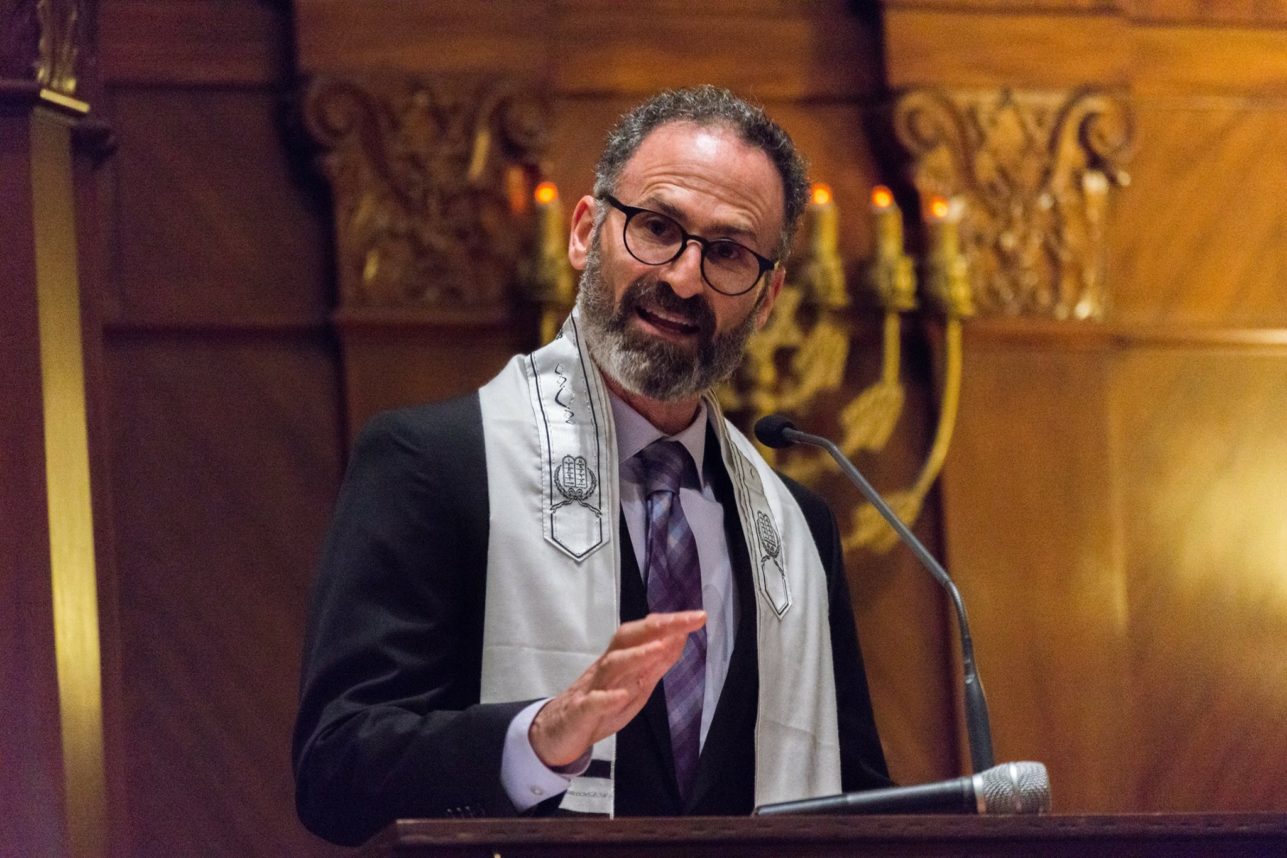
Our guest this week is Rabbi Tom Heyn, leader of Temple Israel of the Greater Miami. Raised in a secular Jewish family in Baltimore, Rabbi Heyn underwent several transformative spiritual experiences before returning to and embracing his Jewish roots. He earned his BA in History and Hebrew Studies from the University of Wisconsin and his MA and Rabbinic Ordination from Hebrew Union College-Jewish Institute of Religion. He also completed his clinical education and training in pastoral care (CPE) through leading institutions such as Cincinnati Children’s Hospital and Dartmouth-Hitchcock Medical Center. Rabbi Heyn has served both urban and rural communities (most recently in Brattleboro, Vermont) as a congregational rabbi, Jewish educator, hospice chaplain, professional musician and spiritual guide.

Parashat Vayakhel-Pekudei – (Exodus 35:1-40:38) – begins with Moses commanding the people of Israel to observe the Shabbat and continues to tell us in great detail about the building of the Tabernacle. Pekudei, the last reading from Exodus begins with an audit of how the contributions for the Tabernacle (the Mishkan) were used. The portion goes on to describe the completion of the Tabernacle and its assembly and concludes by depicting the glory of the lord entering it. Our discussion focuses on the similarities and differences between the Mishkan and the temples of today.

https://youtu.be/iJwNeSG28vE

Rosner’s Torah Talk: Parashat Vayakhel-Pekudei with Rabbi Tom Heyn Read More »