fbpx

March 16, 2017

Good news about bad news

Everyone knows TV political journalism failed us during the 2016 campaign.

Everyone knows TV news was clueless about Donald Trump voters and blue states swinging red. Everyone knows anchors let lying candidates roll them. Everyone knows TV coverage hyped the horse race and gave issues the cold shoulder. Everyone knows the cable news default frame for covering controversy is he-said/she-said food fights. Everyone knows local news is all about crashes, crime and fluff. Everyone knows investigative reporting is a luxury local stations can’t afford. Everyone knows down-ballot races are ratings poison.

Well, sometimes something everyone knows is wrong.

Those charges aren’t baseless. I could program a YouTube channel 24/7 with clips that make me cringe. But I also can beat the drum for TV newsmen and newswomen who know what excellence is, who go for it every day and who make me hopeful that at a dangerous moment, TV news can countervail against propaganda, paranoia and a president who calls news media “the enemy of the people” and “scum.”

I say that confidently because over the past couple of months, together with a few dozen USC Annenberg School for Communication and Journalism faculty colleagues, staff and journalists, we’ve been screening the nearly 100 entries for the ninth biennial Walter Cronkite Awards for Excellence in TV Political Journalism.

Pick a knock on TV news — ignoring blue voters turning red, say — and it’s contested by Cronkite entries, such as “Ask Ohio,” a “60 Minutes” report listening to laid-off workers talk about trade, or like the Pennsylvania and North Carolina swing voters profiled on “PBS NewsHour Weekend.” I’m glad it was so hard to narrow down the entries — there’s that much good work to celebrate.

The award’s recipients were just announced. If you want to be optimistic about journalism as advocate for accuracy, an instrument of accountability and a prompt toward civic engagement, check out online what some of these Cronkite winners are up to.

• Jake Tapper, CNN anchor and chief Washington correspondent, tenaciously asking Donald Trump about his comments regarding Judge Gonzalo Curiel: “[Saying Curiel] can’t do his job because of his race, is that not the definition of racism?” Or Tapper fact-checking whoppers in Trump’s and Hillary Clinton’s stump speeches.

• Katy Tur, on the road with Trump for 17 months for NBC News and MSNBC, master of her subject matter and unflappable despite an onslaught by the candidate and supporters he got to taunt her.

• Univision News and Fusion anchor Jorge Ramos’ intimate portrait of a divided America in a chillingly candid encounter with an unmasked member of the Ku Klux Klan, and an interview with a Muslim woman beaten in a Minnesota restaurant.

• Brian Stelter’s essays grappling with post- and alternate-fact media and politics, the assault on truth and the path for journalists to regain public trust on his CNN program, “Reliable Sources.”

• Investigative reporting on Texas’ border war on drugs by KXAN in Austin; on denial of mental health benefits to veterans by WXIA in Atlanta; on the human story of medical cannabis by Sabrina Ahmed at WOI in West Des Moines; on forged voter signatures by Marshall Zelinger at KMGH in Denver; on judicial elections by Brandon Rittiman at KUSA in Denver, whose work also won KUSA a fact-checking prize, the Brooks Jackson award, which went to the Scripps chain, as well. Public station KCETLink in Los Angeles was commended for Val Zavala’s 60-second animated explainers of 17 propositions on the California ballot.

• More than 500 hours of original political programming across Hearst Television’s 32 stations and the E.W. Scripps Co.’s 33 stations, a direct consequence of those chains’ executives asking the stations they own to commit resources and air time to quality political news.

In 1972, a poll of voters in 18 states asked trust thermometer questions about a list of candidates for the presidency and statewide offices; Walter Cronkite’s name, a ringer, was included. His 73 percent rating topped the list and led to him being called “the most trusted man in America.” Sure, maybe the competition was lousy. But he earned the public trust they lacked by doing his work so well. Before he said on the air that the Vietnam War was unwinnable, he went to Vietnam, he asked questions of everyone, he saw with his own eyes what was going on, he weighed the evidence, he told the truth — and people, including President Lyndon Johnson, listened.

Since then, sources for news and definitions of news have proliferated. Hostility toward news, never absent, is being stoked to serve a nihilistic itch to blow up the state. The trust thermometer is below freezing. “Public trust in media at all-time low,” says the Financial Times about an Edelman poll. “Americans’ Trust in Mass Media Sinks to New Low,” says Gallup. An AP-NORC Media Insight Project poll finds that “only 6 percent of people say they have a great deal of confidence in the press, about the same level of trust Americans have in Congress.”

It’s always worth celebrating good journalism. But I can’t think of a more urgent hour than this to honor journalists for stepping up to their civic responsibility to face reality. 

Good news about bad news Read More »

Calendar: March 17-23, 2017

FRI | MARCH 17

“THE SETTLERS”

This documentary by Shimon Dotan offers a provocative look at the controversial Israeli settlement movement. Israel captured the Sinai Peninsula, Gaza Strip, Golan Heights and West Bank during the Six-Day War. The hundreds of thousands of Israelis who have moved into the West Bank have made reaching a peace agreement with the Palestinians much more complex. “The Settlers” examines residents ranging from opportunistic families seeking less costly living conditions to Western-style hippies, messianic religious extremists to idealistic farmers, settler “patriarchs” to new converts. Israeli intellectuals, politicians and academicians weigh in on the issues. Laemmle’s Monica Film Center, 1332 Second St., Santa Monica. (310) 394-9744. laemmle.com.

YJP SHABBAT DINNER

The Young Jewish Professionals of Los Angeles presents an opportunity to connect with a diverse group of 100 career-minded peers while enjoying a four-course meal and open bar. Hosted by Mendel and Rachey Simons. 6:30 p.m. $60; tickets available at eventbrite.com; no tickets at the door. Shefa Melrose, 7275 Melrose Ave., Los Angeles. yjplosangeles.com.

SAT | MARCH 18

“CURTAINS”

The JFed Players Community Theater Ensemble presents “Curtains,” the final collaboration between Kander and Ebb, creators of “Cabaret” and “Chicago.” Set in 1959, this clever musical features murder, music, mystery, comedy and romance. 8 p.m.  $25; discounts available. Tickets available at jewishsgpv.org. Through March 26 on select dates. The Clarke Center, 401 Rolyn Place, Arcadia. (626) 445-0810. jewishsgpv.org.

SUN | MARCH 19

“TRUTH IS STRANGER THAN FICTION”

The Conejo Valley Chapter of the Brandeis National Committee presents “Truth Is Stranger Than Fiction.” Deputy District Attorney Beth Silverman will discuss in detail the case of serial killer Lonnie Franklin, known as the Grim Sleeper, who was charged with the murder of 10 women from 1985 to 2007. This well-publicized trial concluded in May 2016. 1 p.m. $20; $22 at the door. RSVP to Jessie: jbrra@aol.com or Frona: kidzathart@aol.com. Temple Etz Chaim, 1080 E. Janss Road, Thousand Oaks. templeetzchaim.org.

KRAV MAGA

Join Young Adults of Los Angeles’ post-undergrads (ages 22-26) for a 90-minute introductory course on the Israeli self-defense techniques of krav maga. 1:30 p.m. $10; ticket sales close at noon March 17; no tickets available at the door. Krav Maga Worldwide, 11400 Olympic Blvd., Los Angeles. yala.org/kravmaga.

IOSSIF VENTURA

Greek poet and Holocaust survivor Iossif Ventura is one of the last members of the Jewish community in Crete. Ventura survived World War II as a child in hiding and has used poetry to transform his trauma into words. He has published six books of poetry and his works have been translated into six languages. 3 p.m. Free. RSVP to Michael@lamoth.org. Los Angeles Museum of the Holocaust, 100 S. The Grove Drive, Los Angeles. (323) 651-3704. lamoth.org.

COMEDY AND QUESTIONS WITH ANNIE KORZEN

cal-korzenComedian Annie Korzen returns to the Whizin Center stage. Q-and-A to follow. 5 p.m. $25. American Jewish University, Familian Campus, 15600 Mulholland Drive, Los Angeles. (310) 440-1572. wcce.aju.edu.

CANTORS BENEFIT CONCERT

Leading cantors from across Los Angeles will perform in a concert to benefit the next generation of Southern California cantors. Proceeds from the Cantors Benefit Concert will fund scholarships for cantorial students at the Miller School of the Jewish Theological Seminary and the Academy for Jewish Religion, California. Featured cantors include  Nathan Lam, Marcus Feldman, Lisa Peicott, Don Gurney, Seth Ettinger, Phil Baron, Hillary Chorny, Judy Dubin Aranoff, Ira S. Bigeleisen and Alexander Berkovich. 7 p.m. Tickets start at $25. Adat Ari El, 12020 Burbank Blvd., Valley Village. (818) 766-9426. wp.adatariel.org/cantors-benefit-concert.

TUES | MARCH 21

INTERFAITH WOMEN’S FREEDOM SEDER

Join Temple Menorah and the Islamic Center of the South Bay for a Women’s Freedom Seder. Learn how the Exodus is understood in different faiths and how that message teaches the value of freedom. Come with your focus on unity, tolerance and respect for all faiths and people, and to promote freedom. 7 p.m. $25. Temple Menorah, 1101 Camino Real, Redondo Beach. (310) 316-8444. templemenorah.org.

TIMOTHY SNYDER and JONATHAN KIRSCH

cal-snyderTimothy Snyder, the Bird White Housum Professor of History at Yale, is an expert on 20th-century European history. Snyder warns us that in the 1920s and ’30s, many European democracies didn’t believe their countries ever could succumb to Nazism, facism or communism. He wrote a practical handbook called “On Tyranny,” a guide to knowing the signs of authoritarianism. “On Tyranny” provides 20 tips on preserving our freedom. Snyder will be in conversation with Jonathan Kirsch, author, attorney and the book editor of the Jewish Journal. 7:30 p.m. $20. Temple Emanuel of Beverly Hills, 8844 Burton Way, Beverly Hills. writersblocpresents.com.

WED | MARCH 22

“VOICES OF SURVIVORS”

Enjoy an evening of original student theater based on the life stories of four Holocaust survivors. The performance is the culmination of an eight-week collaborative project between the Los Angeles Museum of the Holocaust and Santa Monica High School’s theater department. The students in Santa Monica’s acting class participated in the museum’s “Voices of History” theater workshop, learning about the Holocaust, interviewing survivors and working with mentors to write, direct and stage the event. 7 p.m. Suggested donation: $10; $5 for students. Santa Monica High School, 601 Pico Blvd., Santa Monica. (323) 651-3704. lamoth.org.

THURS | MARCH 23

SUSAN SILVERMAN TALKS ABOUT “CASTING LOTS”

Presented by the Whizin Center and University Women: Coffee & Conversation, author Susan Silverman will discuss her book “Casting Lots: Creating a Family in a Beautiful, Broken World.” Silverman, the older sister of irreverent comic Sarah Silverman, grew up with parents who were atheists. She shocked everyone when she became a rabbi and moved to Israel. The author will discuss her funny and moving memoir about her unique family that will resonate with anyone who has struggled to find a place in the world and to understand the significance of that place. Silverman will be joined by Jewish Journal columnist Danielle Berrin. 7:30 p.m. Free. American Jewish University, 15600 Mulholland Drive, Los Angeles. aju.edu.

ASSI AZAR

Israeli television icon Assi Azar will give a motivational presentation in Hebrew. 8 p.m. $25. IAC Shepher Community Center, 6530 Winnetka Ave., Woodland Hills. (818) 451-1179. iacshephercenter.org.

EMET AFTER PARTY

Young professionals in every field are invited to the annual Emet After Party, featuring an appearance by honoree Albert Z. Praw. Emet, which means “truth” in Hebrew, is an active community of Jewish attorneys and other legal professionals in their 20s and 30s. 9 p.m. $30; $40 at the door; free with the purchase of ticket to the Legal Division Dinner. Business attire. The Beverly Wilshire Hotel, 9500 Wilshire Blvd., Beverly Hills. yala.org/emetafterparty

Calendar: March 17-23, 2017 Read More »

NORPAC passes on AIPAC conference this year

NORPAC, which calls itself the nation’s largest pro-Israel political action committee, is hosting a fundraiser for Senator Bob Menendez the same time as AIPAC’s annual Washington Policy Conference — in New Jersey.

[This article originally appeared on JewishInsider.com]

NORPAC President Dr. Ben Chouake told Jewish Insider that the date – Sunday, March 26 – was chosen by Menendez despite the fact that a number of would-be participants are expected to attend the AIPAC gathering in Washington, DC. “We are grateful for all participation in the process and while we regret the date, when a friend asks for help we are inclined to say yes even at difficult time slots,” he explained.

Menendez, a frequent speaker at the pro-Israel gathering since 2013, is expected to address AIPAC attendees on Tuesday, the third day of the conference, according to the Senator’s spokesperson. Although AIPAC’s website has yet to list him as a speaker.

Head of NORPAC Dr. Ben Chouake with Senator Bob Menendez (D/New Jersey). Photo courtesy of NORPAC.

Other high-profile speakers at the Policy Conference include Vice President Mike Pence, U.S. Ambassador to the UN Nikki Haley, House Speaker Paul Ryan, House Democratic Leader Nancy Pelosi, Senate Majority Leader Mitch McConnell and Senate Democratic Leader Charles Schumer.

As for Chouake, he will not attend this year’s police conference due to prior commitments to participate in two local events on Monday, other than hosting Sunday’s fundraiser. “The AIPAC conference is very worthwhile,” he told Jewish Insider. “I join other times with AIPAC during the year as a member of their National Council. They have four meetings a year. I prioritize those other three meetings when I am needed more. I hope my colleagues at AIPAC will give me a pass on missing the conference.”

NORPAC passes on AIPAC conference this year Read More »

From synagogue president to member of Congress

WASHINGTON – As President of the Reform Synagogue Ner Tamid, Representative Jacky Rosen (D-NV) was largely unknown outside of the Jewish community in Nevada’s 3rd Congressional District. However, this changed when veteran Democratic Senator Harry Reid approached Rosen and encouraged her to run in the 2016 election. While Rosen had no previous political experience, she believes that her background running the largest Nevada Synagogue helped her during the transition to Capitol Hill.

[This story originally appeared on jewishinsider.com]

“When you are the head of any philanthropy organization, what you learn is empathy, how to listen and be responsive to people’s needs,” Rosen told Jewish Insider off the floor between votes. “What you realize when you work in the philanthropic world is that people aren’t just numbers: they are families with real needs and you need to make your judgments with kindness and thoughtfulness in order to serve those needs.”

Born in Chicago, Rosen’s parents moved to Las Vegas when she attended the University of Minnesota. The Nevada lawmaker began her career working as a computer programmer and joined her family after finishing college. She draws from her professional experience while in Congress. “I’m a common sense person who tries to analyze and I have to look at all sides of the issue because you don’t want software that only does something but doesn’t fix the other errors.”

Controversy arose in the Democratic primary with alleged religious discrimination playing a defining role. One of Rosen’s competitors, Jesse Sbaih — a Jordanian-American lawyer — charged that Reid informed him that ‘Let me be blunt, you can’t win this race because you’re a Muslim.” (Reid vehemently denied the accusation). Rosen tried distancing herself from this disagreement and handily won the race.

Israel remains a critical issue for the Congresswoman. The former Synagogue President emphasized that she co-sponsored House Resolution 11, a measure criticizing the United Nations Security Council for a resolution condemning Israeli settlements last December. “It was my first floor speech. I was very proud to come out against that abstention because of course an abstention is really a vote because you just let happen whatever happened,” Rosen asserted.

Declining to describe herself as progressive or liberal, Rosen commended the President for assailing the recent wave of anti-Semitism. The Nevada lawmaker also appreciated Trump “shining a spotlight on our crumbling bridges roads, and dams.” Rosen, married with one daughter, feels passionately about importance of protecting Social Security and Medicare since she used to be a caregiver for her aging parents and in-laws. She currently serves on the Armed Forces Committee where she was surprised by the magnitude of the military. “Just the scope and size is so much larger than you can imagine,” she added.

For Rosen, after working many years in computer programming, technology still drives her. “People forget that the Hoover Dam was one of the greatest inventions or creations of the last century, still pumping out hydroelectric power today, and I hope that we can bring that kind of — some people say “innevation,” “Nev” for Nevada.

Jewish Insider: Why did you run for Congress? 

Rep. Jacky Rosen: “I decided to run for Congress because when I was approached as a community leader, I felt that one of the things that spoke to me most was the constituent services. I was the immediate past president of the largest Synagogue in Nevada Congregation Ner Tamid and through my 20 plus years of volunteering not just in Jewish philanthropy but philanthropy all around southern Nevada, serving Nevada and serving people was really important to me. When they said that was the most important thing I could do in my job as a Congresswoman, that’s what spoke to me and that is why I’m here.”

JI: What are your legislative goals?

Rosen: “I’m on the Armed Services Committee and I’m on the Space, Science and Technology Committee. I’m a computer programmer and systems analyst by trade so I’m very concerned about cyber security. I’m also making sure that we want to protect Social Security and Medicare. I was a caregiver to my aging parents and my in-laws. That’s very important. In Nevada, people forget that the Hoover Dam was one of the greatest inventions or creations of the last century, still pumping out hydroelectric power today, and I hope that we can bring that kind of — some people say “innevation,” “Nev” for Nevada, bring that kind of innovation and businesses to Nevada in solar and water, renewable resources and creating new kinds of energies.”

JI: What most surprised you during your brief time on the Armed Services Committee?

Rosen: “The scope of what’s in the Armed Services. I sit on military personnel and on tactical land and air. Just the infrastructure that it takes for the bases, the commissaries, with the benefits, with moving people around. Just the scope and size is so much larger than you can imagine. And it’s so very important because the reason I chose to be on that committee is those are the people who give up maybe their freedom, their life, their home life for sure to protect all of us.”

JI: Did your experience serving as President of Ner Tamid Synagogue assist you while in Congress?

Rosen: “Absolutely. When you are the head of any philanthropy organization. What you learn is empathy, how to listen and be responsive to people’s needs. What you realize when you volunteer or work in the philanthropy world is that people aren’t just numbers they are families with real needs and real issues and you need to make your judgments with kindness and thoughtfulness in order to serve those needs.”

JI: What are some elements of your personality outside of politics that others may not know about you in Washington?

Rosen: “I think that I have a great sense of humor. My staff laughs at my jokes, maybe they have to. I love to laugh. I enjoy life. As a commuter programmer, I was socialized to be a team player. I love being part of the brainstorming, part of the process, I think that makes us better so I’m in on all those brainstorming meetings as we are considering and debating and that’s what really makes me a better Congress person. We try to do it with a little laughter too.”

JI: How would assess the debate about Israel since you arrived on Capitol Hill?

Rosen: “I was proud to be a cosponsor of House Resolution 11. It was my first floor speech. I was very proud to come out against that abstention because of course an abstention is really a vote because you just let happen whatever happened. We need to, as America, support a two state solution. We have to be the best facilitators we can because ultimately they have to live with it so if it is not something they have buy into and they can live with, we can talk all we want, but it’s not our neighborhood. Israel – our strongest ally – needs our support and needs our wisdom, so do the Palestinians, but we need to do everything we can to facilitate and come to the table to find that two state solution that they have buy into and they can live with. So I’m hoping that the current Administration stands by that longstanding policy and we can help bring people to the table.”

JI: Did you connect the recent spike of anti-Semitism with President Trump’s campaign?

Rosen: “I was pleased to see he came out against anti-Semitism. I thought that was a good thing. I think what he is trying to do about infrastructure, that is one of the places where we can really agree, shining a spotlight on our crumbling bridges roads and dams. They haven’t been funded well enough for the last so many years and that’s a real problem with our infrastructure. I’m really pleased that he shined a spotlight on that.”

“Whatever happened during this election cycle, people felt empowered. I will let the pundits decide what the reasons were. People felt empowered to bring up a lot of rhetoric and a lot of hate speech. I signed up for the bipartisan task force against anti-Semitism. I’m very proud of that. We can’t support hate no matter who it is against: Jewish people, Muslims, Blacks, Latinos. It doesn’t make a difference. Hate is always wrong. We are not a country that was built on hate.”

JI: Is there anything else you would like to add?

Rosen: “I’m a common sense person. I’m actually a dinosaur. I went into computers in the 1970s when we had the card deck and they’re in a museum now. When you write software, you have to build those teams and do the kinds of things that move the mission forward. I’m a common sense person who tries to analyze and I have to look at all sides of the issue because you don’t want software that only does something but doesn’t fix the other errors. I’m really a centrist. I want the data and analytics to guide me with my empathy and heart to make good policy.”

From synagogue president to member of Congress Read More »

Israel/Palestine: Standing Firm Means Never Getting Anywhere

As Jason Greenblatt meets with Mahmoud Abbas and Benjamin Netanyahu, you can’t help wondering: will anything change? Through several U.S. administrations, the talking points have remained virtually the same. Meanwhile, confidence in a two-state solution is waning in both Palestine and Israel.

“Young Palestinians start to lose faith in two-state solution,” declared a Financial Times headline recently. NPR had the same story last month. In a piece broadcast on February 17, reporter Joanna Kakissis interviewed two students at Bir Zeit University. Both of them said they don’t recognize Israel as a country. “It’s not even their home,” says one of them, referring to Jewish Israelis.

This is hardly news. In 2014, when the journalist Nir Baram interviewed people living in Israel and the West Bank, a Palestinian woman told him “We can’t live with you, we want our own state. The Jews can go back to America or Europe.” As one man put it: “All of Palestine is Palestine, from sea to sea. I don’t believe there is such a thing as Israel. All the Israelis came here from far away and conquered our lands.”

Yaasir Arafat made the same argument over 40 years ago. To him, Palestine was like Algeria under French rule. He saw the Jews as European invaders, promoting a colonialist, imperialist project which should be overthrown in favor of national sovereignty. Arafat explicitly promoted an armed struggle whose “causes do not stem from any conflict between two religions or two nationalisms. Neither is it a border conflict between neighboring States.” His goal was a single Palestinian state where Jews might also live.

On the Jewish side, advocates of two states have consistently believed in negotiations to establish agreed-upon borders between the states, arguing that nothing else could preserve Israel as both Jewish and democratic. Skeptics, on the other hand, foresee a Palestinian state that would resemble some of its Arab neighbors: unstable, undemocratic, and a greater threat to Israel’s security than the status quo. Over more than 40 years, those arguments haven’t changed much either.

All that these efforts have accomplished is to maintain a stalemate. Whether you believe that they reflect high principle or simple intransigence, the inescapable fact is that the predicament remains the same as 50 years ago. Maybe that’s the best we can hope for: an uneasy ceasefire in a multigenerational conflict, with occasional eruptions of individual and military violence.

What else could be done? The parties might accept the status quo as preferable to any of the alternatives and abandon the pretense of seeking negotiations. On the other hand, they might conclude that the situation is deteriorating and unsustainable, and be willing to modify their long-held beliefs as the basis for new negotiations. Or, combining elements of both outlooks, they might conclude that the status quo is unsustainable but that negotiations are ineffectual, and that the conflict can be resolved only by force.

Of course the participants in the Israel/Palestine debate may prefer to stick to their long-standing positions rather than contemplate something new. But is that really tenable? It takes a lot of courage to reconsider one’s own fundamental assumptions and consider changing them. But it’s a necessary step towards progress. Standing in place won’t get us anywhere.

Israel/Palestine: Standing Firm Means Never Getting Anywhere Read More »

Polish court accuses Minnesota man, 98, of Nazi war crimes

A Polish court has issued an arrest warrant for a 98-year-old Minnesota man it accuses of Nazi war crimes.

The warrant issued Wednesday by the regional court in Lublin is the first step toward requesting the extradition of Michael Karkoc, The Associated Press reported.

Poland’s Institute of National Remembrance–Commission for the Prosecution of Crimes against the Polish Nation said in a statement on its website that Karkoc was one of the commanders of the SS Galicia Division, also known as the Ukrainian Self-Defense Legion, a unit that burned Polish villages and killed civilians during World War II. He is accused of playing a role in the murders of civilians in the villages of Chłaniow and Kolonia Władysławin in July 1944.

The AP first identified Karkoc by name.

Karkoc did not mention his Nazi past when he entered the United States in 1949, which would have prevented him from entering the country, the AP reported.

He now lives in a nursing home in Minneapolis, according to The New York Times. Its report cited family members as saying that he is innocent of the charges, and that he has dementia and is not fit to stand trial.

In a Ukrainian-language memoir published in 1995, Karkoc said he helped found the Ukrainian Self-Defense Legion in 1943 in collaboration with Nazi officers to fight on behalf of Germany and against the Soviet Union, The New York Times reported.

Karkoc must appear in court in Poland since the country does not recognize trial in absentia, according to the AP.

Polish court accuses Minnesota man, 98, of Nazi war crimes Read More »

Israel strikes 2 Hamas targets in Gaza in response to rocket fire

Israeli airstrikes hit two Hamas positions in northern Gaza overnight Thursday in response to a rocket fired from the strip at southern Israel.

No damage or injuries were reported from the Gaza rocket strike, which struck an open area of the Sdot Negev Regional Council, near the Gaza border, according to the Israel Defense Forces.

The Code Red rocket warning system did not sound in the area since it was determined that the rockets would fall in an unpopulated area.

The Palestinian news agency Maan reported there were no injuries from the Israeli Air Force strikes but three electric lines were downed.

The IDF said it holds Hamas responsible for any strikes emanating from Gaza.

Israel strikes 2 Hamas targets in Gaza in response to rocket fire Read More »

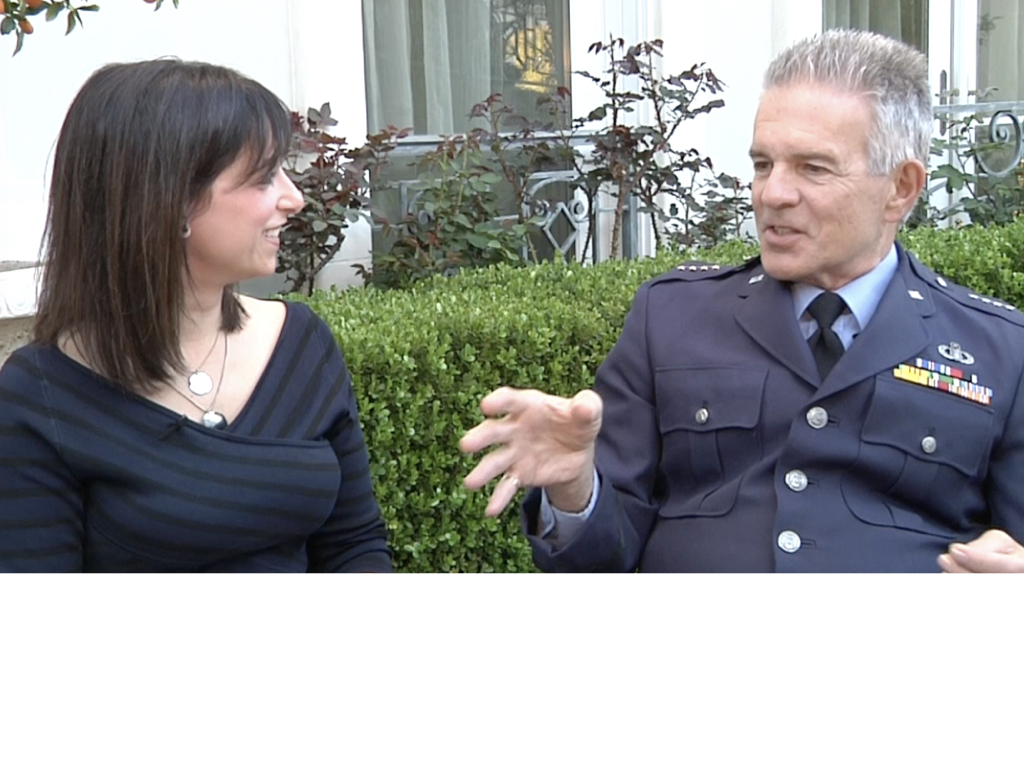
Exclusive Interview with “Major Crimes” star Tony Denison

(SPOILERS AHEAD)

Tony Denison, star of TNT’s top-rated drama Major Crimes, is used to a certain fervor surrounding the show.  Fans are passionate about the relationship between his character, Andy Flynn, and Mary McDonnell’s Sharon Raydor.  Millions refer to the pair as ‘Shandy’.  Last night’s episode brought their relationship to a new level when Andy proposed.

However, viewers will have to wait for Sharon’s response.  The episode ended as a cliffhanger.

Only two episodes remain in the fifth season.  TNT has already renewed the series for a sixth season.

Recently, Denison was cast in a virtual-reality film called Agent Emerson.  He will play The General.  Agent Emerson also stars Lyndsy Fonseca.  It is directed by Ilya Rozhkov.

For more about Major Crimes and Agent Emerson directly from Tony Denison take a look below:

—>Looking for the direct link to the video?  Click here.

Exclusive Interview with “Major Crimes” star Tony Denison Read More »

Groundbreaking TV comedy introduces Israelis to their Ethiopian neighbors

TEL AVIV (JTA) – Last week, Israelis for the first time saw a black lead character on a homegrown, primetime television show.

Nebsu,” a half-hour comedy, focuses on an Ethiopian man who is married to an Ashkenazi Jewish woman. Misunderstanding ensues.

“There is definitely a lot of cultural confusion in the show,” Yosi Vasa, the star and co-creator of the show, told JTA. “But the great thing about comedy is when the audience laughs, that means they get it. So that’s progress.”

Following a series of sometimes violent protests between Ethiopian Israelis and police in recent years, the creators of the new show think comedy is called for. They hope that by making light of the frictions between Ethiopian immigrants and the broader society, they can promote mutual understanding.

“People went out to [the highway] Ayalon South and demonstrated with anger. People wrote columns,” co-creator Shai Ben-Atar said in a promotional video, referring to 2015 demonstrations protesting police brutality against Ethiopians. “Our demonstration is a demonstration of love. We come to the audience with love. We come with characters full of love.”

In the March 9 premiere, Vasa’s character, Gili, steps out of his suburban house to run an errand. A police officer driving by stops and demand his ID, which he has left inside the house. Moments later the officer is aggressively frisking Gili against the trunk of his car.

Vasa, 41, said such incidents are part of his reality, which many Israelis find difficult to believe. But one evening last year, the show’s third co-creator, Liat Shavi, had a firsthand look. After saying goodnight to Vasa, who had stopped outside the office in Tel Aviv to smoke a cigarette, her cellphone rang.

“Suddenly he’s calling me, and I don’t understand. He’s speaking unclearly, and he says, ‘Come here for a second,’” Shavit recalled in the promotional video. “So I look across the street and I see him standing there with a police officer.”

Ben-Atar adds: “He didn’t care about the fact that he was arrested. He just really wanted us to see that it actually happens, and that was really comedic.”

Roni Akale, the director-general of the Ethiopian National Project, said most Israelis don’t get where Ethiopians are coming from because they live largely separate lives.

Ethiopians, who make up just 1.5 percent of the population, tend to be clustered in poor areas of the country, with many living on the periphery. They have the highest poverty rate among Jews in Israel, and are stopped, arrested and incarcerated at much higher rates. Their children perform worse in school and finish fewer years than the general population.

“Nebsu” co-creators Yosi Vasa, left, and Shai Ben-Atar. (Reshet)

“Israeli society doesn’t know us because we are not in their environment. They don’t see how we live,” Akane said. “Maybe this show can highlight the good things that happen in the Ethiopian community.”

What Israelis have seen in recent years is Ethiopians protesting in the streets alleging widespread discrimination. The April 2015 demonstrations were a response to video footage showing a seemingly unprovoked police assault on an Ethiopian Israeli soldier. Thousands of members of the community joined demonstrations across the country, sometimes clashing with police officers.

“Nebsu” brings Ethiopian culture into Israeli living rooms, and mashes it up against mainstream culture to comedic effect. Gili has had the kind of life that taught him how to pick locks and hot-wire cars while his blond wife, Tamar, played by Merav Feldman, comes from a privileged background.

Although Gili and Tamar are simpatico, their families and the rest of society are another story. Tamar cannot believe that Gili’s mother wants to slaughter a goat that her daughter has adopted as a pet. And Gili struggles to eat his mother-in-law’s bland Ashkenazi cooking.

Tamar is often outraged by the injustices Gili faces and wants to set them right, whereas he has learned to keep his head down. An exception in the first episode is when Gili explodes at the neighbors, accusing them of changing the locks on their doors because they fear him. Worn out after a racially charged day, Gili turns out to have misjudged the situation.

“There are a lot of times you find yourself in a very white environment, so you see things you would probably see differently if you were surrounded by Ethiopians,” Vasa said.

Vasa’s family came to Israel from a remote Ethiopian village as part of Operation Moses in 1985, one of several daring government operations to rescue Ethiopian Jews. The eight of them settled in coastal Netanya, and he bounced between government boarding schools for Ethiopians. As a theater and education student at the University of Haifa, he and a classmate created a series of videos that went viral in the Ethiopian community.

“All they had for media was some videotapes of TV from Ethiopia, which were sold at grocery stores,” Vasa said. “So we started selling our tapes at the same stores. The tapes started getting copied and passed around, so they didn’t show us the money, but it was a great thing to do for us and for our community.”

Reversing the usual Israeli order, Vasa joined the army after university, performing in the storied theater unit that entertains troops. After his three years of service, he developed a one-man comedy show with Ben-Atar called “It Sounds Better in Amharic,” which he still performs. He met his now-wife at an English-languge  version of the show in San Francisco. Like Tamar, she is a non-Ethiopian Israeli, but her ethnic background is half Ashkenazi and half Mizrahi Jewish.

Vasa sees the Ethiopians as just “another Israeli immigration story,” and thinks racism toward his community will fade, as it has toward Mizrahi Israelis. Attitudes toward Arabs, he said, is a separate issue.

“Arab Labor,” a comedy that ran for three seasons between 2007 and 2012, similarly broke down cultural barriers in Israel, in its case between Jews and Arabs. Nevertheless, its Arab-Israeli creator, Sayed Kashua, eventually left the country, despairing that “an absolute majority in the country does not recognize the rights of an Arab to live.”

Vasa started working on “Nebus” in 2012. After he shopped the show to production companies for several years. Reshet picked it up two years ago. Tamar Morom, who heads the Israeli production company’s scripted series department, said the pitch immediately struck everyone as a “good idea.”

She also said the timing was right.

“Probably it wouldn’t have worked five years ago,” Morom told JTA. “There were a lot of demonstrations and not very pleasant issues between Ethiopians and police in the last two years. So it’s not that it’s calm now. I think it’s just the right time to criticize our society.”

Groundbreaking TV comedy introduces Israelis to their Ethiopian neighbors Read More »