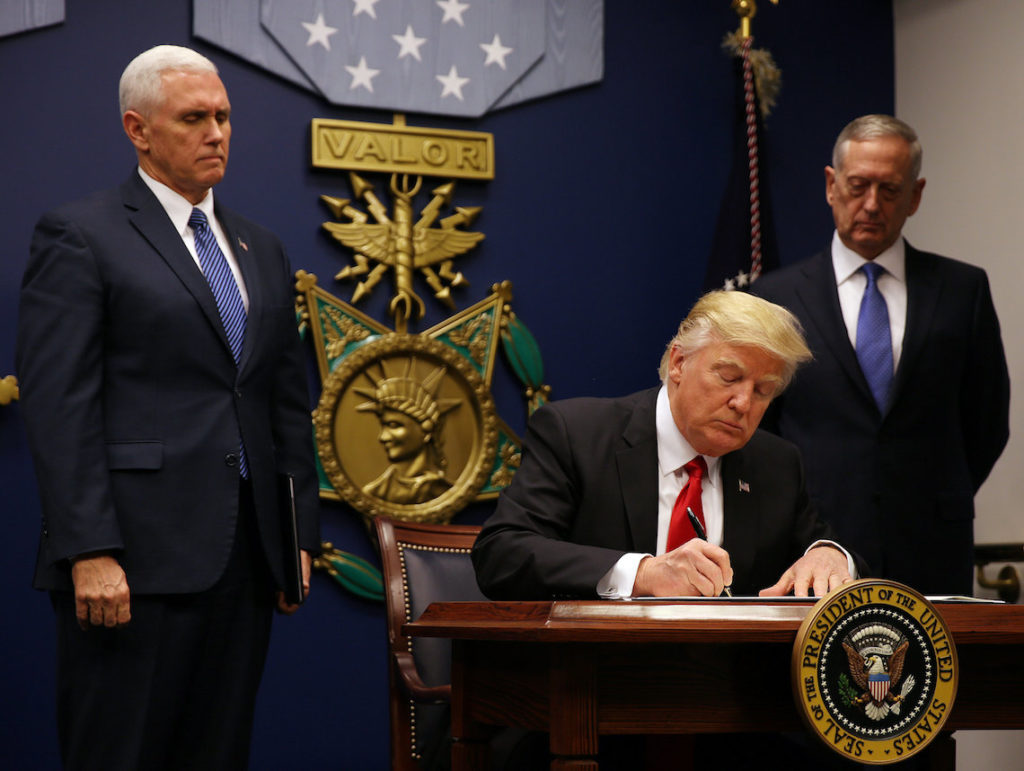
Jewish groups condemned an executive order issued by President Donald Trump banning new visas for citizens from six Muslim-majority countries.
Trump on Monday signed an order blocking for 90 days new visas for citizens from Iran, Libya, Somalia, Sudan, Syria and Yemen. Iraq, which was included in an earlier version of the order that was blocked by federal judges, was not included in the new order.
The order, which is effective March 16, also bans all refugees from entering the United States for 120 days.
HIAS, a refugee resettlement agency formerly known as the Hebrew Immigrant Aid Society, urged Jews to fight back against the order.
“We will resist all attempts to vilify refugees,” the group wrote on Twitter. “The U.S. Jewish community owes its very existence to a tradition of welcoming refugees.”
T’ruah: The Rabbinic Call for Human Rights also condemned the measure.
The executive order “continues to effectively close our borders to Muslims, and flagrantly violates America’s longstanding, values-driven commitment to serving as a safe haven for refugees,” said a statement by the rabbinic group released Monday. “Masked as an effort to ensure national security, this new executive order is more of the same Islamophobia that targets Muslims by reinstating the discredited vetting procedures, established after September 11, 2001, aimed at men from Muslim-majority countries.”
Jewish groups came out almost unanimously in opposition to the earlier version of the executive order last month, including organizations representing Orthodox, Conservative and Reform Jews. The Zionist Organization of America was the only major Jewish group to unreservedly support the executive order.
Conferences are a good way of meeting people and listening to what they have to say, often based on information that they have and you don’t. So last week, at the JPPI conference on the future of the Jewish People, I listened attentively to Prof. Sergio DellaPergola of the Hebrew University as he presented a few numbers from a paper he authored with Ariela Keisar of Trinity College. He then kindly agreed to send me the slides that the two of them presented at the conference of the Association of Jewish Studies back in December of last year.
Like many papers, it has a fancy name: Contrasts and Comparisons of American and Israeli Jews: Millennials Under Scrutiny. Like some papers, behind the name there is information. In this case, it’s information about a group that the professional Jewish world is highly concerned about: millennial Jews in Israel and America. The two studies by PEW, in America and Israel, have comparable numbers to work with. So the authors decided to compare these two groups.
They are different, of course. Beginning with the fact that some Israeli millennials are still serving in the military while their cousins in the US go to college. Continuing with the fact that most US millennials are still single (90%) while their Israeli cousins have already begun getting married (31%) and having children.
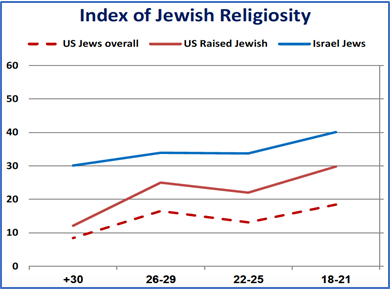
DellaPergola and Keisar have discovered a few interesting things about Jewish millennials in the two largest and most significant Jewish communities today. For example: that religiosity among Jewish millennials is on the rise – a result, no doubt, of the demographic composition of this group compared to other groups of Jews (that is, it is more heavily Orthodox). The authors looked at the percentage of Jews agreeing with three statements: Weekly attendance at religious services; Religion is important in my life; I believe in God or universal spirit.
Take a look at the graph: younger Jews in Israel are becoming more religious, and so are younger Jews in America (in which you can also see a clear difference between Jews that were and were not “raised Jewish”).
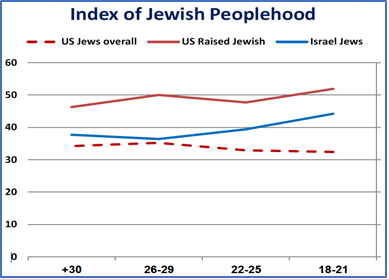
In a similar way – looking at the number of Jews who agree with three statements – DellaPergolla and Keisar examined the sense of peoplehood among younger Jews. The statements are: Being Jewish is important in my life; I have a special responsibility to take care of Jews around the world; and I have a strong sense of belonging to the Jewish people. In this case, the response is split: those raised as Jews – in Israel or America – feel more Jewish than the older generation. But the sense of peoplehood among those who weren’t raised Jewish is in decline (this should not come as huge surprise).
Take a look:
The Israel support index is based on positive responses to two statements – and in this case it is possible to make the case that maybe the questions do not reflect exactly what the authors claim (support for Israel). The statements are “Caring about Israel / Living in Israel is essential to my Jewish identity”; “the Israeli government is making sincere efforts to bring peace with Palestinians.” Clearly, the first statement is direct and reflects support or identification with Israel. But the second question is trickier: does disagreeing with the contention that a certain Israeli government is making a sincere effort to achieve peace make a person less supportive of Israel? In recent JPPI studies we asked groups of Jews the same question and found what DellaPergola and Keisar also found: that Israel’s efforts are not considered sincere by many Jews in other countries. But they show us that the lower the age, the higher the skepticism of Israel’s sincerity.
The same doubt can be raised about the index they call Jewish Nationalism and which is based on the following three questions: Settlements help Israel’s security; God gave the Land of Israel to Jews; I do not think a way can be found for Israel and an independent Palestinian state to coexist peacefully. Why do I find this index somewhat problematic? Because the first and third statements are political in nature, but the second is a cultural-theological question. In other words: the authors inadvertently assume that believing in a God-given land is connected with believing in the benefit of the settlement project. And while this assumption is probably valid in the real world – I do not think it is valid in the world of ideas.
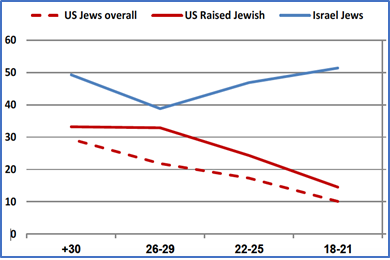
DellaPergola and Keisar examined other questions, but sticking to politics, their last graph is the most interesting – as it paints vividly what we recognize as the growing political gap between young Israelis and young Jews in the US.
This graph uses again the “Israeli efforts for peace sincere” statement, but adds to it the mirror image statement “Palestinian efforts for peace sincere.” The index based on these two statements shows the percentage of difference between sincere Israeli and sincere Palestinian efforts, among young Israelis, young “raised Jewish” American Jews, and young American Jews (including those who weren’t raised Jewish). The result is a graph that tells the story of a growing gap. Young Israelis have much more confidence in Israel’s sincerity compared to the sincerity of the Palestinians, while US Jews don’t see as much difference between the sincerity (or lack thereof) of Israelis and Palestinians.
Here it is:
What do we learn from this? That Israel might be successful in convincing its youngsters of its narrative, but it fails to convince young American Jews that it still wants peace. If young Jews in America, as they grow older, will view Israel as a country that doesn’t pursue peace, it will surely make it more difficult for them to support it – no matter if they are correct in their conclusion or widely off the mark.
My road trip from Albuquerque, New Mexico to Wickenburg, Arizona – a bit over 100 miles northwest of Phoenix – would be a journey just a tad over seven hours. I planned on breaking up my solo drive with an overnight stay in Prescott, Arizona – the first capital of the Arizona Territory in 1864. It had been over 30 years since I last drove through this picturesque town. What I remembered most were the large, rounded boulders strewn everywhere. Utterly massive granite boulders with afternoon light bouncing around surreal outcroppings, all with a golden glow. It was about the boulders and the quality of light.
The legacy Western town is located at an elevation about 5,400 feet in a sheltered enclave of pinyon and juniper, ranging from shrubland-covered hills to woodlands at higher elevations. Heavily peppered throughout the county are strangely shaped Pre-Cambrian granite bedrock formations known as the “Dells” – the boulders that I remembered from so many years back.
Once gold was discovered in central Arizona, the area was quickly settled by Yankees anxious to preserve the mineral wealth for the Union. Prime motivator was that southern Arizona was known to be pro-Confederate. And though a devastating fire ravaged the downtown area in 1900, legend has it that patrons of the Palace Saloon took their liquor and watched Whiskey Row burn from across the street at the Courthouse.
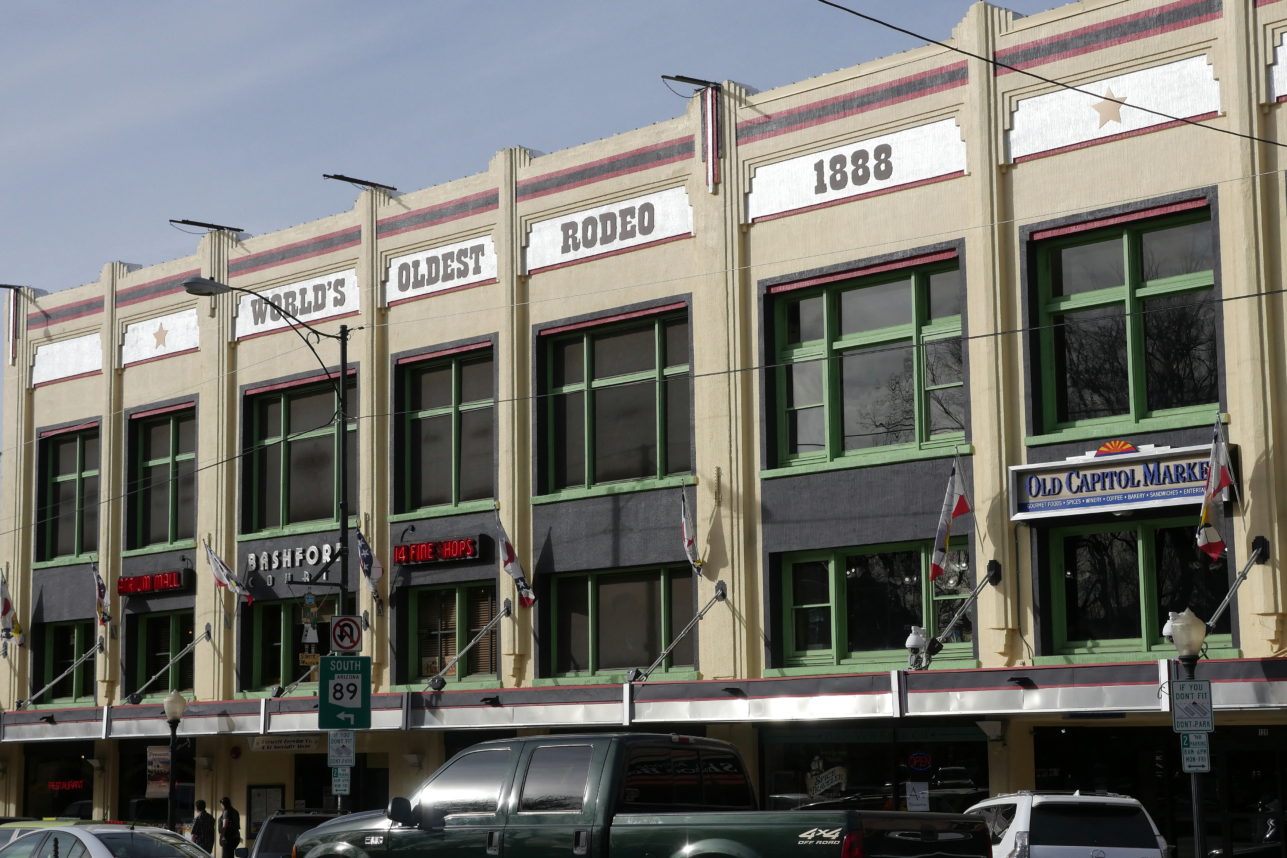
Today, Prescott touts its rebuilt Whiskey Row along with a two-story County Courthouse known as a social hub for community activities. The world’s oldest rodeo, since 1888, also calls Prescott home. For those with an outdoor focus, you can hike nearby Thumb Butte, fish in Lynx Lake, and paddle at the Granite Dells.
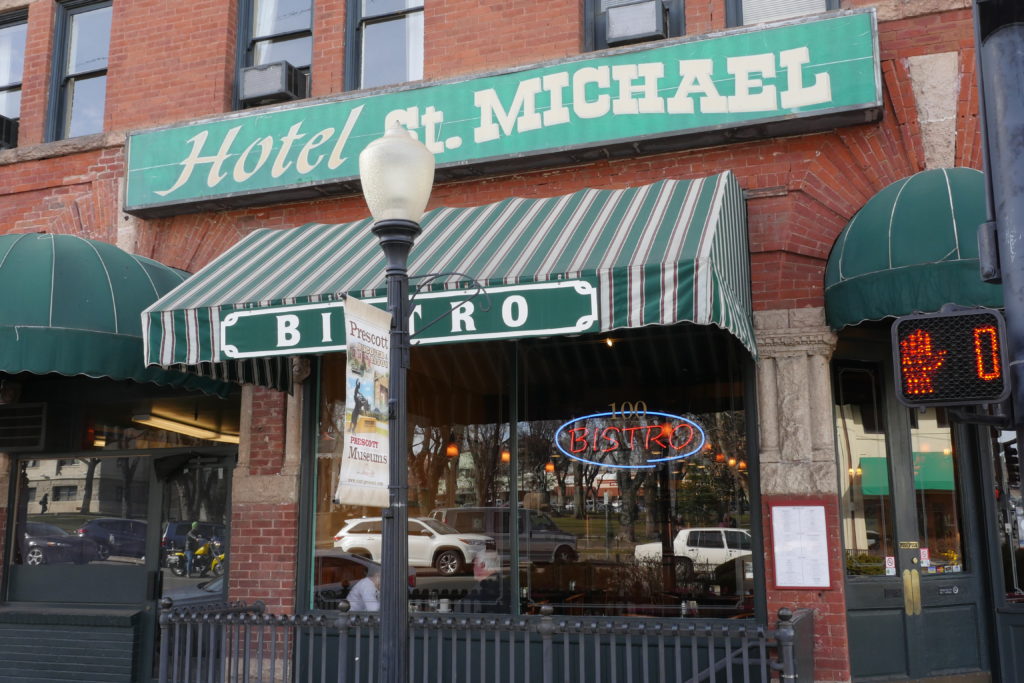
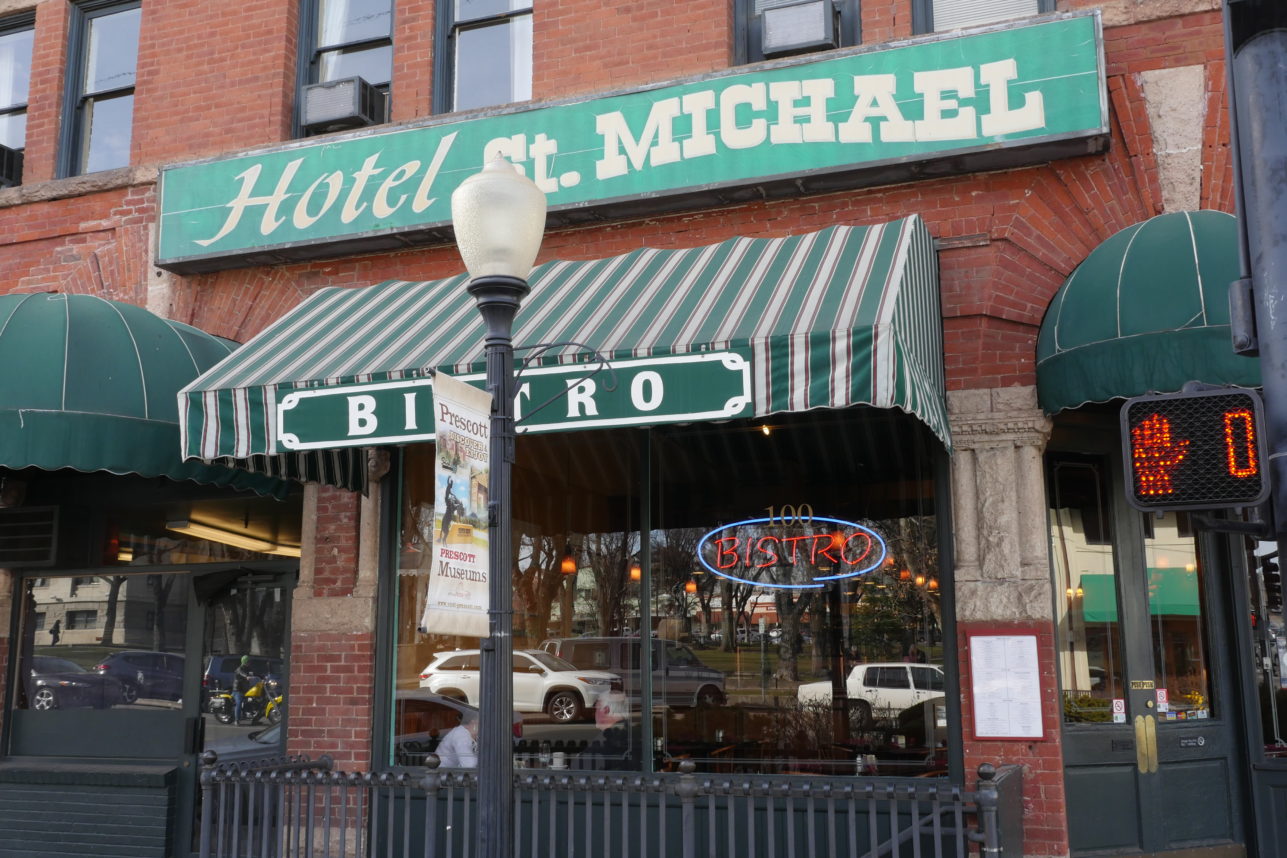
I arrived in the afternoon and checked into Hotel St. Michael – a charming historic hotel from 1901 circa, listed on the National Register of Historic Places. (In its day, the hotel was known for its “gracious accommodation.”) The three-story hotel is built of brick and stone in the Second Renaissance Revival Style, with gawking stone gargoyles decorating the exterior. I found I was in good company as some of the past illustrious guests included President Theodore Roosevelt, writer Zane Grey, Western actor Tom Mix, and Senator Barry Goldwater.
The lobby smacked of old-time Western décor with Victorian accents, antique furniture, and an old elevator cage looking more like an antique coop than a modern vertical lift. I had only seen this type vintage elevator at the U.S. Capitol operated by full-time employees.
Not really knowing how to operate the antiquity, I blankly stared at the elevator door for a few brief moments. “Just push your floor button twice and then pull the gate open,” the receptionist said. “Watch your step and once inside, you can close the elevator gate.” I was amused to see that it worked like a charm.
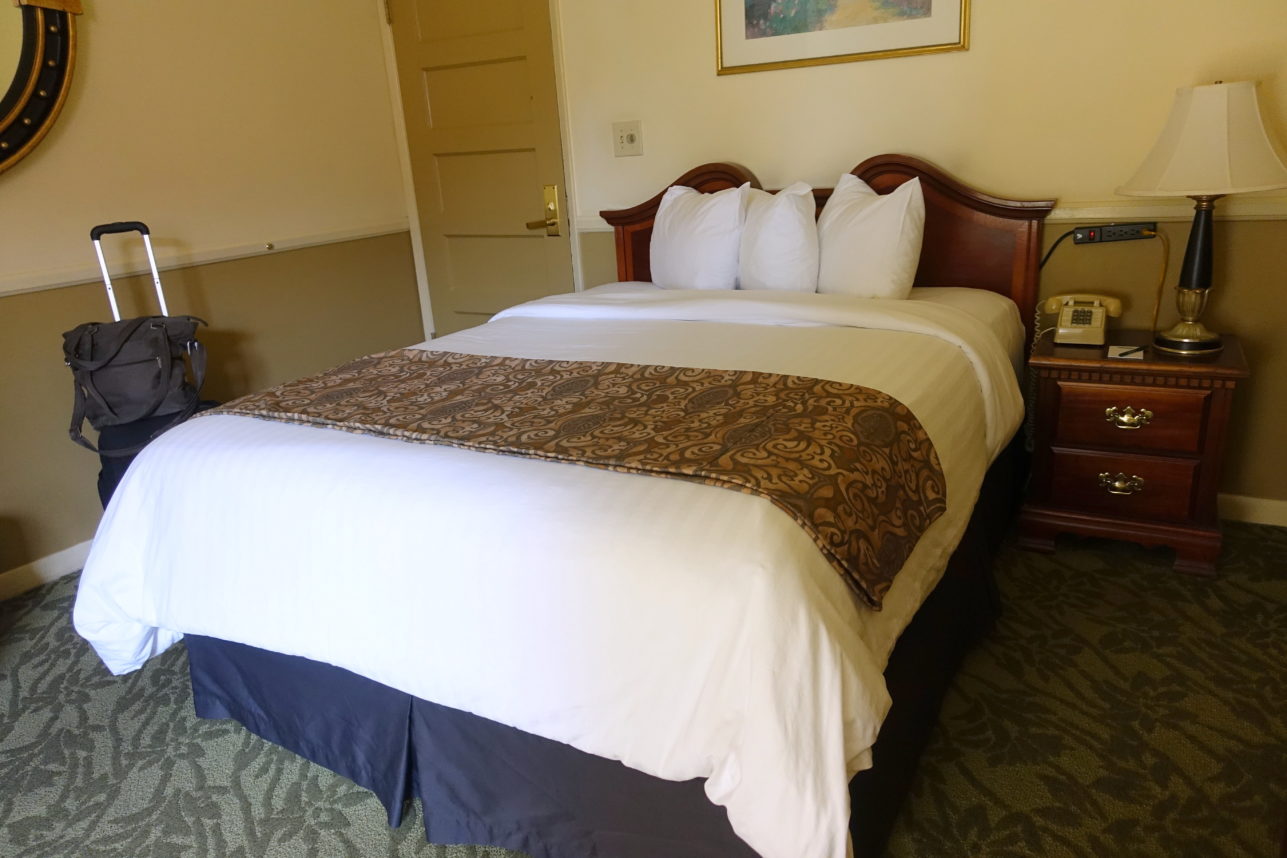
Period pieces and some antiques decorated my room, imparting a déjà vu that I was staying in my Grandmother’s house instead of a faded glory hotel. Yet, the room came with updated conveniences that included a phone, complimentary Wi-Fi, and HBO – which my grandmother’s house never had.
After a friendly check-in, I off-loaded my luggage curbside before parking in the three-story garage structure less than a block away. The price for my overnight stay (under $100) was quite reasonable considering the hotel presented me with a coupon for a full breakfast and complimentary appetizer in Bistro St. Michael.
As the hotel is ideally located in the center of historic downtown, adjacent to Courthouse Plaza at the corner of Whiskey Row, it doesn’t get any more convenient. But the proximity to Whiskey Row also suggests that nights may be noisy and had me wondering if my night would be more celebratory than restful.
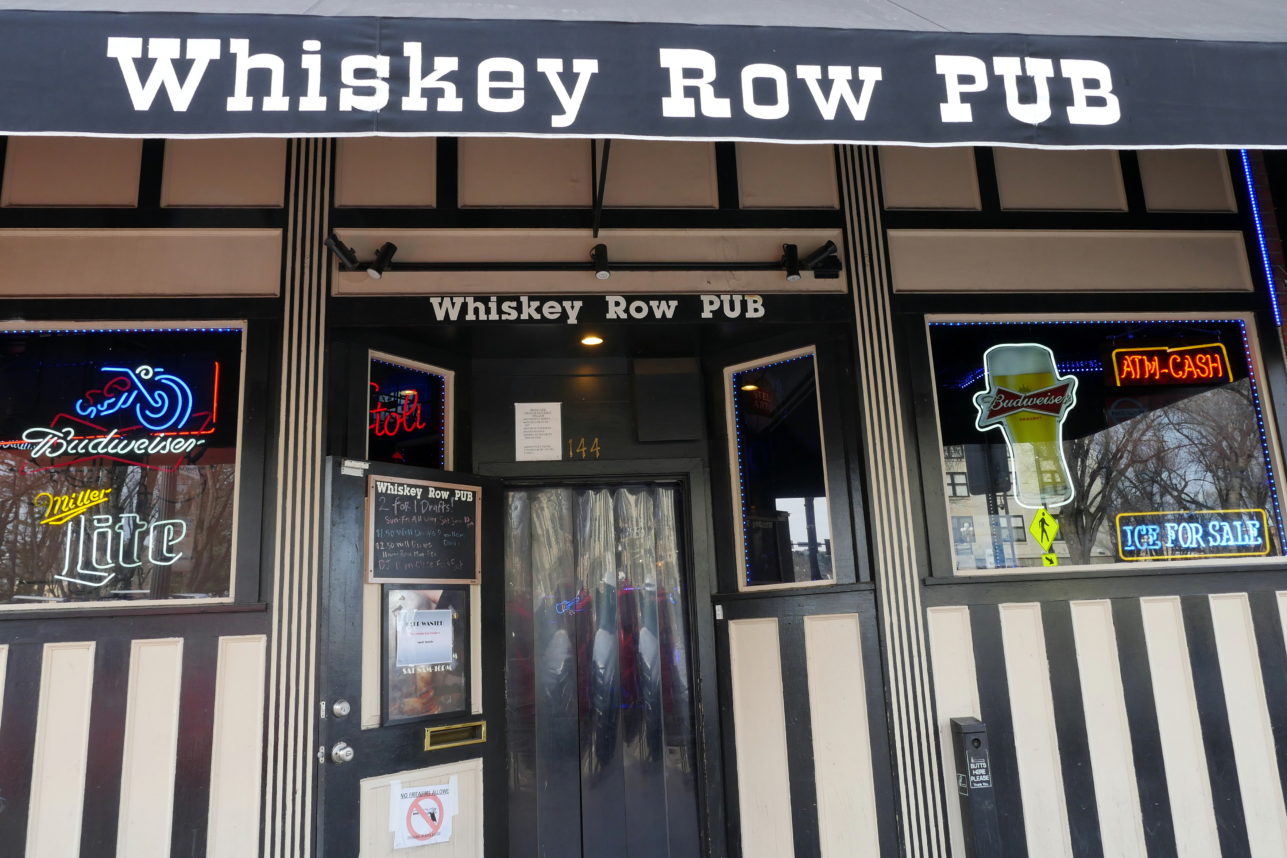
Once upon a time there were twenty saloons and pleasure palaces that thrived on Montezuma Street (aka Whiskey Row), facing Courthouse Plaza on the west side. These days, fewer bars are open, but the western nostalgia of Old Prescott is still alive and well. Walk the infamous Whiskey Row, window shop the boutiques, and stop in for a drink, coffee, or a bite.
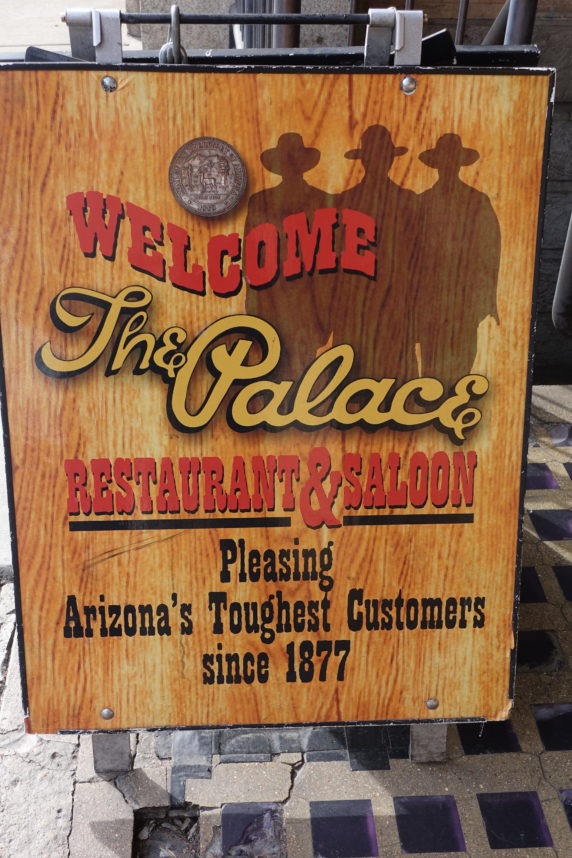
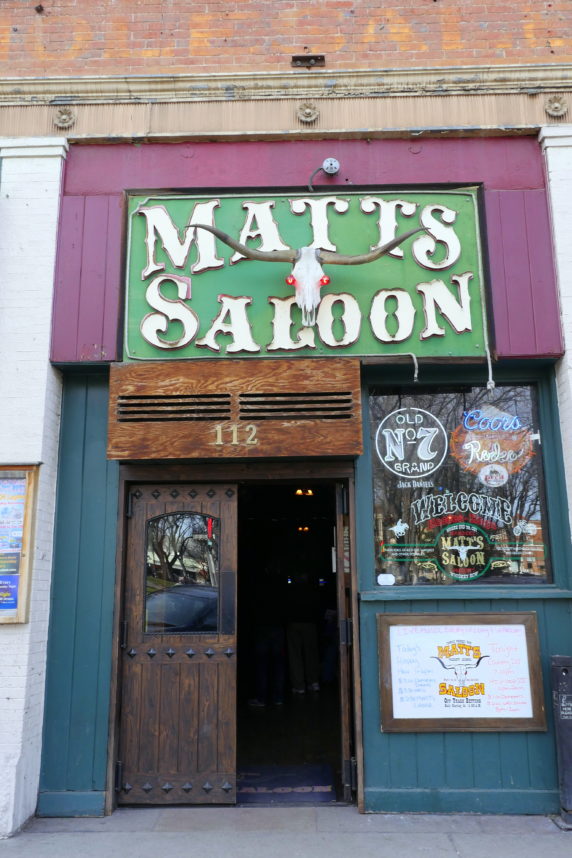
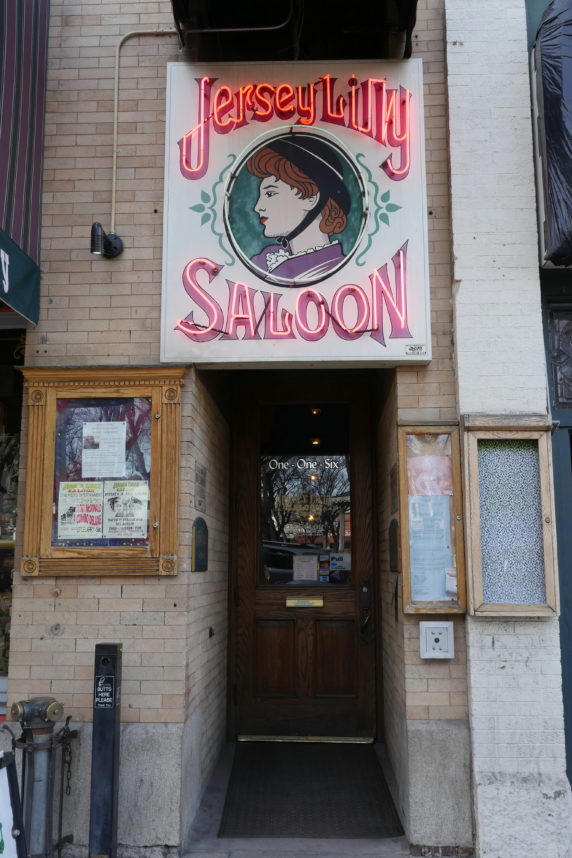
The night kicks in with a variety of live music and karaoke from haunts like The Palace Restaurant & Saloon (Arizona’s oldest saloon), Jersey Lilly Saloon (former brothel upstairs from the Palace), Matt’s Saloon (country western), and Hooligan’s Pub (hard rock).
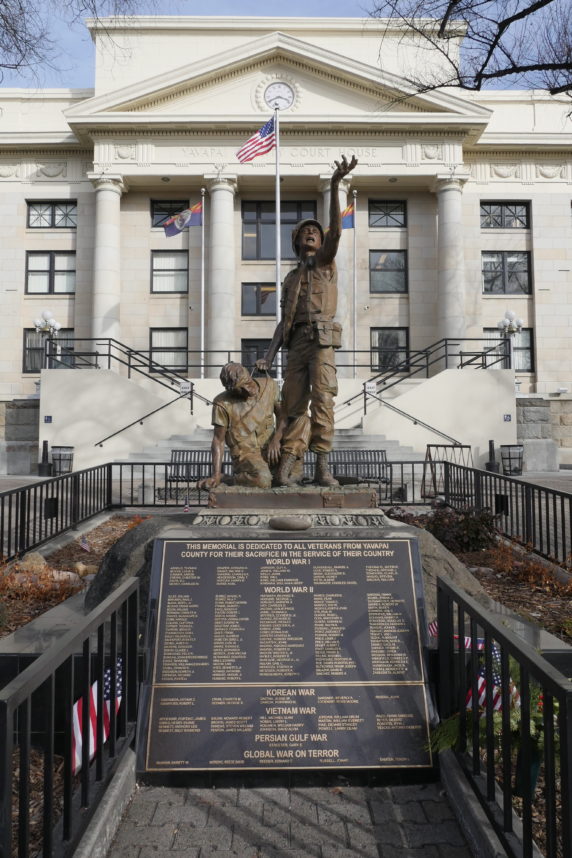
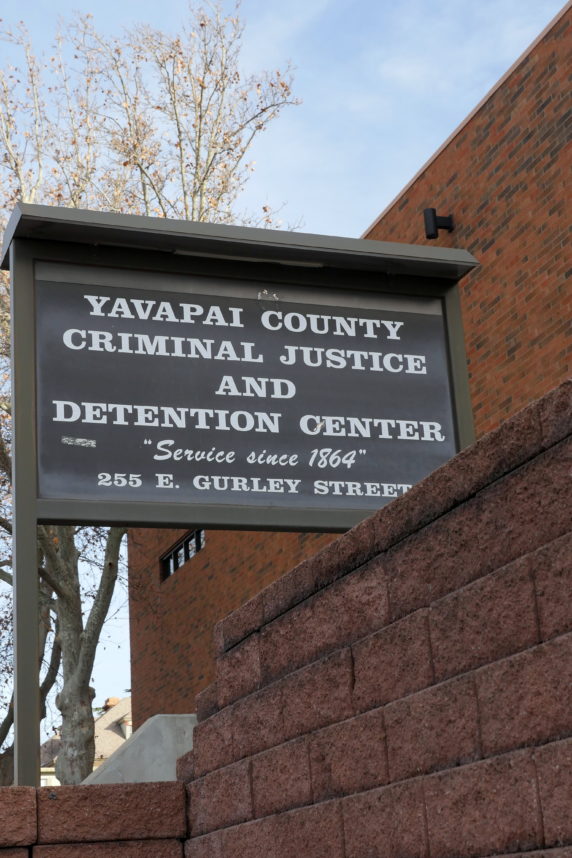
Across the street in the heart of Prescott lies the 1916 Yavapai County Courthouse. The symmetrical courthouse is faced with locally quarried granite and surrounded by a plaza with grass and pavers, a historic timeline on the sidewalk, statues, bandstand, and a monument dedicated to all veterans from Yavapai County. A lush canopy from 170 trees provides welcoming shade on hot summer days.
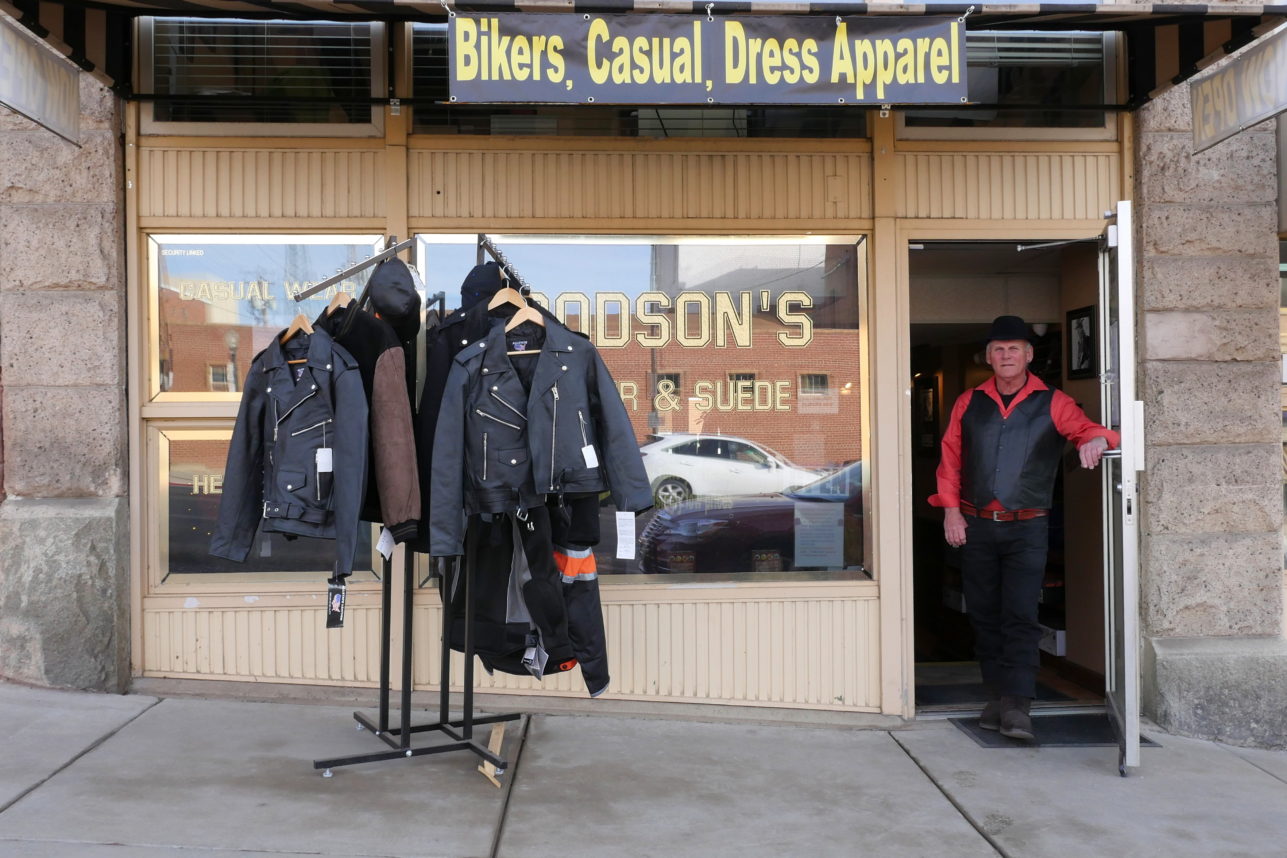
I walked around the square as I did the obligatory window shopping. Trouble is I came across a leather shop with hats. I just couldn’t pass it up. The good news is that the owner Paul Goodson, is very affable. I walked away with a floppy leather hat that I proceeded to wear my whole time in Wickenburg. Be sure to stop in and give him a shout.
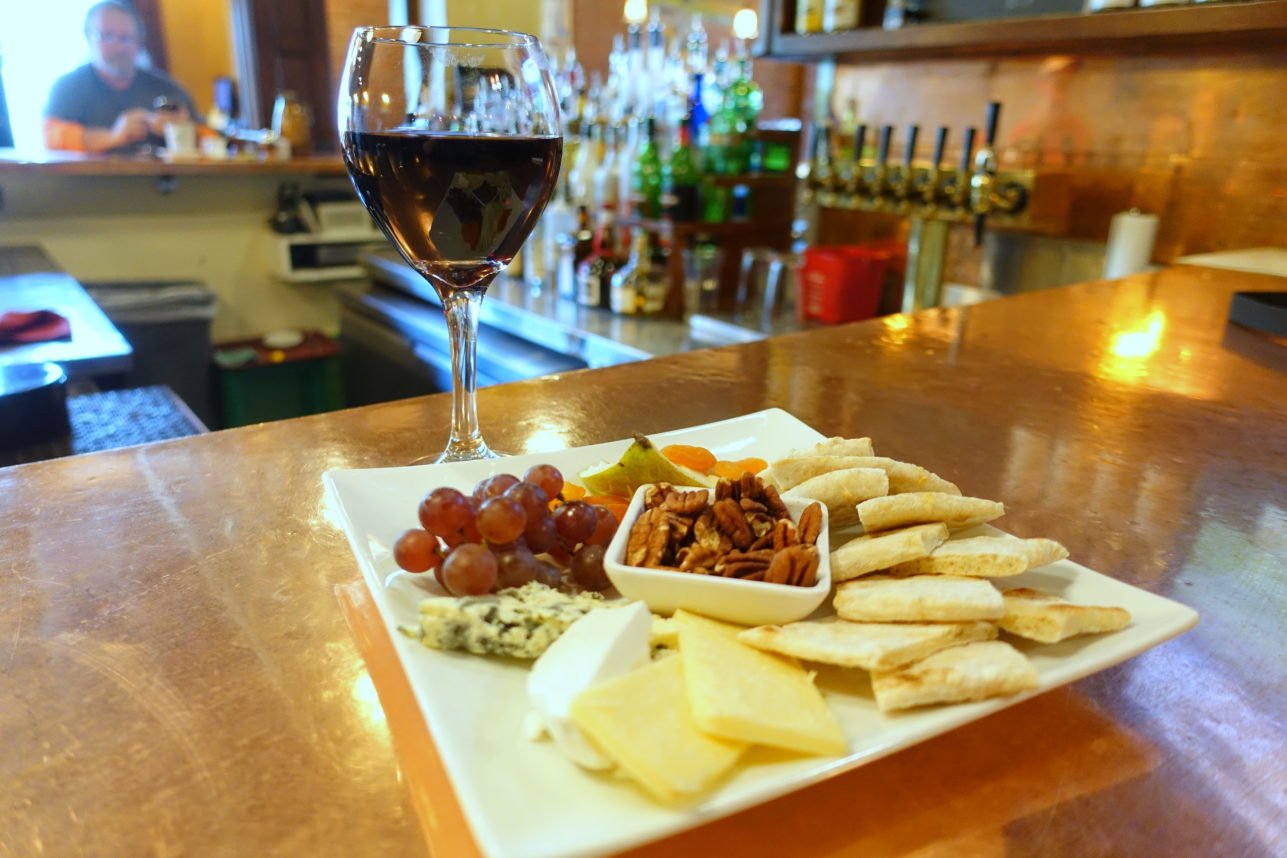
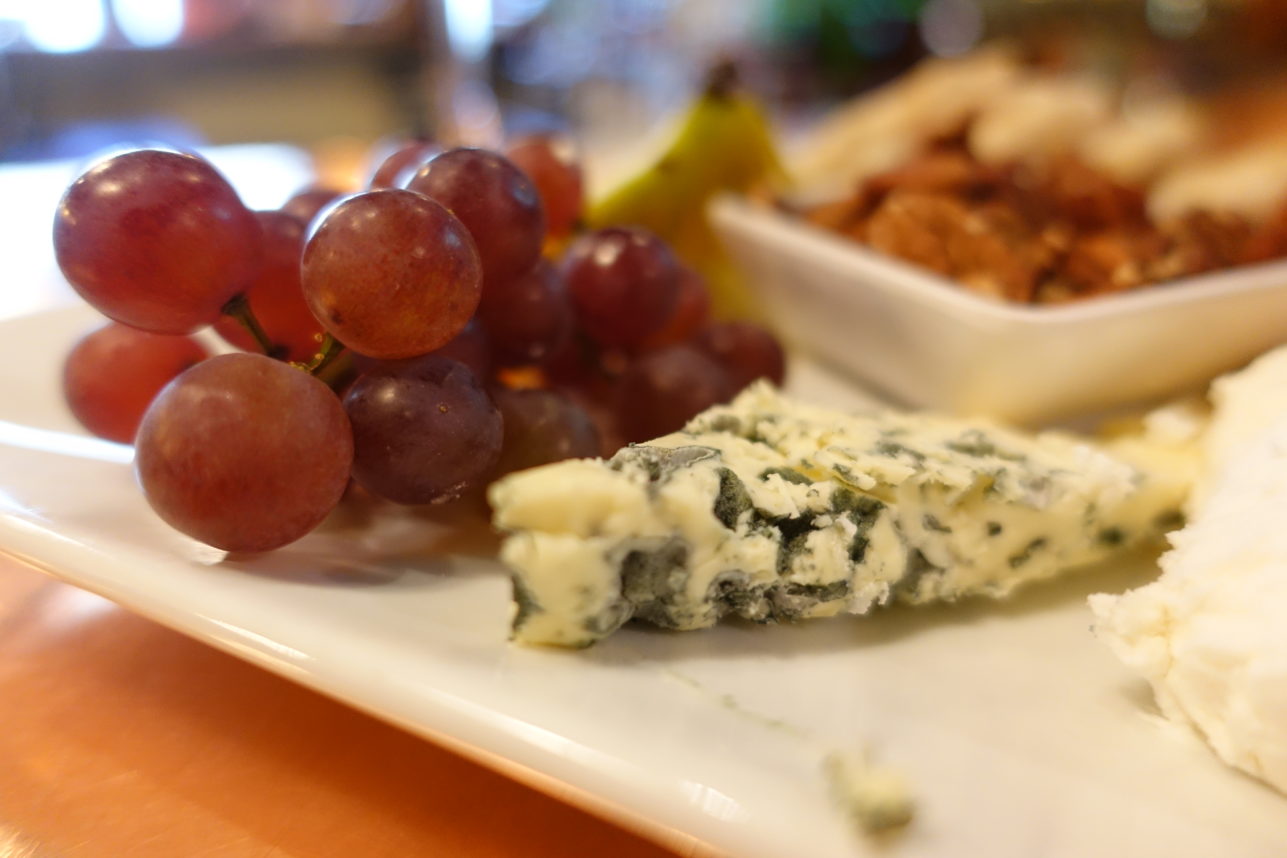
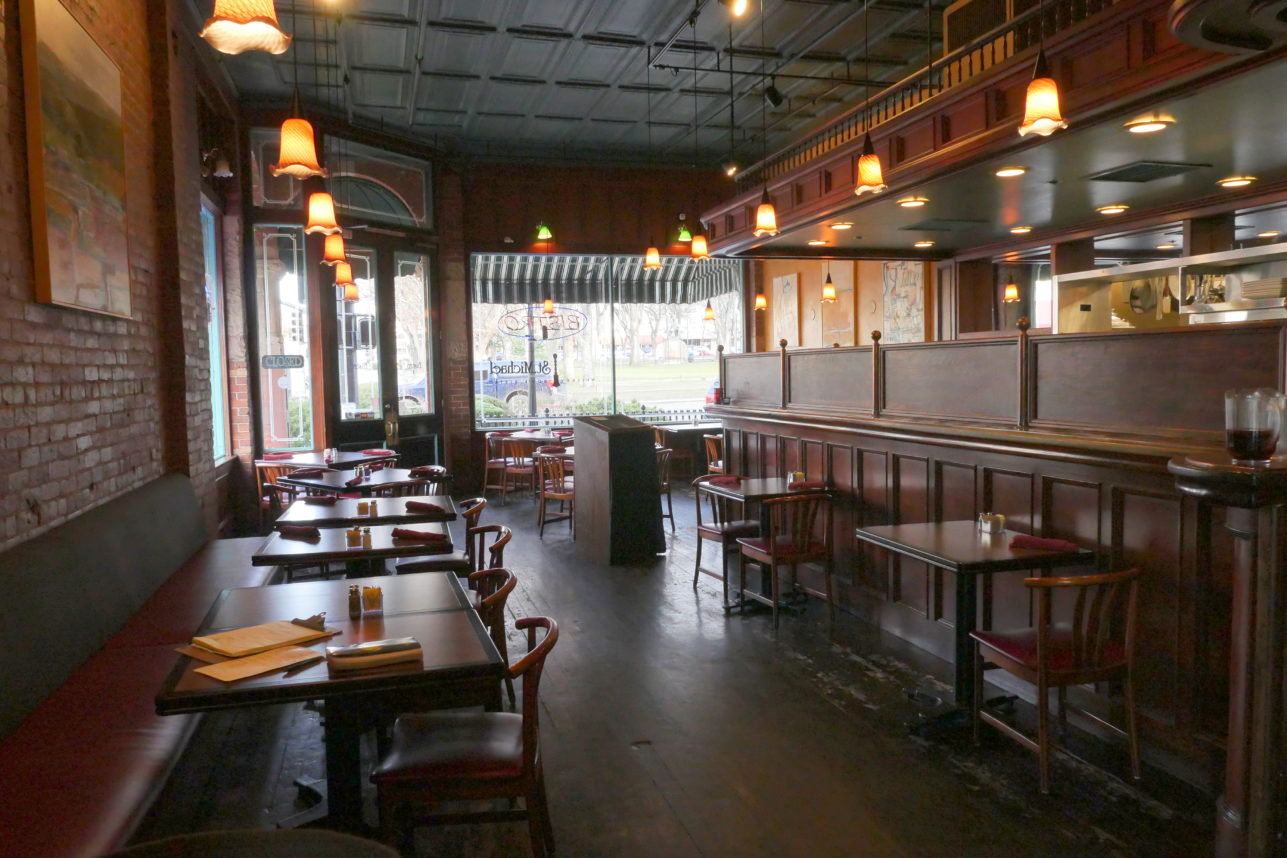
Ready for a glass of wine, I headed back to Bistro St. Michael to check out the bar and order a complimentary appetizer. I chose the ample cheese and fruit tray with flat bread for around $10…but remember, it was free. The vibe at the bar was young and local, making for some great conversations. A couple hours later, I realized I had a dinner appointment to keep.
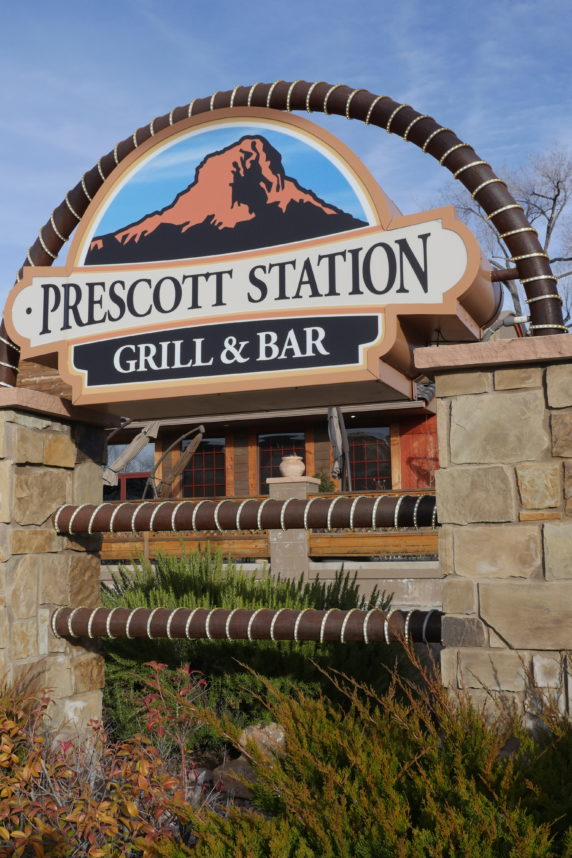
A couple blocks up the hill, Prescott Station Grill & Bar is where you go for American cuisine and great steaks. The locals know that it is one of the best places in town. I checked it out with a friend and totally agree. Steaks are exquisite and the sides cooked with flavor and substance. My filet mignon with grilled zucchini and garlic mashed potatoes definitely lived up to the billing. Unfortunately, servings were ample so I had no room for dessert.
After a restful night, I woke the next morning to enjoy a full complimentary breakfast offered at Bistro St. Michael. Located next door to the hotel, it’s easily accessed from inside the building. The breakfast was cooked-to-order, so I asked for soft poached. Many places can’t accommodate such a request. I broke a big smile when the waitress said, “No problem.”
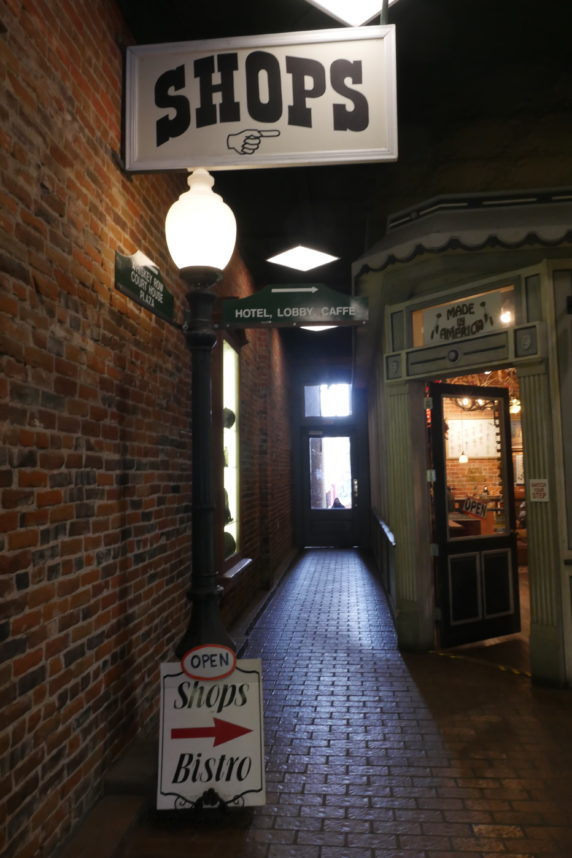
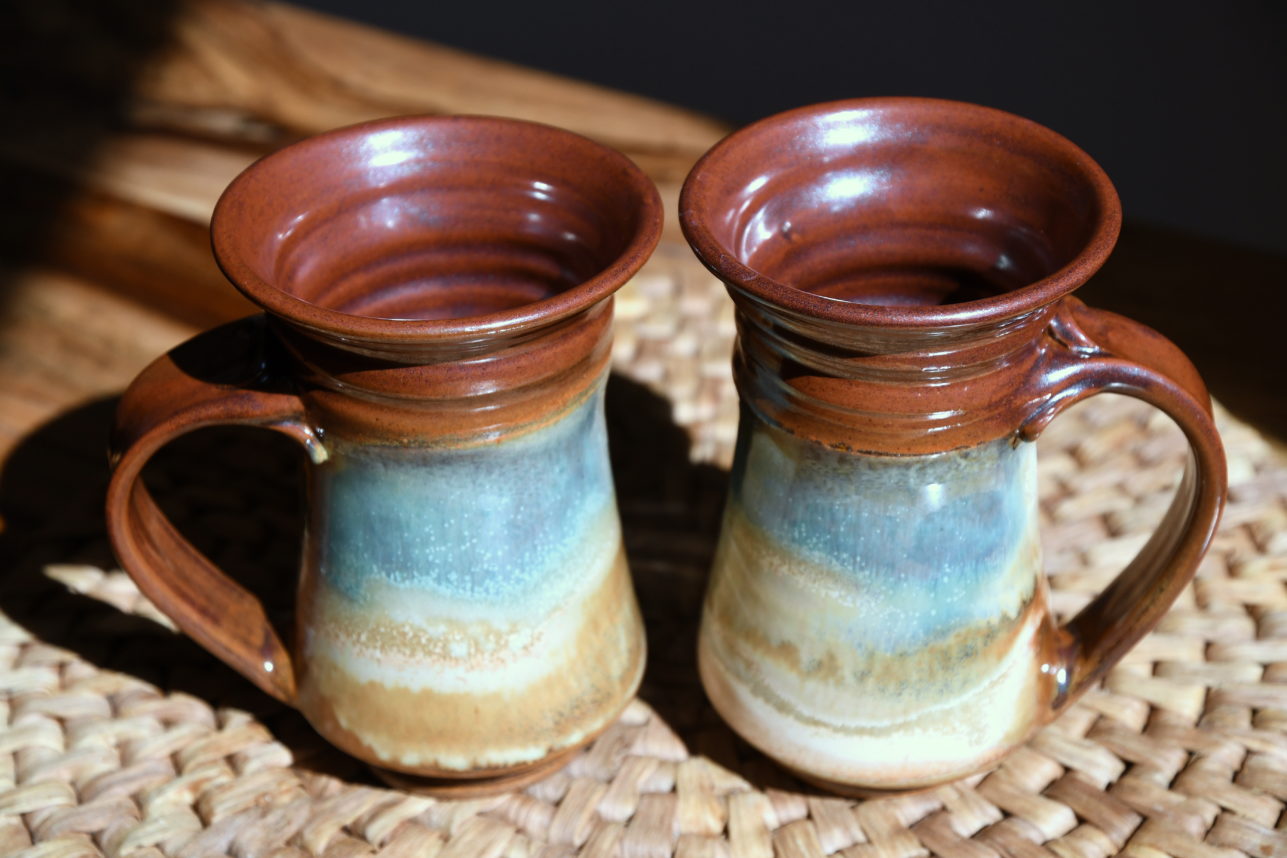
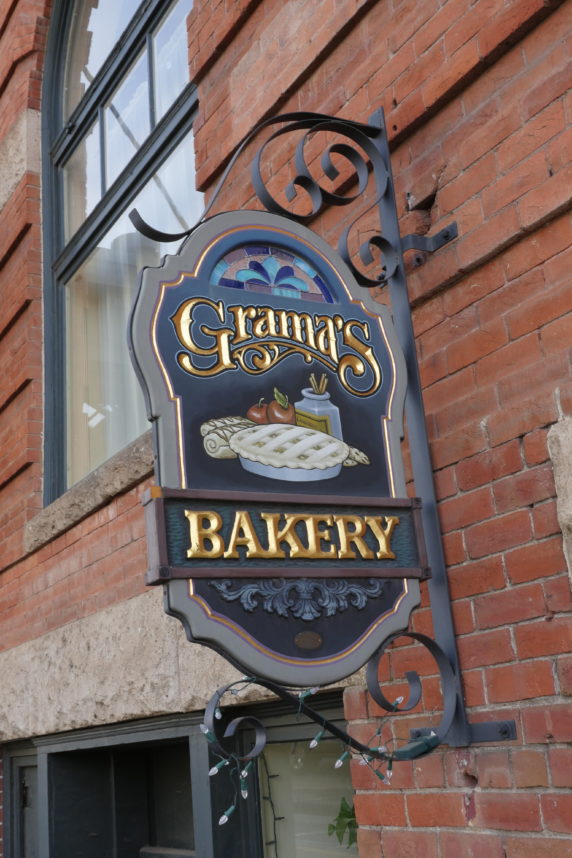
With only a couple hours left before I hit the road again, it seemed a great time to shop the St. Michael Shops. I picked up two unique stoneware coffee mugs at Krieger-Marcusen Gallery, and later, wished I had bought two more. As I strolled by Grama’s Bakery on the way to my car, I was enveloped with wafting aromas emanating from the bakery. No surprise that I retraced my steps to Grama’s and ordered several pastries to go for the road – a chocolate chip cannoli and a strawberry brioche.