fbpx

February 26, 2017

Oscars 2017: 7 unexpected Jewish facts

The Academy of Motion Picture Arts and Sciences is happy to forget 2016, when it was widely eviscerated for nominating only white artists in the major award categories for the second straight year.

But things are looking up for this year’s Academy Awards, which are set to air Sunday night, as they feature a more diverse set of nominated actors and a stronger slate of nominated films.

While the overall Oscars climate is merrier this year — not counting liberal Hollywood’s malaise over the election of Donald Trump — there are fewer than usual overtly Jewish storylines underpinning the ceremony. So we did some digging and picked out some of the unexpected Jewish tidbits from among the nominees.

The “La La Land” director is Catholic, but he went to Hebrew school.

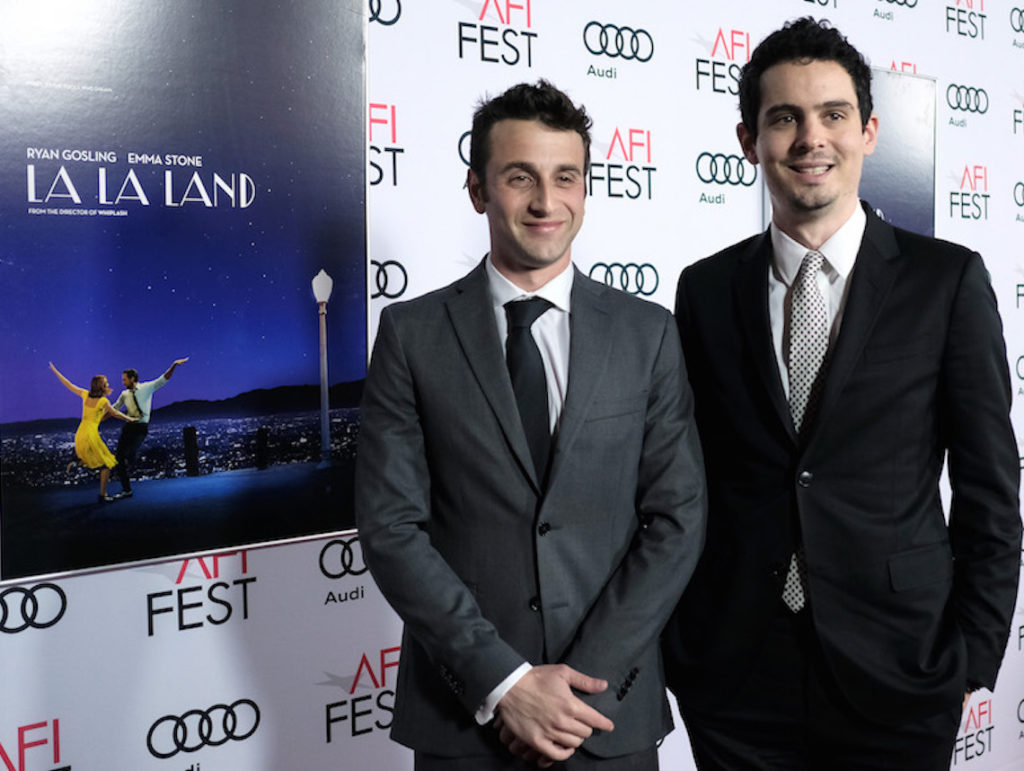
Damien Chazelle is not yet a household name — but he might be closer to becoming one after Sunday, since his film “La La Land” is nominated for a record-tying 14 Oscars. Chazelle, 32, who broke out with his 2014 film “Whiplash,” grew up in a Catholic household in Princeton, New Jersey. However, when his parents became dissatisfied with his religious education at a church Sunday school, they enrolled him in a Hebrew school class. He attended for four years.

“I had that period of my life where I was very, very into Hebrew and the Old Testament, and then I went with my class to Israel when we were in the sixth grade,” Chazelle told the Jewish Journal of Los Angeles in 2015. “I don’t think they even knew I wasn’t Jewish; I was, like, ‘passing.’”

There are finally some Jewish characters in the “Harry Potter” universe.

J.K. Rowling’s books about the young wizard enchanted readers around the world for years, so it was folly to think the series would ever end completely. The first of five new Potter “universe” films based on Rowling’s 2001 book “Fantastic Beasts and Where to Find Them” came out last fall. The entertaining flick is nominated for two awards, in the costume design and production design categories — and also features two Jewish characters, a first for a Potter universe story. Dan Fogler stars as Jacob Kowalski, a Lower East Sider trying to open his own bakery, and Katherine Waterston plays Tina Goldstein, an employee at the Magical Congress of the U.S. The story also works as an allegory about anti-Semitism in the 1920s.

A film about a Holocaust survivor’s violin could win for best documentary (short subject).

When Joe Feingold, a 93-year-old Holocaust survivor from Poland living in New York, stopped playing his violin a few years ago, he donated it to a campaign that gives instruments to needy students. It ended up in the hands of Brianna Perez, a 12-year-old student at the Bronx Learning Global Institute for Girls. But this was no ordinary violin — Feingold bought it at a displaced persons camp just after the war, and it helped him get back to the music he enjoyed before the Holocaust.

Kahane Cooperman’s 24-minute documentary on the violin’s story and a meeting of Feingold and Perez is, as a JTA writer accurately called it, a “five-handkerchief weeper” — and it has a chance of winning the award.

Natalie Portman put on an accent (non-Israeli) to earn a nomination for “Jackie.” 

In the biopic about Jacqueline Kennedy Onassis in the aftermath of her husband’s assassination, the Israel-born Portman sounds unrecognizable. That’s because she studied extensively how to sound like the former first lady, whose famously eccentric version of an old New York accent has been described as “a peculiar drawl that defies simple linguistic classification.”

But Jackie O’s voice wasn’t the first accent Portman has had to perfect — in fact, she toiled in 2015 to improve her Israeli accent for “A Tale of Love and Darkness,” her directorial debut and an adaptation of Amos Oz’s autobiographical novel. Portman plays Oz’s mother in the film, which has dialogue entirely in Hebrew.

A Jewish composer is headed for a big night.

Justin Hurwitz, who was Damien Chazelle’s Jewish roommate at Harvard, is ready to make a name for himself as well. His soundtrack for “La La Land,” written with lyricists Benj Pasek (who is also Jewish) and Justin Paul, is a lock to win the best film score award. The song “City of Stars” is also likely to win in the best individual song category. Hurwitz and Chazelle have had a fruitful relationship: The Jewish composer has worked on music for all of Chazelle’s previous films, including the acclaimed “Whiplash.”

The Irish-sounding director of “Manchester By the Sea” is also Jewish.

Kenneth Lonergan certainly sounds like an Irish Catholic name — and the writer’s father was indeed Irish. But his mother was Jewish, making him a default member of the tribe. Lonergan, who has also written several plays and the film “Gangs of New York,” was raised in a pretty secular environment by his mother and a Jewish stepfather near Central Park in New York City.

“I always assumed everyone was Jewish,” he told the New Yorker last year about his upbringing. “I didn’t know it was unusual in any way. And then I finally met some people who weren’t Jewish and I was, like, ‘Oh, not everyone is Jewish — OK.’ But that took a while to sink in.”

A nominated documentary focuses on a Jewish family with an autistic child.

Noted Jewish journalist Ron Suskind’s son Owen began showing signs of autism at age 3, when he stopped speaking and communicating the way he had before. But Suskind found an unlikely source to help coax Owen out of his frustration and silence: animated Disney movies. Owen immersed himself in the films and began communicating by repeating phrases from them. Roger Ross Williams’ touching film, which follows Owen through a crucial year in his 20s as he looks to become more independent, is nominated for best documentary. Since form often follows content, the movie includes several animated sequences.

Oscars 2017: 7 unexpected Jewish facts Read More »
Swastika made of feces found at Rhode Island school

A swastika made with human feces was found in a dormitory bathroom at the Rhode Island School of Design.

The existence of the swastika was confirmed by the school on Thursday, but reportedly was discovered a week ago.  It was discovered in a gender-neutral bathroom, according to reports.

“This level of disrespect and vitriol is completely unacceptable and RISD Public Safety is investigating it as both an act of vandalism and a crime of hate,” a statement from the school said.

The incident is being investigated as an act of vandalism and a potential hate crime, Rhode Island Public Radio reported.

Swastika made of feces found at Rhode Island school Read More »

Report: Trump administration considering pulling out of UN Human Rights Council

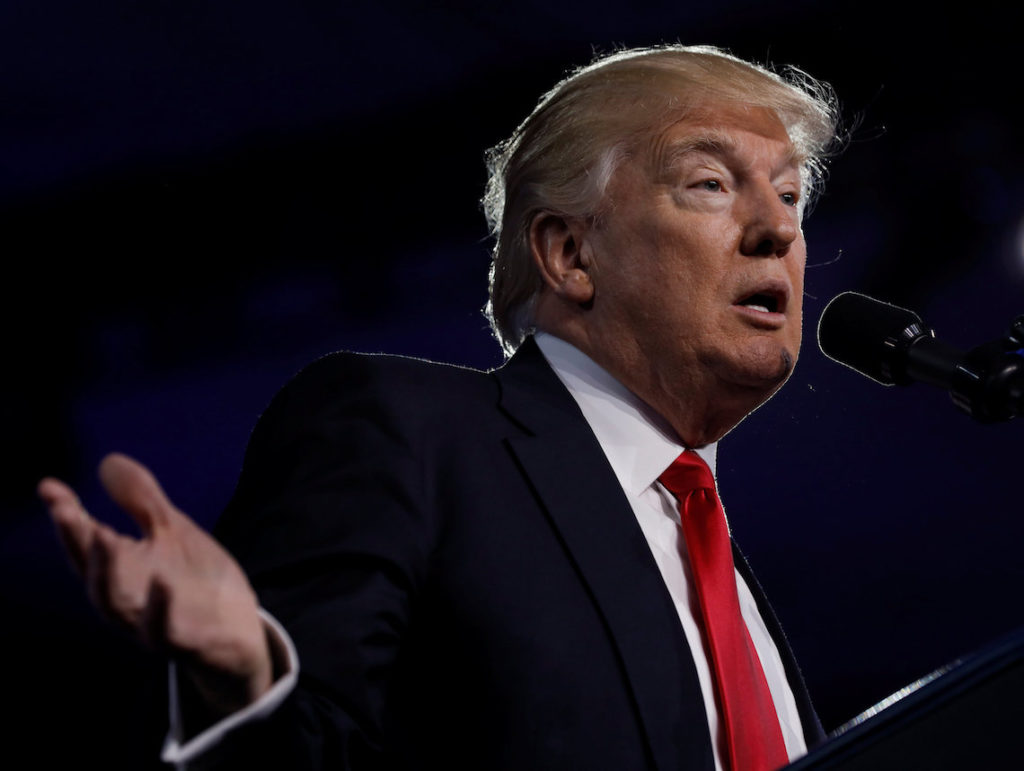
The Trump administration is considering pulling out of the United Nations Human Rights Council, in part over its targeting of Israel, Politico reported.

The withdrawal is not expected in time for the council’s new session, which starts on Monday, Politico reported Saturday, citing two unnamed sources in regular contact with former and current U.S. officials.

While the council’s targeting of Israel is one reason that the U.S. would quit the council, questions over its members and its overall effectiveness would also be part of the decision, an unnamed former State Department official told the news magazine.

Countries known for committing human rights abuses currently have seats on the council.

“There’s been a series of requests coming from the secretary of state’s office that suggests that he is questioning the value of the U.S. belonging to the Human Rights Council,” the former State Department official told Politico.

Earlier this month, the new United States ambassador to the United Nations, Nikki Haley, slammed the UN Security Council for its obsession with Israel.

She said following the meeting on Feb. 16: “The Security Council just finished its regular monthly meeting on Middle East issues. It’s the first meeting like that that I’ve attended, and I have to say it was a bit strange. The Security Council is supposed to discuss how to maintain international peace and security. But at our meeting on the Middle East, the discussion was not about Hezbollah’s illegal build-up of rockets in Lebanon. It was not about the money and weapons Iran provides to terrorists. It was not about how we defeat ISIS. It was not about how we hold Bashar al-Assad accountable for the slaughter of hundreds and thousands of civilians. No, instead, the meeting focused on criticizing Israel, the one true democracy in the Middle East,” she said, in remarks that were widely disseminated,

“I’m here to say the United States will not turn a blind eye to this anymore,” Haley also said.

A final decision on remaining a member of the council would involve Haley,  Secretary of State Rex Tillerson, as well as the U.S. ambassador to the United Nations, Nikki Haley, and President Donald Trump.

Report: Trump administration considering pulling out of UN Human Rights Council Read More »

Dozens of headstones overturned at Philadelphia Jewish cemetery

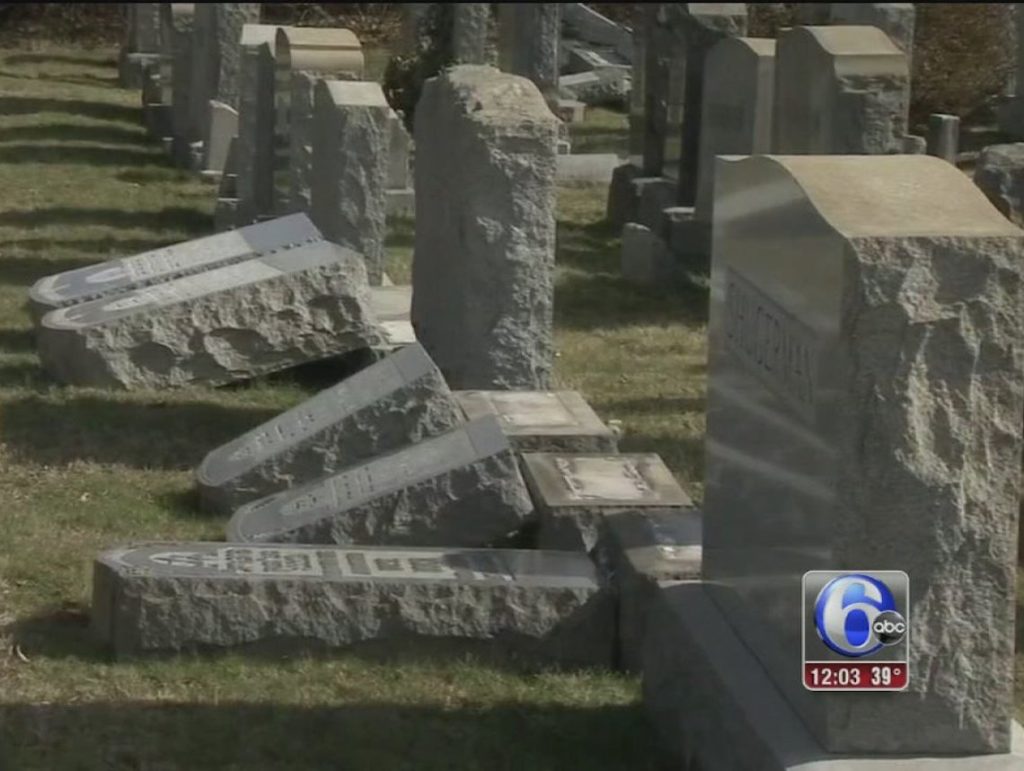
Dozens of headstones were overturned and broken at a Jewish cemetery in Philadelphia.

The vandalism at the Mt, Carmel Cemetery in the Wissinoming section of Philadelphia was discovered on Sunday.

The damage was found across the entire cemetery with dozens, perhaps hundreds, of headstones affected, the local ABC affiliate WPVI reported.

The discovery comes nearly a week after more than 150 headstones were discovered overturned and damaged at the Chesed Shel Emeth Jewish cemetery in St. Louis.

It is not known who committed the vandalism or if the motive was anti-Semitism.

Dozens of headstones overturned at Philadelphia Jewish cemetery Read More »

Sunday Reads: The Azaria verdict, Trump & the Madman theory, Dershowitz on Israel & anti-Semitism

US

Charles Krauthammer sees the dynamics of America’s new foreign policy team as reminiscent of the old Nixonian “madman theory”:

This suggests that the peculiar and discordant makeup of the U.S. national security team — traditionalist lieutenants, disruptive boss — might reproduce the old Nixonian “madman theory.” That’s when adversaries tread carefully because they suspect the U.S. president of being unpredictable, occasionally reckless and potentially crazy dangerous. Henry Kissinger, with Nixon’s collaboration, tried more than once to exploit this perception to pressure adversaries.  

Evan Osnos, David Remnick, and Joshua Yaffa write a long, curious narrative about Trump, Putin, and “the new cold war”:

Alexey Venediktov, the editor-in-chief of Echo of Moscow, and a figure with deep contacts inside the Russian political élite, said, “Trump was attractive to people in Russia’s political establishment as a disturber of the peace for their counterparts in the American political establishment.” Venediktov suggested that, for Putin and those closest to him, any support that the Russian state provided to Trump’s candidacy was a move in a long-standing rivalry with the West; in Putin’s eyes, it is Russia’s most pressing strategic concern, one that predates Trump and will outlast him.

Israel

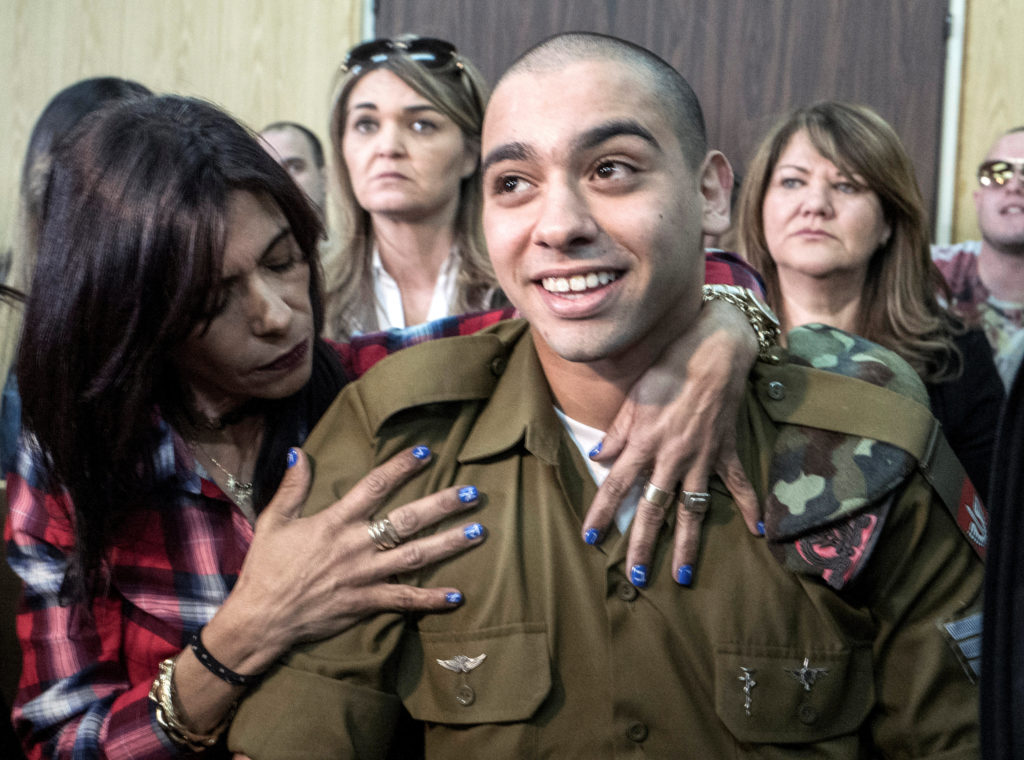
Amnon Abramovich believes that it is the leaders of the Hebron Settlers, not Elor Azaria, that should have been on Trial:

It’s not Elor Azaria who should have been put on trial, it’s all the leaders of the Jewish settlement in Hebron throughout the years. The trial should not have focused on morality in battle, but on the morality of their presence there. Some 900 settlers and yeshiva students have placed themselves among 250,000 Palestinians. Most of them are not preaching good neighborly relations and peace, they are agitators calling for a transfer.  

Maajid Nawaz believes that the road to peace for Israel and Palestine runs through Mecca:

Ever since the failed Camp David accords under Bill Clinton, conventional wisdom has been that peace must be sought and secured between Israelis and Palestinians first, before other Arab and Muslim-majority states recognise Israel. New regional priorities and a lingering Israeli-Palestinian deadlock necessitate creative thinking to break the stalemate. For Israel, the new road to peace could run through Mecca. This is known as the “outside-in” approach.

Middle East

James Stavridis believes that Egypt’s General Sisi needs, and deserves, more US assistance:

Overall, Egypt’s interests intertwine with America’s in powerful ways, most notably (though not solely) as a crucial partner for Israel. Americans should do all they can to help their Egyptian partners. Their stability and success will be essential for the eventual progress of the entire region.

Clifford D. May takes a look at a report saying that Saudi Arabia is becoming less repressive:

The royals also are taking pains to encourage the powerful Wahhabi establishment to moderate and adopt a more liberal interpretation of Shariah, Islamic law. These efforts have not been entirely successful. Jews and Christians continue to be denounced from some Saudi pulpits. Atheists are viewed as terrorists. And the textbooks used in schools here and abroad have not been completely purged of passages intended to inspire animosity toward non-believers. The best one can say is that there has been some improvement.

Jewish World

Alan Dershowitz argues against the notion that Israel’s policies promote ant-Semitism:

Modern-day antisemites, unlike their forbearers, need to find excuses for their hatred, and anti-Zionism has become the excuse du jour.

To prove the point, let us consider other countries: Has there been growing anti-Chinese feelings around the world as the result of China’s occupation of Tibet? Is there growing hatred of Americans of Turkish background because of Turkey’s unwillingness to end the conflict in Cypress? Do Europeans of Russian background suffer bigotry because of Russia’s invasion of Crimea? The answer to all these questions is a resounding no.

Nathan Guttman writes about how VP Mike Pence has been successfully courting Jewish Republicans:

The annual RJC leadership meeting took place at Sheldon Adelson’s Venetian hotel and casino, where top Jewish Republican donors and activists can add a traditional poker game to their schedule of meetings and speeches, and where Elvis impersonators cross path with former administration officials and aspiring politicians. Organizers estimated the participants at 500-600, slightly more than in previous years, and several members noted the younger profile of the crowd and the abundance of Orthodox participants, distinguished by their kippahs. More than 100 of them took part in Shabbat services before the dinner.


Sunday Reads: The Azaria verdict, Trump & the Madman theory, Dershowitz on Israel & anti-Semitism Read More »