fbpx

February 15, 2017

Fayyad affair: A symptom of a diplomatic disease

Consensus builds against using the appointment for inappropriate quid pro quo

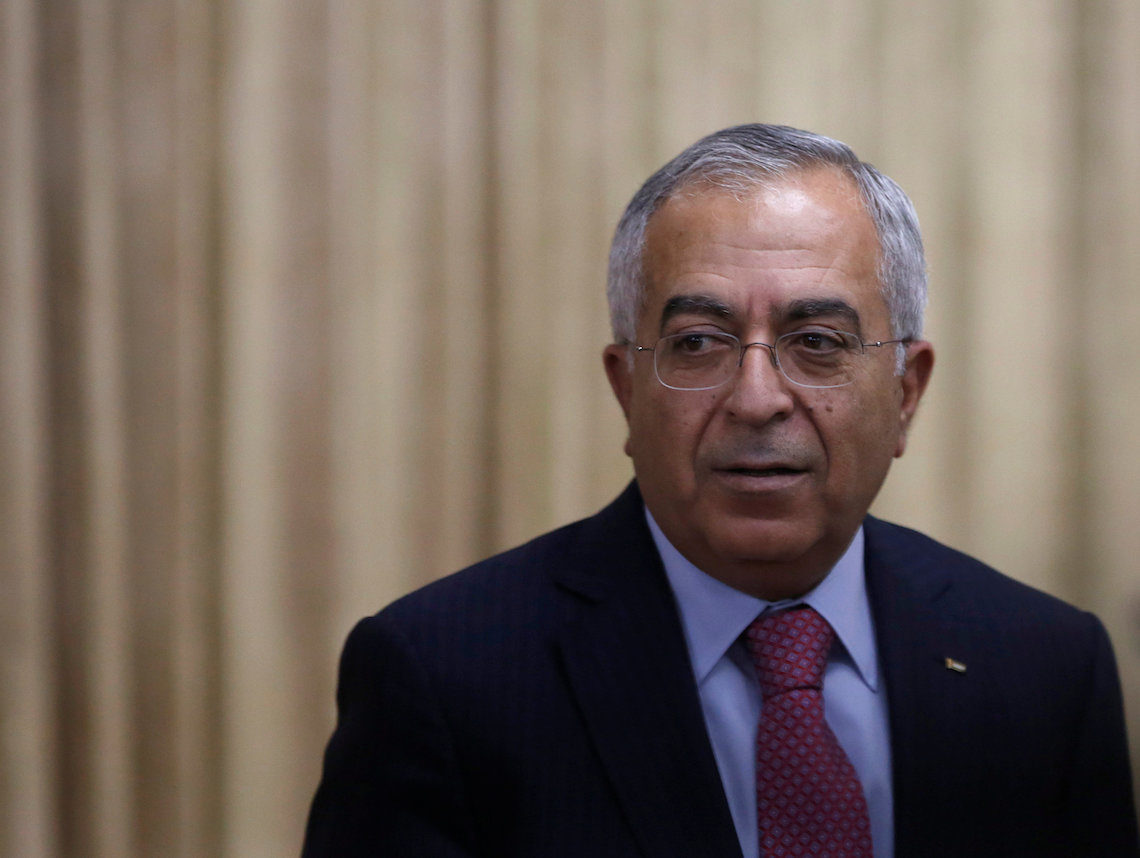
Regardless of what else might be said about Salam Fayyad, his moment of bringing near consensus to this contentious region’s most diverse schools of thought will forever typify his already considerable lifetime achievements. Sadly, the catalyst was the inability to appoint the right man to the right position absent issues related but not germane to the appointment itself, a situation cogently – and aptly — described as “stunningly dumb” by former US Ambassador to Israel Daniel Shapiro.

[This story originally appeared on themedialine.org]

Lest the ambassador be accused of bias, it is illustrative to search one’s memory for an example of a similar pan-partisan outpouring in a situation where no world leader had died. While the present political environment demands criticism of the new administration by all who are not self-proclaimed right-wingers, telling is the growing array of conservative thinkers willing to be blunt and critical of the administration on the Fayyad issue. To those of us who know Fayyad well, the attack comes against the one regional leader who least deserves the smear.

A leading Israeli newspaper trotted out a 2013 quote by Israel’s ambassador to the United States Ron Dermer, a leading conservative thinker known to be as close as any to Prime Minister Netanyahu, lauding Fayyad, whom he touted as “a partner for peace.” Also on the right, The Wall Street Journal’s Bret Stephens, himself a former editor-in-chief of the Jerusalem Post, added his admiration, tweeting “Even I like Fayyad.” The tweet by Vivian Bercovici, the former Canadian ambassador to Israel appointed by the (conservative) leader known to have one of the closest personal relationships with Netanyahu, former Canadian Prime Minister Stephen Harper, was quoted by Israel’s liberal newspaper, Haaretz: “This is an odd move by Nikki Haley. Does she know anything about him?”

Person by person, article by article, publication by publication, the point was made: Fayyad is both worthy and capable of carrying out the Libyan mandate of United Nations Secretary-General Antonio Guterres, who selected him from among a number of candidates. The Media Line has learned that the choice was made amid significant competition after which Fayyad was deemed to be the man most likely to succeed.

When Guterres chose Fayyad, while apparently basing his selection on the former Palestinian Authority prime minister’s stellar reputation among the international community, it seems he neglected to take into account the region’s penchant for self-inflicted wounds even in the course of diplomacy. Indeed, although it was American-educated Fayyad, the veteran of the International Monetary Fund and the World Bank whose ascension to the prime ministry provided the requisite fiscal confidence without which no Western nation would donate to the fledgling quasi-government headed by Yassir Arafat, that appointment was made before international diplomacy fused Israel and the PA into an indivisible political unit that demands equal attention for the other if the occasion arises to do business with one.

Yet, the phenomenon is fueled by the parties themselves. While the Palestinian Authority has staked out the United Nations as its proving ground for a “Plan B” approach to statehood, Prime Minister Netanyahu has responded in kind telling his weekly cabinet meeting that, “the time has come for reciprocity in the UN’s relations with Israel and free gifts cannot be constantly given to the Palestinian side. The time has come for positions and appointments to be made to the Israeli side as well. Should there be an appropriate appointment, we will consider it.”

In the course of numerous conversations with Fayyad both during his tenure as prime minister and afterward, he spoke of the thousands of infrastructure projects he completed in the Palestinian territories and by extension, would bring to Libya. In 2010, he spoke of a celebration marking the thousandth completion.

Yet, the nixing of the Fayyad appointment is the result is another of the Middle East’s patented stalemates and loss of talent for a job that needs to be done. From the Israeli perspective, former parliamentarian Dr. Einat Wilff told The Media Line that who serves as the UN Special Envoy to Libya is “none of our business.” But regarding the UN itself, Wilff argues that “if the government of Israel is only legitimized in the UN with the Palestinians, it is a stain on the UN. Israel is and should be considered a legitimate country in the UN regardless of Palestinians.”

Without doubt, the Fayyad appointment and its ensuing blowback is symptom, not disease. But such gross and unsubtle manifestations of the underlying malady are nevertheless useful for the clarity they provide. For the Palestinian Authority, it is a clear indication that its end-run around the negotiation process is not without diplomatic cost. Here, the loss of an opportunity for one of its most accomplished statesmen to be the peacemaker in Libya is arguably a cost with a value worth scores of memberships in UN-affiliated agencies.

For Israel, being seen as insisting upon a quid pro quo because a Palestinian national is selected for a prestigious position that has no nexus to the Jewish state opens it to the sort of accusations that inevitably accompany it to the international stage. Epithets far worse than “petty” or “demanding.”

As Wilff said, “If the person is good for the job it should be based on merit, not linkage.”


FELICE FRIEDSON is President and CEO of The Media Line news agency and founder of The Mideast Press Club. She can be reached at felice@themedialine.org. (Due to time differences, please cc to felice_friedson@yahoo.com)

Fayyad affair: A symptom of a diplomatic disease Read More »

Ambassador nominee Friedman apologizes in rabbinical forum

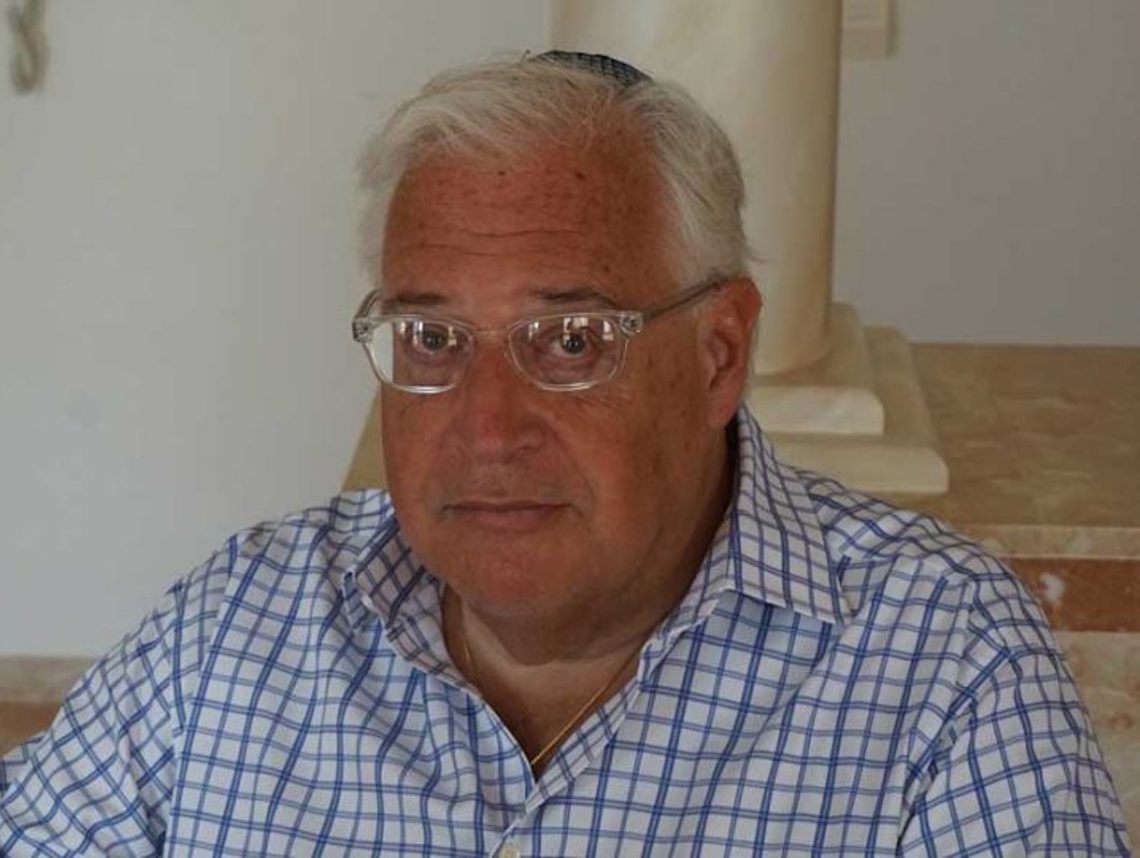
On the eve of what is expected to be the most contentious confirmation hearing for any Trump appointee beneath the cabinet level, ambassador to Israel-designate David Friedman finds himself not only targeted by the political left – an obvious situation for any appointee of this administration – but also in the exceptionally rare position of being a Jewish designee vilified by hundreds of Jewish clergymen and women.

[This story originally appeared on themedialine.org]

The Media Line has learned that one month ago, the would-be-ambassador met with a contingent of some twenty members of the New York Board of Rabbis led by Executive Vice President Rabbi Joseph Potasnik, in an effort to clear the air. Several rabbis who attended the session were of one mind concerning the gravity of Friedman’s controversial statements and admonished that such assertions, despite his promises and protestations, would not be easily expunged. Nevertheless, the rabbis agreed they would support whomever is approved by the Senate.

The angst beyond the political divide is not without reason. Friedman’s road to the US Embassy in Tel Aviv wound through his attorney-client relationship with the new president for more than fifteen years during which time the seasoned litigator was able to withdraw statements found inappropriate to a court of law. But absent commensurate experience in diplomacy, Friedman learned during the course of the campaign that inflammatory and hurtful statements could not be as easily erased in the court of public opinion.

Already labeled a firebrand and radical by the left because of his refusal to embrace the consensus two-state solution for ending the Israeli-Palestinian conflict, Friedman infuriated Democrats by calling Barack Obama a “blatant anti-Semite” and incensing more than a few Republicans as well when he crossed a line sacrosanct among Jews, invoking a Holocaust-era image declaring members of the left-wing lobbying group J Street to be “worse than kapos,” Jews who cooperated with the Nazi regime in order to survive. This, when already vilified for his history of personal support for the settlement movement and right-wing causes.

Unlike other Trump appointees who were merely the subject of negative newspaper editorials and critical talking heads on cable television, Friedman quickly became the target of a well-organized and highly-focused Internet campaign by J Street that included a petition asking Senators to reject the nomination.

Friedman, meanwhile, launched a campaign of his own apparently aimed at introducing the actual man to those being influenced by what was fast becoming a conventional wisdom of its own.

Yet, all shared the belief that Friedman must be allowed the opportunity to be heard before passing judgement on his fitness for the position. In fact, according to former Board of Rabbis President Rabbi David-Seth Kirshner of the Conservative Temple Emanu-el in Closter, New Jersey. “It’s un-Jewish to not afford him a hearing [but] this does not mean I wasn’t profoundly troubled about the statement [about Kapos]. Confirmation is contingent on the hearing. He needs to be heard. He needs to have a fair hearing.”

According to Potasnik, Friedman did, indeed, apologize for his use of the inflammatory words and sought to explain the context in which they were made. But while none of the participants were able to assess whether the effort was enough, it was evident that Friedman successfully convinced his audience that he is a serious player who understands that he would, as he told the group, “be the ambassador for all segments of society,” and not just those who share his conservative thought.

Rabbi Ammiel Hirsch, spiritual leader of the influential Stephen Wise Free Synagogue, a Reform congregation, seemingly sought to separate the political differences between the liberal community and Friedman, from the matter of his troubling statements. To be forgiven for the latter, he stressed, would take time and consistency. Regarding the policy issue, he noted that “the role of the ambassador is not to make policy but to explain the policy of the administration set by the President and his foreign affairs team.” On that score, Hirsch told The Media Line of his concern that, “His stated positions are at odds with fifty-years of American policy [that] happens to be the positions of a sizeable majority of American Jews.”

The rabbis agreed that the second issue – the kapo comment – was more problematic and, according to Hirsch, demands “a compelling, comprehensive and consistent response which is not a one-off statement. If he is ultimately confirmed and becomes the ambassador, this is an area he will have to address over and over again and cannot simply be a one-off statement.”

Rabbi Elie Weinstock of Manhattan’s iconic Kehilath Jeshurun Synagogue (Orthodox) agreed that Friedman deserves to say his piece and answer questions “including why he called J Street ‘kapos.’” Weinstock told The Media Line that he “left the meeting with a positive feeling that David Friedman…knows how to deal with the different segments of the community. There can be healthy disagreement. I can see him doing a good job as American ambassador to Israel.”

Despite the issues, the Board of Rabbis group left unambiguous the fact that, as Rabbi Hirsch said, “Of course I will support the ambassador who receives the confirmation of the Senate and the confidence of the American president.”

While the outcome will only be known at the conclusion of the process that begins on Thursday, Rabbi Potasnik summed up the feeling echoed by others. While being clear that he was not issuing an endorsement of Friedman, he did assess that the nominee “understands the complexity of the Jewish community…I think he should be heard.”

Ambassador nominee Friedman apologizes in rabbinical forum Read More »

Jewish groups express dismay as Trump says he can ‘live with’ one-state solution

Liberal and centrist American Jewish groups expressed dismay following remarks by President Donald Trump that he “can live with” a one-state solution to the Israeli-Palestinian conflict.

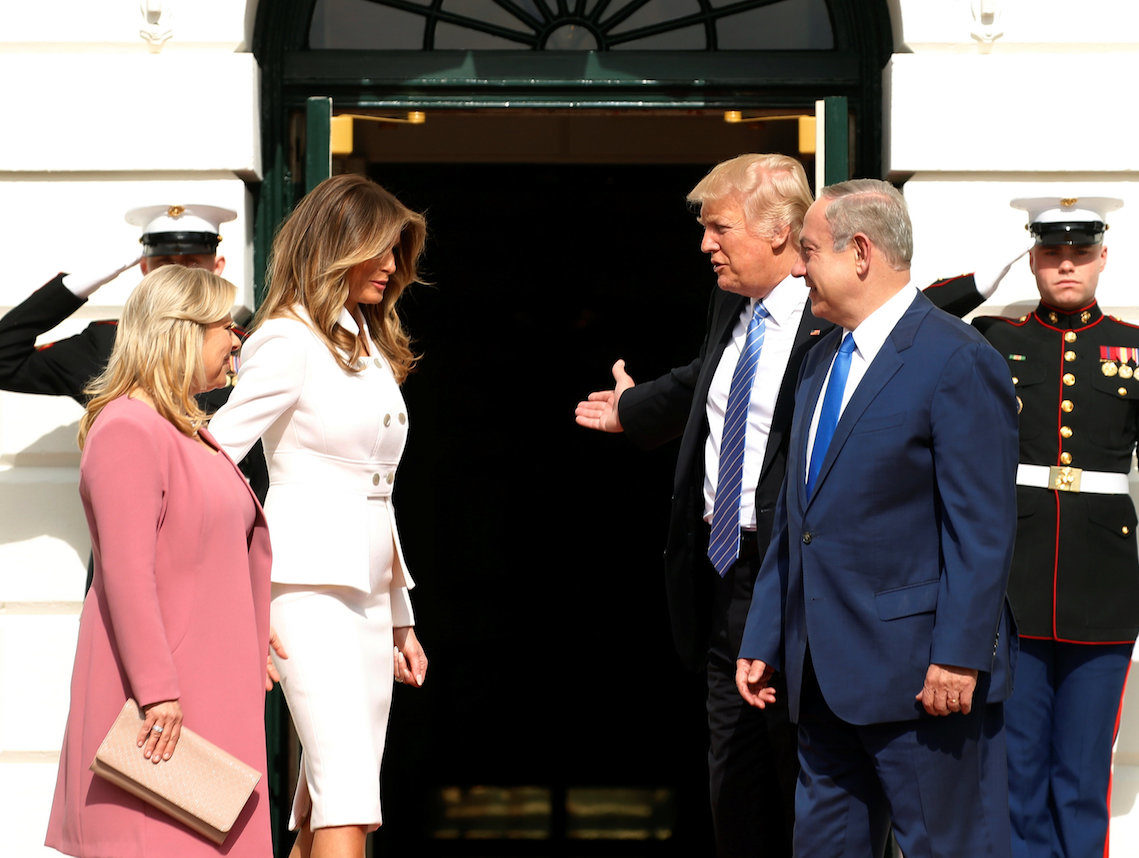
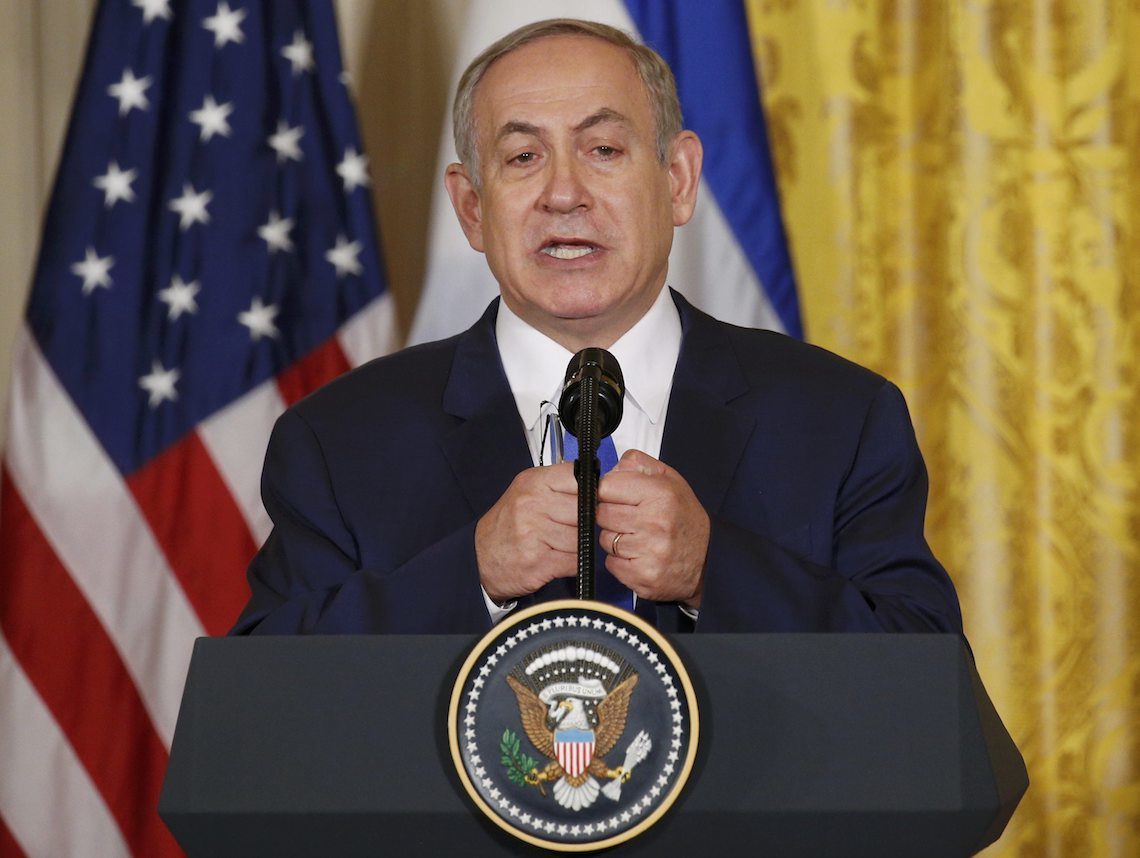
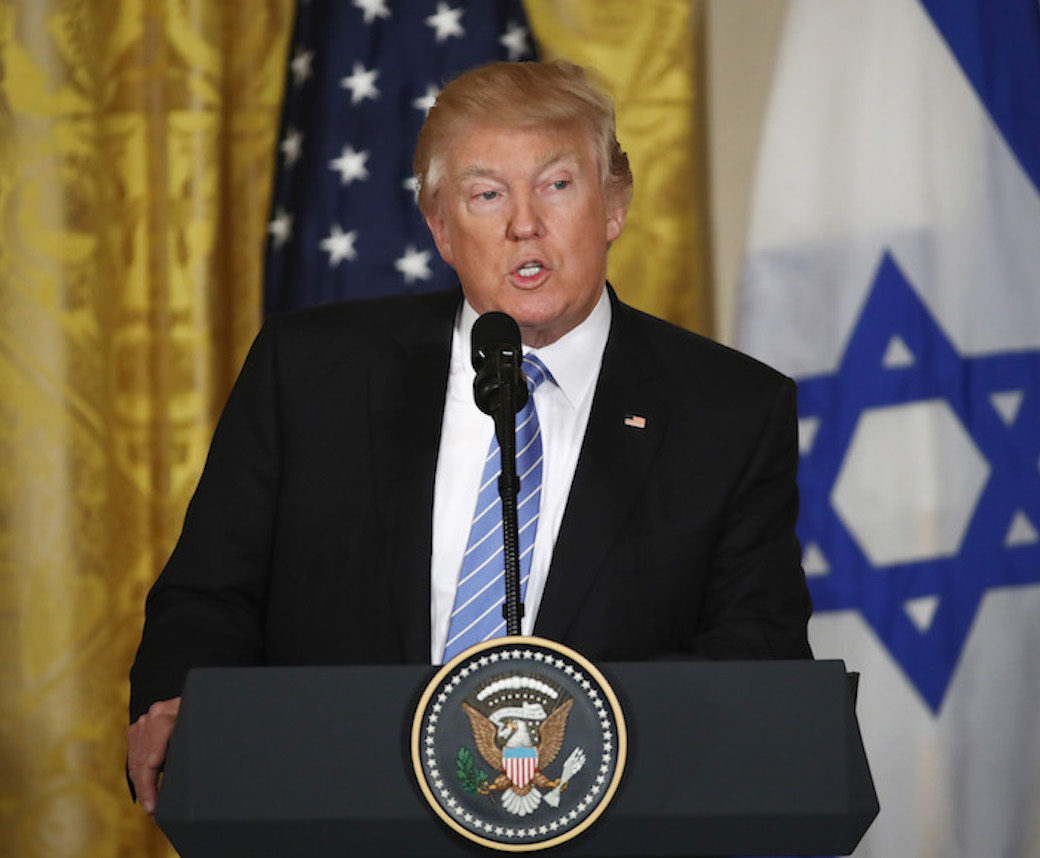
Speaking Wednesday at a White House news conference prior to closed-door meetings with Israeli Prime Minister Benjamin Netanyahu, Trump was asked if he were “backing off” from the two-state solution, a pillar of U.S. policy under at least three former presidents.

“So, I’m looking at two-state and one-state and I like the one that both parties like,” Trump replied, going on to refer to Netanyahu by his nickname. “I’m very happy with the one that both parties like. I can live with either one. I thought for a while the two-state looked like it may be the easier of the two but honestly, if Bibi and if the Palestinians — if Israel and the Palestinians are happy, I’m happy with the one they like the best.”

The Reform movement called Trump’s response “potentially devastating to the prospects for peace and Israel’s Jewish, democratic future.”

“The question is: can Israelis and Palestinians live with it in a way that allows for a Jewish, democratic State of Israel and realization of the legitimate rights and aspirations of the Palestinians,” Rabbi Rick Jacobs, president of the Union for Reform Judaism, said in a statement. “Only a two-state solution can achieve the goals of the Israelis and Palestinians.”

The American Jewish Committee, while welcoming the “spirit of cooperation and friendship expressed at the press conference,” also reaffirmed its support for a two-state solution. Its statement quoted from a policy issued by the AJC National Board of Governors in December reasserting that “a two-state solution is the only realistic resolution to the Israeli-Palestinian conflict, as established through direct bilateral negotiations between the parties themselves.”

Trump’s comment came days after a senior White House official said a two-state solution was not a necessary outcome of peace talks between Israelis and Palestinians. If formalized, it would represent an official retreat from U.S. policy since 2002, when President George W. Bush said Palestinian statehood was a goal of peace talks. A two-state outcome was also the implied policy of Bush’s predecessor, President Bill Clinton.

Israelis and Palestinians have different conceptions of — and fears about — a “one-state” solution. The pro-Palestinian movement has promoted the idea of a single binational state of Jewish and Palestinian citizens, which many Israelis warn would erase the Jewish majority in Israel. The right wing in Israel has spoken of annexing most or all of the West Bank, but without extending citizenship to the Palestinians living there.

“The only alternative to that [two-state] outcome is one bi-national state and increased violence, with tragic consequences similar to the recent war in Syria,” Ami Ayalon, Gilead Sher and Orni Petruschka wrote in an op-ed in USA Today on Tuesday. The authors are principals of the Israeli nonpartisan organization Blue White Future.

Rep. Nita M. Lowey, D-N.Y., the ranking Democrat on the House Appropriations Committee, also urged the president to reaffirm a policy that “secures two states for two peoples — a democratic, Jewish state of Israel and a democratic, Palestinian state.”

“Today President Trump refused to lend his voice toward this goal. Not only were his remarks shameful, they were short-sighted,” she said in a statement. “A two-state solution for Israelis and Palestinians is the only means to ensure Israel’s long-term security and enable Palestinian aspirations for their own state. That is why Presidents from both parties, the vast majorities of the House and Senate, and the American people have consistently supported this objective, and why President Trump must as well.”

In its statement on Wednesday’s meeting, the Republican Jewish Coalition did not mention the president’s remarks on one- or -two-state solutions.

“Today’s meeting between President Trump and Prime Minister Netanyahu is a welcome sign that a new era has arrived for United States-Israel relations,” the RJC said. “It is in the interests of both our nations’ securities that we recognize the fundamental challenges facing the region, and their root causes. Whether it’s preventing a nuclear Iran, or the responsibilities of the Palestinians to come to the negotiating table in order to reach peace, we will only achieve our mutual goals if we stand united in the process. Thankfully, it’s clear that going forward there will be no daylight between the U.S. and our closest ally in the Middle East.”

World Jewish Congress President Ronald Lauder welcomed the meeting as “extremely positive” and called it “an encouraging sign that the historic alliance between Israel and the United States is back on strong footing.”

Jewish groups express dismay as Trump says he can ‘live with’ one-state solution Read More »

Palestinians blast Trump’s break with two-state policy

Palestinian officials slammed President Donald Trump for breaking from decades of U.S. policy supporting a two-state solution to the Israeli-Palestinian conflict.

One unnamed official told Israel Radio on Wednesday, after Trump at a joint White House news conference with Israeli Prime Minister Benjamin Netanyahu said he “can live” with either a one- or two-state solution, said the president’s words were “the biggest disaster it was possible to hear from the American president.”

The official also said that no regional approach to the Arab-Israel conflict will be successful without a solution for the Palestinians.

The Trump administration had suggested in recent days that a two-state solution was not a necessary outcome of peace talks between Israelis and Palestinians. During the news conference, Trump did not commit to any particular solution.

“I like the one the two parties like,” Trump said in answer to a question about what solution he prefers. “I can live with either one.”

The Palestinian official told Israel Radio: “What’s this two state or one state? Why not five states already? This is worthless talk.”

He added that the Israeli prime minister is not the only player in the region and that Trump should also listen to the Palestinians’ opinion on the issue.

“If Trump would like to be in touch with us, we are here and not going anywhere,” he said.

Hanan Ashrawi, a senior member of the PLO, responded to Trump’s remarks in a statement.

“If the Trump administration rejects this policy it would be destroying the chances for peace and undermining American interests, standing and credibility abroad,” Ashrawi said. “Accommodating the most extreme and irresponsible elements in Israel and in the White House is no way to make responsible foreign policy.”

Arab-Israeli lawmaker Ahmad Tibi, deputy speaker of the Knesset, told CNN in an interview following the news conference that if a one-state solution gives Palestinians the vote, he will run for prime minister and win. He also said that a solution other than two states “could lead to violence.”

Israel’s opposition leader Isaac Herzog, head of the Zionist Union coalition, called it “sad and shameful” to see Netanyahu “twisting and turning just to avoid the idea of separating from the Palestinians in the form of two states.”

“Every Israeli should be concerned tonight about the very concept of one state between the sea to the Jordan, which means no Jewish state. This is a very dangerous disaster and we will fight it in every way possible,” Herzog said.

Naftali Bennett, head of the right-wing Jewish Home party, celebrated Trump’s backing away from a two-state solution.

“A new era. After 24 years, the Palestinian flag is lowered and the Israeli flag is put in its place,” Bennett wrote on his Hebrew-language Facebook page. On his English language page he posted:

“A new era.
New ideas.
No need for 3rd Palestinian state beyond Jordan & Gaza.
Big day for Israelis & reasonable Arabs.
Congrats.”

Following the meeting, Netanyahu tweeted: “@realDonaldTrump, thanks very much for the warm welcome. Israel has no better friend than the US; the US has no better friend than Israel.”

Palestinians blast Trump’s break with two-state policy Read More »

Netanyahu: Trump administration now ‘understands’ Jewish meaning of Holocaust

Prime Minister Benjamin Netanyahu said it was his impression that President Donald Trump’s administration now understands that the meaning of the Holocaust was the attempt to eradicate the Jews.

Netanyahu said he did not bring up the White House’s controversial International Holocaust Remembrance Day statement in his meeting Wednesday with Trump, but that their teams had discussed it ahead of the summit. The statement omitted any mention of or allusion to the Jews.

“There is no doubt that they now understand the meaning of the Holocaust as a means to strike out the Jewish people,” Netanyahu said in a briefing after the summit for Israeli reporters.

The Jan. 27 statement drew criticism from an array of Jewish groups, including several that otherwise back Trump, and Holocaust historians, who said that while tens of millions were murdered during the period and multiple groups were targeted, the bid to eradicate any trace of the Jews was unique and is the only phenomenon “Holocaust” describes.

Administration spokesmen said the statement was meant to be “inclusive” of other groups that suffered during World War II and derided objections as “asinine” and “pathetic.”

JTA asked White House spokesmen to react to Netanyahu’s contention that the administration now understood the centrality of Jews to the meaning of the Holocaust. There was no reply.

Netanyahu, speaking to Israeli reporters, repeated what he had said during a joint news conference with Trump earlier in the day, when an Israeli reporter asked about a spike in expressions of anti-Semitism since Trump’s election, which the reporter linked to the xenophobic tone of Trump’s rhetoric.

“There is no better friend” than Trump “to Israel and the Jewish people,” Netanyahu said.

Asked to comment on expressions of concern by Jewish organizational leaders, Netanyahu insisted: “There is no basis for these worries.”

Netanyahu: Trump administration now ‘understands’ Jewish meaning of Holocaust Read More »

HIAS should return to its roots

Imagine you are an impoverished religious Jew living in Paris. You can no longer wear religious garb out of fear of being set upon by assailants from North Africa who will beat you to within an inch of your life, if not take it. Your children are bullied in school, as their teachers ignore their complaints, and might even take perverse satisfaction in their plight.

[Mark Hetfield responds:
Embracing the Jewish community’s refugee roots]

Even though French political figures make speeches condemning anti-Semitism and police are routinely sent to protect Jewish institutions, the anti-Semitism grows on the body politic with the onslaught of migrants from Muslim-majority countries who carry anti-Semitism with them as part of their cultural and religious socialization.

When immigrant mothers are angry at their children, they unabashedly call them “Jews” as if it were an invective, not caring who hears.

In 2014, a survey of 1,580 French respondents found that Muslims, who composed one-third of the interviewees, were two to three times more likely to be anti-Jewish than French people generally.

You, too, would like to leave France, but you don’t want to go to Israel, where the standard of living is more down to earth than luxurious, where there is terrorism and a state of siege, and where the language is difficult to learn.

Who will help you? In your grandmother’s day, there was the Hebrew Immigrant Aid Society — the one and only agency that, with the help of private contributions, came to the aid of European Jews.

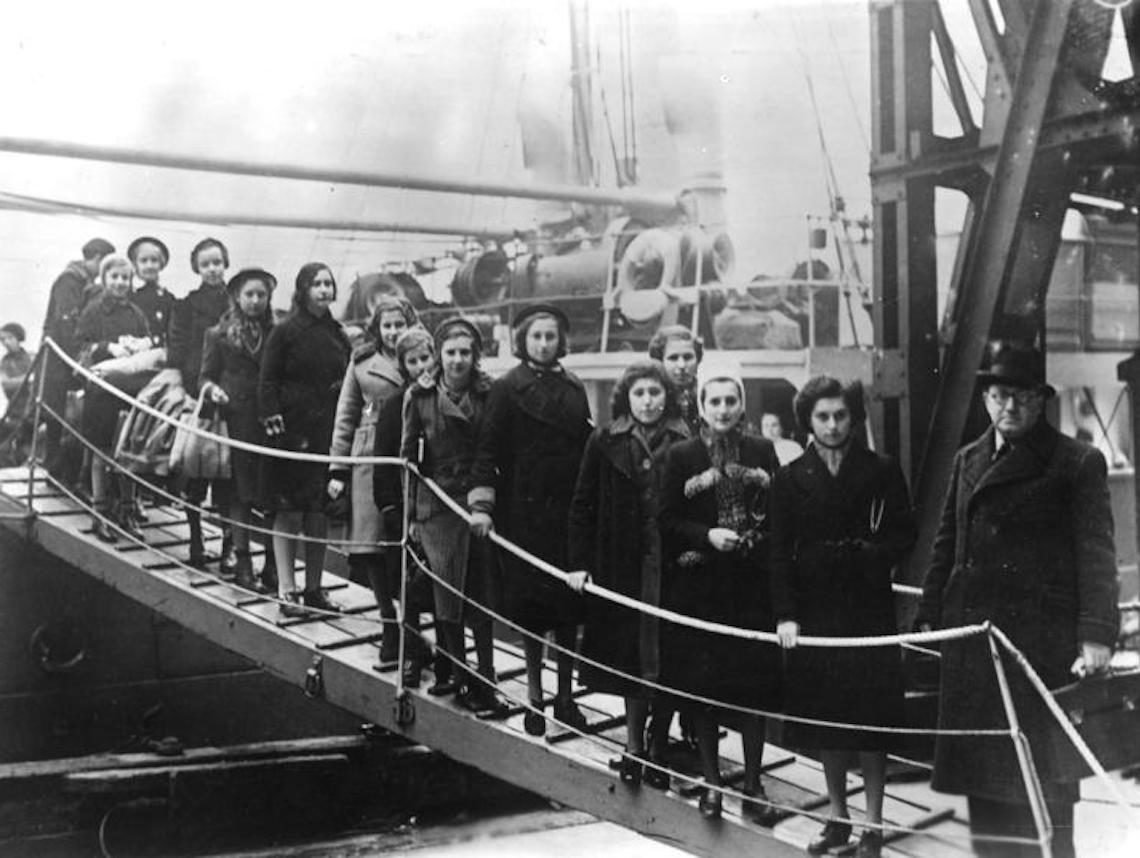
But the Hebrew Immigrant Aid Society of your grandmother’s day no longer exists. It has dropped the “Hebrew” and has become simply “HIAS,” avoiding the word “Hebrew” because its clients are no longer Jewish, although the last fundraising letter I received flaunted painful scenes of Jews trying to escape Europe on the eve of World War II.

The Jewish roots of HIAS go back to rescuing Jews from the Russian pogroms of the 19th century. Its role as a lifeline for Jews who had nobody else to help them is prominently displayed in its fundraising pitches to Jews, but the word “Hebrew” might “offend” the Muslim refugees from the Middle East that HIAS is now busy resettling in America.

No longer headquartered in New York, HIAS has moved to the Washington Beltway to be near its new source of funding — the federal government.

Refugee resettlement is big business, so much so that it is difficult to parse whether the emphasis is on doing well or doing good.

HIAS is the only “Jewish” organization approved by the federal government to resettle refugees, but it is a small player compared with the other religious and secular organizations in the business of refugee resettlement.

Still, HIAS CEO Mark Hetfield, in 2014, commanded a salary of more than $318,000, plus $22,000 in benefits. In the eight years of the Obama administration, HIAS received funds exceeding $157 million, most of which came from the federal government. A small percentage of this funding is used to lobby the public at the grass-roots level and to lobby legislators. Consequently, members of the American public pay for HIAS to convince them, and their elected representatives, to continue to sustain HIAS refugee programs with tax dollars.

There are 65 million displaced people in the world, so this is not a business that is going away. And after 120 days, when organizations like HIAS that bring in refugees can no longer support them and they have not found employment, the resettlement organizations take them to the local welfare office. The majority of Middle Eastern refugees are on some form of assistance, with 90 percent getting food stamps, 73 percent getting medical assistance and some 63 percent receiving outright cash welfare. Middle Eastern refugees cost the American taxpayer more than $64,000 per person.

Now HIAS, with the help of the American Civil Liberties Union, is suing the Trump administration over its travel ban. From his lofty perch, Hetfield is lecturing the American public on how refugee resettlement is the fulfillment of American values. This hectoring earned Hetfield a place on Tucker Carlson’s TV show, where he was asked to explain what values are being celebrated by bringing in refugees. He could not remotely articulate what those values are.

In my value system, there are Jews throughout Europe who are living lives all too reminiscent of the pogroms that gave birth to HIAS. Yet HIAS does nothing for them. Half the Jews of Malmo, Sweden — a favorite destination of Muslim immigrants — have found life there intolerable and have left. HIAS was not there to help.

European Jews will not qualify for refugee status as it is currently defined. The American government will not provide grants to assist them. But they are condemned to lives filled with ongoing terror. The difference between the pogroms of Russia and the violence against Jews in Paris is that in France, the government still attempts to protect Jews.

But as the percentage of Muslims increases in France and throughout Europe, the pogroms launched by them — like the locking of Jews in a synagogue — will get worse. Maybe next time, the mob will burn the synagogue as the French gendarmes are overwhelmed by the sheer number of attackers.

It’s time for HIAS to rediscover its roots. If it is concerned about rescuing the most victimized of people, it should begin with the Jews of Europe who are eager to escape the anti-Semitism of Islam and for whom there is no help in the West. The organization should do this even though there are no government subsidies for these people and, perhaps, no lofty salaries in the offing.

When that is done, I will be most pleased to be lectured not only about American values, but also Jewish values. And my grandmother and mother, who fled the pogroms of Russia, would have been proud of such a version of HIAS.

Abraham H. Miller is an emeritus professor of political science at the University of Cincinnati, and a distinguished fellow with the Haym Salomon Center. Follow him on Twitter @salomoncenter

HIAS should return to its roots Read More »

Most Americans maintain favorable view of Israel, poll finds

Seventy-one percent of Americans view Israel favorably, the fourth straight year the Jewish state has received a favorable rating of 70 percent or higher, a Gallup poll found.

The survey was released Wednesday, ahead of Prime Minister Benjamin Netanyahu’s visit to the United States and meeting with President Donald Trump. It was conducted earlier this month.

The favorable rating includes respondents who said they viewed Israel very or mostly favorably.

Since 2014, the proportion of Americans who say they view Israel favorably has remained at 70 to 72 percent, according to Gallup data.

Israel’s favorability rating in the most recent poll did not fall below 61 percent for any major demographic or political group. Republicans and adults aged 65 and over had the most positive views of the Jewish state at 81 and 77 percent, respectively.

Earlier this week, Gallup released data from a poll that showed Americans nearly evenly divided over support for a Palestinian state, with 45 percent backing the establishment of an independent Palestinian state on the West Bank and Gaza Strip and 42 percent opposing it.

Asked about their opinions of Netanyahu, 49 percent of respondents said they viewed him favorably and 30 percent unfavorably — both figures the highest recorded in the poll — with 13 percent saying they never heard of him and 8 percent saying they have no opinion.

Most Americans maintain favorable view of Israel, poll finds Read More »

Behind Trump’s moves: A Christian resurgence

As many American Jews and Jewish organizations join in combatting the recent executive order on immigration and refugees, it is important to realize that the anti-Muslim sentiments of the new administration are one head of a two-headed beast. 

The other head is a political agenda forged by a coalition of conservative Christians that is closer than ever to achieving its vision of a “Christian nation.” This linkage between anti-Muslim and “pro-Christian” policies is revealed in the executive order, which couples a thinly veiled ban on Muslims with a thinly veiled preference for Christians from predominantly Muslim countries seeking refuge in the United States.

President Donald J. Trump justified the priority given to Christians over Muslims by stating, “If you were a Muslim, you could come in, but if you were a Christian, it was almost impossible.”

That line is lifted directly from the Christian right, which has long promoted the idea that Christians are a — indeed, the most — persecuted minority. The belief that Christians are being subjected to religious persecution in America by intolerant secularists has joined the claim that liberals turn a blind eye to the persecution of Christians by Muslims. Both are staples of the worldview that drives Stephen Bannon, the president’s chief strategist and architect of his immigration policies. Bannon’s unorthodox brand of Christian conservatism is reflected in his admiration for traditionalist Catholics who oppose the current pope, as well as for the newly resurgent Russian Orthodox Church, whose combination of Islamophobia and homophobia has proven to be intoxicating to legions of “civilizational conservatives” who view the West as locked in a theological battle to the death with Islam. Bannon’s alliance with conservatives inside the Vatican is likewise based on their shared belief that Western civilization is being besieged from the outside by Muslims and from the inside by the forces of “secularism,” more particularly, by liberals who support an array of decadent values and refuse to recognize a civilizational war between Christianity and Islam.

Bannon’s characterization of the West in his 2014 speech to the Vatican as the “Judeo-Christian” West might lead some to believe his Christian worldview will protect Jews even as it constitutes a clear and present danger to Muslims. This belief is wrong on two counts. First, it reflects an unjustifiable disregard for the rights of the Other. Second, being folded into a homogenized “Judeo-Christianity” now is no guarantee that Jews will not be stigmatized or marginalized later, or that the distinctive harms of anti-Semitism (including Christian anti-Semitism) will not be rendered invisible, as already occurred in Trump’s botched Holocaust statement that omitted any reference to Jews.

The same concerns hold for the rest of the conservative Christian agenda, which aims to expand protections for “religious liberty” and to weaken the wall of separation between church and state. Both of these goals have attracted right-wing Jewish support. Given the Christian right’s newfound influence, it behooves us to ask which parts of this agenda Trump is likely to adopt and to address the time-honored question: “Is it good for the Jews?”

Under Bannon’s guidance, Trump has promised to appoint Supreme Court justices who will satisfy the religious right, a pledge generally understood to mean that his appointees will be anti-abortion. But overturning Roe v. Wade is just the tip of the iceberg. The larger agenda is to return the state to its role as the upholder of traditional Christian standards of morality.

The larger agenda is to return the state to its role as the upholder of traditional Christian standards of morality.

This agenda can be divided into two general planks. First and foremost, the Christian right is motivated by the desire to stop the erosion of the government’s traditional role as enforcer of Christian standards of morality — especially, sexual morality. The ideal “Christian nation” envisaged by its proponents would enforce prohibitions not only on abortion, but also on contraception, same-sex marriage and homosexual activity, and any sexual activity outside of heterosexual marriage.

In the face of political defeats on many of these fronts, conservative Christians have retreated to a “Plan B,” which is to use “religious liberty” claims to carve out exemptions from laws that dismantle traditional gender and sexual norms. What was originally a shield to protect non-Protestant minorities from laws that inadvertently interfered with their religious practices has been converted into a sword used by conservative Christians to continue their battle against laws enforcing principles of gender and sexual equality. Laws permitting adoption and family service organizations to discriminate against same-sex couples, exempting government contractors from prohibitions on discrimination, and allowing bakers and photographers to refuse to serve participants in same-sex weddings are just a few examples of this weaponized version of religious liberty.

Some suggest this commitment to religious liberty will be “good for the Jews” and for other religious minorities. This “me, too” version of religious equality, according to which government-led prayers and displays of Christian symbols are fine so long as we can erect a menorah on the town square and have a rabbi take a turn at the podium, is seriously misguided. It mistakes a willingness to accord protections to Christians when they find themselves in the position of a minority with a willingness to protect other minority religious groups when their religious practices conflict with Christian values (as conservatives construe them). There is precious little evidence to support such a prediction and ample reason for concern that Christian conservatives who now occupy positions of power are ready to sacrifice the principle of religious liberty when they view another group’s religious values as antithetical to their own, as the willingness to override all Muslims’ rights for the sake of “national security” makes clear.

The readiness to deny non-Christians rights accorded to Christians should not be surprising. The Christian right has made its view that the government can promote Christianity — not just some blanched version of American religion, but Christianity — perfectly plain. So long as non-Christian religions are perceived to be compatible with the nation’s Christianity, they may receive protection, but when there is a conflict between Christian and non-Christian values, the conservative vision of a Christian nation dictates sacrificing the latter for the former.

To what extent Trump will implement this vision under the guidance of Steve Bannon, Vice President Mike Pence and other proponents of a resurgent Christian nation remains to be seen. But Jews and other religious minorities support this movement at their peril. We are better off joining forces with Muslims, the many liberal Christians and Americans of other persuasions who see clearly what the peril of a Christian nation is.

Nomi Stolzenberg is the Nathan and Lilly Shapell Chair in Law at the USC Gould School of Law, where she founded the Program on Religious Accommodation and is a co-director of USC’s Center for Law, History and Culture. 

Behind Trump’s moves: A Christian resurgence Read More »

President Trump answered a question about anti-Semitism by boasting about his election victory

During President Donald Trump’s joint news conference with Israeli Prime Minister Netanyahu on Wednesday, Trump was asked a direct question from an Israeli reporter about “a sharp rise in anti-Semitic incidents across the United States” — on the same day that the Southern Poverty law Center reported that the number of hate groups in the United States, most subscribing to anti-Semitic views, rose in 2016. It also came after a six-week period in which Jewish community centers around the country were forced to evacuate in three separate incidents due to coordinated bomb threats.

Below is the question and answer from the news conference at the White House, with my annotations.

REPORTER: Mr. President, since your election campaign and even after your victory, we’ve seen a sharp rise in anti-Semitic — anti- Semitic incidents across the United States. And I wonder, what do you say to those among the Jewish community in the states and in Israel and maybe around the world who believe and feel that your administration is playing with xenophobia and maybe racist tones?

And Mr. Prime Minister, do you agree to what the president just said about the need for Israel to restrain or to stop settlement activity in the West Bank? And if we could follow up on my friend’s question — simple question: Do you back off from your vision to the (inaudible) conflict of two-state solution as you lay out in (inaudible) speech? Or you still support it?

DONALD TRUMP : Well, I just want to say that we are, you know, very honored by the victory that we had — 306 electoral college votes. We were not supposed to crack 220. [Turns to Netanyahu] You know that, right? There was no way to 221, but then they said there’s no way to 270. And there’s tremendous enthusiasm out there.

Trump, we know, often boasts about his Electoral College victory. But what connection is he drawing between charges of bigotry and the strength of his win in the election? Is it possible that he tuned out after the first part of the question — in which the reporter mention “your election campaign and even after your victory”? Is he stalling before answering the anti-Semitism question? Or, and this seems likely, is he suggesting that whatever criticisms people have about his unusual and taboo-breaking campaign, he was vindicated by the electorate?  He has used this tactic before: On Nov. 14, right after the election, Lesley Stahl of “60 Minutes” asked if was going to going to release his tax returns. Trump replied, “Obviously, the public didn’t care because I won the election very easily.”

I will say that we are going to have peace in this country. We are going to stop crime in this country. We are going to do everything within our power to stop long simmering racism and every other thing that’s going on. There’s a lot of bad things that have been taking place over a long period of time.

It’s notable, given the question and the fact that he is standing next to the prime minister of the Jewish state and in front of the Israeli flag, that Trump makes no mention of Jews or anti-Semitism at this point. Specific attacks on Jews (and some of his supporters during the campaign launched some doozies, especially at journalists like Julia Ioffe and Jonathan Weisman) are subsumed under “every other thing that is going on.” Jewish antennas are on high alert on this point, especially after the White House released an International Holocaust Remembrance Day statement that did not mention the Jewish victims of the Nazis.

I think one of the reasons I won the election is we have a very, very divided nation, very divided.

Did Trump just acknowledge he won the election only because we have a “very divided nation”? If so, that would contradict his early boast about the size of his victory, as well as his repeated unsubstantiated claims that his loss of the popular vote was only the result of massive voter fraud.

And hopefully, I’ll be able to do something about that. And I, you know, it was something that was very important to me.

Trump has been significantly less inclined than most recent presidents to reach out to those who didn’t vote for him, although he did say in his inaugural address, “It is time to remember that old wisdom our soldiers will never forget: that whether we are black or brown or white, we all bleed the same red blood of patriots, we all enjoy the same glorious freedoms, and we all salute the same great American flag.”

As far as people, Jewish people, so many friends; a daughter who happens to be here right now; a son-in-law, and three beautiful grandchildren.

When Trump finally gets around to mentioning Jews, he has five in mind: son-in-law and adviser Jared Kushner, Kushner’s wife Ivanka and their three children. For some in the Jewish community, his Jewish relatives are all the evidence they need that Trump will not tolerate anti-Semitism. Defending Trump’s chief strategist, Steve Bannon, against allegations of anti-Semitism, the Zionist Organization of America’s Morton Klein wrote in November, “Would Trump’s Orthodox Jewish daughter Ivanka, whose children go to an Orthodox day school, ever allow an anti-Semite to work with her father?”

But other Jewish groups felt Trump did not do enough during the campaign or since to send a strong message to bigots and white supremacists that they weren’t welcome in his coalition. The Anti-Defamation League wasn’t satisfied with Trump’s response today, tweeting, “Troubling that @POTUS failed to condemn real issue of anti-Semitism in US today.”

I think that you’re going to see a lot different United States of America over the next three, four or eight years. I think a lot of good things are happening.

And you’re going to see a lot of love. You’re going to see a lot of love.

OK? Thank you.

On the campaign trail, Trump often invoked “love” as a solution to America’s racial and religious divides, as he did after winning Indiana in the Republican primaries: America, he said, which “is very, very divided in so many different ways, is going to become one beautiful loving country, and we’re going to love each other, we’re going to cherish each other and take care of each other.”

Minority groups might prefer a little less love and little more focus on the issues that concern them most, like, in the case of the Jews, a strong statement condemning anti-Semitism and a pledge to carefully monitor hate crimes and threats.

President Trump answered a question about anti-Semitism by boasting about his election victory Read More »

Federation stays neutral on Trump refugee order, despite pressure

In the days after President Donald Trump signed an executive order restricting refugee admissions to the United States, a long list of Jewish organizations authored fiery statements condemning the new measures. Notably missing from their ranks was The Jewish Federation of Greater Los Angeles.

The L.A. Federation’s decision to refrain from taking a clear position on the executive order raised questions about whether it should make any political statements at all, hearkening to a similarly bitter debate about the Iran nuclear agreement. And while disagreements on that point simmered behind closed doors, the Federation has signaled that it would continue to abstain from taking sides on the day’s issues.

In a Feb. 2 email titled “Our Commitment to Immigration and Resettlement,” Federation President and CEO Jay Sanderson addressed the executive order without criticizing it: “I want you to know that we have heard your concerns and feel the anxiety of our community,” he wrote.

For some, Sanderson’s email fell short, failing to express solidarity with impacted communities and carrying a fundraising pitch some saw as tone deaf. Within the organization’s circle of stakeholders, volunteers and employees, many raised concerns privately over whether Federation should take a stronger stand on the issue.

In a private letter obtained by the Journal, 36 alumni of Federation’s Rautenberg New Leaders Project strongly criticized Sanderson’s email for being too passive it its approach.

“We must express our profound disappointment — for some of us, even anger and shame — at ‘Our Commitment to Immigration and Resettlement,’ ” they wrote, adding their voice to a chorus of donors and community members airing their grievances internally.

Addressing themselves Feb. 6 to Sanderson and Julie Platt, chair of Federation’s board of directors, the young leaders asked Sanderson to reconsider his statement. His email, they wrote, “neither specifies the policies against which so many Jewish leaders are battling, nor identifies by name the Muslim and immigrant communities with which we are standing together. In standing silently by, the communication betrays our values as Jews, as Americans, as Angelenos, and as civic ambassadors for the Jewish Federation.”

The authors noted that their “continued voluntary and philanthropic involvement” in Federation programs would be impacted by the response they received.

The letter prompted a Feb. 13 meeting between more than a dozen young leaders and top Federation officials, including Sanderson, Platt and Richard Sandler, chair of the board of trustees for the Jewish Federations of North America (JFNA) and former L.A. Federation board chairman.

Jay Sanderson
Jay Sanderson

The following day, the letter’s signatories and Federation leadership issued a joint statement to the Journal.

“While we don’t agree on everything, we all believe that we must continue to engage with each other honestly and openly and to find more ways to help those in need,” they said in the statement. “Working together in ways that reflect our shared Jewish values, we will find new and meaningful opportunities to stand with our community and with all Angelenos.”

According to those present, the meeting was a productive and cordial one.

“We had a group of very committed passionate leaders come, and we listened, and we talked about how we can be proactive,” Sanderson told the Journal on Feb. 14. Unlike other Jewish organizations, he said, “we’re not in the statement business.”

He stood by his Feb. 2 email, saying, “We’re a mission-driven organization that lets our work make the statement.” He made this point in the original note to the community: “Our Federation’s statement on immigration was made 104 years ago when we made the rescue and resettlement of immigrants — like our parents, grandparents and great-grandparents — a top priority,” he wrote.

He said that of the people who have responded to the email, the vast majority were positive responses.

“Oftentimes people in the community get fixated on statements,” he said, “and what I’ve learned in my career is the most successful advocacy oftentimes happens quietly, oftentimes happens behind closed doors.”

Sandler told the Journal he supported the L.A. Federation’s decision to refrain from issuing a statement on the executive order.

“Federations really should not get involved in making statements one way or another, because they need not get distracted from the work Federations are supposed to do,” he said, adding that political statements inevitably upset some Federation donors.

Some Jewish Federations decided to weigh in anyway, including the Jewish Federation of Greater Seattle, which submitted an amicus brief to the Ninth Circuit Court of Appeals, asking it to uphold a lower court’s ruling that blocked Trump’s executive order. But JFNA, the umbrella organization for all North American Federations, remained silent on the issue.

Sandler praised Sanderson’s Feb. 2 email as “very measured” adding that “it talks about what Federations do: that we don’t ignore these issues but we’re not going to get involved in the debate.”

The conversation around Sanderson’s letter mirrored an earlier one, from July 2015, when a Federation statement opposing the Iran nuclear agreement met with backlash from community members who supported it. The Iran deal statement raised similar questions over when, if at all, it is appropriate for a body catering to the entire L.A. Jewish community to make political pronouncements.

“That statement was a learning process for us.… It made us look at who we are and what our role in the community is, and our role in the community is to be out front and doing the work,” Sanderson told the Journal.

Protocols in place now require a statement to be reviewed by the L.A. Federation’s board prior to being released. Since Sanderson’s email was not a statement, but rather a regular bi-weekly update to community members, those protocols did not apply, he said.

But one notable difference has been the full-throated opposition with which the organized Jewish community met the refugee order, while opinions on the Iran deal straddled both sides. The letter from young Federation leaders noted “the broad consensus we have already seen from Reform and Orthodox Jews” on the refugee order and which, in theory, would have given Sanderson political cover to come out in opposition.

“This was a case where I thought you’d have fairly strong unanimity of thinking here,” said Steven Windmueller, a professor emeritus at Hebrew Union College-Jewish Institute of Religion and an expert on Jewish political life.

Sanderson said the L.A. Federation will continue to abstain from political debates.

“We’ve been asked to make public policy statements in the last month five times, including positions from the right and positions from the left,” he said. “We would be a whirling dervish if we reacted to all those things.”

Federation stays neutral on Trump refugee order, despite pressure Read More »