On July 6, 2016 Jared Kushner took to the pages of his New York Observer, determined to prove once and for all that his father-in-law was neither an anti-Semite nor a racist. It had been one day since Donald Trump had sought to demonstrate that his opponent was “corrupt” by tweeting an image of her face beside a Star of David and wads of American currency. A month earlier, he had said that Mexican parentage made a judge unfit to rule on a Trump-related lawsuit.
Facing an uphill battle, Kushner did what any Trump acolyte would do with no evidence to support a claim: talked about something else. In the op-ed, Kushner told the harrowing story of his grandmother’s escape from Poland, where her brother and sister had been murdered by the Third Reich. Kushner chose to publish this narrative during the fervor of the campaign, he wrote, to verify his credentials for distinguishing “between actual, dangerous intolerance versus these labels that get tossed around in an effort to score political points.”
Donald Trump could not conceivably be anti-Semitic, Kushner was suggesting, because his son-in-law’s grandparents had survived the Holocaust.
Of course, it’s a false dichotomy. Kushner was implying that Trump could not at once be an anti-Semite and the father-in-law of someone descended from Holocaust survivors. But the two are not intrinsically connected.
Kushner’s second fallacy is his claim of unqualified authority. Just as my grandfather’s experience as a uniform salesman does not give me the expertise to advise a potential uniform-buyer, Jared Kushner’s family history—painful, true, and affecting as it is—does not end the debate on Donald Trump’s history of racism.
Misleading information from the Trump inner circle isn’t remarkable. An army of logicians working overtime and weekends would miss half the fallacies peddled by Trump and his surrogates. But Kushner’s complicity in the rise of Trumpism is significant because it is one instance in broader phenomenon: the willful cognitive dissonance happening in right-wing American Jewish circles.
While over 70 percent of Jews voted against Trump in November, more than a small handful of major Jewish institutions and leaders have backed his policy agenda. On the morning of November 9, 2016, the Republican Jewish Coalition released a rhapsody to Trump, saying in a press release that the group “could not be happier” with the election results. Within the month, the Zionist Organization of America had invited Steve Bannon—Trump’s white nationalist senior advisor—to receive an honor at its annual gala.
December marked the Hanukkah party of the Conference of Presidents of Major American Jewish Organizations, held at the newly minted Trump Hotel in Washington. In the new year, Rabbi Marvin Hier, who leads the Simon Wiesenthal Center and the Museum of Tolerance, offered a prayer at the inauguration. And last week, World Jewish Congress president Ron Lauder said the White House statement on International Holocaust Remembrance Day “appropriately commemorates” the genocide, in spite of the administration’s deliberate decision to make no mention of Jews.
On a pragmatic level, these choices are self-defeating. For instance, the decision of a Jewish group to honor an influential anti-Semitic propagandist for his “pro-Israel” stance is like lighting a stick of dynamite in your home in the hope that it will keep you warm.
On an intellectual level, these choices are incoherent. Jewish support for Trump is the result of a one-dimensional reading of Jewish history and its contemporary implications.
The reading sounds like this: Jews, as an ethnic group, can only be kept safe from mass brutality if there is a strong Jewish state. A strong Jewish state is sturdiest when it is employing conservative policies and maintaining an occupation. Likud and the Israeli right are championed by Benjamin Netanyahu. Netanyahu had a tenuous relationship with Barack Obama and has been propped up, almost unconditionally, by Republicans. The Republican standard bearer is now Trump.
This syllogism—the premises of which are rooted in unresolved trauma—holds that Donald Trump is our best bet at ethnic endurance.
There is morbid hypocrisy in using the survival of a long-persecuted group as the pretext for backing this president; Trump’s first week in office heralds the erosion of that very ethic.
In his eagerness to exploit his family’s oppression narrative to exonerate his father-in-law, Jared Kushner has both permitted and embraced Trump’s warped version of tokenism, in which the President’s proximity to a person who holds a marginalized identity serves as a panacea to any suspicions of ill will toward other people who carry that same identity. If Kushner continues to suggest that this, in itself, isn’t “actual, dangerous intolerance,” he is either severely misguided, or he is lying.
Kushner isn’t a flawless case study for understanding the motivations of Jewish support for Trump. It’s clear that he has other potent forces acting on him, like a familial relationship with the president, the proximity to power, and a desire to consolidate more of it. But the defense he has mounted highlights the lapses in reason that have led some American Jews to stand with the paranoid and vengeful agenda of this White House.
Jewish support for Trump isn’t just immoral—it is nonsensical. One must wonder whether Kushner and the heads of these other groups have the rational capacity to extrapolate and use the lessons of our past as warnings for someone else’s future, or our own.
Ami Fields-Meyer is a 2016-2017 Fellow in Public Affairs at the Coro New York Leadership Center.
Israeli settlements are no big problem. Wait — maybe they are, after all.
The Iran deal is trash. No, the deal is here to stay, despite being “weak.”
On Thursday, the White House pronounced on Israel’s announced settlement expansion that it “may not help” peace, and it put Iran “on notice” for testing ballistic missiles and announced new sanctions while the president fought with the regime on Twitter.
Was the settlements announcement a back-to-Obama moment, auguring renewed U.S.-Israel tensions? Was it a return to Bush — W, that is — setting the stage for a compromise and anticipating resolution of an issue that has dogged U.S.-Israel relations for decades?
Is the Iran nuclear deal, reviled by the Netanyahu government, on its last legs? Or is it getting a new lease on life?
Let’s have a look at what President Donald Trump said and what was actually done.
Settlements
What’s new:
The Trump administration for the first time since his election pronounced on settlements.
“While we don’t believe the existence of settlements is an impediment to peace, the construction of new settlements or the expansion of existing settlements beyond their current borders may not be helpful in achieving that goal,” the White House said in a statement.
Back to Obama?
No, not even close.
The Obama administration repeatedly and pronouncedly said settlements were an impediment to peace, and into its final days, it allowed a U.N. Security Council resolution to pass that condemned the settlements.
“It is not this resolution that is isolating Israel, it is the pernicious policy of settlement construction that is making peace impossible,” former Secretary of State John Kerry said in December in one of his final speeches in the job.
Back to Bush?
Closer, but not quite.
Focusing on “the construction of new settlements or the expansion of existing settlements beyond their current borders” sounds a lot like the policy President George W. Bush is said to have endorsed after he sent then-Prime Minister Ariel Sharon a letter in 2004, saying the United States recognized that some settlements constituted “realities on the ground.”
Israeli and U.S. officials at the time said Bush quietly agreed that this formulation would allow for “natural growth” in existing settlements. (What’s at dispute is whether Bush adhered to this formula throughout the rest of his presidency. Some officials have said he believed that Sharon took too many liberties with what constituted “natural growth” and that by the time Bush left office in 2009, the agreement to abide “natural growth” was not active.)
The departure from the policies of George W. Bush – considered, with Bill Clinton, the friendliest president to Israel – and their predecessors is in the use of “impediment.” Bush used the word in 2008, at least to describe settlements built beyond existing settlement boundaries.
Sean Spicer, Trump’s spokesman, appeared to say Friday during a briefing that what’s built — established settlement, recent outpost, the whole shebang — can stay in place. The key word is “current.”
“We don’t believe that the existence of current settlements is an impediment to peace, but we don’t believe the construction or expansion of settlements beyond current borders is helpful,” he said.
Another major departure from the policies of both Clinton and George W. Bush is the absence of any mention of a two-state solution. Trump has said he wants to broker a deal, and has tapped his Jewish son-in-law, Jared Kushner, as his point man. But as of Friday, Spicer would not be pinned down on two states.
“At the end of the day the goal is peace, and that’s going to be a subject that they discuss, and that’s all I’m going to say,” he said in response to a reporter’s question, referring to the White House meeting scheduled for Feb. 15 between Trump and Israeli Prime Minister Benjamin Netanyahu.
This might not be the final word. There was a jarring sentence at the end of Thursday’s White House statement.
“The Trump administration has not taken an official position on settlement activity,” it said, rounding out a statement that of itself was an official position on settlement activity. Translation: Wait until Netanyahu and Trump pow-wow and we may know more.
Iran
What’s new:
On Sunday, Iran tested ballistic missiles. On Wednesday, National Security Adviser Mike Flynn said Iran was “on notice.” The next two days, Trump followed up with tough-talking tweets. The Iranians dished back, also on Twitter.
Back to Obama?
More or less, without the rhetoric.
The last time Iran tested a ballistic missile, in January 2016, Obama slapped sanctions on 11 entities and individuals. On Friday, Trump more than doubled that to 25.
The effect is the same: An acknowledgment that the missile tests do not directly violate the Iran nuclear deal, but a reminder nonetheless that because they do violate U.N. Security Council resolutions, they will trigger penalties.
Spicer acknowledged Friday that the sanctions were an Obama redux, noting that their architect in the last administration, Adam Szubin, who ran the sanctions regime for Obama, is acting Treasury secretary.
The sanctions were “in the pipeline,” Spicer said, and Szubin had lined them up well before Trump was inaugurated in anticipation that Iran would launch a provocation of some kind.
“He served in the last administration,” Spicer said of Szubin, “and these kind of sanctions don’t happen quickly.”
That said, there was a ratcheting up of rhetoric. Szubin, as an Obama official a year ago, was specific in describing the penalties.
“We have consistently made clear that the United States will vigorously press sanctions against Iranian activities outside of the Joint Comprehensive Plan of Action — including those related to Iran’s support for terrorism, regional destabilization, human rights abuses and ballistic missile program,” he said at the time.
Flynn, by contrast, was more vague – and, as a result, at least seemed more threatening.
“As of today, we are officially putting Iran on notice,” he said Wednesday.
Announcing the sanctions Friday, Flynn again sounded a warning but did not make clear any precise actions.
“The Trump Administration will no longer tolerate Iran’s provocations that threaten our interests,” he said. “The days of turning a blind eye to Iran’s hostile and belligerent actions toward the United States and the world community are over.”
Trump sounded a similarly belligerent if unspecific tone on Twitter on Thursday and Friday, and like Flynn took swipes at the Obama administration for being too soft on the Iranians.
“Iran is playing with fire,” Trump said in his tweet Friday. “They don’t appreciate how ‘kind’ President Obama was to them. Not me!”
“We will never use our weapons against anyone, except in self-defense,” he said in the same forum. “Let us see if any of those who complain can make the same statement.”
Spicer was asked at his briefing whether the tough talk meant Trump was ready to scrap the Iran nuclear deal.
“The deal that was struck was a bad deal, that we gave Iran too much and we got too little for it,” he said. Spicer did not say, however, whether Trump was ready to take that leap.
That’s consistent with the posture of Trump’s secretary of defense, James Mattis, who has agreed the deal is weak but advised that scrapping it would be unwise.
In seeking to create a teachable moment following the White House’s decision to withhold the mention of Jews from President Donald J. Trump’s statement honoring International Holocaust Memorial Day, the Los Angeles Museum of the Holocaust asked noted Holocaust scholar Michael Berenbaum to describe not only his response to the statement, but also the reasons why it generated such strong opposition.
Berenbaum served as Deputy Director of the President’s Commission on the Holocaust (1979–1980), Project Director of the United States Holocaust Memorial Museum (USHMM) (1988–1993), and Director of the USHMM’s Holocaust Research Institute (1993–1997). He played a leading role in the creation of the USHMM and the content of its permanent exhibition.
“The failure of the White House statement on International Holocaust Remembrance Day to mention the Jews is troubling because it fails to grasp the full nature of the Holocaust,” Berenbaum said. “The statement of the President’s Press Secretary defending that statement misrepresents history and invents a new category of victims.”
Who were the victims of the Nazis?
Some were victimized for what they did: trade unionists, political dissidents, social democrats even Free Masons.
Some were victimized for what they refused to do. Jehovah’s Witnesses would not register for the draft, swear allegiance to the state or utter the words “Heil Hitler.”
Some were victimized for what they were. Roma and Sinti, pejoratively labeled as Gypsies, were considered asocials. Germans of special needs – mentally retarded, physically infirm, congenitally ill, mentally retarded or emotionally distraught German – Aryans non-Jews – were sent to their death, defined as “life unworthy of living” and “useless eaters.”
Jews were victimized for the fact that they were. It was sufficient to have Jewish grandparents irrespective of one’s faith or identity for the Nazi state and their collaborators to murder one as a Jew.
Why the emphasis on Six Million Jews?
It was the German state and the Nazi regime that decided upon the “Final Solution to the Jewish Question,” a euphemistic way of declaring the annihilation of the Jews – all Jews, everywhere, men, women and children. Four death camps – Sobibor, Treblinka, Majdanek and Chelmno were dedicated also exclusively toward what the Nazis referred to as the extermination of the Jews. Millions of Jews were murdered in these camps, so were some 20,000 Roma and Sinti. It was the German state policy to rid the world of Jews, a policy that had no parallel in the Nazi universe.
Why are Jews sensitive – so sensitive or overly sensitive – to the omission of a specific mention to the Jews?
Three reasons:
1. During the Communist era, authorities throughout the communist world deliberately omitted all mention of the Jews, referring instead to the murder of their citizens without specifying that they were Jews. This decision obscured the nature of the crime and its reasons. It also let many collaborators, including collaborating government distort, their participation in the crime because Jews were not treated as citizens but as Jews, outsiders and no entitled to the protection of the state.
2. Jews were killed as Jews. They have every right to be remembered as Jews.
3. It gives Hitler and all who participated in the murder of the Jews a posthumous victory because they not only wanted to murder all the Jews but also to eradicate the memory of the crime. By erasing the memory of Jews, one assists in distorting the crime.
Should not all victims of Nazism be remembered?
Of course, all contemporary museums to the Holocaust include the memory of non-Jews murdered by the Nazis; because their inclusion is required to remained faithful to history and also because only be including the memory of all Nazi victims can we understand what was singular about the murder of the Jews.
So what was singular about the murder of the Jews?
The Holocaust engulfed 22 countries throughout Europe from France to Central Russia, from Norway in the North to North Africa in the South.
It was the intended policy of the Nazi German government to be rid of the Jews from German lands for 12 years, from the time that Hitler came to power to his dying day, indeed to the last hours of the war. First their intention was to be rid of the Jews by making it impossible for them to live in Germany. Therefore they would first be forced to leave, and then, after June 1941, they would be murdered, first by sending mobile killers to murder the Jews, and when that proved difficult and burdensome, by making the Jews mobile and sending them to stationary killing centers, factories of death, where assembly line procedures make for an efficient murder mechanism.
Why kill the Jews?
The murder of the Jews served no territorial purpose, was economically disruptive and burdensome to the war effort. The Jews were murdered because in the Nazi universe they were regarded as “cancerous” on German Society and their elimination first by evacuation and later by murder essential to the health of that society. Yale historian Timothy Snyder has recently written that Hitler lived in a world of dominance, the strong would either dominate or be destroyed. Thus, Jews were opposed for the values they brought into the world. Compassionate justice and assistance to the weak stood in the way of the natural order as perceived by Hitler; in nature, the powerful exercise their power without restraint. Hitler practiced social Darwinism at it most extreme. Jewish values were not only held by Jews but spread widely by Christians who revered Jesus.
The murder of the Jews was considered by the Macarthur Prize winning UCLA historian, Saul Friedlander, ”redemptive antisemitism.” The elimination of Jews would “save Germany.”
What was wrong with White House Press Secretary Sean Spicer’s defense of the Statement?
The newly appointed Press Secretary invented a new category of victims. Had he asked – as any White House Press Secretary should ask — any knowledgeable historian would have told him German and Austrian male homosexuals were victimized by the Nazis. There is no evidence for the victimization of Lesbians, though undoubtedly so lesbians were victimized because they were Jew or fell into the other categories of victim groups.
Boycotting Historians Denounce Blacklists Just as They Call for Blacklisting Israeli Academics
Of the many examples of the shameful degradation of values in academia, few are more intellectually grotesque than academic boycotts, which, in their present form, are almost exclusively targeted at Israeli scholars and institutions. In the latest example, at their January annual meeting the American Historical Association (AHA) debated among their members two petitions: the first, which was ultimately rejected by the AHA’s Council, urged the AHA to review investigate “credible charges of violations of academic freedom in Israel and the occupied Palestinian territories,” whether by “constituting a fact-finding committee, authorizing a delegation or issuing an investigative report.”
The second petition recommended that the AHA issue a statement, which it did, affirming “the rights of students, faculty and other historians to speak freely and to engage in nonviolent political action expressing diverse perspectives on historical or contemporary issues.” Putting aside the absurdly paranoid notion that any anti-Israel activism is suppressed or otherwise limited on campuses anywhere, what actually terrified these intellectual hypocrites, it seemed, was the possibility that, once they had publicly announced their enmity for Israel, Zionism, and Jewish affirmation, they would be held accountable for their toxic views, that they would be named for what they are: anti-Israel activists whose rabid ideology can, and should, be made transparent, exposed, and understood.
The AHA statement made this hypocrisy clear when it meretriciously stated that, “We condemn all efforts to intimidate those expressing their views. Specifically, we condemn in the strongest terms the creation, maintenance and dissemination of blacklists and watch lists —through media (social and otherwise)—which identify specific individuals in ways that could lead to harassment and intimidation.”
The so-called “blacklists” and “watch lists” referenced in the statement are such databases as Canary Mission (mentioned specifically), Discover the Networks, Campus Watch, the AMCHA Initiative, and other similar organizations, all of which have as their intention to provide students, faculty, and others with information on the ideology, scholarship, speeches, and writing of radical professors and students. These are individuals (and groups) who have very public records of pro-Palestinian, anti-Israel activism and whose words and behavior have been catalogued so that the politicization of scholarship can be exposed and students can avoid courses taught by professors with a predetermined and evident bias against Israel.
The craven AHA members are not the first representatives of the professoriate to recoil in terror at the thought of being included in one of these databases, even though they are perfectly willing, if not eager, to signal their virtue in the first place by publicly expressing their obsessive disdain for the Jewish state. In 2014, for instance, 40 professors of Jewish studies published a denunciation of a study that named professors who had been identified as expressing “anti-Israel bias, or possibly even antisemitic [sic] rhetoric.”
While the 40 academic “heavyweights” claimed they, of course, rejected anti-Semitism totally as part of teaching, they were equally repelled by the tactics and possible negative effects of the report, produced by the AMCHA Initiative, a comprehensive review of the attitudes about Israel of some 200 professors who signed an online petition during the last Gaza incursion that called for an academic boycott against Israeli scholars—academics the petitioners claimed were complicit in the “latest humanitarian catastrophe caused by Israel’s . . . military assault on the Gaza Strip,” just as the AHA members alleged that because Palestinians were being denied access to education as a result of Israeli policy, Israeli academics deserved to be collectively shunned.
Calling “the actions of AMCHA deplorable,” the indignant professors were insulted by the organization’s “technique of monitoring lectures, symposia and conferences,” something which, they believed, “strains the basic principle of academic freedom on which the American university is built.” That was a rather breathtaking assertion by academics, just as it was when the AHA members repeated the same idea; namely, that it is contrary to the core mission of higher education that ideas publicly expressed by professors should be examined and judged, and that by even applying some standards of objectivity on a body of teaching by a particular professor “AMCHA’s approach closes off all but the most narrow intellectual directions.”
Specifically, reports like the AMCHA product clearly indicate which professors have demonstrated that they bring to their teaching a clear bias against the Jewish state; in fact, they have gone even further with that enmity by mobilizing as part of the global boycott, divestment, and sanctions (BDS) movement to turn Israeli academics in intellectual pariahs by excluding them from the intellectual marketplace of ideas.
Can anyone believe that had the AMCHA Initiative or other organizations issued a report that revealed the existence of endemic racism, or homophobia, or sexism, or Islamophobia in university coursework, and had warned students who might be negatively impacted to steer clear of courses taught by those offending professors, that these same 40 feckless professors or the AHA’s historians would have denounced such reports being “McCarthyesque” or somehow undermining the civility of higher education by actually holding academics responsible for some of the intellectually deficient or corrupt ideologies to which they adhere and which they are more than happy to foist on others—including, of course, their students.
Why should a professor’s political attitudes not be known to students, especially, as in these cases, when those anti-Israel attitudes are extremely germane to their area of teaching, namely Middle East studies and history? None of the mentioned organizations furtively investigated the private lives of the 200 professors, or historians, or campus radicals, nor did they hack into emails accounts, or take testimony from anonymous sources, or delve through association memberships, reading habits, or private writings without the individuals’ knowledge or consent. They were not spied upon nor their courses videotaped furtively by students.
The findings were based on the public utterances, published works, and social media posts of professors and students, behavior and speech they apparently had no problem with making public and for which they were not hesitant, at least initially, to take responsibility. In fact, as often happens when anti-Israel academics are called upon to defend their libels and intellectual assaults against the Jewish state, they wish to freely pontificate on the many perceived defects of Israel but do not like to be inconvenienced by being challenged on those often biased, and intellectually dishonest, views by others with opposing viewpoints.
More hypocritically, these morally self-righteous historians denounced their placement on so-called blacklists but wished to do the very same thing to Israeli scholars by proposing to essentially blacklist an entire nation’s professoriate for the actions of that country’s government—over which, of course, academics, even if they actually agree with those policies, have little or no influence. And the extent of their blacklist is more onerous and less intellectually honest, since they are blacklisting an entire group of academics, irrespective of ideology, without any distinction between those who might share their views and those who hold views that are ideologically opposed to theirs. In its indiscriminate nature, an academic boycott is morally perverse, since, unlike the efforts of Campus Watch, the AMCHA Initiative, Discover the Networks, or Canary Mission (which deal with specific individuals and their publicly professed and articulated beliefs), an academic boycott against a whole nation of scholars is so random and untargeted that it has to be more about anti-Jewish bigotry than a sincere effort to effect productive change and move the Israelis and Palestinians towards peace.
There is no surprise that an academic association like the AHA would call for a boycott against only one country—Israel—precisely because a large number of its ranks are evidently steeped in a world view defined by post-colonial, anti-American, anti-Israel thinking, and dedicated to the elevation of identity politics and a cult of victimhood. That they profess to hold high-minded, well-intentioned motives, and speak with such rectitude, does not excuse the fact that their efforts are in the end a betrayal of what the study of history and the university have, and should, stand for—the free exchange of ideas, even ones bad, without political or ideological litmus tests.
“People we used to think of as harmless drudges pursuing mouldy futilities,” observed the wry Edward Alexander, professor emeritus at the University of Washington, in speaking about a professoriate that has lost its intellectual compass, “are now revealing to us the explosive power of boredom, a power that may well frighten us.”
Richard L. Cravatts, PhD, President Emeritus of Scholars for Peace in the Middle East, is the author of Dispatches From the Campus War Against Israel and Jews.
I congratulate you on your appointment as Senior Advisor to your father-in-law, President Donald Trump. This is a great honor for you, and you now play a major role in shaping the future of the United States. I write this to you as one Jew to another. Although our political viewpoints may differ, we both anchor our lives in the uplifting and sacred values of Judaism. Your grandparents were survivors of the Holocaust and embraced by this country as immigrants. I know that you were educated in Orthodox Day Schools that I am sure provided you with a strong foundation in the moral and ethical teachings of our Jewish tradition. It is wonderful that your wife Ivanka converted to Judaism, and that you are now raising three children in a home filled with Jewish values.
I think most Americans want President Trump to succeed as our leader. However, he has said many things during the campaign that are of great concern, and now during his first week in office he has taken many actions that are extremely difficult to reconcile with Jewish values. We know that in Judaism words are sacred and cannot be taken back. How was the world created? With words. We create worlds with our words.
I am writing this to you with respect for all your outstanding accomplishments and with the hope that you can help to infuse his presidency with Jewish values that shape your life. Here are just some of the Jewish values that I have to assume anchor your life, which seem to be absent in the decisions made during the first week of his presidency.
1. On his first full day of office, he went to the CIA and stood in a place that is kadosh, holy/sacred, the Memorial Wall. On that wall are 117 stars representing men and women who gave their lives for this country. In Judaism, we strive to live that are kadosh and we are taught to respect kadosh in space and time. He made no mention of where he stood but used it as an opportunity to attack the media and to talk about the crowd at his inauguration. Indeed, he said supportive words about the CIA. Words have great meaning in Judaism. Can those words erase all the demeaning words he has said about our intelligence community?
2. On International Holocaust Remembrance Day, he signed a presidential order that indefinitely bars Syrian refugees as well as Muslim refugees from six other countries from entering America. As a grandson of Holocaust survivors, how does one reconcile that position with your own past? As you know so well, our country refused to take in many Jewish refugees during the Holocaust. The Syrian people are victims of a dictatorship and of a radical terrorist group ISIS. You are well aware of the Jewish value of pikuah nefesh – of saving the lives of those in need. This principle even supersedes Shabbat observance. This is a core tenet of Judaism. Jews were turned away by quotas during World War II and the St. Louis was turned back to Germany. Yes, there are terrorists in the world, but to treat all Muslims as terrorists is a tragic mistake, reflecting a misunderstanding of Islam that goes against the best of Jewish and American values.
3. A core value of Judaism is to welcome the stranger, “because we were once strangers in the land of Egypt.” That line dominates so many of our Jewish values. Yes, people from Mexico and other countries, have come into this country illegally, for a variety of reasons. Yes, there are people who should be deported. But how about all those people who have come here, have worked through legal channels and are contributing so much of this country. Are we not a country of immigrants? Have Jews not found a safe haven here in America? The President’s actions are terrifying so many people with Green Cards and even citizens who are frightened that they will be expelled from this country.
4. During the campaign and since taking office, there have been continued attacks against one of the most important institutions of a democracy: a free press. A free press is an anchor of democracy. Journalism is a profession with many people of great integrity and like any profession there are people who do not meet professional standards. Asking questions is at the core of Judaism. This is the foundation of Jewish learning. Questions are considered critically important for the well-being of the community. Also, as you know, even in our great canon of Jewish law and legend, the Talmud, we record the majority and the minority opinion; we record the discussion; we record differing opinion. Limiting the freedom of the press has been a cornerstone of totalitarian societies that went on to take away the rights of Jews and many other minorities.
Finally, I hope that you will keep close to your heart as you counsel the President, the values I am sure are imbued in your lifestyle as an observant Jew: Kavod – respect, respect for all people, respect for democratic institutions, Rachamim – compassion, the ability to empathize with the most vulnerable, the mandate to be fair to all people as stated in the powerful words of the Holiness Code in Leviticus 19. Tzedek, Tzedek Terdof – pursue justice in every way conceivable. I ask you to always consider the words of Isaiah that we read on Yom Kippur: “Learn to do good. Devote yourselves to justice; aid the wronged. Uphold the rights of the orphan; defend the cause of the widow.”
Jared, my prayers are with you and with the President of the United States. I hope that you will both keep the words of one Jewish refugee, Albert Einstein, in mind in your deliberations and decisions: “America is today the hope of all honorable men who respect the rights of their fellow men and who believe in the principle of freedom and justice.”
Rabbi Lee Bycel is rabbi of Congregation Beth Shalom in Napa and an adjunct professor in the Swig program in Jewish Studies and Social Justice at the University of San Francisco.
Thank you, Rob Eshman, for writing what is in so many of our hearts (“Thank You, Obama,” Jan. 20). Well done, but missing one paragraph:
Thank you, Obama, for selecting Joe and Jill Biden, also fine people, who set the bar as high as you and Michelle did as examples for our nation and our youth.
Again, Rob, a fine and important column.
Pam Pacht via email
I thank you for your “Thank You, Obama” column, and sadly say thank you to the departed Mr. and Mrs. Obama, who graced us with intelligence, wit, kindness and style. Which makes it even more difficult to face our current president, who lacks exactly those qualities.
Rick Edelstein, Los Angeles
Rob Eshman’s column overlooks many of the highly problematic issues of Obama’s presidency. To say that, “In my lifetime, there has never been an administration so free from personal and professional moral stain,” is to look at the world through rose-colored glasses, to say the least.
Obama can be credited with deporting more immigrants than any of his recent predecessors, expanding military operations in addition to Iraq and Afghanistan, and granting more powers to the executive branch, which makes the Trump administration so frightening.
Aaron L. White, Los Angeles
For too many years, the Jewish Journal has been, thanks to Rob Eshman, a Democrat Party publishing organ. Naively, I always thought that the Journal’s mission was to represent all of Los Angeles’ Jewish community’s schools of thought and politics. Marginalizing readers who are not “left of center” will ultimately guarantee the demise of this publication. It is high time for the board to choose a nonpartisan editor with an inclusive world view. Let Eshman embark on his anti-Trump campaign elsewhere.
Ron Rutberg via email
Rob Eshman should be ashamed of himself and resign as editor-in-chief of the Jewish Journal.
Jerusalem has been the capital of Israel for more than 3,000 years, since King David moved it from Hebron (where Abraham, Isaac and Jacob are buried) to Jerusalem.
It has been our capital long before Berlin, London, Moscow or Washington, D.C.
Why are you so fearful about establishing its rightful position among the nations of the world?
What can the Arabs do to us that they haven’t already tried? What can the world do to us that Hitler hasn’t already done?
Eshman: Resign.
Betzalel “Bitzy” N. Eichenbaum, Encino
Eshman’s expressions of gratitude have almost brought tears to my eyes but vomit to my mouth.
Keep up the good work, Rob. Your popularity is soaring in Gaza, Jenin and Ramallah.
Giorgio Berrin, Lake Balboa
It’s hard to believe that a publisher could write such gratuitous fantasies about the Obama administration’s past achievements. There is no doubt that many readers would find this article offensive and misleading. Eshman’s blind admiration of Obama’s “accomplishments” is biased, one-sided, politically wrong and far from Jewish interests.
Fortunately, in the same edition, the Jewish Journal had a sense of balance by publishing the excellent opinion piece by contributor Larry Greenfield (“A Legacy of O,” Jan. 20) describing the true Obama disasters.
I urge all readers to read his op-ed.
Alex Chazanas via email
This has been such an ugly campaign that it’s no wonder the ugliness continues. Larry Greenfield’s piece on the Obama years surpasses even the alt-right distortions. I was shocked to read this in the Jewish Journal.
Theresa McGowan, Santa Monica
Opposing Trump
David Suissa (“When Values Divide Us,” Dec. 23) draws a false comparison between those who hate Obama and those who oppose Trump. While I can’t speak for his Shabbat guests, Trump’s ubiquitous lying, hateful speech and winks to racists must be opposed. Yes, Mr. Suissa, these violate Jewish values. The hatred of Obama is, at best, partisan politics and, at worst, latent racism.
Expired And Inspired – the Kavod v’Nichum Blog on Jewish End-of-Life Matters
You may have been wondering why you haven’t seen an Expired And Inspired blog from Kavod v’Nichum for a bit. I am almost sorry to say that the reason is no mystery (it would be so much more interesting if there were some odd or mysterious reason).
In fact, a major switch in technology platforms has discombobulated things. (Caveat: upgrading technology can truly bite the hand that tries it!)
Until now, it has not been possible to post anything, and we are working behind the scenes to get things sorted right. The move to a new platform, as so many of these things do, disconnected links, dropped information, and failed to include all the postings from the past several years. In short, it created a royal mess!
The reason for the move was to improve appearance, streamline delivery, add functionality and features, and overall make the blog experience better for all concerned. At the same time, we can see the operation of the ‘law of unintended consequences’ once again.
As I said, we are working on sorting it out, but meantime, I am going to highlight selected past postings from the archive. Once we get things back to “normal” I will again start posting new materials. To that end, if you have a story or something you want to share that relates to our focus on Jewish end-of-life, caring, comfort, and/or death, please send it to me as a submission for consideration. I can assure you that it will receive due consideration and attention – and ideally, will appear ‘in print’ soon.
As a reminder of what we are about, I am posting today the original message that started this blog.
Welcome to Expired & Inspired.
Don’t be fooled by the title. This is not your everyday blog. It is not a self-help blog. It is not about feel-good stories (though there may be some). It is not about Yoga. It is not about breathing. It is not what most people would pick as a best seller. And yet, it is about something that fascinates, mesmerizes, frightens, attracts, and affects all of us.
What is this blog?
It is a blog about death and dying – and the Jewish ways thereof.
It is about the Jewish rituals, forms, customs, behavioral norms (and not-so-norms), about Jewish ideas and thoughts on and around this topic. It is about how Jews approach death and the dead, how they treat them, what they do, and how they do it.
It is about transforming a physical task into a holy act; bringing sanctity and compassion to souls who are in need of it.
It is really about caring for and honoring the dead and comforting the living; the sacred, loving work of helping to bring closure and peace at the end of life to those who have died, and comfort to those who care about them.
“Expired and Inspired” is Kavod V’Nichum’s blog on Jewish life end, death, funerals, and comfort. The name refers to the interplay in Jewish life when the living care for the dead, and are in turn inspired by that act and by those who have died. The care they provide consists of respectfully and lovingly preparing the deceased, those who have expired, for the next step on their excursion. The living are inspired by the expired deceased. We invite you to come behind the scenes, and join us as we perform our sacred tasks and “midwife souls on their journey.”
The topic of death and dying has long been taboo. Because death comes to all of us, and touches most of us in life, it needs to be open for discussion – though not in a morbid fashion: there are aspects of this part of life that are beautiful and touching.
The death of a loved one is sad, but the sacred, holy work in which we engage can be spiritual, loving, transformative, and life-affirming. Talking about it should not be ‘taboo’ or avoided. There is even room, at times, for humor, as well as awe, love, and honor, as we explore this universal part of life.
Expired and Inspired is intended to educate, reveal, and share stories in an interesting and compelling way about the people involved, and the Jewish process, rituals, and activities that include Bikkur Cholim and the work of Caring Committees (whatever title they may have), and all aspects concerning the Jewish approach to the end of life, death & dying, the full range of the work of the Chevrah Kadisha – the Holy Society that provides care for the deceased, and comfort for mourners and those bereaved.
Accompany us as we draw back the curtain a bit, and let you see our work, the results of it, and how it affects those of us who do it, and others. Join us as we offer you an aspect, a viewpoint, a glimpse of the transformative power of the work we do.
From Here to Eternity: Jewish Views on Sickness and Dying.
In 2017, Kavod v’Nichum and the Gamliel Institute are again sponsoring a six part “Taste of Gamliel” webinar. This year’s topic is From Here to Eternity: Jewish Views on Sickness and Dying.
Each 90 minute session is presented by a different scholar. Taste of Gamliel gives participants a “Taste” of the Gamliel Institute’s web-based series of courses. The Gamliel Institute is the leadership training arm of Kavod v’Nichum. The Gamliel Institute offers five on-line core courses, each 12 weeks in length, that deal with the various aspects of Jewish ritual around sickness, death, funerals, burial and mourning. Participants come from all over the United States, Canada, Central and South America, with a few Israelis and British students on occasion.
Taste of Gamliel Webinars are on January 22, February 19, March 19, April 23, May 21, and June 25. Learn from the comfort of your own home or office.
The Taste sessions are done in a webinar format, where the teacher and students can see each other’s live video feeds. The sessions are moderated, ask participants to raise their virtual hands to ask questions, and call on and unmute participants when appropriate. We’ve been teaching using this model for seven years (more than 250 session). We use Zoom, a particularly friendly tool.
Webinar sessions are free, with a suggested minimum donation of $36 for all six sessions. Online sessions are 90 minutes. Sessions begin at 5 PM PST; 8 PM EST.
Those registered will be sent the information on how to connect to the sessions. Those registered will also reveive access to recordings of all six sessions.
You will receive an automated acknowledgement of registration. Information and technology assistance is available after you register. Those who are registered are sent an email ahead of each webinar with log on instructions and information.
You can view a recording of the sessions after each session, so even if you need to miss one (or more), you can still hear the presentation.
More info – Call us at 410-733-3700
Attend as many of these presentations as are of interest to you. Each session is about 90 minutes in duration. As always, there will be time for questions and discussions at the end of each program.
The entire series is free, but we ask that you make a donation of $36 or more to help us defray the costs of providing this series. That works out to $6 for each session – truly a bargain for the valuable information and world class teachers that present it.
Click the link to register and for more information. We’ll send you the directions to join the webinar no less than 12 hours before the session.
Suggestions for future topics are welcome.
________________________
GAMLIEL INSTITUTE COURSES
LOOKING FORWARD:
UPCOMING COURSE
Gamliel Institute will be offering course 4, Nechama [Comfort], online, evenings in the Spring on Tuesdays (and three Thursdays – the day of the week will change in those weeks with Jewish holidays during this course). The date of classes will be from March 28 to June 13 2017. Please note: due to holidays, classes will meet on Thursdays on April 13th, April 20th, and June 1st. There will be an orientation session on Monday, March 27th, 2017.
COURSE PREVIEW
If you are not sure if the Nechama course is for you, plan to attend the Free one-time online PREVIEW of Nechama session planned for the Monday evening March 6th, 2017 at 8-9:30 pm EST. The instructors will offer highlights from the material that the course covers, and let you know what the course includes. You can RSVP to info@Jewish-Funerals.org.
You can register for any Gamliel Institute courses online at jewish-funerals.org/gamreg. A full description of all of the courses is found there.
Looking ahead, hold June 18-20, 2017 for the 15th annual Kavod v’Nchum Chevrah Kadisha and Jewish Cemetery Conference.
15th Annual North American Chevrah Kadisha and Jewish Cemetery Conference
At Congregation Rodef Sholom in San Rafael, California June 18-20, 2017
Registration is now open. Advance prices are good through the end of February. Group discounts are available.
The conference program will include plenaries and workshops focused on Taharah, Shmirah, Chevrah Kadisha organizing, community education, gender issues, cemeteries, text study and more.
The conference is on Sunday from noon until 10pm, on Monday from 7am to 10pm, and on Tuesday from 7am to 1pm. In addition to Sunday brunch, we provide six Kosher meals as part of your full conference registration. There are many direct flights to San Francisco and Oakland, with numerous options for ground transportation to the conference site.
We have negotiated a great hotel rate with Embassy Suites by Hilton. Please don’t wait to make your reservations. We also have home hospitality options. Contact us for information or to request home hospitality. 410-733-3700 info@jewish-funerals.org
____________________
DONATIONS:
Donations are always needed and most welcome. Donations support the work of Kavod v’Nichum and the Gamliel Institute, helping us to bring you the conference, offer community trainings, provide scholarships to students, refurbish and update course materials, expand our teaching, support programs such as Taste of Gamliel, provide and add to online resources, encourage and support communities in establishing, training, and improving their Chevrah Kadisha, and assist with many other programs and activities.
You can donate online at http://jewish-funerals.org/gamliel-institute-financial-support or by snail mail to: either Kavod v’Nichum, or to The Gamliel Institute, c/o David Zinner, Executive Director, Kavod v’Nichum, 8112 Sea Water Path, Columbia, MD 21045. Kavod v’Nichum [and the Gamliel Institute] is a recognized and registered 501(c)(3) organizations, and donations may be tax-deductible to the full extent provided by law. Call 410-733-3700 if you have any questions or want to know more about supporting Kavod v’Nichum or the Gamliel Institute.
If you would like to receive the Kavod v’Nichum Newsletter by email, or be added to the Kavod v’Nichum Chevrah Kadisha & Jewish Cemetery email discussion list, please be in touch and let us know at info@jewish-funerals.org.
You can also be sent an email link to the Expired And Inspired blog each week by sending a message requesting to be added to the distribution list to j.blair@jewish-funerals.org.
Be sure to check out the Kavod V’Nichum website at www.jewish-funerals.org, and for information on the Gamliel Institute and student work in this field also visit the Gamliel.Institute website.
To find a list of other blogs and resources we think you, our reader, may find of interest, click on “About” on the right side of the page.There is a link at the end of that section to read more about us.
Past blog entries can be searched online at the L.A. Jewish Journal. Point your browser to http://www.jewishjournal.com/expiredandinspired/, and scroll down. Along the left of the page you will see a list of ‘Recent Posts” with a “More Posts” link. You can also see the list by month of Expired and Inspired Archives below that, going back to 2014 when the blog started.
____________________
SUBMISSIONS ALWAYS WELCOME
If you have an idea for an entry you would like to submit to this blog, please be in touch. Email J.blair@jewish-funerals.org. We are always interested in original materials that would be of interest to our readers, relating to the broad topics surrounding the continuum of Jewish preparation, planning, rituals, rites, customs, practices, activities, and celebrations approaching the end of life, at the time of death, during the funeral, in the grief and mourning process, and in comforting those dying and those mourning, as well as the actions and work of those who address those needs, including those serving in Bikkur Cholim, Caring Committees, the Chevrah Kadisha, Shomrim, funeral providers, funeral homes and mortuaries, and operators and maintainers of cemeteries.
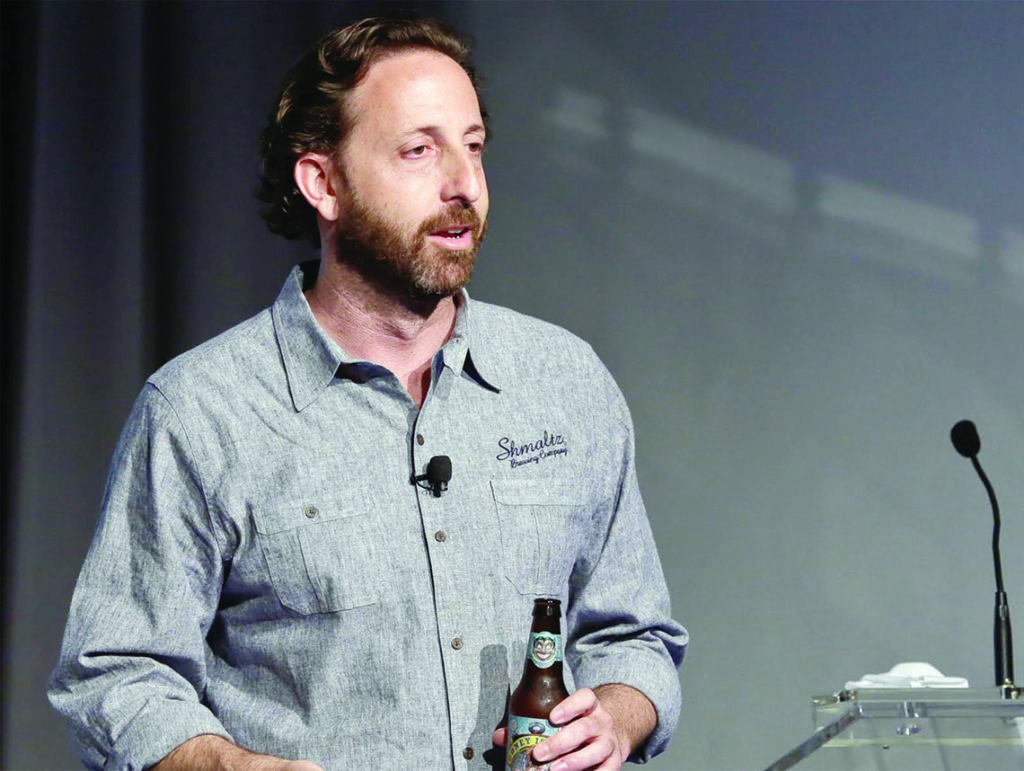
On the eve of Chanukah 1996, Jeremy Cowan began experimenting with squeezing pomegranate juice into a batch of his freshly brewed beer. Working out of a small Bay Area brewery, Cowan hand-bottled and hand-labeled 100 cases of what he dubbed He’brew Beer’s Genesis Ale.
The upstart brewer and recent Stanford graduate peddled his product fromhis grandmother’s Volvo to local retailers in and around San Francisco’s suburbs. His mother helped deliver some cases, too.
“It was a very organic, hands-on beginning,” Cowan, 47, who now lives in Troy, N.Y., told the Journal in a recent phone interview.
Two decades later, Cowan, 47, still is making his Genesis Ale — but that’s not all.
He’s also making beers with names such as “Chanukah, Hanukkah … Pass the Beer,”a dark ale brewed with eight malts and eight hops with 8 percent alcohol by volume (ABV), and “Genesis 20:20,”a barrel-aged, tart barleywine with 16.7 percent ABV. (Before you run to your Torah, don’t worry, Genesis Chapter 20 has only 18 verses.) There’s also “Jewbelation 20th Anniversary Ale,” brewed with 10 malts and 10 hops with 16.8 percent ABV, and “Shtick in a Box,” a holiday variety 12-pack featuring items like “Messiah Nut Brown Ale.”
The brand is known for the Jewish, shtick-laden names gracing its labels.
“Every year, we have to keep trying to be creative, be imaginative and keep putting out quality products, and keep having fun along the way. One of the things we definitely focus on is a whimsy, creativity and sense of shtick,” the craft beer veteran explained.
The “we” refers to Cowan’s team of more than 30 employees helping to produce, promote and sell what his Shmaltz Brewing Co. proudly terms “the chosen beer.” His company operates out of its own 40,000-square-foot, 50-barrel brewhouse — opened in 2013 — in Clifton, N.Y.
For its first 17 years of existence, Shmaltz was a contract brewer, meaning it had to outsource production of its beer to bigger brewers. Now, its upstate New York facility has an annual capacity of 20,000 barrels and boasts a tasting room open to the public. The space frequently hosts events such as weddings, bar and bat mitzvahs, and even brit milah ceremonies.
Shmaltz sells its beer across 35 states in nearly 5,000 retailers, including Vons, BevMo and Cost Plus World Market locations. In 2016, Shmaltz did $4 million in gross sales — a far cry from the back of the Volvo.
“It’s really astounding,” Cowan said of Shmaltz’s rise to Jewish beer prominence.
Shmaltz recently combined two of Cowan’s eternal loves — pastrami and beer — to create “Pastrami Pils,”a 5.5 percent ABV pilsner brewed with caraway, cracked black pepper and kosher salt, and dry hopped with horseradish and rye blend.
Also a lifelong “Star Trek” fan, Cowan secured an exclusive agreement to create the only officially licensed “Star Trek” beers in the country: “Golden Anniversary Ale: Voyage to the Northeast Quadrant”and “Golden Anniversary Ale: The Trouble With Tribbles.”
Shmaltz isn’t just a success story and it isn’t just Jewish. It’s also high-quality craft beer.RateBeer.com ranked Shmaltz as one of the “Top 100 Brewers in the World” in 2013. The company has amassed 40 awards, including 10 gold medals and six silver medals combined at the past several World Beer Championships.
Born in Los Angeles, Cowan spent his early childhood in Beverlywood. His father taught special education and English at nearby Beverly Hills High School.
After college and before his prophetic pomegranate episode, Cowan spent time in New Orleans, soaking up the diverse culture and working at one of the oldest breweries in Louisiana.
“I didn’t think about what I wanted to do,” Cowan said of that time. “I just wanted to read, write music and eat good food.” In the Big Easy, he first developed an appreciation for beer, particularly European styles.
When he returned home to the Bay Area, Cowan set out to find his own calling within that region’s bustling beer culture. He sensed his Jewish identity had a part to play. Many beers conjure up a homeland or constitute a point of pride for drinkers — Heineken, for instance, is as Dutch as windmills or wooden clogs. Cowan wanted to forge a place for Jews in the realm of great beers and to dispel what he saw as a myth that Jews don’t enjoy beer.
“When I started, there was no Jewish celebration beer,” he said. “Every group had some beers they could call their own. I wanted to create something that would combine a sense of history, referencing pop culture, literature, traditions and holidays and, of course, a beer that can stand with the most innovative, creative delicious beers in the world. Then putting a bunch of shtick on the beer labels. I thought people would feel a meaningful connection.”
The craft beer industry is cutthroat, particularly because it comprises so many small businesses clawing to stand out. According to Cowan, the field has seen more growth in the past three years than at any point in history, ballooning to more than 5,000 craft brewers operating in the country.
“This is the single greatest time in history to enjoy great beer and to make craft beer,” he said.
The Jewish branding of Shmaltz is unique, Cowan said. Iconic kosher wine companies such as Kedem and Manischewitz — the names most Jews attune to when playing word association with “Jewish” and “alcohol” — are owned by bigger companies. Cowan hopes drinkers of his beer relish Shmaltz’s ascendancy in the highly competitive beer marketplace as a Jewish independent business going on 20 years.
“I hope the Jewish community feels proud,” he said. “We do feel the support at events and on social media. It’s very difficult to maintain a for-profit consumer Jewish business, and I’m very proud that we’ve accomplished that and hope we can for many years to come.”
A pair of UCLA alumnae have founded a local chapter of Alums for Campus Fairness (ACF), part of a national organization dedicated to fighting anti-Semitism on college campuses and promoting dialogue regarding the Arab-Israeli conflict.
It officially got its start in November, but it wasn’t until January that founders Joyce Craig and Michele Gendelman began a formal membership drive, highlighted by a letter that went out to a group made up mostly of alumni.
“We’ve joined a national effort that shares our goals: to address the continuing deterioration of civil discourse at UCLA and the pattern of intimidation leveled against students — whether pro-Israel or neutral — by pro-BDS (Boycott, Divestment and Sanctions) and anti-Semitic factions,” the letter stated.
“Our collective and generous support of UCLA attests to our commitment to protect and preserve its reputation,” it also said. “Your voice along with ours will have significance to the Administration, and help to preserve civil discourse to our campus. There is strength in numbers. And, there is strength in alumni dollars.”
Craig declined to disclose how many people have joined the group, but she said in addition to registered UCLA alumni, university faculty, staff and parents of students are being accepted. Its goal is to work in collaboration with the student-run pro-Israel groups that are already doing “wonderful work” on campus, she added.
For Craig, a 1984 UCLA Law School graduate, the need for such an organization became apparent after the UC Davis chapter of Alpha Epsilon Pi was vandalized with
swastikas in early 2015. At the time, Craig had two sons living in the Jewish fraternity
house, and one of them was a prominent Jewish leader on campus who served as a UC Davis senator fighting BDS initiatives
on campus.
An attorney mediator specializing in complex family and legacy disputes, Craig began looking into anti-Semitic activities on the campus of her alma mater, where she said she became aware of a rise in hate speech and anti-Semitism. A turning point for her was the much-publicized incident involving former UCLA Graduate Students Association President Milan Chatterjee, who alleged he was bullied by pro-BDS forces in 2015 after offering funding for a Diversity Caucus event on the condition that it not take a position on BDS.
Gendelman, a film and television writing professor at Los Angeles City College who lives in Sherman Oaks and graduated from UCLA in 1979, agreed that the climate on campus is volatile. They knew other alumni had similar concerns.
“While we knew alumni and donors had access to the chancellor and had brought concerns individually or in small groups, we learned that alumni were not formally organized,” Craig said.
That brought them to ACF, a New York-based nonprofit with 17 chapters associated with colleges across the country, including UC Davis, UC Berkeley and UC Riverside. The group works in partnership with the pro-Israel organization StandWithUs.
In one of the UCLA chapter’s first actions, members met with UCLA Chancellor Gene Block and Vice Chancellor for Equity, Diversity and Inclusion Jerry Kang to express a desire to work with the administration and outline intended discussion topics for the future. Craig, who was not at the meeting, said these include how the university will draw the line distinguishing between adherence to the language of the Principles Against Intolerance adopted by the UC regents and protection of students’ free speech rights.
Craig and Gendelman said they hope to help prepare and host an open town-hall discussion forum with Block, Kang, their designees and students. Per their offices, Block and Kang were unavailable to offer comment for this story.
While still in its infancy, ACF-UCLA heads coordinated with student leaders on campus to plan actions leading up to a Nov. 30 campus visit by Pink Floyd musician Roger Waters, an outspoken backer of BDS. Rogers attended a UCLA screening of “The Occupation of American Minds,” a documentary that claims to expose “Israel’s public relations war with the world. That screening was hosted by the Students for Justice in Palestine movement.
“In our view, that was a very good outcome wholly managed by students,” Craig said. “ACF’s ultimate goal is to organize and mobilize, to educate alumni and support UCLA’s administration, while being careful not to eclipse the most valued role of students in managing their campus.”
Gendelman feels strongly that the mobilization of alumni networks is vital toward efforts to curb anti-Semitic sentiments and anti-Israel incidents on campus be-cause of its outside perspective on campus affairs.
“Unlike students, who often feel pressured by peers, and professors alike and who have fear regarding grade reprisal, or professors who fear job or reputation reprisals, and unlike administrators who must cultivate relationships with current and prospective donors, alumni can offer an independent voice,” she said.
In honor of American Heart Month, the “Bless Your Heart” Shabbat service welcomes you to “Say Shalom, Save a Life.” There will be a five-minute hands-on CPR lesson to kick off the evening. 7 p.m.; 7:30 p.m. Shabbat service. Free. Temple Etz Chaim, 1080 E. Janss Road, Thousand Oaks. (805) 497-6891. templeetzchaim.org.
INCLUSION SHABBAT & DINNER
Pray, learn and sing with the community during this service. A young woman on the autism spectrum will read her college entrance essay. 7:30 p.m. $10; $5 for children. Congregation Or Ami, 26115 Mureau Road, Suite B, Calabasas. (818) 497-1281. orami.org.
RACHEL KAUDER NALEBUFF: “THE BUMPS”
Rising playwright Rachel Kauder Nalebuff, creator of The New York Timesbest-seller “My Little Red Book,” has written “The Bumps,” featuring a cast of three expectant mothers. “The Bumps” combines narrative that follows how the understanding of motherhood has evolved. Directed by Deena Selenow, with an all-female team of designers and cast. A conversation with the creative team of “The Bumps” will follow the performance. 8 p.m. Also 2 p.m. Feb. 4. Child care and art activities offered for a limited number of children (ages 3 and older) at the Saturday performance. $10; $8 members; $5 for students. Skirball Cultural Center, 2701 N. Sepulveda Blvd., Los Angeles. (310) 440-4500. skirball.org.
SUN | FEB 5
TU B’SHEVAT COMMUNITY CELEBRATION
Enjoy a hike, picnic, activities and the beautiful outdoors in celebration of Tu B’Shevat. Bring your own food and drinks. Organized by MATI, the Israeli American Council, Tzofim Shevet Harel and Sinai Temple. 9:30 a.m. Free, but RSVP requested. Griffith Park, 4730 Crystal Spring Drive, Los Angeles. (323) 351-7021. israeliamerican.org.
TUES | FEB 7
“THE QUEEN HAS NO CROWN”
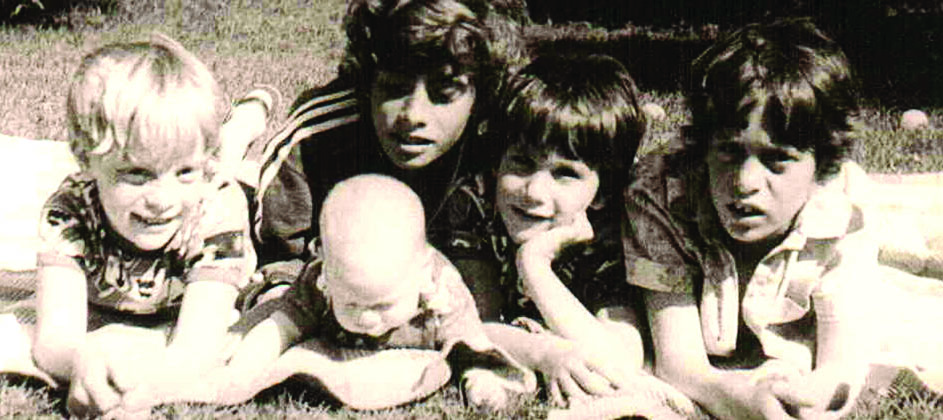
Director Tomer Heymann’s autobiographical documentary “The Queen Has No Crown” is a poignant meditation on belonging, loss and sexuality.
Weaving archival and original footage, the film follows the lives of the five Heymann brothers and their mother. The film examines the difficult decisions the family had to make amid turbulent social and political events. No MPAA rating. In English and Hebrew with English subtitles.
Q-and-A with the director follows the screening. 7:30 p.m. $10 general; $6 full-time students; free to members. Skirball Cultural Center, 2701 N. Sepulveda Blvd., Los Angeles. (310) 440-4500.
HOW AND WHY RELIGION MATTERS
In the first of a series of three programs, widely published Rabbi Ed Feinstein of Valley Beth Shalom in Encino will speak on the subjects of marriage and family, and will examine how Jewish values help strengthen relationships. 6:30 p.m. Free. RSVP to (310) 474-1518, ext. 3340 or member.sinaitemple.org/events. Sinai Temple Men’s Club, 10400 Wilshire Blvd., Los Angeles. (310) 474-1518. sinaitemple.org.
HOW TO WIN AN ARGUMENT
Former World Debate Champion Yoni Cohen-Idov will discuss the tools you need to win any argument during this informative lecture. For Jewish young professionals, ages 21-39. RSVP must be under your name. 7:30 p.m. Free. Sinai Temple, 10400 Wilshire Blvd., Los Angeles. (310) 474-1518. sinaitemple.org.
UNITY 3000
Orthodox, Reform, Conservative, Ashkenazi and secular Jews and people of other faiths will unite through faith in one God at Unity 3000, presented by Junity. Rabbi and best-selling writer Shalom Arush, author of “The Garden of Emuna” and “The Garden of Peace,” will lead the gathering. 8 p.m. Free. Register online to secure a ticket and seat. (At the door, seats are first come, first served for unregistered guests.) Saban Theatre, 8440 Wilshire Blvd., Beverly Hills. Also 8 p.m. Wednesday, Eretz Center, 6170 Wilbur Ave., Tarzana. Junitynow.com.
WED | FEB 8
LGBTQ & MODERN ORTHODOXY PANEL
Westwood Village Synagogue presents a discussion on how to navigate the relationship between LGBTQ and Modern Orthodoxy. Rabbi Ari Segal, head of Shalhevet; Micha Thau, a student at Shalhevet; and actor and comedian Elon Gold will participate in the discussion. Part of the Betty Matoff Lecture Series. 7 p.m. Free. Westwood Village Synagogue, 1148 Westwood Blvd., Los Angeles. (310) 824-9987. westwoodvillagesynagogue.org.
THURS | FEB 9
TU B’SHEVAT: WHERE RITUAL AND REALITY MEET
Amelia Saltsman, award-winning author of “The Seasonal Jewish Kitchen,” and Andy Lipkis, founder and president of the nonprofit TreePeople, will discuss Jewish tradition, culinary delights, climate change and how Tu B’Shevat encourages eco-conscious living. Moderated by Evan Kleiman of KCRW’s “Good Food.” Q-and-A, book signing and tasting of seasonal dishes will follow the program. 7:30 p.m. $12; $10 for members and students. Skirball Cultural Center, 2701 N. Sepulveda Blvd., Los Angeles. (310) 440-4500. skirball.org.
LEONARD BARKAN: “BERLIN FOR JEWS”
What is it like for a Jew to travel to Berlin today? What happens when an American Jew raised by a secular family falls in love with Berlin? Leonard Barkan’s “Berlin for Jews” is a personal love letter to the city that explores these questions and many more. Discussion with Barkan with a reception to follow the presentation. 7 p.m. Free. Seating is limited. Goethe-Institut Los Angeles, 5750 Wilshire Blvd., Suite 100, Los Angeles. (323) 525-3388. goethe.de/en.








 Director Tomer Heymann’s autobiographical documentary
  Amelia Saltsman, award-winning author of “The Seasonal Jewish Kitchen,” and Andy Lipkis, founder and president of the nonprofit TreePeople, will discuss Jewish tradition, culinary delights, climate change and how Tu B’Shevat encourages eco-conscious living. Moderated by Evan Kleiman of KCRW’s “Good Food.” Q-and-A, book signing and tasting of seasonal dishes will follow the program. 7:30 p.m. $12; $10 for members and students. Skirball Cultural Center, 2701 N. Sepulveda Blvd., Los Angeles. (310) 440-4500. skirball.org.
 What is it like for a Jew to travel to Berlin today? What happens when an American Jew raised by a secular family falls in love with Berlin? Leonard Barkan’s “Berlin for Jews” is a personal love letter to the city that explores these questions and many more. Discussion with Barkan with a reception to follow the presentation. 7 p.m. Free. Seating is limited. Goethe-Institut Los Angeles, 5750 Wilshire Blvd., Suite 100, Los Angeles. (323) 525-3388.