fbpx

November 11, 2016

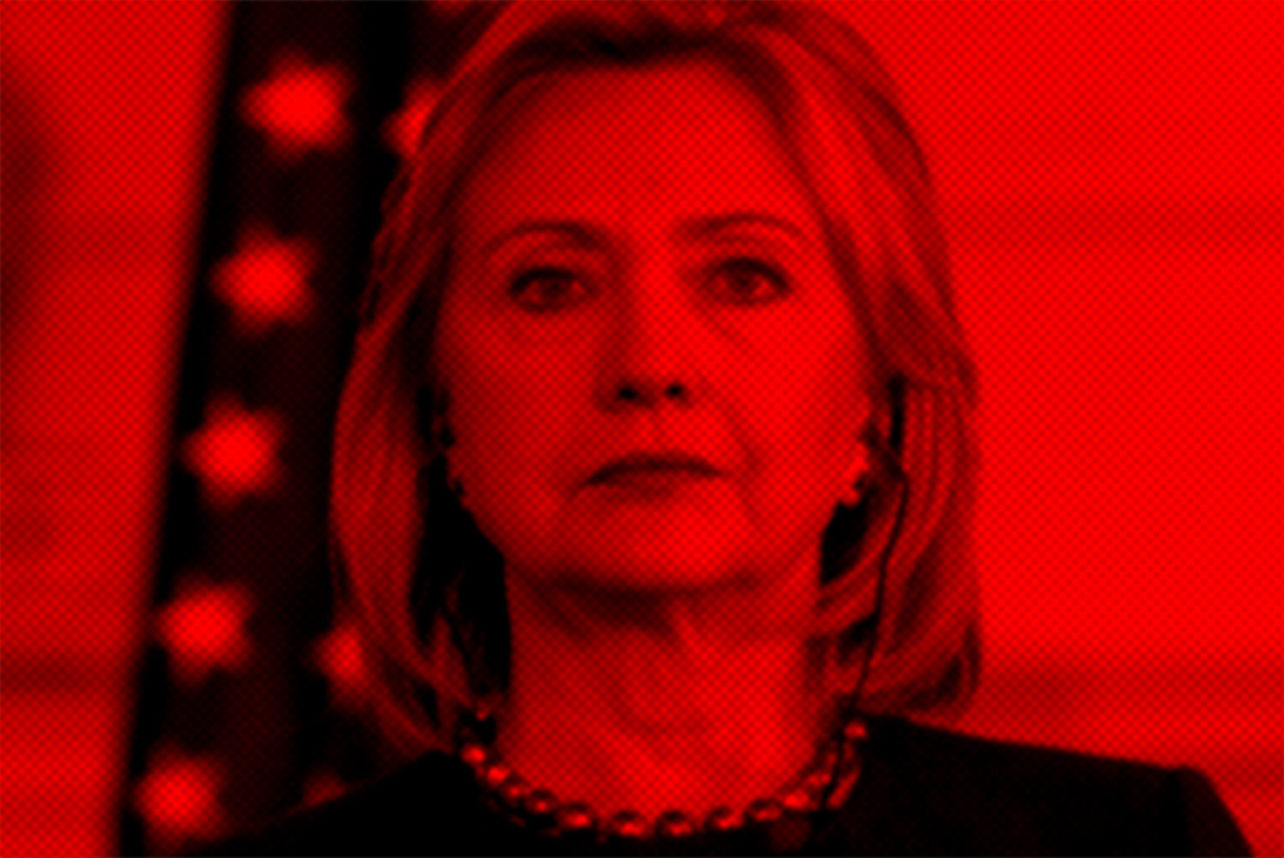
Hillary found her winning voice — after she lost

Hillary Clinton delivered a killer stump speech this morning, after she lost the election. It was her concession speech. Listen to it. You won’t hear any personal attacks, or talking down to “deplorable” Trump voters, or any hint of arrogance or blatant hunger for power.

Instead, we see a sober Hillary Clinton, humbled by defeat, seeking to unify a country she loves.

“Last night I congratulated Donald Trump and offered to work with him on behalf of our country,” she said to a group of disheartened supporters.

She spoke lovingly of “an America that is hopeful, inclusive and big-hearted” with an economy that “work[s] for everyone, not just those at the top.”

Those simple words of empathy for all Americans could have formed the basis for a winning campaign. All of her policies could have flowed from this unifying ideal.

Alas, we rarely got to see this unifying Hillary on the campaign trail. At a time when so much of the country was disillusioned with politicians, she offered the country a politician on steroids. What do politicians crave? They crave power, and they will do or say anything to get it, even lie. That was already Hillary’s image before she started running, and her campaign only reinforced it.

The morning after her loss, however, when power was no longer on the table, Hillary was serene and relaxed. Her body language had none of the hysterical phoniness of the power seeker. She could stop being a politician and become human again.

“Donald Trump is going to be our president,” she quietly told her followers. “We owe him an open mind and the chance to lead.”

Had Hillary’s campaign showed more of an “open mind” to the genuine grievances of many Trump voters, she might have reached more voters repelled by Trump’s coarse divisiveness. She could have been the unifier to Trump’s divider. She could have motivated her supporters to also open their minds.

Instead, too many of Hillary’s supporters allowed their contempt for Trump to translate to his voters. Their thinking was: If you vote for Trump, you must be a bigot or out of your mind, and I will shame you. There was no room for empathy.

I have no doubt that Trump had his share of bigoted fans. But by stereotyping so many Trump voters as “deplorables” and leaving it at that, Hillary’s campaign missed an opportunity to create a unifying message and broaden her appeal.

“We have seen that our nation is more deeply divided than we thought,” she said at her concession speech. Well, that’s for sure. I only wish she would have figured that out sooner and acted on it.

After all, what is a great leader for, if not to unify a divided nation?

Voters don’t unify, leaders do. Most Hillary voters stayed smugly in their silos and viewed all Trump voters with contempt. They had little interest in learning more about people they saw as living in another ideological planet. That’s what voters like to do– hang out with like-minded people.

I expect more from our leaders. A Hillary campaign to unify a divided nation would have been extraordinary. It would have opened minds and hearts. It would have brought out the best in our country and in our people. It would have done what Trump couldn’t do.

Maybe, in the end, Hillary just didn’t have it in her. After so many years of playing in the political swamps, she couldn’t see the forest above her. She couldn’t see the Americans who had given up and were acting out. She assumed she could win without them.

Trump saw all those frustrated Americans, and he pounced. He was the wrong man for the right job. Now, we have to live with the uncertain consequences. As I see people across the country demonstrating against the result of the election, and blaming “the wrong America” for Trump’s victory, all I can see is a future full of greater and greater divisions.

But here’s a silver lining: If Hillary is serious about continuing to fight for her country, I have an idea for her next job. Barnstorm the nation continuously over the next four years and try to bridge our differences. Use the same message and the same winning and hopeful tone you used in your concession speech.

Just don’t ask for speaking fees.

Hillary found her winning voice — after she lost Read More »

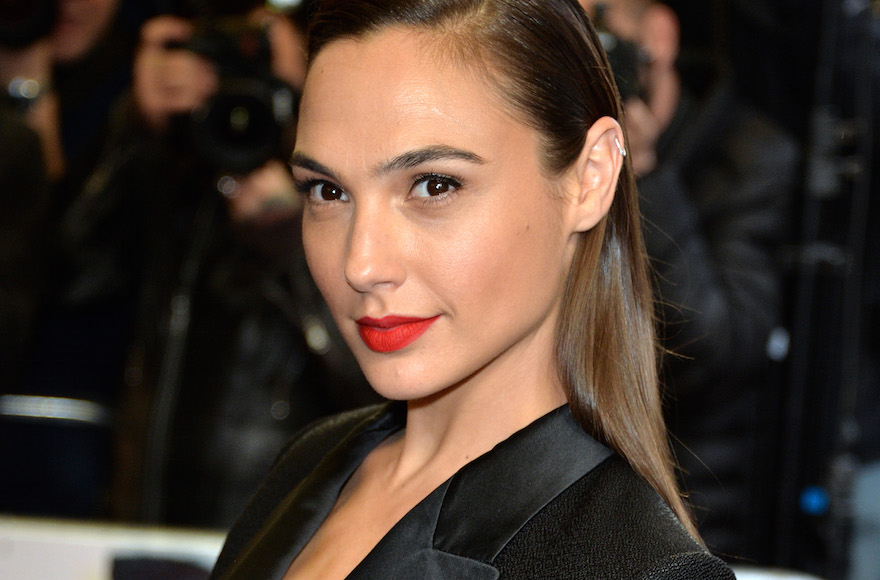
Wonder Woman Gal Gadot announces pregnancy on Twitter, Instagram

Israeli actress Gal Gadot announced in a tweet that she and her husband are expecting their second child.

Gadot, who will be playing Wonder Woman in DC Comics movies, posted a photo Sunday evening of herself and husband Yaron Varsano, an Israeli real estate developer, taking a selfie of the couple making a heart shape with their hands on her belly. The hashtag reads #mommyforthesecondtime. The couple have a 5-year-old daughter.

https://twitter.com/GalGadot/status/795346229194473472

The post also appeared on Instagram.

Her character will soon have a movie of her own. Taking place during the World War I era, the movie will introduce Wonder Woman’s alter ego, Diana Prince, and her origins on the Amazonian island of Themyscira.

“Wonder Woman” is scheduled to open in theaters in June. The character was introduced in DC Comics movies several months ago in “Batman v Superman: Dawn of Justice.” She is also scheduled to appear in the superhero film “Justice League,” which comes out in November 2017.

Wonder Woman Gal Gadot announces pregnancy on Twitter, Instagram Read More »

Election Night 2016: The sights and sounds in Los Angeles and Israel

Election Day dawned in Los Angeles clear and sunny and full of promise — the promise of a closing page to a chapter many have come to dread. 

While there was no surprise as to which way it would ultimately lean, the Democratic stronghold of California has not been spared loud predictions of apocalypse from both parties. So televisions and frayed nerves were tuned in to nail-biters such as Florida and Ohio. And some anxious locals even boarded flights to swing states like Nevada for last-minute volunteering.

Voters got in line at schools and churches and synagogues. They cast their ballots, and then they waited. As dark gathered, so did they, at homes and bars, convening to toast the health of the democratic process — or else to mourn its corpse. The glass was half empty or half full, but at least it was beer in the glass. Many were in need of a drink — and something, anything, worth offering a toast about.

As residents waited to see if Democrat Hillary Clinton or Republican Donald Trump would emerge victorious, the Journal canvassed the city to report on the anticipation, the unease and, yes, the excitement that accompanied this year’s remarkable election.

— Eitan Arom, Staff Writer

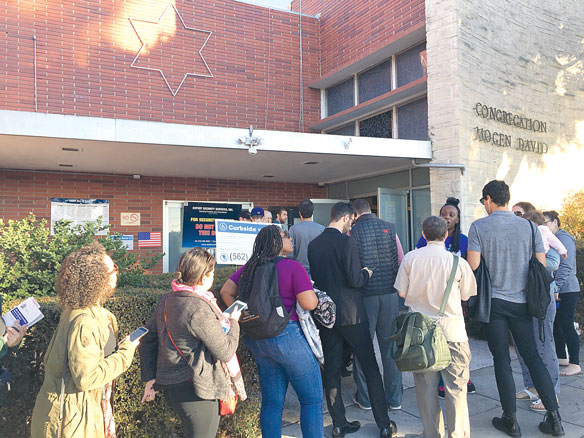
7:30 a.m. Congregation Mogen David

Izajah Gordon and Jordan Kessler react to news of Donald Trump taking Ohio. Photo by Oren Peleg

Some walked, some drove, but they all came ready to vote as the early November sunshine warmed the air. Upbeat and smiling, they didn’t even seem to mind that the line stretched out the door and about 20 yards down the block as they arrived in clothes alternately appropriate for work or a workout.

Julie Sergojian, a volunteer at the polling station, said she felt there was more excitement about this year’s race than four years ago, when she volunteered at Congregation Mogen David for the first time.

“This is a really important process and making sure everyone votes and has access to vote is very important,” she said, seated behind a long table in the shul’s lobby before a stack of pink provisional ballots.

Many arrived with their young children in tow, including Laura Delledonne, who stood in line with her 11-year-old son, Dante. So who would she vote for?

“I’m with her,” Delledonne said.

Dante, a sixth-grader, is a Clinton supporter, too, explaining, “She wants clean energy.”

Suzee Markowitz, co-owner of Factor’s Famous Deli, came with her son, Brandon Bank, 25.

“I’m very excited for this historic election,” Markowitz said after casting her vote for Clinton. “I came here with my 25-year-old son. I’m coming back with my 90-year-old mother.”

Khalev Zelaya, 42, a Latino-Jewish Pico-Robertson resident originally from El Salvador, said he supports Trump.

“I have some anxiety, positive anxiety coming here to vote and trying to choose the next president,” he said. “I know in California it’s hard to make a Republican win because we’re not too many, but yes, I am very positive.

“I am still going to exercise my vote,” he continued, “especially because in Latin America, you cannot do too much because over there, you go to vote and they kill you or elections are so corrupt. … But here in America, we still have that and I am going to use that and exercise my right today.”

— Ryan Torok, Staff Writer

11:41 a.m. PST (9:41 p.m. local time), Abraham’s Hostel, Tel Aviv 

“Let’s make America great again!” shouts an 18-year-old Texan, standing near the DJ booth as three screens hover above the dance floor of the Abraham Hostel.

Tonight, Masa Israel Journey, which brings young adults to study, intern and volunteer in Israel for several months, united participants through an election viewing event expected to go until 2 a.m. local time (4 p.m. in Los Angeles). Another participant repeats Trump’s campaign slogan.

“I don’t know who’s being sarcastic anymore,” says 24-year-old Michigan native Josh Linden, currently teaching English in Israel. He cast his absentee vote for Clinton. “I haven’t met anyone here voting for him yet but I haven’t been asking.” (The Texan, by the way, voted for Clinton.)

As a DJ tried to rev up the crowd with some hip-hop, with results still hours away, most of the people were lounging around, schmoozing over beer, or playing pool or table soccer. None seemed too worried about the United States, either way.

Maybe their comfort playing “Israeli” for the past two months has contributed to a feeling of detachment in the air. And while Abraham Hostel is so named for being a place that fosters peace among people, the crowd doesn’t seem to need the reconciliatory touch. Judging from a straw poll, Sara Eisen, the program’s chief communications officer, said most of the participants are Clinton supporters. But she attributes their laid-back attitude tonight to the nature of the program.

“I think, in general, people come to Israel to grow and to expand and to change —  minds are wider,” she said.

Max Moser, 27, of Los Angeles and currently a fellow at the Shalom Hartman Institute in Jerusalem, didn’t want to reveal his choice.

“I’m not excited about the election like most Americans,” he said. “I feel like there’s really a lack of leadership in the United States government.”

Does this make him more inclined to make aliyah? Israel’s newest holiday, Aliyah Day, celebrating immigration to Israel, fell on Nov. 8.

“I’m considering aliyah but not because of the national election, at all.”

— Orit Arfa, Contributing Writer

3 p.m. PST (1 a.m. local time), Mike’s Place, Jerusalem  

An hour before the initial election results, attorney Marc Zell, co-chairman of Republicans Overseas Israel, took out a chart of American states and crunched numbers. He predicted Trump would take Kentucky, Indiana, Georgia and South Carolina — that’s 44 electoral votes.

“If Georgia is too close to call, that’s a bad sign,” he said.

He entered the main hall of the iconic Mike’s Place on Jaffa Street in Jerusalem to optimistic greeters. He was carrying a box of “Make America Great Again” caps to give out to some 200 Trump supporters and volunteers who united here tonight, although some were already wearing them, like William Eicoff, a resident of the city of Ariel in the West Bank and proud Florida voter.

He had volunteered to contact Jewish communities in his region to encourage residents to vote. As an independent, he voted for Gary Johnson in the last election. Not this time.

“I know Trump supports Israel and I know he’s a builder,” he said, hoping this translates into more support for building Jewish settlements in “Judea and Samaria,” his preferred terms. “But another thing he said that I hope happens is that he moves the embassy to Jerusalem.”

Jerusalem-based author/writer hailing from New York, Zahava Englard is on the “Trump train” in large part because of his tough stance on radical Islam.

“My No. 1 concern is the relationship between the United States and Israel, and I have to say that I do believe that there is a Clinton cartel.”

She doesn’t even want to consider a Clinton victory. “You need hope to keep living.”

By 1:22 a.m. local time, there was room for hope. The crowd cheered as Kentucky and Indiana went for Trump, but the fact that Georgia was too close to call had Zell concerned.

But less than two hours later, swing states Florida, Pennsylvania and Ohio were also too close to call. Yiscah Shechter, a Jerusalem resident of 27 years, was nervous, but comforted.

“God runs the world,” she said. “Whoever’s going to win will do whatever He wants.”

– Orit Arfa, Contributing Writer

5:30 p.m. UCLA Wilson Plaza

More than 750 people attended an election watch party at UCLA. Photo by Olga Grigoryants

Think young people aren’t interested in politics? Don’t tell that to the hundreds of Bruins who gathered in front of three large screens to follow election results.

More than 750 students and faculty gathered for a night of food and politics. Some munched on pizza, popcorn, sandwiches and salads, while others danced in front of screens as a DJ played songs by Drake and Rihanna.

Antonio Sandoval, director of the UCLA Community Programs Office, said he didn’t expect so many people could attend the watch party, but the vibes were all good.

“It’s a happy and diverse crowd,” he said. “Students enjoy celebrating the election in the shared environment.”

Still, Muhammad Bilal, an assistant researcher at UCLA, said it’s been painful to watch the presidential election as a member of the Muslim community.

“Trump said so many disrespectful things about Muslims,” he said.

Sana Rahim, an MBA student, said she voted for Clinton even though she didn’t see a lot of support for the Muslim community from her.

“Hillary said the Muslim community is a good resource to fight terrorism, but we are not [a] resource, we are people,” she said.

Joseph Yasmeh, a physiology and anthropology major, said he is surprised many Americans are voting for Trump after he made so many racist comments.

“It’s a little bit scary now,” said Yasmeh, who is Jewish. “But it’s going to be OK.”

Kathy Zhao, a student from China who studies economics at UCLA, said she doesn’t have the right to vote as an international student, but she was rooting for Trump. “Trump is very popular in China and people like him there,” she said. “He is also a handsome man, and I hope he will become an American president.”

— Olga Grigoryants, Contributing Writer

7:30 p.m. The Parlor, Hollywood

The nametags couldn’t help but promote conversation: “Nasty Woman,” “#repealthedeathpenalty” and “Prop 64.”

As if there weren’t enough buzzwords being bandied about on 50 television screens tuned to Fox News, MSNBC and CNN, the dozens of millenials who arrived at this Hollywood sports bar were asked to fill out nametags with the name of a candidate, proposition or election catchphrase.

Brought together by 30 Years After, a nonprofit, nonpartisan organization that promotes the civic engagement and communal involvement of Los Angeles’ Iranian Jews, some were Election Day veterans; others, like Sandy Elyassian, 27, a 30 Years After board member and nursing student, were voting in a presidential election for the first time.

While Elyassian declined to reveal who she voted for in the hotly contested race for the White House, she said casting her ballot hours earlier made the night’s results far more meaningful than elections past — not to mention more exciting.

“Knowing that I voted today and didn’t vote in the past has me feeling the suspense of it in the moment,” Elyassian said. “I voted today and the results are coming in today. It’s more powerful. I definitely feel more invested in what’s going on. It’s getting more and more exciting to find out who the next president is going to be.”

Not everyone was obsessed with the presidential results. 30 Years After board member and pharmacy student Miriam Eshaghian, 24, sported a nametag reading “Prop 61.” On this night, Eshaghian’s gaze was more fixed on ballot propositions like the Drug Price Standards Initiative than the tense results rolling in from close battleground states such as Ohio and Florida.

“I’m in pharmacy school so Prop. 61 is very closely related to my field of study,” Eshaghian said. “I have my thoughts on the presidential election but things like Prop. 61 are more important to me.”

And then there was the politician who grabbed attention for different reasons. Former Los Angeles Mayor Antonio Villaraigosa made a brief appearance, posing for photos and engaging with guests. 30 Years After president Sam Yebri was thrilled to have the former mayor in attendance.

“Having [Villaraigosa] here shows the affection that he has for the Iranian-Jewish community and the great strides we’ve made to build political relationships in our city,” Yebri said.

– Oren Peleg, Contributing Writer

8 p.m., Kibitz Room, Canter’s Deli

Election watchers at the Kibitz Room. Photo by Jeffrey Hensiek

It started as a party, it ended as shiva.

At the Jewish Journal Election Night Watch Party at the Kibitz Room at Canter’s Deli on Fairfax Avenue, a packed room nursed drinks and watched two television monitors unspool the results. On CNN, Wolf Blitzer called Florida for Donald Trump.

“I’m feeling sick to my stomach. Like, literally, I don’t feel well,” a 30-something young woman said to no one in particular.

The night didn’t start out that way.  As people filtered in to the tight bar, Clinton was already struggling in Florida and Ohio.  The iPhones immediately came out and election watchers compared tweets from pollsters Nate Silver and Nate Cohen as they nursed beers.

CNN called Colorado for Clinton, the crowd cheered. Then Blitzer called Florida  for Trump. A four-letter word exploded across the bar. A woman who  runs a women’s-centric website ordered a straight tequila.

“People are angry,” she explained. “They feel left out. I get it.”

At another table, three twentysomething Jewish women tried to think of how many friends they had who had voted for the man who now looked to be the next president of the United States.

“Maybe one or two,” one of the woman said.

“I just don’t get it,” her friend said.

The word “Brexit” got bandied about.  There were dark jokes about heading for Vancouver, Israel or Mexico — for good. Someone read aloud a tweet from the writer Peter Beinart, who pointed out that exit polls showed the vast majority of Jewish Americans voted for Hillary.

“I’ve never felt more Jewish and less American,” Beinart wrote.

The room stayed lively but the thoughts grew darker. Attorney Jon Drucker said he wasn’t completely surprised.  For one, people tend to live in their bubbles.  And that 70 percent chance the two Nates gave Clinton of winning just one day earlier?

“If someone told you there was a 30 percent you’d die in a horrible car crash,” Drucker asked, “would you get in the car?”

– Staff Report

8 p.m. Culver Studios, Culver City

From left, Ilan Greenwald and David Levitus place phone calls to battleground states on behalf of Hillary Clinton. Photo by Ryan Torok

“This is for all the women and all the girls all over the world!”

Sariel Taylor Pindo, 22, traveled to Los Angeles from Australia and has been volunteering for the Clinton campaign since July — and the Jewish woman was back at it again on Election Day at the candidate’s Get Out the Vote staging location.

Passion for the Democratic candidate and disdain for Republican candidate Donald Trump was on display throughout the day and night at the location, as Clinton supporters like Pindo placed phone calls to voters in battlegroundstates such as North Carolina, Florida, Michigan, Nevada, Arizona, Wisconsin and Colorado.

“I’m here to stand up for my values and defeat a fascist,” IKAR congregant David Levitus said, seated at a table dotted with discarded bottles of water, crumpled paper plates and red cups filled with markers and pens.

A tense urgency to place as many phone calls as possible before the polls closed in Nevada had gripped the group earlier, which numbered approximately 100 people and included many women wearing “Nasty Woman” T-shirts. Volunteers busied themselves on laptops and cellphones, imploring those on the receiving end of their calls to hurry to the polls.

At 7:15 p.m., everyone stopped making calls: The polls had officially closed in all of the battleground states. The volume of the television, which was running PBS, was turned up. A keg of beer was opened. The smell of hot pizza filled the room.

Venice resident Mary Jane Wagle passed out condoms labeled “Planned Parenthood” and “Protect Yourself from Trump.” A chant, “I believe she will win!” greeted the news that Clinton had won by 1 percent in Virginia. The mood soured, however, amid reports that Clinton had lost Florida and Ohio.

“This is not what we would have liked it to look like,” Janice Littlejohn, a Clinton supporter, said at 8:30 p.m., eyes glued to the television. “But it’s not over.”

– Ryan Torok, Contributing Writer

8:30 p.m. Rococo Room, Pasadena

Polls closed in California at 8 p.m. By 8:30 p.m., the second floor of the upscale Rococo Room in Old Pasadena was packed with well-dressed men and women who came to toast the hopeful victory of Donald Trump and two local Republicans, state senate candidate Mike Antonovich and Katherine Barger, running for L.A. County supervisor.

The atmosphere was jubilant: Florida had just been called for Trump.

“Feels good tonight,” said Allen Brandstater, who sat at the back of the room wearing a pin depicting Ronald Reagan clad in a cowboy hat.

Trump was not Brandstater’s first choice, or even his third. A longtime conservative who campaigned for Barry Goldwater in 1964 and who served five times as the press secretary for Antonovich’s campaigns, he favored Ben Carson in the primary. But the seeming success of Trump’s electoral insurgency told him the tide was turning in American politics.

“By and large — and I think tonight indicates — people are annoyed with the Beltway establishment class,” he said.

The crowd milled around him: Journalists snapping photos and jotting notes, supporters mobbing the candidates to offer congratulations and attractive young Republicans dressed formally, mingling under the exposed wood beams as servers wound their way through carrying hors d’oeuvres. Partygoers traded news about how swing states were swinging and how the local races fared: Antonovich’s fate was uncertain, but Barger was leading her nearest competitor by a wide margin.

The room grew progressively more lighthearted as drinks flowed and red blossomed over the electoral map on the screens over the bar, tuned to CNN. Brandstater was confident of a Trump victory.

He leaned in and said, “It’s the best night to be a Republican since the night Ronald Reagan and Mike Antonovich were elected in November of 1980.”

– Eitan Arom, Contributing Writer

Election Night 2016: The sights and sounds in Los Angeles and Israel Read More »

Moving and Shaking: FIDF gala, Mike Burstyn honored, David Suissa named Humanitarian of the Year

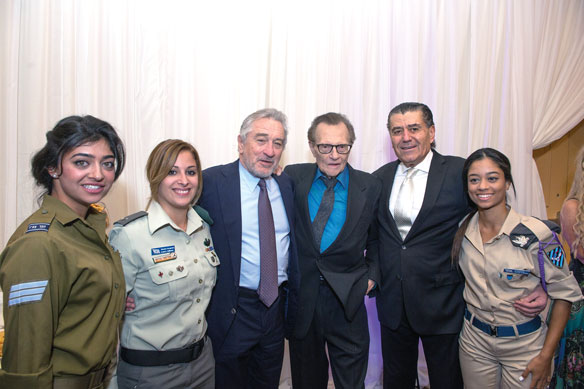
Friends of the Israel Defense Forces (FIDF) Western Region Gala on Nov. 4 raised a record $38 million from supporters such as GUESS founders Maurice and Paul Marciano, who donated $5 million, and Rabbi Yechiel Eckstein, founder and president of the International Fellowship of Christians and Jews, who donated $6 million.

The high point of the gala came when the event’s chairman, Haim Saban, took the microphone and conducted the fundraiser. At times, the fundraising sounded like a bidding war at an auction, with guests taking turns at outbidding others, although there were no prizes to bid on.

As it does at each year’s gala, the FIDF flew in several soldiers whose stories helped open the guests’ hearts and checkbooks. Allison Bressand, a soldier from France, left her family behind when she enlisted in the IDF. Bressand served as a squad commander in the Israeli border police and was responsible for stopping a terror attack last year. She had moved to Israel to fulfill her late father’s dream of returning to the Jewish homeland. Bressand’s mother, who had not seen her daughter for nearly a year, was flown into Los Angeles from France to surprise Bressand onstage. The emotional reunion managed to move even Robert De Niro, one of the event’s celebrity guests.

From left: Cheryl Saban, actress Rosanna Arquette and Haim Saban attend the FIDF Western Region gala. Photo courtesy of FIDF

Another soldier whose story resonated with guests was Sgt. Ohad Benyichai, an Israeli commando who suffered a severe head injury during the 2014 battle in Gaza’s Shejaiya neighborhood. Benyichai’s journey to recovery — accomplished despite doctors’ prognoses that he wouldn’t survive — was documented in a short video. Onstage, Benyichai, who still struggles with his speech, thanked the audience, which gave him a standing ovation.

The gala sold out long before the event and drew more than 1,200 supporters to the Beverly Hilton. Among the celebrity guests were Arnold Schwarzenegger, Larry King, Julie Bowen, Gerard Butler and Joanna Krupa.

The event featured special performances by David Foster and friends, TV stars Laura Bretan and Jordan Smith, and Jason McGee and the Choir.

— Ayala Or-El, Contributing Writer


Mike Burstyn and his wife, Cyona, celebrate after Burstyn accepted the Lifetime Achievement Award at the 25th Silicon Valley Film Festival. Photo courtesy of Mike Burstyn 

Mike Burstyn, the talented, multilingual actor and West Los Angeles resident, was honored on Oct. 27 with a Lifetime Achievement Award at the 25th Silicon Valley Film Festival in San Jose. Two nights later, the festival reprised Burstyn’s Israeli comedy hit “The 2 Kuni Lemel” to mark the film’s 50th anniversary.

With his wife, Cyona, at his side, Burstyn accepted congratulations from far and wide, including a message from Michael Oren, deputy minister of diplomacy in Prime Minister Benjamin Netanyahu’s office. “(Burstyn’s) contributions to the performing arts — and especially Jewish arts — are legendary,” Oren wrote. “In Israel and throughout the world, he has enriched countless lives and brought joy to millions.”

Burstyn is now prepping for his solo show, “Rozhinkes mit Mandlen” (Raisins and Almonds), to be performed on Nov. 13 at Sinai Temple in Westwood.

— Tom Tugend, Contributing Editor 


Rabbi Pamela Frydman, recipient of the Global Citizens Award. Photo courtesy of Rabbi Pamela Frydman

The East Bay chapter of the United Nations Association of the United States of America (UNA-USA) on Oct. 23 awarded its Global Citizen Award to a Southern California rabbi for her work in raising awareness of the genocide of Yazidis and Assyrians in Iraq and Syria.

The recipient, Rabbi Pamela Frydman, worked in San Francisco as an educator and activist before moving to Los Angeles in May, and she is now the interim rabbi of Congregation P’nai Tikvah in Las Vegas.

Frydman was not in attendance at the ceremony, but in a recorded video address she offered her gratitude to the East Bay chapter of the UNA-USA for recognizing her activism. “One who saves a single life, it is as if he saved an entire world; and one who takes a single life, it is as if he destroyed an entire world,” she said, quoting the Quran and the Mishnah. “Worlds upon worlds have been destroyed. Lives are hanging in the balance.”

Frydman is a leader of the Save Us From Genocide and Beyond Genocide campaigns, which educate about and raise funds for Assyrians and Yazidis in the Middle East. Frydman and her campaigns “have raised awareness and support to halt torture, slavery and mass killings, particularly committed by ISIS,” the award announcement said.

— Eitan Arom, Staff Writer


David Suissa (third from left) attends the American Friends of Magen David Adom (AFMDA) Red Star Ball with his five children (from left): Tova, Shanni, Noah, Eva and Mia. Suissa, president of the Journal, was named the AFMDA Humanitarian of the Year. Photo by Ryan Torok

More than 1,000 philanthropists, clergy members, elected officials and others came together Nov. 1 for the American Friends of Magen David Adom (AFMDA) fourth annual Red Star Ball in Beverly Hills, which honored Jewish Journal President David Suissa as Humanitarian of the Year; Stanley Black with the Lifetime Achievement Award; and Zach Zalben, Black’s grandson, with the Next Generation Award.

Such events “remind us how much we need one another and how much the community would be nothing without the character trait of generosity,” Suissa said, accepting his award from Journal Editor-in-Chief Rob Eshman. “All of you here tonight are givers.”

Co-chaired by philanthropists Dina and Fred Leeds, and hosted by Adele and Beny Alagem, the event at Beny Alagem’s hotel, the Beverly Hilton, raised more than $14 million toward the construction of the National Marcus Blood Services Center, an underground blood bank in Israel, and other initiatives. Attendee and philanthropist Maurice Kanbar, creator of Skyy Vodka, donated $5 million; Lynn Shall, a congregant of Temple Menorah in Redondo Beach, whose husband, Allen, died in 2015 after being struck by a bus, donated $125,000 toward the purchase of an intensive care ambulance in her late husband’s memory.

“It [the ambulance] will go all over Israel and his name will live on — and to me it’s really important,” Shall said. “He was a Jew’s Jew.”

Entertainer Diana Ross performed a medley of hit songs, much to the delight of Los Angeles City Controller Ron Galperin. “She’s fabulous,” Galperin said, snapping selfies at the foot of the stage. “I want be like her when I’m 72.”

Ross’ performance aside, the focus of the event was the work of Israel’s primary ambulance, blood service and disaster relief organization, which does not receive government funding.

“The work that Magen David Adom does is essential,” said Sam Grundwerg, consul general of Israel in Los Angeles. “They’re on the front lines with incredibly fast reaction times, both for civilian emergencies and even for our soldiers once they’re over the line in our territories. And the work they do is saving lives.”

— Ryan Torok, Staff Writer  


From far left: Consul General of Israel in Los Angeles Sam Grundwerg and his wife, Julia, actor  Jason Alexander and musician Todd Schroeder attend the Friends of Sheba Medical Center gala. Photo by Kyle Espweleta

Friends of Sheba Medical Center held its 46th annual gala at the Beverly Wilshire Hotel on Oct. 30 and commemorated the work of Sheba Medical Center at Tel HaShomer, Israel. Titled “The Hero Gene,” the evening drew approximately 700 attendees.

The gala, hosted by Jason Alexander (“Seinfeld”), honored Arnon Adar, a member of the organization’s board of directors, with the inaugural Professor Mordechai Shani Lifetime Achievement Award, and Hadar Greenberg-Almog, a Friends of Sheba supporter and volunteer, with the Laurel of Leadership award.

Throughout the evening, Friends of Sheba chairs, board members, volunteers, doctors and a patient highlighted the hospital’s MSR (Hebrew for “Mercaz l’Simulatzia Refu’it”), the Israel Center for Medical Simulation. The simulations at MSR provide training for civilian and medical personnel in real-life scenarios, without human and medical errors.

The goal of the simulation center is to reduce the number of medical errors that occur at the hospital and beyond, according to Adina Hepner, director of development at Friends of Sheba. In the United States, medical errors are the third leading cause of death, and at least 60 percent of these cases are considered preventable, according to the British Medical Journal. Each year more than 15,000 people are trained or tested at MSR, and the demand is on the rise, Hepner said.

The proceeds raised by the gala — topped with a $1 million gift by The Nazarian Family Foundation — totaled $3.2 million. The funds will go toward growing the facility.

“Sheba Medical Center is the best that Israel has to offer and showcases the incredible lifesaving work that Israel offers the world,” Hepner said. “It is essential that we spread this message and raise the funds necessary for this hospital to continue its unique and heroic mission.”

— Kylie Ora Lobell, Contributing Writer

Moving and Shaking highlights events, honors and simchas. Got a tip? Email ryant@jewishjournal.com.

Moving and Shaking: FIDF gala, Mike Burstyn honored, David Suissa named Humanitarian of the Year Read More »

Hebrew Word of the Week: hinneh

Very typical and a favorite biblical interjection. It alternates with hen, as in Genesis 3:22 (God speaking): hen ha-adam … “Now that the man has become like one of us … ” Common in other Semitic languages, as Aramaic hen “yes, yea.” It seems to me a natural sound one makes in a variety of situations, as to draw attention before speaking, or hesitations, clearing one’s throat, etc.; compare English hmm, hum, eh, hello (in a loud voice, meaning: “May I have your attention!”).

Examples of nuances: hen, lu yehi ki-dvarekha “OK, let it be as you say” (Genesis 30:34); hinneh ishtekha “Here is your wife” (Genesis 12:19); in lively narratives, as ba-Halomi ve-hinneh … “In my dream, suddenly I saw a vine (Genesis 40:9); hinneh barekhu et adonay “Come, bless the Lord!” (Psalms 134:1).

Responding to a call: hinneni “Here I am!” (Abraham to God, Genesis 22:1); said even by God: “I promised and am now at hand (hinneni)” (Isaiah 52:6); and the name of several modern organizations, as in the ones by the late Rebbetzin Esther Jungreis (Hineni) and Rabbi Jill Zimmerman (“Hineni: The Mindful Heart Community”).

* Originally an imperative form of look.


Yona Sabar is a professor of Hebrew and Aramaic in the department of  Near Eastern Languages & Cultures at UCLA.

Hebrew Word of the Week: hinneh Read More »

Letters to the Editor: Rabbi Sholom Levitansky,, Israel and the election

Rabbi Got Off Lightly

I was furious to read about Rabbi Sholom Levitansky, who will be treated at Beit T’Shuvah rather than doing jail time for pedophile sexual abuse (“Rabbi Charged With Sex Abuse to Get 1 Year of Counseling, No Prison,” Nov. 4).

He committed a crime against girls, which can affect their lives forever, and he will be treated for addiction. The fact that rather than report him to the police for his act, he went before a panel of “prominent Los Angeles rabbis for remediation” is outrageous. He should immediately have been reported to the police. I couldn’t help to think that if he had been an African-American janitor at the facility, he would now be serving time, but a white rabbi gets a year of “treatment.”

What have we learned in the last months about letting white sexual offenders get off lightly? Nothing, I guess. It’s time that we woke up and sentenced these men appropriately for the harm they have committed on children.

Marcia Cohn Spiegel via email 

No Talk of Israel

Thank you, Shmuel Rosner, for your article (“Election ’16: Israel out, Anti-Semitism in,” Oct. 28). I, too, found it jarring that Israel was almost never mentioned during the three election debates. It is unclear to me whether we should worry that Israel has become less important in U.S. politics, or whether we should breathe a sigh of relief that with so much other mayhem in the Middle East, Israel is no longer the focal point.

Naomi Weberman via email

Hate Speech and Free Speech

In the midst of the explosion of hateful messages on social media spewing bigoted, sexist, homophobic, anti-Semitic and anti-Muslim slurs, it is refreshing to see little or no call for government censorship. One of the bitter lessons of living in a constitutional democracy, which places a very high value on freedom of expression, is that unless someone makes a “true threat,” which the law defines as a clear and explicit threat against an individual with the intent of causing imminent lawless conduct, not merely political hyperbole or just letting off steam without any intent to do harm, then even hateful and offensive speech is protected by the First Amendment.

Fortunately, your article (“Digital Hate: After the Election, Will This Be Our New Normal?” Oct. 28) highlights a variety of steps people can take to empower themselves to combat these hateful messages, including the private removal policies of Facebook and Twitter, without getting the government involved. In the end, we should heed the wise counsel of Supreme Court Justice Louis Brandeis, who urged that in the face of incitement, “the remedy to be applied is more speech, not enforced silence.”

Stephen F. Rohde, Chair of Bend the Arc: A Jewish Partnership for Justice

Howard Stern Is No Hero

Week after week, I read the letters to the editor to see someone comment on the blatant one-sided bashing of Donald Trump in almost every issue by the editor and publisher, Rob Eshman.

I am surprised that a Jewish publication would not be more even-handed in its approach to the news. You have just about ignored the multiple, serious transgressions of Hillary Clinton, disregarding her flawed and criminal persona. You and your ilk have distorted many of the comments made by Mr. Trump and have given Hillary Clinton a pass on all that she has done.

In a recent article (“5 Heroes of 2016,” Oct. 21), you have stooped to present a one-sided list of individuals and publications, deserving of downgrading comment. … I will, however, limit my remarks to one person, who in the past you have lauded as someone deserving of praise.

Howard Stern is a foul-mouthed, disgusting and reprehensible excuse for a human being. His expletive-filled rants, lechery, potty humor, sexual innuendos and controversial opinions do not deserve any recognition .

Stern is a “shock jock” who specializes in talking about lesbians and strippers. Your praise of him puts you in the same boat with him. A society that pays him millions to spout his perverted thoughts is a society unworthy of the name.

An editor of a Jewish publication that lists him as a “hero” brings his own moral and ethical being into question. You should stick to writing about food and not commenting on current events. I would suggest that you read David Suissa and Dennis Prager for more intelligent comments.

Abraham Baror, Los Angeles

A Different Take on Jews in Morocco

It was disappointing to read the article by Jessica Marglin (“Jews and Muslims: Lessons From Moroccan History,” Oct. 28). Jewish Moroccan history was far different from the idyllic one Marglin describes. Virulent anti-Semitism was strong and pervaded all facets of life. By her own admission “Muslims occupied a higher rung on the social and legal hierarchy, and various aspects of Jews’ daily lives reminded them of their inferior status.” She uses the example of the Assarraf family to make her case. The fact that there was one smart and successful Jewish attorney who was an expert in the system of Shariah courts is a bad example and nothing new — Jews flourish even when they are in bad environments.

Frances and Stuart Miller, Beverly Hills

Letters to the Editor: Rabbi Sholom Levitansky,, Israel and the election Read More »

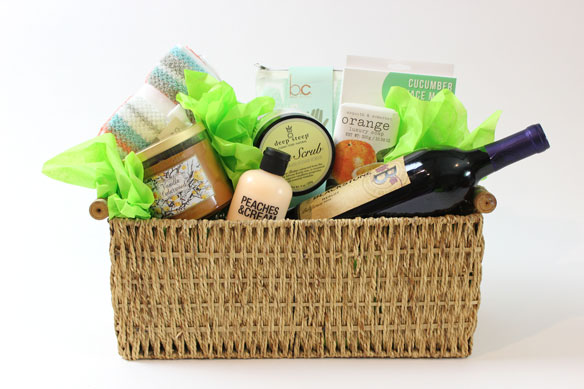
Gift baskets 101: How to make your own

Gift baskets rock. Instead of receiving only one gift, you get multiple smaller ones. You can share the goodies with others. And you get to keep the basket when you’re through.

Besides receiving gift baskets, I also love giving them. But buying them pre-assembled from stores can be expensive, as the markup on the individual items is considerable. Putting together one yourself is a lot more affordable, and the bonus is you can really customize it for the recipient. They’re also much easier to assemble than you’d think, thanks to these three secret ingredients: foam, wood skewers and glue dots. n

Anchor the basket with foam

Start with a basket that’s at least 6 inches deep so there’s enough room to hide the foam inside. Line your basket with tissue paper, and place enough foam in the basket to cover as much of the bottom of the basket as you can. You can purchase various types of foam at the crafts store, including white Styrofoam and green floral foam, and they all work for this purpose. Then crumple newspaper or butcher paper around the foam so it’s nice and snug, and cover it all up with more tissue paper.

Attach skewers to gift items

There’s a simple way to display the contents of the gift basket and keep them in the right position. Using packing tape, attach wooden skewers to the back of all your elements. The skewers act like “stems” for the gift items. Then insert the skewers, pointy side down, into the foam in the basket, positioning the taller items toward the back of the basket and the smaller items in front. For heavier items, you may want to attach two skewers for extra support.

Stabilize with glue dots

Especially if the individual gift items in the basket are heavy, they will want to sway around. To keep them in place, use glue dots to stick them to wherever they’re touching an adjacent item. Glue dots are little dots of adhesive that come in a roll; they’re available at crafts stores and office supply retailers. You also can adhere glue dots to wherever gift items touch the edge of the basket. When you’re done, add tissue paper in any empty spots to keep the items snug and add a dash of festive color.

Another idea:


Get creative with what you use as a basket, like this colander for a chef’s gift basket.

Gift baskets 101: How to make your own Read More »

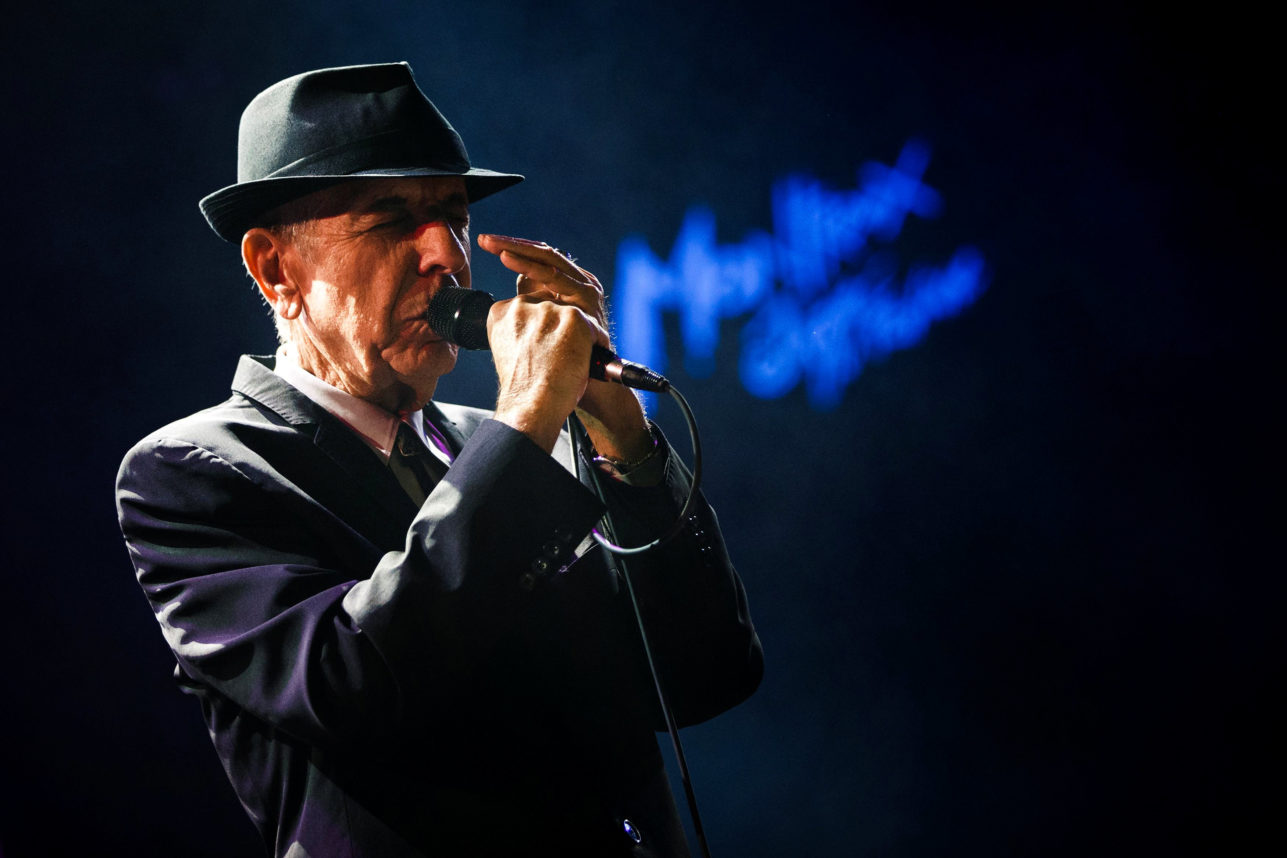
Leonard Cohen, rock music’s poetic visionary, dies at age 82

Leonard Cohen, rock music’s man of letters whose songs fused religious imagery with themes of redemption and sexual desire, earning him critical and popular acclaim, has died at the age of 82, said a statement on his Facebook page.

[Leonard Cohen interview: Graceful artistry borne of patience]

“It is with profound sorrow we report that legendary poet, songwriter and artist, Leonard Cohen has passed away,” a statement on the Facebook page said. “We have lost one of music’s most revered and prolific visionaries.”

Cohen, a native of Quebec, was already a celebrated poet and novelist when he moved to New York in 1966 at age 31 to break into the music business.

Before long, critics were comparing him to Bob Dylan for the lyrical force of his songwriting.

Although he influenced many musicians and won many honors, including induction into the Rock & Roll Hall of Fame and the Order of Canada, Cohen rarely made the pop music charts with his sometimes moody folk-rock.

But Cohen’s most famous song, “Hallelujah,” in which he invoked the biblical King David and drew parallels between physical love and a desire for spiritual connection, has been covered hundreds of times since he released it in 1984.

Leonard Cohen, rock music’s poetic visionary, dies at age 82 Read More »

Winning with Donald Trump

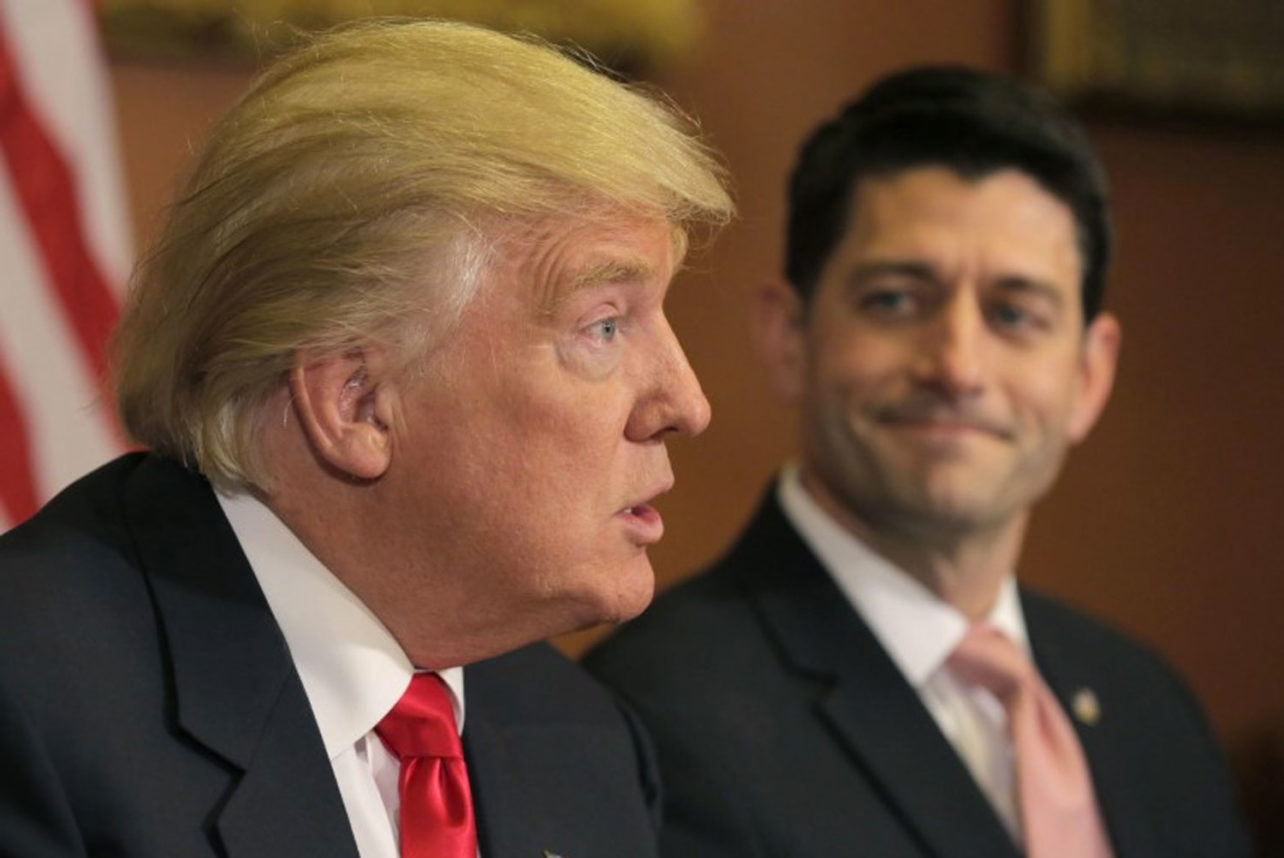
On the evening of January 20, 2009—  as Barack Obama was still dancing at his Inaugural Ball—- the House Republican leadership met in secret at The Caucus Room, an upscale D.C restaurant.  According to historian Robert Draper, fourteen prominent Republicans, including the once and future Speakers of the House Newt Gingrich and Paul Ryan, pledged to do anything and everything to obstruct and block the new President Obama on all legislation.  As Senate Majority Leader Mitch McConnell later put it in his infamous comment, “The single most important thing we want to achieve is for President Obama to be a one term president.”

Democrats were apoplectic.  Obama’s election was breathtaking, historic and groundbreaking.  He was not only the first African American elected to the nation’s highest office, he was swept into office on a tide of hope, inspiration, and progressive dreams.  Democrats knew there would be tough battles ahead, but they expected at the very least an opportunity to act upon the mandate that had swept them into the White House and Congress.  Republicans were rightly pilloried for cynical, even cruel politics.  And, indeed, the obstructive tactics and stonewalling by Congressional Republicans dogged President Obama through the entirety of his eventual eight year term.

Flash forward to this week.  And how the tables have turned.  For Democrats, last week’s convincing victory over Hillary Clinton was not just devastating.  It was horrifying.  Most Democrats with a long political memory will tell you that the defeat has no seeming counterpart.  Donald Trump’s campaign of unrelenting hostility toward women, Hispanics, the disabled, and his active courting of the most racist and anti-semitic underbelly of our society knows no precedent in a major party candidate.  His lack of knowledge of world affairs is astounding.  His temperment seems to be that of a petulant teenager.  Yet he vanquished not only 16 fellow Republican hopefuls— all far more qualified than he— but also perhaps the most qualified individual ever to seek the presidency, Hillary Clinton.  The result was so confounding it left most Democrats, and even many Republicans, speechless.

Yet he won.  And this week, the immediate impulse among many of the the more than half of the country that voted against him (Clinton won the popular vote) is to take to the streets, to rage against the machine, to hurl even greater invective not only against the president-elect, but to the millions who supported him.  My liberal-leaning Facebook feed reads like a virtual call to arms, brimming with anger, pleading for the masses to join together, rise up, and destroy the looming danger that now threatens our republic.

Let’s all take a breath.  Democrats were right in 2009 to be outraged that their winning candidate was not given even a moment’s chance to succeed in office.  Hillary Clinton was right this week when she urged Americans to “give him a chance to lead.”  President Obama was on the mark when he counseled the nation that “we are all now rooting for his success.”  These weren’t just talking points— this was leadership at the highest, most enlightened level.  We owe it to our nation— and to ourselves— to heed the call.

So, what to do?  First, let’s wait.  Wait for President-elect Trump to make the first outrageous statement, or indecent proposal, before we begin piling on.  There surely will be moments appropriate for outrage, where protest is a moral imperative, where it’s time to take to the streets.  But as insane as Trump’s ascension to the presidency seems to many of us, it has happened.  Let’s give him a chance.

Second, Trump facies himself— seemingly above all else— as a winner.  It has been that self perception, rather than any drive for public service, that appears to have driven his quest for success.  So let’s help and support Donald Trump to “win” in office, in ways that are both consistent with his agenda, and even that contribute to the common good.  Here are a few suggestions:

Immigration:   Trump has already essentially conceded that he won’t manage to build a wall and get Mexico to pay for it.  But there’s nothing particularly offensive about improving border security in general.  Allow President Trump to divert greater resources to improving the physical barriers preventing illegal immigration, and let him call that a victory.  This is not going to be the Administration that provides a more humane, mutually productive path to citizenship for illegal immigrants.  That will just have to come later.

Refugees:  The Trump Administration will likely curb the admission of refugees from Syria.  It’s a humanitarian travesty, but that was a pivotal portion of his platform.  Allow President Trump to upgrade the “vetting” process for admitting refugees in general, and he can call that a victory.  Nothing particularly wrong or offensive about upgrading our ability to keep terrorists out of the country.

Foreign entanglements: Trump has raged against the “unfair” arrangements we have with NATO and our East Asian allies.  His comments have rattled our allies, and caused serious uneasy ripples across the world.  Encourage Trump to divert his focus from these strategic alliances— which have been pivotal in ensuring world peace since World War II— and turn it on the United Nations.  It is the UN that has seriously lost its focus— the recent UNESCO decision denying the Jewish connection to the Temple Mount is a case in point.  Focusing the generally unhealthy isolationist strain of Trump’s thinking on the UN would cause far less damage than tinkering with the alliances that are so vital to maintaining world peace.

Finally, it may be time for us liberals and Democrats to look inward for a moment.  Half the country seems enraged against us, blithely ignoring our pleas to see Trump’s lack of knowledge, curiosity, empathy, his xenophobia, racism, misogyny, and dog whistles for anti-semitism for what they were. The more we wailed, the more they delighted in ignoring us.  Why?  Can it really be that half the country is completely idiotic?

No.  Motivations vary, but if you listen to the voices, what you will hear is that people are tired of liberal “elites.”  They are tired of being lectured to by a liberal media, they are tired of having their country taken away from them.  If liberals in this country wish to further pursue our inclusive, tolerant, diverse agenda (and the pendulum will eventually swing back), we will need to do so in a manner that isn’t so relentlessly dismissive of hard working, traditional Americans across the political spectrum.  Many of us spent years enthralled with the comedy of Jon Stewart, using him as the articulate mouthpiece of or deepest political beliefs.  Perhaps in the future it may be wise to ease off on the relentless belittlement of our fellow citizens, and focus instead on the true conservative institutional targets of our ire (Fox News, Republican elites, etc.).  Many, many of our neighbors voted for Donald Trump.  They can’t be dismissed or disrespected with impunity.

Elections have consequences.  Donald Trump will be our president over the next four years, and we liberals need to live with that.  Conservative justices will be appointed to the Supreme Court, progressive policies will be curbed, and the Affordable Care Act will likely be largely gutted.  But this country needs to be governed, and its time for the Democrats to reject the obstructionist tactics employed by Republicans from Day One of the Obama Presidency.  Work with President Trump, allow this country to be covered responsibly for the next four years, and in 2020, we will live to fight another day.

Winning with Donald Trump Read More »

Dealing with shock

Having Donald Trump as president of the United States may be the most shocking political news story of my adult life. I don’t care who you voted for. I don’t care if you’re far left or alt right, or if you’re Jewish, Muslim, Buddhist or evangelical Christian, or if you’re Hispanic, Asian or Armenian.

Shock doesn’t know from culture or ideology. Shock is shock. And the notion of Donald Trump as the leader of the free world is worthy of shock.

Shock can be positive or negative. When my underdog Lakers beat the ferocious Warriors recently, I experienced a mild state of shock, followed by prolonged euphoria.

When I saw that first tower crumble on September 11, 2001, I was in a state of horrific shock. I couldn’t think straight. I saw something that was beyond my darkest imagination.

Those who are happy about the shocking Trump victory must be in a state of lingering euphoria. Those who are crestfallen must be traumatized.

On the Web site of the Royal College of Psychiatrists, it says that “immediately after a traumatic event, it is common for people to feel shocked, or numb, or unable to accept what has happened.”

It’s human nature to protect ourselves. A shocking event that traumatizes us brings out our most protective instincts.

Some people protect themselves through the comfort of analysis. We’ll read 100 expert commentaries about why Trump won and what it means to our future. We’ll study exit polls. We’ll speculate about what we did wrong and what we could have done differently to get another result.

Other people protect themselves by acting out. As we’re seeing now with demonstrations across the country, shocked protesters are carrying signs that say things like, “Not my president.” These protesters are not willing to accept a result that has traumatized them. Of course, they know that in a democracy we have no choice but to accept the choice of the electorate, but for now, they need to make a statement.

Spiritual people are more inclined to make statements of hope. They feel our shock, our trauma, our need to cope.

My friend Rabbi Zoe Klein posted a beautiful meditation on Facebook on the importance of having a “listening heart.” She reached all the way back to King Solomon, who asked God for one thing only: “Give me a listening heart so that I can govern your people well and know the difference between right and wrong. For who by himself is able to govern this great people of yours?”

Prayer helps us cope with shock. Klein prayed that the new leader of the free world “be blessed with a heart that listens to the pain of a divided people…a heart that listens for the weeping at the margins… to the dreams of the poor, the hopes of the young, and the faint prayer of the dying…a heart that listens past language, dialects and differences to the very pulse of humanity.”

Activists like to take action. Aziza Hasan, leader of NewGround, an organization that brings Jews and Muslims together, invited me to an event that would “model deep listening, inclusion, and openness of heart.”

She wrote that “we need to be able to respect the voices of people with whom we may fundamentally disagree, as deserving to be heard, as much as our own.”

Cutting people out of your life who remind you of a trauma is another, albeit drastic, way of coping with shock. In my Modern Orthodox community of Pico-Robertson, the election of Donald Trump has put many people on edge.

In a courageous letter to the Shalhevet High School community, head of school Rabbi Ari Segal wrote about “a truly sinister tendency in so many of us.”

He gave an example of a Shabbat table conversation, in which he heard someone say: “Please don’t tell me who you are voting for. Depending on the answer, I may not be able to be friends with you.”

“No, no, a million times no,” was Segal’s response. His point was that there are red lines we should not cross. Cutting people out of your life because of how they voted is one of those lines.

How am I dealing with the shock of President Trump? My instinct on Day 2 is just to wallow and absorb the shock. I’ll have plenty of opportunities over the next few weeks and months to try to make sense of what happened and share my thoughts.

So I think I’ll follow Rabbi Zoe and ask God for a listening heart.

Dealing with shock Read More »