fbpx

September 21, 2016

A-Wa delivers Yemenite music with a hip-hop beat

A-Wa, a band of three musically talented sisters from Israel, has been steadily gaining a following in the Middle East and Europe. The group brings its dance music to the Skirball Cultural Center on Sept. 25.

Tair, Liron and Tagel Haim (33, 31 and 27, respectively) combine ancient Yemenite melodies from their grandparents’ generation with funky electronic and hip-hop beats. Their band name, the Egyptian Arabic word for “yes,” matches the optimistic and buoyant tone of their fast-paced, catchy pop songs. (And no, they’re not related to the well-known musical sister trio Haim, who hail from the San Fernando Valley.)

Their father’s parents arrived in Israel in 1949 as part of Operation Magic Carpet, which brought 49,000 Jews from Yemen to the new State of Israel. Their mother is of Ukrainian and Moroccan Jewish heritage.

The girls grew up in the small desert town of Shaharut in the far south of Israel. It’s a communal settlement of about 30 families, surrounded by kibbutzim. Their family raised goats, ducks and chickens.

“It was kind of like ‘Little House on the Prairie,’ you know? We used to go barefoot and sing to the wind. We had such a lovely childhood,” Liron said.

The girls discovered music through their parents’ record collection, which ranged from Bob Marley to the Jackson 5. They recall learning about Motown and jazz from an American vocal teacher.

Years later, the sisters all decided to take up music more seriously. They’d been singing traditional Yemenite melodies since childhood, but wanted to give the ancient songs a modern twist, so they sought out a producer. They reached out to Tomer Yosef of the popular Israeli electronic group Balkan Beat Box, who also comes from a Yemenite background. 

“We sent him some videos of us  — original songs and Yemenite folk songs — and then we started meeting with him and talking about our sound, trying to shape it and talked about the process of recording an album,” Tagel recalled. “We began recording demos in our apartment and sent them to Tomer, and he would leave us notes.”

“Tomer, one day, decided to take our demos and to give it to the Yemenite old women,” Tair, added.

“Like, his ‘tribe,’ he calls it,” Liron said.

“They loved it, and they thought we were from Yemen. Like we were old women from Yemen,” Tair said, with obvious delight.

Yosef reworked the songs to give them a contemporary feel, pulling in like-minded musicians such as Tamir Muskat, Itamar Ziegler, Tom Darom and others. These musicians play contemporary and traditional instruments on tour and on the album, while the sisters sing.

In 2015, A-Wa’s first single, “Habib Galbi,” propelled the sisters into the international spotlight. 

“Habib Galbi” means “Love of My Heart,” originally a folk song that they turned into a dance tune. It’s written from the perspective of a woman whose lover has abandoned her. “The women in Yemen couldn’t write or read, and they weren’t allowed to pray with the men. So the only way they could express their feelings and emotions was through those songs. It’s all about their anxieties and difficulties,” Liron said.

The group’s eye-catching video for the song is part of what’s gotten the attention. Shot in their hometown, it shows the girls doing chores while gazing wistfully in the distance. In other scenes, they are wearing flowing pink robes and jetting across sand dunes in a white Jeep, then they dance-battle three young men wearing matching blue Adidas tracksuits. The video has been viewed more than 4 million times on YouTube and became the first song in Arabic to hit No. 1 on the Israeli pop charts.

The sisters’ peaceful and pastoral upbringing may seem surprising given how Israel is usually portrayed in the news these days. It’s also surprising because Mizrahi Jews, who come from Arab or Muslim countries, are often among the poorest and most disenfranchised residents of Israel, and Yemen is the poorest country in the Middle East.

While Mizrahim fought for political equality with Ashkenazi Jews for decades, Yemenite music has long had a place in Israel, from Eurovision Contest winner Dana International to the late pop star Ofra Haza. But if you’re not a famous singer, it’s not so easy to be public about your Arab heritage.

But the A-Wa sisters belong to a new generation of Yemini Jews finding inspiration in their Middle Eastern heritage. Other such artists include Shai Tsabari, who sings mostly in Hebrew but with a Yemenite accent; Ravid Kahalani and his band Yemen Blues; and Liron Amram & the Panthers, founded by the son of Aharon Amram (a pioneer of Yemenite music in Israel).

“We get lots of comments from Yemen and Morocco and it’s amazing, that people know that we’re from Israel, and still, they like the music, and they feel connected and they enjoy it,” Tagel said.

Liron, who has a bachelor’s degree in ethnomusicology, discovered a recording of “Habib Galbi” from the 1960s, recorded by the singer Shlomo Moga’av. It was the group’s first time hearing the song, and they were surprised to hear a man singing it; the discovery led them to re-record and reinterpret the song. 

“It was like finding a treasure, because these songs that we perform in this album are songs that were created by women in Yemen, and it was like an oral tradition … these songs were only recorded in Israel in the ’50s and ’60s,” Liron said.

A-Wa’s Skirball appearance comes at the end of an eight-stop U.S. tour. They performed at the Echo in Los Angeles in March and followed that show the next day with a set at South by Southwest in Austin. 

A-Wa performs at the Skirball Cultural Center on Sept. 25 at 8 pm. Tickets can be purchased for $18 at A-Wa delivers Yemenite music with a hip-hop beat Read More »

Is sugar good for the Jews?

Here at the Jewish Journal, we’re constantly debating what it means to be a Jewish paper. Does it mean we should focus only on content that is specifically Jewish, or on any content that may be of interest to Jews? And how should we define what is Jewish and what is not?

Take the issue of sugar, for example. It’s not a Jewish topic per se, but as a parent who wants to raise healthy kids, I’ve always been interested in the health risks of sugar consumption, beyond the cliché that “sugar is bad for you.” 

My interest was piqued last week when I read about some unsavory finagling by the sugar industry way back in 1967. According to a report last week in The New York Times, a sugar industry group paid three Harvard scientists the equivalent of about $50,000 in today’s dollars to publish a review of sugar, fat and heart research.

As the Times notes, “The studies used in the review were handpicked by the sugar group, and the article, which was published in the prestigious New England Journal of Medicine, minimized the link between sugar and heart health and cast aspersions on the role of saturated fat.”

In other words, the sugar industry diverted our attention away from their product and toward other “enemies” like fat. It’s somewhat ironic that a Harvard publication, the Harvard Heart Letter, reported in Dec. 2015 that “Eating too much added sugar increases the risk of dying with heart disease.” This is consistent with recent studies that have alerted us to the pervasiveness and health risks of processed sugar and its addictive qualities.

So, is there a Jewish angle to this story? I can think of at least two.

First, there is the Jewish value of pursuing justice. What the sugar industry did was unethical, and they should be held accountable. The government should also be held accountable, because it allowed itself to be deceived and ended up downplaying the health risks of excessive sugar consumption. I’d love to see a brilliant scientist study the connection between these failures and the frightening rise of child obesity and diabetes in recent years.

I would also love to see Hollywood produce a whistle-blower movie. If you are a writer looking for a screenplay idea, you may enjoy how New York Magazine kicked off its reporting of the sugar lobby story:

“If you had to script a cheesy high-stakes thriller film about nutrition research, it might look something like this: Powerful sugar lobby pays prominent scientists to distract the public from its product’s health risks. Said scientists plant studies in top medical journals declaring that fat, not sugar, is the true public enemy number-one. Those studies go on to shape national nutrition recommendations for decades, and the public is none the wiser. Somewhere, someone twirls a mustache. And then, out of nowhere, someone blows the whole thing wide open.”

We are approaching the High Holy Days, when calorie and sugar overload will uneasily co-exist with our yearning for spiritual refinement.

I hope this film gets made. I would call it, “Sweet Revenge.” 

A second Jewish angle is the Jewish obligation to take care of our bodies. The great Maimonides, in his compendium of Jewish law, the Mishna Torah, emphasized this very point. As Rebbetzin Feige Twerski writes on Aish.com, “Excessive indulgences in unhealthy food, [Maimonides] warns, are the source of all illnesses.”

She also refers to the noted commentator and physician of the 12th century, Nachmanides, who explained that “even as we eat only kosher food and recite all of the requisite blessings, one can be so immersed in excessive, gluttonous behavior that the objective of ‘holiness’ is rendered inaccessible and out of reach.”

I’m sure you can think of other Jewish angles to this sugar story. Our tradition is so broad, in fact, that we can probably come up with a Jewish angle to virtually any story. 

The most immediate Jewish angle, though, is that we are approaching the High Holy Days, when calorie and sugar overload will uneasily co-exist with our yearning for spiritual refinement.

Maybe it’s a good time, then, to remember that sweetness is not just something we consume in our food. It’s also a good vibe we share with those around us. And that kind of sugar is always good for the Jews.


David Suissa is president of TRIBE Media Corp./Jewish Journal and can be reached at davids@jewishjournal.com.

Is sugar good for the Jews? Read More »

Cotton: Next president should ‘rescind’ new MOU

The next president and Congress should rescind and renegotiate the new $38 billion 10-year “memorandum of understanding” signed last week between Israel and the Obama administration, Sen. Tom Cotton (R-Arkansas) said on Wednesday.

“This is an agreement between two current heads of states,” Cotton said in a speech at the Union of Orthodox Jewish Congregations of America Advocacy Center’s annual leadership mission to Washington, DC. “And I believe that as soon as we have a new president, we should rescind that agreement and give one that is better for Israel and better for the United States.” 

Cotton pointed to the 2004 letter President George W. Bush exchanged with then Prime Minister Ariel Sharon that President Obama refused to accept as setting a precedent of not honoring a non-binding agreement between two leaders. “Since he set the precedent, it’s time that we invoke this precedent next year,” the Republican senator said.

On Tuesday, a group of Republican senators  Cotton: Next president should ‘rescind’ new MOU Read More »

The new bad guys: What’s changing in crime on television, and what’s exactly the same

Jack McCoy of Law and Order may have pushed too hard for the death penalty and slept with his Assistant District Attorneys, but I don’t remember him coercing an innocent teenager with an intellectual disability into a false confession or sexually harassing a domestic violence victim, like the cops and prosecutors of Making a Murderer.

Those attorneys on The Practice may have made too many long speeches about being true to themselves (criminally long speeches) but I don’t remember any of them popping viagra so they could sleep with prostitutes or sticking drugs in their vaginas to bring to prisoners, like the attorneys of The Night Of.

There have always been bad cops in television, as in The Shield. But that show stood out as radical for promoting an anti-heroic police officer.  In the last two years, crime and punishment in television has shifted from a paradigm of good clean cops taking on sweaty bad guys to a focus on systemic issues and shared complicity. It is also moving from fictional crime to true crime, or fictional crime that seems realistic.

That said, one aspect of crime entertainment has not shifted much: Women, especially young women, are primarily being killed, and each case is still regarded as a unique phenomenon. In this way, the Law and Order franchise might be more forward-thinking than what has come since.

The popularity of Serial and Making a Murderer have contributed to an explosion in crime entertainment focused on failures in the system of law and orderWrongful conviction has become one major theme, in documentary shows like MTV’s Unlocking the Truth, fictional shows like HBO’s The Night Of and ABC’s Conviction, and a long list of podcasts.

Audiences are also revisiting cases like the O.J. Simpson killings and the murder of JonBenét Ramsey, with an interest not just in fingering the bad guy but uncovering flaws in the investigations and prosecutions. Viewers no longer just want to know if someone’s brother had a secret mistress, but how race, wealth, politics, and media have played into each case.

Within this new wave of crime entertainment, there are still traditional villains, like O.J. Simpson and Robert Durst, but the interest in their villainy is matched by the focus on flawed systems that allowed them to get away with it.

The godfather of this spate of true or “realistic” crime drama is HBO’s The Wire. Arguably the G.O.A.T. of crime television, The Wire still relied on some traditional crime tropes: A band of unlikely outsiders, stuck in the basement, does real police work against the odds, led by a flawed but righteous white man. Structurally, The Wire was not unlike Dodgeball or Old School, and that’s not an insult. Made today, its framework of good and evil might’ve been even more complicated, as David Simon’s later work has been. (Show Me a Hero‘s Nick Wasicsko is a more flawed counterpart to Jimmy McNulty of The Wire.)

I see this shift in crime entertainment as positive and progressive. It appears to coincide with a political shift away from the war on drugs and mass incarceration. Our shared media vocabulary now includes “prosecutorial misconduct” and “prison-industrial complex” alongside “lone wolf gunman.” I credit this shift largely to evolutions in technology. Through cell phones, police cameras, streaming services, podcasts, and social media, we have access to more information about how our system works and opportunities for viral outrage and participation in the investigative process.

Yet, the more things change…

One thing that hasn’t changed in crime media is the popular exploitation of the murder of women, especially young women. Not every case that captures the public imagination involves the killing of a woman by a man, but most do. The thrill of uncovering a possible wrongful conviction or failed investigation – intertwined with that other thrill of the classic whodunnit – both overshadow two darker realities: that women and girls are still walking targets because of how they were born and that their victimization is a major source of popular entertainment.

When unarmed African-Americans are killed by police, we discuss the history of racism and police control; we recognize a hate crime. I think the sheer volume of unsolved or scandalous cases of violence against women merits a similar broader discussion. Instead, the stories are often told as if what matters most are the relationships – the husbands, boyfriends, exes, fathers, brothers, Johns, crazy stalkers, bosses, strangers, and even mothers – in other words, everyone in the victims’ lives. (Violence against women can still be political even if women kill women, just as African-American police officers are not immune to systemic racism.)

We regard the deaths of Alton Sterling and Philando Castile as part of the same phenomenon, even though there were thousands of miles between them. So too, I draw a link between the murder of Nicole Brown Simpson and the deaths of those two ladies who died falling down the stairs while alone with the same man (The Staircase).

The broader discussion of violence against women is largely absent from the shows and podcasts listed above. Maybe the issue doesn’t belong in every piece of fictional entertainment. But can’t one character in The Night Of comment on the fact that the female victim encounters up to five hostile men on any given day that could easily be her killer? Are we that immune to this reality it bears no mention, or is it just that entertaining to see females terrorized from all sides? There are so many unprovoked murders of women that even the fictional world demands it as a trope.

The argument I have seen against recognizing each act of violence against women within the greater political context is that men are murdered more often than women. Fair enough, but they are not usually murdered for their maleness; they are not murdered by women at nearly a comparable rate as the reverse. Women are more often murdered, raped, and assaulted because they are female, whether the perpetrator recognizes that prejudice or not. Women are much less likely to have committed violent acts themselves.

One of the only pieces of popular crime entertainment that successfully incorporates this broader view is Law and Order SVU. Otherwise, it’s a fairly old school style of crime show, with classic good and bad guys. Later seasons have exposed abuses within the legal system, but those abuses are usually righted within an hour by the impossibly virtuous main cast. The show is not a beacon of non-exploitation, by any means. At worst, it feeds the appetite for seeing attractive women hurt; that’s how most SVU episodes start. But the show makes a point via its expertly creepy story lines.

On the issue of violence against women, SVU is progressive in the way that soap operas or shows like Sex in the City have told the political stories of women for decades without trumpeting their politics. SVU portrays systemic mass violence against women, pointing out what is common among cases. The cumulative effect after twelve years seems almost genocidal. By contrast, our recent spate of popular true and realistic crime media is still focused on each case as distinct from each other.

I may not know for sure who killed Hae Min Lee, Jon Benet Ramsey, or Teresa Halbrook, but I know what killed them. I’m still waiting for that Lifetime movie.

The new bad guys: What’s changing in crime on television, and what’s exactly the same Read More »

Israel’s ‘Shabbat war’ heats up, with Jerusalem feeling the squeeze

On the first Friday evening that Jerusalem restaurant Azza 40 opened without a kosher license, allowing it to serve customers on the Jewish sabbath, crowds of ultra-Orthodox Jews protested outside, threatening to smash windows and burn the place down.
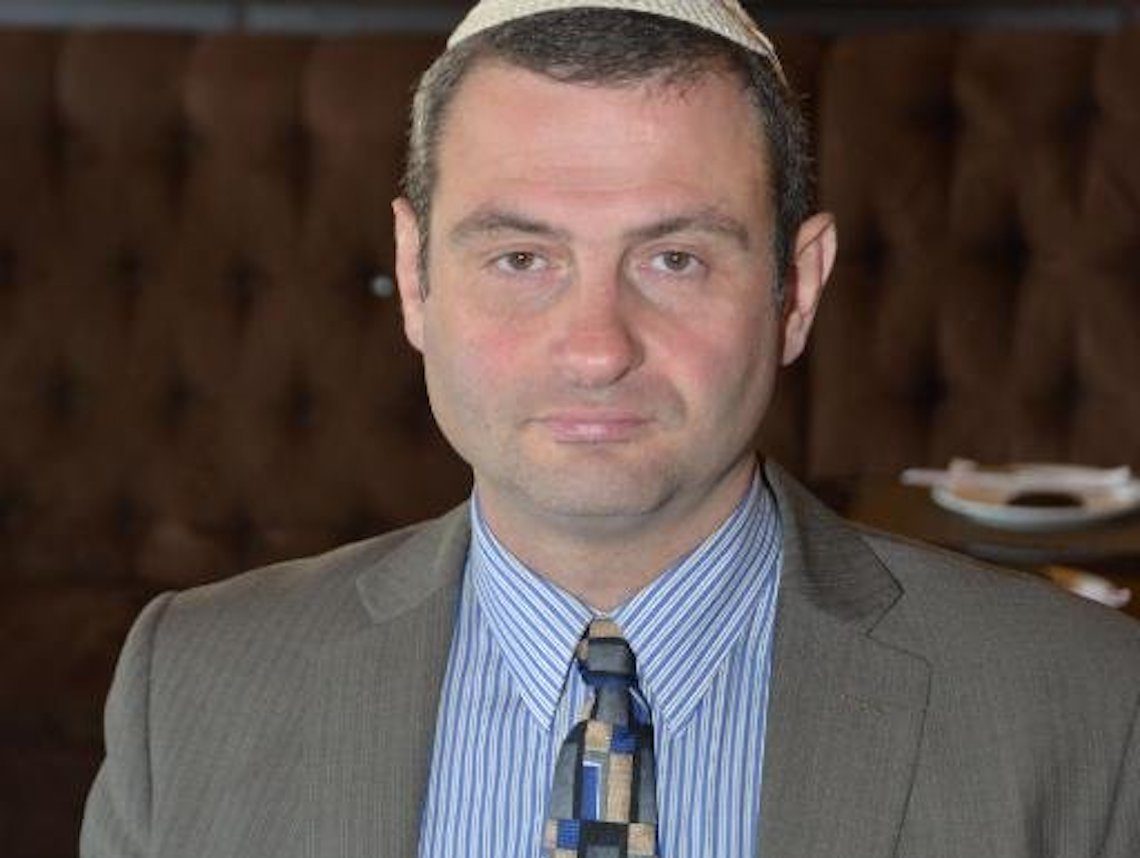
“It was crazy,” said Reut Cohen, 29, the restaurant's owner and head chef, recalling the events of September 2014. “The police came, the street was blocked, there were religious people yelling, swearing, even spitting at us.”

It was just one of many protests, most of them peaceful, that ultra-Orthodox groups have mounted against cafes, restaurants and cinemas that open on Shabbat, the Jewish holy day. Several have been led by Jerusalem's ultra-Orthodox deputy mayor, Yitzhak Pindrus.

Azza 40 is still going strong, with Friday nights and Saturdays the busiest days of the week, despite occasional disruptions. But the pressure on businesses not to open between sunset on Friday and sunset on Saturday has increased, fuelling tension between the growing Orthodox community and those who feel religious strictures are impinging on their freedom.

Perhaps the clearest illustration of the potential fallout of what's been dubbed by local media the “Shabbat war” came this month in Tel Aviv, a city normally known for its secularism.

Work on a new railway station and track maintenance had to be suspended on a Saturday after complaints from religious parties in Prime Minister Benjamin Netanyahu's coalition.

It was a desecration of the holy day, said the chief rabbinate, which had largely ignored such work in the past but had been facing pressure in ultra-Orthodox newspapers and on social media to demand it stop.

“Shabbat is not open to negotiation and haggling, and there's no place to compromise its sanctity,” said the chief rabbis in a statement explaining their position.

As a result, work was moved that weekend to Sunday, the start of Israel's week, causing traffic meltdown as the main Tel Aviv highway was partially shut down. Special buses – ironically organised on a Saturday – were laid on. 

The dispute caused turmoil in Netanyahu's cabinet, with the transport minister, who supported Saturday work, on the firing line. He kept his job, and construction was quietly resumed a week later, including on Saturdays, a sign neither Netanyahu nor his ultra-Orthodox partners wanted the coalition derailed.

But while Tel Aviv was briefly shaken by the debacle, the sharp end of Shabbat tension remains Jerusalem, where the ultra-Orthodox make up a third of the population, an increase of five percentage points over the last decade, and religion is never far from any issue.


“IT'S A DESERT”

This week, Jerusalem's municipality charged eight grocery store owners with violating bylaws that prevent businesses in the city center from opening on Shabbat. The increasing sway of the ultra-Orthodox in the city, in numbers and politically, means the municipality is under constant pressure to clamp down.

The results are uneven: One cinema chain closes on Shabbat, another stays open, despite protests. In some cases, businesses have found convoluted solutions to allow restaurants in the centre to operate on the holy day, when tourists are often at a loss to find anywhere to eat. 

Last year, Cafe Landwer, a chain of around 60 coffee shops, opened a site in Independence Park, an attractive green space close to the Old City, across from the U.S. Consulate.

It wanted to operate on Friday evenings and Saturdays to cater to tourists and secular customers. But an ultra-Orthodox group opposed the move and threatened to withdraw the kosher certification granted to Landwer Coffee, a separate company owned by the same family, if it didn't change policy.

Cafe Landwer franchised the restaurant and its name has changed to Alma Cafe, although the menus still say Cafe Landwer. There are occasional protests by the ultra-Orthodox, but it stays open on Shabbat, its busiest day of the week.

“It's one of the few places in the centre of Jerusalem that is open on Saturdays, so everyone comes here,” said manager Karina Topaz, 23. “When we first opened, a few people came and yelled at us, but now it's okay.”

In nearby German Colony, a wealthy neighbourhood of old stone houses, there is no such permissiveness. Whereas ten years ago there were two or three cafes on its tree-lined main street that operated on Shabbat, now there are none.

“At the weekend, it's like a desert. It's dead,” said Orly Turgeman, 35, who manages a small hotel in the neighbourhood.

“You have the feeling there's nothing left in Jerusalem. There's not the environment of an open, pluralistic city.”

The ultra-Orthodox population, with its dress code of black hats and coats, has a birthrate more than twice the national average, making it Israel's fastest growing group.

German Colony has become more religious over the years, with its many elderly, Orthodox residents keen to maintain the traditional calm of Shabbat. The same is true of Kiryat Shmuel, the neighbourhood where Azza 40 is located.

“I am very much not in favour of restaurants opening on Shabbat,” said Rabbi Meir Schlesinger, whose home and synagogue are around the corner from Azza 40. “It disturbs the Shabbat atmosphere of the place, besides being against Jewish law.”

Reut Cohen, the owner, is unfazed. She now offers pork and shellfish on the menu – both distinctly non-kosher – and is determined to stand up for secular principles.

“It's critical for our business, the neighbourhood, the city and the country,” she said. “If the religious don't want to come, that's fine, but they have to live and let live.”

Israel’s ‘Shabbat war’ heats up, with Jerusalem feeling the squeeze Read More »

The Female Rabbi exchange, part 3: On the feminist revolution in Jewish orthodoxy

Rabbi Sally Priesand is America's first female rabbi ordained by a rabbinical seminary, and the second formally ordained female rabbi in Jewish history, after Regina Jonas. After her ground-breaking ordination she served first as assistant and then as associate rabbi at Stephen Wise Free Synagogue in New York City, and later led Monmouth Reform Temple in Tinton Falls, New Jersey from 1981 until her retirement in 2006. In addition to her rabbinic roles, Priesand has served on the board of each of the major institutions of Reform Judaism, including the Central Conference of American Rabbis, the Union for Reform Judaism and the Hebrew Union College-Jewish Institute of Religion.

This exchange is in honour of a new anthology, The Sacred Calling: Four Decades of Women in the Rabbinate, of which Rabbi Priesand is a contributor. Parts 1 and 2 can be found here and here.

***

Dear Rabbi Priesand,

In the previous two rounds we discussed the effect female rabbis have had on Judaism and the challenges still facing them. In both rounds the answers and examples tended to describe the state of female clergy in your denomination – the Reform Movement. In this round I'd like to ask about the attitude you and other progressive rabbis have towards the revolution taking place in the Orthodox world, where many females are beginning to demand leadership roles and to be ordained by several institutions. 

My question: How is this process viewed by female rabbis in progressive Judaism? Is there just camaraderie and support, or is there also a measure of skepticism about the possibility of achieving real gender equality within the orthodox framework?

We'd like to thank you once again for participating in this exchange.

Best Regards,

Shmuel

***

Dear Shmuel,

I have not encountered any skepticism on the part of my female colleagues in Progressive Judaism as to the possibility of achieving gender equality within the Orthodox framework. Jewish tradition has never been static, and there have always been opportunities in every generation for growth and change. In fact, The Sacred Calling includes stories of women whose leadership and learning were recognized and revered during the rabbinic era and later on throughout the Chasidic world.

Ever since entering rabbinic school, I have been inspired by the story of the daughters of Zelophechad found in the Book of Numbers. Torah tells us that these women were not afraid to stand up and be heard and demand that their father’s land be given to them. We know that this is an important story because the daughters’ names   Mahlah, Noah, Hoglah, Milcah and Tirzah – are actually listed in the Torah text, something that rarely happens in the Bible where women are often invisible characters, known by the relationship they have to their father or husband or brother, but usually not by their own names.

Clearly these women understood the importance of land at that time in history. Land was necessary for survival and self-respect. People made a living from the land, and their worth as human beings was enhanced by owning it. So the daughters of Zelophechad stood up in front of the whole community and said: “This law is unfair and unjust. Give us our rightful inheritance.”  They were strong, determined and unafraid, and from their actions we learn an important lesson about how to affect change in society. Change comes about only when those who are being discriminated against demand it. The opportunities that exist for women today in Jewish communities around the world came about because in every generation there were women who were not afraid to stand up and demand their right to participate.

What is so interesting to me about the biblical text is that God agreed with the daughters of Zelophechad! As a result, the law was changed. God said: “If a man dies without leaving a son, you shall transfer his property to his daughter.” It is comforting to know that God approves of correcting mistakes when there is a gap between the law, as stated in Torah, and the case to which it is applied. When an unjust result might occur, as in the case of Zelophechad’s daughters, the Torah does not hesitate to change the law for the sake of justice. This story, then, is not just a story in which feminists can rejoice, but also one in which we are reminded that if Torah itself is willing to adapt the law for the sake of fairness and equality, then how much the more so should we, as a religious community, be willing to alter and adjust our traditions as new and different circumstances arise.

A growing number of Orthodox women are acting in the true tradition of Zelophechad’s daughters. They are demanding their right to participate, to be part of the community in whatever way they find meaningful. I salute their courage and commitment, and although I know that this is their battle to fight, even as it was my battle when I arrived at HUC-JIR in 1964, I will always stand with them, support their mission and embrace them as welcome rabbinic colleagues.

The Rabbinical Council of America can continue to issue proclamations prohibiting the ordination and hiring of female rabbis, but I doubt they will ever be able to stop the progress being made by institutions like Yeshivat Maharat whose first ordination ceremony I was privileged to attend. The very fact that congregations have welcomed its graduates speaks volumes about the changing landscape of Orthodox Judaism.

What is most important is that all options should be available for every member of the community, both men and women, and that every synagogue, Jewish organization or institution should be able to shape its own identity according to the values of our tradition as they evolve and are interpreted in every generation. There is enough room for different threads of Jewish experience as long as we remember that, like the strands of a Havdalah candle, in the end we are bound together as one, each contributing to the brightness of the whole.

When I was ordained, an Orthodox rabbi in Israel said that I would be little more than a footnote in history. Others said: “gam zeh ya-avor – this too shall pass.” And still others warned that my ordination would mark the beginning of the end of the Jewish people. None of these pronouncements came true, and I hope that my Orthodox sisters take strength in knowing that their journey toward positions of leadership and authority in the Jewish community will bear fruit and serve as an example of what can be accomplished when we are not afraid to stand up and demand what is rightfully ours.

Thank you, Shmuel, for inviting me to have this conversation and to draw the attention of your readers to the recent publication of The Sacred Calling: Four Decades of Women in the Rabbinate.  May the year 5777 be a year of health and joy, wholeness and harmony for you and all you hold dear, for the Jewish people and the state of Israel, and for all humanity. L’shana tova!

L’shalom,

Sally

The Female Rabbi exchange, part 3: On the feminist revolution in Jewish orthodoxy Read More »

When Ramen Becomes Currency

I was binge watching the first season of “60 Days In,” a series on A&E in which a small number of citizens go into a prison as inmates for 60 days in order to give feedback to the authorities regarding what improvements to make. Some of the recommendations have to do with improving the life of the prisoners, some include intelligence on how contraband is being brought into the cell blocks, and, in one case, information included the presence of weapons.

Three things really struck me about this show. First, it drives home the many reasons why prisons in America are terrible places to live; second, it showed that life there is worse – and, in particular, more violent – for men than it is for women; and third, it depicted the use of instant ramen as currency.

I guess I’m old-fashioned, because I had thought cigarettes and drugs were still the currency in prisons. Now, it’s ramen noodles. At first, it doesn’t seem to make sense. A package of instant ramen noodles is cheap, and, in general, it’s not considered to be a high quality food item. Why would prisoners consider it to be so valuable?

The answer is simple, yet appalling. It is valuable because the prisoners are not getting enough food to eat. It is so bad that, according to “>Religious and Reform Facebook page, and When Ramen Becomes Currency Read More »

Awful or Awe-full? Facing Death Head On

So you don’t want to talk about it. You’re not alone. It’s one of those taboo topics that nobody is willing to get close to. In fact, it is so intense that most people run from even the thought of talking about it, hoping that denial will suffice. Yet it is one of those things that catches you off guard. When you least expect it, it pops up right in your face! Usually it’s not only unexpected, but also shocking. We are not only unprepared to deal with it, but since we never talk about it, we can’t even express what’s going on. It’s just awful.

In fact, it’s truly awe-full. Once we allow ourselves the honor and respect necessary to actually face death, we discover that it is just a hair’s-width away from us all the time. In fact, it’s just the backside of what we call life. Always there, always waiting, always present, never far away. And, this thing we call life, as you may recall, so very full of beauty, so full of awesome wonder and miracles that we could call it magic, is, at its core, completely whole, and thus completely encompasses death. So, by its nature, death is just as holy, just as full of awesomeness as is life. Yet, since we deny ourselves the honor and respect necessary to actually even acknowledge the existence of death in this death-denying society, we are not prepared or even aware enough to recognize this awesomeness when it comes by.

There are a few people, however, for whom this is not true. These are special people indeed. They are the ones who put their egos aside, roll up their sleeves, and humble themselves to serve the dead. These special people are members of the Chevrah Kadisha, the anonymous people in the Jewish community whose job it is to prepare the deceased for burial. And what a job it is! These strong and wise people silently wash the body of the deceased, not unlike one washes a newborn baby – gently and respectfully cleaning them, getting them ready as for their wedding day. Then comes the spiritual cleansing, in which water is poured over the body simulating emersion into a running mountain stream – mayim chaim – living waters of purification. Next the body is dried and dressed in simple garments that resemble those worn by the Kohen Gadol, the High Priest in the days of the Temple in Jerusalem. Everyone is dressed the same way. Each of us is equally holy in the eyes of G-d. We are all, each of us, worthy of the respect and honor the taharah ritual provides. Finally, the chevrah team places the prepared body into the aron, the waiting casket into which is sprinkled holy earth from Israel. The accompanying readings and prayers are rich and beautiful and respectful.

Such a simple procedure – yet what a difference it makes. It changes everything! For the deceased, the soul floating in the room, now disembodied and confused, the taharah provides comfort, midwifing them from this world to the next. For the family, it provides assurance that their loved one was treated with respect and dignity. And, for these special people, those who face death head-on, who walk into that room and roll up their sleeves, for these people the benefit is beyond words. How can you describe what it feels like to midwife a soul between realms of existence? How can you put into words what it’s like to feel the gratitude in the room as you see the body radiate once it’s all prepared and in the casket? How can you describe the aliveness one feels when one comes out of that taharah room and back into life, back into the sunshine, where every leaf, every cloud, every hair, every raindrop shines with the vibrancy of being alive?

And, did I mention gratitude? Once you have participated in a taharah ritual, you will never take life for granted again. Instead you tend to walk in continual gratitude, knowing that death is right there, just on the other side of the veil, waiting silently. What a great honor it is to be alive!

In summary, those of us who do this work tend to appreciate every aspect of life. We also tend to feel more respect for life, for others, for ourselves, and sense our blessings to a much greater extent than we ever did before. So, if you want to really enjoy living, that is, truly appreciate and revel in the glory of the holy miracle that is your living, thinking, breathing body and mind, all you need to do is to face death.

One way to do that is by joining your local Chevrah Kadisha. It’s the Jewish group of people who can never be thanked by those they help, yet who form the foundation for the life of the community by supporting its death. This work includes a large spectrum of activities, only a few of which involve direct contact with dead bodies. So if you are a bit squeamish about such things, perhaps consider becoming involved with shmirah, guarding the dead between death and burial, or with the organizational aspects of Chevrah Kadisha, or possibly helping with meals of consolation or arranging minyanim during which families are able to say Kaddish.

Life is short. We must use our blessed time wisely. I cannot think of a more holy way to spend time than midwifing a soul between realms! What about you?


Rick Light has been teaching spiritual development in various ways for more than 30 years and has been studying and practicing meditation for more than 40 years. He is a leader in the community of those who prepare Jewish bodies for burial, has published four books in this regard, and for 18 years was President of a local Chevrah Kadisha he started in 1996. He is on the Board of Directors of Kavod v’Nichum, is a faculty member of the Gamliel Institute, and continues to lecture and raise awareness about Jewish death and burial practices at the local, state, and national levels.  For more information see  


GAMLIEL INSTITUTE COURSES

                Please Tell Anyone Who May Be Interested!

       Winter 2016:

REGISTRATION IS NOW OPEN:

Gamliel Institute Course 1, Chevrah Kadisha History, Origins, & Evolution (HOE) will be offered over twelve weeks on Tuesday evenings from December 5th, 2016 to February 21st, 2017, online.  

Not quite sure if this is for you? Try a free ‘taste’ by coming to an introductory session on Monday, November 14th, 2016 from 8 to 9:30 pm EST. The instructors will talk about what the course includes, give a sense of how it runs, and talk about some of the topics that will be covered in depth in the full course.

For those who register, there will be an orientation session on Monday December 4th. It is intended for those unfamiliar with the online course platform used, all who have not taken a Gamliel Institute course recently, and those who have not used an online webinar/class presentation tool in past.

Class times will be all be 5-6:30 pm PST/6-7:30 pm MST/7-8:30 CST/8-9:30 pm EST. If you are in any other time zone, please determine the appropriate time, given local time and any Daylight Savings Time adjustments necessary.

Please note: the class meetings will be online, and will take place on Tuesdays (unless a Jewish holiday requires a change of date for a class session).  

The focus of this course is on the development of the modern Chevrah Kadisha, the origins of current practices, and how the practices and organizations have changed to reflect the surrounding culture, conditions, and expectations. The course takes us through the various text sources to seek the original basis of the Chevrah Kadisha, to Prague in the 1600’s, through the importation of the Chevrah Kadisha to America, and all the way to recent days. It is impossible to really understand how we came to the current point without a sense of the history.

SIGN UP NOW TO TAKE THIS COURSE!

There is no prerequisite for this course; you are welcome to take it with no prior knowledge or experience, though interest in the topic is important. Please register, note it on your calendar, and plan to attend the online sessions.

Note that there are registration discounts available for three or more persons from the same organization, and for clergy and students. There are also some scholarship funds available on a ‘need’ basis. Contact us (information below) with any questions.

You can “>jewish-funerals.org/gamreg. A full description of all of the courses is there as well. For more information, visit the “>Kavod v’Nichum website or on the

Please contact us for information or assistance. info@jewish-funerals.org or j.blair@jewish-funerals.org, or call 410-733-3700, or 925-272-8563.


LOOKING FORWARD:

Gamliel Institute will be offering course 4, Nechama, in the Spring (starting March 6th, 2017). Look for information to be forthcoming, or visit the “>Kavod v'Nichum Gamliel Institute Registration site.  


DONATIONS:

Donations are always needed and most welcome. Donations support the work of Kavod v’Nichum and the Gamliel Institute, helping us provide scholarships to students, refurbish and update course materials, support programs such as Taste of Gamliel, provide and add to online resources, encourage and support communities in establishing, training, and improving their Chevrah Kadisha, and assist with many other programs and activities.

You can donate online at You can also become a member (Individual or Group) of Kavod v’Nichum to help support our work. Click  

MORE INFORMATION

If you would like to receive the Kavod v’Nichum newsletter by email, or be added to the Kavod v’Nichum Chevrah Kadisha & Jewish Cemetery email discussion list, please be in touch and let us know at info@jewish-funerals.org.

You can also be sent an email link to the Expired And Inspired blog each week by sending a message requesting to be added to the distribution list to j.blair@jewish-funerals.org.

Be sure to check out the Kavod V’Nichum website at “>Gamliel.Institute website.


RECEIVE NOTICES WHEN THIS BLOG IS UPDATED!

Sign up on our Facebook Group page: just search for and LIKE “>@chevra_kadisha.

To find a list of other blogs and resources we think you, our reader, may find to be of interest, click on “About” on the right side of the page.There is a link at the end of that section to read more about us.

Past blog entries can be searched online at the L.A. Jewish Journal. Point your browser to  

SUBMISSIONS WELCOME

If you have an idea for an entry you would like to submit to this blog, please be in touch. Email J.blair@jewish-funerals.org. We are always interested in original materials that would be of interest to our readers, relating to the broad topics surrounding the continuum of Jewish preparation, planning, rituals, rites, customs, practices, activities, and celebrations approaching the end of life, at the time of death, during the funeral, in the grief and mourning process, and in comforting those dying and those mourning, as well as the actions and work of those who address those needs, including those serving as Bikkur Cholim, Caring Committees, the Chevrah Kadisha, Shomrim, funeral providers, funeral homes and mortuaries, and operators and maintainers of cemeteries.


Awful or Awe-full? Facing Death Head On Read More »

Israel must defeat the Palestinians

There is a recent controversy over Israeli Prime Minister Netanyahu’s comments about ethnic cleansing in regards to the Palestinian leadership process on East Jerusalem and the territories. During the 46 years of my turbulent but interesting life, East Jerusalem was my third-longest residence, after my native city, Lvov, where I was raised, and Los Angeles, to where I immigrated in 1987. I was an international program student on Mount Scopus in Hebrew University living within view of the Wailing Wall and the Dome of Rock. I walked every day in East Jerusalem among Arab villages.

There is no equivalent and parallel in moral philosophy between Arabs and Jews. When Arabs took over East Jerusalem in 1948 they kicked out all the Jews, including those ultra-Orthodox and Sephardic ones, who lived there for centuries before the prophet Muhammad from East Jerusalem. Arabs cut Jewish access to the Jewish holiest sights. For the first time in history, Jews were not allowed to pray at the Wailing Wall, the holiest of holy sights of the Temple. Since Israel liberated Jerusalem in 1967’s preventative war, and up to now, almost half-a-century later, there was, is and will be hundreds of thousands, more than 300,000, to be more specific, of Palestinian Arabs living in the Jewish eternal capital.

In order for Israel to attain peace with the Palestinians, Israel must win and Palestinians must lose, despite the fact that unlike Prime Minister Netanyahu I recognize the existence and history of Palestinian Arabs.  During my visit as part of a Hillel student leadership mission to Israel, in 1990-1991, we met with then-Deputy Prime Minister, rising star in Israeli politics and dynamic English speaker Netanyahu. To my question, “Why cannot we be more humane to Arabs?”  Netanyahu answered by dismissing Arabs having even any basic rights. Arabs came to the land of Milk and Honey only after it was revived by the Zionists to work for the Jews, Bibi said, quoting Mark Twain.

I disagree with Netanyahu. But, Israel wants to survive, Palestinians want to annihilate Her.

Israel in every war against the Arabs was held back before finishing the job by the United States. That allowed Israel’s enemy to claim a victory each time despite their crushing defeats.

There is a change between my earlier position on the Israeli-Palestinian conflict last year to my latter one articulated now.   In the earlier position I asserted that Israel gave up its trump card for peace by withdrawing from Gaza, in 2005, under Ariel Sharon’s leadership and George W. Bush’s presidency.  I criticized doing it without the framework of direct peace negotiations with the Palestinian Authority (PA) and PA leader Mahmoud Abbas.  My more recent position is that the only way for Israel to survive is to win an all-in war against Palestinians.  Thus, withdrawing from Gaza and allowing Hamas terrorists to come into power there, was a move in the right direction, not a mistake. This is an indication of my switch from a more leftist position in the Israeli-Palestinian conflict to a more moderate and even hawkish one.

This change is a reflection of my greater self-awareness of my leadership amongst the Jewish people, and my personal experiences in peace and stability in Israel.  I lived in Jerusalem after Israel defeated the First Palestinian Intifada and before Palestine Liberation Organization (PLO) leader Yassir Arafat was revived from the dead. Arafat lived in his de facto fiasco exile in Tunis, but was brought forth by the leftist administration of Israeli Prime Minister Izhak Rabin. Rabin was elected in 1992, by Olim Chadashim, the new immigrants from the former Soviet Union, under the pressure from the George Bush Sr./Secretary of State James Baker administration. Bush and Baker were not big friends of Israel or even American Jews. The Republican administration was able to tie the American loan guarantees for Soviet Olim Chadashim resettlement to the re-election of Likud’s Prime Minister Yitzhak Shamir. Shamir would never recognize PLO as a partner in peace.  Rabin did. The result was the escalation of Palestinian violence against Israel on a much grander scale.

Palestinians I met in Jerusalem in 1991 were friendlier than Israeli Jews.  Palestinians in Jerusalem today are the cornerstone of the anti-Israel struggle to establish a Palestinian capital in Jerusalem, the latest manifestation of this being the yearlong stabbing attacks and rein of terror.

My stronger pro-Israel stance necessitates a more pragmatic, even if less humanistic, approach toward Palestinians.  In order for Israel to survive, Palestinians, as a power, have to be defeated, as long as Palestinians’ true objective is the destruction of the Jewish State of Israel. From the terrorist aspiration of driving all Jews into the sea, to their  “moderate” position of bringing millions of Palestinian refugees back to Israel, Palestinian leadership does not recognize the Jewish nature of the State of Israel.

Only after crushing defeat would Palestine accept Israel as the majority Jewish State with its capital in Jerusalem.


A former Refusenik (Soviet Dissident), Eliyahu Abramson came to Los Angeles to pursue creative writing and a career in the Jewish community. 

Israel must defeat the Palestinians Read More »