fbpx

April 28, 2015

U.N. inquiry finds Israel fired on its schools, Hamas hid weapons in its buildings

Israel fired on seven United Nations schools and Hamas hid weapons in at least three empty U.N. buildings during Israel’s operation in Gaza in 2014, according to an inquiry.
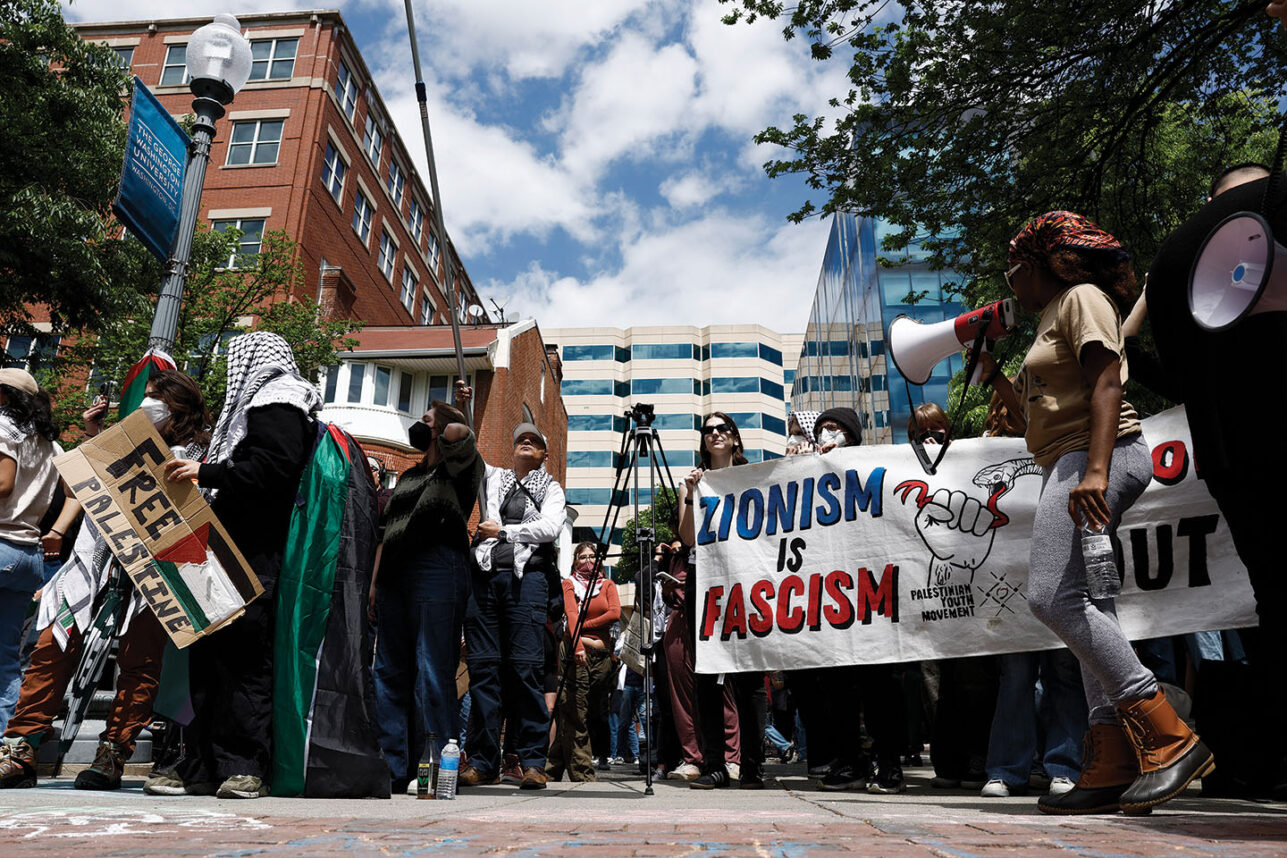

Some 44 Palestinians sheltering in the U.N. schools bombed by the Israelis were killed and Hamas also fired at Israel from United Nations buildings, the U.N. inquiry found, according to a summary released Monday.

More than 200 pages, the full report on the incidents during last summer’s 50-day operation, dubbed Protective Edge, is considered top secret and will not be released.

Israel has investigated all seven incidents in which it was cited in the report and cooperated in the investigation, Haaretz reported. The Foreign Ministry said in a statement that it would study the report’s findings and work with the United Nations to improve the security of U.N. buildings in Gaza.

The inquiry led by Patrick Cammaert, a retired Dutch general and former force commander of the U.N. peacekeeping mission in the eastern Democratic Republic of the Congo, looked at 10 incidents involving U.N. property. The investigation was ordered in November by the world body’s secretary-general, Ban Ki-moon.

“United Nations premises are inviolable and should be places of safety, particularly in a situation of armed conflict,” Ban wrote in a cover letter accompanying the summary, according to reports. “I will work with all concerned and spare no effort to ensure that such incidents will never be repeated.”

The inquiry’s recommendations will be explored, he said.

U.N. inquiry finds Israel fired on its schools, Hamas hid weapons in its buildings Read More »

Ancient Torah Speaks to the Climate Crisis: From Eden to Manna to Sabbatical Year to Now

On the Shabbat of May 15-16, the Torah reading (Leviticus 25-27) sets forth the Torah’s most explicit and most powerful regimen for healing the Earth from human over-use.

It is a regimen and rhythm of making sure the Earth gets to rest in every seventh year – a teaching that should speak to us today, as we move deeper into the planetary climate crisis that has been caused by human overworking of the Earth.

The Torah calls this year Shabbat Shabbaton – Shabbat to the exponential power of Shabbat – and Shmita –- Release —  for in that year both the Earth and human communities are released from economic coercion.

This year, reading this Torah portion is especially powerful, since we are living in the midst of precisely the Sabbatical Year the Torah calls for.

This passage is the flowering of a focus on relationships with the land  that pervades the entire Hebrew Bible.  It arises from an indigenous people of shepherds and farmers who understood their relationship with YyyyHhhhWwwwHhhh, the Holy One Who breathes all life, as centered on their sacred relationship with their land, especially through the foods they grew and then offered on the Altar.

Rabbinic Judaism, bereft of physical or political connection with any land, turned its attention to words of prayer and midrash as ways of getting in touch with God, and to shaping a decent community of adam (human earthlings) with but little relationship to adamah (earth).

Our own generation, facing a catastrophic crisis in the Earth-earthling relationship, can wisely go back to Biblical Judaism for guidance on how to apply an indigenous people’s wisdom to the planet as a whole.

Torah first signals this perspective in a powerful parable — the Eden story is. It begins with the birth of adam from adamah, the human earthling from Mother Earth.  Then God speaks on behalf of reality, saying to the human race: “Before you is great abundance. Eat in joy! And eat with self-restraint: there is one tree whose fruit you should abstain from.”

But the human race does not restrain itself, and the result is that the abundance vanishes. History unfolds in scarcity, as human beings work every day with the sweat pouring down their faces, in order to wring barely enough food from an Earth that gives forth thorns and thistles.

The story presages and prophesies our history. It is, for example, the story of the Gulf of Mexico five years ago, when BP refused to restrain itself and brought death upon its workers and disaster for the abundance of the Gulf.

Yet the Torah teaches us to see beyond disaster, even when it tells a story that opens with disaster. In one of its most powerful stories, a Pharaoh oppresses human beings and pours Plagues upon the Earth.

But then comes the great tikkun of human history. Pharaoh’s tyranny dissolves into the Sea, and then – only then –comes the first reversal of Eden's disaster.

When the people belly-ache about the scarcity of food in the Wilderness, YHWH / Breath of Life brings forth astonishing abundance. There falls a flaky food the people have never seen. They call it mahn-hu—“what’s that” – – and we know it as “manna.” And it comes with Shabbat, one day of utter restfulness that is the first hint that toilsome labor need not govern all the future.

This story is also a parable. The people learn to restrain themselves not sullenly or ascetically, but with the joy that pervades Shabbat. As they do so, abundance continues to pour forth.

But this story takes place in wild wilderness. How can this teaching be of use when the people cross the Jordan and begin to cultivate a land?

And here we come to the Sabbatical Year of Release — Shmita. Shepherds quickly learn that they must rhythmically move their flocks to new pastures, for otherwise the sheep will gobble up the grass, destroy it and themselves. Self-restraint: they move the sheep.

The farmers cannot move in space. So they learn, perhaps through generations of experience, to move in time. They let the entire land lie fallow for one year of every seven. Mother Earth herself, says Leviticus 25,  is entitled to a restful Shabbat. And the teaching goes out of its way to say that it comes straight from Sinai.

In the very next chapter, we are warned what will happen if we refuse to let the Earth make Shabbat. The Earth will rest, regardless. It will rest upon our heads: There will be famines, plagues, floods, drought, and the people will become refugees in exile.

That warning is echoed by our modern ecologists. For about 200 years, the most powerful institutions and cultures of the human species have refused to let the Earth make Shabbat. By pouring carbon dioxide and methane into our planet's air, these institutions have disturbed the sacred balance in which we breathe in what the trees breathe out, and the trees breathe in what we breathe out. The upshot: global scorching.

So now we must let our planet rest from overwork. For Biblical Israel, this was the central question in our relationship to the Holy One.

And for us and for our children and their children, this is once again the central question of our lives and of our God. HOW?  — is the question we must answer.

So here we turn from inherited wisdom to action in our present and our future.

Our congregations should be healing the hearts and souls of those of us – almost all – who have become addicted to the kind of consumerism that is contributing to the Climate Crisis. 

• Reenlivening Shabbat as a time of restfulness, reflection, celebration.
• Renewing those of our prayers and reawakening the language of our Psalms and other texts that celebrate the more-than-human life around us.
• Saving some time for our congregations to go outdoors to pray, commune, and meditate amongst the trees and grasses who breathe us into life.
• Encouraging our congregants to form groups we might call “Carbolics Not-so-Anonymous,” in which together we help each other live beyond the social addictions to fossil fuel that are endangering our societies.
• Taking seriously the call of Malachi, the last of the Prophets whose last words we read just before Pesach – “I,” says the Holy One, “will send you Elijah the Prophet to turn the hearts of parents to the children and the hearts of the children to the parents, lest I come and smite the Earth with utter destruction.”
How do we create the forms of intergenerational education and liturgy that can bring the hearts of the elders and the young together to address the climate crisis?

At the same time, we must recognize that as with other addictions, there are powerful “Drug Lords” in some major institutions —  whether illegal drug cartels or legal Tobacco Lords – and we must create the public action that weakens their power to addict us, as did with the tobacco industry. .

We must challenge the modern Pharaohs of top-down, unaccountable power that for the sake of their high profits and great power are not only bringing Plagues upon us all, but using their great wealth to interfere with the democratic processes that could actually heal our world.

As the Exodus story reminds us, we must not only weaken these pharaohs but also create the alternative worlds of shared and sustainable abundance that our forebears called the Promised Land.

So we must at every level – households, congregations, denominations, federations, political action  –seek to Move Our Money from spending that helps these modern pharaohs burn our planet to spending that helps to heal it:

• Purchasing wind-born rather than coal-fired electricity to light our homes and synagogues and community centers;

• Organizing our great Federations to offer grants and loans to every Jewish organization in their regions to solarize their buildings;

• Shifting our bank accounts from banks that invest in deadly carbon-burning to community banks and credit unions that invest in local neighborhoods, especially those of poor, Black, and Hispanic communities;

• Moving our endowment funds from supporting deadly Carbon to supporting stable, profitable, life-giving enterprises;

• Insisting that our tax money go no longer to subsidizing enormously profitable Big Oil but instead to subsidizing the swift deployment of renewable energy  — as quickly in this emergency as our government moved in the emergency of the early 1940s to shift from manufacturing cars to making tanks.

• Convincing our legislators to institute a system of carbon fees and public dividends that rewards our society for moving beyond the Carbon economy.

These are the vivid hopes and callings-forth of a world made whole. As one of the Rabbis living under the boot of Imperial Rome taught, “We may not be able to finish the task of making whole our broken world. But we must not turn away from the work.”

^^^^^^^^^^^^^^^^^^^^

* Rabbi Arthur Waskow, Ph.D., founded (1983) and directs The Shalom Center <https://theshalomcenter.org>. In 2014 he received the Lifetime Achievement Award as Human Rights Hero from T’ruah: The Rabbinic Call for Human Rights. In 2015, The Forward named him one of America’s “most inspiring” rabbis. His most recent book of 22 is Freedom Journeys: The Tale of Exodus & Wilderness Across Millennia, co-authored with Rabbi Phyllis Berman (Jewish Lights Publ., 2011). His most recent arrest of about 22 was in an interfaith climate action at the White House before Passover & Palm Sunday, 2013. See also Waskow, “Jewish Environmental Ethics: Adam and Adamah,” in Oxford Handbook of Jewish Ethics (Dorff and  Crane, eds.; Oxford Univ. Press, 2013).

Ancient Torah Speaks to the Climate Crisis: From Eden to Manna to Sabbatical Year to Now Read More »

Alleged Kansas City JCC shooter says he’ll change plea to guilty

Frazier Glenn Miller, the white supremacist charged with murdering three people outside two Kansas City-area Jewish institutions, said he will change his plea to guilty.

Miller, suffers from chronic emphysema, told The Associated Press by phone from jail that he wants to speak in court about why he committed the crimes and is concerned about a long trial due to his poor health. He said he plans to use his court appearances to “put the Jews on trial where they belong.”

In late March, Miller pleaded not guilty in U.S. District Court in Johnson County, Kansas, and asked for a speedy trial, within 150 days, despite objections from his lawyers. Judge Thomas Kelly Ryan set an Aug. 17 trial date.

Miller is charged with committing three murders on April 13, 2014 — two in the parking lot of the Jewish Community Center of Greater Kansas City in Overland Park, Kansas, and one in the parking lot at Village Shalom, a Jewish assisted-living facility a few blocks away.

In addition to capital murder, Miller is charged with three counts of attempted first-degree murder, one count of aggravated assault and one count of criminal discharge of a weapon at a structure.

State prosecutors have said they will seek the death penalty.

Miller, a former Ku Klux Klan grand dragon, told the Kansas City Star that he began planning the attacks when he became so sick with emphysema that he thought he would die soon and that he conducted reconnaissance missions of the JCC and Village Shalom in the days before the shootings.

“I wanted to make damned sure I killed some Jews or attacked the Jews before I died,” he told the newspaper.

None of his victims were Jewish.

Alleged Kansas City JCC shooter says he’ll change plea to guilty Read More »

Baltimore begins clean-up after riot over police-custody death

Baltimore residents on Tuesday began to clear the wreckage of rioting and fires that erupted after the funeral of a 25-year-old black man who died in police custody, while the city's mayor defended local law enforcement's light initial response.

Acrid smoke hung over streets where violence broke out just blocks from Freddie Gray's funeral and spread through much of the poor West Baltimore neighborhood. Nineteen buildings and 144 vehicles were set on fire, and 202 people were arrested, according to the mayor's office.

Police said 15 officers were injured, six seriously, in Monday's unrest, which spread throughout the city as police initially looked on but did not interfere as rioters torched vehicles and later businesses.

Looters had ransacked stores, pharmacies and a shopping mall and clashed with police in riot gear in the most violent unrest in the United States since Ferguson, Missouri, was torn by gunshots and arson in late 2014.

Gray's death gave new energy to the public outcry that flared last year after police killings of unarmed black men in Ferguson, New York City and elsewhere.

“It's a very delicate balancing act, when we have to make sure that we're managing but not increasing and escalating the problem,” Baltimore Mayor Stephanie Rawlings-Blake told reporters on Tuesday.

Police in Ferguson came under intense criticism last year for quickly adopting a militarized posture, using armored vehicles, showing heavy weapons and deploying tear gas in a forceful response that some said escalated tensions in the St. Louis suburb.

New York's police department took a more flexible approach in protests later in the year, monitoring marches that crisscrossed the city but largely averting the kind of violence seen in Ferguson and Baltimore.

For nearly a week after Gray died from a spinal injury on April 19, protests in Baltimore had been peaceful.

'HERE TO HELP OUT, MAN'

On Tuesday, volunteers in Baltimore swept up charred debris in front of a CVS pharmacy as dozens of police officers in riot gear stood by and firefighters worked to damp down the embers.

“I'm just here to help out, man,” said Shaun Boyd, 30, as he swept up broken glass. “It's the city I'm from.”

National Guard troops on Tuesday began to stage around the city, including in front of the police station where officers were bringing Gray at the time he was injured.

Maryland Governor Larry Hogan, a Republican, declared a state of emergency on Monday and Rawlings-Blake, a Democrat, imposed a one-week curfew in the largely black city starting Tuesday night, with exceptions for work and medical emergencies.

Baltimore-based fund manager T. Rowe Price Group Inc said it would close its downtown office on Tuesday. Legg Mason, also headquartered downtown, said its office would be open, but it was encouraging employees to work from home.

Schools were closed on Tuesday in the city of 620,000 people, 40 miles (64 km) from the nation's capital.

A day after rioters hit a mall in West Baltimore, the Security Square Mall outside the city closed after reports that protesters could be targeting it.

“When you see the destruction you've also got to realize there's pain, there's pain behind a lot of this,” said U.S. Representative Elijah Cummings, a Democrat who represents the region hit by the rioting.

The mayor, he said, should “assure us that the police department be looked at from top to bottom, everything from parking tickets straight up to indictments for murder.”

CAUGHT OFF-GUARD

Gray was arrested on April 12 while running from officers. He was transported to the police station in a van, with no seat restraint and suffered the spinal injury that led to his death a week later. A lawyer for Gray's family says his spine was 80 percent severed at the neck while in custody.

Six officers have been suspended, and the U.S. Justice Department is investigating possible civil rights violations.

Much of Monday's rioting occurred in a neighborhood where more than a third of families live in poverty. Parts of it had not been rebuilt since the 1968 rioting that swept across the United States after the assassination of civil rights leader Martin Luther King Jr.

Deadly confrontations between mostly white U.S. police and black men, and the subsequent unrest, will be among the challenges facing U.S. Attorney General Loretta Lynch, who was sworn in on Monday and condemned the “senseless acts of violence.”

In 1992, more than 50 people in Los Angeles were killed in violence set off by the acquittal of four police officers who beat black motorist Rodney King. Dozens died in 1968 riots.

Rashid Khan, 49, and his neighbors were cleaning up his King's Grocery Mart on Tuesday after looters caused what he estimated at $20,000 to $30,000 in damage.

Khan said he believed people from outside the neighborhood had caused the damage.

“Neighborhood protect me,” Khan said. 

Baltimore begins clean-up after riot over police-custody death Read More »

Nepal quake victims still stranded, PM says toll could be 10,000

People stranded in remote villages and towns across Nepal were still waiting for aid and relief to arrive on Tuesday, four days after a devastating earthquake destroyed buildings and roads and killed more than 4,600 people.

The government has yet to assess the full scale of the damage wrought by Saturday's 7.9 magnitude quake, unable to reach many mountainous areas despite aid supplies and personnel pouring in from around the world.

Prime Minister Sushil Koirala told Reuters the death toll could reach 10,000, as information of damage from far-flung villages and towns has yet to come in.

That would surpass the 8,500 who died in a 1934 earthquake, the last disaster on this scale to hit the Himalayan nation.

“The government is doing all it can for rescue and relief on a war footing,” Koirala said. “It is a challenge and a very difficult hour for Nepal.”

In Jharibar, a village in the hilly Gorkha district of Nepal close to the quake's epicenter, Sunthalia dug for hours in the rubble of her collapsed home on Saturday to recover the bodies of two of her children, a 10-year-old daughter and eight-year-old son.

Another son aged four miraculously survived.

HUNDREDS KILLED IN LANDSLIDES

In Barpak, further north, rescue helicopters were unable to find a place to land. On Tuesday, soldiers had started to make their way overland, first by bus, then by foot.

Army helicopters also circled over Laprak, another village in the district best known as the home of Gurkha soldiers.

A local health official estimated that 1,600 of the 1,700 houses there had been razed. Helicopters dropped food packets in the hope that survivors could gather them up.

In Sindhupalchowk, about 3.5 hours by road northeast of Kathmandu, the earthquake was followed by landslides, killing 1,182 people and seriously injuring 376. A local official said he feared many more were trapped and more aid was needed.

“There are hundreds of houses where our people have not been able to reach yet,” said Krishna Pokharel, the district administrator. “There is a shortage of fuel, the weather is bad and there is not enough help coming in from Kathmandu.”

International aid has begun arriving in Nepal, but disbursement has been slow, partly because aftershocks have sporadically closed the airport.

According to the home (interior) ministry, the confirmed death toll stands at 4,682, with more than 9,240 injured.

The United Nations said 8 million people were affected by the quake and that 1.4 million people were in need of food.

Nepal's most deadly quake in 81 years also triggered a huge avalanche on Mount Everest that killed at least 18 climbers and guides, including four foreigners, the worst single disaster on the world's highest peak.

All the climbers who had been stranded at camps high up on Everest had been flown by helicopters to safety, mountaineers reported on Tuesday.

Up to 250 people were missing after an avalanche hit a village on Tuesday in Rasuwa district, a popular trekking area to the north of Kathmandu, district governor Uddhav Bhattarai said.

FRUIT VENDORS RETURN TO STREETS

A series of aftershocks, severe damage from the quake, creaking infrastructure and a lack of funds have complicated rescue efforts in the poor country of 28 million people sandwiched between India and China.

In Kathmandu, youths and relatives of victims were digging into the ruins of destroyed buildings and landmarks.

“Waiting for help is more torturous than doing this ourselves,” said Pradip Subba, searching for the bodies of his brother and sister-in-law in the debris of Kathmandu's historic Dharahara tower.

The 19th century tower collapsed on Saturday as weekend sightseers clambered up its spiral stairs. Scores of people were killed when it crumpled.

Elsewhere in the capital's ancient Durbar Square, groups of young men cleared rubble from around an ancient temple, using pickaxes, shovels and their hands. Several policemen stood by, watching.

Heavy rain late on Tuesday slowed the rescue work.

In the capital, as elsewhere, thousands have been sleeping on pavements, roads and in parks, many under makeshift tents.

Hospitals are full to overflowing, while water, food and power are scarce.

There were some signs of normality returning on Tuesday, with fruit vendors setting up stalls on major roads and public buses back in operation.

Officials acknowledged that they were overwhelmed by the scale of the disaster.

“The big challenge is relief,” said Chief Secretary Leela Mani Paudel, Nepal's top bureaucrat. “We are really desperate for more foreign expertise to pull through this crisis.”

India and China, which have used aid and investment to court Kathmandu for years, were among the first contributors to the international effort to support Nepal's stretched resources.

Nepal quake victims still stranded, PM says toll could be 10,000 Read More »

300 Israelis return home from earthquake-ravaged Nepal

Over 300 Israelis have returned home from earthquake-ravaged Nepal, including 25 infants born to surrogate mothers.

Meanwhile, an airplane carrying an Israeli field hospital and 260 personnel landed in Kathmandu on Tuesday following delays due to weather and the condition of the runway in the capital. The hospital, which will have the ability to treat 20 people a day, was expected to be operational by the next morning.

Israeli search-and-rescue teams began trying to reach about 80 Israeli hikers trapped in remote areas throughout the country, including in Langtang National Park, using rented and borrowed helicopters.

Two Israelis reportedly refused to be evacuated from Nepal, saying they wished to stay and help the locals.

Some 11 Israelis remain unaccounted for following Saturday’s 7.8 magnitude quake centered near Kathmandu.

The death toll from the quake and resulting avalanche has risen to above 5,00 and could climb as high as 10,000 Nepalese officials said.

On Tuesday, Israeli Foreign Minister Avigdor Liberman spoke with his Nepalese counterpart and conveyed the condolences of the Israeli people on the great loss of life in Saturday’s earthquake, according to the Foreign Ministry. He also thanked Nepal Foreign Minister Mahendra Bahadur Pandey for Nepalese assistance in rescuing stranded Israelis.

Pandey thanked Liberman on behalf of his people for the aid being sent from Israel, the statement said.

300 Israelis return home from earthquake-ravaged Nepal Read More »

In search of my muse: A visit to the curative waters of Carlsbad

I’ve been under the cloud of Melpomone – the muse of tragedy – for some time and it’s time for me to throw her aside to find another. A muse that taps into my languishing creative side – one that makes me laugh again. I need to find Thalia – muse of comedy and poetry.

So, I’m off to Carlsbad to soak in their magical waters. Carlsbad is a quaint and charming coastal town with wizardly powers surrounding their curative waters. Only 35 miles north of downtown San Diego and 87 miles south of Los Angeles, the town is internationally known as a haven for wellness resorts and spas.

A healing treat for the body

My first order of the day is a spa soak in the alkaline mineral waters at Carlsbad Mineral Water Spa.  Located at the edge of downtown Carlsbad Village, it’s easily accessed by car or train. (The Carlsbad Coaster train station is just one block away while Oceanside Amtrak depot is three miles from the historic spa.) Today, Carlsbad Mineral Water Spa is a California historic site and monument that still markets its famous alkaline artesian mineral water, both for drinking and for exquisite spa treatments and healing soaks.

The mineral waters were discovered in 1882 by Capt. John Frazier after drilling a well for farming, tapping both artesian and mineral springs in the process. He soon realized that the alkaline mineral waters cured his long-standing stomach issues. Eager for independent analysis, he sent two samples for testing to laboratories in New York and Chicago.  The results showed a chemical similarity to the famous healing spring mineral waters and European spa found in Bohemia in Karlsbad.  (The town’s name and country have since changed and are now Karlovy Vary in the Czech Republic).

By 1930, after changing hands, the California Carlsbad Mineral Water Hotel was built across the street from the well, making the alkaline mineral waters available for drinking and for bathing to a wide swath of worldwide guests, movie stars, and two U.S. presidents.  Unfortunately, when the Great Depression hit, the owners fell on hard times and abandoned the well.

It wasn’t until 1993 that Ludvik Grigoras, a native from Karlsbad (Karlovy Vary, Czech Republic), came upon the abandoned well and restored it commercially. He also re-drilled another of Frazier’s wells known for its natural carbonation.  As a result, the famous Carlsbad water is now being bottled once again for drinking, and is available for healing soaks and spa treatments in an architectural-style building reminiscent of his homeland.

I surrender to the “Royal Treatment” – a carbonated alkaline mineral bath designed to release lactic acids and relax the body. The two-hour treatment also includes a Mud Facial with a soothing face, neck and shoulder massage, the last hour focusing on a full body massage. Afterwards, I am totally relaxed yet feeling a new source of energy.

The Museum of Making Music

Now I’m ready for a lyrical engagement – to embrace Euterpe – the muse of song. The Museum of Making Music is a hidden jewel, a treasure trove of a century of musical instruments and innovations that shaped American popular music.

The museum consists of five galleries spanning a century of American musical genres, innovations, and musical instruments. The focus is on connections between people, instruments, and making music, with each gallery featuring a “breakthrough” instrument – an instrument that changed the course of future music. Oftentimes, the artifact and the current version are displayed alongside a modern version you can play. I enjoyed the interactive areas that let me try my musical genius on a variety of instruments, including drums. I found out, and not surprisingly so, that I still lack musical genes. But it didn’t dampen my joy seeing, hearing, and playing through the notes, or perhaps I should say my musical cacophony.

Healing hands in clay

Next, I engage my creative side by immersing my hands in a moist ball of malleable clay. At the Lynn Forbes School of Sculpture, I can sign-up for one or as many classes I like. All around me are exquisite examples of heads and the human body. Forbes says, “Anyone can do it, and there are classes for all ages.”

Laughing silently at my convoluted clay ball soon to become a masterpiece, I think I’ve finally found my muse Thalia. All is good.

In search of my muse: A visit to the curative waters of Carlsbad Read More »