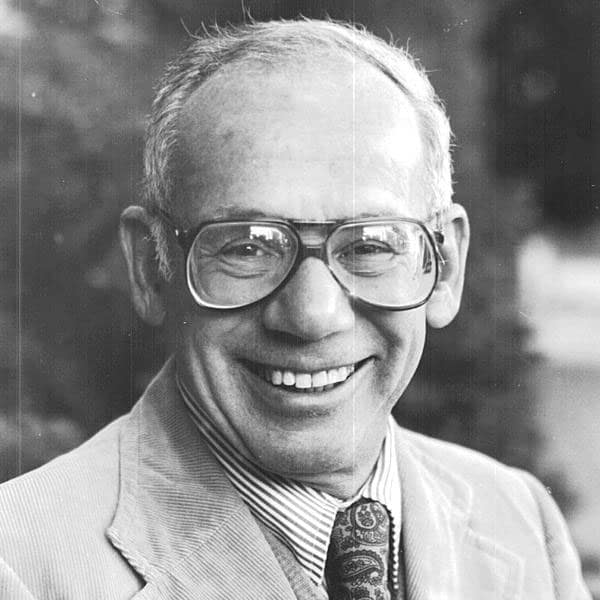
Was Richard Wagner, Hitler’s favorite composer, a classical anti-Semite and proto-Nazi or has conventional assumption given him a bad rap?
Who better to consider the question than Wagner himself, and he does on his last day on earth in 1883 in an apologia pro su vida addressed to the ghost of Felix Mendelssohn.
Wagner, whose music is still largely taboo in public performances in Israel, mounts his defense in the American premiere of the play, “Richard and Felix,” currently at the MET Theatre, written by Cornelius Schnauber. While some of the play’s assertions and arguments are still hotly debated by musical scholars and historians, Schnauber presents a much more complex and conflicted Wagner than either his admirers or detractors might like.
One argument revolves around Wagner’s origin. In the play, he mentions his beloved “Jewish father.” This was Ludwig Geyer, an actor who adopted and raised the young Richard after marrying his widowed mother, and who may well have been both the boy’s biological father and of Jewish descent.
Needless to say, the Nazis repressed all such details.
Wagner, played by actor-director Louis Fantasia (after June 1, by Don DeForest Paul), is nothing if not inconsistent. As a youthful anarchist, and later socialist, he rails against Jewish land speculators and capitalists, and in a notorious essay accuses Jewish music and composers of corrupting the German soul.
Yet he greatly admired much of Mendelssohn’s work, particularly the Hebrides Overture, insisted that conductor Hermann Levi premiere his operas, praised Heinrich Heine and, at one point, proclaimed that the Jews are “the noblest of all Germans.”
Like many another husband, he blames part of his reputation on his wife, Cosima, who was a virulent Jew hater.
Schnauber, who directs the USC Max Kade Institute for Austrian-German-Swiss Studies and has been a leader in fostering German-Jewish relations, said in an interview that the ideas expressed in the play are based primarily on Wagner’s own writings.
Asked to speculate whether Wagner, had he lived long enough, would have supported his great admirer, Adolf Hitler, Schnauber gave a definite no.
“Wagner would have considered the Nazi regime as a petty bourgeois dictatorship,” said Schnauber. “Wagner opposed the death penalty and killing. He would have left Germany.”
Schnauber’s generally favorable depiction of Wagner’s character has been widely disputed, however. Among the composer’s strongest critics has been his great-grandson, Gottfried Wagner, who denounced his family’s hereditary anti-Semitism in his book, “Twilight of the Wagners.”
“Richard and Felix” is presented in tandem with the longer one-act “Irma and Emma,” also by Schnauber.
The heroines, played by a flamboyant Laura James and mousey and sly Dorothy Constantine, are residents of an old-age home in post-war Germany. They are semi-senile and confuse time, place and identity, but offer some laughs in their political and sexual observations.
Both plays continue through June 25 on Friday and Saturday evenings and Sunday matinees at the MET Theatre, 1089 N. Oxford Ave. For information, call (323) 957-1152 or visit www.theMETtheatre.com.