On Dec. 10, 1966, Shabbat in Stockholm ended at 3:55 p.m. This gave Israeli writer S.Y. Agnon; his wife, Esther; and their daughter, Emunah, exactly 35 minutes to travel from the Grand Hotel to the Stockholm Concert Hall, where Agnon would receive the Nobel Prize in Literature.
As Shabbat ended, Agnon prayed the evening Maariv service, made Havdalah for his family, and — being that it was the fourth night of Chanukah — lighted four candles and recited all of the accompanying blessings. He rushed to get dressed in his tuxedo and tails, and the family then met the limousine driver who hurriedly drove them to the ceremony. To save time, Agnon shaved in the limo.
When Agnon arrived and ultimately took the stage to receive his Nobel Prize from Swedish King Gustav VI Adolf, the audience noticed that in place of a top hat, Agnon had a black velvet yarmulke perched atop his head. Upon receiving the prize from the king, Agnon recited the Hebrew blessing traditionally said upon seeing a king. He then delivered his acceptance speech in an ancient Hebrew dialect, staking his claim as a Hebrew writer representing the continuity of a canon of sacred literature:
“Who were my mentors in poetry and literature? First and foremost, there are the Sacred Scriptures, from which I learned to combine letters. Then there are the Mishnah and the Talmud and the Midrashim and Rashi’s commentary on the Torah. After these come the Poskim — the later explicators of Talmudic Law — and our sacred poets and the medieval sages, led by our Master Rabbi Moses, son of Maimon, known as Maimonides, of blessed memory.”
On this night, the European-born boy originally known as Shmuel Yosef Czaczkes became the first-ever Hebrew language writer to be awarded a Nobel Prize. Moreover, he did so as a citizen of the State of Israel, becoming the country’s first Nobel Prize winner in any category (and to this day, its only winner in literature).
When reading Agnon, who moved to Palestine as a young immigrant in 1908, one is treated to a unique and unprecedented literary experience, where modern-day stories are composed in a Hebrew that is entirely ancient, with the narrative and dialogue creatively woven from phrases lifted directly from biblical, talmudic and rabbinic literature. This, along with Agnon’s observance of Jewish law, paints the portrait of what one might call a “religious writer.”
But was Agnon a religious writer?
In her memoir, Emunah Yaron (Agnon’s daughter) addresses the question of her father’s religiosity and faith: “There are many who did not believe that my father was an observant Jew, even though a big black kippah always covered his head. There are those who said that this kippah was simply a mask, a deceiving appearance intended to fool the public into believing that he was actually a religious Jew who observed the commandments.”
What could possibly account for this widely held perception among many of Agnon’s readers? Yaron continues: “Perhaps the lack of belief by many in my father’s religiosity stems from the fact that in reading my father’s works, they often detected in his plots and characters subtle or even overt theological speculations into religious matters, which many of his readers interpreted as outright heresy.”
In Agnon’s story “The Dust of the Land of Israel,” the narrator proclaims: “The doubters and skeptics, and all who are suspicious of things — they are the only people of truth, because they see the world as it is. They are unlike those who are happy with their lot in life and with their world, who, as a result of their continuous happiness, close their eyes from the truth.”
Agnon’s masterpiece novel, “A Guest for the Night,” is full of cynicism toward God. The novel grew out of Agnon’s visit in 1930 to his birthplace in Buczacz, Poland (now part of Ukraine). The narrator returns to visit his hometown, Shibush (a sarcastic play on Buczacz — the Hebrew word “shibush” means “disorder” or “confusion”), and finds it completely desolate, bearing the evidence of the ruins of war and pogroms.
The people he meets in Shibush are crippled physically and emotionally, including Daniel Bach, whose brother has recently been killed and who has himself seen a corpse, wrapped in a prayer shawl, blown up. Bach declares, “I’m a simple person, and I don’t believe in the power of repentance … I don’t believe that the Holy One, Blessed be He, wants the best for his creatures.” Later in the novel, the narrator echoes Daniel’s bitter reflections: “If it is a question of repentance, it is the Holy One, Blessed be He — if I may say so — who ought to repent.”
 Agnon (center) at the 1966 Nobel Prize ceremony. Photo courtesy of Zion Archives
Although “A Guest for the Night” could easily be understood as Agnon’s post-Holocaust lamentation on the destruction of Eastern European Jewry, he actually wrote the novel in the 1930s, and it was published in 1939 — all before the Shoah. Agnon’s novel foresaw the dark fate of Eastern European Jewry, including the last remaining Jews of Agnon’s hometown Buczacz, where he was born in 1888. As such, Agnon’s bitter indictments of God take on somewhat of a prophetic tone.
In Amos Oz’s semiautobiographical “A Tale of Love and Darkness,” the Israeli author devotes an entire chapter to Agnon, where he writes, “Agnon himself was an observant Jew, who kept the Sabbath and wore a skullcap. He was, literally, a God-fearing man: in Hebrew, ‘fear’ and ‘faith’ are synonyms … Agnon believes in God and fears him, but he does not love him.”
Oz also explored these issues in “The Silence of Heaven: Agnon’s Fear of God,” where he writes that Agnon’s heart was “tormented by theological doubts” and that Agnon’s characters often treat their challenges in life as “religious issues — providing that the term ‘religious’ is broad enough to encompass doubt, heresy and bitter irony about Heaven.”
When asked if Agnon was a “religious writer,” Emunah Yaron writes that her father’s response was that he was “an author of truth, who writes things as he sees them, without any ‘make-up or rouge’ camouflaging the face of things, without any décor trying to deter the eye from the core issues.”
“For these very reasons” writes Yaron, “my father — who was a religiously observant Jew — refused to join the Union of Religious Writers in Israel.”
As an observant Jew writing from within the tradition, Agnon reminds us that it is possible to observe God’s commandments and pray to God while simultaneously struggling with God.
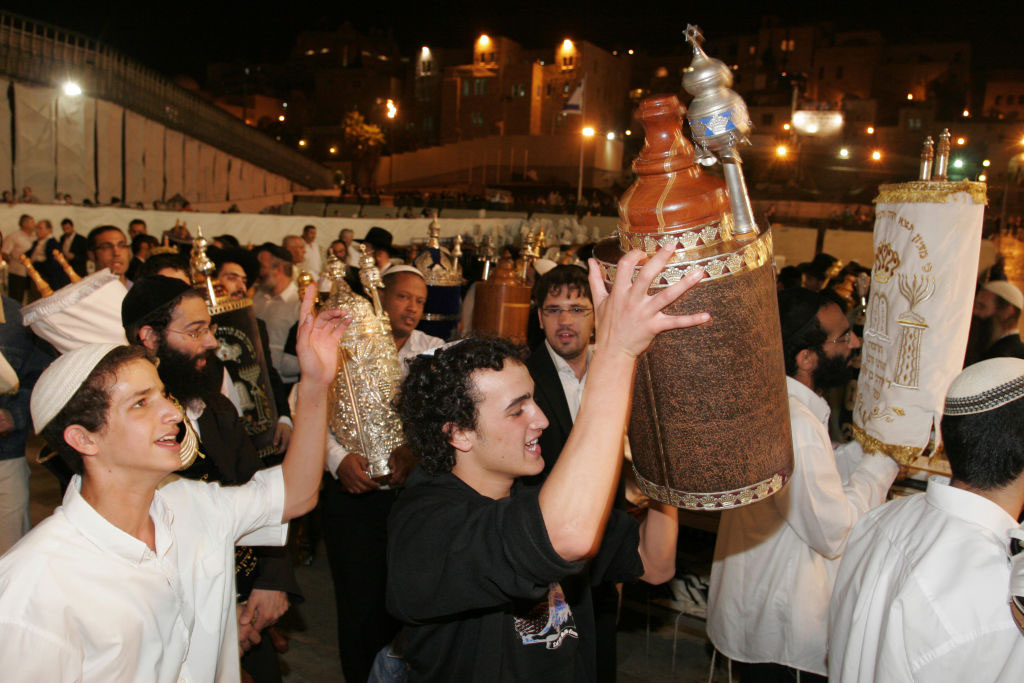
In the story “Tehilah,” Agnon has the narrator standing at the Kotel — Judaism’s holiest site — contemplating prayer: “I stood at times among the worshippers, and at times among those who question.”
That’s life in an Agnon story. Indeed, 50 years after Agnon’s Nobel Prize — that’s life.