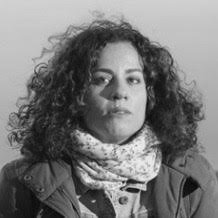
Rita (Yijing) Zhang, 22, of Beijing is navigating several historic “walls” as she builds her career as a filmmaker.
It started in China, where Zhang recently worked as an assistant on the set of Matt Damon’s upcoming film, “The Great Wall.” Now, the international student at Columbia University has set her sights on a different wall — the Western Wall — or at least what it represents: the survival of the Jewish people.
Zhang is one of 22 aspiring filmmakers spending the summer in Israel as part of the second annual Jerusalem Film Workshop, a six-week crash course in filmmaking with the Holy City as their production playground.
“It wasn’t a specific goal to go to Jerusalem and Israel to visit,” Zhang told the Journal during the June 29 orientation, held at Jerusalem’s first American-style, state-of-the-art multiplex, Cinema City. “But it has been somewhere on my mind for a long time to discover this extremely old and interesting culture and how it keeps on surviving for such a long time, similar to Chinese culture.”
Zhang is among the few non-Jewish participants, who hail mostly from the United States and this year include budding filmmakers from Argentina, Croatia, England, France and Panama. They come with a shared passion for filmmaking or Israel — but more often both.
Judy Kim, 20, is from San Diego and is a film student at Rhode Island School of Design. She felt drawn to Jerusalem because her uncle, an archaeologist, works on digs in Israel. A Christian of Korean descent, she interned last summer for a production company in South Korea that produced documentaries about Israel.
“This is a good way to collaborate and make one film — and I think that’s closer to what happens in the industry,” Kim said.
This will be the first time she’ll see her own film through from start to finish; each year, the program divides participants into teams to complete a documentary that will be showcased at the Jerusalem Film Festival, which this year took place from July 9-19, after which they put their energies toward a short fiction film.
The program is the brainchild of Gal Green-
span and Roi Kurland of Green Productions, an Israeli production company whose most recent pride is the Israeli film “Youth.” The inspiration came during their service in the Israel Defense Force’s (IDF) prestigious film unit.
“When we were 18, we went to a film course in the IDF where each soldier that comes to the army, to the film unit, undergoes a month-and-a-half course with the best Israeli filmmakers who come as reserves, and they teach you how to make films,” Greenspan said, speaking from his office in Ramat Gan.
This year, master classes are being given by Israeli industry leaders whose films were either nominated or shortlisted for an Academy Award, including Tom Shoval of “Aya” and “Youth,” himself a protégé of Oscar-winning director Alejandro Inarritu (“Birdman”). Sponsors such as Onward Israel of the Jewish Agency, Bank Hapoalim, United King Films, the New Fund for Film and Television, and the Jerusalem Film and Television Fund have enabled Greenspan to keep costs down to $4,400 per person, covering accommodations at the Hebrew University of Jerusalem, instruction at the city’s Ma’aleh School of Television, Film & the Arts, and equipment and supplies. The City of Jerusalem is an active partner, continuing its trend of offering incentives for filmmakers to shoot in the capital.
Natalie Portman shot her directorial debut, “A Tale of Love and Darkness,” in Jerusalem, and Richard Gere recently made the ascent for “Oppenheimer Strategies” by Israeli director Joseph Cedar. NBC Universal’s television series “Dig” was shot on location in Jerusalem last year until Operation Protective Edge erupted. And two animation studios have been built in the city, already drawing the interest of Disney and Technicolor. According to Yoram Honig, director of the Jerusalem Film and Television Fund, Jerusalem now holds 20 percent of the market share of Israeli productions, compared to 5 percent two years ago.
“I believe that when you put the camera in Jerusalem — wherever you put it — you have a film in front of you,” Greenspan said, explaining why he chose to place the program in Jerusalem. “It’s such a complex city that it’s a movie in front of your eyes.”
While the workshop is designed to provide an “Israel experience,” Greenspan said the focus of the program is cinema, not Israel advocacy. This year, teams selected their cinematic subjects from among predetermined organizations or personalities that reflect the broad range of political, cultural, social and religious layers that characterize the city.
Greenspan’s advice to the neophytes was simple: “Tell good stories, great stories — then your film will be great.”