The most astonishing moment for me at last Sunday’s protest against President Donald Trump’s executive order on immigration and refugees came when I was standing by the arrivals area at Tom Bradley International Terminal at LAX.
Suddenly a cheer cut through the din of chants. A mob of photographers pushed past me to take pictures of someone walking up the exit ramp. This being LA, I was sure George Clooney had just arrived.
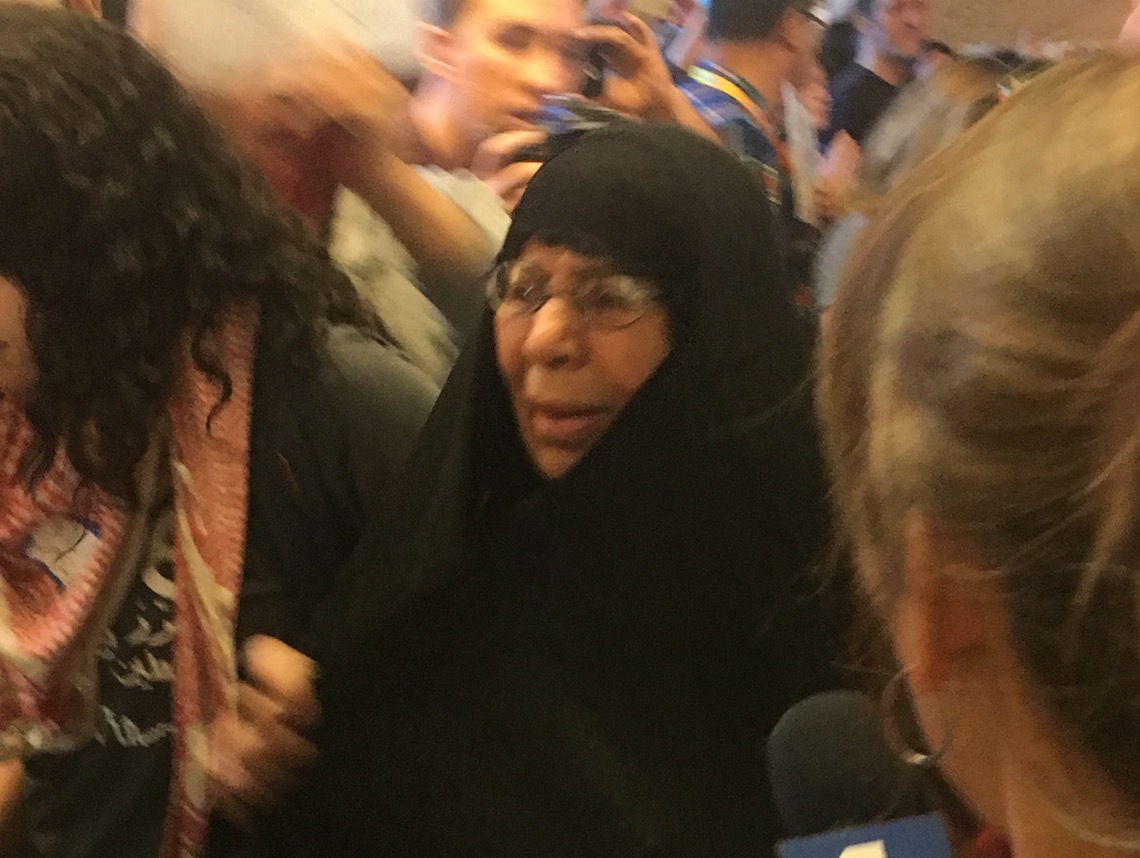
I elbowed my way through the crowd, and saw the source of all the excitement. It was a stout old Muslim woman. Her head and much of her face was wrapped in a thick black hijab. She was schlepping up the ramp, alone.
A swarm of cameras flashed in her eyes. The crowd chanted, “Salaam aleikum! Saleaam aleikum!” There was applause and whistling and clapping.
The excitement bewildered her. The photos I snapped show something close to panic in her eyes. A middle-aged Jewish woman I recognized burst through the mob and practically jumped on the older lady, stroked at her arms and said, “Salaam Aleikum Shukran! Salaam Aleikum Shukran!”
I couldn’t imagine what she made of the mob, the noise, the strange woman who blurted “Hello thank you! Hello thank you!”
Her family rushed to greet her. The old woman gave a get me the hell out of here look, and they spirited her away.
That’s Donald Trump for you, I thought. The Executive Order Trump signed was so ill-conceived, slapdash, illegal, pandering, and un-American, only he could turn an innocent Muslim bubbie into an unwitting Rosa Parks.
There is something funny about the unsuspecting grandmother turned hero, or it would be funny if the actual consequences of the Muslim ban weren’t so devastating to people, to our democracy and to the actual fight against Islamic extremism that it was purportedly designed to help.
By now we have all read the stories of citizens and green card holders deprived of their rights, of chaos and confusion, of ISIS’s using the ban for recruitment, of cooperative Muslim countries being insulted, of the hypocrisy of leaving out countries that breed actual radical Muslim terrorists, like, say, America, and of the fact that countries in which Trump does business are excluded from the ban.
In this week’s Jewish Journal, you can read even more stories of Jewish refugees whose American success stories grew from their ability to enter the United States when their lives depended on it. They fled Nazi Germany (like the grandparents of Jared Kushner). Or they fled Eastern Europe (like the ancestors of young Stephen Miller, who helped write the ban), or they escaped Iran. Because politicians and people spoke up loudly to shout down the voices of xenophobia and ignorance, America opened her doors to them.
But this time, the xenophobes are in charge.
Their apologists point out that the executive orders call for only a temporary ban at best, though a full ban on people fleeing Syria. The masses that gathered at LA and airports around the country know better. They get that the Syrian refugees are the German Jews of 1930, or the Persian Jews of 1979, or the Eastern European Jews fleeing the Czar or the USSR. The hijab is the streimmel. The beard is the payes. What was foreign and threatening to Americans then is just as scary to them now.
That’s why, in frightening times, our safest bet is to rely on our deepest values. The crowd at LAX understood that, even if their president does not.
That’s why the most common message people held up on their protest protest posters were the words written in 1883 by a 34 year-old Jewish woman in New York, Emma Lazarus:
“Give me your tired, your poor,
Your huddled masses yearning to breathe free,
The wretched refuse of your teeming shore.
Send these, the homeless, tempest-tost to me,
I lift my lamp beside the golden door!”
Those posters were heartwarming, but they were my second- favorite posters I saw at the rally.
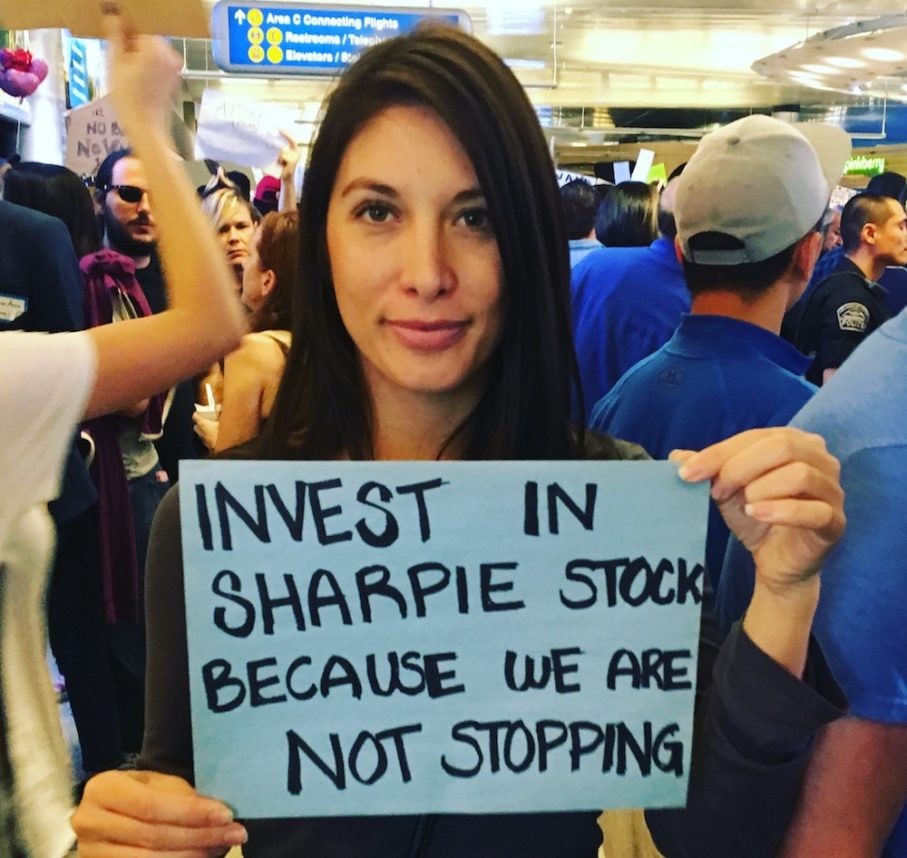
My favorite? It was held up by a quiet young woman inside the terminal. It read: “INVEST IN SHARPIE STOCK BECAUSE WE’RE NOT STOPPING.”