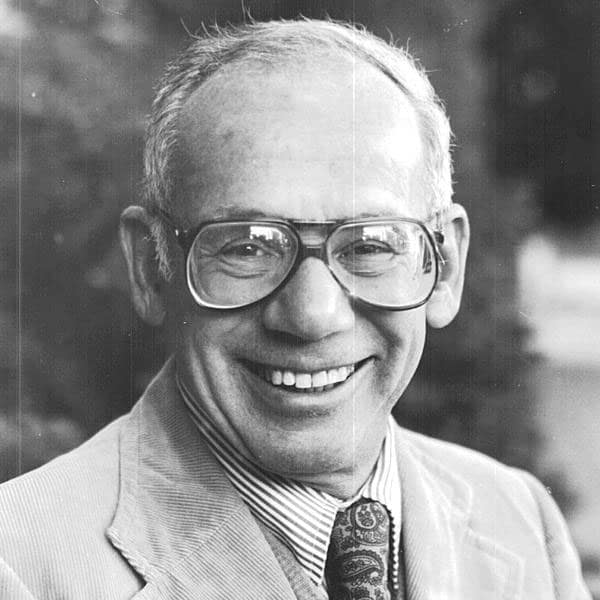
Palestinian physics professor Ghassan Andoni treads a difficult line. His ardent advocacy of fighting the "Israeli occupation," by nonviolent methods endears him neither to Palestinian extremists nor to the Israeli authorities.
In a swing of 10 American cities, Andoni has been holding out a small glimpse of hope to small groups of Jewish and Christian listeners that mutual exhaustion might lead to an end of the Middle East bloodletting. At the same time, he warns that any escalation, especially a U.S. attack on Iraq, could lead to Israel’s forcible transfer of Palestinians to Jordan and plunge the whole region into war.
The 46-year-old academic’s tour is under the auspices of the Palestinian Center for Rapprochement Between People, of which he is the executive director, and the International Solidarity Movement, which he co-founded.
In an interview with The Journal, Andoni made two points clear. First, the blame for the present situation rests almost entirely on the "Israeli occupation" and Israel’s "right-wing government." And second, he advocates nonviolence — not on philosophical grounds or the inspiration of a Gandhi or Martin Luther King Jr. — but because suicide bombings and killing of Israeli civilians don’t work in achieving the perpetrators’ goals.
His political outlook is based, pragmatically, on the relative bloodlessness and relative success of the first intifada of the late 1980s. Andoni seems to agree with Israeli journalist Eric Silver that "The Palestinians won the first intifada, a revolt of stones and Molotov cocktails, by convincing Israelis that they could no longer live with the status quo.
"However, the Palestinians have lost the second intifada, a revolt of guns and bombs, because Israel did not buckle."
As an example of nonviolent resistance, he cited the attempt to dismantle Israeli roadblocks near Palestinian towns by unarmed protesters, even at the risk of being shot.
Andoni, whose fare to the United States was paid by the United Nations to participate in its annual conference on "The Rights of the Palestinian People," teaches at Birzeit University in the West Bank town of the same name.
He said that he has been arrested eight times by Israeli authorities on administrative detention orders between 1977 and 1990, and has served a total of three-and-a-half years in prison. "They arrested me to keep me from hurting myself or endangering public order," he said with a hint of sarcasm.
In Los Angeles, Andoni was hosted by the Pasadena Coalition for a Just Palestinian-Israel Peace and he spoke at a meeting of some 80 people at the Workmen’s Circle on Sept. 13.
His current campaign calls for international volunteers to join Palestinian farmers during the October-November olive harvest in the face of alleged "brutal and sometimes lethal violence" by Israeli soldiers and settlers.
Andoni dismisses Israeli fears that the ultimate Palestinian goal is to dismantle the Jewish state entirely, step by step.
"These fears may be legitimate, but they are based on artificial sources," he said. "The reality is that Israel is expanding and Palestine is shrinking."
He said that he has widespread support among Palestinians, citing a poll that 75 percent supported nonviolent means in fighting the occupation. However, the second part of the poll indicated that the same number, 75 percent, backed violence if nonviolent methods didn’t work.
Andoni expressed indifference, bordering on contempt, for the present Israeli peace movement. "Peace Now is not functioning," he said, while a more radical group, like Gush Shalom, "consists of a few hundred people."
When it was put to him that it was precisely the suicide bombings and Yasser Arafat’s duplicity that discredited the Israeli peace movement, Andoni observed, "It’s easy to have a peace movement in peace time. The test comes when it stands up in time of war."
Are there any examples of a peace movement on the Palestinian side?
"There is no parallel," he said. "Israel is occupying Palestine, Palestine is not occupying Israel."